
Back to Journals » Advances in Medical Education and Practice » Volume 16
Knowledge, Attitude, and Practice of Medical Students Toward Prehospital Emergency Care: A Cross-Sectional Study
Authors Liu X, Wang B, Xing J, Zhang H, Ye S
Received 12 June 2025
Accepted for publication 21 August 2025
Published 27 August 2025 Volume 2025:16 Pages 1559—1568
DOI https://doi.org/10.2147/AMEP.S540797
Checked for plagiarism Yes
Review by Single anonymous peer review
Peer reviewer comments 3
Editor who approved publication: Dr Sateesh Arja
Xinran Liu,1,2,* Bing Wang,1,* Jingjing Xing,1 Hailong Zhang,3 Sheng Ye1
1Emergency Department, The Second Affiliated Hospital of Wannan Medical College, Wuhu, Anhui, People’s Republic of China; 2Graduate School, Wannan Medical College, Wuhu, Anhui, People’s Republic of China; 3Emergency Department, WuHu Emergency Center, Wuhu, Anhui, People’s Republic of China
*These authors contributed equally to this work
Correspondence: Sheng Ye, Emergency Department, The Second Affiliated Hospital of Wannan Medical College, 10 Kangfu Road, Jinghu District, Wuhu, Anhui, People’s Republic of China, Email [email protected]
Background: Emergency education is a critical component of medical training, enabling students to effectively respond to urgent and life-threatening situations. This study aimed to evaluate the knowledge, attitudes, and practices (KAP) of medical students regarding prehospital emergency care, and to explore the factors influencing these dimensions.
Methods: A cross-sectional survey was conducted between September 1 and October 10, 2024, at Wannan Medical College in Anhui province, southeastern China. Participants were selected using a stratified cluster sampling method. Data were analyzed using independent samples t-tests, one-way ANOVA, and Pearson correlation analysis. Structural equation modeling (SEM) was employed to examine the interrelationships among emergency knowledge, attitudes, and practices.
Results: A total of 452 medical students completed the survey, with 439 valid responses included in the final analysis. Among the participants, 213 were male (48.50%) and 226 were female (51.50%). The mean scores for emergency knowledge, attitudes, and practices were 23.17 ± 4.43, 18.20 ± 3.76, and 13.68 ± 2.71, respectively. The SEM analysis revealed that knowledge had a significant positive effect on attitude (β=0.831, P< 0.001) and on practice (β=0.477, P < 0.001). Attitude also significantly influenced practice (β=0.448, P< 0.001).
Conclusion: This study underscores the pivotal mediating role of attitudes in linking emergency knowledge to practice among medical students. Enhancing emergency knowledge through targeted educational interventions, alongside fostering positive attitudes, may effectively improve students’ engagement and performance in real-life emergency care situations.
Keywords: attitude, knowledge, practice, prehospital emergency care, medical students
Introduction
Prehospital emergency care, such as cardiopulmonary resuscitation (CPR), airway obstruction relief, bleeding control, and basic life support (BLS), as the initial response to acute illness or injury, aims to save lives, alleviate suffering, prevent further harm, and promote recovery.1,2 Studies have shown that improving the emergency care literacy of bystanders can significantly enhance patient survival rates.3 In China, the proportion of bystanders participating in emergency response increased from 10.41% in 2013 to nearly 20% in 2017, yet this rate remains lower than in many other countries.4 Despite growing awareness, a notable gap persists in emergency care competency among medical graduates.5 For example, in the United Kingdom, only 55% of medical interns reported adequate training in cardiopulmonary resuscitation (CPR),6 while in India, first-year doctors correctly answered only about 50% of questions related to advanced life support (ALS).7
Medical students, as future healthcare providers, are not only responsible for delivering professional emergency care but also play a critical role in public health advocacy and the dissemination of emergency knowledge.8,9 Previous research indicates that medical students often demonstrate strong theoretical understanding and a high willingness to perform on-site emergency interventions.5,10 However, gaps remain in practical skill application and self-confidence, both globally and within China.11 Moreover, a considerable proportion of medical graduates continue to lack adequate competence in prehospital emergency care.12
The KAP (Knowledge, Attitude, Practice) model is a widely adopted framework for assessing individuals’ cognitive understanding, behavioral intentions, and practical competencies in a specific domain.13 It allows for a comprehensive analysis of knowledge (cognitive level), attitudes (behavioral tendencies), and practices (actual implementation), as well as the interrelationships among these components.14 Previous studies have demonstrated that although students often exhibit a relatively high level of acceptance and understanding of emergency care knowledge, their ability to apply this knowledge in real-life scenarios is frequently limited due to insufficient hands-on training.15–17 Moreover, existing studies using the KAP model have confirmed that participants’ educational level significantly influences both attitudes and practices related to emergency care, particularly among nursing staff.18 Additionally, a KAP study conducted among school educational personnel reported generally positive attitudes toward first aid, along with above-average knowledge levels but unsatisfactory practical performance.19 While some studies have explored prehospital emergency care knowledge among students, few have comprehensively examined all three KAP components in the medical student population, particularly within the context of structured emergency care education.
This study aimed to evaluate the KAP levels of medical students regarding prehospital emergency knowledge, attitudes, and practices, and to analyze the factors influencing these dimensions. Furthermore, structural equation modeling (SEM) was employed to examine the interrelationships among the KAP dimensions. The results of this study are expected to provide valuable insights into the current state of emergency care education and offer theoretical and empirical support for the design of targeted educational interventions.
Methods
Study Design and Participants
This cross-sectional study was conducted from September 1 to October 10, 2024, at Wannan Medical College in Anhui Province, Southeast China. The study was carried out through an online questionnaire, completed on-site using WenJuanXing survey platform. A stratified cluster sampling method was employed to select participants, who were stratified by grade level (freshman, sophomore, junior, and senior).
As of the fall semester of 2024, approximately 800 to 1000 undergraduate students were enrolled annually in the Clinical Medicine program at Wannan Medical College. To achieve balanced representation across grade levels, three classes, each comprising approximately 40 students, were randomly selected from each grade, and all students in these classes were included in the sample. Questionnaires with outliers, missing data, or completion times of less than five minutes were excluded.
This study was conducted in accordance with the Declaration of Helsinki and approved by the Medical Ethics Committee of the Second Affiliated Hospital of Wannan Medical College (No. wyefyls202120). All participants provided informed consent by selecting the “I have read and agree to participate in this survey” option on the Wenjuanxing platform prior to completing the questionnaire. All responses were collected anonymously.
Scale Development
The research team searched databases for literature using keywords, such as “emergency care”, “first aid”, “health”, “safety”, “KAP”, “scale”, “awareness”, “attitude” and “competence” to develop an adolescent emergency care KAP scale. The 20-item scale was drafted after reviewing relevant literature, and the Delphi Method was employed to design and refine the scale. The research team assembled an advisory panel of ten experts, including three emergency care specialists, two education specialists, two psychology specialists, two public health specialists, and one disaster rescue specialist. All experts met the following criteria: (1) at least 10 years of experience in their respective fields; (2) possession of a senior professional credential; (3) agreement to participate in the consultation. Each expert independently evaluated the questionnaire’s applicability, accuracy, and comprehensiveness within their area of expertise, providing constructive feedback. After each round, the scale was revised until a high level of consensus was achieved among the experts, defined by a mean item relevance score of ≥4.0 (on a 5-point Likert scale) and a coefficient of variation (CV) ≤0.25 across expert ratings. A total of 16 items were finalized to ensure the scale’s validity and practicality after three rounds of revisions. The scale used in this study was available as Supplementary 1.
In this study, the validity and reliability of the questionnaire were evaluated using the content validity index (CVI) and Cronbach’s Alpha coefficient.20 The scale-level CVI, based on ratings from multiple field experts, was 0.863, indicating a high level of content validity. Additionally, the Cronbach’s Alpha coefficient was 0.812 (95% CI: 0.79–0.846, P<0.001), demonstrating good internal consistency and reliability of the questionnaire.
Scale Content
All scale items were designed to reflect competencies outlined in Basic Life Support (BLS) training guidelines and national emergency education standards for youth. Items such as “heat stroke” and “fainting” represent common, high-incidence scenarios in school and community settings, where bystander intervention can be critical. The initial scale in this study encompassed three dimensions: knowledge, attitude, and practice related to emergency care among adolescents. The knowledge dimension consisted of 7 items, evaluating adolescents’ understanding of emergency concepts, such as CPR, automated external defibrillator (AED) use, the Heimlich maneuver, and self-protection awareness. The attitude dimension included 5 items, assessing adolescents’ recognition of the importance of prehospital emergency care and their confidence in handling emergency situations. The practice dimension consisted of 4 items, measuring adolescents’ ability to apply emergency knowledge and skills in real-life scenarios, including their response to emergencies, proficiency in first aid procedures, and capacity to assist others in daily life. Each item on the scale was rated using a 5-point Likert scale, ranging from 1 (“completely unaware” or “completely disagree”) to 5 (“completely aware” or “completely agree”).
Pre-Survey Phase
A convenience sample of 50 students from Wannan Medical College, matching the gender and age of the formal survey participants, was recruited to evaluate the comprehensibility and usability of the scale. All questionnaires were completed anonymously. The results revealed that some items on the scale were difficult to understand, resulting in inconsistent responses from some students. As a result, the relevant items were revised to make them more concise and easier to comprehend. The specific revisions were as follows: (1) Replace “K3: I know how to deal with sudden acute symptoms.” by “K3: I know how to deal with sudden heat stroke, fainting.”; (2) Replace “K7: I know how to actively learn new knowledge and skills related to first aid” by “K7: I know how to find ways to learn first aid knowledge and skills”; (3) Replace “A5: I’m confident that I can take the initiative to protect myself in an emergency” by “A5: I realize that I am confident that I can take the initiative to protect myself in an emergency” (4) Replace “P3: I will pay attention to safety hazards in my daily activities (such as avoiding climbing high places, using experimental equipment correctly, etc).” by “P3: I will read and follow the safety rules in my daily activities”.
Sample Size
The sample size for this study was calculated based on the proportion estimation formula for cross-sectional studies.21 Assuming the proportion of the target characteristic was 0.5, with a 95% confidence level (Zα/2=1.96) and a margin of error set at 0.05, the initial sample size was calculated using the formula N=(Zα/2)²×P×(1-P)/d², resulting in a preliminary sample size of 384 participants. To further ensure the validity of the study, and accounting for an estimated 10% dropout rate, the final sample size was determined to be 427 participants, ensuring both statistical power and the representativeness of the study results.
Statistical Analysis
Descriptive statistics summarized participants’ characteristics and item scores for each questionnaire. Continuous variables were reported as mean± standard deviation (SD), while categorical variables were presented as frequency (percentage). An independent samples t-test was conducted to compare score differences based on gender, region, and past medical history. One-way analysis of variance (ANOVA) was conducted to compare score differences among students from different grade levels, while the Friedman test was used to compare mean scores across individual items within each dimension (Knowledge, Attitude, Practice). Pearson correlation was employed to analyze the relationships between knowledge, attitude, and practice scores. Structural equation modeling was employed to assess the relationships among KAP, with model fit evaluated using the comparative fit index (CFI), Tucker-Lewis index (TLI), chi-square divided by degrees of freedom (CMIN/DF), root mean square error of approximation (RMSEA), and standardized root mean square residual (SRMR). All statistical analyses were conducted using R software (version 3.6.0), with P-values<0.05 considered statistically significant.
Results
Demographic Characteristics
A total of 452 medical students participated in the survey, resulting in 439 valid questionnaires. Among the participants, 213 were male (48.50%) and 226 were female (51.50%), with an average age of 18.60±1.04 years. The average knowledge score was 23.17±4.43 (maximum of 35 points), the average attitude score was 18.20±3.76 (maximum of 25 points), and the average practice score was 13.68±2.71 (maximum of 20 points). The knowledge score, attitude score, and practice score in males were significantly higher than females (P all<0.05). Moreover, significant differences were observed in knowledge, attitude, and practice scores among medical students from different regions (P<0.05). The study further revealed that students with a history of trauma or hospitalization had significantly higher scores in knowledge, attitude, and skills, with these differences being statistically significant (P<0.05) (Table 1).
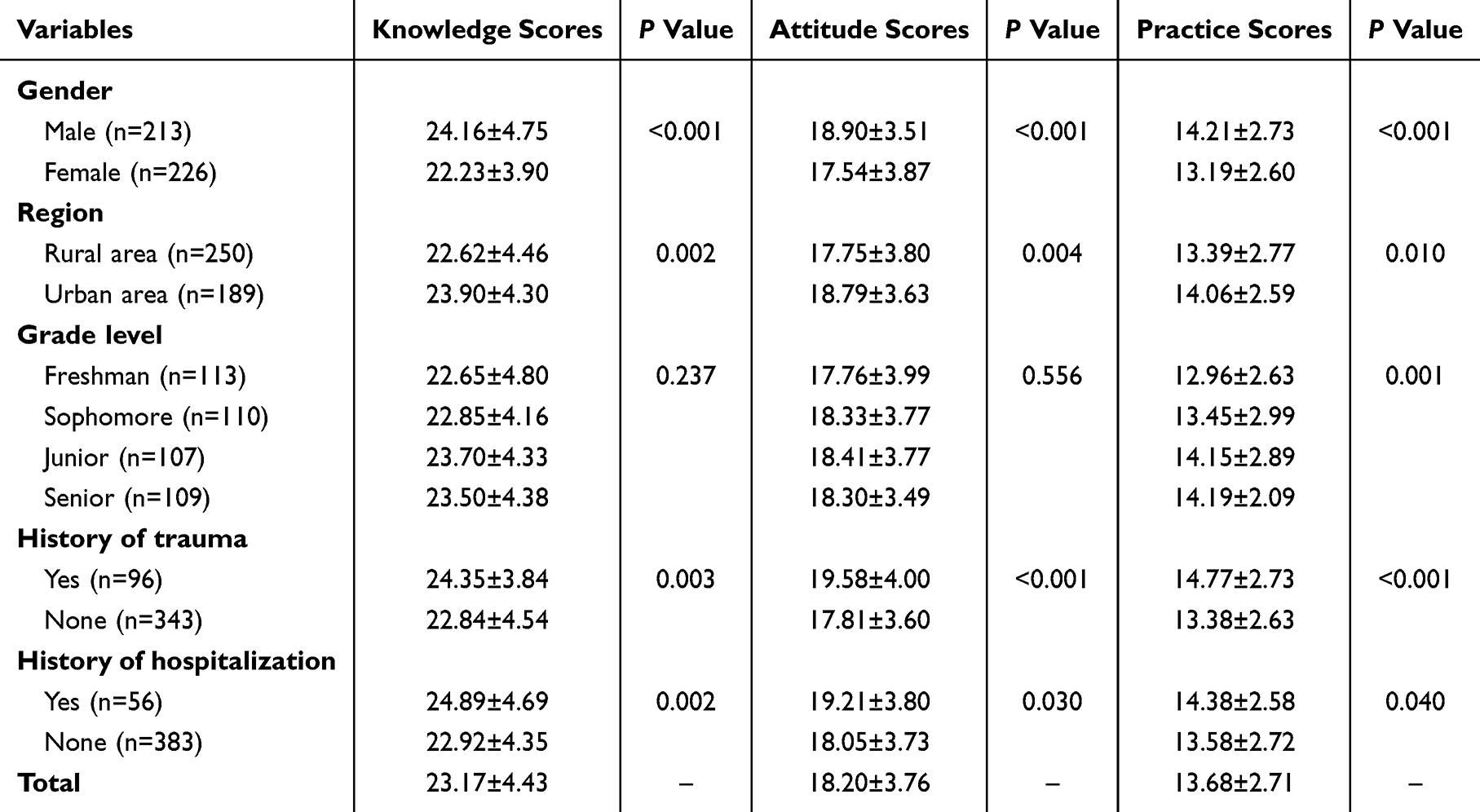 |
Table 1 Baseline Characteristics of Participants |
Distribution of Scores Across the Dimensions of the KAP
In the knowledge dimension (K1–K7), significant variation was observed (χ²=82.76, P< 0.001). Scores were higher for CPR-related knowledge (K1, 3.45±1.04) and the Heimlich maneuver for airway obstruction (K5, 3.52±1.03), but lower for items concerning self-protection (K6, 3.10± 1.10) and first-aid kit use (K4, 3.19±1.04). Similarly, attitude items (A1–A5) showed significant variation (χ²=54.39, P<0.001), with participants reporting strong willingness to learn (A4, 3.77±1.22) but comparatively lower confidence in self-protection during emergencies (A5, 3.40±1.07). For the practice items (P1–P4), significant differences were also observed (χ²=20.16, P <0.001), with the highest scores for safety adherence (P3, 3.55±1.07) and the lowest for trauma care practices (P4, 3.29±1.13) (Table 2).
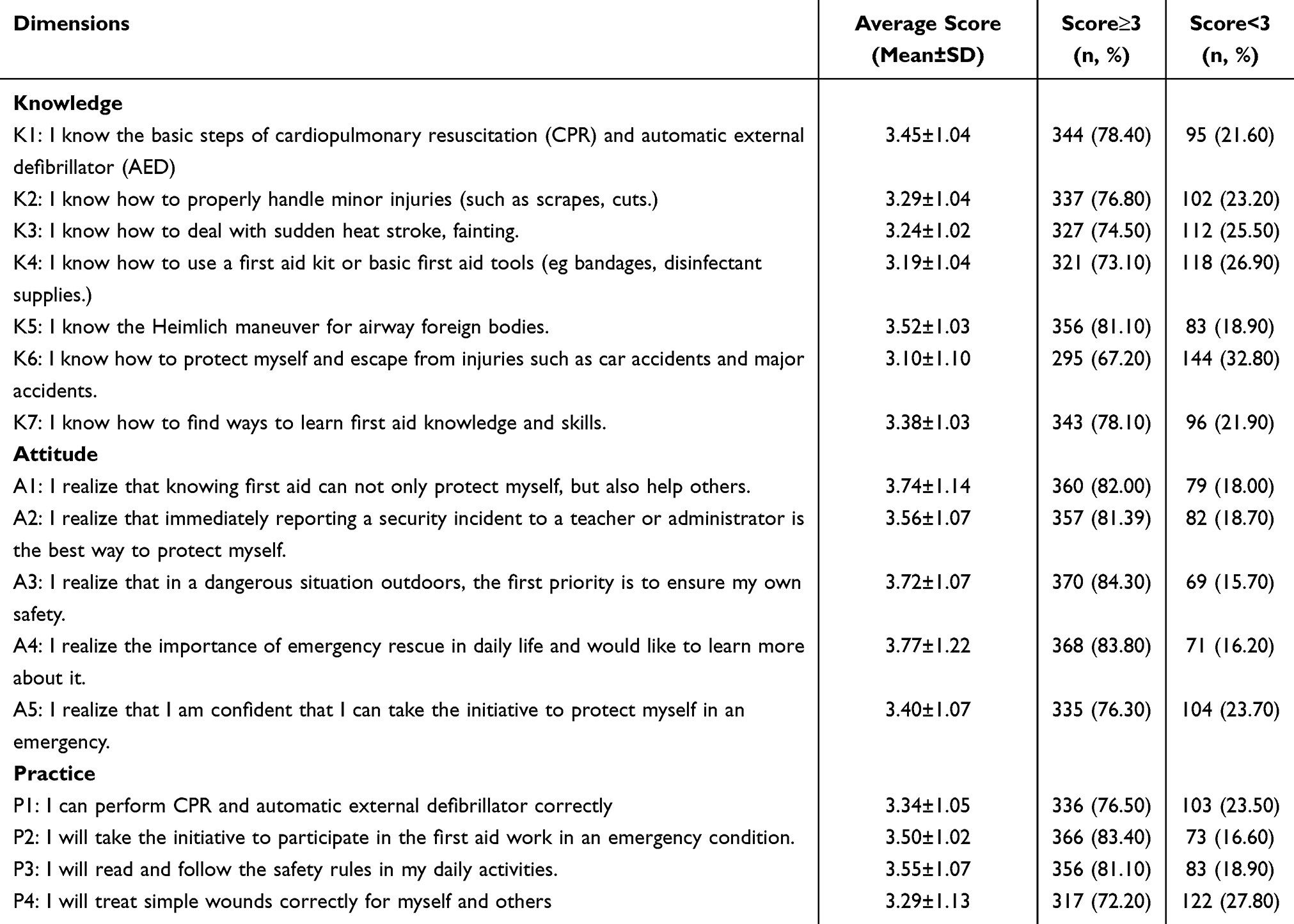 |
Table 2 Distribution of Scores Across the Dimensions of the KAP |
Analysis of Correlations Among KAP
Correlation analysis revealed a significant positive relationship between knowledge of prehospital emergency care and attitude (R=0.446, P<0.001). A strong positive correlation was also identified between knowledge and practice (R=0.514, P<0.001), and between attitude and practice (R=0.538, P<0.001) (Table 3).
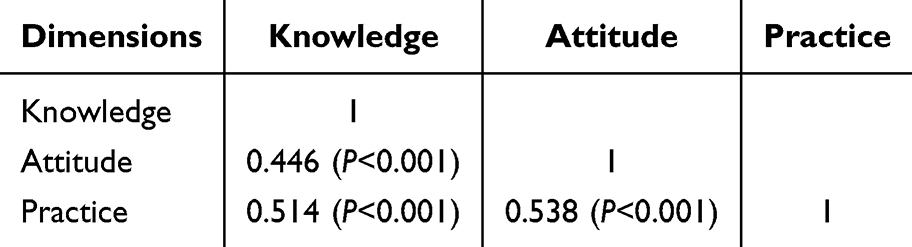 |
Table 3 Analysis of Correlations Among KAP |
Path Relationships of KAP
Path analysis using structural equation modeling revealed strong relationships among knowledge, attitude, and practice. Specifically, the influence of knowledge on attitude was statistically significant (β=0.831, P<0.001), Similarly, knowledge had a significant positive effect on practice (β=0.477, P<0.001). Additionally, the effect of attitude on practice was also significant (β=0.448, P<0.001) (Table 4). Therefore, knowledge not only directly influences practice but also indirectly affects it through the mediating role of attitude.
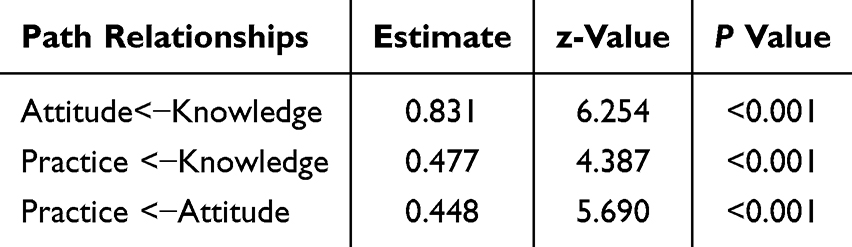 |
Table 4 Path Relationships of KAP |
Structural Equation Modeling
The goodness-of-fit indices of the structural equation model were shown in Table 5. The model yielded a CFI of 0.871 and a TLI of 0.847, which were slightly below the recommended threshold of 0.90. The RMSEA was 0.062 and the SRMR was 0.066, both within the acceptable limit of 0.08. The CMIN/DF ratio was 2.67, falling within the recommended range of 2–3 (Table 5).
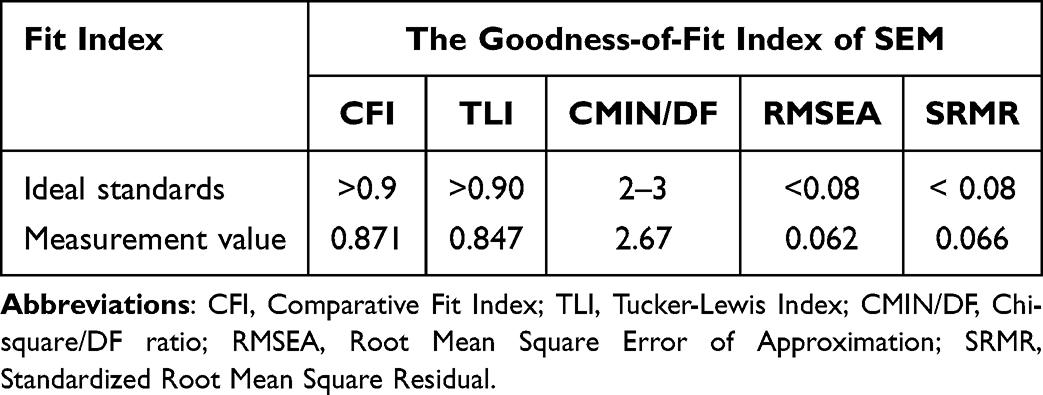 |
Table 5 The Fit Indices of the Structural Equation Model |
Additionally, in the knowledge dimension, the factor loadings of K1 to K7 ranged from 1.00 to 1.29, indicating that the knowledge measurement indicators provided strong explanations for the latent variable “knowledge”. In the attitude dimension, the factor loadings of A1 to A5 ranged from 0.81 to 1.01, demonstrating that the attitude indicators made significant contributions to the latent variable “attitude”. In the practice dimension, the factor loadings of P1 to P4 ranged from 0.79 to 1.04, showing that the latent variable “practice” was accurately represented by the corresponding indicators. In the structural equation model, the symbols e1–e16 represent the error terms (or residual variances) associated with each observed indicator. The residual variances (e1–e16) ranged from 0.68 to 1.29, with most values below 0.9, indicating that the majority of item variance was adequately explained by the corresponding latent constructs, although a few indicators (e4 and e16) showed relatively higher unexplained variance (Figure 1).
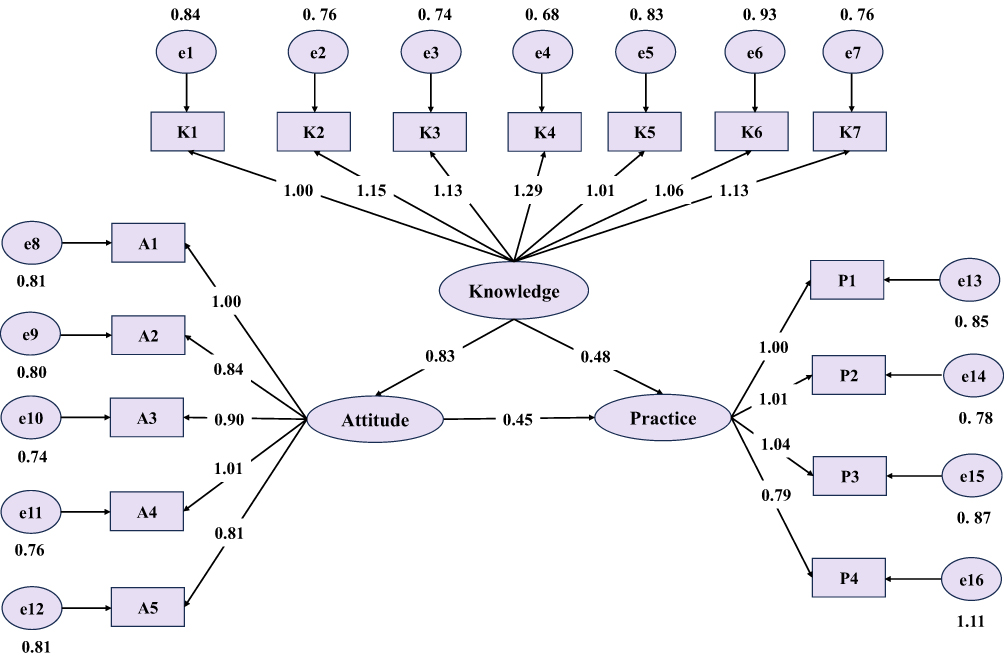 |
Figure 1 Structural equation modeling. |
Discussion
In this study, we systematically analyzed self-reported knowledge, attitudes, and practices in prehospital emergency care among medical students. The findings indicated that respondents who identified as male and those from urban regions reported higher levels of prehospital emergency care knowledge, more positive attitudes, and greater engagement in related practices compared to other groups. Additionally, students who reported previous experiences of trauma or hospitalization tended to report higher scores across all KAP dimensions than those without such experiences. Furthermore, the results indicated that respondents who perceived themselves as more knowledgeable about prehospital emergency care were more likely to demonstrate positive attitudes toward such care and to report engaging in related practices.
Previous studies have indicated that gender differences may influence understanding and attitudes toward diseases, utilization of healthcare services, and perspectives on patient care. For instance, female medical personnel tend to prioritize the humanization of care following clinical practice, whereas males were more focused on enhancing their technical skills and organizational abilities.22,23 Thus, differences in the focus of emergency care between genders may contribute to variations in KAP scores. Our research also indicated that medical students with a history of trauma or hospitalization have greater knowledge of emergency care and scored higher in attitudes and practices than those without such experiences. This might be because of their concern for these diseases, which usually lead to a focus on mastering this knowledge. A study conducted on elderly inpatients in emergency wards found that most elderly hospital patients understand all components of CPR, with those who have relatives suffering from serious illnesses demonstrating a higher level of understanding.24 Moreover, regional differences may contribute to variations in KAP scores, with medical students from urban areas demonstrating higher levels of knowledge, attitudes, and practices in emergency care compared to those from rural areas. A study by Liao Y et al found that rural women in China had lower levels of knowledge about cervical cancer.25 Moca AE et al similarly found that the living environment significantly influenced parents’ knowledge and attitudes, with urban parents more likely to answer questions about dental health correctly.26 Therefore, future training course designs should place greater emphasis on enhancing rural students’ knowledge of emergency care to improve their learning efficiency.
The self-reported questionnaire data indicated that medical students have a certain grasp of emergency care knowledge, and are quite familiar with CPR, AED, and the Heimlich maneuver for foreign body airway obstruction. However, their self-reported knowledge regarding self-protection and escape procedures was comparatively limited. Similar to our findings, Nedumpully NN et al reported that adolescents experience high rates of school bullying and demonstrate relatively low self-protection awareness.27 Additionally, among medical students, the rate of suicidal ideation can reach up to 11.5%.28 During the COVID-19 pandemic, Birhanu Z et al also found that students were not highly satisfied with their self-protection measures against COVID-19.29 Therefore, enhancing students’ self-protection awareness was essential for reducing school-related injuries and contribute to improvements in handling emergency situations. In terms of attitudes, most participants recognized the importance of mastering emergency care knowledge and expressed a willingness to act in emergency situations. However, a small number scored low, possibly indicating a lack of emphasis on the importance of emergency care knowledge or a lack of confidence in their abilities. Previous research has shown that increasing public awareness of first aid and early management of eye injuries can significantly reduce the risk of severe complications, which can otherwise lead to complete blindness.30
In addition, most medical students were able to correctly perform CPR, use AED, and adhere to safety protocols in actual operations. However, there were still a few who scored low, indicating that there was significant room for improvement in these practical skills. This was consistent with previous studies, which found that college students have strong learning abilities, express a willingness to participate in training, and that both traditional face-to-face teaching and online computer-based training have distinct advantages.31,32 In a study on the public’s knowledge of CPR in China, it was found that witnessing a real cardiac arrest patient deepens attention to cardiopulmonary resuscitation, and repeated hands-on training can significantly increase the willingness to initiate CPR and confidence in CPR skills.16 Therefore, relying solely on one educational method may lead to inefficiencies, while employing a variety of training approaches can help improve the effectiveness and efficiency of practical operations.
The results of the correlation analysis in this study indicated that the three dimensions of emergency care knowledge, attitudes, and practice were interconnected and support each other, and improving any one dimension can have a positive impact on the others. A study on nurses in clinical practice showed that clinical experience can stimulate the learning of knowledge, enhance learning ability, and cultivate nursing-related attitudes. A study on nurses in clinical practice showed that clinical experience can stimulate knowledge acquisition, enhance learning ability, and cultivate nursing-related attitudes.33 Additionally, improving the knowledge and attitudes of emergency department personnel promoted more effective treatment and interaction with older patients.34 Therefore, in medical education, it was essential to comprehensively address these three dimensions by strengthening foundational education in emergency care, fostering positive attitudes toward emergency care, providing more practical training opportunities, and regularly assessing students’ progress in knowledge, attitude, and practice.
The study found that participants reported a solid knowledge base in emergency care and expressed a willingness to receive further training, indicating readiness to participate in emergency actions as bystanders. The observed positive correlations among knowledge, attitude, and practice scores highlight the interconnection of these three dimensions,34,35 consistent with previous findings that effective clinical practice requires not only adequate knowledge but also supportive attitudes and practical competence, with each dimension reinforcing the others.36 However, confirmatory factor analysis revealed relatively low CFI and TLI values, suggesting suboptimal model fit. This may reflect the scale’s early-stage development, with certain knowledge and practice items capturing overlapping constructs, and the limited variability of a homogeneous sample from a single institution. Future work should refine item wording, address cross-loading issues, and validate the scale in larger, more diverse samples to enhance both fit and generalizability.
Given the close interrelationship among knowledge, attitude, and practice, curriculum developers are encouraged to design comprehensive training programs that effectively integrate theoretical instruction, attitude cultivation, and practical skills development. Incorporating diverse teaching approaches, such as face-to-face lectures, simulation-based training, and online learning modules, can enhance student engagement, facilitate deeper understanding, and improve retention of emergency care skills.37,38 By strengthening these competencies, medical students will be better equipped to respond confidently and effectively in real-life emergency situations, ultimately contributing to improved patient outcomes and the overall quality of healthcare delivery.
This study has several limitations. Firstly, this study used a cross-sectional design, collecting data at a single point in time, which limited the ability to determine the temporal sequence between variables and prevented establishing causality. Additionally, the measurement of KAP relied mainly on self-reported data, which may introduce subjective bias. Lastly, the questionnaire used in this survey may not be comprehensive enough to encompass all elements and may not fully reflect the participants’ situations. Therefore, future research should consider a longitudinal design and include diverse regions and populations to enhance external validity and improve the generalizability of results.
Conclusion
This study confirmed the close relationship among knowledge, attitude, and practice in prehospital emergency care, emphasizing the crucial mediating role of attitude in translating knowledge into practice. The findings offer important theoretical support for designing more targeted and effective emergency training strategies, suggesting that future emergency education should focus on the comprehensive enhancement of knowledge, attitude development, and practical skills to better equip medical students for real-life emergency situations.
Author Contributions
All authors made substantial contributions to the conception and design of the study, the conduct of the research, and the acquisition, analysis, and interpretation of the data. Each author was involved in drafting the manuscript or revising it critically for important intellectual content and approved the final version for publication. All authors have agreed on the journal of submission and accept collective responsibility for the integrity and accuracy of the work.
Funding
This work was financially supported by the Research Project on Medical Education in 2023 by the Medical Education Branch of the Chinese Medical Association (2023B266) and Wannan Medical College Teaching Quality and Education Reform Project (2024jyxm72).
Disclosure
All authors have no conflicts of interest to declare for this work.
References
1. Chaudhary GP, Sah K, Malla J, et al. Knowledge regarding Basic Life Support among Health Care Workers of the Hospital of Nepal. J Healthc Eng. 2023;2023(1):9936114. doi:10.1155/2023/9936114
2. Bedri H, Ayoub H, Engelbart JM, et al. Tourniquet Application for Bleeding Control in a Rural Trauma System: outcomes and Implications for Prehospital Providers. Prehosp Emerg Care. 2022;26(2):246–254. doi:10.1080/10903127.2020.1868635
3. Gräsner JT, Wnent J, Herlitz J, et al. Survival after out-of-hospital cardiac arrest in Europe - Results of the EuReCa TWO study. Resuscitation. 2020;148:218–226. doi:10.1016/j.resuscitation.2019.12.042
4. Shao F, Li H, Ma S, et al. Outcomes of out-of-hospital cardiac arrest in Beijing: a 5-year cross-sectional study. BMJ Open. 2021;11(4):e041917. doi:10.1136/bmjopen-2020-041917
5. Moretti K, Aluisio AR, Gallo marin B, et al. Confidence and knowledge in emergency management among medical students across Colombia: a role for the WHO basic emergency care course. PLoS One. 2022;17(1):e0262282. doi:10.1371/journal.pone.0262282
6. Skinner DV, Camm AJ, Miles S. Cardiopulmonary resuscitation skills of preregistration house officers. Br Med J. 1985;290(6481):1549–1550. doi:10.1136/bmj.290.6481.1549
7. Avabratha KS, Bhagyalakshmi K, Puranik G, et al. A Study of the Knowledge of Resuscitation among Interns. Al Ameen J Med Sci. 2012;5(2):152–156.
8. Orkin AM, Venugopal J, Curran JD, et al. Emergency care with lay responders in underserved populations: a systematic review. Bull World Health Organ. 2021;99(7):514–28h. doi:10.2471/BLT.20.270249
9. Hsia RY, Thind A, Zakariah A, et al. Prehospital and Emergency Care: updates from the Disease Control Priorities, Version 3. World J Surg. 2015;39(9):2161–2167. doi:10.1007/s00268-015-2997-5
10. Tapasak B, Mccall M, Cheung E, et al. Developing Medical Student Competencies, Clinical Skills, and Self-Efficacy With an Emergency Medical Responder Certification Course. Cureus. 2022;14(7):e26678. doi:10.7759/cureus.26678
11. Cevik AA, Cakal ED, Alao D, et al. Self-efficacy beliefs and expectations during an Emergency Medicine Clerkship. Int J Emerg Med. 2022;15(1):4. doi:10.1186/s12245-021-00406-0
12. Lu X, Feng S, Guo SG, et al. Development of an intensive simulating training program in emergency medicine for medical students in China. World J Emerg Med. 2022;13(1):24–26. doi:10.5847/wjem.j.1920-8642.2022.004
13. Deng J, Fang Y, Wang Q, et al. Meta-analysis of KAP toward COVID-19 in Chinese residents. Front Public Health. 2024;12:1279293. doi:10.3389/fpubh.2024.1279293
14. Jiang K, Zhang L, Xie C, et al. Understanding the Knowledge, Attitudes, and Practices of Healthy Eating among Adolescents in Chongqing, China: an Empirical Study Utilizing Structural Equation Modeling. Nutrients. 2024;16(1):167. doi:10.3390/nu16010167
15. Xia L, Zhang K, Huang F, et al. The intentions and factors influencing university students to perform CPR for strangers based on the theory of planned behavior study. Heliyon. 2024;10(19):e38135. doi:10.1016/j.heliyon.2024.e38135
16. Gao H, Liu X, Jiang Z, et al. Knowledge, attitudes, practices, and self-efficacy of the Chinese public regarding cardiopulmonary resuscitation: an online cross-sectional survey. Front Public Health. 2024;12:1341851. doi:10.3389/fpubh.2024.1341851
17. Ghauri SK, Javaeed A, Shah F, et al. Dismal situation of cardio pulmonary resuscitation knowledge and skills among junior doctors in twin cities of Pakistan. Pak J Med Sci. 2019;35(5):1295–1300. doi:10.12669/pjms.35.5.785
18. Suryanto, Plummer V, Boyle M. Knowledge, attitude, and practice of ambulance nurses in prehospital care in Malang, Indonesia. Australas Emerg Care. 2018;21(1):8–12. doi:10.1016/j.auec.2017.12.001
19. Abdelrahman D, Aleyeidi NA, Alqahtani HT, et al. Assessment of knowledge, attitude, and practice toward first aid among female school educators in Riyadh, Saudi Arabia: a cross-sectional study. Front Public Health. 2024;12:1482181. doi:10.3389/fpubh.2024.1482181
20. Zobdeh A, Bandari R, Heravi-Karimooi M, et al. Development and validation of the short form domestic elder abuse assessment questionnaire (SF-DEAQ). BMC Geriatr. 2023;23(1):654. doi:10.1186/s12877-023-04388-x
21. Maalim Issack A, Jiru T, Wubetie Aniley A. Assessment of knowledge, attitude and practice on first aid management of choking and associated factors among kindergarten teachers in Addis Ababa governmental schools, Addis Ababa, Ethiopia. A cross-sectional institution-based study. PLoS One. 2021;16(7):e0255331. doi:10.1371/journal.pone.0255331
22. Weyers S, Vervoorts A, Dragano N, et al. The Gender Lens: development of a learning aid to introduce gender medicine. GMS J Med Educ. 2017;34(2):Doc17. doi:10.3205/zma001094
23. González-GARCíA M, Lana A, Zurrón-Madera P, et al. Nursing Students’ Experiences of Clinical Practices in Emergency and Intensive Care Units. Int J Environ Res Public Health. 2020;17(16):5686. doi:10.3390/ijerph17165686
24. Sharma R, Jayathissa S, Weatherall M. Cardiopulmonary resuscitation knowledge and opinions on end of life decision making of older adults admitted to an acute medical service. N Z Med J. 2016;129(1428):26–36.
25. Liao Y, Ye L, Cai Q, et al. Status and influencing factors of knowledge, attitudes and practices relating to screening for breast and cervical cancer among rural women aged 40–65 years in China: a cross-sectional study. BMJ Open. 2024;14(10):e080945. doi:10.1136/bmjopen-2023-080945
26. E MA, I JR, T MR, et al. Parental Knowledge, Attitudes, and Practices Regarding Early Childhood Caries in Bihor, Romania: a Cross-Sectional Study. Children. 2024;11(9). doi:10.3390/children11091131.
27. N NN, K PS, Experiences RS. Perceptions and Attitudes Toward Bullying Among School-Going Adolescents: a Cross-Sectional Study from South India. J Child Adolesc Trauma. 2024;17(3):1–12. doi:10.1007/s40653-024-00631-8
28. Huang F, Lu W, Zhao X, et al. Suicidal ideation in medical students of Hebei province: prevalence and associated factors. Front Psychiatry. 2024;15:1398668. doi:10.3389/fpsyt.2024.1398668
29. Birhanu Z, Tesfaye G, Tareke KG. COVID-19 self-protective practices and associated factors among secondary school students in Jimma town, Jimma, Oromia, Southwest Ethiopia. Front Public Health. 2022;10:1082563. doi:10.3389/fpubh.2022.1082563
30. Dhabaan WA, Almutairi KH, Alzahrani AA, et al. Assessing knowledge and practice about eye injuries first aid, with awareness about the importance of early management among general population in Asser Region, 2020. J Family Med Prim Care. 2021;10(5):2022–2027. doi:10.4103/jfmpc.jfmpc_2223_20
31. Ali DM, Hisam B, Shaukat N, et al. Cardiopulmonary resuscitation (CPR) training strategies in the times of COVID-19: a systematic literature review comparing different training methodologies. Scand J Trauma Resusc Emerg Med. 2021;29(1):53. doi:10.1186/s13049-021-00869-3
32. Qin Z, Zheng S, Liu C, et al. The knowledge, training, and willingness of first year students in Xuzhou, China to perform bystander cardiopulmonary resuscitation: a cross-sectional study. Front Public Health. 2024;12:1444970. doi:10.3389/fpubh.2024.1444970
33. Zhang Q, Zeng T, Chen Y, et al. Assisting undergraduate nursing students to learn evidence-based practice through self-directed learning and workshop strategies during clinical practicum. Nurse Educ Today. 2012;32(5):570–575. doi:10.1016/j.nedt.2011.05.018
34. Deasey D, Kable A, Jeong S. Influence of nurses’ knowledge of ageing and attitudes towards older people on therapeutic interactions in emergency care: a literature review. Australas J Ageing. 2014;33(4):229–236. doi:10.1111/ajag.12169
35. Burch V, Nash R, Zabow T, et al. A structured assessment of newly qualified medical graduates. Med Educ. 2005;39(7):723–731. doi:10.1111/j.1365-2929.2005.02192.x
36. Shabani F, Hasanzadeh H, Emadi A, et al. Radiation Protection Knowledge, Attitude, and Practice (KAP) in Interventional Radiology. Oman Med J. 2018;33(2):141–147. doi:10.5001/omj.2018.26
37. Cheng S, Ng SYJ, Ong KY, et al. Assessing Knowledge, Attitudes, and Perceptions of Medical Students Toward Emergency Preparedness and Disaster Medicine in Singapore. Disaster Med Public Health Prep. 2023;17:e438. doi:10.1017/dmp.2023.85
38. Naser WN, Saleem HB. Emergency and disaster management training; knowledge and attitude of Yemeni health professionals- a cross-sectional study. BMC Emerg Med. 2018;18(1):23. doi:10.1186/s12873-018-0174-5
 © 2025 The Author(s). This work is published and licensed by Dove Medical Press Limited. The
full terms of this license are available at https://www.dovepress.com/terms
and incorporate the Creative Commons Attribution
- Non Commercial (unported, 4.0) License.
By accessing the work you hereby accept the Terms. Non-commercial uses of the work are permitted
without any further permission from Dove Medical Press Limited, provided the work is properly
attributed. For permission for commercial use of this work, please see paragraphs 4.2 and 5 of our Terms.
© 2025 The Author(s). This work is published and licensed by Dove Medical Press Limited. The
full terms of this license are available at https://www.dovepress.com/terms
and incorporate the Creative Commons Attribution
- Non Commercial (unported, 4.0) License.
By accessing the work you hereby accept the Terms. Non-commercial uses of the work are permitted
without any further permission from Dove Medical Press Limited, provided the work is properly
attributed. For permission for commercial use of this work, please see paragraphs 4.2 and 5 of our Terms.
Recommended articles

Managing Pain in Low Resource Settings: Healthcare Professionals’ Knowledge, Attitude and Practice Regarding Pain Management in Western Nepal
Thapa P, KC B, Lee SWH, Dujaili JA, Gyawali S, Mohamed Ibrahim MI, Alrasheedy AA
Journal of Pain Research 2022, 15:1587-1599
Published Date: 2 June 2022

Knowledge, Attitudes, and Practices Regarding Ergonomic Hazards Among Healthcare Workers in a Saudi Government Hospital

ALHazim SS, Al-Otaibi ST, Herzallah NH
Journal of Multidisciplinary Healthcare 2022, 15:1771-1778
Published Date: 24 August 2022
Self-Medication Prevalence and Factors Associated with Knowledge and Attitude Towards Self-Medication Among Undergraduate Health Science Students at GAMBY Medical and Business College, Bahir Dar, Ethiopia
Siraj EA, Yayehrad AT, Kassaw AT, Kassahun D, Solomon E, Abdela H, Gizachew G, Awoke E
Patient Preference and Adherence 2022, 16:3157-3172
Published Date: 5 December 2022
Dermatologists’ Knowledge, Attitude, and Practice Pattern Toward Low-Dose Oral Minoxidil in Hair Loss in Saudi Arabia
Altalhab S
Clinical, Cosmetic and Investigational Dermatology 2024, 17:653-662
Published Date: 15 March 2024
Knowledge, Attitude and Practice of Antimicrobial Usage Among Undergraduate Medical Students in Universities and Institutes, Thamar, Yemen
Al-Haifi AY, Al-Shami AS, Al-Akhali KM, Al-Mehdar AA
Infection and Drug Resistance 2025, 18:1675-1686
Published Date: 1 April 2025