
Back to Journals » Journal of Pain Research » Volume 19
Spinal Cord Stimulation for Pain Management Following Spinal Cord Injury: A Systematic Review
Authors Gallacher DM  , Suarez M, Jevotovsky DS , Oehlermarx W , Azad TD, Dovlatyan R, Chopra H, Broachwala M, AlFarra T , Petersen EA , Patel KV, Orhurhu V, Castellanos J
Received 10 October 2025
Accepted for publication 16 March 2026
Published 30 March 2026 Volume 2026:19 573333
DOI https://doi.org/10.2147/JPR.S573333
Checked for plagiarism Yes
Review by Single anonymous peer review
Peer reviewer comments 2
Editor who approved publication: Dr Andrea Tinnirello
David M Gallacher,1 Michael Suarez,2 David S Jevotovsky,3 Whitman Oehlermarx,3 Tej D Azad,4 Ruben Dovlatyan,3 Harman Chopra,2 Mustafa Broachwala,5 Tariq AlFarra,6 Erika A Petersen,7 Kiran V Patel,8 Vwaire Orhurhu,9 Joel Castellanos10
1Department of Physical Medicine and Rehabilitation, University of Colorado, Aurora, CO, USA; 2Department of Physical Medicine and Rehabilitation, Johns Hopkins University, Baltimore, MD, USA; 3Department of Physical Medicine and Rehabilitation, NYU Langone Health, New York, NY, USA; 4Department of Neurosurgery, Johns Hopkins University, Baltimore, MD, USA; 5National Spine and Pain Centers, White Marsh, MD, USA; 6Department of Rehabilitation and Physical Medicine, Pain Management, Mount Sinai Health System, New York, NY, USA; 7Department of Neurosurgery, UAMS Health, Little Rock, AR, USA; 8Department of Anesthesiology, Pain Medicine, Northwell Health, New York, NY, USA; 9MVM Health, East Stroudsburg, PA, USA; 10Division of Pain Medicine, University of California - San Diego, La Jolla, CA, USA
Correspondence: David M Gallacher, Department of Physical Medicine and Rehabilitation, University of Colorado, Aurora, CO, USA, Email [email protected]
Purpose: Chronic pain affects more than 80% of individuals with spinal cord injury (SCI), profoundly impairing mobility, rehabilitation, and quality of life. Conventional pharmacologic and non-pharmacologic treatments often fail to achieve adequate relief. Spinal cord stimulation (SCS) has emerged as a potential neuromodulatory therapy for neuropathic pain; however, its role in SCI remains insufficiently defined.
Patients and methods: A systematic review was conducted in accordance with PRISMA 2020 guidelines and registered with PROSPERO (CRD42024541622). Comprehensive searches of PubMed, Embase, Web of Science, and the Cochrane Library were performed through April 2024. Eligible studies evaluated SCS for chronic pain in adults with SCI and reported validated pain or patient-reported outcomes. Screening, eligibility assessment, and data extraction were performed in duplicate. Risk of bias and certainty of evidence were evaluated using the Grading of Recommendations Assessment, Development and Evaluation (GRADE) framework and the MethodologicAl STandards for Epidemiological Research (MASTER) tool.
Results: From 1064 records, 10 studies involving 43 participants met inclusion criteria. Most were case reports or small case series, with one prospective cohort study. All studies reported pain improvement after SCS using heterogenous outcome formats; minor adverse events were reported in 3 studies, and the remaining 7 studies reported none. The overall certainty of evidence was rated very low due to small sample sizes, heterogeneity in study design, and methodological limitations. Three ongoing clinical trials evaluating SCS for pain in SCI were also identified.
Conclusion: Preliminary, very low-certainty evidence indicates that SCS may be a promising option for chronic pain after SCI, with limited reported complications in the available literature. Higher-quality studies are required to confirm benefit, characterize risks, and guide patient selection and programming.
Prospero Registration Number: CRD42024541622.
Keywords: spinal cord stimulation, spinal cord injury, chronic pain, pain management
Introduction
SCI is a life-altering condition that affects over 17,000 individuals annually in the United States alone, with global estimates between 250,000 and 500,000 new cases each year.1 SCI results in varying degrees of functional impairment, categorized by the American Spinal Injury Association Impairment Scale (AIS), and significantly impacts multiple bodily systems such as cardiovascular, genitourinary, and neurological functions.2,3 Chronic pain is a prevalent and debilitating sequela following SCI, significantly affecting over 80% of patients’ mental health, mobility, rehabilitation potential, and overall quality of life.4–6
Pain management after SCI is complex, involving a mix of physical, psychological, and emotional elements.7 At the biological level, painful stimuli activate nociceptors, triggering a biochemical cascade that transmits electrical signals to the brain through synapses in the spinal cord’s dorsal horn.8,9 In many patients with SCI, direct nervous system damage results in neuropathic pain, which disrupts normal pain signal processing and further complicates effective treatment.10
Pain following SCI frequently demonstrates resistance to conventional treatment methods, posing considerable therapeutic challenges.11 Standard pharmacological interventions include anticonvulsants (eg, pregabalin and gabapentin), antidepressants (eg, amitriptyline and duloxetine), non-steroidal anti-inflammatory drugs (NSAIDs) (e.g., naproxen and ibuprofen), opioids (eg, tramadol and morphine), and topical treatments (eg, lidocaine and capsaicin). Complementary non-pharmacologic therapies, such as physical therapy, occupational therapy, transcutaneous electrical nerve stimulation, acupuncture, and cognitive-behavioral therapy, offer additional pain management support.12 Despite these treatment options, limited efficacy and significant side-effect profiles have prompted a growing interest in alternative and interventional approaches.
SCS has emerged as a promising interventional technique for chronic pain management, particularly neuropathic pain.13 By delivering electrical impulses to the dorsal column of the spinal cord, SCS modulates and dampens pain signals before they reach the brain. Robust clinical research supports the efficacy of SCS, demonstrating significant pain reduction and improved patient quality of life, with long-term studies indicating sustained benefits.14 Despite strong evidence supporting the effectiveness of SCS in general adult populations with chronic pain,15–17 the specific use of SCS for managing chronic pain in patients with SCI remains understudied.
However, SCI-related pain may not be directly comparable to other neuropathic pain states typically represented in SCS trials. SCI frequently involves central neuropathic pain and altered spinal cord circuitry, and dorsal column injury may affect stimulation targeting and response, limiting generalizability from non-SCI populations.13,18 Prior work has highlighted that SCI-specific clinical evidence for SCS remains limited and heterogeneous, supporting the need for an SCI-focused review.
To our knowledge, this systematic review is the first to explicitly evaluate the existing literature on spinal cord stimulation’s role in addressing chronic pain in individuals living with spinal cord injury.
Methods
Overview
This review abides by the organizational standards of the updated Preferred Reporting Items for Systematic Reviews and Meta-analysis (PRISMA) 2020 guidelines.19 No a priori protocol was published in a peer-reviewed journal. Registration with the International Prospective Register of Systematic Reviews (PROSPERO) was approved in February 2024 (ID: CRD42024541622).
Study Eligibility
Clinical studies on the use of SCS in patients with SCI were included in the initial abstract review. The primary outcome of interest was the effectiveness of SCS in alleviating pain, assessed via outcome measures such as the Visual Analog Scale (VAS) and the Numerical Pain Rating Scale (NRS), or other pain-related scores. As a secondary outcome, this review examined SCS safety in the SCI population, focusing on the reported adverse events (AE). All studies included in this review were either published in English or available in English translation. Studies were excluded if they were conducted on non-human subjects or pediatric participants younger than 18 years. Reviews and letters to the editor were also excluded.
Search Strategy
A comprehensive literature search was conducted by an institutional librarian (RM, Acknowledgements) on April 26, 2024, and updated on February 5, 2026, to identify all relevant articles on SCS for the treatment of SCI. A comprehensive review of PubMed, Embase, Web of Science, and Cochrane Central Register of Controlled Trials was searched using terms such as “spinal cord stimulation”, “spinal cord injury”, and “pain” from database inception to February 2026. The complete search strategy is outlined in Supplemental File 1. The updated search was followed by computer deduplication.
Study Selection
Two independent reviewers (DMG and MS) independently assessed the studies for inclusion based on their relevance to SCS’s effectiveness in the SCI population. Discrepancies were resolved after discussion with a third reviewer (DSJ). After identifying relevant studies based on abstracts, the inclusion process involved a thorough evaluation of the full texts. Outcomes extracted include VAS, NRS, other pain-related outcomes, and safety measured by AE.
Data Extraction and Assessment of Study Quality
Authors (DMG, MS, and WO) independently collected data from full-text articles using a template data extraction sheet, and in instances where consensus was not reached, a fourth researcher (DSJ) acted as a tiebreaker. Information gathered included study characteristics, patient demographics, procedural specifics, outcomes, and adverse events. The primary outcome was the change in the patients’ pain levels. The Methodological Standards for Epidemiological Research Scale was used to assess the internal validity of the included studies (Supplemental File 2) and identify potential biases that may influence study results.20 Included studies were also assessed for study quality via the American Medical Association’s Journal of Ethics’ guidelines for Rating Evidence in Medical Literature,21 the Grading of Recommendations Assessment, Development and Evaluation (GRADE) Scale was applied to determine the strength of evidence.22
Analysis and Post Hoc Changes to a Priori Protocol
Substantial differences in study outcome measures and follow-up durations made a meta-analysis – originally outlined in our a priori study protocol – inappropriate for synthesizing the evidence. Therefore, we present a narrative synthesis, presenting findings to highlight observed trends and outcomes in a systematic review format.
Results
Literature Search
A total of 1064 search results were identified across four databases: PubMed, Embase, Web of Science, and Cochrane Central Register of Controlled Trials. A total of 455 duplicate studies were removed, leaving 609 unique records for screening. After title and abstract screening, 584 studies were excluded. Twenty-five full-text articles were assessed for eligibility. Manual review of the references of select review articles was also performed by one reviewer (DMG) to identify potentially missed articles. A total of 10 studies met the inclusion criteria and were included in the final review. A reference list of all studies that underwent full-text review but were excluded, in addition to the reason for exclusion, can be found in Supplemental File 3. This selection process is detailed in the PRISMA flow diagram (Figure 1). Clinicaltrials.gov was also searched for ongoing studies using SCS in the SCI patient population.
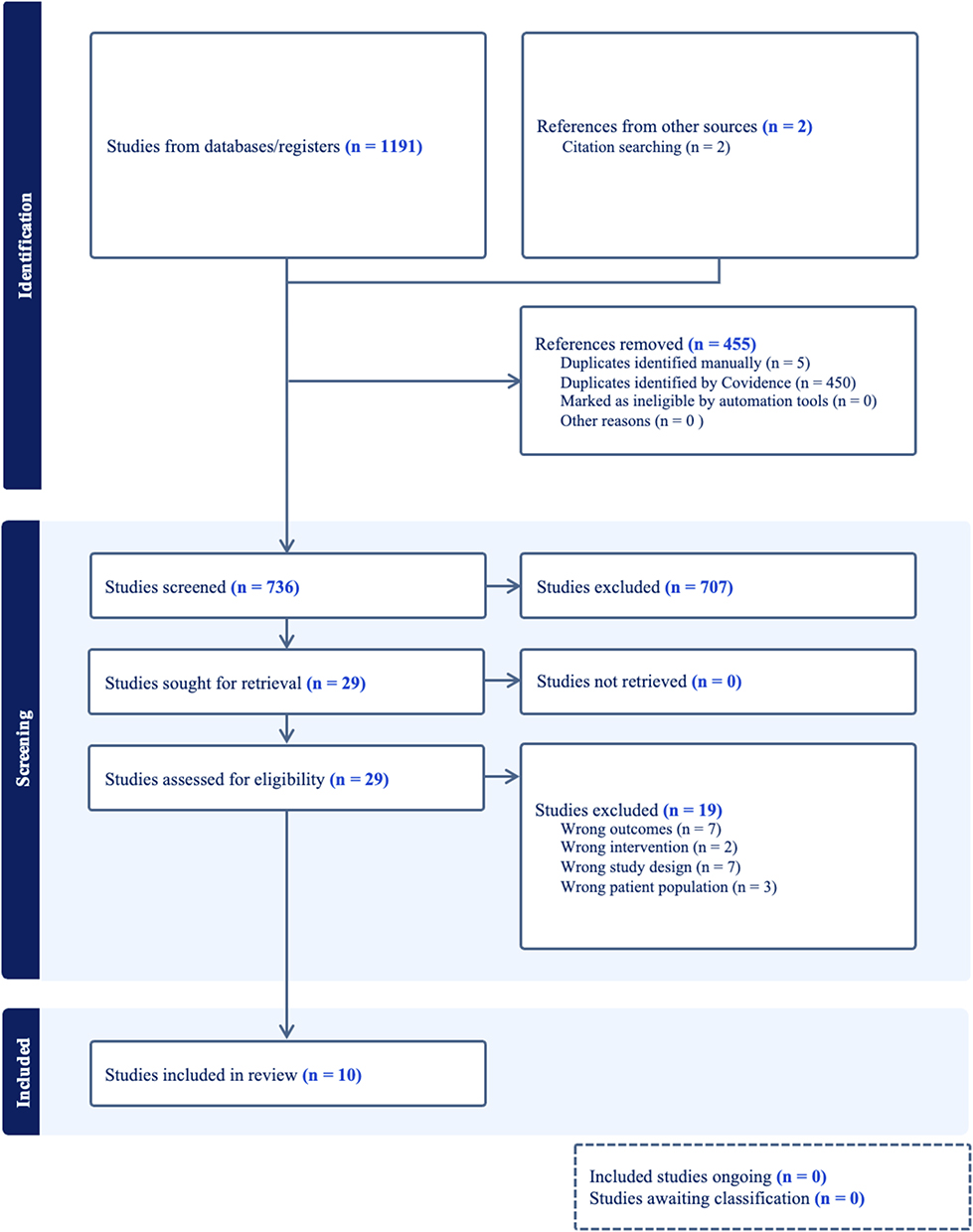 |
Figure 1 PRISMA flow diagram of study identification, screening, eligibility assessment, and inclusion. |
Study Characteristics
In total, the 10 included studies described 43 individuals (Table 1) with SCI who were treated with SCS for pain management.23–32 Table 1 provides individual study details organized by level of evidence. The majority of studies were single-patient case reports (n = 7), with the remainder including one retrospective observational study, one case series, and one prospective cohort study. The majority of studies were classified as Level IV evidence (n = 8), with one study each rated as Level III and Level V. The GRADE quality of evidence was “very low” (Table 2).
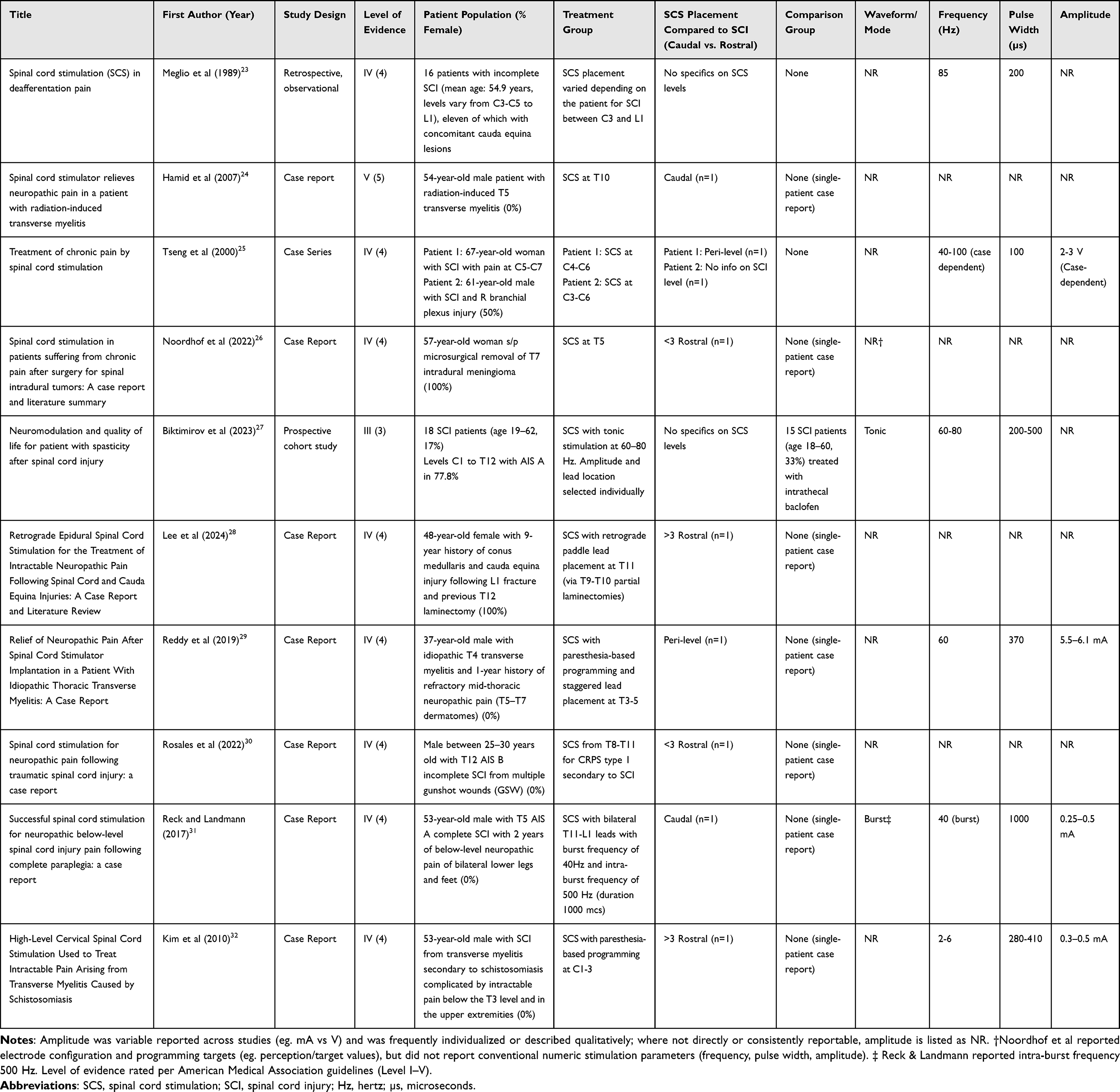 |
Table 1 Study Characteristics |
 |
Table 2 GRADE Evidence Summary |
Patient demographics varied across studies. Ages ranged from mid-20s to late 60s, and, where reported, most participants were male. The underlying cause of SCI was either traumatic or non-traumatic, with both complete and incomplete injuries represented. SCS leads were placed at cervical, thoracic, or conus medullaris levels, most commonly between C3 and T10. Placement of SCS electrodes in relation to the SCI level (caudal, peri-level, or rostral) varied among studies. Outcome measures typically included the Numerical Rating Scale (NRS), Visual Analog Scale (VAS), and patient-reported analgesia percentages.
The median follow-up duration was 10.5 months, with a range from 3 months to 36 months. While one study involved 18 patients, and another study included 16 patients, the remainder described only 1–2 participants per study. One study disclosed a source of funding, while the others either reported no funding or did not specify (Table 1 and Supplemental File 4).
Outcome Assessments
All 10 studies revealed some level of pain improvement following the placement of SCS in patients with SCI, although not all studies reported statistical analysis. All of the included studies reported some degree of pain improvement following SCS, though reporting formats varied (Table 3). A subset reported pain relief as a percent of analgesia/pain reduction, while others reported pre-post changes on the NRS or VAS scales, from which percent reduction can be estimated when baseline and follow-up values were available.
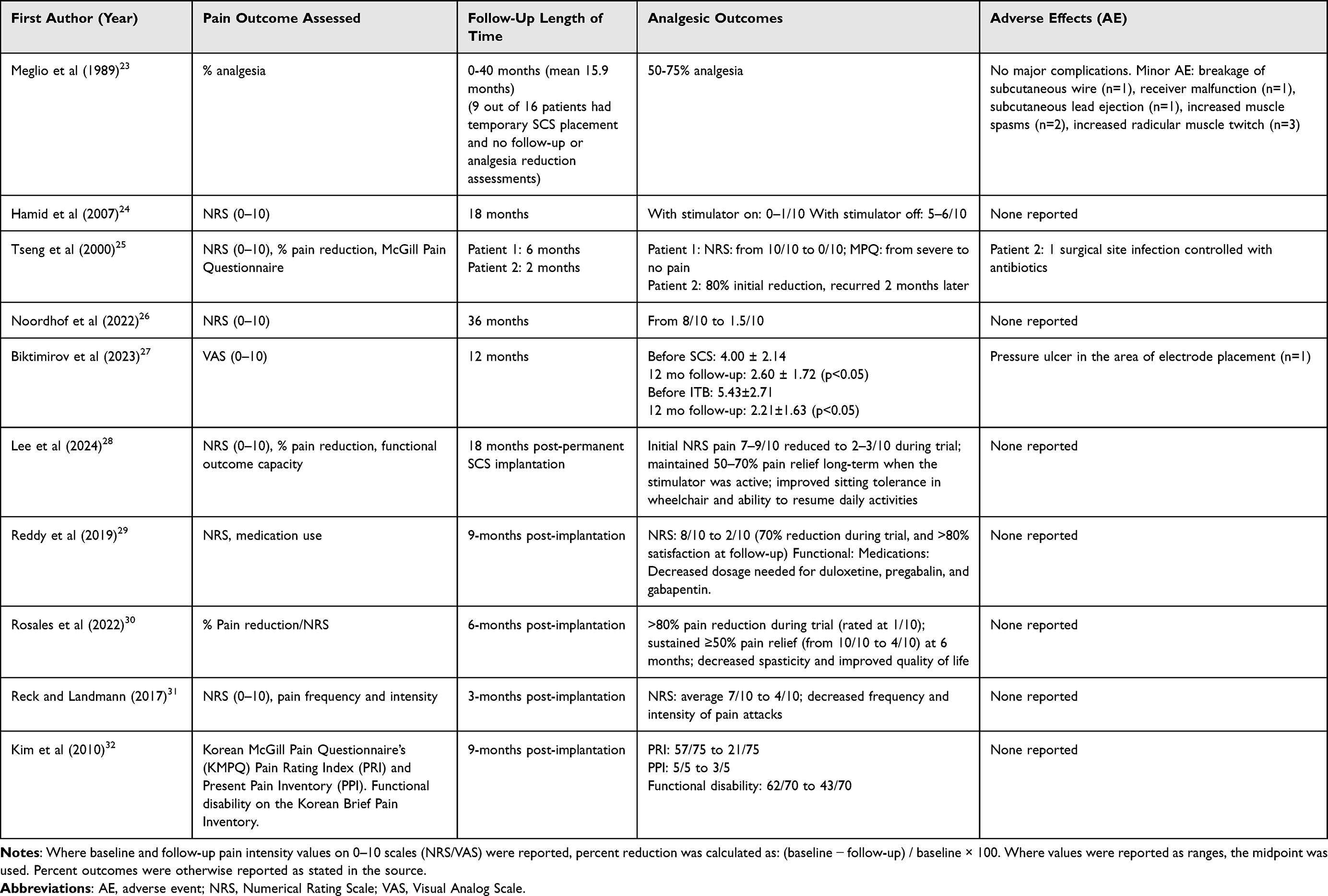 |
Table 3 Pain Outcomes and Safety |
The most common outcome measure was the NRS, which was reported in seven of the 10 studies. Outcome reporting formats varied: some studies reported percent analgesia/pain reduction, and some used alternative pain indices (eg. MPQ-derived measures), limiting cross-study comparability. Several studies reported multiple outcome types, including one that incorporated the McGill Pain Questionnaire.25 The main findings of the pain outcome assessment are summarized in (Table 3).
All studies that reported NRS outcomes demonstrated reductions in pain scores, with baseline values ranging from 7 to 10 out of 10 and post-treatment scores between 0 and 4 out of 10. In one case report, the NRS decreased from 10/10 pre-SCS implantation to 0/10 post-SCS with sustained relief at the 6-month follow-up.25 A separate case demonstrated a reduction from 8/10 to 1.5/10 over a 36-month period.26
The one prospective cohort study included in the review reported pain reduction across all 18 participants at 12 months but did not provide individual-level numerical scores.27 In the studies that assessed percent pain relief, reported outcomes ranged from 50% to 75% improvement.23,28,29 Meglio et al reported that 9 out of 16 patients experienced pain relief within this range, with follow-up extending up to 40 months.23 Another study described 50–70% long-term pain relief, while the stimulator was active,28 and one study reported a 70% reduction in NRS pain scores during the trial period.29 These findings were based on patient-reported measures and were not accompanied by standardized statistical comparisons to baseline or control groups.
The studies that relied on qualitative or narrative reporting also described meaningful reductions in pain, with some authors noting secondary improvements in sleep, function, and overall quality of life. However, these secondary outcomes were inconsistently reported and were not formally compared to alternative or sham interventions.
Safety Assessment
Three out of the 10 studies (30%) reported adverse events (AE) following SCS as detailed in (Table 3). AEs included surgical site infection, lead migration, and pressure-related complications, all of which were managed conservatively or with minor procedural interventions. One case series reported a superficial surgical site infection that was treated successfully with oral antibiotics.25 The prospective cohort study by Biktimirov et al which included 18 patients, reported one pressure ulcer in the area of electrode placement.27
In the retrospective study by Meglio et al, eight minor adverse events and no major adverse events were reported among 16 patients23 These included pain at the electrode site (n=2), hardware malfunctions such as lead breakage or receiver failure (n=2), subcutaneous lead ejection (n=1), stimulation-induced muscle spasms or twitching (n=5), and one case of tonic muscle contractions due to pyramidal tract activation, which led to discontinuation of SCS despite reported analgesic benefit. Rates of adverse events were not compared to a control group in any of the studies, and no study conducted a formal statistical analysis of safety outcomes. No serious or life-threatening AEs were reported across the included studies.
Ongoing Clinical Trials
Three ongoing clinical trials investigating the use of SCS in patients with SCI, where pain is an outcome measure, were identified. The first trial (NCT04894732) is a randomized, double blind, crossover trial. Adults under the age of 80 years old with traumatic thoracic SCIs were assigned epidural electrical stimulation “on” or “off” and will undergo crossover of assignment at 9 months. Pain outcomes in this study include the primary outcome of the Multidimensional Pain Inventory (MPI)-SCI average activity score, as well as the secondary outcome of change in pain as measured by a 10-point NRS. The second trial (NCT06847295) is a single-group assignment where patients aged 18–50 with stable SCI (C7-T10 AIS A or B) at least 6 months post-injury will undergo epidural electric stimulation and intensive rehabilitation. Pain perception (Douleur Neuropathique 4 question), pain severity (brief pain inventory), and pain-related disability (pain disability index) are to be measured as secondary outcomes. The third trial (NCT06939660) explores the use of a brain–machine interface (BCI)-assisted SCS system and exoskeleton system in a single group assignment of SCI patients (AIS A, B, or C), aged 14–65 years, with diagnoses at least 6 months prior. Pain intensity will be recorded as a secondary outcome in this trial. Ongoing clinical trials are summarized in Table 4.
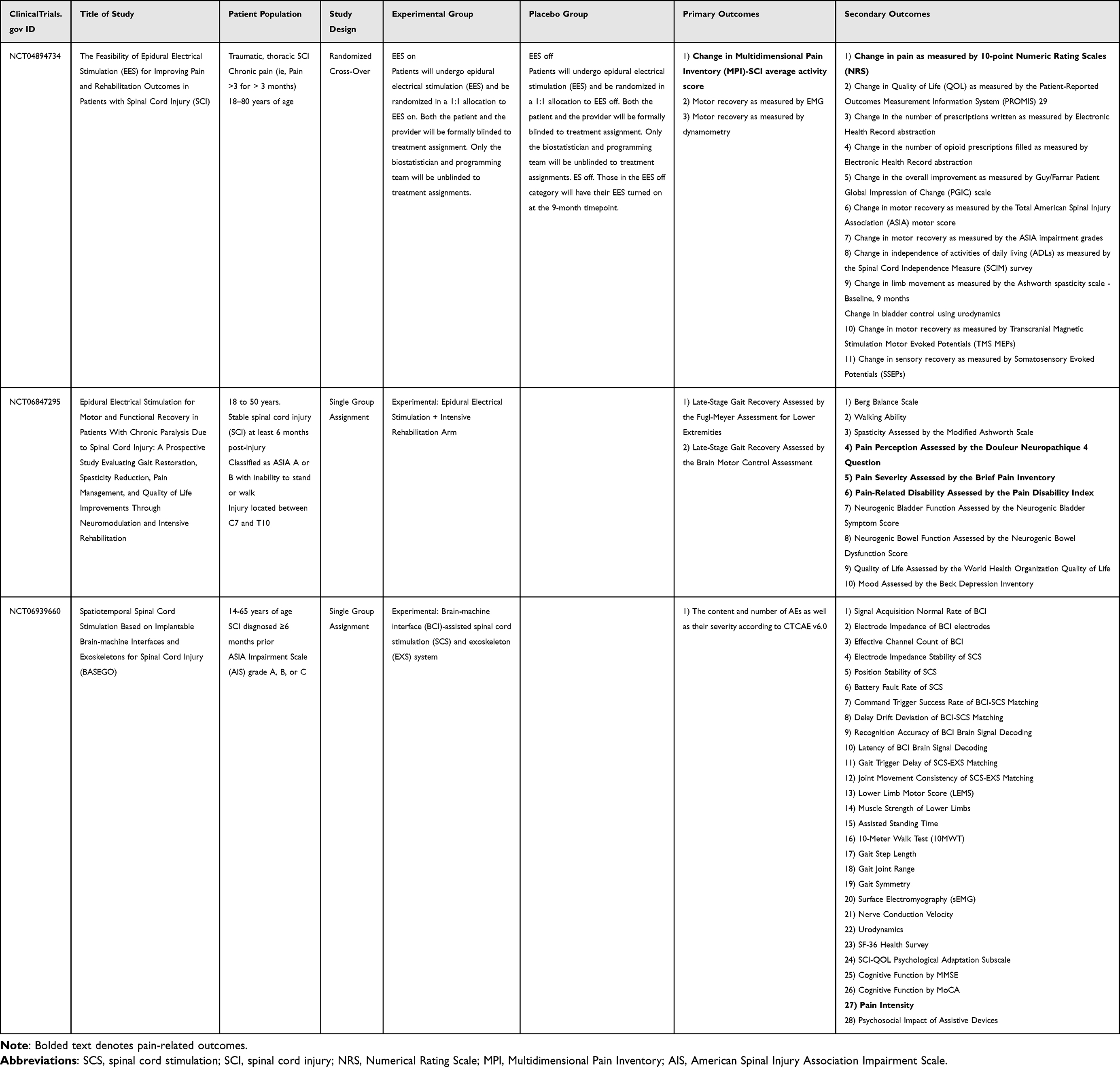 |
Table 4 Ongoing Clinical Trials |
Discussion
Overview of Findings
This systematic review consolidates current evidence on the use of SCS for managing chronic pain in patients with SCI, covering 10 papers and 43 patients. These studies highlight pain reduction in the majority of patients without major complications, reinforcing safety and pointing to a potential analgesic effect of SCS in the SCI population. It is important to note that the evidence base remains limited, with a GRADE rating of “very low” due to heterogeneity and the predominance of case reports or small case series, as well as the notable absence of randomized controlled trials. Moreover, the heterogeneity in electrode placement and inconsistent reporting and variability in stimulation parameters limited cross-study comparability and precluded meta-analysis.
Reporting of stimulation programming was inconsistent across studies (Table 1), with six of ten studies reporting at least one conventional stimulation parameter (eg. frequency, pulse width, amplitude), and one additional study reporting programming targets without conventional numeric parameters. Reported frequencies spanned approximately 2–100 Hz and pulse widths 100–1000 µs, while amplitude reporting varied substantially (mA vs. V vs. qualitative/individualized), limiting comparability and preventing conclusions about optimal programming.
Clinical Significance
Chronic pain affects more than 80% of individuals with SCI and is often resistant to conventional treatments.33 SCS has emerged as a promising intervention to address this critical and unmet need for patients by modulating pain signals before they reach the brain. Sabourin et al prospectively evaluated 114 patients with chronic neuropathic back and limb pain undergoing SCS and found that even modest reductions in pain were associated with meaningful clinical benefit, including improved satisfaction, disability, and broader quality-of-life measures.34 This concept is echoed in a 2025 meta-analysis by Ge et al (31 studies; 1820 patients), which found that even modest pain reductions across rehabilitation interventions were associated with disproportionately positives gains in functional independence, quality of life, and mental health in patients with SCI.35 In our review, all included studies demonstrated some degree of pain improvement following SCS, with 8 studies reporting a ≥30% improvement in pain; a commonly accepted threshold for clinical relevance.36 Consistent with this broader signal, Alamri et al reported over 50% pain relief in 71% of patients with traumatic SCI and 100% of those with non-traumatic SCI, along with a 49% overall reduction in pain medication usage.37
It is also important to note that individuals with SCI may experience pain secondary to spasticity itself, which can contribute significantly to their overall pain burden, as well as persistent motor deficits.38 SCS may provide benefits beyond pain relief, including improved motor function, quality of life, and spasticity control,38 as suggested by some of the included studies.26,27,30 These multi-domain effects (spasticity modulation with concurrent functional and psychological gains) are not typically achievable with a single pharmacologic treatment and are seldom matched by most alternative interventions aimed primarily at analgesia. This aligns with a 2024 systematic review of 64 studies (306 patients), which found that epidural SCS led to significant motor improvements and enhanced muscle activity, with 44% of patients achieving assisted or independent stepping or standing, and 80% improving in overground walking, particularly when combined with intensive rehabilitation.39 In one 2023 randomized study, SCI patients treated with SCS reported reduced spasticity, pain, functional independence, anxiety, and depression, with subsequent improvements in quality of life and social adaptation.27 Accordingly, the potential for spasticity reduction and functional/mental health improvement should be considered alongside analgesic response when weighing SCS for SCI-related pain. These findings underscore the growing recognition of SCS not only as a significant tool for pain management, but additionally as a catalyst for meaningful neurological recovery and reintegration in the SCI population.
Implications for Future Research
Despite promising preliminary findings for the use of SCS for pain management in SCI, there are still many facets left to explore. Future studies should prioritize standardized reporting and prospective evaluation of stimulation parameters and lead location to clarify associations with analgesic response and adverse events in order to support eventual parameter optimization. As SCS technology advances (eg. closed-loop systems enabling real-time neural feedback), prospective SCI-specific studies are needed to determine whether these approaches improve analgesic consistency and durability.
Future work should prioritize defining patient selection criteria and other predictors of favorable outcomes. Several studies suggest more favorable outcomes in individuals with incomplete injuries and pain localized below the level of injury,26,30 yet emerging evidence also suggests potential benefit in complete patients. Biktimirov et al, for instance, reported pain relief during the trial phase in a cohort largely composed of ASIA A patients.27 This discrepancy underscores the need for prospective studies to clarify which SCI subgroups are most likely to benefit from SCS. Similarly, the relationship between lead positioning and neurological level of injury remains resolved, as lead location was highly variable across included studies, consistent with prior literature. Beyond patient- and anatomy-level factors, technology-specific questions remain.
Emerging evidence suggests the advantages of closed-loop, ECAP-controlled spinal cord stimulation (CL‑SCS) over traditional open-loop systems, offering greater analgesia and neurophysiological consistency. While the EVOKE and ECAP trials show strong outcomes in the general population, including a strong positive predictive value at ECAP trial Day 0,40,41 their results’ applicability to SCI patients remains unclear. Although SCI patients were likely excluded from these trials given their possibly impaired dorsal column function, the promising performance of CL-SCS warrants targeted research to adapt this technology for the unique challenges of SCI.
To advance the field, future studies must also scrutinize patient selection criteria and address cohort heterogeneity, avoiding restrictive inclusion criteria that may inadvertently exclude those most likely to benefit. Our review reflects the evidence’s heterogeneity with a “Very Low” GRADE evidence profile, indicating a very limited degree of confidence in the estimated effect of SCS on SCI analgesia. Trials should be more robust in their methodologies and recruitment, considering factors such as injury completeness, central pain syndromes, and psychiatric comorbidities. Along with further research on closed-loop technologies, research should also investigate advanced programming paradigms used in broader SCS practice (eg. burst, high-frequency, and cycled strategies) specifically in SCI cohorts, as these modalities have not been systematically evaluated in the SCI literature. By layering these mechanistic, demographic, and algorithmic refinements onto the strong evidence supporting CL‑SCS, the field can move toward precision neuromodulation tailored to the nuanced needs of the SCI patient.
Strengths and Limitations
This review adhered to PRISMA guidelines and employed a comprehensive, librarian-assisted search strategy. Despite these methodological strengths, several limitations warrant consideration. The heterogeneity of study designs and outcome measures precluded a meta-analysis and weakened the overall GRADE strength of evidence. Many included studies were case reports or small series, limiting generalizability. Additionally, the lack of long-term follow-up data raises uncertainty about the durability of treatment effects. Incomplete and heterogeneous reporting of stimulation parameters, along with variability in electrode placement, further complicates interpretation and comparison across studies.
Safety Considerations
Across the reviewed studies, SCS was generally well tolerated, with no major long-term complications reported. Adverse events, such as lead migration or infection at the implantation site, were infrequent and typically manageable with standard interventions.23,24,26 Of note, during full-text review, the authors identified a case in which an SCS trial was complicated by a dural puncture that resolved within two days; however, this report appeared only in a conference abstract and was excluded due to the absence of peer review.9
Importantly, the lack of severe complications in patients with SCI is reassuring, particularly given the elevated comorbidity risk in this population. Nevertheless, long-term safety remains an area in need of further study. While short-term outcomes appear promising, data on the long-term durability of SCS devices and their impact on spinal cord integrity are limited. Furthermore, the potential for overstimulation or device malfunction highlights the need for ongoing monitoring and follow-up care.
Conclusions
SCS represents a promising intervention for managing chronic pain in SCI patients, with some evidence suggesting its effectiveness and safety. Discontinuation and time-to-discontinuation were rarely reported, limiting conclusions about longer-term tolerability. While the current literature is encouraging, it is difficult to make any major conclusions based on this limited, heterogeneous evidence and small sample sizes available. Further high-quality research is needed to solidify its role in clinical practice and optimize its application for use in patients with SCI.
Disclosure
Dr Tariq AlFarra is a paidconsultant for Medtronic and Saluda Medical, outside the submitted work. Dr Erika Petersen reports personal fees from Biotronik and Medtronic Neuromodulation; personal fees for research support to institution from Nevro, Saluda Medical, and ShiraTronics; stock options from SynerFuse, neuro.42, and US Pain Case, outside the submitted work. Dr Kiran Patel is a consultant and/or advisory board for Abbott Neuromodulaiton, Biotronik, and Boston Scientific, outside the submitted work. The authors report no other conflicts of interest in this work.
References
1. Margetis K, Das JM, Emmady PD. Spinal Cord Injuries. StatPearls; 2025.
2. Roberts TT, Leonard GR, Cepela DJ. Classifications in brief: American spinal injury association (Asia) impairment scale. Clin Orthopaedics Related Res. 2017;475(5):1499–15. doi:10.1007/s11999-016-5133-4
3. Sun Y, Liu B, Luo Z. Cardiovascular complications of spinal cord injury. Neural Regeneration Res. 2016;11(1):80–88.
4. Ataoğlu S, Tiftik T, Kara M, Tunc H, Ersöz M, Akkuş S. Pain in spinal cord injury. Spinal Cord. 2013;51(1):23–27. doi:10.1038/sc.2012.51
5. Dijkers M. Quality of life after spinal cord injury: a meta-analysis of the effects of disablement components. Spinal Cord. 2009;47:742–754.
6. Modirian E, Shojaei H, Ramezani M, Sayyah MK, Chabok SY, Saadat S. Chronic pain after spinal cord injury: results of a long-term study. Spinal Cord. 2010;48:519–522.
7. Burke D, Fullen BM, Stokes D, Lennon O. Neuropathic pain prevalence following spinal cord injury: a systematic review and meta-analysis. Eur J Pain. 2017;21(1):29–44. doi:10.1002/ejp.905
8. Schaible HG. Nociceptive neurons and pain processing in the spinal cord. Nat Rev Neurosci. 2004;5(7):517–528.
9. Vanderah TW. Pathophysiology of pain. Med Clin North Am. 2007;91(1):1–12. doi:10.1016/j.mcna.2006.10.006
10. Finnerup NB, Johannesen IL, Sindrup SH, Bach FW, Jensen TS. Pain and dysesthesia in patients with spinal cord injury: a survey. Pain. 2013;154(Supplement 1):S1–S16. doi:10.1016/j.pain.2012.12.007
11. Masri R, Keller A. Spinal mechanisms of neuropathic pain. Pain. 2012;153:S55–S60.
12. Boldt I, Eriks-Hoogland I, Brinkhof MW, de Bie RA. Non-pharmacological interventions for chronic pain in people with spinal cord injury. Cochrane Database Syst Rev. 2014;(11):CD009241.
13. Jensen MP, Brownstone RM. Mechanisms of spinal cord stimulation for neuropathic pain: still in search of the ideal. Lancet Neurol. 2019;18(2):124–126.
14. Kumar K, Hunter G, Demeria D. Spinal cord stimulation in treatment of chronic benign pain: challenges in treatment planning and present status, a 22-year experience. Neurosurgery. 2014;74(2):204–216.
15. Kumar K, Taylor RS, Jacques L, et al. The effects of spinal cord stimulation in neuropathic pain are sustained: a 24-month follow-up of the prospective randomized controlled multicenter trial. Pain. 2007;132(1–2):179–188. doi:10.1016/j.pain.2007.07.028
16. Taylor RS, Ryan J, O’Donnell R, Eldabe S. The cost-effectiveness of spinal cord stimulation in the treatment of pain: a systematic review of economic evaluations. Neuromodulation. 2014;17(6):543–552.
17. Deer TR, Mekhail N, Provenzano D, et al. The appropriate use of neurostimulation: new guidelines and recommendations. Neuromodulation. 2014;17(6):515–550. doi:10.1111/ner.12208
18. Dombovy-Johnson ML, Hunt CL, Morrow MM, Lamer TJ, Pittelkow TP. Current evidence lacking to guide clinical practice for spinal cord stimulation in the treatment of neuropathic pain in spinal cord injury: a review of the literature and a proposal for future study. Pain Pract. 2020;20(3):325–335. doi:10.1111/papr.12855
19. Page MJ, McKenzie JE, Bossuyt PM, et al. The PRISMA 2020 statement: an updated guideline for reporting systematic reviews. BMJ. 2021;372:n71. doi:10.1136/bmj.n71
20. Stone J. Methodological standards for epidemiological research scale. J Epidemiol. 2021;31(4):224–230.
21. Daramola D. Guidelines for rating evidence in medical literature. AMA J Ethics. 2011;13(1):25–28.
22. Guyatt G, Oxman AD, Vist G, et al. GRADE guidelines: 1. Introduction—GRADE evidence profiles and summary of findings tables. J Clin Epidemiol. 2011;64(4):383–394. doi:10.1016/j.jclinepi.2010.04.026
23. Meglio M, Cioni B, Rossi GF. Spinal cord stimulation in deafferentation pain. Appl Neurophysiol. 1989;52:45–51.
24. Hamid B, Haider N. Spinal cord stimulator relieves neuropathic pain in a patient with radiation-induced transverse myelitis. Pain Pract. 2007;7(4):345–347. doi:10.1111/j.1533-2500.2007.00148.x
25. Tseng SH, Lin SM, Lin CC. Treatment of chronic pain by spinal cord stimulation: report of 15 cases. Neuromodulation. 2000;3(3):183–190. doi:10.1046/j.1525-1403.2000.00183.x
26. Noordhof A, Verhagen CM, Eldabe S. Spinal cord stimulation for neuropathic pain following intradural tumor surgery: a case report and review. World Neurosurg. 2022;164:20–26.
27. Biktimirov D, Bryukhovetskiy I, Sharma A, Sharma HS. Neuromodulation and quality of life for patient with spasticity after spinal cord injury. Neuromodulation. 2023.
28. Lee J. Retrograde epidural spinal cord stimulation for neuropathic pain after SCI. J Neurosurg Spine. 2024.
29. Reddy CA, Kamal D, Vaishnav AR, Deck M. Relief of neuropathic pain after spinal cord stimulator trial in a patient with transverse myelitis. Pain Physician. 2019;22(3):E249–E54.
30. Rosales R, Amirianfar E, Price C, Gater D, Price C. Spinal cord stimulation for neuropathic pain following spinal cord injury: a case report. Spinal Cord Series Cases. 2022;8(1):60. doi:10.1038/s41394-022-00546-2
31. Reck TA, Landmann G. Successful spinal cord stimulation for neuropathic below-level spinal cord injury pain following complete paraplegia: a case report. Spinal Cord Ser Cases. 2017;3(1):17049. doi:10.1038/scsandc.2017.49
32. Kim JK, Hong SH, Lee JK. High-level cervical spinal cord stimulation used to treat intractable pain arising from transverse myelitis caused by schistosomiasis. J Korean Neurosurg Soc. 2010;47(2):151–154. doi:10.3340/jkns.2010.47.2.151
33. Koukoulithras I. Pain after spinal cord injury: epidemiology and management challenges. J Pain Res. 2023;16:123–135.
34. Sabourin S, Tram J, Sheldon BL, Pilitsis JG. Defining minimal clinically important differences in pain and disability outcomes of patients with chronic pain treated with spinal cord stimulation. J Neurosurg Spine. 2021;35(2):243–250. doi:10.3171/2020.11.SPINE201431
35. Ge L, Wang Z, Li J, Ding R. Rehabilitation interventions for neuropathic pain after spinal cord injury: a systematic review and network meta-analysis. Pain. 2025;166(2):267–277.
36. Dworkin RH, Turk DC, Wyrwich KW, et al. Interpreting the clinical importance of treatment outcomes in chronic pain clinical trials: IMMPACT recommendations. J Pain. 2008;9(2):105–121. doi:10.1016/j.jpain.2007.09.005
37. Alamri A. Spinal cord stimulation for pain in spinal cord injury: a cohort study. 2024.
38. Andresen SR, Biering-Sørensen F, Hagen EM, Nielsen JF, Bach FW, Finnerup NB. Pain, spasticity and quality of life in individuals with traumatic spinal cord injury in Denmark. Spinal Cord. 2016;54(11):973–979. doi:10.1038/sc.2016.46
39. Chalif EJ, Thomas JA, Doulames VM, Herron JA, Prusmack C, Gad P. Recovery of motor function after spinal cord stimulation: a systematic review. J Neurotrauma. 2024;41:581–598.
40. Mekhail N, Visnjevac O, Gulati A, et al. Long-term safety and efficacy of ECAP-controlled closed-loop spinal cord stimulation: EVOKE trial results. Pain Pract. 2024;24(1):12–24.
41. Pope JE, Deer TR, Provenzano D, et al. Evidence-based review of closed-loop spinal cord stimulation. Neuromodulation. 2024;27(5):743–755.
 © 2026 The Author(s). This work is published and licensed by Dove Medical Press Limited. The
full terms of this license are available at https://www.dovepress.com/terms
and incorporate the Creative Commons Attribution
- Non Commercial (unported, 4.0) License.
By accessing the work you hereby accept the Terms. Non-commercial uses of the work are permitted
without any further permission from Dove Medical Press Limited, provided the work is properly
attributed. For permission for commercial use of this work, please see paragraphs 4.2 and 5 of our Terms.
© 2026 The Author(s). This work is published and licensed by Dove Medical Press Limited. The
full terms of this license are available at https://www.dovepress.com/terms
and incorporate the Creative Commons Attribution
- Non Commercial (unported, 4.0) License.
By accessing the work you hereby accept the Terms. Non-commercial uses of the work are permitted
without any further permission from Dove Medical Press Limited, provided the work is properly
attributed. For permission for commercial use of this work, please see paragraphs 4.2 and 5 of our Terms.
Recommended articles

Interventional Pain Procedures: A Narrative Review Focusing On Safety and Complications. PART 2 Interventional Procedures For Back Pain
Lo Bianco G, Tinnirello A, Papa A, Marchesini M, Day M, Palumbo GJ, Terranova G, Di Dato MT, Thomson SJ, Schatman ME
Journal of Pain Research 2023, 16:761-772
Published Date: 9 March 2023
A Randomized, Double-Blind, Placebo-Controlled Trial to Evaluate the Therapeutic Effect of Magnesium-L-Threonate Supplementation for Persistent Pain After Breast Cancer Surgery
Ni Y, Deng F, Yu S, Zhang J, Zhang X, Huang D, Zhou H
Breast Cancer: Targets and Therapy 2023, 15:495-504
Published Date: 25 July 2023
Spinal Cord Stimulation for Intractable Visceral Pain Originating from the Pelvic and Abdominal Region: A Narrative Review on a Possible New Indication for Patients with Therapy-Resistant Pain
Bieze M, van Haaps AP, Kapural L, Li S, Ferguson K, de Vries R, Schatman ME, Mijatovic V, Kallewaard JW
Journal of Pain Research 2024, 17:691-736
Published Date: 19 February 2024
A Systematic Guideline by the ASPN Workgroup on the Evidence, Education, and Treatment Algorithm for Painful Diabetic Neuropathy: SWEET
Sayed D, Deer TR, Hagedorn JM, Sayed A, D'Souza RS, Lam CM, Khatri N, Hussaini Z, Pritzlaff SG, Abdullah NM, Tieppo Francio V, Falowski SM, Ibrahim YM, Malinowski MN, Budwany RR, Strand NH, Sochacki KM, Shah A, Dunn TM, Nasseri M, Lee DW, Kapural L, Bedder MD, Petersen EA, Amirdelfan K, Schatman ME, Grider JS
Journal of Pain Research 2024, 17:1461-1501
Published Date: 13 April 2024

Spinal Cord Stimulation Explantation and Chronic Pain: A Systematic Review and Technology Recommendations
Wahezi SE, Yener U, Naeimi T, Lewis JB, Yerra S, Sgobba P, Ciftci HB, Vydyanathan A, Chiu E, Cherkalin D, Darji JY, Masterson R, Lee D, Jarusriwanna A, Palee S, Ortiz NR, Caparo M, Dayon E, Fontaine C, Bikson M, Schatman ME, Pritzlaff SG, Deer TR, Hunter CW
Journal of Pain Research 2025, 18:1327-1340
Published Date: 18 March 2025