
Back to Journals » International Journal of Chronic Obstructive Pulmonary Disease » Volume 21

Safety and Feasibility of an Asynchronous AI-Integrated Tele-Pulmonary Rehabilitation Application Among Patients with COPD
Authors Freund O  , Urtreger N, Cohn-Schwartz D, Barel N , Yacoby Halevi I, Bar-Shai A
Received 22 March 2026
Accepted for publication 29 May 2026
Published 4 June 2026 Volume 2026:21 609813
DOI https://doi.org/10.2147/COPD.S609813
Checked for plagiarism Yes
Review by Single anonymous peer review
Peer reviewer comments 2
Editor who approved publication: Prof. Dr. Zijing Zhou
Ophir Freund,1,2 Nimrod Urtreger,1,2 Doron Cohn-Schwartz,1,2 Nevo Barel,1,2 Inbar Yacoby Halevi,1,2 Amir Bar-Shai1,2
1The Institute of Pulmonary Medicine, Tel-Aviv Sourasky Medical Center, Tel Aviv, Israel; 2Gray Faculty of Medicine, Tel Aviv University, Tel Aviv, Israel
Correspondence: Ophir Freund, Email [email protected]
Purpose: Pulmonary rehabilitation (PR) is an effective intervention for patients with chronic obstructive pulmonary disease (COPD), yet its utilization remains very limited. Tele-pulmonary rehabilitation (TPR) may improve access, but the safety and feasibility of asynchronous, app-based programs remain insufficiently studied, especially for patients with severe disease.
Patients and methods: This is a retrospective study of patients with COPD who participated in an asynchronous AI-supported TPR program using the ActiveLungs© mobile application between 2022 and 2025. Patients were included if they had spirometry-validated COPD and completed ≥ 10 training sessions in the application. Safety, feasibility, and adherence with the app trainings were evaluated.
Results: A total of 124 patients were included (median age 74 years, 54% female, median FEV1 50%predicted), of whom 55% used long-term oxygen therapy. During the study period, 17,399 trainings and 61,706 exercise sessions were completed. No serious adverse events were reported. Self-reported respiratory worsening occurred in 23% of patients and was associated only with chronic oxygen use (HR 2.68, 95% CI 1.08– 6.65, p=0.033). Median (IQR) program use was 129 days (65– 433), with trainings performed in 49% (31– 64) of the days, and 79% completing more than 24 trainings. All four exercise sessions (2 aerobic and 2 resistance) were completed in 82% of the trainings.
Conclusion: An asynchronous, AI-integrated TPR mobile application demonstrated a favorable safety profile and good patient engagement, even in patients with severe COPD. Prospective studies are warranted to evaluate its effectiveness on clinical outcomes.
Keywords: chronic obstructive pulmonary disease, artificial intelligence, rehabilitation, exercise, remote
Introduction
Pulmonary rehabilitation (PR) is a non-pharmacological intervention that traditionally involves a multidisciplinary, personalized program with weekly sessions. These sessions include aerobic and resistance exercises, education, social support, and functional assessments.1 PR has been proven effective in improving symptoms, quality of life, and pulmonary function test (PFT) results in various respiratory diseases, including chronic obstructive pulmonary disease (COPD).2 In COPD, several studies have also shown improved survival and a lower rate of exacerbations following PR.2,3 Despite its proven efficacy, PR remains grossly underutilized.4,5 For example, a large retrospective study of 223,832 individuals hospitalized for COPD found that only 1.9% received PR within 6 months.5 A national prospective cohort of patients hospitalized with a COPD exacerbation showed similar outcomes, reporting a 1% PR initiation rate following discharge.6
Several barriers contribute to this gap. These include lack of knowledge (both among physicians and patients), limited patient access and mobility,7 long distances from home to PR facilities, and the need for pulmonologist referral.8 Additionally, as traditional PR (with in-person sessions) is often offered exclusively by large or specialized medical centers, there is a lack of available programs and long waiting times. A possible solution to these barriers is tele-pulmonary rehabilitation (TPR) programs, which provide rehabilitation services remotely to patients in their homes using technological solutions.9 TPR has shown promise in improving uptake and access to maintenance programs after traditional PR, with effects comparable to in-person interventions.10,11 However, TPR is not widely implemented in many countries, mainly due to a lack of experienced teams and low awareness of this relatively new intervention.
TPR can generally be performed synchronously, using real-time interaction with healthcare personnel, or asynchronously, usually with pre-recorded exercise videos, written treatment plans, and a digital platform to deliver educational materials and follow patients’ progression.12,13 Asynchronous TPR has the potential to reach a larger number of patients, while requiring fewer resources and being more flexible. On the other hand, with the lack of real-time supervision by healthcare professionals, safety and feasibility are a concern, especially for patients with COPD. To date, these issues have been assessed in only a few studies,14,15 limiting their wider acceptance and implementation. For this reason, we aimed to assess the safety and feasibility of an AI-based application (ActiveLungs©) for TPR in patients with COPD.
Methods
This is a retrospective study including all patients with COPD who utilized the ActiveLungs© application (AL-app) between June 2022 (inception) and October 2025 for TPR. Patients were included if they had a diagnosis of COPD validated by pulmonary function tests and completed at least 10 trainings in the AL-app. Patients without baseline information were excluded from the study. The study received exemption from institutional review board approval by the TASMC IRB committee (0349–25-TLV) due to its design. Informed consent was waived by the IRB, considering the retrospective design and anonymized data analysis. The study complies with the Declaration of Helsinki and is reported in line with the STrengthening the Reporting of OBservational studies in Epidemiology (STROBE guidelines).
AL-App as a TPR Application
The AL-app is available through mobile phone and was introduced in Israel in 2022. The application provides recorded physical exercise sessions for users to use daily at home. Patients can be referred to the app by their treating physician or can join on their own initiative. Importantly, the application is self-funded, with no predefined or recommended program duration. The app includes different aspects to comply with standards for PR and remote PR,1,16,17 which will be portrayed in the following sections (Figure 1).
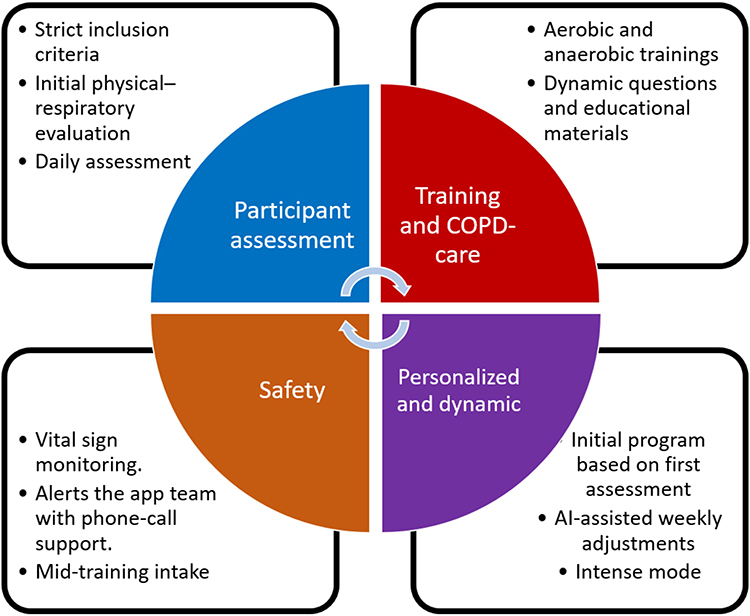 |
Figure 1 ActiveLungs© application as a tele-pulmonary rehabilitation program. |
Patient Assessment
Patient assessment is an essential component of PR in general, and specifically of TPR. Before registration to the app, patients are obligated to complete pulmonary functions and an assessment by a pulmonologist. Contraindications for TPR using the app include uncontrolled comorbidity (such as hypertension, heart failure, etc)., hospitalization at 1 week prior to enrollment, and the inability to perform seated or standing exercises (eg., bedridden patients). Upon remote registration to the app, patients independently perform a physical–respiratory assessment designed to evaluate both physical and respiratory capacity, together with a 3-minute walking test with vital sign measurements before and after the test and symptom questionnaires.
Daily Training and COPD-Related Care
The program includes different components to deliver exercise training and care in other areas related to COPD (Figure 2). All training sessions were performed by the patients without any supervision from medical personnel or the app team and without recordings. The presence of a caregiver during training sessions was not mandatory and was left to each participant’s discretion. The exercise program did not require dedicated training equipment; exercises were based primarily on bodyweight resistance and commonly available household items. Each daily training includes four different sessions – two aerobic and two resistance exercises, each with 1–3 repetitions. If the system identifies a lack of adherence during the subscription, it will send personalized messages to facilitate activity. In addition to the training sessions, the application provides educational content for patients, including written guides and visual materials on proper breathing techniques and coping with daily challenges related to chronic respiratory disease. The app also includes a dynamic question-and-answer knowledge base covering various disease-related topics.
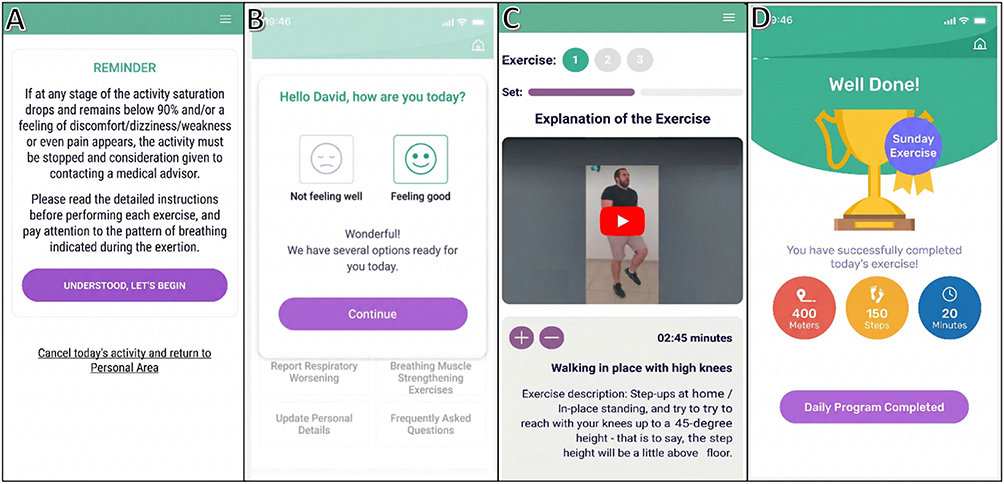 |
Figure 2 Different stages in daily training in the application. (A)- initial information and approval; (B)- assessment of general and respiratory condition; (C)- exercise sessions; (D)- summary. |
Individualized and Dynamic Program
Each patient receives a personalized program based on their physical capability and performance in the initial assessment. Following this assessment, the app’s recommendation system continues to personalize the program for each patient, dynamically adjusting the duration, intensity, and overall training load according to the patient’s progress and endurance. These dynamic changes are assisted by an AI-assisted decision framework integrated within a rule-based algorithm. The system continuously analyzes the user’s performance, vital signs, and self-reported symptoms to generate adaptive recommendations regarding exercise components and intensity. The application generally prescribed a safe low-to-moderate training intensity, aiming to keep patients at approximately 70% of predicted maximal heart rate. For patients with lower functional capacity or greater respiratory limitation, a more conservative target of up to approximately 60–65% predicted maximal heart rate was used. All suggested changes are reviewed and approved by the app’s expert personnel before implementation, at least twice a week for each patient. A mode of intensified training may also be suggested by the system for patients demonstrating stable clinical parameters and consistent exercise completion, leading to a gradual increase in exercise intensity and duration.
Safety
Safety and quality control are key aspects of the app, considering its asynchronous nature. For safety, several measures are implemented. Users record their vital signs at the beginning and end of each session, and during each session. Premature training termination is triggered by the app if abnormal physiological parameters are detected during the session, including oxygen saturation ≤90% or heart rate exceeding 80% of the patient’s predefined maximal heart rate. In such cases, patients are instructed to rest for several minutes and repeat the measurements. If the values do not return to the acceptable range, the training session is terminated for the rest of the day. In addition, at the beginning of each session, patients are asked to answer brief questions regarding how they feel and to provide a self-assessment of their current respiratory condition. If deterioration is reported, the system temporarily adjusts the rehabilitation program to a lower-intensity training plan appropriate to the patient’s condition. At the same time, the treating physiotherapist/respiratory therapist receives an alert regarding the reported change in status in order to provide initial remote guidance and assess whether further medical evaluation is required.
Study Outcomes
The primary outcome of this study was the safety of performing home-based asynchronous sessions using the application. This outcome included low saturation events (≤90% in room air or under oxygen supplementation in relevant patients) during exercise, self-reporting of worsening symptoms in the 12 hours following each session or after as done at the time of follow-up training, premature termination of a session due to persistent abnormal vital signs, and any other events that occurred directly after a session and were reported by patients. Secondary outcomes focused on patients’ adherence to the app, and included subscription duration to the AL-app, the number of trainings and sessions completed, and the rate of sessions completed per training.
Data Analysis
Safety outcomes and adherence with the app are reported using integrated data on each patient level. Therefore, for continuous variables, data were first assessed for each patient, with further analysis using the medians of each patient. We chose this method to standardize differences in app use between patients. Still, when relevant, outcomes were also reported by training (for example, direct adverse events or the number of sessions per training). Assessment of predictors for ≥1 self-reported respiratory worsening was made by Mann–Whitney U-tests for continuous variables and Chi-Square test for categorical variables. Assessment of predictors for the rate of complete sessions per training was performed using univariate linear regression. All analyses were performed in SPSS version 30.0.
Results
During the study period, 143 patients initiated TPR in the ActiveLungs app. Of them, 12 did not have validated COPD and 7 completed less than 10 trainings, resulting in a cohort of 124 patients (Figure 3). Overall, 17,399 trainings were performed on the app (each with up to 4 exercise sessions), with a combined total of 61,706 aerobic or resistance sessions completed by the 124 participants.
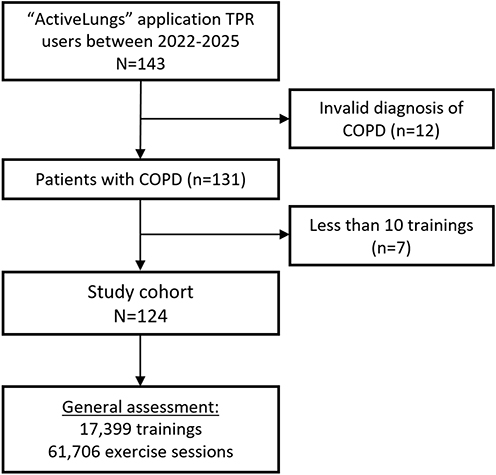 |
Figure 3 Study inclusion process. |
Cohort characteristics are presented in Table 1. The median (IQR) age was 74 (68–79), 54% were female, 55% had long-term oxygen therapy (LTOT), and 50% had previously participated in PR. There was a high rate of comorbidities, with 15% having cardiovascular conditions, 6% having concurrent interstitial lung disease, 6% bronchiectasis, and 8% lung cancer.
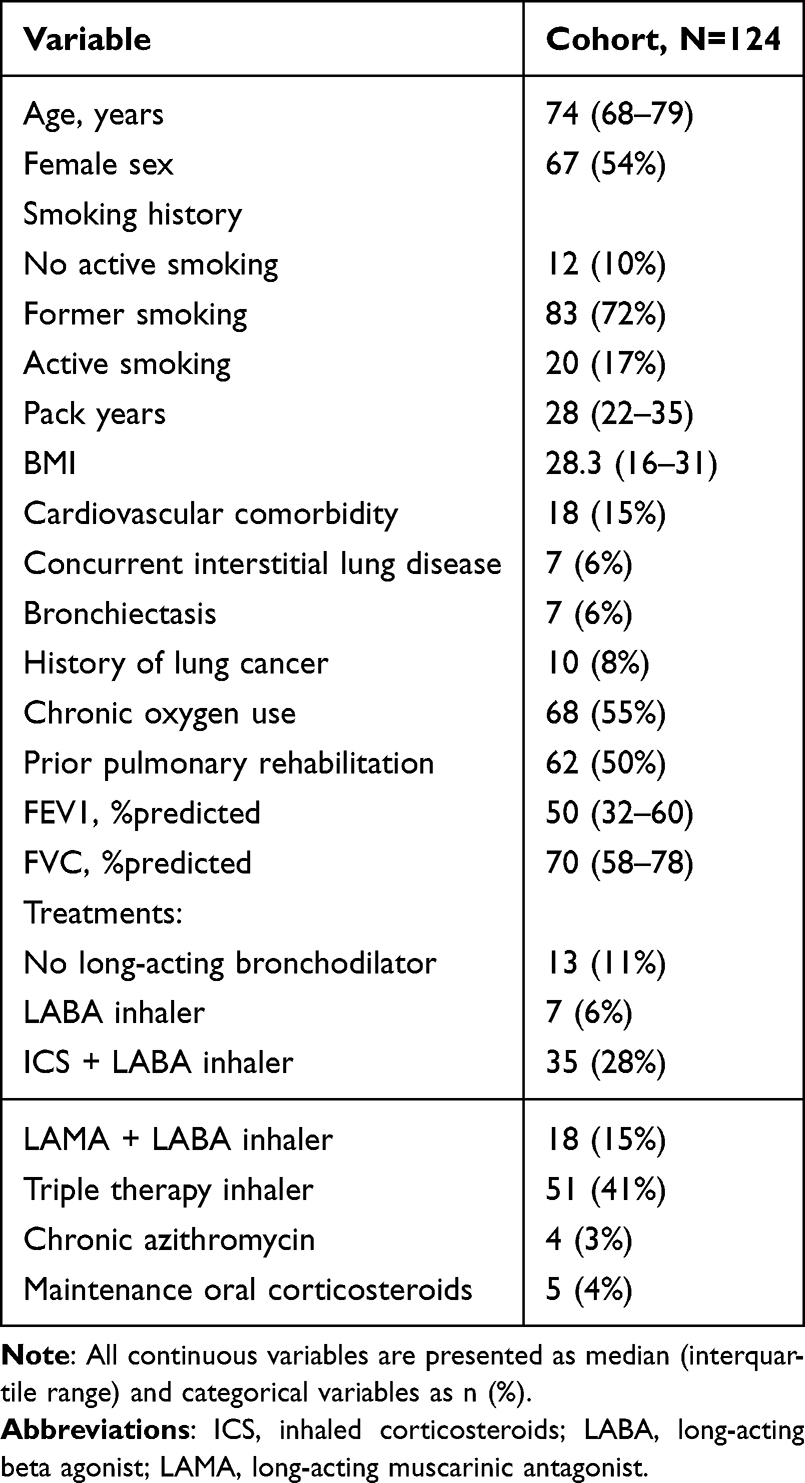 |
Table 1 Study Cohort Characteristics* |
Safety
There were no known adverse events directly associated with performing TPR using the app, including trauma during app sessions, self-reported respiratory worsening within 12 hours after training, or deaths (known to be caused as a direct sequela). At the time of data analysis, 74 patients had discontinued their subscription to the application. Of them, 4 patients had died, all more than 2 weeks from their last training and without known direct adverse effects from using the app. Other reasons for discontinuing use of the app included: deterioration in medical condition or inability to perform exercises (n=15), inability to use the app alone (n=11), financial limitations (n=10), and receipt of regular PR from their health maintenance organization (n=6). 28 patients have not disclosed their reason for discontinuation. Characteristics of the 7 patients who were excluded due to <10 trainings are shown in Supplementary Table 1. Reasons for their discontinuation included the inability to use the app alone (n=3), financial limitations (n=1), inability to perform the app exercises (n=1), receipt of regular PR (n=1), and unknown (n=1).
Safety outcomes per patient are presented in Table 2. Low saturation events occurred on 4.5% of training days, corresponding to a median of 2.2% (0–7.5%) of training days per patient. Premature training termination by the app occurred on 5.4% of training days, with a median (IQR) of 8% (2–12%) terminations of the training days per patient. Self-reported respiratory worsening before training initiation was reported by 29 patients (23%) at least once. Self-reported worsening was associated with chronic oxygen use (HR 2.68, 95% CI 1.08–6.65, p=0.033), but not with the rate of low-saturation events, protocol intensity, age, or comorbidities (supplementary Table 2).
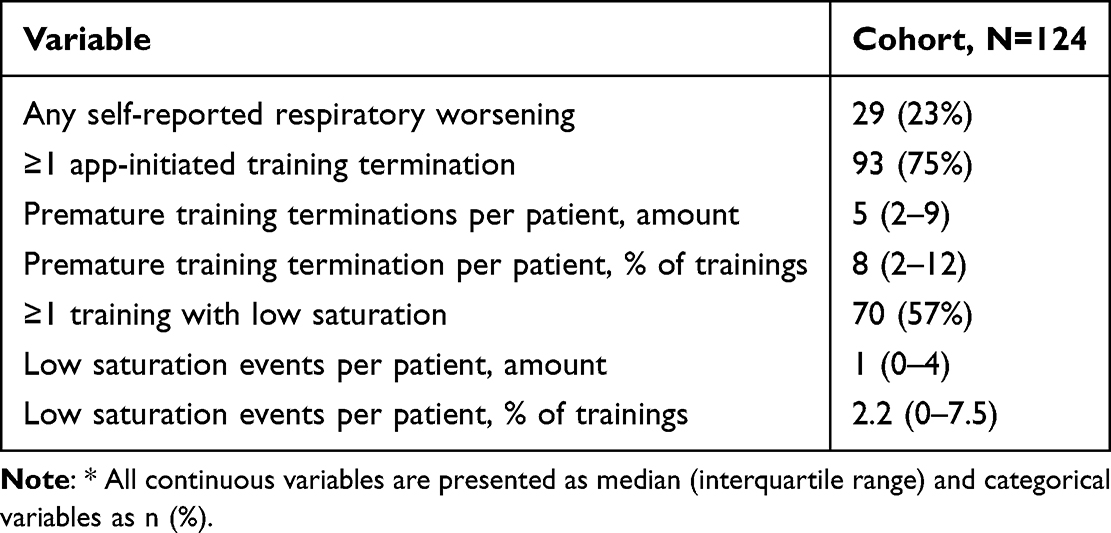 |
Table 2 Safety Outcomes per-Patient in the Study Cohort* |
Patient Engagement in the App
Secondary outcomes of patients’ involvement with the AL-app are presented in Table 3. The median subscription duration to the app was 129 days (65–433), with trainings completed in 49% (31–64) of the days, translating to 3 (2–4) trainings per week. 79% completed more than 24 trainings, which is the commonly accepted number of training days in traditional PR. Each training consisted of a median (IQR) of 4 (4–4) exercise sessions out of the four sessions offered per training. Of note, among patients who had discontinued use of the app, the median (IQR) subscription duration was 133 (64–436) days.
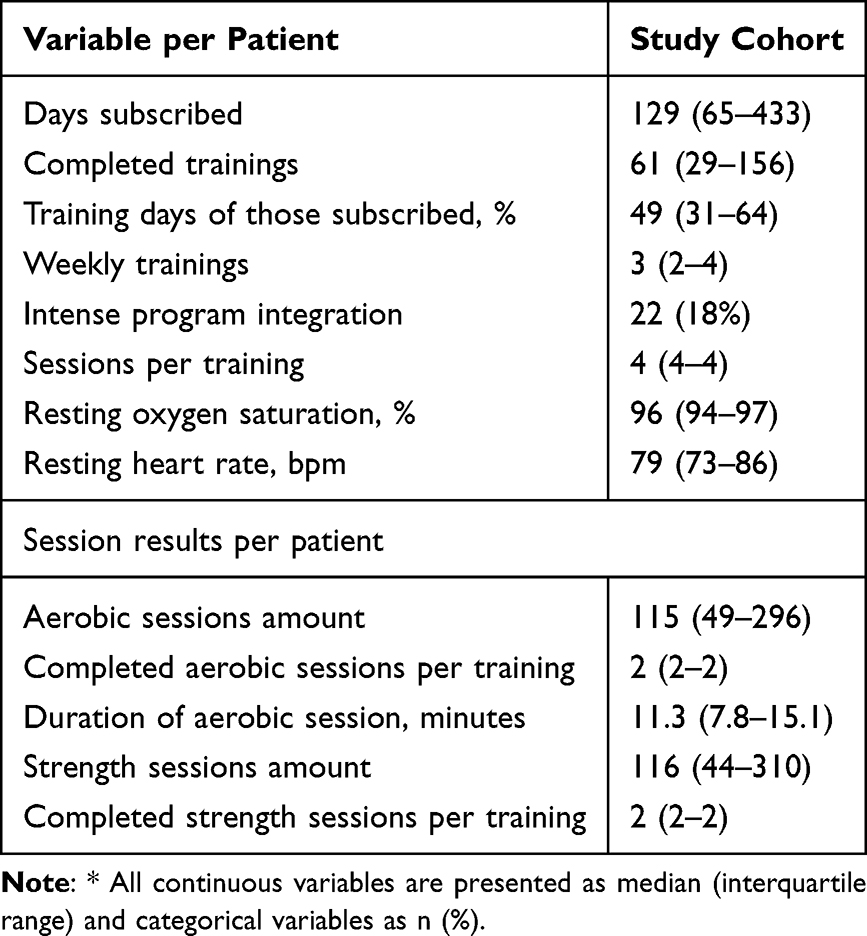 |
Table 3 Patient Engagement with the Application* |
Each training included a median (IQR) of 2 (2–2) aerobic sessions and 2 (2–2) resistance sessions. The net duration of aerobic sessions in each training was a median (IQR) of 11.3 (7.8–15.1) minutes. All four exercise sessions (2 aerobic and 2 resistance) were completed in 82% of the trainings. A lower rate of sessions completed per training was associated with a lower baseline FEV1 (β=0.274, p=0.010), without additional correlations with demographic or clinical characteristics (supplementary Table 3). An intense program was integrated during TPR for 22 patients (18%), resulting in longer aerobic session durations (median [IQR] 15.7 [12.1–17.9] vs. 10.5 [6.4–13.9] minutes, p=0.002).
Discussion
In this retrospective study, we provide a detailed assessment of an app-based asynchronous TPR. The AL-app was the focus of this study given the limited prior evidence on similar interventions and its relatively novel methodology incorporating AI within the routine personal training program, without exclusion of severe COPD patients or requirement of long-term oxygen treatment (LTOT). The app-based TPR was found to be safe and enabled patients to adjust their training program, with most patients performing more weekly trainings than is usually done in traditional PR or synchronous TPR. It is important to note that the app was privately paid for by the patients and retrospectively assessed, leading to potential biases as discussed below. For this reason, we could not assess its effectiveness on disease outcomes. Still, by providing one of the largest datasets in terms of training volume and safety assessment, in a cohort with more than 50% LTOT use, we believe this work provides important insights for further large-scale implementation.
The safety of asynchronous TPR has been of much interest in recent years. The lack of real-time supervision allows for a larger volume of patients, while posing a perceived risk for patients with significant chronic lung diseases, such as COPD. Chaplin et al performed a randomized controlled trial (RCT) in 103 COPD patients, comparing asynchronous TPR and in-person PR, without reporting any major safety events.15 A systematic review also found an acceptable safety profile of unsupervised TPR, although it was reported by only 4 of the 10 studies included in this review.18 Two additional RCTs did not assess safety outcomes,19,20 highlighting the knowledge gap in this area. Respiratory worsening events amongst our cohort were expected during their subscription, considering the relatively severe disease many patients had. Still, the observed 23% rate of these events should be interpreted with caution and may be an underestimate of the true rate. This is because the rate is based on patient reports at the following post-worsening training; hence, cases of patients who experienced worsening and subsequently stopped using the application would not have been identified.
Utilization of the TPR app is another important aspect. In our study, 5% completed fewer than 10 trainings, and 79% completed more than 24, which is the commonly accepted number of sessions in traditional PR. The median of 3 weekly trainings also aligns with the minimum recommendation in the app. Important characteristics supporting these findings are the flexibility in training timing, an individualized exercise program, and personalized reminders. Prior studies have found an 82–93% compliance rate with the prescribed frequency,18 although a lower compliance rate of 60% was also reported.21 In the study by Chaplin et al,15 the web-based program had a 57% dropout rate, higher than the conventional PR group (23%). In a recent RCT of 278 COPD patients, only 40.4% were adherent to a mobile asynchronous TPR application, using a cutoff of ≥3 days/week.22 These findings support the notion of choice-based PR based on patients’ preferences and characteristics.
The TPR app presented in our work is supported by an AI-assisted decision framework integrated within a rule-based algorithm. This system assesses different variables, including vital signs, self-reported symptoms, and performance during exercise sessions, to provide detailed recommendations for subsequent training. Even though approvals are required from the app expert personnel (which increases the program’s safety and precision), the system facilitates more efficient work with less time required per patient. Rehabilitation services have already started incorporating AI to improve care. To date, AI is mostly used in TPR or traditional PR for monitoring, predicting intervention outcomes,23 and evaluating exercise quality with feedback.24 A recent meta-analysis found three prior randomized controlled trials on AI-assisted PR.25 The main study from this review26 randomized 343 COPD patients to either a tele-coaching intervention or usual care. The intervention was based on automated coaching, providing daily activity goals and feedback, and performing automated weekly revisions of patients’ targets. After 12 weeks, the intervention led to higher physical activity (primary outcome) without major side effects. While promising, additional research is needed to assess the impact of AI integration on cost-effectiveness compared with traditional PR or TPR.
Our study has limitations. First, given the retrospective design and the absence of a control group, we cannot infer the effect of the app on COPD outcomes. Second, patients chose to join the app and pay the monthly fee, leading to selection bias that affects our secondary outcomes and must be taken into consideration. Still, this reflects a real-world scenario in which patients choose the PR method that is optimal for their daily routine and limitations. Third, although respiratory worsening was assessed at every daily training (median of 3 times per week), some events may not have been reported, leading to underestimation. In addition, this issue leads to ascertainment bias, as patients who experienced worsening and subsequently stopped using the application would not have had the opportunity to report that event. Fourth, dedicated diaphragmatic or inspiratory muscle training may provide additional benefits in selected patients and should be considered in future TPR programs. Finally, there was no standardized assessment of exercise capacity in the app; this has now been incorporated and will be the focus of future work.
In conclusion, AI-integrated asynchronous tele-pulmonary rehabilitation application was safe and feasible for patients with COPD, and specifically with severe disease requiring LTOT. The program demonstrated good patient engagement, with most participants completing training frequencies comparable to or exceeding those recommended in conventional pulmonary rehabilitation. These findings support the potential of app-based tele-rehabilitation to expand access to rehabilitation services. Prospective studies are needed to evaluate its impact on clinical outcomes and cost-effectiveness.
Data Sharing Statement
The authors confirm that the data supporting the findings of this study are available within the article.
Ethics
The study received exemption from institutional review board approval due to its design from the TASMC IRB committee (0349-25-TLV). Informed consent was waived by the IRB considering the retrospective design and anonymized data analysis.
Acknowledgments
The ActiveLungs team was not involved in the writing or analysis of any part of the manuscript. Materials and information on the app was given by the company to provide all the details appear in the methods section.
Author Contributions
All authors made a significant contribution to the work reported, whether that is in the conception, study design, execution, acquisition of data, analysis and interpretation, or in all these areas; took part in drafting, revising or critically reviewing the article; gave final approval of the version to be published; have agreed on the journal to which the article has been submitted; and agree to be accountable for all aspects of the work.
Funding
The work did not receive any funding.
Disclosure
A.B.S reports receiving personal consulting fees and lecture fees from Sanofi-Regeneron, Astrazeneca, GSK, Kamada, Boehringer Ingelheim, Roche. All other authors report no conflicts of interest in this work.
References
1. Holland AE, Cox NS, Houchen-Wolloff L, et al. Defining modern pulmonary rehabilitation. an official American thoracic society workshop report. Ann Am Thorac Soc. 2021;18(5):e12–10. doi:10.1513/AnnalsATS.202102-146ST
2. McCarthy B, Casey D, Devane D, Murphy K, Murphy E, Lacasse Y. Pulmonary rehabilitation for chronic obstructive pulmonary disease. cochrane airways group. Cochrane Database Syst Rev. 2015(4). doi:10.1002/14651858.CD003793.pub3
3. Agustí A, Celli BR, Criner GJ, et al. Global Initiative for chronic obstructive lung disease 2023 report: gold executive summary. Am J Respir Crit Care Med. 2023;207(7):819–837. doi:10.1164/rccm.202301-0106PP
4. Bhatt SP, Westra J, Kuo YF, Sharma G. Pulmonary rehabilitation utilization in older adults with chronic obstructive pulmonary disease, 2013–2019. Ann Am Thorac Soc. 2024;21(5):740–747. doi:10.1513/AnnalsATS.202307-601OC
5. Spitzer KA, Stefan MS, Priya A, et al. Participation in pulmonary rehabilitation after hospitalization for chronic obstructive pulmonary disease among medicare beneficiaries. Ann Am Thorac Soc. 2019;16(1):99–106. doi:10.1513/AnnalsATS.201805-332OC
6. Freund O, Elhadad L, Tiran B, et al. Routine in-hospital interventions during acute exacerbation of COPD are associated with improved 30-day care. Heart Lung. 2024;67:114–120. doi:10.1016/j.hrtlng.2024.05.001
7. Zornitzki L, Sror N, Bar-Shai A, et al. Underutilization of palliative care in advanced COPD and heart failure: associations, disparities, and the role of specialists. Ther Adv Respir Dis. 2025;19:17534666251364056. doi:10.1177/17534666251364056
8. Lahham A, Holland AE. The need for expanding pulmonary rehabilitation services. Life. 2021;11(11):1236. doi:10.3390/life11111236
9. Brennan D, Tindall L, Theodoros D, et al. A blueprint for telerehabilitation guidelines. Int J Telerehabilitation. 2010;2;31–34; doi:10.5195/ijt.2010.6063
10. Malaguti C, Dal Corso S, Janjua S, Holland AE. Supervised maintenance programmes following pulmonary rehabilitation compared to usual care for chronic obstructive pulmonary disease. cochrane airways group. Cochrane Database Syst Rev. 2022(4). doi:10.1002/14651858.CD013569.pub2
11. Li Y, Qian H, Yu K, Huang Y. The long-term maintenance effect of remote pulmonary rehabilitation via social media in COPD: a randomized controlled trial. Int J Chron Obstruct Pulmon Dis. 2022;17:1131–1142. doi:10.2147/COPD.S360125
12. Gustavson AM, Rauzi MR, Lahn MJ, et al. Practice considerations for adapting in-person groups to telerehabilitation. Int J Telerehabilitation. 2021;13(1). doi:10.5195/ijt.2021.6374
13. Bini S, Mahajan J. Clinical outcomes of remote asynchronous telerehabilitation are equivalent to traditional therapy following total knee arthroplasty: a randomized control study. J Telemed Telecare. 2017;23(2):239–247. doi:10.1177/1357633X16634518
14. Cox NS, Corso SD, Hansen H, et al. Telerehabilitation for chronic respiratory disease - Cox, NS - 2021 | cochrane Library. doi:10.1002/14651858.CD013040.pub2/full.
15. Chaplin E, Hewitt S, Apps L, et al. Interactive web-based pulmonary rehabilitation programme: a randomised controlled feasibility trial. BMJ open. doi:10.1136/bmjopen-2016-013682
16. Spruit MA, Singh SJ, Garvey C, et al. An official American Thoracic Society/European Respiratory Society statement: key concepts and advances in pulmonary rehabilitation. Am J Respir Crit Care Med. 2013;188(8):e13–64. doi:10.1164/rccm.201309-1634ST
17. Hughes JW, Berry R, Brown TM, et al. Consensus statement on the virtual and remote delivery of cardiac and pulmonary rehabilitation and their components. J Cardiopulm Rehabil Prev. 2025;45(6):387. doi:10.1097/HCR.0000000000001002
18. Hartman M, Mináriková J, Batalik L, et al. Effects of home-based training with internet telehealth guidance in COPD patients entering pulmonary rehabilitation: a systematic review. Int J Chron Obstruct Pulmon Dis. 2023;18:2305–2319. doi:10.2147/COPD.S425218
19. Pehlivan E, Yazar E, Balcı A, Turan D, Demirkol B, Çetinkaya E. A comparative study of the effectiveness of hospital-based versus home-based pulmonary rehabilitation in candidates for bronchoscopic lung volume reduction. Heart Lung J Cardiopulm Acute Care. 2020;49(6):959–964. PubMed PMID: 32709500. doi:10.1016/j.hrtlng.2020.06.011
20. Pradella CO, Belmonte GM, Maia MN, et al. Home-based pulmonary rehabilitation for subjects with COPD: a randomized study. Respir Care. 2015;60(4):526–532.PubMed PMID: 25269680. doi:10.4187/respcare.02994
21. Galdiz JB, Gómez A, Rodriguez D, et al. Telerehabilitation programme as a maintenance strategy for COPD patients: a 12-month randomized clinical trial. Arch Bronconeumol. 2021;57(3):195–204. doi:10.1016/j.arbres.2020.03.034
22. Gloeckl R, Spielmanns M, Stankeviciene A, et al. Smartphone application-based pulmonary rehabilitation in COPD: a multicentre randomised controlled trial. Thorax. 2025;80:209–217. doi:10.1136/thorax-2024-221803
23. Chen S, Xing S, Zhang G, Qiu F. Innovative Applications and Challenges of Artificial Intelligence in the Whole-Course Management of Chronic Obstructive Pulmonary Disease. Int J Chron Obstruct Pulmon Dis. 2026;21:1–18. doi:10.2147/COPD.S568919
24. Abedi A, Colella TJF, Pakosh M, Khan SS. Artificial intelligence-driven virtual rehabilitation for people living in the community: a scoping review. Npj Digit Med. 2024;7(1):25. doi:10.1038/s41746-024-00998-w
25. Cinkavuk E, Calik E, Vardar-Yagli N. The effect of artificial intelligence–assisted pulmonary rehabilitation on exercise capacity: a systematic review and meta-analysis. Int J Med Inf. 2026;211:106336. doi:10.1016/j.ijmedinf.2026.106336
26. Demeyer H, Louvaris Z, Frei A, et al. Physical activity is increased by a 12-week semiautomated telecoaching programme in patients with COPD: a multicentre randomised controlled trial. Thorax. 2017;72:415–423. doi:10.1136/thoraxjnl-2016-209026
 © 2026 The Author(s). This work is published and licensed by Dove Medical Press Limited. The
full terms of this license are available at https://www.dovepress.com/terms
and incorporate the Creative Commons Attribution
- Non Commercial (unported, 4.0) License.
By accessing the work you hereby accept the Terms. Non-commercial uses of the work are permitted
without any further permission from Dove Medical Press Limited, provided the work is properly
attributed. For permission for commercial use of this work, please see paragraphs 4.2 and 5 of our Terms.
© 2026 The Author(s). This work is published and licensed by Dove Medical Press Limited. The
full terms of this license are available at https://www.dovepress.com/terms
and incorporate the Creative Commons Attribution
- Non Commercial (unported, 4.0) License.
By accessing the work you hereby accept the Terms. Non-commercial uses of the work are permitted
without any further permission from Dove Medical Press Limited, provided the work is properly
attributed. For permission for commercial use of this work, please see paragraphs 4.2 and 5 of our Terms.
Recommended articles

Re-Defining High Risk COPD with Parameter Response Mapping Based on Machine Learning Models
Pu Y, Zhou X, Zhang D, Guan Y, Xia Y, Tu W, Lu Y, Zhang W, Fu CC, Fang Q, de Bock GH, Liu S, Fan L
International Journal of Chronic Obstructive Pulmonary Disease 2022, 17:2471-2483
Published Date: 4 October 2022
Is Exercise Rehabilitation an Effective Adjuvant to Clinical Treatment for Myofascial Trigger Points? A Systematic Review and Meta-Analysis
Zhou Y, Lu J, Liu L, Wang HW
Journal of Pain Research 2023, 16:245-256
Published Date: 28 January 2023
Impact of AI-Powered Solutions in Rehabilitation Process: Recent Improvements and Future Trends
Khalid U, Naeem M, Stasolla F, Syed MH, Abbas M, Coronato A
International Journal of General Medicine 2024, 17:943-969
Published Date: 12 March 2024
Exercise Interventions in the Management of Postural Orthostatic Tachycardia Syndrome: A Scoping Review
Gonçalves Leite Rocco P, Reategui-Rivera CM, Finkelstein J
Journal of Multidisciplinary Healthcare 2024, 17:5867-5885
Published Date: 9 December 2024
Visual Prostheses in the Era of Artificial Intelligence Technology
Sarbout I, Gungor A, Ounissi M, Zaher S, Ptito M, Kupers R, Racoceanu D, Milea D
Eye and Brain 2025, 17:95-113
Published Date: 29 August 2025