
Back to Journals » Advances in Medical Education and Practice » Volume 17
Medical Students’ Perceptions and Attitude Toward the Use of Artificial Intelligence in Healthcare
Authors Albusmait A  , AlSaleh A, Ahmed J
Received 11 June 2025
Accepted for publication 29 October 2025
Published 23 January 2026 Volume 2026:17 541284
DOI https://doi.org/10.2147/AMEP.S541284
Checked for plagiarism Yes
Review by Single anonymous peer review
Peer reviewer comments 3
Editor who approved publication: Prof. Dr. Balakrishnan Nair
Amna Albusmait, Aseel AlSaleh, Jamil Ahmed
College of Medicine and Health Sciences, Arabian Gulf University, Manama, Kingdom of Bahrain
Correspondence: Jamil Ahmed, Department of Family and Community Medicine, College of Medicine and Health Sciences, Arabian Gulf University, P.O Box 26671, Manama, Kingdom of Bahrain, Tel +97317239570, Email [email protected]
Purpose: Artificial intelligence (AI) is rapidly transforming healthcare, with potential advancements in diagnostics, image analysis, and drug discovery. This study aimed to investigate how medical students in the Kingdom of Bahrain perceive AI and their understanding of its application.
Methods: This study used a cross-sectional electronic survey design. A total of 350 responses were collected from students at Arabian Gulf University and the Royal College of Surgeons in Ireland in Bahrain. The survey was adopted from a previously validated instrument, assessed attitudes, knowledge, and confidence regarding AI using 5-point Likert scales and dichotomous questions. Statistical analysis was performed using SPSS, with a significance level of p< 0.05.
Results: We found that 86% of students believe AI will play a crucial role in future healthcare. While 37.7% were less inclined towards radiology due to AI, 46.9% believed that some specialties would be replaced. About 60.9% understood basic AI principles. About 82% agreed AI learning would benefit their careers. Only 24.6% had received AI teaching, which they found useful. Students with AI training demonstrated a stronger belief in AI’s role (p=0.008) and the necessity of AI education (p=0.010) but were less likely to consider radiology (p=0.004). They also reported higher confidence in using AI tools (p=0.004).
Conclusion: Medical students in Bahrain had positive views on AI’s future in healthcare and recognize the importance of AI education. Students with AI training showed greater confidence in utilizing and understanding AI tools. These findings identify the critical need to integrate AI education into medical curricula to prepare future physicians for the evolving AI-driven medical landscape.
Keywords: artificial intelligence, medical students, healthcare, Bahrain, medical Education, Medical Education
Introduction
Over the past few years, Artificial Intelligence (AI) has recorded significant progress, and from this it has found application across various industries. In the medical sector, research found that AI can be used in diagnosis, treatment planning, administrative purposes, and drug development.1 The capacity of AI to analyze vast bases of data and patterns shows the potential of the technology in improving healthcare outcomes.2 AI literacy is an essential concept to be considered in this century. Some studies concluded that majority of students have at least a moderate understanding of the principles of AI, its applications in medicine, and its use in daily life.3 Research showed that students’ technical understanding of AI was relatively low compared to their confidence in practically using its applications.4 This illustrates the current state of students’ AI literacy and the necessity for specialized educational programs. One study conducted in China showed that medical education must adapt to the ongoing evolution of AI in running the healthcare industry by raising awareness and updating the curriculum to include medical AI topics.5
There is little research on how health science students perceive AI’s impact on their future careers.6 Medical Students’ attitude and expectations of AI in Medical Education were that “AI is somewhat reliable, trustworthy, and technically competent, not too dependable, and intelligent but not human-like.7 In addition, in another survey that was conducted internationally and had over 3000 participants, it was established that the majority of medical students viewed AI as a partner in medicine rather than a competitor. This view was stronger with tech-savvy students (having a good knowledge and understanding of modern technology).3 Furthermore, a study in Malaysia shows that students are receptive to the idea of learning about AI, and many expressed their interest in having it on their curriculum.8
There is a range of positive impacts of AI on medical education. Firstly, it makes learning more personal. AI’s ability to adapt feedback and learning pathways for each student facilitates more personalized learning, thereby improving its efficiency and aiding the educational process. Secondly, automated systems powered by AI can take over some tasks – for example, grading essays, this saves educators time and allows spending it more effectively with students.9 A scoping review indicated that a potential benefit of AI-based training is improving patient outcomes via equipping healthcare workers with better knowledge and skills.10
Nevertheless, the perspective of AI’s introduction into society sometimes threatens students. The main concerns are sociological. One fear is that AI will kill social interactions, creating a gap between generations, and a decline in social interactions.6 Additionally, job replacement anxieties, some students are worried about AI taking over their jobs, this is more prevalent among dental students and students from developing countries.3 In addition, some concerns that include data bias, ethical use of personal data, safety, and efficacy.11
While AI’s potential in healthcare is promising, a study by Chan and Zary (2019) reveals challenges preventing the adoption of AI in medical education. Technical challenges exist; developing and maintaining AI applications require significant technical experts and resources. Data security and privacy is another area of concern. The use of AI in education obligates measures to ensure student data is collected, stored, and used ethically.9 These are key challenges that need to be addressed for AI to fully unlock its potential in medical education.
The emergence of AI in healthcare is having a noticeable impact on how medical students perceive their future career paths, especially in fields like radiology. In a national survey, a significant number of Canadian medical students expressed concerns that AI may reduce job opportunities in radiology, prompting some to reconsider pursuing it as a specialty.12 Similarly, research conducted in Saudi Arabia revealed that many students view AI as a disruptive force, with nearly half perceiving it as a risk to radiology and a notable portion stating that AI might deter them from entering the field.13 Despite these apprehensions, a broader review of literature shows that students and early-career physicians remain cautiously optimistic about AI’s integration into clinical practice, especially when proper education and ethical safeguards are in place.14 Additional findings indicate that while students acknowledge the transformative role AI may play, they see it more as a complementary tool than a replacement, underscoring the importance of incorporating AI training into medical curricula to support informed career decisions.15
Despite this, there is a noticeable gap in the actual readiness of health science students to utilize AI, largely stemming from limited exposure and training. In a cross-sectional study conducted in Germany, it was found that although the majority of students recognized the importance of AI in medical practice, their actual knowledge levels were relatively low16 Similarly, in a global cross-sectional involving students from 48 countries a significant proportion of participants expressed a strong interest in AI but simultaneously indicated that their formal education had not yet prepared them for its practical implementation in clinical settings.17
This reflects that although the growing acceptance among students regarding the integration of AI into their future careers, a broader issue within medical curricula, where AI is often underrepresented despite its growing significance globally. The study may add to the literature and help universities to modify their curriculum by showing students the importance of the understanding of AI and the need for AI teaching. The research aims to assess whether students felt prepared to work alongside AI and to examine how well-informed students were about AI. The study may also help medical universitiess in Bahrain to improve their curriculum.
Materials and Methods
Study Design
A cross-sectional study was done among first year to final-year medical students from 6th of July to 2nd of October 2024.
Study Setting
The study was conducted among medical students in 2 different universities in the kingdom of Bahrain (Arabian Gulf University, Royal College of Surgeons in Ireland). Students were selected conveniently from those universities and were invited to participate.
Inclusion Criteria
Medical students, Males and Females, Bahraini and non-Bahraini, Arabic and English readers and writers and Residents in Bahrain.
Exclusion Criteria
Non-medical students (including nurses, physiotherapists…)
Sample Size Calculation
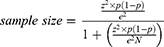
Where N= population size
Z= z-score
e= margin of error

Sample size was approximated to 350.
Data Collection Method
An electronic survey (Google Forms) designed jointly by clinicians with an interest in AI and/or medical education and was adopted in our study.11 Contact was made with Arabian Gulf University and Royal College of Surgeons in Ireland with a request to circulate the survey to all currently enrolled medical students. Students were also directly invited to complete the survey via social media and in class invitation. Students were required to enter their institutional Email address at the start of the survey; all responses were subsequently anonymized. The questionnaire consists of 3 sections: Sociodemographic Information, Attitude and Understanding of AI and AI Teaching/Training.
Ethical Approval
Ethical approval was obtained from Research and Ethics Committee (REC) Arabian Gulf University (E35-PI-05-24) (June 2024). Participants read online consent form at the beginning of the questionnaire by agreeing to participate in the study. The information provided by the participants was kept confidential, and the data are not presented with any participant identifier. The study complies with the Declaration of Helsinki.
Pilot Testing
The questionnaire was pretested by administering it to 15 individuals prior to the data collection.
Data Management and Statistical Analysis
The survey included eleven 5-point Likert questions asking respondents to rate how much they agreed with a statement about their current attitudes towards AI, their plans for a career in radiology, their current knowledge of AI, and their confidence in using AI tools critically and routinely after graduation. To find out if participants got teaching in AI and whether it was a required component of their curriculum, dichotomous questioning was utilized.
Statistical analysis was performed using SPSS (version 29.0.0.0). Simple descriptive statistics are presented in percentages. The Chi-square test was used to measure the associations between the student who received AI training and who did not and a p-value <0.05 was considered statistically significant.
Results
The study included 350 participants, with a female majority comprising 73.1% (n=256) compared to 26.9% (n=94) males. Participants spanned all six years of study, with the highest representation from Year 1 (30%, n=105) and Year 4 (25.4%, n=89). In terms of nationality, Bahraini students constituted the largest group (32.3%, n=113), followed by Kuwaiti (28.9%, n=101), Omani (15.7%, n=55), Saudi (12.6%, n=44), and other nationalities (10.6%, n=37). The sample was predominantly drawn from Arabian Gulf University (74.6%, n=261), with the remaining 25.4% (n=89) from the Royal College of Surgeons in Ireland – Bahrain (Table 1).
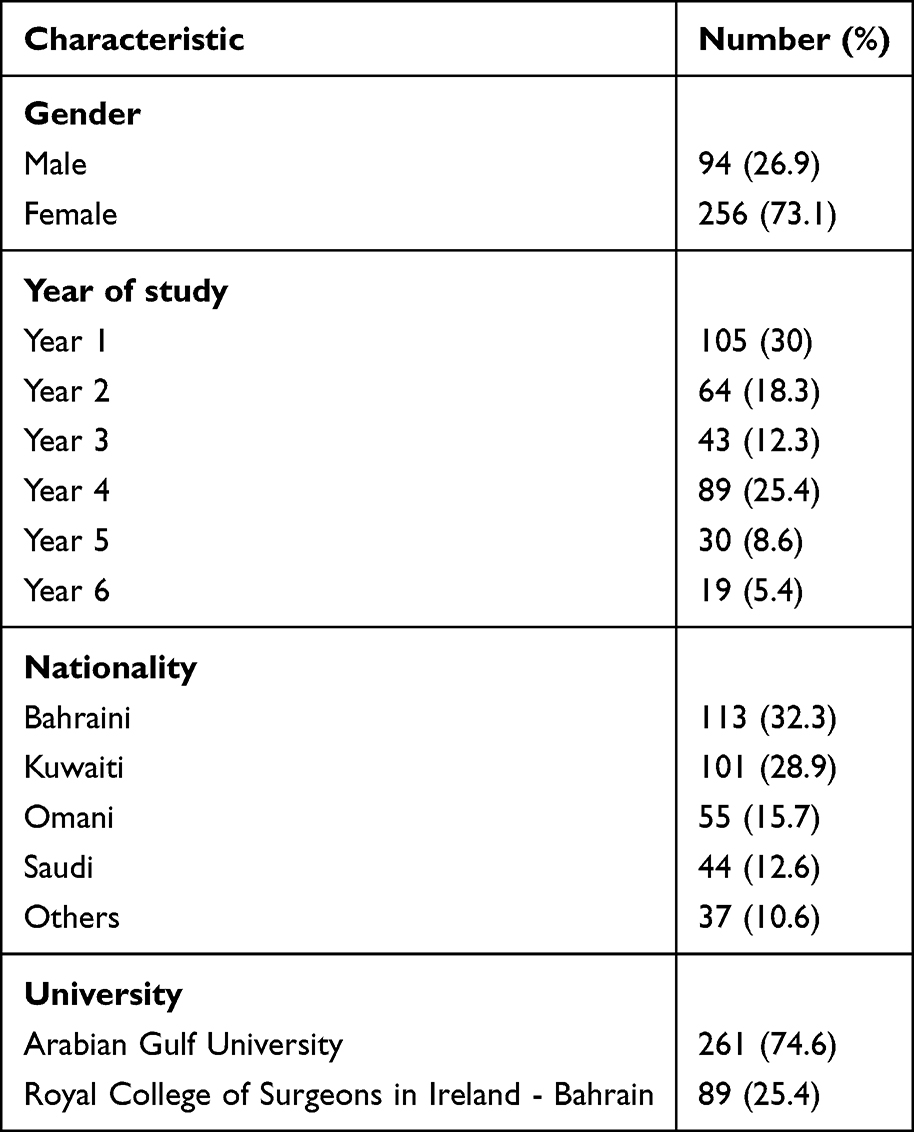 |
Table 1 Sociodemographic Characteristics of the Study Participants |
The majority (86%, n = 301) of respondents believed that AI will play an important role in healthcare in the future, rating their responses as either strongly agree (41.7% n = 146) or agree (44.3% n = 155). Just under quarter of the respondents (strongly disagree or disagree, 24.5% n = 86) do not feel they are less likely to consider a career in radiology due to AI, compared to those who reported they were less likely to consider a career in radiology due to AI (strongly agree or agree, 37.7% n = 132) with (neither agree or disagree 37.7% n=132) having neutral position. A higher number of students believed that some specialties will be replaced by AI within their lifetime (strongly agree/agree, 46.9% n = 164) compared to students who saw that it will not be replaced (strongly disagree/disagree, 30.9% n = 108) (Table 2).
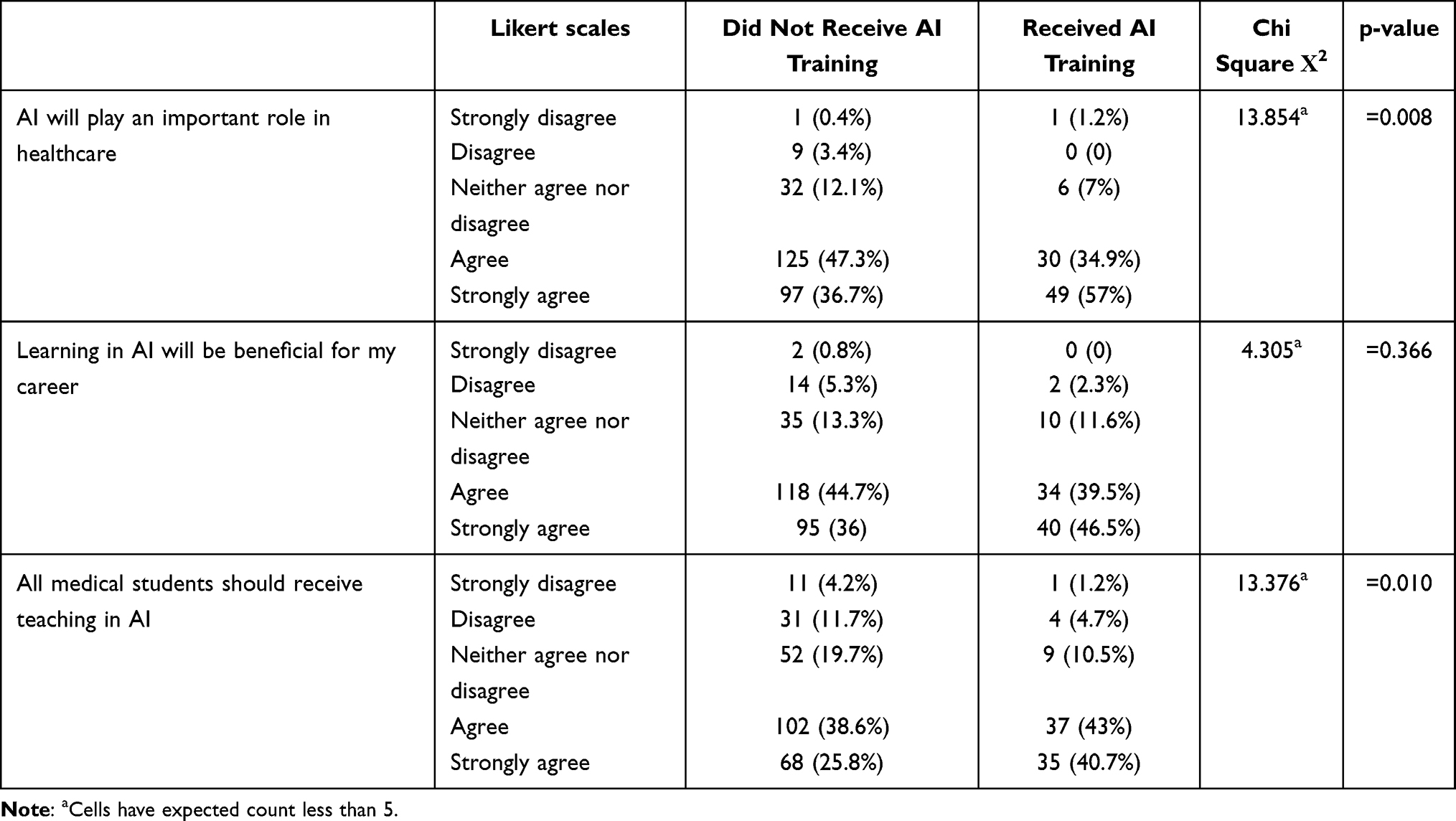 |
Table 2 Importance of AI Among Students Who Did/Did Not Receive AI Teaching/Training |
For the question about the current understanding of the basic computational principles of AI, more than half of the students responded that they strongly agree or agree (60.9% n=213) in comparison with neutral (20.6% n=72) and strongly disagree or disagree (18.6% n=65). A higher number of students strongly agreed or agreed when asked about understanding of the limitations of AI (68.3% n=239) with less students disagreeing (strongly disagree/disagree, 13.2% n=46) or neither agree nor disagree (18.6% n=65) (Table 3).
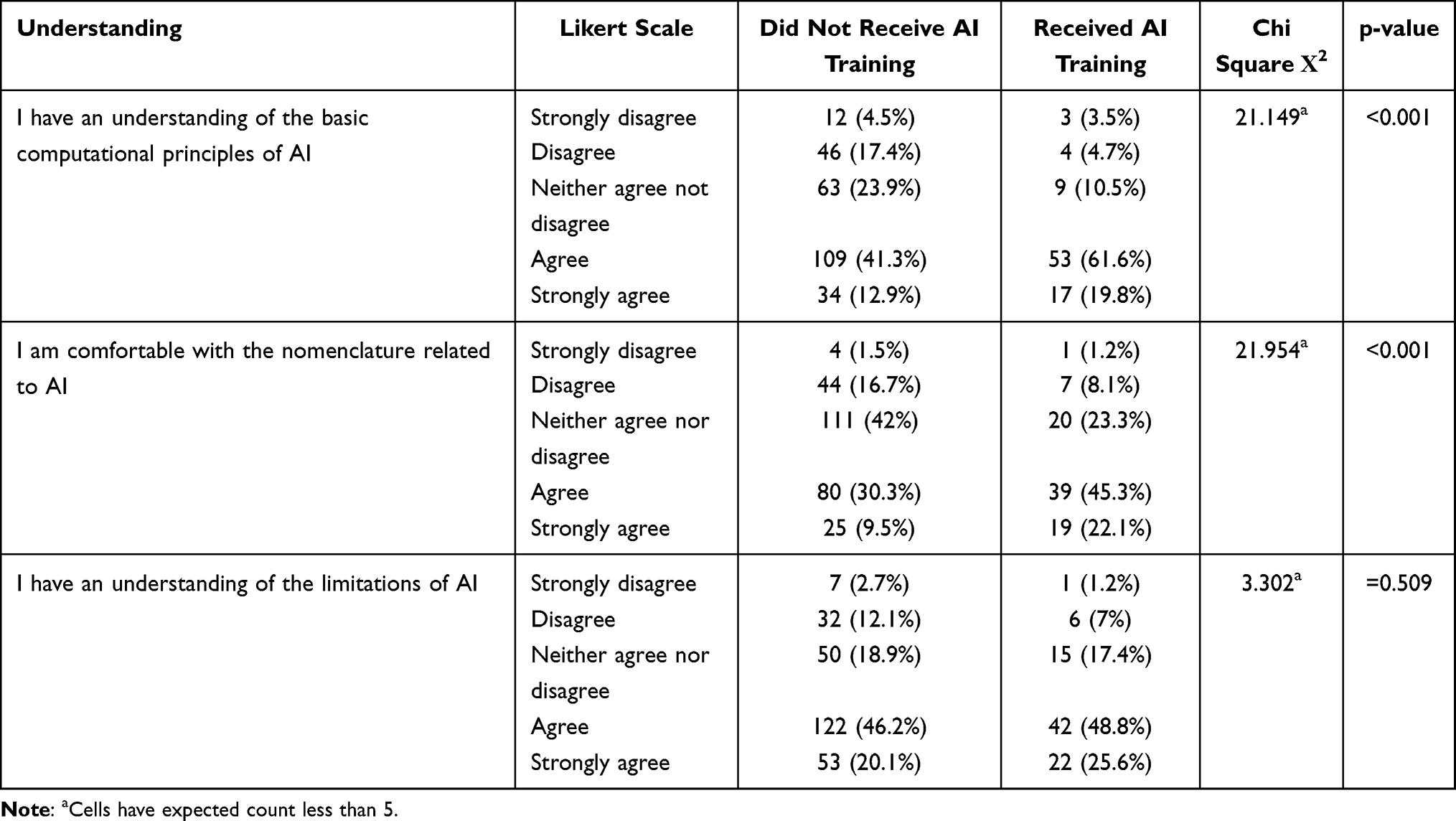 |
Table 3 Understanding of AI Among Students Who Did/Did Not Receive AI Teaching/Training |
The majority of students responded that learning about AI would be beneficial for their careers with 82% of students answering strongly agree (38.6% n = 135) or agree (43.4% n = 152); 12.9% (n = 45) of students submitted neutral responses on this question and 5.2% strongly disagree/disagree (n=18). Only 86 students (24.6% of the 350 students surveyed) received any kind of AI teaching. Out of those students 31.4% (n=27) reported that it was extremely useful, 32.6% (n=28) very useful, 31.4% (n=27) somewhat useful and 4.7% (n=4) not useful. A large number of students believed that AI has an important role in healthcare and that all medical students should receive teaching in AI with a higher percentages among students who received AI training (p = 0.008) and (p = 0.010), respectively (Table 1). Compared to students who did not receive teaching in AI, those who received teaching were less likely to think about radiology as a potential career path in the future (p-value= 0.004) (Figure 1).
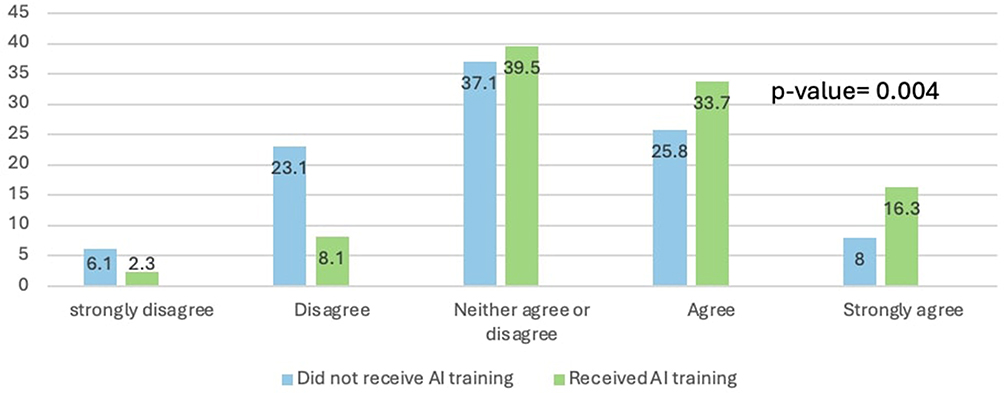 |
Figure 1 I am less likely to consider a career in radiology, given the advancement of AI. |
The majority of students reported they would feel ready to work with AI by the end of their medical degree, agreeing that they would be confident in using AI tools if required. Students who received teaching/training in AI reported more positive responses to these questions, rating themselves as being more confident in the use of basic AI clinical tools if required (p = 0.004), possess a better understanding in the assessment of AI algorithm performance (p = 0.006), and overall felt more likely to have the knowledge required to work with AI in routine clinical practice (p = 0.021) (Table 4).
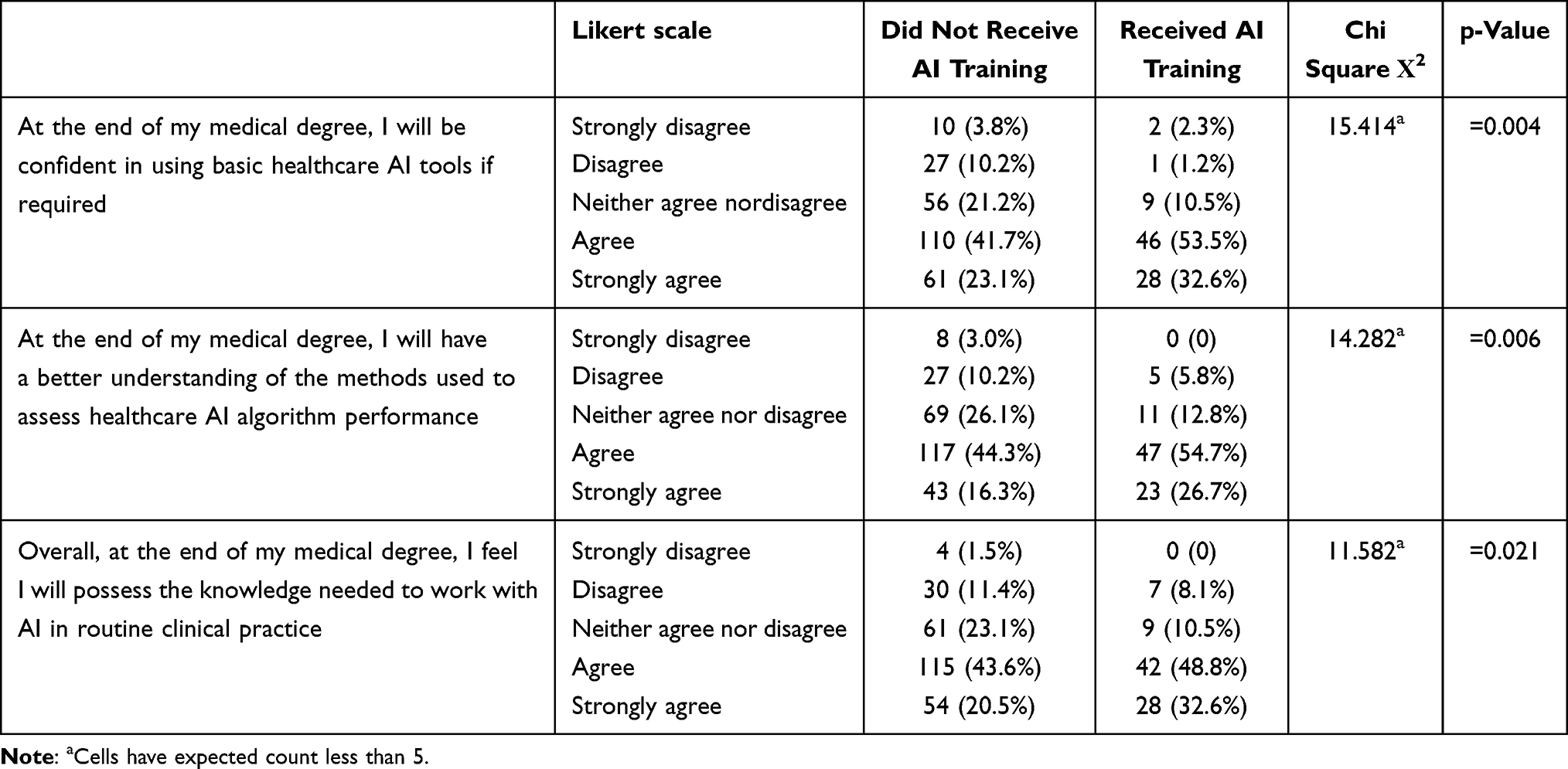 |
Table 4 Students’ Confidence in the Use of Basic AI Clinical Tools |
Discussion
This study shows a strongly positive perception of AIamong medical students, with 86% agreeing that AI will play a significant role in the future of healthcare. Despite this optimism, only 24.6% of participants reported receiving any AI teaching or training (online courses, YouTube channels, conferences and workshops), revealing a gap between perceived importance and actual exposure. Students with AI training demonstrated significantly more confidence in using AI tools, greater understanding of computational principles, and stronger agreement that AI education is essential. Interestingly, while 37.7% of students agreed they were less likely to consider radiology as a career due to AI, an equal proportion (37.7%) remained neutral, suggesting divided attitudes. Lastly, students with AI training showed more readiness and confidence to apply AI in clinical practice than those without, with statistically significant differences noted across several domains (p < 0.05).
The belief that AI will play an important role in healthcare, supported by 86% of respondents in this study, aligns with growing recognition of AI’s transformative potential globally. A UK-based study reported a similar sentiment, with 88% of medical students agreeing that AI would significantly affect healthcare delivery in the future.11 Likewise, a study conducted in Saudi Arabia found 87% of students believed that AI will play significant role in healthcare.18 This optimism is echoed in a study that was among students at United States medical schools, where over 75% of students agreed about AI’s rising influence in the future of medicine.15 However, gaps in formal education remain a concern globally in a cross-sectional study that included 4492 Arab students 92.4% had not received formal AI training, in spite of that, 84.9% of them believed AI would revolutionize medicine.19 These findings collectively highlight the enthusiasm surrounding AI’s role in healthcare but also identify an international educational gap that needs to be addressed.
The limited exposure to AI training among students in our study (24.6%) mirrors trends reported in global literature. In a multinational multi-center survey on the Medical and Dental Students’ Perception of AI in medicine, 3133 respondents from 63 countries were included and showed that most students agree that AI will make medicine and dentistry more exciting (69.9%), and that AI should be part of the medical training (85.6%).3 Similarly, a study that was among newly graduated interns in Bahrain stated that 54.2% of participants reported no formal training in AI, highlighting a gap in preparedness.20 In addition, a scoping review of AI in medical education noted that although students were enthusiastic, very few universities had embedded AI as a standard subject.21 These disparities are problematic, especially given our finding that trained students demonstrated significantly better understanding and readiness to apply AI clinically (p < 0.05).
The association between AI exposure and confidence in its clinical use was statistically significant in our data (p = 0.004), reinforcing earlier findings. A study in Germany found that students who had prior exposure to AI felt more competent evaluating diagnostic tools and making informed decisions using AI-generated information.22 Similarly, a study that evaluated the inaugural AI and Digital Medicine educational program at the University of Mons, Belgium, through a survey of the participating medical students showed majority (60%) felt “somewhat confident” in evaluating AI-generated diagnoses and treatment recommendations based on their self-reported confidence after the program.23 In our study, 86.1% of trained students expressed confidence in using basic AI tools after graduation, compared to 64.8% of untrained students, suggesting that training/teaching effectively bridges confidence gaps.
Regarding specialty choice, our findings show mixed responses: 37.7% of students indicated they were less likely to choose radiology due to AI, while an equal percentage remained neutral. A survey in Switzerland among radiologists, medical students and surgeons revealed that Medical students see AI as a potential threat to diagnostic radiologists, while radiologists themselves are rather afraid of turf losses.24 In contrast, a study conducted across Germany, the UK, and the US found that students with higher AI literacy and prior learning experiences had more positive attitudes toward AI, perceiving it as a beneficial collaborative tool.25 Similarly, in a study that assessed the perception and expectations of a sample of French radiologists towards the rise of AI in radiology. They share an optimistic view and think that AI will have a positive impact on their future practice, (61.1%) of them estimated that the need for radiologists in ten years will be the same.26 Our results suggest that while AI still influences career choice for a portion of students, a significant number remain neutral, indicating evolving views possibly driven by greater exposure or understanding of AI’s realistic scope.
Finally, students who received AI education in our study showed greater confidence in understanding basic computational concepts, nomenclature, and limitations of AI, with all comparisons achieving statistical significance (p < 0.001). This is consistent with the study that was conducted in the UK studies showed that students who did receive teaching in AI rated more positively to the questions relating to the perceived competence in the post-graduation use of AI (p = 0.01–0.04).11 A cross-sectional study surveyed 1142 undergraduate medical and pharmacy students, revealing that those who had attended AI-related webinars or courses had significantly better knowledge of AI applications in healthcare.27 These insights align with our findings and highlight the importance of embedding AI education early in the medical curriculum to promote competency and confidence.
Limitations
This study has few limitations. First, the reliance on convenience sampling may limit the generalizability of the results to the broader population of medical students within Bahrain. Secondly, the self-selected nature of participation, potentially influenced by students’ who are more interested in AI or more active online might be more likely to participate, potentially skewing the results towards a more positive attitude or higher level of understanding of AI, could have introduced selection bias. Thirdly, the use of a self-reported electronic survey is susceptible to interpretation bias, stemming from individual differences in understanding the survey questions. Furthermore, the cross-sectional design provides a snapshot of attitudes and understanding at a single point in time.
Conclusion and Recommendations
In conclusion, this research highlights the positive attitude towards AI held by medical students in Bahrain while noting their lack of formal education AI teaching. It is evident from the research that even minimal training in AI significantly improves students’ confidence in applying AI technologies, their grasp of basic AI concepts, and readiness for integration of AI into clinical practice. Some medical students still harbor concerns regarding the use of AI in specific fields such as radiology; however, many of the students appear to be less rigid with sustained, strategic exposure, suggesting that deeper understanding encourages acceptance of AI and addresses apprehension towards displacement.
To adequately prepare the next generation of physicians for the evolving landscape of healthcare, we strongly recommend the proactive integration of mandatory AI training into the core medical school curriculum in Bahrain. This training should be designed to focus on using AI as a tool to enhance diagnostic accuracy, streamline workflows, and ultimately improve patient outcomes.
Future research could build upon these findings by using better methodology across a broader range of healthcare disciplines to validate the generalizability of our results. Additionally, a longitudinal study tracking students from their early education through their clinical practice would offer a more comprehensive understanding of their evolving perspectives on AI and the long-term impact of early training.
Acknowledgments
The authors would like to acknowledge Dr Daniel Poon from Maidstone and Tunbridge Wells NHS Trust, United Kingdom for providing permission to use the questionnaire (Supplementary Material) developed by them for this study.11 We also thank all the students who participated in this study.
Disclosure
The authors report there are no conflicts of interest in this work.
References
1. Temsah M-H, Aljamaan F, Malki KH, et al. Chatgpt and the future of digital health: A study on healthcare workers’ perceptions and expectations. Healthcare. 2023;11(13):1812. doi:10.3390/healthcare11131812
2. Sulthan N, AlGahtani F, Mahjoub M, Al-Surf M, Navas S. Physician entrepreneurs and AI technology: an in-depth study of knowledge, competence, adoption, and Sustainability in the GCC region. Emirati J Business Econ Soc Stud. 2023;2(2):28–9. doi:10.54878/9edwjx71
3. Bisdas S, Topriceanu -C-C, Zakrzewska Z, et al. Artificial intelligence in medicine: a multinational multi-center survey on the medical and dental students’ perception. Front Public Health. 2021;9. doi:10.3389/fpubh.2021.795284
4. Laupichler MC, Aster A, Meyerheim M, Raupach T, Mergen M. Medical students’ ai literacy and attitudes towards AI: a cross-sectional two-center study using pre-validated assessment instruments. BMC Med Edu. 2024;24(1). doi:10.1186/s12909-024-05400-7
5. Li Q, Qin Y. Ai in medical education: medical student perception, curriculum recommendations and design suggestions. BMC Med Edu. 2023;23(1). doi:10.1186/s12909-023-04700-8
6. Doğaner A. The approaches and expectations of the health sciences students towards artificial intelligence. Karya J Health Sci. 2021;2(1):5–11.
7. Kimmerle J, Timm J, Festl-Wietek T, Cress U, Herrmann-Werner A. Medical students’ attitudes toward AI in medicine and their expectations for medical education. J Med Educ Curricular Dev. 2023;10. doi:10.1177/23821205231219346.
8. Tung AY, Dong LW. Malaysian medical students’ attitudes and readiness toward AI (Artificial Intelligence): a cross-sectional study. J Med Educ Curricular Dev. 2023;10. doi:10.1177/23821205231201164.
9. Chan KS, Zary N. Applications and challenges of implementing Artificial Intelligence in medical education: integrative review. JMIR Med Edu. 2019;5(1). doi:10.2196/13930
10. Nagi F, Salih R, Alzubaidi M, et al. Applications of artificial intelligence (AI) in Medical Education: a scoping review. Stud Health Technol Inform. 2023. doi:10.3233/shti230581
11. Sit C, Srinivasan R, Amlani A, et al. Attitudes and perceptions of UK medical students towards artificial intelligence and radiology: a multicentre survey. Insights Imaging. 2020;11(1). doi:10.1186/s13244-019-0830-7
12. Gong B, Nugent JP, Guest W, et al. Influence of artificial intelligence on Canadian Medical Students’ preference for Radiology Specialty: anational survey study. Acad Radiol. 2019;26(4):566–577. doi:10.1016/j.acra.2018.10.007
13. Bin Dahmash A, Alabdulkareem M, Alfutais A, et al. Artificial intelligence in radiology: does it impact medical students preference for radiology as their future career? BJR Open. 2020;2(1):20200037. doi:10.1259/bjro.20200037
14. Chen M, Zhang B, Cai Z, et al. Acceptance of clinical artificial intelligence among physicians and medical students: a systematic review with cross-sectional survey. Front Med. 2022;9. doi:10.3389/fmed.2022.990604
15. Park CJ, Yi PH, Siegel EL. Medical student perspectives on the impact of artificial intelligence on the practice of medicine. Current Problems Diagn Radiol. 2021;50(5):614–619. doi:10.1067/j.cpradiol.2020.06.011
16. McLennan S, Meyer A, Schreyer K, Buyx A. German medical students´ views regarding artificial intelligence in medicine: a cross-sectional survey. PLOS Digital Health. 2022;1(10). doi:10.1371/journal.pdig.0000114
17. Busch F, Hoffmann L, Truhn D, et al. Global cross-sectional student survey on AI in medical, dental, and veterinary education and practice at 192 faculties. BMC Med Educ. 2024;24:1066. doi:10.1186/s12909-024-06035-4
18. Alwadani FAS, Lone A, Hakami MT, et al. Attitude and understanding of artificial intelligence among Saudi medical students: an online cross-sectional study. J Multidiscip Healthc. 2024;17:1887–1899. doi:10.2147/JMDH.S455260
19. Alsubhi TK, Alfalahi E, Alghamdi S, et al. Knowledge, attitude, and perception of Arab medical students towards artificial intelligence in medicine and radiology: a multi-national cross-sectional study. Eur Radiol Exp. 2023;7(1):62. doi:10.1007/s00330-023-10509-2
20. Sanad AH, Alsaegh AS, Abdulla HM, et al. Perceptions of artificial intelligence in medicine among newly graduated interns: a cross-sectional study. Cureus. 2024. doi:10.7759/cureus.71216
21. Gordon M, Daniel M, Ajiboye A, et al. A scoping review of artificial intelligence in medical education: BEME Guide no. 84. Med Teach. 2024;46(4):446–470. doi:10.1080/0142159x.2024.2314198
22. Pinto Dos Santos D, Giese D, Brodehl S, et al. Medical students’ attitude towards artificial intelligence: a multicentre survey. Eur Radiol. 2018;29(4):1640–1646. doi:10.1007/s00330-018-5601-1
23. Pizzolla I, Aro R, Duez P, De Lièvre B, Briganti G. Integrating artificial intelligence into medical education: lessons learned from a belgian initiative. J Interact Learn Res. 2023;34(2):401–424.
24. van Hoek J, Huber A, Leichtle A, et al. A survey on the future of Radiology among radiologists, medical students and surgeons: students and surgeons tend to be more skeptical about Artificial Intelligence and radiologists may fear that other disciplines take over. Eur J Radiol. 2019;121:108742. doi:10.1016/j.ejrad.2019.108742
25. Hornberger M, Bewersdorff A, Schiff DS, Nerdel C. A multinational assessment of AI literacy among university students in Germany, the UK, and the US. Computers Human Behav. 2025;4:100132. doi:10.1016/j.chbah.2025.100132
26. Waymel Q, Badr S, Demondion X, Cotten A, Jacques T. Impact of the rise of artificial intelligence in radiology: what do radiologists think? Diagn Interventional Imaging. 2019;100(6):327–336. doi:10.1016/j.diii.2019.03.015
27. Truong NM, Vo TQ, Tran HT, Nguyen HT, Pham VN. Healthcare students’ knowledge, attitudes, and perspectives toward Artificial Intelligence in the southern Vietnam. Heliyon. 2023;9(12). doi:10.1016/j.heliyon.2023.e22653
 © 2026 The Author(s). This work is published and licensed by Dove Medical Press Limited. The
full terms of this license are available at https://www.dovepress.com/terms
and incorporate the Creative Commons Attribution
- Non Commercial (unported, 4.0) License.
By accessing the work you hereby accept the Terms. Non-commercial uses of the work are permitted
without any further permission from Dove Medical Press Limited, provided the work is properly
attributed. For permission for commercial use of this work, please see paragraphs 4.2 and 5 of our Terms.
© 2026 The Author(s). This work is published and licensed by Dove Medical Press Limited. The
full terms of this license are available at https://www.dovepress.com/terms
and incorporate the Creative Commons Attribution
- Non Commercial (unported, 4.0) License.
By accessing the work you hereby accept the Terms. Non-commercial uses of the work are permitted
without any further permission from Dove Medical Press Limited, provided the work is properly
attributed. For permission for commercial use of this work, please see paragraphs 4.2 and 5 of our Terms.
Recommended articles

Promise and Provisos of Artificial Intelligence and Machine Learning in Healthcare
Bhardwaj A
Journal of Healthcare Leadership 2022, 14:113-118
Published Date: 20 July 2022

Undergraduate Medical Students’ and Interns’ Knowledge and Perception of Artificial Intelligence in Medicine


Jha N, Shankar PR, Al-Betar MA, Mukhia R, Hada K, Palaian S
Advances in Medical Education and Practice 2022, 13:927-937
Published Date: 23 August 2022

Impact of AI-Powered Solutions in Rehabilitation Process: Recent Improvements and Future Trends
Khalid U, Naeem M, Stasolla F, Syed MH, Abbas M, Coronato A
International Journal of General Medicine 2024, 17:943-969
Published Date: 12 March 2024
Attitude and Understanding of Artificial Intelligence Among Saudi Medical Students: An Online Cross-Sectional Study
Alwadani FAS, Lone A, Hakami MT, Moria AH, Alamer W, Alghirash RA, Alnawah AK, Hadadi AS
Journal of Multidisciplinary Healthcare 2024, 17:1887-1899
Published Date: 29 April 2024
Integrating ChatGPT as a Tool in Pharmacy Practice: A Cross-Sectional Exploration Among Pharmacists in Saudi Arabia
Alghitran A, AlOsaimi HM, Albuluwi A, Almalki EO, Aldowayan AZ, Alharthi R, Qattan JM, Alghamdi F, AlHalabi M, Almalki NA, Alharthi A, Alshammari A, Kanan M
Integrated Pharmacy Research and Practice 2025, 14:31-43
Published Date: 17 March 2025