
Back to Journals » Integrated Pharmacy Research and Practice » Volume 14

Integrating ChatGPT as a Tool in Pharmacy Practice: A Cross-Sectional Exploration Among Pharmacists in Saudi Arabia
Authors Alghitran A, AlOsaimi HM, Albuluwi A, Almalki EO, Aldowayan AZ, Alharthi R, Qattan JM, Alghamdi F, AlHalabi M, Almalki NA, Alharthi A, Alshammari A, Kanan M 
Received 13 October 2024
Accepted for publication 21 February 2025
Published 17 March 2025 Volume 2025:14 Pages 31—43
DOI https://doi.org/10.2147/IPRP.S500689
Checked for plagiarism Yes
Review by Single anonymous peer review
Peer reviewer comments 3
Editor who approved publication: Professor Walid Al-Qerem
Abdulrahman Alghitran,1 Hind M AlOsaimi,2 Ahmad Albuluwi,1 Emad Omar Almalki,3 Abdullah Zohair Aldowayan,3 Rakan Alharthi,3 Jawad Mohammed Qattan,3 Fahd Alghamdi,3 Mohammed AlHalabi,3 Nawaf Ayed Almalki,3 Abdulaziz Alharthi,3 Asma Alshammari,4 Muhammad Kanan5
1A General Administration of Pharmaceutical Care, Ministry of Health, Riyadh, Saudi Arabia; 2Department of Pharmacy Services Administration, King Fahad Medical City, Riyadh Second Health Cluster, Riyadh, Saudi Arabia; 3College of Pharmacy, Taif University, Taif, 26513, Saudi Arabia; 4Department of Pharmaceutical Care, King Abdulaziz Medical City, Riyadh, Saudi Arabia; 5Department of Pharmacy Services Administration, Rafha General Hospital, Northern Border Cluster, Saudi Arabia
Correspondence: Muhammad Kanan, Department of Pharmacy Services Administration, Rafha General Hospital, Northern Border Cluster, 76312, Saudi Arabia, Tel +966535534117, Email [email protected] Hind M AlOsaimi, Department of Pharmacy Services Administration, King Fahad Medical City, Riyadh Second Health Cluster, Riyadh, 12211, Saudi Arabia, Email [email protected]
Purpose: Artificial Intelligence (AI), especially ChatGPT, is rapidly assimilating into healthcare, providing significant advantages in pharmacy practice, such as improved clinical decision-making, patient counselling, and drug information management. The adoption of AI tools is heavily contingent upon pharmacy practitioners’ knowledge, attitudes, and practices (KAP). This study sought to evaluate the knowledge and practices of pharmacists in Saudi Arabia concerning the utilization of ChatGPT in their daily activities.
Patients and Methods: A cross-sectional study was performed from May 2023 to July 2024 including pharmacists in Riyadh, Saudi Arabia. An online pre-validated KAP questionnaire was disseminated, collecting data on demographics, knowledge, attitudes, and practices about ChatGPT. Descriptive statistics and regression analyses were conducted using SPSS.
Results: Of 1022 respondents, 78.7% were familiar with AI in pharmacy, while 90.1% correctly identified ChatGPT as an advanced AI chatbot. Positive attitudes towards ChatGPT were reported by 64.1% of pharmacists, although only 24.3% used AI tools regularly. Significant predictors of positive attitudes and practices included academic/research roles (β=0.7, p=0.005) and 6– 10 years of experience (β=0.9, p=0.05). Ethical concerns were raised by 64% of respondents, and 92% reported a lack of formal training.
Conclusion: While the majority of pharmacists held positive attitudes toward ChatGPT, practical implementation remains limited due to ethical concerns and inadequate training. Addressing these barriers is essential for successful AI integration in pharmacy, supporting Saudi Arabia’s Vision 2030 initiative.
Keywords: artificial intelligence, healthcare, technology adoption, pharmaceutical care, survey study
Introduction
Integrating artificial intelligence (AI) into healthcare has rapidly advanced, offering transformative potential in pharmacy practice.1 AI tools have demonstrated capabilities in augmenting clinical decision-making, streamlining administrative tasks, and enhancing patient care through personalized treatments and optimized medication management.2 Among these tools, OpenAI’s ChatGPT has emerged as a versatile solution for clinical education, patient counseling, and drug information management.3,4 As AI-driven tools grow more prevalent, it is essential to assess healthcare personnel’s preparedness to adopt these technologies for successful deployment.5,6
In pharmacy practice, the implementation of AI presents distinct chances to enhance the pharmacist’s job, increasing efficiency in tasks such as prescription reconciliation, drug interaction assessment, and patient involvement.7 ChatGPT, a large language model developed by OpenAI, has emerged as a promising tool in pharmacy practice. Studies have explored its potential applications, including drug counseling, prescription review, and patient education.8 A study evaluated ChatGPT’s performance in clinical pharmacy and found that it excels in drug counseling but is less effective in prescription review, patient medication education, and adverse drug reaction recognition.9 These findings highlight the transformative potential of AI in pharmacy practice, offering new opportunities for personalized treatment plans and enhancing patient outcomes However, the successful adoption of AI technologies like ChatGPT depends on the knowledge, attitudes, and practices (KAP) of pharmacy professionals, who play a critical role in ensuring the ethical and safe integration of these tools into clinical practice.10,11
Saudi Arabia, with its rapidly advancing healthcare infrastructure and commitment to technological innovation, presents a timely and relevant context for exploring the adoption of AI in pharmacy practice.12,13 The Vision 2030 program seeks to modernize healthcare services, with AI integration supporting this national effort to enhance healthcare delivery.14 The effectiveness of AI adoption in Saudi Arabia depends on the willingness of healthcare professionals to adopt these new technologies.15 To date, no studies have explored the perceptions and willingness of pharmacy professionals in Saudi Arabia to adopt AI technologies, particularly ChatGPT, in their daily practice. This study aims to fill this knowledge gap by conducting a cross-sectional analysis of pharmacists’ knowledge, attitudes, and practices regarding ChatGPT in Saudi Arabia. The findings of this study will underscore the transformative potential of AI in pharmacy practice. By enhancing medication management, streamlining workflows, and improving patient safety, AI is reshaping the pharmaceutical landscape.
Materials and Methods
Study Design and Setting
A cross-sectional study was conducted using an online survey among the pharmacists working at different setups in Riyadh, Saudi Arabia from May 1st, 2023 to July 1st, 2024. The study was reported as the STROBE guidelines.16
Study Population
Pharmacists working in different setups like academia, industry, and hospitals were included in this study.
Inclusion and Exclusion
Pharmacists aged 25 and above with at least one year of experience working at any setup were included.
Data Collection Tool
The study tool adopted was a pre-validated questionnaire (KAP-C) which was adopted after the consent from the authors.17 The questionnaire was validated through reliability testing using Cronbach’s alpha by SPSS.18 The study tool was available in English and Arabic both and was translation by the backward and forward method by WHO for the cultural adaptation.19 The questionnaire was circulated through Google form and the link to the form was circulated through various social media contacts and groups, including Facebook, WhatsApp, and Telegram, using a snowball technique.20 To mitigate the selection bias, the survey link was shared across multiple platforms, including professional networks, healthcare forums, and community groups, to ensure participation from individuals with varying demographic and professional backgrounds.
The respondents were urged to disseminate the link among their contacts, and so forth. The participants could click the link to obtain information regarding the research study and informed consent. Upon consenting to participate in the online survey, individuals were required to complete demographic information and answer numerous questions regarding their knowledge, attitudes, and practices related to ChatGPT. The online poll was accessible to 1) all pharmacists in Riyadh, Saudi Arabia, 2) respondents aged 25 and older, 3) individuals with internet access who were proficient in either English or Arabic. The participants were able to complete and submit it via a computer or mobile phone.
Ethical Approval
The ethical approval was granted by the Institutional Review Board of King Fahad Medical City, Riyadh, KSA under IRB log Number: 24–479. The study complies with Declaration of Helsinki. The participant’s confidentiality was maintained throughout the study.
Statistical Analysis
After data collection, the data was encoded in a spreadsheet on IBM SPSS ver. 28. Descriptive analysis focused on frequencies and percentages for categorical variables. The distribution of continuous variables was checked using the Kolmogorov–Smirnov test. The association between dependent variables (attitude and practices) and independent variables (demographic characteristics) was checked through chi-square tests. Univariate and multivariate linear regressions were employed to determine the association between participants’ overall knowledge of ChatGPT and their sociodemographic data. Predictors with p-value < 0.20 in univariable linear regression were entered into multivariate linear regression.21 The statistical significance level was set at p < 0.05.22
Results
Sociodemographic of the Participants
The age distribution indicated that the predominant group of respondents was aged 25–35 years (627, 61.0%), followed by those aged 36–45 years (207, 20.7%), 46–55 years (128, 12.5%), and 56 years and above (60, 5.8%). Gender representation was almost equitable, including 566 males (55.4%) and 456 females (44.6%). Regarding their roles, 471 (46.1%) were community pharmacists, 300 (29.4%) were hospital pharmacists, 160 (15.7%) were academic or research pharmacists, and 91 (8.8%) were industrial pharmacists. A substantial majority (805, 78.7%) indicated awareness of AI in pharmacy, whilst 217 (21.3%) did not. Attitudes towards AI were primarily favourable, with 655 respondents (64.1%) expressing favourable views, 227 (22.2%) remaining indifferent, and 140 (13.7%) indicating negative sentiments. In terms of AI tool utilization, 248 individuals (24.3%) employed them regularly, 552 individuals (54.0%) utilized them occasionally, and 222 individuals (21.7%) did not utilize AI tools at all. These results can be viewed in Table 1.
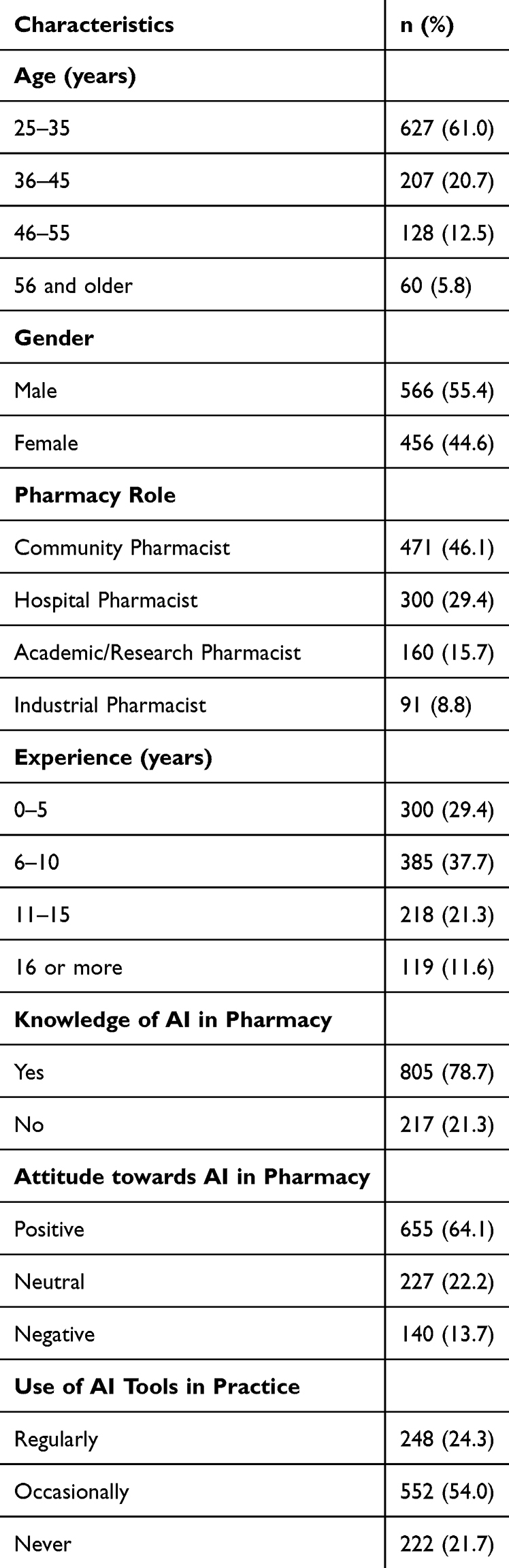 |
Table 1 Sociodemographic and Awareness Regarding AI in Pharmacy Practice |
Knowledge About ChatGPT
The findings indicated a significant degree of awareness, with 921 respondents (90.1%) accurately recognizing ChatGPT as a sophisticated AI chatbot. A majority identified its developer, with 590 participants (57.7%) accurately attributing ChatGPT to OpenAI. A significant proportion of respondents, 690 individuals (67.5%), were aware that GPT-4 is the current version. Awareness of the existence of both free and commercial versions of ChatGPT was moderate, with 540 participants (52.8%) recognizing this. Nearly all responders (1015, 99.3%) recognized that ChatGPT necessitates an internet connection for operation. Nonetheless, a smaller proportion of respondents (333, 32.5%) recognized that ChatGPT emulates human-like text dialogue, suggesting a possible deficiency in comprehension of the chatbot’s functionalities. Moreover, more than half of the participants (580, 56.7%) were aware that ChatGPT comprehends various languages, including English and Arabic. The results are shown in Table 2.
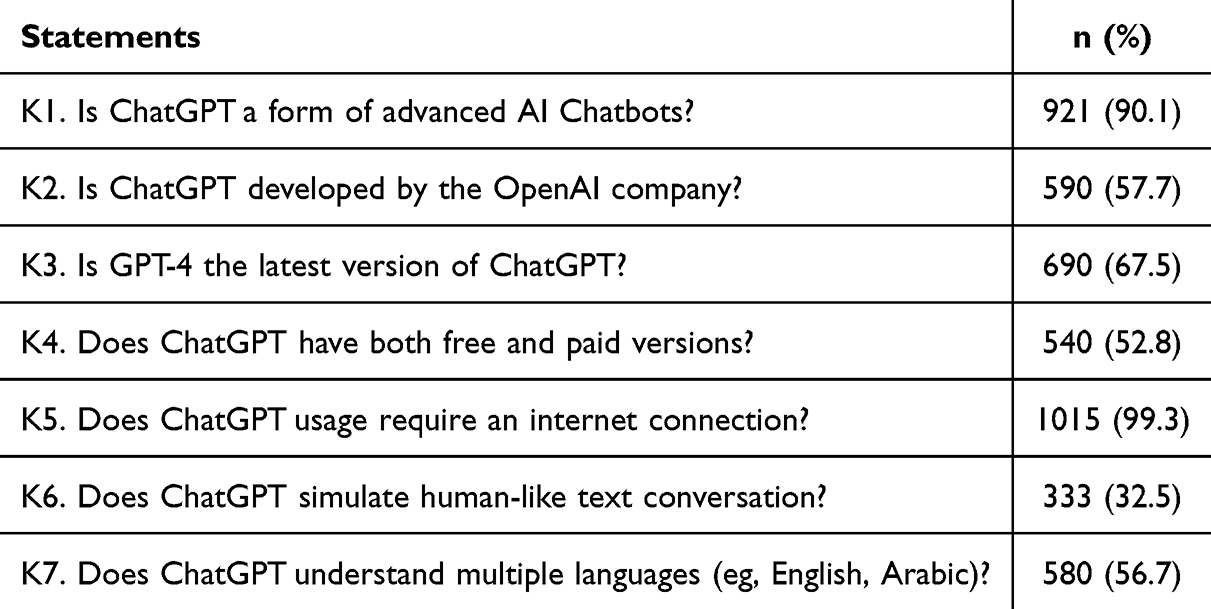 |
Table 2 Knowledge About ChatGPT Among Participants |
Attitude Regarding The use of ChatGPT
The study surveyed pharmacy professionals on their attitudes toward the integration of ChatGPT. A significant percentage of respondents anticipate the changing role of AI, such as ChatGPT, in pharmacy practice, with 80% (44% agreeing, 36% strongly agreeing) endorsing this perspective. The majority acknowledged ethical concerns with AI usage (22% agree, 55% strongly agree), indicating a cautious yet welcoming stance towards ethical matters. Integration of ChatGPT into pharmacy practice was endorsed by 43% (21% agree, 22% strongly agree), whereas a significant 32% (16% disagree, 16% strongly disagree) demonstrated opposition. Concerns regarding the utilization of ChatGPT were negligible, with 67% (23% in agreement, 44% in strong agreement) expressing confidence. Confidence in the reliability of ChatGPT-generated information for clinical decisions was moderate, with 55% (30% agreeing, 25% strongly agreeing) endorsing its trustworthiness, while 25% (10% disagreeing, 15% strongly disagreeing) expressed reservations. Finally, the efficacy of ChatGPT in facilitating daily chores was acknowledged by 59% (44% agree, 15% strongly agree), signifying its perceived worth in improving pharmacy operations. The results are explained in the Figure 1.
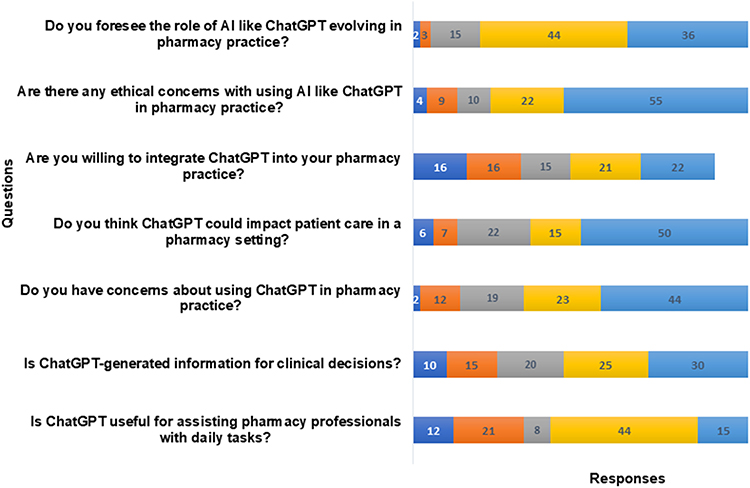 |
Figure 1 Pharmacists’ Attitudes Towards the Use of ChatGPT in Pharmacy Practice. |
Practice Regarding The use of ChatGPT
A substantial majority of participants 66% utilize ChatGPT for inquiries relating to pharmaceuticals, and 61% indicate enhanced workflow efficiency. Furthermore, 62% engage with ChatGPT for clinical decisions, while 52% rely on it for clinical decision-making. Significantly, 79% assert that ChatGPT has enhanced their quality of care. Notwithstanding these favourable attitudes, apprehensions over patient data security persist, with 61% of respondents voicing this issue. Formal training in utilizing ChatGPT seems to be restricted, with merely 19% having had such instruction. Nonetheless, 72% want to persist in utilizing ChatGPT in their practice, and 60% favour AI technologies over conventional resources for clinical inquiries. Figure 2 explains the results.
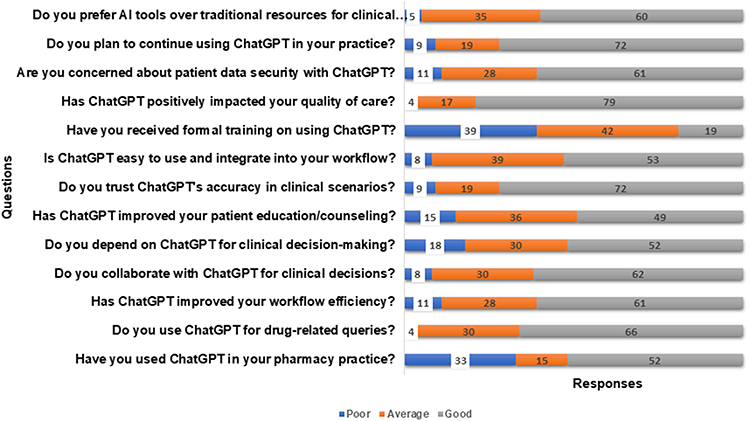 |
Figure 2 Pharmacists’ Practices Towards the Use of ChatGPT in Pharmacy Practice. |
Relationship Between a Pharmacist’s Knowledge of ChatGPT Use and Their Demographics Using Univariate Linear Regression
The regression analysis revealed several significant predictors of the outcome. Pharmacy role showed that academic/research pharmacists (p < 0.001, Cohen’s f² = 0.1) and industrial pharmacists (p < 0.001, Cohen’s f² = 0.14) had a meaningful effect on the outcome, with small to moderate effect sizes. Experience also played a significant role, with those having 6–10 years of experience (p < 0.001, Cohen’s f² = 0.12) demonstrating a small but notable effect. Knowledge of AI in pharmacy was another important predictor, as those who were aware of AI (p < 0.001, Cohen’s f² = 0.15) showed a moderate effect size, indicating that knowledge of AI positively influences the outcome. Attitude towards AI was also significant, with those holding a negative attitude towards AI (p = 0.003, Cohen’s f² = 0.1) having a small effect. The results are explained in Table 3.
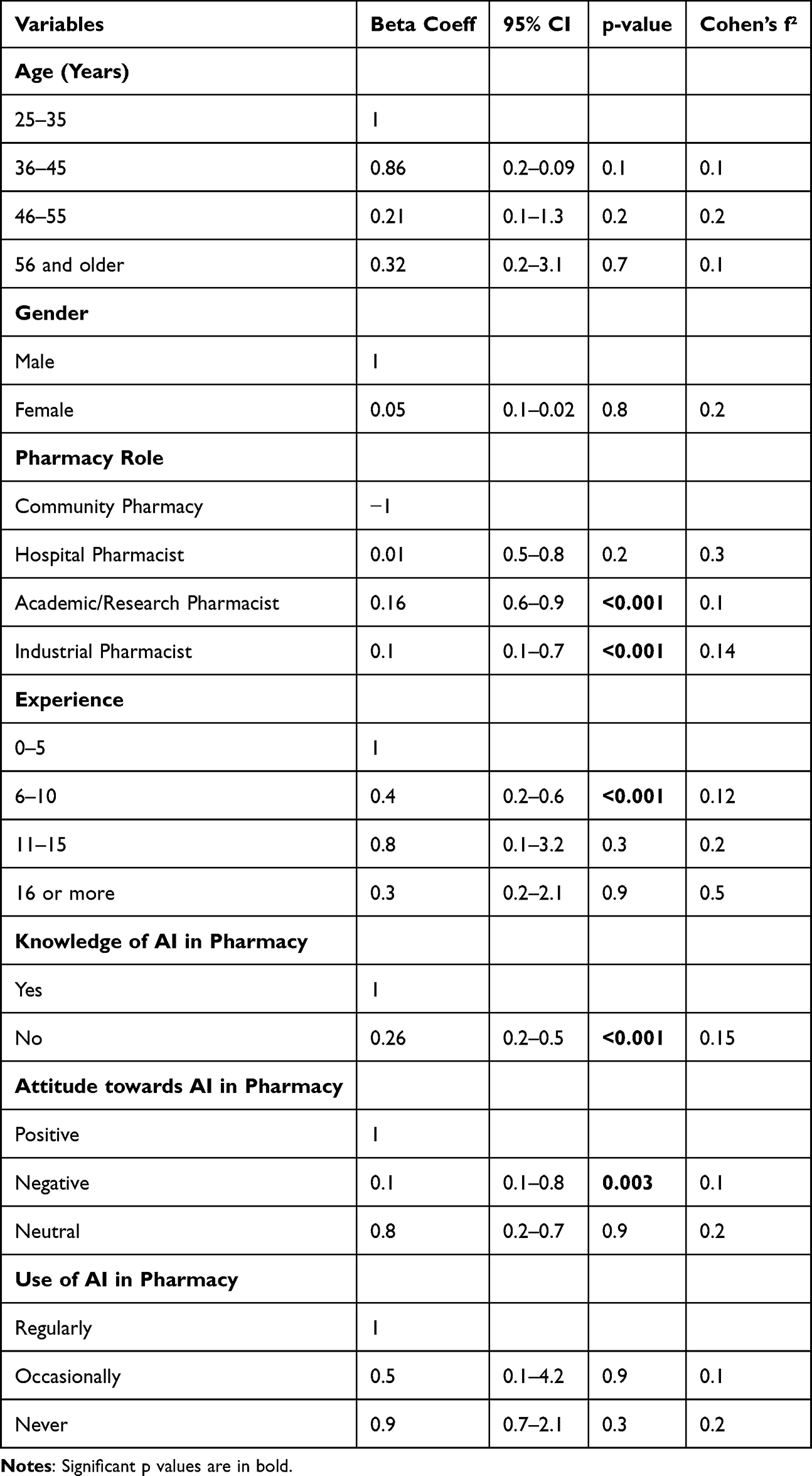 |
Table 3 Factors Associated With Knowledge of ChatGPT Using Univariate Linear Regression |
Relationship Between a Pharmacist’s Knowledge of ChatGPT Use and Their Demographics Using Multivariate Linear Regression
Pharmacy role was a strong determinant, with both academic/research pharmacists (p = 0.005, Cohen’s f² = 0.21) and industrial pharmacists (p = 0.005, Cohen’s f² = 0.15) showing significant positive effects, suggesting that these roles are associated with higher outcomes. The experience variable revealed that those with 6–10 years of experience (p = 0.05, Cohen’s f² = 0.22) had a moderate positive effect, while those with more than 10 years of experience showed no significant impact. Knowledge of AI in pharmacy was another key factor, with individuals who had knowledge of AI (p < 0.001, Cohen’s f² = 0.15) demonstrating a moderate effect, indicating that AI awareness strongly influences the outcome. Attitude towards AI also played a role, with those holding a negative attitude towards AI (p = 0.003, Cohen’s f² = 0.1) showing a small but significant effect. The results are explained in the Table 4.
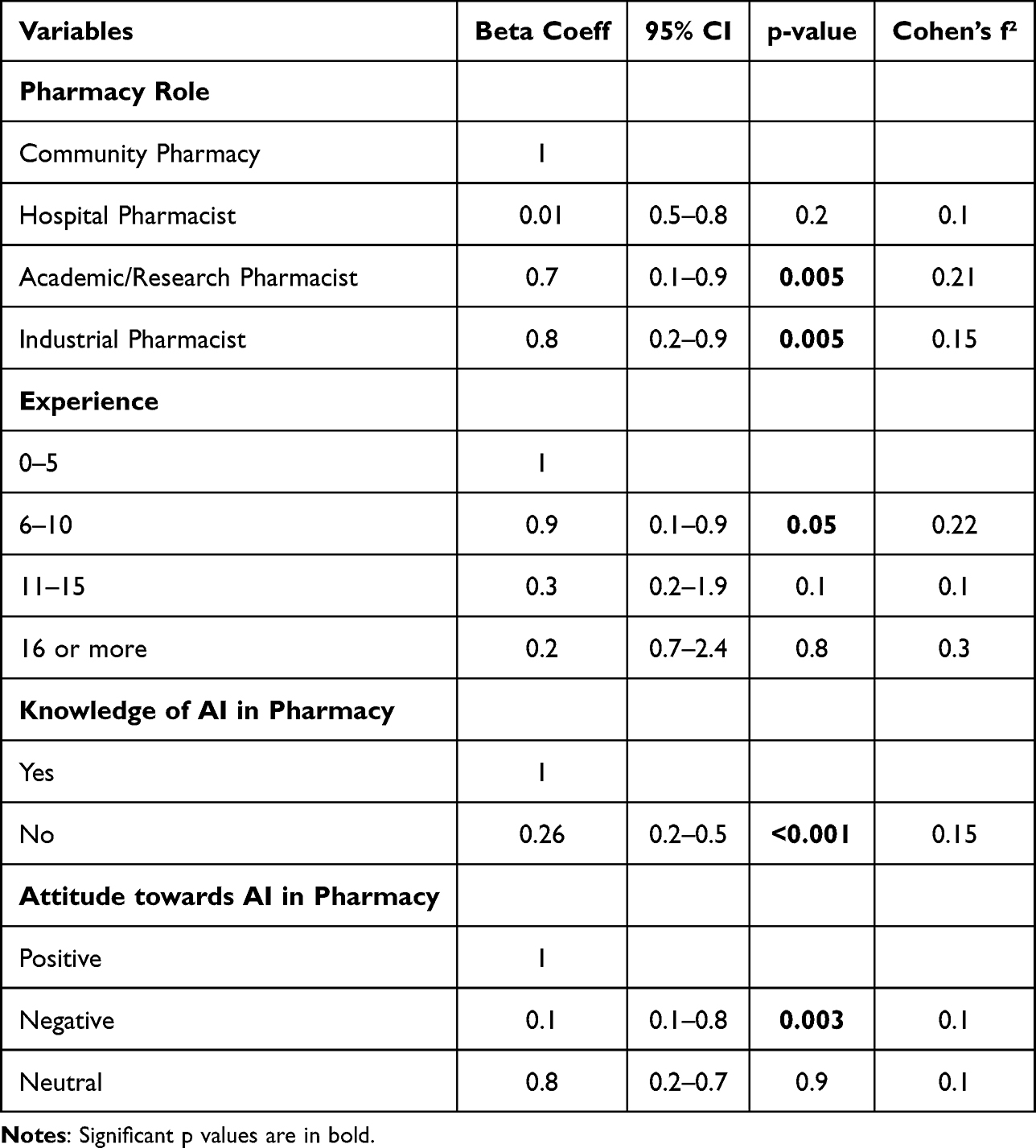 |
Table 4 Factors Associated With Knowledge of ChatGPT Using Multivariate Linear Regression |
Relationship Between Attitudes, Behaviors, and Demographic Traits
The gender distribution showed a statistically significant difference (p = 0.01), with men (n = 370) more likely than women (n = 290) to express positive opinions. Interestingly, more positive practices were displayed by females (n = 390) than by males (n = 300), even though there was a statistically significant difference between the practices of males and females (p = 0.2). The majority of pharmacists (n = 300) had positive attitudes, and there was no appreciable difference in their practice patterns across jobs, according to an analysis of pharmacy roles. However, there was little difference in the attitudes and practices of industrial and academic/research pharmacists. Additionally, it was discovered that years of experience significantly influenced attitudes and behaviors (p = 0.05 for behaviors and p = 0.01 for attitudes). Participants with 6–10 years of experience (n = 220) exhibited more positive attitudes and good behaviors than participants with more than 16 years of experience (n = 120). Table 5 provides a summary of the findings.
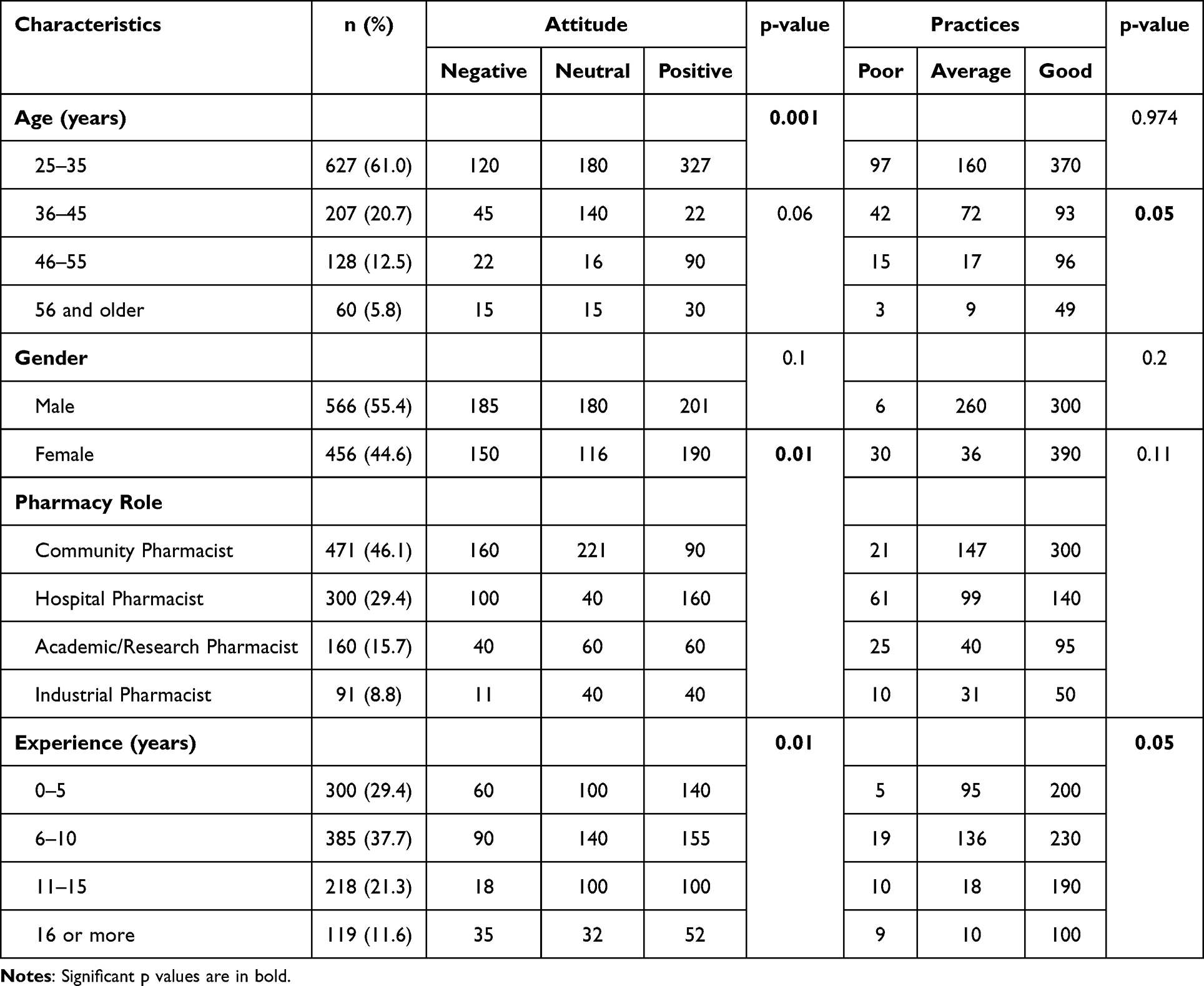 |
Table 5 Association of Demographic Characteristics With Attitudes and Practices of ChatGPT |
Discussion
The present study provides a comprehensive cross-sectional analysis of the knowledge, attitudes, and practices of pharmacy professionals in Saudi Arabia regarding using ChatGPT in pharmacy practice. The research indicated that 78.7% of pharmacists had a substantial understanding of ChatGPT, 64.1% exhibited a favourable disposition toward its utilization, 24.3% employed ChatGPT consistently and 54% utilized it intermittently.
Our study revealed a strong baseline knowledge of ChatGPT among pharmacists, with 90.1% correctly identifying it as an advanced AI chatbot. These findings are consistent with the studies conducted in different parts of the world suggesting that AI tools like ChatGPT are no longer perceived as emerging technologies but are increasingly recognized as integral components of the evolving healthcare ecosystem.23–25 However, gaps in deeper knowledge were observed. For example, only 57.7% of respondents knew that OpenAI developed ChatGPT, and 52.8% were aware of the free and paid versions, reflecting moderate familiarity with its foundational aspects. Moreover, only 32.5% of participants correctly identified ChatGPT’s ability to simulate human-like conversations. The studies conducted in Jordan also reflected that this gap is particularly concerning given the rapid advancements in healthcare and the need for pharmacists to stay up-to-date with the latest information and practices.8,26 It’s important to recognize that the lack of deeper technical knowledge about ChatGPT’s functionality among respondents may hinder the effective integration of AI into pharmacy workflows. Without a thorough understanding of how ChatGPT and similar AI tools work such as their ability to simulate human-like text and process complex queries pharmacists may not fully appreciate the potential benefits these tools offer. This knowledge gap could result in underutilization or misuse of AI technologies in pharmacy practice. For example, pharmacists may struggle to leverage AI for tasks such as medication counseling, patient communication, or clinical decision support if they do not understand the underlying algorithms and data handling processes.27 Additionally, misconceptions about the reliability and limitations of AI could contribute to skepticism or reluctance to adopt these technologies, which might delay or prevent their integration into pharmacy workflows. To mitigate this, targeted training programs or workshops focusing on the functionality, capabilities, and best practices for AI tools like ChatGPT could help bridge this knowledge gap, ultimately enabling pharmacists to harness AI effectively and confidently.28,29
This is a critical observation, as the underestimation of AI’s capacity to engage in human-like interactions could limit its perceived applicability in patient counseling and clinical decision-making. In comparison to studies conducted where AI literacy is high among healthcare professionals.30
Saudi pharmacists display patterns of basic AI awareness but with room for improvement in technical understanding. These knowledge gaps show the need for targeted education programs that look into the technical foundations of AI. Enhancing the application and integration of AI into pharmacy operations will make sure pharmacists are fully aware of the potential of this technology. In line with this suggestion, Al-Worafi and coauthors have already conducted a study on the use of ChatGPT for educational modules on infectious disease.31
The study findings indicated overwhelmingly positive attitudes toward ChatGPT, with 64.1% of respondents expressing a favorable stance. This aligns with global trends where healthcare professionals, especially in developed countries, have shown an openness to adopting AI tools.32,33 The ethical concerns expressed by 64% of respondents regarding the use of AI in pharmacy practice are a significant finding from this study. These worries aligned with the international literature, which has extensively documented concerns about algorithmic bias, patient data security, and the possibility of AI replacing human judgment.32,34 A notable proportion of respondents expressed concerns about the potential risks of AI tools making biased decisions, especially if the AI is trained on non-diverse datasets, which could affect the fairness of clinical recommendations. To mitigate these issues, it is essential to ensure that AI systems are trained on diverse and representative data and undergo regular audits to detect and address biases.35 Additionally, concerns about the security of patient data were highlighted, with respondents worried about the risk of data breaches or unauthorized access. It is critical to emphasize the importance of implementing robust data security measures, including encryption and compliance with privacy regulations like HIPAA, to safeguard sensitive patient information.36
As indicated by the fact that the majority of the respondents had not received any formal education on how to use AI tools in pharmacy practice, one of these barriers may be a lack of formal training. This highlights a crucial void in pharmacists’ professional growth and ongoing education that needs to be filled for AI to be properly incorporated into clinical workflows.37
The discovery that 85% of participants considered ChatGPT helpful in enhancing their capacity to offer patient counseling and education is consistent with other studies indicating that artificial intelligence (AI) can improve interactions between pharmacists and patients.38
According to the linear regression, academic/research and industrial roles are positively associated with the knowledge of ChatGPT. The professionals who have 6–10 years of experience have significant positive associations in both univariable (beta: 0.4, 95% CI: 0.2–0.6, p<0.001) and multivariable (beta: 0.9, 95% CI: 0.1–0.9, p=0.05) analyses. These findings are in line with the study conducted by Li et al39 as well as Kunitsu and colleagues.40 Academic pharmacists are intricately involved in research and instructional endeavours that require ongoing interaction with the most recent technological innovations. Conversely, industrial pharmacists’ function in intensely competitive and efficiency-oriented environments where swift access to information and data analysis is essential. A study assessing pharmacists’ perceptions of ChatGPT revealed that while many recognize its potential benefits, there are prevalent concerns regarding ethical considerations, legal implications, and data privacy.8 These apprehensions are particularly significant in clinical practice, where patient safety and confidentiality are paramount. Industrial and academic pharmacists, dealing more with research and data analysis, may perceive these concerns as less immediate, facilitating a more open attitude toward AI adoption.
The study suggests that only 24.3% of pharmacists use ChatGPT regularly highlighting a significant gap in the adoption of AI tools within the pharmacy profession. To encourage broader adoption, several strategies could be implemented. First, targeted training modules focusing on the practical applications of AI tools, including ChatGPT, could be developed and offered to pharmacists.31 These modules should emphasize the benefits of using AI to improve efficiency in pharmacy workflows, enhance patient communication, and support clinical decision-making. Additionally, integrating AI tools into pharmacy education curricula at both the undergraduate and continuing education levels can help familiarize pharmacists with these technologies early in their careers.38,41 By providing hands-on experience with AI tools, pharmacists will be better equipped to incorporate them into their practice. Furthermore, creating peer-led workshops or AI-focused mentorship programs could help foster a supportive learning environment and reduce apprehension about using new technologies.
While the findings noted gender differences, the gender influences various aspects of pharmacy practice, such as patient counseling approaches, medication management, and professional development opportunities. For instance, studies have shown that female pharmacists are more likely to engage in patient counseling and are underrepresented in leadership positions within the profession.42
This study has limitations even though it offers insightful information about pharmacists’ knowledge, attitudes, and practices regarding ChatGPT. Inferring causality is limited by the cross-sectional design, and response bias may be introduced by using self-reported data. Furthermore, the research was carried out in Riyadh, which might restrict the applicability of the results to other parts of Saudi Arabia or other nations. Longitudinal studies that monitor the use and effects of AI tools across time ought to be the main emphasis of future research. A more thorough understanding of AI adoption in various healthcare settings would also be possible by broadening the research to include a more diverse geographic sample.
This research fills a critical gap in the literature, offering insights into how pharmacists in Saudi Arabia integrate AI-driven technologies, such as ChatGPT, into their daily practice. With the global push towards digital transformation and healthcare modernization under initiatives like Vision 2030, understanding how AI can be integrated into pharmacy practice is crucial.43 These findings hold significant implications for the future of AI adoption in the healthcare landscape of Saudi Arabia and beyond.
A cross-sectional design is implemented in this study that limits causal inferences. A longitudinal or cohort study design should be employed in the future to assess temporal relationships and establish causal pathways. Another limitation was using snowball technology, efforts were made to reduce bias by disseminating the survey across a variety of platforms and monitoring sample diversity. However, it is acknowledged that some degree of bias may remain, and the findings should be interpreted with caution. Future studies should consider using random sampling techniques or targeted recruitment strategies to enhance representativeness.
Conclusion
The majority of pharmacists in this survey have positive knowledge 78.7%, and attitudes 64% towards the use of ChatGPT and other AI tools, highlighting the potential for these tools to revolutionize pharmacy practice in Saudi Arabia. The disconnect between idealized views and actual implementation, however, highlights the necessity of official instruction and training to completely incorporate AI into pharmaceutical processes. The effective integration of AI in healthcare will depend on how ethical issues are resolved and how well-prepared chemists are to employ AI tools. Incorporating ChatGPT training into Continuing Professional Development (CPD) programs will equip pharmacists with essential skills to effectively utilize AI tools in their practice. This integration not only enhances pharmacists’ proficiency in leveraging advanced technologies but also promotes improved patient care and operational efficiency. By embracing ChatGPT within CPD curricula, pharmacists can stay abreast of technological advancements, ensuring they remain at the forefront of innovative healthcare delivery.
The results of this study can help educators and policymakers create strategies that support the moral and practical application of AI in pharmacy practice as Saudi Arabia proceeds with its Vision 2030 project.
Acknowledgments
The authors would like to thank the Research Center at King Fahad Medical City, Riyadh Second Health Cluster R2, for their valuable technical support provided for the manuscript.
Disclosure
The author(s) report no conflicts of interest in this work.
References
1. Aaina M, Venkatesh K, Usharani B, Anbazhagi M, Rakesh G, Muthuraj M. Risk factors and treatment outcome analysis associated with second-line drug-resistant tuberculosis. J Respir. 2021;2(1):1–12. doi:10.3390/jor2010001
2. Giordano C, Brennan M, Mohamed B, Rashidi P, Modave F, Tighe P. Accessing artificial intelligence for clinical decision-making. Front Digital Health. 2021;3:645232. doi:10.3389/fdgth.2021.645232
3. Hadi MU, Qureshi R, Shah A, et al. A survey on large language models: applications, challenges, limitations, and practical usage. Authorea Preprints. 2023.
4. Lin Z. Why and how to embrace AI such as ChatGPT in your academic life. Royal Soc Open Sci. 2023;10(8):230658. doi:10.1098/rsos.230658
5. Ibeneme S, Okeibunor J, Muneene D, et al. Data Revolution, Health Status Transformation and the Role of Artificial Intelligence for Health and Pandemic Preparedness in the African Context. Springer; 2021:1–12.
6. Mikava N, Mamulaidze T. Implications of artificial intelligence in healthcare in developing countries: perspectives and challenges. Agora Int J Econ Sci. 2023;17(2):110–120. doi:10.15837/aijes.v17i2.6448
7. Hatem NA. Advancing pharmacy practice: the role of intelligence-driven pharmacy practice and the emergence of pharmacointelligence. Integrat Pharm Res Pract. 2024;Volume 13:139–153. doi:10.2147/IPRP.S466748
8. Abu Hammour K, Alhamad H, Al-Ashwal FY, Halboup A, Abu Farha R, Abu Hammour A. ChatGPT in pharmacy practice: a cross-sectional exploration of Jordanian pharmacists’ perception, practice, and concerns. J Pharm Policy Practice. 2023;16(1):115.
9. Huang X, Estau D, Liu X, Yu Y, Qin J, Li Z. Evaluating the performance of ChatGPT in clinical pharmacy: a comparative study of ChatGPT and clinical pharmacists. Br J Clin Pharmacol. 2024;90(1):232–238. doi:10.1111/bcp.15896
10. Laymouna M, Ma Y, Lessard D, et al. Needs-assessment for an artificial intelligence-based chatbot for pharmacists in HIV care: results from a knowledge–attitudes–practices survey. MDPI. 2024;1661.
11. Kor E, Kor JAM. Assessment of the Knowledge, Attitude and Practice (KAP) of PMTCT among healthcare providers at the University of Ghana Legon. J Adv Med Pharm Sci. 2024;26(9):35–52. doi:10.9734/jamps/2024/v26i9712
12. Uraif A. Developing healthcare infrastructure in Saudi Arabia using smart technologies: challenges and opportunities. Commun Network. 2024;16(3):51–73. doi:10.4236/cn.2024.163003
13. Abdo KW. The role of artificial intelligence in improving healthcare operations in Saudi Arabia: analytical study of current and future systems. Nanotechnol Percept. 2024;743–758–743–758.
14. Sheerah HA, AlSalamah S, Alsalamah SA, et al. The rise of virtual health care: transforming the health care landscape in the Kingdom of Saudi Arabia: a review article. Telemed E-Health. 2024;30:2545–2554. doi:10.1089/tmj.2024.0114
15. Aboalshamat K, Alhuzali R, Alalyani A, et al. Medical and dental professionals readiness for artificial intelligence for Saudi Arabia vision 2030. Int J Pharm Res Allied Sci. 2022;11(4–2022):52–59. doi:10.51847/NU8y6Y6q1M
16. Skrivankova VW, Richmond RC, Woolf BA, et al. Strengthening the reporting of observational studies in epidemiology using Mendelian randomization: the STROBE-MR statement. JAMA. 2021;326(16):1614–1621. doi:10.1001/jama.2021.18236
17. Mohammed M, Kumar N, Zawiah M, et al. Psychometric properties and assessment of knowledge, attitude, and practice towards chatgpt in pharmacy practice and education: a study protocol. J Racial Ethnic Health Disparities. 2024;11(4):2284–2293. doi:10.1007/s40615-023-01696-1
18. Forero CG. Cronbach’s alpha. In: Encyclopedia of Quality of Life and Well-Being Research. Springer; 2024:1505–1507.
19. Tung NT. A case study of curriculum development: backward or forward/central design? Ho Chi Minh City Open Univ J Sci-Soc Sci. 2020;10(1):18–28. doi:10.46223/HCMCOUJS.soci.en.10.1.546.2020
20. Leighton K, Kardong-Edgren S, Schneidereith T, Foisy-Doll C. Using social media and snowball sampling as an alternative recruitment strategy for research. Clinic Simulation Nurs. 2021;55:37–42. doi:10.1016/j.ecns.2021.03.006
21. Zamanipoor Najafabadi AH, van der Meer PB, Boele FW, et al. Determinants and predictors for the long-term disease burden of intracranial meningioma patients. J Neuro-oncol. 2021;151:201–210. doi:10.1007/s11060-020-03650-1
22. Imbens GW. Statistical significance, p-values, and the reporting of uncertainty. J Econ Perspect. 2021;35(3):157–174. doi:10.1257/jep.35.3.157
23. Davies NW Digital health solutions for medication adherence support.
24. Denecke K, Glauser R, Reichenpfader D. Assessing the potential and risks of ai-based tools in higher education: results from an eSurvey and SWOT analysis. Trends High Educ. 2023;2(4):667–688. doi:10.3390/higheredu2040039
25. Redek T, Čater T, Murovec H, Osmanov K, Suvorov P. AI’s role in wholesale medicine and medical equipment: Salus group case study. Beyond Bits Algorithms. 2023.
26. Abu-Farha R, Fino L, Al-Ashwal FY, et al. Evaluation of community pharmacists’ perceptions and willingness to integrate ChatGPT into their pharmacy practice: a study from Jordan. J Am Pharm Assoc. 2023;63(6):1761–1767.e2. doi:10.1016/j.japh.2023.08.020
27. Jain A. AI-powered insights revolutionizing pharmacy operations. In: Digitalization and the Transformation of the Healthcare Sector. IGI Global Scientific Publishing; 2025:29–64.
28. Choudhary P, Choudhary R, Garaga S. Enhancing training by incorporating ChatGPT in learning modules: an exploration of benefits, challenges, and best practices. Int J Innov Sci Res Technol. 2024;9(11).
29. Onatayo D, Onososen A, Oyediran AO, Oyediran H, Arowoiya V, Onatayo E. Generative AI applications in architecture, engineering, and construction: trends, implications for practice, education & imperatives for upskilling—a review. Architecture. 2024;4(4):877–902. doi:10.3390/architecture4040046
30. Laupichler MC, Aster A, Schirch J, Raupach T. Artificial intelligence literacy in higher and adult education: a scoping literature review. Computers and Education. 2022;3:100101.
31. Al-Worafi YM, Goh KW, Hermansyah A, Tan CS, Ming LC. The use of ChatGPT for education modules on integrated pharmacotherapy of infectious disease: educators’ perspectives. JMIR Med Educ. 2024;10(1):e47339. doi:10.2196/47339
32. Boonrit N, Chaisawat K, Phueakong C, Nootong N, Ruanglertboon W. Exploring community pharmacists’ attitudes in Thailand towards ChatGPT usage: a pilot qualitative investigation. Digital Health. 2024;10:20552076241283256. doi:10.1177/20552076241283256
33. Al-Dujaili Z, Omari S, Pillai J, Al Faraj A. Assessing the accuracy and consistency of ChatGPT in clinical pharmacy management: a preliminary analysis with clinical pharmacy experts worldwide. Res Social Administrative Pharm. 2023;19(12):1590–1594. doi:10.1016/j.sapharm.2023.08.012
34. Fournier A, Fallet C, Sadeghipour F, Perrottet N. Assessing the applicability and appropriateness of ChatGPT in answering clinical pharmacy questions. Ann Pharm Fr. 2024:507–513.
35. Schwartz R, Schwartz R, Vassilev A, et al. Towards a Standard for Identifying and Managing Bias in Artificial Intelligence. Vol. 3. US Department of Commerce, National Institute of Standards and Technology; 2022.
36. Bayyapu S. How data analysts can help healthcare organizations comply with HIPAA and other data privacy regulations. Int J Adv Res Sci Technol. 2023;13(12):669–674.
37. Martini N, Sajtos L, Idio L, et al. The future of pharmacy work: how pharmacists are adapting to and preparing for technology infusion. Explor Res Clin Social Pharm. 2024;15:100472. doi:10.1016/j.rcsop.2024.100472
38. Roosan D, Padua P, Khan R, Khan H, Verzosa C, Wu Y. Effectiveness of ChatGPT in clinical pharmacy and the role of artificial intelligence in medication therapy management. J Am Pharm Assoc. 2024;64(2):422–428.e8. doi:10.1016/j.japh.2023.11.023
39. Li Z. Knowledge, attitude, and practices regarding ChatGPT among health care professionals. Am J Manag Care. 2024;30:e258–e265. doi:10.37765/ajmc.2024.89604
40. Kunitsu Y. The potential of GPT-4 as a support tool for pharmacists: analytical study using the Japanese national examination for pharmacists. JMIR Med Educ. 2023;9:e48452. doi:10.2196/48452
41. Sallam M, Salim NA, Barakat M, Ala’a B. ChatGPT applications in medical, dental, pharmacy, and public health education: a descriptive study highlighting the advantages and limitations. Narra J. 2023;3(1):e103. doi:10.52225/narra.v3i1.103
42. Bissell BD, Johnston JP, Smith RR, et al. Gender inequity and sexual harassment in the pharmacy profession: evidence and call to action. Am J Health Syst Pharm. 2021;78(22):2059–2076. doi:10.1093/ajhp/zxab275
43. Chowdhury S, Mok D, Leenen L. Transformation of health care and the new model of care in Saudi Arabia: Kingdom’s Vision 2030. J Med Life. 2021;14(3):347. doi:10.25122/jml-2021-0070
 © 2025 The Author(s). This work is published and licensed by Dove Medical Press Limited. The
full terms of this license are available at https://www.dovepress.com/terms
and incorporate the Creative Commons Attribution
- Non Commercial (unported, 3.0) License.
By accessing the work you hereby accept the Terms. Non-commercial uses of the work are permitted
without any further permission from Dove Medical Press Limited, provided the work is properly
attributed. For permission for commercial use of this work, please see paragraphs 4.2 and 5 of our Terms.
© 2025 The Author(s). This work is published and licensed by Dove Medical Press Limited. The
full terms of this license are available at https://www.dovepress.com/terms
and incorporate the Creative Commons Attribution
- Non Commercial (unported, 3.0) License.
By accessing the work you hereby accept the Terms. Non-commercial uses of the work are permitted
without any further permission from Dove Medical Press Limited, provided the work is properly
attributed. For permission for commercial use of this work, please see paragraphs 4.2 and 5 of our Terms.
Recommended articles
Promise and Provisos of Artificial Intelligence and Machine Learning in Healthcare
Bhardwaj A
Journal of Healthcare Leadership 2022, 14:113-118
Published Date: 20 July 2022

Undergraduate Medical Students’ and Interns’ Knowledge and Perception of Artificial Intelligence in Medicine


Jha N, Shankar PR, Al-Betar MA, Mukhia R, Hada K, Palaian S
Advances in Medical Education and Practice 2022, 13:927-937
Published Date: 23 August 2022

Impact of AI-Powered Solutions in Rehabilitation Process: Recent Improvements and Future Trends
Khalid U, Naeem M, Stasolla F, Syed MH, Abbas M, Coronato A
International Journal of General Medicine 2024, 17:943-969
Published Date: 12 March 2024
Evaluation of Health Science Students’ Knowledge, Attitudes, and Practices Toward Artificial Intelligence in Northern Saudi Arabia: Implications for Curriculum Refinement and Healthcare Delivery
ALruwail BF, Alshalan AM, Thirunavukkarasu A, Alibrahim A, Alenezi AM, Aldhuwayhi TZA
Journal of Multidisciplinary Healthcare 2025, 18:623-635
Published Date: 7 February 2025
Medical Students’ Perceptions and Attitude Toward the Use of Artificial Intelligence in Healthcare
Albusmait A, AlSaleh A, Ahmed J
Advances in Medical Education and Practice 2026, 17:541284
Published Date: 23 January 2026