
Back to Journals » Psychology Research and Behavior Management » Volume 18
Validation and Reliability of the Depression Anxiety Stress Scale for Youth (DASS-Y) Indonesian Version
Authors Kurnianto A  , Dhamayanti M , Tarigan R , Fadlyana E, Rusmil K, Sitaresmi MN, Sari DM
Received 6 November 2025
Accepted for publication 17 December 2025
Published 24 December 2025 Volume 2025:18 Pages 2417—2427
DOI https://doi.org/10.2147/PRBM.S578397
Checked for plagiarism Yes
Review by Single anonymous peer review
Peer reviewer comments 2
Editor who approved publication: Professor Mei-Chun Cheung
Andra Kurnianto,1,2 Meita Dhamayanti,1 Rodman Tarigan,1 Eddy Fadlyana,1 Kusnandi Rusmil,1 Mei Neni Sitaresmi,3 Dian Marta Sari4
1Department of Child Health, Faculty of Medicine, Universitas Padjadjaran, Bandung, Indonesia; 2Faculty of Medicine, Universitas Sriwijaya, Palembang, Indonesia; 3Department of Child Health, Faculty of Medicine, Public Health and Nursing, Universitas Gadjah Mada, Yogyakarta, Indonesia; 4Department of Physical Medicine and Rehabilitation, Faculty of Medicine, Universitas Padjadjaran, Bandung, Indonesia
Correspondence: Meita Dhamayanti, Department of Child Health, Faculty of Medicine, Universitas Padjadjaran, Eyckman 38, Bandung, West Java, 40161, Indonesia, Email [email protected]
Background: The Depression Anxiety Stress Scale for Youth (DASS-Y) is a psychometric tool designed to assess internalizing problems, including depression, anxiety, and stress in adolescents. This study evaluated the validity and reliability of the Indonesian version of the DASS-Y.
Methods: Using a mixed-methods approach with an exploratory sequential design, the DASS-Y was translated into Bahasa Indonesia through forward-backward translation and administered to 31 adolescents for the cognitive debriefing. The Rasch model was applied to assess psychometric properties in 355 adolescents.
Results: The Indonesian version of the DASS-Y indicated good-to-excellent reliability for the total scale (Cronbach’s α = 0.94, item reliability = 0.98, person reliability = 0.84) and robust construct validity (explained variance = 50.1%, unexplained variance = 6.4%). No misfitting items were identified (infit = 0.78– 1.41, outfit = 0.61– 1.96, point-measure correlation = 0.47– 0.72). Differential item functioning (DIF) analysis revealed minimal bias across demographic factors.
Conclusion: The Indonesian DASS-Y is a valid and reliable instrument for assessing internalizing problems in Indonesian adolescents aged 10– 18 years.
Keywords: DASS for youth, Indonesian adolescents, internalizing problems, Rasch model, reliability, validity
Background
Adolescence is a pivotal developmental period characterized by the establishment of cognitive, emotional, and health foundations that influence lifelong well-being.1 The mental health issues of adolescence have received great concern because of their life-span influence on healthy functioning and well-being. Mental health problems among adolescents can have a negative impact on their physical health, academic performance, and social lives.2–4 They can also lead to substance abuse, self-harm, and suicidal behavior.5,6 Globally, approximately 14.3% of adolescents aged 10–19 years old experience mental health disorders, contributing to 13% of the global disease burden.7 From the perspective of social and economic development, mental health disorders developed in adolescence cost more than those in adulthood in aspects of healthcare expenses, special education demands, the burden on the criminal justice system, and social welfare programs.8 Mental health disorders not only occur in adolescence but also continue to exist and influence their later life. Of more concern is that mental health problems appear to be on the rise; assessing the mental health states of adolescents is a prerequisite for developing and implementing prevention and intervention.9 Given the rising prevalence of adolescent mental health issues, reliable and valid assessment tools are essential for early identification and intervention.
Several instruments are available for detecting mental health issues in Indonesian adolescents, including the Pediatric Symptom Checklist (PSC-17), which assesses psychosocial problems, and the Strengths and Difficulties Questionnaire (SDQ), which evaluates emotional and behavioral problems. However, these instruments do not specifically assess internalizing problems in adolescents. The Depression Anxiety Stress Scales for Youth (DASS-Y) addresses this gap. The DASS-Y offers several advantages over the previously mentioned instruments. It directly measures three internalizing problems—depression, anxiety, and stress—in a single instrument, enabling comprehensive assessment within one session. With only 21 items, it is quicker and easier to complete than longer instruments, making it particularly useful in clinical settings with time constraints.10–14 It demonstrates strong validity and reliability, with subscale and overall score values above 0.8 in countries such as Australia, China, Lebanon, and Serbia, and is relatively superior to the DASS-21 in adolescents.10,15–17 Furthermore, the DASS-Y was explicitly developed for adolescents, using simple, concise language to facilitate understanding and minimize translation difficulties, grammatical and syntactic errors, and issues of idiomatic equivalence.10–14
The Depression Anxiety Stress Scale for Youth (DASS-Y), developed by Szabo and Lovibond (2022), is a specialized instrument for assessing depression, anxiety, and stress in children and adolescents.10 Szabo and Lovibond team have conducted a series of studies in this area since 2006.10–14 Derived from the adult DASS, the DASS-Y has been validated in various languages, including English, Chinese, Arabic, and Serbian.10,15–17 However, an Indonesian version has not been psychometrically evaluated. This study aimed to validate and assess the reliability of the Indonesian DASS-Y using the Rasch model, providing a culturally adapted tool for measuring internalizing problems in Indonesian adolescents.
Materials and Methods
This study employed a mixed-methods exploratory sequential design. A qualitative phase involved translating and culturally adapting the DASS-Y into Indonesian, followed by a quantitative phase to evaluate its psychometric properties (Figure 1).
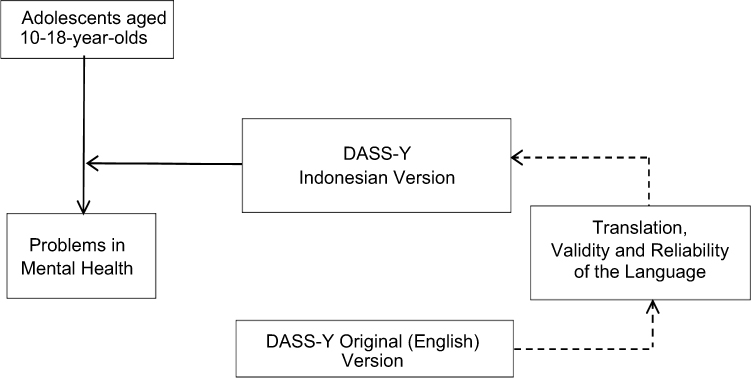 |
Figure 1 Diagram of the Concept. |
The DASS-Y comprises 21 items across three subscales: Depression (7 items), Anxiety (7 items), and Stress (7 items). Participants rate the frequency and severity of symptoms over the past week on a 4-point Likert scale (0 = not true, 3 = very true). Subscale scores range from 0 to 21, and the total score ranges from 0 to 63, with higher scores indicating greater symptom severity. Scores are categorized as normal, mild, moderate, severe, or extremely severe.
The DASS-Y was translated into Indonesian using a forward-backward translation method, with permission from the original authors. Licensed translators performed the translation, and an expert panel ensured cultural and linguistic appropriateness. The entire content of the Indonesian version of DASS-Y is available on the DASS website https://www2.psy.unsw.edu.au/dass/DASS-Y%20Indonesian%20(Bahasa)/Kurnianto/Kurnianto%20Indonesian_(Bahasa)_DASS-Y.htm
This study was conducted in 5 steps: the initial translation (forward translation), synthesis of combined translation, backward translation, cognitive debriefing, and then validity and reliability trials of the DASS-Y Indonesian version (Figure 2). All steps were done, and the final version was accepted on behalf of the expert panelists. Adolescents aged 10–18-year-olds were used as participants for the cognitive debriefing on qualitative methods.
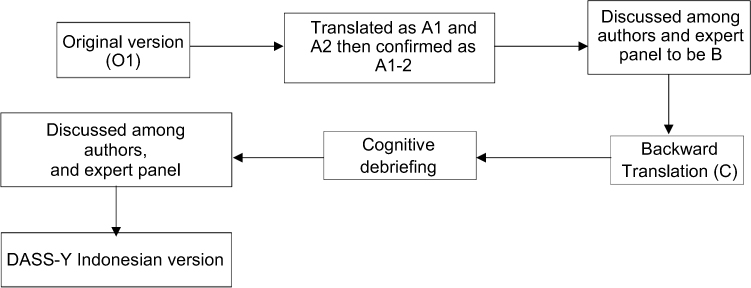 |
Figure 2 Diagram of The Steps in a Qualitative Study. |
This study used multistage random sampling. The selection of schools (elementary, middle, and senior high schools) was based on cluster random sampling, followed by stratified random sampling from the total number of students. Participants who understood Bahasa Indonesia, were aware, and had a good ability to carry out the procedures were included. The study participants’ exclusion criteria were parents and/or adolescents who refused to participate. The study flow is presented in Figure 3.
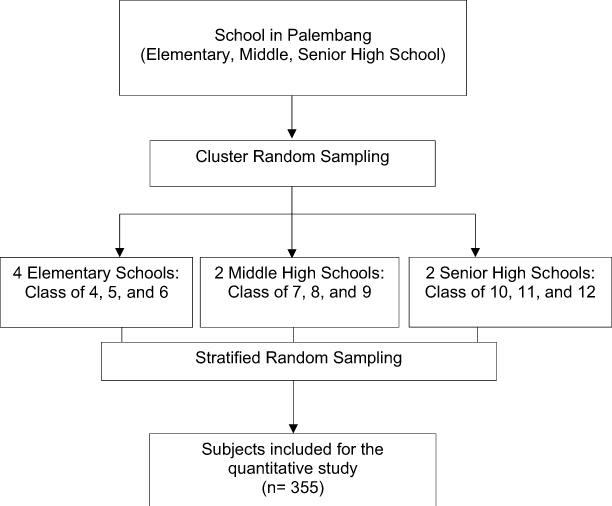 |
Figure 3 Study flow. |
Statistic Method
The Rasch model, implemented using Winsteps software (version 5.20), was employed to evaluate the psychometric properties. This model converts categorical Likert-scale responses into interval-level logit units, assessing reliability (Cronbach’s α, item reliability, person reliability) and validity (construct validity, item fit, rating scale validity). Construct validity was evaluated through explained and unexplained variance. Item fit was assessed using infit and outfit mean-square (MNSQ) statistics (acceptable range: 0.5–2.0) and point-measure correlations (acceptable range: 0.4–0.85). Differential item functioning (DIF) analysis examined response bias across sex, age group, level of education, and school type, with significant DIF indicated by p-value less than 0.05.18–21
Time and Place
This multicenter, mixed-methods study with an exploratory sequential design was conducted from February to July 2025 at eight schools in Palembang, South Sumatra, Indonesia.
Ethics
This study complies with the Declaration of Helsinki, and the data collection process was conducted after obtaining a letter of ethical suitability, number 139/UN6.KEP/EC/2025 from the Research Ethics Committee of the Faculty of Medicine, Universitas Padjadjaran. Written informed consent from parents and verbal assent of each study participant were obtained prior to recruitment.
Results
For the cognitive debriefing, the instruments were distributed to 31 participants, comprising 13 adolescents aged 10–13 years, 11 adolescents aged 14–16 years, and seven adolescents aged 17–18 years (Table 1). The results showed that most participants understood the questions and were confident in making their choices. The Indonesian version of the DASS-Y was then composed as the final module (DASS-Y Indonesian version) for use in the validity and reliability tests.
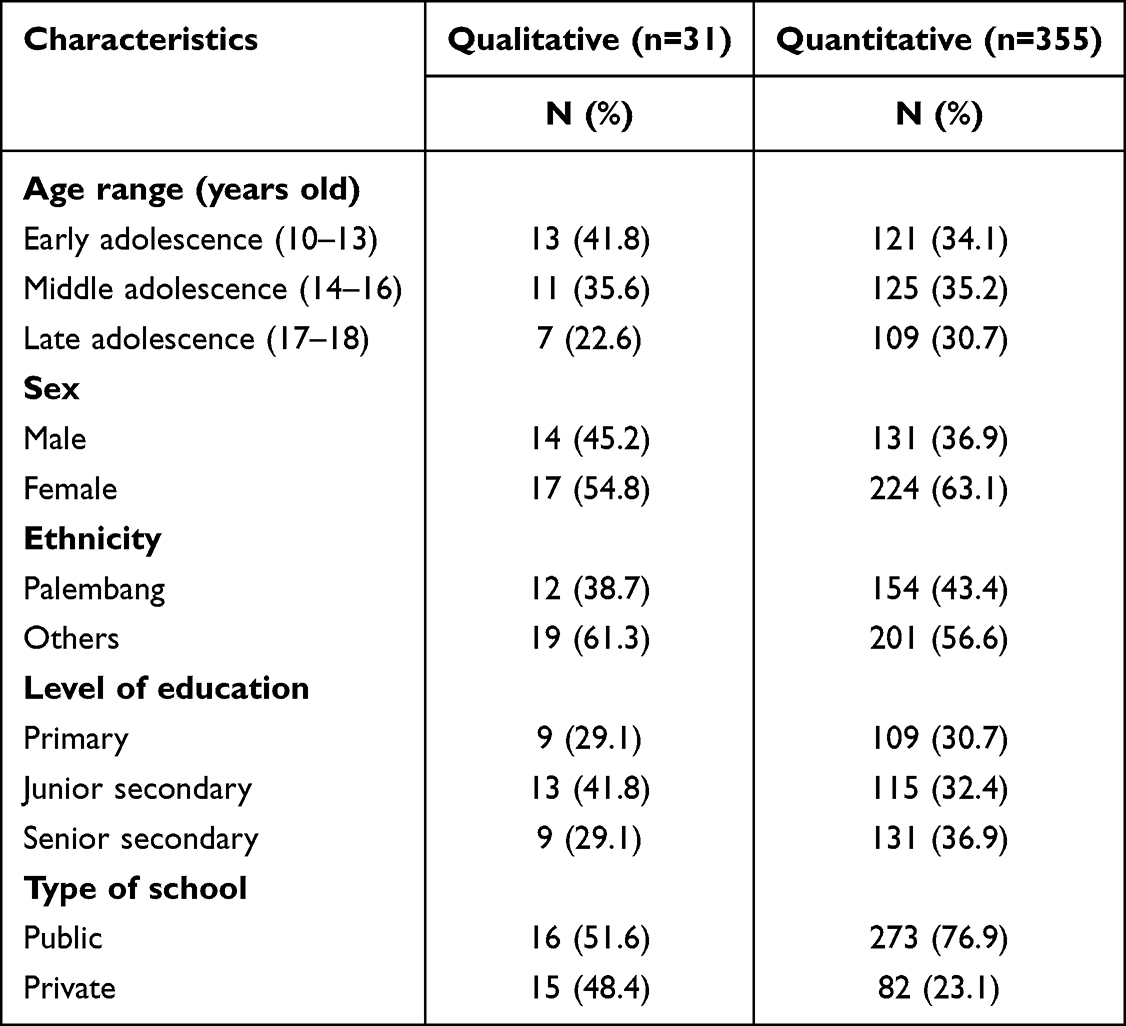 |
Table 1 Sociodemographic Characteristics |
We gave the DASS-Y Indonesian version to the adolescents to test the validity and reliability. The sociodemographic characteristics of the quantitative subjects are presented in Table 1. There were 355 adolescents, consisting of 131 (36.9%) males and 224 (63.1%) females. The ethnicity of the subjects was 154 (43.4%) Palembangnese and 201 (56.6%) Others, consisting of Javanese, Sundanese, Bataknese, Minangnese, and Lampungnese.
The validity and reliability analysis of the DASS-Y Indonesian version is presented in Table 2, using the Winsteps program version 5.2.0. These tables can provide general information about the participants’ answer patterns, the quality of the instruments, and the participants’ relationship to the questionnaire’s questions.
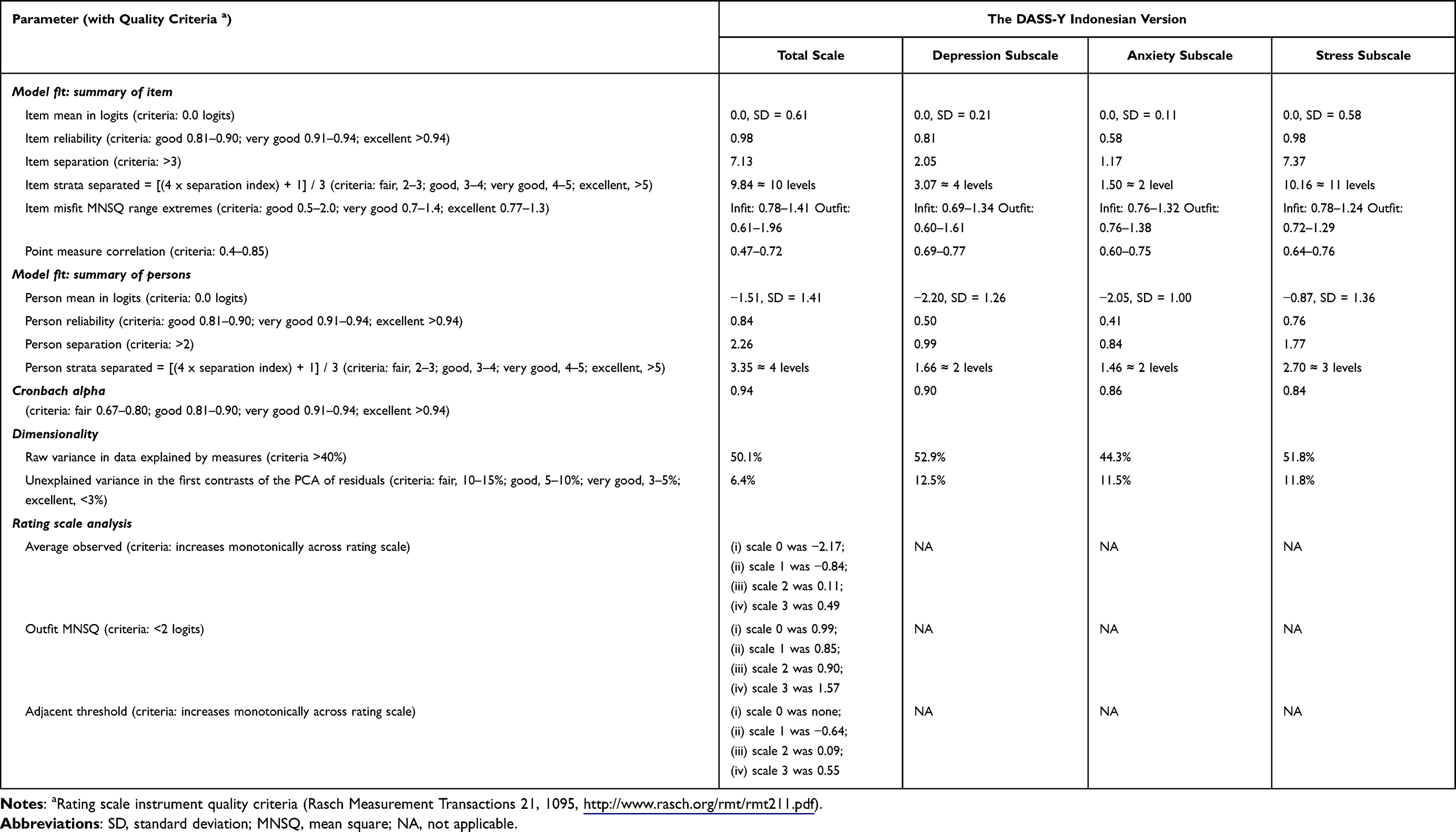 |
Table 2 Summary of the Rasch Measurement Model on the DASS-Y Indonesian Version |
Reliability shows how items and persons can be reproduced from existing data. The total scales of the DASS-Y Indonesian version show good-to-excellent reliability. The total scales of the DASS-Y Indonesian version shows the Cronbach’s alpha was 0.94 (subscales range 0.84–0.94), person reliability was 0.84 (subscales range 0.41–0.84), item reliability was 0.98 (subscales range 0.58–0.98), person separation was 2.26 (subscales range 0.84–2.26), item separation was 7.13 (subscales range 1.17–7.37), person strata separation was four levels (subscales range 2–4 levels), and item strata separation was 10 levels (subscales range 2–10 levels). As shown in Table 2, the construct validity of the DASS-Y Indonesian version was substantiated by sizable explained variance in measures (44.3–52.9%) and unexplained variance in the first contrasts (6.4–12.5%).
There were no misfit items in the DASS-Y Indonesian version identified by the Rasch models. Rating scale analysis using average observed and Adjacent threshold values shows increases monotonically across the rating scale, and outfit MNSQ values of 0.85–1.57 meet the ideal criteria of less than two logits.
The person-item map (Figure 4) showed items well-distributed within two standard deviations of the item mean (0.0 logit). Adolescents reported low levels of internalizing problems (mean = −1.51, SD = 1.41), suggesting minimal symptom endorsement.
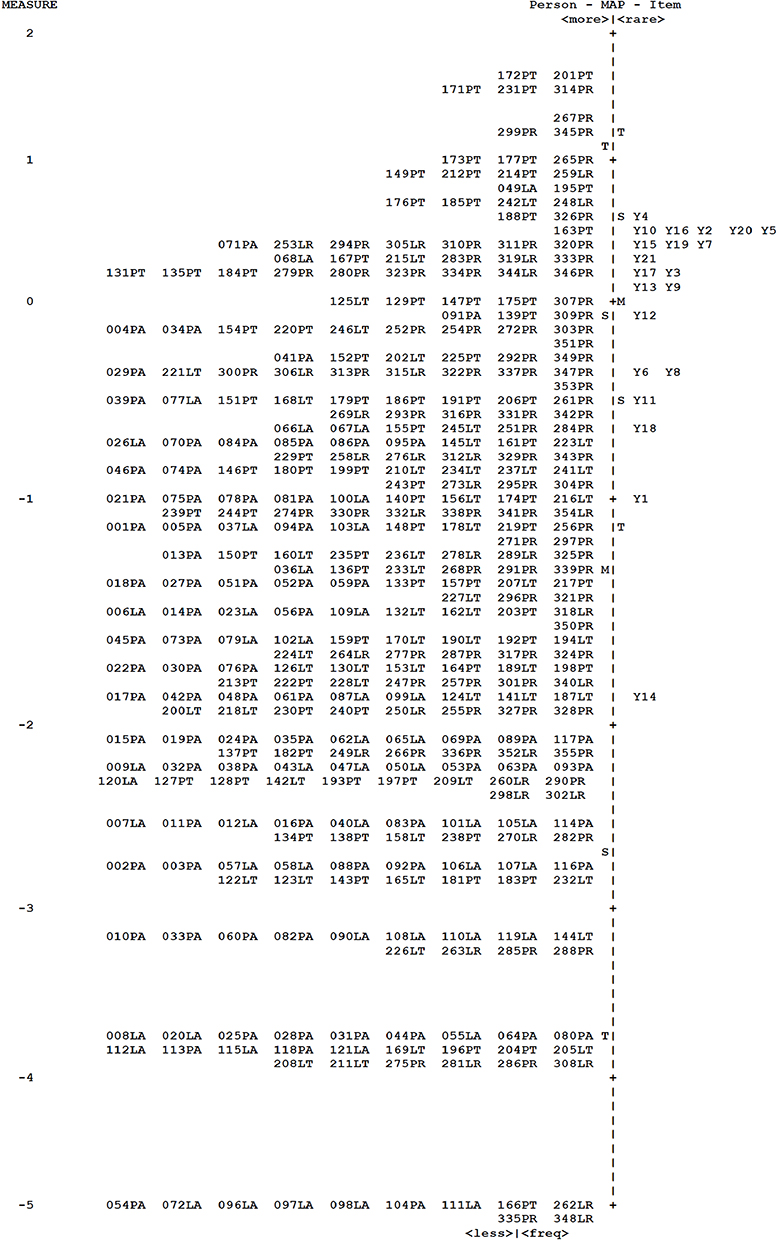 |
Figure 4 Person-Item Map (Wright Map) for DASS-Y Indonesian version. (L): Male; (P) Female; (A) early adolescence; (T) middle adolescence; (R) Late adolescence; (Y) Item number; Eg 010PA: Participant number 010 is a female in early adolescence. (Y1): Item number 1 of the DASS-Y. |
Differential item functioning (DIF) of the Indonesian DASS-Y analysis revealed minimal bias. For sex (Figure 5a), items Y3, Y6, Y9, Y13, and Y20 showed significant DIF (p <0.05). For age group (Figure 5b), items Y5, Y8, Y10, Y14, and Y21 were biased. Education level (Figure 5c) influenced items Y1, Y4, Y5, Y8, Y9, Y10, Y12, Y14, Y16, Y17, and Y21. School type (Figure 5d) affected only items Y14 and Y21.
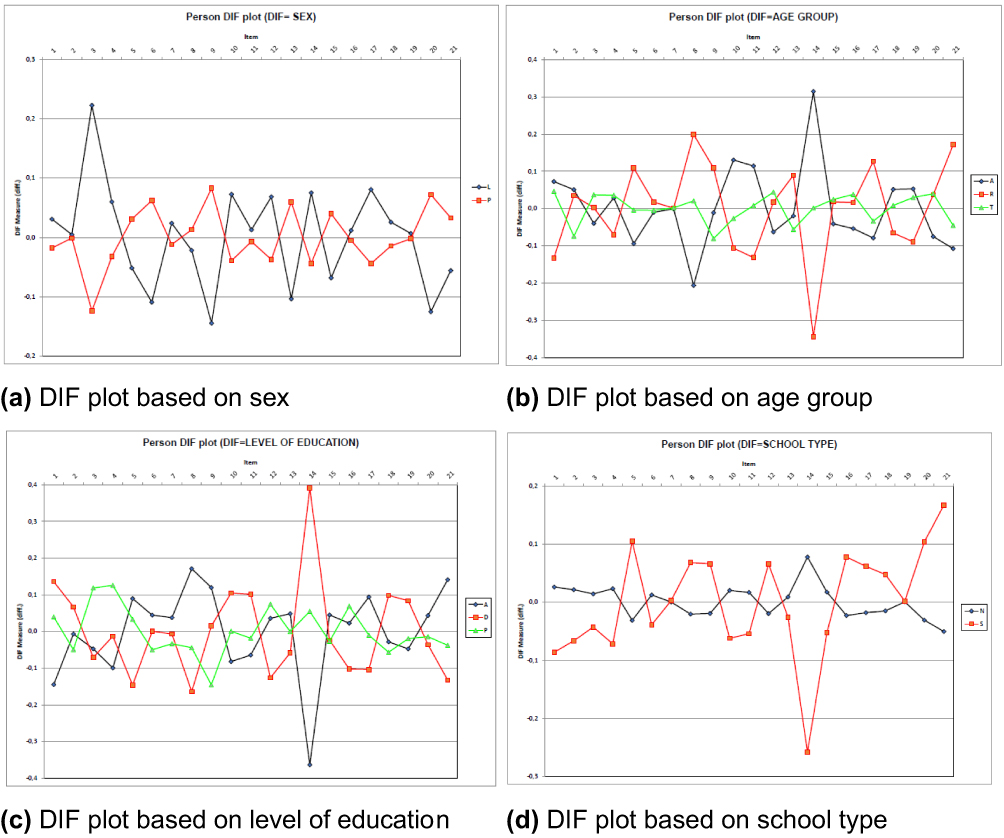 |
Figure 5 Differential Item Functioning (DIF) plot across demographic variables. (a) DIF plot based on sex (L = Male; P = Female); (b) DIF plot based on age group (A = Early adolescence; T = Middle adolescence; R = Late adolescence); (c) DIF plot based on the level of education (D = Primary; P = Junior secondary; A = Senior secondary); (d) DIF plot based on school type (N = Public; S = Private). |
Discussion
This study confirms that the Indonesian adaptation of the DASS-Y, both as a composite scale (Cronbach’s α = 0.95) and across its subscales (Cronbach’s α = 0.84–0.90), exhibits good-to-excellent reliability. These results align with the psychometric properties reported for the English, Chinese, and Arabic versions of the DASS-Y.10,15,16
Validity and Reliability of the Total Scale of the DASS-Y Indonesian Version
The Indonesian version of the Depression Anxiety Stress Scale for Youth (DASS-Y) total scale exhibited robust psychometric properties, with person reliability of 0.84, item reliability of 0.98, person separation of 2.26, and item separation of 7.13, indicating good to excellent performance based on Rasch model analysis. Separation indices reflect the spread of items and respondents across the instrument, delineating distinct levels of item difficulty and participant ability.19
Unidimensionality, a key Rasch model analysis, assesses whether the instrument measures its intended construct, in this case, internalizing problems (depression, anxiety, and stress) in adolescents.19,22 A minimum explained variance of 20% is required for unidimensionality, with values exceeding 40% considered optimal. Additionally, unexplained variance in the first contrast should remain below 15% to ensure construct integrity.22,23 The Indonesian DASS-Y total scale demonstrated strong construct validity, with an explained variance of 50.1% and an unexplained variance of 6.4% in the first contrast, confirming its ability to measure internalizing problems effectively.
The Indonesian DASS-Y total scale demonstrated strong construct validity, with an explained variance of 50.1% and an unexplained variance of 6.4% in the first contrast, confirming its ability to assess internalizing problems effectively.22 Positive point-measure correlations indicate congruence between items and the measured construct. Items with MNSQ Outfit values between 1.5 and 2.0 are considered less suitable but do not undermine validity, while values above 2.0 compromise the instrument’s integrity. Conversely, MNSQ Outfit values below 0.5 suggest low productivity but do not affect validity. Misfit may result from a limited sample size, insufficient participant diversity (as reflected in reliability and separation indices), or inconsistent response patterns.19,23
The Indonesian DASS-Y total scale showed no misfitting items, indicating that all items align with the intended measurement of internalizing problems (depression, anxiety, and stress) in adolescents, reinforcing the instrument’s validity.
Validity and Reliability Subscales of the DASS-Y Indonesian Version
The Depression subscale of the Indonesian DASS-Y demonstrated good-to-poor psychometric properties, with Cronbach’s alpha of 0.90, person reliability of 0.50, item reliability of 0.81, person separation of 0.99, item separation of 2.05, two person strata, and four item strata, reflecting good to very good performance. Comparable results were observed in validations conducted in China (α = 0.87) and Lebanon (α = 0.92), and the original English version in Australia (α = 0.89). These findings confirm the Depression subscale’s effectiveness best interpreted in conjunction with the total scale rather than independently in assessing depressive symptoms in adolescents.10,15,16
The Anxiety subscale exhibited good-to-poor psychometric properties, with Cronbach’s alpha of 0.86, item reliability of 0.58, item separation of 1.17, two item strata, person reliability of 0.41, person separation of 0.84, and two person strata. Validations in China (α = 0.82) and Lebanon (α = 0.93) reported good to very good reliability, as did the English version (α = 0.84). The results show that the anxiety subscale can effectively measure the symptoms of anxiety among adolescents, but it’s best interpreted in conjunction with the total scale rather than independently.10,15,16
The Stress subscale showed Cronbach’s alpha (0.84), person reliability (0.76), person separation (1.77), and three person strata indicated fair performance, while item reliability (0.98), item separation (7.37), and eleven item strata were excellent. Similar findings were reported in China (α = 0.84), Lebanon (α = 0.86), and the English version (α = 0.84), supporting the Stress subscale’s ability to measure stress symptoms effectively in adolescents. The results indicate that the stress subscale can effectively measure the symptoms of stress among adolescents.10,15,16
Principal component analysis of residuals revealed unexplained variance in the first contrast of 12.5% for the Depression subscale, 11.5% for the Anxiety subscale, and 11.8% for the Stress subscale, indicating fair construct validity. These results suggest that the subscale items appropriately measure their intended constructs, consistent with findings from the Chinese validation.24
Item and Person Mapping
Person-item maps, also known as Wright Maps, facilitate the examination of the difficulty hierarchy of items in relation to participants’ abilities or perceptions within the Indonesian version of the Depression Anxiety Stress Scale for Youth (DASS-Y). These maps provide a visual representation of the alignment between item difficulty and respondent ability, highlighting aspects such as item redundancy (items with equivalent difficulty levels), trait gaps (indicating potential need for additional items to address uncovered ranges), item ordering relative to the test developers’ expectations (supporting construct validity), and the match between item difficulty and the sample’s ability range (targeting). Notably, the person-item map does not directly influence the instrument’s validity or reliability.18–20,22,25
The person-item map for the Indonesian DASS-Y (Figure 4) reveals variations in abilities or perceptions among participants across early, middle, and late adolescence. However, most adolescents in the sample reported minimal endorsement of the internalizing problems assessed by the DASS-Y items. These differences in perception are not attributable to translation errors but rather reflect individual variability in responses.18–20
Rating Scale Analysis
The Indonesian version of the Depression Anxiety Stress Scale for Youth (DASS-Y) demonstrated robust rating scale validity, as evidenced by average observed measures, Outfit Mean Square (MNSQ) values, and adjacent thresholds meeting optimal criteria. These findings indicate that participants fully engaged with the four-point Likert scale (ranging from 0 = not true of you to 3 = very true of you), effectively distinguishing between response categories. This confirms the scale’s ability to accurately capture participants’ perceptions of internalizing problems, enabling researchers, particularly in Indonesia, to reliably assess depression, anxiety, and stress based on total scores. The fair perception of the rating scale by participants underscores its appropriateness, and such rating scale analyses contribute to enhancing the instrument’s overall validity and reliability.18,20,25
Differential Item Functioning
Differential Item Functioning (DIF) analysis was performed to evaluate potential response biases in the Indonesian version of the Depression Anxiety Stress Scale for Youth (DASS-Y) across demographic variables. Significant DIF was assessed for sex, age group, educational level, and school type. Results indicated that certain items exhibited differential functioning, particularly influenced by participants’ educational level, which affected their responses to the instrument. Consequently, these items may require separate analysis to account for this variability. Despite these findings, the Indonesian DASS-Y remains consistent with the original instrument and is suitable for assessing internalizing problems, such as depression, anxiety, and stress, in adolescents.18,21,26
Conclusions
The Indonesian DASS-Y is a valid and reliable instrument for assessing internalizing problems (depression, anxiety, and stress) in Indonesian adolescents aged 10–18 years. While the Indonesian DASS-Y remains consistent with the original instrument, caution is advised when analyzing across educational levels, as certain items exhibit differential functioning.
Abbreviations
DASS, Depression Anxiety Stress Scale; DASS-Y, Depression Anxiety Stress Scale for Youth; DIF, Differential Item Functioning; MNSQ, mean square; PCA, Principal Component Analysis; WHO, World Health Organization.
Acknowledgment
The authors would like to express their sincere gratitude to all of the staff, teachers, and students of the participating schools in Palembang, including SD04, SD128, SD157, SD159, SMP45, SMP57, SMA17, and SMA Muhammadiyah 1, for their cooperation and commitment throughout this study.
Funding
This publication charge is funded by Universitas Padjadjaran (UNPAD) through the Indonesian Endowment Fund for Education (LPDP) on behalf of the Indonesian Ministry of Higher Education, Science and Technology, and managed under the EQUITY Program (Contract No. 4303/ B3/DT.03.08/2025 and 3927/UN6. RKT/HK.07.00/2025).
Disclosure
The authors report no conflicts of interest in this work.
References
1. Patton GC, Sawyer SM, Santelli JS, et al. Our future: a Lancet commission on adolescent health and well-being. Lancet. 2016;387(10036):2423–2478. doi:10.1016/S0140-6736(16)00579-1
2. Knopf D, Park MJ, Mulye TP. The Mental Health of Adolescents: A National Profile. San Francisco, CA: National Adolescent Health Information Center; 2008:1–15.
3. DeSocio J, Hootman J. Children’s mental health and school success. J School Nurs. 2004;20(4):189–196. doi:10.1177/10598405040200040201
4. Radez J, Reardon T, Creswell C, Lawrence PJ, Evdoka-Burton G, Waite P. Why do children and adolescents (not) seek and access professional help for their mental health problems? A systematic review of quantitative and qualitative studies. Eur Child Adolesc Psychiatry. 2021;30(2):183–211. doi:10.1007/s00787-019-01469-4
5. Caqueo-Urízar A, Flores J, Escobar C, Urzúa A, Irarrázaval M. Psychiatric disorders in children and adolescents in a middle-income Latin American country. BMC Psychiatry. 2020;20(1):104. doi:10.1186/s12888-020-02512-4
6. Pompili M, Serafini G, Innamorati M, et al. Substance abuse and suicide risk among adolescents. Eur Arch Psychiatry Clin Neurosci. 2012;262(6):469–485. doi:10.1007/s00406-012-0292-0
7. World Health Organization. Mental Health of Adolescents; World Health Organization: Geneva, Switzerland. 2021. Available from: Https://Www.Who.Int/News-Room/Fact-Sheets/Detail/Adolescent-Mental-Health.
8. Merikangas KR, Nakamura EF, Kessler RC. Epidemiology of mental disorders in children and adolescents. Dialogues Clin Neurosci. 2009;11(1):7–20. doi:10.31887/DCNS.2009.11.1/krmerikangas
9. Bor W, Dean AJ, Najman J, Hayatbakhsh R. Are child and adolescent mental health problems increasing in the 21st century? A systematic review. Aust N Z J Psychiatry. 2014;48(7):606–616. doi:10.1177/0004867414533834
10. Szabo M, Lovibond PF. Development and psychometric properties of the DASS-youth (DASS-Y): an extension of the depression anxiety stress scales (DASS) to adolescents and children. Front Psychol. 2022;13:766890. doi:10.3389/fpsyg.2022.766890
11. Fowler S, Szabó M. The emotional experience associated with worrying in adolescents. J Psychopathol Behav Assess. 2013;35(1):65–75. doi:10.1007/s10862-012-9316-3
12. Szabó M. The short version of the depression anxiety stress scales (DASS‐21): factor structure in a young adolescent sample. J Adolescence. 2010;33(1):1–8. doi:10.1016/j.adolescence.2009.05.014
13. Szabó M. Do children differentiate worry from fear? Behav Change. 2007;24(4):195–204. doi:10.1375/bech.24.4.195
14. Szabó M, Lovibond PF. Anxiety, depression, and tension/stress in children. J Psychopathol Behav Assess. 2006;28(3):192–202. doi:10.1007/s10862-005-9008-3
15. Jiang J, Chen J, Lin Z, Tang X, Hu Z. Validation and psychometric properties of the depression anxiety stress scale for youth in Chinese adolescents. Front Psychol. 2024;15:1466426. doi:10.3389/fpsyg.2024.1466426
16. Obeid S, Kanj G, Mohammed Ali A, et al. The depression anxiety stress scales for youth (DASS-Y): psychometric properties of an Arabic translation and Validation of a Shortened Form (DASS-Y-12) based on the Adult DASS-12. Int J Adolesc Youth. 2025;30(1):2512843. doi:10.1080/02673843.2025.2512843
17. Jovanović V. The Depression Anxiety Stress Scales for Youth (DASS-Y): evidence of validity and cross-national and gender measurement invariance. Eur Child Adolesc Psychiatry. 2025;34(4):1317–1327. doi:10.1007/s00787-024-02561-0
18. Linacre JM. Winsteps Rasch Measurement Computer Program User’s Guide. 2021. Winsteps.Com.
19. Boone WJ, Noltemeyer A. Rasch analysis: a primer for school psychology researchers and practitioners. Cogent Educat. 2017;4(1):1416898. doi:10.1080/2331186x.2017.1416898
20. Wright BD, Stone MH. Measurement Essentials. Wilmington: Wide Range, Inc; 1999.
21. Zumbo BD. A Handbook on the Theory and Methods of Differential Item Functioning (DIF): Logistic Regression Modeling as a Unitary Framework for Binary and Likert-Type (Ordinal) Item Scores. Ottawa, ON: Directorate of Human Resources Research and Evaluation, Department of National Defense; 1999.
22. Wibisono S. Aplikasi model rasch untuk validasi instrumen pengukuran fundamentalisme Agama Bagi responden Muslim. J Pengukuran Psikologi Pendidikan Indonesia. 2018;5(1). doi:10.15408/jp3i.v5i1.9239
23. Wiwaha G, Sari DM, Biben V, Sunjaya DK, Hilmanto D. Translation and validation of indonesian version of pediatric quality of life inventoryTM (PedsQLTM) neuromuscular module. Health Qual Life Outcomes. 2022;20(1). doi:10.1186/s12955-022-01933-x
24. Hong CC, ling LX, Gamble JH, et al. Evaluating the psychometric properties of the Chinese Depression Anxiety Stress Scale for Youth (DASS-Y) and DASS-21. Child Adolesc Psychiatr Ment Health. 2023;17(1):106. doi:10.1186/s13034-023-00655-2
25. Bond TG, Fox CM. Applying the Rasch Model: Fundamental Measurement in the Human Sciences (3rd Ed.). Routledge/Taylor & Francis Group; 2015.
26. Tennant A, Conaghan PG. The Rasch measurement model in rheumatology: what is it and why use it? When should it be applied, and what should one look for in a Rasch paper? Arthritis Rheum. 2007;57(8):1358–1362. doi:10.1002/art.23108
 © 2025 The Author(s). This work is published and licensed by Dove Medical Press Limited. The
full terms of this license are available at https://www.dovepress.com/terms
and incorporate the Creative Commons Attribution
- Non Commercial (unported, 4.0) License.
By accessing the work you hereby accept the Terms. Non-commercial uses of the work are permitted
without any further permission from Dove Medical Press Limited, provided the work is properly
attributed. For permission for commercial use of this work, please see paragraphs 4.2 and 5 of our Terms.
© 2025 The Author(s). This work is published and licensed by Dove Medical Press Limited. The
full terms of this license are available at https://www.dovepress.com/terms
and incorporate the Creative Commons Attribution
- Non Commercial (unported, 4.0) License.
By accessing the work you hereby accept the Terms. Non-commercial uses of the work are permitted
without any further permission from Dove Medical Press Limited, provided the work is properly
attributed. For permission for commercial use of this work, please see paragraphs 4.2 and 5 of our Terms.
Recommended articles

Validation of the Connor-Davidson Resilience Scale-10 in South Africa: Item Response Theory and Classical Test Theory
Pretorius TB, Padmanabhanunni A
Psychology Research and Behavior Management 2022, 15:1235-1245
Published Date: 16 May 2022
Validity and Reliability of the Thai Version of the 19-Item Compliance-Questionnaire-Rheumatology
Panichaporn S, Chanapai W, Srisomnuek A, Thaweeratthakul P, Katchamart W
Patient Preference and Adherence 2022, 16:2149-2158
Published Date: 17 August 2022
Psychometric Properties of the Montreal Cognitive Assessment (MoCA) to Detect Major Neurocognitive Disorder Among Older People in Ethiopia: A Validation Study
Daniel B, Agenagnew L, Workicho A, Abera M
Neuropsychiatric Disease and Treatment 2022, 18:1789-1798
Published Date: 22 August 2022
Development and Initial Validity of the Patients’ Literacy Scale Among Outpatients in Hangzhou City, China
Jiang D, Sang T, Xiao X, Wu Z, Wang H, Yang Q
Patient Preference and Adherence 2022, 16:2483-2496
Published Date: 7 September 2022
Research and Evaluation of a Cyberchondria Severity Scale in a Chinese Context
Wang D, Sun L, Shao Y, Zhang X, Maguire P, Hu Y
Psychology Research and Behavior Management 2023, 16:4417-4429
Published Date: 1 November 2023