
Back to Journals » Clinical Ophthalmology » Volume 20
Quality of Life Following Rhegmatogenous Retinal Detachment: A Systematic Review and Meta-Analysis
Authors Sriranganathan A  , Abdul-Hay MJ, Diaz Martinez JP, Felfeli T
Received 19 December 2025
Accepted for publication 10 March 2026
Published 27 May 2026 Volume 2026:20 590040
DOI https://doi.org/10.2147/OPTH.S590040
Checked for plagiarism Yes
Review by Single anonymous peer review
Peer reviewer comments 2
Editor who approved publication: Dr Yousef Fouad
Aswen Sriranganathan,1 Marie Jo Abdul-Hay,1 Juan Pablo Diaz Martinez,2 Tina Felfeli3
1Faculty of Medicine, University of Ottawa, Ottawa, ON, Canada; 2Department of Health Research Methods, Evidence, and Impact, McMaster University, Hamilton, ON, Canada; 3Department of Ophthalmology and Vision Sciences, University of Toronto, Toronto, ON, Canada
Correspondence: Tina Felfeli, Department of Ophthalmology and Vision Sciences, University of Toronto, 340 College Street, Suite 400, Toronto, ON, M5T 3A9, Canada, Tel +1 647 678 1634, Fax +1 416 978 4590, Email [email protected]
Purpose: To synthesize and quantify quality of life (QoL) outcomes in patients with rhegmatogenous retinal detachment (RRD).
Methods: A PRISMA-guided search of Medline, Embase, and Scopus was conducted from database inception to February 8, 2025. Studies reporting QoL outcomes in RRD patients using validated instruments were included. A random-effects meta-analysis was performed and studies were critically appraised using the Joanna Briggs Institute tools.
Results: Twenty-four studies involving 1912 participants were included. Most studies were conducted in Europe, Asia, and few in North America. Eighteen studies (75%) utilized the Visual Function Questionnaire 25 (VFQ-25) to assess QoL, while 3 studies (13%) employed the Chinese version of the Low Vision Quality of Life Questionnaire (CLVQoL). Preoperative RRD patients had significantly lower QoL than healthy controls (SMD − 5.58 [95% CI − 5.82, − 5.33]; P< 0.01; I2 = 84%). Higher QoL was noted in the RRD patients at 3 months following scleral buckle (SB) or pars plana vitrectomy (PPV) surgery (SMD 0.67 [95% CI 0.45, 0.88]; P=0.10; I2 = 64%). Lower QoL was found in RRD patients 6 months post-surgery compared to healthy controls (SMD − 2.99 [95% CI − 5.06, − 0.92]; P< 0.01; I2 = 99%). Lower QoL was found in macula-off compared to macula-on RRD patients 12 months following surgery (SMD − 1.08 [95% CI − 11.24, 9.07]; P< 0.01; I2 = 99%). Higher QoL was found in patients that underwent SB compared to PPV (SMD 2.37 [95% CI − 1.66, 6.40] P< 0.01; I2 = 92%).
Conclusion: Despite surgical advances, RRD patients often experience ongoing challenges affecting recovery. Interventions to optimize care pathways are needed to improve QoL outcomes.
Keywords: humanistic burden, quality of life, health utilities, retinal detachment, systematic review, meta-analysis
Introduction
Retinal detachment (RD) is a sight-threatening ocular emergency that can progress to permanent vision loss if left untreated.1 Rhegmatogenous retinal detachment (RRD), the most common subtype, is one of the leading emergencies worldwide, with an estimated annual incidence of 12.17 per 100,000 population expected to increase over time.2 Although prompt surgical intervention can preserve vision, visual recovery after RD is frequently prolonged, and anatomical reattachment does not consistently result in meaningful functional improvement. Visual outcomes may remain suboptimal, particularly in macula-off cases, and reoperation rates remain clinically significant.3
Beyond anatomical reattachment, RD has substantial implications for patients’ daily functioning and psychological well-being.4 Visual impairment, uncertainty regarding prognosis, and fear of recurrence may contribute to reduced quality of life (QoL) outcomes, even after technically successful surgery.5 Eye diseases have been noted to decrease QoL and increase rates of depression among patients.6,7 Psychological distress is a significant problem associated with RD, requiring particular attention. Furthermore, vision-related QoL (VRQoL) may remain impaired despite surgical repair, highlighting that visual acuity alone may not fully capture patient experience.
RD poses significant economic burden on healthcare systems.8 Current surgical options include scleral buckling (SB), pars plana vitrectomy (PPV), and pneumatic retinopexy (PR).9 In developing countries, RD surgery has been reported to account for up to 45.1% of all retinal procedures, placing substantial strain on limited resources.10 In developed countries such as the United States, activity-based cost analyses estimate average procedural costs for RRD repair to exceed $6000 per case, reflecting the resource-intensive nature of management.11 While RRD repair surgery has been shown to be cost-effective,12 understanding its impact on patient-reported outcomes remains essential to evaluating overall treatment value.
Given the frequency of RD, prolonged recovery, variable outcomes, and psychological impact, evaluating QoL outcomes is critical. This study aimed to systematically assess and synthesize evidence on the QoL in patients with RRD. By consolidating available data, this review seeks to clarify the patient-reported burden of RRD and inform strategies to optimize care pathways and improve long-term outcomes.
Methods
Registration and Reporting
This systematic review was conducted in accordance with the Preferred Reporting Items for Systematic Reviews and Meta-Analyses (PRISMA) guidelines. Study protocol details were prospectively registered on PROSPERO (CRD42023446301). Due to the study design, an ethics approval from our Institutional Review Board was not required.
Search Strategy
Systematic searches of the literature were conducted with the help of an experienced librarian using three databases, including MedLine, Embase, and Scopus. The search was conducted from database inception to June 26, 2023, and updated on February 8, 2025. The search strategy comprised of a comprehensive set of search terms capturing RD combined with QoL search filters obtained from the Canadian Agency for Drugs and Technologies in Health (CADTH).13,14 Covidence software (Melbourne, Australia) was used to manage screening and eligibility status. The full search strategy is included in Appendix 1.
Data Collection and Extraction
Screening of abstracts and titles and subsequent full-texts was conducted by two independent reviewers (A.S., T.F). Disagreements were resolved through discussion. Data extraction was performed by one reviewer, with 10% of extractions verified with a second reviewer to ensure consistency and uniformity of extracted data. Key data included geographic region, analysis period, study design, patient population, sample size, QoL instruments used, and the composite and domain (subscale) scores reported for each instrument.
Inclusion and Exclusion Criteria
Included studies met all of the following inclusion criteria: (1) original peer-reviewed articles that measured QoL outcomes in patients with a diagnosis of RD; (2) at least 50% of participants of a group or subgroup that reported QoL had RD; (3) observational or experimental study designs, including cohort, cross-sectional, case-control, registry-based studies, surveys, or randomized controlled trials, as defined by the Oxford Center for Evidence-based Medicine.15 Studies were excluded if they were not published in English or if they were abstracts, reviews, systematic reviews, and meta-analyses. A summary of the Population, Intervention, Comparison, Outcomes and Study (PICOS) criteria is presented in Table 1.
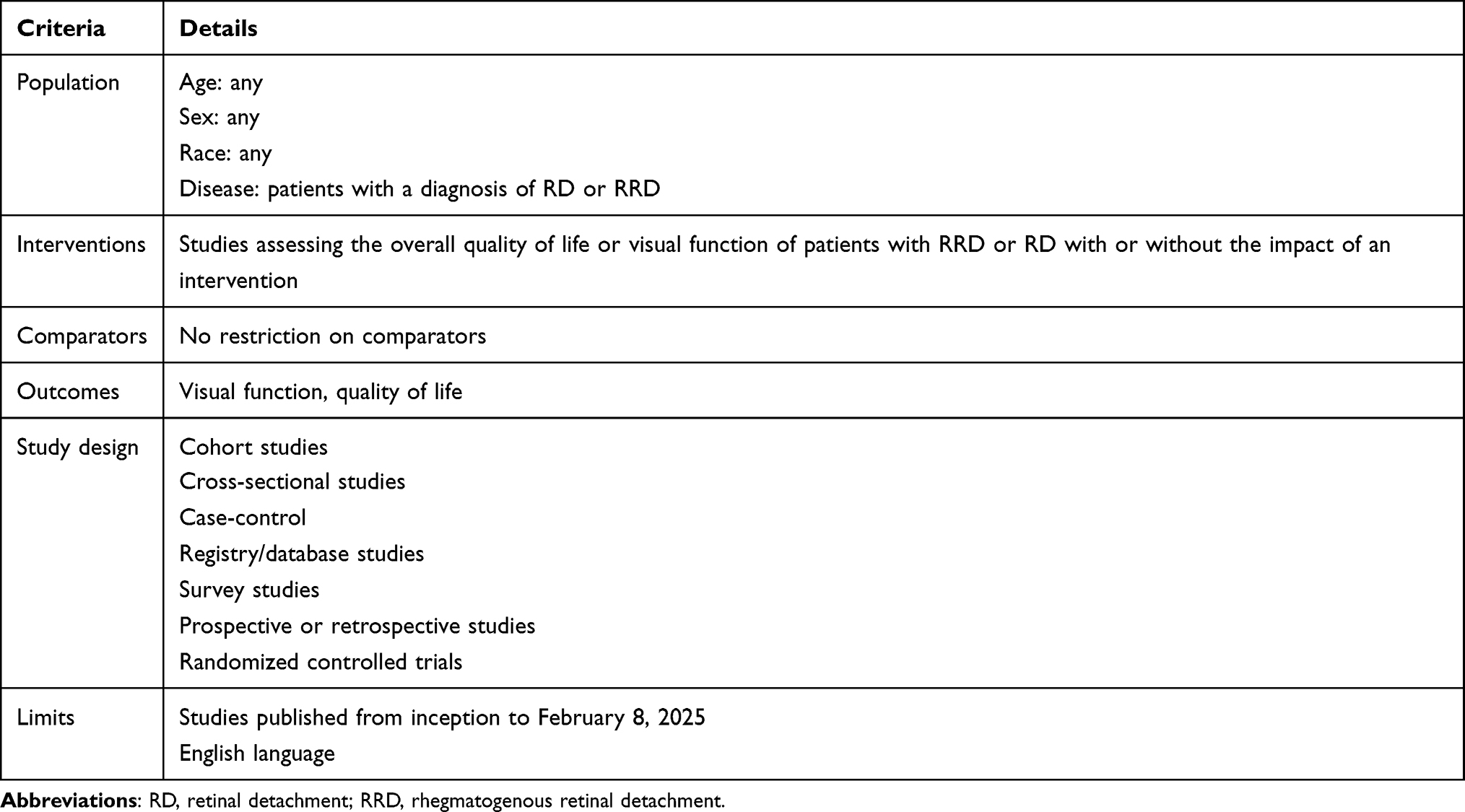 |
Table 1 PICOS Criteria |
Primary Outcomes
The primary outcome of this study was the association between RD and QoL outcomes as measured by health-related QoL (HRQoL) instruments, such as the Visual Function Questionnaire (VFQ-25) and the Chinese version of the Low Vision Quality of Life Questionnaire (CLVQOL). The study aimed to conduct meta-analyses on QoL instrument scores of RD patients and report mean differences against control subjects without RD.
Statistical Analysis
We used random-effects analysis (Bayesian framework) for the meta-analysis to estimate the mean effect size and variability across studies. Given the different QoL measures collected in the systematic review, a standardized mean was calculated to compare the studies. The standard deviation (SD) was derived for studies reporting interquartile ranges (IQR). For the Bayesian model, a global intercept plus a local intercept (random effect) model were estimated. In addition, the comparator was included as a fixed effect.
Studies were pooled using the DerSimonian-Laird random-effects model, with restricted maximum likelihood estimator. Heterogeneity was assessed with the I2 and tau2 statistics. Heterogeneity is considered low when I2 is less than 25%, moderate when I2 is between 25% and 50%, and high when I2 is over 50%. Tau estimates the standard deviation of the distribution of true effect sizes of the included studies. All analyses were conducted using R, version 4.3.1, with the package meta.
Risk of Bias and Quality of Evidence
Risk of Bias (ROB) and quality of studies were assessed using the Joanna Briggs Institute Critical Appraisal Tools (Faculty of Health and Medical Sciences at the University of Adelaide, South Australia).16 ROB of studies were assessed by one reviewer with a 10% verification by a second, independent reviewer to ensure consistency between assessors. Studies were considered high, moderate and low ROB if <49%, 50–79%, and >80% of questions were scored yes, respectively.17
Results
The search retrieved a total of 1803 unique records that underwent title and abstract screening, and subsequently 138 studies underwent full-text screening (Figure 1). Of these studies, 114 were excluded, for reasons such as wrong patient populations (n=64), wrong study designs (n=19), conference abstracts (n=17), non-English (n=8), and wrong outcomes (n=6). A total of 24 studies were included in the review (Figure S1).5,18–40
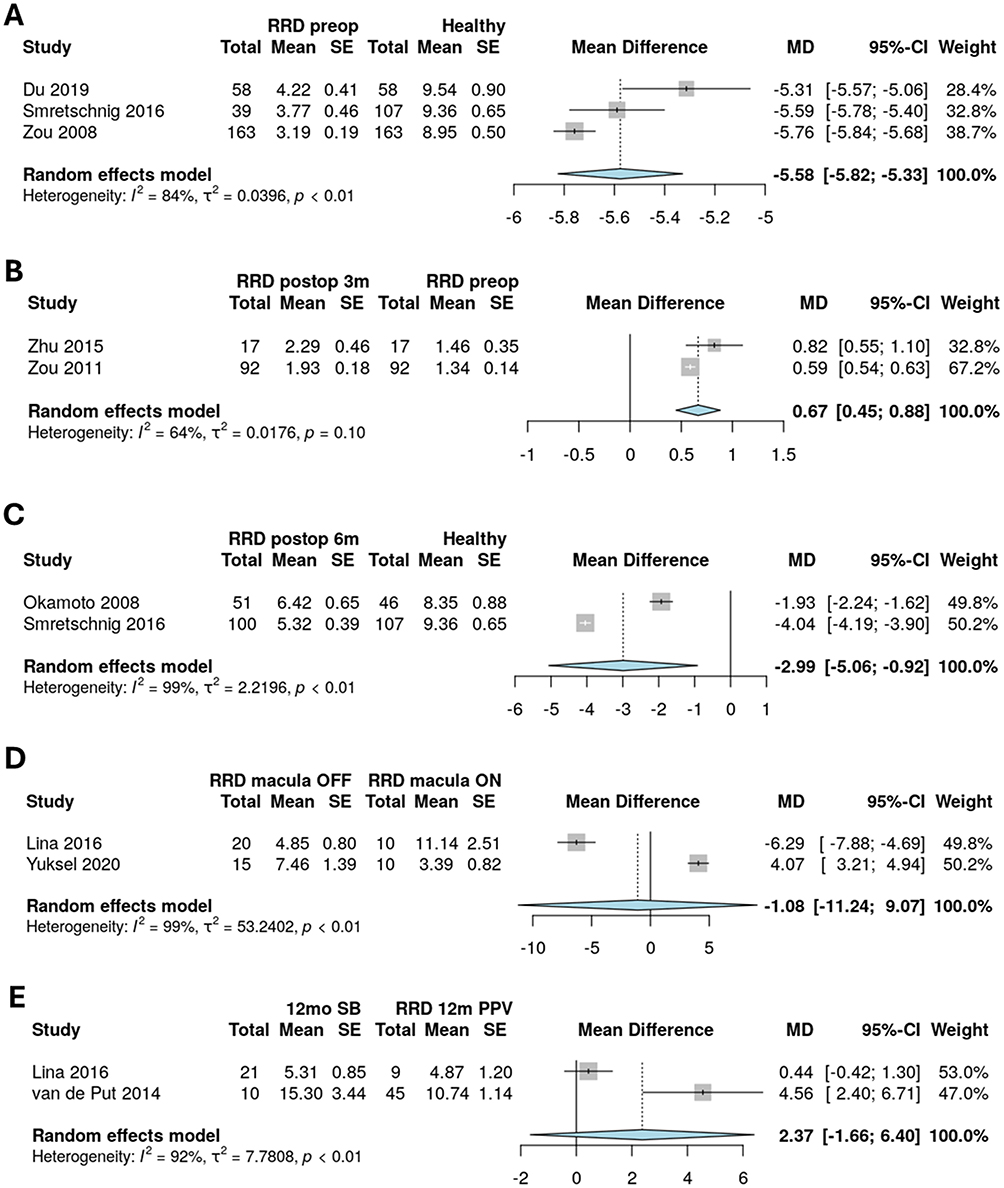 |
Figure 1 Forest plot of mean differences in standardized HRQoL scores among: (A) preoperative RRD vs healthy controls; (B) preoperative RRD vs 3 month following RRD repair (with SB or PPV); (C) 6 months following RRD repair (with SB or PPB) vs healthy controls; (D) 12 month postoperative RRD patients with macula off vs macula on; (E) 12 months following PPV vs SB. |
Twelve studies were conducted in Europe,18–20,24,26,29,31–36,40 8 studies were conducted in Asia,5,21,22,25,30,37–39 and 3 studies were conducted in North America.23,27,28 Twelve studies were prospective,22,26,27,29–35,37,38 6 were cross-sectional,5,20,21,23,24,39 and 2 were retrospective.36,40 Two studies were a post-RCT analysis,18,19 1 was a non-randomized clinical trial,25 and 1 was a post hoc analysis.28 The studies spanned from 1993 to 2024. Study size ranged from 17 to 214 participants across the studies, with a total of 1912 participants. A summary of study characteristics is available in Table 1 and a summary of VFQ-25 component and composite scores is available in Table S1.
Eighteen studies assessed QoL using the Visual Function Questionnaire 25 (VFQ-25), which evaluates domains such as general vision, near and distance activities, social functioning, mental health, role difficulties, and dependency.5,18–23,25,27–31,33–36,40 Three studies used the CLVQoL, which assesses visual symptoms, mobility, psychological adjustment, and daily functioning.37–39 One study used a metamorphopsia questionnaire,32 and 1 study used a non-validated telephone interview questionnaire (Table 2).24 A list of QoL instruments used by included studies is presented in Table 3.
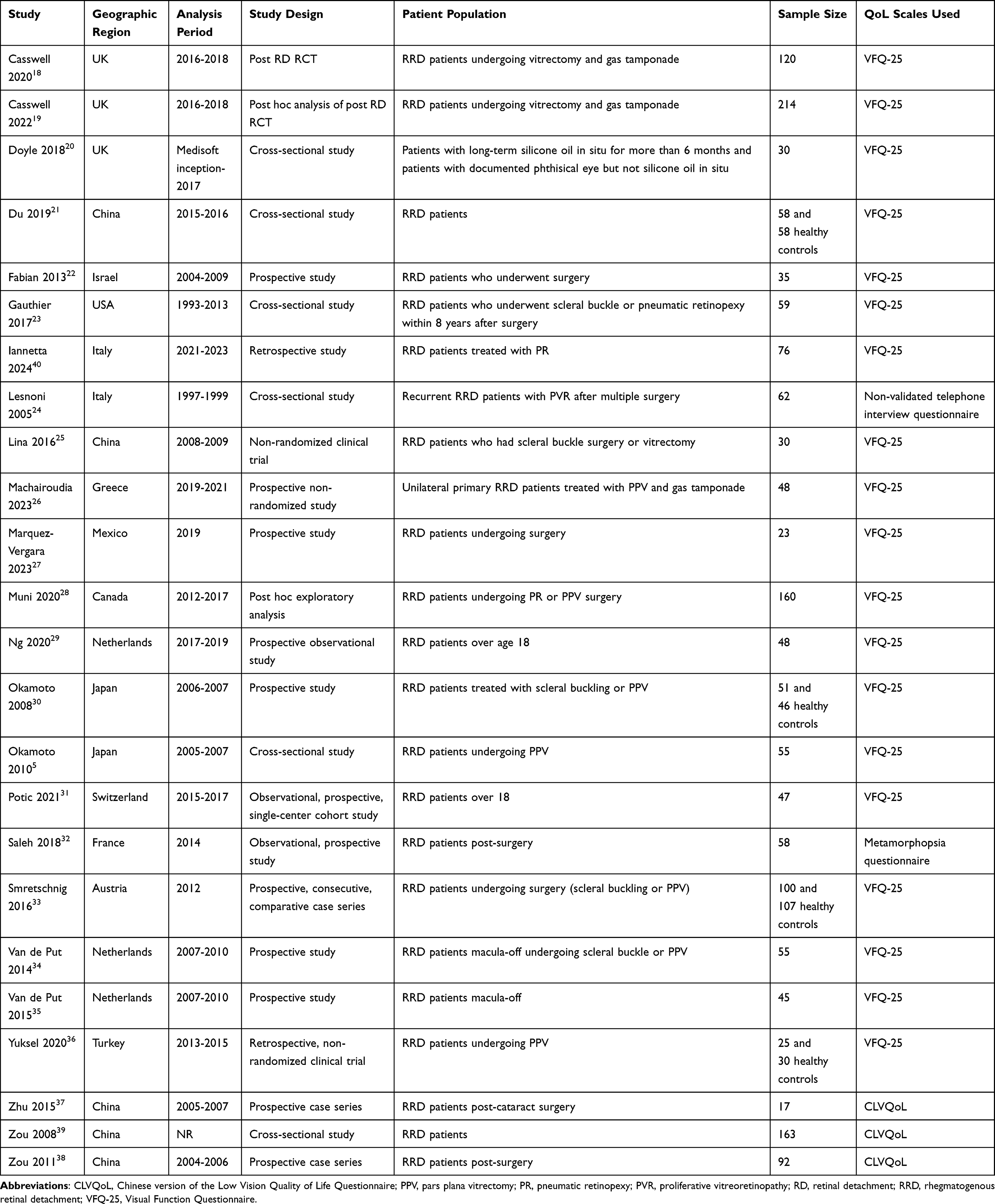 |
Table 2 Summary of Included Studies |
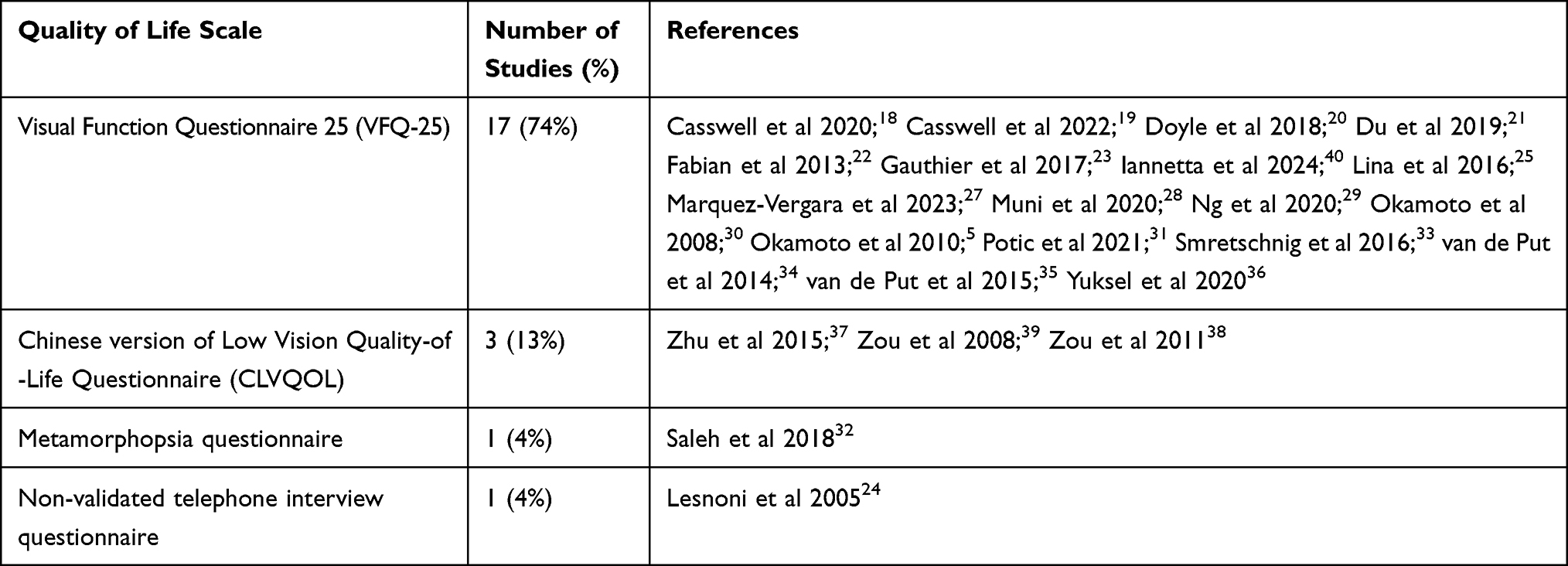 |
Table 3 Quality of Life Scales Included in the Systematic Review |
Retinal Detachment Compared to Healthy Controls
Four studies compared patients with RD to healthy controls.21,30,33,36 Preoperative RD patients with 45% having macula-on had significantly worse QoL than healthy controls.21 RD patients who underwent SB or PPV had worse QoL at 6 months and 12 months with around 61–65% of patients having macula-on.30,33,36 One study reported that patients who underwent PPV, with or without concurrent cataract surgery, had worse QoL at 12 months postoperatively compared with healthy controls.36 In this cohort, approximately 40% of patients had macula-on RRD.36 These findings suggest that QoL impairment persists even after surgical repair and may not fully normalize despite anatomical success.
Surgical Procedures
One study followed patients for up to 8 years after surgery and found higher QoL outcomes in those who underwent PR compared with SB.23 Two studies compared QoL in patients with RRD undergoing SB or PPV.25,34 Lina et al25 compared QoL in RRD patients with macula on or off who underwent SB or PPV. Slightly higher QoL was noted in RRD patients with SB compared with PPV at 12 months postoperatively.25 Van de put et al34 also found higher QoL in RRD patients 12 months following SB than PPV, with all patients having macula off. These findings suggest that surgical modality may influence patient-reported outcomes, although differences were modest.
Surgical Techniques
Similar QoL outcomes were found 6 months following standard surgical repair of PPV with face-down position compared with support-the-break position.18 Slightly worse QoL outcomes were noted in RD patients with blind eye with long-term phthisis bulbi compared with silicone oil.20 Overall, positioning strategies did not appear to substantially influence QoL outcomes.
Comorbidities
A study comparing QoL outcomes in RRD patients with and without post-traumatic stress disorder (PTSD) found significantly lower QoL outcomes in postoperative RRD patients with PTSD.22 One study reported a high prevalence of postoperative metamorphopsia in macula-off RRD patients.35 Patients with metamorphopsia demonstrated worse visual function and slightly lower VRQoL scores compared to those without metamorphopsia, although the difference in QoL did not reach statistical significance.35 These findings suggest that both baseline macular status and surgical approach influence recovery trajectories.
Quality of Life Changes Through Time
Four studies compared QoL of RRD patients through a follow up time period.27,28,31,33 Marquez-Vergara et al27 found higher QoL in RRD patients at 3 months following PPV compared with 1 month of follow up. Three studies compared QoL outcomes in RRD patients preoperatively and postoperatively.28,31,33 Muni et al28 compared QoL outcomes following PPV and PR in RRD patients with 50% macula on at 3-, 6-, and 12-month postoperative follow-up. Patients who underwent PR experienced slightly improved QoL from 3 months to 12 months, whereas patients who underwent PPV experienced more pronounced improvement.28 Potic et al31 compared QoL of RRD patients with macula-on and macula-off at preoperative, 1-month postoperative, and 3-month postoperative follow-up. Patients with macula-on had higher QoL at preoperative and both postoperative visits compared with patients with macula-off.31 Preoperative RRD patients with macula on saw very slight improvement from preoperative stage to 3-months postoperative stages, whereas RRD preop with macula-off saw significantly increased QoL, however, final QoL was higher in patients with macula-on overall.31
Meta-Analysis
A meta-analysis was conducted encompassing 8 studies ranging from 17 to 163 participants.21,25,30,33,34,36,37,39
Three studies comparing 260 participants in the preoperative RRD group with 328 participants in the healthy control group found significantly lower QoL outcomes in the preoperative RRD group (SMD −5.58 [95% CI −5.82, −5.33]) (Figure 1A) with significant heterogeneity detected among the studies (I2 = 84%; P <0.01), confirming substantial impairment prior to surgery.21,33,39
Two studies comparing preoperative RRD (109 participants) with postoperative RRD 3 months following SB or PPV surgery (109 participants) found significant higher QoL in the postoperative RRD group (SMD 0.67 [95% CI 0.45, 0.88]) with non-significant heterogeneity among the groups (I2 = 64%; P =0.10), indicating early recovery following surgery (Figure 1B).37,39
Two studies comparing RRD participants 6 months following SB or PPV surgery (151 participants) compared with healthy controls (153 participants) found significantly lower QoL than healthy controls (SMD −2.99 [95% CI −5.06, −0.92]; P<0.01) with significant heterogeneity among the groups (I2 = 99%), suggesting incomplete recovery (Figure 1C).30,33
Two studies comparing postoperative macula on (20 participants) with macula off in RRD patients (35 participants) at 12 months following SB or PPV found lower QoL outcomes in participants with macula off with no significant effect (SMD −1.08 [95% CI −11.24, 9.07]; p<0.01) with significant heterogeneity among the groups (I2 = 99%) (Figure 1D).25,36
Two studies comparing RRD patients at 12 months following PPV with SB found higher QoL outcomes in participants that underwent SB with no significant difference (SMD 2.37 [95% CI –1.66, 6.40]; P<0.01) with no significant heterogeneity (I2 = 92%) (Figure 1E).25,34
Risk of Bias
A summary of quality assessment results for included studies in this review is available in Appendix 2. Overall, the included studies were of high quality, with 15 studies having low risk of bias, 5 having moderate risk of bias, and 4 having high risk of bias. Cross-sectional and cohort studies often had inconsistent reporting of identification of confounding factors (32%), strategies to deal with confounding factors (16%). Strategies to address incomplete follow up were inadequately addressed (15%) in cross-sectional studies.
Discussion
The present systematic review and meta-analysis presents the QoL of patients with RRD and after RRD surgical repair. A significant proportion of these studies were conducted in Europe, followed by Asia and North America, comprising of prospective, cross-sectional, and retrospective designs, as well as clinical trials and post-hoc analyses, demonstrating a broad geographic and methodological scope.
This study found significantly lower QoL in preoperative RRD patients compared to healthy controls with variable results across studies. When comparing surgical methods, patients who underwent SB had marginally higher QoL scores than those who had PPV. This difference may be a reflection of variations in postoperative recovery profiles. PPV has been associated with cataract progression and slower visual rehabilitation, which may negatively influence patient-reported outcomes in the months following surgery.41 In contrast, SB avoids intraocular manipulation and may preserve lens status, potentially contributing to better perceived visual function in the short to immediate term.42
Slightly higher but non-significant QoL was found in RRD patients 3 months following surgical repair (PPV or SB) compared with preoperative patients. However, at 6 months post-surgery, healthy controls still had significantly higher QoL scores, suggesting incomplete recovery despite surgical intervention. Differences between macula-on and macula-off RRD at 12 months were not statistically significant and were based on small sample sizes. One possible explanation is that patients with macula-off RRD often present with poorer baseline vision and may perceive greater relative improvement following surgical repair, which could influence postoperative QoL reporting despite objectively worse visual outcomes. Although surgical interventions improve VRQoL, they do not consistently restore QoL to levels comparable to healthy individuals. Established predictors of visual recovery, including preoperative visual acuity, duration of detachment, and age, may further contribute to variability in patient-reported outcomes.43,44 However, the included studies did not consistently report QoL outcomes stratified by these factors, precluding conclusions regarding their direct impact on long-term QoL.
Our study found that RRD patients who underwent SB reported higher QoL compared to PPV patients, particularly in macula-off circumstances, which warrants further exploration. This may be explained by differences in surgical outcomes, complication rates, patient perceptions of the procedures, or a combination of multiple factors. Additionally, patients with macula-off RRD often present with poorer preoperative vision, and postoperative visual improvement may be more pronounced, potentially leading to greater perceived gains in QoL. PPV is associated with a slow visual recovery.45 Current literature demonstrates mixed results on the superiority of one intervention over another, suggesting alternative or further comparisons. This aligns with a recent meta-analysis comparing QoL after SB, PPV and PR, which found higher QoL outcomes with SB than PPV and no significant difference between PR and PPV.46
Strengths and Limitations
Our meta-analysis suggested a trend toward lower QoL in macula-off RRD compared with macula-on RRD. However, this difference did not reach statistical significance and was based on small sample sizes. One study noted higher QoL scores in macula-off RD patients, which may be reflected by small sample sizes. Other explanations may include greater perceived benefit due to greater postoperative visual gains in macula-off patients, who begin with poorer baseline vision. Additionally, psychological factors like gratitude are inadequately assessed in current QoL instruments, potentially overlooking emotional and subjective dimensions of QoL that can significantly influence patient-reported outcomes.
Our study presented with some limitations. Our meta-analysis did not include QoL outcomes associated with PR, which is a significant intervention in repairing RRD. Recovery times and complication rates were not adequately accounted for in QoL studies. Variability in study designs, sample sizes, and geographic locations introduces heterogeneity, which may have impacted the generalizability of the results. Most studies were from Europe and Asia, with fewer studies from North America, which may introduce geographical bias. Studies primarily used the VFQ-25 scale to assess QoL outcomes, which may underestimate other aspects of humanistic burden. Studies did not report on the caregiver burden of RRD, which may undercut the true challenges faced by individuals as a result of RRD. Given that different QoL measures were collected in this study, a standardized mean was calculated to make the studies comparable. Moreover, the standard deviation was derived for studies reporting IQR. Finally, it is important to note that a bias exists due to the fact that no baseline QoL adjustment was done.
Future Directions
Long-term studies are warranted to comprehensively evaluate the effects of RRD and its treatments on patient well-being, considering the potential for delayed complications and ongoing visual and psychological challenges. Future large-scale, multicenter studies with diverse geographic populations and extended follow-up periods should be conducted to account for long-term QoL outcomes globally. Incorporating a wider range of QoL assessment tools other than the VFQ-25 and CLVQoL may provide further insight into the burden of RRD on an individual and their caregiver. Future studies should prioritize rigorous identification and reporting of confounding factors, as well as the development and implementation of robust strategies to address them. Additionally, identifying strategies to manage incomplete follow-up in cross-sectional studies will improve reliability and validity of QoL assessments.
Conclusion
This systematic review and meta-analysis demonstrates that RRD is associated with substantial impairment in quality of life both before and after surgical repair. Although QoL improves following surgery, patient-reported outcomes often remain lower than those of healthy controls at 6 months, indicating incomplete recovery despite anatomical success. Patients with macula-on RRD did not consistently report superior postoperative QoL, which may reflect relatively preserved baseline vision and smaller perceived visual gains following surgery. Across studies, impairments were most frequently observed in domains related to general vision, near and distance activities, role difficulties, and mental health, highlighting the multidimensional impact of RRD beyond visual acuity alone. These findings highlight importance of incorporating patient-reported outcomes into clinical decision-making and emphasize the need for patient-centered strategies to optimize both functional and psychological recovery.
Funding
None received.
Disclosure
The authors report no conflicts of interest in this work.
References
1. Jalali S. Retinal detachment. Community Eye Health. 2003;16(46):25–12.
2. Ge JY, Teo ZL, Chee ML, et al. International incidence and temporal trends for rhegmatogenous retinal detachment: a systematic review and meta-analysis. Surv Ophthalmol. 2023. doi:10.1016/j.survophthal.2023.11.005
3. Yorston D, Donachie PHJ, Laidlaw DA, et al. Factors affecting visual recovery after successful repair of macula-off retinal detachments: findings from a large prospective UK cohort study. Eye. 2021;35(5):1431–1439. doi:10.1038/s41433-020-1021-y
4. Mozaffarieh M, Sacu S, Benesch T, Wedrich A. Mental health measures of anxiety and depression in patients with retinal detachment. Clin Pract Epidemiol Ment Health CP EMH. 2007;3:10. doi:10.1186/1745-0179-3-10
5. Okamoto F, Okamoto Y, Fukuda S, Hiraoka T, Oshika T. Vision-related quality of life and visual function after vitrectomy for various vitreoretinal disorders. Invest Ophthalmol Vis Sci. 2010;51(2):744–751. doi:10.1167/iovs.09-3992
6. Zheng Y, Wu X, Lin X, Lin H. The prevalence of depression and depressive symptoms among eye disease patients: a systematic review and meta-analysis. Sci Rep. 2017;7:46453. doi:10.1038/srep46453
7. Sriranganathan A, Grad J, Miranda RN, Dhillon J, Saleh S, Felfeli T. Humanistic burden of non-infectious uveitis: a systematic review and meta-analysis. Am J Ophthalmol. 2024;271:43–59. doi:10.1016/j.ajo.2024.10.027
8. Chang JS, Smiddy WE. Cost-effectiveness of retinal detachment repair. Ophthalmology. 2014;121(4):946–951. doi:10.1016/j.ophtha.2013.11.003
9. Blair K, Czyz CN. Retinal Detachment. In: StatPearls. StatPearls Publishing; 2024 http://www.ncbi.nlm.nih.gov/books/NBK551502/.
10. Rai BB, Morley MG, Zangmo P, et al. Surgical management of vitreoretinal diseases in Bhutan: a 3-year national study. New Front Ophthalmol. 2020;6(2). doi:10.15761/NFO.1000251
11. Hwang MW, Bommakanti N, Young BK, Besirli CG. Time-driven activity-based cost analysis of pars plana vitrectomy in rhegmatogenous retinal detachment at a large academic center. J Vitreoretin Dis. 2025;9(1):26–30. doi:10.1177/24741264241288655
12. Ma Y, Ying X, Zou H, et al. Rhegmatogenous retinal detachment surgery in elderly people over 70 years old: visual acuity, quality of life, and cost-utility values. PLoS One. 2014;9(10):e110256. doi:10.1371/journal.pone.0110256
13. Economic - Health Utilities / Quality of Life - MEDLINE. Available from: https://searchfilters.cadth.ca/link/19.
14. Economic - Health Utilities / Quality of Life - Broad - Embase. Available from: https://searchfilters.cadth.ca/link/17.
15. Centre for Evidence-Based Medicine, University of Oxford. Study Designs. Available from: https://www.cebm.ox.ac.uk/resources/ebm-tools/study-designs.
16. Moola S, Munn Z. Chapter 7: systematic reviews of etiology and risk. In: JBI Manual for Evidence Synthesis. 2020
17. Valesan LF, Da-Cas CD, Réus JC, et al. Prevalence of temporomandibular joint disorders: a systematic review and meta-analysis. Clin Oral Investig. 2021;25(2):441–453. doi:10.1007/s00784-020-03710-w
18. Casswell EJ, Yorston D, Lee E, et al. Effect of face-down positioning vs support-the-break positioning after macula-involving retinal detachment repair: the PostRD randomized clinical trial. JAMA Ophthalmol. 2020;138(6):634–642. doi:10.1001/jamaophthalmol.2020.0997
19. Casswell EJ, Yorston D, Lee E, Charteris DG. DISTORTION RESOLUTION AFTER VITRECTOMY FOR MACULA-INVOLVING RETINAL DETACHMENT REPAIR: post hoc analysis of the PostRD trial. Retina. 2022;42(12):2315–2320. doi:10.1097/IAE.0000000000003605
20. Doyle J, Yang Y, Norris JH, Aslam SA. A quality of life survey in patients with long-term silicone oil or phthisis bulbi. Graefes Arch Clin Exp Ophthalmol Albrecht Von Graefes Arch Klin Exp Ophthalmol. 2018;256(5):879–884. doi:10.1007/s00417-018-3934-8
21. Du Y, Mo XH, Li XL, Zeng J, Luo W, Huang ML. Vision-related quality of life and depression in rhegmatogenous retinal detachment patients. Medicine. 2019;98(4):e14225. doi:10.1097/MD.0000000000014225
22. Fabian ID, Abudy A, Kinori M, et al. Diagnosis of posttraumatic stress disorder after surgery for primary rhegmatogenous retinal detachment. Retina. 2013;33(1):111–119. doi:10.1097/IAE.0b013e31825d7ea4
23. Gauthier AC, Adelman RA. A quality of life study comparing scleral buckle and pneumatic retinopexy for the treatment of rhegmatogenous retinal detachment. Clin Ophthalmol Auckl NZ. 2017;11(101321512):1069–1071. doi:10.2147/OPTH.S137227
24. Lesnoni G, Rossi T, Gelso A, Nistril A. Patient satisfaction and vision improvement after multiple surgery for recurrent retinal detachment. Eur J Ophthalmol. 2005;15(1):102–108.
25. Lina G, Xuemin Q, Qinmei W, Lijun S. Vision-related quality of life, metamorphopsia, and stereopsis after successful surgery for rhegmatogenous retinal detachment. Eye Lond Engl. 2016;30(1):40–45. doi:10.1038/eye.2015.171
26. Machairoudia G, Kazantzis D, Chatziralli I, Theodossiadis G, Georgalas I, Theodossiadis P. Vision-related quality of life in patients with rhegmatogenous retinal detachment treated with pars-plana vitrectomy: impact of gas tamponade. Cureus. 2023;15(5):e38969. doi:10.7759/cureus.38969
27. Marquez-Vergara IS, Rios-Nequis GJ, Pita-Ortiz IY, Perez-Cano HJ, Somilleda-Ventura SA. Vision-related quality of life after surgery for vitreoretinal disorders in a Mexican population: an observational study. Sci Rep. 2023;13(1):4885. doi:10.1038/s41598-023-32152-z
28. Muni RH, Francisconi CLM, Felfeli T, et al. Vision-Related functioning in patients undergoing pneumatic retinopexy vs vitrectomy for primary rhegmatogenous retinal detachment: a post hoc exploratory analysis of the pivot randomized clinical trial. JAMA Ophthalmol. 2020;138(8):826–833. doi:10.1001/jamaophthalmol.2020.2007
29. Ng H, Vermeer KA, van Meurs JC, La Heij EC. Visual acuity inadequately reflects vision-related quality of life in patients after macula-off retinal detachment surgery. Invest Ophthalmol Vis Sci. 2020;61(10):34. doi:10.1167/iovs.61.10.34
30. Okamoto F, Okamoto Y, Hiraoka T, Oshika T. Vision-related quality of life and visual function after retinal detachment surgery. Am J Ophthalmol. 2008;146(1):85–90. doi:10.1016/j.ajo.2008.02.011
31. Potic J, Bergin C, Giacuzzo C, Konstantinidis L, Daruich A, Wolfensberger TJ. Application of modified NEI VFQ-25 after retinal detachment to vision-related quality of life. Retina. 2021;41(3):653–660. doi:10.1097/IAE.0000000000002894
32. Saleh M, Gauthier AS, Delbosc B, Castelbou M. Impact of metamorphopsia on quality of life after successful retinal detachment surgery. Ophthalmol J Int Ophtalmol Int J Ophthalmol Z Augenheilkd. 2018;240(3):121–128. doi:10.1159/000486164
33. Smretschnig E, Falkner-Radler CI, Binder S, et al. Vision-related quality of life and visual function after retinal detachment surgery. Retina. 2016;36(5):967–973. doi:10.1097/IAE.0000000000000817
34. van de Put MAJ, Hoeksema L, Wanders W, Nolte IM, Hooymans JMM, Los LI. Postoperative vision-related quality of life in macula-off rhegmatogenous retinal detachment patients and its relation to visual function. PLoS One. 2014;9(12):e114489. doi:10.1371/journal.pone.0114489
35. van de Put MAJ, Vehof J, Hooymans JMM, Los LI. Postoperative metamorphopsia in macula-off rhegmatogenous retinal detachment: associations with visual function, vision related quality of life, and optical coherence tomography findings. PLoS One. 2015;10(4):e0120543. doi:10.1371/journal.pone.0120543
36. Yuksel T, Sever O, Horozoglu F. Assessment of vision-related quality of life and stereopsis in patients who underwent successful rhegmatogenous retinal detachment surgery. Gazi Med J. 2020;32(1):45–51. doi:10.12996/GMJ.2021.09
37. Zhu M, Huang J, Zhu B, et al. Changes of vision-related quality of life in retinal detachment patients after cataract surgery. PLoS One. 2015;10(3):e0120505. doi:10.1371/journal.pone.0120505
38. Zou H, Zhang X, Xu X, Liu H, Bai L, Xu X. Vision-related quality of life and self-rated satisfaction outcomes of rhegmatogenous retinal detachment surgery: three-year prospective study. PLoS One. 2011;6(12):e28597. doi:10.1371/journal.pone.0028597
39. Zou H, Zhang X, Xu X, Liu H. Quality of life in subjects with rhegmatogenous retinal detachment. Ophthalmic Epidemiol. 2008;15(4):212–217. doi:10.1080/09286580701843804
40. Iannetta D, Valsecchi N, Finzi A, Mastropasqua R, Muni RH, Fontana L. Pneumatic retinopexy for primary rhegmatogenous retinal detachment: from a clinical trial to the real-life experience. BMC Ophthalmol. 2024;24(1):1. doi:10.1186/s12886-024-03559-7
41. Dimakopoulou I, Mylonas G, Iby J, et al. Vitrectomy versus scleral buckle for retinal detachment without posterior vitreous detachment. Sci Rep. 2024;14(1):17141. doi:10.1038/s41598-024-67318-w
42. Er-Reguyeg Y, Berkache M, Hébert M, et al. Scleral buckling as a standalone surgery in the era of pars plana vitrectomy: a 10-year retrospective cohort study. Int J Retina Vitreous. 2025;12(1):17. doi:10.1186/s40942-025-00785-z
43. Miyake M, ya NS, Morino K, et al. Effect of duration of macular detachment on visual prognosis after surgery for macula-off retinal detachment: Japan-retinal detachment registry. Ophthalmol Retina. 2023;7(5):375–382. doi:10.1016/j.oret.2023.01.014
44. Ross WH. Visual recovery after macula-off retinal detachment. Eye. 2002;16(4):440–446. doi:10.1038/sj.eye.6700192
45. Popovic MM, Muni RH, Nichani P, Kertes PJ. Pars plana vitrectomy, scleral buckle, and pneumatic retinopexy for the management of rhegmatogenous retinal detachment: a meta-analysis. Surv Ophthalmol. 2022;67(1):184–196. doi:10.1016/j.survophthal.2021.05.008
46. Zajner C, Leung B, Sheidow T, Malvankar-Mehta MS. Quality of life after pars plana vitrectomy, scleral buckle, or pneumatic retinopexy for rhegmatogenous retinal detachment: a meta-analysis. Curr Eye Res. 2024;49(3):295–302. doi:10.1080/02713683.2023.2280440
 © 2026 The Author(s). This work is published and licensed by Dove Medical Press Limited. The
full terms of this license are available at https://www.dovepress.com/terms
and incorporate the Creative Commons Attribution
- Non Commercial (unported, 4.0) License.
By accessing the work you hereby accept the Terms. Non-commercial uses of the work are permitted
without any further permission from Dove Medical Press Limited, provided the work is properly
attributed. For permission for commercial use of this work, please see paragraphs 4.2 and 5 of our Terms.
© 2026 The Author(s). This work is published and licensed by Dove Medical Press Limited. The
full terms of this license are available at https://www.dovepress.com/terms
and incorporate the Creative Commons Attribution
- Non Commercial (unported, 4.0) License.
By accessing the work you hereby accept the Terms. Non-commercial uses of the work are permitted
without any further permission from Dove Medical Press Limited, provided the work is properly
attributed. For permission for commercial use of this work, please see paragraphs 4.2 and 5 of our Terms.
Recommended articles

Recurrent Aphthous Stomatitis Affects Quality of Life. A Case-Control Study
Rivera C, Muñoz-Pastén M, Núñez-Muñoz E, Hernández-Olivos R
Clinical, Cosmetic and Investigational Dentistry 2022, 14:217-223
Published Date: 26 July 2022
Health-Related Quality of Life and Associated Factors Among Covid-19 Survivors. Experience from Ethiopian Treatment Centers
Kaso AW, Tesema HG, Hareru HE, Kaso T, Ashuro Z, Talemahu AA, Jore ST, Kassa R, Agero G, Hailu A
Infection and Drug Resistance 2022, 15:6143-6153
Published Date: 25 October 2022
Assessing Quality-of-Life of Patients Taking Mirabegron for Overactive Bladder
Shaw C, Gibson W
Therapeutics and Clinical Risk Management 2023, 19:27-33
Published Date: 10 January 2023
Influence of Disease Acceptance on the Quality of Life of Patients with Ankylosing Spondylitis – Single Centre Study
Wysocki G, Czapla M, Uchmanowicz B, Fehler P, Aleksandrowicz K, Rypicz, Wolska-Zogata I, Uchmanowicz I
Patient Preference and Adherence 2023, 17:1075-1092
Published Date: 18 April 2023

Interventions to Improve Quality of Life in Multiple Sclerosis: New Opportunities and Key Talking Points
Faraclas E
Degenerative Neurological and Neuromuscular Disease 2023, 13:55-68
Published Date: 19 September 2023