
Back to Journals » Risk Management and Healthcare Policy » Volume 18
Knowledge, Attitude and Practices of Abattoir Workers Towards Waste Management in Slaughterhouses in Kampala City, Uganda
Authors Sserubula JP, Jemba P, Twinamatsiko R 
Received 14 January 2025
Accepted for publication 19 July 2025
Published 31 July 2025 Volume 2025:18 Pages 2517—2527
DOI https://doi.org/10.2147/RMHP.S517421
Checked for plagiarism Yes
Review by Single anonymous peer review
Peer reviewer comments 3
Editor who approved publication: Professor Kyriakos Souliotis
John Paul Sserubula,1 Pius Jemba,2,3 Robert Twinamatsiko1
1Department of Livestock and Industrial Resources, Makerere University, Kampala, Uganda; 2Department of Disease Control and Environmental Health, Makerere University, Kampala, Uganda; 3College of Medicine and Veterinary Medicine, The University of Edinburgh, Edinburgh, Scotland
Correspondence: John Paul Sserubula, Email [email protected]
Background: The effective management of abattoir waste is crucial for environmental protection and public health. The existing poor waste management and related effects can be caused by insufficient knowledge and bad attitudes of the stakeholders involved in abattoir operations. This study evaluated the knowledge, attitudes, and practices of abattoir workers regarding waste management in the Wambizzi and Kalerwe abattoirs in Kampala, Uganda.
Methods: A mixed method cross-sectional design utilising qualitative and quantitative methods. The data collection involved questionnaires among 250 workers, 2 observational checklists, 12 key informant interviewees (KIIs), and 8 focus group discussion groups (FGDs). Study participants for quantitative research were recruited using a stratified random sampling technique and data analysed descriptively while purposive sampling was used for KIIs and FGDs and data analysed thematically.
Results: The study found that 71.6% of workers had good knowledge of abattoir waste management, although gaps in waste sorting were identified. Additionally, 71.2% of workers had positive attitudes towards waste management. However, challenges, such as inadequate infrastructure, poor abattoir design, and inconsistent waste collection, are prevalent. Despite these challenges, the workers demonstrated good practices, with 50.4% exhibiting effective waste management. From qualitative findings, existence of internal rules and regulations on waste management with penalties and punishments was also responsible for abattoir workers’ practices towards abattoir waste management.
Conclusion and Recommendations: This study highlights the need for improved waste sorting knowledge, enhanced infrastructure, and logistical support since there was a disconnect between survey results and actual practices. Future research should explore the impact of long-term benefits of infrastructure improvements on waste management efficiency. These findings underscore the importance of addressing both knowledge and practical challenges in achieving sustainable waste management in abattoirs.
Keywords: abattoir, waste, waste management, knowledge, attitude, practices
Introduction
The amount of waste produced by abattoirs has increased due to the increased production of meat and meat products for human consumption.1 Although operating an abattoir can be very beneficial to humans by generating meat for consumption and other important byproducts, the wastes generated by these facilities can nevertheless constitute a major threat to public health.2,3 Poor abattoir waste disposal degrades aquatic life, agricultural land, potable water sources, and air quality.4,5 If proper treatment and relocation policies are not implemented, abattoirs may contaminate freshwater quality nearby thereby increasing the risk of contracting serious health effects from the pollutants produced by the abattoir’s operations.6,7 Furthermore, increased offensive odors and contaminated water ways are some of the consequences of failure to implement efficient waste treatment and disposal protocols for abattoir waste.8 In developing countries, including Uganda, inadequate waste management is often exacerbated by insufficient knowledge, negative attitudes, and suboptimal practices. The observed poor waste management and related effects in Kampala City abattoirs is usually caused by lack of knowledge and poor attitude among the responsible stakeholders involved in abattoir operations.9 While research such as that by Tolera et al in Ethiopia has explored the knowledge, attitudes, and practices of abattoir workers regarding waste management, there is a notable lack of specific information on slaughterhouses in Kampala. Therefore, the purpose of this study was to determine the level of knowledge, attitude, and practices of abattoir workers regarding the management of waste in Wambizzi and Kalerwe abattoirs in Kampala.
Methods and Materials
Study Area Description
This study was conducted at the Kalerwe and Wambizi abattoirs in Kampala, Uganda (Figure 1). Kalerwe abattoir is situated at latitude: 0.3517888, Longitude: 32.5735959 along the Northern Bypass (Kampala-Bombo Road) across the Kalerwe Community Market in Mulago Parish, Kawempe Division, with an estimated 360 workers. Wambizzi Abattoir is situated at N 0.294484°, E 32.542500° in Nateete parish, 10 km from the shores of Lake Victoria in the southwest of Kampala, the capital city of Uganda, with an estimated 300 employees.
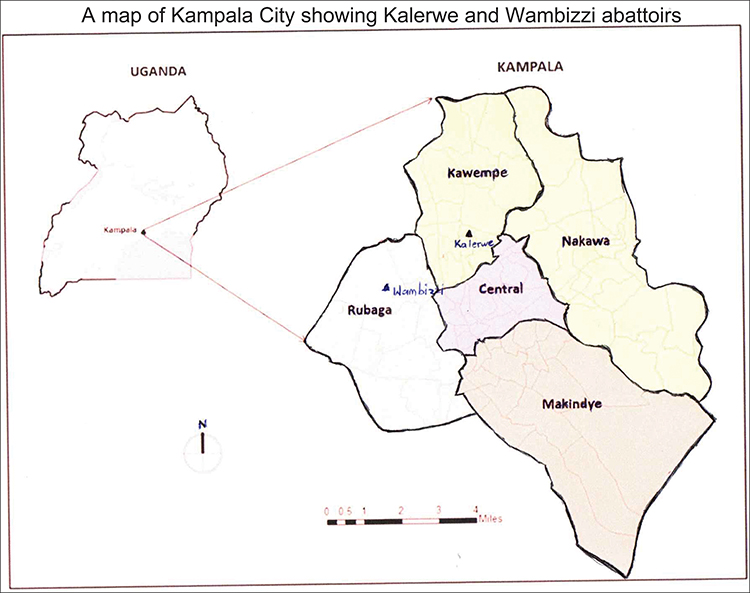 |
Figure 1 A map of Kampala City showing Kalerwe and Wambizzi abattoirs. |
Study Design and Target Population
A cross-sectional study employing both qualitative and quantitative methods of data collection was conducted within the abattoirs of Kalerwe and Wambizzi from June 2nd to 30th 2024. This study was conducted on abattoir workers, including slaughters, dressers, trimers, loaders, cleaners, supervisors, and managers.
Sample Size and Sampling Technique
Yamane’s (1967) formula ( ) for sample determination was used because the estimated population of abattoir workers in both Wambizzi and Kalerwe is known, where n is the estimated sample size, N is the population size (300 in wambizzi and 360 in Kalerwe), and e is the preferred level of precision or allowable error of the estimate at the 95% confidence level. Therefore,
  workers. A qualitative sample size of 12 key informants and 8 focus group discussions was also conducted. A proportionate sample was used to obtain 114 workers from Wambizzi and 136 from the Kalerwe abattoir, followed by a stratified random sampling method in which respondents were drawn from existing groups (based on their departments and registers) of workers in appropriate proportions to represent the population. Qualitative responses were obtained purposively among 12 Key Informant interviewees (KIIs) and 8 focus group discussion groups (FDGs).
Data Collection Technique and Instrument
Key informant interview guide and focus group discussion guide were used for qualitative data from Key Informants (KIs) and Focus Group Discussions (FGDs), respectively, through face-to-face interviews between the respondents and principal investigators. The study also employed observation checklists integrated with a questionnaire through an electronic Kobo Collect to collect more practical quantitative data.
Data Quality Control
Data collection tools were translated in “Luganda” the commonest local language spoken by residents and workers in Wambizzi and Kalerwe. All data collection tools were pretested prior to actual data collection in an area outside the study area. Competent research assistants were trained on the research protocol for 2 days, and completed questionnaires were checked for completeness during and after the process of data collection before submission to the servers. Measures to minimize data entry errors, such as guiding notes and footnotes, were used.
Ethical Consideration
Ethical clearance was obtained in the form of approval letters from the Makerere University College of Veterinary Medicine Animal Resources and Biosecurity (COVAB) and Kampala Capital City Authority (KCCA), together with the leadership and management clearance of the Wambizzi and Kalerwe abattoirs. All target respondents had to first give consent before participating in the research, and the names of the participants were not stated during data collection, analysis, and presentation to ensure confidentiality. Participants’ informed consent included publication of anonymized responses/direct quotes. Additionally, informed consent was obtained from the legal guardians of minors aged < 18 years, together with assent prior to the commencement of the study.
Data Analysis
The survey data was exported into a Microsoft Excel data sheet, which was then exported and reviewed within the Statistical Package for Social Sciences (SPSS) version 22.0. Descriptive statistics, such as frequency (%) for categorical data and mean (standard deviation [SD]) for numerical data, were used primarily to summarize and define the data to make it more understandable. To obtain knowledge attitude and practice scores, responses were coded with “1” for right response(s) and “0” for a wrong response(s). Three categories were used to categorize the knowledge levels: little knowledge (less than 4 points), fairly knowledge (4–6 scores), and good knowledge (7–10 scores). Three levels of attitude were determined by classifying the scores using a likert scale: positive, neutral, and negative. Scores ranged from 39 to 50 for a positive attitude, 33 to 38 for a neutral attitude, and 0 to 32 for a negative attitude.10 Practices were categorized as follows: poor practice: 0–4, fair practice: 4–6 and good practice: 7–10; 2 points.10 Qualitative data were transcribed verbatim, imported into Excel, and read several times to identify the initial codes based on repeated and emerging issues. Conventional content analysis was used, in which codes and categories arising from the data were used. Related codes identified from the data were manually grouped to form several categories that emerged into themes. These themes are then presented as narration.
Results
Social Demographic Characteristics of Respondents
Male workers constituted the majority of the abattoir workers (61.6%). Most workers were aged 25–34 years (60.8%), and secondary education had the highest level of education (49.6%). Additionally, 56.0% of workers were primarily involved in slaughter (Table 1).
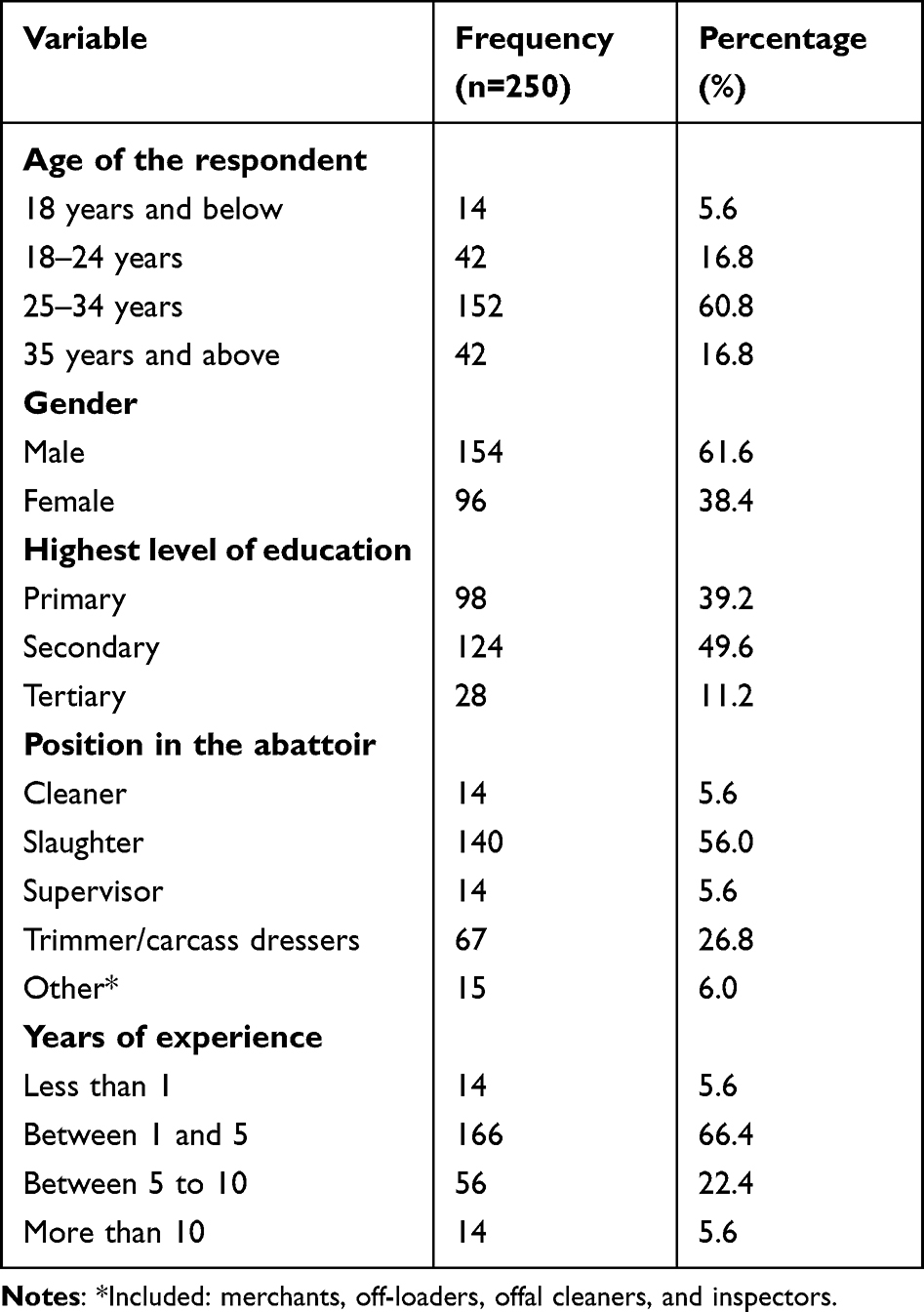 |
Table 1 Social Demographic Characteristics of Respondents |
Knowledge of Waste Management Among Abattoir Workers
The majority of abattoir workers (71.6%) had good knowledge of abattoir waste management, with scores of 7–10 while the rest (28.4%) had fair knowledge, with scores of 4–6 (Figure 2).
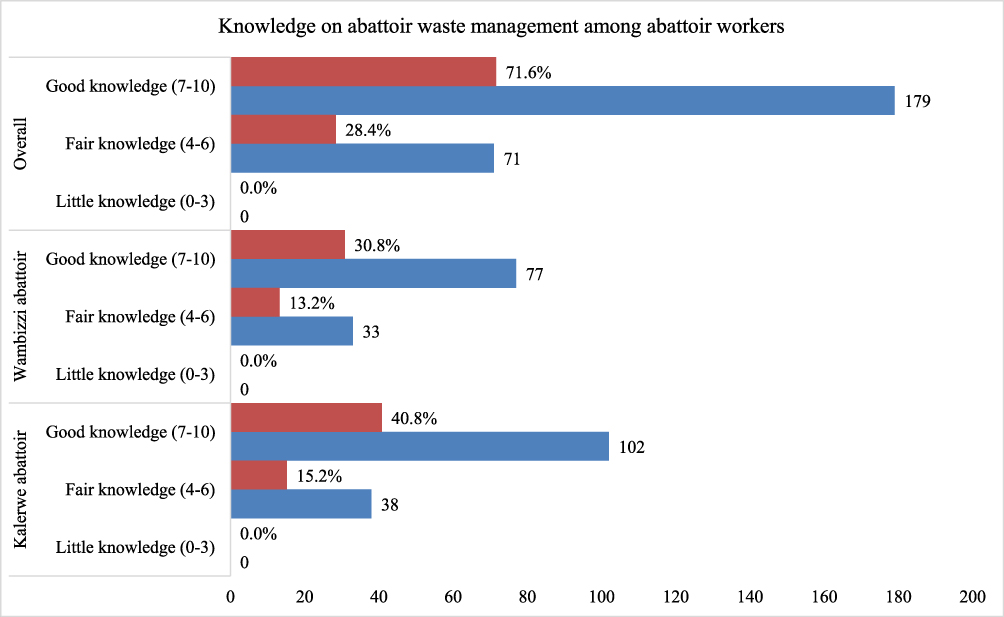 |
Figure 2 Knowledge on abattoir waste management among abattoir workers. Red represents Percentages (%) while Blue represents Frequencies. |
All the 250 abattoir workers (100%) from Kalerwe and Wambizzi reported awareness of abattoir waste and its proper disposal methods. However, less than half of the respondents recognized that abattoir waste pollutes the air and generates bad odors (39.2%) and that these odors can negatively impact human health (44.0%). Conversely, more than half of the respondents (56.0%) understood that improper handling of abattoir waste can lead to surface water pollution (Table 2).
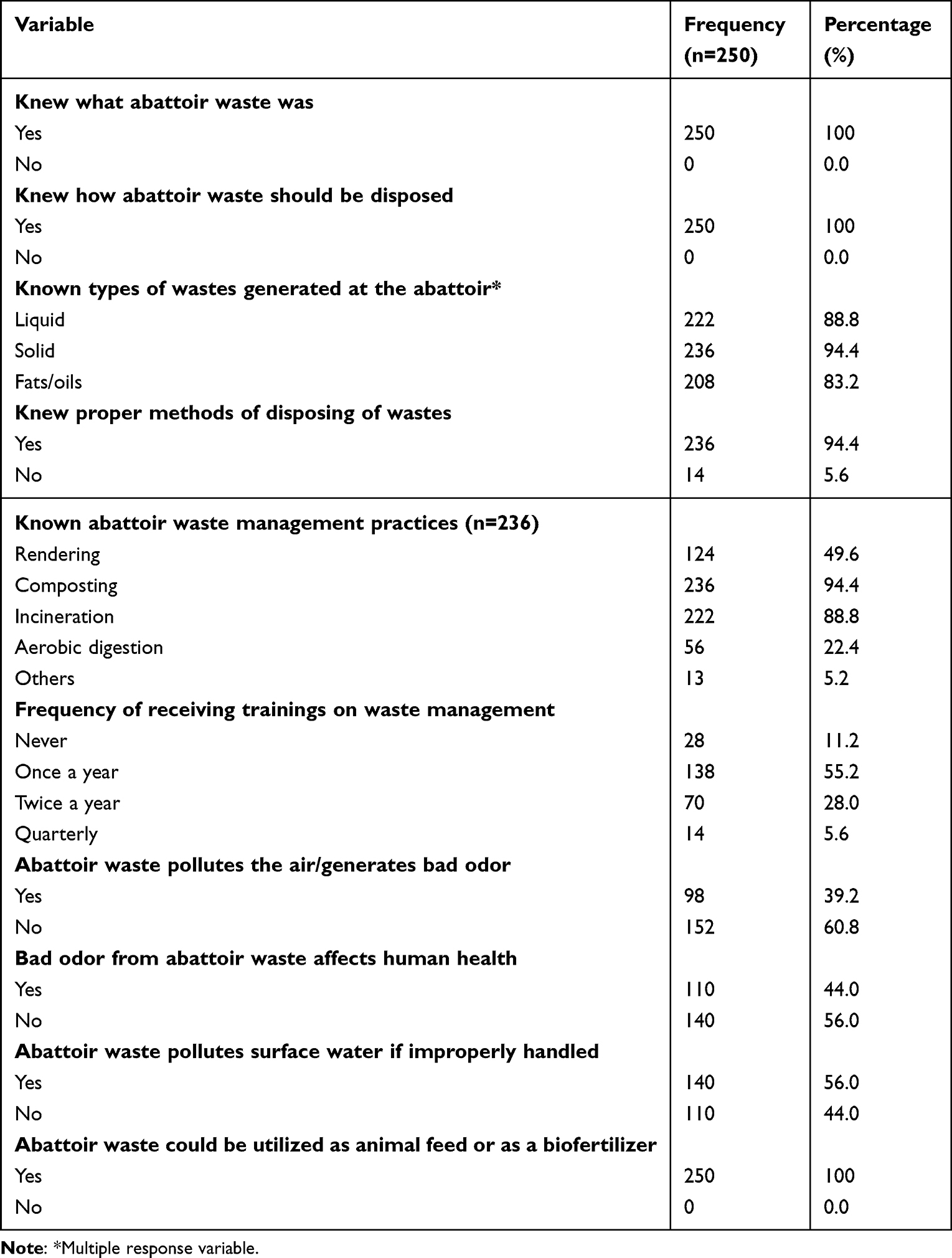 |
Table 2 Knowledge on Waste Management Among Abattoir Workers |
From qualitative findings, it was found out that there is limited knowledge on waste sorting into the different categories prior to disposal as a strategy for proper abattoir waste management.
A challenge of waste sorting at the initial stage before dumping in the different categories such a plastic, metals, decomposable, among others the challenge is that people are not knowledgeable and they do not appreciate the importance of that. However, we try to sensitize them. Abattoir supervisor
Attitudes Towards Abattoir Waste Management Among Abattoir Workers
The majority of abattoir workers (71.2%) from Kalerwe and Wambizzi had a positive attitude towards abattoir waste management with scores of 39–50 while the rest (28.8%) had a neutral attitude towards abattoir waste management with scores of 33–38. Ten variables were used to assess attitude, as shown in (Figure 3).
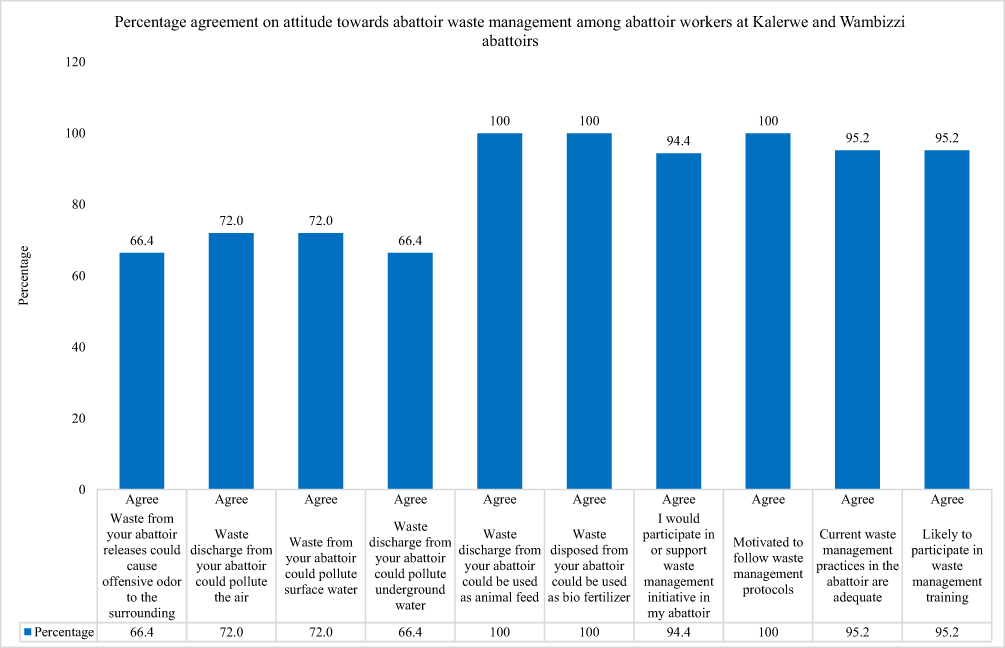 |
Figure 3 Attitudes towards abattoir waste management among abattoir workers. Blue represents Percentage (%) of abattoir workers. |
From qualitative findings, it was noted that the attitude towards abattoir waste management was good despite it being challenged by the resources since open burning was done instead of incineration.
Since incineration facilities are not yet improved, we manage waste by open burning with paraffin. Abattoir supervisor
We are managing waste in an appropriate way because if it wasn’t so, we would be locked and that is a failure to us. Abattoir supervisor
Waste Management Practices Among Abattoir Workers
Upon coding abattoir workers’ responses for the 10 variable questions used with “1” for a good response(s) on waste management practice and “0” for a poor response(s), half of the abattoir workers (50.4%) had good practices with scores of 7–10 while the rest of the workers (49.6%) had fair practices with scores of 4–6 and none had poor practices with scores of 0–3 (Table 3).
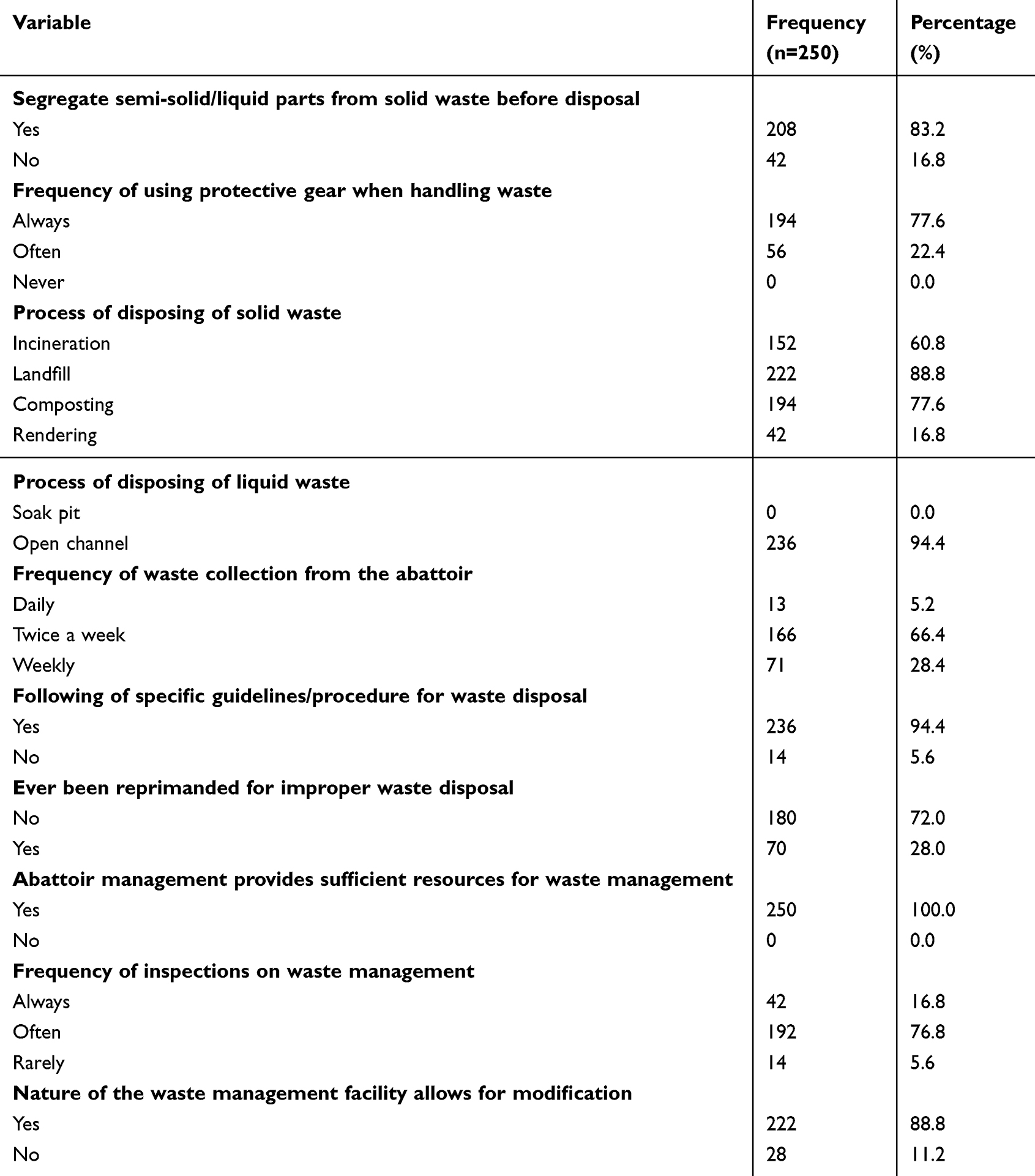 |
Table 3 Waste Management Practices Among Abattoir Workers |
From qualitative findings, waste management was a responsibility of the cleaners who are equipped with all the necessary equipment. An existence of internal rules and regulations on waste management with penalties and punishments were also responsible for abattoir workers’ practices towards abattoir waste management. On the other hand, KCCA and Nabugabo were reported as the available service providers that support in waste management through transportation for final disposal.
We have cleaners well equipped with the necessary equipment and are responsible for the cleanliness of the place. And waste is handled appropriately because this place produces food products. Abattoir worker
We can’t say the internal rules and regulations are followed by every worker since some can’t be forced to do something, it is everyone’s responsibility to ensure the place is clean. In addition, we have people responsible for waste management in all department. Abattoir worker
We have penalties to all those who are not adhering to proper waste management such as fines of money, clean up exercises for a period of time, desilting drainage channels, suspension, among others. If it wasn’t for these penalties, we are unruly. Abattoir worker
Nabugabo and KCCA are responsible for periodic collection of waste from this place at an interval of every after 3 days. They also provide us drums for collection of the waste. Abattoir worker
As management together with our staff, we know what to do regarding management of waste. However, in the market part of the abattoir, we welcome a lot of people who do uncontrolled waste littering. Despite those actions, we have a cleaner who is responsible for cleaning out. Abattoir supervisor
Challenges Faced in Managing the Wastes
The major challenges included poor abattoir designs with insufficiently demarcated waste collection areas (72.0%), poor funding for waste management facilities (69.1%), and deterioration of slaughterhouses and facilities (50.1%) (Table 4).
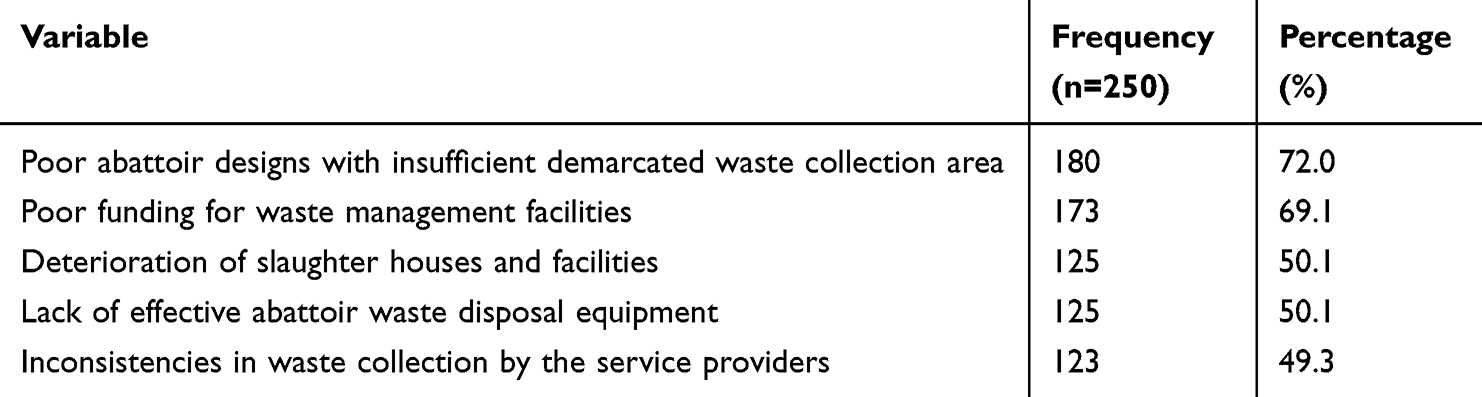 |
Table 4 Challenges Faced in Managing Wastes |
From qualitative findings, the process of abattoir waste management was affected by floods, and irregular schedules while collecting waste by the service providers. Therefore, the beneficiaries recommended for construction of the drainage channel and also construction of a pit for temporary waste storage. A request for logistical support in form of PPE was also raised by the abattoir workers to facilitate their services.
When it rains, floods are a problem to this facility and they end up affecting proper abattoir waste management. Therefore, if KCCA can enlarge and construct this Nateete drainage, it can help us in the prevention and control of floods. Abattoir supervisor
There is also a need for logistics such as aprons, overalls, gumboots, gloves, masks, among others so that we can perform our duties effectively Abattoir workers
Discussion
Overall, the knowledge of abattoir waste management among abattoir workers from Kalerwe and Wambizzi was good, as shown in Figure 1. Workers understood what abattoir waste was, how it should be disposed of, and the side effects of poor management, including air pollution, bad odors, health impacts, and surface water pollution.11 Continuous capacity building through trainings, meetings, and support visits from authorities is essential to improve knowledge and practices.12 The knowledge levels could be linked to education levels of the workers thereby highlighting a need for targeted educational interventions.13 Despite these challenges, workers are generally aware of the consequences of poor waste management such as health risks and environmental pollution.
The majority of abattoir workers (71.62%) exhibited a positive attitude towards abattoir waste management, as shown in Figure 2. This corresponds to the knowledge levels, as evidenced in different studies where attitudes towards abattoir waste are significantly associated with knowledge levels, education, and work experience.10,14 Similar to a study by Tolera et al that assessed the impact of abattoir waste on the environment and public health, the current study evaluated the same variables.9 The current study reported higher proportions of positive attitudes, possibly due to the reported continuous support supervision visits from governing authorities such as KCCA. Most participants had at least primary level of education and received multiple awareness sessions on waste management, unlike the previous study by Tolera et al where continuous awareness sessions on waste management were not done.9 Both studies found that most abattoir workers agreed that waste from abattoirs serves as a breeding ground for flies and mosquitoes and attracts animal scavengers.9,15 Therefore, improper means of abattoir waste disposal greatly affects surface and ground water quality through leachate and other products. Waste is frequently disposed of incorrectly, without regard for adequate environmental management techniques, creating threats to humans and wildlife on land and water.16
The study revealed that Half of the abattoir workers exhibited good waste management practices (Table 2). A previous study at Kalerwe abattoir identified four methods of waste management: rendering, incineration, composition, and land spreading.17 In Ethiopia, 88.4% of study participants properly separated edible from non-edible parts in their daily activities, while 54.0% and 75.0% of them did not use abattoir waste for biogas or composting, respectively.9 Similar observations were made in the current study, as waste is collected and managed offsite by Nabugabo and KCCA. It is estimated that bovine slaughterhouses generate solid waste of 27.5% of animal weight. Therefore, in the absence of proper mechanisms for proper abattoir waste management at the Kalerwe and Wambizzi abattoirs, the generated waste becomes a nuisance and a hazard to public health.7,18 The treatment of abattoir wastewater remains the main reliable and efficient means of reducing environmental pollution, which may consequently cause.14 Poor abattoir waste disposal practices results into pollution of surface and underground waters and affects air quality, indirectly harming the health of nearby residents.19 Additionally, improper means of solid waste disposal greatly affects surface and ground water quality by leachate.
The major recurring challenges captured by the Kalerwe and Wambizzi abattoirs include poor abattoir designs with insufficiently demarcated waste collection areas, poor funding for waste management facilities, deterioration of slaughter houses and facilities, lack of effective abattoir waste disposal equipment, and inconsistency in waste collection by the service providers, as shown in Table 3.17,20 Besides the reported needs for a constructed waste collection area, the existing waste collection areas at Kalerwe and Wambizzi were a public nuisance to the abattoir workers because they attract scavengers such as birds and stray dogs, among others. In addition, it has been reported that there are few collection bins for abattoir waste because these bins are not in all operation areas. With these challenges unaddressed, worse public health challenges are likely to be set, such as zoonotic diseases and outbreaks.18,21,22 However, the existing knowledge on abattoir waste does not correspond to existing practices; therefore, knowledge transferable approaches need to be administered while improving knowledge among abattoir workers.
Conclusions and Recommendations
While a significant proportion of abattoir workers demonstrated good knowledge of abattoir waste management, there were gaps in the understanding of specific practices, such as waste sorting, which might pose a danger to public health. A positive attitude towards abattoir waste management can be attributed to workers’ educational levels and exposure to multiple awareness sessions on waste management. Poor waste disposal practices, including open wastewater drainage, contribute to environmental pollution and pose public health risks. These significant challenges continue to hamper the implementation of appropriate waste-disposal methods. Investment is needed to upgrade abattoir facilities, including the construction of properly demarcated waste collection areas and provision of adequate waste disposal equipment. The government should allocate sufficient funds to ensure that these facilities meet required standards in line with the national policies including the National Environment Act 2019.
This study was limited by the Hawthorne effect, in which respondents modified their behavior during the administration/utilisation of a checklist by pretending to adhere to proper waste management practices. This was minimized by not informing them that they were being observed. Additionally, the study was limited by reporting bias since data were collected through face-to-face interviews, which were minimized through a thorough explanation of the questions to the respondents in Luganda, the language they easily understood, in order to obtain the appropriate responses. Qualitative methods and an observation checklist were used to ascertain variations in the data results. Therefore, future studies should focus on assessing step-by-step compliance with abattoir waste management practices among abattoir workers using multiple methods.
Acknowledgments
The authors would like to acknowledge the participants who devoted their time to participating in the study. The administration and leadership of Wambizi and Kalerwe abattoirs, together with that of the KCCA for authoritative support of the research study.
Author Contributions
All authors made a significant contribution to the work reported, whether that is in the conception, study design, execution, acquisition of data, analysis and interpretation, or in all these areas; took part in drafting, revising or critically reviewing the article; gave final approval of the version to be published; have agreed on the journal to which the article has been submitted; and agree to be accountable for all aspects of the work.
Funding
The study was self-funded by the research team.
Disclosure
The authors declare that they have no conflict of interest. This paper is based on the thesis of Sserubula and John Paul and has been published on an institutional website (https://dissertations.mak.ac.ug/handle/20.500.12281/18929).
References
1. Tolera ST, Alemu FK. Potential of abattoir waste for bioenergy as sustainable management, eastern Ethiopia, 2019. J Energy. 2020;2020(1):6761328. doi:10.1155/2020/6761328
2. Ogbonna D, Ideriah T. Effect of abattoir waste water on physico-chemical characteristics of soil and sediment in Southern Nigeria. J Sci Res Rep. 2014;3(12):1612–1632. doi:10.9734/JSRR/2014/7907
3. Gufe C, Chari TA, Jambwa P, et al. A review on the occurrence of antibiotic-resistant bacteria found in abattoir effluent from resource-limited settings: the necessity of a robust One Health framework. Sustainable Environment. 2025;11(1):2464419. doi:10.1080/27658511.2025.2464419
4. Oruonye E. Challenges of abattoir waste management in Jalingo Metropolis, Nigeria. Int J Res Geography. 2015;1(2):22–31.
5. Brichi L, Valani GP, Lyra GP, Gomes TM, Rossi F. Slaughterhouse effluents and soil quality: a review. Green Technol Sustainability. 2025;3:100207. doi:10.1016/j.grets.2025.100207
6. Elemile OO, Raphael DO, Omole DO, Oloruntoba EO, Ajayi EO, Ohwavborua NA. Assessment of the impact of abattoir effluent on the quality of groundwater in a residential area of Omu-Aran, Nigeria. Environ Sci Eur. 2019;31:1–10. doi:10.1186/s12302-019-0201-5
7. Shukri AA, Kyambadde J, Hawumba JF. The impact of Kalerwe abattoir wastewater effluent on the water quality of the Nsooba Channel. Agric Res Technol Open Access J. 2017;6:555677.
8. Yunus MK. Environmental Implications of Abattoir Waste in Ethiopia. Env Anal Eco Stud. 2019;6(3):
9. Tolera ST, Alemu FK, Mengistu DA. Knowledge, attitude, and practice of abattoir workers toward abattoirs waste management in Eastern Ethiopia. Environ Health Insights. 2022;16:11786302221075450. doi:10.1177/11786302221075450
10. Abdullahi A, Hassan A, Kadarman N, Saleh A, YuSa B, Lua PL. Food safety knowledge, attitude, and practice toward compliance with abattoir laws among the abattoir workers in Malaysia. Int J Gene Med. 2016;9:79–87. doi:10.2147/IJGM.S98436
11. García-Díez J, Saraiva S, Moura D, Grispoldi L, Cenci-Goga BT, Saraiva C. The importance of the slaughterhouse in surveilling animal and public health: a systematic review. Vet Sci. 2023;10:1–42. doi:10.3390/vetsci10020167
12. Ziervogel G, Enqvist J, Metelerkamp L, van Breda J. Supporting transformative climate adaptation: community-level capacity building and knowledge co-creation in South Africa. Climate Policy. 2022;22(5):607–622. doi:10.1080/14693062.2020.1863180
13. Okafor A, Okimiji O, Okafor C. Assessment of challenges, knowledge, attitude and practices of abattoirs waste management in Aba and Abia State, South-East Nigeria. J Mater Environ Sci. 2024;15(7):1051–1069.
14. Adamu MT, Dahiru M. A review on abattoir wastewater treatment for environmental health improvement. J Environ Bioremediation Toxicol. 2020;3(2):26–31. doi:10.54987/jebat.v3i2.548
15. Ragasri S, Sabumon P. A critical review on slaughterhouse waste management and framing sustainable practices in managing slaughterhouse waste in India. J Environ Manage. 2023;327(116823). doi:10.1016/j.jenvman.2022.116823
16. Abdullahi IL, Sani A, Madugu S. Assessment of abattoir waste management: evidences from Kano central Abattoir, Northwestern Nigeria. Dutse J Pure Appl Sci. 2023;9:95–104. doi:10.4314/dujopas.v9i2a.9
17. Masiko S. Assessment of Abattior Waste Management at Kalerwe Abattior in Kawempe Division and City Abattior in Nakawa Division of KCCA. Makerere University; 2022.
18. Mozhiarasi V, Natarajan TS. Slaughterhouse and poultry wastes: management practices, feedstocks for renewable energy production, and recovery of value added products. Biomass Convers Biorefin. 2022;1–24. doi:10.1007/s13399-022-02352-0
19. Martins E. An appraisal of the challenges of poor abattoir waste management; 2019.
20. Roesel K, Holmes K, Grace D. Fit for human consumption? A descriptive study of Wambizzi pig abattoir, Kampala, Uganda. ILRI. 2016.
21. Rodarte KA, Fair JM, Bett BK, Kerfua SD, Fasina FO, Bartlow AW. A scoping review of zoonotic parasites and pathogens associated with abattoirs in Eastern Africa and recommendations for abattoirs as disease surveillance sites. Front Public Health. 2023;11:1194964. doi:10.3389/fpubh.2023.1194964
22. Sabo B, Suleiman M, Hashimu A, Dauda A. Assessment of Abattoir waste management in Hadejia Metropolis, Jigawa State, Nigeria. Sci World J. 2025;20(1):117–121. doi:10.4314/swj.v20i1.15
 © 2025 The Author(s). This work is published and licensed by Dove Medical Press Limited. The
full terms of this license are available at https://www.dovepress.com/terms
and incorporate the Creative Commons Attribution
- Non Commercial (unported, 4.0) License.
By accessing the work you hereby accept the Terms. Non-commercial uses of the work are permitted
without any further permission from Dove Medical Press Limited, provided the work is properly
attributed. For permission for commercial use of this work, please see paragraphs 4.2 and 5 of our Terms.
© 2025 The Author(s). This work is published and licensed by Dove Medical Press Limited. The
full terms of this license are available at https://www.dovepress.com/terms
and incorporate the Creative Commons Attribution
- Non Commercial (unported, 4.0) License.
By accessing the work you hereby accept the Terms. Non-commercial uses of the work are permitted
without any further permission from Dove Medical Press Limited, provided the work is properly
attributed. For permission for commercial use of this work, please see paragraphs 4.2 and 5 of our Terms.
Recommended articles

COVID-19 and Saudi Arabia: Awareness, Attitude, and Practice
Fawzy MS, AlSadrah SA
Journal of Multidisciplinary Healthcare 2022, 15:1595-1618
Published Date: 26 July 2022
Diabetes Mellitus Knowledge, Attitudes, Preventive Practices and Associated Factors Among a Sample of Adult Non-Diabetic Saudi Residents
Baig M, Alzahrani S, Abualhamael S, Alotaibi A, Alharbi M, Almohammadi T, Alkaabi T
Diabetes, Metabolic Syndrome and Obesity 2023, 16:1393-1406
Published Date: 15 May 2023
Prevalence and Predictors of Knowledge and Attitude on Optimal Nutrition and Health Among Pregnant Women in Their First Trimester of Pregnancy
Gebremichael MA, Lema TB
International Journal of Women's Health 2023, 15:1383-1395
Published Date: 4 September 2023
Nursing Students’ Knowledge, Attitude, and Practice Regarding Disaster Preparedness: A Cross-Sectional Study
Mohamed NA, Abdel-Aziz HR, Elsehrawy MG
Risk Management and Healthcare Policy 2023, 16:2427-2437
Published Date: 14 November 2023
Addressing the Neglected Burden of Cancer Cachexia: A Quasi-Experimental Study at Uganda Cancer Institute
Dave D, Angucia BS, Komukama C, Kahwa A, Srikant S, Pakileto A, Anecho E, Niyonzima N
Cancer Management and Research 2026, 18:576718
Published Date: 24 March 2026