
Back to Journals » Cancer Management and Research » Volume 18

Addressing the Neglected Burden of Cancer Cachexia: A Quasi-Experimental Study at Uganda Cancer Institute
Authors Dave D  , Angucia BS , Komukama C, Kahwa A, Srikant S , Pakileto A, Anecho E, Niyonzima N
Received 25 October 2025
Accepted for publication 13 February 2026
Published 24 March 2026 Volume 2026:18 576718
DOI https://doi.org/10.2147/CMAR.S576718
Checked for plagiarism Yes
Review by Single anonymous peer review
Peer reviewer comments 2
Editor who approved publication: Dr Alessandro Rizzo
Darshit Dave,1 Bridget S Angucia,1 Caroline Komukama,1 Andrew Kahwa,1 Sanjanaa Srikant,2 Alice Pakileto,1 Ezra Anecho,1 Nixon Niyonzima1
1Uganda Cancer Institute, Kampala, Uganda; 2School of Medicine, College of Health Sciences, Makerere University, Kampala, Uganda
Correspondence: Darshit Dave, Uganda Cancer Institute, P.O. Box 3935, Kampala, Uganda, Email [email protected]
Background: Cancer cachexia is a debilitating syndrome contributing to significant morbidity and mortality. Despite its impact on survival and quality of life, it remains under-recognized and undertreated, particularly in low- and middle-income countries (LMICs) where structured care models are scarce.
Objective: This study evaluated impact of a structured educational intervention on patient knowledge, emotional coping, and practice outcomes at Uganda Cancer Institute (UCI).
Methods: A longitudinal quasi experimental with a pre and post study design was used to enroll 484 patients with cancer cachexia. The intervention consisted of structured educational sessions delivered in-person and via SMS, and data were collected using a questionnaire aligned with international cachexia tools and guidelines. Analysis was performed in STATA (v18) with descriptive statistics.
Results: Awareness of cancer cachexia increased to 94.2% following the intervention. Improvements were noted in nutrition-impacting symptoms and emotional well-being including reductions in eating-related distress (15– 25%), family conflict (14– 17%) and body image concerns (23– 29%). In contrast, declines were observed in coping ability (37%), self-rated health (42%), and quality of life (35%) reflecting awareness paradox. While weight-loss and sarcopenia improved (9– 13%), physical strength and activity levels decreased (6– 8%) due to disease progression reflected in a higher proportion of patients with worsened ECOG and advanced malignancies (61.7%).
Conclusion: Tailored interventions can enhance awareness and self-care in cancer cachexia, even in LMICs. Sustainable impact requires early detection and integration into multimodal care with institutional support.
Keywords: cancer cachexia, knowledge, attitude, practices, Uganda, cachexic patients
Background
Cancer cachexia remains one of the most devastating yet under-recognized syndromes, afflicting 80% of patients with advanced malignancies and contributing to over 20% of cancer-related deaths.1 It is a multifactorial syndrome marked not only by ongoing skeletal muscle wasting and weight loss but also emotional and functional impairment that cannot be fully reversed just by conventional nutritional support.2,3
Despite decades of evidence linking cancer cachexia to poor outcomes, the syndrome continues to evade routine oncology care and remains under-recognized and under-treated globally, particularly in many low- and middle-income countries (LMICs), where oncology care systems are often ill-equipped to address its complex multifactorial nature leading to delays in recognition and timely care.4–6 Early recognition of cachexia is crucial as part of comprehensive oncology care because of its prognostic significance and treatment outcomes.7 Both patients and caregivers have expressed a sense of hopelessness and need for information, underscoring its role in guiding evidence-based practices to optimize care.8,9 In Uganda, patients frequently navigate their illness trajectories with limited knowledge of cachexia, inadequate counseling, and little access to interdisciplinary support, even as the syndrome profoundly impacts their quality of life and treatment tolerance while oncology teams face structural barriers including lack of systematic screening, limited access to nutritionists, physiotherapists, and psychosocial services, and resource constraints that restrict multimodal care.10
In high-income settings, interventions rooted in multimodal care and patient-centered education have shown promise in improving symptom control and psychosocial outcomes.11 Global consensus now underscores the urgency of addressing cancer cachexia through coordinated, transdisciplinary strategies that combine medical, nutritional, psychosocial, and rehabilitative components, with an emphasis on cultural relevance and patient engagement.12 Previous studies in other contexts have shown that structured educational and multimodal interventions can improve symptom control, nutritional management, and psychosocial outcomes13 supporting the rationale for evaluating a tailored educational intervention in the Ugandan setting. Evidence from other LMIC and regional contexts also supports the feasibility and effectiveness of structured, multidisciplinary management models when adapted to local healthcare realities,14 further reinforcing the need for culturally sensitive, resource-appropriate strategies in African oncology care.
Understanding how patients perceive, cope with, and act upon cachexia is critical to designing sustainable interventions that are both clinically effective and culturally attuned. This study offers one of the first explorations of cancer cachexia from the patient perspective in a Ugandan cancer center, shedding light on prevailing gaps in knowledge, shifting attitudes, and lived experiences of care. By evaluating the impact of a structured educational intervention with multi-modal approach on patients’ understanding, emotional resilience, and self-care practices within a resource-limited context, this research aims to lay the groundwork for integrated, context-specific strategies to address this neglected burden and yet life-altering condition.
Methods
Study Setting and Participants
This study employed a longitudinal quasi experimental design with a pre and post study approach from November 2023 to May 2025, carried out at the Uganda Cancer Institute (UCI), a leading tertiary facility in Kampala providing comprehensive oncology services to patients from across the country. UCI attends to approximately 8000 cancer patients annually, with an estimated 80% experiencing varying degrees of cachexia.
The study enrolled a total of 484 participants were recruited at baseline, inclusion required age ≥ 18 years and a clinical diagnosis of cancer cachexia (defined as ≥5% weight loss in 6 months, or BMI <20 with >2% weight loss, or sarcopenia with weight loss). Exclusion criteria involved inability to consent. Simple randomization was done using the REDCap randomization module to ensure representative inclusion.
Data Collection
Data acquisition was conducted by a qualified nurse and a clinician using a structured, interviewer-administered questionnaire developed using domains from multiple sources including Edmonton scale,15 Eating related distress survey,16 Functional Assessment of Anorexia Cachexia Therapy (FAACT) questionnaire,17,18 ASCO,19 ESMO20 and GLIM21 international guidelines on cachexia diagnosis and management capturing multidimensional aspects and adapted to the Ugandan context through literature and expert review and pilot tested in a small group of patients for clarity and appropriateness. The questionnaire captured objective items and subjective perceptions related to knowledge, attitudes, and practices (KAP) on a wide range of domains: demographic characteristics, understanding of cachexia (definition, mechanisms, and clinical presentation), associated symptoms, and management outcomes.
The educational intervention consisted of structured in-person sessions led by trained nurses, nutritionists and psychologists, covering topics including cachexia awareness, nutrition, symptom management, rehabilitation exercises, and psychosocial coping strategies. Each session lasted approximately 60 minutes and was delivered once per week for three months. Additionally, SMS messages contained concise educational content and reminders were sent twice weekly over the same period. All in-person sessions and SMS content were standardized using a pre-defined protocol and validated message scripts to ensure consistency across participants.
Data Management and Analysis
All responses were recorded in REDCap and subsequently analyzed using STATA v18. Objective responses were scored dichotomously (1 for correct, 0 for incorrect). Subjective evaluations were rated on a 5-point Likert scale, ranging from 1 (very low) to 5 (very high). Responses were interpreted correct/wrong based on 50% cut-off or using modified Bloom’s criteria: scores above 80% were deemed “good,” 60–80% as “moderate,” and below 60% as “poor.”22
For Likert-scale, multiple responses were consolidated (eg, “agree” and “strongly agree” combined). Descriptive analysis included frequency distributions, percentages, medians, and interquartile ranges to summarize categorical and continuous variables.
Results
Demographics
A total of 484 patients were surveyed pre-intervention. Of these, 164 (33.9%) had died and 78 (16.1%) of these had gastrointestinal cancer, besides this 42 (8.7%) were lost to follow-up by the time of post-intervention assessment. The remaining 278 patients alive, participated in the post-intervention evaluation for comparison of knowledge, attitudes, and practices related to cancer cachexia (Figure 1).
 |
Figure 1 Participant flow diagram illustrating enrollment, attrition, and follow-up of study participants (N = 484). |
The median patient age remained comparable between groups. Breast cancer was the most prevalent diagnosis in both groups, and over 57% of participants were female. Most patients were receiving chemotherapy. A majority had attained at most secondary education [140 (28.9%) pre- vs 104 (37.4%) post-intervention] followed by primary education [135 (27.9%) pre- vs 57 (20.5%) post-intervention].
At baseline, 60.95% presented with localized cancer, while 35.95% had metastatic disease. In contrast, among post-intervention participants, there was a higher proportion of patients with advanced disease, with only 38.27% presenting with localized cancer and 61.73% having metastatic cancer. Performance status, as measured by the ECOG score, also showed notable changes. Pre-intervention, 66.74% had an ECOG of 2, 15.7% had ECOG 1 and 8.06% had ECOG 0. Post-intervention, the proportion of patients with ECOG 2 remained high (60.07%), but there was a considerable increase in patients with a score of 1 (38.85%) and a sharp decline in those fully active (ECOG 0), which dropped to just 1.08% (Table 1). These shifts may reflect both disease progression and functional decline consistent with the clinical burden of cancer cachexia.
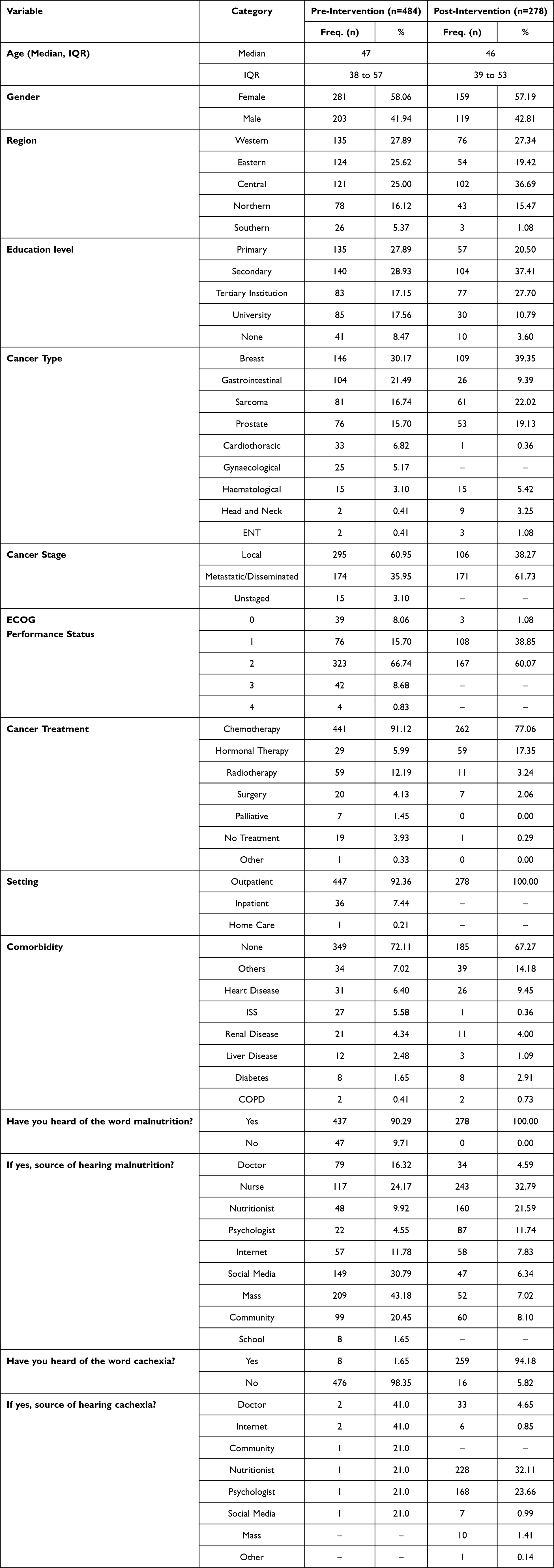 |
Table 1 Participant Demographics and Cachexia Awareness |
Knowledge: Advancing Awareness, but Complexity Breeds Confusion
Substantial improvements were observed in patient knowledge regarding cancer cachexia following the intervention. Prior to the intervention, 90.3% of patients had heard of malnutrition, but only 1.65% were familiar with the term “cachexia.” Post-intervention, awareness of malnutrition rose to 100%, while knowledge of cachexia increased dramatically to 94.2%. The sources of cachexia knowledge shifted notably after the intervention: nurses (36.2%), nutritionists (32.1%), and psychologists (30.8%).
Patients demonstrated good baseline knowledge with strong retention of structured, action-oriented educational content, particularly in areas involving nutritional support, symptom recognition, rehabilitation, quality of life, and the need for multimodal management approaches. SMS-based educational content performed well especially in delivering clear and actionable messages, such as encouraging referrals to dietitians or promoting exercise.
Despite these improvements, knowledge gaps persisted in more complex or sensitive topics, including biological mechanisms underlying cachexia, misconceptions around palliative feeding, and understanding of psychosocial care needs (Table 2). These domains likely require deeper engagement, repeated reinforcement, and individualized education strategies to achieve comparable comprehension.
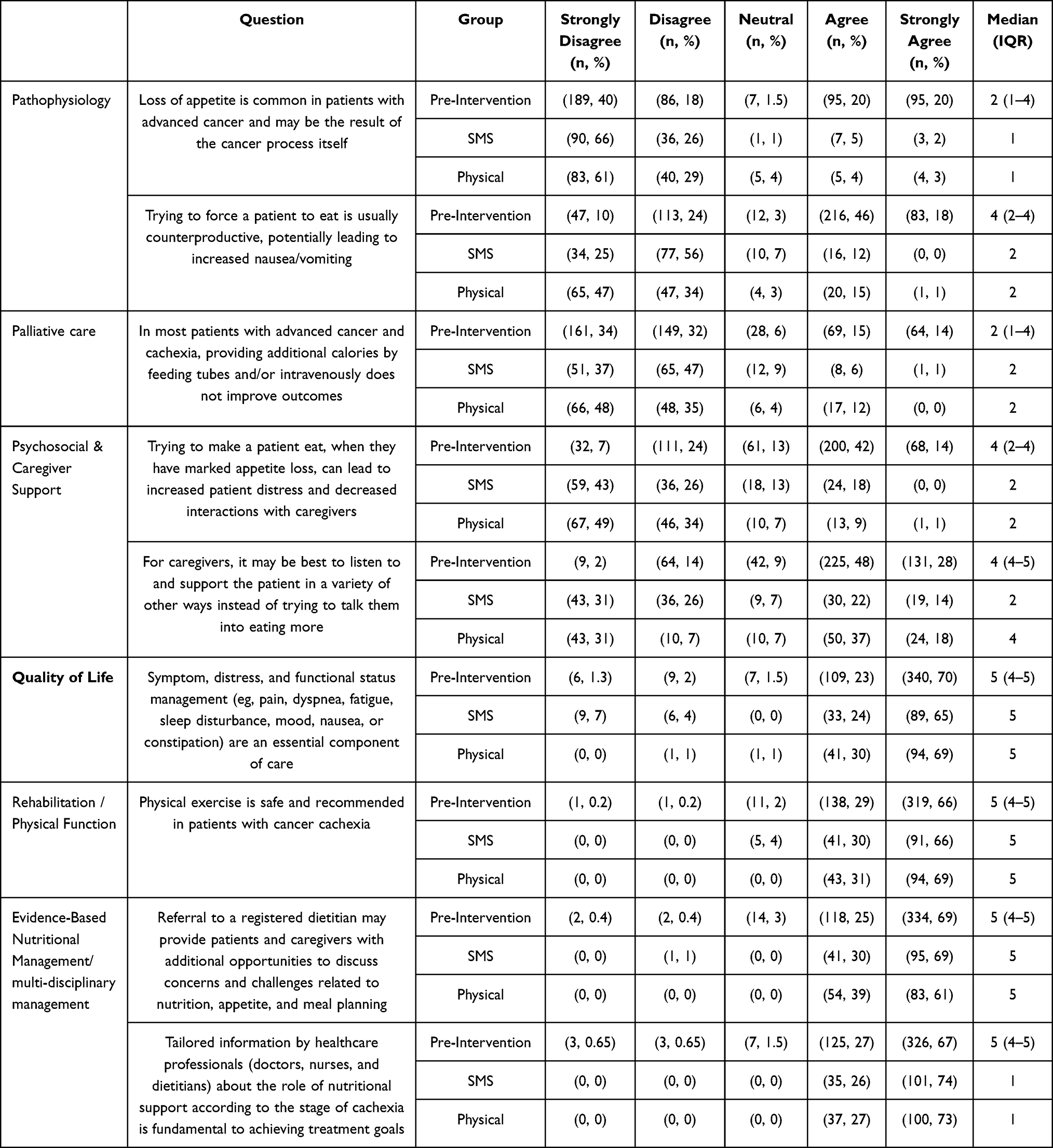 |
Table 2 Knowledge of Cancer Cachexia |
Emotional Relief and Realism (Growth vs Weight)
The intervention also led to marked improvements in patient attitudes, particularly in emotional and psychosocial domains. Participants reported notable reductions in fear of death (19%), disease progression (20%), anxiety (0.99 points), and depression (0.99 points). Concerns related to body image also improved by 23–29%, and family-related conflict over meals dropped by 14–17%. Nevertheless, while emotional resilience and family cohesion improved, certain challenges persisted. Coping fatigue and existential distress remained prevalent, underscoring the need for ongoing psychological and palliative care beyond initial education.
A paradoxical trend emerged in patients’ self-perceptions of health and quality of life. Perceived ability to cope with illness declined from moderate to poor levels significantly (from 79% pre-intervention to 47% post-intervention), while perceived overall health and quality of life decreased to poor levels by 42% and 35%, respectively (Table 3).
 |
Table 3 Psychosocial Distress and Quality of Life Symptoms |
Symptom Improvement vs Functional Decline: A Divergent Outcome
A majority of nutrition-impacting symptoms significantly improved post-intervention. Patients reported reductions in food intake changes (21%), early satiety (7%), food aversions (5–7%), constipation (10%), and abdominal pain (9%), suggesting enhanced symptom recognition and improved dietary guidance. However, some domains remained challenging primarily driven by cachexia-related anorexia typically resistant to behavioral change alone. The average nausea and appetite scores decreased slightly by 0.17 and 0.31 points respectively, and the proportion of patients reporting pain that interfered with eating increased from 10% to 20%. Additionally, fatigue-related eating difficulty rose, indicating that fatigue and pain remained significant barriers to adequate nutrition.
Physical outcomes showed a mixed picture. While overall appearance and weight-related indicators (including weight loss and sarcopenia) improved by 9–13%, physical strength declined, with handgrip strength decreasing by 6% and physical activity limitations increasing by 8% (Table 4).
 |
Table 4 Symptoms Experienced in 6 months |
Behaviorally, there were several positive shifts in dietary practices. Distress associated with eating declined by 15–25%, and adherence to structured meal routines improved, with three-meal-per-day consistency rising 80.6%. Patients also reported less confusion regarding food choices and nutritional requirements, with a 15–20% decrease in related uncertainty (Table 5).
 |
Table 5 Eating-Related Concerns and Dietary Support |
Discussion
This study provides a comprehensive evaluation of the impact of a structured intervention on patients’ knowledge, attitudes, and practices (KAP) regarding cancer cachexia at Uganda Cancer Institute (UCI). The intervention produced notable gains in nutritional awareness, emotional resilience, and symptom relief. However, these were tempered by persistent challenges particularly related to disease progression, knowledge retention, emotional burden and physical function decline. This underscores the multifactorial nature of cancer cachexia while reflecting the complex interplay between patient education, health literacy, emotional response and the realities of care in a low-resource oncology setting.
Unlike reports from Norway where cachexia prevalence was high among lung and gastrointestinal cancers23,24 our cohort was dominated by breast cancer with most participants being female, also differing from findings in the United States.25 However our distribution closely aligns with a national population-based cancer survey in Uganda, which documented similar trends in the country’s cancer spectrum.26
Of 484 patients enrolled, 33.9% died before post-intervention assessment. This high attrition highlights the aggressive course and mortality burden of cancer cachexia, which coincides with late-stage presentation27,28 a common occurrence in Uganda across various cancers owing to multiple barriers.29–31 Similar trends have been observed in the USA, where cachexia amplified systemic strain with longer hospital stays and higher costs besides increased mortality, emphasizing the urgency of early recognition and preventive strategies.32 These findings reinforce the importance of early recognition and systematic regular nutritional risk screening, as patients with depleted reserves are more vulnerable to treatment-related toxicities, reduced tolerance, poorer outcomes, and increased mortality. Proactive detection before advanced stages could mitigate attrition and optimize treatment outcomes.7
The most striking finding was the surge in awareness of cancer cachexia from 1.65% to 94.2% post-intervention. Pre-intervention, patients overwhelmingly recognized malnutrition but lacked familiarity with the term or clinical implications of cachexia, reflecting global trends in patient reports of nutritional issues but under-recognition of cachexia as a clinical entity,33 especially in LMICs. This underscores the need for patient education alongside systemic reforms.34 Patients retained practical actionable concepts on nutritional support, rehabilitation, symptom control, quality of life and multimodal care. Gains likely stemmed from active engagement in care processes and the relevance of these topics to daily experiences. Nutritionist- and psychologist-led sessions and SMS-delivered content proved particularly effective in bridging knowledge gaps, demonstrating the value of targeted, accessible education and capacity of structured strategies in resource-limited settings.35,36
Despite greater awareness, overall knowledge accuracy dropped from seven correct domains pre-intervention to five in the physical group and four in the SMS group. The decline was notable in complex and emotionally laden areas like pathophysiology, irreversibility, and psychosocial misconceptions. Rather than indicating true decline, this may reflect information overload and transition from superficial confidence to deeper but uncertain understanding, as patients questioned ingrained inaccurate cultural beliefs.37 Confronting counterintuitive truths such as the limited impact of feeding in late-stage cachexia created cognitive dissonance, signaling the start of behavioral change likely requiring deeper engagement to achieve comparable comprehension.23
Improved health literacy also brought emotional strain. Greater insight into treatment limitations may have triggered psychological resistance, especially when conflicting with family or cultural expectations. Without counseling and emotional support, patients may disengage from distressing content. Therefore, emotionally difficult information requires empathetic delivery, counseling and family-inclusive dialogue to foster understanding and acceptance.38
Low educational attainment further constrained comprehension of abstract or nuanced concepts. In such contexts, rote learning and cultural intuition may override conceptual change, unless new information is actively integrated into existing mental frameworks through practical application or sustained engagement. Without system-level reinforcement, supportive follow-up or culturally adapted training, divergent concepts may not have been assimilated meaningfully and thus more susceptible to degrade over time or revert to experiential intuitive reasoning.39,40 These findings emphasize the need for iterative, emotionally sensitive, culturally tailored, simplified and personalized educational messages, reinforced by counseling and multidisciplinary care within a supportive clinical environment.41,42
The intervention yielded marked improvement in emotional and psychosocial attitudes indicating better emotional alignment. These findings suggest that even brief psychoeducational support can foster better family communication, reduce patient distress, and enhance emotional well-being. However, a deeper emotional cost became evident and accompanied by declines in perceived coping ability, self-rated health and quality of life. This apparent contradiction of symptom relief with worsening self-perception can be explained by the “awareness paradox,” where realistic disease insight replaces hopeful denial, especially in low-literacy settings. As documented in psycho-oncology, this shift reflects psychological acceptance and adaptation seen in palliative care rather than increased distress.29,43 It may stem from the mismatch between knowledge and feeling empowered to change its course, and more critical self-assessment of prognosis and function reflecting the emotional cost of realistic insight.44 Persistent health system constraints and financial strain outside the scope of this intervention may compound this effect.
Encouragingly, symptom management improved, with reduced burden, better adherence to structured meals and less eating-related distress and dietary confusion consistent with findings from an Australian observational study following multi-disciplinary care.13 However pain related eating difficulties doubled to 20%, pointing to unaddressed pain syndromes as a potential obstacle to nutritional progress attributed to administrative, professional, and economic impediments.45 Besides, fatigue-related eating issues worsened, and mean appetite scores declined slightly diverging from Bland’s consistent improvements likely due to resource constraints and limited care in our context. Functional-capacity also continued to deteriorate echoing evidence that muscle loss predicts mortality, even with supportive care.46 Although sarcopenia and weight loss parameters improved, strength, endurance, and physical activity did not, likely due to advancing disease and worsening ECOG scores, as seen in prior Ugandan studies highlighting the progressive clinical burden of cancer cachexia.43 Our findings align with Swedish data showing that cachexic patients with weight loss, inflammation, fatigue, and low grip strength had poorer quality of life, reduced performance, and shorter survival in palliative settings.47
These results reinforce that cachexia’s inflammatory and metabolic processes resist late-stage interventions. Nutritional education alone is essential but insufficient to reverse progression.48,49 This calls for early detection and proactive, multimodal supportive care,50,51 integrating physiotherapy, pharmacologic appetite stimulants, palliative care, pain control, and rehabilitation to address the syndrome’s complexity.13,52
Strengths
This study is the first at the Uganda Cancer Institute to evaluate a structured, tailored educational intervention for cancer cachexia in a large, diverse patient cohort representative of national cancer trends. The use of SMS delivery methods, coupled with nutritionist- and psychologist-led sessions, allowed scalable, context-relevant engagement. By assessing multidimensional outcomes—including knowledge, attitudes, practices, psychosocial well-being, symptom burden, and functional status—it provides a holistic picture of intervention impact and unique insights for designing integrated, multimodal cachexia management strategies in low-resource settings.
Limitations
Key limitations include the single-center design, which may limit generalizability beyond similar LMIC oncology settings, and the high attrition rate reflecting advanced disease and reducing post-intervention sample size. The relatively short follow-up period restricted assessment of long-term knowledge retention and sustained behavioral change. Self-reported measures may have introduced potential recall and social desirability bias.
Conclusion
This study highlights the potentially broad and positive impact of targeted low-cost scalable educational interventions including SMS and in-person sessions, in improving patient knowledge, emotional coping, and self-care practices related to cancer cachexia in a low-resource setting. Despite these gains, persistent functional decline and overall quality of life burden due to the progressive physical deterioration, and the emotional weight of increased illness awareness limited the overall benefit.
This emphasizes the pressing need for early detection and management of cancer cachexia and to move beyond standalone interventions towards a multimodal interdisciplinary framework that includes nutritional, medical, physical rehabilitation, and psychosocial support for sustainable improvements. Practical and institutional implications include the routine integration of nutritional screening, structured patient education, and ongoing psychosocial support into oncology services, with dedicated structural and administrative backing to ensure sustainability.
Albeit these challenges, the intervention’s success underscores the feasibility and impact of embedding patient-centered, low-cost strategies into routine oncology care in LMIC context. Further research should focus on controlled studies, long-term follow-up and evaluation of sustained patient-centered outcomes to strengthen the evidence base and inform policy and practice in similar resource-limited settings.
Data Sharing Statement
The data that support the findings of this study are not openly available due to reasons of sensitivity and are available from the corresponding author upon reasonable request.
Ethical Approval
The study adhered to ethical principles in the Declaration of Helsinki. Approval was secured from Uganda Cancer Institute-Research and Ethics Committee (UCI-2022-69) and Uganda National Council for Science and Technology (HS3194ES).
Consent to Participate and Confidentiality
Written informed consent was obtained from all participants and for participants who were not able to read or write the consent process was conducted in Luganda (the local language) and informed consent was obtained from the appropriate representative. Participation was voluntary with their right to withdraw at any stage. To protect participant confidentiality, unique codes were used in place of names, and all collected data were handled with strict confidentiality.
Acknowledgment
We would like to thank the patients who participated in this study and shared their valuable time and insights. We also appreciate the support of the research team for facilitating data collection and providing a conducive environment for this work. Finally, we acknowledge the funder and institutional support that made this research possible.
Author Contributions
Darshit Dave: conceptualized and designed the study, supervised data collection, performed data analysis and interpretation, drafted and revised the manuscript, approved the final version, and is accountable for all aspects of the work.
Angucia Bridget: contributed to study design, performed data management, data analysis and interpretation, revised the manuscript, approved the final version, and is accountable for all aspects of the work.
Caroline Komukama: contributed to study design, coordinated the study, supervised data collection, revised the manuscript, approved the final version, and is accountable for all aspects of the work.
Andrew Kahwa: contributed to data collection, revised the manuscript, approved the final version, and is accountable for all aspects of the work.
Sanjanaa Srikant: conceptualized and designed the study, assisted in data analysis, revised the manuscript, approved the final version, and is accountable for all aspects of the work.
Alice Pakileto: contributed to data collection, revised the manuscript, approved the final version, and is accountable for all aspects of the work.
Ezra Anecho: contributed to study design, managed the project, revised the manuscript, approved the final version, and is accountable for all aspects of the work.
Nixon Niyonzima: contributed to study design, supervised the project, revised the manuscript, approved the final version, and is accountable for all aspects of the work.
Funding
This research was supported by Pfizer Inc. USA. The funder had no role in the study design, data collection, analysis, interpretation, or manuscript writing.
Disclosure
The authors have no competing interests.
References
1. von Haehling S, Anker SD. Prevalence, incidence and clinical impact of cachexia: facts and numbers—update 2014. J Cachexia Sarcopenia Muscle. 2014;5(4):261–16. doi:10.1007/s13539-014-0164-8
2. Fearon KC, Voss AC, Hustead DS. Definition of cancer cachexia: effect of weight loss, reduced food intake, and systemic inflammation on functional status and prognosis. Am J Clin Nutr. 2006;83(6):1345–1350. doi:10.1093/ajcn/83.6.1345
3. Argilés JM, López-Soriano FJ, Stemmler B, Busquets S. Cancer-associated cachexia—understanding the tumour macroenvironment and microenvironment to improve management. Nat Rev Clin Oncol. 2023;20(4):250–264. doi:10.1038/s41571-023-00734-5
4. Garcia JM, Dunne RF, Santiago K, et al. Addressing Unmet Needs for People with Cancer Cachexia: Recommendations From a Multistakeholder Workshop. Wiley Online Library; 2022.
5. Kaduka LU, Bukania ZN, Opanga Y, et al. Malnutrition and cachexia among cancer out-patients in Nairobi, Kenya. J Nutr Sci. 2017;6:e63.
6. Dannayo C, Chikakuda AT, Nyasosela R, Mphwanthe G. Malnutrition defined by Global Leadership Initiative on Malnutrition criteria, cachexia, and dietary intake among adult patients with cancer undergoing chemotherapy. Clin Nutrit Open Sci. 2025;59:31–44. doi:10.1016/j.nutos.2024.11.005
7. Unger JM, Vaidya R, Hershman DL, Minasian LM, Fleury ME. Systematic review and meta-analysis of the magnitude of structural, clinical, and physician and patient barriers to cancer clinical trial participation. JNCI J Natl Cancer Inst. 2019;111(3):245–255. doi:10.1093/jnci/djy221
8. Reid J. Psychosocial, educational and communicative interventions for patients with cachexia and their family carers. Curr Opin Support Palliat Care. 2014;8(4):334–338. doi:10.1097/SPC.0000000000000087
9. Hopkinson J, Wright D, Corner J. Exploring the experience of weight loss in people with advanced cancer. J Adv Nurs. 2006;54(3):304–312. doi:10.1111/j.1365-2648.2006.03818.x
10. Nakaganda A, Solt K, Kwagonza L, Driscoll D, Kampi R, Orem J. Challenges faced by cancer patients in Uganda: implications for health systems strengthening in resource limited settings. J Cancer Policy. 2021;27:100263. doi:10.1016/j.jcpo.2020.100263
11. Ni J, Zhang L. Cancer cachexia: definition, staging, and emerging treatments. Cancer Manage Res. 2020;Volume 12:5597–5605. doi:10.2147/CMAR.S261585
12. Park MA, Whelan CJ, Ahmed S, et al. Defining and addressing research priorities in cancer cachexia through transdisciplinary collaboration. Cancers. 2024;16(13):2364. doi:10.3390/cancers16132364
13. Bland KA, Harrison M, Zopf EM, et al. Quality of life and symptom burden improve in patients attending a multidisciplinary clinical service for cancer cachexia: a retrospective observational review. J Pain Sympt Manage. 2021;62(3):e164–e176. doi:10.1016/j.jpainsymman.2021.02.034
14. Gautam P, Shankar A. Management of cancer cachexia towards optimizing care delivery and patient outcomes. Asia Pac J Oncol Nurs. 2023;10:100322. doi:10.1016/j.apjon.2023.100322
15. Hui D, Bruera E. The Edmonton Symptom Assessment System 25 Years Later: past, Present, and Future Developments. J Pain Sympt Manage. 2017;53(3):630–643. doi:10.1016/j.jpainsymman.2016.10.370
16. Amano K, Morita T, Koshimoto S, Uno T, Katayama H, Tatara R. Eating-related distress in advanced cancer patients with cachexia and family members: a survey in palliative and supportive care settings. Support Care Cancer. 2019;27(8):2869–2876. doi:10.1007/s00520-018-4590-6
17. Ribaudo J, Cella D, Hahn E, et al. Re-validation and shortening of the functional Assessmentof anorexia/Cachexia therapy (FAACT) questionnaire. Qual Life Res. 2000;9(10):1137–1146. doi:10.1023/A:1016670403148
18. Wheelwright S, Darlington A-S, Hopkinson JB, Fitzsimmons D, White A, Johnson CD. A systematic review of health-related quality of life instruments in patients with cancer cachexia. Support Care Cancer. 2013;21(9):2625–2636. doi:10.1007/s00520-013-1881-9
19. Roeland EJ, Bohlke K, Baracos VE, et al. Management of Cancer Cachexia: ASCO Guideline. J clin oncol. 2020;38(21):2438–2453. doi:10.1200/JCO.20.00611
20. Arends J, Strasser F, Gonella S, et al. Cancer cachexia in adult patients: ESMO clinical practice guidelines☆. ESMO Open. 2021;6(3):100092. doi:10.1016/j.esmoop.2021.100092
21. McGovern J, Skipworth RJE, Laird BJA, McMillan DC. Global Leadership Initiative on Malnutrition cachexia: an inflammation-first approach for the diagnosis of disease-related malnutrition. Curr Opin Clin Nutr Metab Care. 2024;27(5):393–396. doi:10.1097/MCO.0000000000001052
22. Bloom BS, Engelhart MD, Furst EJ, Hill WH, Krathwohl DR. Taxonomy of Educational Objectives: Longmans. Green New York; 1964.
23. Gaafer OU, Zimmers TA. Nutrition challenges of cancer cachexia. J Parenteral Enteral Nutr. 2021;45(S2):S16–S25. doi:10.1002/jpen.2287
24. Vagnildhaug OM, Balstad TR, Almberg SS, et al. A cross-sectional study examining the prevalence of cachexia and areas of unmet need in patients with cancer. Support Care Cancer. 2018;26(6):1871–1880. doi:10.1007/s00520-017-4022-z
25. Lim S, Brown JL, Washington TA, Greene NP. Development and progression of cancer cachexia: perspectives from bench to bedside. Sports Med Health Sci. 2020;2(4):177–185. doi:10.1016/j.smhs.2020.10.003
26. Okongo F, Amuge C, Jatho A, Niyonzima N, Ogwang DM, Orem J. The regional cancer spectrum in Uganda: a population-based cancer survey by sub-regions (2017–2020). ecancermedicalscience. 2024;18:1782. doi:10.3332/ecancer.2024.1782
27. Gannavarapu BS, Lau SK, Carter K, et al. Prevalence and survival impact of pretreatment cancer-associated weight loss: a tool for guiding early palliative care. J Oncol Pract. 2018;14(4):e238–e250. doi:10.1200/JOP.2017.025221
28. Shachar SS, Williams GR, Muss HB, Nishijima TF. Prognostic value of sarcopenia in adults with solid tumours: a meta-analysis and systematic review. Eur J Cancer. 2016;57:58–67. doi:10.1016/j.ejca.2015.12.030
29. Scheel JR, Anderson S, Foerster M, Galukande M, McCormack V. Factors contributing to late-stage breast cancer presentation in sub-Saharan Africa. Curr Breast Cancer Rep. 2018;10(3):142–147. doi:10.1007/s12609-018-0278-7
30. Kajabwangu R, Bajunirwe F, Izudi J, et al. Late stage at diagnosis of cervical cancer and its correlates at a large regional referral hospital in Uganda: a cross-sectional study. Cureus. 2024;16(6). doi:10.7759/cureus.62702
31. Wismayer R, Kiwanuka J, Wabinga H, Odida M. Increasing trends, Late presentation and challenges of colorectal cancer in Uganda. Res Dev Med Med Sci. 2023;3:158–177.
32. Arthur ST, Van Doren BA, Roy D, Noone JM, Zacherle E, Blanchette CM. Cachexia among US cancer patients. J Med Econom. 2016;19(9):874–880. doi:10.1080/13696998.2016.1181640
33. Muscaritoli M, Molfino A, Scala F, Christoforidi K, Manneh‐Vangramberen I, De Lorenzo F. Nutritional and metabolic derangements in Mediterranean cancer patients and survivors: the ECPC 2016 survey. J Cachexia Sarcopen Muscle. 2019;10(3):517–525. doi:10.1002/jcsm.12420
34. Ryan AM, Power DG, Daly L, Cushen SJ, Bhuachalla ĒN, Prado CM. Cancer-associated malnutrition, cachexia and sarcopenia: the skeleton in the hospital closet 40 years later. Proc Nutr Soc. 2016;75(2):199–211. doi:10.1017/S002966511500419X
35. Vainauskienė V, Vaitkienė R. Enablers of patient knowledge empowerment for self-management of chronic disease: an integrative review. Int J Environ Res Public Health. 2021;18(5):2247. doi:10.3390/ijerph18052247
36. Martin P. Cancer cachexia syndrome: reflecting on 20 years of providing cancer cachexia care as the leader of an interdisciplinary team in an Australian cancer center. Asia PacJ Oncol Nurs. 2022;9(9):100070. doi:10.1016/j.apjon.2022.04.009
37. Wang T, Voss JG. Information overload in patient education: a Wilsonian concept analysis. Nurs Sci Quarter. 2022;35(3):341–349. doi:10.1177/08943184221092451
38. Cipta DA, Andoko D, Theja A, et al. Culturally sensitive patient-centered healthcare: a focus on health behavior modification in low and middle-income nations—insights from Indonesia. Front Med. 2024;11:1353037. doi:10.3389/fmed.2024.1353037
39. Novak JD. Meaningful learning: the essential factor for conceptual change in limited or inappropriate propositional hierarchies leading to empowerment of learners. Sci Educ. 2002;86(4):548–571. doi:10.1002/sce.10032
40. Ausubel DP. The Acquisition and Retention of Knowledge: A Cognitive View. Springer Science & Business Media; 2012.
41. Safety ACo, Care QiH. Health literacy: taking action to improve safety and quality: australian Commission on Safety and Quality in Health Care; 2015.
42. Vandecasteele R, Robijn L, Willems S, De Maesschalck S, Stevens PA. Barriers and facilitators to culturally sensitive care in general practice: a reflexive thematic analysis. BMC Primary Care. 2024;25(1):381. doi:10.1186/s12875-024-02630-y
43. Naamala A, Eriksson LE, Orem J, Nalwadda GK, Kabir ZN, Wettergren L. Health-related quality of life among adult patients with cancer in Uganda–a cross-sectional study. Global Health Action. 2024;17(1):2325728. doi:10.1080/16549716.2024.2325728
44. Pan W-J, Wang S-F. Understanding patients’ emotional needs to strengthen therapeutic relationships: a deep insight into narrative nursing. World J Psychiatry. 2025;15(3):103093. doi:10.5498/wjp.v15.i3.103093
45. Li Z, Aninditha T, Griene B, et al. Burden of cancer pain in developing countries: a narrative literature review. Clinicoecon Outcomes Res. 2018;10:675–691. doi:10.2147/CEOR.S181192
46. Pc-m A, Li H-L, Lee GK-Y, et al. Sarcopenia and mortality in cancer: a meta-analysis. Osteopor Sarcopenia. 2021;7:S28–S33. doi:10.1016/j.afos.2021.03.002
47. Wallengren O, Lundholm K, Bosaeus I. Diagnostic criteria of cancer cachexia: relation to quality of life, exercise capacity and survival in unselected palliative care patients. Support Care Cancer. 2013;21(6):1569–1577. doi:10.1007/s00520-012-1697-z
48. Fearon K. Cancer cachexia: developing multimodal therapy for a multidimensional problem. Eur J Cancer. 2008;44(8):1124–1132. doi:10.1016/j.ejca.2008.02.033
49. Setiawan T, Sari IN, Wijaya YT, et al. Cancer cachexia: molecular mechanisms and treatment strategies. J Hematol Oncol. 2023;16(1):54.
50. Mariean CR, Tiucă OM, Mariean A, Cotoi OS. Cancer cachexia: new insights and future directions. Cancers. 2023;15(23):5590. doi:10.3390/cancers15235590
51. Ruan G-T, Ge Y-Z, Xie H-L, et al. Association between systemic inflammation and malnutrition with survival in patients with cancer sarcopenia—a prospective multicenter study. Front Nutr. 2022;8:811288. doi:10.3389/fnut.2021.811288
52. Pandey S, Bradley L, Del Fabbro E. Updates in cancer cachexia: clinical management and pharmacologic interventions. Cancers. 2024;16(9):1696. doi:10.3390/cancers16091696
 © 2026 The Author(s). This work is published and licensed by Dove Medical Press Limited. The
full terms of this license are available at https://www.dovepress.com/terms
and incorporate the Creative Commons Attribution
- Non Commercial (unported, 4.0) License.
By accessing the work you hereby accept the Terms. Non-commercial uses of the work are permitted
without any further permission from Dove Medical Press Limited, provided the work is properly
attributed. For permission for commercial use of this work, please see paragraphs 4.2 and 5 of our Terms.
© 2026 The Author(s). This work is published and licensed by Dove Medical Press Limited. The
full terms of this license are available at https://www.dovepress.com/terms
and incorporate the Creative Commons Attribution
- Non Commercial (unported, 4.0) License.
By accessing the work you hereby accept the Terms. Non-commercial uses of the work are permitted
without any further permission from Dove Medical Press Limited, provided the work is properly
attributed. For permission for commercial use of this work, please see paragraphs 4.2 and 5 of our Terms.
Recommended articles

COVID-19 and Saudi Arabia: Awareness, Attitude, and Practice
Fawzy MS, AlSadrah SA
Journal of Multidisciplinary Healthcare 2022, 15:1595-1618
Published Date: 26 July 2022
Diabetes Mellitus Knowledge, Attitudes, Preventive Practices and Associated Factors Among a Sample of Adult Non-Diabetic Saudi Residents
Baig M, Alzahrani S, Abualhamael S, Alotaibi A, Alharbi M, Almohammadi T, Alkaabi T
Diabetes, Metabolic Syndrome and Obesity 2023, 16:1393-1406
Published Date: 15 May 2023
Prevalence and Predictors of Knowledge and Attitude on Optimal Nutrition and Health Among Pregnant Women in Their First Trimester of Pregnancy
Gebremichael MA, Lema TB
International Journal of Women's Health 2023, 15:1383-1395
Published Date: 4 September 2023
Nursing Students’ Knowledge, Attitude, and Practice Regarding Disaster Preparedness: A Cross-Sectional Study
Mohamed NA, Abdel-Aziz HR, Elsehrawy MG
Risk Management and Healthcare Policy 2023, 16:2427-2437
Published Date: 14 November 2023
Knowledge, Attitude and Practices of Abattoir Workers Towards Waste Management in Slaughterhouses in Kampala City, Uganda
Sserubula JP, Jemba P, Twinamatsiko R
Risk Management and Healthcare Policy 2025, 18:2517-2527
Published Date: 31 July 2025