
Back to Journals » Infection and Drug Resistance » Volume 19
High Burden of Multidrug-Resistant Bacteria in Eastern Democratic Republic of the Congo: A Retrospective Hospital-Based Study
Authors Kabagale Ansima C, Iragi Mulume G  , Jibu Maroyi B , Alanga Murhabazi S, Kalume Kamwanga K , Mulumeoderwa Badesire A, Raharisoa Dina P, Ntabala Lwabaguma E, Hendwa Kashinja E, Ongezi Lurhangire E , Cubaka Kabagale A , Lupande Mwenebitu D
Received 20 May 2026
Accepted for publication 14 July 2026
Published 21 July 2026 Volume 2026:19 626233
DOI https://doi.org/10.2147/IDR.S626233
Checked for plagiarism Yes
Review by Single anonymous peer review
Peer reviewer comments 2
Editor who approved publication: Dr Hazrat Bilal
Corneille Kabagale Ansima,1 Gates Iragi Mulume,1 Benjamin Jibu Maroyi,2 Stella Alanga Murhabazi,1 Kein Kalume Kamwanga,3 Alfred Mulumeoderwa Badesire,4 Patricia Raharisoa Dina,1 Espoir Ntabala Lwabaguma,4,5 Eric Hendwa Kashinja,5 Emmanuel Ongezi Lurhangire,4 Alfred Cubaka Kabagale,6 David Lupande Mwenebitu1,5,7
1Faculty of Medicine, Catholic University of Bukavu, Bukavu, Democratic Republic of the Congo; 2Department of Computer Science, Catholic University of Bukavu, Bukavu, Democratic Republic of the Congo; 3MRC Unit the Gambia at the London School of Hygiene & Tropical Medicine, Banjul, The Gambia; 4Regional School of Public Health, Catholic University of Bukavu, Bukavu, Democratic Republic of the Congo; 5Microbiology Unit, Bukavu Provincial General Referral Hospital, Bukavu, Democratic Republic of the Congo; 6Laboratory of Microbiology and Biotechnology, Faculty of Sciences and Technology, Official University of Bukavu, Bukavu, Democratic Republic of the Congo; 7Laboratory Department, Center for Tropical Diseases and Global Health (CTDGH), Catholic University of Bukavu, Bukavu, Democratic Republic of the Congo
Correspondence: Corneille Kabagale Ansima, Faculty of Medicine, Catholic University of Bukavu, Bukavu, Democratic Republic of the Congo, Email [email protected]
Background: Antimicrobial resistance (AMR) is a major global public health threat, disproportionately affecting low- and middle-income countries, particularly in sub-Saharan Africa where microbiological surveillance remains limited.
Objective: To describe the bacterial ecology, antibiotic resistance profiles, and major resistance phenotypes among clinical isolates collected at the Bukavu Provincial General Referral Hospital in 2024.
Methods: A retrospective study was conducted on 1801 non-duplicate bacterial isolates recovered from routine clinical specimens. Bacterial identification was performed using conventional microbiological methods, and antimicrobial susceptibility testing was interpreted according to EUCAST 2024 recommendations. Resistance profiles were analyzed by bacterial group, antibiotic class, and major resistance phenotypes.
Results: Enterobacterales predominated (80.4%, n=1448), followed by Gram-positive cocci (11.4%, n=205) and non-fermenting Gram-negative bacilli (7.9%, n=142). Escherichia coli was the most frequently isolated species (37.2%, n=670). High resistance rates were observed for amoxicillin-clavulanic acid (95.6%), ampicillin (86.0%), ceftazidime (82.0%), and ceftriaxone (62.0%). Carbapenem resistance remained comparatively lower, with resistance rates of 14.4% for imipenem and 13.1% for meropenem. Among Enterobacterales tested for at least one third-generation cephalosporin, 80.0% (986/1,233) showed an ESBL-compatible phenotype. Multidrug resistance was observed in more than 70% of isolates.
Conclusion: This study demonstrates a high burden of antimicrobial resistance in a tertiary hospital in eastern Democratic Republic of Congo, characterized by widespread resistance to commonly used antibiotics and a high frequency of ESBL-compatible Enterobacterales. Strengthening microbiological surveillance, antimicrobial stewardship, and infection prevention strategies is urgently needed in this setting.
Keywords: antimicrobial resistance, multidrug-resistant bacteria, enterobacterales, extended-spectrum beta-lactamases, antimicrobial stewardship, Democratic Republic of the Congo
Introduction
Antimicrobial resistance (AMR) is a major global public health threat associated with increased morbidity, mortality, and healthcare costs. In 2019, bacterial AMR was associated with nearly 4.95 million deaths worldwide, including 1.27 million deaths directly attributable to resistant infections.1,2 The rapid emergence and spread of multidrug-resistant bacteria are progressively compromising the effectiveness of commonly used antibiotics and threatening the management of both community- and hospital-acquired infections.2–4
The World Health Organization (WHO) has identified extended-spectrum β-lactamase (ESBL)-producing Enterobacterales, carbapenem-resistant Gram-negative bacteria, and methicillin-resistant Staphylococcus aureus (MRSA) among the priority resistant pathogens requiring urgent surveillance and control efforts.5
Sub-Saharan Africa is considered one of the region’s most vulnerable to the emergence and spread of AMR due to multiple structural challenges, including limited microbiological capacity, inadequate antimicrobial stewardship programs, weak regulatory frameworks, and widespread misuse of antimicrobials.6–8 In many low-resource settings, limited laboratory surveillance further restricts the availability of reliable local resistance data needed to guide empirical antibiotic therapy and public health interventions.9
In the Democratic Republic of the Congo (DRC), available studies have reported high levels of resistance among Enterobacterales and other clinically important pathogens, particularly against third-generation cephalosporins, fluoroquinolones, and aminoglycosides.10,11 Previous studies conducted in Kinshasa, Bukavu, and other parts of the country have also described the emergence of ESBL-compatible phenotypes and multidrug-resistant bacteria.11–15 However, microbiological surveillance data remain limited, fragmented, and often restricted to single-center studies, limiting the ability to monitor national AMR trends over time.
Eastern DRC has experienced prolonged armed conflict and major population displacement for more than two decades. These conditions contribute to weakened healthcare systems, reduced access to quality medical care, inappropriate antibiotic use, and increased risk of transmission of resistant pathogens.10,12 In this context, the development of effective antimicrobial stewardship and infection prevention strategies remains particularly challenging.
Despite the growing burden of antimicrobial resistance in the Democratic Republic of Congo, comprehensive hospital-based surveillance data remain scarce, particularly in the eastern part of the country. The Bukavu Provincial General Referral Hospital (HPGRB), the main tertiary hospital in South Kivu Province, represents an important sentinel site for AMR surveillance in this region. Generating updated local evidence is essential to guide empirical antibiotic therapy, support antimicrobial stewardship, and strengthen national AMR surveillance. Therefore, this study aimed to describe the distribution of bacterial pathogens, their antimicrobial resistance profiles, and the prevalence of major resistance phenotypes among clinical isolates collected at HPGRB in 2024.
Methods
Study Design and Setting
This was a retrospective observational study conducted at the Bukavu Provincial General Referral Hospital (HPGRB), the main tertiary referral hospital in South Kivu Province, eastern Democratic Republic of the Congo. The study period covered 11 months of 2024 (January 1 to December 31), owing to the unavailability of data for February.
All clinical bacterial isolates from routine diagnostic specimens for which an antibiogram had been performed at the hospital’s microbiology laboratory during the study period were included.
Isolates considered contaminants by the laboratory, negative cultures, and duplicate isolates from the same patient during the same infectious episode were excluded. To limit overrepresentation bias, only the first isolate per patient and per infectious site was retained for analysis.
Study Population
The study population included all inpatients and outpatients with at least one positive clinical specimen (urine, blood, stool, pus, swabs, body fluids, or other secretions) for which bacterial identification and antibiotic susceptibility testing were conducted in 2024 (n = 1,801 unique isolates, after excluding duplicates).
Microbiological Techniques
Samples were cultured on nutrient agar, blood agar, and MacConkey agar and aerobically incubated at 37°C for 18–24 hours.
Bacterial identification was performed by conventional methods including Gram staining, morphological study of colonies and major biochemical assays (oxidase, catalase, TSI, urease), supplemented by API® systems when available.
Antibiotic susceptibility testing was performed using the Kirby–Bauer disk diffusion method and interpreted primarily according to the European Committee on Antimicrobial Susceptibility Testing (EUCAST) 2024 guidelines.16 For species–antibiotic combinations not covered by EUCAST, complementary breakpoints from the Clinical and Laboratory Standards Institute (CLSI M100-S34, 2024) were used. Isolates were categorized as susceptible (S), susceptible with increased exposure (I), or resistant (R). Category I results were considered non-susceptible only for multidrug resistance (MDR) classification.
A phenotype compatible with extended-spectrum β-lactamase (ESBL) production among Enterobacterales was defined by resistance to at least one tested third-generation cephalosporin. Although additional phenotypic testing may have been performed as part of routine laboratory practice, these data were not systematically available in the laboratory records; therefore, analyses were based on ESBL-compatible phenotypes rather than microbiologically confirmed ESBL production.
The phenotype compatible with methicillin-resistant Staphylococcus aureus (MRSA) was defined by non-susceptibility to oxacillin or cefoxitin according to EUCAST 2024 criteria.
Carbapenem-resistant Acinetobacter spp. (ABRI) was defined by resistance to imipenem among tested isolates.
Multidrug resistance (MDR) was defined as non-susceptibility to at least one antibiotic in three or more different classes of antibiotics, in accordance with international recommendations proposed by Magiorakos et al.17
Data Analysis
The data were extracted from the laboratory’s registers, anonymized, and then analyzed using R version 4.5.1.
Categorical variables are expressed in numerical and percentage terms. The antibiotic resistance patterns were described according to bacterial groups, antibiotic classes, and major resistance phenotypes.
Proportion comparisons were made using Pearson’s χ2-test or Fisher’s exact test when expected numbers were less than 5.
Multivariate logistic regression was used to explore factors associated with MDR. Variables with a p-value < 0.20 in univariate analysis were included in the multivariable model. The results are presented as adjusted odds ratios (aORs) with their 95% confidence intervals (CI). The statistical significance threshold was p < 0.05.
Ethical Aspects
The study was carried out after administrative approval from the General Provincial Referral Hospital of Bukavu. The data were anonymized before analysis to ensure patient confidentiality. Due to the retrospective nature of the study and the use of anonymized routine data, individual informed consent was not required.
Results
Population and Sample Characteristics
A total of 1,801 unduplicated bacterial isolates were included in the analysis. These isolates were recovered from various clinical specimens collected from both inpatients or outpatients during the study period.
The distribution of sample types is shown in Figure 1. Urine was the main source of bacterial isolation (40.4%, n=727), followed by pus (18.3%, n=329), blood (15.0%, n=271) and faeces (14.3%, n=257). Swabs made up 7.5% (n=135) of the specimens, while body fluids (2.4%, n=44) and biological secretions (2.1%, n=38) were less frequently represented.
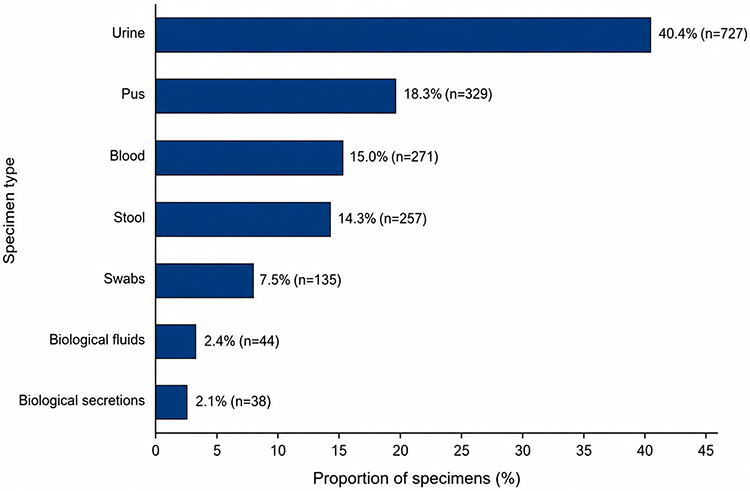 |
Figure 1 Distribution of clinical specimens analyzed at Bukavu Provincial General Hospital in 2024: Proportional distribution of the 1,801 unique clinical specimens included in the study according to specimen type. |
Bacterial Ecology
The overall distribution of bacterial groups is shown in Figure 2.
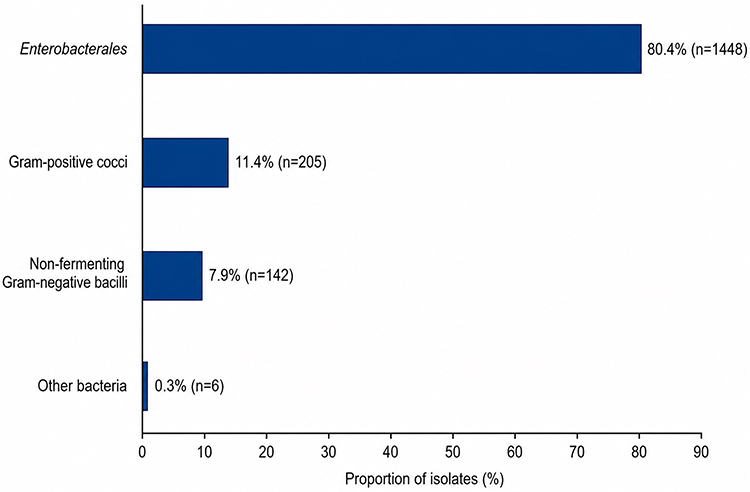 |
Figure 2 Distribution of bacterial groups isolated at Bukavu Provincial General Hospital in 2024: Proportional distribution of the 1,801 unique bacterial isolates included in the study according to major bacterial groups. |
Enterobacterales predominated, accounting for 80.4% (n=1,448) of all isolates. Gram-positive cocci accounted for 11.4% (n=205), while non-fermenting Gram-negative bacilli accounted for 7.9% (n=142). Other bacteria were rare, accounting for only 0.3% (n=6) of isolates.
Distribution of Bacterial Groups According to Sample Type
The distribution of bacterial groups according to specimen type is presented in Table 1. Enterobacterales were mainly isolated from urine (43.6%), followed by stool (17.5%), pus (15.1%) and blood (13.7%), reflecting their major role in urinary and digestive infections.
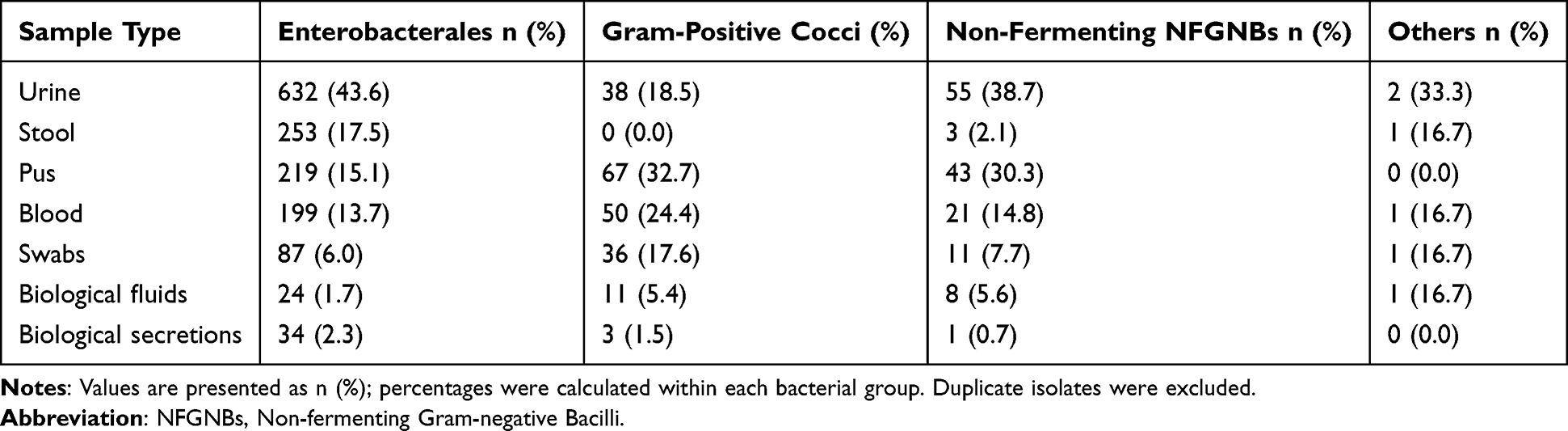 |
Table 1 Distribution of Bacterial Groups by Sample Type |
Gram-positive cocci were mainly found in pus (32.7%) and blood (24.4%), highlighting their involvement in skin and soft tissue infections as well as in bloodstream infections. A lower proportion was observed in urine (18.5%) and swabs (17.6%).
Non-fermenting Gram-negative bacilli were mainly isolated from urine (38.7%) and pus (30.3%), with lower proportions in blood (14.8%) and swabs (7.7%), suggesting their involvement in urinary tract and nosocomial infections.
Distribution of Bacterial Species
The distribution of the most frequently isolated bacterial species is shown in Figure 3. Escherichia coli was the predominant pathogen, accounting for 37.2% (n=670) of all isolates, followed by Klebsiella pneumoniae (13.6%, n=245).
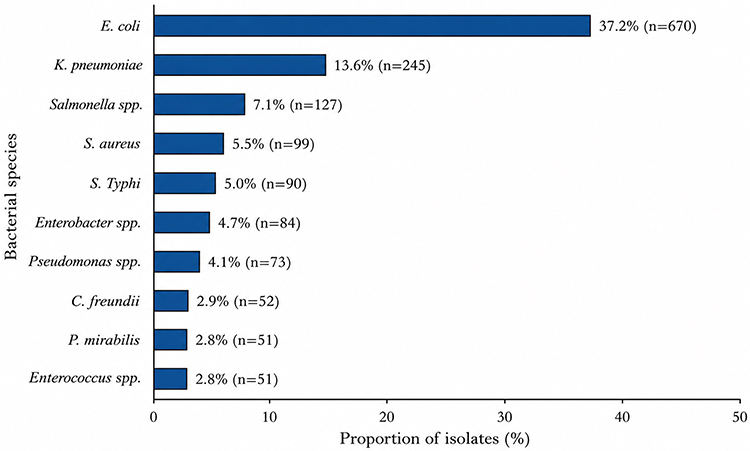 |
Figure 3 Distribution of the ten most frequently isolated bacterial species at Bukavu Provincial General Referral Hospital in 2024 (n = 1801). |
Other commonly identified species included Salmonella spp. (7.1%, n=127), Staphylococcus aureus (5.5%, n=99), and Salmonella typhi (5.0%, n=90).
Less common but clinically relevant pathogens included Enterobacter spp. (4.7%, n=84), Pseudomonas spp. (4.1%, n=73), Citrobacter freundii (2.9%, n=52), Proteus mirabilis (2.8%, n=51), and Enterococcus spp. (2.8%, n=51).
Detailed distributions of bacterial species according to specimen type are provided in the Appendix (Appendix Table S1).
Antibiotic Resistance Patterns
Overall Resistance
The overall patterns of antibiotic resistance are presented in Table 2. Only antibiotics tested on at least 100 isolates were included to ensure robust and interpretable estimates.
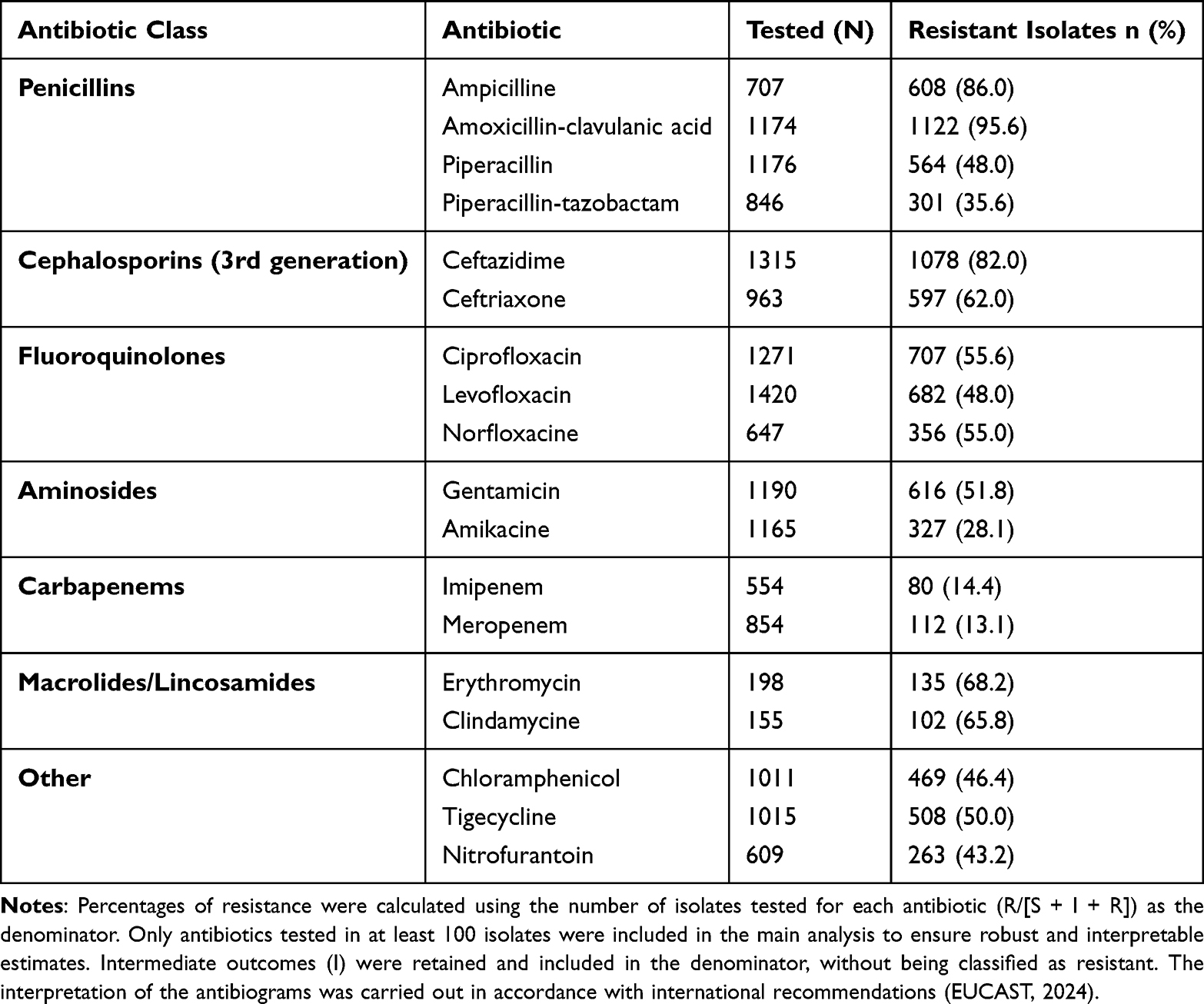 |
Table 2 Overall Antibiotic Resistance Patterns (Antibiotics Tested in ≥100 Isolates) |
High rates of resistance were observed for commonly used antibiotics, including amoxicillin-clavulanic acid (95.6%) and ampicillin (86.0%). Third-generation cephalosporins, such as ceftazidime (82.0%) and ceftriaxone (62.0%), also had high levels of resistance. Fluoroquinolones, including ciprofloxacin (55.6%) and levofloxacin (48.0%), showed moderate to high rates of resistance.
Aminoglycosides showed variable activity, with lower resistance rate for amikacin (28.1%) compared with gentamicin (51.8%). Carbapenems remained the most active antibiotics, with low resistance rates for imipenem (14.4%) and meropenem (13.1%).
Resistance by Bacterial Groups
After stratification by Gram type (Figures 4 and 5), Gram-negative bacteria had high levels of resistance to beta-lactams, including ampicillin, amoxicillin-clavulanic acid, and ceftazidime. Moderate to high resistance was also observed for fluoroquinolones and gentamicin, while carbapenems retained better activity.
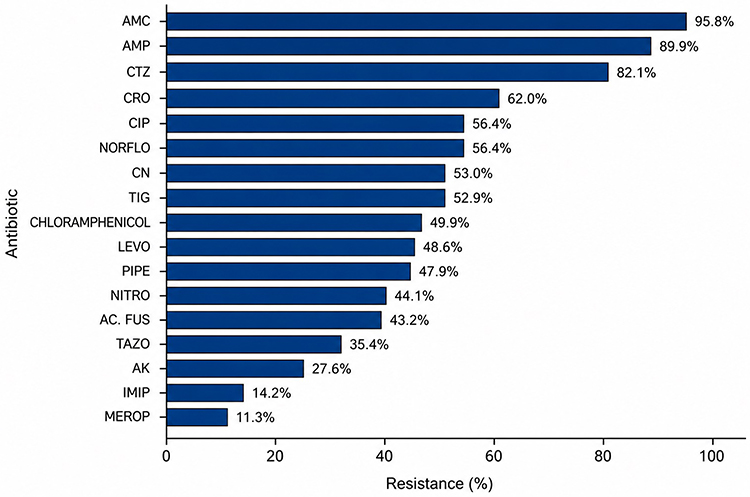 |
Figure 4 Antimicrobials resistance profile of Gram-negative bacteria isolates: Overall resistance rates of Gram-negative bacterial isolates to the antimicrobial agents tested, based on routine antimicrobial susceptibility testing performed at Bukavu Provincial General Referral Hospital in 2024. Abbreviations: AMC, amoxicillin-clavulanic acid; AMP, ampicillin; CTZ, ceftazidime; CRO, ceftriaxone; CIP, ciprofloxacin; NORFLO, norfloxacin; CN, gentamicin; TIG, tigecycline; LEVO, levofloxacin; PIPE, piperacillin; NITRO, nitrofurantoin; TAZO, piperacillin-tazobactam; AK, amikacin; IMIP, imipenem; MEROP, meropenem. |
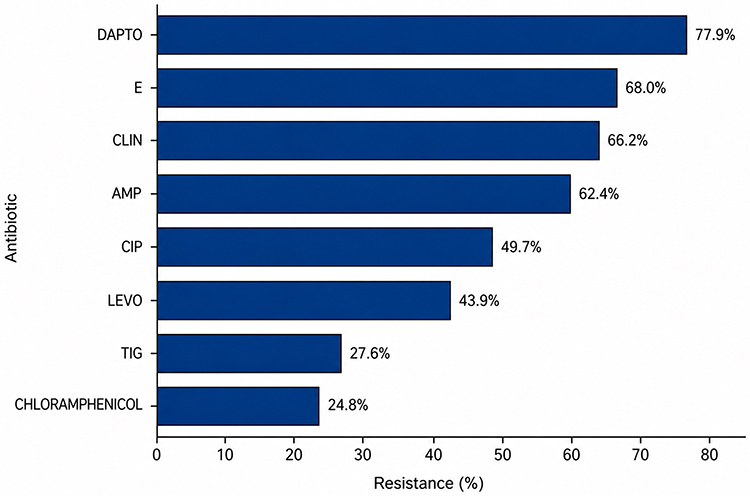 |
Figure 5 Antimicrobials resistance profile of Gram-positive bacteria isolates: Overall resistance rates of Gram-positive bacterial isolates to the antimicrobial agents tested, based on routine antimicrobial susceptibility testing performed at Bukavu Provincial General Referral Hospital in 2024. Abbreviations: AMP, ampicillin; CIP, Ciprofloxacin; CLIN, clindamycin; DAPTO, Daptomycin; E, erythromycin; LEVO, Levofloxacin; TIG, tigecycline. |
Among Gram-positive bacteria, the highest resistance rates were observed for erythromycin and clindamycin. Interpretation should nevertheless remain cautious because antibiotic panels differed across isolates.
Multidrug Resistance and Specific Phenotypes
The prevalence of specific antibiotic resistance phenotypes is presented in Table 3. Of the Enterobacterales tested for at least one third-generation cephalosporin, 80.0% (986/1233) had a phenotype consistent with extended-spectrum beta-lactamase (ESBL) production.
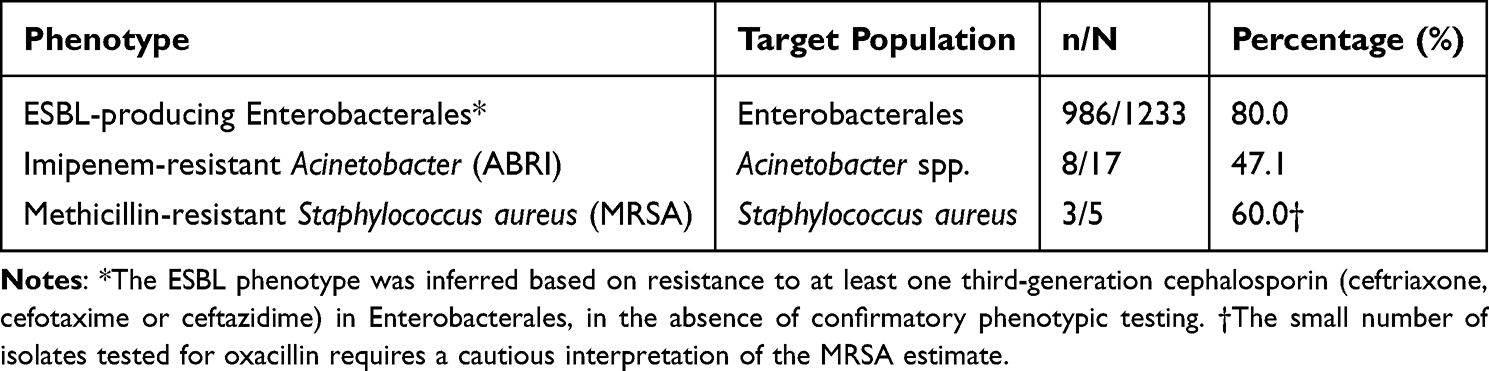 |
Table 3 Prevalence of Major Resistance Phenotypes Among Isolates Tested |
In addition, 47.1% (8/17) of Acinetobacter isolates tested for imipenem were resistant, corresponding to the imipenem-resistant Acinetobacter (ABRI) phenotype. For Staphylococcus aureus, 60.0% (3/5) of isolates tested with oxacillin had a profile consistent with methicillin-resistant Staphylococcus aureus (MRSA).
Factors associated with multidrug resistance are presented in Table 4. After multivariable adjustment, male sex was weakly associated with a higher likelihood of MDR (aOR=1.30; 95% CI: 1.00–1.70; p=0.048).
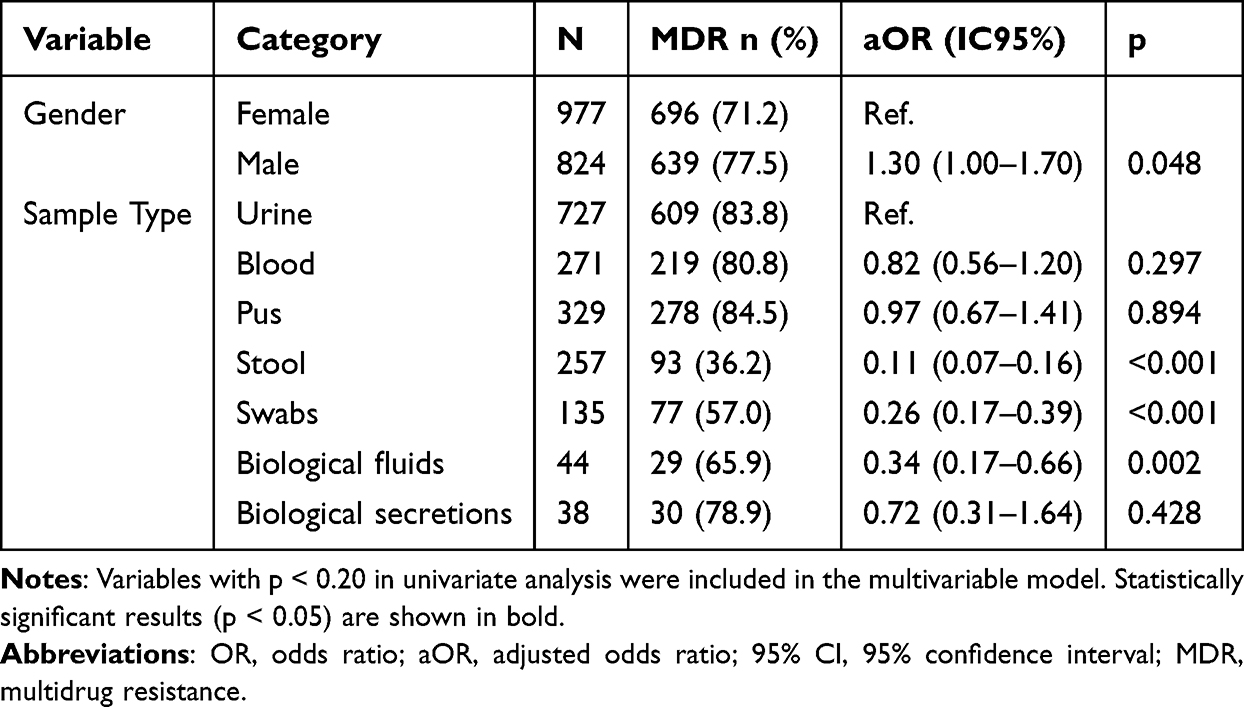 |
Table 4 Factors Associated with Multidrug Resistance |
Compared with urine isolates, isolates recovered from stool, swabs, and biological fluids showed significantly lower odds of MDR. No clear independent association was observed for age, department, or bacterial group after adjustment.
Discussion
This study demonstrated a marked predominance of Enterobacterales, which accounted for 80.4% of all isolates, with Escherichia coli representing the leading bacterial species. In Cameroon, Bayaba et al reported a proportion of E. coli 44.8% among multidrug-resistant urinary isolates, close to that observed in our study.18 Similarly, studies conducted in Nigeria and Tanzania report a predominance of Enterobacterales in hospital clinical samples, generally between 65% and 80%.19,20
The resistance profiles observed in our study reflect a high antibiotic pressure. Ampicillin resistance was 86.0%, while amoxicillin-clavulanic acid resistance was 95.6%. These proportions are higher than those reported in several recent African studies. For example, Bayaba et al reported resistance of 78% and 72%, respectively, for these two antibiotics in E. coli and K. pneumoniae.18 This observation likely reflects a more extensive and often uncontrolled use of penicillins in our context, promoting significant bacterial selection pressure.
High resistance rates to third-generation cephalosporins were observed, particularly for ceftazidime and ceftriaxone. These findings exceed those reported in several recent African studies, where resistance rates generally range from 40% to 70%.21 This pattern likely reflects the widespread circulation of ESBL-compatible phenotype in our setting.
Fluoroquinolones also had high levels of resistance, with 55.6% for ciprofloxacin and 48.0% for levofloxacin. These proportions are comparable to those reported in several African hospital studies. In Tanzania, Moirongo et al reported resistance to ciprofloxacin between 45% and 60% in ESBL-compatible isolates.20 Irenge et al had previously reported high levels of resistance among urinary isolates in South Kivu, particularly against fluoroquinolones and third-generation cephalosporins.12
A major finding of this study was the high frequency of ESBL-compatible phenotypes among Enterobacterales. As reported by Lunguya et al in the DRC, the emergence of ESBLs is accompanied by a decrease in susceptibility to fluoroquinolones among several clinical Enterobacterales.13 Of the Enterobacterales tested for third-generation cephalosporins, 80.0% had an ESBL-compatible profile. Our results are in line with those reported by Lupande-Mwenebitu et al in the DRC, who already described a high resistance of Enterobacterales to third-generation cephalosporins, mainly linked to the blaCTX-M and blaSHV genes.10
This proportion is significantly higher than those reported in several recent African studies, where ESBL frequencies typically range from 40% to 65%.18,21 In Nigeria, Yaqub et al reported ESBL frequencies close to 58% among hospital multidrug-resistant Enterobacterales.22 This difference suggests a particularly important circulation of ESBL-mediated resistance mechanisms in our context.
In addition, a high proportion of isolates had a multidrug resistance profile. More than 70% of isolates met the definition of multidrug resistance. These results are in line with the trends observed in several recent African studies describing a continuous increase in multidrug-resistant bacteria in hospital structures. In a meta-analysis published in eClinicalMedicine, Ruef et al already highlighted the rapid progression of third-generation cephalosporin-resistant Enterobacterales and multidrug-resistant bacteria in sub-Saharan Africa.23
Conversely, carbapenems retained comparatively lower resistance rates than most other antibiotic classes. These results remain relatively comparable to those reported in several African studies, where carbapenems are still among the most active molecules against multidrug-resistant Enterobacterales.18 However, the detection of carbapenem-resistant Acinetobacter spp. in our study remains concerning and may indicate the progressive emergence of carbapenem resistance mechanisms in our setting. Studies in sub-Saharan Africa have already reported the growing emergence of Acinetobacter baumannii resistant to carbapenems, sometimes associated with the production of OXA-23 or NDM-1 carbapenemases, particularly in hospital settings and intensive care units.24–26 This finding further limits the already restricted therapeutic options available for severe infections caused by multidrug-resistant bacteria.
Our multivariable analysis identified male sex as an independent, though modest, risk factor for MDR bacterial isolation (aOR = 1.30, p = 0.048). In the context of eastern DRC, this correlation could be linked to distinct healthcare-seeking behaviors, where male patients often delay professional medical consultations and rely more heavily on informal pharmacies or unprescribed self-medication.11,27 Furthermore, gender-specific occupational exposures in South Kivu, such as artisanal mining, agriculture, and manual labor, are heavily male-dominated and characterized by poor sanitary infrastructure and limited direct access to structured healthcare facilities, thereby increasing the likelihood of acquiring and circulating resistant strains prior to hospital admission.28
Strengths and Limitations
This study boasts several merits, including the extensive analysis of bacterial isolates, the diversity of sample types, and the accessibility of recent data from a major tertiary hospital in eastern DRC. This region is noteworthy for its paucity of antimicrobial resistance surveillance data. The use of standardised definitions of multidrug resistance, in conjunction with a meticulous examination of resistance profiles, serves to enhance the comparability of the study’s findings with those reported in the international literature.
However, it is imperative to acknowledge the inherent limitations of this approach. The retrospective nature of the study imposes limitations on the accessibility of pertinent clinical data, such as a history of antibiotic exposure, comorbidities and patient outcomes. Furthermore, due to routine laboratory practices and fluctuating disk availability during the study period, antibiotic panels varied across isolates, meaning specific phenotypes, including MRSA and ABRI, were derived from a restricted number of isolates. Another limitation is the absence of data for February 2024, representing approximately 8% of annual activity. Based on previous years, we consider the impact on annual MDR rates to be minor.” We confirm this correction does not change the results or conclusions. We have attached the revised manuscript with tracked changes. Please let us know if this is possible. We apologize for this late notice.
In addition, ESBL phenotypes were inferred from resistance profiles to third-generation cephalosporins because confirmatory phenotypic or molecular testing was not systematically available. Consequently, the reported prevalence should be interpreted with caution, as some isolates may have harbored alternative resistance mechanisms, including plasmid-mediated AmpC β-lactamases or carbapenemases.
Conclusion
This study highlights a high prevalence of multi-drug resistance bacteria in a tertiary hospital in the eastern Democratic Republic of Congo, characterised by a predominance of Enterobacterales, high levels of resistance to third-generation cephalosporins and fluoroquinolones, as well as a high frequency of ESBL-compatible phenotypes. Despite the relatively conserved activity of carbapenems and amikacin, these results reflect a concerning level of antibiotic pressure and underscore an urgent need to strengthen microbiological surveillance, antibiotic prescriptions, infection prevention and control measures in resource limited settings.
Abbreviations
DRC, Democratic Republic of Congo; UTIs, Urinary tract infections; HPGRB, Hôpital Provincial Général de Référence de Bukavu; CLED, Cysteine Lactose Electrolyte Deficient; CLSI, Clinical and Laboratory Standards Institute; EUCAST, European Committee on Antimicrobial Susceptibility Testing; MDR, Multidrug-resistant; CFU, Colony Forming Unit; ECDC, European Centre for Disease Prevention and Control; CDC, Centers for Disease Control and Prevention; MDR, Multidrug-resistant; ESBL, Extended-spectrum β-lactamase.
Data Sharing Statement
The finding of this study is generated from the data collected and analyzed based on the stated methods and materials. All generated data are included in the manuscript. The original dataset supporting this finding is available upon request from the corresponding author (Kabagale Ansima Corneille).
Ethics Approval
This work is part of an ongoing research study on antibacterial resistance in hospital settings in Bukavu. The study received approval from the Ethics Committee of the Université Catholique de Bukavu (P.O. Box 285, Bukavu, Democratic Republic of the Congo), under reference number n°UCB/CIE/NC/014/2016. The principles of confidentiality and discretion were scrupulously observed, and all data were analysed in strict accordance with the anonymity of the participants. Our research was not a clinical trial; however, it was conducted in accordance with the principles of the Declaration of Helsinki. This compliance is demonstrated by the fact that the study protocol received formal approval from the ethics committee of Université Catholique de Bukavu. This ensured that the research met rigorous ethical standards concerning participant welfare and data integrity.
Consent to Participate
The data for this retrospective study were sourced from hospital patient records and laboratory registries. The analysis was conducted with a strict guarantee of anonymity, and the results were used exclusively for scientific and care improvement purposes. Due to the retrospective nature of the study, informed consent was waived by the ethics committee.
Acknowledgments
The authors used ChatGPT (version GPT-5, OpenAI, San Francisco, USA) to improve the English language and formatting of this manuscript. The content and scientific interpretations remain the sole responsibility of the authors.
Funding
This research project was not funded by any organization.
Disclosure
The authors declare that they have no competing interests in this work.
References
1. World Health Organization. Global Antibiotic Resistance Surveillance Report 2025. Geneva: World Health Organization; 2025.
2. World Health Organisation. WHO Bacterial Priority Pathogens List. Geneva: World Health Organisation; 2024.
3. Ho CS, Wong CTH, Aung TT, et al. Antimicrobial resistance: a concise update. Lancet Microbe. 2025;6(1):100947. doi:10.1016/j.lanmic.2024.07.010
4. Murray CJ, Ikuta KS, Sharara F, et al. Global burden of bacterial antimicrobial resistance in 2019: a systematic analysis. Lancet. 2022;399(10325):629–12. doi:10.1016/S0140-6736(21)02724-0
5. O’neill J. The review on tackling drug-resistant infections globally: final report and recommendations. Rev Antimicrob Resist. 2016;2016:1.
6. Omulo S, Thumbi SM, Njenga MK, Call DR. A review of 40 years of enteric antimicrobial resistance research in Eastern Africa: what can be done better? Antimicrob Resist Infect Control. 2015;4(1):1. doi:10.1186/s13756-014-0041-4
7. Tadesse BT, Ashley EA, Ongarello S, et al. Antimicrobial resistance in Africa: a systematic review. BMC Infect Dis. 2017;17(1):616. doi:10.1186/s12879-017-2713-1
8. Totaro V, Guido G, Cotugno S, et al. Antimicrobial Resistance in Sub-Saharan Africa: a Comprehensive Landscape Review. Am J Trop Med Hyg. 2025;113(2):253–263. doi:10.4269/ajtmh.25-0035
9. Yehouenou C, Nagalo A, Kabore OD, Ouedraogo A. Perspectives: apport du diagnostic dans la lutte contre la résistance aux antimicrobiens en Afrique de l’Ouest. Médecine Mal Infect Form. 2023;2:19–25. doi:10.1016/j.mmifmc.2023.01.001
10. Lupande-Mwenebitu D, Baron SA, Nabti LZ, et al. Current status of resistance to antibiotics in the Democratic Republic of the Congo: a review. J Glob Antimicrob Resist. 2020;22:818–825. doi:10.1016/j.jgar.2020.07.008
11. Bunduki GK, Katembo JLM, Kamwira IS. Antimicrobial resistance in a war-torn country: lessons learned in the Eastern Democratic Republic of the Congo. One Heal. 2020;9:120. doi:10.1016/j.onehlt.2019.100120
12. Irenge LM, Kabego L, Kinunu FB, et al. Antimicrobial resistance of bacteria isolated from patients with bloodstream infections at a tertiary care hospital in the Democratic Republic of the Congo. S Afr Med J. 2015;105(9):752–755. doi:10.7196/SAMJnew.7937
13. Lunguya O, Lejon V, Phoba M-F, et al. Antimicrobial resistance in invasive non-typhoid Salmonella from the Democratic Republic of the Congo: emergence of decreased fluoroquinolone susceptibility and extended-spectrum beta lactamases. PLoS Negl Trop Dis. 2013;7(3):e2103. doi:10.1371/journal.pntd.0002103
14. Phaku P, Lebughe M, Strauß L, et al. Unveiling the molecular basis of antimicrobial resistance in Staphylococcus aureus from the Democratic Republic of the Congo using whole genome sequencing. Clin Microbiol Infect. 2016;22(7):
15. Cito B, Corneille KA, Gates IM, et al. Bacteriological Profile and Antibiotic Resistance Patterns of Uropathogenic Bacteria at HPGRB. Infect Drug Resist. 2026;19:603097. doi:10.2147/IDR.S603097
16. (EUCAST) EC on AST. Breakpoint Tables for Interpretation of MICs and Zone Diameters. Version 14. Växjö, Sweden: EUCAST; 2024.
17. Magiorakos A-P, Srinivasan A, Carey RB, et al. Multidrug-resistant, extensively drug-resistant and pandrug-resistant bacteria: an international expert proposal for interim standard definitions for acquired resistance. Clin Microbiol Infect. 2012;18(3):268–281. doi:10.1111/j.1469-0691.2011.03570.x
18. Bayaba S, Founou RC, Tchouangueu FT, et al. High prevalence of multidrug resistant and extended-spectrum β-lactamase-producing Escherichia coli and Klebsiella pneumoniae isolated from urinary tract infections in the West region, Cameroon. BMC Infect Dis. 2025;25(1):115. doi:10.1186/s12879-025-10483-8
19. Yaqub Y, Ejembi J, Aminu A, et al. Antibiotic resistance pattern of multidrug-resistant Enterobacterales from a rectal surveillance study in northern Nigeria. Int Health. 2025;17(5):769–777. doi:10.1093/inthealth/ihaf026
20. Moirongo RM, Lorenz E, Ntinginya NE, et al. Regional Variation of Extended-Spectrum Beta-Lactamase (ESBL)-Producing Enterobacterales, Fluoroquinolone-Resistant Salmonella enterica and Methicillin-Resistant Staphylococcus aureus Among Febrile Patients in Sub-Saharan Africa. Front Microbiol. 2020;11. doi:10.3389/fmicb.2020.567235
21. Garé M, Chesnais CB, Campillo JT, et al. Antimicrobial resistance of Enterobacterales in Central Africa: a systematic review and meta-analysis. Commun Med. 2025;5(1):453. doi:10.1038/s43856-025-01148-3
22. Ruef M, Emonet S, Merglen A, et al. Carriage of third-generation cephalosporin-resistant and carbapenem-resistant Enterobacterales among children in sub-Saharan Africa: a systematic review and meta-analysis. eClinlMed. 2024;70:102508. doi:10.1016/j.eclinm.2024.102508
23. Masalane NS, Bester LA, Ismail A, Essack SY, Mbanga J. Drug resistant Klebsiella pneumoniae from patients and hospital effluent: a correlation? BMC Microbiol. 2025;25(1):284. doi:10.1186/s12866-025-03987-5
24. Arowolo MT, Orababa OQ, Olaitan MO, et al. Prevalence of carbapenem resistance in Acinetobacter baumannii and Pseudomonas aeruginosa in sub-Saharan Africa: a systematic review and meta-analysis. PLoS One. 2023;18(11):e0287762. doi:10.1371/journal.pone.0287762
25. Agoba EE, Govinden U, Peer AKC, Osei Sekyere J, Essack SY. IS Aba1 Regulated OXA-23 Carbapenem Resistance in Acinetobacter baumannii Strains in Durban, South Africa. Microb Drug Resist. 2018;24(9):1289–1295. doi:10.1089/mdr.2017.0172
26. Kateete DP, Nakanjako R, Namugenyi J, Erume J, Joloba ML, Najjuka CF. Carbapenem resistant Pseudomonas aeruginosa and Acinetobacter baumannii at Mulago Hospital in Kampala, Uganda (2007–2009). Springerplus. 2016;5(1):1308. doi:10.1186/s40064-016-2986-7
27. Horumpende PG, Said SH, Mazuguni FS, et al. Prevalence,determinants and knowledge of antibacterial self-medication: a crosssectional study in North-eastern Tanzania. PLoS One. 2018;13(10):e0206623. doi:10.1371/journal.pone.0206623
28. Irenge CA, Bushenyula PK, Irenge EB, Coppieters Y. Participative epidemiology and prevention pathway of health risks associated with artisanal mines in Luhihi area, DR Congo. BMC Public Health. 2023;23(1):121. doi:10.1186/s12889-023-15020-3
 © 2026 The Author(s). This work is published and licensed by Dove Medical Press Limited. The
full terms of this license are available at https://www.dovepress.com/terms
and incorporate the Creative Commons Attribution
- Non Commercial (unported, 4.0) License.
By accessing the work you hereby accept the Terms. Non-commercial uses of the work are permitted
without any further permission from Dove Medical Press Limited, provided the work is properly
attributed. For permission for commercial use of this work, please see paragraphs 4.2 and 5 of our Terms.
© 2026 The Author(s). This work is published and licensed by Dove Medical Press Limited. The
full terms of this license are available at https://www.dovepress.com/terms
and incorporate the Creative Commons Attribution
- Non Commercial (unported, 4.0) License.
By accessing the work you hereby accept the Terms. Non-commercial uses of the work are permitted
without any further permission from Dove Medical Press Limited, provided the work is properly
attributed. For permission for commercial use of this work, please see paragraphs 4.2 and 5 of our Terms.
Recommended articles

Clinicians’ Intention to Submit Microbiological Pathogenic Test Before Antibiotics Use and Its Influencing Factors: New Evidence from the Perspective of Hospital Management
Wang Q, Zhang X, Zheng F, Wang L, Yu T
Infection and Drug Resistance 2022, 15:3013-3023
Published Date: 11 June 2022
Investigating Knowledge of Antibiotics, Antimicrobial Resistance and Antimicrobial Stewardship Concepts Among Final Year Undergraduate Pharmacy Students in Northern Nigeria
Abdu-Aguye SN, Barde KG, Yusuf H, Lawal BK, Shehu A, Mohammed E
Integrated Pharmacy Research and Practice 2022, 11:187-195
Published Date: 23 December 2022
An Arsenal of Multiple Antimicrobial Resistance, Toxins, and Virulence Factors in Gram-Negative Bacterial Isolates from Food – A Formidable Combination!
Alemu A, Girma S, Mariam SH
Infection and Drug Resistance 2023, 16:1029-1037
Published Date: 19 February 2023
Reflections on Drivers for the Emergence and Spread of Antimicrobial Resistant Bacteria Detected from Chickens reared on Commercial Layer Farms in Mukono District, Uganda
Kakooza S, Tayebwa DS, Njalira KR, Kayaga EB, Asiimwe I, Komugisha M, Wanyana M, Kisekka R, Kyabarongo A, Kiryabwire DH, Nabatta E, Eneku W
Veterinary Medicine: Research and Reports 2023, 14:209-219
Published Date: 6 December 2023
Healthcare Professionals’ Knowledge and Attitudes Toward Antimicrobial Stewardship Programs in Aseer, Saudi Arabia: A Cross-Sectional Study
Bahamdan AK, Alavudeen SS, Bahamdan GK, Bahamdan KA, Asiri SMA, Alshahrani NAM, Abdulziz Alqahtani S, Ibrahim ARN
Risk Management and Healthcare Policy 2025, 18:855-867
Published Date: 12 March 2025