
Back to Journals » Patient Preference and Adherence » Volume 20
Fear of Complications Among Patients with Type 2 Diabetes: A Latent Profile Analysis
Authors Liang Y, Yang Y, Zhang X, Chen L, Su D
Received 19 November 2025
Accepted for publication 14 February 2026
Published 19 February 2026 Volume 2026:20 582721
DOI https://doi.org/10.2147/PPA.S582721
Checked for plagiarism Yes
Review by Single anonymous peer review
Peer reviewer comments 2
Editor who approved publication: Dr Johnny Chen
Yuqing Liang,1 Ya’ning Yang,1 Xingruo Zhang,1 Lili Chen,1 Dan Su1,2
1School of Nursing, Anhui Medical University, Hefei, Anhui Province, 230032, People’s Republic of China; 2Taikang Health Care Industry Research Institute, Anhui Medical University, Hefei, Anhui Province, 230032, People’s Republic of China
Correspondence: Dan Su, Anhui Medical University New Medical Sciences Center, Hefei City, Anhui Province, People’s Republic of China, Tel +86 13956943461, Email [email protected]
Aim: This study aimed to identify latent profiles of fear of complications among hospitalized patients with type 2 diabetes and to examine factors associated with these profiles.
Methods: A convenience sampling method was employed to recruit patients with type 2 diabetes from a single tertiary hospital endocrine department for a cross-sectional study. Data were collected using a general information questionnaire, Chinese version of the Fear of Complications Questionnaire, Diabetes Distress Scale, and EuroQol Five-Dimension Three-Level Scale. Latent profile analysis was performed to classify fear of complications, and group differences were examined using univariate analyses. Multinomial logistic regression was performed to explore potential associations between related factors and group classification.
Results: A total of 324 valid questionnaires were collected. Individuals with fear of complications were categorized into three potential groups: low fear-stable (30%), moderate fear-complication-focused (47%), and high fear-high-risk vulnerable (23%). Multinomial logistic regression showed that, compared with the low fear-stable group, the presence of complications (OR = 2.591, P < 0.05), insulin therapy (OR = 4.490, P < 0.01), higher diabetes distress (OR = 2.822, P < 0.01), and poorer quality of life (OR = 0.010, P < 0.05) were independently associated with membership in the high fear-high-risk vulnerable group.
Conclusion: Fear of complications among patients with diabetes exhibits significant categorical characteristics. These profiles differ in diabetes distress and quality of life, highlighting the potential value of stratified psychosocial interventions and complication-focused educational programs. Routine screening for fear of complications using validated brief tools may help healthcare professionals identify high risk patients early and provide targeted care support, particularly for the high fear-high-risk vulnerable group. Future research should prioritize this population and develop scientifically effective and targeted intervention programs.
Keywords: fear of complications, quality of life, latent profile analysis, diabetes distress
Introduction
Diabetes mellitus is a chronic metabolic disease that can lead to the development of various long-term complications, such as retinopathy, nephropathy, neuropathy, and cardiovascular disease.1 The potential occurrence and progression of these complications often trigger persistent fear and anxiety among patients. Fear of complications (FoC) refers to a negative emotional state in which diabetic patients experience excessive worry about the onset, progression, and consequences of chronic complications.2 It is important to clarify that the fear of complications is conceptually different from the fear of hypoglycemia and the fear of disease progression. Fear of hypoglycemia involves anxiety about acute low blood glucose episodes and their immediate consequences,3 while fear of disease progression reflects broader concerns that the illness will worsen over time.4 In contrast, fear of complications specifically concerns worry about developing chronic diabetes-related complications, such as nephropathy, retinopathy, or diabetic foot disease. A study involving 104 patients with type 2 diabetes found that most participants overestimated their risk of developing complications, and approximately one-third reported feeling extremely fearful of them.5 However, severe fear of complications not only hinders glycemic control but also affects patients’ quality of life, social functioning, and subjective well-being.6 It has also been shown to influence patients’ acceptance of insulin therapy and adherence to treatment.7 These findings underscore the clinical importance of recognising and addressing fear of complications in diabetes care. Furthermore, research has shown that fear of chronic complications is a common source of emotional distress and is prevalent among individuals with diabetes.5
Diabetes distress refers to the negative emotions and psychological burden associated with the challenges and demands of living with diabetes, including feelings of exhaustion, being overwhelmed, anxiety, frustration, and depression.8 Diabetes distress is particularly related to the daily burden of diabetes and may involve a range of disease-related worries and fears, such as concerns about future complications, feelings of helplessness, and fear of hypoglycemia.9 These findings highlight that fear and worry about long-term complications are common and persistent sources of emotional distress among individuals with diabetes. Although fear of complications has important clinical implications, existing studies often treat patients experiencing such fear as a homogeneous group and typically use a total score to represent their overall level of fear.5,10 This variable-centered approach overlooks the substantial heterogeneity among patients. In fact, individuals differ significantly in how they perceive, experience, and cope with fear related to complications. Some patients experience severe anxiety that affects their daily lives11,12 and self-management of the disease, while others maintain a moderate and adaptive level of fear that promotes treatment adherence and motivates active self-management. In summary, patients’ fear-of-complication profiles are closely associated with their psychological preferences, treatment adherence, and self-management behaviors. Recognizing heterogeneity in these fear profiles may support the development of individualized interventions tailored to patients’ psychological needs and preferences.
Latent profile analysis (LPA) is a model-based, data-driven clustering approach that identifies potential subgroups within a population based on individuals’ response patterns across multiple continuous observed variables.13 Compared with traditional classification methods that rely on a single dimension or arbitrarily defined cutoffs, LPA offers a more objective way to uncover naturally existing subtypes within a population. By grouping individuals with similar psychological and behavioral characteristics into the same latent class, LPA helps elucidate the heterogeneity underlying emotional experiences and identify clinically meaningful patient subtypes. In recent years, LPA has been increasingly applied to explore disease management and mental health among patients with chronic illnesses. For example, one study categorized the self-management behaviors of women with gestational diabetes mellitus into three classes: high, medium, and low. The results showed that age was a predictor of the moderate management group and was significantly associated with decreased self-management behaviors. Higher levels of body image, quality of life, and sleep disturbance were significantly associated with both moderate and low management groups. Moreover, normal blood glucose levels during pregnancy were more likely to occur in the low management group.14 Another study identified three distinct depressive symptom profiles among older adults with hypertension, emphasizing the influence of anxiety, age, and self-rated health on depression severity.15 These findings provide an important basis for designing stratified intervention strategies. However, no studies to date have applied LPA to explore fear of complications among individuals with diabetes.
Therefore, this study aimed to: (1) identify the latent classes of fear of complications among patients with type 2 diabetes; and (2) examine the effects of demographic characteristics on class membership, as well as compare differences in quality of life and diabetes distress across the identified classes. By identifying latent profiles and associated factors of fear of complications, this study seeks to provide evidence to inform interdisciplinary diabetes care. These findings may support the development of personalized intervention strategies to improve treatment adherence, enhance quality of life, and alleviate fear-related psychological distress.
Materials and Methods
Subjects
Inpatients were recruited from the Department of Endocrinology at the First Affiliated Hospital of Anhui Medical University between October 2024 and February 2025. Inclusion criteria were as follows: meeting the diagnostic criteria for type 2 diabetes mellitus as defined in the “Chinese Guidelines for the Prevention and Treatment of Type 2 Diabetes (2020 Edition)”; aged ≥18 years; fully conscious and able to provide informed consent; capable of understanding the questionnaire and willing to participate voluntarily. Exclusion criteria included: having severe organ comorbidities; being diagnosed with mental illness or cognitive impairment. From the perspective of model classification accuracy, at least 50 participants per class are required to ensure appropriate model selection.16 Assuming a research hypothesis of 3~5 latent classes, the minimum sample size for latent profile analysis was determined to be 250.
Research Tools
General Information Questionnaire
A self-designed questionnaire was used to collect participants’ demographic and clinical information, including age, gender, place of residence, educational level, labor intensity, marital status, medical economic burden (related to diabetes), duration of diabetes, family history of diabetes, diabetes-related admissions, treatment method, and presence of complications.
Chinese Version of the Fear of Complications Questionnaire (FCQ)
Yu Dai translated the Fear of Complications Questionnaire into Chinese version.17 The questionnaire consists of four dimensions: general fear (5 items), fear of cardiovascular complications (4 items), fear of renal complications (3 items), and fear of ocular and foot complications (3 items), with a total of 15 items. Each item is rated on a 4-point Likert scale ranging from 0 (“never”) to 3 (“always” or “very much”), yielding a total score between 0 and 45. Higher scores indicate greater fear of complications. The Cronbach’s α of the scale was 0.954, and the test–retest reliability was 0.936, indicating excellent internal consistency. The scale-level content validity index (S-CVI/Ave) was 0.955, demonstrating good content validity. Therefore, the Chinese version of the FCQ can accurately assess the psychological level of fear of complications among patients with diabetes. In the present study, the Cronbach’s α of the scale was 0.952.
Diabetes Distress Scale (DDS)
The Diabetes Distress Scale was developed by Polonsky et al18 and later revised by Fisher et al.19 Yu-Yun Zhang et al translated the revised version into Chinese to assess the psychological distress experienced by patients with diabetes over the past month.20 The scale includes four dimensions: emotional burden (5 items), regimen-related distress (5 items), interpersonal distress (3 items), and physician-related distress (4 items), comprising 17 items in total. Each item is rated on a 6-point Likert scale ranging from 1 (“no problem”) to 6 (“a very serious problem”). Each dimension score is calculated by summing the item scores within that dimension and dividing by the number of items. The overall scale score is obtained by summing all item scores and dividing by the total number of items. Higher scores indicate greater psychological distress. The Cronbach’s α coefficient for the scale was 0.88. In the current study, the Cronbach’s α was 0.905.
Europol Five-Dimension Three-Level Scale (EQ-5D-3L)
The EQ-5D-3L health description system includes five dimensions: mobility, self-care, usual activities, pain/discomfort, and anxiety/depression. Each dimension has three response levels: no problems, some problems, and extreme problems. The combination of these five dimensions defines 243 unique health states. Based on the utility scoring function for the Chinese general population,21 each health state is assigned a utility weight ranging from –0.149 to 1. These weights are converted into a weighted health utility value, which ranges from 0 to 1, with higher values indicating better health status. The health utility value reflects individuals’ preferences for specific health states and serves as a key indicator for quantifying quality of life.22 Larger values directly indicate a higher level of quality of life among patients.
Data Collection Method
Prior to the survey, the researchers thoroughly studied and comprehended the questionnaire content. During the survey, the purpose and content of the study were explained to the patients. After obtaining informed consent, the questionnaires were distributed. Patients completed the questionnaires independently or were assisted through interviews to fill them out. All questionnaires were distributed and collected on-site, and any missing responses were checked. A total of 348 questionnaires were distributed in this study. After excluding 24 invalid questionnaires, 324 valid questionnaires were collected, yielding an effective response rate of 93.10%.
Statistical Methods
Latent Profile Analysis was conducted using Mplus version 8.3. The analysis began with a single-class model and progressively increased the number of classes to determine the optimal model. Model fit was evaluated using the following indices: the Akaike Information Criterion (AIC), Bayesian Information Criterion (BIC), and adjusted Bayesian Information Criterion (aBIC), where lower values indicate better model fit. A significant result (P < 0.05) for the Bootstrapped Likelihood Ratio Test (BLRT) and the Lo-Mendell-Rubin (LMR) test suggests that the k-class model provides a better fit than the (k-1)-class model. The Entropy value was used to assess classification accuracy, with a value exceeding 0.8 indicating more than 90% accuracy in classification. Values closer to 1 represent higher classification precision.16
Data analysis was performed using SPSS 26.0 software. Since variable assessment in this study primarily relied on self-reports from research subjects, potential common method bias was addressed by applying Harman’s single-factor test to evaluate common method bias for scale items,23 while recognizing its methodological limitations. If the variance contribution rate of the first factor was <40%, it indicated no significant common method bias. Count data were expressed as frequencies and percentages, with intergroup comparisons conducted using the χ2-test. Quantitative data were described as ( ) or M (P25, P75) based on normality. Intergroup comparisons employed one-way ANOVA or Kruskal–Wallis H-test according to data distribution. Multinomial logistic regression was conducted to explore factors associated with the different fear-of-complications profiles. P<0.05 was considered statistically significant.
Results
Latent Profile Analysis of Fear of Complications in Patients with Type 2 Diabetes
This study used the four dimensions of fear of complications (general fear, fear of cardiovascular complications, fear of renal complications, and fear of ocular and foot complications) as manifest indicators. To ensure consistent score ranges across dimensions, the mean score of each dimension was used for model fitting. Models with 1 to 5 latent classes were fitted, and their fit indices are presented in Table 1. As the number of classes increased, the AIC, BIC, and aBIC values of the five models gradually decreased. The LMR (P) and BLRT (P) values for the 2-class, 3-class, and 4-class models were all statistically significant (P < 0.05). Compared to the 2-class model, the 3-class model provided a more detailed classification. When compared to the 4-class model, the 3-class model demonstrated clearer profile distinctions and grouping results that aligned better with clinical relevance. Furthermore, the Entropy value for the 3-class model was higher than that for the 2-class and 4-class models, and the average latent class probabilities for most likely class membership were 0.957, 0.938, and 0.965 for the three classes in the 3-class model, respectively. Therefore, the 3-class model was selected as the optimal model. A latent profile plot was generated based on the classification results, as shown in Figure 1. The three classes were named according to their mean dimension scores: (1) C1: low fear - stable profile: This group had the lowest scores across all dimensions, indicating that patients exhibited low levels of concern about disease progression, minimal noticeable fear of complications, and good psychological adaptation. This profile accounted for 30% (n=97) of the sample. (2) C2: moderate fear-complication-focused profile: This group had intermediate mean scores, with relatively higher scores in general fear and fear of ocular/foot complications. This suggests patients experienced a moderate degree of worry about disease progression, were particularly concerned about ocular and foot complications, and had a noticeable fear of complications occurring. This profile accounted for 47% (n=152) of the sample. (3) C3: high fear-high-risk vulnerable profile: This group had the highest mean scores across all dimensions, indicating that patients were highly worried about disease progression and experienced strong fear regarding the occurrence of complications. This profile accounted for 23% (n=75) of the sample.
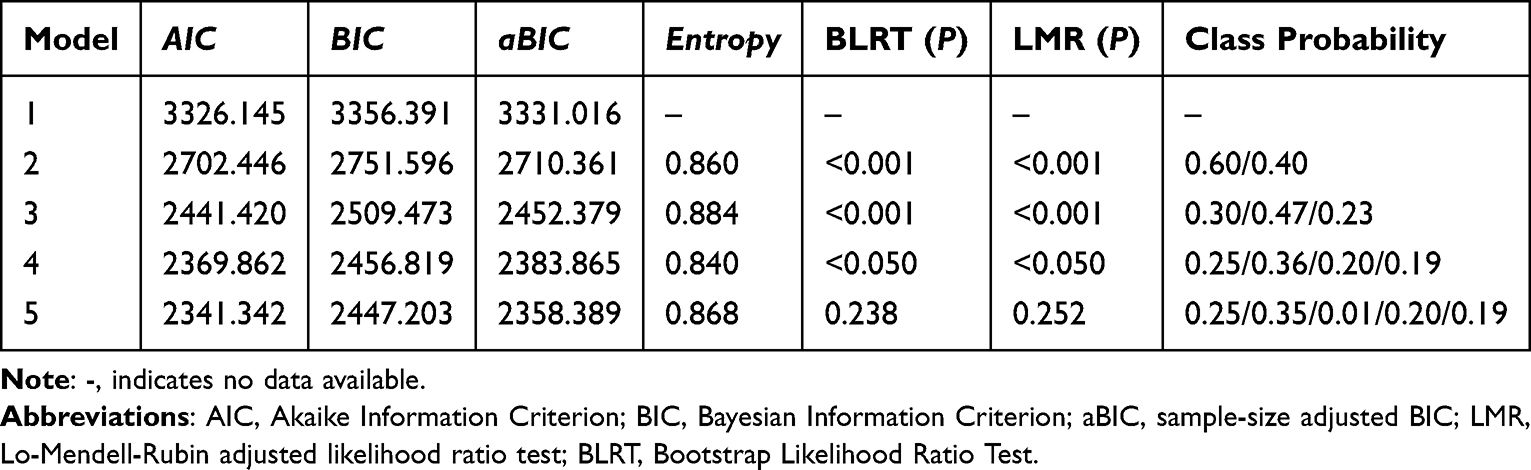 |
Table 1 Results of the Model Fit for the Potential Profile Analysis of Fear of Complications in Patients with Type 2 Diabetes Mellitus (n=324) |
 |
Figure 1 Fear of complications 3 potential profile characteristics. |
Analysis of Factors Influencing the Latent Classes of Fear of Complications Among Patients with Type 2 Diabetes
Univariate Analysis
The latent classes of fear of complications were compared according to patients’ general characteristics, including medical economic burden, diabetes-related admissions, presence of complications, diabetes distress, and EQ-5D-3L health utility scores. Statistically significant differences were found across groups (P < 0.05), as shown in Table 2.
 |
Table 2 Univariate Analysis of Latent Profiles of Fear of Complications in Patients with Type 2 Diabetes Mellitus (n=324) |
Multivariate Analysis
Using the three latent classes of fear of complications identified by latent profile analysis as dependent variables (low fear-stable profile = 1, moderate fear-complication-focused profile= 2, high fear-high-risk vulnerable profile = 3; reference category: low fear-stable profile), variables with statistically significant differences in the univariate analysis were entered as independent variables into a multinomial logistic regression model. Treatment method was also included as an independent variable because it approached statistical significance. Continuous variables were entered using their original values, and categorical variables were coded as follows: Medical economic burden: very heavy = 1, heavy = 2, moderate = 3, light = 4, none = 5; Diabetes-related admissions: >3 times = 1, 2–3 times = 2, once = 3; Presence of complications: yes = 0, no = 1; Treatment method: other = 1, oral hypoglycemic agents + insulin = 2, insulin only = 3, oral hypoglycemic agents only = 4. The results of the multinomial logistic regression analysis indicate that, with the low fear-stable profile as the reference group, a higher diabetes distress score (OR = 2.536, 95% CI: 1.605–4.008) was a risk factor for the moderate fear-complication-focused profile, as shown in Table 3. For the high fear-high-risk vulnerable profile, higher diabetes distress (OR = 2.822, 95% CI: 1.692–4.706), presence of complications (OR = 2.591, 95% CI: 1.161–5.782), and insulin therapy (OR = 4.490, 95% CI: 1.575–12.802) were identified as risk factors, whereas higher quality of life was a protective factor (OR = 0.010, 95% CI: 0.000–0.847), as shown in Table 4.
 |
Table 3 Multinomial Logistic Regression of Factors Associated with Moderate Fear-Complication-Focused Profile in Patients with Type 2 Diabetes Mellitus (n = 324) |
 |
Table 4 Multinomial Logistic Regression of Factors Associated with High Fear-High-Risk Vulnerable Profile in Patients with Type 2 Diabetes Mellitus (n = 324) |
Discussion
Heterogeneity in Fear of Complications Among Patients with Type 2 Diabetes
The results of this study revealed significant heterogeneity in fear of complications among patients with type 2 diabetes, which could be categorized into three distinct profiles: low fear-stable profile (30%), moderate fear-complication-focused profile (47%), and high fear-high-risk vulnerable profile (23%). Patients in the high fear-high-risk vulnerable profile exhibited high scores across all dimensions of complication fear. This profile was also associated with higher levels of diabetes-related distress and a greater incidence of complications, indicating comprehensive patient concern about disease progression that intensifies fear of complications, accompanied by increased distress and reduced quality of life. The moderate fear-complication-focused profile, representing the largest subgroup (nearly half of the sample), showed relatively high scores in the fear of ocular and foot complications dimension. This suggests that patients within this profile harbor specific concerns about complications with high visibility and strong potential for disability, such as retinopathy and diabetic foot. Patients in the low fear-stable profile demonstrated low fear levels across all dimensions, indicating mild concern about disease progression, an absence of significant fear, and positive psychological adaptation. From a clinical perspective, effective identification of patients’ fear-of-complication profiles can be achieved using brief, validated FoC scales. Stratified interventions can then be implemented based on the characteristics of each group. For the high fear-high-risk vulnerable profile, intensive psychological support, such as cognitive behavioral therapy,24 should be provided while ensuring management of existing complications. For the moderate fear-complication-focused profile, targeted evidence-based education on complication prevention, early warning signs, and regular screening is recommended.25 For the low fear-stable profile, reinforcement of standardized self-management. Comprehensive, tailored approaches are crucial for improving both psychological well-being and disease management.
Factors Associated with Latent Profiles of Complication Fear in Type 2 Diabetes Patients
Patients Treated with Insulin Were More Likely to Be Classified as High Fear-High-Risk Vulnerable Profile
The results showed that patients receiving insulin therapy were more likely to be classified into the high fear-high-risk vulnerable profile, consistent with the findings of Arend et al.10 While insulin therapy is an effective method of glycemic control, patients often perceive it as a sign of disease deterioration, which triggers heightened fear and psychological burden.26 On one hand, some patients misinterpret the initiation of insulin as a direct consequence of oral medication failure or poor glucose control, leading to negative cognitions about disease worsening. On the other hand, the complexity of daily injection routines, the risk of hypoglycemia, and the strict lifestyle requirements associated with insulin therapy further exacerbate patients’ anxiety and coping pressure. Therefore, clinical practice may consider prioritizing the psychological well-being and cognitive adjustment of insulin-treated patients. Structured educational interventions (such as visualizing the disease progression for patient education)27 may be used to correct cognitive biases, reduce patients’ negative associations, and encourage patients to rationally understand the significance of insulin therapy, thereby potentially alleviating treatment-related fear.
Patients with Complications Were More Likely to Be Classified as High Fear-High-Risk Vulnerable Profile
The study also found that patients with complications were at a higher risk of being classified into the high fear-high-risk vulnerable profile. Previous studies have similarly shown that patients with diabetic foot complications exhibit greater fear of outcomes such as heart attack, infection, amputation, and dialysis than those without such complications.28 Diabetic complications, such as retinopathy, neuropathy, foot disease, and nephropathy, are typically characterized by irreversible pathology, progressive deterioration, and significant impacts on quality of life. These complications not only increase patients’ physical symptom burden but also heighten concerns about ongoing health decline. Moreover, patients who have experienced complications tend to have a deeper awareness of the potential severity of diabetes, often generalizing their painful experiences into expectations of more severe future health threats, thereby developing high levels of disease fear.29 Some studies have also found that diabetic patients who do not receive adequate guidance on complication management often experience low self-efficacy. After developing complications, they are prone to feelings of loss of control and helplessness, which further increase their anxiety about future health.30 Hence, clinical care should not only focus on the diagnosis and management of complications but also address their psychological implications. For patients with complications, early assessment of complication-related fear, timely identification of high-risk individuals, and multidisciplinary support (such as podiatric care and psychological counseling) are essential to rebuilding disease control beliefs and reducing fear levels.
Positive Correlation Between Diabetes Distress and Fear of Complications in Patients with Type 2 Diabetes
This study found that higher diabetes distress scores were independent risk factors for both the moderate fear-complication-focused and high fear-high-risk vulnerable subtypes, with a stronger effect observed in the high-fear group. Diabetes distress refers to chronic emotional distress triggered by long-term treatment burdens, difficulties in glycemic control, and lifestyle restrictions, whose persistent presence may induce negative expectations and concerns about disease progression.18 Studies have found that higher levels of diabetes-related distress make patients more likely to exhibit catastrophizing cognition and health anxiety, leading them to excessively focus on the risk of developing complications and experience anticipatory fear.31 Meanwhile, patients experiencing higher levels of diabetes distress often show decreased self-efficacy in blood glucose control, expressed through negative beliefs about the inevitability of disease progression, as well as feelings of helplessness and loss of control, psychological states that are closely associated with the emergence and progression of fear of complications.32 Therefore, clinical practice could emphasize systematic assessment of diabetes distress and may incorporate targeted interventions, such as cognitive-behavioral therapy to address catastrophizing thinking and the establishment of social support networks to alleviate disease management burdens,24 thereby supporting patients’ psychological adaptation and clinical outcomes.
Negative Correlation Between Quality of Life and Fear of Complications in Patients with Type 2 Diabetes
The results of this study revealed that patients with higher quality-of-life scores were less likely to belong to the high fear-high-risk vulnerable group, consistent with findings by Andreas33 et al. Patients with better quality of life typically exhibit superior physical functioning, such as better mobility and self-care abilities, allowing them to perform daily activities independently and reducing excessive vigilance toward potential triggers of complications. Notably, these patients often maintain more stable psychological states, which directly influence disease perception. Previous research indicates that individuals with chronic illnesses who experience persistent negative emotions are more prone to catastrophizing beliefs about complications, whereas stable and positive emotional states significantly lower perceived disease threats.34 Furthermore, a higher quality-of-life score often implies a lighter physical symptom burden and reduced sensitivity to minor physiological changes, thereby lowering the likelihood of misattributing everyday discomforts to complication progression. Together, these mechanisms foster a more adaptive cognitive framework toward illness and mitigate worries about future health deterioration. Therefore, clinical interventions may consider adopting a two-pronged approach: healthcare providers could prioritize quality of life assessment in diabetic patients, enhance physical function maintenance, and encourage active participation in developing and implementing personalized exercise regimens to potentially delay functional decline. Simultaneously, positive cognitive experiences may be fostered through acceptance and commitment therapy and other positive emotion training techniques to help reconstruct adaptive illness beliefs and reduce disease-related fear.
Limitation
This study has several limitations. First, recruitment was restricted to hospitalized patients from a single tertiary hospital. These individuals likely face higher distress and complication burdens than those living in the community, which may limit the generalizability of the identified fear of complication profiles. Second, the cross-sectional design prevents us from making causal inferences. Consequently, the directionality of relationships between fear-of-complication subtypes, diabetes distress, and quality of life remains unclear. Third, all variables were measured via self-reports. This approach is susceptible to recall and social desirability biases; furthermore, Harman’s single-factor test cannot entirely rule out common method variance. Future research should employ multicenter and longitudinal follow-up designs, incorporating multi-source and objective clinical data to validate and extend these findings.
Conclusion
This study identified three latent profiles of fear of complications among patients with type 2 diabetes: low fear-stable, moderate fear-complication-focused, and high fear-high-risk vulnerable. Among them, the high fear-high-risk vulnerable profile accounted for 23% of patients and was characterized by higher diabetes distress and poor quality of life. Patients with existing complications or receiving insulin therapy were more likely to belong to the high fear-high-risk vulnerable profile. These findings indicate substantial heterogeneity in fear of complications and may inform stratified care interventions in clinical practice. Healthcare professionals could consider routinely screening patients for fear of complications using brief, validated scales, with particular focus on those exhibiting high levels of fear. Integrated psychological support and complication-focused health education may benefit patients with high fear levels. Given the cross-sectional design, future prospective studies are needed to validate the stability of these fear profiles, examine whether profile membership predicts clinical outcomes such as treatment adherence and glycemic control, and explore tailored interventions targeting different fear subtypes.
Ethics Statement
The Bioethics Committee of Anhui Medical University approved this study (No: 82240154), ensuring compliance with the principles of the Declaration of Helsinki. Prior to the investigation, the research objectives were explained to participants to secure informed consent. Anonymization measures were implemented to protect participant information, which shall not be disclosed to unauthorized parties.
Consent to Participate
All patients provided written informed consent.
Acknowledgments
We thank all the diabetes patients who cooperated with the survey.
Author Contributions
All authors made a significant contribution to the work reported, whether that is in the conception, study design, execution, acquisition of data, analysis and interpretation, or in all these areas; took part in drafting, revising or critically reviewing the article; gave final approval of the version to be published; have agreed on the journal to which the article has been submitted; and agree to be accountable for all aspects of the work.
Funding
This study was supported by the Natural Science Research Project of Anhui Educational Committee (No.2023AH050616) and Nursing Project of Anhui Institute of Translational Medicine (No.2024zhyx-hl-B05).
Disclosure
The authors confirm that they do not have any conflicts of interest in the present article.
References
1. Demir S, Nawroth PP, Herzig S, Ekim Ustunel B. Emerging targets in type 2 diabetes and diabetic complications. Adv Sci. 2021;8(18):e2100275. doi:10.1002/advs.202100275
2. Taylor EP, Crawford JR, Gold AE. Design and development of a scale measuring fear of complications in type 1 diabetes. Diabetes-Metab Res. 2005;21(3):264–12. doi:10.1002/dmrr.524
3. Fariba A, Amerzadeh M, Banazadeh M, Rashidi S, Myaneh ZT. Fear of hypoglycemia and illness perception in type II diabetes patients. Bmc Endocr Disord. 2024;24(1):24. doi:10.1186/s12902-024-01548-x
4. Michalski SC, Sharpe L, Boyse JB, Shaw J, Menzies RE. The role of pain and interpretation bias in fear of disease progression in people with diabetes. J Pain. 2024;25(11):104638. doi:10.1016/j.jpain.2024.104638
5. Kuniss N, Freyer M, Muller N, Kielstein V, Muller UA. Expectations and fear of diabetes-related long-term complications in people with type 2 diabetes at primary care level. Acta Diabetol. 2019;56(1):33–38. doi:10.1007/s00592-018-1217-9
6. Dinkel A, Herschbach P. Fear of progression in cancer patients and survivors. Recent Results Cancer Res. 2018;210:13–33. doi:10.1007/978-3-319-64310-6_2
7. Liu C, De RJ, Cw O, et al. Impact of patients’ beliefs about insulin on acceptance and adherence to insulin therapy: a qualitative study in primary care. Bmc Primary Care. 2022;23(1):15. doi:10.1186/s12875-022-01627-9
8. Trief PM, Uschner D, Tung M, et al. Diabetes distress in young adults with youth-onset type 2 diabetes: TODAY2 study results. Diab Care. 2022;45(3):529–537. doi:10.2337/dc21-1689
9. Skinner TC, Joensen L, Parkin T. Twenty-five years of diabetes distress research. Diabetic Med. 2020;37(3):393–400. doi:10.1111/dme.14157
10. Arend F, Muller UA, Schmitt A, Voigt M, Kuniss N. Overestimation of risk and increased fear of long-term complications of diabetes in people with type 1 and 2 diabetes. Exp Clin Endocr Diab. 2019;127(10):645–652. doi:10.1055/a-0977-2667
11. Xiao Y, Song Z, Wei Z, Xie N, Wang Z. The experience of fear of complications among patients with type 2 diabetes mellitus: a qualitative study. Patient Prefer Adher. 2025;19:2553–2563. doi:10.2147/PPA.S536379
12. Aghamohammadi-Kalkhoran M, Valizadeh S. Fears and concerns of Iranian diabetic women: a phenomenological study. J Health Psychol. 2016;21(7):1322–1330. doi:10.1177/1359105314552303
13. Wang MC, Deng QW, Bi XY, Ye HS, Yang WD. The performance of entropy as a classification accuracy index in subsurface profile analysis: a Monte Carlo Simulation study. Acta Psychologica Sinica. 2017;49(11):1473–1482.
14. Guo Y, Zhou M, Yan X, Liu Y, Wang L. A latent profile analysis of heterogeneity in self-management behavior of gestational diabetes mellitus patients. Bmc Pregnancy Childb. 2025;25(1):159. doi:10.1186/s12884-025-07292-x
15. Kong L, Zhang H. Latent profile analysis of depression in non-hospitalized elderly patients with hypertension and its influencing factors. J Affect Disord. 2023;341:67–76. doi:10.1016/j.jad.2023.08.114
16. Wang MC. Latent Variable modeling and Mplus application. basic chapter: latent variable modeling and mplus application. Basics Section. 2014;2014:1.
17. Dai Y. The Chinese Version of the Diabetes Complications Fear Questionnaire, Its Psychological Measurement Evaluation and Preliminary Application [Master’s Thesis]. Central South University. 2022; 35.
18. Polonsky WH, Fisher L, Earles J, et al. Assessing psychosocial distress in diabetes: development of the diabetes distress scale. Diabetes Care. 2005;28(3):626–631. doi:10.2337/diacare.28.3.626
19. Fisher L, Hessler DM, Polonsky WH, Mullan J. When is diabetes distress clinically meaningful?: establishing cut points for the diabetes distress scale. Diabetes Care. 2012;35(2):259–264. doi:10.2337/dc11-1572
20. Zhang Y, Li W, Sheng Y. The Chinese version of the revised Diabetes Distress Scale for adults with type 2 diabetes: translation and validation study. Int J Nurs Sci. 2022;9(2):243–251. doi:10.1016/j.ijnss.2022.03.002
21. Liu GG, Wu H, Li M, Gao C, Luo N. Chinese time trade-off values for EQ-5D health states. Value Health. 2014;17(5):597–604. doi:10.1016/j.jval.2014.05.007
22. Bian Y, Feng S, Long EW, Hu M. Evaluation of quality of life and medication status of hypertensive patients based on the EQ-5D scale. Chin J New Drugs Clin Med. 2017;36(03):166–172. doi:10.14109/j.cnki.xyylc.2017.03.010
23. Podsakoff PM, Mackenzie SB, Lee J, Podsakoff NP. Common method biases in behavioral research: a critical review of the literature and recommended remedies. J Appl Psychol. 2003;88(5):879–903. doi:10.1037/0021-9010.88.5.879
24. Abbas Q, Latif S, Ayaz Habib H, et al. Cognitive behavior therapy for diabetes distress, depression, health anxiety, quality of life and treatment adherence among patients with type-II diabetes mellitus: a randomized control trial. Bmc Psychiatry. 2023;23(1):86. doi:10.1186/s12888-023-04546-w
25. Hwang Y, Lee D, Kim YS. Educational needs associated with the level of complication and comparative risk perceptions in people with type 2 diabetes. Osong Public Health Res Perspect. 2020;11(4):170–176. doi:10.24171/j.phrp.2020.11.4.05
26. Gao H, Chen HY. Analysis of psychological status of patients with type 2 diabetes treated with insulin. Chin J Dis Control. 2015;19(08):816–818+830. doi:10.16462/j.cnki.zhjbkz.2015.08.015
27. Riangkam C, Ruksakulpiwat S, Jariyasakulwong P, Panichpathom V, Phianhasin L. Educational interventions for individuals with insulin-treated type 2 diabetes mellitus: a systematic review. Patient Prefer Adher. 2024;18:1831–1843. doi:10.2147/PPA.S482882
28. Wukich DK, Raspovic KM, Jupiter DC, et al. Amputation and infection are the greatest fears in patients with diabetes foot complications. J Diabetes Complicat. 2022;36(7):108222. doi:10.1016/j.jdiacomp.2022.108222
29. Fan C, Liu Y, Huai B, et al. Disease perception and experience in people with diabetic retinopathy: a qualitative study. Nurs Open. 2023;10(4):2150–2157. doi:10.1002/nop2.1462
30. Amani N, Nazari AM, Sanaie N, Abbasi A, Borhani F. Effects of family-centered empowerment program on illness acceptance and self-management of patients with type 2 diabetes: a randomized controlled trial. Sci Rep-Uk. 2025;15(1):21615. doi:10.1038/s41598-025-05833-0
31. Huang J, Ding S, Xiong S, Liu Z. The mediating effects of diabetes distress, anxiety, and cognitive fusion on the association between neuroticism and fear of hypoglycemia in patients with type 2 diabetes. Front Psychol. 2021;12:697051. doi:10.3389/fpsyg.2021.697051
32. Wang Y, Yu Q, Zeng Z, et al. Predictors of fear of diabetes progression: a multi-center cross-sectional study for patients self-management and healthcare professions education. Front Public Health. 2022;10:910145. doi:10.3389/fpubh.2022.910145
33. Schmitt A, Reimer A, Kulzer B, Baumeister H, Hermanns N. Erfassung von Angst vor diabetischen Folgekrankheiten: reliabilität und Validität der deutschen Version des Fear of Complications Questionnaire (FCQ). Diabetol Stoffwechs. 2017;12:01.
34. Shang B, Luo CF, Lv F, Wu J, Shao C. Network analysis of emotional expression disorders and cognitive emotional regulation strategies in elderly people with chronic disease comorbidity in the community. Chin J Mental Health. 2024;38(04):318–324.
 © 2026 The Author(s). This work is published and licensed by Dove Medical Press Limited. The
full terms of this license are available at https://www.dovepress.com/terms
and incorporate the Creative Commons Attribution
- Non Commercial (unported, 4.0) License.
By accessing the work you hereby accept the Terms. Non-commercial uses of the work are permitted
without any further permission from Dove Medical Press Limited, provided the work is properly
attributed. For permission for commercial use of this work, please see paragraphs 4.2 and 5 of our Terms.
© 2026 The Author(s). This work is published and licensed by Dove Medical Press Limited. The
full terms of this license are available at https://www.dovepress.com/terms
and incorporate the Creative Commons Attribution
- Non Commercial (unported, 4.0) License.
By accessing the work you hereby accept the Terms. Non-commercial uses of the work are permitted
without any further permission from Dove Medical Press Limited, provided the work is properly
attributed. For permission for commercial use of this work, please see paragraphs 4.2 and 5 of our Terms.
Recommended articles
Coping Profiles and Differences in Psychological Distress and Quality of Life in Clients Undergoing Assisted Reproductive Techniques: A Latent Profile Analysis
Bai J, Zheng J, Guo N, Dong Y, Wang K, Cheng C, Jiang H, Qian L
Journal of Multidisciplinary Healthcare 2024, 17:533-540
Published Date: 5 February 2024
Unveiling Psychological Capital Profiles and Their Impact on Quality of Life in Breast Cancer Patients: A Latent Profile Analysis
Cui C, Liu H, Wang L
Cancer Management and Research 2025, 17:2429-2440
Published Date: 22 October 2025
Psychological-Symptom Mismatch Phenotypes and Their Clinical Implications in Patients with Chronic Obstructive Pulmonary Disease
Cai Y, Ren X, Wang K, Cheng H
International Journal of Chronic Obstructive Pulmonary Disease 2026, 21:593901
Published Date: 11 June 2026