
Back to Journals » Journal of Asthma and Allergy » Volume 18
Evolution of Disease Burden in Severe Asthma Patients by Biological Treatment Status: Interim Analysis of the BREATHE Study
Authors Ojanguren I, Ramos-Lima F, Niza G, Herrero JJ, Alegría M  , Monteagudo G, Rial MJ
Received 7 May 2025
Accepted for publication 30 September 2025
Published 5 November 2025 Volume 2025:18 Pages 1523—1538
DOI https://doi.org/10.2147/JAA.S532384
Checked for plagiarism Yes
Review by Single anonymous peer review
Peer reviewer comments 2
Editor who approved publication: Dr Luis Garcia-Marcos
Iñigo Ojanguren,1– 3 Francisco Ramos-Lima,4 Gabriel Niza,4 José Julio Herrero,4 Marta Alegría,4 Gema Monteagudo,4 Manuel J Rial3,5,6
1Respiratory Department, Hospital Universitari Vall d’Hebron, Departament de Medicina, Universitat Autònoma de Barcelona (UAB), Barcelona, Spain; 2Vall d’Hebron Research Institute, Universitat Autònoma de Barcelona, Barcelona, Spain; 3CIBER of Respiratory Diseases, Instituto de Salud Carlos III, Madrid, Spain; 4Medical Department, AstraZeneca Farmacéutica Spain, S.A., Madrid, Spain; 5Allergy department, Complexo Hospitalario Universitario A Coruña, A Coruña, Spain; 6Instituto de Investigación Biomédica de A Coruña, Universidade da Coruña, A Coruña, Spain
Correspondence: Manuel J Rial, Allergy department, Complexo Hospitalario Universitario A Coruña, A Coruña, Spain, Email [email protected]
Purpose: The objective of this work was to describe the disease characteristics and evolution over time among severe asthma patients in Spain, with and without biologic treatment, based on the interim analysis of the BREATHE study.
Methods: The BREATHE study is a multicentre, observational, longitudinal cohort study conducted in Spain, involving patients aged ≥ 12 years with severe asthma, who were treated with high doses of ICS + LABA for at least 6 months prior to inclusion. This interim analysis was carried out with the information from the baseline and retrospective visits (at 6 and 12 months prior to index date) collected on June 29, 2023, including sociodemographic, clinical characteristics, lung function, symptoms, laboratory assessments, and treatment regimens.
Results: The interim analysis of the BREATHE study included 344 patients, with 325 meeting all criteria for analysis. The study found that 50.8% of patients had partially or poorly controlled asthma according to the ACT score, with a higher percentage of well-controlled asthma in patients undergoing biological therapy (52.5%) compared to those without (45.0%). Despite biological treatment, patients continued to experience exacerbations, and the most common treatments at the index date were ICS/LABA, biological therapy, and antileukotrienes.
Conclusion: The interim analysis of the BREATHE study reveals that severe asthma patients in Spain, predominantly female and around 50 years old, continue to experience exacerbations despite biological therapy, with nearly half having poorly controlled asthma. The study highlights the need to reassess treatment strategies for patients with high biomarker levels and frequent exacerbations.
Keywords: severe asthma, biomarkers, inflammation, treatment, biological
Introduction
Airway inflammation in asthma is currently considered to be either allergic-eosinophilic, nonallergic-eosinophilic (T2 driven), or T2 independent.1 T2 inflammation is associated with increased levels of blood eosinophil count (BEC) and/or fractional exhaled nitric oxide (FeNO) concentrations or total immunoglobulin E (IgE) and specific IgE. The determination of airway inflammatory phenotype aims to identify specific asthma patients who are candidates for specific biological treatments.2,3 Despite recent advances in asthma treatment and the existence of biological therapies that can improve disease control and reduce exacerbations and symptoms, real-life studies show that still many patients with severe asthma (SA) present partial responses even in the 69% of the cases.1,4,5
Asthma represents a significant burden for patients, healthcare systems, and society.2,6,7 It is estimated that up to 40–50% of healthcare costs due to asthma are attributable to severe patients, owing to frequent hospital admissions, use of emergency services and drug consumption, as well as being associated with a large physical, mental, emotional, and social burden on patients.2,3,8 Furthermore, uncontrolled asthma adversely impacts patients’ health-related quality of life (HRQoL) in relation to their physical, mental, emotional, and social functioning, while severe uncontrolled asthma (SUA) is associated with significant morbidity, mortality, and a substantial socioeconomic burden.6,7,9
Although SA patients contribute significantly to the overall burden and cost of asthma, information about real-life characterization of this subgroup of patients is still limited. BREATHE is an ambispective study aiming to describe disease characteristics and burden (clinical outcomes, (biomarkers, exacerbations, FEV₁, comorbidities); Patient-reported outcomes (ACT) and Healthcare utilization (hospitalizations, ER visits)), and their evolution over time among subjects with SA in Spain. The objective of this interim analysis is to describe the retrospective data period, overall and stratified by biological treatment status.
Material and Methods
Study Design and Participants
BREATHE study is a multicenter, observational, longitudinal cohort study with a first retrospective and then prospective data collection (ambispective) conducted in Spain. Patients received their standard routine medical care as determined by their treating physician (pneumologist and/or allergologist), without the study implying any change in the treatment that patients receive. Patients were included in 21 sites, aiming to reach geographical distribution and representativeness of the overall Spanish territory. This study was reviewed and approved by the ethics committee of the Hospital Universitari Vall d’Hebrón in Barcelona, Spain, and notified to the other participating centers. Permission to access and utilize the data for this study was obtained from the database owners of each participating center. Informed consent was obtained from all patients involved in the study. All data were handled confidentially and in accordance with current ethical and legal regulations, including Law 14/2007, of July 3, on Biomedical Research.
Patients aged ≥12 years old at the time of the inclusion period, with a confirmed diagnosis of SA, receiving high doses of inhaled corticosteroids (ICS) + long-acting adrenergic β2-agonists (LABA) for at least 6 months prior to inclusion (as per GEMA 5.1 guidelines)10 and with data in their medical records from at least 12 months before index date were included in the study. To be included, patients should have available T2 inflammation status (ie, blood eosinophil count, allergy status), being acceptable if it was available in the 2 months prior to inclusion or if this status was determined at the index. Patients with an asthma exacerbation at the time of study entry were excluded.
Participants were identified consecutively during their routine clinical visit by the physicians and were enrolled after eligibility confirmation and signing of informed consent form during the index visit. For minor patients, the assent of the minor as well as the informed consent of the parents/guardians was obtained. The overall observation period for each patient consists of 24 months (ie, 12 months of retrospective information and 12 months of prospective follow-up). Follow-up observational visits were not mandatory, but subjects were informed that they were required to attend follow-up visits as per their routine clinical practice. Patients are being currently followed-up during the prospective observational period at every 6 months interval from the index date up to a maximum of 12 months or until early study discontinuation (consent withdrawal, loss-to-follow-up or death), whichever occurs first (Figure 1).
 |
Figure 1 Study design schema. Abbreviation: ICF, informed consent form. Notes: 1Index date: date of enrolment in the study after ICF signing. 2Date on which baseline data is collected after ICF signing. Of note, baseline and index visit can be same for subjects with no airway obstruction at the time of enrolment in the study. 3For patients with an airway disease exacerbation at the time of enrolment, baseline data will be collected six to eight weeks later from index date. |
This interim analysis was carried out with the information from index visit and retrospective visits (at 6 and 12 months prior to index date) collected on June 29, 2023. Index visit was the date on which baseline data were collected from primary and secondary sources of the participating sites. Patients’ medical records were used to determine eligibility for enrolment and to collect retrospective data of the 12 months before the index date. Primary data collection included both baseline and retrospective information on subjects’ sociodemographic and clinical characteristics including exacerbations, lung function, symptom, laboratory assessment, Asthma Control Test (ACT) and treatment. All data were transferred to an electronic Case Report Form (eCRF) using pseudonymized patient identifiers. Missing data has not been imputed, therefore only observed data has been used in analysis.
The study was conducted according to the ethical principles that are consistent with the Declaration of Helsinki, International Council for Harmonization (ICH), Good Clinical Practices (GCPs), Good Pharmacoepidemiology Practices (GPP), and the applicable legislation on Non-Interventional Studies and/or Observational Studies. Protocol and informed consent form were approved by the Ethical and Clinical Research Committee of the Hospital Universitari Vall D’Hebron, with the ethics approval number PR(AG)206/2022. Patients agreed to participate and signed the informed consent before being included in the study.
Study Variables
The present interim analysis included variables collected for each study visits (index, 6-months, and 12-months), including:
- Sociodemographic characteristics: Age, gender, smoking status, height, and weight at baseline.
- Clinical characteristics: Age at asthma diagnosis and at SA diagnosis, exacerbations (defined according to the European Respiratory Society/American Thoracic Society (ERS/ATS) consensus11) and respiratory infections in the previous 12 months to index date, family history of asthma, personal and family history of allergies and comorbidities.
- Symptoms and clinical assessments: Lung function measurements of spirometry (FEV1-forced expiratory volume in the first second; FVC-forced vital capacity; PEF-peak expiratory flow; FEF25-75%-forced expiratory flow 25%–75%; IC-inspiratory capacity; FEV1predicted and FEV1/FVC ratio), exhaled nitric oxide fraction (FeNO), immunoglobulin E (IgE), eosinophil and neutrophil count, sputum eosinophils and/or neutrophils, and allergy status assessed with the Prick test.
- ACT score: A short, simple, patient-based tool for identifying subjects with poorly controlled asthma.12 The scores range from 5 (poor control of asthma) to 25 (complete control of asthma), with higher scores reflecting greater asthma control. An ACT score >19 indicates well controlled asthma. We used the Spanish validation.13
- Treatment: Regimen and changes.
Analysis
This study used a hypothesis-free approach focused on multiple exploratory and descriptive analyses to understand the characteristics of SA patients, and thus power calculation for any specific outcome was not strictly relevant. With a total sample size of 400 SA patients, the margin of error (ie, half of the width of the confidence interval) for the estimated exact binomial 95% confidence interval (95% CI) for any given proportion of a subject characteristic, was lower than ±5% of the measured value.
All computations and generation of tables and figures were performed using SAS statistical software (SAS Institute Inc., Cary, NC, USA), SAS Enterprise Guide 7.15. Descriptive analyses were performed to gain an understanding of the qualitative and quantitative nature of the data collected and the characteristics of the sample studied after baseline. Continuous variables were summarized by providing the number of observations, mean, standard deviation, median, minimum, and maximum, inter-quartile range (IQR), as appropriate. Categorical variables were summarised by frequency and percentages (n, %). All analyses were performed stratified by biological treatment:
- With biological: Those patients who, at the baseline visit, have received a biologic for a minimum of 4 months.
- Without biological: Those patients who have not received any biological treatment during the observation period, those who have received it but have completed it before 4 months prior to the baseline visit, those who have received it less than 4 months prior to the baseline visit, and those who start the first biological on the same day as the baseline visit.
Results
On June 29, 2023, 358 patients were enrolled in BREATHE. In total, 344 met all the inclusion criteria and had the necessary data for evaluation. Nine patients were excluded due to unavailable T2 inflammation status, and five patients lacked eosinophil count information at the data closure for this interim analysis. Of the 344 patients, for this interim analysis 144 (41.9%) had not undergone biological treatment, 181 (52.6%) were on biological treatment and 19 patients (5.5%) were omitted due to unrecorded start dates for their biological treatment, leaving a final sample size of 325 patients for the analysis.
Sociodemographic and Clinical Characteristics
Table 1 outlines the socio-demographic and clinical characteristics at index date, for the total sample size of patients under study and also according to whether they received biological treatment. The majority of patients were female (66.2%). Median age and body mass index were 54 years and 28.2 kg/m2, respectively.
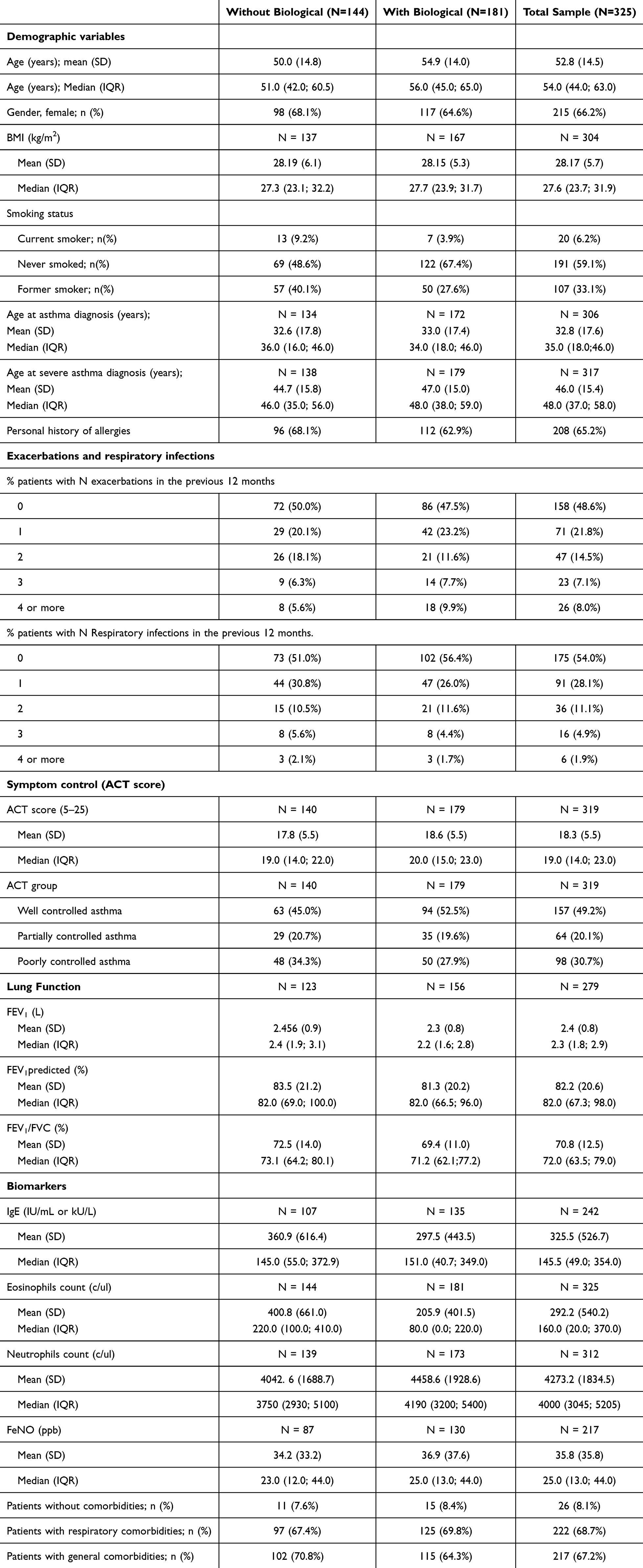 |
Table 1 Sociodemographic and Clinical Characteristics of the Studied Sample at Index Date |
Over the previous year to index date, 51.4% of patients had developed, at least, one exacerbation; most exacerbations (92.3%) were non-severe. In the group of patients treated with biological therapy (N=181) there were 86 (47.5%) without exacerbations in the previous 12 months at index date, and in the group without biological treatment (N=144), there were 72 (50.0%). Percentage of total sample who had 2 or more exacerbations in the last 12 months to the index date was 29.5%, similar to patients with biological (29.3%) and to patients without biological (29.9%). Patients with no respiratory infections in the previous 12 months were 175 (54.0%) in the total sample, 102 (56.4%) in the group of patients on biological treatment and 73 (51.05%) in the group of patients without biological treatment. Figure 2 shows the most common respiratory comorbidities such as allergic rhinitis (44.2%), CRSwNP (41.5%), and CRSsNP (22.1%). The most prevalent general comorbidities were gastroesophageal reflux (29.3%), hypertension (28.4%), and obesity (26.0%). Interestingly, 18.1% of patients had anxiety and 14.9% suffered from depression.
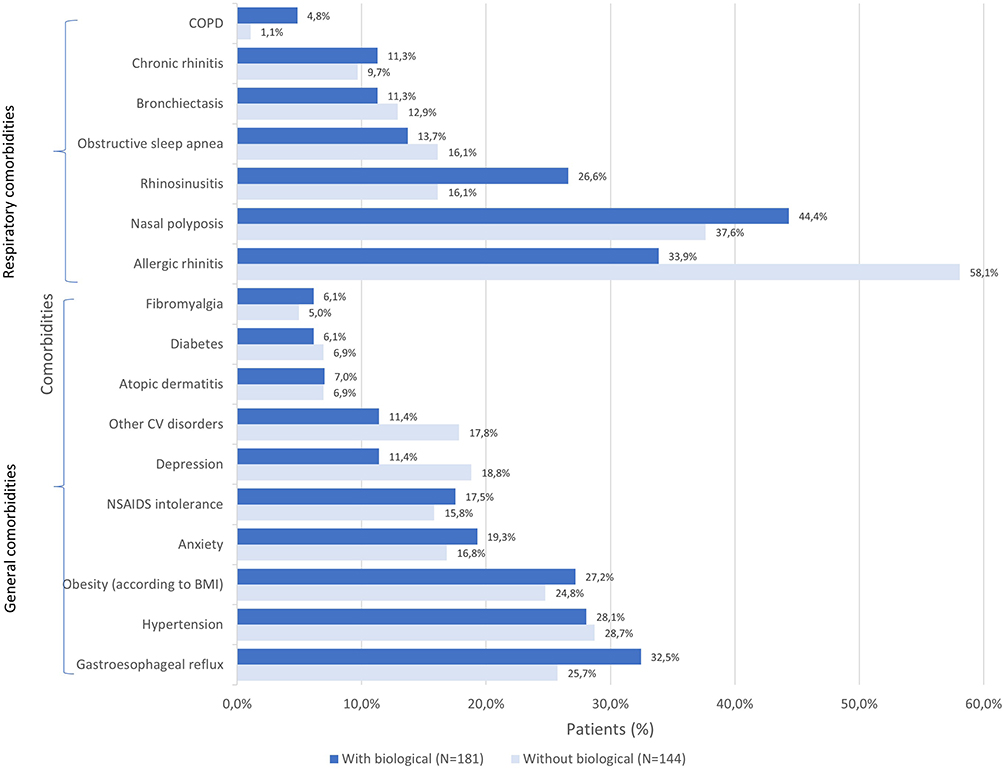 |
Figure 2 Percentage of patients with most common respiratory and general comorbidities in patients treated with biologics and without biologics. Notes: Bold text refers to the percentage of patients with comorbidities who are not receiving biologic treatment; blue text refers to the percentage of patients with comorbidities who are receiving biologic treatment. |
Results regarding biomarkers at index date are presented in Table 1. The IgE determination was performed on 242 patients, accounting for 74.5% of the total. The eosinophil count was performed for all 325 patients (100%). The neutrophil count was performed on 312 patients, which is 96.0% of the total, and the FeNO test was carried out on 217 patients, representing 66.8% of the total. No biomarker was performed in 104 patients (32.0%) 12 months before index date, and in 141 (43.4%) 6 months before index date. At index date asthma was clinically allergen driven in 172 patients (52.9%), with the most common allergens being pollen in 108 patients (62.8%), dust mites in 106 (61.6%), pet dander in 89 (51.7%), mold in 32 (18.6%), foods in 13 (7.6%), and others in 20 (11.6%).
Lung Function and Asthma Control
Out of 324 patients with data, spirometry was conducted on 195 patients (60.2%) 12 months prior to the index date, and on 186 patients (57.4%) 6 months prior to the index date. On the index date itself, spirometry was performed on 279 out of 325 patients with data, accounting for 85.8%.
The outcomes of the spirometry tests conducted at these three different periods are displayed in Table 2 and Figures 3 and 4. Mean FEV1, FVC, PEF, FEF25–75%, and IC variables seem to remain stable during the previous 12 months before index date. At index date patients showed a mean (SD) FEV1 of 2.3 (0.8) liters, 82.2 (20.6)% of predicted, a FEF25-75% of 1.8 (1.2) liters per second, and a FEV1/FVC ratio of 70.8% (12.5).
 |
Table 2 Spirometry Results at 12 and 6 Months Prior to Index Date and at Index Date |
 |
Figure 3 FEV1 predicted (%) at 12 and 6 months prior to index date and at index date. |
 |
Figure 4 FEV1/FVC (%) at 12 and 6 months prior to index date and at index date. |
Mean (SD) ACT score at index date was 18.3 (5.5) for the total sample, 18.6 (5.5) for patients on biological treatment and 17.8 (5.5) for patients not receiving biological treatment. According to ACT score, 50.8% of patients for the total sample, 47.5% of patients receiving a biological therapy, and 55.0% of patients not receiving biological treatment, had partially controlled or poorly controlled asthma as shown in Table 1 and Figure 5.
 |
Figure 5 Asthma control according to ACT score at index date. |
Treatment Regimens 12 Months Prior to Index Date and at Index Date
Treatments are described in Table 3 for both moments in time. The most common standard of care was ICS/LABA, LAMA and antileukotrienes corresponding to 91.7%, 52.8%, and 56.5% of the total sample, respectively. The prevalence of biologic treatments corresponding to the 12-month period before the index visit were benralizumab (34.9%), dupilumab (23.6%), mepolizumab (29.3%), omalizumab (23.1%), and reslizumab (3.8%). Ongoing biologic treatments at index date were benralizumab (32.0%), dupilumab (23.0%), mepolizumab (25.0%), omalizumab (18.5%), and reslizumab (2.5%). Tezepelumab was not commercially available at the time of this data collection.
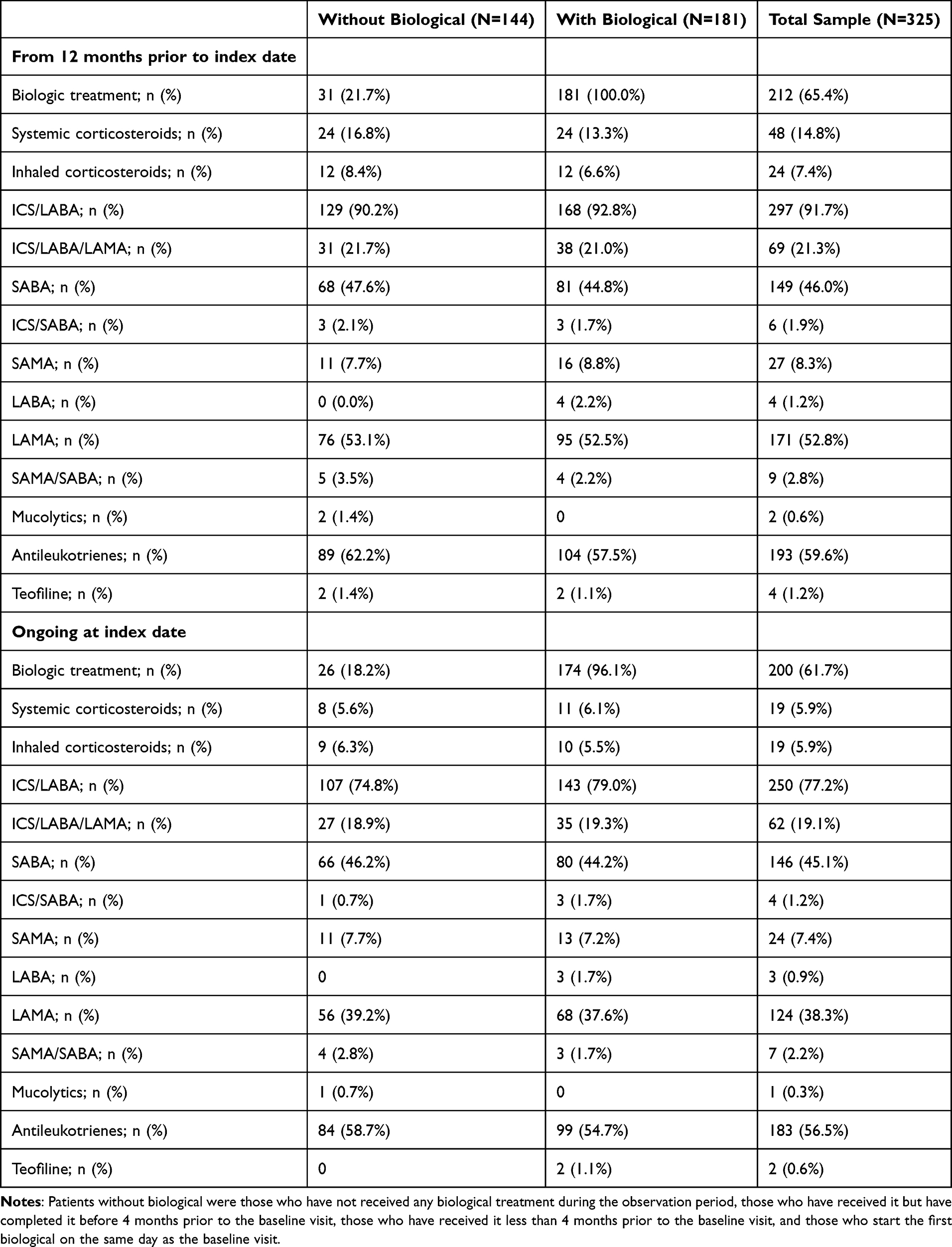 |
Table 3 Severe Asthma Treatments: From 12 Months Prior to Index Date and Ongoing at Index Date |
Discussion
The present interim analysis of the BREATHE cohort showed that the 47.5% of patients receiving a biological treatment for SA and the 55% of patients with SA not receiving any biological treatment had, respectively, partially or poorly controlled asthma according to ACT questionnaire at the study entry. Patients with SA that were receiving a biological treatment had lower counts of blood eosinophils compared to those not receiving any biological treatment. There were no relevant differences in terms of lung function, FeNO values, exacerbations in the previous year and general or respiratory comorbidities between both groups.
Severe asthma is a heterogeneous and complex disease that encompasses a wide spectrum of inflammatory pathways and structural airway changes. Despite the therapeutic arsenal currently available in SA and the arrival of biological drugs, there is still a significant percentage of patients who have not well controlled asthma. Thus, an unmet need for asthma control is observed even in patients treated with currently available biological treatments. The present study showed that nearly the half of the patients on biologic treatment and 55% of patients meeting the criteria for SA but not receiving biological treatment were not well controlled presenting an ACT value < 20. Pavord et al reported that 26% of patients presented an ACT value <20 in the retrospective REDES study of patients with SA following 1 year of treatment with mepolizumab.14 In this same line, Padilla-Galo et al reported 26.2% of patients presenting an ACT score < 20 at 1-year after benralizumab initiation in the ORBE II study aiming to describe the characteristics and clinical outcomes of adult patients with severe eosinophilic asthma treated with benralizumab in a real-world setting in Spain.15 Recently, data from the International Severe Asthma Registry which includes 3.717 SA patients showed not well controlled asthma in nearly 75% of the patients prior to initiatingbiologic therapies, with some variability in terms of mean control levels regarding each particular monoclonal antibody.16 The BREATHE study confirmed that partially or poorly controlled asthma is present in SA patients treated with biologics in real life. Interestingly, in our cohort of patients, many of these not well controlled patients presented normal lung function values and no exacerbations in the previous year. Despite this discrepancy, poor asthma control according to the patient’s own assessment can significantly limit their quality of life and forces us to consider whether these patients would be eligible for a biological treatment switch. Regarding SA patients that were not receiving biological treatment in our cohort, the prevalence of poorly or partially controlled asthma was above 50%, despite the mean FEV1 value being higher than 80% and around 70% of patients having no exacerbations in the previous year. According to the results of randomized clinical trials aiming to demonstrate the efficacy and safety of monoclonal antibodies in SA, biological drugs are limited to patients with SA presenting moderate or severe exacerbations often accompanied by low FEV1 values and oral corticosteroid use. However, this study highlights a subgroup of patients with severe asthma, since they are treated with high doses of ICS and at least one LABA, who would not meet the criteria for a biological drug in terms of exacerbations, but who do present poor asthma control. In this context the therapeutic trial with biological drugs might be a valid therapeutic approach in selected cases.
Overall, the clinical characteristics of these patients are consistent with those found in prior research.17–22 Severe asthma patients included in the study were predominantly female, overweight, and with a mean age of around 50 years. Around one-third of the subjects were former smokers, percentage similar to previous studies.20,23 Mean age at which asthma was diagnosed aligns with other studies19–21 suggesting that at baseline patients had been living with asthma for approximately 20 years, as previously reported.18,19 Early onset asthma (EOA) and late onset asthma(LOA) patients exhibit distinct patterns of comorbidities and inflammatory markers, suggesting that treatment plans should be tailored based on the age of onset.24 Early onset asthma patients had a clear association between type 2 inflammatory parameters (like IgE and blood eosinophils) and impaired lung function. This indicates that monitoring these markers could help in assessing disease severity and guiding treatment decisions for EOA patients.
Mean IgE levels were clearly high at index date, above 360 IU/mL in patients without biological therapy, and close to 300 IU/mL in patients with biological. Mean IgE figures previously reported in observational studies were even higher 492 IU/mL in the Spanish MEGA cohort.20 According to a study carried out in Spain25 over two-thirds of adult patients suffering from chronic allergic asthma (defined as being positive to at least 1 allergen, either in the skin prick test or by specific IgE measurement) showed IgE levels exceeding 150 IU/mL. Nonetheless, this study did not identify a substantial link between the severity of asthma and the total IgE levels in the serum, with the exception of a larger proportion of patients in the severe category having IgE levels over 400 IU/mL. In a high proportion of SA patients, the levels of blood eosinophil counts can fluctuate significantly, but they are usually high. Indeed, high eosinophil variability of blood eosinophils is a better predictor for risk of exacerbations than an absolute count.26 One study found that the prevalence of patients with a blood eosinophil count above 300 cells/µL was 53.3%, and above 400 cells/µL was 38.8%.20 In the present study mean (SD) blood eosinophil count at index date was 400.8 (661.0) cells/µL for patients without biological, close to the figure of 390 (444) for patients with severe asthma in the previously mentioned study,20 and 205.9 (401.5) cells/µL for patients receiving biological therapy, lower than that of patients with mild or intermittent asthma in the same study.20 Neutrophils may play a role in the pathogenesis of the airway inflammation of severe asthma, leading to eosinophils accumulating in the airways.27 The current study found a slight variation in the mean neutrophil count between patients not undergoing biological therapy (4,042 cells/µL) and those receiving biological therapy (4,458 cells/µL). These numbers are lower than the previously reported count of 5300 cells/µL for severe adult-onset asthma.28 Patients with SA often exhibit elevated levels of FeNO, which is a marker of airway epithelial inflammation. The exact levels can vary among individuals and depend on various factors such as the severity of the condition, treatment regimen, and individual response to treatment. In the present study, mean FeNO values were around 36 ppb, slightly higher in patients with biological than in patients without biological, an in both cases higher than accepted in guidelines for T2 driven inflammation2,3 but lower than the figures reported in the MEGA cohort for patients with different asthma severity.20 Approximately half the patients included in the study had clinically allergen driven asthma. Allergic reactions seems to be more related with early-onset severe asthma than with late-onset SA.29 Severe asthma exacerbations, which can be triggered by allergens, are more frequent in refractory eosinophilic asthma and early-onset allergic asthma.30,31 It is important to begin describing allergic asthma driven by symptomatology rather than IgE to differentiate from atopy. This would help to better assess which patients are allergic-eosinophilic (early-onset) or non allergic-eosinophilic (late-onset).
Asthma exacerbations collected in the previous 12 months to inclusion of subjects in the study were present in both groups of patients, with most of them being moderate. In the total sample, a mean number of 1.17 exacerbations was observed. In the group without biological treatment, 50% of patients developed at least one exacerbation, with 6.9% of patients experiencing severe exacerbations. On the other hand, in the group of patients treated with biological, the data were slightly higher, with 52.5% and 8.3% of patients having more than one exacerbation and severe exacerbation, respectively. In a previous study carried out in a sample of patients receiving biological therapy,17 63% of patients experienced at least one asthma exacerbation annually, with an average of 1.3 per patient. Additionally, in the same study,17 35% of patients had their asthma under control, while 28% had suboptimal control, and 29% had uncontrolled asthma. In our study, a slightly higher number of patients had poorly controlled asthma in the group of patients without biological treatment compared to the group of biological therapy (34.3% vs 27.9%, respectively). Lower amount of patients had well controlled asthma in the group of patients untreated with biologic compared to the group of patients with biological treatment (45.0% vs 52.5%, respectively). Close to 50% of patients in the present study had had at least 1 respiratory infection in the previous 12 months to the index date, with 49.0% of patients without biologic treatment and 43.7% of patients treated with biologics. In a recent publication from EVEREST study, biologic-eligible patients but who were not receiving biological therapy had a very high burden of disease, with half experiencing at least two exacerbations and more than two-thirds having uncontrolled asthma, highlighting the impact of not prescribing biological therapies to eligible patients.32
Mean number of respiratory infections was 1.6 for both, patients with and without biological therapy. Classically, it has been highlighted that patients who are at risk of developing asthma or those who already have the condition can experience significant impact on their disease progression or control due to viral respiratory tract infections.33 Asthma exacerbations are commonly linked to viral respiratory tract infections, particularly those caused by human rhinoviruses.33 Almost all the patients included in the present study had at least 1 comorbidity, with respiratory comorbidities, such as rhinitis, chronic rhinosinusitis with nasal polyposis (CRSwNP), and rhinosinusitis, being equally frequent as general comorbidities such as gastroesophageal reflux, hypertension, and obesity. In a French cohort study,18 85% of patients had at least one medical comorbidity. Data from the International Severe Asthma Registry,19 indicates that the most commonly reported comorbidities were allergic rhinitis, chronic rhinosinusitis, eczema, and CRSwNP, which aligns with the findings of the current study. Literature highlights the importance of systematic evaluation for comorbidities in patients with SA, especially patients with CRS with or without NPs because they might benefit from biologic therapy to a greater extent than patients without these comorbidities.34 We observed higher proportion of patients with CRSwNPs or rhinosinusitis treated with biologics than patients with allergic rhinitis, many of them were without biologic treatment (Figure 2). However, one concern is the large number of missing data for comorbidities, with 33.2% of patients lacking data related to comorbidities. Other studies have shown a relationship between the number of comorbidities and lack of clinical improvement, where CRSwNP was associated with more exacerbations and OCS use.35
In patients with SA, the FEV1, FEV1/FVC ratio, and FEF25-75% are typically lower than normal. As indicated in Table 2 and Figures 3 and 4, the mean FEV1 and FEV1/FVC ratio for the study sample fall within the parameters of controlled SA, exceeding 80% and 70%, respectively.36 Mean value of FEF25-75% in this study is slightly above what has been previously reported in SA patients.37 However, the study sample comprised SA patients without distinguishing between those with controlled or uncontrolled conditions, hence the average spirometry test results fall within the range of controlled SA. It should be noted that 12 and 6 months before the index date, 40% of patients had not undergone routine spirometry, although this percentage was only 14% at the index date.
Mean ACT scores of study patients were close to well controlled asthma (>19 points),38 and the percentage of patients with well controlled asthma according to ACT score was greater in patients undergoing biological therapy (52.5%) than in patients with no biological treatment (45.0%). Conversely, the percentage of patients with poorly controlled asthma was higher in patients without biological therapy (34.3%) than in patients with biologic treatment (27.9%).
Slightly more than half of the patients had received biological treatment before inclusion in the study for at least 4 months and almost two-thirds were receiving biological treatment at index date. Despite undergoing biological therapy, patients with SA in the present study still experienced exacerbations as previously reported.17,39,40 From 12 months prior to index date, the majority of patients were on treatment with ICS/LABA, with two-thirds on biological therapy and over half on antileukotrienes and LAMA. Just around 20% of patients were on triple therapy. At index date, ICS/LABA remained the most commonly prescribed treatment, used by three-quarters of patients. This was followed by biological therapy, used by nearly two-thirds of patients, and antileukotrienes, used by over half. The proportion of patients on LAMA dropped to 38%, while those on SABA rose to nearly half. In the present study, focused on patients with SA, the percentage of patients receiving biological therapy and the distribution among the different biological therapies was different from those reported in a study conducted with aggregated data surveys in 90 Spanish centres41 which found 6.2% of patients treated with omalizumab, 2.9% with mepolizumab, 0.4% with reslizumab and 1.0% with benralizumab. Finally, from 12 months prior to index date approximately 15% of patients were receiving systemic corticosteroids which decreased to 6% at index date.
The study has several limitations, such as the lack of a control arm, which restricts our ability to ascribe the observed to treatment effect. Other limitations of this study include missing data, especially prior to index date, and the selection of patients with full information available to be included in the study population. Finally, it was found that about 20% of the patients in the group without biological treatment were treated for a short period with biological treatments that can alter some of the observed outcomes. A major strength of the current study is that it used a cohort of 325 patients that will be followed‐up in a prospective manner for one additional year and will provide insights into the treatments that can influence the progression of severe asthma.
Conclusions
This is an interim analysis of the BREATHE study. Sociodemographic and clinical characteristics of patients with SA included in the study are similar to those previously reported. In general patients receiving biologic therapy had similar characteristics to those without it. Comorbidities were frequent, with respiratory and general comorbidities being equally common, but one-third of the patients lacked data related to comorbidities in the medical records. At index date, spirometry tests were within the boundaries of controlled SA in patients with and without biological therapy, but many patients did not have a previous spirometry at 6 and 12 months. It is not possible that in the 21st century to have asthmatic patients without routine spirometry every 3–6 months, which highlights an important unmet need in our clinical practice, closely associated with the risk of exacerbations and asthma control. A significant percentage of asthmatic patients had more than 2 exacerbations and/or at least 1 respiratory infection in the previous year. According to ACT score almost half the patients had not well controlled asthma. Just over 50% of the study participants had undergone biological treatment for a minimum of four months prior to their inclusion in the study, and nearly two-thirds were undergoing biological treatment at the time of the study’s commencement. However, even with the biological therapy, patients with SA in the current study continued to experience exacerbations, as noted in earlier reports. We should investigate the reasons why patients with at least one exacerbation in the previous year, high levels of biomarkers, use of OCS and poorly controlled asthma have not been switched to other biological treatments or had a biological treatment added if they did not have it yet.
Data Sharing Statement
The datasets used and analysed during the current study may be obtained in accordance with AstraZeneca’s data sharing policy, described at https://www.astrazenecaclinicaltrials.com/our-transparency-commitments/.
Ethics Approval and Informed Consent
Protocol and informed consent form were approved by the Ethical and Clinical Research Committee of the Hospital Universitari Vall D’Hebron, with the ethics approval number PR(AG)206/2022.
Author Contributions
All authors made a significant contribution to the work reported, whether that is in the conception, study design, execution, acquisition of data, analysis and interpretation, or in all these areas; took part in drafting, revising, or critically reviewing the article; gave final approval of the version to be published; have agreed on the journal to which the article has been submitted; and agree to be accountable for all aspects of the work.
Acknowledgments
The authors would like to thank all investigators and centres participating in the BREATHE study. The authors would also like to thank Marta Rubio and Pablo Rebollo (IQVIA) for providing scientific and medical writing support, which was funded by AstraZeneca in accordance with Good Publication Practice (GPP3) guidelines (http://www.ismpp.org/gpp3). Thanks also to Gustavo Resler and the team at Strategic Scientific Advisors from AstraZeneca for their contribution to this study.
Funding
This study has been funded by AstraZeneca.
Disclosure
IO declares to have received honoraria in the last 3 years for participating as a speaker in meetings sponsored by AstraZeneca, Boehringuer-Ingelheim, Chiesi, and Novartis and as a consultant for AstraZeneca, GlaxoSmithKlein, Puretech, and Sanofi. He has received financial aid from AstraZeneca, Bial, and Chiesi for congress attendance and has received grants from Sanofi for research projects. FR-L, GN, JJH, MA, and GM are employees of AstraZeneca. MJR declares lecture fees for AstraZeneca, GsK, Leti pharma, Gebro, Cipla, and Chiesi. The authors report no other conflicts of interest in this work.
References
1. Parnes JR, Molfino NA, Colice G, Martin U, Corren J, Menzies-Gow A. Targeting TSLP in Asthma. J Asthma Allergy. 2022;15:749–765. doi:10.2147/jaa.S275039
2. GINA. Global strategy for asthma management and prevention. 2025. Available from: https://ginasthma.org/reports/.
3. SEPAR. GEMA 5.5. Guía Española para el manejo del asma. 2025. Available from: https://gemasma.elmedicointeractivo.com/profesional/.
4. Eger K, Kroes JA, Ten BA, Bel EH. Long-Term Therapy Response to Anti-IL-5 Biologics in Severe Asthma-A Real-Life Evaluation. J Allergy Clin Immunol Practice. 2021;9(3):1194–1200. doi:10.1016/j.jaip.2020.10.010
5. Ojanguren I, Satia I, Usmani OS. The Role of Viral Infections on Severe Asthma Exacerbations: present and Future. Archiv Bronconeumol. 2022;58(9):632–634. doi:10.1016/j.arbres.2021.10.007
6. George M, Graff C, Bombezin-Domino A, Pain E. Patients with Severe Uncontrolled Asthma: perception of Asthma Control and its Management. Pulmonary Ther. 2022;8(2):209–223. doi:10.1007/s41030-022-00190-z
7. Czira A, Turner M, Martin A, et al. A systematic literature review of burden of illness in adults with uncontrolled moderate/severe asthma. Respir Med. 2022;191:106670. doi:10.1016/j.rmed.2021.106670
8. Melero Moreno C, Quirce S, Huerta A, Uría E, Cuesta M. Economic impact of severe asthma in Spain: multicentre observational longitudinal study. J Asthma. 2019;56(8):861–871. doi:10.1080/02770903.2018.1499035
9. Martínez Moragón E, Entrenas Costa LM, Hernández J S-C, de Prado Moncusí A, Monteagudo Ruiz G. A cross-sectional study to evaluate utility measure and health-related quality of life (HRQoL) among patients with severe uncontrolled asthma in Spain. J Asthma. 2024;61(1):27–38. doi:10.1080/02770903.2023.2241891
10. SEPAR. GEMA 5.1. Guía Española para el manejo del asma. 2021. Available from: https://www.separ.es/node/2137.
11. Reddel HK, Taylor DR, Bateman ED, et al. An official American Thoracic Society/European Respiratory Society statement: asthma control and exacerbations: standardizing endpoints for clinical asthma trials and clinical practice. Am J Respir Crit Care Med. 2009;180(1):59–99. doi:10.1164/rccm.200801-060ST
12. Nathan RA, Sorkness CA, Kosinski M, et al. Development of the asthma control test: a survey for assessing asthma control. J Allergy Clin Immunol. 2004;113(1):59–65. doi:10.1016/j.jaci.2003.09.008
13. Vega JM, Badia X, Badiola C, et al. Validation of the Spanish version of the Asthma Control Test (ACT). J Asthma. 2007;44(10):867–872. doi:10.1080/02770900701752615
14. Pavord I, Gardiner F, Heaney LG, et al. Remission outcomes in severe eosinophilic asthma with mepolizumab therapy: analysis of the REDES study. Front Immunol. 2023;14:1150162. doi:10.3389/fimmu.2023.1150162
15. Padilla-Galo A, Moya Carmona I, Ausín P, et al. Achieving clinical outcomes with benralizumab in severe eosinophilic asthma patients in a real-world setting: ORBE II study. Respir Res. 2023;24(1):235. doi:10.1186/s12931-023-02539-7
16. Perez-de-Llano L, Scelo G, Tran TN, et al. Exploring Definitions and Predictors of Severe Asthma Clinical Remission after Biologic Treatment in Adults. Am J Respir Crit Care Med. 2024;210(7):869–880. doi:10.1164/rccm.202311-2192OC
17. Reibman J, Tan L, Ambrose C, et al. Clinical and economic burden of severe asthma among US patients treated with biologic therapies. Ann Allergy Asthma Immunol. 2021;127(3):318–325.e2. doi:10.1016/j.anai.2021.03.015
18. Taillé C, Pison C, Nocent C, et al. Patients in the IDEAL cohort: a snapshot of severe asthma in France. Revue Maladies Respirat. 2019;36(2):179–190. doi:10.1016/j.rmr.2018.10.005
19. Wang E, Wechsler ME, Tran TN, et al. Characterization of Severe Asthma Worldwide: data From the International Severe Asthma Registry. Chest. 2020;157(4):790–804. doi:10.1016/j.chest.2019.10.053
20. Rial MJ, Álvarez-Puebla MJ, Arismendi E, et al. Clinical and inflammatory characteristics of patients with asthma in the Spanish MEGA project cohort. Clin Transl Allergy. 2021;11(1):e12001. doi:10.1002/clt2.12001
21. Shaw DE, Sousa AR, Fowler SJ, et al. Clinical and inflammatory characteristics of the European U-BIOPRED adult severe asthma cohort. Eur Resp J. 2015;46(5):1308–1321. doi:10.1183/13993003.00779-2015
22. Domingo C, Sicras-Mainar A, Sicras-Navarro A, Sogo A, Mirapeix RM, Prevalence EC. T2 Biomarkers, and Cost of Severe Asthma in the Era of Biologics: the BRAVO-1 Study. J Invest Allergol Clin Immunol. 2024;34(2):97–105. doi:10.18176/jiaci.0871
23. Klein DK, Silberbrandt A, Frøssing L, et al. Impact of former smoking exposure on airway eosinophilic activation and autoimmunity in patients with severe asthma. Eur Resp J. 2022;60(4):2102446. doi:10.1183/13993003.02446-2021
24. Turrin M, Rizzo M, Bonato M, et al. Differences Between Early- and Late-Onset Asthma: role of Comorbidities in Symptom Control. J Allergy Clin Immunol Practice. 2022;10(12):3196–3203. doi:10.1016/j.jaip.2022.08.007
25. Davila I, Valero A, Entrenas LM, Valveny N, Herráez L. Relationship between serum total IgE and disease severity in patients with allergic asthma in Spain. J Invest Allergol Clin Immunol. 2015;25(2):120–127.
26. Toledo-Pons N, van Boven JFM, Muncunill J, et al. Impact of Blood Eosinophil Variability in Asthma: a Real-Life Population Study. Ann Am Thoracic Soc. 2022;19(3):407–414. doi:10.1513/AnnalsATS.202103-409OC
27. Nakagome K, Matsushita S, Nagata M. Neutrophilic inflammation in severe asthma. Int Arch Allergy Immunol. 2012;158 Suppl 1:96–102. doi:10.1159/000337801
28. Amelink M, de Groot JC, de Nijs SB, et al. Severe adult-onset asthma: a distinct phenotype. J Allergy Clin Immunol. 2013;132(2):336–341. doi:10.1016/j.jaci.2013.04.052
29. Wenzel S. Severe asthma in adults. Am J Respir Crit Care Med. 2005;172(2):149–160. doi:10.1164/rccm.200409-1181PP
30. McDonald VM, Gibson PG. Exacerbations of severe asthma. Clin Experiment Allergy. 2012;42(5):670–677. doi:10.1111/j.1365-2222.2012.03981.x
31. Pilia MF, Cruz MJ, Ma D, et al. The Role of Inflammatory Phenotype in Patients With Exacerbation-prone Asthma and Ongoing Therapy. Archiv Bronconeumol. 2023;59(11):736–742. doi:10.1016/j.arbres.2023.07.026
32. Le TT, Price DB, Erhard C, et al. Disease Burden and Access to Biologic Therapy in Patients with Severe Asthma, 2017-2022: an Analysis of the International Severe Asthma Registry. J Asthma Allergy. 2024;17:1055–1069. doi:10.2147/jaa.S468068
33. Busse WW, Lemanske Jr RF, Gern JE. Role of viral respiratory infections in asthma and asthma exacerbations. Lancet. 2010;376(9743):826–834. doi:10.1016/s0140-6736(10)61380-3
34. Wechsler ME, Scelo G, Larenas-Linnemann DES, et al. Association Between T2-related Comorbidities and Effectiveness of Biologics in Severe Asthma. Am J Respir Crit Care Med. 2024;209(3):262–272. doi:10.1164/rccm.202305-0808OC
35. Scelo G, Torres-Duque CA, Maspero J, et al. Analysis of comorbidities and multimorbidity in adult patients in the International Severe Asthma Registry. Ann Allergy Asthma Immunol. 2024;132(1):42–53. doi:10.1016/j.anai.2023.08.021
36. Plaza Moral V, Alobid I, Álvarez Rodríguez C, et al. GEMA 5.3. Spanish Guideline on the Management of Asthma. Open Respiratory Archiv. 2023;5(4):100277. doi:10.1016/j.opresp.2023.100277
37. Sposato B, Scalese M, Camiciottoli G, et al. Severe asthma and long-term Benralizumab effectiveness in real-life. Eur Rev Med Pharmacol Sci. 2022;26(20):7461–7473. doi:10.26355/eurrev_202210_30016
38. Schatz M, Sorkness CA, Li JT, et al. Asthma Control Test: reliability, validity, and responsiveness in patients not previously followed by asthma specialists. J Allergy Clin Immunol. 2006;117(3):549–556. doi:10.1016/j.jaci.2006.01.011
39. Carr TF, Zeki AA, Kraft M. Eosinophilic and Noneosinophilic Asthma. Am J Respir Crit Care Med. 2018;197(1):22–37. doi:10.1164/rccm.201611-2232PP
40. Hinks TSC, Levine SJ, Brusselle GG. Treatment options in type-2 low asthma. Eur Resp J. 2021;57(1):2000528. doi:10.1183/13993003.00528-2020
41. Casas-Maldonado F, Álvarez-Gutiérrez FJ, Blanco Aparicio M, et al. Treatment Patterns of Monoclonal Antibodies in Patients With Severe Uncontrolled Asthma Treated by Pulmonologists in Spain. Open Respiratory Archiv. 2023;5(3):100252. doi:10.1016/j.opresp.2023.100252
 © 2025 The Author(s). This work is published and licensed by Dove Medical Press Limited. The
full terms of this license are available at https://www.dovepress.com/terms
and incorporate the Creative Commons Attribution
- Non Commercial (unported, 4.0) License.
By accessing the work you hereby accept the Terms. Non-commercial uses of the work are permitted
without any further permission from Dove Medical Press Limited, provided the work is properly
attributed. For permission for commercial use of this work, please see paragraphs 4.2 and 5 of our Terms.
© 2025 The Author(s). This work is published and licensed by Dove Medical Press Limited. The
full terms of this license are available at https://www.dovepress.com/terms
and incorporate the Creative Commons Attribution
- Non Commercial (unported, 4.0) License.
By accessing the work you hereby accept the Terms. Non-commercial uses of the work are permitted
without any further permission from Dove Medical Press Limited, provided the work is properly
attributed. For permission for commercial use of this work, please see paragraphs 4.2 and 5 of our Terms.
Recommended articles

Fashionable, but What is Their Real Clinical Usefulness? NLR, LMR, and PLR as a Promising Indicator in Colorectal Cancer Prognosis: A Systematic Review
Misiewicz A, Dymicka-Piekarska V
Journal of Inflammation Research 2023, 16:69-81
Published Date: 7 January 2023
Prognostic Role of Serum Soluble Tim-3 in Severe Traumatic Brain Injury: A Prospective Observational Study
Zhang H, Lv QW, Zheng ZQ, Shen LJ, Zhou J, Guo M
Neuropsychiatric Disease and Treatment 2023, 19:153-169
Published Date: 18 January 2023
Could the Systemic Immune Inflammation Index Predict Diagnosis, Recovery Time, Hypothyroidism, and Recurrence Rates in Subacute Thyroiditis?
Çiftel S, Tüzün Z
International Journal of General Medicine 2023, 16:1375-1382
Published Date: 18 April 2023
Identification of Plasma Inflammatory Markers of Adolescent Depression Using the Olink Proteomics Platform
Yang L, Cao M, Tian J, Cui P, Ai L, Li X, Li H, Gao M, Fang L, Zhao L, Gong F, Zhou C
Journal of Inflammation Research 2023, 16:4489-4501
Published Date: 11 October 2023
Quercetin: A Flavonoid with Potential for Treating Acute Lung Injury

Huang M, Liu X, Ren Y, Huang Q, Shi Y, Yuan P, Chen M
Drug Design, Development and Therapy 2024, 18:5709-5728
Published Date: 6 December 2024