
Back to Journals » Patient Preference and Adherence » Volume 20
Symptom Burden in Patients with Acute Coronary Syndrome After Percutaneous Coronary Intervention: A Network and Latent Profile Analysis
Authors Hong S  , Gan X, Zhou W , Gao Y , Li R, Liu L , Hu X, Zheng Q, Huang M, Lou L, Tan L
Received 24 December 2025
Accepted for publication 11 March 2026
Published 21 March 2026 Volume 2026:20 580130
DOI https://doi.org/10.2147/PPA.S580130
Checked for plagiarism Yes
Review by Single anonymous peer review
Peer reviewer comments 2
Editor who approved publication: Dr Johnny Chen
Shuqin Hong, Xiuni Gan, Wen Zhou, Yan Gao, Ran Li, Li Liu, Xinyuan Hu, Qiulan Zheng, Miao Huang, Lanlan Lou, Lian Tan
Department of Nursing, The Second Affiliated Hospital of Chongqing Medical University, Chongqing, People’s Republic of China
Correspondence: Xiuni Gan, Department of Nursing, The Second Affiliated Hospital of Chongqing Medical University, Chongqing, People’s Republic of China, Tel +86 13883309318, Email [email protected]
Purpose: To describe the network structure and heterogeneity of symptom burden in patients with acute coronary syndrome (ACS) after percutaneous coronary intervention (PCI), and to examine factors associated with different symptom burden profiles to inform risk-stratified management after PCI.
Patients and Methods: A convenience sample of 261 patients with ACS who underwent PCI at a tertiary hospital in Chongqing between November 2024 and August 2025 was recruited. Data were collected using a demographic questionnaire, the Cardiac Symptom Survey, and the Seattle Angina Questionnaire. Network analysis was conducted to identify inter-symptom associations and the structural characteristics of the symptom network. Latent profile analysis (LPA) was performed to classify symptom burden patterns, and multinomial logistic regression analysis was used to explore factors associated with profile membership.
Results: Network analysis indicated that depression was the most central symptom (strength rs = 0.886). Latent profile analysis identified three distinct symptom burden profiles: Low Symptom Burden (64.0%), Moderate Symptom Burden with Prominent Access-Site Pain (12.3%), and High Symptom Burden (23.8%). Body mass index (BMI) was a significant independent predictor of symptom burden; compared with patients with normal BMI, those who were overweight or obese were significantly more likely to belong to the High (OR = 2.47, 95% CI: 1.31– 4.67) or Moderate (OR = 2.41, 95% CI: 1.04– 5.59) burden groups. Furthermore, higher symptom burden was significantly associated with reduced health-related quality of life, particularly regarding angina frequency and disease perception (P < 0.05).
Conclusion: Symptom burden in patients with ACS after PCI demonstrates substantial individual heterogeneity. Depression occupies a central position within the symptom network, and BMI is associated with moderate and high symptom burden profiles. These findings suggest that integrating symptom network characteristics and BMI status into post–PCI assessment may facilitate risk-stratified management and targeted psychological and weight-related interventions to improve recovery outcomes.
Keywords: acute coronary syndrome, percutaneous coronary intervention, network analysis, latent profile analysis, symptoms, symptom management
Introduction
According to projections by the American Heart Association (AHA), cardiovascular disease will remain one of the leading causes of death and disease burden worldwide by 2035.1 Acute coronary syndrome (ACS) is the most common and severe manifestation of coronary heart disease, characterized by sudden onset, rapid progression, and high mortality.2 Although percutaneous coronary intervention (PCI), as a major revascularization strategy, has significantly improved patient survival, restoration of coronary blood flow does not necessarily lead to complete symptom relief.3 Previous studies have shown that approximately 20–40% of patients continue to experience residual or recurrent ischemic symptoms during the early post–PCI period.4–6 In addition, psychological symptoms such as anxiety, depression, and sleep disturbances,7 as well as physical symptoms such as access-site pain,8,9 are frequently reported. These symptoms rarely occur in isolation but tend to interact and form symptom clusters, thereby increasing overall symptom burden and adversely affecting post–PCI recovery.10
Previous studies on post–PCI symptoms in patients with ACS have primarily assessed symptom experiences using individual symptoms or total questionnaire scores. However, traditional classification or dimensionality reduction approaches may overlook the complex interactions among symptoms and fail to capture heterogeneity in symptom experiences across patients.11–15 Network analysis provides a novel perspective for symptom science research.16 By examining network structures, nodes, and their connections, this approach can reveal the relational structure among symptoms and identify symptoms occupying central positions within the network.17 These central symptoms, characterized by high centrality, may play key roles in driving the overall symptom system. Latent profile analysis (LPA), a person-centered analytical method, classifies individuals into distinct latent subgroups based on multidimensional symptom patterns.18,19
Identifying factors associated with different symptom burden subgroups is important for precision-oriented nursing management. Previous research suggests that demographic and clinical characteristics may influence symptom experiences and recovery trajectories. Body mass index (BMI), which is closely related to inflammation, metabolic dysregulation, and cardiovascular prognosis, may contribute to heterogeneity in symptom burden.20,21 In addition, health-related quality of life, an important patient-centered outcome, is closely associated with symptom burden.
Accordingly, this study aimed to identify central symptoms and latent symptom burden subgroups in patients with ACS during the post–PCI period using symptom network analysis and latent profile analysis. In addition, the study examined the association between BMI and latent profile membership and compared quality-of-life differences across subgroups to inform precision-oriented symptom management.
Materials and Methods
Design and Participants
A convenience sample of ACS patients who underwent PCI at the Department of Cardiology of a tertiary hospital in Chongqing between November 2024 and August 2025 was recruited. Inclusion criteria were as follows: (1) age ≥ 18 years; (2) diagnosed with ACS according to the Chinese Guideline for the Diagnosis and Treatment of ACS and undergoing PCI for the first time.22 (3) fully conscious and able to communicate and comprehend written information; (4) provided written informed consent and voluntarily participated in the study. Exclusion criteria were: (1) severe hepatic or renal dysfunction, malignancy, or other terminal diseases; (2) severe visual or hearing impairment, or psychiatric disorders.
Sample Size
Based on Kendall’s principle for sample size estimation, the sample should be 5–10 times the number of independent variables.23 With 17 independent variables, the required sample size was 90–180. Considering a potential 20% invalid response rate, the planned recruitment target was 113–225 participants. For symptom network analysis, which included 10 symptoms, only symptoms with ≥25% prevalence were included.24,25 Preliminary data indicated that 9 symptoms met this criterion. The network model required estimation of 9 threshold parameters and 36 pairwise association parameters, totaling 45 parameters. Accounting for a 20% invalid response rate, the minimum sample size for network analysis was 57. Ultimately, 261 ACS patients post–PCI were included.
Instruments
Demographic and Clinical Characteristics
Demographic and clinical data were collected using a self–designed questionnaire. Sociodemographic variables included sex, age, body mass index (BMI), educational level, occupation, residence, and medical payment method. Clinical variables included ACS type, number of stents implanted, comorbid hypertension and diabetes, smoking and alcohol history, Killip classification, and left ventricular ejection fraction (LVEF).
Cardiac Symptom Survey (CSS)
Patients’ symptom burden was assessed using the Cardiac Symptom Survey (CSS) developed by Nieveen et al26 The CSS comprises two dimensions: symptom assessment and response to symptoms, covering 10 cardiac–specific symptoms (chest pain, shortness of breath, fatigue, depression, sleep disturbance, access–site pain, leg swelling, chest tightness, anxiety, and poor appetite), plus one open–ended item. Symptom assessment scores reflect both frequency and severity, calculated as the mean of the two. The Chinese version has demonstrated good reliability and validity (Cronbach’s α = 0.870).27 In the present study, the Cronbach’s α coefficient was 0.673, indicating acceptable internal consistency.
Seattle Angina Questionnaire (SAQ)
Health–related quality of life was assessed using the Seattle Angina Questionnaire (SAQ).28 The SAQ contains five dimensions: physical limitation, angina stability, angina frequency, treatment satisfaction, and disease perception, comprising 19 items. Dimension scores were converted to a 0–100 scale: Standard Score = (observed score – minimum score) / (maximum score – minimum score) × 100, with higher scores indicating better quality of life and functional status. The Chinese version has demonstrated good reliability (Cronbach’s α = 0.759).29 In this study, the Cronbach’s α coefficient was 0.709, indicating acceptable internal consistency.
Data Collection and Quality Control
Symptom data were collected at one month post-PCI, a time point when patients have typically completed acute-phase or staged treatments and entered a relatively stable recovery stage, enabling a comprehensive assessment of postoperative symptom burden.22,30 After obtaining informed consent, symptom-related information was collected through face-to-face inteviews. The questionnaire completion process was guided on site by uniformly trained and standardized researchers. All completed questionnaires were collected immediately and reviewed individually. Questionnaires with substantial missing data, logical inconsistencies, or patterned responses were excluded to ensure data quality. Demographic characteristics, clinical data, and laboratory examination results were extracted from the hospital electronic medical record system. All data were independently double-entered by two researchers and cross-checked for consistency to ensure accuracy and reliability.
Statistical Analysis
Only symptoms with a prevalence of ≥25% (9 symptoms) were included in the subsequent symptom network analysis and latent profile analysis (LPA).25,31 Symptom network analysis was conducted using the qgraph package in R (version 4.4.0). Spearman correlations were used to estimate the association matrix among symptoms, and the network structure was estimated using the EBICglasso method. Node importance was evaluated using centrality indices, including strength, closeness, and betweenness. Strength centrality (rs) was used as the primary indicator for identifying central symptoms due to its greater stability.32
In addition, non-parametric bootstrap procedures with 1000 iterations were performed using the bootnet package to assess the stability of edge weights and to calculate the correlation stability coefficient (CS coefficient). A CS coefficient greater than 0.5 was considered to indicate good network stability.33
Latent profile analysis (LPA) was performed using Mplus 8.3 to identify latent subgroups of symptom burden among patients after PCI. LPA is a person-centered statistical approach that classifies individuals into distinct subgroups based on similar symptom patterns.19 Model fit was evaluated using multiple indices, including the Akaike information criterion (AIC), Bayesian information criterion (BIC), adjusted BIC (aBIC), entropy, and likelihood ratio tests (LMRT and BLRT). The optimal model was determined based on the overall evaluation of these indices.
Other statistical analyses were performed using SPSS version 27.0. Normally distributed continuous variables were presented as mean ± standard deviation (SD) and compared using one-way analysis of variance (ANOVA). Non-normally distributed variables were expressed as median (interquartile range) and compared using the Kruskal–Wallis H-test. Categorical variables were presented as n (%) and compared using the χ2-test. Variables with P < 0.05 in univariate analyses were included in a multinomial logistic regression model with latent profile membership as the dependent variable to identify factors associated with symptom burden heterogeneity. A two-tailed α level of 0.05 was considered statistically significant.
Results
Participant Characteristics
A total of 261 ACS patients post–PCI were included. The mean age was 60.88 ± 11.40 years, with 138 patients (52.9%) aged <65 years and 123 patients (47.1%) aged ≥65 years. Males accounted for 225 patients (86.2%) and females for 36 patients (13.8%). More than half of the patients (n = 145, 55.6%) had a BMI ≥25 kg/m2, indicating overweight or obesity. Educational levels were distributed as follows: primary school or below (33.7%), junior high school (32.6%), and high school or above (33.7%). Regarding occupation, 69 patients (26.4%) were employed, 70 (26.8%) were retired, and 122 (46.7%) engaged in other occupations. Health insurance coverage was primarily employee–based (52.9%), with the remainder covered by urban–rural resident insurance (47.1%). Most patients were married (83.9%) and resided in urban areas (68.6%). In terms of clinical characteristics, STEMI was the most common ACS type (n = 112, 42.9%), followed by NSTEMI (n = 87, 33.3%) and UA (n = 62, 23.8%). Multi–vessel disease predominated (n = 204, 78.2%). Regarding stent implantation, 171 patients (65.5%) received one stent, and 90 patients (34.5%) received ≥2 stents. Killip class I was the most frequent on admission (n = 215, 82.4%). Lifestyle factors and comorbidities included smoking history (n = 168, 64.4%), alcohol use (n = 109, 41.8%), hypertension (n = 136, 52.1%), and diabetes (n = 59, 22.6%). Median LVEF was 63.0% (P25–P75). During the follow-up period, 41 patients (15.7%) experienced repeat PCI. Detailed characteristics are presented in Table 1.
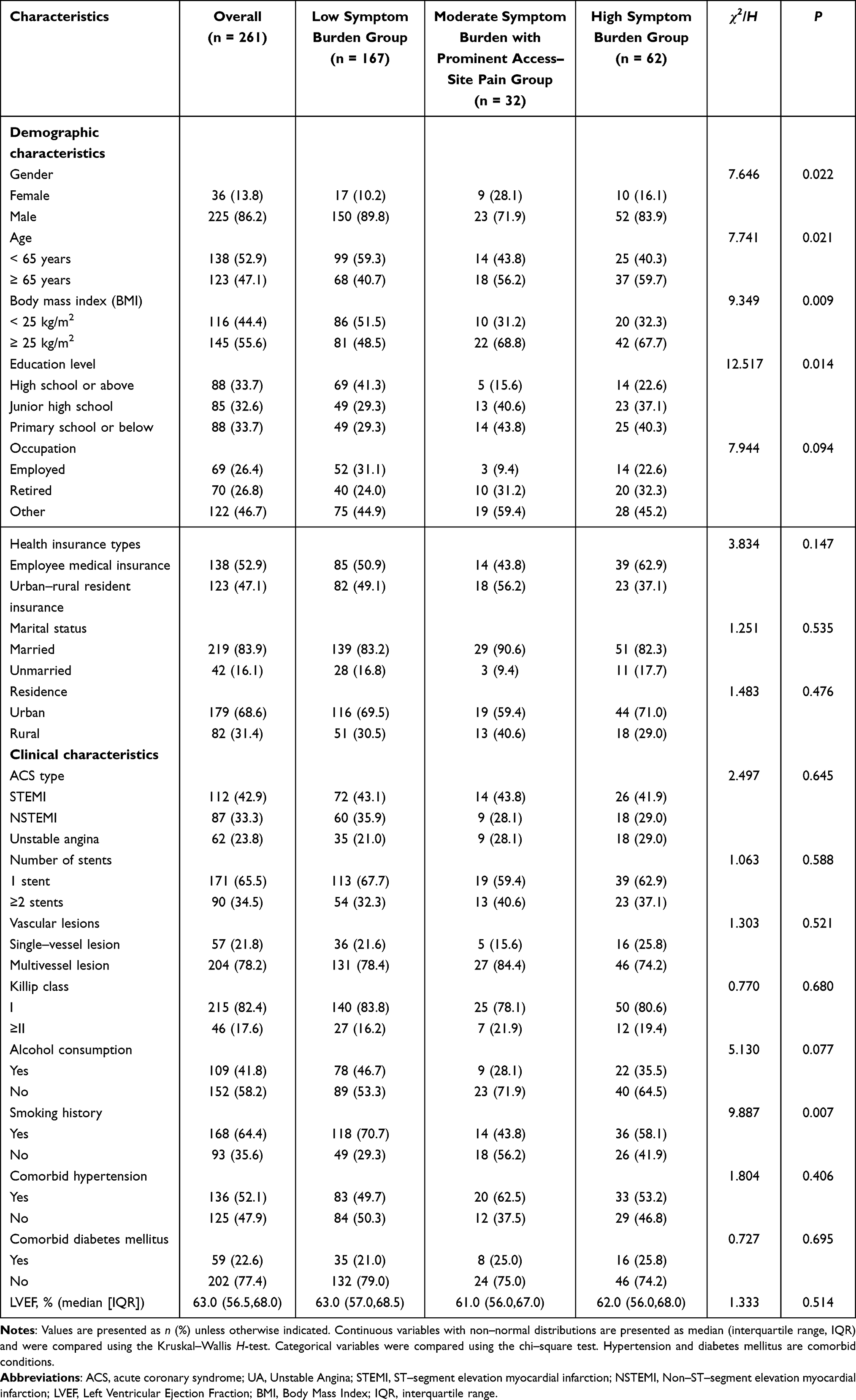 |
Table 1 Demographic and Clinical Characteristics of ACS Patients Stratified by Latent Symptom Burden Profiles (n = 261) |
Overall Symptom Burden in ACS Patients Post–PCI
At one month post–PCI, symptom burden assessed using the CSS was dominated by psychological and systemic symptoms, whereas classical cardiac–specific symptoms were less frequent. The most prevalent symptoms were anxiety (89.7%) and fatigue (89.3%), followed by depression (77.8%) and sleep disturbance (64.8%). Poor appetite was reported by 50.2% of patients. Classical cardiac symptoms occurred less frequently: shortness of breath (39.1%), chest tightness (35.6%), and chest pain (23.0%). Access–site pain was reported by 15.7% of patients, and leg swelling was the least frequent symptom (4.2%). These findings indicate considerable heterogeneity in Post–PCI symptom experiences, supporting subsequent application of symptom network and latent profile analyses.
Network Analysis of Symptom Burden in ACS Patients Post–PCI
The symptom network structure is illustrated in Figure 1. The network included 9 symptom nodes, with red edges representing positive correlations and blue edges representing negative correlations. Most symptoms were positively correlated. The strongest correlations were observed between anxiety and depression (r = 0.454), shortness of breath and fatigue (r = 0.287), and chest pain and chest tightness (r = 0.283).
 |
Figure 1 Symptom network structure of ACS patients post–PCI. Notes: Nodes represent 9 symptoms: chest pain, shortness of breath, fatigue, depression, sleep disturbance, access–site pain, chest tightness, anxiety, and poor appetite. Red edges indicate positive correlations, blue edges indicate negative correlations. Edge thickness reflects the strength of association between symptoms. |
Centrality analysis revealed that depression exhibited the highest strength centrality (rs = 0.886), indicating its central role in the network. Fatigue showed prominent betweenness and closeness centrality, suggesting it may act as a key connector between symptoms. In contrast, chest pain and access–site pain exhibited relatively low centrality, indicating peripheral positions within the network. Bootstrap confidence intervals demonstrated high estimation precision, and the correlation stability coefficient for strength was 0.517, indicating good network stability. These results highlight complex interrelationships among post–PCI symptoms and justify subsequent latent profile analysis to explore heterogeneity in symptom experiences. (see Supplementary Figures 1–5 and Supplementary Table 1).
Latent Profile Analysis of Symptom Burden in ACS Patients Post–PCI
Latent profile analysis was conducted based on the scores of nine symptom dimensions. Three latent profiles of symptom burden were identified. The model fit indices for different class solutions are presented in Table 2. Considering the information criteria (AIC, BIC, and adjusted BIC), classification accuracy (entropy), and clinical interpretability of the models, the three-class model was determined to be the optimal solution. The entropy value of this model was 0.925, indicating high classification accuracy, and the proportions of the three classes were reasonable (23.8%, 64.0%, and 12.3%). In comparison, the four- and five-class models did not show meaningful improvement in model fit, whereas the six-class model contained a very small class (2.7%), which limited its clinical interpretability. Therefore, the three-class model was selected for subsequent analyses.
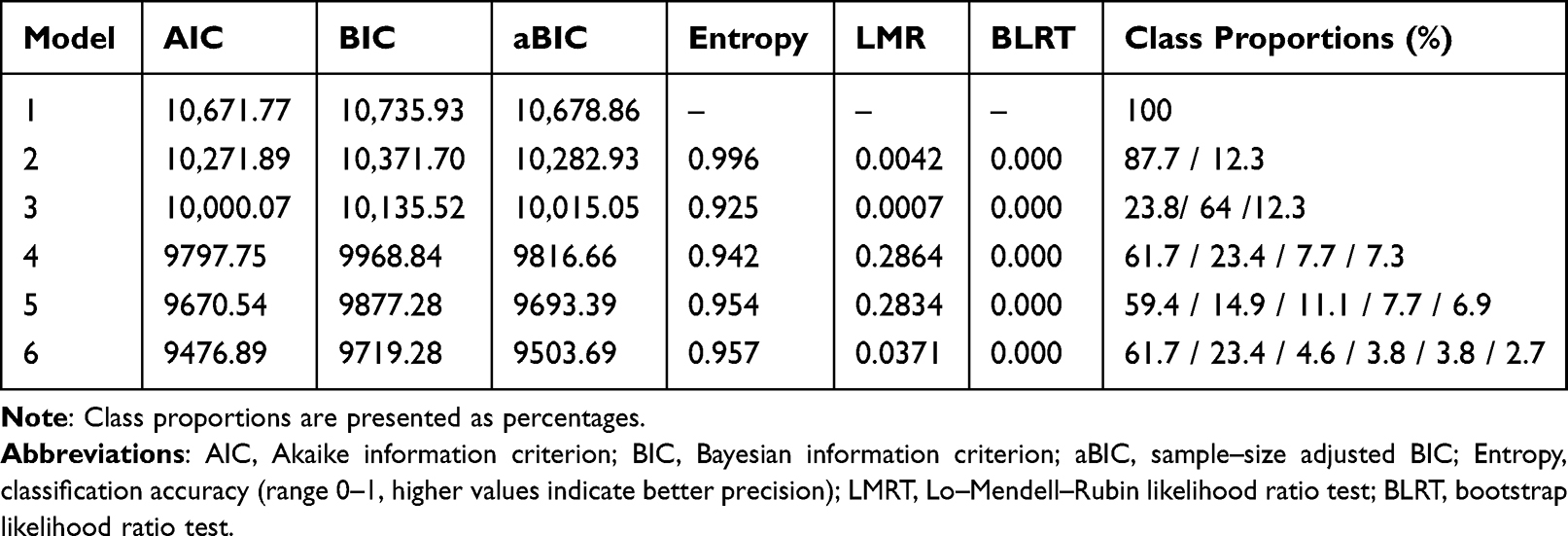 |
Table 2 Fit Indices of Latent Profile Models for Symptom Burden in ACS Patients Post–PCI (n = 261) |
The mean symptom scores of the three latent profiles are presented in Figure 2. Class 1 (n = 62, 23.8%) exhibited high scores across all symptom dimensions, indicating widespread and severe symptom burden, and was therefore labeled the High Symptom Burden Group. Class 2 (n = 167, 64.0%) exhibited consistently low scores across all symptom dimensions and was labeled the Low Symptom Burden Group. Class 3 (n = 32, 12.3%) showed a moderate overall symptom burden, with relatively higher scores for access-site pain, and was labeled the Moderate Symptom Burden with Prominent Access-Site Pain Group.
 |
Figure 2 Mean symptom scores across 3 latent profiles of ACS patients post–PCI. Note: Scores represent mean values for each symptom dimension. |
Univariate Analysis of Latent Symptom Burden Profiles in ACS Patients Post–PCI
Univariate analysis revealed significant differences among latent profile groups in gender, age, BMI, education level, and smoking history (P < 0.05). No significant differences were observed in occupation, insurance type, marital status, residence, ACS type, stent number, vessel disease, Killip class, alcohol use, hypertension, or diabetes (all P > 0.05). Detailed results are presented in Table 1.
Multivariate Analysis of Latent Symptom Burden Profiles in ACS Patients Post–PCI
Multinomial logistic regression was performed using the 3 latent profiles as the dependent variable, with the Low Symptom Burden Group as the reference. After controlling for demographic and lifestyle variables, only BMI remained statistically significant (P < 0.05), suggesting it as an independent predictor of latent profile membership. Compared with patients with BMI <25 kg/m2, overweight or obese patients were more likely to be classified into the Moderate Symptom Burden with Predominant Access–Site Pain Group (OR = 2.41, 95% CI: 1.04–5.59, P = 0.040) and the High Symptom Burden Group (OR = 2.47, 95% CI: 1.31–4.67, P = 0.005). No statistically significant associations were found between sex, age, educational level, or smoking history and latent profile membership (all P > 0.05). Detailed results are presented in Table 3.
 |
Table 3 Multinomial Logistic Regression Analysis of Factors Associated with Latent Symptom Burden Profiles in ACS Patients Post–PCI |
Comparison of Health–Related Quality of Life Across Latent Symptom Burden Profiles in ACS Patients Post–PCI
Differences in SAQ dimensions among the 3 latent profile groups are summarized in Table 4. Significant differences were observed in 4 dimensions: angina stability, angina frequency, treatment satisfaction, and disease perception (all P < 0.05). No significant differences were found in the physical limitation dimension (P = 0.502). These findings indicate that latent profiles of symptom burden are associated with differential impacts on patients’ health–related quality of life.
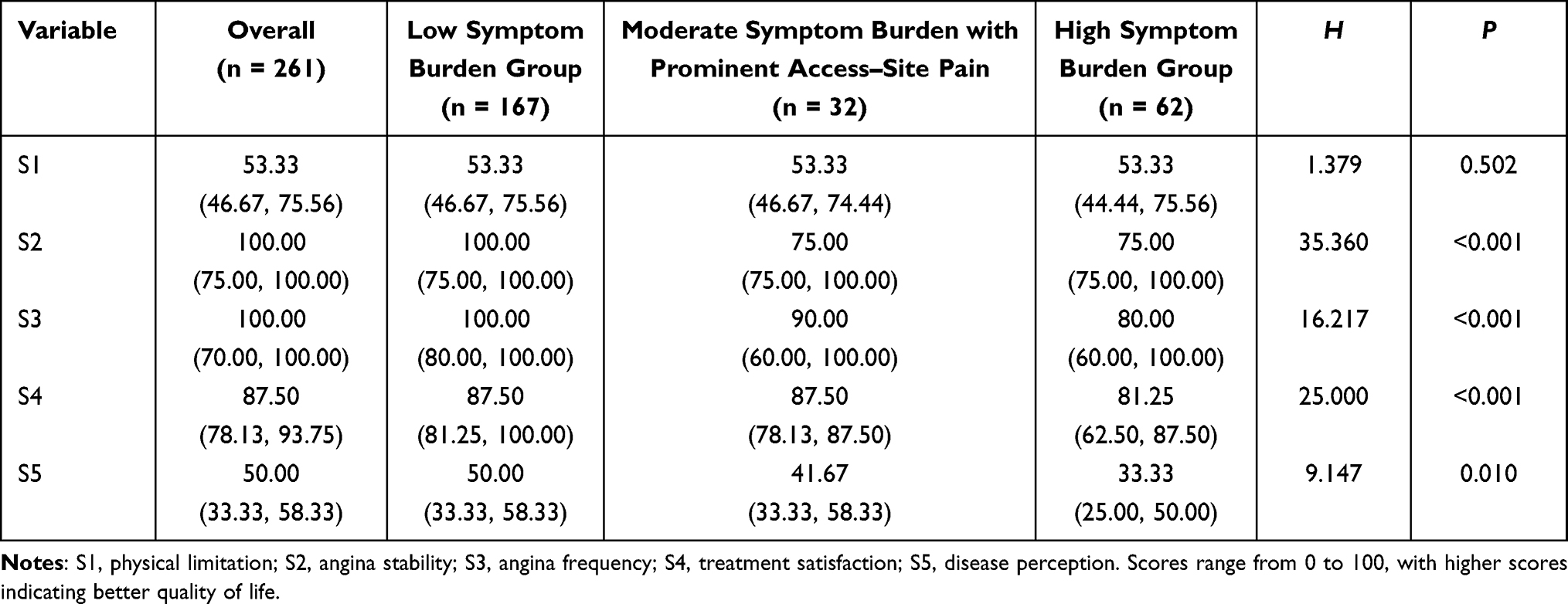 |
Table 4 Comparison of Health–Related Quality of Life Among Latent Symptom Burden Profiles in ACS Patients Post–PCI |
Discussion
This study explored the symptom network structure and latent symptom burden profiles in patients with acute coronary syndrome (ACS) following percutaneous coronary intervention (PCI). Three major findings were identified. Depression emerged as the core symptom in the post–PCI symptom network, while fatigue primarily functioned as a bridging symptom linking multiple symptom nodes. In addition, latent profile analysis revealed three distinct symptom burden subgroups characterized by low, moderate, and high symptom burden patterns, indicating substantial heterogeneity in post–PCI symptom experiences. Furthermore, body mass index (BMI) was identified as an independent predictor of symptom burden profiles, with overweight or obese patients being more likely to experience moderate or high symptom burden. Together, these findings underscore the complexity of symptom interactions and highlight the need for individualized symptom assessment and targeted nursing interventions for ACS patients after PCI.
Symptom Network and Core Symptoms in ACS Patients Post–PCI
Fatigue was the most prevalent symptom in ACS patients post–PCI, with an incidence of 30–76% in cardiovascular populations.34,35 In the present study, fatigue primarily referred to physical fatigue, characterized by persistent exhaustion, low energy, and physical weakness. When persistent, fatigue may contribute to endocrine dysfunction, reduced physiological function, and accelerated disease progression, ultimately impairing quality of life.36 Despite its high prevalence, fatigue was not a core node in the symptom network. Instead, it demonstrated prominent betweenness and closeness centrality, suggesting that it may function as a bridging symptom connecting different symptom nodes within the network. Previous studies have shown that fatigue often diminishes over time, and systematic cardiac rehabilitation can substantially improve functional recovery and alleviate symptoms.37 Therefore, clinicians should dynamically monitor fatigue during hospitalization and early after discharge, with particular attention to patients exhibiting slow recovery or severe symptoms, and implement personalized interventions to enhance overall rehabilitation outcomes.
Depression emerged as the core symptom in the post–PCI symptom network, ranking highest in strength centrality, indicating its pivotal role in maintaining the overall symptom system. Post–PCI patients commonly face risks of disease recurrence, restenosis, and uncertain prognosis,38 which can induce negative emotional responses such as anxiety and depression.39,40 Depression may increase the risk of cardiovascular events by reducing treatment adherence and weakening self–management abilities, while PCI–related physiological stress responses (eg, sympathetic activation and enhanced inflammatory activity) may further exacerbate psychological burden. Previous studies have demonstrated a significant correlation between depression and fatigue, suggesting a close interaction within the symptom network.41,42 Core symptoms maintain strong connections with multiple nodes and exert disproportionate effects on other symptoms; thus, interventions targeting depression may trigger cascading effects across the network, alleviating both psychological and somatic symptoms. Clinicians should integrate routine emotional assessment into follow–up care and systematically incorporate psychological support into post–PCI symptom management, including narrative nursing, acceptance and commitment therapy, and patient group sessions, to reduce psychological stress, enhance resilience, and improve rehabilitation outcomes.
Latent Symptom Burden Profiles in ACS Patients Post–PCI
Latent profile analysis identified three symptom burden subgroups with distinct clinical characteristics, indicating substantial heterogeneity in post–PCI symptom experiences among ACS patients. These findings are consistent with Abbott et al43 in elderly patients undergoing coronary artery bypass grafting, further supporting the clinical value of patient–centered symptom profiling in cardiovascular disease management and providing a foundation for precision and stratified interventions. By identifying different symptom burden patterns, the present study further revealed individual variations in symptom experiences after PCI.10
The Low Symptom Burden Group (C2, 64.0%) exhibited generally low physical symptoms, although fatigue and psychological symptoms remained prevalent. Even in this low–burden subgroup, potential psychological stress responses should be closely monitored. Clinical management may benefit from interventions focusing on stress reduction, secondary prevention, and enhancement of self–management abilities to prevent symptom persistence or recurrence.44,45
The Moderate Symptom Burden with Predominant Access–Site Pain Group (C3, 12.3%) showed an overall moderate symptom burden, with access–site pain being particularly prominent. Notably, some patients in this subgroup underwent repeat PCI within one month after discharge, suggesting that repeated vascular punctures and perioperative procedures may be associated with a symptom pattern dominated by localized pain. Repeated vascular access and perioperative manipulation may increase local tissue irritation and nociceptive stimulation, thereby contributing to the prominence of access–site pain in this subgroup. Although access–site pain is not a core node in the symptom network, it may amplify the overall symptom burden. Previous studies have reported that puncture–site pain is an important node within the symptom network during the first 48 hours post–PCI, being significantly associated with precordial pain and potentially predictive of postoperative complications.46 Prospective pain assessment and individualized management, including optimized hemostasis, pain education, and analgesic interventions, are recommended.
The High Symptom Burden Group (C1, 23.8%) was characterized by widespread and persistent physical and psychological symptoms, with fatigue, anxiety, depression, and sleep disturbances being most prominent. Negative emotions in this subgroup may persist for several months, reflecting ongoing concerns regarding long–term medication adherence, disease recurrence risk, and prognostic uncertainty.39 These patients exhibited markedly reduced health–related quality of life, highlighting the need for multidimensional interventions integrating psychological support, symptom management, and disease education to improve post–PCI rehabilitation outcomes.47
Influencing Factors in ACS Patients Post–PCI
Multivariate analysis showed that BMI was an independent factor associated with latent symptom burden profiles. Patients with BMI ≥25 kg/m2 were more likely to be classified into the Moderate Symptom Burden with Predominant Access–Site Pain Group and the High Symptom Burden Group, suggesting that body weight may play an important role in the development of symptom heterogeneity. Obesity is characterized by metabolic dysregulation and chronic low-grade inflammation. Excess visceral adipose tissue can continuously release pro-inflammatory cytokines, thereby triggering systemic inflammatory responses and disrupting metabolic and immune homeostasis.21,48 Previous studies have shown that depression is closely associated with elevated levels of multiple inflammatory markers.20,49 Combined with the findings of the symptom network analysis in the present study, BMI may enhance interactions among symptoms centered on depression through inflammation-related mechanisms, thereby increasing the likelihood that patients develop a high symptom burden pattern.
From a nursing practice perspective, weight management may serve as an important entry point for symptom management in ACS patients after PCI. Incorporating BMI into routine assessments may facilitate the early identification of patients at high risk of moderate-to-high symptom burden trajectories. Clinical nurses can consider patients’ weight status when conducting systematic symptom assessments and integrate dietary guidance, exercise interventions, and psychological support into long-term management plans. Such multidimensional interventions may weaken the reinforcing interactions among core symptoms and ultimately improve patients’ overall symptom experience and rehabilitation outcomes.
Clinical Implications
By integrating symptom network analysis with latent profile analysis, this study systematically elucidated the interrelationships among post–PCI symptoms and highlighted individual heterogeneity in ACS patients. These findings provide evidence for stratified and precision symptom management. Depression occupied a central position in the post–PCI symptom network, showing strong associations with fatigue, anxiety, and sleep disturbances, suggesting that it may serve as a hub within the overall symptom system. Early identification and targeted intervention for depression may generate cascading effects within the symptom network, thereby improving multidimensional symptom management efficiency and outcomes.
Latent profile analysis revealed substantial heterogeneity in symptom burden. The Low Symptom Burden Group should focus on health education and secondary prevention. The Moderate Symptom Burden with Predominant Access–Site Pain Group requires enhanced perioperative and early afterdischarge pain assessment and management. The High Symptom Burden Group benefits from multidimensional interventions integrating psychological support and somatic symptom management. Additionally, BMI was identified as an important factor distinguishing moderate–to–high symptom burden subtypes and may aid in identifying high–risk patients. Incorporating BMI into early post–PCI assessment, combined with weight management, inflammation control, and psychological interventions, can reduce overall symptom burden and improve rehabilitation outcomes. Collectively, this study establishes a clinical decision–making pathway from core symptom identification to patient stratification and high–risk screening, providing both theoretical and practical guidance for precision symptom management in ACS patients post–PCI.
Limitations
Several limitations should be acknowledged. First, this study employed a single-center cross-sectional design with a relatively limited sample size. Although the total sample size met the minimum theoretical requirements for multinomial logistic regression, the small number of cases in certain latent subgroups (eg, the Moderate Symptom Burden group) may affect the stability of parameter estimates and limit the generalizability of the findings. Second, symptom assessments were conducted only at one month post-PCI, which does not capture dynamic changes in symptom burden over the mid-to-long term, limiting inferences about causal relationships or temporal evolution among symptoms. Third, while clinical theory suggests that patients presenting with acute myocardial infarction (STEMI/NSTEMI) may experience a greater residual symptom burden due to their emergent condition, our study did not observe a statistically significant association between ACS subtype and latent profile membership. This highlights the need for further investigation into how initial disease severity impacts individual symptom trajectories. Finally, objective biological variables, such as inflammatory markers, were not included, restricting the exploration of the underlying biological mechanisms of the symptom network. Future studies should adopt multicenter, large-sample longitudinal designs, incorporating biological and behavioral indicators as well as varied clinical presentations, to further clarify the formation mechanisms and dynamic evolution of symptom networks.
Conclusion
This study demonstrates that depression is the core symptom in the early post–PCI symptom network of ACS patients, exerting a critical influence on the overall symptom system. Latent profile analysis further revealed significant heterogeneity in post–PCI symptom burden, identifying three clinically distinct symptom burden subtypes. Multivariate analysis indicated that body mass index is an important factor distinguishing moderate–to–high symptom burden subtypes. Based on these findings, clinical practice may combine symptom network characteristics with patient BMI to implement stratified assessments, targeting depression management as the core, while integrating pain control and weight regulation strategies. Such individualized and comprehensive symptom management is expected to improve post–PCI rehabilitation outcomes and quality of life.
Data Sharing Statement
The data and materials supporting the findings of this study are available from Ms. Hong Shuqin upon reasonable request. Requests may be directed to [email protected].
Ethical Approval Statement
The study protocol was approved by the Ethics Committee of the Second Affiliated Hospital of Chongqing Medical University (2024 Research Ethics Approval No. 50). The study was conducted in accordance with the Declaration of Helsinki, and all participants provided written informed consent prior to data collection.
Author Contributions
All authors made a significant contribution to the work reported, whether that is in the conception, study design, execution, acquisition of data, analysis and interpretation, or in all these areas; took part in drafting, revising or critically reviewing the article; gave final approval of the version to be published; have agreed on the journal to which the article has been submitted; and agree to be accountable for all aspects of the work.
Disclosure
The authors report no conflicts of interest in this work.
References
1. Tsao CW, Aday AW, Almarzooq ZI, et al. Heart disease and stroke statistics-2023 update: a report from the American Heart Association. Circulation. 2023;147(8):e93–14. doi:10.1161/CIR.0000000000001123
2. Rao SV, O’Donoghue ML, Ruel M, et al. ACC/AHA/ACEP/NAEMSP/SCAI guideline for the management of patients with acute coronary syndromes: a report of the American College of Cardiology/American Heart Association joint committee on clinical practice guidelines. Circulation. 2025;151(13). doi:10.1161/CIR.0000000000001309
3. Chacko L, Howard JP, Rajkumar C, et al. Effects of percutaneous coronary intervention on death and myocardial infarction stratified by stable and unstable coronary artery disease. Circ Cardiovasc Qual Outcomes. 2020;13(2):e006363. doi:10.1161/CIRCOUTCOMES.119.006363
4. Crea F, Bairey Merz CN, Beltrame JF, et al. Mechanisms and diagnostic evaluation of persistent or recurrent angina following percutaneous coronary revascularization. Eur Heart J. 2019;40(29):2455–2462. doi:10.1093/eurheartj/ehy857
5. Song J, Murugiah K, Hu S, et al. Incidence, predictors, and prognostic impact of recurrent acute myocardial infarction in China. Heart. 2021;107(4):313–318. doi:10.1136/heartjnl-2020-317165
6. Kwok CS, Shah B, Al-Suwaidi J, et al. Timing and causes of unplanned readmissions after percutaneous coronary intervention. JACC. 2019;12(8):734–748. doi:10.1016/j.jcin.2019.02.007
7. Chen XY, Huang LH. Advances in research on symptom clusters in patients with acute coronary syndrome. Chin J Nurs. 2024;59(1):117–123.
8. Brogiene L, Urbonaite A, Baksyte G, Macas A. Procedure-related access site pain multimodal management following percutaneous cardiac intervention: a randomized control trial. Pain Res Manag. 2022;2022:6102793. doi:10.1155/2022/6102793
9. Brogiene L, Baksyte G, Klimaite A, Paliokas M, Macas A. Predictive factors for access-site pain chronicity after percutaneous coronary intervention via radial artery access. Pain Res Manag. 2020;2020:8887499. doi:10.1155/2020/8887499
10. DeVon HA, Vuckovic K, Ryan CJ, et al. Systematic review of symptom clusters in cardiovascular disease. Eur J Cardiovasc Nurs. 2017;16(1):6–17. doi:10.1177/1474515116642594
11. Dou JX. Related studies on symptom experiences in patients with acute coronary syndrome [master’s thesis]. Nanning, China: Guangxi University of Chinese Medicine; 2017.
12. McSweeney JC, Cleves MA, Zhao W, Lefler LL, Yang S. Cluster analysis of women’s prodromal and acute myocardial infarction symptoms by race and other characteristics. J Cardiovasc Nurs. 2010;25(4):311–322. doi:10.1097/JCN.0b013e3181cfba15
13. Arslanian-Engoren C, Patel A, Fang J, et al. Symptoms of men and women presenting with acute coronary syndromes. Am J Cardiol. 2006;98(9):1177–1181. doi:10.1016/j.amjcard.2006.05.049
14. Li DZ. Study on symptom clusters and influencing factors in acute coronary syndrome based on the revised symptom management conceptual model [master’s thesis]. Taiyuan, China: Shanxi University of Chinese Medicine; 2021. doi:10.27820/d.cnki.gszxy.2021.000173.
15. Ma HY. Application of symptom management theory in core symptom clusters of patients after coronary artery bypass grafting [master’s thesis]. Yinchuan, China: Ningxia Medical University; 2023.
16. Zhu Z, Yu JW, Yang ZF, Hu TT, Jin YL, He JM. Introduction to symptom co–occurrence network analysis and implementation in R software. Adv Nurs. 2023;38(24):2235–2239. doi:10.16821/j.cnki.hsjx.2023.24.006
17. Zhu Z, Hu TT, Jin YL, He JM, Yu JW, Yang ZF. Basic concepts of symptom networks and their application in symptom management. Adv Nurse. 2023;38(24):2214–2224. doi:10.16821/j.cnki.hsjx.2023.24.002
18. Miaskowski C, Barsevick A, Berger A, et al. Advancing symptom science through symptom cluster research: expert panel proceedings and recommendations. JNCI J Natl Cancer Inst. 2017;109(4):djw253. doi:10.1093/jnci/djw253
19. Wang Y, Kim E, Yi Z. Robustness of latent profile analysis to measurement noninvariance between profiles. Educ Psychol Meas. 2022;82(1):5–28. doi:10.1177/0013164421997896
20. Wang X, Liang X, Jiang M, et al. Systemic inflammation as a mediator in the link between obesity and depression: evidence from a nationwide cohort study. BMC Psychiatry. 2025;25(1):449. doi:10.1186/s12888-025-06892-3
21. Saltiel AR, Olefsky JM. Inflammatory mechanisms linking obesity and metabolic disease. J Clin Invest. 2017;127(1):1–4. doi:10.1172/JCI92035
22. Byrne RA, Rossello X, Coughlan JJ, et al. ESC guidelines for the management of acute coronary syndromes. Eur Heart J. 2023;44(38):3720–3826. doi:10.1093/eurheartj/ehad191
23. Ni P, Chen JL, Liu N. Sample size estimation in quantitative nursing research. Chin J Nurs. 2010;45(4):378–380.
24. Hevey D. Network analysis: a brief overview and tutorial. Health Psychol Behav Med. 2018;6(1):301–328. doi:10.1080/21642850.2018.1521283
25. Xu W, Zhu Z, Yu J, Li J, Lu H. Symptoms experienced after transcatheter arterial chemoembolization in patients with primary liver cancer: a network analysis. Asia-Pac J Oncol Nurs. 2023;11(3):100361. doi:10.1016/j.apjon.2023.100361
26. Nieveen JL, Zimmerman LM, Barnason SA, Yates BC. Development and content validity testing of the cardiac symptom survey in patients after coronary artery bypass grafting. Heart Lung. 2008;37(1):17–27. doi:10.1016/j.hrtlng.2006.12.002
27. Chen XK, Liu JP, Zhang YH, Ge J, Cai Y, Li Y. Reliability and validity of the Chinese version of the Cardiac Symptom Survey in patients after heart valve replacement. Chin J Pract Nurs. 2021;37(2):115–120
28. Spertus JA, Winder JA, Dewhurst TA, Deyo RA, Fihn SD. Monitoring the quality of life in patients with coronary artery disease. Am J Cardiol. 1994;74(12):1240–1244. doi:10.1016/0002-9149(94)90555-X
29. Liu SH. Reliability, validity, and responsiveness of the Chinese version of the Seattle Angina Questionnaire (SAQ) [doctoral dissertation]. Tianjin, China: Tianjin Medical University; 2003. Available from: https://kns.cnki.net/KCMS/detail/detail.aspx?dbcode=CMFD&dbname=CMFD9904&filename=2003095027.nh.
30. Dangas GD, George JC, Weintraub W, Popma JJ. Timing of staged percutaneous coronary intervention in multivessel coronary artery disease. JACC. 2010;3(10):1096–1099. doi:10.1016/j.jcin.2010.09.005
31. Miaskowski C, Dunn L, Ritchie C, et al. Latent class analysis reveals distinct subgroups of patients based on symptom occurrence and demographic and clinical characteristics. J Pain Symptom Manage. 2015;50(1):28–37. doi:10.1016/j.jpainsymman.2014.12.011
32. Zhu Z, Sun Y, Kuang Y, et al. Contemporaneous symptom networks of multidimensional symptom experiences in cancer survivors: a network analysis. Cancer Med. 2023;12(1):663–673. doi:10.1002/cam4.4904
33. Papachristou N, Barnaghi P, Cooper B, et al. Network analysis of the multidimensional symptom experience of oncology. Sci Rep. 2019;9(1):2258. doi:10.1038/s41598-018-36973-1
34. Alsén P, Brink E. Fatigue after myocardial infarction – a two-year follow-up study. J Clin Nurs. 2013;22(11–12):1647–1652. doi:10.1111/jocn.12114
35. Fredriksson‐Larsson U, Alsén P, Karlson BW, Brink E. Fatigue two months after myocardial infarction and its relationships with other concurrent symptoms, sleep quality and coping strategies. J Clin Nurs. 2015;24(15–16):2192–2200. doi:10.1111/jocn.12876
36. Gecaite-Stonciene J, Bunevicius A, Burkauskas J, et al. Validation of the multidimensional fatigue inventory with coronary artery disease patients. Int J Environ Res Public Health. 2020;17(21):8003. doi:10.3390/ijerph17218003
37. Choi HY, Han HJ, Choi JW, Jung HY, Joa KL. Superior effects of high-intensity interval training compared to conventional therapy on cardiovascular and psychological aspects in myocardial infarction. Ann Rehabil Med. 2018;42(1):145. doi:10.5535/arm.2018.42.1.145
38. Tamez H, Secemsky EA, Valsdottir L, et al. Long-term outcomes of percutaneous coronary intervention for in-stent restenosis among medicare beneficiaries. EuroIntervention. 2021;17(5):e380–e387. doi:10.4244/EIJ-D-19-01031
39. Du CS, Hao BC, Mao S, et al. Post-percutaneous coronary intervention psychological disorders predict poor adherence and cardiovascular events in elderly heart failure patients. World J Psychiatry. 2025;15(10):111039. doi:10.5498/wjp.v15.i10.111039
40. Zhang WY, Nan N, Song XT, Tian JF, Yang XY. Impact of depression on clinical outcomes following percutaneous coronary intervention: a systematic review and meta-analysis. BMJ Open. 2019;9(8):e026445. doi:10.1136/bmjopen-2018-026445
41. Kazukauskiene N, Bunevicius A, Gecaite-Stonciene J, Burkauskas J. Fatigue, social support, and depression in individuals with coronary artery disease. Front Psychol. 2021;12:732795. doi:10.3389/fpsyg.2021.732795
42. Sun B, Han J, Tian B, Xu Y, Wang J, Wang J. Associations between depression, resilience, and fatigue in patients with multivessel coronary disease: a cross-lag study. Int J Nurs Sci. 2025;12(2):144–151. doi:10.1016/j.ijnss.2025.02.009
43. Abbott AA, Barnason S, Zimmerman L. Symptom burden clusters and their impact on psychosocial functioning following coronary artery bypass surgery. J Cardiovasc Nurs. 2010;25(4):301–310. doi:10.1097/JCN.0b013e3181cfbb46
44. Xi G, Yang F, Xu J, Liu J, Chen D. Using secondary prevention strategies in patients after PCI: a narrative review. Front Public Health. 2025;13:1562201. doi:10.3389/fpubh.2025.1562201
45. Shi W, Ghisi GLM, Zhang L, Hyun K, Pakosh M, Gallagher R. A systematic review, meta-analysis, and meta-regression of patient education for secondary prevention in patients with coronary heart disease: impact on psychological outcomes. Eur J Cardiovasc Nurs. 2022;21(7):643–654. doi:10.1093/eurjcn/zvac001
46. Li Y, Chen WX, Li GY, et al. Multidimensional symptom network analysis in patients after percutaneous coronary intervention. Chin Nurs Res. 2024;38(7):1129–1138.
47. Tüner H, Polat F, Alıç E, et al. Effectiveness of cardiac rehabilitation in enhancing adherence and improving clinical outcomes post-acute coronary syndrome: a randomized controlled trial. Clin Cardiol. 2025;48(6):e70160. doi:10.1002/clc.70160
48. de Heredia FP, Gómez-Martínez S, Marcos A. Obesity, inflammation and the immune system. Proc Nutr Soc. 2012;71(2):332–338. doi:10.1017/S0029665112000092
49. Köhler CA, Freitas TH, Maes M, et al. Peripheral cytokine and chemokine alterations in depression: a meta-analysis of 82 studies. Acta Psychiatr Scand. 2017;135(5):373–387. doi:10.1111/acps.12698
 © 2026 The Author(s). This work is published and licensed by Dove Medical Press Limited. The
full terms of this license are available at https://www.dovepress.com/terms
and incorporate the Creative Commons Attribution
- Non Commercial (unported, 4.0) License.
By accessing the work you hereby accept the Terms. Non-commercial uses of the work are permitted
without any further permission from Dove Medical Press Limited, provided the work is properly
attributed. For permission for commercial use of this work, please see paragraphs 4.2 and 5 of our Terms.
© 2026 The Author(s). This work is published and licensed by Dove Medical Press Limited. The
full terms of this license are available at https://www.dovepress.com/terms
and incorporate the Creative Commons Attribution
- Non Commercial (unported, 4.0) License.
By accessing the work you hereby accept the Terms. Non-commercial uses of the work are permitted
without any further permission from Dove Medical Press Limited, provided the work is properly
attributed. For permission for commercial use of this work, please see paragraphs 4.2 and 5 of our Terms.
Recommended articles

Combination of TyG Index and GRACE Risk Score as Long-Term Prognostic Marker in Patients with ACS Complicated with T2DM Undergoing PCI
Qin Z, Xu S, Yuan R, Wang Z, Lu Y, Xu Y, Lv Y, Yu F, Bai J, Zhang H, Zhang L, Zhang J, Tang J
Diabetes, Metabolic Syndrome and Obesity 2022, 15:3015-3025
Published Date: 28 September 2022
Advanced Lung Cancer Inflammation Index for Predicting Prognostic Risk for Patients with Acute Coronary Syndrome Undergoing Percutaneous Coronary Intervention
Wang X, Wei C, Fan W, Sun L, Zhang Y, Sun Q, Liu Y, Liu J
Journal of Inflammation Research 2023, 16:3631-3641
Published Date: 23 August 2023
Prognostic Nutritional Index Combined with Triglyceride-Glucose Index to Contrast a Nomogram for Predicting Contrast-Induced Kidney Injury in Type 2 Diabetes Mellitus Patients with Acute Coronary Syndrome After Percutaneous Coronary Intervention
Zhu Y, He H, Qiu H, Zhang X, Wang L, Li W
Clinical Interventions in Aging 2023, 18:1663-1673
Published Date: 3 October 2023
The Impact of Patient Adherence to Dual Antiplatelet Medication Following Percutaneous Coronary Intervention on the Occurrence of Adverse Cardiovascular Events
Mansurova JA, Orekhov A, Zhunuspekova AS, Kassymova AA, Karazhanova LK
Patient Preference and Adherence 2024, 18:425-434
Published Date: 17 February 2024
Value of Absolute Eosinophil Count in Patients with Acute Coronary Syndrome Undergoing Percutaneous Coronary Intervention
Wang Y, Ma X, Yang Z, Li Q, Zhou Y, Gao F, Wang Z
International Journal of General Medicine 2024, 17:1025-1038
Published Date: 18 March 2024