
Back to Journals » Journal of Pain Research » Volume 18
Severe Neck and Low Back Pain Predicts Severe Pain 5 Years Later in Older Men: A Cohort Study
Authors Damm H  , Rosengren BE, Jehpsson L, Ohlsson C, Ribom EL , Mellström D, Karlsson MK
Received 21 June 2025
Accepted for publication 24 October 2025
Published 6 December 2025 Volume 2025:18 Pages 6563—6577
DOI https://doi.org/10.2147/JPR.S547079
Checked for plagiarism Yes
Review by Single anonymous peer review
Peer reviewer comments 2
Editor who approved publication: Professor King Hei Stanley Lam
Henrik Damm,1 Björn E Rosengren,1 Lars Jehpsson,1 Claes Ohlsson,2,3 Eva L Ribom,4 Dan Mellström,5 Magnus K Karlsson1
1Orthopedics, Faculty of Medicine, Departments of Orthopaedics and Clinical Sciences, Lund University, Skåne University Hospital, Malmö, Sweden; 2Sahlgrenska Osteoporosis Centre, Center for Bone Research, Departments of Internal Medicine and Geriatrics, Gothenburg University, Sahlgrenska University Hospital, Gothenburg, Sweden; 3Department of Drug Treatment, Region Västra Götaland, Gothenburg University, Sahlgrenska University Hospital, Gothenburg, Sweden; 4Section of Orthopaedics, Department of Surgical Sciences, Uppsala University, Uppsala, Sweden; 5Departments of Internal Medicine and Geriatrics, Gothenburg University, Sahlgrenska University Hospital, Gothenburg, Sweden
Correspondence: Henrik Damm, Department of Orthopaedics and Clinical Sciences, Lund University, Skåne University Hospital, Malmö, SE-205 02, Sweden, Tel +46 40331000, Email [email protected]
Purpose: To describe the prevalence of neck pain (NP) and low back pain (LBP) of varying severity in older community-dwelling men, identify associated factors, and evaluate whether prevalent NP/LBP are risk factors for experiencing pain 5 years later.
Patients and Methods: MrOS Sweden is a prospective observational study that included 3014 community-dwelling men aged 69– 81 years, of whom 1962 attended a 5-year follow-up. NP/LBP were assessed based on 1-year prevalence (yes/no), pain severity (none, mild, moderate, severe), and the presence of radicular pain with or without motor deficits (yes/no), at both baseline and follow-up.
Results: At baseline, the 1-year prevalence for having either NP, LBP, or both was 55%. The 1-year prevalence for NP was 29% and for LBP 45%. Among men with NP, 18% reported severe pain, while 17% of men with LBP reported severe pain. Men with NP at baseline had a relative risk (RR) of 4.0 (95% CI: 3.4– 4.6) for reporting NP 5 years later, compared to men without NP at baseline. Men with severe NP had an RR of 10.7 (95% CI: 7.5– 15.1) for reporting severe NP 5 years later, compared to men without severe NP at baseline. The corresponding RRs for LBP were 2.8 (95% CI: 2.5– 3.1) and 6.5 (95% CI: 4.9– 8.6). Poor self-rated health and dizziness were associated with NP/LBP at both time points, while smoking was associated with lower risk of NP.
Conclusion: More than half of community-dwelling men aged 69– 81 experience pain in the spinal region during a year (nearly one-third NP and just below half LBP). The majority experience only mild to moderate pain. Baseline pain, especially severe pain, strongly predicts pain 5 years later, and associated factors may help identify high-risk groups suitable for targeted interventions.
Keywords: ageing, epidemiology, musculoskeletal pain, population-based, radiculopathy, motoric symptoms
Introduction
Neck pain (NP) and low back pain (LBP) are leading causes of disability, where numerous studies confirm their substantial burden on both affected individuals and society.1–5 For elderly men, NP/LBP significantly impacts healthcare utilization, leading to increased costs for outpatient specialty care and hospital admissions.6 Beyond disability, NP/LBP profoundly diminishes their quality of life, as nearly half of older men with LBP report poor self-estimated health and experience increased depressive symptoms, threatening their autonomy, independence, and overall well-being.7–9 Reported 1-year prevalence rates vary widely, ranging from 17% to 66% for NP and from 9% to 75% for LBP.2,7,8,10–12 These differences may be attributed to variations in inclusion criteria regarding sex, age, cohort characteristics and requirement of symptom duration for being classified as having pain.2,7,8,10–12 While some studies define pain on presence regardless of duration, others require symptoms for at least 12 weeks.2,7,8,10–12 In previous analyses of the Osteoporotic Fractures in Men (MrOS) Sweden, a population-based cohort of community-dwelling men aged 69–81 years, the 1-year prevalences of NP were reported as 29%, and that of LBP as 45%.13,14 In these studies, no minimum symptom duration was required to classify an individual as having pain. Due to the heterogeneity in pain definitions across studies, it is a challenge to compare studies as well as establish a definitive 1-year prevalence for NP/LBP.
When comparing studies that evaluate the prevalences of NP/LBP with varying severity, the heterogeneity between studies becomes even more pronounced, making cross-study comparisons particularly challenging.15–19 In the MrOS Sweden cohort, 23% of participants with NP reported severe morbidity and 20% of participants with LBP, defined as severe troublesomeness from pain, radiculopathy, and/or motor deficits in the extremities.13,14 The severity was in these studies based on the subjective assessments of troublesomeness from NP/LBP and/or associated symptoms (that is level of morbidity and not only level of pain), without predefined criteria related to activity restrictions or use of analgesics.
NP/LBP have further been associated with various biopsychosocial factors, including obesity, anxiety, depression, low education attainment, poor self-perceived health status, passive coping strategies, sleep disorders, physical inactivity, smoking, number of comorbidities, and a history of falls.8,17,20–22 In the MrOS Sweden cohort, LBP was associated with high BMI, being born outside Sweden, smoking, lack of daily walking, poor self-rated health, depression, comorbidities (eg, diabetes, stroke, coronary heart disease, pulmonary disease and/or cancer), dizziness, a tendency to fall, and use of walking aids.9 If the same factors are associated with NP remains to be determined.
The natural course of NP/LBP in the elderly remains a topic of discussion,11,12,17,23,24 as well as the natural course of severe NP/LBP.17,25,26 The mechanisms underlying the development of chronic pain are often unclear; however, it is suggested that the presence of other pain, changes in brain chemistry due to pain stimuli, genetic factors, and central sensitization initiated by peripheral mechanisms all play a role in its development and persistence.27 Because of these complex mechanisms, treatment typically involves a multifactorial approach that combines pharmacological interventions (eg, paracetamol, NSAIDs, muscle relaxants) with non-pharmacological strategies (eg, exercise, psychological therapies), while also addressing comorbidities and lifestyle factors. Given the global increase in the elderly population and high prevalence of NP/LBP, it is not feasible for all individuals that experience NP/LBP to be referred for clinical evaluation and treatment. It is therefore of value to identify individuals at high risk of developing long-standing or recurrent NP/LBP, especially severe pain, individuals who would benefit most from interventions.
The primary aim of this study was to describe the prevalence of NP/LBP in community-dwelling older men and to evaluate whether men with prevalent NP/LBP are at increased risk of having pain 5 years later. We asked: is there an association between prevalent (i) NP/LBP and NP/LBP 5 years later, (ii) severe NP/LBP and severe NP/LBP 5 years later, (iii) NP/LBP with radicular pain (with or without motor deficits) and similar symptoms 5 years later, and (iv) which factors are independently associated with NP/LBP?
Materials and Method
The Osteoporotic Fracture in Men Study (MrOS) Sweden is a multicenter study that includes 3014 community-dwelling men aged 69–81 years. Participants were recruited by the Department of Geriatrics, Sahlgrenska University Hospital, Gothenburg (n=1010), the Department of Orthopaedics, Skåne University Hospital, Malmö (n=1005), and the Department of Internal Medicine, Uppsala University Hospital, Uppsala (n=999) (Figure 1). The primary aim of the study is to evaluate risk factors for osteoporosis, falls and fractures. The design of this prospective observational cohort study has been described in detail previously.28–30 The men were randomly selected from the national population register and invited to the study through surface mail, with a response letter included. Individuals who did not respond received a second letter, and those who did not return this letter were contacted by telephone. Those who did not respond at all were classified as non-responders. A total of 45% of the invited men participated. The baseline examination took place between October 2001 and December 2004. To be eligible, the men had to be community-dwelling, able to walk without the assistance of another person, without bilateral hip prostheses, capable of providing self-reported data and written informed consent.
 |
Figure 1 Flow chart of study participants. |
The examinations used in this study included self-administered and interviewer-administered questionnaires that evaluated lifestyle, medical history, nutritional intake, functional status, and quality of life. Specific questions addressed whether participants had experienced NP and/or LBP during the year preceding the evaluation (yes/no), how troublesome the symptoms were perceived to be (not troublesome at all, slightly, moderately, or severely troublesome), and whether they had experienced associated radicular pain (yes/no) and/or motor deficits (yes/no) (supplementary Figure 1). The questions have not undergone formal validation. The baseline evaluation also included clinical measurements of weight and height. Two consecutive height measurements were taken during the same session, and the average was used. In cases where the measurements differed by ≥5, a third measurement was taken, and the average of the two closest values was used. Body mass index (BMI) was calculated as the weight divided by the height squared (kg/m2). The same evaluations and measurements were repeated at the 5-year follow-up, in which 1962 men participated (65% of the initial 3014 participants). For prevalence analyses at baseline, 3000 men provided valid data on NP and 3007 men on LBP. For longitudinal analyses examining the association between baseline and 5-year follow-up, 1931 men had valid NP data and 1951 men had valid LBP data at both time points.
Dropout analysis showed that among the 1052 men who did not attend the 5-year follow-up (418 had died and 634 denied participation), the non-participants were at baseline older, more likely to live alone, had lower level of education, had more comorbidities, used walking aids to a greater extent, had shorter daily walking distances, reported poorer health, were more frequently smokers, and more frequently had high alcohol intake than those who participated at the 5-year follow-up (Table 1). In contrast, there were minimal differences in NP/LBP severity and/or associated symptoms (Table 2).
 |
Table 1 Baseline Characteristics in All 3014 Men in the MrOS Study, the 1052 Men Who Attended Only at Baseline, and the 1962 Men Who Attended Both Baseline and 5-Year Follow-Up |
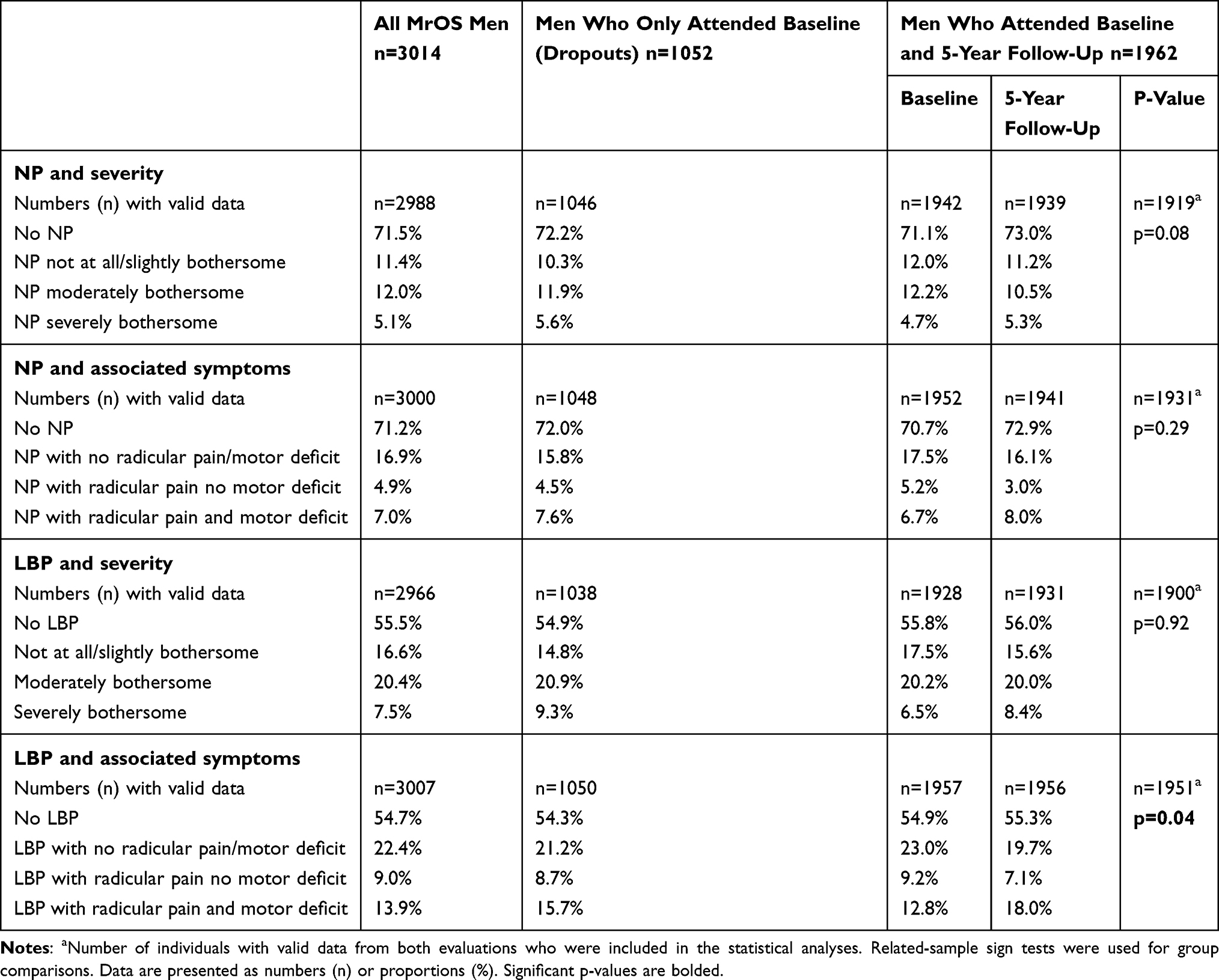 |
Table 2 Distribution of Neck Pain (NP) and Low Back Pain (LBP) by Severity and Associated Symptoms in the MrOS Study |
We used Statistical Package for Social Sciences (SPSS version 28, IBM, Armonk, NY, USA) for statistical analysis. Alluvial diagrams were created using R (version 4.4.3, R Foundation for Statistical Computing) to visually depict the proportions of individuals reporting the same or different NP/LBP status at baseline and the 5-year follow-up. Categorical variables are presented as numbers (n) and proportions (%) with 95% confidence intervals (95% CI) and continuous variables as means ± standard deviations (SD). Severity scores were categorized into three groups: mild (not at all/slightly troublesome), moderate (moderately troublesome), and severe (severely troublesome). For group comparisons, we used the chi-square test for independent categorical variables, the sign test for paired categorical data, and calculated Relative Risks (RR) with 95% CI to further describe our findings. We regarded p < 0.05 as a statistically significant difference.
When evaluating the associations between possible risk factors for NP/LBP, we used a multivariable regression model to calculate Odds Ratios (OR) with 95% CI. Risk factors were categorized as follows: BMI (<25, 25–29.9, ≥30 kg/m2), alcohol consumption (<2, ≥2 drinks/day), smoking (non/former, current), daily walking (0, 1–3, >3 km/day), country of birth (Sweden, outside Sweden), education (public school, primary, high school, university/college), living arrangement (alone, with another), serious comorbidities (presence of at least one of the following: diabetes, stroke, coronary heart disease, pulmonary disease or malignancy), falls in the last 12 months (yes, no), dizziness (yes, no), walking aids (none, cane/crutches/walker), and self-rated health (excellent, good, fair, poor/very poor). An additional multivariable logistic regression was performed to illustrate the potential influence of confounding factors on the reported RRs, this analysis is provided as supplementary Table 1.
The Ethics Committees and the radiological committee at each center approved the study (LU 693–00, Gbg 014–01, Ups 01–057). All participants gave written informed consent before the study started, and the study was performed in accordance with the Declaration of Helsinki.
Results
Background data of MrOS Sweden are presented in Table 1 and Table 2. At baseline, 55% (95% CI: 53–57%) of the participants reported any pain (NP, LBP or both), while 19% (95% CI: 18–21%) of the participants reported both NP and LBP.
Neck Pain (NP)
The 1-year prevalence of NP was at baseline 29% (95% CI: 27–30%). There was no difference when comparing baseline and 5-year follow-up in the proportion of individuals with/without NP (Table 2).
At baseline, 11% (95% CI: 10–13%) reported mild NP, 12% (95% CI: 11–13%), moderate NP, and 5% (95% CI: 4–6%) severe NP. There was no difference in the distribution of pain severity when comparing baseline and 5-year follow-up (Table 2).
At baseline, 17% (95% CI: 16–18%) reported NP without radicular pain or motor deficits, 5% (95% CI: 4–6%) NP with radicular pain but no motor deficits, and 7% (95% CI: 6–8%) NP with radicular pain and motor deficit. There was no difference in the distribution of associated symptoms when comparing baseline and 5-year follow-up (Table 2).
When including individuals with valid NP data both occasions, individuals with NP at baseline had, compared to those with no NP at baseline, RR 4.0 (95% CI: 3.4–4.6) for having NP at the 5-year follow-up. Individuals with severe NP at baseline had, compared to those without severe NP at baseline (including individuals with no NP as well as those with mild or moderate NP), RR 10.7 (95% CI: 7.5–15.1) for having severe NP at the 5-year follow-up. Individuals with NP with radicular pain (with or without motor deficits) had, compared to those with no NP or NP without radicular pain at baseline, RR 7.5 (95% CI: 6.0–9.5) for having NP with radicular pain at the 5-year follow-up. The data used for the RR calculations are presented in Tables 3–5 and further visualized in Figures 2–4.
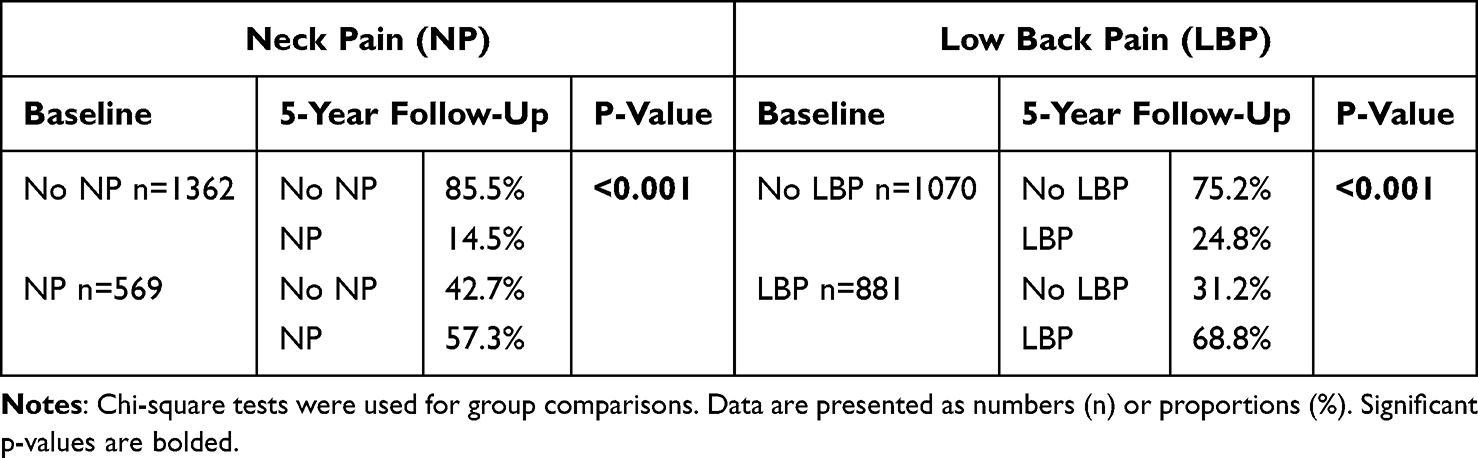 |
Table 3 Proportion of Individuals with and without Neck Pain (NP)/Low Back Pain (LBP) at the 5-Year Follow-Up Among the 1931 Men with Valid NP Data and the 1951 Men with Valid LBP Data at Both Baseline and the 5-Year Follow-Up, Stratified by Whether They Had No Pain or Had Pain at Baseline |
 |
Table 4 Proportion of Individuals with No, Mild, Moderate, or Severe Neck Pain (NP)/Low Back Pain (LBP) at the 5-Year Follow-Up Among the 1919 Men with Valid NP Severity Data and the 1900 Men with Valid LBP Severity Data at Both Baseline and the 5-Year Follow-Up, Stratified by Whether They Had No Pain or Had Pain of Different Severities at Baseline |
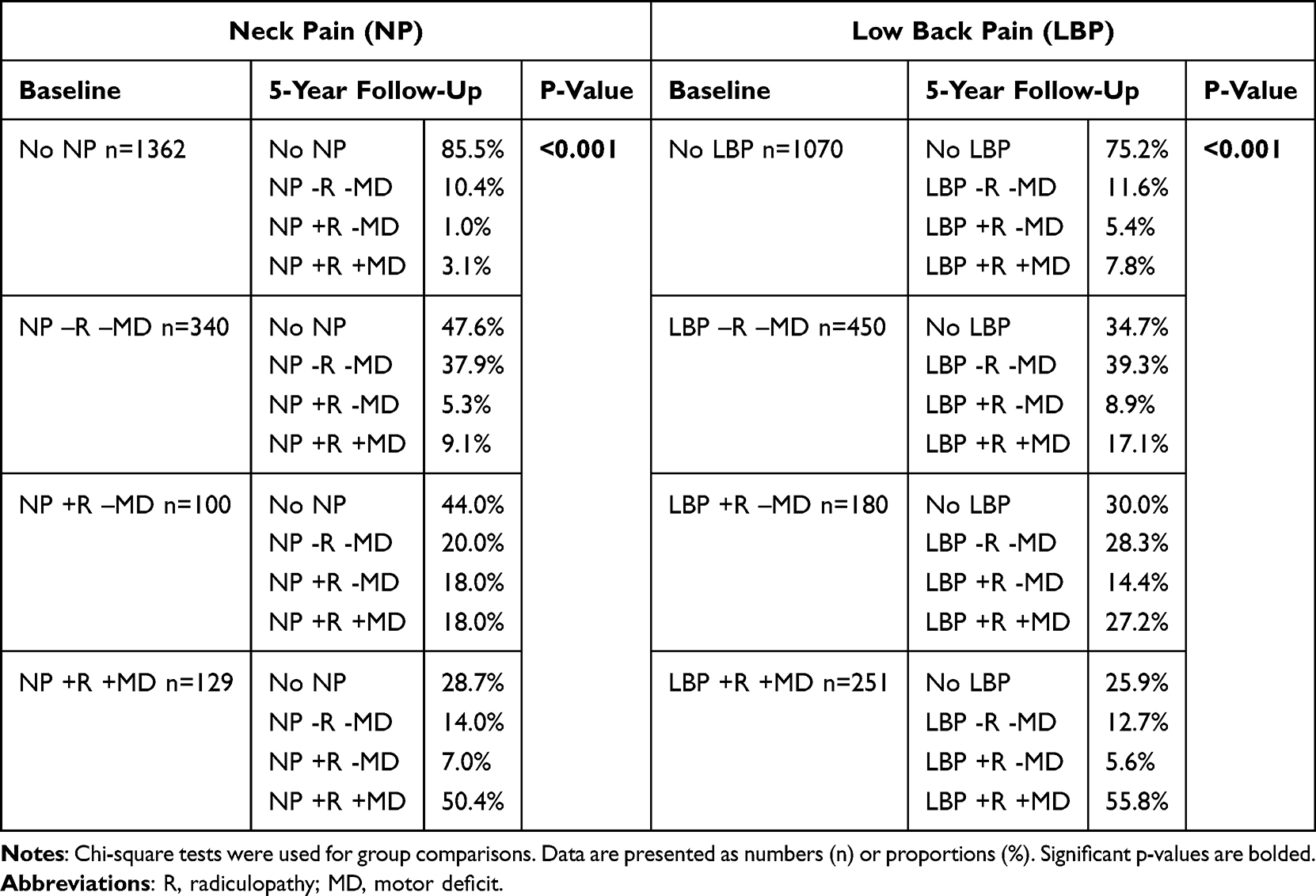 |
Table 5 Proportion of Individuals Reporting No Neck Pain/Low Back Pain (NP/LBP), or NP/LBP with Radiculopathy (R) or NP/LBP + R + Motor Deficit (MD) at the 5-Year Follow-Up Among the 1931 Men with Valid NP Data and the 1951 Men with Valid LBP Data at Both Baseline and the 5-Year Follow-Up, Stratified by Whether They Had No Pain with or Without These Associated Symptoms at Baseline |
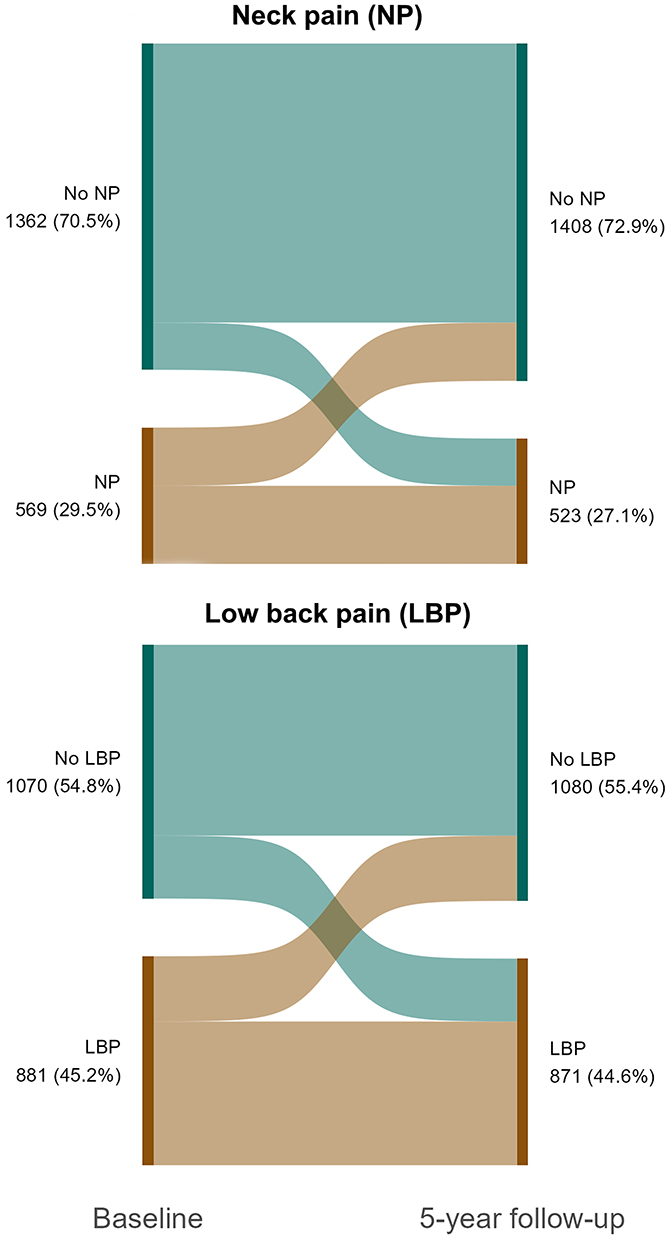 |
Figure 2 Alluvial diagrams illustrating changes in clinical status between baseline and 5-year follow-up among the 1931 men who provided neck pain (NP) data and the 1951 men who provided low back pain (LBP) data at both time points. Data are presented as numbers with proportions (%) in brackets. |
 |
Figure 3 Alluvial diagrams illustrating changes in neck pain (NP)/low back pain (LBP) severity between baseline and 5-year follow-up among the 1919 men with NP severity data and the 1900 men with LBP severity data at both time points. Data are presented as numbers with proportions (%) in brackets. |
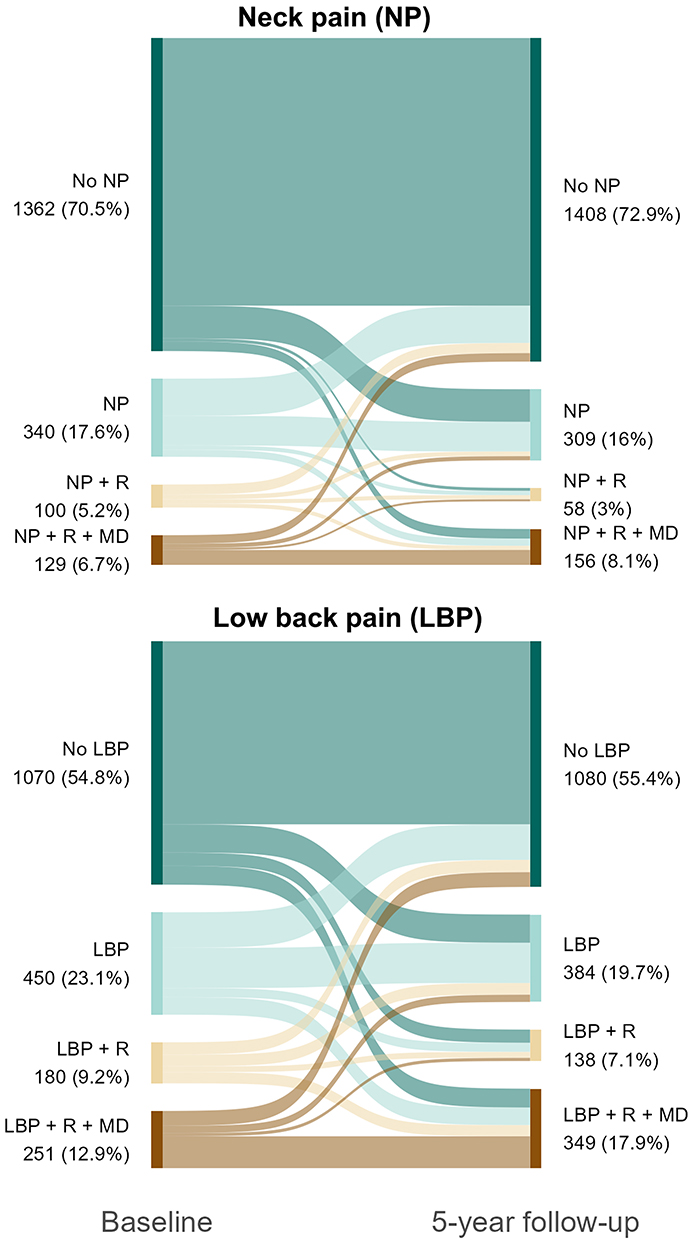 |
Figure 4 Alluvial diagrams illustrating changes in neck pain (NP) and low back pain (LBP) symptom categories; no pain; NP or LBP with radiculopathy (R); and NP or LBP with R and motor deficit (MD) between baseline and 5-year follow-up. NP associated symptoms were reported by 1931 men and LBP associated symptoms by 1951 men at both time points. Data are presented as numbers with proportions (%) in brackets. |
In our multivariable regression model, dizziness and low self-rated health were positively associated with having NP at baseline and at both baseline and 5-year follow-up, while smoking was inversely associated. The use of walking aids was positively associated with NP at both baseline and the 5-year follow-up (Table 6).
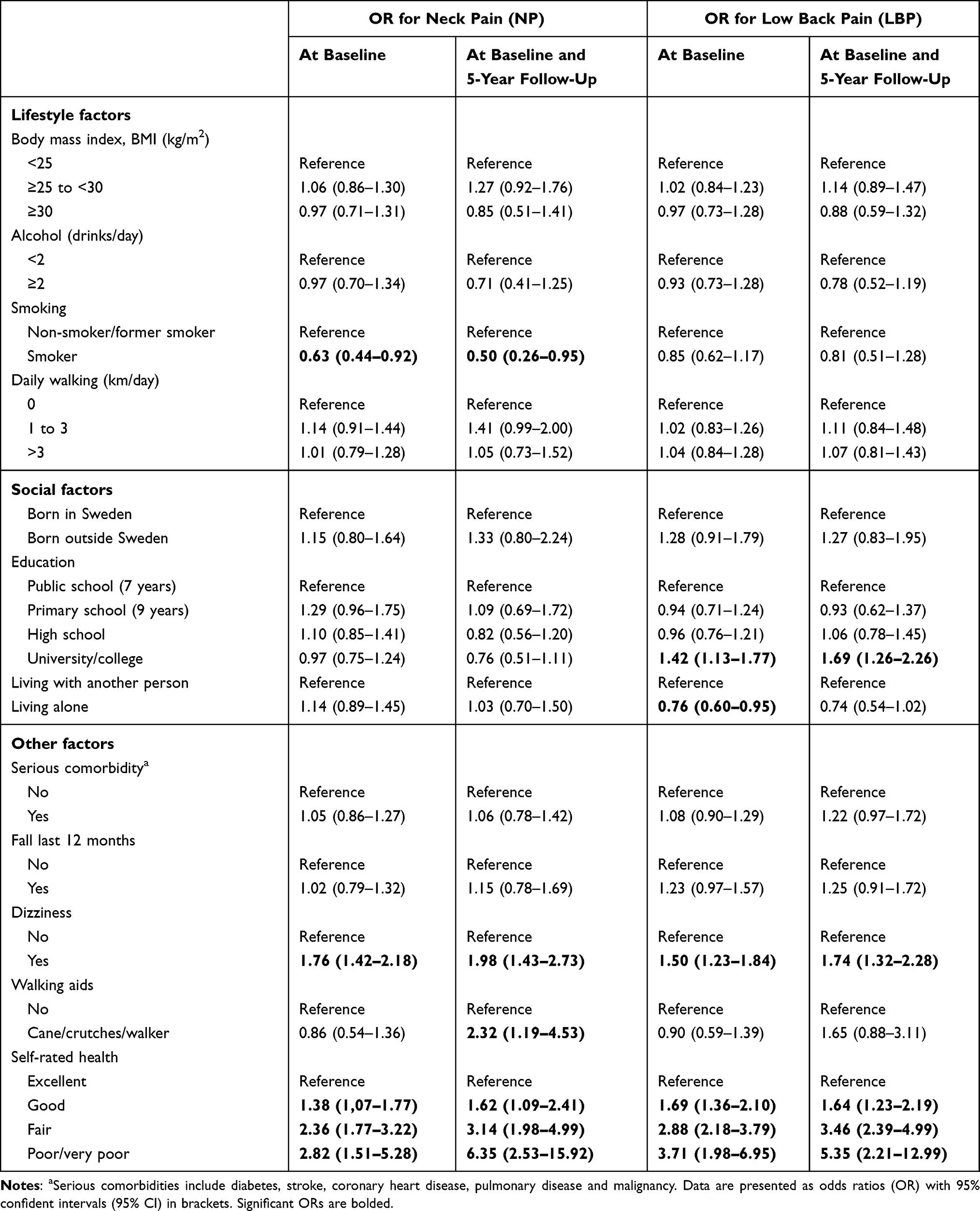 |
Table 6 Multivariable Logistic Regression Evaluating the Associations Between Exposures/Factors and Risk of Neck Pain (NP)/Low Back Pain (LBP) |
Low Back Pain (LBP)
The 1-year prevalence of LBP was at baseline 45% (95% CI: 44–47%). There was no difference when comparing baseline and 5-year follow-up in the proportion of individuals with/without LBP (Table 2).
At baseline, 17% (95% CI: 15–18%) reported mild LBP, 20% (95% CI: 19–22%) moderate LBP, and 8% (95% CI: 7–9%) severe LBP. There was no difference in the distribution of pain severity when comparing baseline and 5-year follow-up (Table 2).
At baseline, 22% (95% CI: 21–24%) reported LBP without radicular pain or motor deficits, 9% (95% CI: 8–10%) LBP with radicular pain but no motor deficits, and 14% (95% CI: 13–15%) LBP with radicular pain and motor deficit. There was a higher proportion of individuals reporting LBP with radicular pain and motor deficit at the 5-year follow-up (Table 2).
When including individuals with valid LBP data both occasions, individuals with LBP at baseline had, compared to those with no LBP at baseline, RR 2.8 (95% CI: 2.5–3.0) for having LBP at the 5-year follow-up. Individuals with severe LBP at baseline had, compared to those without severe LBP at baseline (including individuals with no LBP as well as those with mild or moderate LBP), RR 6.5 (95% CI: 4.9–8.6) for having severe LBP at the 5-year follow-up. Individuals with LBP with radicular pain (with or without motor deficits) had, compared to those with no LBP or LBP without radicular pain at baseline, RR 3.1 (95% CI: 2.7–3.6) for having LBP with radicular pain at the 5-year follow-up. The data used for the RR calculations are presented in Tables 3–5 and further visualized in Figures 2–4.
In our multivariable regression model, university/college education, dizziness and poor self-rated health were positively associated with having LBP at both baseline and 5-year follow-up. Living alone was inversely associated with LBP at baseline (Table 6).
Discussion
This study shows that more than half of community-dwelling men aged 69–81 experience spinal pain during a year, close to one third NP and just below half LBP, although mostly with mild or moderate severity. Men with prevalent NP/LBP at baseline have 3–4 times higher risk of experiencing pain in the same region 5 years later, compared to those without pain at baseline. Furthermore, men with severe prevalent NP/LBP at baseline have 7–11 times higher risk of experiencing severe pain in the same region 5 years later, compared to those without severe pain at baseline. We also identified factors that are associated with having NP/LBP both at baseline and 5 years later. It seems possible to identify subgroups of older community-dwelling men at high risk for having severe NP/LBP in an extended perspective.
The 1-year prevalence of NP was 29%, and of LBP 45%, which aligns with previous findings in older male populations.2,10,12,31,32 This supports the notion that NP/LBP are among the most common chronic pain conditions.27,33 Given the high prevalence, it is not feasible to refer all individuals with pain, particularly those with mild or moderate symptoms, for thorough medical examination and treatment. Previous research also indicates that NP/LBP prevalence increases through adulthood, peaking around age 50 for NP and age 60 for LBP.1–3,8,31,34 In middle-aged adults, these patterns can be attributed to heavy physical work demands and inadequate workplace ergonomics.11,23 In older populations, prevalence tends to stabilize or even decline in the oldest age groups.1–3,8,31,34 Our findings support the stability of NP/LBP in older men, as prevalence did not change between baseline and 5-year follow-up.
We further found an association between NP/LBP at baseline and NP/LBP 5 years later, consistent with the literature indicating that NP/LBP tend to be recurrent and persistent.27,33 For example, Parreira et al reported that 58% of 1685 older Australian men with LBP at baseline reported LBP again 2 years later, compared to 28% of those without baseline LBP.17 In our study, the corresponding proportions were 73% and 27%, respectively (5 years later). Importantly, we also demonstrated that men with severe pain at baseline had significantly higher risk of experiencing severe pain 5 years later (11-fold for NP and 7-fold for LBP), supporting the potential for early identification of high-risk groups.
Another discussion concerns the longitudinal course of NP/LBP associated symptoms. Tubach et al reported that radicular pain is associated with future episodes of similar symptoms among working adults.23 We have found no such studies in older men, but our study suggests a similar risk pattern in older men. Given that radicular symptoms are associated with greater pain severity than non-radicular NP/LBP,1,13,14 this may be another group suitable for targeted interventions.
The primary aim of our multivariable analysis was to identify factors being associated with NP/LBP both at baseline and at the 5-year follow-up, that is pain in an extended perspective. In line with common practice, we used ORs, which may overestimate RRs when outcomes are common, and their interpretation should therefore be considered with this limitation in mind. Poor self-rated health and dizziness were associated with NP/LBP at both evaluations, consistent with prior findings, including those from the MrOS US cohort.8,18,35,36 The inverse association between smoking and NP was however unexpected, as smoking has generally been linked to higher prevalence of both NP and LBP.37–39 However, the association between smoking and NP has been reported as weaker than that with LBP,39 and there are also other studies that report smokers to have a lower prevalence of NP/LBP than non-smokers.8 Another unexpected finding was the positive association between high educational level (university/college) and LBP, data that contrasts previous publications.8,40,41 We have no clear explanation for this finding, but one reason could be that different studies define high education differently, and that the mechanical load in manual workers may be different in different societies. Our findings, including the heterogeneity to other studies, support the view that the longitudinal course of NP/LBP is complex, involving physical, psychological, and socioeconomic factors6,31,41,42 as well as highlight the complexity when evaluating the relationship between lifestyle factors and NP/LBP.
Although existing literature suggests that many acute episodes of NP/LBP resolve within weeks or months, substantial evidence indicates that a large proportion of individuals experience episodic and recurrent problems,11,12,23,43 a pattern also supported by our results. In many cases, the pain is mild and does not require specific treatment. When treatment is necessary, interventions for acute NP/LBP include pharmacological therapies (paracetamol, NSAIDs and muscle relaxants), exercise, and patient education.23,43 For persistent NP/LBP, while no treatments offer a cure, interventions such as exercise and psychological approaches can effectively reduce pain and disability, particularly when integrated into a multifactorial management plan that consider biological, psychological, and social factors.20,23,43 Early identification of high-risk groups for long-term pain is a key strategy to decrease disability associated with NP/LBP.
Study strengths include the use of a large, prospective, population-based cohort of older men within a narrow age range, the use of prospective data, and the comparison between baseline and the 5-year follow-up by using the same individuals. Further strengths include the rich dataset and the large number of participants, which enabled us to control for multiple confounding variables in the multivariable analysis.
Limitations include the risk of selection bias due to dropouts (who were older and unhealthier than those who remained in the study). An attendance rate of 45% is however usually regarded as acceptable.10 Other limitations include the absence of data on pain duration, frequency, and periodicity, as well as the lack of information on treatments received (eg, physiotherapy, chiropractic care, surgery, or analgesic use). Therefore, we cannot claim to describe the natural course of NP/LBP but rather the development of pain in men managed under standard care practices. The narrow age span at baseline, as well as a follow-up period of only 5 years, makes conclusions regarding the influence of age on NP/LBP questionable (which is why age was not included in the multivariable analysis). Furthermore, our inferences are limited to older, community-dwelling men, not to women, younger age groups, or institutionalized individuals.
Conclusion
More than half of community-dwelling men aged 69–81 experience pain in the spinal region during a year (nearly one-third NP and just below half LBP). The majority experience only mild to moderate pain. Baseline pain, especially severe pain, strongly predicts pain 5 years later, and associated factors may help identify high-risk groups suitable for targeted interventions.
Data Sharing Statement
The data that supports the findings of this study are available on request from the corresponding author H.D. The data is not publicly available because their contents could compromise research participant privacy/consent.
Acknowledgments
The authors acknowledge the use of ChatGPT (GPT-4.0, developed by OpenAI) to improve the language and clarity of this manuscript. As English is not the authors’ native language, the tool was used specifically to assist with refining grammar, vocabulary, sentence structure, and overall readability. No content or ideas were generated by the tool.
Author Contributions
All authors made a significant contribution to the work reported, whether that is in the conception, study design, execution, acquisition of data, analysis and interpretation, or in all these areas; took part in drafting, revising or critically reviewing the article; gave final approval of the version to be published; have agreed on the journal to which the article has been submitted; and agree to be accountable for all aspects of the work.
Funding
Funding was received from ALF (2022/0133), FoUU (2025-2026-2024-2254), the Herman Jarnhard Foundation (2024), and Skåne University Hospital Foundations (2022/2022).
Disclosure
The author(s) report no conflicts of interest in this work.
References
1. Hagen KB, Thune O. Work incapacity from low back pain in the general population. Spine. 1998;23(19):2091–2095. doi:10.1097/00007632-199810010-00010
2. Hoy D, Bain C, Williams G, et al. A systematic review of the global prevalence of low back pain. Arthritis Rheum. 2012;64(6):2028–2037. doi:10.1002/art.34347
3. Hoy D, March L, Woolf A, et al. The global burden of neck pain: estimates from the global burden of disease 2010 study. Ann Rheumatic Dis. 2014;73(7):1309–1315. doi:10.1136/annrheumdis-2013-204431
4. Melman A, Lord HJ, Coombs D, Zadro J, Maher CG, Machado GC. Global prevalence of hospital admissions for low back pain: a systematic review with meta-analysis. BMJ Open. 2023;13(4):e069517. doi:10.1136/bmjopen-2022-069517
5. Vos T, Flaxman AD, Naghavi M, et al. Years lived with disability (YLDs) for 1160 sequelae of 289 diseases and injuries 1990-2010: a systematic analysis for the global burden of disease study 2010. Lancet. 2012;380(9859):2163–2196. doi:10.1016/s0140-6736(12)61729-2
6. Ritzwoller DP, Crounse L, Shetterly S, Rublee D. The association of comorbidities, utilization and costs for patients identified with low back pain. BMC musculoskelet disord. 2006;7:72. doi:10.1186/1471-2474-7-72
7. de Souza IMB, Sakaguchi TF, Yuan SLK, et al. Prevalence of low back pain in the elderly population: a systematic review. Clinics. 2019;74:e789. doi:10.6061/clinics/2019/e789
8. Fernández-de-las-Peñas C, Hernández-Barrera V, Alonso-Blanco C, et al. Prevalence of neck and low back pain in community-dwelling adults in Spain: a population-based national study. Spine. 2011;36(3):E213–9. doi:10.1097/BRS.0b013e3181d952c2
9. Kherad M, Rosengren BE, Hasserius R, et al. Risk factors for low back pain and sciatica in elderly men—the MrOS Sweden study. Age Ageing. 2016;46(1):64–71. doi:10.1093/ageing/afw152
10. Fejer R, Kyvik KO, Hartvigsen J. The prevalence of neck pain in the world population: a systematic critical review of the literature. Eur Spine J. 2006;15(6):834–848. doi:10.1007/s00586-004-0864-4
11. Hoy D, Brooks P, Blyth F, Buchbinder R. The Epidemiology of low back pain. Best Pract Res Clin Rheumatol. 2010;24(6):769–781. doi:10.1016/j.berh.2010.10.002
12. Hoy DG, Protani M, De R, Buchbinder R. The epidemiology of neck pain. Best Pract Res. 2010;24(6):783–792. doi:10.1016/j.berh.2011.01.019
13. Damm H, Jönsson A, Rosengren BE, et al. Prevalence and morbidity of neck pain: a cross-sectional study of 3000 elderly men. J Orthop Surg Res. 2023;18(1):36. doi:10.1186/s13018-023-03508-y
14. Ghanei I, Rosengren BE, Hasserius R, et al. The prevalence and severity of low back pain and associated symptoms in 3,009 old men. Eur Spine J. 2014;23(4):814–820. doi:10.1007/s00586-013-3139-0
15. Brochet B, Michel P, Barberger-Gateau P, Dartigues JF. Population-based study of pain in elderly people: a descriptive survey. Article Age and Ageing. 1998;27(3):279–284. doi:10.1093/ageing/27.3.279
16. Cai Y, Leveille SG, Shi L, Chen P, You T. Chronic pain and risk of injurious falls in community-dwelling older adults. J Gerontol a Biol Sci Med Sci. 2021;76(9):e179–e186. doi:10.1093/gerona/glaa249
17. Parreira PCS, Maher CG, Ferreira ML, et al. A longitudinal study of the influence of comorbidities and lifestyle factors on low back pain in older men. Pain. 2017;158(8):1571–1576. doi:10.1097/j.pain.0000000000000952
18. Rezai M, Cote P, Cassidy JD, Carroll L. The association between prevalent neck pain and health-related quality of life: a cross-sectional analysis. Eur Spine J. 2009;18(3):371–381. doi:10.1007/s00586-008-0823-6
19. Starkweather AR, Lyon DE, Kinser P, et al. Comparison of low back pain recovery and persistence: a descriptive study of characteristics at pain onset. Biol Res Nurs. 2016;18(4):401–410. doi:10.1177/1099800416631819
20. Jones GT, Johnson RE, Wiles NJ, et al. Predicting persistent disabling low back pain in general practice: a prospective cohort study. Br J Gen Pract. 2006;56(526):334–341.
21. Shiri R, Falah-Hassani K. Does leisure time physical activity protect against low back pain? Systematic review and meta-analysis of 36 prospective cohort studies. Br. J. Sports Med. 2017;51(19):1410–1418. doi:10.1136/bjsports-2016-097352
22. Wong CK, Mak RY, Kwok TS, et al. Prevalence, incidence, and factors associated with non-specific chronic low back pain in community-dwelling older adults aged 60 years and older: a systematic review and meta-analysis. J Pain. 2022;23(4):509–534. doi:10.1016/j.jpain.2021.07.012
23. Maher C, Underwood M, Buchbinder R. Non-specific low back pain. Lancet. 2017;389(10070):736–747. doi:10.1016/s0140-6736(16)30970-9
24. Palmlöf L, Holm LW, Alfredsson L, Magnusson C, Vingård E, Skillgate E. The impact of work related physical activity and leisure physical activity on the risk and prognosis of neck pain - a population based cohort study on workers. BMC musculoskelet disord. 2016;17:219. doi:10.1186/s12891-016-1080-1
25. Dunn KM, Jordan K, Croft PR. Characterizing the course of low back pain: a latent class analysis. Article Am. J. Epidemiol. 2006;163(8):754–761. doi:10.1093/aje/kwj100
26. Tubach F, Beauté J, Leclerc A. Natural history and prognostic indicators of sciatica. J Clin Epidemiol. 2004;57(2):174–179. doi:10.1016/s0895-4356(03)00257-9
27. Mills SEE, Nicolson KP, Smith BH. Chronic pain: a review of its epidemiology and associated factors in population-based studies. Br J Anaesth. 2019;123(2):e273–e283. doi:10.1016/j.bja.2019.03.023
28. Mellstrom D, Johnell O, Ljunggren O, et al. Free testosterone is an independent predictor of BMD and prevalent fractures in elderly men: mrOS Sweden. J Bone Miner Res. 2006;21(4):529–535. doi:10.1359/jbmr.060110
29. Mellström D, Vandenput L, Mallmin H, et al. Older men with low serum estradiol and high serum SHBG have an increased risk of fractures. J Bone Miner Res. 2008;23(10):1552–1560. doi:10.1359/jbmr.080518
30. Orwoll E, Blank JB, Barrett-Connor E, et al. Design and baseline characteristics of the osteoporotic fractures in men (MrOS) study--a large observational study of the determinants of fracture in older men. Contemp. Clin. Trials. 2005;26(5):569–585. doi:10.1016/j.cct.2005.05.006
31. Bikbov MM, Kazakbaeva GM, Zainullin RM, et al. Prevalence of and factors associated with low Back pain, thoracic spine pain and neck pain in Bashkortostan, Russia: the Ural Eye and Medical Study. BMC Musculoskeletal Disorders. 2020;21(1):64. doi:10.1186/s12891-020-3080-4
32. Bovim G, Schrader H, Sand T. Neck pain in the general population. Spine. 1994;19(12):1307–1309. doi:10.1097/00007632-199406000-00001
33. Bergman S, Herrström P, Högström K, Petersson IF, Svensson B, Jacobsson LT. Chronic musculoskeletal pain, prevalence rates, and sociodemographic associations in a Swedish population study. J Rheumatol. 2001;28(6):1369–1377.
34. Safiri S, Kolahi AA, Hoy D, et al. Global, regional, and national burden of neck pain in the general population, 1990-2017: systematic analysis of the global burden of disease study 2017. BMJ. 2020;368:m791. doi:10.1136/bmj.m791
35. De Hertogh W, Micarelli A, Reid S, Malmström EM, Vereeck L, Alessandrini M. Dizziness and neck pain: a perspective on cervicogenic dizziness exploring pathophysiology, diagnostic challenges, and therapeutic implications. Front Neurol. 2025;16:1545241. doi:10.3389/fneur.2025.1545241
36. Marshall LM, Litwack-Harrison S, Makris UE, et al. A prospective study of back pain and risk of falls among older community-dwelling men. J Gerontol a Biol Sci Med Sci. 2017;72(9):1264–1269. doi:10.1093/gerona/glw227
37. Dai Y, Huang J, Hu Q, Huang L, Wu J, Hu J. Association of cigarette smoking with risk of chronic musculoskeletal pain: a meta-analysis. Pain Physician. 2021;24(8):495–506.
38. Shiri R, Karppinen J, Leino-Arjas P, Solovieva S, Viikari-Juntura E. The association between smoking and low back pain: a meta-analysis. Am J Med. 2010;123(1):87.e7–87.e35. doi:10.1016/j.amjmed.2009.05.028
39. Strine TW, Hootman JM. US national prevalence and correlates of low back and neck pain among adults. Arthritis Care Res. 2007;57(4):656–665. doi:10.1002/art.22684
40. Lawan A, Aubertin A, Mical J, et al. Is educational attainment associated with the onset and outcomes of low back pain? a systematic review and meta-analysis. PLoS One. 2024;19(8):e0308625. doi:10.1371/journal.pone.0308625
41. Rundell SD, Sherman KJ, Heagerty PJ, et al. Predictors of persistent disability and back pain in older adults with a new episode of care for back pain. Pain Med. 2017;18(6):1049–1062. doi:10.1093/pm/pnw236
42. Kitayuguchi J, Kamada M, Inoue S, et al. Association of low back and knee pain with falls in Japanese community-dwelling older adults: a 3-year prospective cohort study. Geriatr Gerontol Int. 2017;17(6):875–884. doi:10.1111/ggi.12799
43. Cohen SP. Epidemiology, diagnosis, and treatment of neck pain. Mayo Clin Proc. 2015;90(2):284–299. doi:10.1016/j.mayocp.2014.09.008
 © 2025 The Author(s). This work is published and licensed by Dove Medical Press Limited. The
full terms of this license are available at https://www.dovepress.com/terms
and incorporate the Creative Commons Attribution
- Non Commercial (unported, 4.0) License.
By accessing the work you hereby accept the Terms. Non-commercial uses of the work are permitted
without any further permission from Dove Medical Press Limited, provided the work is properly
attributed. For permission for commercial use of this work, please see paragraphs 4.2 and 5 of our Terms.
© 2025 The Author(s). This work is published and licensed by Dove Medical Press Limited. The
full terms of this license are available at https://www.dovepress.com/terms
and incorporate the Creative Commons Attribution
- Non Commercial (unported, 4.0) License.
By accessing the work you hereby accept the Terms. Non-commercial uses of the work are permitted
without any further permission from Dove Medical Press Limited, provided the work is properly
attributed. For permission for commercial use of this work, please see paragraphs 4.2 and 5 of our Terms.
Recommended articles

Burden of Metabolic Syndrome Among a Low-Income Population in China: A Population-Based Cross-Sectional Study
Bao J, Wang L, Hu P, Liu J, Tu J, Wang J, Li J, Ning X
Diabetes, Metabolic Syndrome and Obesity 2022, 15:2713-2723
Published Date: 3 September 2022
Non-Traumatic Subdural Hematoma and Cancer: A Cohort Study
Okholm SH, Nagy D, Körmendiné Farkas D, Fuglsang CH, Troelsen FS, Henderson VW, Sørensen HT
Clinical Epidemiology 2023, 15:629-633
Published Date: 8 May 2023