
Back to Journals » Biologics: Targets and Therapy » Volume 20
Rapid Resolution of Psoriasis Following Low-Dose Interleukin-2 Monotherapy: A Case Report
Received 12 January 2026
Accepted for publication 30 April 2026
Published 20 May 2026 Volume 2026:20 595201
DOI https://doi.org/10.2147/BTT.S595201
Checked for plagiarism Yes
Review by Single anonymous peer review
Peer reviewer comments 2
Editor who approved publication: Dr Shein-Chung Chow
Doudou Ma,1,2 Zhanguo Li1
1Department of Rheumatology and Immunology, Peking University People’s Hospital, Beijing, People’s Republic of China; 2Department of Rheumatology and Immunology, Peking University Shougang Hospital, Beijing, People’s Republic of China
Correspondence: Zhanguo Li, Department of Rheumatology and Immunology, Peking University People’s Hospital, Beijing, People’s Republic of China, Email [email protected]
Abstract: Psoriasis is a chronic, immune-mediated inflammatory disease. Despite significant advancements in therapies, a considerable subset of patients either fails to achieve adequate response or experiences adverse effects. Herein, we present the case of a patient with a 20-year history of psoriasis, refractory to topical therapy. She received low-dose interleukin-2 (IL-2) monotherapy (500,000 IU subcutaneously daily for 80 consecutive days). A prompt and marked clinical improvement was noted. No adverse events were reported, and the patient remained free of new lesions after treatment discontinuation. To our knowledge, this is the first case of psoriasis successfully treated with low-dose IL-2 monotherapy, suggesting that this approach may represent a rapid and effective alternative for patients with psoriasis. Further evaluation in larger clinical studies is warranted.
Keywords: interleukin-2, psoriasis, regulatory T cells, immunotherapy, case report
Introduction
Psoriasis is a chronic autoimmune skin disorder characterized by accelerated skin cell proliferation, leading to the formation of scaly plaques, inflammation, and substantial morbidity. It affects approximately 2% of the global population, with symptoms that can manifest at any age, though the disease often presents in young adulthood.1 Plaque psoriasis, the most prevalent form of this chronic immune-mediated disease, manifests as scaly, inflammatory plaques resulting from accelerated keratinocyte turnover. It imposes a significant burden on quality of patient’s life and is associated with several comorbidities.2
Despite advances in therapies, a subset of patients remains refractory to existing treatments or experiences adverse effects.3 Given the pathogenesis of psoriasis involves dysregulation of regulatory T (Treg) cells and effector T cells, interleukin-2 receptor subunit alpha (IL-2Ra) has been shown to confer protection against psoriasis.4 Low-dose IL-2 selectively activates and expands Treg cells, promoting immune tolerance.5 Based on this rationale, adjunctive use of low-dose IL-2 with conventional therapies has emerged as a promising therapeutic strategy for psoriasis.5 However, its use as monotherapy in psoriasis remains unexplored. We report the first case of psoriasis successfully treated with low-dose IL-2 monotherapy.
Case Report
A 44-year-old woman presented with recurrent psoriatic plaques, primarily affecting both lower limbs. She was diagnosed with psoriasis in 2001 and had an inadequate response to topical therapy (glucocorticoids, calcipotriol) for over 20 years.
In 2024, she visited our outpatient clinic, where cutaneous examination showed erythematous papules on the extensor aspects of bilateral lower extremities. These lesions expanded centrifugally and coalesced into plaques with characteristic micaceous scaling, a condition exacerbated by excoriation (Figure 1). The baseline Psoriasis Area and Severity Index (PASI) score was 4. Laboratory investigations, including complete blood count, liver and renal function tests, and lipid profile, were all within normal limits.
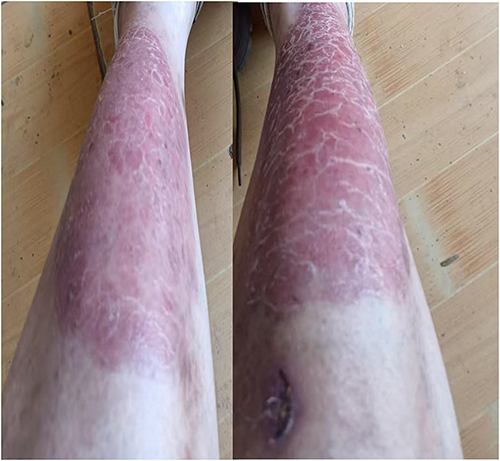 |
Figure 1 Micaceous scaling and erythematous plaques at baseline. |
Although the disease was limited in extent, the patient experienced marked pruritus that significantly impacted her quality of life, reflected by a Dermatology Life Quality Index (DLQI) score of 12. Given the prior inadequate response to topical therapy, and after shared decision-making, conventional synthetic disease-modifying antirheumatic drugs (csDMARDs) were not considered due to concerns about potential hepatorenal toxicity, and biologic DMARDs (bDMARDs) or Janus kinase inhibitors (JAKi) were declined because of worries regarding infection risk and cost. Consequently, treatment was switched to subcutaneous recombinant human interleukin-2 (rhIL-2) at 500,000 IU daily. Clinical improvement was observed as early as day 3, with noticeable reduction in scaling (Figure 2). By day 7, there was complete resolution of desquamation with significant attenuation of erythema (Figure 3). PASI scores decreased from 4 at baseline to 3 at day 3, 2 at day 7, and 0 at day 46, with full clinical remission defined as complete re-epithelialization and disappearance of plaque induration (Figure 4). To consolidate the response, the patient continued to receive IL-2 for a total of 80 days. She remained free of relapse or adverse events throughout the extended treatment period, after which treatment was electively discontinued. As of the latest follow-up, the patient has remained free of new lesions.
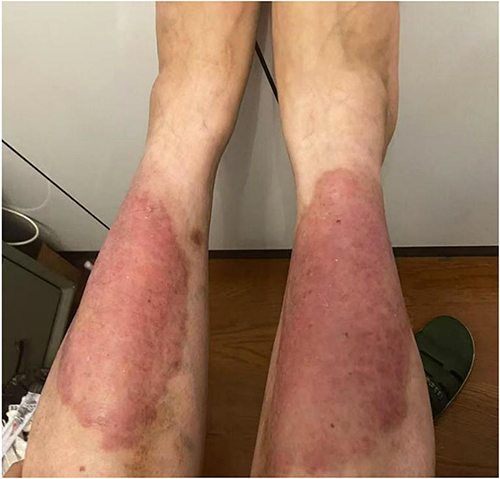 |
Figure 2 At day 3, noticeable reduction in scaling. |
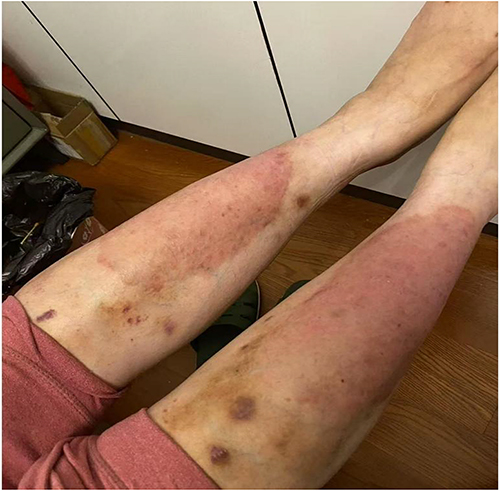 |
Figure 3 At day 7, significant attenuation of erythema and near-complete resolution of desquamation. |
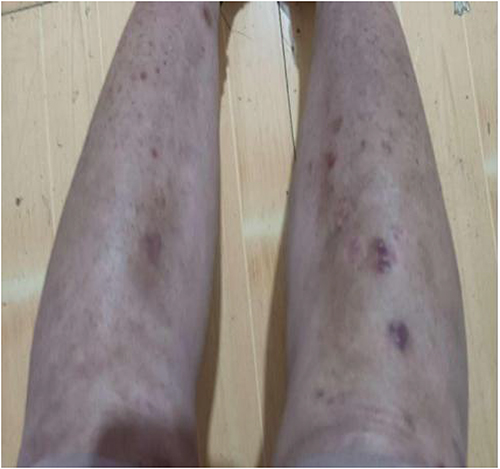 |
Figure 4 At day 46, complete resolution of erythema and plaque thickening, with full re-epithelialization. |
Discussion
Psoriasis is a chronic inflammatory disease characterized by dysregulated immune responses, which involve pathogenic effector T cells and impaired regulatory T (Treg) cell function. According to current guidelines, first-line therapies for psoriasis include topical agents, csDMARDs, bDMARDs and JAKi.6 While these treatments are effective for many patients, each carries specific limitations.3,7 Furthermore, treatment switching and discontinuation remain common challenges in real-world practice.3 These limitations highlight the ongoing need for novel therapeutic approaches with distinct mechanisms of action.7
Low-dose interleukin-2 (IL-2) offers a distinctive immunomodulatory approach aimed at preferentially expanding and activating Treg cells, thereby restoring immune tolerance.8 The rapidity and sequence of the clinical response observed in our patient are instructive. A noticeable reduction in scaling was evident within three days, suggesting a rapid modulation of keratinocyte proliferation and differentiation. This early effect may reflect a swift, Treg-mediated modulation of the pro-inflammatory cytokine milieu. The nearly complete resolution of desquamation and significant attenuation of erythema within one week aligns with the expected suppression of dermal inflammation. The subsequent achievement of full clinical remission by day 46 indicates a consolidated restoration of immune homeostasis and tissue repair (complete re-epithelialization and loss of plaque induration). Importantly, the patient achieved and maintained remission from day 46 through day 80 with continued treatment, after which therapy was electively discontinued. The absence of relapse at last follow-up suggests durable treatment-free remission. This response mirrors observations from studies of low-dose IL-2 in other T cell-mediated conditions, supporting its role as a potent immunomodulator.8
Treg cells constitutively express the high-affinity IL-2 receptor complex (CD25, CD122, and CD132), whereas effector T cells express predominantly the intermediate-affinity receptor lacking CD25. Administration of IL-2 at low doses selectively engages the high-affinity receptor, leading to STAT5 phosphorylation, proliferation, and functional enhancement of Treg cells, without substantially activating effector T cells.9 This mechanism directly targets a core immunological defect in psoriasis, where both the number and function of Treg cells are often diminished relative to the expanded Th17 and Th1 populations.10 Multiple lines of evidence support the therapeutic potential of targeting the IL-2 pathway in psoriasis. Genetic studies have identified polymorphisms in the IL2RA gene (encoding CD25) associated with psoriasis susceptibility, underscoring the relevance of IL-2 signaling in disease pathogenesis.11 Additionally, a recent Mendelian randomization study has demonstrated causal associations between specific systemic cytokines, including IL-2, and inflammatory skin diseases, further supporting the rationale for targeting this pathway. Preclinical evidence supports the therapeutic potential of IL-2-based strategies in psoriasis. In a psoriasis-like mouse model, treatment with either anti-IL-2/IL-2 complexes or low-dose free IL-2 resulted in a significant reduction in epidermal thickening, accompanied by an increase in Treg cell numbers.12 In patients with psoriasis, adjunctive use of low-dose IL-2 with conventional therapies has been shown to rebalance the Th17/Treg cell ratio in peripheral blood and improve clinical outcomes.5 Its favorable safety profile, as demonstrated in trials for other autoimmune diseases, further enhances its appeal.13,14
To our knowledge, this is the first documented case of refractory plaque psoriasis successfully treated with low-dose IL-2 monotherapy. Notably, low-dose IL-2 is not currently recommended by any major psoriasis guidelines. However, for patients who decline or have contraindications to DMARDs or JAKi, IL-2 may represent a potential alternative immunomodulatory strategy.
This case study is limited by its single-patient design; therefore, the results should be interpreted as hypothesis-generating. Additionally, we acknowledge the absence of longitudinal immune monitoring (eg, Treg cell frequency or cytokine profiling) and the relatively short follow-up duration, which preclude definitive conclusions regarding the mechanistic basis and long-term durability of the response.
Conclusion
Low-dose IL-2 may serve as a viable treatment option for patients with psoriasis who are refractory to topical therapy or who decline DMARDs or JAKi due to safety concerns or cost. However, its use requires validation through controlled studies with immune monitoring.
Ethics Statement
The Institutional Review Board of Peking University People’s Hospital determined that formal ethical approval was not required for the publication of a single case report, as it does not meet the definition of human subjects research requiring full board review. Nonetheless, the study was conducted in accordance with the Declaration of Helsinki. Written informed consent was obtained from the patient for the publication of this case report and its accompanying images. The treatment decision was made after thorough discussion of available options, and the patient provided voluntary written consent for off-label use of low-dose IL-2.
Acknowledgments
We would like to express our sincere gratitude to Mr. Dusheng Cheng for his contribution to the data collection and to the patient for her kind consent to share the information presented in this report.
Funding
The authors declare that no funding or other support was received for this work.
Disclosure
All authors declare no competing interests relevant to this study.
References
1. Chen L, Cheng L. New hope for the treatment of recurrent and refractory psoriasis: NK cell immunotherapy-A scientometric analysis. Front Immunol. 2025;16:1656398. doi:10.3389/fimmu.2025.1656398
2. Yang Y, Zhang Q, Huang A, et al. All-cause and cause-specific mortality in psoriasis patients: a systematic review and meta-analysis. Front Immunol. 2025;16:1610499. doi:10.3389/fimmu.2025.1610499
3. Zhang M, Hong S, Wang Q, et al. Biopharmaceutical switching in psoriasis treatment: a systematic review and meta-analysis. JAMA Dermatol. 2025;161(10):1029–6. doi:10.1001/jamadermatol.2025.2714
4. Liu W, Zhang X, Chen X. Unraveling the causal associations between systemic cytokines and six inflammatory skin diseases. Cytokine. 2025;185:156810. doi:10.1016/j.cyto.2024.156810
5. Qiao Z, Zhao W, Liu Y, Feng W, Ma Y, Jin H. Low-dose interleukin-2 for psoriasis therapy based on the regulation of Th17/Treg cell balance in peripheral blood. Inflammation. 2023;46(6):2359–2373. doi:10.1007/s10753-023-01883-6
6. Gisondi P, Fargnoli MC, Amerio P, et al. Italian adaptation of EuroGuiDerm guideline on the systemic treatment of chronic plaque psoriasis. Ital J Dermatol Venerol. 2022;157(Suppl. 1 to No. 1):1–78. doi:10.23736/s2784-8671.21.07132-2
7. Menter A, Strober BE, Kaplan DH, et al. Joint AAD-NPF guidelines of care for the management and treatment of psoriasis with biologics. J Am Acad Dermatol. 2019;80(4):1029–1072. doi:10.1016/j.jaad.2018.11.057
8. Lorenzon R, Ribet C, Pitoiset F, et al. The universal effects of low-dose interleukin-2 across 13 autoimmune diseases in a basket clinical trial. J Autoimmun. 2024;144:103172. doi:10.1016/j.jaut.2024.103172
9. Klatzmann D, Abbas AK. The promise of low-dose interleukin-2 therapy for autoimmune and inflammatory diseases. Nat Rev Immunol. 2015;15(5):283–294. doi:10.1038/nri3823
10. Sugiyama H, Gyulai R, Toichi E, et al. Dysfunctional blood and target tissue CD4+CD25high regulatory T cells in psoriasis: mechanism underlying unrestrained pathogenic effector T cell proliferation. J Immunol. 2005;174(1):164–173. doi:10.4049/jimmunol.174.1.164
11. Tsoi LC, Stuart PE, Tian C, et al. Large scale meta-analysis characterizes genetic architecture for common psoriasis associated variants. Nat Commun. 2017;8(1):15382. doi:10.1038/ncomms15382
12. Salman S, Khalil SM, Abdel-Latif AM, El Attar YA, Salem ML. Induction of high numbers of T(reg) cells post treatment with anti-IL-2/IL-2 complex associates with alleviation of experimental psoriasis-like skin inflammation. BMC Immunol. 2025;26(1):94. doi:10.1186/s12865-025-00716-5
13. Lim TY, Martinez-Llordella M, Kodela E, Gray E, Heneghan MA, Sanchez-Fueyo A. Low-dose interleukin-2 for refractory autoimmune hepatitis. Hepatology. 2018;68(4):1649–1652. doi:10.1002/hep.30059
14. He J, Zhang R, Shao M, et al. Efficacy and safety of low-dose IL-2 in the treatment of systemic lupus erythematosus: a randomised, double-blind, placebo-controlled trial. Ann Rheum Dis. 2020;79(1):141–149. doi:10.1136/annrheumdis-2019-215396
 © 2026 The Author(s). This work is published and licensed by Dove Medical Press Limited. The
full terms of this license are available at https://www.dovepress.com/terms
and incorporate the Creative Commons Attribution
- Non Commercial (unported, 4.0) License.
By accessing the work you hereby accept the Terms. Non-commercial uses of the work are permitted
without any further permission from Dove Medical Press Limited, provided the work is properly
attributed. For permission for commercial use of this work, please see paragraphs 4.2 and 5 of our Terms.
© 2026 The Author(s). This work is published and licensed by Dove Medical Press Limited. The
full terms of this license are available at https://www.dovepress.com/terms
and incorporate the Creative Commons Attribution
- Non Commercial (unported, 4.0) License.
By accessing the work you hereby accept the Terms. Non-commercial uses of the work are permitted
without any further permission from Dove Medical Press Limited, provided the work is properly
attributed. For permission for commercial use of this work, please see paragraphs 4.2 and 5 of our Terms.
Recommended articles

A Case of Complete Remission in Proficient Mismatch Repair (pMMR) Advanced Colon Cancer Treated with Sintilimab and XELOX
Zhu J, Li G, Zhang Z, Wang Y
ImmunoTargets and Therapy 2023, 12:17-23
Published Date: 19 February 2023
Psoriasis on Lesions of Vitiligo: A Case Report
Wang L, Zhang B
Clinical, Cosmetic and Investigational Dermatology 2023, 16:2005-2007
Published Date: 4 August 2023
Drug-Eluting Beads Bronchial Arterial Chemoembolization Combined with Immunotherapy Resulted in Pathological Complete Response of Squamous Cell Lung Cancer: A Case Report
He G, Yang K, Gao Z, Zhang X, Han A
International Medical Case Reports Journal 2024, 17:1041-1047
Published Date: 18 December 2024
Role of Peripheral Blood Regulatory T Cells and IL-2 in the Collateral Circulation of Acute Ischemic Stroke

Zhang S, Rao C, Wen M, Zhang X, Zha Z, Gu T, Zhu L, Yu C
International Journal of General Medicine 2025, 18:1075-1088
Published Date: 25 February 2025
Hepatotoxicity Induced by Adalimumab in Chronic Plaque Psoriasis Patient: A Case Report
Algarzae NK, Alotaibi HM, Alajlan AH, AlSaleh MR, Alsalman AA
International Medical Case Reports Journal 2025, 18:877-881
Published Date: 9 July 2025