
Back to Journals » Cancer Management and Research » Volume 18

Primary Mucosal Routes of Opioid Administration for Treating Terminal Cancer Pain: Rectal, Buccal, and Intranasal Delivery
Authors Huang XY, Qi Q, Zhang CS, Huang K, Liu X, Deng XJ, Chen L
Received 31 August 2025
Accepted for publication 29 December 2025
Published 6 January 2026 Volume 2026:18 564282
DOI https://doi.org/10.2147/CMAR.S564282
Checked for plagiarism Yes
Review by Single anonymous peer review
Peer reviewer comments 2
Editor who approved publication: Professor Bilikere Dwarakanath
Xiao-Yi Huang,1,* Qiang Qi,1,* Cheng-Shan Zhang,2,* Kuan Huang,3 Xin Liu,3 Xu-Jiang Deng,3 Li Chen3– 5
1The First Clinical Medical College, Gannan Medical University, Ganzhou, Jiangxi Province, People’s Republic of China; 2Tongji Medical College, Huazhong University of Science and Technology, Wuhan, Hubei Province, People’s Republic of China; 3Anesthesia Surgical Center, The First Affiliated Hospital of Gannan Medical University, Ganzhou, Jiangxi Province, People’s Republic of China; 4Anesthesia Key Laboratory, Gannan Medical University, Ganzhou, Jiangxi Province, People’s Republic of China; 5Prevention and Treatment of Cardiovascular and Cerebrovascular Disease, Ministry of Education, Gannan Medical University, Ganzhou, Jiangxi Province, People’s Republic of China
*These authors contributed equally to this work
Correspondence: Li Chen, Anesthesia Surgical Center, The First Affiliated Hospital of Gannan Medical University, 23 Qingnian Road, Zhanggong District, Ganzhou City, Jiangxi Province, 341000, People’s Republic of China, Tel +86 15727752168, Email [email protected]
Purpose: This review analyzes the factors influencing mucosal administration of opioids, the methods of administration, clinical applications, pharmacokinetic parameters, and considerations.
Summary: Inclusion criteria for this review includes English literature from 1984 to the present, with the primary literature search conducted on PubMed. The findings indicate that mucosal administration of opioids offers a non-invasive and rapidly effective treatment option for chronic and breakthrough pain in terminal cancer patients, which is crucial for improving their quality of life. Specifically, rectal administration provides long-lasting analgesia but is slow-acting and has variable bioavailability. Oral administration is more patient-friendly and has higher bioavailability than rectal administration, though some of the drug may be swallowed. Nasal administration is well-tolerated, has higher bioavailability than the rectal and buccal routes, and acts quickly, but its effects are short-lived and the long-term impact on the nasal mucosa remains unclear.
Conclusion: Current research shows that mucosal opioid administration can relieve pain in advanced cancer patients, but each route has pros and cons. Choosing the appropriate method and medication based on the patient’s condition is crucial. Further research on integrating these routes to optimize pain management for terminal patients is needed.
Keywords: mucosal, rectal, buccal, nasal, intranasal, opioids, terminal, cancer, pain
Introduction
For patients with terminal illness, particularly those battling advanced cancer, pain is a highly critical symptom that profoundly impacts their quality of life.1 Severe pain can set off a cascade of adverse effects, such as agitation, arrhythmias, respiratory distress, weakened immune response, shock, and extreme stress.2 These complications not only further weaken the patients but also pose life-threatening risks. This highlights the critical importance of effective pain management in alleviating the suffering of these patients and optimizing their prognosis.
Opioids are effective means for treating moderate to severe pain and are usually administered orally, which is both convenient and cost-effective. However, for some terminal cancer patients, ongoing nausea, vomiting, poor absorption, gut obstruction, or mental state changes can make oral medication impossible to use.3 Traditional intravenous or subcutaneous injection methods, on the other hand, are prone to causing adverse reactions such as respiratory depression in these patients. In such cases, mucosal drug administration may be an excellent alternative. Since the drugs are absorbed directly through the mucous membranes rather than the digestive tract, this method avoids issues like nausea and vomiting, absorptive impairment, and the effects of first-pass metabolism. Additionally, mucosal drug administration is simpler and less cumbersome, making it an ideal choice for less experienced caregivers—and it can even be self-administered by patients with a little guidance.
Morphine, fentanyl, sufentanil, hydromorphone, oxycodone, buprenorphine, and nalbuphine are commonly used opioid analgesics. This article reviews the literature on the use of these opioids via mucosal administration routes (such as rectal, buccal, and nasal) for pain relief in patients with terminal cancer, aiming to provide references for analgesic options for these patients. This review focuses specifically on the evidence for rectal, buccal, and intranasal mucosal routes, as these are the most prevalent in clinical practice for this patient population.
Methods
This review includes literature published in English from 1984 to the present. The primary literature search was performed on PubMed. The search terms were as follows:
“Mucosal administration” and “Opioids”, “Rectal administration” and “Opioids”, “Buccal mucosal administration” and “Opioids”, “Intranasal administration” and “Opioids”, “Mucosal administration” and “Opioids” and “Pharmacokinetics”, “Pain management guidelines”.
Routes and Influencing Factors of Drug Transmucosal Transport
Following drug application to the mucosal epithelium, it may cross the mucosal membrane cells through cellular transmembrane or intercellular pathways (Figure 1).The transcellular pathway involves transmembrane drug transport through epithelial cells, whereas the paracellular pathway facilitates intercellular diffusion via tight junctions.4 Drug delivery efficiency is principally governed by three physicochemical parameters: (i) hydrophobicity, (ii) molecular mass, and (iii) ionization state. Lipophilic compounds preferentially utilize transcellular pathways due to their enhanced membrane permeability. Molecular size inversely correlates with tight junction permeability, with smaller entities demonstrating superior paracellular transport.5 The unionized fraction of drug molecules demonstrates superior membrane permeability compared to ionized species.6 Pharmaceutical formulations should be pH-adjusted to match mucosal physiological conditions (typically pH 5.5–7.4) to optimize absorption while reducing local toxicity. As shown in Table 1, The evaluated opioids exhibit consistent molecular properties with comparable molecular weights, similar acid dissociation constants, and uniform lipophilicity profiles.
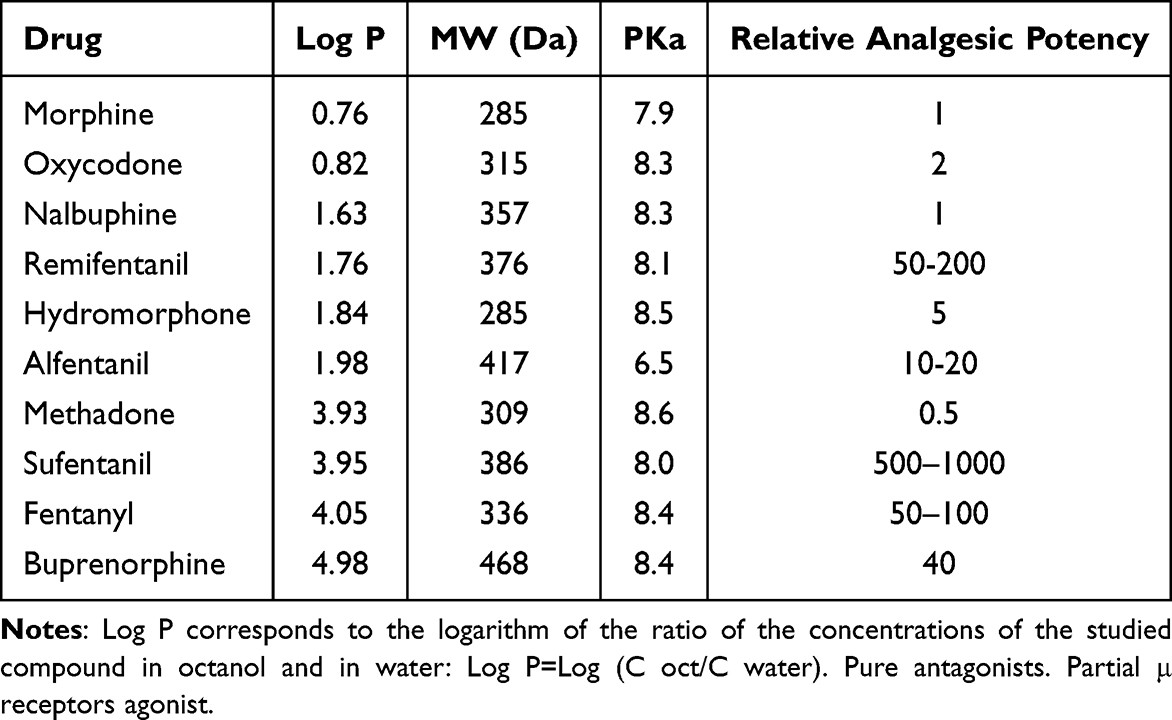 |
Table 1 Main Characteristics of Opiates: Lipophilicity (Log P), Molecular Weight (MW), PKa and Relative Analgesic Potency |
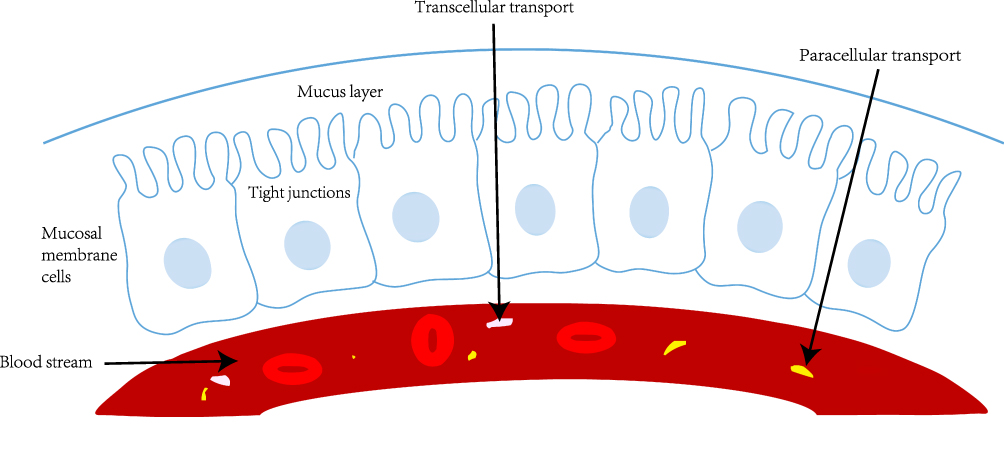 |
Figure 1 Schematic diagram of drug transportation routes across mucosal membrane cells. |
Rectal Drug Absorption
The human rectum is the final 15–19 cm segment of the large intestine, stretching from the sigmoid colon to the anal canal. Its mucosal surface for drug absorption covers 200–400 cm2.7 The rectum’s venous drainage involves three main vessels: the superior rectal vein, which drains the upper rectum and leads to the liver for processing; and the middle and inferior rectal veins, which bypass the liver and provide systemic circulation for the lower rectum (the most accessible drug administration site). This means that drugs administered in the lower rectum (3–10 cm from the anus) avoid first-pass liver metabolism, enhancing their systemic availability8,9 (Figure 2).
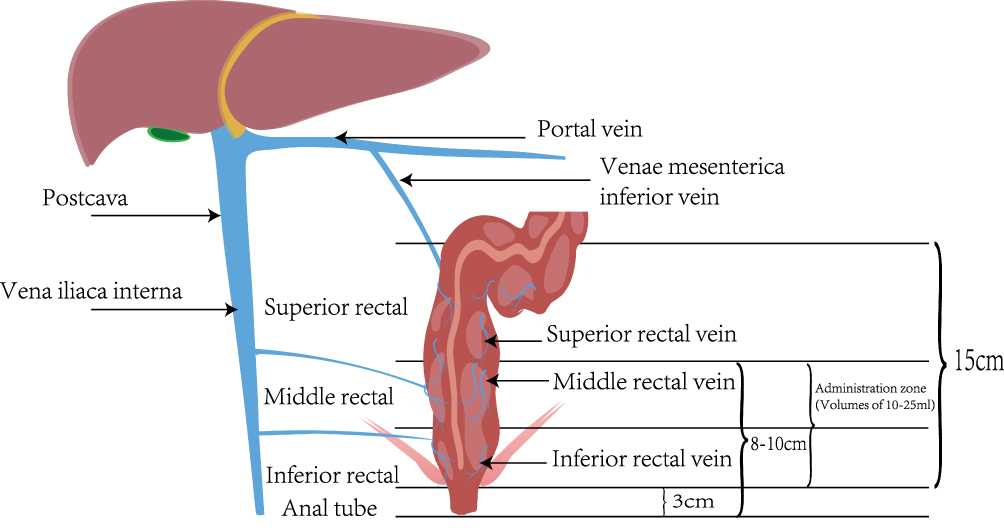 |
Figure 2 Rectal Venous Diagram: The superior rectal vein drains into the portal vein, while the middle and inferior rectal veins return to the inferior vena cava, serving the portion most accessible for drug delivery. |
Rectal drug absorption is influenced by several factors. Feces can impede absorption, and the rectum’s naturally alkaline environment favors the absorption of weakly basic drugs.10 Liquid volumes of 10–25 mL are usually well-tolerated, while volumes over 80 mL are often expelled.11
Rectal Opioid Administration
Rectal administration is a cost-effective and therapeutically effective method for pain management in end-of-life patients who may be unable to use oral medications or injections due to persistent gastrointestinal disturbances (including vomiting, malabsorption syndromes, luminal obstruction, immune deficiency, and hemorrhagic diseases). Rectal administration is generally considered an alternative rather than a primary route for analgesic delivery,12 as it is slow-acting and has significant inter-individual variability in absorption kinetics. There are also some limitations to its use, such as lower patient acceptance and the potential for feces to interfere with drug absorption. However, this route of administration has four distinct advantages: long-lasting effect, no need for specialized equipment, minimal training requirements, and low implementation costs.
Morphine
Morphine is a classic opioid analgesic with strong pain-relieving effects. When morphine is administered rectally, it achieves a systemic circulation proportion of 35% to 71%. Rectally administered morphine in controlled-release formulations typically achieves peak plasma concentrations 10–25% lower than equivalent oral doses.13,14 Moreover, maximum plasma concentrations are achieved with a delayed Tmax compared to oral controlled-release formulations.13,14 Comparative studies between oral and rectal administration of morphine have shown similar analgesic effects and comparable safety profiles.13 The single-dose pharmacokinetic-pharmacodynamic study by De Conno et al demonstrated that rectal rapid-release morphine had accelerated onset of action and prolonged analgesic duration compared with oral administration.15 It is commonly used in patients with moderate to severe cancer pain, especially when rapid pain relief is required.
Methadone
Methadone is a long-acting synthetic opioid analgesic with potent pain-relieving effects and an extended duration of action. It activates μ-opioid receptors, has a long half-life, and produces minimal active metabolites.16 Rectal administration of methadone offers high bioavailability (76%),17 rapid absorption (Tmax of 1.4 hours), and a long duration of action (at least 10 hours), making it suitable for managing moderate to severe cancer pain, chronic pain, and palliative care.18 It is particularly useful for patients intolerant to morphine or those who cannot take oral medications.19 Compared to morphine, rectal methadone has a faster onset, longer duration, and lower cross-tolerance. It absorbs quickly, has a longer half-life, and does not produce harmful metabolites. Methadone is often preferred when morphine is ineffective due to insufficient pain control or adverse effects.20
Oxycodone
Oxycodone is a semi-synthetic opioid that offers stronger analgesic effects than morphine. Rectal administration enhances oxycodone’s bioavailability and minimizes the gastrointestinal irritation often seen with oral intake. A pharmacokinetic study has shown that the total absorption of oxycodone from suppositories is comparable to that from oral administration. While both routes yield similar maximum plasma concentrations (Cmax), the time to reach this peak concentration (Tmax) is notably longer with rectal administration (3.1 hours rectally versus 1.5 hours orally). Estimates from pharmacokinetic studies place the absolute bioavailability of oxycodone at 45–50%.21 It is particularly indicated for patients with moderate to severe cancer pain, especially those who cannot tolerate morphine.
Fentanyl
Fentanyl, a highly potent synthetic opioid analgesic, boasts pain-relieving efficacy 50–100 times greater than that of morphine.22 There is very limited research on the rectal administration of fentanyl, and no relevant pharmacokinetic parameters have been found. The only available study indicates that a rectal dose of fentanyl at 10 μg/kg not only achieves higher plasma concentrations than a 2.0 μg/kg intravenous dose but also has a longer duration of action.23 This makes it potentially suitable for treating breakthrough pain in cancer patients, especially those who have developed tolerance to morphine.24 However, its use may trigger adverse reactions such as nausea, vomiting, and respiratory depression. Therefore, careful dose adjustment and vigilant monitoring of adverse reactions are essential when using fentanyl.25
Buccal Administration and Drug Absorption
The buccal route is another attractive transmucosal route for drug delivery because it is easily accessible, has a rich blood supply, and allows rapid input of drugs into the circulation, thus avoiding first-pass metabolism.26,27 The buccal mucosa, comprising the epithelial lining of the inner cheek and labial vestibule, provides an extensive absorptive surface exceeding 50 cm2.28 The lipophilic character of a compound facilitates passive diffusion across the non-keratinized stratified squamous epithelium of the buccal mucosa via transcellular pathways. Transmucosal opioid administration results in rapid drug absorption, producing distinct pharmacokinetic profiles characterized by early Tmax and steep absorption phases. However, this route is optimally reserved for low-dose medications, as any swallowed fraction undergoes first-pass hepatic metabolism, significantly reducing systemic bioavailability.
Buccal Delivery Opioids
Buccal delivery is a method of drug administration that involves absorption through the buccal mucosa of the mouth. It is characterized by rapid onset of action, high bioavailability, and non-invasiveness. In recent years, buccal delivery has gained increasing attention in pain management, particularly for its ability to quickly relieve acute pain, such as breakthrough pain in cancer patients.
Fentanyl
Currently, fentanyl is the primary opioid for buccal mucosal administration. Oral transmucosal fentanyl administration demonstrates biphasic absorption: 25% undergoes rapid local mucosal uptake, while the remaining 75% experiences delayed gastrointestinal absorption following swallowing. The 50% total bioavailability after transmucosal administration shows a 19-percentage-point absolute increase over oral dosing (31%).26,27,29 Transmucosal fentanyl achieves breakthrough pain relief in 10–15 minutes, though marginally delayed compared to intravenous administration’s near-immediate onset (2–5 minutes).30
Multiple transmucosal fentanyl formulations have been clinically available, categorized as: rapidly dissolving, effervescent, and buccal tablets.31,32 Provided adequate salivary flow is maintained, the latter formulations achieve peak plasma concentrations (Cmax) within 35–90 minutes post-administration. Rapid mucosal absorption accounts for 48% of the administered dose, ensuring prompt bioavailability for acute pain management.33 Sublingual tablet administration demonstrates a mean bioavailability of 54%, with peak plasma concentrations typically achieved between 30–60 minutes (median Tmax).34 A Phase III clinical trial demonstrated that doses of 100–800 μg produced a statistically significant, though moderate, reduction in pain intensity with onset as early as 10 minutes post-administration. A clinically significant 2-point reduction on the 0–10 pain scale was observed within 15 minutes of administration.35
In summary, Fentanyl administered via buccal mucosa is suitable for managing breakthrough pain in patients with moderate to severe cancer pain. It can also be used in other situations that require rapid pain relief, such as chronic pain management. In palliative care, it serves as an effective alternative method of administration.36,37
Buprenorphine
Buprenorphine exerts its analgesic effects by activating μ-opioid receptors while antagonizing κ-opioid receptors. Clinical studies confirm that buprenorphine combines effective analgesia with a benign adverse effect profile and minimal risk of addiction or dependence.38 These pharmacological advantages stem from buprenorphine’s dual characteristics as a high-affinity partial μ-agonist with prolonged receptor binding kinetics.39,40 Relative to full μ-agonists (eg, morphine, fentanyl), buprenorphine demonstrates superior safety characteristics, notably diminished incidence of respiratory depression, gastrointestinal dysfunction, immune suppression, and endocrine disruption.
Buprenorphine demonstrates comparable analgesic efficacy to full μ-agonists (morphine, oxycodone, fentanyl) in managing chronic cancer-related pain. Current clinical guidelines position buprenorphine buccal film as a preferred first-line option for chronic pain management due to its increased bioavailability (46–65%) and expanded range of available doses (75–900ug) compared to buprenorphine transdermal systems, particularly in patients requiring long-term opioid therapy.41,42 Buccal administration of buprenorphine is rapidly absorbed, typically reaching maximum plasma concentration (Cmax) within 30–60 minutes after dosing.38 Clinical trial data consistently demonstrate excellent tolerability of buprenorphine buccal film across all studied populations, with a complete absence of clinically significant respiratory depression events.43
Studies have shown that buccal buprenorphine provides sustained analgesia and is generally well-tolerated, although it may cause some adverse reactions such as dizziness, nausea, and somnolence.38
Nasal Mucosa Administration
Properties of Intranasal Medications
In recent years, the use of intranasal drug administration has become increasingly popular due to its convenience and non-invasive nature.
The mechanism of action of intranasal administration is primarily through two pathways. First, the respiratory nasal mucosa contains an extensive vascular network, especially within the erectile tissue of the inferior and middle turbinates. Nasal formulations with optimal molecular characteristics can achieve direct systemic absorption through the highly permeable respiratory epithelium, thereby bypassing hepatic first-pass metabolism. The second pathway is the olfactory route, which provides a unique direct conduit from the nasal epithelium to the cerebrospinal fluid, allowing drugs to bypass the blood-brain barrier via axonal transport and perineural spaces. As a result, intranasal administration generally achieves higher absolute bioavailability compared to buccal and rectal routes44,45(Figure 3).
 |
Figure 3 The nasal cavity comprises various regions: including the vestibule, atrium, inferior, middle, and superior turbinates; the olfactory region; and the nasopharynx. Drug deposition following intranasal administration predominantly occurs in the respiratory zone, which is situated around the inferior turbinate. Partial obstruction of the nasal cavity by the turbinates prevents, at least in part, drug deposition on the olfactory epithelium and the nasopharynx. The use of an atomizer device delivers the drug via a fine spray over a broad surface area within the nasal cavity. |
However, the efficiency of intranasal drug delivery is modulated by two distinct categories of factors. The first category includes physiological variables such as mucosal blood flow, mucus viscosity, ciliary clearance rate, and metabolic enzymes. The second category comprises drug characteristics, including molecular size, partition coefficient, ionization state, aqueous solubility, and delivery system design.46–48 Drugs with higher lipophilicity are more readily transported across the predominantly lipophilic nasal mucosa.46 The optimal molecular weight for nasal mucosal absorption is between 285 and 425 Da, with less than 300 Da being ideal. Un-ionized drugs are more easily absorbed than ionized drugs.47 The pH of the drug formulation should closely match the physiological pH of the nasal cavity (4.5–6.5) to minimize irritation and maximize absorption.48
The distribution of the drug and the volume of administration are also critical. The ideal volume for administration is 0.2–0.3 mL per nostril, with a total volume not exceeding 1 mL. This volume allows for maximum contact with the nasal mucosa.49 Although there is a lack of research on the changes in nasal mucosal absorption brought about by rhinitis or nasal congestion, experience suggests that drug absorption is likely to be reduced in such conditions.
Nasal Drug Delivery Methods
Early methods of nasal drug delivery relied on instillation using liquid formulations.50 For instance, intranasal opioid administration was conducted by instilling the solution into the nasal cavity using a syringe or dropper, allowing it to flow onto the nasal mucosa. This method required patient cooperation and specific head positioning to prevent the drug from flowing down the throat or out of the nasal cavity. To achieve optimal mucosal distribution, spray or atomized devices, such as mucosal atomizer devices, were developed.51 These devices deliver the drug via a fine mist over a broad surface area in the nasal cavity, thereby reducing the incidence of sneezing and coughing.
Moreover, a new intranasal drug delivery system known as the nanovesicular system has been developed.52 Studies have shown that, compared to other nasal delivery vehicles and oral treatments in a mouse model, this system enhances analgesic effects and has a faster onset of action. It has also been proven to be safe for intranasal administration in animal experiments. The anatomical parameters of the nasal cavity are also crucial for drug deposition. With the advancement of technology, 3D nasal modeling can be utilized in the future to assess the nasal characteristics of patients before nasal drug administration. This allows for the selection of a personalized nasal drug delivery device for each individual to achieve the best results.
Intranasally Administered Opioids
Intranasal opioids have significant advantages in the management of terminal cancer pain, as they can rapidly alleviate pain and improve the quality of life for patients. As a non-invasive and fast-acting route of administration, intranasal opioids have garnered increasing attention in recent years.
Fentanyl
Fentanyl, as a potent opioid, can rapidly relieve pain when administered intranasally. It is considered a well-tolerated, non-invasive, safe, and effective route of administration for managing the acute pain of terminal cancer in cancer patients.53 Studies have shown that a single dose of intranasal fentanyl spray produces significantly higher plasma fentanyl levels and bioavailability than oral transmucosal absorption of fentanyl.54,55 Due to its high lipophilicity (log P: 4.05) and low molecular weight (336 Da), which facilitate good absorption, intranasal fentanyl is favored. Because of its high bioavailability (71%), intranasal fentanyl can take effect almost immediately.56 The time to reach maximum plasma concentration after intranasal administration is approximately 12 minutes (range 12–21 minutes), and analgesia can be achieved within 5 minutes.57,58
Research indicates that intranasal fentanyl spray is superior to orally transmucosal fentanyl in terms of pain relief and exhibits higher bioavailability. In a double-blind, cross-over study, the analgesic effect of intranasal fentanyl spray increased in a dose-dependent manner, with the duration of action extending from 120 minutes at a dose of 75 μg to 240 minutes at a dose of 200 μg.59 Intranasal fentanyl is not only suitable for cancer patients but also for patient-controlled analgesia via the nasal route.60 Moreover, it has shown good efficacy in pain management for patients with end-stage heart disease.61 However, caution is advised when using intranasal fentanyl in patients with severe chronic obstructive pulmonary disease due to the potential risk of respiratory depression.
Intranasal fentanyl has shown good tolerability and safety in both clinical trials and practical applications. However, due to its rapid onset of action and potent analgesic effect, intranasal fentanyl may pose a higher risk of addiction. The nasal route of administration delivers the drug directly into the bloodstream, which can lead to a rapid increase in drug concentration and thus a higher potential for addiction. Stricter regulation and treatment programs may be required to mitigate the risk of addiction. Common adverse reactions include nasal irritation, epistaxis, nasal ulcers, rhinorrhea, throat irritation, dysgeusia, nausea, and vomiting. However, these reactions are usually mild and manageable. Compared with intravenous administration, intranasal fentanyl causes fewer adverse reactions such as dizziness, nausea, and somnolence.62
Prolonged intranasal use of fentanyl may cause irritation of the nasal mucosa. Due to the lack of relevant studies, long-term intranasal administration is not recommended and may be more appropriate for situations that require rapid onset of action. Future research could further explore the efficacy and safety of intranasal fentanyl in different patient populations to achieve personalized treatment. Developing new intranasal fentanyl formulations with higher bioavailability and fewer adverse reactions is an important direction for future research.
Sufentanil
Sufentanil, a derivative of fentanyl, exhibits twice the lipophilicity of fentanyl and provides analgesic intensity 5–10 times greater than that of fentanyl. Its duration of action is twice as long as fentanyl, and both share similarities in structure, pharmacokinetics, and efficacy.
In adult studies, the bioavailability of intranasally administered sufentanil was approximately 78%, with a Tmax of 10 minutes.63 Following intranasal administration, sufentanil achieves 100% bioavailability within 30 minutes, with an onset of action in about 10 minutes, providing equivalent clinical effects to intravenous sufentanil at 20 minutes. Intranasal sufentanil also demonstrates a lower rate of respiratory adverse effects, such as hypoxaemia, compared to its intravenous counterpart.63 A dose of 0.7 μg/kg of intranasal sufentanil provides rapid and effective analgesia for patients with acute pain in the emergency department, with efficacy comparable to intravenous morphine for up to 30 minutes.64,65
Morphine
The bioavailability of morphine in aqueous intranasal solutions is relatively low (approximately 10%). This is likely due to the compound’s low lipophilicity.66 The efficacy of an intranasal morphine solution containing chitosan has been tested in the management of breakthrough pain in cancer patients. Significant pain relief was observed within 5 minutes, and local tolerance was good, despite an unpleasant taste in the mouth and nasal irritation.67
A similar study conducted with a morphine solution enhanced by an absorption promoter (oleic acid) also demonstrated pain relief within 9 minutes, with a Tmax of 10 to 30 minutes and a bioavailability of 22%.68
Nalbuphine
A study on the intranasal administration of nalbuphine in infants showed an intranasal bioavailability approaching 50%. The administered dose of nalbuphine was 0.1 mg/kg, with a Tmax of 37 minutes and a half-life (t½) of 2.5–3 hours. Intranasal administration was found to be safe and well-tolerated in 67% of patients. Thus, intranasal administration may offer a safe, non-invasive alternative to parenteral administration of nalbuphine in clinical practice.69
Other Opioids
Besides the previously mentioned agents, studies on intranasal administration of other opioids have been reported; however, all exhibit significant limitations: methadone may cause nasal burning,70 oxycodone requires an administration volume (up to 0.8 mL) that far exceeds nasal mucosal capacity,71 and hydromorphone is associated with frequent adverse events such as pruritus, nausea, and asthenia.72 Given the formulation and safety concerns with these drugs, their clinical applicability is limited.
Furthermore, clinical data and pharmacokinetic information on intranasal delivery of alfentanil, remifentanil, and buprenorphine are scarce, and thus these agents were not included in this review.
Discussion
This review examines and summarizes the specific methods of relieving pain through the mucosal route using commonly used opioid drugs in clinical practice, as well as the key pharmacokinetic parameters (see Tables 2–4), and also provides a detailed comparative analysis of the advantages and disadvantages of the three mucosal drug delivery methods (see Table 5).
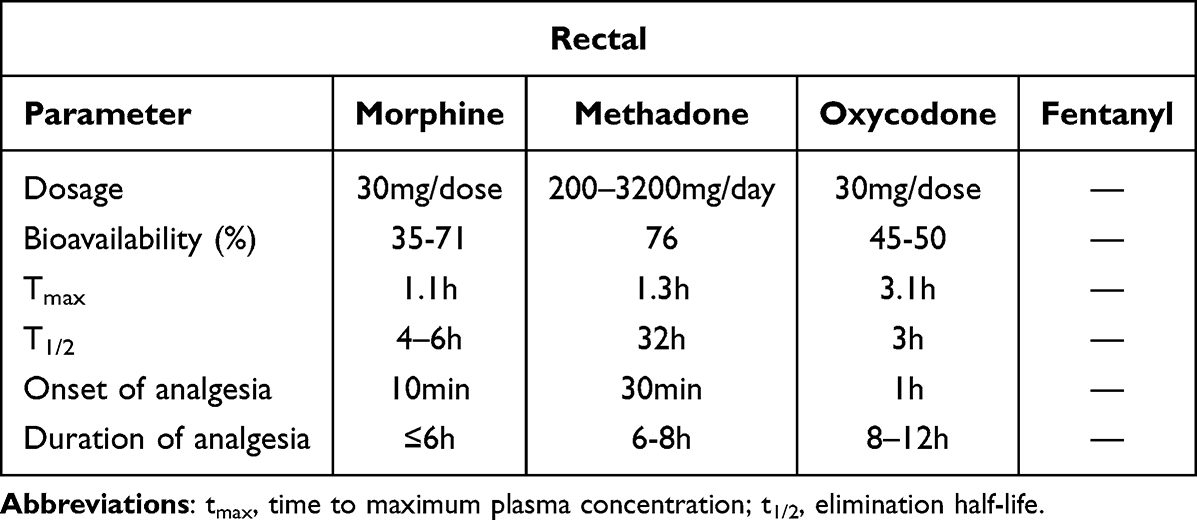 |
Table 2 Summary of Representative Key Descriptive Pharmacokinetic Parameters of Transrectal Pharmaceutical of Commonly Used Opioids. If Available, Onset and Duration of Analgesic Effects are Also Given |
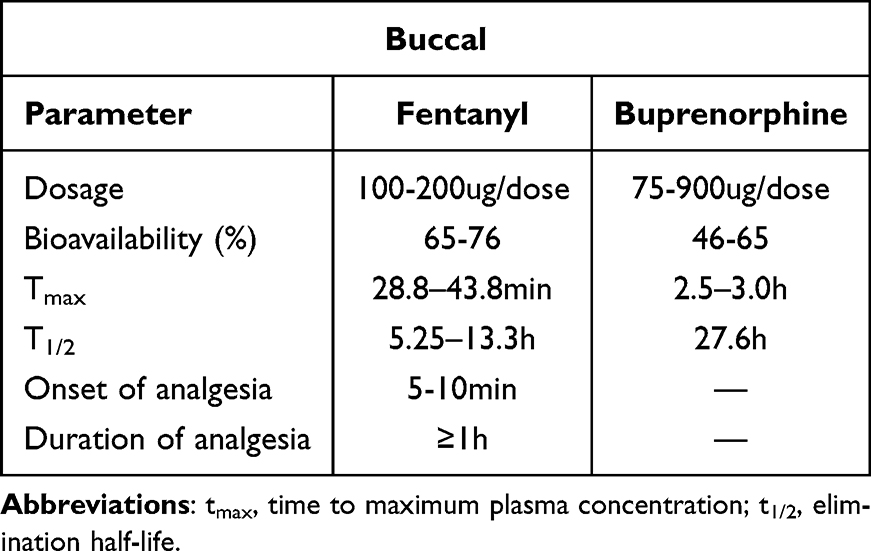 |
Table 3 Summary of Representative Key Descriptive Pharmacokinetic Parameters of Transbuccal Pharmaceutical of Commonly Used Opioids. If Available, Onset and Duration of Analgesic Effects are Also Given |
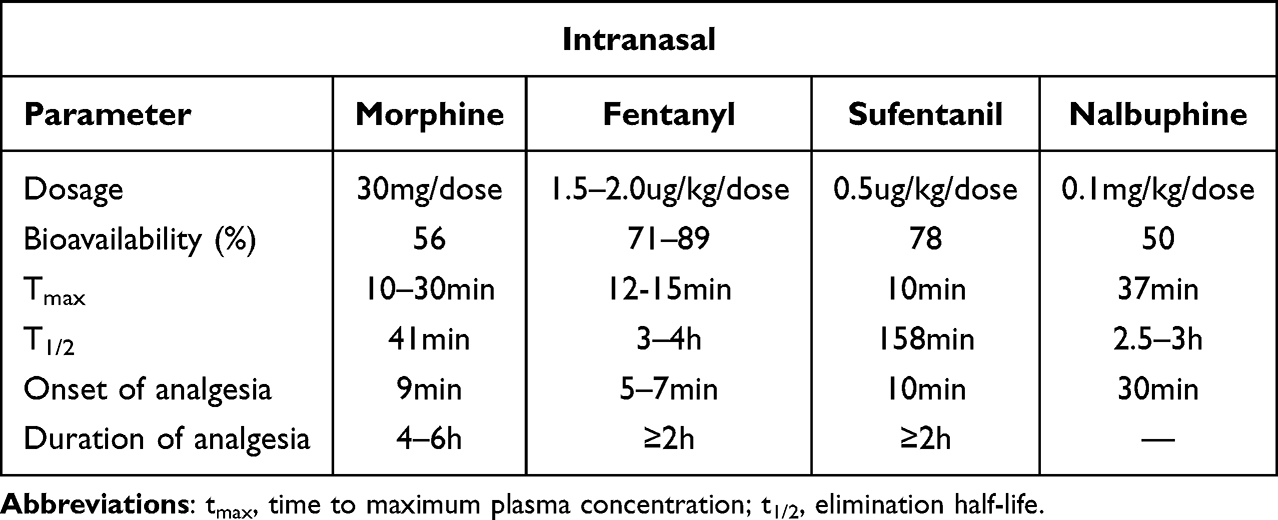 |
Table 4 Summary of Representative Key Descriptive Pharmacokinetic Parameters of Transnasal Pharmaceutical of Commonly Used Opioids. If Available, Onset and Duration of Analgesic Effects are Also Given |
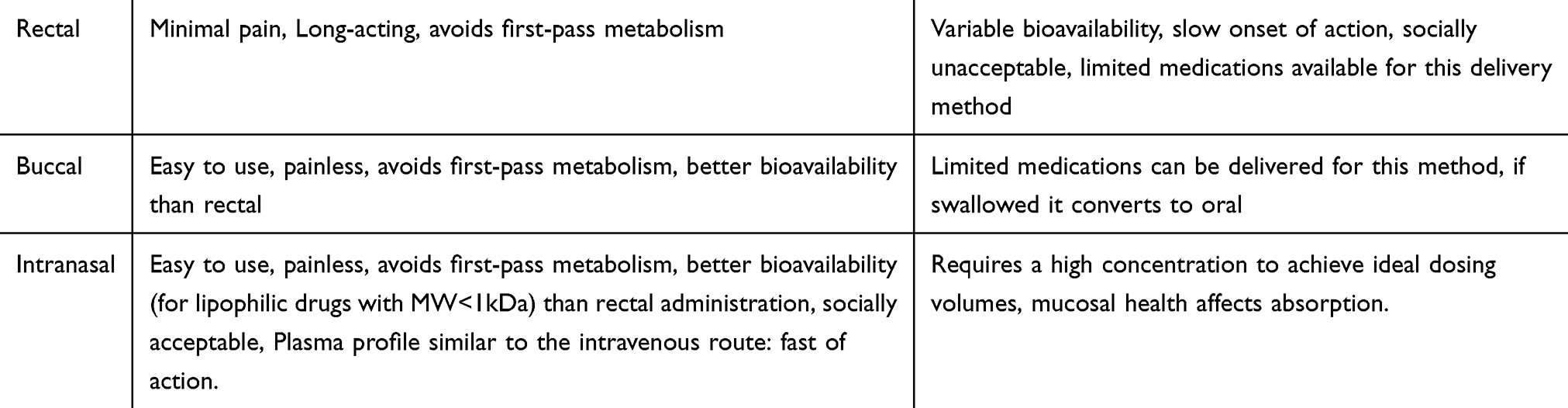 |
Table 5 Advantages and Disadvantages of Mucosal Delivery Methods for Opioids |
Regarding adverse effect profiles, all three mucosal administration routes exhibit unique local adverse effects. Rectal administration most frequently causes local irritation (rectal discomfort, tenesmus, or mild inflammation) and may be perceived as undignified due to sociocultural and psychological factors, leading to compromised adherence in some patients and families. Thus, assessing individual circumstances and cultural backgrounds prior to administration is essential. Buccal administration demonstrates local reactions directly related to drug retention; morphine and similar agents commonly cause taste disturbances, with long-term use potentially resulting in xerostomia or, rarely, mucosal inflammation/ulceration. Intranasal administration primarily risks damage to nasal cilia from formulation components (preservatives or excipients), and chronic use may cause nasal dryness, crusting, or even epistaxis. Although its local irritant effects (burning/stinging) are relatively mild, the long-term impact on physiological function remains unclear.
In addition to these clinical considerations, this review has several limitations. The single-language literature search may introduce language bias by overlooking critical data from non-English regions and potentially distorting the global clinical perspective. Furthermore, routes such as vaginal and sublingual administration—rarely used clinically and lacking sufficient research data—were not included, limiting the comprehensiveness of our analysis.
Conclusions
This review demonstrates that rectal, buccal, and intranasal administrations are all safe and effective alternative analgesic routes for advanced cancer pain. Specifically, rectal administration offers prolonged analgesia despite slower onset and variable bioavailability; buccal administration demonstrates higher patient acceptability and superior bioavailability compared with the rectal route, yet carries the risk of drug conversion to oral absorption via swallowing; intranasal administration provides the fastest onset and highest bioavailability with better tolerability than the other two routes, but has a shorter duration of action, and its long-term safety requires further validation.
These findings hold clear clinical significance: for terminal patients unable to take oral medications or requiring injection avoidance, integrating the advantages of different mucosal routes to develop individualized regimens is crucial, though authoritative clinical pathway guidance is currently lacking.
To bridge this evidence gap, future research could investigate multi-route combination strategies and develop novel formulation technologies to simultaneously optimize analgesic efficacy and enhance mucosal absorption efficiency.
Finally, it needs to be emphasized that opioid use must strictly adhere to the guidance of physicians with independent prescribing authority, as this is the fundamental safeguard for ensuring therapeutic benefit while minimizing risks of misuse and addiction.
AI Declaration
This article has been modified using AI only for grammatical purposes.
Acknowledgments
We thank Dan Ye, Wen Zeng, Wenyi Yang, Zhiqiang Zhang, Zilong Li, and Hongbo Liu for their contributions in non-cancer pain or post-operative biospecimens.
All medications are used according to a prescription issued by a physician, and there is no misuse of opioid medications.
Funding
Jiangxi Provincial Natural Science Foundation (20232ACB206050). The Open Project of Key Laboratory of Prevention and treatment of cardiovascular and cerebrovascular disease, Ministry of Education (XN201917).
Disclosure
No competing interests were declared by the authors.
References
1. Young VB. Effective management of pain and anxiety for the pediatric patient in the Emergency Department. Crit Care Nurs Clin North Am. 2017;29(2):205–13. doi:10.1016/j.cnc.2017.01.007
2. Chang A, Roeland EJ, Atayee RS, Revta C, Ma JD. Transmucosal immediate-release fentanyl for breakthrough cancer pain: opportunities and challenges for use in palliative care. J Pain Palliat Care Pharmacother. 2015;29(3):247–260. doi:10.3109/15360288.2015.1063560
3. Krajnik M, Podolec Z, Siekierka M, et al. Morphine inhalation by cancer patients: a comparison of different nebulization techniques using pharmacokinetic, spirometric, and gasometric parameters. J Pain Symptom Manage. 2009;38(5):747–757. doi:10.1016/j.jpainsymman.2009.03.008
4. Thwala LN, Préat V, Csaba NS. Emerging delivery platforms for mucosal administration of biopharmaceuticals: a critical update on nasal, pulmonary and oral routes. Expert Opin Drug Deliv. 2017;14(1):23–36. doi:10.1080/17425247.2016.1206074
5. Matsuhisa K, Kondoh M, Takahashi A, Yagi K. Tight junction modulator and drug delivery. Expert Opin Drug Deliv. 2009;6(5):509–515. doi:10.1517/17425240902902315
6. Sakane T, Akizuki M, Yamashita S, Sezaki H, Nadai T. Direct drug transport from the rat nasal cavity to the cerebrospinal fluid: the relation to the dissociation of the drug. J Pharm Pharmacol. 1994;46(5):378–379. doi:10.1111/j.2042-7158.1994.tb03817.x
7. Patt RB, Ellison NM. Breakthrough pain in cancer patients: characteristics, prevalence, and treatment. Oncology. 1998;12(7):1035–1046.
8. Cole L, Hanning CD. Review of the rectal use of opioids. J Pain Symptom Manage. 1990;5(2):118–126. doi:10.1016/S0885-3924(05)80025-9
9. De Boer AG, De Leede LG, Breimer DD. Drug absorption by sublingual and rectal routes. Br J Anaesth. 1984;56(1):69–82. doi:10.1093/bja/56.1.69
10. Moolenaar F, Yska J, Visser J, Meijer DK. Drastic improvement in the rectal absorption profile of morphine in man. Eur J Clin Pharmacol. 1985;29(1):119–121. doi:10.1007/BF00547380
11. van Hoogdalem EJ, de Boer AG, Breimer DD. Pharmacokinetics of rectal drug administration, Part I. General considerations and clinical applications of centrally acting drugs. Part II. Clinical application of peripherally acting drugs, and conclusions. Clin Pharmacokinet. 1991;21(1):11–26,110–128. doi:10.2165/00003088-199121010-00002
12. Warren DE. Practical use of rectal medications in palliative care. J Pain Symptom Manage. 1996;11(6):378–387. doi:10.1016/0885-3924(96)00012-7
13. Babul N, Provencher L, Laberge F, Harsanyi Z, Moulin D. Comparative efficacy and safety of controlled-release morphine suppositories and tablets in cancer pain. J Clin Pharmacol. 1998;38(1):74–81. doi:10.1002/j.1552-4604.1998.tb04380.x
14. Bruera E, Fainsinger R, Spachynski K, Babul N, Harsanyi Z, Darke AC. Clinical efficacy and safety of a novel controlled-release morphine suppository and subcutaneous morphine in cancer pain: a randomized evaluation. J Clin Oncol. 1995;13(6):1520–1527. doi:10.1200/JCO.1995.13.6.1520
15. De Conno F, Ripamonti C, Saita L, MacEachern T, Hanson J, Bruera E. Role of rectal route in treating cancer pain: a randomized crossover clinical trial of oral versus rectal morphine administration in opioid-naive cancer patients with pain. J Clin Oncol. 1995;13(4):1004–1008. doi:10.1200/JCO.1995.13.4.1004
16. Dale O, Sheffels P, Kharasch ED. Bioavailabilities of rectal and oral methadone in healthy subjects. Br J Clin Pharmacol. 2004;58(2):156–162. doi:10.1111/j.1365-2125.2004.02116.x
17. Dale O, Hoffer C, Sheffels P, Kharasch ED. Disposition of nasal, intravenous, and oral methadone in healthy volunteers. Clin Pharmacol Ther. 2002;72(5):536–545. doi:10.1067/mcp.2002.128386
18. Ripamonti C, Zecca E, Brunelli C, et al. Rectal methadone in cancer patients with pain. A preliminary clinical and pharmacokinetic study. Ann Oncol. 1995;6(8):841–843. doi:10.1093/oxfordjournals.annonc.a059327
19. Fishman SM, Wilsey B, Mahajan G, Molina P. Methadone reincarcerated: novel clinical applications with related concerns. Pain Med. 2002;3(4):339–348. doi:10.1046/j.1526-4637.2002.02047.x
20. Leppert W. The role of methadone in cancer pain treatment--a review. Int J Clin Pract. 2009;63(7):1095–1109. doi:10.1111/j.1742-1241.2008.01990.x
21. Leow KP, Smith MT, watt JA, Williams BE, Cramond T. Comparative oxycodone pharmacokinetics in humans after intravenous, oral, and rectal administration. Ther Drug Monit. 1992;14(6):479–484. doi:10.1097/00007691-199212000-00008
22. Glick JL, Christensen T, Park JN, McKenzie M, Green TC. Sherman SG. Stakeholder perspectives on implementing fentanyl drug checking: results from a multi-site study. Drug Alcohol Depend. 2019;194:527–532. doi:10.1016/j.drugalcdep.2018.10.017
23. Miles MV, Shane SA, Morris AD, et al. Comparison of rectal VS intravenous fentanyl in pediatric patients. Pediatr Res. 1996;39:76. doi:10.1203/00006450-199604001-00462
24. Brząkała J, Leppert W. The role of rapid onset fentanyl products in the management of breakthrough pain in cancer patients. Pharmacol Rep. 2019;71(3):438–442. doi:10.1016/j.pharep.2019.01.010
25. Coon TP, Miller M, Kaylor D, Jones-Spangle K. Rectal insertion of fentanyl patches: a new route of toxicity. Ann Emerg Med. 2005;46(5):473. doi:10.1016/j.annemergmed.2005.06.450
26. Darwish M, Xie F. Pharmacokinetics of fentanyl buccal tablet: a pooled analysis and review. Pain Pract. 2012;12(4):307–314. doi:10.1111/j.1533-2500.2011.00491.x
27. Vasisht N, Gever LN, Tagarro I, Finn AL. Single-dose pharmacokinetics of fentanyl buccal soluble film. Pain Med. 2010;11(7):1017–1023. doi:10.1111/j.1526-4637.2010.00875.x
28. Hua S. Advances in nanoparticulate drug delivery approaches for sublingual and buccal administration. Front Pharmacol. 2019;10:1328. doi:10.3389/fphar.2019.01328
29. Finn AL, Vasisht N, Stark JG, Gever LN, Tagarro I. Dose proportionality and pharmacokinetics of fentanyl buccal soluble film in healthy subjects: a phase I, open-label, three-period, crossover study. Clin Drug Investig. 2012;32(1):63–71. doi:10.2165/11594670-000000000-00000
30. Rauck R, Reynolds L, Geach J, et al. Efficacy and safety of fentanyl sublingual spray for the treatment of breakthrough cancer pain: a randomized, double blind, placebo-controlled study. Curr Med Res Opin. 2012;28(5):859–870. doi:10.1185/03007995.2012.683111
31. Rollman JE, Heyward J, Olson L, Lurie P, Sharfstein J, Alexander GC. Assessment of the FDA risk evaluation and mitigation strategy for transmucosal immediate-release fentanyl products. JAMA. 2019;321(7):676–685. doi:10.1001/jama.2019.0235
32. Schug SA, Ting S. Fentanyl formulations in the management of pain: an update. Drugs. 2017;77(7):747–763. doi:10.1007/s40265-017-0727-z
33. Vasisht N, Gever LN, Tagarro I, Finn AL. Formulation selection and pharmacokinetic comparison of fentanyl buccal soluble film with oral transmucosal fentanyl citrate: a randomized, open-label, single dose, crossover study. Clin Drug Investig. 2009;29(10):647–654. doi:10.2165/11315300-000000000-00000
34. Finn AL, Hill WC, Tagarro I, Gever LN. Absorption and tolerability of fentanyl buccal soluble film (FBSF) in patients with cancer in the presence of oral mucositis. J Pain Res. 2011;4:245–251. doi:10.2147/JPR.S22641
35. Rauck RL, Tark M, Reyes E, et al. Efficacy and long-term tolerability of sublingual fentanyl orally disintegrating tablet in the treatment of breakthrough cancer pain. Curr Med Res Opin. 2009;25(12):2877–2885. doi:10.1185/03007990903368310
36. Abdel Shaheed C, Hayes C, Maher CG, et al. Opioid analgesics for nociceptive cancer pain: a comprehensive review. CA Cancer J Clin. 2024;74(3):286–313. doi:10.3322/caac.21823
37. Løhre ET, Thronæs M, Klepstad P. Breakthrough cancer pain in 2020. Curr Opin Support Palliat Care. 2020;14(2):94–99. doi:10.1097/SPC.0000000000000494
38. Poliwoda S, Noor N, Jenkins JS, et al. Buprenorphine and its formulations: a comprehensive review. Health Psychol Res. 2022;10(3):37517. doi:10.52965/001c.37517
39. Tzschentke TM. Behavioral pharmacology of buprenorphine, with a focus on preclinical models of reward and addiction. Psychopharmacology (Berl). 2002;161(1):1–16. doi:10.1007/s00213-002-1003-8
40. Gudin J, Fudin J. A narrative pharmacological review of buprenorphine: a unique opioid for the treatment of chronic pain. Pain Ther. 2020;9(1):41–54. doi:10.1007/s40122-019-00143-6
41. Jv P Jr, Raffa RB, Fleischer C, Zampogna G, R T Jr. Management of moderate to severe chronic low back pain with buprenorphine buccal film using novel bioerodible mucoadhesive technology. J Pain Res. 2016;9:909–916. doi:10.2147/JPR.S87952
42. Hale M, Urdaneta V, Kirby MT, Xiang Q, Rauck R. Long-term safety and analgesic efficacy of buprenorphine buccal film in patients with moderate-to-severe chronic pain requiring around-the-clock opioids. J Pain Res. 2017;10:233–240. doi:10.2147/JPR.S120170
43. Hale M, Gimbel J, Rauck R. Buprenorphine buccal film for chronic pain management. Pain Manag. 2020;10(4):213–223. doi:10.2217/pmt-2020-0013
44. Hussain AA. Mechanism of nasal absorption of drugs. Prog Clin Biol Res. 1989;292:261–272.
45. Dale O, Hjortkjaer R, Kharasch ED. Nasal administration of opioids for pain management in adults. Acta Anaesthesiol Scand. 2002;46(7):759–770. doi:10.1034/j.1399-6576.2002.460702.x
46. Corbo DC, Liu JC, Chien YW. Drug absorption through mucosal membranes: effect of mucosal route and penetrant hydrophilicity. Pharm Res. 1989;6(10):848–852. doi:10.1023/A:1015952320372
47. Huang CH, Kimura R, Bawarshi-Nassar R, Hussain A. Mechanism of nasal absorption of drugs. II: absorption of L-tyrosine and the effect of structural modification on its absorption. J Pharm Sci. 1985;74(12):1298–1301. doi:10.1002/jps.2600741210
48. Matsuyama T, Morita T, Horikiri Y, Yamahara H, Yoshino H. Enhancement of nasal absorption of large molecular weight compounds by combination of mucolytic agent and nonionic surfactant. J Control Release. 2006;110(2):347–352. doi:10.1016/j.jconrel.2005.09.047
49. Dale O. Intranasal administration of opioids/fentanyl—physiological and pharmacological aspects. Eur J Pain Suppl. 2010;43:187–190. doi:10.1016/j.eujps.2010.06.001
50. Pasteur M, Arsouze G, Ilango G, et al. Characterization of anatomical variations of the nasal cavity in a subset of European patients and their impact on intranasal drug delivery. Int J Pharm. 2024;667(Pt A):124851. doi:10.1016/j.ijpharm.2024.124851
51. Hardy JG, Lee SW, Wilson CG. Intranasal drug delivery by spray and drops. J Pharm Pharmacol. 1985;37(5):294–297. doi:10.1111/j.2042-7158.1985.tb05069.x
52. Daley-Yates PT, Baker RC. Systemic bioavailability of fluticasone propionate administered as nasal drops and aqueous nasal spray formulations. Br J Clin Pharmacol. 2001;51(1):103–105. doi:10.1046/j.1365-2125.2001.01325.x
53. Henthorn TK, Liu Y, Mahapatro M, Ng KY. Active transport of fentanyl by the blood–brain barrier. J Pharmacol Exp Ther. 1999;289(2):1084–1089. doi:10.1016/S0022-3565(24)38239-4
54. Nave R, Schmitt H, Popper L. Faster absorption and higher systemic bioavailability of intranasal fentanyl spray compared to oral transmucosal fentanyl citrate in healthy subjects. Drug Deliv. 2013;20(5):216–223. doi:10.3109/10717544.2012.762435
55. Nakhaee S, Saeedi F, Mehrpour O. Clinical and pharmacokinetics overview of intranasal administration of fentanyl. Heliyon. 2023;9(12):e23083. doi:10.1016/j.heliyon.2023.e23083
56. Striebel HW, Krämer J, Luhmann I, Rohierse-Hohler I, Rieger A. Pharmacokinetics of intranasal Fentanyl. Schmerz. 1993;7(2):122–125. doi:10.1007/BF02527870
57. Lötsch J, Walter C, Parnham MJ, Oertel BG, Geisslinger G. Pharmacokinetics of non-intravenous formulations of fentanyl. Clin Pharmacokinet. 2013;52(1):23–36. doi:10.1007/s40262-012-0016-7
58. Crellin D, Ling RX, Babl FE. Does the standard intravenous solution of fentanyl (50 microg/mL) administered intranasally have analgesic efficacy? Emerg Med Australas. 2010;22(1):62–67. doi:10.1111/j.1742-6723.2010.01257.x
59. Christrup LL, Foster D, Popper LD, Troen T, Upton R. Pharmacokinetics, efficacy, and tolerability of fentanyl following intranasal versus intravenous administration in adults undergoing third-molar extraction: a randomized, double-blind, double-dummy, two-way, crossover study. Clin Ther. 2008;30(3):469–481. doi:10.1016/j.clinthera.2008.03.001
60. Nardi-Hiebl S, Ndieyira JW, Enzi YA, et al. Pharmacokinetic characterisation and comparison of bioavailability of intranasal fentanyl, transmucosal, and intravenous administration through a three-way crossover study in 24 healthy volunteers. Pain Res Manag. 2021;2021:2887773. doi:10.1155/2021/2887773
61. Harris DG. Management of pain in advanced disease. Br Med Bull. 2014;110(1):117–128. doi:10.1093/bmb/ldu010
62. Thompson JP, Thompson DF. Nebulized fentanyl in acute pain: a systematic review. Ann Pharmacother. 2016;50(10):882–891. doi:10.1177/1060028016659077
63. Helmers JH, Noorduin H, Van Peer A, Van Leeuwen L, Zuurmond WW. Comparison of intravenous and intranasal sufentanil absorption and sedation. Can J Anaesth. 1989;36(5):494–497. doi:10.1007/BF03005373
64. Sin B, Jeffrey I, Halpern Z, et al. Intranasal sufentanil versus intravenous morphine for acute pain in the emergency department: a randomized pilot trial. J Emerg Med. 2019;56(3):301–307. doi:10.1016/j.jemermed.2018.12.002
65. Blancher M, Maignan M, Clapé C, et al. Intranasal sufentanil versus intravenous morphine for acute severe trauma pain: a double-blind randomized non-inferiority study. PLoS Med. 2019;16(7):e1002849. doi:10.1371/journal.pmed.1002849
66. Illum L. Nasal drug delivery—possibilities, problems and solutions. J Control Release. 2003;87(1–3):187–198. doi:10.1016/S0168-3659(02)00363-2
67. Pavis H, Wilcock A, Edgecombe J, et al. Pilot study of nasal morphine–chitosan for the relief of breakthrough pain in patients with cancer. J Pain Symptom Manage. 2002;24(6):598–602. doi:10.1016/S0885-3924(02)00522-5
68. Fitzgibbon D, Morgan D, Dockter D, Barry C, Kharasch ED. Initial pharmacokinetic, safety and efficacy evaluation of nasal morphine gluconate for breakthrough pain in cancer patients. Pain. 2003;106(3):309–315. doi:10.1016/S0304-3959(03)00318-X
69. Pfiffner M, Gotta V, Pfister M, Vonbach P, Berger-Olah E. Pharmacokinetics and tolerability of intranasal or intravenous administration of nalbuphine in infants. Arch Dis Child. 2023;108(1):56–61. doi:10.1136/archdischild-2022-323807
70. Ripamonti CI. Pain management. Ann Oncol. 2012;23(Suppl 10):x294–301. doi:10.1093/annonc/mds360
71. Lofwall MR, Moody DE, Fang WB, Nuzzo PA, Walsh SL. Pharmacokinetics of intranasal crushed OxyContin and intravenous oxycodone in nondependent prescription opioid abusers. J Clin Pharmacol. 2012;52(4):600–606. doi:10.1177/0091270011401620
72. Coda BA, Rudy AC, Archer SM, Wermeling DP. Pharmacokinetics and bioavailability of single-dose intranasal hydromorphone hydrochloride in healthy volunteers. Anesth Analg. 2003;97(1):117–123. doi:10.1213/01.ANE.0000066311.40978.4F
 © 2026 The Author(s). This work is published and licensed by Dove Medical Press Limited. The
full terms of this license are available at https://www.dovepress.com/terms
and incorporate the Creative Commons Attribution
- Non Commercial (unported, 4.0) License.
By accessing the work you hereby accept the Terms. Non-commercial uses of the work are permitted
without any further permission from Dove Medical Press Limited, provided the work is properly
attributed. For permission for commercial use of this work, please see paragraphs 4.2 and 5 of our Terms.
© 2026 The Author(s). This work is published and licensed by Dove Medical Press Limited. The
full terms of this license are available at https://www.dovepress.com/terms
and incorporate the Creative Commons Attribution
- Non Commercial (unported, 4.0) License.
By accessing the work you hereby accept the Terms. Non-commercial uses of the work are permitted
without any further permission from Dove Medical Press Limited, provided the work is properly
attributed. For permission for commercial use of this work, please see paragraphs 4.2 and 5 of our Terms.
Recommended articles

Alleviating Excessive Worries Improves Co-Occurring Depression and Pain in Adolescent and Young Adult Cancer Patients: A Network Approach
Li W, Xu Y, Luo X, Wen Y, Ding K, Xu W, Garg S, Yang Y, Sun H
Neuropsychiatric Disease and Treatment 2022, 18:1843-1854
Published Date: 25 August 2022
The Burden of Metastatic Cancer–Induced Bone Pain: A Narrative Review
Colosia A, Njue A, Bajwa Z, Dragon E, Robinson RL, Sheffield KM, Thakkar S, Richiemer SH
Journal of Pain Research 2022, 15:3399-3412
Published Date: 25 October 2022
Bibliometric Analysis of Acupuncture Therapy for Cancer Pain Over the Past 10 Years
Ling F, Qi W, Li X, Zhou J, Xiong J, Zhao Y, Zheng Q, Liang F
Journal of Pain Research 2023, 16:985-1003
Published Date: 20 March 2023
Spinal Anaesthesia as an Adjunct to General Anaesthesia for Laparoscopic Abdominoperineal Rectal Amputation
Antunes M, Baumgärtel A, Gjessing PF, Ytrebø LM
Journal of Pain Research 2023, 16:1855-1865
Published Date: 31 May 2023

Perioperative Pain Management and Cancer Outcomes: A Narrative Review
Ramirez MF, Strang A, Roland G, Lasala J, Owusu-Agyemang P
Journal of Pain Research 2023, 16:4181-4189
Published Date: 5 December 2023