
Back to Journals » Patient Preference and Adherence » Volume 18
People Living with Chronic Obstructive Pulmonary Disease (COPD) and Inhalers: Insights and Suggestions from a Human Factors Study on NEXThaler
Authors Scichilone N  , Whittamore A, White C, Nudo E, Savella M, Lombardini M
Received 13 August 2024
Accepted for publication 14 November 2024
Published 3 December 2024 Volume 2024:18 Pages 2415—2423
DOI https://doi.org/10.2147/PPA.S483993
Checked for plagiarism Yes
Review by Single anonymous peer review
Peer reviewer comments 3
Editor who approved publication: Professor Qizhi (Cathy) Yao
Nicola Scichilone,1 Andrew Whittamore,2 Chris White,3 Elena Nudo,4 Massimo Savella,4 Marta Lombardini4
1Division of Respiratory Medicine, Department PROMISE, “Giaccone” University Hospital, University of Palermo, Palermo, Italy; 2Portsdown Group Practice, Asthma, and Lung UK, Portsmouth, UK; 3Human Factors Department, Rebus Medical LTD, Bristol, UK; 4Medical Affairs, Chiesi Farmaceutici S.p.A., Parma, Italy
Correspondence: Nicola Scichilone, Dipartimento di Biomedicina e Medicina Specialistica, Sezione di Pneumologia, University of Palermo, Via Trabucco 180, Palermo, 90146, Italy, Tel +39-091-6552146, Email [email protected]
Purpose: COPD treatment relies mostly on drug administration via inhaler. Adherence to therapy is highly dependent on inhaler features and patient training. With the aim of identifying patients’ unmet needs and expectations about inhalers, data from a recent human factors study involving COPD patients have been analyzed. The specific use of the NEXThaler, a multidose dry powder inhaler that is activated by the patient’s inhalation, and its potential impact on adherence was explored.
Methods: Adult patients with moderate to severe COPD were interviewed across 8 European countries using 90-minute semi-structured interviews to assess symptoms, services, challenges, patient expectations, and feedback on current inhalers. Patients participated in a simulation of NEXThaler use and watched a training video; they were asked to rate the device’s key features regarding treatment experience, confidence, and quality of life and provide suggestions for improvement.
Results: The 62 patients interviewed most appreciated an inhaler’s ease of use, followed by the presence of an inhalation counter and a comfortable mouthpiece. Some patients were more interested in the drug itself rather than in the delivery device. Overall, the participants had positive feedback about NEXThaler, appreciating its ease of use, the low inhalation effort required to activate it, and the presence of both the inhalation click (referred to as the “click of confidence” because it gives COPD patients confidence that the dose has been released correctly) and the inhalation counter.
Conclusion: NEXThaler has been appreciated for its three differentiating features (click of confidence, low inhalation effort, and inhalation counter), which have been shown to have a positive impact on patient’s lives, treatment experience, and confidence. This can potentially translate into improved medication adherence with a positive impact on the QoL of people living with COPD.
Keywords: dry powder inhaler, breath-actuated, treatment adherence, COPD, adherence, patient, advocacy, patient
Introduction
The main feature of chronic obstructive pulmonary disease (COPD) is persistent, often progressive airway obstruction associated with systemic effects or comorbidities.1 COPD healthcare costs have been estimated to be €38.6 billion in Europe2 and, because of its increasing prevalence, morbidity, and mortality rates,3–7 they are expected to grow up to $40 billion per year in the next 20 years in the US.8 COPD prevalence is linked to tobacco smoking, as well as outdoor, occupational, and household air pollution from burning wood and biomass fuels.6 By 2060, over 5.4 million annual deaths from COPD and related conditions are projected due to increased smoking in low-income countries and aging populations in high-income countries.9,10 COPD is characterized by the presence of bronchitis, bronchiolitis, and alveoli emphysema causing a wide range of impairing physical symptoms (cough, sputum production, dyspnea, exacerbations), having a negative impact on the patient’s everyday activities and lifestyle.11 COPD and its symptoms cause functional loss and severe psychological distress that increase with age.7
The main goals of COPD treatment are to reduce symptoms and future exacerbation risk. Treatment should be based on symptom assessment, exacerbation history, and individual factors such as severity, risk, side effects, and patient preferences. Medications can improve symptoms, reduce exacerbations, and enhance overall health and exercise tolerance. Pharmacological treatment is the gold standard treatment for stable COPD and is based on the administration of different drugs (including long-acting β2-agonists, long-acting muscarinic antagonists, and bronchodilators) with different inhalers.7
The inhaler category has expanded over time to include a wider variety of devices12 with different usage characteristics, drugs delivered, and numbers of inhalations needed per day that impact their effectiveness; the patient uses the inhaler and needs to develop the necessary skills.13 As a result, the confidence in the use of these devices, together with the information available to the patient and the possibility of receiving adequate training, has a direct impact on adherence.12,14,15 Adherence to prescribed inhaled therapy has been reported to range from 30% to 50% in asthmatic patients16 and from 41.3% to 57% in patients with COPD.17,18 In addition to incorrect inhalation technique, poor adherence to therapy is a major cause of uncontrolled COPD15 and has a significant impact on a patient’s quality of life and prognosis.14,15
In this human factors patient needs and simulated use study, we explored the impact of COPD on the lives of patients and those around them through an assessment of symptoms and treatments. This study aimed to investigate the obstacles and unfulfilled needs faced by patients in relation to COPD and their everyday lives; the main outcomes related to the patients’ lives have already been published by the authors of this current study.19
The final section of this study explored which inhaler features were considered important by participants and what inspired confidence in an inhaler.12 In particular, an important aspect of the study was to explore patients’ feelings about the specific use of the NEXThaler inhaler and its potential impact on adherence and confidence in use.
NEXThaler is a medium—to high-resistance DPI (Dry Powder Inhaler) with a Breath-Actuated Mechanism (BAM) that consistently flows independently from the airflow limitations and requires a low inspiratory flow to activate properly and deliver the full dose.20 It is characterized by a click sound indicating device activation when the patient opens the cover and inhales, confirming successful dose release (the “click of confidence”).
In addition, its counter counts down only when the patient inhales adequately to release the dose and then closes the cover. If the inhalation flow is not adequate to release the dose, for example, if the patient simply opens and closes the cover, the counter does not count down, and the inhalation is not wasted.12
Methods
This human factor study was planned, conducted, and supervised in November 2022 by an ISO 13485 certified specialist consultancy (Rebus Medical Ltd); interviews were conducted in person or via the Zoom Video Communication platform. Patients aged 18+, with mild, moderate, or severe COPD according to the GOLD criteria-2020 document, from 8 European countries (Denmark, France, Germany, Italy, Slovenia, Spain, Sweden, and the UK) participated in the study. The semi-structured interviews were 90 minutes long and allowed for discussion on the current symptoms, the use of electronic devices, available healthcare services, and information on COPD (Appendix 1, Figure 1A). The interviews also addressed the challenges faced by patients in managing their lifestyle, daily activities, and symptoms.19
After the discussion, the participants were presented with a packaged NEXThaler, as they would get it dispensed from the pharmacy (the devices did not contain any drug product). To ensure an accurate representation of the COPD patient population, some participants were naïve to the device, while others were already users. All participants were asked to use the inhaler as they would in a natural use scenario at their home when taking a single dose without training or guidance (aside from access to the instructions for use). During use, the participants were observed silently by the study team.
After the use, participants were asked to provide feedback on their current inhaler device and the NEXThaler, expressing their preferences and opinions on device features and general use.
Patients were then asked to rate, on a scale from 1 (very negative) to 5 (very positive), the potential impact of the three different features such as the click of confidence, their inhalation effort, and the inhalation counter on their treatment experience and confidence, and on their life.
At the end of the interview, the patients were shown a training video on the correct use of NEXThaler, developed according to SmPC instructions. Afterward, they were asked whether watching the video would help them better comprehend and use the device. The last question was about patients’ opinions on NEXThaler and how to improve it.
No EC/IRB approval was required as the formative interviews did not interfere with the clinical practice and posed minimal risk to participants. The study complies with the Declaration of Helsinki.
After analyzing the data, cohesive insights and discussion themes were synthesized and refined to identify the patient’s preferences and unmet needs. Descriptive flow charts and diagrams were created to show the findings.
Due to the semi-structured nature of the interviews, not all questions were asked to all participants.
For each data set, we presented the number of participants questioned and the recorded responses for each question.
Results
A total of 62 patients (N=38, 61% females), most with severe COPD (N=35, 56%), aged between 32 and 70 years (N=1 aged 25–40 years, N=42 aged 41–65 years, N=19 aged > 65 years), 51 naïve and 11 with experience in using NEXThaler were interviewed (Table 1). Thirty-eight patients reported what motivated them to take their medication. The highest reported response was to feel better (n=11) followed by their ability to breathe (n=10) and maintain their health (n=9).
 |
Table 1 Patient Distribution by Country and Severity of Chronic Obstructive Pulmonary Disease (COPD) |
Patient’s Preference for a Specific Product
The 14 patients who provided information about what would lead them to request a specific brand or product from their physician reported “the efficacy of the drug” (n=4) as the most important characteristic. Reading published research (n=3) and recommendations from others (n=3) were the second most reported responses, while support groups, an inhalation counter, a reusable device, and seeing the device on a TV report were also mentioned.
Key Qualities
The 52 patients who provided information regarding their preferred inhaler features described 76 different characteristics. 29 patients (38%) mentioned ease of use as their top priority (Figure 1); this was the only characteristic mentioned by at least one patient in all countries. Patients also expressed their desire for other qualities such as recyclability, suitability for people with dexterity limitations, ability to use with one hand, and ease of handling and storage.
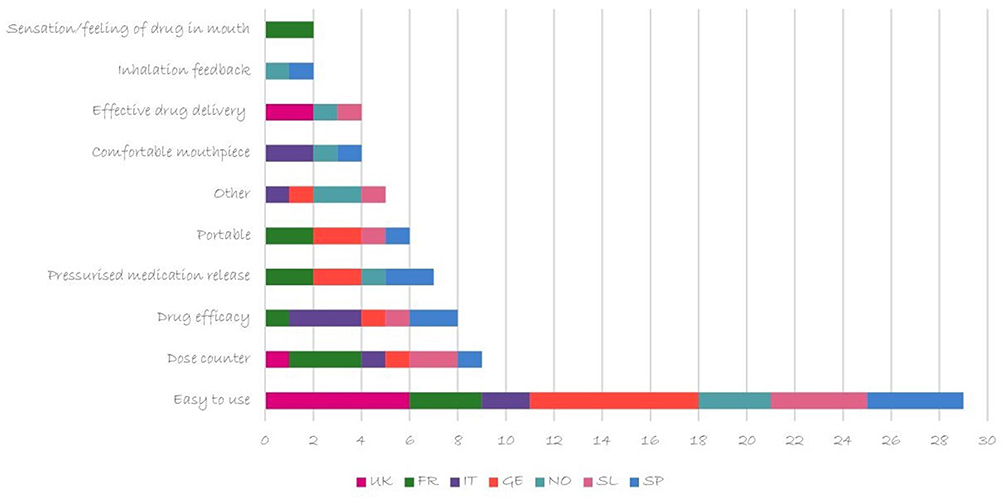 |
Figure 1 Key qualities or features patients would like from their inhaler by country. |
Fifty-four patients provided input on their ideal inhaler device; the responses collected included 130 individual preferences. Thirty-four participants (63%) stressed the importance of a user-friendly device, while 18 (33%) suggested the presence of an inhalation counter. Additional features suggested were an integrated inhaler cover, no need to rinse mouth out, inhalation feedback, automatic drug delivery, colorful design, dosing information, pressurized medication release, no need for coordination, low dose indicator, dose reminder, easy to clean, and suitability for people with dexterity limitations (Figure 2).
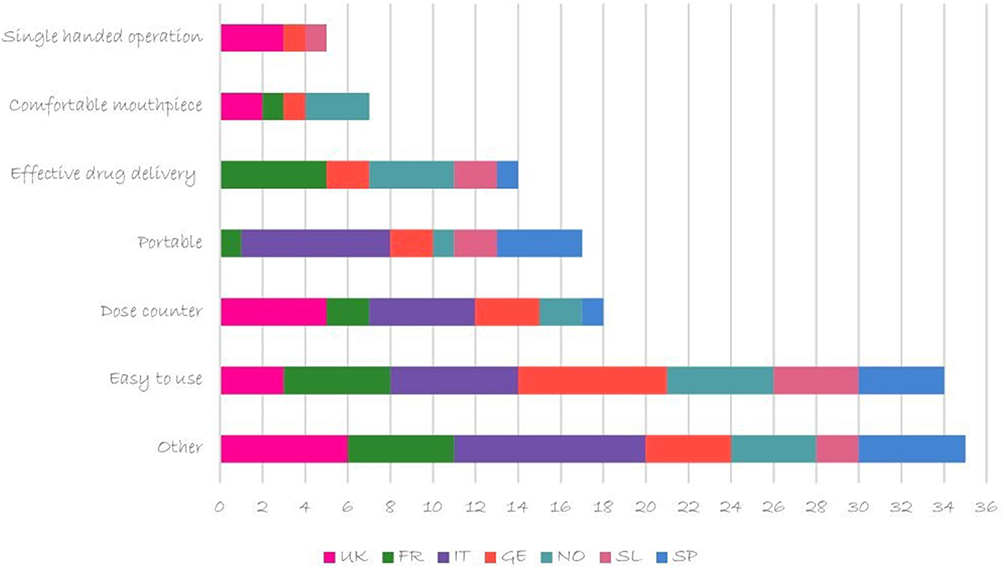 |
Figure 2 Patient reported perfect device qualities or features by country. |
Inhaler Use
Out of the 52 respondents, 48 (92%) confirmed feeling confident in using their current inhaler. The main reasons cited by patients were the sensation while inhaling the medication (n=14), the therapeutic effect they experienced (n=12), and the feedback they received from their inhaler (n=7). Other responses included adhering to the instructions and using an inhalation counter.
Inhaler Use Improvements
Only 12 patients provided feedback on what improvements could be made to assist them in taking their treatment; 67% (n=8) required more information about their inhaler use, the therapeutic effect of the drug, the inhalation technique, the timing of administration, and the hygiene of the device. The remaining 4 patients (33%) requested device improvement (eg, a reminder to take the medication) or medication improvements.
NEXThaler Likes and Dislikes
All 62 patients participated in simulating the use of NEXThaler through the assessment of the expected task steps. After the simulation with NEXThaler, 55 patients provided feedback on the device, resulting in 116 recorded responses. The features that patients valued the most were the inhalation counter (19 responses; 35%), the “click of confidence” (17 responses, 31%), and the ease of use (16 responses, 29%). Some patients appreciated the size, look, and feel of the device, its portability, the integrated cover, and the size of the mouthpiece. The features and qualities they did not like most included the size (n=13) and the color (n=9) of the device. Other qualities or features that a few patients disliked included the need for two hands to use/open the inhalation counter, the small number of units, the mouthpiece shape, and the unclarity of its operation.
Out of the 62 patient respondents, 73% (n=45) noticed the “click” sound during inhalation. Fifty-eight patients provided information about their understanding of the “click”; 73% of them (n=42) correctly interpreted the click as successful inhalation or medication administration (Appendix 1, Figure 2A). The impact of the “click for confidence” was overall averagely rated 4.3 out of 5, ranging between 3.8 in Slovenia to 4.9 in Italy (Appendix 1, Figure 3A). The impact on treatment experience was overall averagely rated 4.4, ranging between 3.7 in Germany to 4.9 in Italy (Appendix 1, Figure 4A), while the impact on patient’s confidence was overall averagely rated 4.6, ranging between 4.1 in Germany to 5.0 in Nordic (Sweden and Denmark) Countries (Appendix 1, Figure 5A).
Feedback was collected from 53 patients regarding the inhalation effort; 36 (68%) of them felt positive about the inhalation effort of NEXThaler, while 21% of patients (n=11) reported no significant difference compared to their current device, and 6 (11%) had a negative feeling (Table 2). The most frequently, spontaneously reported reasons for preferring NEXThaler were its ease of use and the improved inhalation effort while the main reason for preferring the current inhaler was the higher resistance when inhaling the dose.
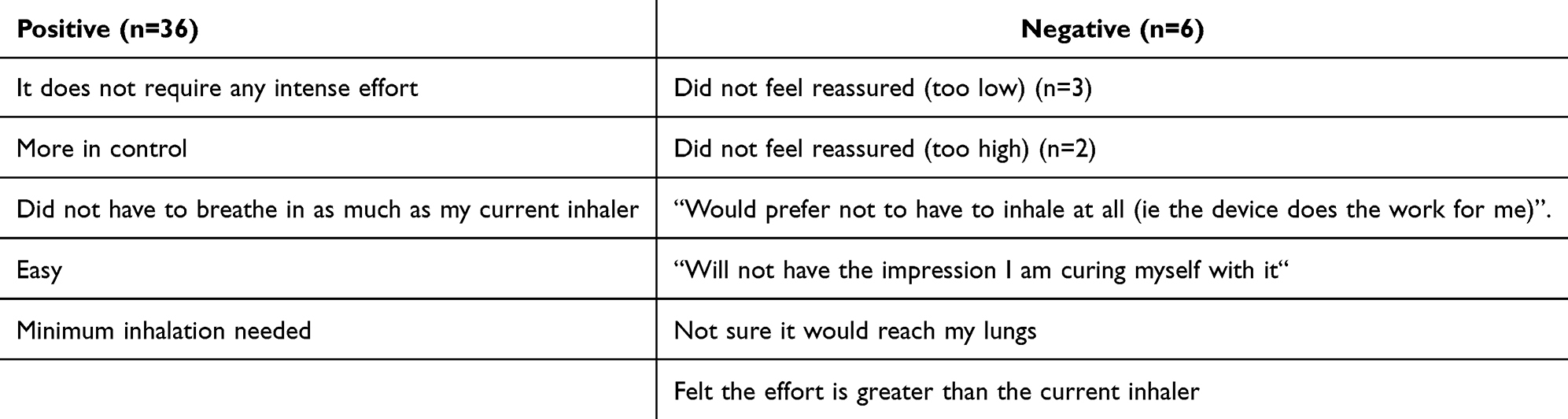 |
Table 2 Patients’ Feelings About the Inhalation Effort of NEXThaler |
The overall average impact on patients’ lives was rated 4.2 out of 5, ranging between 3.8 in France to 4.6 in Italy (Appendix 1, Figure 6A); the impact on treatment experience was averagely rated 4.4, ranging between 3.9 in Spain to 4.9 in Italy (Appendix 1, Figure 7A), while the impact on patient’s confidence was averagely rated 4.6, ranging between 4.1 in Germany to 5.0 in Italy (Appendix 1, Figure 8A).
Fifty-eight patients provided quantitative information about the inhalation counter; 31 patients (53%) believed the inhalation counter to be a good idea (Figure 3). Additional suggestions about the inhalation counter included the suggestion to include instructions on the lid, a display of the current dose taken (eg, 1 of 2, 2 of 2), and larger, more readable numbers without symbols.
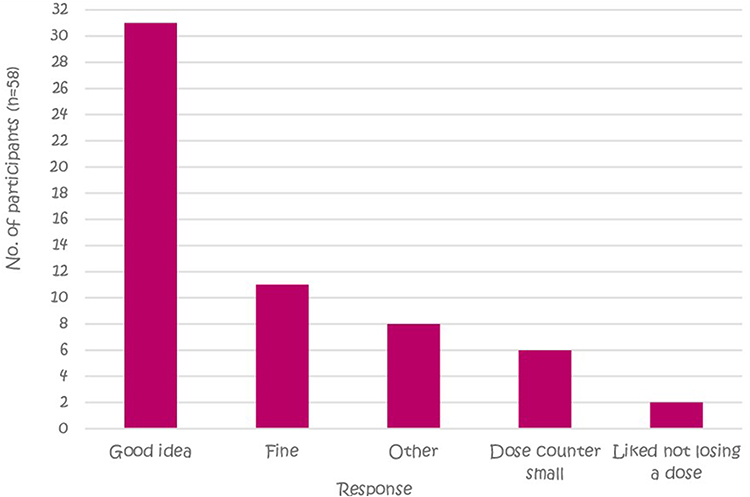 |
Figure 3 Patients’ feelings about the inhalation counter. |
The overall average impact on patients’ lives was rated 4.5 out of 5, ranging between 4.2 in Germany to 4.8 in Northern Countries (Appendix 1, Figure 9A). The overall impact on treatment experience was rated 4.5, ranging between 3.7 in Germany to 4.8 in Italy (Appendix 1, Figure 10A), while the impact on patient’s confidence was rated 4.7, ranging between 4.1 in Germany to 5 both in Spain and Northern Countries (Appendix 1, Figure 11A).
All 62 patients were provided with a training video about using NEXThaler in their local language. After watching the video, a total of 90 responses were recorded from 61 patients. Among the positive inputs, the main topics were that the video was very informative, useful for cleaning the device, and for newly diagnosed patients. Those who had a negative opinion of the video highlighted their preference for receiving instructions from a human and the excess of information for such a simple device (Table 3).
 |
Table 3 Patients’ Opinions Regarding the Training Video |
Fifty-three patients provided feedback on whether the training video would have improved their use or understanding of the NEXThaler. Of the participants, 24 (46%) believed that the instructional video would have enhanced their use or comprehension of the device, while 28 (54%) thought the video would not have done so.
Discussion
This study aimed to uncover the unmet needs of people living with COPD and assess the level of patient’s feelings about using inhalers. Participants mainly provided positive feedback when asked about their current therapy, describing it as “good” and performing. Additionally, a significant number of patients stated that rather than the device’s appearance, they would be more interested in switching if it provided better treatment results.19
Patients indicated that an effective drug, an inhalation feedback system, an inhalation counter, and a comfortable mouthpiece should be the components they would most like to see in an inhaler. Following the NEXThaler simulation, patients expressed the greatest appreciation for the inhalation counter, the “click of confidence”, the inhalation effort required to activate the device, and the ease of use. Most patients were also able to identify the meaning of the “click” that occurs when the dose has been released correctly and found this feature helpful. Regarding NEXThaler, compared to their existing inhaler, a few participants felt it was large, had a less preferable mouthpiece, required two hands to open the cover, and the inhalation counter numbers could have been bigger.
Watching a training video helped 46% of the patients understand how to use or operate the device better. The “click of confidence”, the inhalation counter, and the inhalation effort required to activate the NEXThaler were consistently considered features that could positively impact their lives, treatment experience, and confidence in using the device.
Poorly controlled COPD is a common condition, even with the availability of comprehensive treatment guidelines6 and effective pharmaceutical treatments.21 Inadequate adherence, linked with worsening clinical and economic outcomes, is one of the main causes.22,23 All chronic diseases have significant adherence issues due to treatment-related factors like frequency, complexity, and length of treatment,24 but COPD patients face extra challenges due to inadequate inhalation techniques and inhaler selection.14 These patients may be at risk for “involuntary non-adherence”, a condition that occurs when a patient inadvertently disregards or incorrectly follows a prescription; involuntary non-adherence is associated with worse outcomes25 because inaccurate administration techniques prevent the entire dose of the drug from reaching the lower respiratory tract.24 Involuntary non-adherence can be corrected with patient education; the patient’s use of inhalers can be improved by medical staff training,26 instruction reading, and educational video viewing.27 The selection of an inhaler may also affect patients’ adherence to their treatment. Early inhalers available on the market were MDIs (Metered Dose Inhalers); their misuse has been observed to be common shortly after their introduction and has been linked to poor clinical outcomes.28 DPIs removed the need to inspire in conjunction with actuation, solving a common issue with MDIs; nevertheless, a review has shown that DPI misuse is also widespread in real-life.29 Inhaler use errors are frequent, particularly in older patients, people with less education, and when healthcare professionals do not provide adequate instruction on inhaler technique25 independently from the device used. Patients are the only ones with full control of inhaler use, so their opinions and preferences are significant.19
Because of this study’s qualitative approach and the limited sample size, its outcomes have to be considered indicative, and any inferential intent should be avoided. In this study, most participants were women aged 42–65, differing from other COPD studies30,31 Interviews were conducted in the participants’ local language with translators, potentially affecting nuance in meaning. Due to the specific patient inclusion, the findings should be generalized carefully.
Overall, the responses indicate that COPD patients are satisfied with their inhalers, even if they can improve usability when properly trained by physicians or using an educational video. Furthermore, patients preferred simple-to-use inhalers that included an inhalation counter and a system to indicate whether the medication was being inhaled correctly.
NEXThaler has many features that patients have shown to appreciate, which can be enhanced considering the unmet needs expressed by the patients in this study.
Conclusions
Human factors studies allow patients with chronic diseases, especially those with COPD, to voice their concerns and guide the development of new drugs and medical devices to best meet their needs.
Patients with COPD often struggle to manage their condition, with poor adherence being a major factor and having a significant impact on both the quality of life and prognosis for these individuals.6,11 This lack of adherence is often unintentional, occurring when patients inadvertently disregard or fail to follow their prescriptions, such as using their inhalers incorrectly.
Given that patients have complete control over their inhaler usage, it is essential to consider their opinions and preferences. This study highlights that NEXThaler caters to patients’ needs, as its three unique features (the “click of confidence”, the low inhalation effort, and the inhalation counter) have been shown to have a positive impact on patients’ lives, treatment experience, and confidence, which can potentially translate into improved medication adherence with a positive impact on quality of life for people living with COPD.
Data Sharing Statement
The data that support the findings of this study are available from Chris White (Rebus Medical), but restrictions apply to the availability of these data, which were used under license for the current study, and so are not publicly available. Data are not available without permission of Chiesi Farmaceutici.
Ethics Approval and Consent to Participate
The DL 20 March 2008 specifies that interviews with the patients without any clinical intervention (as the present study) are not considered observational studies and, thus, do not need to be submitted to the revision and approval of an Ethical committee.
All patients provided their informed consent to participate in this study. The informed consent included statements that required participants to agree to maintain confidentiality regarding the information shared during the study session, as well as described the conditions for the collection, use, processing, retention, and transfer of their personal data (including personally identifiable information and personal health information).
Acknowledgments
Rebus Medical (St Nicholas House, 31-34 high St, Bristol BS1 2AW, United Kingdom) was responsible for contacting the patients, data collection, and statistical analyses. The authors thank Andrea Rossi for the medical writing support and the Chiesi and Rebus study team for the management of the Human factors study (Marta Lombardini, Ilaria Milesi, Lorenzo Ventura, Veronica Giminiani, Massimo Savella, Elena Zeni, Elena Nudo, Lisa Forde, Shivani Bhalsod, Elsie Barker, and Chris White).
The authors thank the patients, the interviewers, and the translators who made this study possible.
Funding
All the activities were funded by Chiesi Farmaceutici S.p.A. (Parma, Italy).
Disclosure
CW is a full-time employee of Rebus Medical.
EN, MS, and ML are full-time employees of Chiesi Farmaceutici.
The authors report no other conflicts of interest in this work.
References
1. Celli B, Fabbri L, Criner G, et al. Definition and nomenclature of chronic obstructive pulmonary disease: time for its revision. Am J Respir Crit Care Med. 2022;206(11):1317–1325. doi:10.1164/RCCM.202204-0671PP
2. Levine S, Marciniuk D, Aglan A, et al. The global impact of respiratory disease Third Edition 2 Writing Committee.
3. Roggeri A, Micheletto C, Roggeri DP. International journal of COPD Dovepress outcomes and costs of treating chronic obstructive pulmonary disease with inhaled fixed combinations: the Italian perspective of the PaThOs study. Int J COPD. 2014;2014:9–569. doi:10.2147/COPD.S65693
4. Blasi F, Cesana G, Conti S, et al. The clinical and economic impact of exacerbations of chronic obstructive pulmonary disease: a cohort of hospitalized patients. PLoS One. 2014;9:e101228. doi:10.1371/journal.pone.0101228
5. Iheanacho I, Zhang S, King D, Rizzo M, Ismaila AS. Economic burden of Chronic Obstructive Pulmonary Disease (COPD): a systematic literature review. Int J Chron Obstruct Pulmon Dis. 2020;15:439–460. doi:10.2147/COPD.S234942
6. Agustí A, Celli BR, Criner GJ, et al. Global initiative for chronic obstructive lung disease 2023 report: GOLD executive summary. Eur Respir J. 2023;61(4):2300239. doi:10.1183/13993003.00239-2023
7. 2024 GOLD report - global initiative for chronic obstructive lung disease - GOLD. Available from: https://goldcopd.org/2024-gold-report/.
8. Zafari Z, Li S, Eakin MN, Bellanger M, Reed RM. Projecting long-term health and economic burden of COPD in the United States. Chest. 2021;159(4):1400–1410. doi:10.1016/J.CHEST.2020.09.255
9. Mathers CD, Loncar D. Projections of global mortality and burden of disease from 2002 to 2030. PLoS Med. 2006;3(11):2011–2030. doi:10.1371/JOURNAL.PMED.0030442
10. Lopez AD, Shibuya K, Rao C, et al. Chronic obstructive pulmonary disease: current burden and future projections. Eur Respir J. 2006;27(2):397–412. doi:10.1183/09031936.06.00025805
11. Rennard S, Decramer M, Calverley PMA, et al. Impact of COPD in North America and Europe in 2000: subjects’ perspective of confronting COPD international survey. Eur Respir J. 2002;20(4):799–805. doi:10.1183/09031936.02.03242002
12. Pleasants RA, Hess DR. Aerosol delivery devices for obstructive lung diseases. Respir Care. 2018;63(6):708–733. doi:10.4187/RESPCARE.06290
13. Agarwal AK, Raja A, Brown BD. Chronic obstructive pulmonary disease. StatPearls. 2023. Available from: https://www.ncbi.nlm.nih.gov/books/NBK559281/.
14. Melani AS, Paleari D. Maintaining control of chronic obstructive airway disease: adherence to inhaled therapy and risks and benefits of switching devices. COPD. 2016;13:241–250. doi:10.3109/15412555.2015.1045972
15. Usmani OS, Lavorini F, Marshall J, et al. Critical inhaler errors in asthma and COPD: a systematic review of impact on health outcomes. Respir Res. 2018;19(1). doi:10.1186/S12931-017-0710-Y
16. Bidwal M, Lor K, Yu J, Ip E. Evaluation of asthma medication adherence rates and strategies to improve adherence in the underserved population at a Federally Qualified Health Center. Res Social Adm Pharm. 2017;13(4):759–766. doi:10.1016/J.SAPHARM.2016.07.007
17. Taylor D, Kinney C, McDevitt D. Patient compliance with oral theophylline therapy. Br J Clin Pharmacol. 1984;17(1):15–20. doi:10.1111/J.1365-2125.1984.TB04992.X
18. Bosley CM, Corden ZM, Rees PJ, Cochrane GM. Psychological factors associated with use of home nebulized therapy for COPD. Eur Respir J. 1996;9(11):2346–2350. doi:10.1183/09031936.96.09112346
19. Scichilone N, Whittamore A, White C, Nudo E, Savella M, Lombardini M. The patient journey in Chronic Obstructive Pulmonary Disease (COPD): a human factors qualitative international study to understand the needs of people living with COPD. BMC Pulm Med. 2023;23(1):1–15. doi:10.1186/S12890-023-02796-8/FIGURES/11
20. Chetta A, Yorgancioglu A, Scuri M, Barile S, Guastalla D, Dekhuijzen PNR. Inspiratory flow profile and usability of the NEXThaler, a multidose dry powder inhaler, in asthma and COPD. BMC Pulm Med. 2021;21(1). doi:10.1186/S12890-021-01430-9
21. Christenson SA, Smith BM, Bafadhel M, Putcha N. Chronic obstructive pulmonary disease. Lancet. 2022;399(10342):2227–2242. doi:10.1016/S0140-6736(22)00470-6
22. Hogea SP, Tudorache E, Fildan AP, Fira-Mladinescu O, Marc M, Oancea C. Risk factors of chronic obstructive pulmonary disease exacerbations. Clin Respir J. 2020;14(3):183–197. doi:10.1111/CRJ.13129
23. Gregoriano C, Dieterle T, Breitenstein AL, et al. Use and inhalation technique of inhaled medication in patients with asthma and COPD: data from a randomized controlled trial. Respir Res. 2018;19(1). doi:10.1186/S12931-018-0936-3
24. George M. Adherence in asthma and COPD: new strategies for an old problem. Respir Care. 2018;63(6):818–831. doi:10.4187/RESPCARE.05905
25. Melani AS, Bonavia M, Cilenti V, et al. Inhaler mishandling remains common in real life and is associated with reduced disease control. Respir Med. 2011;105:930–938. doi:10.1016/j.rmed.2011.01.005
26. Takaku Y, Kurashima K, Ohta C, et al. How many instructions are required to correct inhalation errors in patients with asthma and chronic obstructive pulmonary disease? Respir Med. 2017;123:110–115. doi:10.1016/J.RMED.2016.12.012
27. Price D, Keininger DL, Viswanad B, Gasser M, Walda S, Gutzwiller FS. Factors associated with appropriate inhaler use in patients with COPD – lessons from the REAL survey. Int J Chron Obstruct Pulmon Dis. 2018;13:695. doi:10.2147/COPD.S149404
28. Saunders KB. Misuse of inhaled bronchodilator agents. Br Med J. 1965;1(5441):1037–1038. doi:10.1136/BMJ.1.5441.1037
29. Lavorini F, Magnan A, Dubus JC, et al. Effect of incorrect use of dry powder inhalers on management of patients with asthma and COPD. Respir Med. 2007. doi:10.1016/j.rmed.2007.11.003
30. Kim-Dorner SJ, Schmidt T, Kuhlmann A, Graf von der Schulenburg JM, Welte T, Lingner H. Age- and gender-based comorbidity categories in general practitioner and pulmonology patients with COPD. NPJ Prim Care Respir Med. 2022;32(1). doi:10.1038/S41533-022-00278-8
31. Maestri R, Vitacca M, Paneroni M, Zampogna E, Ambrosino N. Gender and age as determinants of success of pulmonary rehabilitation in individuals with chronic obstructive pulmonary disease. Arch Bronconeumol. 2023;59(3):174–177. doi:10.1016/J.ARBRES.2022.09.008
 © 2024 The Author(s). This work is published and licensed by Dove Medical Press Limited. The
full terms of this license are available at https://www.dovepress.com/terms
and incorporate the Creative Commons Attribution
- Non Commercial (unported, 3.0) License.
By accessing the work you hereby accept the Terms. Non-commercial uses of the work are permitted
without any further permission from Dove Medical Press Limited, provided the work is properly
attributed. For permission for commercial use of this work, please see paragraphs 4.2 and 5 of our Terms.
© 2024 The Author(s). This work is published and licensed by Dove Medical Press Limited. The
full terms of this license are available at https://www.dovepress.com/terms
and incorporate the Creative Commons Attribution
- Non Commercial (unported, 3.0) License.
By accessing the work you hereby accept the Terms. Non-commercial uses of the work are permitted
without any further permission from Dove Medical Press Limited, provided the work is properly
attributed. For permission for commercial use of this work, please see paragraphs 4.2 and 5 of our Terms.
Recommended articles

Effectiveness of Extrafine Single Inhaler Triple Therapy in Chronic Obstructive Pulmonary Disease (COPD) in Germany – The TriOptimize Study
Gessner C, Trinkmann F, Bahari Javan S, Hövelmann R, Bogoevska V, Georges G, Nudo E, Criée CP
International Journal of Chronic Obstructive Pulmonary Disease 2022, 17:3019-3031
Published Date: 2 December 2022
Impact of Medication Adherence on Emergency Department Visits in Patients with COPD in a Single Tertiary Hospital in Saudi Arabia
Alshehri S, Alshibani M
International Journal of Chronic Obstructive Pulmonary Disease 2023, 18:593-598
Published Date: 17 April 2023


The Intention of Inhaled Medication Adherence Scale (IMAS): The Development of a New Instrument for Assessing Inhaled Medication Adherence Among Patients with Chronic Obstructive Pulmonary Disease (COPD) Using Theory of Planned Behavior
Wang YH, Yang TM, Hung MS, Lin YC, Fang TP, Kuo TT, Griffiths MD, Lin CY
International Journal of Chronic Obstructive Pulmonary Disease 2023, 18:1655-1664
Published Date: 2 August 2023
Clinical Implications of Peak Inspiratory Flow in COPD: Post Hoc Analyses of the TRONARTO Study
Mahler DA, Watz H, Emerson-Stadler R, Ritz J, Gardev A, Shaikh A, Drummond MB
International Journal of Chronic Obstructive Pulmonary Disease 2023, 18:1729-1740
Published Date: 10 August 2023
Effects of Adherence to an mHealth Tool for Self-Management of COPD Exacerbations
Bischoff EW, Ariens N, Boer L, Vercoulen J, Akkermans RP, van den Bemt L, Schermer TR
International Journal of Chronic Obstructive Pulmonary Disease 2023, 18:2381-2389
Published Date: 1 November 2023