
Back to Journals » Patient Preference and Adherence » Volume 20
Knowledge, Attitudes, and Practices Toward Acupuncture Among Patients with Knee Pain: A Cross-Sectional Study
Authors Wan X, Song S, Chen Y, Tao Q, Zhang S
Received 28 October 2025
Accepted for publication 18 February 2026
Published 24 February 2026 Volume 2026:20 577342
DOI https://doi.org/10.2147/PPA.S577342
Checked for plagiarism Yes
Review by Single anonymous peer review
Peer reviewer comments 2
Editor who approved publication: Dr Johnny Chen
Xing Wan,* Shilong Song,* Yun Chen,* Qi Tao, Shinian Zhang
Jiangsu Province Hospital of Chinese Medicine, Affiliated Hospital of Nanjing University of Chinese Medicine, Nanjing, Jiangsu, People’s Republic of China
*These authors contributed equally to this work
Correspondence: Shinian Zhang, Email [email protected]
Purpose: This study aimed to evaluate the knowledge, attitudes, and practices (KAP) regarding acupuncture among patients experiencing knee pain.
Patients and Methods: A cross-sectional survey was conducted at Jiangsu Provincial Hospital of Traditional Chinese Medicine from November 9, 2022, to December 27, 2024. Data were gathered using a structured questionnaire designed to assess participants’ demographic information and their KAP related to acupuncture.
Results: A total of 337 valid responses were obtained. Of these, 235 respondents (69.73%) were female, and 271 (80.42%) reported living in urban areas. Additionally, 160 participants (47.48%) resided within a 5-kilometer radius of the hospital. The knowledge, attitude, and practice scores were 5.87± 2.43 (possible range: 0– 12), 34.49± 4.56 (possible range: 10– 50), and 16.75± 3.75 (possible range: 13– 65), respectively. The structural equation modeling (SEM) results showed that knowledge directly affected attitude (β = 0.634, P = 0.004) and practice (β = 0.255, P = 0.023), attitude directly affected practice (β = 0.520, P = 0.019), and knowledge also indirectly affected practice through attitude (β = 0.330, P = 0.012).
Conclusion: Patients with knee pain exhibited limited knowledge, moderately positive attitudes, and low engagement in acupuncture practices. The SEM results demonstrated that knowledge significantly influenced both attitude and practice. These findings underscore the necessity for targeted educational interventions to improve patient understanding and encourage the active use of acupuncture in managing knee pain. These conclusions are most applicable in China.
Keywords: acupuncture, knee pain, knowledge, attitude, practice, cross-sectional study, patient acceptance
Introduction
Knee pain represents one of the most common musculoskeletal complaints globally, with osteoarthritis (OA) being the leading cause of chronic knee pain and disability. In China, the prevalence of primary osteoarthritis in people over 40 years old is as high as 46.3%, increasing to 62.2% in those over 60 years old, with knee osteoarthritis (KOA) accounting for more than 90% of osteoarthritis cases.1 Current management options include pharmacological interventions, physiotherapy, and surgical procedures, which are routinely used and have demonstrated efficacy; however, treatment response may vary across individuals, and each approach may be associated with specific limitations or potential adverse effects, leading some patients to seek complementary treatments such as acupuncture.2 Recent studies have also evaluated adjunct physical modalities for musculoskeletal pain conditions, including extracorporeal shock wave therapy combined with pulsed electromagnetic field therapy and low-level laser therapy applied to acupuncture points.3,4 Acupuncture has shown promising results in managing knee pain, with meta-analyses demonstrating significant short-term benefits for pain relief and functional improvement compared to various control interventions.5
The Knowledge, Attitudes, and Practices (KAP) survey methodology serves as a diagnostic research tool that illuminates a group’s comprehension, beliefs, and actions regarding specific health interventions. This approach operates on the premise that knowledge influences attitudes, which in turn shape health-seeking behaviors and treatment adherence.6,7 Despite acupuncture originating in China and being widely practiced, patients’ understanding, perceptions, and utilization patterns of this traditional therapy for knee pain remain inadequately explored. Issues such as treatment frequency, combination with exercise therapy, and patient expectations may significantly impact outcomes, yet these factors are often overlooked in clinical practice.8 Research has shown that even in regions where traditional practices are culturally embedded, formal knowledge and appropriate utilization may be suboptimal.5
This study aims to assess the knowledge, attitudes, and practices regarding acupuncture among patients with knee pain in China. Despite acupuncture’s origin in China and its widespread integration into the healthcare system, there is a notable gap in research examining patients’ understanding, perceptions, and utilization patterns of acupuncture specifically for knee pain.5 This research gap is significant considering China’s unique healthcare context where traditional Chinese medicine and Western medical approaches coexist, potentially creating varied patient perspectives on treatment options. By investigating knowledge levels, attitude factors, and current practices, this study seeks to identify potential barriers to optimal acupuncture utilization and inform targeted educational initiatives and clinical communication strategies. The findings may contribute to more effective implementation of evidence-based acupuncture treatments for knee pain and improve patient-centered care approaches in both traditional Chinese medicine and integrated healthcare settings.
Materials and Methods
Study Design and Participants
This cross-sectional study was conducted at Jiangsu Provincial Hospital of Traditional Chinese Medicine from November 9, 2022, to December 27, 2024, and involved patients with knee pain. This study was approved by the Ethic Committee of Nanjing University of Chinese Medicine Affiliated Hospital (2019NL-134-02), which covered the full duration of data collection from November 2022 to December 2024, and all participants provided written informed consent before enrollment.
Participants were eligible if they met the following criteria: (1) a clinical diagnosis of knee pain made by a qualified physician, including conditions such as osteoarthritis, patellofemoral pain syndrome, synovitis, and ligament injuries; (2) age between 18 and 75 years; (3) an average Numerical Rating Scale (NRS) score of ≥3 for knee pain over the past two weeks or one month; and (4) sufficient cognitive ability to understand study procedures, complete the questionnaire, and cooperate with acupuncture treatment. Participants were excluded if they met any of the following conditions: (1) knee pain secondary to systemic or other musculoskeletal disorders, such as malignancy-related bone metastases, infectious arthritis, acute exacerbations of rheumatoid arthritis, or concurrent hip or ankle joint diseases, which involve different pain mechanisms and treatment approaches that could affect the homogeneity of the study population; (2) contraindications to acupuncture, including coagulation disorders, severe cardiovascular disease, active skin infections, pregnancy, or other absolute contraindications that would prevent safe acupuncture treatment; and (3) severe cognitive impairment or psychiatric disorders that could hinder the participant’s ability to understand the questionnaire, follow instructions, or actively participate in the study.
Questionnaire Introduction
The questionnaire was developed with input from three specialists and refined through several revisions. It was then tested in a pilot study involving 45 participants, where it demonstrated strong internal consistency with a reliability coefficient of 0.873.
The final version, administered in Chinese, consists of four sections. The first section gathers basic demographic and clinical information through 12 items. The second section evaluates knowledge with 12 items, each scored as 1 point for correct answers and 0 points for incorrect or uncertain responses, resulting in a total possible score between 0 and 12. The attitude section included 10 questions rated on a five-point Likert scale, from “Strongly agree” (5 points) to “Strongly disagree” (1 point), with a total score range of 10 to 50. The practice section also contained 7 questions (13 items), with response options ranging from “Always/Extremely high” (5 points) to “Never/Extremely low” (1 point), leading to a total possible score between 13 and 65.
Questionnaire Distribution
The questionnaire was distributed in paper format to patients visiting the knee pain outpatient clinic. Before administering the questionnaire, the doctor will explain its purpose and main content to patients seeking treatment for knee pain. Once the patient fully understands the information, they will sign an informed consent form. The patient will then complete the questionnaire item by item. Throughout this process, the doctor will clarify any questions the patient may have. After the questionnaire is completed, the doctor will review it to ensure all sections are filled out correctly.
Statistical Analysis
Statistical analyses were performed using SPSS version 27.0 (IBM Corp., Armonk, NY, USA) and Analysis of Moment Structures (AMOS) version 26.0 (IBM Corp., Armonk, NY, USA). Continuous variables were reported as means with standard deviations (SD). Categorical variables were expressed as frequencies and percentages (n, %). Comparisons of normally distributed continuous variables were conducted using independent sample t-tests for two-group comparisons and analysis of variance (ANOVA) for comparisons involving three or more groups. Non-normally distributed continuous variables were analyzed using the Wilcoxon-Mann–Whitney test for two groups and the Kruskal–Wallis test for three or more groups. Correlation analyses were performed using Pearson’s correlation coefficient for normally distributed data and Spearman correlation coefficient for non-normally distributed data. To identify factors associated with proactive acupuncture practices, univariate and multivariate logistic regression analyses were conducted. Proactive practice was defined as achieving 70% of the highest possible practice score. Structural equation modeling (SEM) was applied to examine the interrelationships among knowledge, attitude, and practice. The hypothesized pathways in the SEM model included: (1) a direct effect of knowledge on attitude, (2) a direct effect of attitude on practice, and (3) both direct and indirect effects of knowledge on practice, mediated by attitude. Model fit was evaluated using chi-square/degree of freedom (CMIN/DF), root mean square error of approximation (RMSEA), Goodness-of-Fit Index (GFI) and Adjusted Goodness-of-Fit Index (AGFI). All statistical tests were two-sided, with a significance threshold set at P < 0.05.
Results
Baseline Characteristics and KAP Score
Initially, a total of 350 questionnaires were collected. After excluding 5 participants who were under 18 years old and 8 cases with missing data, the final valid sample consisted of 337 questionnaires, resulting in an effective rate of 96.29%. Among the participants, 235 (69.73%) were female, with a mean age of 47.85 ± 16.14 years. A majority, 271 (80.42%), resided in urban areas. Additionally, 162 (48.07%) held an associate or bachelor’s degree, 163 (48.37%) were employed, and 160 (47.48%) lived less than 5 kilometers from the hospital.
The mean scores for knowledge, attitude, and practice were 5.87 ± 2.43 (possible range: 0–12), 34.49 ± 4.56 (possible range: 10–50), and 16.75 ± 3.75 (possible range: 13–65), respectively. Knowledge scores varied significantly by education level (P = 0.002) and employment status (P = 0.035). Attitude scores showed significant variation based on the distance from residence to hospital (P = 0.045). Practice scores differed significantly by marital status (P = 0.010) (Table 1).
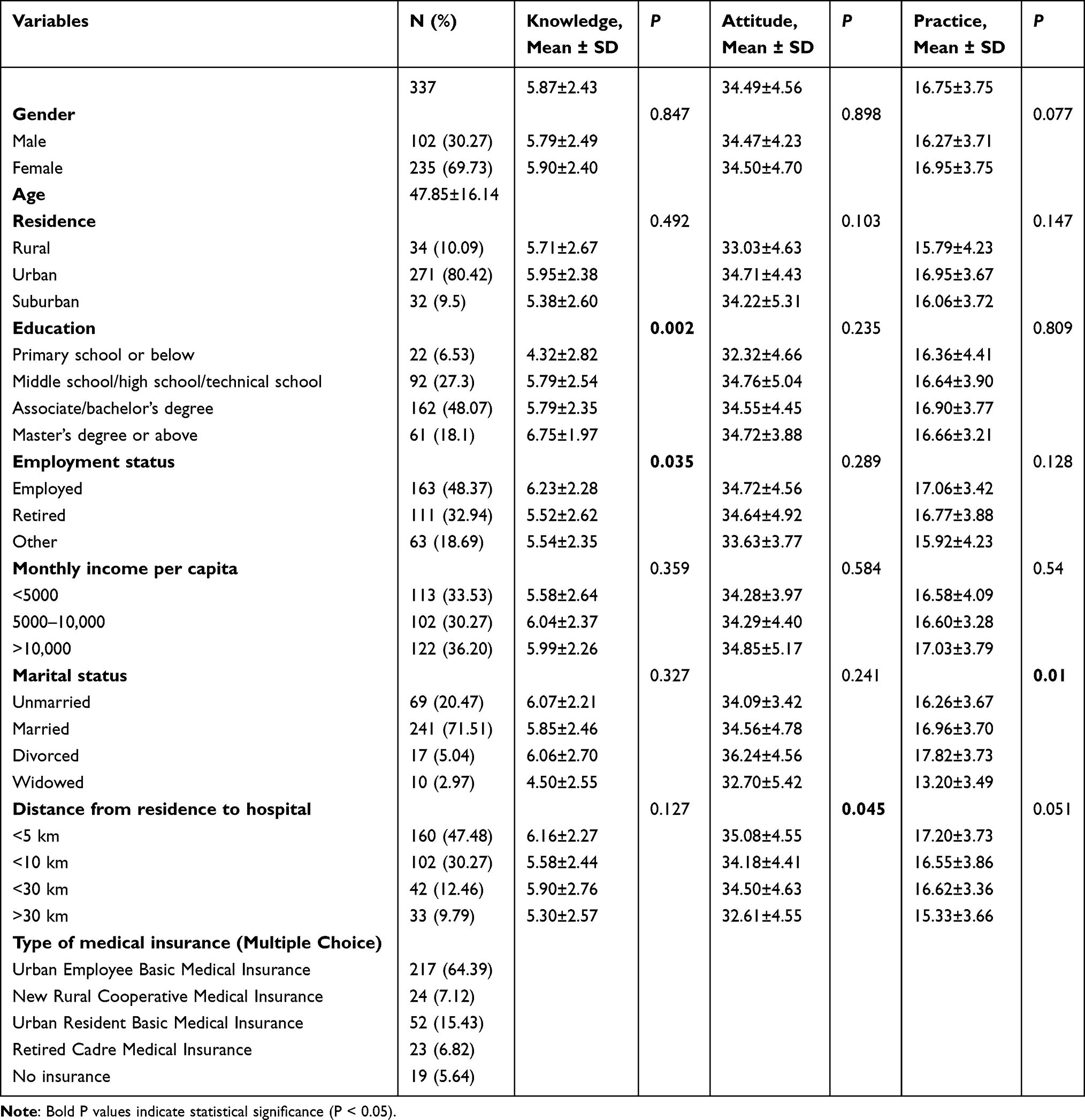 |
Table 1 Demographic Characteristics and KAP Scores |
Knowledge, Attitude, and Practice
Item-level response distributions for the knowledge, attitude, and practice domains are provided in Tables S1–S3. The distribution of the knowledge dimension revealed that the items with the lowest correctness rates were: “The Qici (multi-directional needling) technique of filiform needles is particularly effective for treating larger areas” (K6) with 1.19%, “Fire needle therapy combines needling and moxibustion in its application” (K9) with 3.86%, and “Warm acupuncture therapy involves heating a specially designed needle until red-hot and quickly inserting it into acupuncture points or affected areas for treatment (K7)” with 6.23% (Table S1).
For the attitude dimension, 12.17% strongly agreed and 29.67% agreed that acupuncture requires long-term treatment and adhering to it is inconvenient (A2). Additionally, 12.46% strongly agreed and 34.72% agreed that they would not want to go if the acupuncture clinic is too far (A8), and 7.12% strongly agreed and 16.62% agreed that they feel fearful of acupuncture therapy (A10) (Table S2).
In the practice dimension, 12.17% reported never undergoing acupuncture treatment (P1), 7.72% were never able to persist with acupuncture treatment (P3), and 6.82% never actively recommended acupuncture therapy to fellow patients (P5) (Table S3).
Regarding the acceptability of the listed acupuncture-related methods, moxibustion showed the lowest acceptability (150 participants chose “very unacceptable”), followed by the filiform needle (109 participants chose “very unacceptable”) (Figure 1).
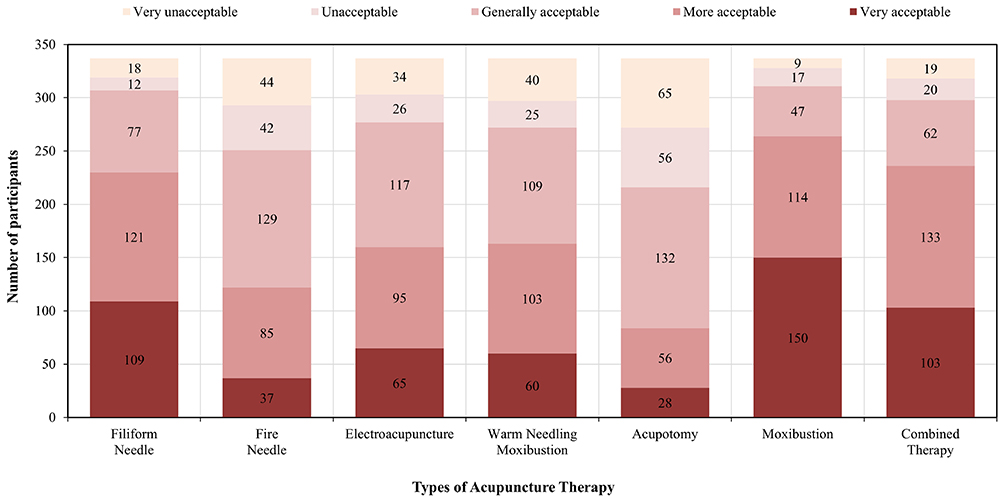 |
Figure 1 Participants’ Acceptance of Various Acupuncture Methods. (Filiform Needle, Fire Needle, Electroacupuncture, Warm Needling Moxibustion, Acupotomy, Moxibustion, Combined Therapy). |
Correlation Analysis
Correlation analysis indicated significant positive correlations between knowledge and attitude (r = 0.400, P < 0.001), as well as knowledge and practice (r = 0.430, P < 0.001). There was also a significant correlation between attitude and practice (r = 0.513, P < 0.001) (Table 2).
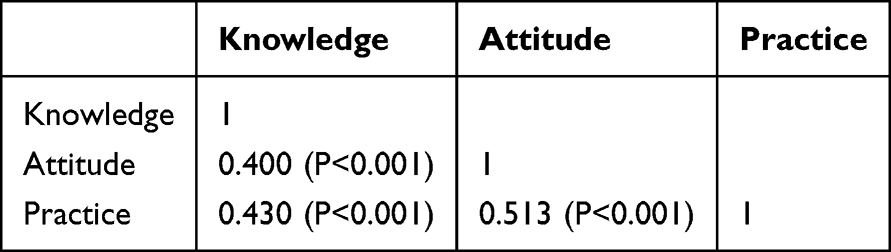 |
Table 2 KAP Correlation Analysis |
Univariate and Multivariate Analysis for Practice
Multivariate logistic regression demonstrated that knowledge score (OR = 1.241, 95% CI: [1.097–1.404], P < 0.001), attitude score (OR = 1.196, 95% CI: [1.119–1.278], P < 0.001), being male (OR = 0.486, 95% CI: [0.280–0.843], P = 0.010), and living more than 30 km from the hospital (OR = 0.368, 95% CI: [0.139–0.975], P = 0.044) were independently associated with proactive practice (Table 3).
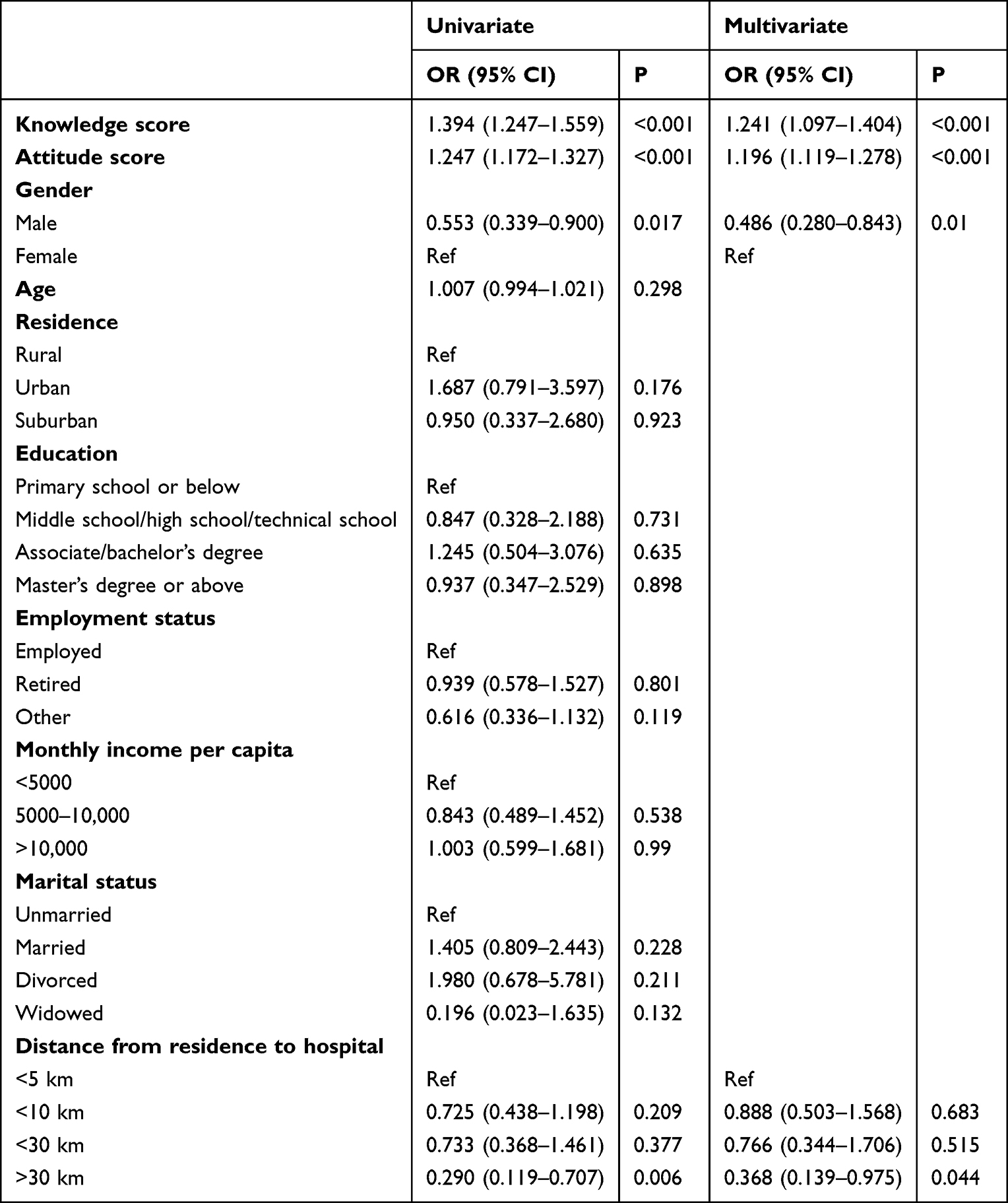 |
Table 3 Analysis of Factors Influencing Proactive Practice |
SEM Analysis
The SEM results showed that knowledge directly affected attitude (β = 0.634, P = 0.004) and practice (β = 0.255, P = 0.023). Attitude directly influenced practice (β = 0.520, P = 0.019), and knowledge also indirectly affected practice through attitude (β = 0.330, P = 0.012) (Table 4 and Figure 2). The SEM model fit indices indicated good model fit (CMIN/DF = 2.673, RMSEA = 0.071; IFI = 0.836; AGFI = 0.805; GFI = 0.836) (Table 5).
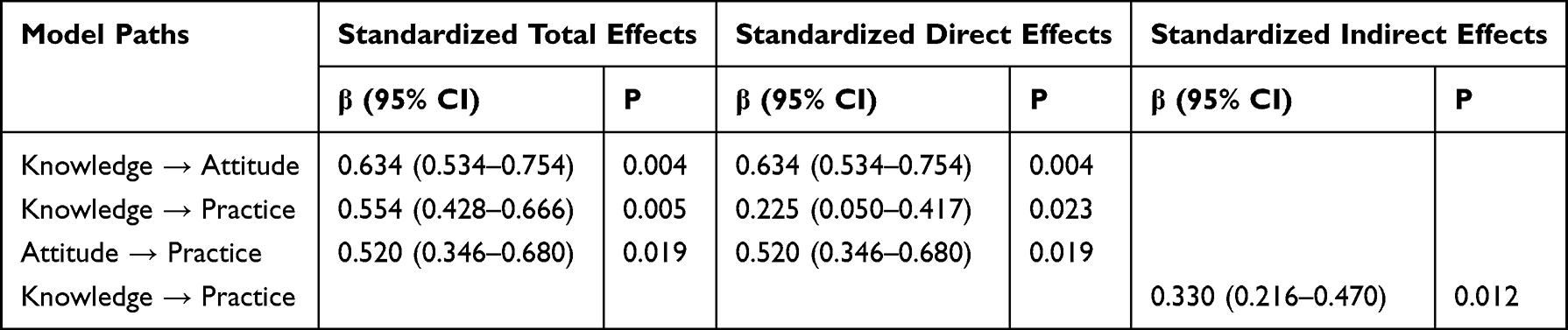 |
Table 4 SEM Results |
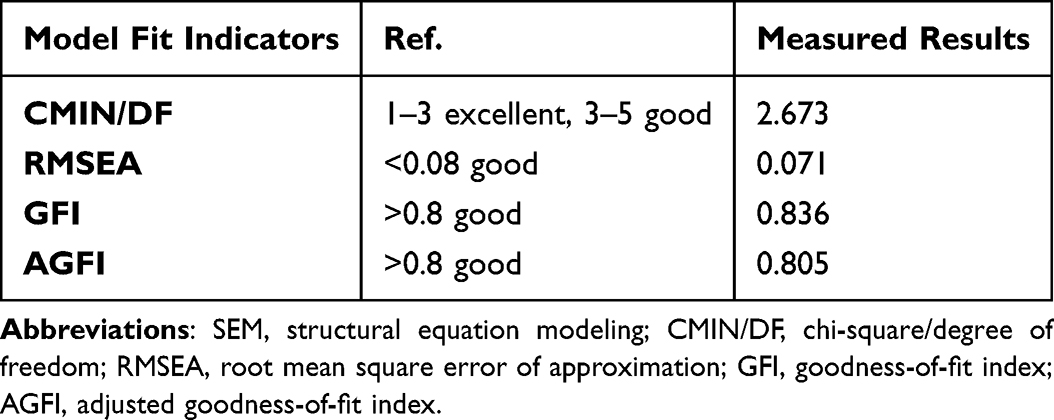 |
Table 5 SEM Model Fitting Results |
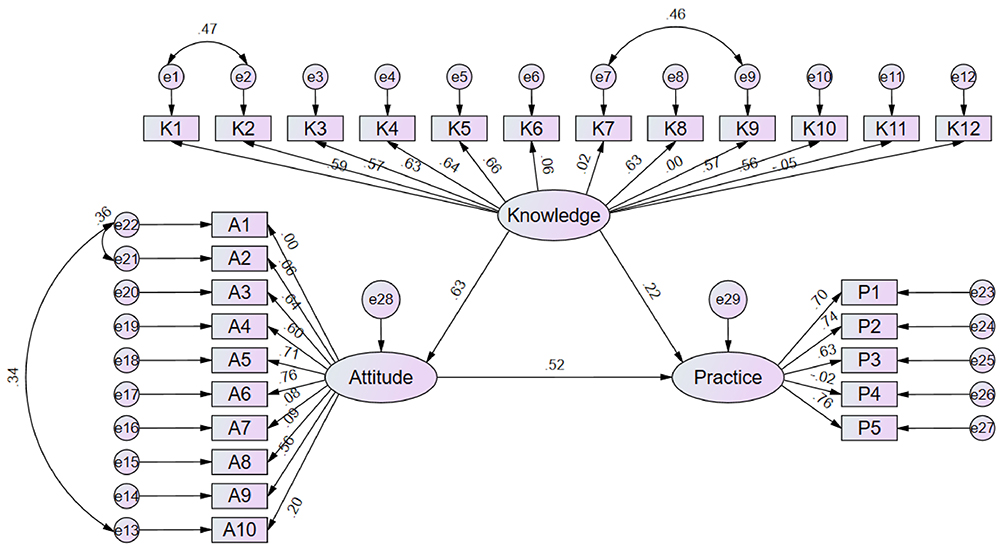 |
Figure 2 SEM Model. |
Discussion
Patients experiencing knee pain showed limited knowledge about acupuncture, generally positive attitudes toward it, and notably low levels of acupuncture-related practices. Given the observed connections between knowledge, attitudes, and practices, clinical efforts should focus on targeted educational interventions to improve patients’ understanding of acupuncture. This, in turn, may encourage greater engagement with this treatment option.
The findings of this study indicate that while patients with knee pain generally hold positive attitudes toward acupuncture, their level of knowledge remains limited, and their actual engagement in acupuncture treatment is notably low. This pattern aligns with previous research in complementary and alternative medicine, where a favorable perception of a therapy does not necessarily translate into active utilization.9,10 The SEM results further reinforce this discrepancy, showing that while knowledge exerts a direct influence on both attitude and practice, the indirect pathway through attitude plays a substantial role. This suggests that while patients recognize the benefits of acupuncture, gaps in knowledge and accessibility barriers may hinder their willingness to seek treatment.
Attitudes toward acupuncture were largely positive, with a substantial proportion of participants believing in its effectiveness and safety. However, concerns regarding pain and treatment inconvenience persisted, indicating that while acupuncture is generally accepted, psychological and logistical barriers may deter regular engagement. The correlation analysis showed that attitudes were moderately associated with practice, but this relationship was further clarified by the SEM results, which demonstrated that knowledge exerts a stronger influence on attitude than on practice. This finding resonates with previous studies on health behavior models, where knowledge is often a prerequisite for attitude formation but does not always translate directly into behavioral change.11–13 The concern over pain, which was reflected in the high proportion of participants agreeing that acupuncture is painful, which may be particularly pronounced among those unfamiliar with acupuncture techniques, further reinforcing the need for educational interventions that address patient concerns and misconceptions.
Despite positive attitudes, practice levels remained low, with relatively few participants actively seeking acupuncture treatment or consistently recommending it to others. The logistic regression analysis highlighted several key predictors of practice, notably knowledge and attitude scores, gender, and residential distance from the hospital. The finding that men were less likely to engage in acupuncture aligns with studies reporting that male patients are generally less likely to adopt non-conventional therapies compared to women, potentially due to differing health-seeking behaviors and perceptions of alternative medicine.14–16 This finding may also relate to the observed concern about treatment pain, as male patients might be more reluctant to acknowledge pain-related fears or seek treatments perceived as less conventional. The impact of residential distance also supports previous literature indicating that accessibility plays a crucial role in healthcare utilization, particularly for non-emergency services.17,18 Patients living farther from the hospital were significantly less likely to practice acupuncture, highlighting the need for decentralized service models or telehealth-based acupuncture counseling to improve accessibility.
The analysis of patient acceptance of different acupuncture modalities further enriches the discussion of practice-related barriers. Acceptance levels varied across different techniques. In our sample, moxibustion received the lowest acceptability (150 participants chose “very unacceptable”), followed by filiform needling (109 participants chose “very unacceptable”). The variation in acceptance also suggests that patient preference should be considered when recommending acupuncture treatment, as offering more familiar techniques may enhance adherence and overall satisfaction.
These findings underscore the necessity for targeted interventions aimed at increasing both knowledge and accessibility. Educational programs should prioritize bridging the knowledge gap, not only by providing general information about acupuncture but also by addressing specific misconceptions about treatment modalities and procedural discomfort. Strategies such as patient-centered informational sessions, digital health education tools, and collaboration with primary care providers to introduce acupuncture concepts during routine consultations could be effective. Previous studies have demonstrated that structured educational interventions significantly improve patient engagement in complementary therapies, suggesting that similar models could be adapted for acupuncture awareness initiatives.19–21
Improving accessibility is equally crucial. The finding that distance from the hospital significantly influenced acupuncture utilization highlights the need for broader service coverage, particularly in suburban and rural areas. Mobile acupuncture units, integration of acupuncture services into community health centers, and insurance coverage expansion for acupuncture therapies could mitigate geographic barriers.20,22 Additionally, digital health platforms offering virtual consultations on acupuncture suitability and home-based moxibustion guidance could enhance engagement, particularly for those hesitant about in-person treatment sessions.19,23
This study has several limitations that should be noted. First, as a single-center study conducted at a Chinese medicine hospital, the findings may not be applicable to broader populations or other healthcare settings. Second, the reliance on a self-reported questionnaire may introduce response bias, as participants might overestimate their knowledge or report socially desirable attitudes and behaviors. Third, the cross-sectional design restricts the ability to draw causal inferences between knowledge, attitudes, and practices related to acupuncture. Additionally, the self-reported nature of the questionnaire may have introduced social desirability bias, particularly in attitude and practice assessments, where participants might overestimate their positive attitudes or engagement levels. The gender distribution of our sample (approximately 70% female) may have influenced the findings, especially regarding gender differences in acupuncture utilization patterns. In addition, this study included patients with knee pain of various etiologies rather than focusing on a single diagnostic category such as knee osteoarthritis. Although pain course, treatment-seeking behaviors, and responsiveness to acupuncture may differ across specific conditions, the primary aim of this study was to explore patients’ knowledge, attitudes, and practices toward acupuncture from a patient-centered perspective. Given that acupuncture is commonly applied in clinical practice based on symptom presentation rather than strict etiological classification, this broader inclusion reflects real-world outpatient settings. Nevertheless, the absence of disease-specific subgroup analyses may limit disease-specific interpretation, and future studies in more homogeneous diagnostic populations (eg, knee osteoarthritis) are warranted.
Conclusion
In conclusion, patients with knee pain showed inadequate knowledge, moderately positive attitudes, and generally low levels of engagement in acupuncture-related practices. The SEM results demonstrated that knowledge significantly influenced both attitude and practice. These findings underscore the need for targeted educational interventions to enhance patients’ understanding of acupuncture, which may subsequently improve their attitudes and encourage more proactive use of acupuncture in pain management. These conclusions are most applicable to patients with knee pain in China, given the study setting and design.
Data Sharing Statement
All data generated or analyzed during this study are included in this article and supplementary information files.
Ethics Approval and Informed Consent
I confirm that all methods were performed in accordance with the relevant guidelines. This work has been carried out in accordance with the Declaration of Helsinki (2000) of the World Medical Association. This study was approved by the Ethic Committee of Nanjing University of Chinese Medicine Affiliated Hospital (2019NL-134-02), and all participants provided written informed consent before enrollment.
Author Contributions
All authors made a significant contribution to the work reported, whether that is in the conception, study design, execution, acquisition of data, analysis and interpretation, or in all these areas; took part in drafting, revising or critically reviewing the article; gave final approval of the version to be published; have agreed on the journal to which the article has been submitted; and agree to be accountable for all aspects of the work.
Disclosure
The authors declare that they have no competing interests.
References
1. Fan Z, Wang G, Li C, et al. Interpretation and evaluation of Chinese guideline for diagnosis and treatment of osteoarthritis (2021 edition). Chin J Evid Based Med. 2022;22:621–10.
2. Atalay SG, Durmus A, Gezginaslan Ö. The effect of acupuncture and physiotherapy on patients with knee osteoarthritis: a randomized controlled study. Pain Physician. 2021;24(3):E269–E278. doi:10.36076/ppj.2021/24/E269
3. Yetişir A, Öztürk GY. Effects of low-level laser therapy on acupuncture points on knee pain and function in knee osteoarthritis. Rev Assoc Med Bras. 2023;70(1):e20230264. doi:10.1590/1806-9282.20230264
4. Öztürk GY, Yetişir A. Efficacy of extracorporeal shock wave and pulse electromagnetic field therapies in calcaneal spurs. Arch Iran Med. 2023;26(11):642–646. doi:10.34172/aim.2023.94
5. Zhang Y, Wang C. Acupuncture and chronic musculoskeletal pain. Curr Rheumatol Rep. 2020;22(11):80. doi:10.1007/s11926-020-00954-z
6. Cao X, Liao Y, Wu X, et al. Willingness to use acupuncture: knowledge, attitudes, beliefs, and practices among allergic rhinitis patients. Medicine. 2023;102(39):e35297. doi:10.1097/MD.0000000000035297
7. Sharaf SE, Alsanosi S, Alzahrani AR, Al-Ghamdi SS, Sharaf SE, Ayoub N. Knowledge, attitude, and practice of bee venom acupuncture therapy on rheumatoid arthritis among patients in Saudi Arabia. Int J Gen Med. 2022;15:1171–1183. doi:10.2147/IJGM.S351315
8. Chen J, Guo H, Pan J, et al. Efficacy of acupuncture combined with active exercise training in improving pain and function of knee osteoarthritis individuals: a systematic review and meta-analysis. J Orthop Surg Res. 2023;18(1):921. doi:10.1186/s13018-023-04403-2
9. Ammar A, Soua A, Ezzi O, et al. Complementary and alternative medicine in oncology: knowledge, attitude and practice among Tunisian healthcare workers. J Cancer Res Clin Oncol. 2023;149(13):11585–11594. doi:10.1007/s00432-023-05040-2
10. Zhao FY, Kennedy GA, Cleary S, et al. Knowledge about, attitude toward, and practice of complementary and alternative medicine among nursing students: a systematic review of cross-sectional studies. Front Public Health. 2022;10:946874. doi:10.3389/fpubh.2022.946874
11. Zhao L, Zhang H, Li N, et al. Network pharmacology, a promising approach to reveal the pharmacology mechanism of Chinese medicine formula. J Ethnopharmacol. 2023;309:116306. doi:10.1016/j.jep.2023.116306
12. Hu W, Li T, Cao S, Gu Y, Chen L, Chen G. Influence of nurse-led health education on self-management ability, satisfaction, and compliance of elderly patients with chronic obstructive pulmonary disease based on knowledge, belief, and practice model. Comput Math Methods Med. 2022;2022:1782955. doi:10.1155/2022/1782955
13. Mohamed SHP, Alatawi SF. Effectiveness of Kinesio taping and conventional physical therapy in the management of knee osteoarthritis: a randomized clinical trial. Ir J Med Sci. 2023;192(5):2223–2233. doi:10.1007/s11845-022-03247-9
14. Liebert A, Seyedsadjadi N, Pang V, Litscher G, Kiat H. Evaluation of gender differences in response to photobiomodulation therapy, including laser acupuncture: a narrative review and implication to precision medicine. Photobiomodul Photomed Laser Surg. 2022;40(2):78–87. doi:10.1089/photob.2021.0066
15. Reverby SM. Acupuncture’s radical roots and political branches. Am J Public Health. 2021;111(5):760–761. doi:10.2105/AJPH.2021.306199
16. Guignard V, Kiel J. Emergency department management of knee pain. Emerg Med Pract. 2025;27(3):1–24.
17. Rice T, Rosenau P, Unruh LY, Barnes AJ. United States: health system review. Health Syst Transit. 2020;22(4):1–441.
18. Yang YC, Islam SU, Noor A, Khan S, Afsar W, Nazir S. Influential usage of big data and artificial intelligence in healthcare. Comput Math Methods Med. 2021;2021:5812499. doi:10.1155/2021/5812499
19. Davies C, Stoney T, Hutton H, et al. School-based HPV vaccination positively impacts parents’ attitudes toward adolescent vaccination. Vaccine. 2021;39(30):4190–4198. doi:10.1016/j.vaccine.2021.05.051
20. Hailemariam RT, Nigatu AM, Melaku MS. Medical students’ knowledge and attitude towards tele-education and associated factors at University of Gondar, Ethiopia, 2022: mixed method. BMC Med Educ. 2023;23(1):599. doi:10.1186/s12909-023-04579-5
21. Díaz-Allende P, Osorio-Riquelme V, Colmenares-Sandoval O, Partarrieu-Stegmeier R, Guillén-Vicente I, Guillén-García P. [Anterior knee pain: a simplified assessment and management algorithm]. Acta Ortop Mex. 2023;37(3):126–136. Slovak. doi:10.35366/113069
22. Huang W, Yang Y, Yang L, Yan M. Application of acupuncture acupoint visual teaching system by neural regulation. World Neurosurg. 2020;138:619–628. doi:10.1016/j.wneu.2020.02.001
23. Chen X, Huang W, Liu BY, et al. [Moxibustion therapy in prevention and treatment of coronavirus disease 2019 (COVID-19): construction and application of non-contact diagnosis and treatment mode]. Zhongguo Zhen Jiu. 2020;40(10):1027–1033. Dutch. doi:10.13703/j.0255-2930.20200428-k0006
 © 2026 The Author(s). This work is published and licensed by Dove Medical Press Limited. The
full terms of this license are available at https://www.dovepress.com/terms
and incorporate the Creative Commons Attribution
- Non Commercial (unported, 4.0) License.
By accessing the work you hereby accept the Terms. Non-commercial uses of the work are permitted
without any further permission from Dove Medical Press Limited, provided the work is properly
attributed. For permission for commercial use of this work, please see paragraphs 4.2 and 5 of our Terms.
© 2026 The Author(s). This work is published and licensed by Dove Medical Press Limited. The
full terms of this license are available at https://www.dovepress.com/terms
and incorporate the Creative Commons Attribution
- Non Commercial (unported, 4.0) License.
By accessing the work you hereby accept the Terms. Non-commercial uses of the work are permitted
without any further permission from Dove Medical Press Limited, provided the work is properly
attributed. For permission for commercial use of this work, please see paragraphs 4.2 and 5 of our Terms.
Recommended articles

Assessment of Knowledge, Practice, and Associated Factors Towards Airway and Breathing Management Among Nurses Working in the Emergency Departments of Selected Public Hospitals in Addis Ababa, Ethiopia: A Cross-Sectional Study
Nigatu M, Debebe F, Tuli W
Open Access Emergency Medicine 2022, 14:235-247
Published Date: 27 May 2022
Knowledge and Practice of Wound Care and Associated Factors among Nurses Working in South Wollo Zone Government Hospitals, Ethiopia
Tegegne B, Yimam F, Mengesha Yalew Z, Wuhib M, Mekonnen L, Asmamaw Yitayew Y, Ademe S, Tsegaye D, Eshetie Y, Chanie M
Chronic Wound Care Management and Research 2022, 9:1-11
Published Date: 20 July 2022
Self-Medication Prevalence and Factors Associated with Knowledge and Attitude Towards Self-Medication Among Undergraduate Health Science Students at GAMBY Medical and Business College, Bahir Dar, Ethiopia
Siraj EA, Yayehrad AT, Kassaw AT, Kassahun D, Solomon E, Abdela H, Gizachew G, Awoke E
Patient Preference and Adherence 2022, 16:3157-3172
Published Date: 5 December 2022
Current Perspectives, Practices, and Barriers Faced by Community Pharmacists Regarding Pharmaceutical Care Services for Diabetes Mellitus in the United Arab Emirates
Jairoun AA, Al-Hemyari SS, Shahwan M, Jairoun SA, Alorfi NM, Zyoud SH, Suliman AA, Shahwan MK, Alnuaimi G, Shahwan M, Al-Qirim T, El-Dahiyat F
Journal of Multidisciplinary Healthcare 2024, 17:2563-2576
Published Date: 23 May 2024
Knowledge, Attitudes, and Practices of Acupuncture Physicians and Medical Students Regarding Bloodborne Occupational Exposure: A Multi-Center Cross-Sectional Study
Wu Y, Wang X, Li Z, Yin T, Fang H, Fu H, Zhang M
Journal of Multidisciplinary Healthcare 2026, 19:574604
Published Date: 28 February 2026