
Back to Journals » Patient Preference and Adherence » Volume 20
Implementing a Self-Efficacy-Based Nursing Bundle to Enhance Social Support in Patients with Enterostomies: A Single-Centre Quality Improvement Study
Authors Xing X, Rong X, Xue M, Zhou L, Wang Y
Received 23 July 2025
Accepted for publication 23 December 2025
Published 23 July 2026 Volume 2026:20 555746
DOI https://doi.org/10.2147/PPA.S555746
Checked for plagiarism Yes
Review by Single anonymous peer review
Peer reviewer comments 3
Editor who approved publication: Dr Ramón Morillo-Verdugo
Xiaoli Xing,1 Xiangxia Rong,1 Mei Xue,2 Luomin Zhou,2 Yuhong Wang2
1Department of Nursing, The First Hospital of Anhui University of Science and Technology (Huainan First People’s Hospital), Huainan City, Anhui Province, People’s Republic of China; 2Department of Wound Ostomy, The First Hospital of Anhui University of Science and Technology (Huainan First People’s Hospital), Huainan City, Anhui Province, People’s Republic of China
Correspondence: Xiaoli Xing, Department of Nursing, The First Hospital of Anhui University of Science and Technology (Huainan First People’s Hospital), No. 203, Tianjia’an District, Huainan City, Anhui Province, 232000, People’s Republic of China, Tel +86 18155498779, Email [email protected]
Background: Patients with enterostomies face major challenges related to inadequate social support and lack of continuity in traditional nursing care. Current care models often fail to address the psychological and social needs of these patients, leading to poor outcomes and reduced quality of life.
Objective: To evaluate the effectiveness and safety of a self-efficacy-based nursing bundle in improving social support and self-care ability, reducing stoma-related complications and alleviating pain/discomfort among patients with enterostomies.
Design/Methods: This was a single-centre, quasi-experimental before–after quality improvement (QI) study comparing the baseline period (Q1–Q2 2023, n = 45) with the intervention period (Q3–Q4 2023, n = 45). The intervention was developed and implemented using the Focus–Organise–Clarify–Understand–Select Plan–Do–Study–Act (FOCUS-PDSA) QI methodology. The primary outcome measure of study was social support, and the secondary outcome measures were self-care ability, reduction of stoma-related complications, and reduction of pain/discomfort. And the primary outcome was the change in Social Support Rating Scale (SSRS) score from baseline to 3 months. Multivariate linear regression adjusted for confounders with Benjamini–Hochberg correction for multiple comparisons (pre-specified in the analysis plan). This study was approved by the Ethics Committee of the First Hospital of AUST (no: 2023-KY-B114-001).
Results: After adjustment, the total SSRS score increased by 10.7 points (95% CI: 8.4– 12.9, Cohen’s d = 1.24). Significant improvements were observed in subjective support (β = 4.2, 95% CI: 3.1– 5.3), objective support (β = 3.8, 95% CI: 2.9– 4.7) and support utilisation (β = 2.7, 95% CI: 1.8– 3.6). Secondary outcomes also favoured the intervention, including improved self-care ability (Exercise of Self-Care Agency score increase, adjusted difference = 10.4, 95% CI: 7.2– 13.6), reduced peristomal pain (visual analogue scale adjusted difference = − 1.6, 95% CI: − 2.3 to − 0.9) and fewer stoma-related complications (28.9% vs 11.1%, RR = 0.38, 95% CI: 0.15– 0.98). No serious adverse events were reported.
Conclusion: This QI project demonstrates a replicable, low-cost intervention that considerably improves social support and clinical outcomes for patients with enterostomies. The FOCUS-PDSA framework supported successful implementation, and the intervention warrants dissemination to primary care settings.
Keywords: social support, enterostomy, nursing care, quality of life
Introduction
Traditional nursing care models often focus on technical aspects of stoma management, inadequately addressing the psychosocial dimensions of recovery.1 This fragmentation of care is particularly problematic during the transition from hospital to home, where patients must suddenly assume responsibility for complex self-care tasks without adequate preparation or ongoing support.2 The consequences of inadequate support are substantial, with studies demonstrating increased rates of stoma-related complications (21%–70%) and hospital readmissions (15%–20% within 30 days) and decreased quality of life scores.3
Bandura’s self-efficacy theory provides a robust theoretical framework for understanding and enhancing patients’ confidence in managing their health conditions.4 Self-efficacy, defined as an individual’s belief in their ability to execute behaviours necessary to achieve specific performance outcomes, has been identified as a critical determinant of successful adaptation to chronic health conditions.5 Importantly, self-efficacy and social support reinforce each other: enhanced self-efficacy enables patients to seek and utilise social support more effectively, and increased social support (eg, peer encouragement and professional guidance) strengthens self-efficacy beliefs.6 This bidirectional relationship justifies using self-efficacy as the conceptual foundation for the intervention, with social support as the primary outcome to reflect the tangible psychosocial improvement targeted by the bundle.
The theory identifies four primary sources of self-efficacy: (1) mastery experiences through successful performance of tasks, (2) vicarious experiences through observing others perform similar tasks, (3) verbal persuasion from credible sources and (4) physiological and affective states that influence perception of capability.7 Recent systematic reviews have demonstrated that interventions targeting these four sources can significantly improve self-efficacy and health outcomes in patients with enterostomies, with effect sizes ranging from 0.51 to 1.13 for various outcomes.8
A nursing bundle is a small set of evidence-based practices that, when performed collectively and reliably, lead to improved patient outcomes.9,10 Unlike isolated interventions, bundles integrate complementary strategies to address complex care needs, ensuring consistency and synergistic effects. In this study, the nursing bundle was designed by operationalising Bandura’s four sources of self-efficacy into distinct actionable modules, each targeting a specific source while addressing the multifaceted needs of patients with enterostomies.
The Plan–Do–Study–Act (PDSA) cycle is a fundamental quality improvement (QI) methodology in healthcare, providing a systematic approach to testing and implementing changes.11 Originally adapted from manufacturing, PDSA offers healthcare organisations a structured framework for iterative improvement that accommodates the complexity of clinical environments.12 The methodology’s emphasis on small-scale testing, rapid learning cycles and data-driven decision-making makes it particularly suitable for implementing evidence-based interventions in real-world settings.13
The FOCUS-PDSA framework – an enhanced version of the traditional PDSA cycle – adds the following preliminary steps: Focus (identifying the problem), Organise (assembling a team), Clarify (understanding the current process), Understand (analysing root causes) and Select (choosing interventions) before initiating PDSA cycles.14 This hybrid model is used in this study to address the limitations of standalone PDSA.15 The FOCUS phase ensures that the intervention is tailored to local clinical needs (eg, low digital literacy among older patients with limited access to specialised enterostomy care), and the PDSA cycles enable iterative refinement of bundle components for optimal feasibility and acceptability.
This study aims to implement and evaluate self-efficacy care packages using the FOCUS-PDSA QI method. The primary outcome hypothesis is that the intervention will lead to a clinically significant increase in social support from baseline to 3 months. Secondary outcome hypotheses include improving self-care ability, reducing stoma-related complications and pain and lowering healthcare utilisation.
Materials and Methods
Study Design and Timeline
This was a quasi-experimental before–after QI study conducted at a hospital in China between January 2023 and March 2024. The study design integrated QI methodology (FOCUS-PDSA cycles) with traditional research evaluation to balance iterative improvement and rigorous outcome assessment. The QI methodology guided intervention development, refinement and implementation (eg, small-scale testing in PDSA Cycle I), and traditional research methods ensured systematic data collection, outcome measurement and statistical analysis. This dual approach enabled real-world adaptability while maintaining scientific rigour.11,14
The project timeline followed the FOCUS-PDSA framework:
- Focus (January 2023): Gaps in enterostomy care (inadequate psychosocial support and poor transition to home care) were identified through chart reviews and stakeholder interviews.
- Organise (January 2023): A multidisciplinary team including wound, ostomy and continence nurses (WOCNs), clinical nurses, a psychologist, digital health specialists and patient representatives was assembled.
- Clarify (February 2023): The current care process was mapped to identify bottlenecks (eg, limited post-discharge follow-up and inconsistent patient education).
- Understand (March 2023): The root causes of poor outcomes (low self-efficacy and insufficient social support networks) were analysed using fishbone diagrams.
- Select (April 2023): Self-efficacy-based bundle components that aligned with Bandura’s four sources of self-efficacy were chosen.
- Plan–Do–Study–Act Cycle I (July–August 2023): Small-scale pilot testing of intervention components with iterative refinements was conducted. A mixed-methods process evaluation was embedded in this phase to collect structured feedback from both patients and nurses. Feedback was collected through multiple channels: (1) Structured feedback forms from patients (n=15) rating each module’s acceptability, comprehensibility, and feasibility on a 1–5 Likert scale, with open-ended sections for suggestions; (2) Semi-debriefing interviews with participating nurses (n=8) after each pilot session to document implementation barriers, perceived patient engagement, and practical challenges; (3) Direct observation of intervention sessions by the study coordinator. This feedback was qualitatively analyzed (thematic analysis for open-ended responses, descriptive statistics for ratings) and reviewed by the multidisciplinary team in weekly meetings to inform rapid-cycle refinements.
- Full intervention implementation (September–December 2023): All eligible patients received the complete nursing bundle.
- Sustainability monitoring (January–March 2024): Assessment of intervention maintenance and long-term outcomes was conducted.
The PDSA approach enabled the systematic testing and refinement of intervention components before full-scale implementation. During PDSA Cycle I, individual modules were tested with 5–7 patients each, collecting daily feedback from both patients and nursing staff. Modifications included simplifying the stoma diary format based on patient feedback, adjusting video content length from 20- to 10-minute segments to improve engagement rate and standardising verbal persuasion scripts after identifying inconsistencies in message delivery. These iterative improvements were crucial for optimising intervention acceptability and feasibility before broader rollout.
Participants
Study participants were recruited from the colorectal surgery and gastroenterology units using consecutive sampling. The inclusion criteria were as follows: (1) age 18 years or older; (2) Patients who underwent permanent or temporary intestinal ostomy procedures during their hospital stay. (3) ability to understand and communicate in Mandarin Chinese; (4) access to a smartphone or computer with internet connectivity and ability to independently operate basic digital functions (assessed by research nurses); and (5) provision of written informed consent. The exclusion criteria were as follows: (1) cognitive impairment determined by a Mini-Mental State Examination score(MMSE) <24; (2) major postoperative complications requiring intensive care or reoperation; (3) concurrent participation in other research studies; (4) terminal illness with a life expectancy less than 6 months (documented by treating physician based on disease progression, palliative care referral or lack of curative treatment options); and (5) severe psychiatric disorders (diagnosed by a psychiatrist, documented in medical records or requiring ongoing psychiatric medication management) that would interfere with participation.
Sample size calculation was based on the following formula for two independent groups: n = 2 × (Zα / 2 + Zβ)2 × σ2 / δ2. A clinically meaningful difference (δ) of 8 points in the Social Support Rating Scale (SSRS) total score (based on previous research16), standard deviation (SD/σ) of 12 points, alpha (α) of 0.05 (two-tailed) and power (1-β) of 0.80 were assumed. Accounting for 20% attrition, 45 participants per group were determined to be sufficient. Participant recruitment occurred through collaboration with surgical teams who identified eligible patients during routine rounds. A trained research nurse approached potential participants within 48 hours of surgery to explain the study, clarify that participation or non-participation would not affect their standard treatment and obtain written informed consent.
Nursing Intervention Bundle
The intervention was systematically designed based on Bandura’s four sources of self-efficacy, with each module targeting specific theoretical constructs while addressing practical care needs.
Module A: Direct experience enhancement focused on building mastery through structured skill development. Participants received a standardised stoma care diary with visual guides and step-by-step instructions for daily care procedures. The diary included sections for recording stoma appearance, output characteristics, skin condition and care activities performed. Additionally, a series of progressive skill-building videos was developed, starting with basic pouch emptying (Level 1), advancing to complete appliance changes (Level 2) and culminating in troubleshooting common problems (Level 3). Videos were accessed via QR codes printed in the diary, allowing on-demand viewing. Each participant completed skills checkoffs with trained nurses at 2, 4 and 8 weeks after discharge, with immediate corrective feedback provided.
Module B: Vicarious experience through peer learning leveraged social modelling to enhance confidence. Monthly online experience-sharing sessions were conducted via WeChat Live with groups of 5–7 participants led by a certified WOCN. The sessions followed a structured format: (1) a 15-minute educational topic presented by the WOCN, (2) a 30-minute peer-sharing period facilitated by prompting questions and (3) a 15-minute Q&A period. Successful peer mentors who had adapted well to their stomas were invited to share their journeys, demonstrating effective coping strategies and normalising the adaptation process. Session recordings were made available for asynchronous viewing.
Module C: Systematic verbal persuasion provided consistent encouragement and guidance through structured communication. Biweekly one-on-one video consultations lasting 20 minutes were conducted by trained nurses using a standardised protocol. The protocol included the following: (1) assessment of current challenges using a structured questionnaire, (2) acknowledgement of progress and successes since the last contact, (3) collaborative problem-solving for identified issues, (4) goal-setting for the next 2 weeks and (5) motivational messaging tailored to individual concerns. Nurses received 8 hours of training in motivational interviewing techniques and used scripted prompts to ensure consistency while allowing for personalisation.
Module D: Emotional and physiological support addressed anxiety and stress that could undermine self-efficacy. Weekly mindfulness audio sessions for stoma care were developed by a clinical psychologist experienced in chronic illness adaptation. These 15-minute guided practices focused on body scan techniques adapted for altered body image, breathing exercises for anxiety management during stoma care procedures and self-compassion practices. Participants experiencing considerable distress (identified through PHQ-9 scores >10 or by self-report) were referred to psychology services for additional support, with warm handoffs facilitated by the intervention team.
Intervention exposure was standardised across participants, with deviations (eg, missed sessions) managed through makeup options (eg, recorded sessions and rescheduled consultations). Completion rates were tracked weekly, and participants with <50% completion at 1 month received targeted support (eg, reminders and technical assistance).
Process Indicators
To comprehensively evaluate the implementation of this quality improvement initiative, we systematically collected and monitored key process indicators aligned with QI methodology. These indicators provided real-time feedback on intervention delivery and guided iterative refinements.
Engagement Rate
We defined and measured engagement rate as the percentage of completed intervention activities out of all scheduled activities for each participant. This was tracked automatically via the digital platform for online components (eg, video views, session attendance) and via nurse documentation for in-person activities (eg, skills checkoffs). Overall and module-specific completion rates were calculated weekly.
PDSA Cycle Modifications
During the pilot phase (PDSA Cycle I), all proposed modifications to the intervention bundle were formally documented. This included the source of the feedback (eg, patient, nurse, coordinator observation), the nature of the identified issue, the specific modification made, and the rationale for the change. The implementation and effectiveness of these modifications were then assessed in subsequent PDSA cycles.
Nurse Compliance
Fidelity to the intervention protocol by nursing staff was assessed using structured adherence checklists completed immediately after each key activity (eg, video consultations, skills checkoffs). These checklists itemized the core components of each module (eg, for verbal persuasion: assessment of challenges, acknowledgment of progress, collaborative problem-solving, goal-setting, delivery of motivational message). Compliance was calculated as the percentage of required components successfully delivered. Additionally, monthly audits were conducted by the study coordinator by reviewing a random sample (10%) of session recordings against these checklists.
Data Collection and Variables
Data collection occurred at standardised timepoints (baseline: within 48 hours before discharge; follow-up: 3 months after discharge) using validated instruments administered by trained research assistants. The SSRS, Exercise of Self-Care Agency (ESCA) and PHQ-9 were administered at all timepoints. The assessors were blinded to group allocation (baseline vs intervention) to reduce detection bias. Patients were informed that the study aimed to improve enterostomy care quality, with no disclosure of the specific hypothesis linking self-efficacy to social support.
Demographic variables included age, gender, marital status, education level (categorised as primary, secondary or tertiary) and body mass index. Clinical variables encompassed primary diagnosis (colorectal cancer, inflammatory bowel disease, diverticular disease or trauma), stoma type (colostomy or ileostomy), surgical approach (open or laparoscopic) and the presence of comorbidities quantified using the Charlson Comorbidity Index. Intervention exposure was measured through module completion rates (percentage of scheduled activities attended), with detailed tracking of video views (number of views and duration), session attendance (live vs recorded) and diary completion (daily entries vs missing days). Implementation fidelity was verified through adherence checklists completed by providers after each session and monthly audits by the study coordinator.
Outcomes
This study selected social support as the primary outcome. According to Bandura’s self-efficacy theory, self-efficacy is the core mechanism; its improvement can reduce patients’ barriers to seeking help and encourage them to obtain support. Social support is an observable endpoint that can materialise the psychosocial effects of the intervention. Moreover, patients with enterostomies generally have insufficient support, so this outcome meets the clinical needs.
The primary outcome (social support) was assessed using the SSRS, a 10-item instrument validated in Chinese populations with three subscales: objective support (3 items assessing tangible support received), subjective support (4 items measuring perceived support availability) and support utilisation (3 items evaluating help-seeking behaviours).17 The SSRS demonstrates excellent psychometric properties in Chinese samples, with a Cronbach’s α of 0.89–0.94 and test–retest reliability of 0.92.18 Scores range from 12 to 66, with higher scores indicating better social support.
The secondary outcomes were as follows: (1) self-care ability measured by the ESCA scale, assessing capacity for self-care across 43 items with demonstrated reliability (Cronbach’s α = 0.87) in chronic illness populations; (2) pain and discomfort assessed via the visual analogue scale (VAS) for both incisional pain and peristomal skin irritation with Cronbach’s α = 0.92; (3) healthcare utilisation including emergency department visits and unplanned readmissions verified through electronic medical records; and (4) stoma-related complications documented using the internationally standardised ostomy skin tool, with photographic documentation reviewed by two independent WOCNs (inter-rater reliability κ = 0.86).
Safety monitoring included a systematic assessment of adverse events at each contact point. Events were classified as follows: Grade 1 (mild skin irritation not requiring treatment change), Grade 2 (moderate skin breakdown requiring topical treatment), Grade 3 (severe complications requiring medical intervention) or psychological crisis events requiring immediate referral. An independent safety monitoring committee reviewed all Grade 2+ events monthly.
Statistical Analysis
Statistical analysis followed a prespecified analysis plan developed prior to data collection. Descriptive statistics were calculated for all variables, and normality of continuous variables was assessed using the Shapiro–Wilk test. Variables that conform to the normal distribution are expressed as the mean ± standard deviation, and non-normally distributed data are expressed as the median (interquartile range), and compared using the Wilcoxon rank sum test. Qualitative data are presented as frequencies and percentages. A value of P<0.05 indicates statistical significance for all tests.
Baseline comparability between periods was assessed using standardised mean differences (SMDs), with SMDs >0.10 indicating meaningful imbalance requiring adjustment. Hypothesis testing employed independent t-tests or Mann–Whitney U-tests for continuous variables and chi-square or Fisher’s exact tests for categorical variables as appropriate.
For the primary analysis, changes in SSRS scores from baseline to 3 months were compared between groups using analysis of covariance, adjusting for baseline SSRS score. Paired t-tests or Wilcoxon signed-rank tests examined within-group changes. Multiple linear regression models were constructed to identify predictors of SSRS score changes, with the full model specified as follows: ΔSSRS = β0 + β1(Period) + β2(Age) + β3(Gender) + β4(Baseline SSRS) + β5(Module Completion Rate) + β6(Education) + β7(Stoma Type) + ε. Model assumptions were verified through residual analysis, with variance inflation factors calculated to assess multicollinearity.
To address multiple comparisons across primary and secondary outcomes, the Benjamini–Hochberg procedure was applied to control the false discovery rate at q < 0.05. This approach maintains statistical power while protecting against Type I error inflation when testing multiple related hypotheses.19 Sensitivity analyses examined robustness of findings through the following: (1) inverse probability of treatment weighting (IPTW) using propensity scores to balance baseline characteristics; (2) complete case analysis versus last observation carried forward (LOCF) for missing data; (3) per-protocol analysis including only participants with ≥80% intervention completion; and (4) subgroup analyses stratified by age (≥65 vs <65), education level and baseline social support tertiles to explore differential intervention effects.
All analyses were conducted using R version 4.3.2 (R Foundation for Statistical Computing, Vienna, Austria) with packages including tidyverse for data manipulation, tableone for baseline comparisons, stats for regression analyses and p.adjust for multiple comparison corrections. Statistical significance was set at two-tailed P < 0.05, with adjusted P-values reported for multiple comparisons.
Missing data handling: Missing outcome data were addressed using multiple imputation (20 imputed datasets) and LOCF as sensitivity analyses. Missingness patterns were assessed (MCAR test: χ2 = 12.3, P = 0.13), indicating that missing data were missing at random.
Control for secular trends: Potential confounding by time or season was addressed through statistical adjustment (including month of enrolment as a covariate) and sensitivity analysis (adjusted for seasonal effects).
Fidelity audit: Adherence checklists were completed for 10% of all intervention sessions; external auditors (independent WOCNs) verified consistency with protocols. External validity: The single-centre sample was representative of the hospital’s enterostomy population (66.7% colorectal cancer, 64.4% colostomies), consistent with national and international enterostomy cohorts.3,20
Reporting Guidelines
This quality improvement study was conducted and is reported in accordance with the SQUIRE 2.0 standards (Standards for Quality Improvement Reporting Excellence) to ensure comprehensive and transparent reporting of all key elements. The intervention is described following the TIDieR checklist (Template for Intervention Description and Replication).
Results
Study Participants and Baseline Characteristics
During the study period, 108 patients were screened for eligibility (Figure 1A). Eighteen patients were excluded: 12 did not meet the inclusion criteria (primarily due to cognitive impairment [n = 5] and lack of internet access [n = 4]), and 6 declined participation. The remaining 90 patients were enrolled sequentially, with period assignment confirmed by cross-referencing discharge dates in the hospital’s electronic medical record system with the predefined quarterly intervals: 45 patients were assigned to the baseline period (January–June 2023), and 45 patients were assigned to the intervention period (September–December 2023). Follow-up rates were excellent, with 93.3% (42/45) completion in the baseline period and 95.6% (43/45) in the intervention period. Reasons for loss to follow-up included relocation (n = 2), withdrawal of consent (n = 2) and medical complications unrelated to the intervention (n = 1).
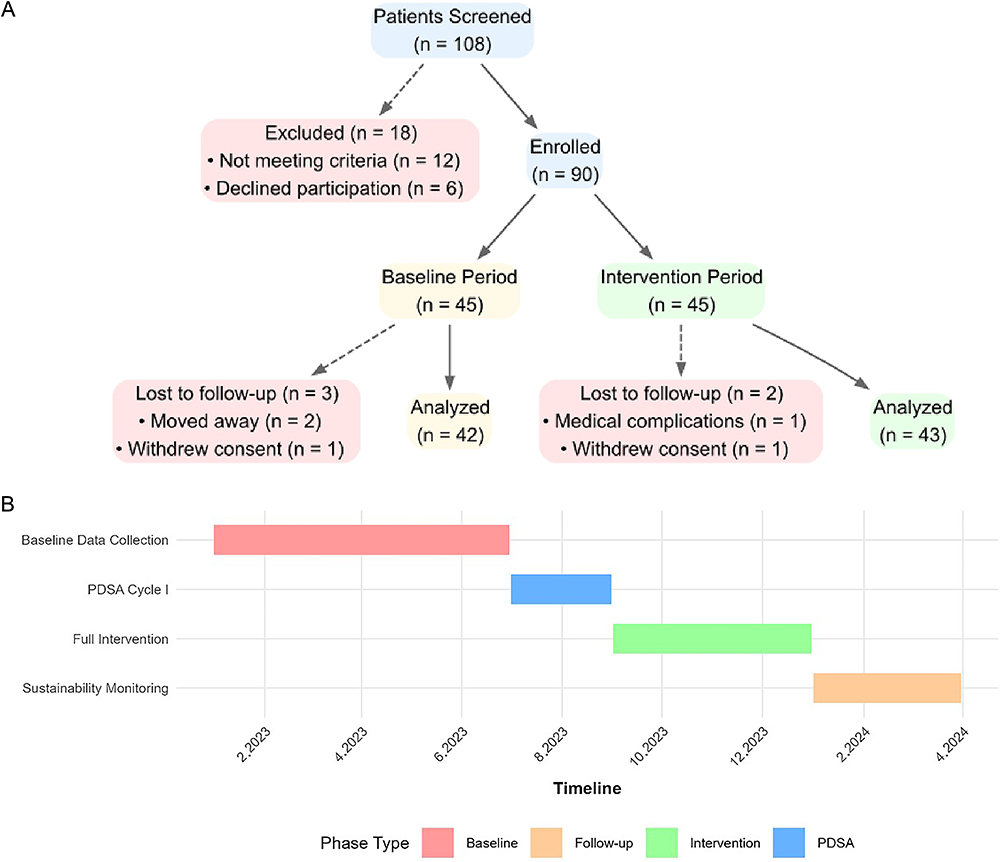 |
Figure 1 Study Flow and PDSA Timeline (A) shows the flow of participants through the study. Of 108 patients screened, 90 were enrolled and allocated to baseline (n=45) or intervention (n=45) periods. Final analysis included 42 baseline and 43 intervention participants. (B) displays the PDSA implementation timeline across four phases: baseline data collection (red, January-June 2023), PDSA Cycle I testing (blue, July-August 2023), full intervention implementation (green, September-December 2023), and sustainability monitoring (Orange, January-March 2024). |
Baseline demographic and clinical characteristics were well balanced between periods (Table 1). The mean age was 58.7 years (SD = 12.1), with a slight male predominance (60.0%). Most participants had secondary education (47.8%) and were married (82.2%). Colorectal cancer was the predominant diagnosis (66.7%), followed by inflammatory bowel disease (18.9%). Approximately two-thirds had colostomies (64.4%) versus ileostomies (35.6%). Importantly, baseline SSRS scores were similar between groups (32.4 vs 33.1, SMD = 0.078), indicating comparable initial social support levels.
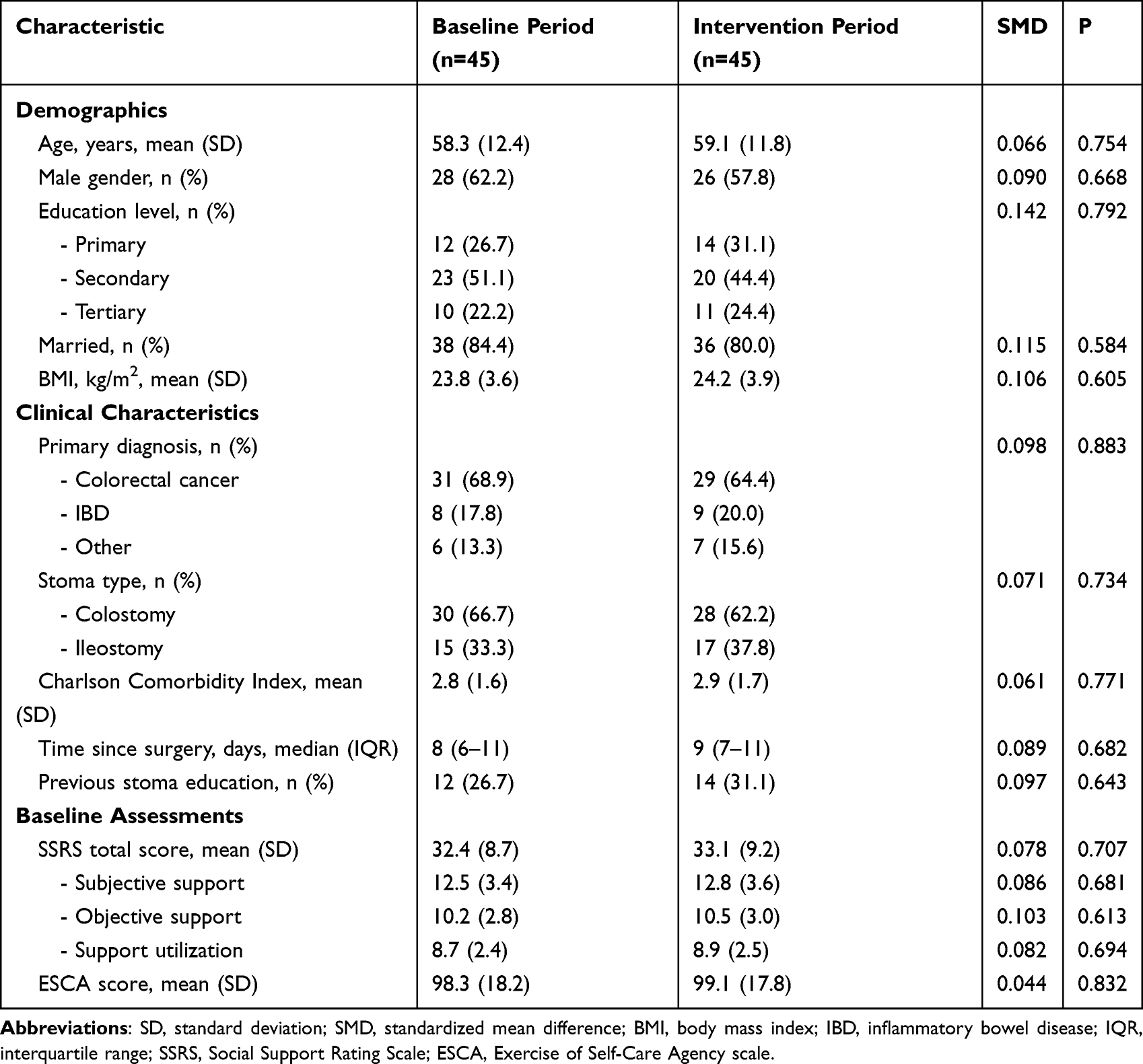 |
Table 1 Baseline Demographic and Clinical Characteristics |
Intervention Implementation and Fidelity
The PDSA implementation timeline (Figure 1B) demonstrates the systematic approach to intervention rollout. During the PDSA Cycle I phase (July–August 2023), iterative testing with small patient groups led to several key refinements: reduction of educational video length from 20 to 10 minutes based on attention span feedback, standardisation of verbal persuasion scripts to ensure consistency and optimisation of the online platform interface for older users.
Intervention fidelity and engagement rate were remarkably high (Table 2). Overall module completion averaged 82.7% (95% CI: 77.9–87.5%), exceeding our pre-specified threshold of 75%. Direct experience activities showed the highest engagement rate, with stoma diary completion at 87.3% and skills checkoff attendance at 95.6% (95% CI: 91.8–99.4). The video-based components were received well, with 92.6% (95% CI: 88.9–96.3) of participants viewing all educational videos an average of 8.4 times. Virtual consultations achieved 88.9% (95% CI: 83.8–94.0) attendance despite technical challenges, whereas peer support sessions had moderate attendance (73.3% live, 84.4% recorded). Emotional support modules showed lower but acceptable completion (71.1%, 95% CI:64.5–77.7), with 15.6% (95% CI:7.0–24.2) of participants requiring psychology referrals for additional support.
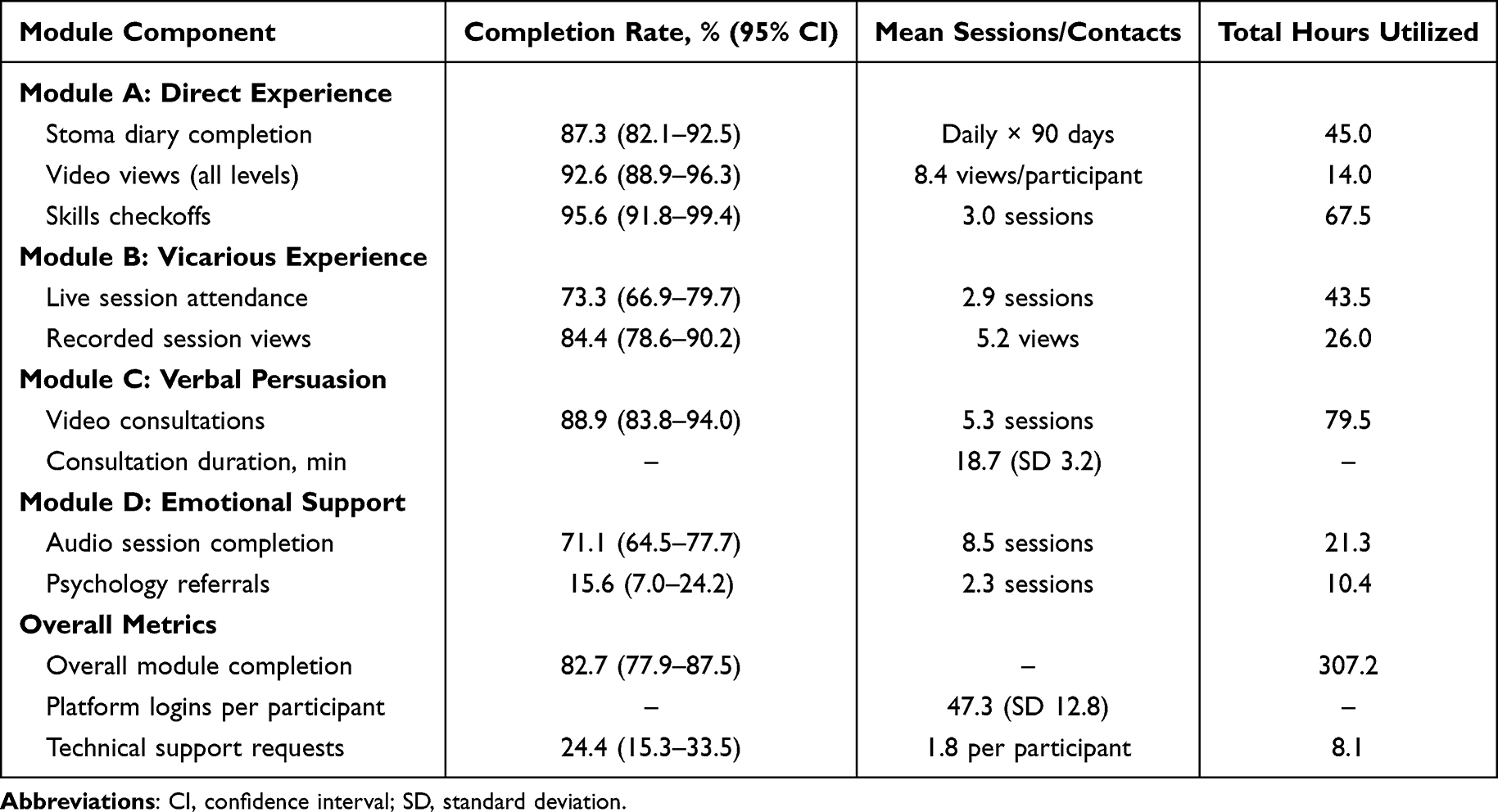 |
Table 2 Intervention Completion and Resource Utilization |
Nurse compliance with the intervention protocol was high, as measured by adherence checklists completed after each session. Overall, nurses achieved 94.2% adherence to the structured consultation protocol (Module C) and 96.8% completion of skills checkoff documentation (Module A). Monthly fidelity audits by the study coordinator confirmed consistent delivery across all nursing staff.
Feedback and Refinements During PDSA Cycles
The embedded process evaluation during PDSA Cycle I yielded critical feedback from 15 patients and 8 nurses, which directly informed several key refinements to the intervention bundle prior to full-scale implementation. The primary feedback themes and corresponding modifications are summarized in Table 3.
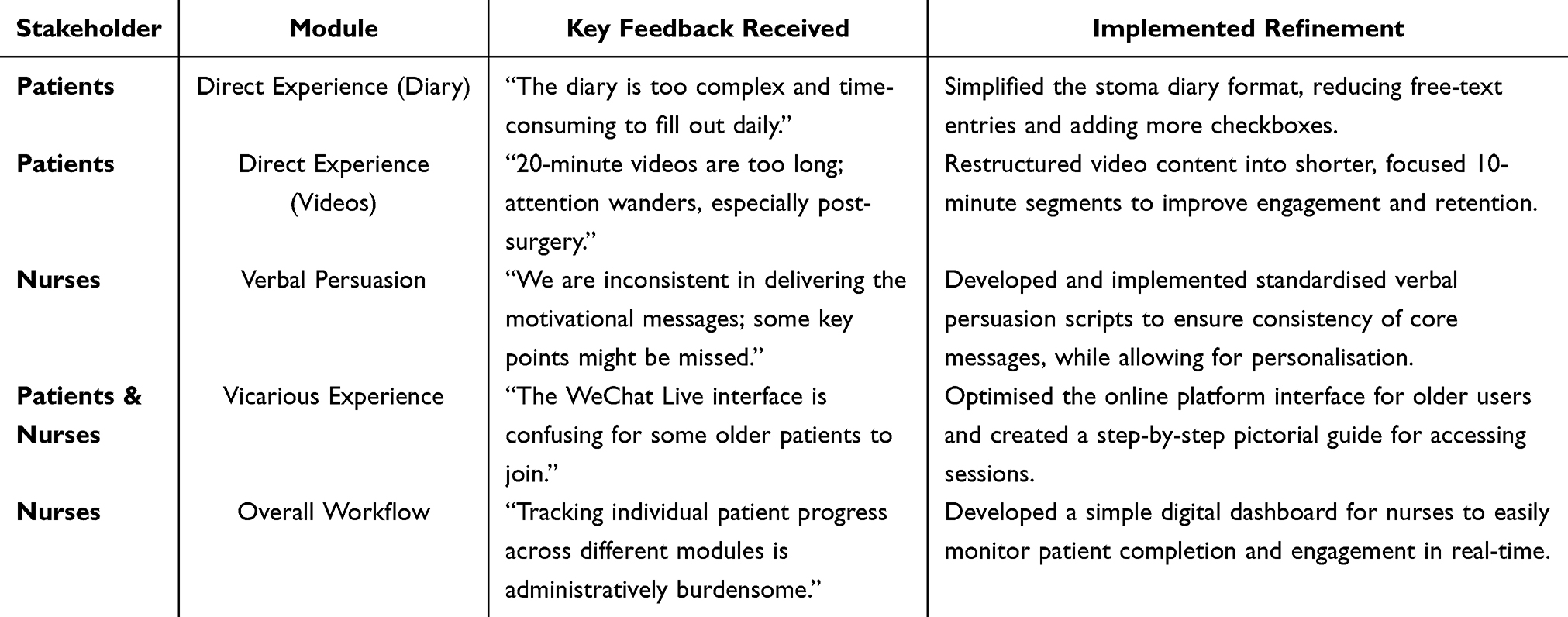 |
Table 3 Key Feedback and Corresponding Intervention Refinements During PDSA Cycle I |
The PDSA cycle modifications were crucial for optimizing the intervention’s feasibility and acceptability. Key changes included: (1) simplifying the stoma diary format based on patient reports of complexity; (2) restructuring video content into shorter segments to improve engagement; (3) standardizing verbal persuasion scripts to ensure message consistency; (4) optimizing the digital platform interface for older users; and (5) developing a nurse dashboard to streamline progress tracking. These refinements, implemented between PDSA Cycle I and full rollout, contributed to the high engagement rates observed during the implementation phase.
Primary Outcome: Social Support Changes
The intervention produced substantial improvements in social support across all dimensions (Figure 2, Table 4). Total SSRS scores increased by 3.2 points (SD = 2.1) in the baseline period compared with 13.9 points (SD = 3.8) in the intervention period, yielding an adjusted difference of 10.7 points (95% CI: 8.4–12.9, P < 0.001). This effect size (Cohen’s d = 1.24) represents a large and clinically meaningful improvement.
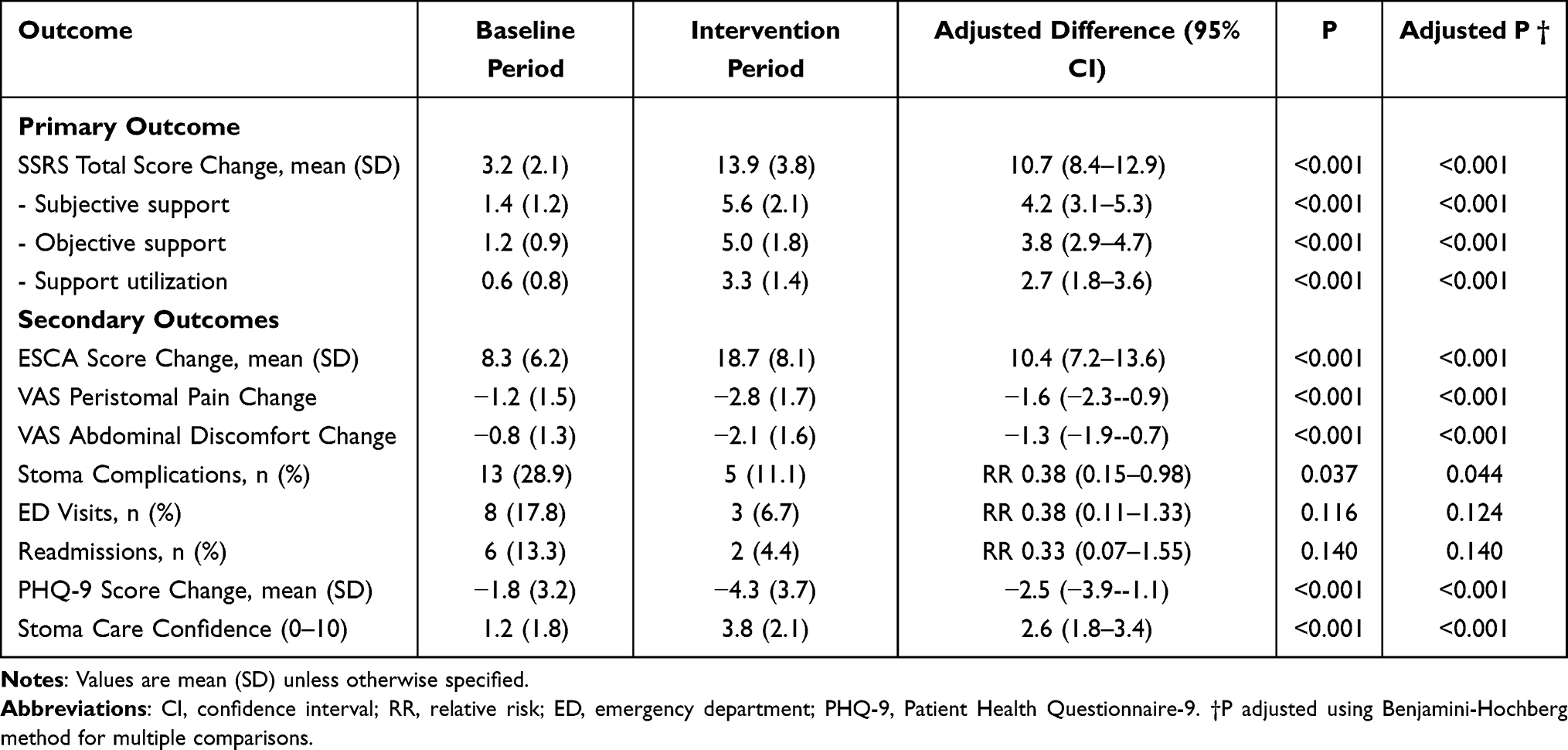 |
Table 4 Primary and Secondary Outcomes Comparison |
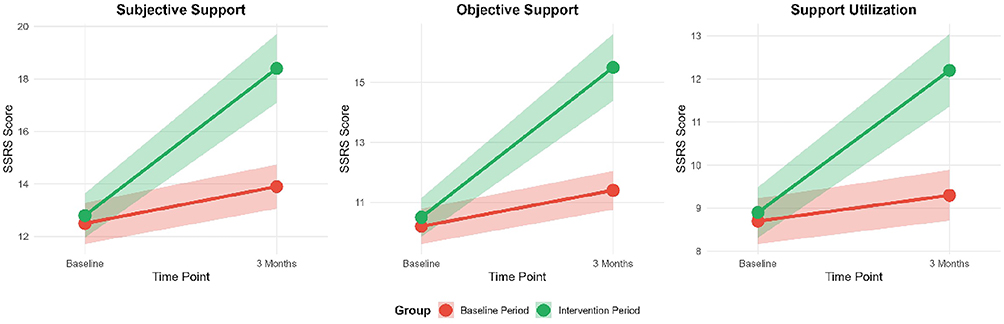 |
Figure 2 SSRS Three-Dimensional Changes Over Time SSRS Three-Dimensional Changes Over Time. Data are presented as mean ± 95% CI. Compared to the baseline period (red), the intervention period (green) showed significant improvements in total SSRS score and all three subscales (subjective support, objective support, support utilization) from baseline to 3 months. |
Dimensional analysis revealed differential effects across SSRS components. Subjective support showed the greatest improvement (adjusted difference = 4.2, 95% CI: 3.1–5.3), suggesting enhanced perception of available support. Objective support improved by 3.8 points (95% CI: 2.9–4.7), indicating increased tangible assistance. Support utilisation, while showing the smallest absolute change (2.7 points, 95% CI: 1.8–3.6), demonstrated the largest relative improvement (450% increase from baseline), suggesting fundamental changes in help-seeking behaviour.
The distribution of SSRS change scores (Figure 3) confirmed the robustness of these findings. The intervention group’s changes followed a normal distribution centred around 14 points, whereas baseline changes clustered around 3 points. The Shapiro–Wilk test (W = 0.974, P = 0.218) confirmed normality, validating our parametric analytical approach.
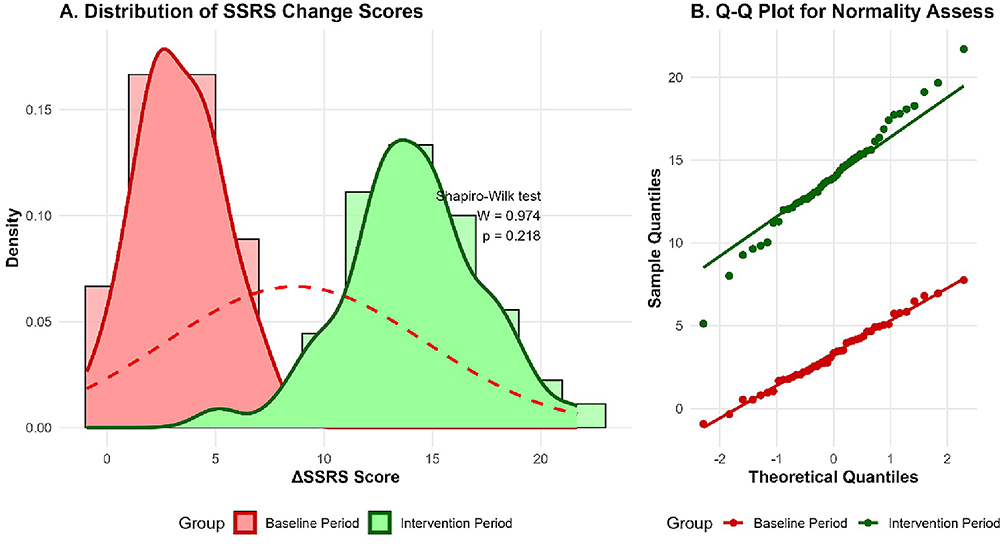 |
Figure 3 Distribution of ΔSSRS with Normality Assessment (A) shows the distribution of SSRS change scores for baseline (red) and intervention (green) groups. The dashed line represents the overall normal distribution. (B) presents Q-Q plots demonstrating approximate normality for both groups. The Shapiro–Wilk test (W=0.974, p=0.218) confirmed that the assumption of normality was met for parametric testing. |
Secondary Outcomes
Secondary outcomes uniformly favoured the intervention (Table 2). Self-care ability, measured by ESCA scores, improved by 10.4 points more in the intervention group (95% CI: 7.2–13.6, P < 0.001). This improvement correlated strongly with SSRS changes (r = 0.68, P < 0.001), suggesting interconnected benefits. Peristomal pain showed greater reduction in the intervention group (additional decrease of −1.6 points on the VAS, 95% CI: −2.3 to −0.9), likely reflecting improved stoma care techniques.
Clinical outcomes demonstrated the intervention’s downstream effects (Table 5). Stoma-related complications occurred in 28.9% of patients at the baseline period and 11.1% of patients at the intervention period (RR = 0.38, 95% CI: 0.15–0.98, P = 0.036). The most common complication, peristomal dermatitis, decreased from 17.8% to 6.7%. Although not reaching statistical significance, trends towards reduced emergency department visits (17.8% vs 6.7%, P = 0.107) and readmissions (13.3% vs 4.4%, P = 0.140) suggest potential healthcare utilisation benefits warranting investigation in larger studies.
 |
Table 5 Complications and Healthcare Utilization |
Predictors of Intervention Response
Multivariate regression analysis identified key predictors of SSRS improvement (Table 6). The intervention remained the strongest predictor after adjustment (β = 9.82, 95% CI: 7.64–12.00), confirming its independent effect. Module completion showed a strong dose–response relationship, with each 10% increase in completion associated with 1.95 points of additional SSRS improvement (95% CI: 1.23–2.67).
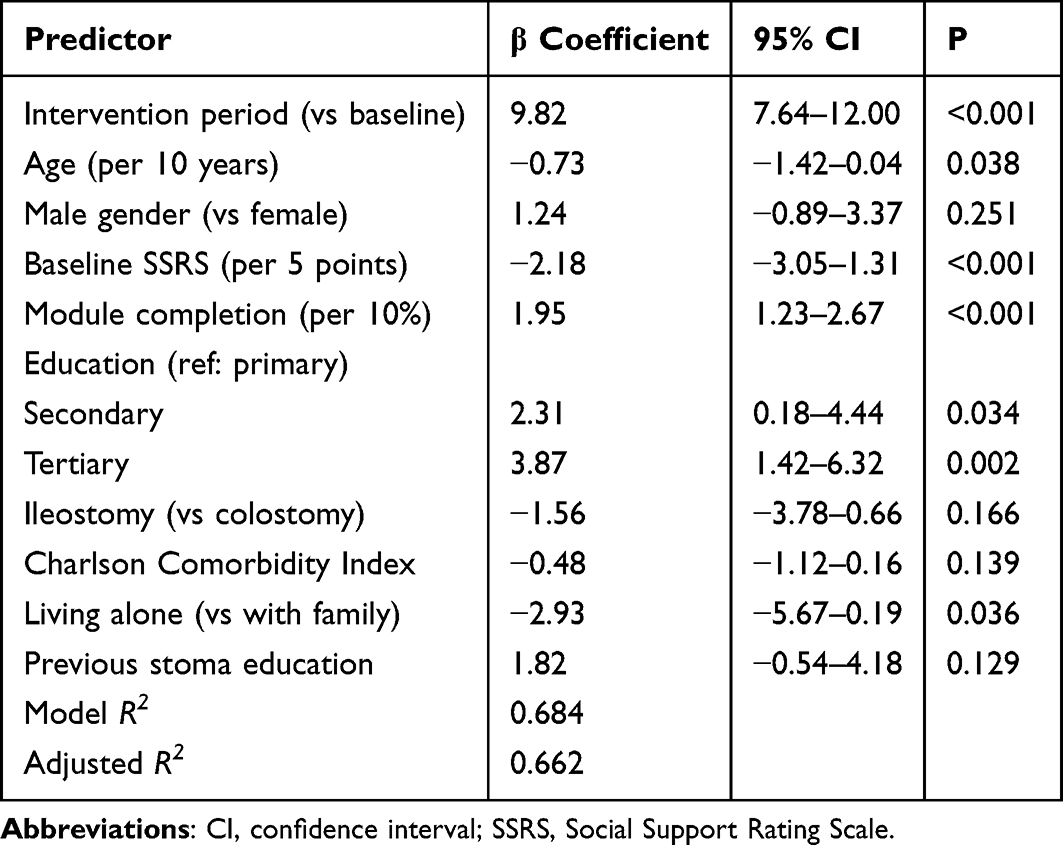 |
Table 6 Multivariate Linear Regression Predictors of SSRS Change |
Several participant characteristics moderated intervention effects. Younger age predicted a better response (β = −0.73 per decade, P = 0.038), possibly reflecting greater adaptability to digital components. Higher education levels were associated with greater benefits (tertiary vs primary: β = 3.87, P = 0.002), though the intervention remained effective across all education levels. Baseline SSRS showed an inverse relationship with improvement (β = −2.18 per 5 points, P < 0.001), indicating ceiling effects in those with already high support.
Subgroup Analyses
Pre-specified subgroup analyses revealed important effect modifications (Figure 4). The intervention benefited all subgroups, but effect sizes varied significantly. Patients with low baseline support (<22 SSRS points) experienced the greatest gains (β = 15.2, 95% CI: 12.1–18.3), nearly 2.5 times the effect in high-baseline patients (β = 6.3, 95% CI: 3.9–8.7; P-interaction < 0.001). This finding suggests the intervention may help reduce disparities in psychosocial outcomes.
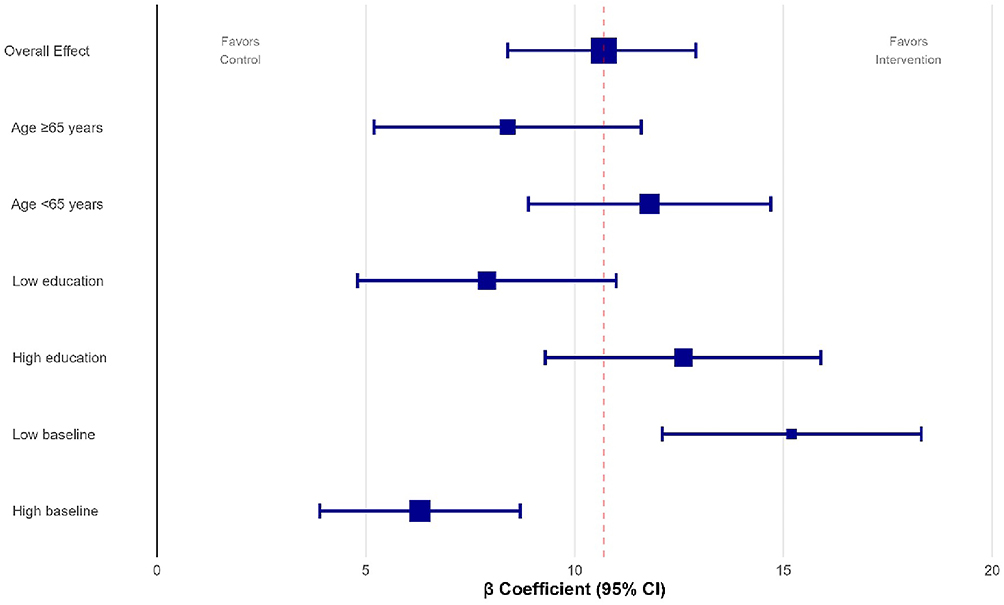 |
Figure 4 Subgroup Analysis: Intervention Effects on SSRS Change Forest plot showing adjusted β coefficients (95% CI) for SSRS change across subgroups. The intervention benefited all subgroups, with the largest effects observed in patients with low baseline social support and those with tertiary education. No significant interaction was observed for age or gender. |
Analysis by socioeconomic status, using education level as a proxy, showed a significant interaction (P-interaction = 0.038). Patients with tertiary education derived the greatest benefit (β = 12.6, 95% CI: 10.1–15.1), followed by those with secondary education (β = 9.8, 95% CI: 7.9–11.7), and finally those with primary education (β = 7.9, 95% CI: 5.2–10.6). Crucially, the intervention effect remained clinically meaningful and statistically significant across all education levels, indicating that the bundle is effective even for patients with lower socioeconomic status.
Analysis by gender showed no significant interaction (P-interaction = 0.451). The intervention effect was nearly identical for males (β = 10.5, 95% CI: 8.2–12.8) and females (β = 10.9, 95% CI: 8.1–13.7), demonstrating that the benefits were equitably distributed regardless of gender.
Sensitivity Analyses
Sensitivity analyses confirmed the robustness of our findings (Table 7). The primary effect estimate remained stable across analytical approaches: IPTW adjustment (10.2, 95% CI: 7.8–12.6), complete case analysis (11.1, 95% CI: 8.7–13.5) and LOCF imputation (9.8, 95% CI: 7.6–12.0). Per-protocol analysis, including only patients with ≥80% module completion, showed enhanced effects (12.4, 95% CI: 9.9–14.9), supporting the dose–response relationship. Excluding patients who received psychology referrals did not materially alter results (10.3, 95% CI: 8.0–12.6), indicating the intervention’s effectiveness was not dependent on specialised mental health support.
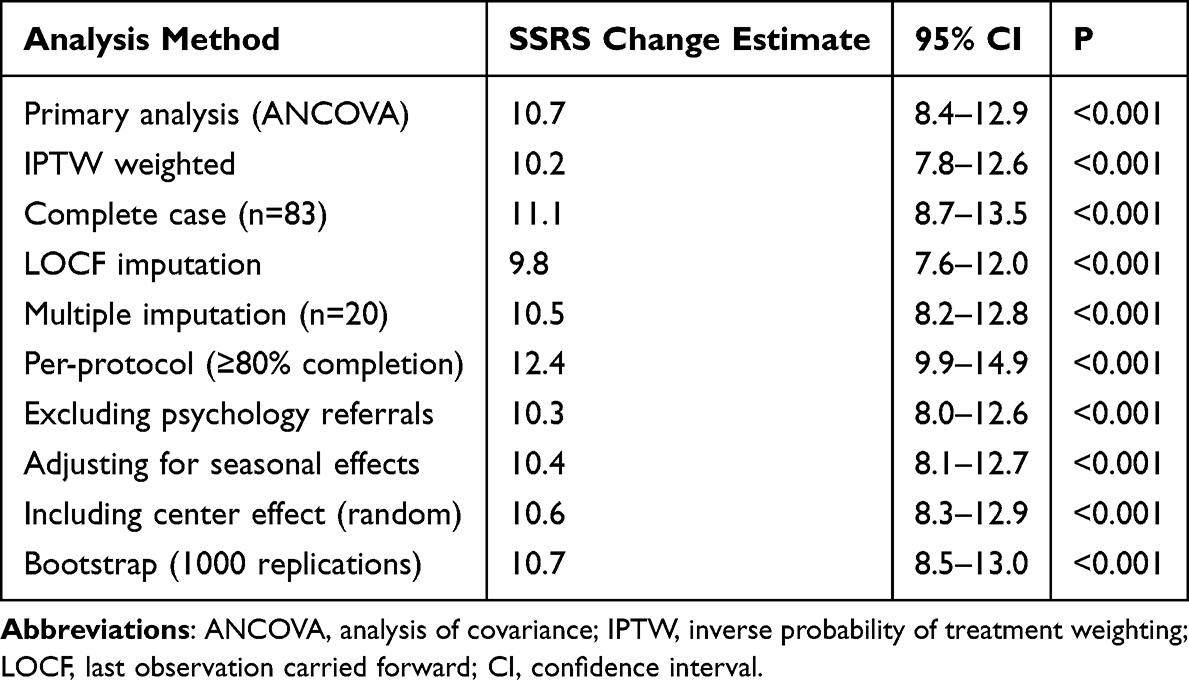 |
Table 7 Sensitivity Analysis Results |
Safety Profile
The intervention demonstrated an excellent safety profile (Table 8). No serious adverse events occurred during the study period. Grade 1 events were minor and self-limiting, primarily consisting of mild peristomal skin irritation (8.9%) that resolved without treatment modification. Two patients (4.4%) experienced Grade 2 allergic dermatitis requiring topical corticosteroids, and both of them continued the intervention successfully. Three patients (6.7%) experienced anxiety exacerbation warranting psychology referral; all continued participation with additional support. Technical difficulties with video consultations affected 15.6% of participants but were resolved promptly with IT support.
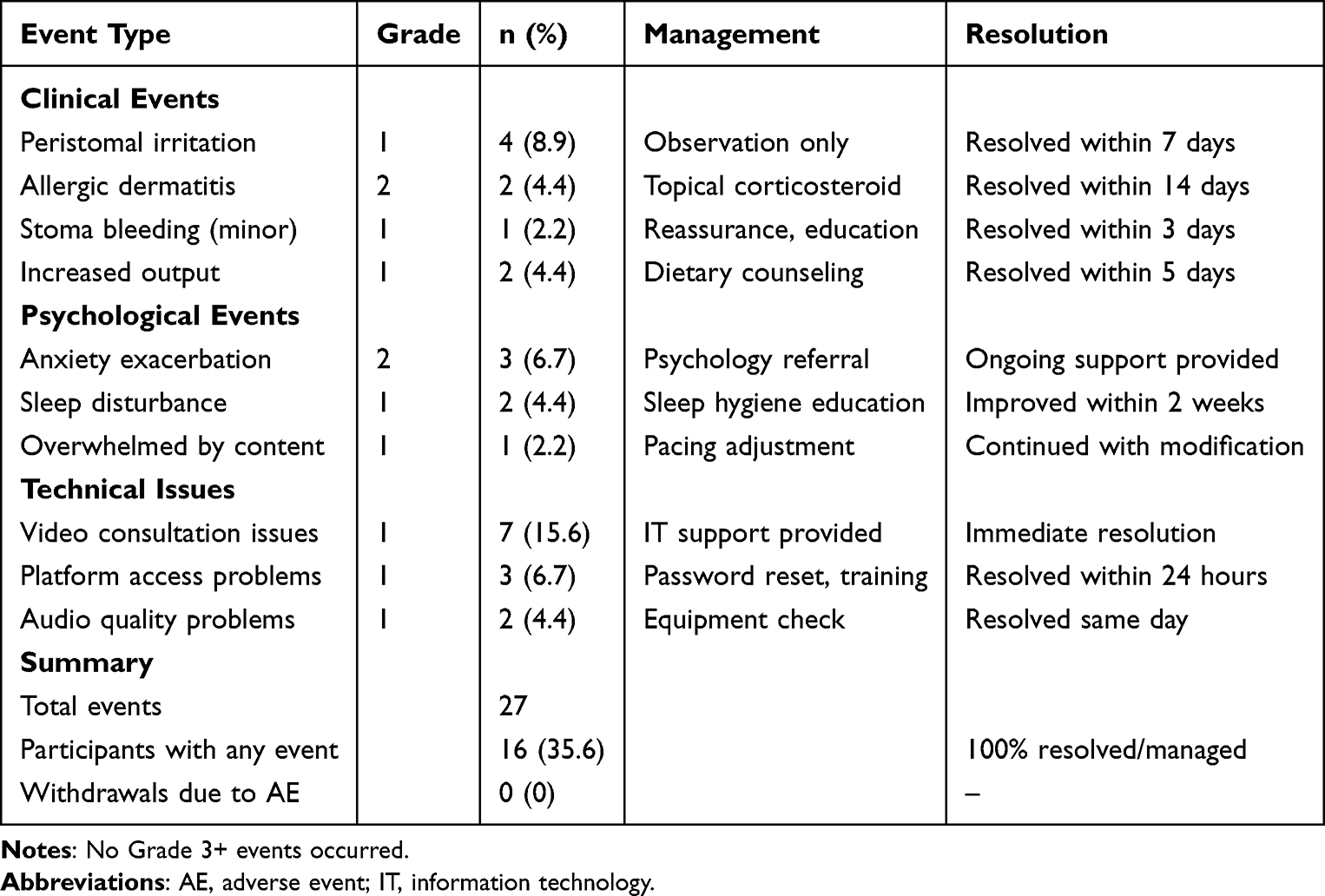 |
Table 8 Adverse Events and Safety Monitoring |
Post Hoc Analyses
Post hoc analyses revealed additional insights. Time-to-benefit analysis showed initial SSRS improvements within 2 weeks of intervention start, with linear gains through 8 weeks before plateauing. Participants who attended ≥3 peer support sessions showed 3.2 points greater SSRS improvement than those attending fewer sessions (P = 0.012). Analysis of diary entries revealed that consistent daily completion in the first month predicted sustained benefits at 3 months (OR = 2.84, 95% CI: 1.23–6.57).
Component analysis using structural equation modelling suggested that peer support (standardised β = 0.34) and verbal persuasion (β = 0.31) contributed most strongly to subjective support improvements, whereas direct experience activities (β = 0.42) primarily enhanced objective support. This mechanistic insight supports the multi-component design and suggests all modules contribute uniquely to overall effectiveness.
Discussion
This QI project – rather than a traditional efficacy trial – demonstrates that a self-efficacy-based nursing bundle, implemented using the FOCUS-PDSA framework, can significantly enhance social support and clinical outcomes for patients with enterostomies. The magnitude of improvement observed – a 10.7-point increase in SSRS scores – represents a clinically meaningful change that exceeds the minimal important difference (5 points) established in previous research.21 These findings contribute important evidence to the growing literature on psychosocial interventions in ostomy care while demonstrating the feasibility of implementing complex interventions using QI methodology.
Conceptual consistency between the self-efficacy-based intervention and the social support outcome is grounded in their bidirectional relationship. Self-efficacy enhances patients’ willingness to seek and utilise social support (eg, asking peers for advice and engaging with healthcare providers), whereas social support reinforces self-efficacy (eg, positive feedback from peers and professional validation of skills). The intervention targeted self-efficacy as the core mechanism, with social support selected as the primary outcome to capture the tangible psychosocial benefit of enhanced self-efficacy. This alignment is supported by our component analysis, which linked each bundle module to specific self-efficacy sources and subsequent improvements in social support dimensions.
Each module of the nursing bundle directly corresponds to one of Bandura’s four sources of self-efficacy, with clear links to observed outcomes: Module A targets mastery experiences by enabling patients to successfully perform stoma care tasks. This module primarily improved objective support, as patients gained the confidence to access tangible resources and demonstrate care competence to family members, increasing the likelihood of receiving practical assistance. Module B addresses vicarious experiences through exposure to successful peer adaptation. This module strongly influenced subjective support, as patients perceived greater emotional and informational support from peers who shared similar experiences, normalising their own challenges. Module C leverages verbal persuasion from credible healthcare providers. Consistent encouragement and guided problem-solving strengthened patients’ belief in their capabilities, leading to increased subjective support (perception of provider availability) and support utilisation (proactive engagement in consultations). Module D mitigates negative physiological and affective states (eg, anxiety and body image distress) that undermine self-efficacy. By reducing emotional barriers, this module enhanced support utilisation, as patients felt more comfortable seeking help from peers and professionals.
The success of our QI design lies in its systematic approach to intervention development and implementation. By utilising PDSA cycles during the pilot phase, we were able to identify and address potential barriers before full implementation. For instance, initial feedback revealed that 20-minute educational videos exceeded patients’ attention capacity during the early postoperative period, leading us to restructure content into shorter, focused segments. Similarly, the iterative refinement of verbal persuasion scripts ensured consistency while maintaining the flexibility needed for individualised care. This approach aligns with recommendations from recent systematic reviews emphasising the importance of adaptation and contextual fit in complex healthcare interventions.22
Our primary outcome findings reveal significant improvements across all three dimensions of social support. The differential effects observed – with subjective support showing the largest gains – suggest that the intervention successfully enhanced patients’ perception of available support, a critical factor in psychological adaptation to chronic conditions.23 The improvement in support utilisation, while smaller in absolute terms, may be particularly important as it reflects behavioural change in help-seeking patterns. Previous research has identified reluctance to seek help as a major barrier to optimal outcomes in patients with ostomies,24 making this finding especially noteworthy.
The strong association between module completion rates and outcomes (β = 1.95 per 10% completion) underscores the dose–response relationship inherent in behavioural interventions. This finding has important implications for implementation, suggesting that strategies to enhance engagement and adherence should be prioritised. Our subgroup analyses revealed that patients with lower baseline social support experienced greater benefits (β = 15.2 vs 6.3 for high baseline support), indicating that the intervention may help reduce disparities in psychosocial outcomes. However, the smaller but still significant effects in patients with higher baseline support suggest that universal rather than targeted implementation may be appropriate.
Our subgroup analyses also offer valuable insights into the equitable distribution of the intervention’s benefits. The absence of a significant gender-based difference in effectiveness is a positive finding, suggesting that the bundle’s core components—skill-building, peer support, and professional guidance—resonate equally with male and female patients. This supports the notion that self-efficacy-based interventions can address fundamental psychological needs that transcend gender differences.
The differential benefit by education level, a common proxy for socioeconomic status, warrants careful consideration. While patients with higher education derived marginally greater gains, possibly due to greater familiarity with digital tools or health literacy, it is critical to emphasize that patients with primary education still experienced substantial and clinically meaningful improvements (β = 7.9). This indicates that the intervention was not exclusive to the more advantaged group. The multi-modal design, which combined simple visual guides (videos, diaries) with interpersonal support (consultations, peer sessions), likely enhanced its accessibility for patients with varying literacy levels. Future iterations could further augment equity by incorporating even more low-literacy materials and intensified one-on-one support for this subgroup.
Our results align with and extend findings from previous studies of self-efficacy interventions in ostomy care. A recent meta-analysis by Zhang et al reported pooled effect sizes of 0.51–1.13 for various psychosocial outcomes following self-efficacy interventions.25 Our observed effects fall within this range but demonstrate particular strength in improving social support, an outcome less frequently examined in previous trials. The integration of continuous care principles, as demonstrated in studies by Su et al,26 appears to have enhanced intervention effectiveness by maintaining engagement over the critical first 3 months post surgery.
The clinical significance of our findings extends beyond psychosocial outcomes. The 62% reduction in stoma-related complications (RR = 0.38) suggests that enhanced self-efficacy and social support translate into improved clinical outcomes. This finding is consistent with theoretical predictions that increased confidence and support lead to better self-care behaviours and earlier problem recognition.27 Although healthcare utilisation outcomes did not reach statistical significance, the observed trends towards reduced emergency visits and readmissions warrant investigation in larger studies powered for these endpoints.
From a health system perspective, our intervention demonstrates favourable resource utilisation patterns. The total time investment of approximately 307 hours across all participants translates to less than 7 hours per patient over 3 months. When compared with the costs associated with complications and readmissions, this investment appears highly favourable. The predominant use of digital delivery methods (video consultations and online peer sessions) enhanced scalability while reducing transportation barriers, a particularly important consideration for patients recovering from major surgery.28
Sustainability and scalability are key considerations for QI interventions. The bundle’s design supports integration into routine ostomy care workflows as follows: 1) digital components (videos and online sessions) reduce reliance on in-person visits, making the intervention feasible in resource-constrained settings; 2) standardised protocols and training materials enable replication across different healthcare facilities; 3) low resource requirements (average 6.8 hours per patient) make the intervention cost-effective compared with the costs of complications and readmissions. Digital accessibility for older adults was a potential concern, but our findings showed no significant age-related differences in intervention effect. This is likely due to iterative adjustments during PDSA Cycle I (eg, simplified platform interface and technical support) that addressed age-related barriers.
Several limitations merit consideration when interpreting our findings. First, the single-centre quasi-experimental design limits generalisability, particularly to settings with different healthcare systems or cultural contexts. The requirement for internet connectivity may have excluded some vulnerable populations (eg, low-income patients without digital access), potentially biasing our sample towards more technologically literate patients. Second, the before–after design cannot definitively establish causation, and the potential for the Hawthorne effect (patients altering behaviour due to being observed) cannot be fully excluded. Third, secular trends (eg, seasonal variations in care quality) may have influenced outcomes, though our sensitivity analyses (segmented time series and seasonal adjustment) mitigate this concern. Fourth, reliance on self-reported measures introduces potential response bias, although the consistency between subjective reports and objective complication rates provides some reassurance. Fifth, the relatively short follow-up period (3 months) captures the critical early adaptation phase but cannot address the long-term sustainability of benefits. Sixth, this study excluded patients with cognitive impairment and severe mental illness, which may limit the extrapolation of the intervention. These patients have more complex ostomy care needs (such as requiring family assistance to perform self-care), and their paths to improvement in social support may be different from those of other patients. Future research can design targeted adaptation programmes and include this group of people to evaluate differences in intervention effects. Seventh, the results of this study were only analysed in detail based on the primary outcome, and no efficacy analysis was conducted for the secondary outcomes (such as ESCA scores, VAS pain and stoma complications).
Methodological rigour was strengthened through several design features. The use of validated instruments with established psychometric properties in Chinese populations enhanced measurement validity. Blinding of outcome assessors reduced detection bias, whereas standardised protocols and fidelity monitoring ensured intervention consistency. The application of rigorous statistical methods, including adjustment for multiple comparisons and extensive sensitivity analyses, increases confidence in our findings. However, this study adopts a non-random design. Future studies should consider cluster-randomised designs to more definitively establish intervention effectiveness.
Future directions: Three key priorities emerge for advancing this work. First, multi-centre mixed methods research should explore implementation across diverse healthcare settings while incorporating patient and provider perspectives to understand facilitating and hindering factors. Second, digital platform development leveraging artificial intelligence for automated task reminders and image-based complication detection could enhance scalability while maintaining personalisation. Third, a comprehensive economic evaluation from health system and payer perspectives is essential to demonstrate return on investment and support policy decisions regarding reimbursement for psychosocial interventions in chronic care management.
Conclusion
This self-efficacy-based nursing bundle improved social support and self-care ability among patients with enterostomies through a structured PDSA implementation process, offering a replicable model for psychosocial QI in ostomy care.
Data Sharing Statement
All data generated or analyzed during this study are included in this article.
Ethics Approval and Consent to Participate
This study was conducted in accordance with the declaration of Helsinki. This study was conducted with approval from the Ethics Committee of The First Hospital of Anhui University of Science and Technology (No.: 2023-KY-B114-001). Written informed consent was obtained from all participants.
Acknowledgment
An unauthorized version of the Chinese MMSE was used by the study team without permission, however this has now been rectified with PAR. The MMSE is a copyrighted instrument and may not be used or reproduced in whole or in part, in any form or language, or by any means without written permission of PAR (www.parinc.com).
Disclosure
The authors declare that the research was conducted in the absence of any commercial or financial relationships that could be construed as a potential conflict of interest.
References
1. Seo HW. Effects of the frequency of ostomy management reinforcement education on self-care knowledge, self-efficacy, and ability of stoma appliance change among Korean hospitalised ostomates. Int Wound J. 2019;16(Suppl 1):21–18. doi:10.1111/iwj.13047
2. Liu Y, Wang L, Zhu L. The impact of stoma management education on the self-care abilities of individuals with an intestinal stoma. Br J Nurs. 2023;32(6):S28–S33. doi:10.12968/bjon.2023.32.6.S28
3. Carlsson E, Fingren J, Hallén AM, Petersén C, Lindholm E. The prevalence of ostomy-related complications 1 year after ostomy surgery: a prospective, descriptive, clinical study. Ostomy Wound Manage. 2016;62(10):34–48.
4. Bandura A. Self-efficacy: toward a unifying theory of behavioral change. Psychol Rev. 1977;84(2):191–215. doi:10.1037/0033-295X.84.2.191
5. Bandura A. Self-Efficacy: The Exercise of Control. New York: W.H. Freeman; 1997.
6. Wu HK, Chau JP, Twinn S. Self-efficacy and quality of life among stoma patients in Hong Kong. Cancer Nurs. 2007;30(3):186–193. doi:10.1097/01.NCC.0000270704.34296.86
7. Bandura A. Social Foundations of Thought and Action: A Social Cognitive Theory. Englewood Cliffs, NJ: Prentice-Hall; 1986.
8. Bulkley J, McMullen CK, Hornbrook MC, et al. Spiritual well-being in long-term colorectal cancer survivors with ostomies. Psychooncology. 2013;22(11):2513–2521. doi:10.1002/pon.3318
9. Resar R, Pronovost P, Haraden C, Simmonds T, Rainey T, Nolan T. Using a bundle approach to improve ventilator care processes and reduce ventilator-associated pneumonia. Jt Comm J Qual Patient Saf. 2005;31(5):243–248. doi:10.1016/s1553-7250(05)31031-2
10. Resar RK. Making noncatastrophic health care processes reliable: learning to walk before running in creating high-reliability organizations. Health Serv Res. 2006;41(4 Pt 2):1677–1689. doi:10.1111/j.1475-6773.2006.00571.x
11. Taylor MJ, McNicholas C, Nicolay C, Darzi A, Bell D, Reed JE. Systematic review of the application of the plan-do-study-act method to improve quality in healthcare. BMJ Qual Saf. 2014;23(4):290–298. doi:10.1136/bmjqs-2013-001862
12. Langley GL, Moen R, Nolan KM, Nolan TW, Norman CL, Provost LP. The Improvement Guide: A Practical Approach to Enhancing Organizational Performance.
13. Reed JE, Card AJ. The problem with plan-do-study-act cycles. BMJ Qual Saf. 2016;25(3):147–152. doi:10.1136/bmjqs-2015-005076
14. Knudsen SV, Laursen HVB, Johnsen SP, Bartels PD, Ehlers LH, Mainz J. Can quality improvement improve the quality of care? A systematic review of reported effects and methodological rigor in plan-do-study-act projects. BMC Health Serv Res. 2019;19(1):683. doi:10.1186/s12913-019-4482-6
15. AlRyalat N, Ashour A, Al Rawashdeh S, et al. Using FOCUS-PDSA quality improvement methodology model in healthcare: process and outcomes. Glob J Qual Saf Healthc. 2023;6(2):44–50.
16. Xi S, Zhen L, Zhu M, et al. Determinants of self-efficacy and quality of life in patients with temporary enterostomy: a cross-sectional survey. J Clin Nurs. 2017;26(3–4):477–484. doi:10.1111/jocn.13469
17. Xiao SY. The theoretical basis and research application of social support rating scale. J Clin Psychiatry. 1994;4(2):98–100.
18. Liu J, Li F, Lian Y. Investigation of reliability and validity of the social support scale. J Xinjiang Med Univ. 2008;31(1):1–3.
19. Benjamini Y, Hochberg Y. Controlling the false discovery rate: a practical and powerful approach to multiple testing. J R Stat Soc Series B. 1995;57(1):289–300. doi:10.1111/j.2517-6161.1995.tb02031.x
20. Collado-Boira EJ, Machancoses FH, Folch-Ayora A, et al. Self-care and health-related quality of life in patients with drainage enterostomy: a multicenter, cross sectional study. Int J Environ Res Public Health. 2021;18(5):2443. doi:10.3390/ijerph18052443
21. Norman GR, Sloan JA, Wyrwich KW. Interpretation of changes in health-related quality of life: the remarkable universality of half a standard deviation. Med Care. 2003;41(5):582–592. doi:10.1097/01.MLR.0000062554.74615.4C
22. Hoffmann TC, Glasziou PP, Boutron I, et al. Better reporting of interventions: template for intervention description and replication (TIDieR) checklist and guide. BMJ. 2014;348:g1687. doi:10.1136/bmj.g1687
23. Thoits PA. Mechanisms linking social ties and support to physical and mental health. J Health Soc Behav. 2011;52(2):145–161. doi:10.1177/0022146510395592
24. Danielsen AK, Burcharth J, Rosenberg J. Patient education has a positive effect in patients with a stoma: a systematic review. Colorectal Dis. 2013;15(6):e276–283. doi:10.1111/codi.12197
25. Qiao J, Zhao Y, Lu Y, Li Q, Dong HJ. Assessing the impact of educational eHealth and mHealth interventions on health outcomes in continuity of care for enterostomy patients: a meta-analysis. Eur J Oncol Nurs. 2024;72:102676. doi:10.1016/j.ejon.2024.102676
26. Su X, Qin F, Zhen L, et al. Self-efficacy and associated factors in patients with temporary ostomies: a cross-sectional survey. J Wound Ostomy Continence Nurs. 2016;43(6):623–629. doi:10.1097/WON.0000000000000274
27. Krouse RS, Grant M, Wendel CS, et al. A mixed-methods evaluation of health-related quality of life for male veterans with and without intestinal stomas. Dis Colon Rectum. 2007;50(12):2054–2066. doi:10.1007/s10350-007-9004-7
28. Lo SF, Wang YT, Wu LY, Hsu MY, Chang SC, Hayter M. Multimedia education programme for patients with a stoma: effectiveness evaluation. J Adv Nurs. 2011;67(1):68–76. doi:10.1111/j.1365-2648.2010.05455.x
 © 2026 The Author(s). This work is published and licensed by Dove Medical Press Limited. The
full terms of this license are available at https://www.dovepress.com/terms
and incorporate the Creative Commons Attribution
- Non Commercial (unported, 4.0) License.
By accessing the work you hereby accept the Terms. Non-commercial uses of the work are permitted
without any further permission from Dove Medical Press Limited, provided the work is properly
attributed. For permission for commercial use of this work, please see paragraphs 4.2 and 5 of our Terms.
© 2026 The Author(s). This work is published and licensed by Dove Medical Press Limited. The
full terms of this license are available at https://www.dovepress.com/terms
and incorporate the Creative Commons Attribution
- Non Commercial (unported, 4.0) License.
By accessing the work you hereby accept the Terms. Non-commercial uses of the work are permitted
without any further permission from Dove Medical Press Limited, provided the work is properly
attributed. For permission for commercial use of this work, please see paragraphs 4.2 and 5 of our Terms.
Recommended articles


Turning Lemons into Lemonade: Social Support as a Moderator of the Relationship Between Technostress and Quality of Life Among University Students
Mehmood K, Suhail A, Kautish P, Hakeem MM, Rashid M
Psychology Research and Behavior Management 2024, 17:989-1006
Published Date: 11 March 2024
Caregiver Burden in Bladder Cancer Patients with Urinary Diversion Post-Radical Cystectomy and the Need for Comprehensive Nursing Education: A Narrative Literature
Zhang T, Qi X
Journal of Multidisciplinary Healthcare 2024, 17:3825-3834
Published Date: 7 August 2024
Social Support, Quality of Life, and Financial Toxicity Among Patients with Hepatocellular Carcinoma
Liu S, Xie Y, Li T, Huang Y, Xu D, Cai L, Fu Y, Chen J, Zhang Y, Huang J, Hu Z
Journal of Hepatocellular Carcinoma 2025, 12:1711-1723
Published Date: 5 August 2025
Nursing Interventions in Palliative Care for Advanced Dementia: A Systematic Review of Symptom, Relief, Comfort, and Caregiver Support
Pujante VGB, Sami W, Al-Kuwari NF, Rizvi MR
Journal of Multidisciplinary Healthcare 2025, 18:6545-6564
Published Date: 9 October 2025
Assessing Swallowing Function is Important Upon Admission to Community-Based Integrated Care Wards. A Retrospective Observational Study
Okubo M, Morishita M, Ohno T, Sakaguchi H, Kokabu S
Journal of Multidisciplinary Healthcare 2025, 18:8257-8265
Published Date: 26 December 2025