
Back to Journals » Journal of Multidisciplinary Healthcare » Volume 18
Exploring Global Research Trends in Enteral Nutrition for Mechanically Ventilated Patients: A Comprehensive Bibliometric Study
Authors Xie S, Liu Q, Cai X, Wang D, Wang J, Zhang D
Received 3 June 2025
Accepted for publication 29 October 2025
Published 6 November 2025 Volume 2025:18 Pages 7311—7326
DOI https://doi.org/10.2147/JMDH.S544535
Checked for plagiarism Yes
Review by Single anonymous peer review
Peer reviewer comments 2
Editor who approved publication: Dr Scott Fraser
Sha Xie,1 Qingyan Liu,2 Xianfu Cai,3 Decai Wang,3 Jianjun Wang,4 Daiying Zhang2
1School of Nursing, Southwest Medical University, Luzhou, Sichuan, 646000, People’s Republic of China; 2Department of Operating Room, The Affiliated Hospital, Southwest Medical University, Luzhou, People’s Republic of China; 3Department of Urology, Mianyang Hospital Affiliated to School of Medicine, University of Electronic Science and Technology of China Mianyang Central Hospital, Mianyang, Sichuan, 621000, People’s Republic of China; 4Department of Hepatobiliary Surgery, Mianyang Hospital Affiliated to School of Medicine, University of Electronic Science and Technology of China Mianyang Central Hospital, Mianyang, Sichuan, 621000, People’s Republic of China
Correspondence: Daiying Zhang, Email [email protected]
Background: Mechanically ventilated patients are at significant risk of malnutrition, a condition that not only prolongs ICU length of stay but also dramatically increases mortality risk. While existing studies have focused on clinical protocols, the global research landscape and knowledge gaps remain underexplored in terms of systematic synthesis. This study employs systematic bibliometric analysis to quantitatively trace publication trajectories, identify dominant research clusters, and propose evidence-based pathways for enhancing global research prioritization and improving clinical nutrition practices.
Methods: Studies published between January 1, 2000, and November 6, 2024, on enteral nutrition in mechanically ventilated patients were identified using the Web of Science platform. A comprehensive analysis of these studies was performed using VOSviewer, CiteSpace, and an online analysis tool(R-bibliometrix), assessing publication trends, contributions from countries/regions and institutions, institutional productivity, major funding agencies, journals and their co-citation networks, authors and their co-citation patterns, and keywords and emerging trends in the field.
Results: A total of 1164 studies were included in the analysis, which showed a general upward trend in publication volume over the 24 years. The USA, supported by robust financial resources and well-established research institutions, ranked first in terms of publication count, citation number, and h-index. The top three institutions in terms of publication volume were Harvard University, the University of Toronto, and Queen’s University of Canada. The journals with the highest numbers of publications were the Journal of Parenteral and Enteral Nutrition, Critical Care Medicine, and Clinical Nutrition. The most prolific author was Dr. Daren K. Heyland. The top keywords were “nutrition”, “malnutrition”, and “prevalence”.
Conclusion: Research in the field of enteral nutrition for mechanically ventilated patients continues to thrive, increasing the number of investigations. The present bibliometric analysis provides a summary of current research frontiers and hotspots in the field, offering a robust reference framework for researchers investigating enteral nutrition in mechanically ventilated critically ill patients.
Keywords: bibliometrics, enteral nutrition, mechanically ventilated, citespace, VOSviewer
Introduction
With the continuous progress of medical technology, mechanical ventilation (MV) has become an important means of treating patients with acute and critical illnesses, and is widely used in intensive care units. Mechanical ventilation is currently an important intervention that involves gas exchange, respiratory work, lung injury, intrathoracic organ pressures, and volume environment, as well as circulatory function. It has become a key tool in the treatment of multiorgan dysfunction syndrome (MODS), primarily by improving oxygen delivery (DO2), protecting the lungs, and optimizing the internal environment. The complications arising from mechanical ventilation(MV) in critically ill patients present a significant challenge in modern healthcare, contributing to high morbidity and mortality rates and imposing considerable financial burdens on healthcare systems globally.1 Effective management of these complications is central to improving outcomes. Nutritional status plays a decisive role in this process.2 Critically ill patients often suffer from acute malnutrition due to hypermetabolic states, inflammatory responses, and the effects of medications, which in turn weaken immune function, delay tissue repair, increase the risk of infection, and ultimately exacerbate the severity of mechanical ventilation complications.3 Therefore, nutritional support (especially enteral nutrition) is not only a basic treatment but also a key intervention to break the vicious cycle mentioned above—it directly targets the pathophysiological mechanisms of complications by maintaining intestinal barrier function, regulating immune responses, and optimizing energy supply.4,5 However, despite the accumulation of relevant evidence, there is still no consensus on the optimal enteral nutrition regimen (including feeding dosage, initiation timing, and monitoring indicators) for patients receiving mechanical ventilation.6 This knowledge gap severely limits the effectiveness of clinical practice, and high-quality research is urgently needed to clarify individualized nutritional support strategies.
A team published a high-impact paper on enteral nutrition therapy in mechanically ventilated patients. Who were the core authors of the study? Who were their co-authors? What was the research topic they focused on? Which organizations provided funding for the study? What were the key keywords used? In which journals was the paper published? How has this field of research evolved? Due to time and energy constraints, no one can read all the high-impact papers in a given field.7 Bibliometric analyses can provide a systematic summary of research hotspots, trends, and collaborative networks in a given field.8,9 These analyses have been widely used not only to explore enteral nutrition for MV patients but also to investigate a variety of other topics, such as the evolution of scientific collaboration, the impact of funding sources, the role of key journals and authors, and the global distribution of research outputs. By mapping these elements, bibliometric analysis can identify key information on enteral nutrition for MV patients, including research frontiers, core authors, major research institutions, and research hotspots. More importantly, it plays a critical role in highlighting research gaps and guiding future studies, offering a detailed and accurate overview of the field.
Bibliometric analysis is a powerful tool for synthesizing large amounts of research, especially in rapidly evolving fields. It helps visualize research trends, identify influential authors and institutions, and uncover emerging areas of study.10 However, it relies on existing data and cannot assess the quality or impact of individual studies. Compared to narrative reviews or meta-analyses, bibliometric analysis is more descriptive and less interpretive, making it better suited for understanding the structure and development of a field rather than evaluating the effectiveness of interventions.
Recent years have seen a significant increase in the number of studies on enteral nutrition in MV patients due to continuous advances in critical care medicine and nutritional support techniques. To date, there have been no bibliometric or visual analyses of research on enteral nutrition therapy for MV patients. This study fills this gap by providing a comprehensive review and graphical presentation of the literature from the previous 24 years using the Web of Science database, CiteSpace, and VOSviewer. This analysis aims to identify research hotspots, trends, and collaboration networks, offering valuable insights and directions for future clinical research and guideline development. As the first of its kind in this field, this bibliometric analysis has significant theoretical and practical implications.
Materials and Methods
Literature Search and Screening
The Web of Science Core Collection (WOSCC) database, the best-known citation-based database covering a wide range of research categories and representing the preferred choice for bibliometric analyses,11,12 was searched for relevant studies. The search strategy was as follows: #1: Topic Search (TS) = (artificial respiration* or mechanical ventilation*); #2: TS = (enteral nutrition or tube feeding OR enteral feeding OR gastrostomy tube* OR force-feeding*); #3: #1 and #2. Language criteria: English only. Literature type: Articles or reviews. Retrieval: 2000 to 2024 (retrieved: November 6, 2024). Details of the literature screening procedure are shown in Figure 1.
 |
Figure 1 Literature Selection and Data Screening Flowchart. |
Visualization and Statistical Analysis
To ensure the reliability of the results, the two researchers—graduate student Sha Xie and PhD Xianfu Cai—performed the data extraction and literature selection independently, and any disagreement was adjudicated by independent experts in the field. The studies were exported in “plain text format”. The collected data were imported into Microsoft Excel, VOSviewer 1.6.20, CiteSpace 6.3.R1, and online platforms. The extracted information included keywords, authors, institutions, journals, number of publications per year, number of citations, country/region, and co-cited literature. The h-index is typically used to assess the scientific impact and productivity of a researcher or country.13 The h-indices and reference counts were assessed using the citation reporting function in WoSCC.
Results
Publication Trends
The total number of studies on the use of enteral nutrition in MV patients published between 2000 and 2024 was 1164, including 988 research articles and 176 reviews. As shown in Figure 2, there was a general upward trend in the number of articles published since 2000. It is worth noting that the number of publications was relatively low and erratic between 2000 and 2005, after which the numbers increased gradually after 2006 and reached a small peak around 2010. A significant growth phase was observed around 2015, with an even more dramatic spike in 2020. An exponential model was developed to quantify this trend, namely, y=0.1373x2-548.49x+547900 (R2 =0.8232), where x denotes the year and y denotes the number of publications per year. As shown in Figure 2, the R2 value of 0.8232 indicates a strong curve fit, as values above 0.8 are generally considered to represent a good model fit in statistical analysis.14
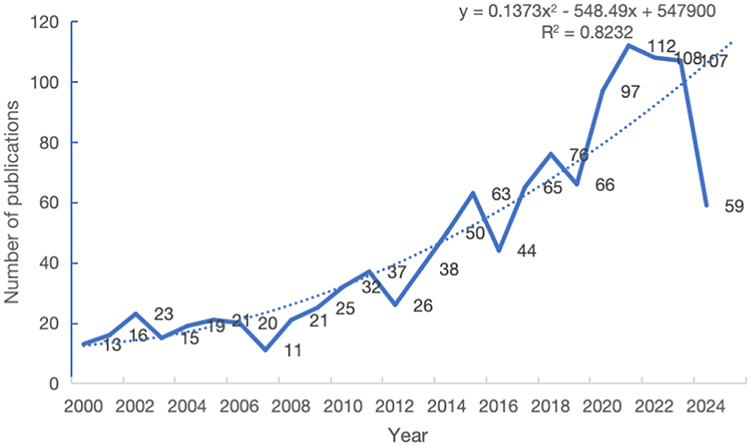 |
Figure 2 Trends in the number of publications related to enteral nutrition in mechanically ventilated patients, 2000–2024. |
Country/Region and Institutional Contributions
Enteral nutrition in MV patients was investigated in 67 countries worldwide. Of these, the USA had the highest number of publications with 351 (30.15%), followed by China with 148 (12.71%), Canada with 92 (7.81%), France with 68 (5.84%), and the United Kingdom with 55 (4.73%)(as shown in Table 1).
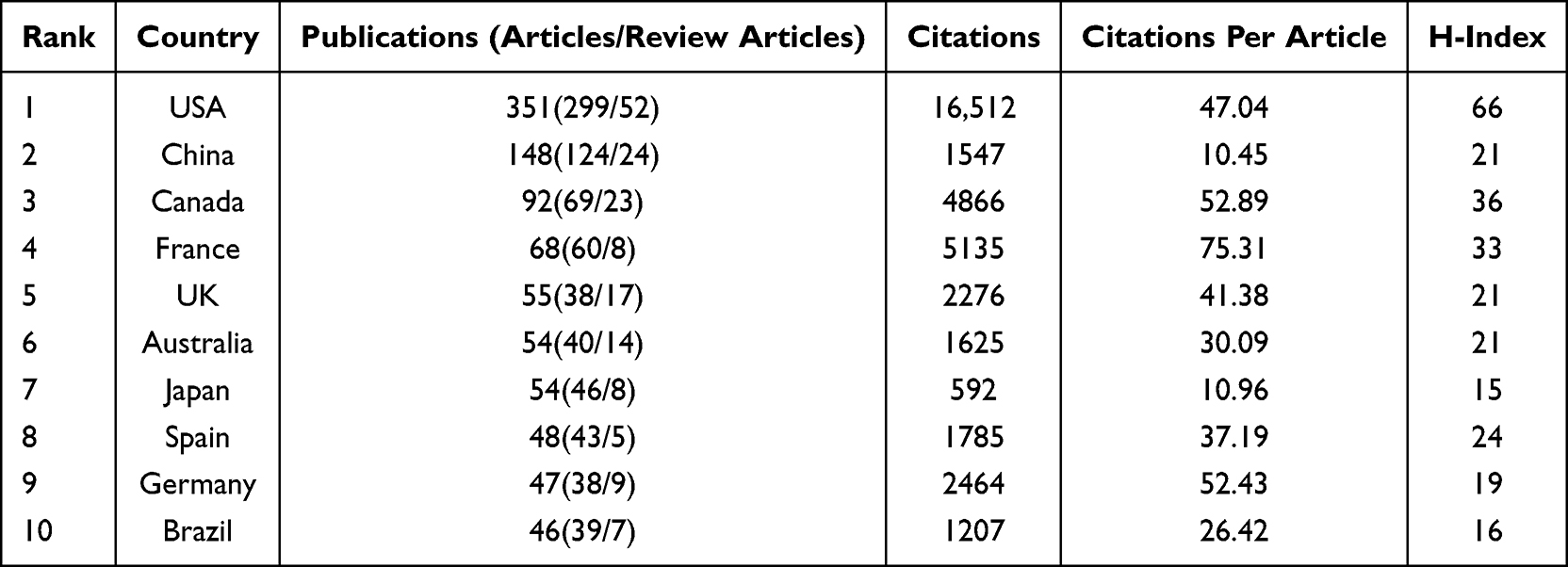 |
Table 1 Top 10 Countries in Terms of Publications on the Relevance of Enteral Nutrition in Mechanically Ventilated Patients |
After the exclusion of self-citations, the USA ranked first in both citations (16,512) and h-index (66), followed by France, Canada, Germany, and the UK, with total citations and h-indices of 5135 and 4866, 2464 and 2276, and 3336 and 1921, respectively (Figure 3A). Figure 3B shows a geographical distribution of the number of publications by country/region, with darker colors representing more publications. Figure 3C illustrates the number of documents published by the corresponding authors in each country, and the distribution of single-country and multi-country collaborations among these publications. The USA and China led in the number of corresponding authors of publications and had a significant number of multi-country publications (MCPs). Other countries, such as Canada, France, and Japan, also had high numbers of both single-country publications (SCPs) and MCPs. Figure 3D shows the results of the analysis of country/region publications using VOSviewer; publication numbers greater than or equal to a score of 5 were included, resulting in the inclusion of 39 countries/regions. The network map has 39 nodes, 6 clusters, and 487 links. The three countries with the highest total link strength (TLS) were the USA (TLS = 1661), Canada (TLS = 881), and China (TLS = 680), demonstrating their significance in the global cooperative network. The amount of international cooperation between 2000 and 2024 was analyzed. Figure 4 illustrates the cooperative relationships between different countries, with the USA taking center stage in the cooperative network, followed by Canada. The UK showed its closest relationship with the Netherlands.
 |
Figure 3 (A) Ranking of countries/regions in terms of number of publications, average number of citations, and h-index. (B) World map of the number of publications by country. (C) Distribution of countries in terms of corresponding authors. (D) Knowledge graph of national collaborative networks. |
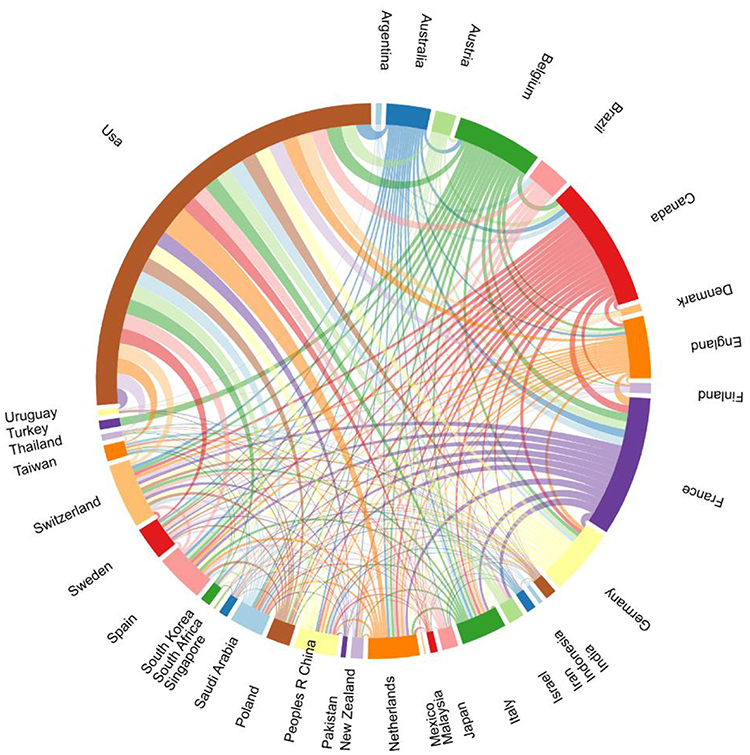 |
Figure 4 Distribution of countries/regions involved in research on enteral nutrition in mechanically ventilated patients and their international cooperation. |
Institutional Productivity
Between 2000 and 2024, a total of 5112 institutions published papers related to enteral nutrition in MV patients. Overall, 285 papers (24.48%) were published among the top 10 institutions. Harvard University ranked first with 47 papers (3.52%), followed by the University of Toronto with 34 papers (2.92%), and Queen’s University, Canada, with 28 papers (2.41%), as shown in Table 2. Figure 5A shows the institutional citation analysis results of publications from 127 institutions with at least 5 publications. The analysis was performed with VOSviewer, and the resulting network contains 126 nodes, 8 clusters, and 2412 links. As seen in the figure, the University of Toronto is located at the center of the network, demonstrating its importance in international research collaboration.
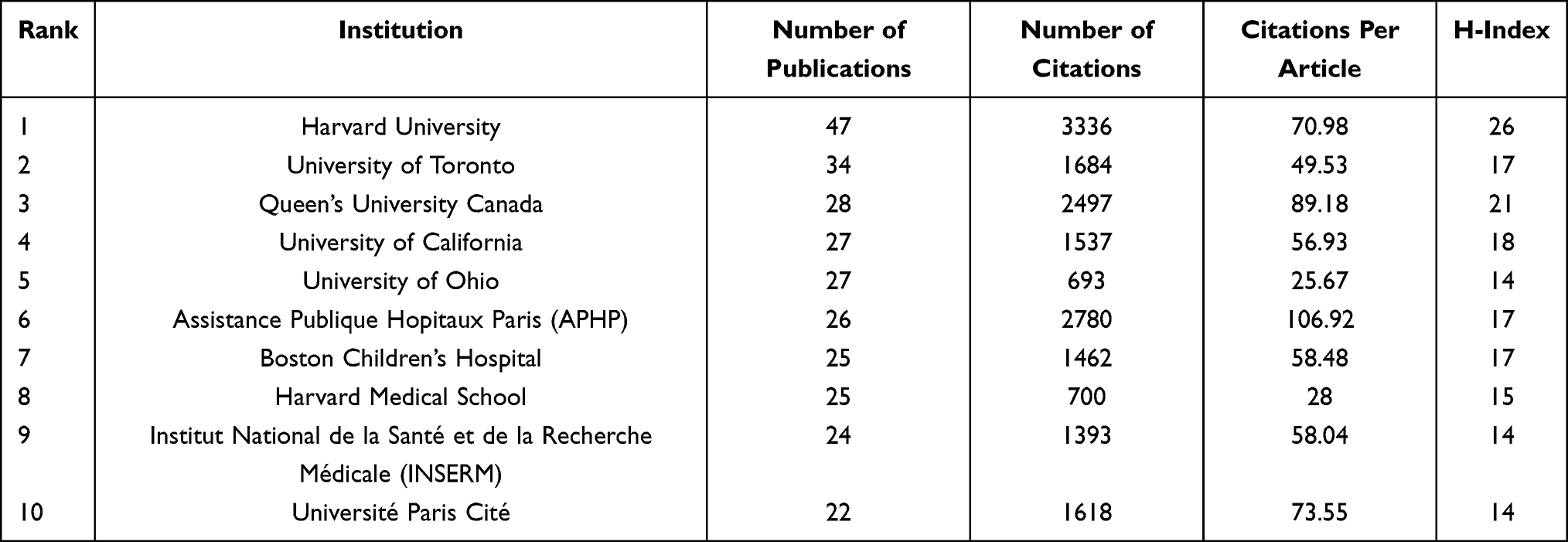 |
Table 2 Top 10 Institutions in Terms of Publications on Enteral Nutrition in Mechanically Ventilated Patients |
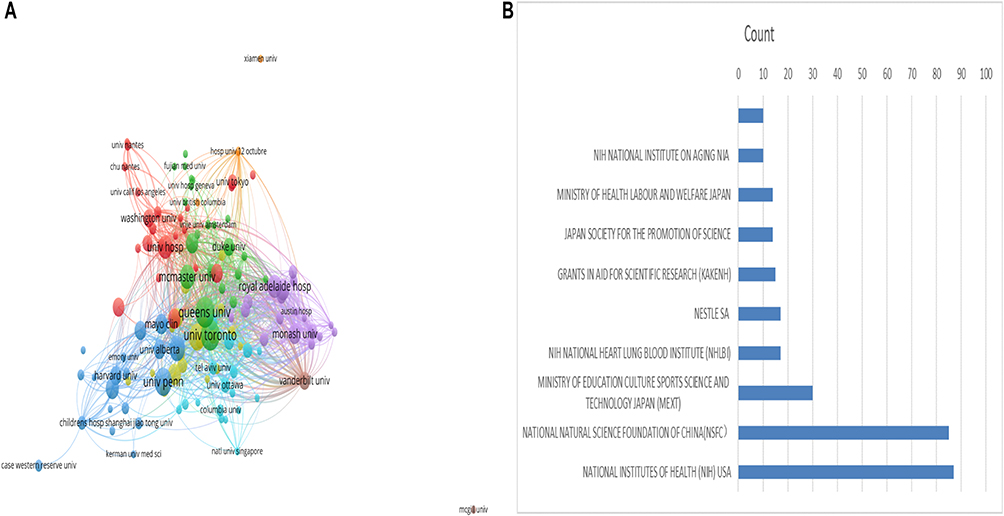 |
Figure 5 (A) VOSviewer-based network of co-citations in publications on enteral nutrition in mechanically ventilated patients. (B) Top 10 organizations in terms of funding for research on enteral nutrition in mechanically ventilated patients. |
Top Funding Agencies
As described earlier, the economic base is key to scientific progress. Table 3 shows the top 10 funding agencies, and Figure 5B illustrates the number of publications in terms of funding agencies. The top three funding institutions were the USA Department of Health and Human Services, the National Institutes of Health (NIH), and the National Natural Science Foundation of China (NSF), which supported 85, 85, and 30 studies, respectively. Japan appeared four times among the top 10 funding organizations. The USA thus has an excellent position in the field of enteral nutrition for MV patients due to its well-established institutions and substantial financial support. This illustrates the importance of adequate financial support as it attracts more researchers and institutions into the field.
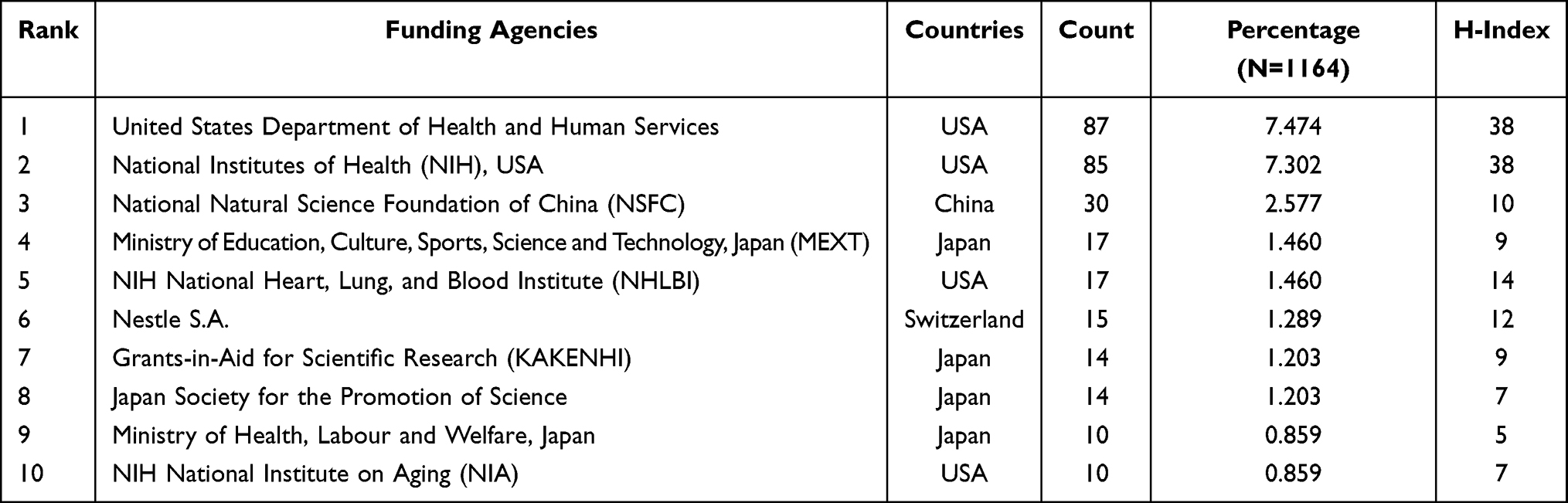 |
Table 3 Top 10 Funding Organizations for Research on Enteral Nutrition for Mechanically Ventilated Patients |
Journal and Co-Cited Journal Analysis
Information on the top 10 journals in the field of enteral nutrition in MV patients is provided in Table 4. In this study area, 332 articles were published in the top 10 journals from a total of 429 journals, accounting for 28.52% of the total number of articles published. The Journal of Parenteral and Enteral Nutrition ranked first with 70 articles (6.01%), followed by Critical Care Medicine with 44 articles (3.78%) and Clinical Nutrition with 38 articles (3.26%). According to the Journal Citation Reports (JCR) 2022, the top-ranked Journal of Parenteral and Enteral Nutrition has an impact factor of 3.4 and is categorized as Q2. The second-ranked Critical Care Medicine has a higher impact factor of 7.7 and is categorized as Q1. The third-ranked Clinical Nutrition has a slightly lower impact factor of 6.6 but is also categorized as Q1. The frequency of co-citation is an important component of a journal’s impact factor, in addition to the number of publications.
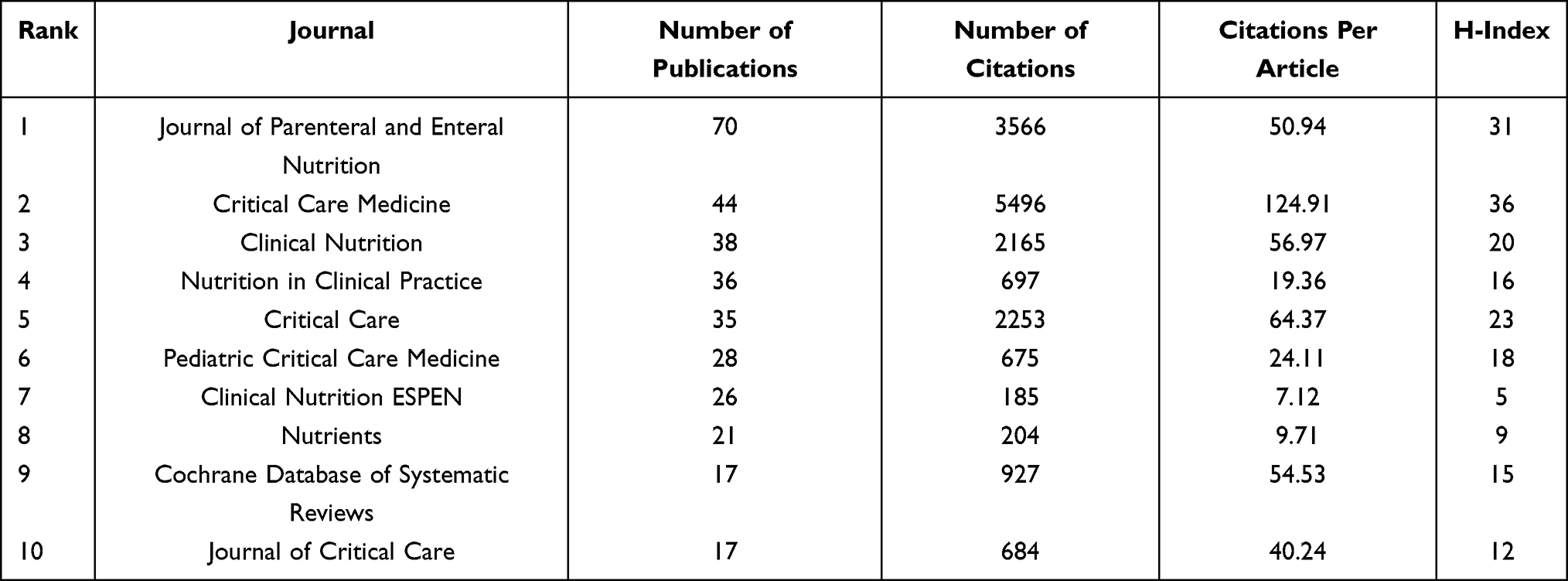 |
Table 4 Top 10 Journals Publishing Articles in the Field of Enteral Nutrition in Mechanically Ventilated Patients |
A co-citation analysis was performed using CiteSpace to examine journal interconnections. As shown in Figure 6A and B, the co-citation network graph consisted of 224 nodes and 780 links, with the British Medical Journal having the highest centrality of 0.68, followed by the Journal of Nervous and Mental Disorders (0.63) and the Journal of Personality and Social Psychology (0.2).
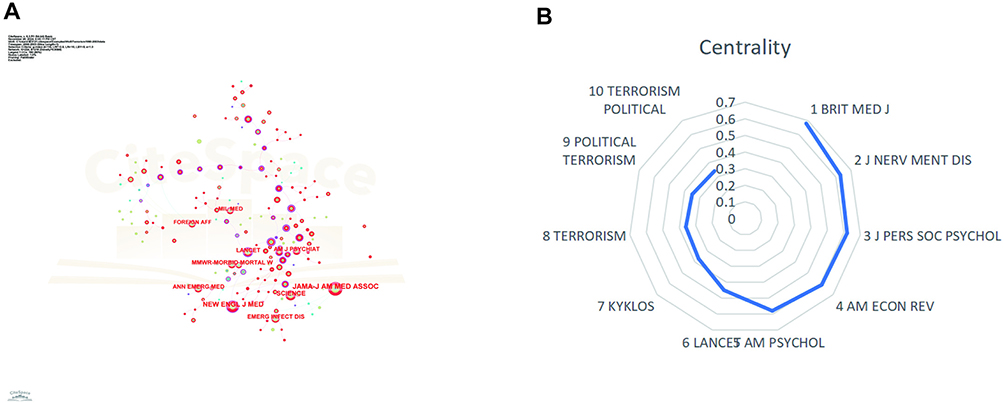 |
Figure 6 (A) Graph of journal co-citations generated using CiteSpace. (B) Top 10 journals publishing studies on enteral nutrition in mechanically ventilated patients. |
Figure 7 shows a two-layer map of the journal categories associated with publications on enteral nutrition for MV patients. It can be seen that the largest and most prominent discipline in the citation field is clearly “Medicine, Medical, Clinical”, followed by “Health, Nursing, Medicine”. The chart reveals that papers from journals in the “Medicine, Medical, and Clinical” category are cited predominantly by journals classified under “Molecular, Biology, Genetics” and “Health, Nursing, and Medicine”, and also emphasizes the importance of interdisciplinary collaboration, especially between medicine and basic disciplines such as molecular biology and genetics. It is thus apparent that the study of enteral nutrition in MV patients is a multidisciplinary endeavor.
 |
Figure 7 CiteSpace-generated double-figure overlay of journals publishing studies on enteral nutrition for ventilated patients, highlighting the different research topics. In the graph, different colors are used to represent the various disciplines. The thickness of the lines represents the strength of citations between the different disciplines, with thicker lines indicating stronger citation relationships and thinner lines indicating weaker citation relationships. |
Author and Co-Cited Author Analysis
The number of research papers published by authors may reflect their contribution to the field. Overall, 200 researchers in the field have together published 846 papers. The top 10 authors with the most publications in the field are listed in Table 5. Daren K. Heyland leads the field with 26 publications (2.23%), followed by Nilesh M. Mehta with 13 publications (1.12%). Stephen A. McClave and Jean Reignier are tied with 12 publications each (1.03%). The top authors, such as Heyland and Mehta, not only have a high number of publications but also have a high h-index (the h-index is a measure of a researcher’s impact, indicating that the author has at least “h” papers and each paper has been cited at least “h” times, indicating their continued contribution to the field).
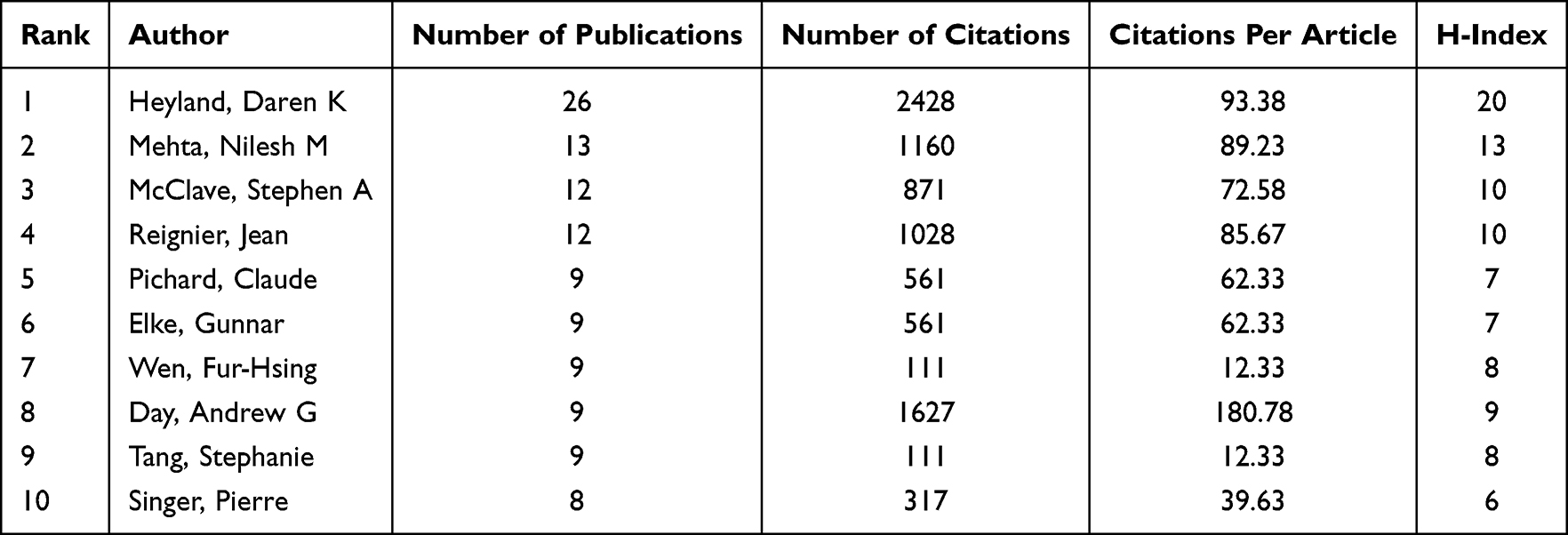 |
Table 5 Top 10 Authors with the Largest Contributions to the Field of Enteral Nutrition for Mechanically Ventilated Patients |
Citation Bursts
Table 6 summarizes the 10 most cited articles on enteral nutrition in patients receiving MV, spanning the period from 2007 to 2018. Michel Casaer of the Free University of Brussels, Belgium, published the most cited paper in 2011, with a total of 1068 citations.15 The second most cited paper was written by PM Andersen with 804 citations.16 The third most cited paper was published by TW Rice and was cited 647 times.17
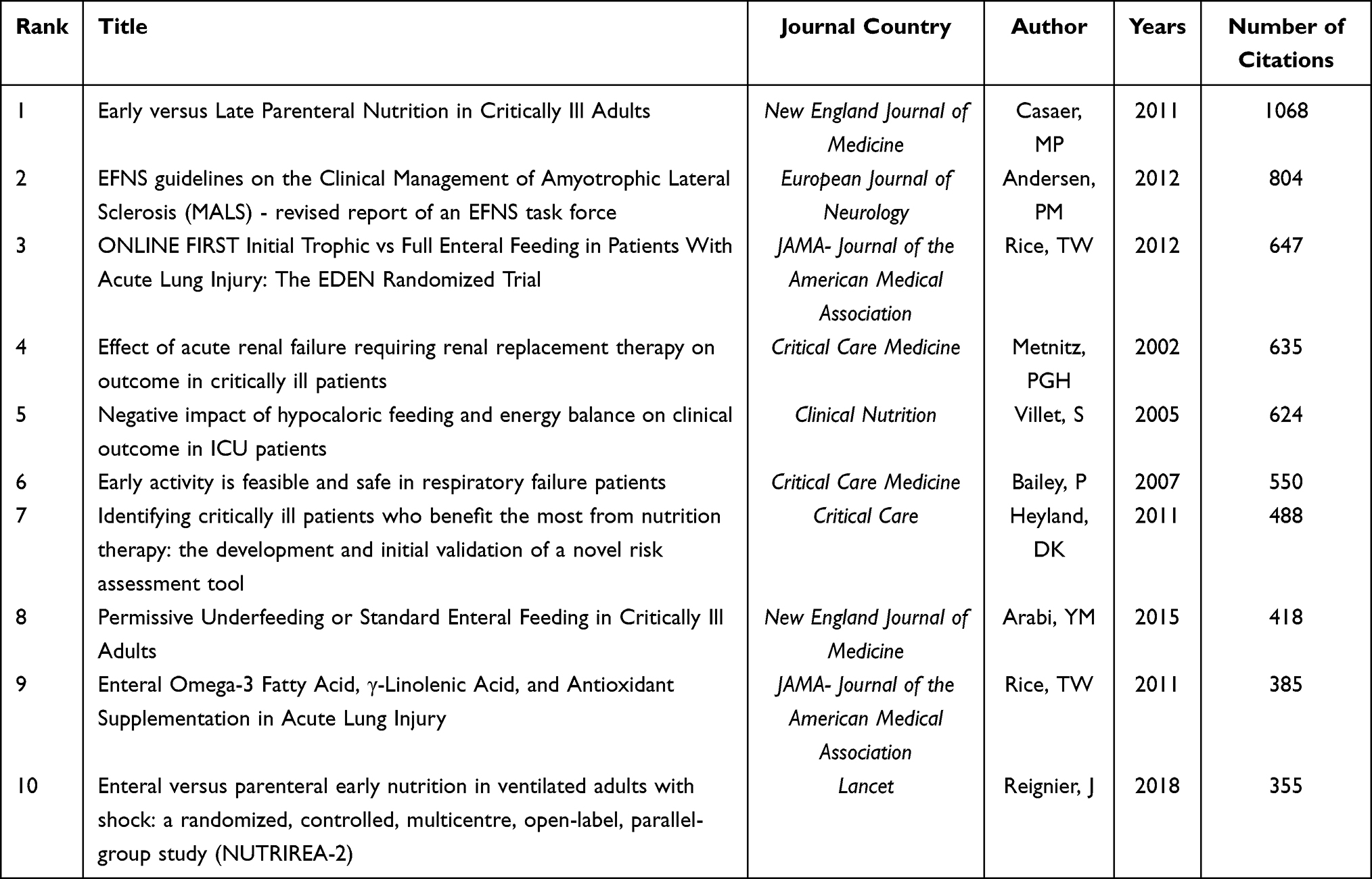 |
Table 6 Top 10 Co-Cited References on Enteral Nutrition in Mechanically Ventilated Patients |
Burst detection developed by Kleinberg is recognized as a tool for identifying cutting-edge research or emerging research trends.9 A burst detection algorithm was used in this survey to detect important references and keywords in the field of enteral nutrition for MV patients. The top 25 most cited references are shown in Figure 8. In 2019, P. Singer et al published an article entitled “ESPEN Clinical Nutrition Guidelines for Intensive Care Units” in the journal Clinical Nutrition (38.93 citations). Of these 25 references, 4 are still experiencing citation bursts.
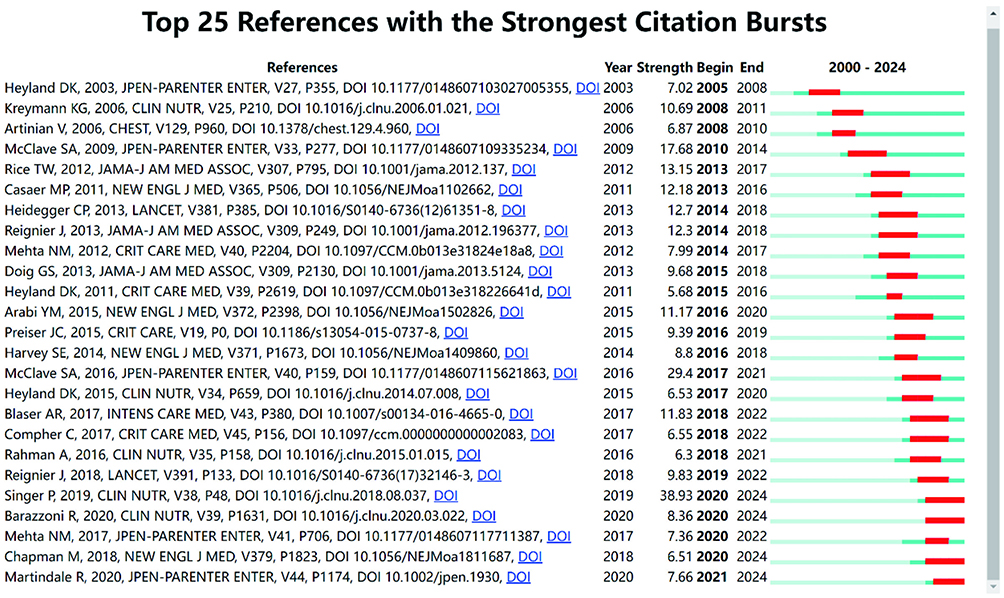 |
Figure 8 The 25 most influential references showing the strongest citation bursts. |
In Supplementary Materials, individual nodes correspond to specific references, and the connecting lines illustrate the co-citation relationships. The prominence of these links highlights the repeated pairing of references, which typically indicates substantial agreement on the subject matter. To elucidate these associations, a cluster analysis was performed, as shown in Supplementary Materials, which outlines nine major clusters found in the 1164 cited publications, including #0 covid-19 patients, #1 nutritional support, #2 nutrient delivery, #3 initial calorie intake, #4 sick children, #5 consensus statements, #6 patients with brain injury, #7 failure of pediatric insulin titration test, and # 8 linolenic acid. The overall modularized Q value (0.7005) and the mean silhouette value (0.7919) were both greater than 0.7, demonstrating the reliability of the results.
Analysis of Keywords
In addition to references, keywords provide readers with insight into the research topic and methods used in the study. Analysis of keyword co-occurrence is often used to detect research hotspots and directions in a given field. Keywords with more than 20 occurrences were used to generate a web visualization graph. The visualization shown in Figure 9A has a total of 147 nodes and 537 links, with “enteral nutrition” at the center of the nodes, followed by “mechanical ventilation”. Figure 9B illustrates the distribution of keyword densities, with “enteral nutrition” being the most prominent term with 412 occurrences, followed by “mechanical ventilation” and “critically ill patients” with 255 and 226 occurrences, respectively. Figure 9C shows the keyword word cloud, indicating the prominence of the terms “enteral nutrition”, “mechanical ventilation”, and “mortality”, highlighting their importance in the studies. The visualization is based on the keyword overlay analysis in VOSviewer, where nodes in purple or blue indicate earlier occurrences of keywords, and nodes in yellow highlight current research hotspots.
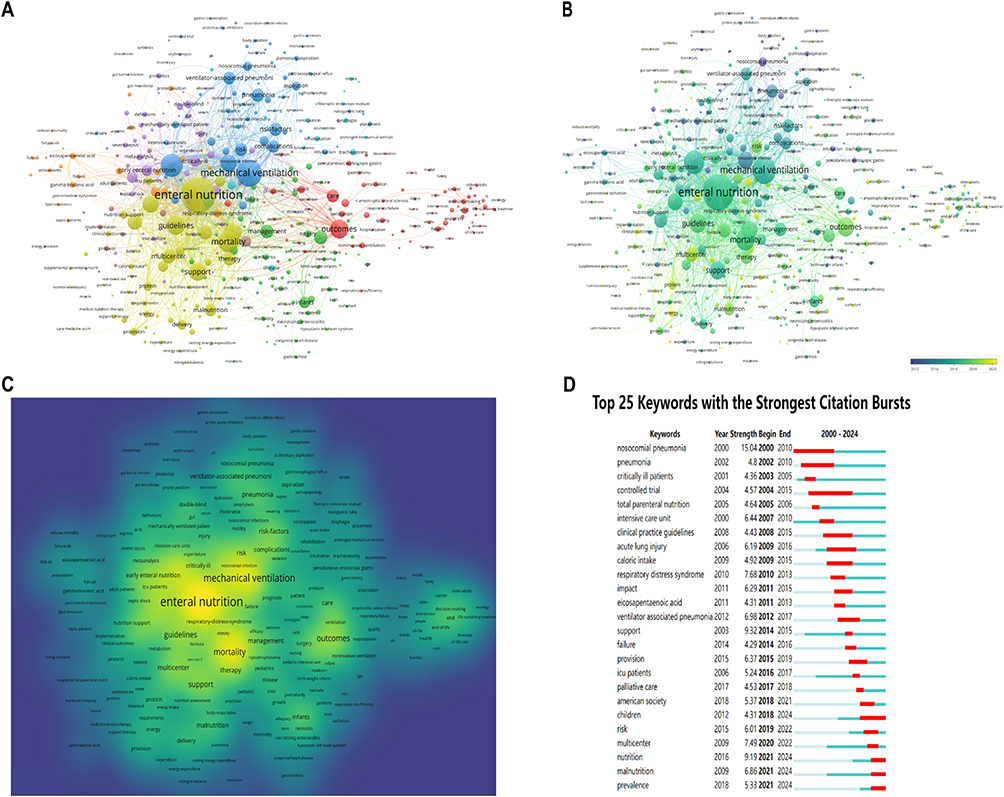 |
Figure 9 (A) Network of keyword relationships drawn using VOSviewer. (B) Visualization of keyword densities based on VOSviewer. (C) Temporal evolution of keywords used enteral nutrition studies, a visual overlay analysis based on VOSviewer. (D) Analysis of the top 25 keywords with the strongest citation explosions in the field of enteral nutrition in mechanically ventilated patients from 2000 to 2024. |
Burst Keywords
The identification of emergent keywords using CiteSpace analysis revealed a dynamic landscape of research hotspots and cutting-edge developments. Figure 9D shows the top 25 most cited keywords from 2000 to 2024, where the blue line indicates the entire period and the red line represents the cycle in which the keywords appeared. Notably, from 2021 to 2024, three keywords experienced a significant burst: “nutrition” (intensity: 9.1859), “malnutrition” (intensity: 6.8615), and “epidemic” (intensity: 5.327). The results highlight a shift in the focus of research on enteral nutrition in MV patients, in which “nutrition”, “malnutrition”, and “prevalence” have become central themes, reflecting the evolution of priorities in the field.
Discussion
This study is the first to apply bibliometric methods to analyze research trends in the field of enteral nutrition therapy for mechanically ventilated patients between 2000 and 2024. Bibliometrics represents a powerful tool that enables an effective summary of existing bodies of knowledge and the directions of future research. With its unique strengths, it has become an indispensable tool for mapping the current state of research and predicting future research trajectories.18,19 VOSviewer and CiteSpace combine the advantages of information science, the power of computer science, the precision of scientometrics, and the depth of applied mathematics to present a series of visual maps of knowledge domains.20,21 After a rigorous screening process, 122 studies that did not meet the inclusion criteria were excluded from the originally identified publications, and the final analysis included 846 publications in 429 journals from 5112 institutions in 67 countries or territories, as well as38482co-cited references that were eligible for analysis. Tools used in the study include VOSviewer, CiteSpace, and an online platform for bibliometric analysis and visualization (https://bibliometric.com/), which shows the distribution of countries/regions and their patterns of international cooperation.
Overall,41119papers on enteral nutrition were published between 2000 and 2024, of which 1286 focused on enteral nutrition associated with mechanical ventilation, representing 3.13% of the total number of papers. Supplementary Materials shows that the number of papers on enteral nutrition in MV patients increased steadily, with a dramatic increase observed after 2019. This phenomenon can be attributed to the outbreak of the COVID-19 pandemic at the end of 2019, which resulted in a large number of critically ill patients requiring MV, prompting the medical community to pay more attention to the nutritional management of these patients, and thus leading to increased research on the topic.22 In recent years, enteral nutrition in MV patients has received increasing attention from nutrition experts, accompanied by increases in research, including studies on the timing of enteral nutrition in these patients, studies on the relevance of enteral nutrition intolerance, and standardized procedures (SOPs) for assessing tolerance to enteral nutrition.
The leadership of the USA in the field can be seen from Table 1 and Figure 3, indicated by the country’s excellence in metrics such as publications, citation frequency, and the h-index, as well as highlighting the strong historical and infrastructural foundation of the USA. It is worth noting that the type of literature may have an impact on citation indicators, so differences in the composition of literature types should be taken into account when assessing research outputs across countries. The USA research community is characterized by an abundance of human capital and institutional capacity and is supported by substantial financial allocations.23,24 The fit of research priorities with pressing US public health issues may also have further contributed to high output by attracting targeted funding support from the US Department of Health and Human Services (HHS) and the National Institutes of Health (NIH) for research on national health priorities.25,26
Overall, the USA Department of Health and Human Services (HHS), the National Institutes of Health (NIH), and China’s National Natural Science Foundation of China (NSFC) were found to be the major funding entities. USA institutions were observed to make up the majority of the top ten publishing entities, further evidence of the unparalleled influence of the USA in scientific research.
At the same time, China’s research output is rising significantly, driven by economic expansion and the growing demand for medical innovation. Despite commendable overall performance in publication and citation metrics, China’s penetration of high-impact, peer-reviewed journals remains relatively low.27 While the USA and Canada are pivotal players in the field of international scientific collaboration, China’s collaborative footprint is less visible (Figure 4). This may be related to China’s strategy of research resource allocation and international cooperation in this field, and a predominant focus on regional partnerships rather than global networks. To advance biomedical research and improve the quality of academic contributions, it is incumbent upon China to promote institutional participation and strengthen global collaborative networks.
Researchers typically refer to the publication status of the journals themselves and their co-editions when selecting appropriate journals to submit their manuscripts. Based on the data presented in Figure 6 and Table 4, the top three journals in the field in terms of publications were the Journal of Parenteral and Enteral Nutrition (impact factor 4.1,2024–2025), Critical Care Medicine (impact factor 6.0,2024–2025), and Clinical Nutrition (impact factor 7.4,2024–2025). Research on enteral nutrition in MV patients spans multiple disciplines and offers a wide selection of journals. These journals do not have top impact factors as they are all specialized journals in particular fields. Since all of these journals are directly related to enteral nutrition, it is a natural consequence that they are at the forefront of publications in this field. These journals cover the fields of parenteral and enteral nutrition, critical care medicine, and clinical nutrition, and researchers who follow these journals are likely to gain a good understanding of the research dynamics and cutting-edge developments in the field of enteral nutrition for MV patients. When submitting manuscripts, researchers choose the most appropriate journals based on this information, thus avoiding delays in publication. In addition, the data in Figure 7 show that literature in the field of “Molecular Biology, Genetics” is frequently cited in the field of “Medicine, Medical and Clinical”, reflecting the current importance of clinical and translational research. Researchers can take this into account when selecting research topics and submitting to journals.
Keywords in academic research not only reflect research hotspots and frontiers but also are an important tool for academic communication and knowledge dissemination. The strategic selection and use of keywords enable researchers to grasp trends in their discipline and thus enhance the impact of their research results. The most representative keywords found in the present study were “mechanical ventilation” and “enteral nutrition” (Figure 9). Keywords closely related to enteral nutrition included “nutritional support”, “protein”, “energy”, and “complications”, and these keywords were consistent with the findings of co-cited references. Enteral nutrition, as a core component of therapeutic strategies for MV patients, has long been the focus of in-depth discussion and attention by researchers in the field of critical care medicine, due to its significant advantages in improving the nutritional status of patients and reducing complications. Thus, as an important treatment for MV patients, enteral nutrition has attracted significant attention. The keyword analysis showed that researchers have focused on the effectiveness and safety of enteral nutrition. In addition, the emergence of keywords such as “individualized” and “precision” is indicative of the trend toward personalized nutritional plans based on the specific physiological needs of individual patients. The trajectory of keyword use showed shifts in focus from basic theory and animal experiments between 2010 and 2012, to clinical studies and efficacy assessments in 2012–2016, and individualized nutrition and precision medicine from 2016 to 2020. This trend suggests that academia is continually optimizing enteral nutrition protocols to more precisely meet the needs of individual patients and improve prognosis. Future studies are expected to further explore the potential of personalized nutritional support in improving the prognosis and quality of life of MV patients. In addition, the prominence of keywords such as “infection” and “diarrhea”, as shown in Figure 9B, suggests that while continuing to optimize personalized enteral nutrition regimens, future studies are likely to pay more attention to the prevention and management of potential complications, aiming for a comprehensive improvement in the treatment and recovery outcomes of MV patients. CiteSpace was used to analyze keywords used between 2000 and 2024, revealing the research hotspots and frontiers in the field of critical care medicine. Figure 9D shows that “hospital-acquired pneumonia” was the most explosive keyword in the 2000 to 2010 period 2000 to 2010, with an intensity of 15.04. During the same period, “pneumonia” and “critical care patients” also received significant attention. Recent outbreak keywords included “nutrition”, “malnutrition”, and “prevalence”, reflecting the importance of nutritional management and disease prevention. Changes in the use of these keywords are indicative of research trends and directions in the field of critical care medicine. As shown in Table 6, among the top ten highly cited publications, five were randomized controlled trials (RCTs), four were observational studies, and one was a systematic review. The RCTs primarily investigated comparisons between early versus late parenteral nutrition and restrictive versus standard feeding protocols. In contrast, the observational studies focused on energy requirement assessment, nutritional status monitoring, and clinical outcome prediction. Future research should synthesize evidence from both RCTs and observational studies to offer clinicians more comprehensive guidance for nutritional support decisions.
The findings of this study have important implications for nursing practice, health policy development, and health management. As shown in Table 5, of the top 10 most contributing authors, none of the four core contributors (Singh, Rainier, Day, and Elk) were nurses, although all had nursing backgrounds, suggesting that there is a strong need for nursing staff to continue to improve their professionalism in the field of mechanical ventilation and enteral nutrition research. Figure 9D shows that the current core concerns in the field are enteral nutrition tolerance, feeding strategies, complication management, and emerging directions such as precision nutrition and individualized protocols. This suggests an urgent need for clinical nurses to continually update their knowledge with the latest evidence-based feeding techniques and complication monitoring and assessment skills to optimize nutritional support practices for mechanically ventilated patients. Furthermore, the information on the distribution of publications across countries/regions (Figure 3A–3C) and the overall publication trends (Figure 2) emphasize the critical role of this field in improving the quality of care for critically ill patients and reducing healthcare costs. Health policy development should emphasize balanced regional research capacity building and promote the dissemination of best practices. Health managers should optimize resource allocation based on available evidence, support relevant training programs for nurses, encourage inter-institutional collaboration, and establish a data-based quality monitoring system for nutritional support. Collectively, these actions will improve the overall effectiveness and competitiveness of institutions in the management of enteral nutrition for mechanically ventilated patients.
This study is the first to utilize bibliometric methods to provide insight into the current status and development of the field of enteral nutrition for MV patients. Two major tools, CiteSpace and VOSviewer, as well as an online platform, were used to analyze the data, ensuring the comprehensiveness and accuracy of the analysis. However, this study has some limitations. In terms of database selection, the literature was sourced from the WoSCC database, which may have led to the omission of other relevant studies from other databases. The language of publication was English only, which may have resulted in missing important articles in other languages. Future studies should further optimize the methodology to provide a more comprehensive and in-depth analysis, thus overcoming the limitations of the present study.
Conclusion
In conclusion, this study provides a bibliometric analysis of the literature related to enteral nutrition in mechanically ventilated patients, identifying the major contributors, research trends, and future directions in the field. These findings provide an important reference for subsequent research. It is expected that continued development in this field will improve nutritional support outcomes in critically ill patients, thereby improving clinical prognosis and quality of life.
Data Sharing Statement
The original contributions presented in the study are included in the article/Supplementary Materials. Further inquiries can be directed to the corresponding author.
Ethics Approval and Consent to Participate
Ethics approval is not required for this study as it does not involve human or animal research and does not raise any ethical issues.
Consent for Publication
All authors have reviewed and approved the final version of the manuscript and consent to its publication. There are no individual participant data included in this study that require consent for publication. The research does not involve human subjects or animal subjects, and thus, ethical approval or consent from participants is not applicable.
Acknowledgments
We thank all participants and researchers for their valuable contributions to this MR. Furthermore, we extend our appreciation to the reviewers who participated in the review process and to MJEditor (www.mjeditor.com) for their linguistic assistance in preparing this manuscript.
Author Contributions
All authors made a significant contribution to the work reported, whether that is in the conception, study design, execution, acquisition of data, analysis and interpretation, or in all these areas; took part in drafting, revising or critically reviewing the article; gave final approval of the version to be published; have agreed on the journal to which the article has been submitted; and agree to be accountable for all aspects of the work.
Funding
This research did not receive any specific grant from funding agencies in the public, commercial, or not-for-profit sectors.
Disclosure
The authors declare that they have no competing interests.
References
1. Kalanuria AA, Zai W, Mirski M. Ventilator-associated pneumonia in the ICU. Critical Care. 2014;18(2):208. doi:10.1186/cc13775
2. Ellis CS. Improving nutrition in mechanically ventilated patients. J Neurosci Nurs. 2015;47(5):263–E1. doi:10.1097/JNN.0000000000000161
3. Sharma K, Mogensen KM, Robinson MK. Pathophysiology of Critical Illness and Role of Nutrition. Nutri Clin Pract. 2019;34(1):12–22. doi:10.1002/ncp.10232
4. Lochs H. To feed or not to feed? Are nutritional supplements worthwhile in active Crohn’s disease? Gut. 2006;55(3):306–307. doi:10.1136/gut.2005.077602
5. Hu Q, Ren H, Hong Z, et al. Early enteral nutrition preserves intestinal barrier function through reducing the formation of neutrophil extracellular traps (NETs) in critically ill surgical patients. Oxidative Med Cell Longevity. 2020;2020:8815655. doi:10.1155/2020/8815655
6. Wang S, Zhao X, Wang Q, et al. Impact of early enteral nutrition on ventilator associated pneumonia in intubated severe trauma patients: a propensity score-matched study. Front Nutri. 2023;10:1172526. doi:10.3389/fnut.2023.1172526
7. Zou X, Vu HL. Mapping the knowledge domain of road safety studies: a scientometric analysis. accident; analysis and prevention. Accident Analysis Prevent. 2019;132(105243). doi:10.1016/j.aap.2019.07.019
8. Bai J, Li W, Huang YM, Guo Y. Bibliometric study of research and development for neglected diseases in the BRICS. Infect Dis Poverty. 2016;5(1):89. doi:10.1186/s40249-016-0182-1
9. Gao Y, Shi S, Ma W, et al. Bibliometric analysis of global research on PD-1 and PD-L1 in the field of cancer. Int immunopharmacol. 2019;72:374–384. doi:10.1016/j.intimp.2019.03.045
10. Passas I. Bibliometric analysis: the main steps. Encyclopedia. 2024;4(2):1014–1025. doi:10.3390/encyclopedia4020065
11. Chen L, Ma S, Hu D, et al. Bibliometric study of sodium glucose cotransporter 2 inhibitors in cardiovascular research. Front pharmacol. 2020;11:561494. doi:10.3389/fphar.2020.561494
12. Chen Y, Li Y, Guo L, et al. Bibliometric analysis of the inflammasome and pyroptosis in brain. Front Pharmacol. 2021;11:626502. doi:10.3389/fphar.2020.626502
13. Engqvist L, Frommen JG. The h-index and self-citations. Trends Ecology Evolution. 2008;23(5):250–252. doi:10.1016/j.tree.2008.01.009
14. Zou KH, Tuncali K, Silverman SG. Correlation and simple linear regression. Radiology. 2003;227(3):617–622. doi:10.1148/radiol.2273011499
15. Casaer MP, Mesotten D, Hermans G, et al. Early versus late parenteral nutrition in critically ill adults. New England J Med. 2011;365(6):506–517. doi:10.1056/NEJMoa1102662
16. Kumpf VJ, de Aguilar-Nascimento JE, Diaz-Pizarro Graf JI, et al. FELANPE, & American society for parenteral and enteral nutrition (2017). ASPEN-FELANPE clinical guidelines. JPEN. 41;1:104–112. doi:10.1177/0148607116680792
17. Rice TW, Wheeler AP, Thompson BT, et al. National heart, lung, and blood institute Acute Respiratory Distress Syndrome (ARDS) clinical trials network. initial trophic vs full enteral feeding in patients with acute lung injury: the EDEN randomized trial. JAMA. 2012;307(8):795–803. doi:10.1001/jama.2012.137
18. Møller AM, Myles PS. What makes a good systematic review and meta-analysis? British J Anaesthesia. 2016;117(4):428–430. doi:10.1093/bja/aew264
19. Grant MJ, Booth A. A typology of reviews: an analysis of 14 review types and associated methodologies. Health Infor Libraries J. 2009;26(2):91–108. doi:10.1111/j.1471-1842.2009.00848.x
20. Gu D, Li T, Wang X, Yang X, Yu Z. Visualizing the intellectual structure and evolution of electronic health and telemedicine research. Int J Med Informatic. 2019;130:103947. doi:10.1016/j.ijmedinf.2019.08.007
21. van Eck NJ, Waltman L. Software survey: vOSviewer, a computer program for bibliometric mapping. Scientometrics. 2010;84(2):523–538. doi:10.1007/s11192-009-0146-3
22. Martindale R, Patel JJ, Taylor B, Arabi YM, Warren M, McClave SA. Nutrition therapy in critically ill patients with coronavirus disease 2019. JPEN. 2020;44(7):1174–1184. doi:10.1002/jpen.1930
23. Alberts B, Kirschner MW, Tilghman S, Varmus H. Rescuing US biomedical research from its systemic flaws. Proceed Nat Acad Sci United States Am. 2014;111(16):5773–5777. doi:10.1073/pnas.1404402111
24. Pool LR, Wagner RM, Scott LL, et al. Size and characteristics of the biomedical research workforce associated with U.S. national institutes of health extramural grants. FASEB J. 2016;30(3):1023–1036. doi:10.1096/fj.14-264358
25. Zerhouni EA. Translational and clinical science--time for a new vision. New England J Med. 2005;353(15):1621–1623. doi:10.1056/NEJMsb053723
26. Collins FS, Tabak LA. Policy: NIH plans to enhance reproducibility. Nature. 2014;505(7485):612–613. doi:10.1038/505612a
27. Su Y, Ruan Z, Wang R, et al. Knowledge mapping of targeted immunotherapy for myasthenia gravis from 1998 to 2022: a bibliometric analysis. Front Immunol. 2022;13:998217. doi:10.3389/fimmu.2022.998217
 © 2025 The Author(s). This work is published and licensed by Dove Medical Press Limited. The
full terms of this license are available at https://www.dovepress.com/terms
and incorporate the Creative Commons Attribution
- Non Commercial (unported, 4.0) License.
By accessing the work you hereby accept the Terms. Non-commercial uses of the work are permitted
without any further permission from Dove Medical Press Limited, provided the work is properly
attributed. For permission for commercial use of this work, please see paragraphs 4.2 and 5 of our Terms.
© 2025 The Author(s). This work is published and licensed by Dove Medical Press Limited. The
full terms of this license are available at https://www.dovepress.com/terms
and incorporate the Creative Commons Attribution
- Non Commercial (unported, 4.0) License.
By accessing the work you hereby accept the Terms. Non-commercial uses of the work are permitted
without any further permission from Dove Medical Press Limited, provided the work is properly
attributed. For permission for commercial use of this work, please see paragraphs 4.2 and 5 of our Terms.
Recommended articles

Knowledge Atlas of the Co-Occurrence of Epilepsy and Autism: A Bibliometric Analysis and Visualization Using VOSviewer and CiteSpace
Wang Y, Huo X, Li W, Xiao L, Li M, Wang C, Sun Y, Sun T
Neuropsychiatric Disease and Treatment 2022, 18:2107-2119
Published Date: 19 September 2022
Enhancing Literature Review and Understanding Under Global Pandemic
Qiao G, Song H, Hou S, Xu J
Risk Management and Healthcare Policy 2023, 16:143-158
Published Date: 3 February 2023
Bibliometric Analysis of Research Themes and Trends of the Co-Occurrence of Autism and ADHD
Liu A, Lu Y, Gong C, Sun J, Wang B, Jiang Z
Neuropsychiatric Disease and Treatment 2023, 19:985-1002
Published Date: 24 April 2023
Hotspots and Trends in Research on Treating Pain with Electroacupuncture: A Bibliometric and Visualization Analysis from 1994 to 2022
Hu L, Yang J, Liu T, Zhang J, Huang X, Yu H
Journal of Pain Research 2023, 16:3673-3691
Published Date: 3 November 2023
Global Research Status of Maca (Lepidium Meyenii Walp.): A Bibliometric Analysis of Hotspots, Bursts, and Trends
Li K, Zhao C, Dang M, Ren R, Fu M, Bai Y, Wang J, Zhang Q, Luan F
Drug Design, Development and Therapy 2025, 19:2329-2349
Published Date: 27 March 2025