
Back to Journals » Advances in Medical Education and Practice » Volume 16

A Scoping Review of Interprofessional Education in Saudi Arabia: Outcomes, Barriers, and Implementation Challenges
Authors Almater L  , Almalag HM , Aljuffali L , Saja MF , Alzamil H , Alzamel F
Received 27 May 2025
Accepted for publication 9 September 2025
Published 15 September 2025 Volume 2025:16 Pages 1683—1694
DOI https://doi.org/10.2147/AMEP.S540202
Checked for plagiarism Yes
Review by Single anonymous peer review
Peer reviewer comments 3
Editor who approved publication: Dr Md Anwarul Azim Majumder
Latifah Almater,1 Haya M Almalag,2 Lobna Aljuffali,2 Maha F Saja,3 Hana Alzamil,3 Faten Alzamel4
1Department of Medical-Surgical Nursing, College of Nursing, King Saud University, Riyadh, Saudi Arabia; 2Department of Clinical Pharmacy, College of Pharmacy, King Saud University, Riyadh, Saudi Arabia; 3Department of Physiology, College of Medicine, King Saud University, Riyadh, Saudi Arabia; 4Department of Clinical Laboratory Sciences, College of Applied Medical Sciences, King Saud University, Riyadh, Saudi Arabia
Correspondence: Haya M Almalag, Department of Clinical Pharmacy, College of Pharmacy, King Saud University, Riyadh, Saudi Arabia, Email [email protected]
Abstract: Interprofessional education (IPE) is an important concept in healthcare education. Evaluating IPE implementation is essential for identifying challenges, exploring opportunities, and strengthening integration. This study evaluated the available evidence on IPE in Saudi Arabia, focusing on its outcomes, barriers, and A scoping review methodology was employed to analyse research from four databases covering the period from 2000 to 2024. The search used keywords such as “IPE” and “Saudi Arabia” and followed the Preferred Reporting Items for Systematic Reviews and Meta-Analysis (PRISMA) extension for scoping reviews. In total, 5,174 records were identified. After removing duplicates and screening for relevance, 21 articles were included in the final review. Most studies followed a cross-sectional design, used the Readiness for Interprofessional Learning Scale (RIPLS), and were conducted in Central Saudi Arabia. This review highlights the growing evidence for the implementation of IPE in Saudi Arabia. Although the findings indicate a positive attitude towards IPE, challenges remain in the implications for the educational system. Addressing this gap and ensuring a more structured and widespread implementation can enhance IPE and patient outcomes.
Plain Language Summary: Interprofessional education involves collaboration and learning between different professions. It has a huge contribution to healthcare outcomes, including patient safety. This method of education was established by the World Health Organization in 1973, and it became one of the core standards and competencies for healthcare education. Saudi Arabia is working to improve health education as part of its current changes. It is important to understand the basics of interprofessional education as a first step in improving healthcare education. This work is a review exploring IPE in Saudi Arabia with emphasis on exploring outcomes, barriers, and challenges.
Keywords: multidisciplinary, interprofessional, education, universities, Saudi Arabia, collaboration
Introduction
Interprofessional education (IPE) was first introduced in healthcare education in the late 1990s. Harden et al argued that rather than questioning the effectiveness of IPE, efforts should be directed towards its successful implementation in healthcare education.1 The IPE movement was advocated by major health organisations, particularly the World Health Organization (WHO).2,3 The primary goals of developing IPE are to relieve tension between specialties, improve communication skills, and enhance teamwork, ultimately contributing to a common goal: “better and safer patient care”.4 According to the WHO, the term “Interprofessional education” involves educators and learners from two or more health professions and their foundational disciplines who jointly create and foster a collaborative learning environment. The goal of these efforts is to develop the knowledge, skills, and attitudes that result in interprofessional team behaviour and competence.5
Like Europe and the United States, the Middle East and North Africa (MENA) region has taken significant steps towards developing its healthcare system.6 This progress has been supported by an increased investment in healthcare-related education. Many countries in the MENA region are showing a growing interest in exploring IPE.7–9 Potentially taking the lead, Saudi Arabia is currently undergoing major transformations in all areas, including healthcare education.10 This transformation, along with its economic impact, has positioned Saudi Arabia as a key player in advancing IPE in the region.11 Interest in IPE within Saudi Arabia began with the expansion of healthcare education from the late 1990s to the early 2000.12
Consequently, various studies exploring IPE have been published in the context of healthcare education and expansion. This has been influenced by the significant transformation in Saudi Arabia’s healthcare education system. Documenting and analysing the baseline status of IPE in Saudi Arabia is essential. A significant evidence gap exists regarding the implementation and outcomes of Interprofessional Education (IPE) within health profession programs in Saudi Arabia. Our comprehensive search revealed no longitudinal studies or intervention-based research that could serve as an empirical foundation for this review. Therefore, the current study aimed to evaluate IPE research in health professionals’ programs in Saudi Arabia, to identify the barriers, and challenges facing IPE implementation, and to explore the outcomes of IPE implementation in the country. As such a scoping review approach was used. This is the first review of its kind in this area and serves to highlight the educational transformation under Saudi 2030 vision.10 Exploring the barriers and challenges of IPE implementation in Saudi Arabia and its reported outcomes can help guide future efforts in revising and updating healthcare educational programs.13
Methods
Study Design
This study is a scoping review of Saudi studies on IPE, guided by the Preferred Reporting Items of Systematic Reviews and Meta-Analyses extension for scoping reviews (PRISMA-ScR).14 Protocol registration was not performed.
Eligibility Criteria
All studies referencing IPE in Saudi Arabia were included; non-human studies, editorials, and review articles were excluded.
Information Sources
The following databases were searched from 2000 to February 2024: Medline database (via OVID interface), Science Direct interface, EBSCO, and PubMed. No language restrictions were applied. Other studies were identified by reviewing the references of eligible articles.
Search and Selection of Sources of Evidence
Databases were searched using the following keywords: (“Interprofessional” OR “Inter-professional” OR “Multiprofessional” OR “Multi-professional” OR “shared” OR “Multidisciplinary” OR “interdisciplinary” OR “Inter disciplinary”) AND (“education” OR “learning” OR “teaching” OR “understanding” OR “instructions” OR “knowledge” OR “Informations” OR “training”) AND (“Saudi Arabia” OR “Kingdom of Saudi Arabia” OR “Saudi”). The search strategy was modified according to the requirements of each database. Data were screened for inclusion in duplicate and articles that met the inclusion criteria were identified.
Data Charting Process
A data collection sheet was constructed prior to including the author, year of publication, study design methodology, participant demographics, intervention (if any), baseline characteristics of population, outcome, or measures of effect (where available).
Synthesis of Results
Only a description of different studies involving inter-professional education in Saudi Arabia was provided.
Results
A total of 5,174 records were identified during the initial screening of four databases (Medline: 182, EBSCO: 1,059, PubMed: 1,007, and Science Direct: 29,526). After removing duplicates and review, a final number of 21 articles met the inclusion criteria (Figure 1; PRISMA Flow Diagram). Sixteen studies evaluated interprofessional collaboration, which will be explored in the second part of this scorpion review. Five major disciplines lead IPE studies: applied medical sciences, medicine, nursing, pharmacy, and dentistry. Most published research has been conducted through collaborations between multiple specialties. However, four studies were conducted within a single profession, specifically in nursing. The total number of students involved in these studies was 3,630, and 1,096 faculty members. Eighteen academic institutions were included in the study. The frequency of involvement in each specialty was as follows: applied medical sciences (N=13, 62%); Nursing (N=12, 57%); Medicine (N=11, 52%); Pharmacy (N=8, 38%); Dentistry (N=3, 14%); and Paramedics (N=1, 5%) (see Table 1). A total of 23 tools were used to evaluate interprofessional IPE among students and faculty members. Almost half (48%) of the participants had used the Readiness for Inter-Professional Learning Scale.15 Other IPE assessment tools were used by one-third of the participants to evaluate IPE (26%), followed by author-designed tools (13%), theory and topic guides (9%), and a designed model for faculty development (4%) (see Figure 2). Although the search was conducted using 2000 as the starting point, actual research publications started in 2015, with a peak in the number of publications occurring in 2022 (24% of all publications) (see Figure 3).
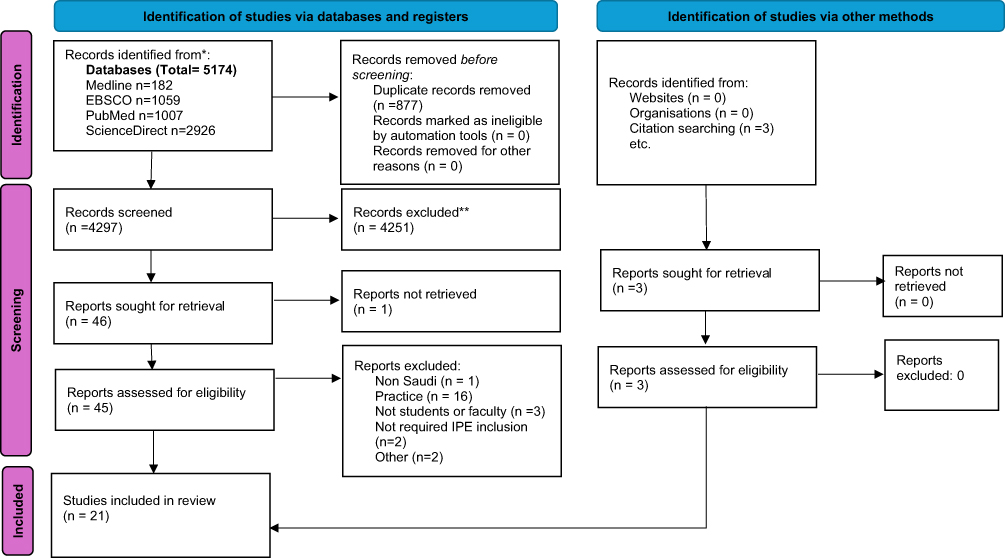 |
Figure 1 Search Flow Diagram. Notes: *Consider, if feasible to do so, reporting the number of records identified from each database or register searched (rather than the total number across all databases/registers). **If automation tools were used, indicate how many records were excluded by a human and how many were excluded by automation tools. PRISMA figure adapted from Rethlefsen ML, Kirtley S, Waffenschmidt S et al. PRISMA-S: An extension to the PRISMA Statement for Reporting Literature Searches in Systematic Reviews. Syst Rev. 2021;10(1):39.14 |
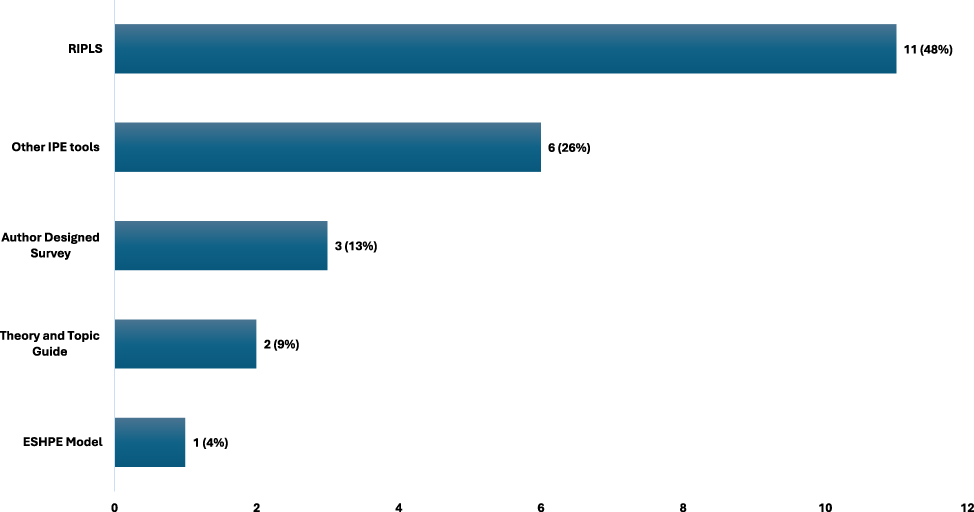 |
Figure 2 Tools Used in Saudi Arabia for Interprofessional Education-Related Research. Abbreviations: RIPLE, Readiness for Interprofessional Learning Scale; IPE, Interprofessional education; ESHPE, Essential Skills in Health Professions Education. |
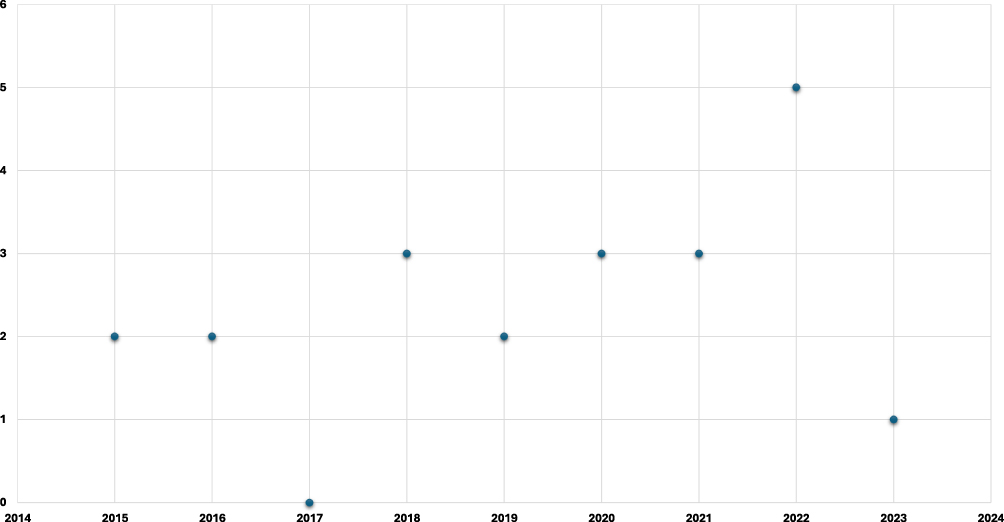 |
Figure 3 Number of publications in Saudi Arabia regarding interprofessional education. |
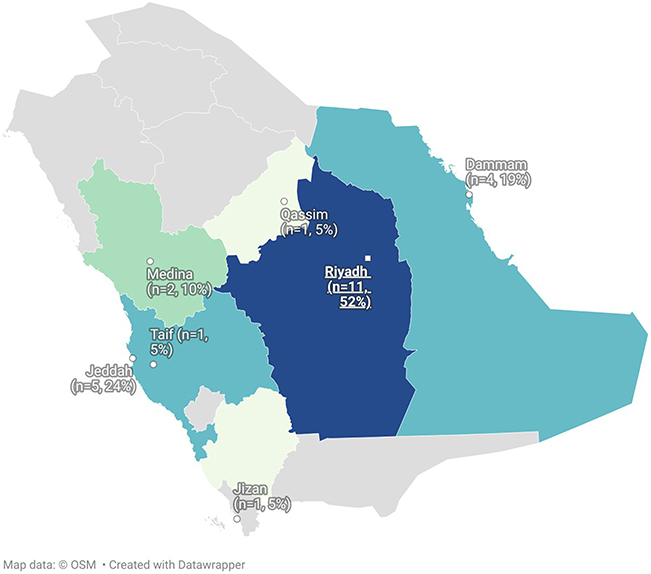 |
Figure 4 Interprofessional education research by city/region of Saudi Arabia. |
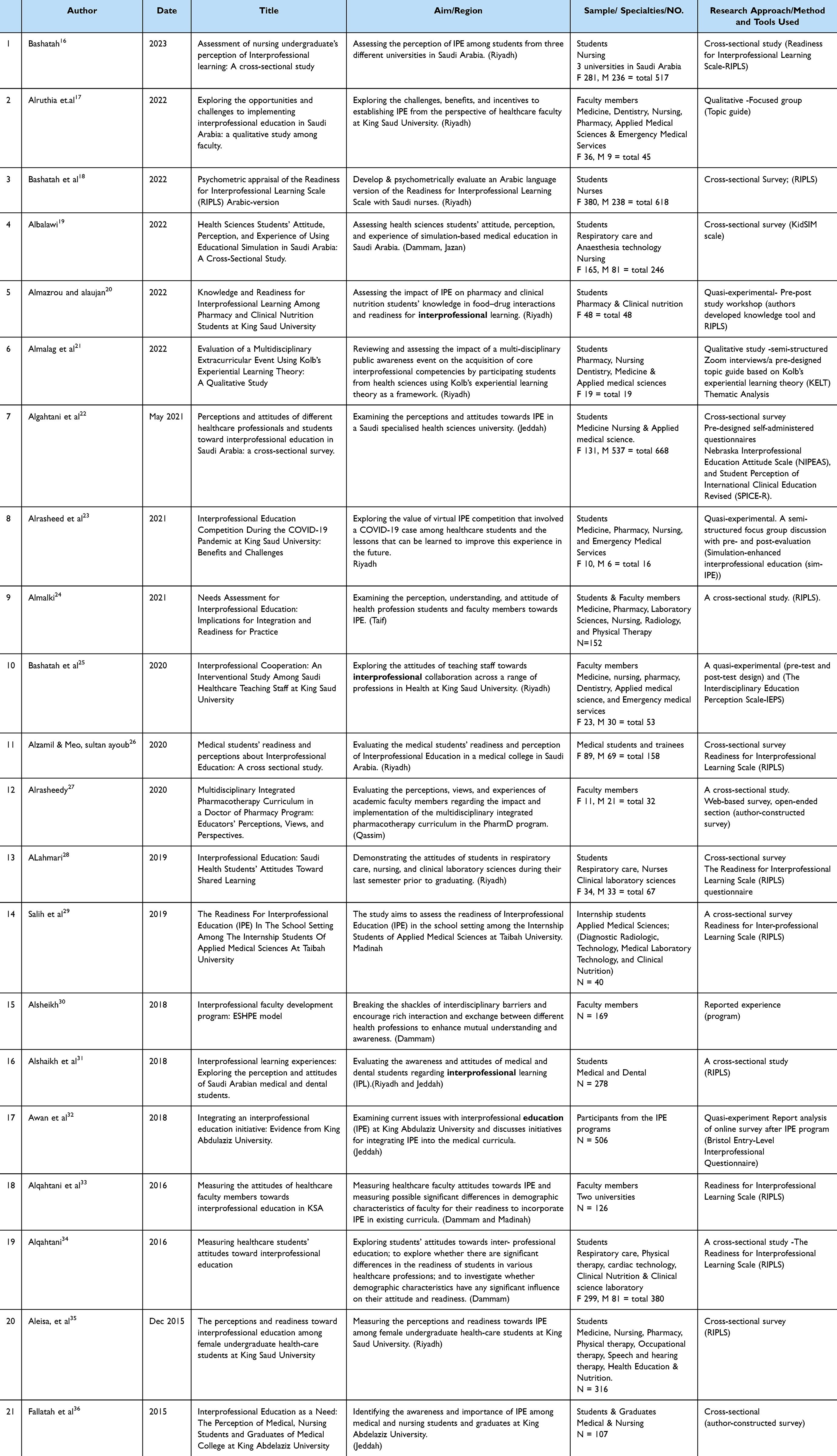 |
Table 1 Summary of Saudi Arabian Studies Reporting Interprofessional Education |
More than half of the published studies used a cross-sectional design (n=14, 67%). This was followed by quasi-experimental studies (n=4, 19%), qualitative studies (n=2, 10%), and finally, another study (n=1, 5%) in which a model was developed to enhance faculty awareness of IPE. Regarding geographical distribution, more than half of the studies focused on students or faculty in the Riyadh region (n=11, 52%), followed by Jeddah (n=5, 24%), Dammam (n=4, 19%), Madinah (n=2, 10%), Taif (n=1, 5%), Jizan (n=1, 5%), and Qassim (n=1, 5%) (see Figure 4).
Discussion
IPE plays a vital role in improving patient outcomes by enhancing the quality of healthcare delivered through the diverse skills and competencies of healthcare teams. Effective IPE fosters collaboration among healthcare professionals and ensures a more coordinated approach to patient care. This scooping review highlights the increasing focus on IPE in Saudi Arabia, with most studies assessing student readiness for interprofessional learning. Although the findings generally indicate a positive attitude towards IPE, some challenges still exist. One major challenge is the inconsistency in IPE implementation across institutions and regions. Most of the studies included in this review were conducted in the central region, suggesting an uneven distribution of IPE initiatives. This geographical distribution reduces the generalisability of the findings and emphasises the need for nationwide strategies to ensure a more structured and widespread implementation of IPE.
Several important conclusions about the perceptions and benefits of implementation were found in the scoping review of 21 articles on IPE in Saudi Arabia (see Table 2). Overall, instructors and students had a positive view of IPE, as they understood how it may improve interdisciplinary collaboration, teamwork, and holistic patient care. All healthcare students included in these studies demonstrated readiness for IPE, with no noticeable variance in readiness across professions. Improved knowledge, enhanced collaborative abilities, and a deeper understanding of professional roles and responsibilities are some of the advantages of IPE. However, challenges such as psychometric limitations in assessment tools (eg, the RIPLS-Arabic version), logistical barriers such as the time and effort required for curriculum integration, and the need for clearer role definitions among healthcare professionals have been identified. Incorporating IPE into the formal curriculum, adopting various teaching methods, encouraging faculty participation, and raising awareness of professional obligations are some recommendations for effective implementation. Furthermore, medical students and graduates agreed that IPE could improve both patient care and practitioner satisfaction. The review emphasises broad support for IPE while also emphasising the importance of structured approaches to overcome implementation challenges and optimise its educational and clinical benefits.
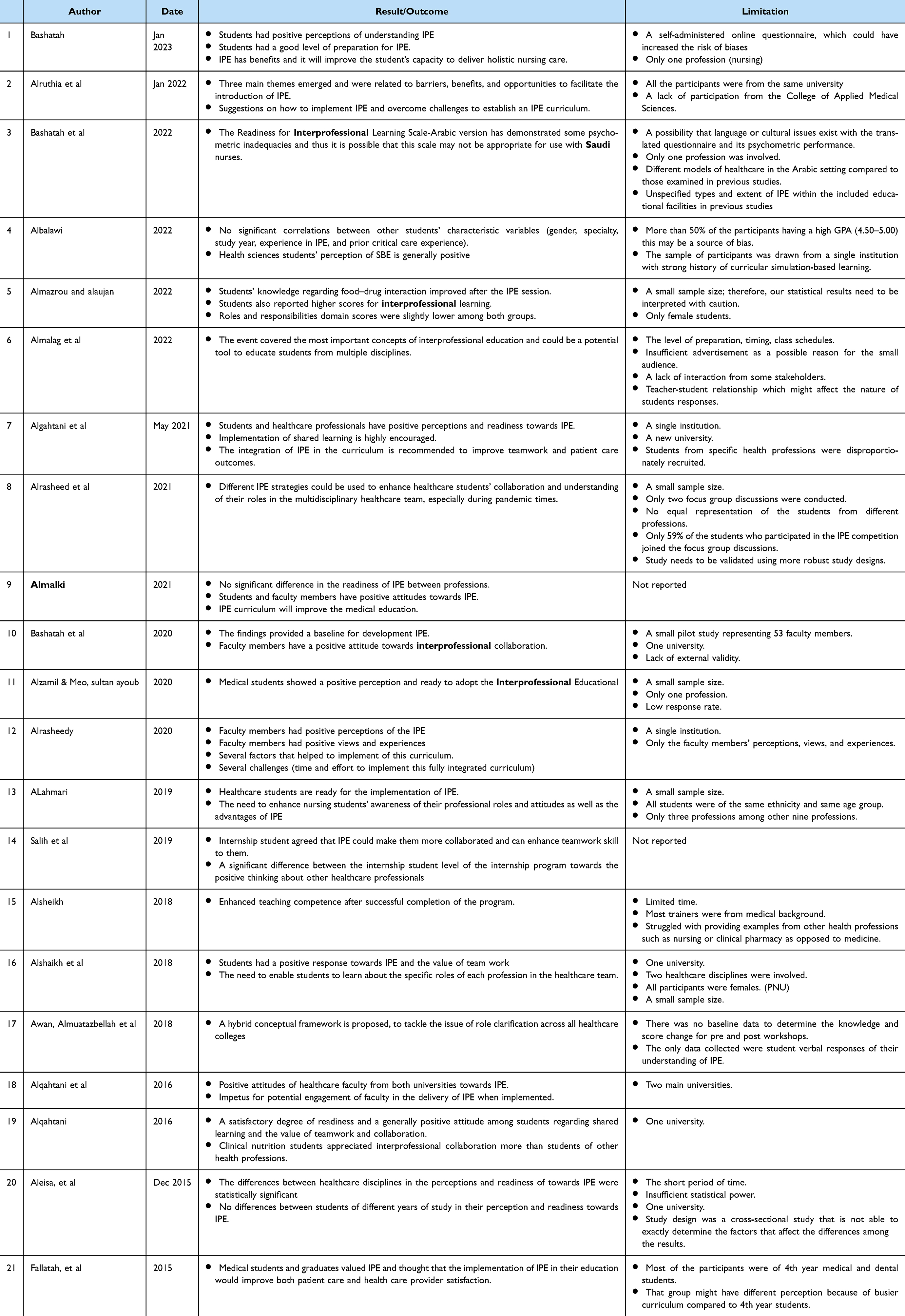 |
Table 2 Outcomes/Limitations |
The limitations and challenges of the included studies include small sample sizes, narrow sample characteristics (such as single-gender representation), focus on solo programs or a single university, methodological concerns (predominance of cross-sectional studies), data-related issues, time constraints, and limited external validity.
Conclusion
A significant barrier to IPE integration is the challenge of embedding it into existing curricula. Many healthcare programs operate independently, which makes it difficult to implement shared learning experiences. Addressing this requires institutional commitment, faculty development, and structured frameworks that promote interprofessional engagement beyond traditional coursework, such as extracurricular activities, clinical training, and faculty-led initiatives. Despite these challenges, this review highlights the promising opportunities for strengthening IPE in Saudi Arabia. IPE can be effectively integrated into healthcare education by addressing implementation barriers, fostering faculty collaboration, and expanding research beyond student readiness. This will cultivate a workforce better prepared for collaborative practice, ultimately enhancing healthcare delivery and improving patient outcomes.
Declaration of AI Use
AI (Gemini 2.5 Pro Preview) was used to paraphrase some paragraphs.
Data Sharing Statement
All data relevant to this study have been included in the article.
Author Contributions
All authors made a significant contribution to the work reported, whether that is in the conception, study design, execution, acquisition of data, analysis and interpretation, or in all these areas; took part in drafting, revising or critically reviewing the article; gave final approval of the version to be published; have agreed on the journal to which the article has been submitted; and agree to be accountable for all aspects of the work.
Acknowledgments
The authors would like to thank Hanan Abouzaid for her help in running the search and creating the search database.
Funding
There is no funding to report.
Disclosure
The authors report no conflicts of interest in this work.
References
1. Harden RM. AMEE guide No. 12: multiprofessional education: part 1 - effective multiprofessional education: a three-dimensional perspective. Med Teach. 1998;20(5):402–408. doi:10.1080/01421599880472
2. Learning together to work together for health. Report of a WHO study group on multiprofessional education of health personnel: the team approach. World Health Organ Tech Rep Ser. 1988;769:1–72.
3. WHO Expert Committee on Continuing Education for Physicians & World Health Organization. Continuing education for physicians: report of a WHO expert committee; 1973. Available from: https://www.caipe.org/resource/WHO-1973-Continuing-education-for-physicians.-Technical-Report-Series-No.-534.-.pdf.
4. Blue AV, Mitcham M, Smith T, Raymond J, Greenberg R. Changing the future of health professions: embedding interprofessional education within an academic health center. Acad Med. 2010;85(8):1290–1295. doi:10.1097/ACM.0b013e3181e53e07
5. Buring SM, Bhushan A, Broeseker A, et al. Interprofessional education: definitions, student competencies, and guidelines for implementation. Am J Pharm Educ. 2009;73(4):59. doi:10.5688/aj730459
6. Katoue MG, Cerda AA, García LY, Jakovljevic M. Healthcare system development in the Middle East and North Africa region: challenges, endeavors and prospective opportunities. Front Public Health. 2022;10:1045739. doi:10.3389/fpubh.2022.1045739
7. Zaher S, Otaki F, Zary N, Al Marzouqi A, Radhakrishnan R. Effect of introducing interprofessional education concepts on students of various healthcare disciplines: a pre-post study in the United Arab Emirates. BMC Med Educ. 2022;22(1):517. doi:10.1186/s12909-022-03571-9
8. Waller S, Östlundh L, El-Awaisi A. Interprofessional education in health professions education programmes in the Arab world: a scoping review protocol. BMJ Open. 2022;12(11):e065930. doi:10.1136/bmjopen-2022-065930
9. Fallatah HI. Introducing inter-professional education in curricula of Saudi health science schools: an educational projection of Saudi vision 2030. J Taibah Univ Med Sci. 2016;11(6):520–525. doi:10.1016/j.jtumed.2016.10.008
10. SV 2030 K of SA. Vision. Available from: https://www.vision2030.gov.sa/.
11. Havrlant D, Darandary A. Economic diversification under Saudi vision. King Abdullah Petroleum Studies Res Center. 2021. doi:10.30573/KS--2021-DP06
12. Al-Hashem A. Health education in Saudi Arabia: historical overview. Sultan Qaboos Univ Med J. 2016;16(3):e286–e292. doi:10.18295/squmj.2016.16.03.004
13. Munn Z, Peters MDJ, Stern C, Tufanaru C, McArthur A, Aromataris E. Systematic review or scoping review? Guidance for authors when choosing between a systematic or scoping review approach. BMC Med Res Methodol. 2018;18(1):143. doi:10.1186/s12874-018-0611-x
14. Rethlefsen ML, Kirtley S, Waffenschmidt S, et al. PRISMA-S: an extension to the PRISMA statement for reporting literature searches in systematic reviews. Syst Rev. 2021;10(1):39. doi:10.1186/s13643-020-01542-z
15. Parsell G, Bligh J. The development of a questionnaire to assess the readiness of health care students for interprofessional learning (RIPLS). Med Educ. 1999;33(2):95–100. doi:10.1046/j.1365-2923.1999.00298.x
16. Bashatah AS. Assessment of nursing undergraduate’s perceptions of Interprofessional learning: a cross-sectional study. Front Public Health. 2022;10:1030863. doi:10.3389/fpubh.2022.1030863
17. AlRuthia Y, Bashatah A, Batis AA, et al. Exploring the opportunities and challenges to implementing interprofessional education in Saudi Arabia: a qualitative study among faculty. J Interprof Care. 2023;37(1):47–57. doi:10.1080/13561820.2021.2004097
18. Bashatah AS, Alsufyani AM, Samarkandi OA, et al. Psychometric appraisal of the readiness for interprofessional learning scale (RIPLS) Arabic-version Arabic. Nurse Educ Today. 2022;108:105165. doi:10.1016/j.nedt.2021.105165
19. AlBalawi I, Alqahtani JS, Al Ghamdi SS, et al. Health sciences students’ attitude, perception, and experience of using educational simulation in Saudi Arabia: a cross-sectional study. Nurs Rep. 2022;12(3):620–628. doi:10.3390/nursrep12030061
20. Almazrou SH, Alaujan SS. Knowledge and readiness for interprofessional learning among pharmacy and clinical nutrition students at king Saud university. J Multidiscip Healthc. 2022;15:1965–1970. doi:10.2147/JMDH.S360608
21. Almalag HM, Saja M, Abouzaid HH, et al. Evaluation of a multidisciplinary extracurricular event using Kolb’s experiential learning theory: a qualitative study. J Multidiscip Healthc. 2022;15:2957–2967. doi:10.2147/JMDH.S389932
22. Algahtani H, Shirah B, Bukhari H, et al. Perceptions and attitudes of different healthcare professionals and students toward interprofessional education in Saudi Arabia: a cross-sectional survey. J Interprof Care. 2021;35(3):476–481. doi:10.1080/13561820.2020.1758642
23. Alrasheed A, Altulahi N, Temsah MH, et al. Interprofessional education competition during the COVID-19 pandemic at King Saud university: benefits and challenges. J Multidiscip Healthc. 2021;14:673–679. doi:10.2147/JMDH.S301346
24. Almalki A, Park YS, Tekian A. Needs assessment for interprofessional education: implications for integration and readiness for practice. Healthcare. 2021;9(4):411. doi:10.3390/healthcare9040411
25. Bashatah AS, Al-Ahmary KA, Al Arifi M, et al. Interprofessional cooperation: an interventional study among Saudi healthcare teaching staff at king Saud university. J Multidiscip Healthc. 2020;13:1537–1544. doi:10.2147/JMDH.S279092
26. Alzamil H, Meo SA. Medical students’ readiness and perceptions about Interprofessional education: a cross sectional study. Pak J Med Sci. 2020;36(4):693–698. doi:10.12669/pjms.36.4.2214
27. Alrasheedy AA. Multidisciplinary integrated pharmacotherapy curriculum in a doctor of pharmacy program: educators’ perceptions, views, and perspectives. J Med Educ Curric Dev. 2020;7:2382120519897279. doi:10.1177/2382120519897279
28. Alahmari MD. Interprofessional education: saudi health students’ attitudes toward shared learning. Adv Med Educ Pract. 2019;10:1061–1067. doi:10.2147/AMEP.S226477
29. Salih S, Gameraddin M, Kamal S, Alsadi M, Tamboul J, Alsultan K. The readiness for interprofessional education (IPE) in the school setting among the internship students of applied medical sciences at Taibah University. Adv Med Educ Pract. 2019;10:843–848. doi:10.2147/AMEP.S208870
30. Al-Sheikh MH. Interprofessional faculty development program: ESHPE model. J Interprof Educ Pract. 2018;12:29–32. doi:10.1016/j.xjep.2018.05.003
31. Al-Shaikh GK, Al-Madi EM, Masood J, et al. Interprofessional learning experiences: exploring the perception and attitudes of Saudi Arabian medical and dental students. Med Teach. 2018;40(sup1):S43–S48. doi:10.1080/0142159X.2018.1465180
32. Awan AA, Awan ZA, Alshawwa L, Tekian A, Park YS, Altyar A. Integrating an interprofessional education initiative: evidence from King Abdulaziz University. Med Teach. 2018;40(sup1):S15–S21. doi:10.1080/0142159X.2018.1464651
33. Al-Qahtani MF, Guraya SY. Measuring the attitudes of healthcare faculty members towards interprofessional education in KSA. J Taibah Univ Med Sci. 2016;11(6):586–593. doi:10.1016/j.jtumed.2016.10.001
34. Al-Qahtani MF. Measuring healthcare students’ attitudes toward interprofessional education. J Taibah Univ Med Sci. 2016;11(6):579–585. doi:10.1016/j.jtumed.2016.09.003
35. Al-Eisa E, Alderaa A, AlSayyad A, et al. The perceptions and readiness toward interprofessional education among female undergraduate health-care students at King Saud University. J Phys Ther Sci. 2016;28(4):1142–1146. doi:10.1589/jpts.28.1142
36. Fallatah HI, Jabbad R, Fallatah HK. Interprofessional education as a need: the perception of medical, nursing students and graduates of medical college at King Abdulaziz University. Creat Educ. 2015;6(2):248–254. doi:10.4236/ce.2015.62023
 © 2025 The Author(s). This work is published and licensed by Dove Medical Press Limited. The
full terms of this license are available at https://www.dovepress.com/terms
and incorporate the Creative Commons Attribution
- Non Commercial (unported, 4.0) License.
By accessing the work you hereby accept the Terms. Non-commercial uses of the work are permitted
without any further permission from Dove Medical Press Limited, provided the work is properly
attributed. For permission for commercial use of this work, please see paragraphs 4.2 and 5 of our Terms.
© 2025 The Author(s). This work is published and licensed by Dove Medical Press Limited. The
full terms of this license are available at https://www.dovepress.com/terms
and incorporate the Creative Commons Attribution
- Non Commercial (unported, 4.0) License.
By accessing the work you hereby accept the Terms. Non-commercial uses of the work are permitted
without any further permission from Dove Medical Press Limited, provided the work is properly
attributed. For permission for commercial use of this work, please see paragraphs 4.2 and 5 of our Terms.
Recommended articles

Nurse–Physician Inter-Professional Collaboration and Associated Factors at Public Hospitals in Dessie City, Amhara, Northeastern Ethiopia, 2021
Endris Y, W/Selassie M, Edmealem A, Ademe S, Yimam W, Zenebe Y
Journal of Multidisciplinary Healthcare 2022, 15:1697-1708
Published Date: 9 August 2022
Prevalence and Determinants of Knowledge of Musculoskeletal Disorders Among Healthcare Providers and Students in Saudi Arabia: A Cross-Sectional Study
Alrwaily M, Alanazi F
Journal of Multidisciplinary Healthcare 2022, 15:1789-1797
Published Date: 25 August 2022
Physician-Chef-Dietitian Partnerships for Evidence-Based Dietary Approaches to Tackling Chronic Disease: The Case for Culinary Medicine in Teaching Kitchens
Wood NI, Stone TA, Siler M, Goldstein M, Albin JL
Journal of Healthcare Leadership 2023, 15:129-137
Published Date: 24 July 2023
An Integrative Review of Opioid Stewardship: Optimizing Patient Care and Safety with a Multidisciplinary Approach
Adams N, Ott CA, Mullen CJ, Wang Y
Nursing: Research and Reviews 2024, 14:173-200
Published Date: 29 August 2024
Analyzing Trends in the Pain Fellowship Match – A Survey of Program Directors
Jueng J, Pritzlaff SG, Mehta N, Gulati A, Schatman ME, Wahezi SE, Day M, Durbhakula S, Pak DJ
Journal of Pain Research 2025, 18:2335-2341
Published Date: 7 May 2025