
Back to Journals » Journal of Multidisciplinary Healthcare » Volume 18
A Bibliometric Analysis of Chinese Medicine for Allergic Rhinitis
Authors Wang ZF  , Xiong J , Du YQ, Yang S, Xu HY
Received 24 June 2025
Accepted for publication 20 August 2025
Published 6 September 2025 Volume 2025:18 Pages 5603—5620
DOI https://doi.org/10.2147/JMDH.S549146
Checked for plagiarism Yes
Review by Single anonymous peer review
Peer reviewer comments 2
Editor who approved publication: Dr David C. Mohr
Zheng-Fan Wang,1 Jun Xiong,2 Yong-Qi Du,1 Shuang Yang,2 Hai-Yan Xu3
1Graduate School, Jiangxi University of Chinese Medicine, Nanchang, Jiangxi, People’s Republic of China; 2Department of Chinese Medicine, the Second Affiliated Hospital of Nanchang University, Nanchang, Jiangxi, People’s Republic of China; 3School Infirmary, Jiangxi University of Chinese Medicine, Nanchang, Jiangxi, People’s Republic of China
Correspondence: Jun Xiong, The Second Affiliated Hospital of Nanchang University, No. 1 Minde Road, Nanchang, Jiangxi, 330006, People’s Republic of China, Tel +8613970054277, Email [email protected]
Purpose: This study aims to assess the current research status of Chinese medicine research on treating allergic rhinitis (AR) using bibliometric methods, and to explore research hotspots and pinpoint future trends in this field.
Methods: Articles concerning Chinese medicine for AR in Web of Science Core Collection databases were searched from January 1, 2004, to May 31, 2024. VOSviewer 1.6.20 and CiteSpace 6.3.R1 software were used to conduct descriptive analysis, including publications, authors, countries, institutions, journals, cited journals, cited authors, cited references, and keywords from various angles.
Results: A total of 221 publications were included. Paper production has increased over the past 20 years, despite fluctuations. The most productive country is China, whose Chengdu University of Traditional Chinese Medicine is the institution with the highest number of papers. Germany’s Brinkhaus, Benno has the most papers in the discipline, while Bousquet J is the most influential author. Medicine is a journal that has the most research on Chinese medicine for treating AR, while Allergy has the most citations. The most frequently cited reference is a guideline concerning the diagnosis and treatment of AR. The most common keywords are allergic rhinitis, asthma, effect, prevalence, and Chinese herbal medicine.
Conclusion: This study assessed the research status of Chinese medicine for AR via bibliometric approaches from 2004 to 2024, which may be useful for researchers to identify hotspots and frontier trends in this field.
Keywords: bibliometrics, allergic rhinitis, Chinese medicine, CiteSpace, VOSviewer
Introduction
Allergic rhinitis (AR) is a chronic inflammatory disease of the nasal mucosa traditionally considered to be mediated by IgE after exposure to allergens. However, recent evidence suggests that non-IgE-mediated mechanisms also contribute to AR pathogenesis, such as novel inflammatory pathways mediated by T cells and histamine.1 The primary symptoms of AR include rhinorrhea, nasal congestion, nasal itching, sneezing, or itching in the eyes, ears, palate, and throat.2,3 At present, 400 million people worldwide are affected by AR.4 The approximate occurrence rate of AR ranges from 5% to 15% among children, and from 10% to 40% among adults.5 AR has become increasingly common and is a global health problem that seriously affects patients’ sleep, life, and work.6 Currently, the main treatments for AR include drug therapy, such as hormones, antihistamines, intranasal steroids, leukotriene receptor antagonists, immunotherapy, and even surgery.3,7–9 Although the above methods have shown positive results in the treatment and prevention of AR, these drugs require long treatment cycles and easily recur after the cessation of treatment. Not only do hormones have a certain degree of dependency, but according to a report on the treatment of AR with fluticasone furoate nasal spray, daily use of the spray was found to slightly decrease the growth rate of children.10 Furthermore, montelukast, a leukotriene receptor antagonist, can be used to treat AR and asthma, but it may cause neuropsychiatric disorders and allergic granulomatous angiitis.11 Second-generation antihistamines can cause toxicity in humans, with skin eruptions, headache, and somnolence being the most common adverse reactions.12
As a result, many patients have begun to explore complementary and alternative therapies, and CM is a popular choice. Because of its naturalness and gentleness, CM is often regarded as a safe and effective form of treatment and is trusted by the general public. Over the past 20 years, there have been an increasing number of studies on the treatment of AR with CM. These studies have shown that CM is safe and effective in treating allergic diseases. Yang et al demonstrated in a randomized controlled study that Bu-zhong-yi-qi-tang could be effective in treating AR by reducing the local inflammatory response and alleviating nasal symptoms.13 Daniela Adam et al demonstrated that acupuncture can regulate the immune system and suppress the increase in serum IgE levels, thereby improving quality of life and alleviating symptoms of seasonal AR.14
As an interdisciplinary science, bibliometrics is used for analyzing published information and metadata (eg abstracts, keywords) to demonstrate relationships between works via statistical data.15 It uses statistical indicators to weigh inputs to the field of research, including those from different countries, institutions, journals, or authors, and to predict trends or hotspots in the field.16 Recently, this research approach has been used to identify CM research trends, including lung cancer,17 heart failure,18 and nephrotic syndrome.19
VOSviewer and CiteSpace are the most extensively employed software tools in the field of bibliometrics. They are visualization and analysis software developed by Prof. Van Eck of Leiden University, the Netherlands, and Prof. Chao-Mei Chen of Drexel University, USA, respectively.20,21
To date, no extensive article utilizing bibliometric methods has been published on CM for AR. Thus, this research was based on the Web of Science Core Collection (WoSCC) of publications on CM for AR from 2004 to 2024 and used two widely used bibliometric tools, namely CiteSpace and VOSviewer, to explore the research hotspots and frontiers.
Materials and Methods
Data Source and Search Strategy
All studies were extracted from the Web of Science Core Collection (WoSCC) database from January 1, 2004, to May 31, 2024. The search strategy was as follows: (TI=(Allergic Rhinitis OR Rhinitis, Allergic OR Allergic Rhinitides OR Rhinitides, Allergic)) AND TS=(Acupoint OR Acupuncture OR Needle OR Moxibustion OR Massage OR Cupping OR Bloodletting OR Auricular point OR Acupuncture analgesia OR Traditional Chinese Medicine OR Chinese Medicine OR Chinese Herb OR Chinese Herbal Drug). In total, 221 articles were retrieved, and the search procedure is meticulously presented in Figure 1. The studies that were eligible for consideration were exclusively those published in English and were limited to only articles and review articles. All retrieved studies that met inclusion criteria and did not meet the exclusion criteria were independently screened by two researchers (Zheng-Fan Wang and Yong-Qi Du). Any controversial articles were resolved through consensus reached by a third researcher (Jun Xiong). We manually excluded editorial material, meeting abstract, retracted publication, early access, letter, and articles not related to this research topic.
 |
Figure 1 Flow chart of the literature screening process. |
Bibliometric Analysis
We used Excel to manage the data and graph the annual trend of publications. Productivity is measured by the gross number of publications, and impact is represented by the gross number of citations.22 All the selected studies were downloaded from the “Plain Text File” and imported into CiteSpace 6.3.R1 and VOSviewer1.6.20 for further bibliometric analysis, including: (1) descriptive statistical analysis of publications for the annual number of publications, authors, institutions, countries, and journals; (2) co-cited network analysis for co-cited authors, journal and references; (3) co-occurrence, cluster, and time-line analysis of keywords; and (4) citation burst analysis for keywords and references.
For the CiteSpace analysis, the parameters were set as follows. The time span was from January 2004 to May 2024, with the time slice set to once per year. The “term source” is selected as all selections, and the scale factor k is set at 25. Additionally, the LLR algorithm is applied during the clustering of the graph, and the pathfinder and pruning sliced networks are used. In VOSviewer, the upper limit for the quantity of documents of a single source is configured as 25.
Chart Interpretation
Each node represents an element, with its diameter size indicating the frequency of occurrence. The varying colors of the nodes signify distinct years, while the links between nodes symbolize the relationships between two distinct elements. The greater the thickness of a link, the stronger the bond it represents.
Result
Annual Trends in the Volume of Publications
Over the preceding two decades, a cumulative total of 221 publications concerning CM for AR have been released, which included 163 articles (73.76%) and 58 review articles (26.24%). The yearly count of publications is shown in Figure 2. During the decade spanning from 2004 to 2014, production was sluggish, averaging fewer than 8 articles annually. However, from 2014 to 2024, despite experiencing some variations, the overall output witnessed a marked increase. Notably, the highest number of publications was in 2022 (28 publications), and the lowest number of publications was in 2005 (0 publications).
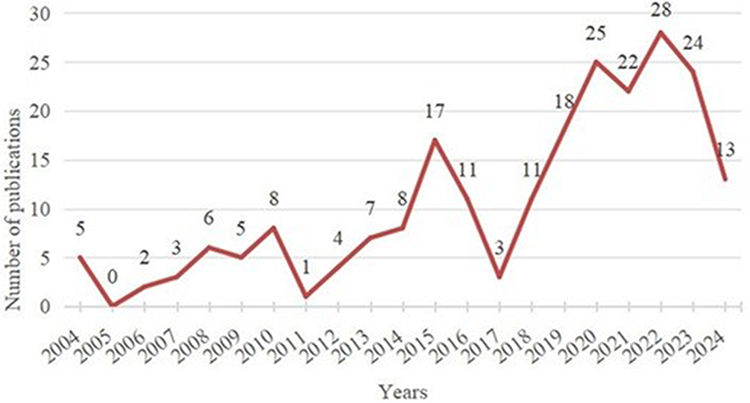 |
Figure 2 The trend map of annual publications from 2004 to 2024. |
Analysis of Countries/Regions
An analysis diagram of countries/regions was generated by CiteSpace, which is shown in Figure 3, and 21 nodes and 26 links were presented in the network. In total, a total of 21 countries/regions have contributed to the publications on CM in the treatment of AR. The top 10 countries/regions in terms of publications and centrality are shown in Table 1. The highest number of articles were published by China (153 publications, 69.23%), followed by Taiwan (17 publications, 7.69%) and South Korea (17 publications, 7.69%). China (0.39) has the highest centrality, followed by Germany (0.26), which shows that China and Germany play a significant role in intercountry cooperation.
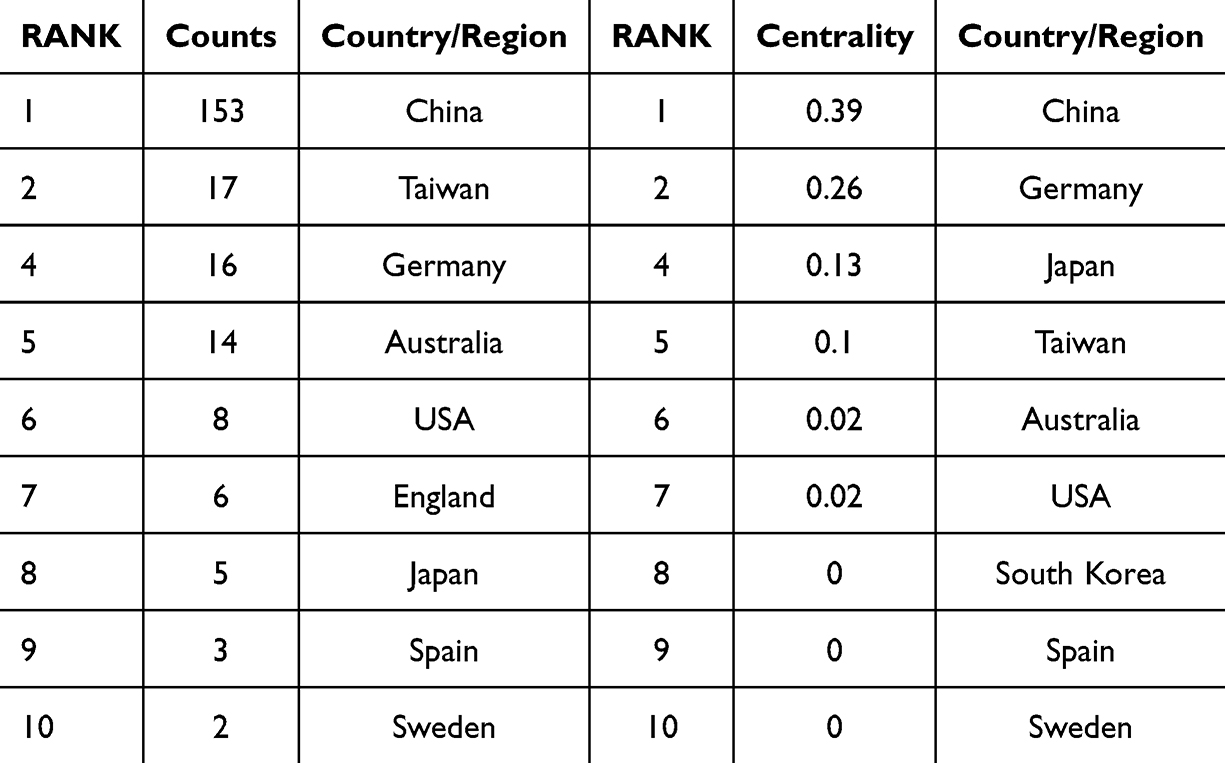 |
Table 1 Top 10 Countries/Regions Related to CM in AR Research Publications From 2004 to 2024 |
 |
Figure 3 Map of countries/regions related to CM for AR. |
Analysis of Institutions
The network analysis diagram of institutions is depicted in Figure 4 with 198 nodes, 423 edges, and a density of 0.0217, indicating that there were 198 institutions producing research regarding CM in the treatment of AR. Table 2 displays the top 10 institutions in terms of centrality and number of publications. Publications from Chengdu University of Chinese Medicine (23 publications) are at the top of the list. Yet Beijing University of Chinese Medicine (22 publications) published just one fewer article than Chengdu University of Chinese Medicine. And Beijing University of Chinese Medicine has the highest centrality (0.4), followed by Kyung Hee University (0.34), demonstrating that Beijing University of Chinese Medicine plays a crucial role in the treatment of AR in CM.
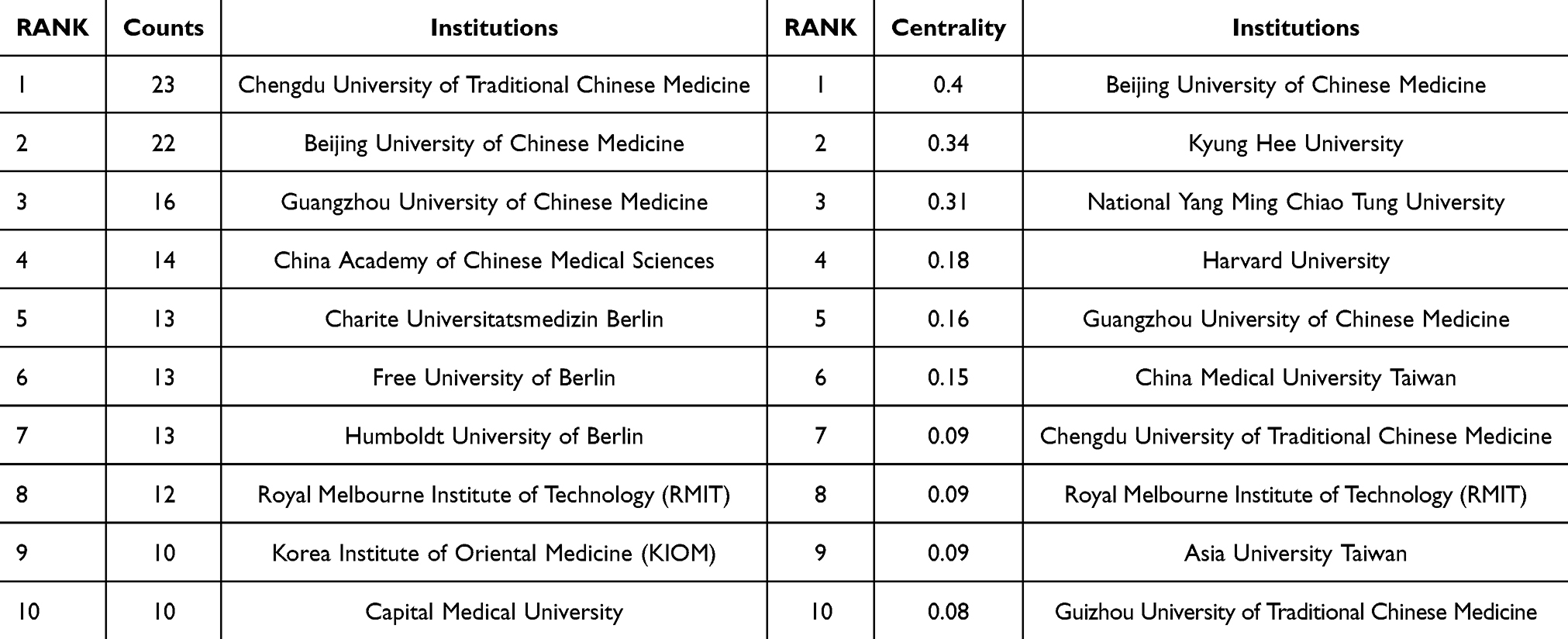 |
Table 2 Top 10 Institutions Related to CM in AR Research Publications From 2004 to 2024 |
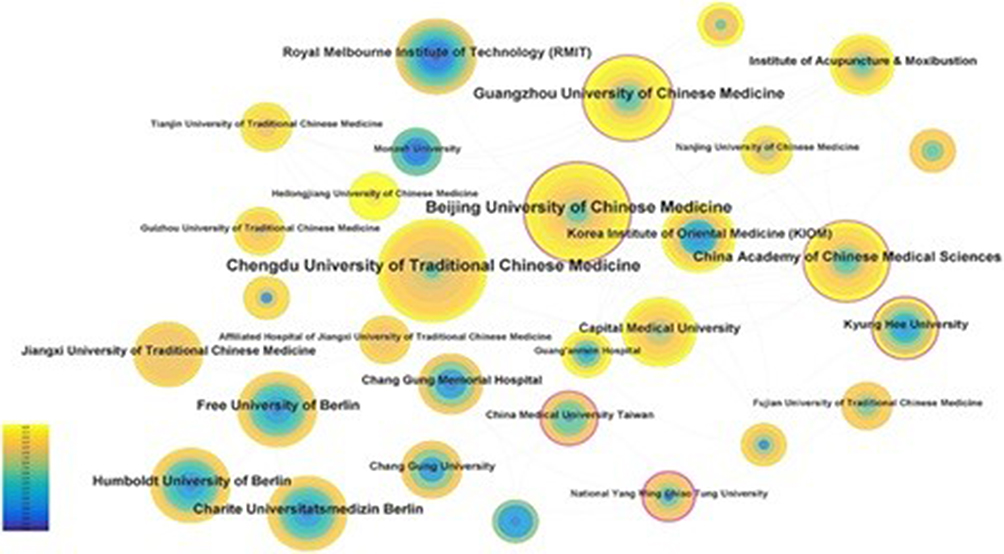 |
Figure 4 Map of institutions related to CM for AR. |
Analysis of Authors and Co-Cited Authors
Figure 5 depicts the network analysis map of authors with 417 nodes, 802 edges, and a density of 0.0092. An author is represented by a node in the network graph of authors, and the size of a node indicates how many articles the author has published. Hence, a total of 417 authors published studies on CM in the treatment of AR from 2004 to 2024. The above data demonstrates that the vast majority of collaborations among researchers are predominantly intra-team focused, with limited instances of inter-team collaboration. Table 3 lists the top 10 authors who contributed articles in the domain. Brinkhaus, Benno is regarded as the most vibrant author in the field with a frequency of 13 articles, followed by Chen, Sheng, and Zhang Qinxiu. In accordance with Price’s square root law,23 authors with three or more publications in the research area are regarded as core authors. After careful computation, the number of core authors in this field accounted for only 7.2% (30 authors) of the total number of articles (417 authors), suggesting that researchers in CM treatment of AR are relatively dispersed and have not developed a core group of authors.
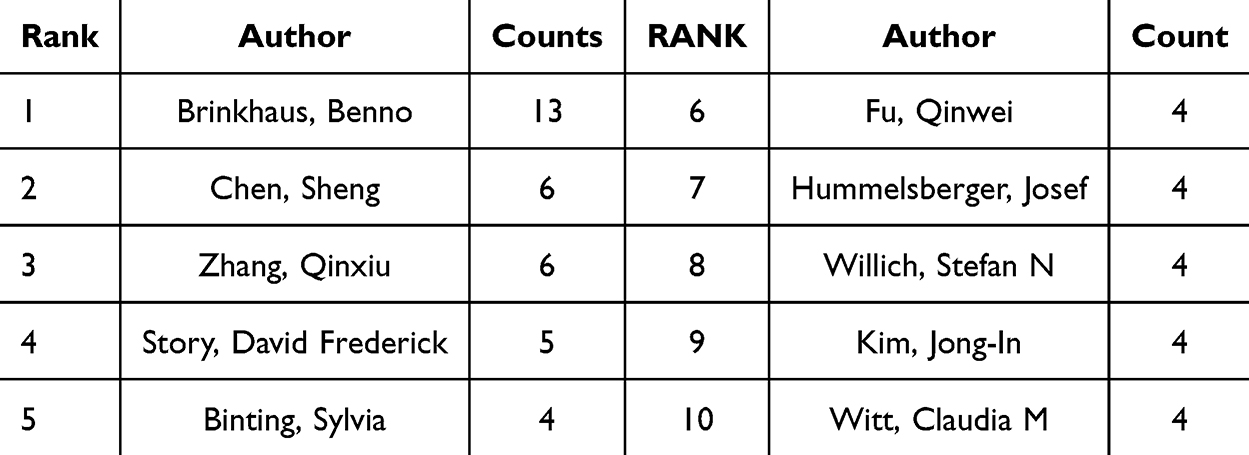 |
Table 3 Top 10 Authors Related to CM in AR Research Publications From 2004 to 2024 |
 |
Figure 5 Map of authors related to CM for AR. |
Cited authors is the phenomenon where two or more authors are co-cited by other literature.24 Among all the co-cited authors, six have achieved more than 50 joint citations. The top 10 cited authors are shown in Table 4. Bousquet, J (146 citations) is the top ranked author in terms of citations, paying attention to asthma and AR research, followed by Xue, CCL (103 citations), and Brinkhaus, B (95 citations). Furthermore, we screened all authors with more than 15 co-citations and mapped the co-citation network visualization and density visualization diagram via VOSviewer (Figures 6 and 7). In network Visualization map, nodes represent cited authors, with size proportional to citation frequency. Density visualization map replaces the node with color, where high-density zones highlight author concentration areas with high citation counts, and low-density zones show sparsely cited authors. We observed close collaboration between different co-cited authors, such as Bousquet, J, Seidman, MD and Xue CCL.
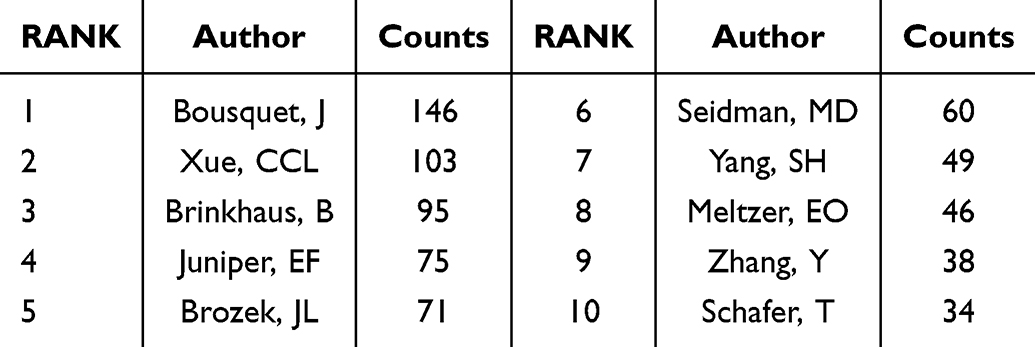 |
Table 4 Top 10 Co-Cited Authors Related to CM in AR Research Publications From 2004 to 2024 |
 |
Figure 6 Network visualization map of co-cited authors related to CM for AR. |
 |
Figure 7 Density visualization map of co-cited authors related to CM for AR. |
Analysis of Co-Cited References
A co-cited reference occurs when one reference cites two other references.14 The network analysis map of the co-cited references, which included a total of 567 references, was plotted via CiteSpace software, as shown in Figure 8. The top 5 co-cited references in terms of citation frequency are shown in Table 5. The article published in Allergy Asthma & Immunology Research by Cheng L in 2018 had the highest number of co-citation,25 followed by the articles published in the Journal of Allergy And Clinical Immunology by Brozek JL in 2017,26 and the article published in Nature Reviews Disease Primers by Bousquet J in 2020.27 In the meantime, among these five references, three are focused on AR guidelines, indicating that research designs generally follow guidelines, and uses them as the foundation for implementation.
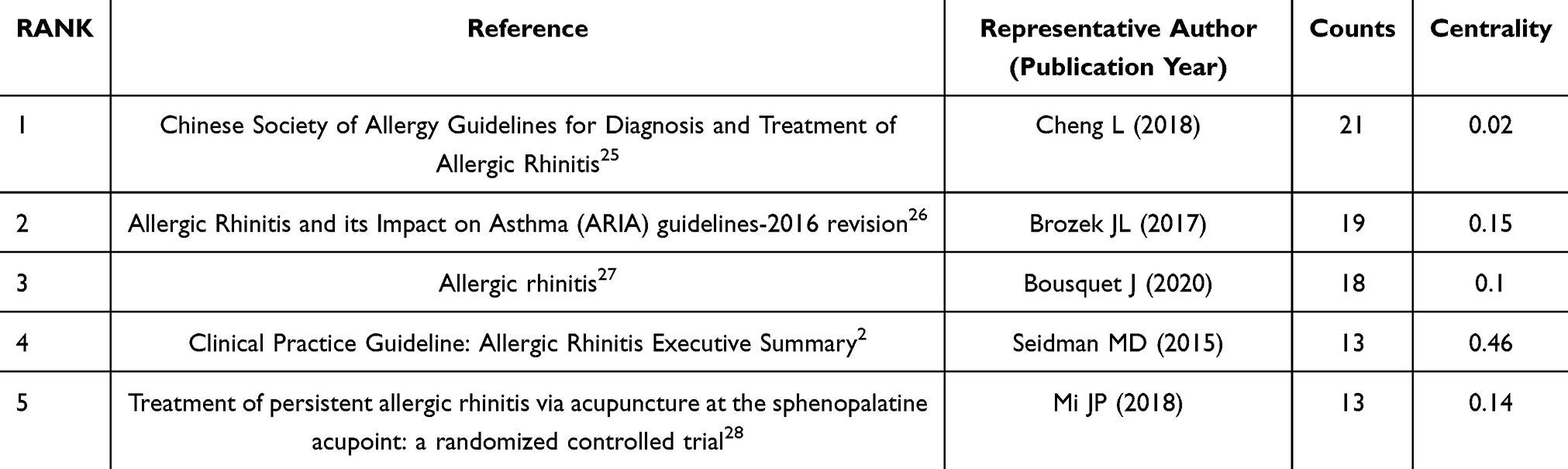 |
Table 5 Top 5 Co-Cited References Related to CM for AR From 2004 to 2024 |
 |
Figure 8 Map of co-cited references related to CM for AR. |
The top 15 most cited references with the strongest citation bursts are shown in Figure 9.2,25–27,29–39 The article titled “Allergic rhinitis” written by Bousquet J has the highest citation centrality from 2022 to 2024, introducing epidemiology, mechanisms, diagnosis, and treatment of AR and so on.27 In addition, Seidman, MD published a clinical practice guideline paper on AR in Otolaryngology-Head and Neck Surgery that focused on providing effective recommendations for the treatment of AR.2
 |
Figure 9 Top 15 references with the strongest citation bursts. |
Analysis of Journals and Co-Cited Journals
From 2004 to 2024, a cumulative total of 221 articles pertaining to the utilization of CM in the management of AR have been published in 96 different journals. As shown in Table 6, the most prolific journal is Medicine, with 24 articles, followed by Evidence-based Complementary and Alternative Medicine, with 16 articles, and Trials, with 15 articles. We subsequently employed VOSviewer to generate an overlay visualization map of journals related to CM for AR shown in Figure 10, where the size of the nodes represents the number of journal publications, and the color signifies the publication year, with hues closer to yellow indicating later publication years. As shown in Figure 10, recently, there has been a notable increase in the number of articles in this field published in Medicine.
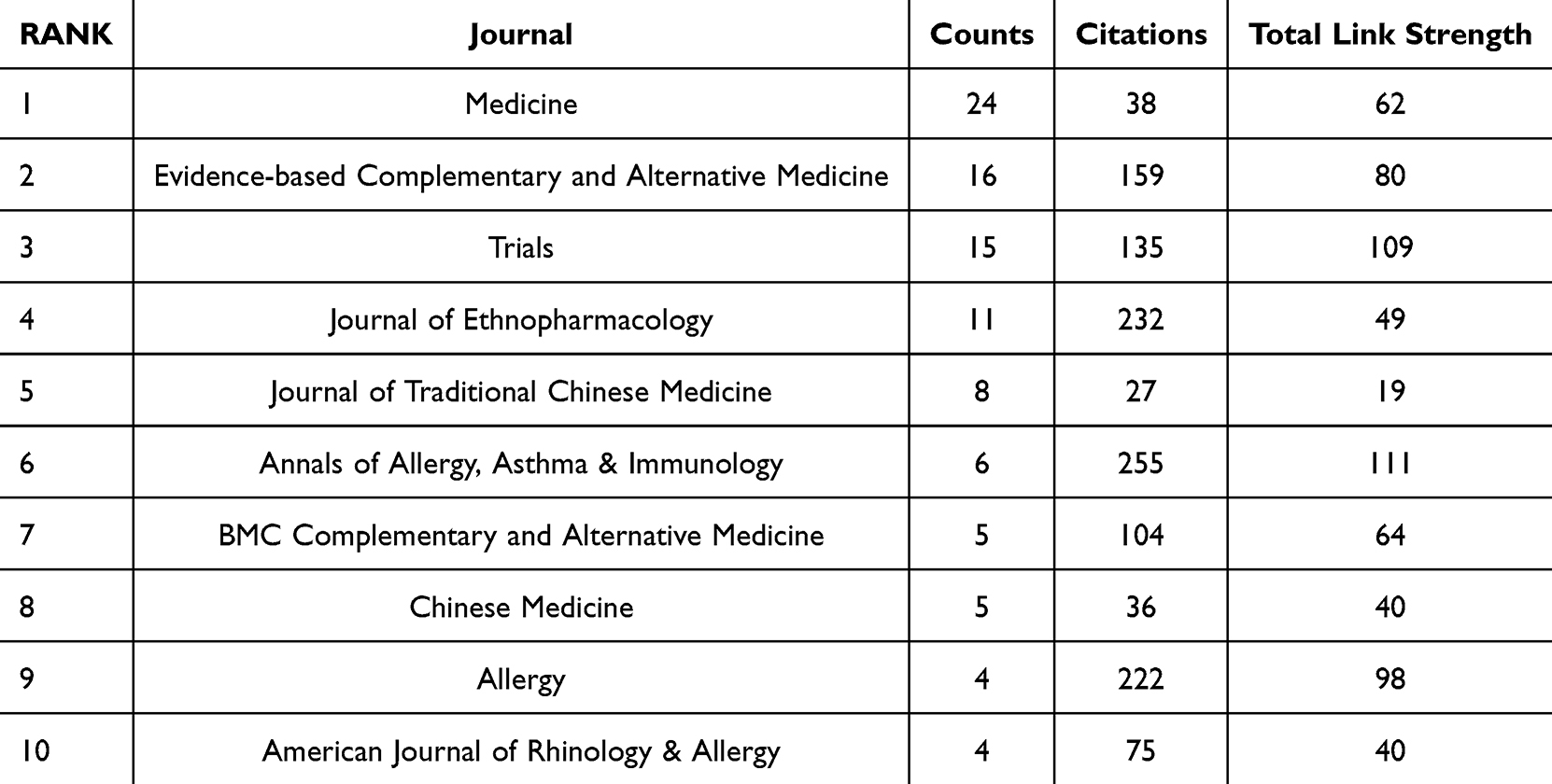 |
Table 6 Top 10 Journals Related to CM for AR From 2004 to 2024 |
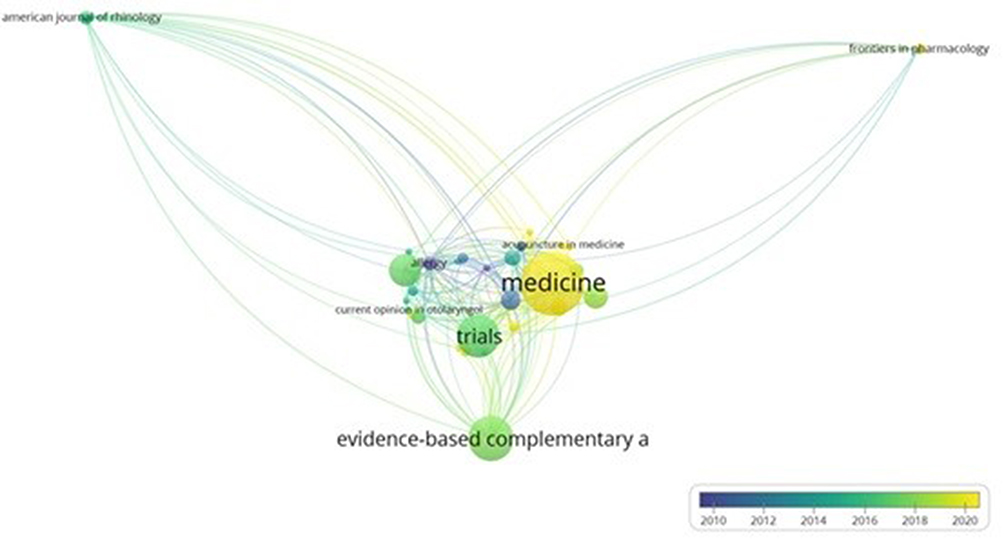 |
Figure 10 Overlay visualization map of journals related to CM for AR. |
A cited journal is a journal that has been cited or referenced by other literature in the academic literature. It is one of the most important indicators of academic impact and the value of a journal. A network diagram of co-cited journals is presented in Figure 11. A journal is represented as a node, and the size of the node indicates how many citations it has received. The larger the node, the greater the influence of the journal becomes, as evidenced by a higher number of citations, thereby occupying a more prominent position among researchers exploring the treatment of AR via CM. The top 10 co-cited journals are shown in Table 7. Allergy has the most citations for AR research (182 citations), followed by the Journal of Allergy and Clinical Immunology (177 citations) and the Annals of Allergy Asthma & Immunology (118 citations). The latter two journals focus on research related to immunology.
 |
Table 7 Top 10 Co-Cited Journals Related to CM for AR From 2004 to 2024 |
 |
Figure 11 Network visualization map of co-cited journals related to CM for AR. |
Analysis of Keywords
Keywords, as refined identifiers, can highly summarize the research methods, research objects, and core issues in academic papers.40 Via co-occurrence analysis of keywords, we can determine prevalent themes in the CM for the AR domain. As shown in Figure 12, we used CiteSpace software to plot the keyword co-occurrence graph, which shows 349 nodes and 1501 links. A keyword is represented as a node, and the size of the node indicates the frequency of the occurrence frequency of the keyword in this field. The larger the node, the more frequently the keyword appears. Obviously, it can be directly seen that “allergic rhinitis” has the highest occurrence frequency. The top 10 keywords in terms of co-occurrence frequency and centrality are shown in Table 8. The most frequently used keywords are “allergic rhinitis (138)”, “asthma (63)”, “impact (60)”, “prevalence (37)”, and “Chinese herbal medicine (29)”. And the highest centrality is “asthma (0.28)”, suggesting that asthma is closely related to AR in the AR research field.
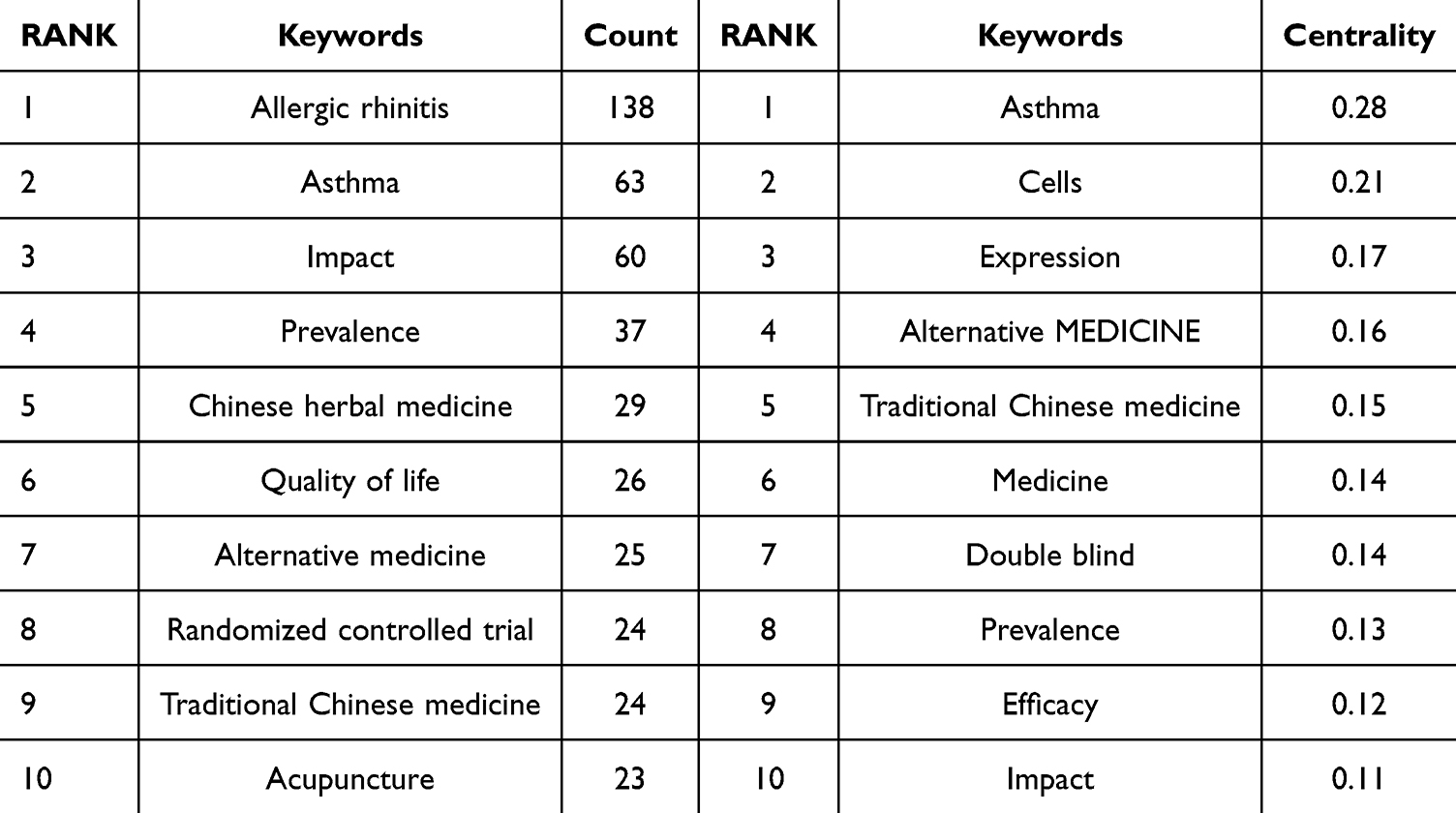 |
Table 8 Top 10 Co-Occurrence Keywords Related to CM for AR From 2004 to 2024 |
 |
Figure 12 Map of keyword co-occurrences related to CM for AR. |
The clustering map of keywords offers a panoramic view of the study landscape within the domain, whereas the timeline map of the keywords clustering dynamically shows the temporal evolution of the most prevalent keywords within each cluster, rooted in their interconnected and evolving relationships.41 The cluster map of co-occurrence keywords is shown in Figure 13. We obtained a total of 8 clusters, which are “meta-analysis”, “homeopathy”, “acupoint application”, “herbal medicine”, “network pharmacology”, “Chinese medicine”, “centipeda minima”, and “body constitution”. The cluster map drawn with CiteSpace has a modularity Q and silhouette S. In general, the modularity Q value falling within the range of [0, 1] and exceeding 0.3 signifies the importance of the structured associations that were plotted. A mean silhouette S value surpassing 0.7 indicates highly efficient and persuasive clustering. Conversely, when the mean silhouette S value exceeds 0.5, the clustering is typically regarded as acceptable or reasonable.42 As shown in Figure 13, the modularity Q is 0.5471 and the silhouette S is 0.8132>0.7. Thus, we can consider this clustering to be highly reliable. On the basis of the clusters, we draw a time-line map of keywords related to CM for AR, which is listed in Figure 13. According to Figure 14, keyword clusters such as “meta-analysis”, “homeopathy”, and “acupoint application” appeared in 2004 and continue through 2024. These findings suggest that these findings are closely related to studies on the prevention and treatment of AR via CM in the past 20 years and need to be further explored.
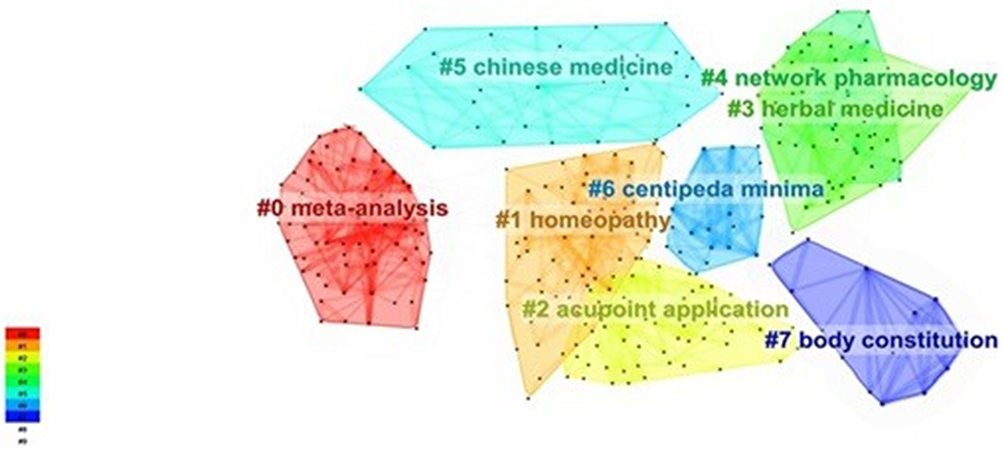 |
Figure 13 Cluster map of co-occurrence keywords related to CM for AR. |
 |
Figure 14 Time-line map of keywords related to CM for AR. Notes: The “#” symbol denotes cluster IDs (eg, #0 = largest cluster) for Figures 13 and 14. |
Burst keywords refer to words with a sudden increase in citation frequency in a very short period, and these words are often regarded as weathervanes of emerging academic fields or research hotspots.43 We plotted the top 15 keywords with the strongest citation bursts shown in Figure 15. The research hotspots in this area are centered on “Chinese herbal medicine”, followed by “complementary”. In recent years, the burst keywords “systematic review”, “rhinoconjunctivitis”, and “management” have received increasing attention and are considered to be at the forefront of research on CM in the treatment of AR.
 |
Figure 15 Top 15 keywords with the strongest citation bursts. |
Discussion
This study was a bibliometric analysis of 221 articles published between 2004 and 2024 on the use of CM in the treatment of AR, providing a new view of the trend in AR research. Despite the limitations of this study, it adequately demonstrates the global trend of CM for AR and presents it in the shape of a visualized knowledge map. According to the trends of annual publication outputs, research on CM for the treatment of AR has been broadly divided into two phases: a period of slow growth in the past (2004–2014) and a period of significant growth (2014–2024). Notably, publications peaked in number (28 articles) in 2022.
The country with the highest number of articles is China, whose Chengdu University of Traditional Chinese Medicine has the greatest contribution to the research field of treating AR with Chinese medicine. The country with the highest centrality was China, followed by Germany. Notably, 50% of the top 10 institutions are from China, and 30% are from Germany. The collaboration between China and Germany in this domain remains tight, and both nations have been crucial in advancing the development of CM in the treatment of AR.
Authors play a vital role in advancing this discipline. While China is by far the most published country, surprisingly, Brinkhaus Benno, hailing from Germany, stands as the most prolific author in this particular field of study. A pragmatic random trial by Brinkhaus, Benno et al suggested that acupuncture can improve the symptoms of AR.33 The most co-cited author is Bousquet, J, who focuses on AR and asthma. A study by Bousquet, J et al suggested that AR and asthma are closely related and are common health problems that cause major diseases and disabilities worldwide. Most asthma patients have AR, and AR usually aggravates asthma.6
According to Table 5, the most co-cited reference is a guideline on the diagnosis and treatment of AR written by Cheng L in 2018.25 The paper published by Bousquet J is not only the most highly co-cited article in terms of citation intensity, but it has also begun to be cited increasingly in the last 3 years, suggesting that this article may be increasingly important for AR research. Notably, among the top five most frequently co-cited references, up to 60% of the articles are guidelines on AR. These guidelines provide clinicians with authoritative and comprehensive information on the diagnosis, treatment, and management strategies of AR. Based on the latest scientific research and clinical practices, they aim to assist doctors in more effectively identifying, evaluating, and treating patients with AR, ultimately improving their quality of life.
The main findings of scientific research are frequently published in academic journals, and information about the main journals in a field can be found by researchers by analyzing the distribution of journal sources.41 As shown in Table 6 and 7, Medicine is the most widely published journal, with Evidence-based Complementary and Alternative Medicine and Trials following closely behind. And Allergy has the most citations for AR research, followed by the Journal of Allergy and Clinical Immunology and the Annals of Allergy Asthma & Immunology.
The keyword that is used most frequently is “allergic rhinitis”, followed by “asthma”, which suggests a research focus in the field of AR and asthma. “Asthma” is the keyword with the highest centrality. This could be due to the reality that AR is a frequent comorbidity of asthma and that AR and asthma share a similar pathogenesis.44 As shown in the time-line map of keywords, in recent years, we know that attention has been increasingly directed towards the keywords with the strongest citation bursts, such as “systematic review”, “rhinoconjunctivitis”, and “management”, which are considered to be at the frontier of research investigating the use of CM in treating AR. According to Figure 13, we obtained a cluster map of co-occurrence keywords. The largest clustering is the “meta-analysis”, followed by “homeopathy”, both spanning the period from 2004 to 2024. This suggests that these two clusters have been the focus of research in the field. As described in the previous section on keyword bursts, complementary therapies burst with the greatest intensity, leaving aside the subject of CM. Complementary therapies are a method of treatment and diagnosis that is not part of traditional medicine, but that complements and supports it, including mind-body medicine, distant healing, massage, tuina and tai chi, homeopathy, ginseng, and dietary supplementation.45 Wagner, JG et al reported that γ-tocopherol (γT), the primary form of dietary vitamin E, can prevent airway eosinophilia and mucous cell hyperplasia in experimentally induced AR and asthma.46 Acupuncture therapy, as a complementary therapy, is widely used to treat AR. Through precise stimulation of acupuncture points, it effectively relieves allergy symptoms such as nasal congestion and runny nose and promotes nasal health. As one study showed, patients with AR had significant reductions in several nonspecific pro-inflammatory cytokines in the nose and nasal symptom scores after receiving acupuncture.47
Strengths and Limitations
Drawing upon the scrutiny of 221 articles within the WoSCC database, spanning two decades of CM interventions for AR, integrated with visualization clustering insights from CiteSpace and VOSviewer, we embarked on pioneering visual bibliometric analysis in this domain. This endeavor not only highlights the foremost nations, institutions, and authors that have shaped the landscape of the past two decades but also offers an impartial portrayal of contemporary research dynamics and emerging trends, thereby enriching the arsenal of references and foundations for future scholarly endeavors.
Limitations of this study include the lack of comprehensiveness of the data, as we only considered publications in the Web of Science Core Collection database and did not include data from Chinese databases, as well as other English databases. In addition, we discarded types of articles such as letters, meeting abstract, and editorial material, and selected only “articles” and “review articles” for analysis. Future research can further add to the relevant literature records by incorporating larger datasets.
Conclusion
We explored the hotspots and frontiers of previously published papers on CM for AR by analyzing 221 articles from 2004 to 2024 using two software visualization tools: CiteSpace and VOSviewer. Overall, the body of literature on CM in AR has grown. Current research hotspots focus on “allergic rhinitis”, “asthma”, and “complementary and alternative therapies”. And “systematic review”, “rhinoconjunctivitis”, and “management” may be future research directions for CM in AR. In conclusion, our findings provide a solid foundation for future researchers and highlight effective research directions that warrant further exploration.
Abbreviations
AR, Allergic rhinitis; CM, Chinese medicine; WoSCC, Web of Science Core Collection.
Data Sharing Statement
The data in this paper can be obtained from the corresponding author.
Acknowledgments
The authors would like to thank Professor Chen Chaomei and Professor Nees Jan van Eck, for the free use of CiteSpace and VOSviewer.
Author Contributions
All authors made a significant contribution to the work reported, whether that is in the conception, study design, execution, acquisition of data, analysis and interpretation, or in all these areas; took part in drafting, revising or critically reviewing the article; gave final approval of the version to be published; have agreed on the journal to which the article has been submitted; and agree to be accountable for all aspects of the work.
Funding
This work was supported by the 2025 In-House Funded Clinical Research Project of the Second Affiliated Hospital of Nanchang University (2024efyB01); The major Scientific and Technological Research Project of Jiangxi Province (20223AAF01007); Jiangxi Provincial Postdoctoral Research Project Merit Funding (2020KY08) and Jiangxi Provincial Postdoctoral Daily Funding Project (2021RC13).
Disclosure
The authors have no conflicts of interest to declare in this work.
References
1. Iwasaki N, Matsushita K, Fukuoka A, et al. Allergen endotoxins induce T-cell-dependent and non-IgE-mediated nasal hypersensitivity in mice. J Allergy Clin Immunol. 2017;139(1):258–268. doi:10.1016/j.jaci.2016.03.023
2. Seidman MD, Gurgel RK, Lin SY, et al. Clinical practice guideline: allergic rhinitis executive summary. Otolaryngol-Head Neck Surg. 2015;152(2):197–206. doi:10.1177/0194599814562166
3. Siddiqui ZA, Walker A, Pirwani MM, et al. Allergic rhinitis: diagnosis and management. Br J Hosp Med. 2022;83(2):1–9. doi:10.12968/hmed.2021.0570
4. Pawankar R. Allergic diseases and asthma: a global public health concern and a call to action. World Allergy Organ J. 2014;7(1):12. doi:10.1186/1939-4551-7-12
5. Wang M, Zhao N, Wang C, et al. Immunomodulatory properties of mesenchymal stem cells: a potential therapeutic strategy for allergic rhinitis. Allergy. 2023;78(6):1425–1440. doi:10.1111/all.15729
6. Bousquet J, Khaltaev N, Cruz AA, et al. Allergic rhinitis and its impact on asthma (ARIA) 2008 update (in collaboration with the world health organization, GA (2) LEN and AllerGen). Allergy. 2008;6386:8–160. doi:10.1111/j.1398-9995.2007.01620.x
7. Ihara F, Sakurai D, Yonekura S, et al. Identification of specifically reduced Th2 cell subsets in allergic rhinitis patients after sublingual immunotherapy. Allergy. 2018;73(9):1823–1832. doi:10.1111/all.12053
8. Wang S-Z, Yao Y, Zhang X-J, et al. Combination treatment of allergic rhinitis using ketotifen fumarate and budesonide administered as nasal sprays. Int J Clin Pharmacol Ther. 2020;58(4):195–197. doi:10.5414/cp203562
9. Xie Q, Yuan J, Wang Y. Efficacy of various surgical methods in the treatment of allergic rhinitis: a network meta-analysis. Allergologia et Immunopathologia. 2023;51(2):137–147. doi:10.15586/aei.v51i2.726
10. Lee LA, Sterling R, Máspero J, et al. Growth velocity reduced with once-daily fluticasone furoate nasal spray in prepubescent children with perennial allergic rhinitis. J Allergy Clin Immunol Pract. 2014;2(4):421–427. doi:10.1016/j.jaip.2014.04.008
11. Haarman MG, van Hunsel F, de Vries TW. Adverse drug reactions of montelukast in children and adults. Pharmacol Res Perspect. 2017;5(5). doi:10.1002/prp2.341
12. de Vries TW, van Hunsel F. Adverse drug reactions of systemic antihistamines in children in the Netherlands. Arch Dis Child. 2016;101(10):968–970. doi:10.1136/archdischild-2015-310315
13. Yang SH, Yu CL. Antiinflammatory effects of Bu-zhong-yi-qi-tang in patients with perennial allergic rhinitis. J Ethnopharmacol. 2008;115(1):104–109. doi:10.1016/j.jep.2007.09.011
14. Adam D, Grabenhenrich L, Ortiz M, et al. Impact of acupuncture on antihistamine use in patients suffering seasonal allergic rhinitis: secondary analysis of results from a randomised controlled trial. Acupunct Med. 2018;36(3):139–145. doi:10.1136/acupmed-2017-011382
15. Ninkov A, Frank JR, Maggio LA. Bibliometrics: methods for studying academic publishing. Perspect Med Educ. 2022;11(3):173–176. doi:10.1007/s40037-021-00695-4
16. Zhao Y, Huang L, Liu M, et al. Scientific knowledge graph of acupuncture for migraine: a bibliometric analysis from 2000 to 2019. J Pain Res. 2021;14:1985–2000. doi:10.2147/jpr.S314174
17. He XR, Han SY, Li PP. Recent highlights of Chinese medicine for advanced lung cancer. Chin J Integr Med. 2017;23(5):323–330. doi:10.1007/s11655-016-2736-2
18. Chen YH, Yin MQ, Fan LH, et al. Bibliometric analysis of traditional Chinese medicine research on heart failure in the 21st century based on the WOS database. Heliyon. 2023;9(1):e12770. doi:10.1016/j.heliyon.2022.e12770
19. Yang T, Ren R. Research trends on the Chinese traditional medicine in nephrotic syndrome: a bibliometric analysis. Asian J Surg. 2023;46(10):4622–4623. doi:10.1016/j.asjsur.2023.05.050
20. van ECK NJ, Waltman L. Software survey: vOSviewer, a computer program for bibliometric mapping. Scientometrics. 2010;84(2):523–538. doi:10.1007/s11192-009-0146-3
21. Chen C, Song M. Visualizing a field of research: a methodology of systematic scientometric reviews. PLoS One. 2019;14(10):e0223994. doi:10.1371/journal.pone.0223994
22. Xu YL, Chen J, Wang H, et al. Research and application of herbal medicine in the treatment of chronic kidney disease since the 21st century: a visualized bibliometric analysis. Front Pharmacol. 2022:13. doi:10.3389/fphar.2022.971113.
23. Avin C, Lotker Z, Peleg D, et al. Elites in social networks: an axiomatic approach to power balance and Price’s square root law. PLoS One. 2018;13(10):e0205820. doi:10.1371/journal.pone.0205820
24. Zhao Y, Huang L, Li W, et al. A bibliometric analysis of acupuncture for cerebral infarction from 1993 to 2023. Front Neurol. 2024;15:1386164. doi:10.3389/fneur.2024.1386164
25. Cheng L, Chen JJ, Fu QL, et al. Chinese society of allergy guidelines for diagnosis and treatment of allergic rhinitis. Allergy Asthma Immunol Res. 2018;10(4):300–353. doi:10.4168/aair.2018.10.4.300
26. Brozek JL, Bousquet J, Agache I, et al. Allergic rhinitis and its impact on asthma (ARIA) guidelines-2016 revision. J Allergy Clin Immunol. 2017;140(4):950–958. doi:10.1016/j.jaci.2017.03.050
27. Bousquet J, Anto JM, Bachert C, et al. Allergic rhinitis. Nat Rev Dis Primers. 2020;6(1). doi:10.1038/s41572-020-00227-0
28. Mi J, Chen X, Lin X, et al. Treatment of persistent allergic rhinitis via acupuncture at the sphenopalatine acupoint: a randomized controlled trial. Trials. 2018;19(1):28. doi:10.1186/s13063-017-2339-z
29. Xue C, Thien F, Zhang J, et al. Treatment for seasonal allergic rhinitis by Chinese herbal medicine: a randomized placebo controlled trial. Alternat Therap Health Med. 2003;9(5):80–87.
30. Xue C, An XD, Cheung TP, et al. Acupuncture for persistent allergic rhinitis: a randomised, sham-controlled trial. Med J Aust. 2007;187(6):337–341. doi:10.5694/j.1326-5377.2007.tb01275.x
31. Passalacqua G, Bousquet PJ, Carlsen KH, et al. ARIA update: I - systematic review of complementary and alternative medicine for rhinitis and asthma. J Allergy Clin Immunol. 2006;117(5):1054–1062. doi:10.1016/j.jaci.2005.12.1308
32. Xue CC, Li CG, Hügel HM, et al. Does acupuncture or Chinese herbal medicine have a role in the treatment of allergic rhinitis?. Curr Opinion Allergy Clin Immunol. 2006;6(3):175–179. doi:10.1097/01.all.0000225156.29780.36
33. Brinkhaus B, Witt CM, Jena S, et al. Acupuncture in patients with allergic rhinitis: a pragmatic randomized trial. Ann Allergy Asthma Immunol. 2008;101(5):535–543. doi:10.1016/S1081-1206(10)60294-3
34. Lee MS, Pittler MH, Shin BC, et al. Acupuncture for allergic rhinitis: a systematic review. Ann Allergy Asthma Immunol. 2009;102(4):269–279. doi:10.1016/S1081-1206(10)60330-4
35. Roberts J, Huissoon A, Dretzke J, et al. A systematic review of the clinical effectiveness of acupuncture for allergic rhinitis. BMC Compl Alternat Med. 2008;8(1). doi:10.1186/1472-6882-8-13.
36. Brinkhaus B, Ortiz M, Witt CM, et al. Acupuncture in patients with seasonal allergic rhinitis a randomized trial. Ann Internal Med. 2013;158(4):225–234. doi:10.7326/0003-4819-158-4-201302190-00002
37. Choi SM, Park J-E, Li -S-S, et al. A multicenter, randomized, controlled trial testing the effects of acupuncture on allergic rhinitis. Allergy. 2013;68(3):365–374. doi:10.1111/all.12053
38. Bernstein DI, Schwartz G, Bernstein JA. Allergic rhinitis mechanisms and treatment. Immunol Allergy Clin North America. 2016;36(2):261. doi:10.1016/j.iac.2015.12.004
39. Luo QL, Zhang CS, Yang LH, et al. Potential effectiveness of Chinese herbal medicine Yu ping feng san for adult allergic rhinitis: a systematic review and meta-analysis of randomized controlled trials. BMC Compl Alternat Med. 2017;17(1). doi:10.1186/s12906-017-1988-5.
40. Li X, Du J, Long H. Dynamic analysis of international green behavior from the perspective of the mapping knowledge domain. Environ Sci Pollut Res Int. 2019;26(6):6087–6098. doi:10.1007/s11356-018-04090-1
41. Chen Y, Zhang J, Wu J, et al. A bibliometric and visual analysis of the use of ustekinumab in Crohn’s disease using CiteSpace. Front Pharmacol. 2024;14:1322319. doi:10.3389/fphar.2023.1322319
42. Yang W, Liu X, Zhang X, et al. Bibliometric analysis of acupuncture and moxibustion treatment for mild cognitive impairment. Front Neurosci. 2023;17:1209262. doi:10.3389/fnins.2023.1209262
43. Chen CM. CiteSpace II: detecting and visualizing emerging trends and transient patterns in scientific literature. J Am Soc Inf Sci Technol. 2006;57(3):359–377. doi:10.1002/asi.20317
44. Nappi E, Paoletti G, Malvezzi L, et al. Comorbid allergic rhinitis and asthma: important clinical considerations [J]. Expert Rev Clin Immunol. 2022;18(7):747–758. doi:10.1080/1744666x.2022.2089654
45. Alraek T, Lee MS, Choi T-Y, et al. Complementary and alternative medicine for patients with chronic fatigue syndrome: a systematic review. BMC Compl Altern Med. 2011;11(1):87. doi:10.1186/1472-6882-11-87
46. Wagner JG, Jiang Q, Harkema JR, et al. γ-Tocopherol prevents airway eosinophilia and mucous cell hyperplasia in experimentally induced allergic rhinitis and asthma. Clin Exp Allergy. 2008;38(3):501–511. doi:10.1111/j.1365-2222.2007.02855.x
47. Gellrich D, Pfab F, Ortiz M, et al. Acupuncture and its effect on cytokine and chemokine profiles in seasonal allergic rhinitis: a preliminary three-armed, randomized, controlled trial. Europ Archiv Oto-Rhino-Laryngol. 2022;279(10):4985–4995. doi:10.1007/s00405-022-07335-5
 © 2025 The Author(s). This work is published and licensed by Dove Medical Press Limited. The
full terms of this license are available at https://www.dovepress.com/terms
and incorporate the Creative Commons Attribution
- Non Commercial (unported, 4.0) License.
By accessing the work you hereby accept the Terms. Non-commercial uses of the work are permitted
without any further permission from Dove Medical Press Limited, provided the work is properly
attributed. For permission for commercial use of this work, please see paragraphs 4.2 and 5 of our Terms.
© 2025 The Author(s). This work is published and licensed by Dove Medical Press Limited. The
full terms of this license are available at https://www.dovepress.com/terms
and incorporate the Creative Commons Attribution
- Non Commercial (unported, 4.0) License.
By accessing the work you hereby accept the Terms. Non-commercial uses of the work are permitted
without any further permission from Dove Medical Press Limited, provided the work is properly
attributed. For permission for commercial use of this work, please see paragraphs 4.2 and 5 of our Terms.
Recommended articles

Knowledge Atlas of the Co-Occurrence of Epilepsy and Autism: A Bibliometric Analysis and Visualization Using VOSviewer and CiteSpace
Wang Y, Huo X, Li W, Xiao L, Li M, Wang C, Sun Y, Sun T
Neuropsychiatric Disease and Treatment 2022, 18:2107-2119
Published Date: 19 September 2022
Bibliometric Analysis of Research Themes and Trends of the Co-Occurrence of Autism and ADHD
Liu A, Lu Y, Gong C, Sun J, Wang B, Jiang Z
Neuropsychiatric Disease and Treatment 2023, 19:985-1002
Published Date: 24 April 2023
Hotspots and Trends in Research on Treating Pain with Electroacupuncture: A Bibliometric and Visualization Analysis from 1994 to 2022
Hu L, Yang J, Liu T, Zhang J, Huang X, Yu H
Journal of Pain Research 2023, 16:3673-3691
Published Date: 3 November 2023
Global Research Status of Maca (Lepidium Meyenii Walp.): A Bibliometric Analysis of Hotspots, Bursts, and Trends
Li K, Zhao C, Dang M, Ren R, Fu M, Bai Y, Wang J, Zhang Q, Luan F
Drug Design, Development and Therapy 2025, 19:2329-2349
Published Date: 27 March 2025

Trends and Emerging Research Areas in Postoperative Sleep Disturbances: A Bibliometric Analysis
Du W, Qiao X, Liu W, Li C, Jia H
Nature and Science of Sleep 2025, 17:1021-1035
Published Date: 23 May 2025