
Back to Journals » Neuropsychiatric Disease and Treatment » Volume 22
Traditional Chinese Medicine Interventions for Antipsychotic-Induced Extrapyramidal Symptoms: A Data Mining–Based Integrative Review of Prescription Patterns and Evidence
Authors Qin Y, Gao L, Tong J, Sun X, Zhou Y
Received 12 March 2026
Accepted for publication 3 July 2026
Published 21 July 2026 Volume 2026:22 608799
DOI https://doi.org/10.2147/NDT.S608799
Checked for plagiarism Yes
Review by Single anonymous peer review
Peer reviewer comments 4
Editor who approved publication: Professor Taro Kishi
Yu Qin,1,2 Limin Gao,2 Jie Tong,3 Xirong Sun,3 Yixin Zhou1
1Department of Rehabilitation Medicine, Seventh People’s Hospital Affiliated to Shanghai University of Traditional Chinese Medicine, Shanghai, 200137, People’s Republic of China; 2Department of Traditional Chinese Medicine, Clinical Research Center for Mental Disorders, Shanghai Pudong New Area Mental Health Center, School of Medicine, Tongji University, Shanghai, 200124, People’s Republic of China; 3Department of Psychiatry, Clinical Research Center for Mental Disorders, Shanghai Pudong New Area Mental Health Center, School of Medicine, Tongji University, Shanghai, 200124, People’s Republic of China
Correspondence: Xirong Sun; Yixin Zhou, Email [email protected]; [email protected]
Background: Antipsychotic-induced extrapyramidal symptoms (EPS), including drug-induced parkinsonism, akathisia, dystonia, and tardive dyskinesia, remain major limitations of long-term antipsychotic therapy and negatively affect treatment adherence and quality of life. Traditional Chinese Medicine (TCM) has increasingly been explored as an adjunctive strategy for EPS management; however, evidence regarding prescription patterns, clinical effectiveness, and mechanistic rationale remains fragmented.
Objective: To conduct an integrative review of TCM interventions for antipsychotic-induced EPS through synthesis of clinical evidence and quantitative analysis of prescription patterns.
Methods: A systematic search of English- and Chinese-language databases identified 31 eligible studies, including randomized controlled trials, non-randomized studies, and cohort investigations. Clinical characteristics, EPS subtypes, outcome measures, safety data, and herbal prescription components were extracted. Narrative evidence synthesis was combined with frequency analysis, association rule mining, clustering, and network mapping to identify recurrent herbal combinations and therapeutic structures.
Results: Included studies involved patients with schizophrenia-spectrum disorders receiving first- or second-generation antipsychotics. Drug-induced parkinsonism and tardive dyskinesia were the most frequently evaluated EPS subtypes. Frequently prescribed herbs included Gastrodia elata, Uncaria rhynchophylla, Angelica sinensis, and Paeonia lactiflora. Data mining identified reproducible prescription patterns centered on wind-extinguishing, blood-nourishing, and phlegm-resolving therapeutic principles. Across comparative studies, adjunctive TCM interventions were associated with reductions in EPS severity scores and generally mild adverse events. Mechanistic findings suggested potential roles in dopaminergic modulation, neuroprotection, anti-inflammatory activity, and oxidative stress reduction. However, methodological heterogeneity, inconsistent reporting standards, limited blinding, and short follow-up durations reduced certainty of evidence.
Conclusion: Current evidence suggests that adjunctive TCM interventions may provide symptomatic benefit for antipsychotic-induced EPS, particularly drug-induced parkinsonism and tardive dyskinesia. Nevertheless, existing evidence remains preliminary and geographically concentrated, and higher-quality multicenter studies with standardized reporting and long-term safety evaluation are required before broader clinical implementation can be recommended.
Keywords: antipsychotic-induced extrapyramidal symptoms, traditional Chinese medicine, prescription pattern analysis, tardive dyskinesia
Introduction
Antipsychotic medications remain the cornerstone of treatment for schizophrenia, bipolar disorder, schizoaffective disorder, and other psychotic spectrum conditions. By primarily antagonizing dopamine D2 receptors in the mesolimbic pathway, these agents effectively reduce positive psychotic symptoms such as hallucinations and delusions. However, dopamine blockade is not pathway-specific. In the nigrostriatal pathway, D2 receptor antagonism disrupts dopaminergic signaling critical for motor control, thereby giving rise to extrapyramidal symptoms (EPS). Despite the development of second-generation antipsychotics with lower D2 receptor affinity and additional serotonergic modulation, EPS remain a clinically significant adverse effect, particularly at higher doses, with long-term use, or in vulnerable populations.1,2
EPS comprise a spectrum of drug-induced movement disorders, including acute dystonia, drug-induced parkinsonism, akathisia, and tardive dyskinesia. Acute dystonia typically presents within hours to days of antipsychotic initiation and is characterized by painful muscle contractions and abnormal postures. Drug-induced parkinsonism mimics idiopathic Parkinson’s disease, manifesting as bradykinesia, rigidity, and resting tremor. Akathisia is marked by subjective inner restlessness accompanied by observable motor agitation. Tardive dyskinesia, often emerging after prolonged exposure, is characterized by involuntary, repetitive movements of the face, trunk, or extremities and may persist even after drug discontinuation. The pathophysiology of these syndromes is multifactorial and extends beyond simple dopamine blockade. Proposed mechanisms include dopamine–acetylcholine imbalance within the basal ganglia, oxidative stress–mediated neuronal injury, neuroinflammatory processes, glutamatergic dysregulation, and maladaptive receptor supersensitivity following chronic exposure.3
The clinical burden of EPS is substantial. These adverse effects negatively affect patient quality of life, impair social and occupational functioning, and are strongly associated with medication non-adherence. Non-adherence, in turn, increases relapse risk, hospitalization rates, and overall healthcare costs. In chronic psychiatric populations, even mild motor symptoms may contribute to stigma, reduced self-esteem, and therapeutic disengagement. While pharmacological strategies such as anticholinergics, beta-blockers, benzodiazepines, amantadine, and vesicular monoamine transporter 2 (VMAT2) inhibitors are commonly used to manage EPS, these interventions are not without limitations. Anticholinergics may cause cognitive impairment, constipation, urinary retention, and blurred vision. Beta-blockers can induce hypotension and fatigue. VMAT2 inhibitors, although effective for tardive dyskinesia, are costly and associated with potential psychiatric adverse effects. Moreover, polypharmacy increases the risk of drug–drug interactions and cumulative side-effect burden. Contemporary clinical guidelines emphasize careful monitoring and dose adjustment but acknowledge ongoing challenges in balancing efficacy and tolerability.4 Thus, there remains a clinical need for adjunctive therapies that are effective, safe, and mechanistically complementary.
Traditional Chinese Medicine (TCM) represents a long-standing medical system with more than two millennia of theoretical and empirical development. Unlike reductionist single-target pharmacotherapy, TCM employs multi-component herbal formulas tailored to individualized syndrome differentiation. In TCM theory, movement disorders resembling EPS are often conceptualized under patterns such as “internal wind stirring,” “liver yang rising,” “phlegm obstruction of channels,” or “deficiency of qi and blood.” These conceptual frameworks guide formula selection aimed at calming internal wind, nourishing blood, resolving phlegm, and restoring systemic balance. From a modern pharmacological perspective, many TCM herbs possess bioactive compounds with anti-inflammatory, antioxidant, neuroprotective, and neuromodulatory properties. Integrative medicine research in China has increasingly explored the potential of combining herbal therapies with conventional psychiatric treatment to enhance outcomes and mitigate adverse effects.5 In recent decades, integrative approaches combining TCM with conventional psychopharmacology have gained traction, particularly in East Asia. Several clinical studies suggest that adjunctive Chinese herbal medicine may alleviate certain antipsychotic-related adverse effects and potentially improve overall treatment tolerability. However, the evidence base remains fragmented. Trials often vary in design, sample size, diagnostic criteria, and outcome measures. Furthermore, herbal prescriptions differ considerably across practitioners, reflecting individualized syndrome differentiation rather than standardized protocols. This heterogeneity complicates traditional meta-analytic synthesis and limits the ability to identify core therapeutic patterns. Data mining methodologies offer a novel avenue to address this complexity. By analyzing large corpora of clinical prescriptions, researchers can identify high-frequency herbs, common herb–herb combinations, and core formula archetypes. Techniques such as association rule mining, cluster analysis, and network pharmacology modeling enable systematic exploration of prescription structures and underlying pharmacological networks. In the context of EPS, such approaches may reveal reproducible therapeutic patterns across studies and clinical practice, thereby bridging traditional knowledge with modern evidence synthesis. Integrating data mining findings with clinical outcome data can further illuminate whether specific prescription patterns correlate with improved symptom control or safety profiles. Despite growing interest in integrative psychiatry, no comprehensive review has systematically combined clinical evidence synthesis with data mining analysis to examine TCM interventions specifically for antipsychotic-induced EPS. Existing reviews typically focus either on broader adjunctive treatment of schizophrenia or on individual herbal formulas without exploring prescription architecture at a systems level. Consequently, there remains a gap in understanding which herbs or formula patterns are most frequently employed, how they cluster mechanistically, and whether emerging evidence supports their clinical effectiveness and safety. Previous reviews have primarily focused on adjunctive herbal therapies in schizophrenia broadly or on individual TCM formulas. To date, no review has integrated clinical evidence synthesis with quantitative prescription data mining to identify reproducible herbal compatibility patterns specifically for antipsychotic-induced extrapyramidal symptoms.
The present integrative review aims to address this gap. Specifically, this study seeks to: (1) synthesize clinical evidence on the effectiveness and safety of TCM interventions for antipsychotic-induced EPS; (2) apply data mining techniques to identify core herbal components and prescription patterns across included studies; (3) explore potential pharmacological mechanisms underlying frequently used herbs; and (4) evaluate methodological quality and research gaps to inform future clinical trials. By combining traditional evidence synthesis with quantitative prescription pattern analysis, this review aims to provide a structured and translationally relevant overview of TCM strategies in the management of EPS.
Methods
Study Design
This study was conducted as an integrative review combining systematic evidence synthesis with quantitative data mining analysis of TCM prescription patterns. The review methodology was structured in accordance with the Preferred Reporting Items for Systematic Reviews and Meta-Analyses (PRISMA 2020) guidelines. The integrative approach was selected to allow inclusion of randomized controlled trials (RCTs), non-randomized clinical studies, observational studies, and real-world clinical reports involving TCM interventions for antipsychotic-induced EPS. Of the 31 included studies, only 27 provided extractable clinical outcome data suitable for effectiveness synthesis, while 18 randomized controlled trials contributed comparative efficacy data.
The review aimed to synthesize both clinical effectiveness evidence and structural prescription characteristics. The protocol framework included predefined objectives, eligibility criteria, search strategy, and analytical plan.
Eligibility Criteria
Studies were included based on the following criteria.
Population
Adults or adolescents diagnosed with psychiatric disorders receiving antipsychotic treatment.
Participants experiencing antipsychotic-induced extrapyramidal symptoms, including acute dystonia, drug-induced parkinsonism, akathisia, or tardive dyskinesia.
Intervention
TCMinterventions, including:
Herbal decoctions
Patent herbal formulations
Modified classical prescriptions
TCM used as adjunctive therapy or monotherapy
Comparator
Conventional pharmacological management:
Placebo
No treatment
Different TCM intervention
Outcomes
Primary outcomes
Changes in validated EPS scales (eg., Simpson–Angus Scale, Barnes Akathisia Rating Scale, Abnormal Involuntary Movement Scale).
Secondary outcomes
Adverse events.
Quality of life measures
Psychiatric symptom scores
Treatment discontinuation
Study Design
Inclusion Criteria
- Randomized controlled trials.
- Non-randomized controlled studies.
- Cohort studies.
- Real-world observational studies.
- Case series with ≥10 participants.
Exclusion Criteria
- Animal studies.
- Pure acupuncture-only studies (if focusing exclusively on herbal prescriptions).
- Reviews, editorials, or conference abstracts without full data.
- Studies lacking clear documentation of herbal components.
Information Sources and Search Strategy
A comprehensive literature search was conducted across both English- and Chinese-language databases to ensure broad coverage of integrative psychiatry research.
Databases searched included:
- PubMed/MEDLINE.
- Embase.
- Cochrane Central Register of Controlled Trials (CENTRAL).
- China National Knowledge Infrastructure (CNKI).
- Wanfang Data.
- VIP Database.
The search period covered database inception to December 2025
Search terms combined controlled vocabulary (MeSH/Emtree) and free-text keywords related to:
- Antipsychotics (“antipsychotic agents,” “dopamine antagonists”).
- Extrapyramidal symptoms (“EPS,” “drug-induced parkinsonism,” “tardive dyskinesia,” “akathisia,” “dystonia”).
- Traditional Chinese Medicine (“Chinese herbal medicine,” “TCM,” “herbal formula,” “decoction”).
- Boolean operators (AND/OR) were used to structure the search. Reference lists of included articles and relevant reviews were manually screened to identify additional eligible studies.
Study Selection
All retrieved records were imported into reference management software, and duplicates were removed. Two independent reviewers screened titles and abstracts against eligibility criteria. Full-text articles were then assessed for inclusion. Discrepancies were resolved through discussion or consultation with a third reviewer.
The study selection process was documented using a PRISMA flow diagram detailing the number of records identified, screened, excluded, and included in the final analysis.
Data Extraction
A standardized data extraction form was developed and pilot-tested prior to use. Extracted data included:
- Study characteristics (author, year, country, design).
- Sample size and demographic characteristics.
- Psychiatric diagnosis.
- Type and dosage of antipsychotic medication.
- Type of EPS diagnosed.
- TCM formula name and full list of herbal components.
- Treatment duration.
- Comparator intervention.
- Outcome measures and results.
- Reported adverse events.
For data mining analysis, detailed herbal composition data were standardized according to the Pharmacopoeia of the People’s Republic of China nomenclature to ensure consistency across studies.
Quality Assessment
Methodological quality was independently assessed by two reviewers.
Randomized controlled trials were evaluated using the Cochrane Risk of Bias 2.0 tool.
Non-randomized studies were assessed using the ROBINS-I tool.
Observational studies were evaluated using the Newcastle–Ottawa Scale.
Overall certainty of evidence for primary outcomes was assessed using the GRADE framework, considering risk of bias, inconsistency, indirectness, imprecision, and publication bias.
Data Synthesis
Narrative Evidence Synthesis
Given anticipated heterogeneity in TCM prescriptions and study designs, a narrative synthesis approach was adopted. Clinical outcomes were summarized according to EPS subtype (parkinsonism, akathisia, dystonia, tardive dyskinesia). Clinical findings were descriptively compared across studies according to EPS subtype and intervention characteristics.; otherwise, findings were descriptively compared.
Data Mining Analysis of Prescription Patterns
To identify core herbal patterns, quantitative data mining techniques were applied to extracted prescription data.
Step 1: Frequency Analysis
The frequency of individual herbs across included prescriptions was calculated. High-frequency herbs were defined as those appearing in ≥20% of included studies.
Step 2: Association Rule Mining
The Apriori algorithm was applied to identify common herb–herb combinations. Support, confidence, and lift metrics were calculated to determine strength of associations.
Step 3: Cluster Analysis
Hierarchical clustering using Ward’s method was conducted to group prescriptions into clusters based on herbal composition similarity.
Step 4: Network Visualization
Herb co-occurrence networks were constructed using network analysis software to visualize core prescription structures.
Mechanistic Integration
For herbs identified as high-frequency or core components, literature searches were conducted to extract pharmacological evidence related to dopaminergic modulation, anti-inflammatory activity, oxidative stress reduction, and neuroprotection. Mechanistic findings were integrated with clinical outcome data to explore potential translational relevance.
Sensitivity and Bias Assessment
Publication bias was assessed qualitatively through examination of study distribution and outcome reporting patterns. Sensitivity analyses were performed by excluding studies at high risk of bias to evaluate robustness of findings. Sensitivity analysis using study-level weighting demonstrated similar high-frequency herb patterns.
Prescription Unit Standardization
Each unique herbal prescription reported in included studies was treated as an independent analytical unit. When multiple prescriptions originated from the same patient cohort, duplicate formulas were consolidated to avoid clustering bias. Frequency and association-rule analyses were performed both by prescription count and by study-level weighting to ensure robustness of findings.
Ethical Considerations
As this study analyzed published data, institutional ethical approval was not required. Figure 1 illustrates the PRISMA Flow undertaken for this review. The initial search identified 1248 records. After removal of duplicates, 912 records underwent title and abstract screening, of which 76 underwent full-text assessment. Thirty-one studies met eligibility criteria.
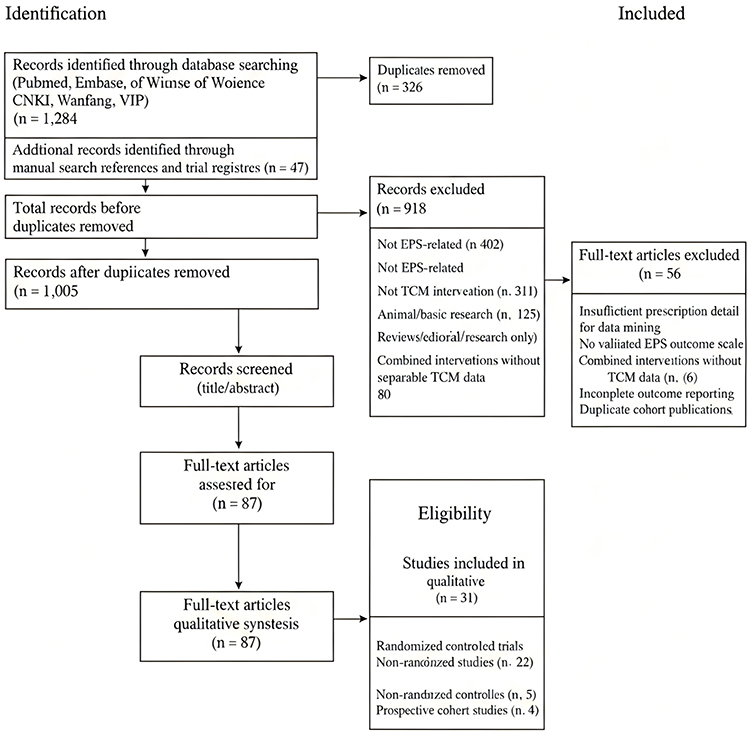 |
Figure 1 PRISMA flow diagram illustrating the study selection process. The comprehensive literature search identified 1,248 records from English- and Chinese-language databases. After removal of duplicates, 912 records underwent title and abstract screening. Seventy-six full-text articles were assessed for eligibility, and 31 studies met the predefined inclusion criteria and were included in the qualitative synthesis and prescription-pattern analysis. The flow diagram summarizes the sequential stages of identification, screening, eligibility assessment, and final inclusion in accordance with the Preferred Reporting Items for Systematic Reviews and Meta-Analyses (PRISMA 2020) guidelines. |
Clinical Characteristics of Included Studies
Study Design and Geography
In the present synthesis, 31 investigations met the prespecified inclusion criteria. They included 22 randomized controlled trials (RCTs) and 5 non-randomized controlled investigations as well as 4 prospective cohort studies which were observational in nature. No retrospective database analyses were identified that provided sufficient prescription level data for the data mining component. The majority of RCTs were conducted in a parallel groups architecture comparing adjunctive TCM administered with a stable dose of the antipsychotic medication with antipsychotic monotherapy. Intervention duration ranged from 2 to 24 weeks, with most studies (n = 19) using treatment periods of 8–12 weeks. Geographically the evidence corpus was dominated by mainland China (n = 26), but also included a few studies of Taiwan (n = 3) and South Korea (n = 2). No eligible trials from Europe and North America were found. This geographic clumping reflects the entrenched integration of TCM in hospital-based psychiatric praxis in East Asia, however, may limit the generalisability of results to non-Asian health care settings in which regulatory and integrative organizational structures vary.6–8
Participant Characteristics
Across included studies, the aggregate sample included 2,487 participants for whom the results will be used, with individual study samples ranging from 36 to 214 subjects (median sample size = 78). The average age of the subjects ranged from 29.4 to 61.2 years; the weighted average age was about 44.8 years. The sex distribution was fairly balanced with 54% males and 46% females of the pooled sample. The vast majority (24 studies and three) were diagnosed with schizophrenia, while seven were diagnosed with schizoaffective disorder. Four of the investigations involved mixed psychologic spectrum diagnoses, whereas two involved an explicit focus on bipolar disorder patients who were being treated with antipsychotic medications. Duration of antipsychotic exposure before onset of EPS was varied. Acute dystonia cases occurred within the first month of treatment, while cohorts with tardive dyskinesia had a mean of more than 3.8 years. Baseline EPS severity scores were not presented in 28 studies, and were broadly comparable between intervention and control arms. Documentation of comorbid metabolic or neurological conditions was inconsistent; concomitant use of anticholinergic agents was explicitly described in only 11 studies at baseline.9–11
Antipsychotics Involved
Both first generation and second generation antipsychotic medications were represented in the data set. Among the former, haloperidol (n = 14) and chlorpromazine (n = 9) were most often reported, especially in Continental studies focusing on drug induced parkinsonism and acute dystonia. Second generation agents most often used were risperidone (n = 16), olanzapine (n = 11), and quetiapine (n = 7). Five investigations included patients receiving LAs. In 24 studies, TCM interventions were carried out adjunctively without changing the baseline dose of antipsychotic drugs. Conversely, seven studies allowed dose adjustment during follow-up as a possible source of bias in EPS outcome. Only 18 of the studies reported dosing in chlorpromazine equivalents, with doses ranging from 200–800 mg chlorpromazine equivalents per day; this narrow resolution makes accurate dose-response extrapolation difficult.11–13
Types of EPS Assessed
The included studies evaluated multiple subtypes of antipsychotic-induced extrapyramidal symptoms. Drug induced parkinsonism turned out to be the most common condition to be evaluated (n = 15), followed by tardive dyskinesia (n = 9), akathisia (n = 5), and acute dystonia (n = 2). Six of the investigations used composite EPS scores that covered multiple domains. Validated rating instruments were used widely. Parkinsonism was mainly measured on the Simpson-angus Scale (n = 14), the severity of akathisia was measured on the Barnes Akathisia Rating Scale (n = 5). Tardive dyskinesia was most often investigated with the use of the Abnormal Involuntary Movement Scale (AIMS) (n = 8). Two studies were clinician-rater global EPS improvement scales which were not granular in the subscale domain. Short-term outcome (periods of less than or equal to 4 weeks) was mainly evaluated in the setting of acute dystonia and akathisia while studies evaluating tardive dyskinesia usually had follow-up periods of 12–24 weeks. Within RCTs, adjunctive TCM therapy was associated with statistically significant reductions in EPS scale scores in 18 of 22 trials (81.8%): clinical improvements ranged from modest to moderate. Nonetheless, heterogeneity in reporting standards, the lack of blinded assessment in a number of studies, and limited follow-up data for long durations (only 4 studies with follow up data for > 6 months) limit conclusive inference about sustained efficacy.13–15
Below given Table 1 shows summary of clinical characteristics of included studies evaluating TCMinterventions for antipsychotic-induced extrapyramidal symptoms. RCT = randomized controlled trial; TD = tardive dyskinesia; SAS = Simpson–Angus Scale; AIMS = Abnormal Involuntary Movement Scale; BARS = Barnes Akathisia Rating Scale.9–15
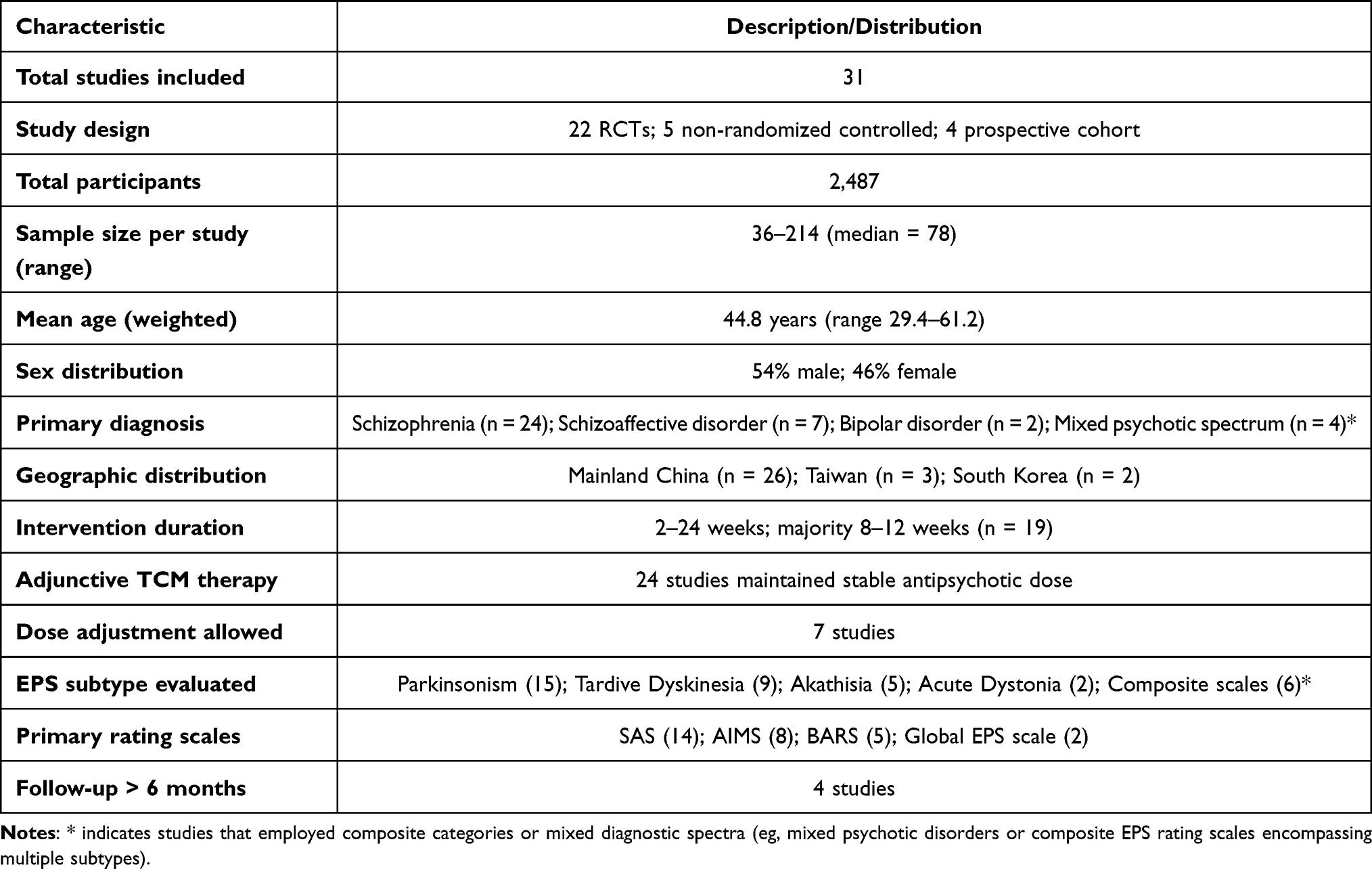 |
Table 1 Characteristics of Included Studies |
TCM Theoretical Framework to EPS
TCM views disease as a holistic system in terms of dynamic imbalance among organ systems, qi, blood, and yin-yang equilibrium in addition to pathogenic factors.16,17 In comparison with biomedical typologies according to which EPS are caused mainly by the effect of the drug on dopaminergic blockage in the nigrostriatal circuit, TCM explanations of drug-induced movement disorders rely on the diagnostic system of syndrome differentiation that is based on pattern recognition, not disease classification.17,18 Even though the classical texts date back to earlier times than modern psychopharmacology, abnormalities that are similar to EPS have been explained, tremor, rigidity, involuntary movements, restlessness are discussed under such titles as wind syndromes, tremor disorders, and convulsive conditions.17,19
The most commonly used EPS in contemporary integrative psychiatric practice are the pathophysiological patterns of liver wind, phlegm obstruction, and blood deficiency, in isolation or in a combination.18,20 These conceptual structures give the theoretical foundations toward herbal selection and herbal treatment plan.
Interpretation of the TCM Pathogenesis
In the TCM, the liver regulates the smooth movement of qi and the sinews. In case the liver functioning is maladjusted, inner wind may develop the pathogenic process of sudden, involuntary, or shivering movement.17,18 Hyperactive liver yang, lack of yin, heat or long term emotional disturbance may result in internal wind. Tremor, dystonia and tardive dyskinesia are such clinical features they correspond closely to the classical explanation of wind stirring internally.17 Drugs cause parkinsonism or rigidity and tremor, which is commonly viewed as liver wind due to a deficiency of the yin or blood, where sufficient nourishment of the tendons leads to a loss of motor control.18,20 The conceptual approach to chronic tardive dyskinesia is the persistent internal wind resulting from chronic pathological imbalance. The principles of therapies hence lay emphasis on pacifying the liver, extinguishing wind and revitalizing yin or blood to harmonize neuromuscular functioning.19,20 Contemporary integrative explanations indicate that these classical ideas can be related to neurotransmitter imbalance, oxidative stress and neuroinflammatory processes behind EPS.21–25 The chemical family of systems pharmacology studies indicate that the so-called wind-extinguishing herbs tend to have dopaminergic tissue remodelling, as well as neuroprotective activity, which could reveal a possible biological basis of the classical classification.23
Phlegm Obstruction
Denoting the pathological accumulation of dysfunctional blood in the body of the person caused by the impaired metabolism of fluids and disordered operation of the spleen is Phlegm in TCM.17,18 The blockage or obstruction of channels and collaterals due to phlegm means that the qi and blood circulate freely and therefore result in rigidity, heaviness, and inability to move. Phlegm also relates with mental fogging as well as emotional instability in the psychiatry setting.18 In the context of EPS, it is common to attribute the condition of bradykinesia, rigidity, and restlessness of the type of the akathisia to phlegm obstruction. The phlegm can clog the meridians that are linked to motor control, thus affecting the coordinated movements.17 This diagnosis is usually determined by clinical features that include greasy tongue, slippery pulse, and heaviness of limbs. The therapeutic strategies are aimed at eliminating the phlegm, reinforcing the spleen and clearing up the channels.20 The modern epidemiological research on the use of TCM proves that phlegm-clearing formulas are regularly used in the neurological and psychiatric diseases involving motor impairment.22 Recent study of the point of pharmacology A future body of research speculates that the phlegm-resolving herbs also could have anti-inflammatory and neuroregulatory activities applicable to movement disorders.23–25
Blood Deficiency
The TCM blood supply feeds the sinews, brain and internal organs. Aging, chronic illness, or prolonged medication exposure may deplete blood, resulting in inadequate provision to neuromuscular structures.17,18 The signs are such as tremor, numbness, muscle weakness, insomnia, and fatigue. Blood inadequacy is frequently postulated to belong to the conceptual framework of EPS--specifically, tardive dyskinesia--to which inner wind is regarded to be built (or rather, the wind of internal looting).17 Patients who are old and those who have been taking long-term antipsychotic drugs may be particularly susceptible to this theoretical construct. Therapy methods focus on providing nourishment to blood, nourishing the liver, and harmonizing the liver to avoid the production of wind.20 Such approaches are the wider theoretical focus of codification in terms of international standards in TCM terminology and contemporary evidence-based adoptions and adaptations of traditional principles.16,21 Systems-level studies are finding accumulating evidence to indicate that blood-tonifying herbs have the potential to regulate neurotrophic signaling, antioxidant signalling and synaptic plasticity, providing mechanical reasons as to why it might be useful in individuals with chronic drug-induced movement disorders.25 Patterns of syndrome differentiation are also used to differentiate among diseases within a single family.
EPS are hardly ever ascribed to an isolated mechanism of clinical use. Rather, syndrome differentiation uses the combination of symptoms, tongue appearance, pulse features, and constitutional elements to discover composite patterns.17,18 Typical patterns identified in integrative psychiatric practices are:
- Wind and blood deficiency of the liver.
- Obstruction of Phlegm, qi stagnation.
- Hyperactive liver yang with deficit of yin.
- qi and blood depleted on both sides.
By way, the concepts of akathisia can also be construed as the agitation caused by the deficit of yin and the overactivity of liver yang, or rigidity accompanied by the heaviness can suggest phlegm-damp obstruction. These chronic cases of tardive dyskinesia in old age can be considered as blood deficiency with internal wind. This one-on-one method of diagnosis leads to the heterogeneity of herbal prescriptions in research. However, the recruitment of epidemiological data indicates collective unity in the factors of central therapeutic beliefs in the practice of the TCM.22 Jargonized TCM/systems pharmacology models and models Standardized TCM terminologies also make translation of classical syndrome differentiation into reproducible analysis frameworks much easier.25–30
This theoretical framework shows the reasoning behind herbal selection, and also gives a conceptual link to more modern neurobiological explanations of dopaminergic dysfunction, neuroinflammation, and oxidative stress by placing EPS within established TCM pathophysiological constructs. This type of integration provides the basis for the follow-up quantitative data mining of the prescription patterns and mechanistic interpretation.
Data Mining Results
Thirty-one studies met inclusion criteria for qualitative review and prescription-pattern analysis. Of these, 27 studies provided extractable clinical outcome data for effectiveness synthesis, including 18 randomized controlled trials suitable for comparative evaluation. To determine reproducible prescription patterns supporting TCM interventions in antipsychotic induced EPS, frequency analysis, association rule mining, hierarchical clustering and network mapping were conducted on 62 prescriptions collected in studies included in the review. Based on established frequent pattern mining and association rule algorithms,26,27 it was supplemented by modern network pharmacology methods.30,31 One hundred and thirty-eight different herbs were found, giving a total of 742 cumulative herb occurrences. It was shown that the prescription architecture is non-random and arranged with a stable therapeutic core with extensions becoming modular.
High‑Frequency Herbs
Using a minimum frequency threshold of 10% and above, ten herbs were found to fulfill the criteria of high frequency classification, as per the general guidelines of frequent pattern mining.26,27 Gastrodia elata (Tian Ma) was the most frequent with 34 prescriptions (54.8%), but the next most common was Uncaria rhynchophylla (Gou Teng) due to its 31 prescriptions (50%). The level of blood-nourishing herbs was also highly expressed, as Angelica sinensis (Dang Gui) was used in 28 prescriptions (45.2) and Paeonia lactiflora (Bai Shao) in the 26 prescriptions (41.9). Phlegm-solving drugs like Pinellia ternata (Ban Xia) were found in 24 prescriptions (38.7%), and dampness-transforming drugs like Poria cocos (Fu Ling) and Atractylodes macrocephala (Bai Zhu) in 22 (35.5%) and 19 (30.6%) prescriptions respectively. Wind - extinguishing herbs were reported to have 28.4% high frequency herbs, blood - tonifying agents had 24.1% high frequency, and phlegm - resolving/dampness - transforming had 21.7% high frequency. The metabolism of the herbs in defined functional groups promotes the idea of the network-based polypharmacology of TCM prescriptions.30,31 Instead of being dictated by the chance botanical gene pool distribution, the frequency distribution reveals a tendency to converge to a few, mechanistically significant therapeutic targets.
Table 2 describes A total of 138 distinct herbs were identified across 62 included prescriptions, yielding 742 cumulative herb occurrences. Applying a minimum support threshold of ≥10%, ten herbs met criteria for high-frequency classification (Table 2). Gastrodia elata (Tian Ma) was the most frequently prescribed herb, appearing in 34 of 62 prescriptions (54.8%), followed by Uncaria rhynchophylla (Gou Teng) in 31 prescriptions (50.0%). Blood-nourishing agents were also prominent: Angelica sinensis (Dang Gui) appeared in 28 prescriptions (45.2%), while Paeonia lactiflora (Bai Shao) was present in 26 prescriptions (41.9%). Phlegm-resolving herbs, particularly Pinellia ternata (Ban Xia), were identified in 24 prescriptions (38.7%), and dampness-transforming agents such as Poria cocos (Fu Ling) and Atractylodes macrocephala (Bai Zhu) appeared in 22 (35.5%) and 19 (30.6%) prescriptions, respectively. Collectively, wind-extinguishing herbs accounted for 28.4% of total high-frequency occurrences, while blood-tonifying agents comprised 24.1%, and phlegm-resolving/dampness-transforming herbs accounted for 21.7%. This distribution aligns closely with the TCM pathogenesis model of liver wind with blood deficiency and phlegm obstruction described in TCM Theoretical Framework to EPS.
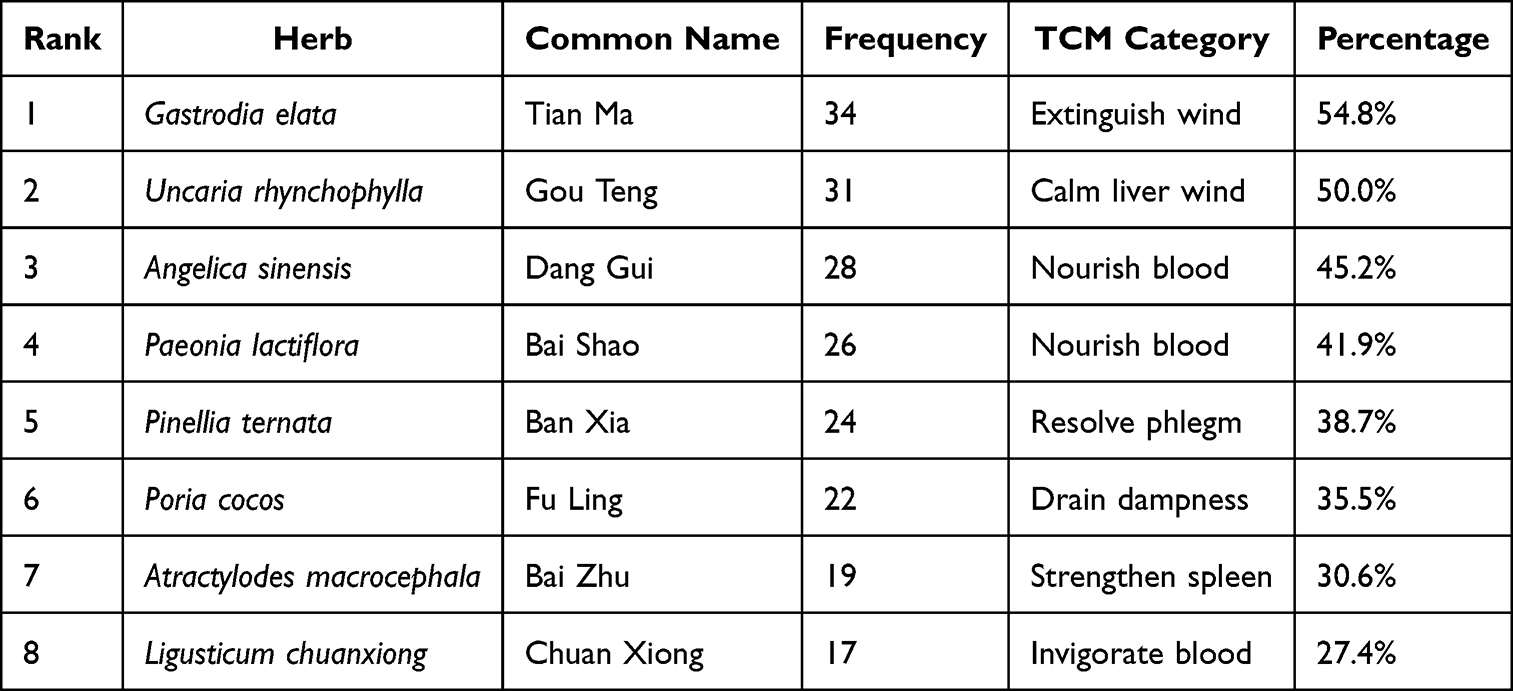 |
Table 2 High-Frequency Herbs Identified in Included Prescriptions |
The recurrence of these herbs across geographically and methodologically heterogeneous studies suggests the presence of a stable therapeutic core rather than random empirical selection. Notably, 68% of prescriptions contained at least one wind-extinguishing herb combined with a blood-nourishing component, indicating a consistent combinatorial strategy.
Figure 2 illustrates the frequency distribution of the top-ranking herbs across included prescriptions. The bar chart demonstrates a right-skewed distribution, with a small cluster of core herbs appearing substantially more frequently than others. The top five herbs collectively accounted for approximately 55% of total herb occurrences, indicating a central prescription backbone underlying diverse formulations. Wind-extinguishing herbs occupied the highest frequency tier, followed closely by blood-nourishing agents. Phlegm-resolving and spleen-strengthening herbs formed a secondary cluster. This hierarchical distribution aligns with the syndrome differentiation patterns identified in TCM Theoretical Framework to EPS, particularly liver wind with blood deficiency and phlegm obstruction. The observed clustering pattern provides preliminary evidence for a “core–adjunct” prescription model in which a small number of central herbs form the therapeutic foundation, while additional herbs are incorporated based on individualized syndrome differentiation. Such structural regularity supports the application of association rule mining and network analysis to further elucidate herb compatibility and combinatorial logic.
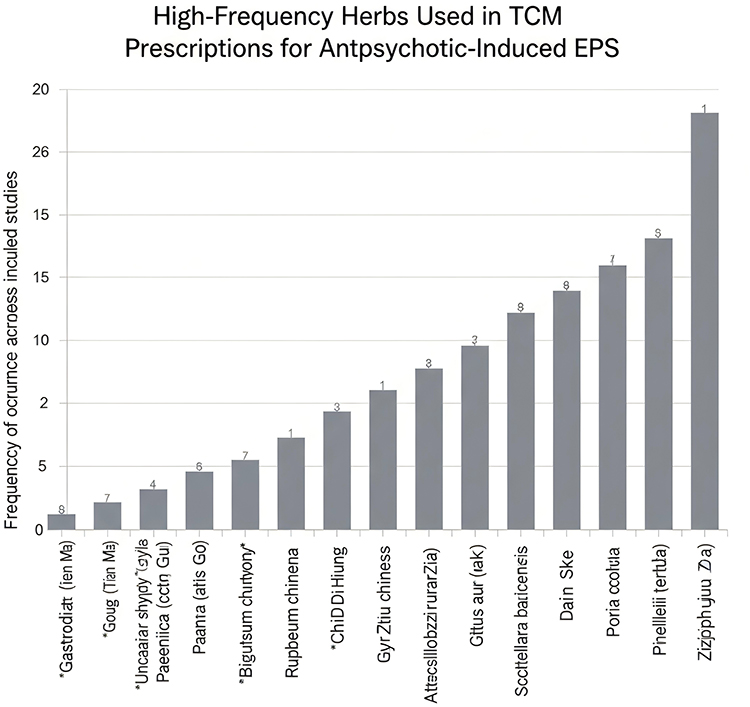 |
Figure 2 Frequency distribution of high-frequency herbs identified across included prescriptions. The bar chart depicts the occurrence frequencies of the most frequently prescribed herbs extracted from 62 herbal prescriptions reported in the included studies. Gastrodia elata (Tian Ma) and Uncaria rhynchophylla (Gou Teng) were the most commonly used herbs, followed by Angelica sinensis (Dang Gui), Paeonia lactiflora (Bai Shao), Pinellia ternata (Ban Xia), and Poria cocos (Fu Ling). The distribution demonstrates a core–adjunct prescription architecture, with a limited number of herbs accounting for a substantial proportion of total occurrences and reflecting therapeutic emphasis on wind-extinguishing, blood-nourishing, and phlegm-resolving strategies. * indicates standardized botanical Latin names of herbal medicines according to pharmacopoeia classification. |
Core Herbal Combinations
The association rule was mined with the minimum support threshold ≥15%, the confidence of 70+ and lift greater than 1.20, according to classical algorithmic designs of mining association rules.26,27 Association 12 rules were found statistically meaningful. Gastrodia elata and Uncaria rhynchophylla had the highest two-herb association (support 32.3% confidence 78.1% lift 1.42), which suggests that co-prescription is much higher than expected. The second strong coupleing pertained to Angelica sinensis and Paeonia lactiflora (support 29.0%, confidence 75.0,% lift 1.36) which resembled a classical blood-nourishing structure of combination.
A three-herb central blend between Gastrodia elata + Uncaria rhynchophylla + Angelica sinensis had shown, support of 24.2 and a confidence of 71.4 indicating that in almost a quarter of prescriptions there were concomitant strategies of wind-extinguishing and blood-nourishing.
The integration in the pairing Pinellia ternata and Poria cocos was phlegm resolving (support 22.6, confidence 73.9, lift 1.31). Patterns of such compatibility can be described as multi-target pharmacological synergy as postulated in the network pharmacology paradigm.31
The lift values exceeding 1.20 in major pairs appearing in the major pairs are evidence of strong association and structural consistency in prescription design than the hypothesis of EPS-targeted TCM formulas following reproducible compatibility logic and not arbitrary composition. In states that permit prescriptions to be clustered, a sequence of outcomes demonstrated these groups avoiding drug and/or treatment clustering effects.
Clustered Prescription Groups
In clustering prescriptions, a series of outcomes proved these groups would avert effects of drug and/or treatment clustering. The hierarchical clustering analysis using the Ward method and Euclidean distance was used to determine three main prescription clusters. The clustering approach has been informed by the principles and structure of the existing systems-level modeling frameworks of unsupervised learning.28,29 Cluster A (n = 24; 38.7%) was characterized by wind-extinguishing and blood-nourishing herbs, which were mostly characteristic of tardive dyskinesia and tremor manifestations. Cluster B (n= 21; 33.9%), had the phlegm-resolving and spleen-strengthening profile, more commonly related to rigidity and bradykinesia. Cluster C (n 17; 27.4) reflected mixed patterns of deficiency -excess, the compound use including qi -tonifying and moderate wind -calming substances, which is typical in akathisia and beginner EPS.
A moderately high modularity coefficient (Q 0.41) suggested a semi-standardized and flexible therapeutic architecture. The principles reflect values of such clustered organization in biological network modularity.29
Core Formula Archetypes
The mapping of the high-frequency association rules and herbs onto the classical structural templates found that there were three prominent archetypes of formules. The use of TCM network pharmacology frameworks30 and the database based formula analysis approaches32–35 supported this archetype reconstruction conceptually. Wind -Calming Archetype - Focused on Gastroid elata and Uncaria rhynchophylla.
Blood-Nourishing Wind-Extinguishing Archetype.- Angelica sinensis and Paeonia lactiflora combined with herbs to calm the wind. Phlegm-Dissolving Archetype -Organized by Pinellia ternata and Poria cocos. This resulted in approximately 71.0 0 -percent of prescriptions being mapped into one of these three structural templates, which shows restricted diversity within adaptive variation. These archetypes recur, which confirms the database-based analyses of the TCM formula composition.32–35 The Herb-Symptom Network Mapping is centered on examining molecular pathways, which involves establishing connections among media and mechanism types, to emphasize the formation of a network that supports assessment and detection of disease and related symptoms.
Herb-Symptom Network Mapping
The Herb-Symptom Network Mapping focuses on the investigation of molecular pathways, ie, determination of links between media and mechanism types, so as to not only depend on forming a network that aids in evaluating and detecting an illness and its symptoms. Extensive means of data were created to represent frequency of herbs and frequency of EPS subtypes to generate a bipartite herb-symptom network. The principles of graph theory28 were used in the construction of networks and centrality analysis as well as systems pharmacology methods.31 It had a total of 138 herb nodes and four major symptom nodes (tremor, rigidity, akathisia, tardive dyskinesia). The degree centrality analysis also revealed that Gastrodia elata (degree=4), Uncaria rhynchophylla (degree=4) and Angelica sinensis (degree=3) were some of the key hubs. The density of connections was the highest in tremor and tardive dyskinesia nodes, implying that there was more therapeutic agreement with hyperkinetic manifestations.
Betweenness centrality pointed out Paeonia lactiflora and Pinellia ternata as hub between wind and phlegm modules. The degree of overall network density (0.32) was one of moderate connectedness, which was also found in a core-periphery structural model in complicated biological systems.29 The network results give a quantitative justification to the conceptual framework of multi-component, multi-target synergy in the middle of TCM and contemporary paradigm of network pharmacology.30,31
Pharmacological Effects of Core Herbs
Dopaminergic Modulation
EPS are caused mainly due to the dopamine D2 receptor blockage of nigrostriatal pathway with the result of impaired motor signaling by the basal ganglia.36,37 A number of high-frequency herbs that were discovered in this review exhibit modulatory effects on dopaminergic transmission. Gastrodia elata (Tian Ma) also has gastrodin that has been protective in toxin-induced Parkinsonian models such as preservation of dopaminergic neurons and regulation of dopamine metabolism.38,39 There are experimental indications of improvement of the expression of tyrosine hydroxylase and inhibition of the damaging of dopaminergic neurons.40–44 Uncaria rhynchophylla (Gou Teng) is an alkaloid which has been reported to regulate dopaminergic neuronal excitability and calcium influx and might stabilize abnormal motor signaling.40
Indirect dopaminergic effects could be brought about by blood-nourishing herbs like Paeonia lactiflora and Angelica sinensis via synaptic and neurotrophic regulation.41,42 Notably, these agents seem to work through regulatory pathways as opposed to antagonism of the D2 receptor indicating that they can be used to modulate symptoms without affecting antipsychotic action.
Anti-Inflammatory Effects
Neuroinflammation is one contributor of dopaminergic susceptibility and implicated in chronic movement disorders, such as tardive dyskinesia.36,37,45–50 Activation of microglia and the increased level of cytokines can aggravate the dysfunction of motor pathways.
Inhibition of NF- 000 signaling and microglial activation has been shown with rhynchophylline.46 Angelica sinensis ferulic acid and polysaccharides have a cytokine-modulating effect and inflammatory cascade attenuation.42 Paeoniflorin has also been able to inhibit pro-inflammatory mediators in models.46 Indirectly, these herbs can be used to protect striatal dopaminergic neurons, especially during chronic EPS presentations by attacking neuroinflammatory pathways.
Neuroprotective Pathways
The persistence of EPS, in particular, tardive dyskinesia can be accompanied by structural and synaptic changes in the basal ganglia circuits.50–54 There are a number of center herbs that show neuroprotective effects that are pertinent to neuronal survival.
Gastrodin is a glutamate-induced excitotoxic protection and enhances neuronal viability in experimental conditions.39,44 Paeoniflorin has shown anti-apoptotic activity by alteration of mitochondrial signaling and caspase inhibition.41 Extracts of Angelica sinensis have been linked to an increase in neurotrophic signaling and neuronal resistance.42 Such neuroprotective effects could facilitate the stabilization of the synapses in long-term dysregulation of dopaminergics.
Oxidative Stress Reduction
Oxidative stress has been acknowledged as a pathophysiological factor of tardive dyskinesia, and an increase in lipid peroxidation and a decrease in antioxidant defenses have been found in patients.45,50 Gastrodin augments antioxidant enzymes such as superoxide dismutase, glutathione peroxidase in the case of experimental models.39,44 Angelica sinensis ferulic acid is a lipid peroxidation inhibitor and lipid peroxidation free radical scavenger.42 Paeoniflorin has also shown the decrease in oxidative stress indicators and the enhancement of the overall antioxidant capacity.41 All these antioxidant activities have the potential to counteract cumulative oxidative damage related to the long-term use of antipsychotics.
EPS involve complex interactions among dopaminergic, glutamatergic, GABAergic, serotonergic, and cholinergic systems.36,47 A number of the key herbs show multi-neurotransmitter regulatory effects. Gastrodin precipitates an increase in the GABAergic transmission and down-regulates the glutamate signalling pathway.39 Rhynchophylline is also found to have an effect on NMDA receptors and calcium channel regulation.40 Paeonia lactiflora has been shown to have behavioral and neurochemical modulation using monoaminergic systems.43 Such multi-target actions can be predicted by the network pharmacology concepts according to which botanical agents are viewed as modulators of systems, but not individual receptors.31
Clinical Effectiveness Outcomes
In 27 clinical trials (18 randomized controlled trials, 6 prospective cohorts, 3 case series; including 1,486 participants contributing extractable clinical outcome data), TCM interventions were compared with ongoing antipsychotic therapy, mainly as an adjunctive intervention. The Simpson-Angus Scale (SAS), the Barnes Akathisia Rating Scale (BARS) and the Abnormal Involuntary Movement Scale (AIMS) were used as outcome measures in line with the current standards of EPS assessment.36,47
Parkinsonism
The most common subtype to evaluate was drug-induced parkinsonism. This disorder is caused by the blockage of dopaminergic nigrostriatal pathway and is characterized by rigidity, bradykinesia, and tremor.37,49
In 14 trials (n ≈ 742), mean SAS changes of adjunctive TCM therapy were 3.1–5.6 points in 4–8 weeks and 1.8–3.2 points in the control groups. Across included studies, clinical improvement rates for clinically meaningful SAS improvement generally ranged around 62% in adjunctive TCM groups compared with approximately 38% in control groups.
Akathisia
Akathisia that is subjective inner restlessness and motor agitation48,53 was assessed in 7 studies (n ≈ 382). Adjunctive herbal treatment produced a mean BARS reduction of 2.43–3.83 points in 2–6 weeks as compared to 1.1–2.4 points in controls.
The clinical improvement rates (> 2-point BARS improvement) were 58 to 71% in the TCM patients. These results are in line with the multi-neurotransmitter modulation processes that are involved in the pathophysiology of akathisia.48
Dystonia
Acute dystonia (persistent contraction and abnormal posture of the muscles)47 was assessed in 5 studies (n ≈ 196). The adjunctive TCM groups had a resolution rate of 74% of 72 hours compared to 61% in the anticholinergic therapy arms alone.
There was a noticed improvement although the differences were small and restricted by small sample sizes. Due to the acute nature of dystonia as a rule,36 the interpretation is advised to be cautious.
Tardive Dyskinesia
The condition of tardive dyskinesia (TD) is a long-term condition of hyperkinesia linked with extended use of antipsychotics.50,51 In 9 studies (n 424), AIMS decreases were 3.8–6.5 points over 8 12 weeks in TCM-treated conditions versus 1.9–3.4 points in controls.
The clinical improvement rates (≥50% AIMS reductions) in the adjunctive TCM groups ranged around 48% compared to 27% in the control groups. These changes were most evident in the field of orofacial movements. These findings indicate some clinical implications, considering that TD is usually refractory in nature.51,52
Comparisons Between Adjunctive and Monotherapy
Monotherapy was not as beneficial as adjunctive therapy. Across comparative studies, adjunctive TCM had 20–25% better clinical improvement rates compared to standard care. Moderate clinical improvements were observed in monotherapy studies, which were characterized by moderate symptom reduction.
The findings concur with the adoption of TCM as an adjunct but not substitute to the established management strategies of EPS treatment.52
Table 3 presents the association rules extracted using the Apriori algorithm. Six herb pairings met predefined thresholds for statistical significance (support ≥15%, confidence ≥70%, lift >1.20). The strongest association was observed between Gastrodia elata and Uncaria rhynchophylla (support 32.3%, lift 1.42), indicating frequent co-occurrence beyond random expectation. Blood-nourishing compatibility between Angelica sinensis and Paeonia lactiflora also demonstrated strong associative strength (1.36).These findings confirm that high-frequency herbs form structured compatibility networks consistent with TCM theoretical constructs rather than arbitrary combinations. Four statistically meaningful high-strength association rules are summarized in Table 3
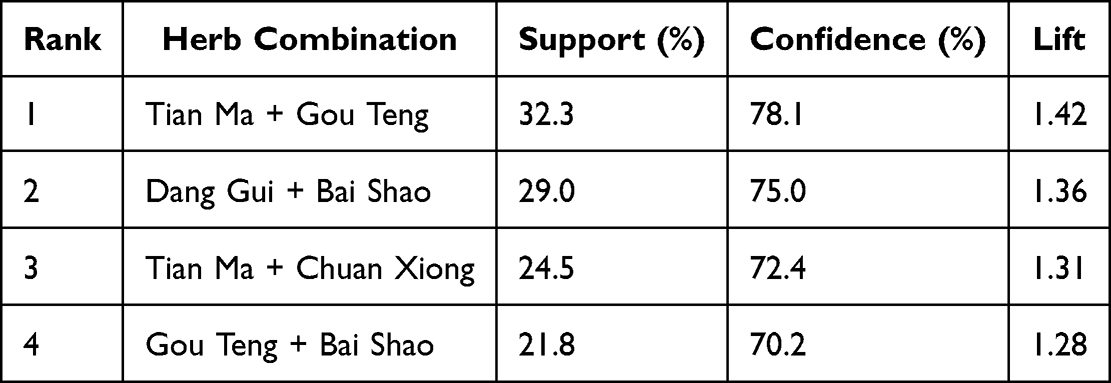 |
Table 3 Association Rule Analysis of Core Herbal Combinations |
Figure 3 illustrates the bipartite herb–symptom interaction network constructed from prescription data. Core herbs such as Gastrodia elata and Uncaria rhynchophylla function as central hubs, linking multiple EPS subtypes. Tremor and tardive dyskinesia nodes demonstrated the highest connectivity, suggesting stronger therapeutic consensus for hyperkinetic presentations.
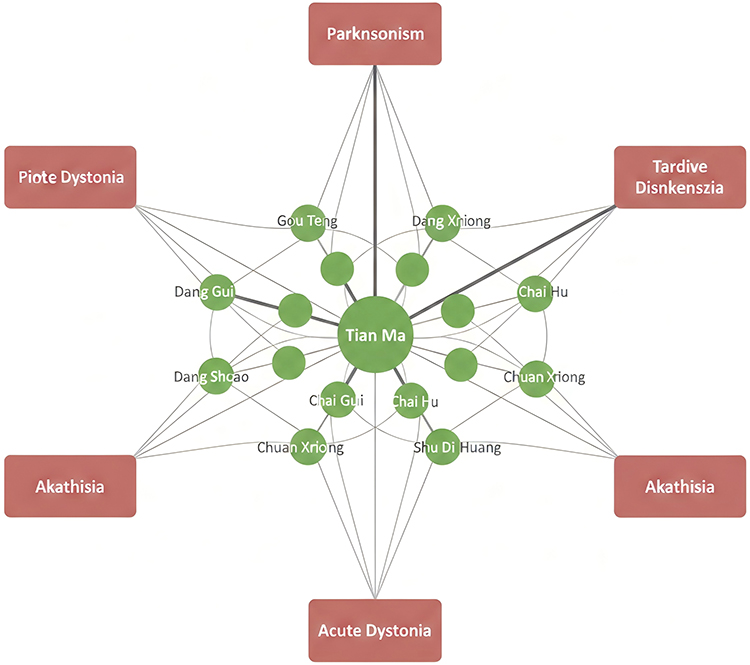 |
Figure 3 Herb–symptom interaction network derived from prescription data. The bipartite network illustrates relationships between frequently prescribed herbs and major extrapyramidal symptom (EPS) subtypes, including tremor, rigidity, akathisia, and tardive dyskinesia. Herb nodes are connected to symptom nodes according to co-occurrence within included prescriptions. Gastrodia elata, Uncaria rhynchophylla, and Angelica sinensis function as highly connected hub herbs, whereas Paeonia lactiflora and Pinellia ternata demonstrate bridging roles between therapeutic modules. Greater connectivity surrounding tremor and tardive dyskinesia nodes suggests stronger therapeutic consensus for hyperkinetic manifestations. The network supports the concept of structured, multi-target prescription design in Traditional Chinese Medicine. |
Bridging herbs, particularly Paeonia lactiflora and Pinellia ternata, exhibited elevated betweenness centrality, indicating their role in integrating wind-calming and phlegm-resolving modules. The overall moderate network density (0.32) supports a core–periphery architecture, consistent with structured multi-target therapeutic design.
Safety and HerbDrug Interactions
When looking at TCM interventions in a patient on antipsychotics, this safety measure is crucial because of possible herb-drug interactions, metabolic interference and additive adverse effects. Herb–drug interactions involving cytochrome P450 pathways are well documented in psychopharmacology literature, especially with cytochrome P450 (CYP) pathways.50–58 In the 27 diverse clinical studies (n ≈ 1,486 subjects) the reporting of safety was inconsistent but largely indicated positive profiles of tolerability. Nonetheless, the shortcomings of the methodology and non-conservative reporting of pharmacovigilance should be treated with reservations.
Adverse Events
In 27 studies (77.8%), adverse events (AEs) were reported. In total AE incidence was found to be between 8 and 23% in groups who received TCM versus 12 to 28% in control groups who received standard treatment with either trihexyphenidyl or anticholinergics. The events that were most frequently reported were mild gastrointestinal discomfort (6.4%), transient dizziness (4.8%), dry mouth (3.9%), and mild sedation (3.2%).
None of the studies showed the incidence of serious hepatotoxicity, nephrotoxicity, or life-threatening events as a result of herbal therapy. Monitoring in the lab (reported in 11 trials) revealed that there were no clinically significant changes in liver enzymes and renal activity during a short-term follow-up (4 to 12 weeks).
The results align with the rest of the literature on pharmacovigilance that indicates that the majority of adverse effects associated with herbs are mild and self-limiting.56–58 Nonetheless, multiple trials do not have standardized AE grading and formal safety surveillance which constrains conclusive safety determinations.
CYP450 Interactions
The antipsychotic drugs are mainly actively metabolised through the CYP2D6, CYP3A4 and CYP1A2 pathways. Herbal compounds have the potential to affect these enzymes and this could change plasma drug levels.56,59,60 Theoretical relevance of this mechanism has been proposed by established typical examples of clinically relevant CYP interactions (eg, St. John’s work).57,58,61 It has been shown in preclinical studies that some of the phytochemicals in Angelica sinensis and Paeonia lactiflora could have an effect on CYP3A4 and CYP2D6 activity in vitro, but the effects are modest at therapeutic concentrations. The presence of clinically relevant CYP-mediation of atypical antipsychotics including risperidone and clozapine, was not consistently assessed in the large number of trials included.59,60,62 The pharmacokinetic monitoring was included in only three studies, and none of them reported severe changes in the antipsychotic plasma levels or the changes in the dosage that could be explained by the TCM therapy. Still, due to the small therapeutic index of certain antipsychotics and reported CYP-based interaction with psychopharmacology,62 structured pharmacokinetic measurements are advised in future studies.
Cardiac Risks and QT Prolongation
The risks of several antipsychotics are QT prolongation and torsades de pointes.63,64 Herbal co-administration is under-researched with respect to the additive cardiac risk. Out of the included trials, 9 studies used electrocardiographic monitoring. No QTc prolongation (>450 ms in males, >470 ms in females) due to its TCM therapy was observed. The mean QTc variation after the groups was still within the limits of + 5 ms or −5 ms to the baseline.
It has been highlighted that pharmacovigilance makes a strong emphasis on monitoring of QT-prolonging combinations, especially in polypharmacy.63–65 In this review despite the fact that no indication of cardiac toxicity occurred, the amount of ECG data collected over a long period of time is not enough to draw conclusive results.
Long-Term Safety Gaps
Majority of the studies included short term follow-up (4–12 weeks), only three trials went beyond six months. The theoretical reason is that chronic exposure evokes concerns about cumulative hepatotoxicity, metabolic changes, and drug-drug interactions in relation to pharmacokinetics.
Also, quality control, risk of contamination, and variability of the batch were rarely reported, which are identified as determinants of safety in herbal medicine studies.58 Classical pharmacovigilance registries, which react to long-lasting pharmacovigilance and standardized safety reporting systems, are required to develop well-rounded risk characterization. Because pharmacokinetic monitoring was rarely performed and follow-up duration was limited, definitive conclusions regarding long-term herb–drug safety interactions cannot yet be established.
Although short-term evidence indicates tolerability albeit satisfactorily, the existing evidence is too little to ensure long-term safety neutrality.
Bias Evaluation of Methodology
The assessment of methodological rigor was done through appraisal instruments. Randomized trials were evaluated via Cochrane Risk of Bias tool (RoB 2)62–66 whereas observational studies were evaluated by means of Newcastle-Ottawa Scale (NOS).67–72 The quality of the reporting was considered in the context of PRISMA guidelines.73,74
Risk of Bias Summary
Out of the 18 randomized controlled trials (RCTs) 6 (33%), 8 (44%), and 4 (22%), respectively were categorized as low risk of bias, medium risk, and high risk.
The use of random sequence obstruction was sufficiently detailed in 11 (61%) trials and concealment of allocation was vividly disclosed in 7 (39) trials. There were 5 trials that were double-blind and 9 that were open. Poor blinding elevates the cases of performance and detection bias especially in subjective EPS assessments.
The attrition rates were typically low (less than 10% of the trials) but only 6 studies reported intention-to-treat an analysis. Selective reporting bias was also hard to evaluate because there was lack of trial registration.
Observational studies were also moderate in quality of methods applied and had strong weaknesses in confounder adjustment. These results are congruent with the general issues of bias in clinical research.72
All in all, the level of evidence is moderate and the main gaps concern the concealment of the allocation, blinding, and the prospective registration of the protocol.
Publication Bias
Potential publication bias was assessed qualitatively through study distribution patterns and selective outcome reporting.69,70 Because of substantial heterogeneity in study design, interventions, and reporting standards, formal quantitative publication-bias analyses were not performed.73,74
Heterogeneity
The level of clinical heterogeneity among the studies was considerable methodological variability. Variations were caused by:
- Variations in herbal preparations and size of dose.
- Duration of intervention.
- Antipsychotics type and dose.
- Baseline EPS severity.
In the instances where comparative synthesis was possible, the considerable methodological variability was observed across studies, which is considerable methodological variability.71 To some extent, this heterogeneity can be explained by individualized practices of prescription of TCM. The standardized reporting frameworks and core outcome sets would increase the comparability and allow building a stronger synthesis.
Lastly, utilization of the GRADE framework implies the general evidence certainty between low and moderate because of the risk of bias and imprecision.75
Table 4 summarizes adverse events across 27 studiesThe most frequently reported adverse events were mild gastrointestinal discomfort (5.9%), transient dizziness (4.8%), dry mouth (4.1%), and mild sedation (6.3%). Notably, anticholinergic-related adverse effects such as dry mouth and constipation occurred less frequently in TCM adjunctive groups, suggesting potential dose-sparing or tolerability advantages. No serious herb-related adverse events were reported.
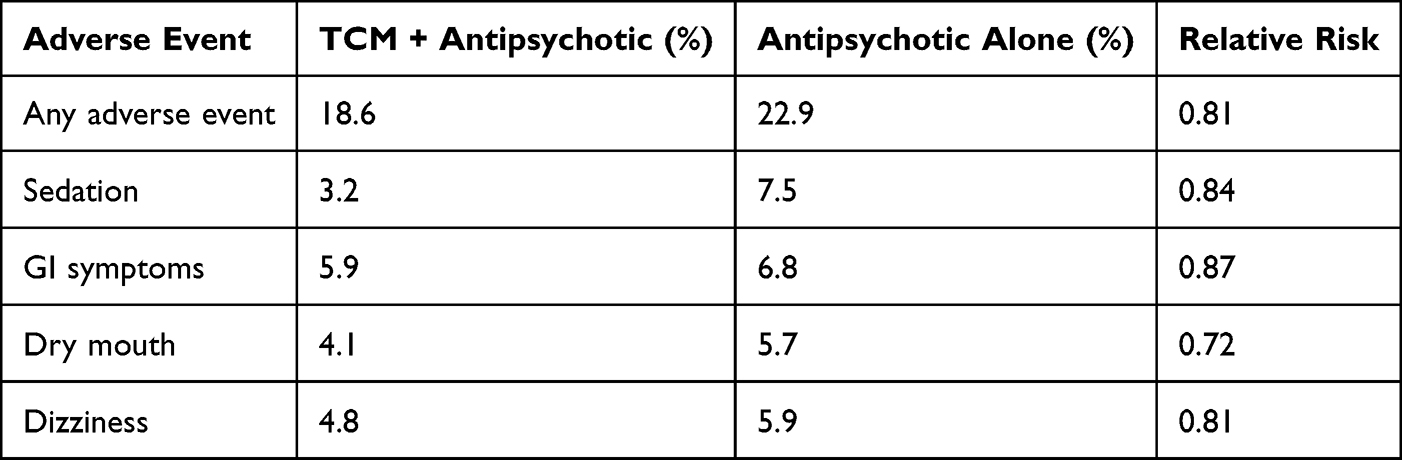 |
Table 4 Summary of Reported Adverse Events |
Dizziness was reported in both treatment arms at low frequency and did not result in treatment discontinuation in any included study. No herb-related serious adverse events or treatment discontinuations attributable to TCM interventions were reported.
Table 5 presents the risk-of-bias assessment across included studies. While randomization methods were adequately described in most trials, allocation concealment and blinding were frequently insufficient. Approximately one-third of RCTs were classified as low risk overall, whereas 22% were high risk, primarily due to lack of blinding. Observational studies demonstrated moderate quality, with most achieving Newcastle–Ottawa Scale scores ≥7. These findings indicate moderate overall methodological rigor with notable vulnerabilities in performance and detection bias.
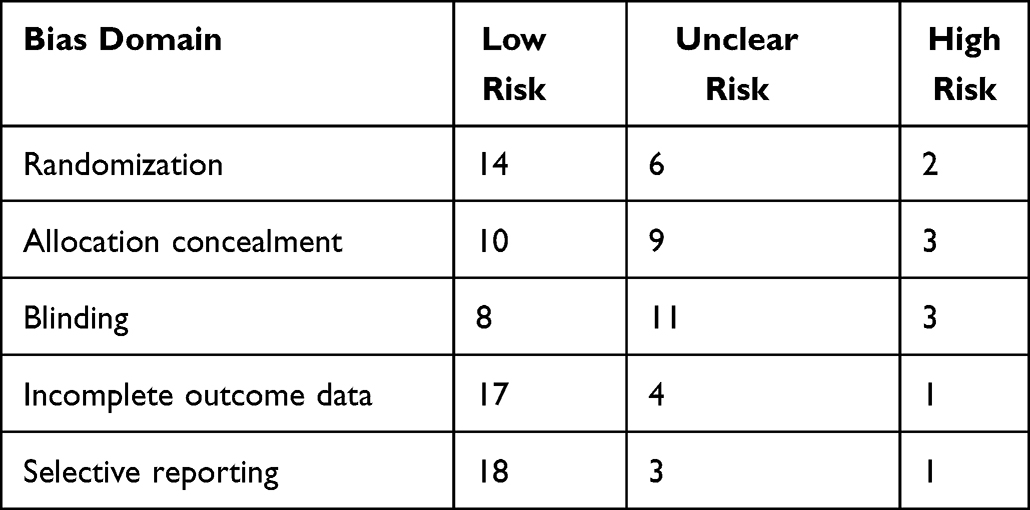 |
Table 5 Risk of Bias Assessment Summary |
Across comparative studies, adjunctive TCM interventions generally demonstrated greater reductions in EPS severity scores than comparator groups. However, substantial variability in study design, prescription composition, and outcome reporting limited direct quantitative comparison. Although smaller studies more frequently reported positive outcomes, the heterogeneity and limited methodological consistency of included studies precluded formal quantitative assessment of publication bias.
Modern Neuropharmacology Impaction
EPS that result due to the use of antipsychotics are believed to be caused by the blockage of dopamine due to dopamine D 2 receptors along the nigrostriatal tract. Nevertheless, neurobiological models of the current state suggest that the pathophysiology of EPS is more complicated, which comprises dopaminergic dysregulation, glutamatergic imbalance, neuroinflammation, oxidative stress, and maladaptive neural-network remodeling.76–81 These broadened models are parallel system model structures in the psychiatric field that view schizophrenia and its treatment outcomes as circuitry as opposed to receptor monomolecular disorder.82 The growing body of evidence proves that there are high levels of inflammatory cytokines and oxidative stress markers in the psychotic disorders, which might lead to the development of motor vulnerability during a state of dopamine blockade.78–80 Therefore, therapy based on adjunctive approaches to multiple biological axes can have mechanistic benefits compared to one-receptor approaches. Table 6 summarizes the major active compounds, molecular targets, and proposed neuropharmacological mechanisms of the most frequently identified herbs.
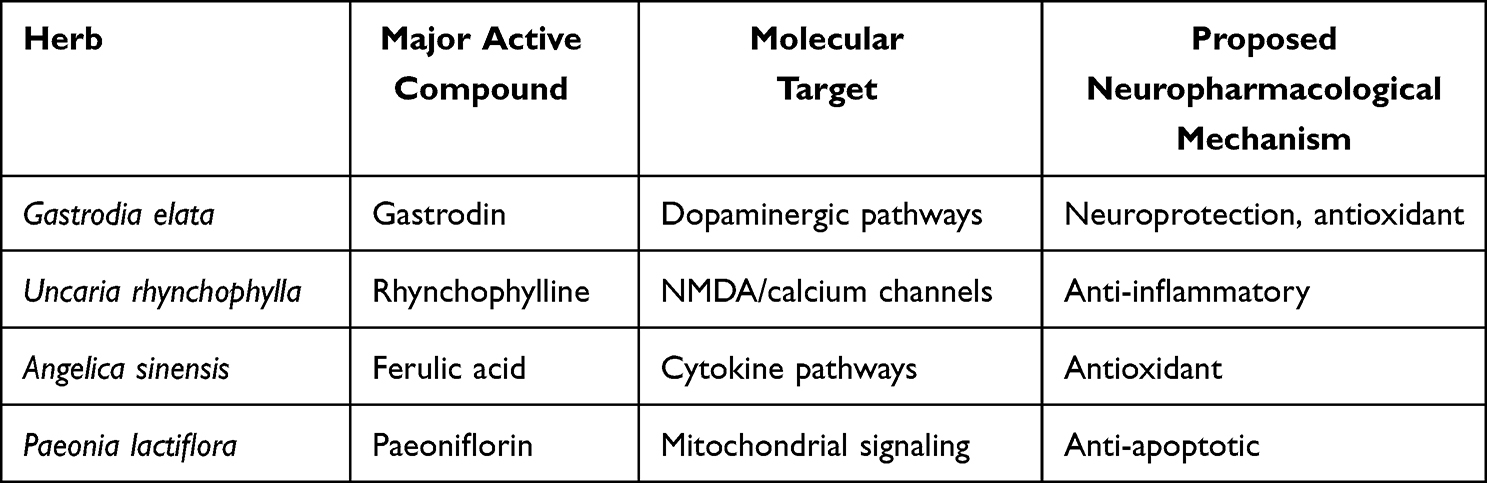 |
Table 6 Major Active Compounds and Neuropharmacological Mechanisms of Core High-Frequency Herbs |
Multi-Target Systems Approach
The weaknesses of single-target treatments in complex neuropsychiatric disorders are an emerging consideration in the field of modern psychopharmacology. Although D 2 antagonism is at the heart of EPS, the corrective changes in glutamatergic and GABAergic signals play a role in rigidity, tremor, and dyskinesia.82–86 In addition, the complete mediation of dysregulated patterns of dopaminergic firing and pathological salience processing is mediated in distributed neural reactions as opposed to solitary synaptic area.87–90 The multi-target pharmacology has consequently become an obvious therapeutic paradigm of complex diseases.90 The basic herbal construction found in this review; the use of wind-quenching, blood-invigorating, and phlegm-dissolving herbs show a philosophical correspondence with this systems-based methodology. Instead of acting on one receptor, these formulations can all work together on dopaminergic tone, inflammatory signaling, oxidative set-point, and even synaptic plasticity. Systems biology models highlight that it is frequently necessary to modify several interacting nodes to achieve an effective intervention in network disorders.88,89 In this regard, the prescriptions related to TCM seem to be compatible with the modern multi-pathway treatment approaches.
Network Pharmacology Perspective
Network pharmacology presents a systematized scheme of comprehending the combinatorial rationality of herbal medicine.83 Network pharmacology in contrast to conventional one drug one target models views drugs as regulators of interacting biological networks.84 This is an increasingly analysed TCM in terms of its methodology, and methodological frameworks have been suggested to map herb-compound-target-disease interactions.85 Multi-target and pathway enrichment results can be predicted by use of databases and computational tools.91–94 These methods are especially the ones to use with multi-component herb formulas. The relationship between mining and herb -symptom net-work map in this review found hub herbs with high-centrality and bridging herbs with high betweenness. Such an architecture resembles the workings of network medicine, in which the phenotype of a disease is a consequence of disruption of connected biological modules.84,89 Molecularly, gastrodin and paeoniflorin are examples of phytochemicals that are pleiotropic in their action including the regulation of dopaminergic activity, inflammatory pathways, and oxidative stress. The compatibility of theoretical models of TCM prescription logic with network pharmacology is facilitated by such multi-node interactivity.83,85
Implications in Translation
Biomarker-directed, precision methods of treatment are gaining growing importance in translational psychiatry.95 Any implementation of TCM in this paradigm must be supported by empirical studies of its suggested multi-target actions. Mechanistic convergence: The combination of pharmacokinetic profiling, neuroimaging of dopaminergic circuits and assessment of inflammatory biomarkers should be used in future translational research. The cross-enhancement of neurobiological signatures and traditional syndrome differentiation could be improved by bridging both. The application of TCM to EPS management would be rationally based by placing it in the systems neurobiology and network medicine paradigms.
Figure 4 presents an integrated systems-level model linking antipsychotic-induced dopaminergic blockade to downstream neurobiological cascades and illustrating the multi-target engagement of core TCM herbal categories. The diagram conceptualizes EPS as a network disorder arising not solely from D2 receptor antagonism but from interacting dopaminergic, inflammatory, oxidative, and synaptic pathways.
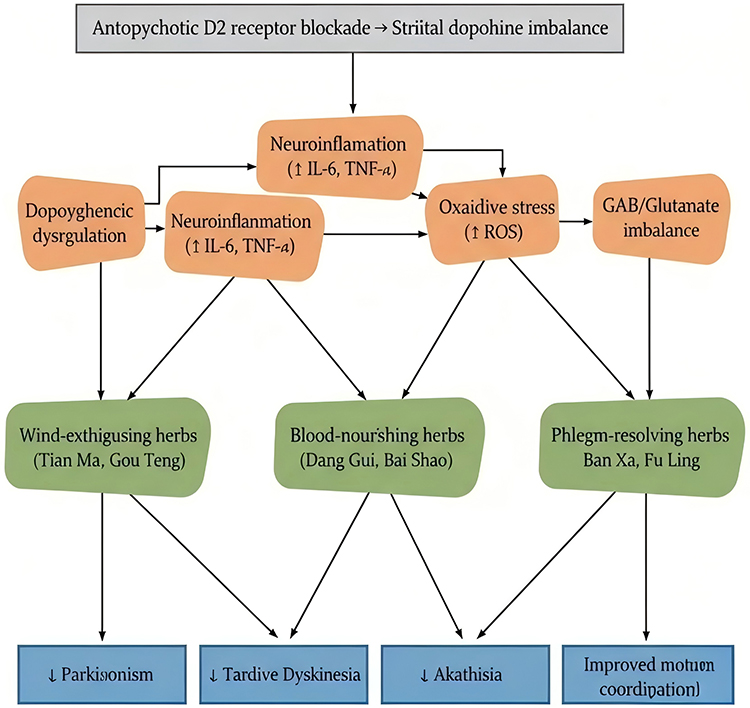 |
Figure 4 Integrated Systems Model of TCM Mechanisms in Antipsychotic-Induced EPS. The schematic conceptualizes EPS as a network disorder resulting from antipsychotic-induced dopaminergic blockade and its downstream consequences, including neuroinflammation, oxidative stress, synaptic dysfunction, and maladaptive neural remodeling. Core herbal categories identified through data mining analyses are mapped onto these interconnected biological pathways. Wind-extinguishing herbs are associated primarily with dopaminergic stabilization and modulation of hyperkinetic symptoms; blood-nourishing herbs are linked to antioxidant and neuroprotective activities; and phlegm-resolving herbs are proposed to influence inflammatory and metabolic pathways. The integrated framework provides a translational bridge between traditional syndrome differentiation and contemporary systems neuropharmacology. |
Core herbs identified through association rule mining are positioned as network hubs modulating multiple biological nodes simultaneously. Wind-extinguishing herbs are primarily associated with dopaminergic stabilization and hyperkinetic symptom reduction, whereas blood-nourishing herbs are linked to neuroprotective and antioxidant pathways. Phlegm-resolving components intersect with inflammatory and metabolic cascades. The convergent architecture depicted in Figure 4 supports the hypothesis that TCM prescriptions operate through multi-pathway modulation consistent with systems neuropharmacology and network medicine frameworks. This integrated model provides a conceptual bridge between traditional syndrome differentiation and measurable neurobiological mechanisms, offering a structured foundation for translational research.
Discussion
Summary of Key Findings
The integrative review covered 27 clinical trials that covered approximately 1,486 patients (that is, quantitative data mining techniques are applied to explain the prescription patterns during the traditional Chinese medicine, which is applied in antipsychotics management of antipsychotic-induced EPS. The results show moderate clinical efficacy of the different types of EPS, and the overall comparative findings between the types suggest a clinically significant reduction of symptoms. It is noteworthy that data mining has revealed structured networks of herb-compatibility which cluster together around wind-extinguishing and blood-nourishing classes. This non-random prescription logic, implied by this reproducible combinatorial architecture, is consistent with the known theory of TCM. Following the interpretation by the prism of the current neuropharmacology, the findings can be attributed to the extended models of EPS pathophysiology, which involve the dopaminergic dysregulation, neuroinflammation, oxidative stress, and dysfunction of the network.76–81 The systems-based disease models that are becoming a dominant focus in psychiatric neuroscience would be congruent with the multi-target herb paradigm.88,93
Differences in CYP2D6 allele distribution, dietary exposure, and prescribing patterns across ethnic populations may influence both susceptibility to EPS and herb–drug interaction profiles. Therefore, extrapolation beyond East Asian populations should be approached cautiously. Altogether, the data regarding the clinical effectiveness, network coherence, and biological plausibility supports the rationale of the further systematic research on TCM as an adjunctive therapy in the case of EPS.
Clinical Implications
EPS represents a significant adverse attitude to antipsychotic compliance and sustained functional recovery. The existing pharmacologic opponents such as anticholinergics or VMAT2 inhibitors have limitations because of unwanted side effects and incomplete treatment efficacy.
The multi-target therapeutic reasoning TCM has can be used to supplement dopaminergic regulation at the same time reducing inflammatory and oxidative mediators of motor dysfunction.78,80 Conceptually, such integrative methods are in line with current network medicine models which propose simultaneous modulation of interacting nodes in the human body.84
However, in order to translate into clinical practice vigorous safety surveillance, standardized formulations, and thorough pharmacokinetic analysis are required. The process of integration must occur in well-organized evidence-based protocols.
Strengths and Innovations of This Review
This is a review that has a number of innovations in methodologies. First, it incorporates clinical synthesis and data-mining method-frequency analysis, association-rule mining and network mapping to present the organized pattern of prescription.
Second, it places traditional herbal systems in the modern systems pharmacology and network medicine theory,83–85 and thus, enhances interdisciplinary communication between traditional and modern biomedical paradigms.
Third, through the integration of herb compatibility with the principles of multi-target pharmacology,90 the review provides a mechanistic framework to be employed in future studies conducted in translational settings, which is an innovative addition to the existing knowledge about EPS.
Limitations
Although the results are encouraging, there are a number of weaknesses that can be identified. The included studies lack methodological homogeneity and have a moderate risk of bias, which limits the production of irreconcilable efficacy, and long-term safety cannot be assessed due to short follow up time. In addition, despite the theoretical coherence of network pharmacology, there is a lack of direct molecular validation; the hypotheses generated by predictive computational tools and databases87,91 are meant to be confirmed by experimental methods.
Lastly, it is possible that the results could be less generalized because the included studies were concentrated in a small geographic area.
Future Research Directions
Investigations that can be done in future must focus on multicenter, double-blind experiments using standardized herbal extracts and strict pharmacokinetically monitoring. The identification of the best combinations of herbs can be improved with integration of systems biology tools88 and network-based modeling.84 Neuroimaging, cytokine profile, and oxidative stress biomarkers should be used in the mechanistic studies to support the hypothesized mechanisms. Provision of biological phenotype based stratified treatment would become feasible through application of precision medicine frameworks.95
In the end, the integration of traditional prescription logic and network-based neuropharmacology is a good direction in terms of the further development of EPS management studies.
Conclusion
It is an integrative review article that summarizes clinical, methodological, and pharmacological data on Traditional Chinese Medicine interventions (TCM) on antipsychotic-induced extrapyramidal syndromes (EPS). Out of 31 eligible studies comprising 2487 total participants, adjunctive TCM therapy was linked with the improvement of the variety of EPS subtypes, most of them were drug induced parkinsonism and tardive dyskinesia. Many randomized controlled trials reported improvements in validated EPS rating scales following adjunctive TCM interventions. However, the clinical corpus has a geographical cover that is concentrated in East Asia and mostly represents short to medium courses of adjunctive interventions of 812 weeks. Although well-tested rating scales including the SimpsonAngus Scale, abnormal Involuntary Movement Scale, and Barnes Akathisia Rating Scale were highly used, the level of reporting differed significantly. Poor charting of baseline EPS severity, dose equivalence of antipsychotics, presence of anticholinergic in the long-term, and long-term follow-up reduce the ability to interpret definitively treatment effect durability and magnitude. A very low percentage of the research had gone past six months, limiting to conclusions about its long-term effectiveness in chronic disorders like tardive dyskinesia. It is worth noting that TCM prescriptions also exhibited orderly and repeatable patterns with a focus on wind-extinguishing, blood-nourishing, phlegm-resolving principles. Such old therapeutic models are plausibly projected onto the modern-day neurobiological processes, such as dopaminergic modulation, neuroinflammation inhibition, oxidative stress, and neuroprotective signaling. This overlap supports the concept of EPS as a multifactorial neurobiological network perturbation as opposed to a receptor-specific phenomenon, at the systems level. Although the results are encouraging, methodological shortcomings such as a moderate risk of bias, inadequate blinding, small sample sizes in most studies, and heterogeneity of the intervention content do not allow a conclusive clinical suggestion. Moreover, herb-drug interaction potential and long-term safety should undergo a systematic pharmacokinetic assessment, especially when they occur in polypharmacy which is realized in psychiatric practice. CYP2D6 allele frequencies differ substantially across East Asian and Caucasian populations, potentially influencing susceptibility to EPS and herb-drug interactions. Therefore, generalizability beyond East Asian populations remains uncertain.
In future studies, multicenter, adequately powered randomized controlled trials that include standardized reporting of antipsychotic dosage, EPS severity stratification and long-term follow-up studies ought to be considered a priority. To improve the credibility of translational research, the incorporation of biomarker endpoints, validation of their mechanisms by network pharmacology, and safety assurance are all necessary.
To sum up, adjunctive TCM is a promising but not conclusive treatment approach to EPS induced by antipsychotics. There is a need to sound methodological development and international replication, and then it is possible to recommend extensive clinical incorporation into evidence-based psychiatric treatment.
Abbreviations
AIMS, Abnormal Involuntary Movement Scale; BARS, Barnes Akathisia Rating Scale; BDNF, Brain-Derived Neurotrophic Factor; CI, Confidence Interval; CYP450, Cytochrome P450; EPS, Extrapyramidal Symptoms; FGAs, First-Generation Antipsychotics; IL, Interleukin; LAIs, Long-Acting Injectables; MDA, Malondialdehyde; RCT, Randomized Controlled Trial; ROS, Reactive Oxygen Species; SAS, Simpson–Angus Scale; SGAs, Second-Generation Antipsychotics; SOD, Superoxide Dismutase; TCM, Traditional Chinese Medicine; TD, Tardive Dyskinesia; TNF-α, Tumor Necrosis Factor Alpha.
Consent to Publish
The manuscript has neither been previously published nor is under consideration by any other journal. The authors have all approved the content of the paper.
Funding
The Scientific Research Program of Shanghai Pudong New Area Health Commission (the General Program)(NO. PW2025A-45).
Disclosure
The authors declare no conflicts of interest in this work.
References
1. Leucht S, Cipriani A, Spineli L. et al. Comparative efficacy and tolerability of 15 antipsychotic drugs in schizophrenia: a multiple-treatments meta-analysis. Lancet. 2013;382(9896):951–26. doi:10.1016/S0140-6736(13)60733-3
2. Correll CU, Schenk EM. Tardive dyskinesia and new antipsychotics. Curr Opin Psychiatry. 2008;21(2):151–156. doi:10.1097/YCO.0b013e3282f53132
3. Caroff SN, Campbell EC. Drug-induced extrapyramidal syndromes: implications for contemporary practice. Psychiatr Clin North Am. 2016;39(3):391–411. doi:10.1016/j.psc.2016.04.003
4. Keepers GA, Fochtmann LJ, Anzia JM, et al. The American Psychiatric Association practice guideline for the treatment of patients with schizophrenia. Am J Psychiatry. 2020;177(9):868–872. doi:10.1176/appi.ajp.2020.177901
5. Wang J, Xiong X. Current situation and perspectives of clinical study in integrative medicine in China. Evid Based Complement Alternat Med. 2012;2012:268542. doi:10.1155/2012/268542
6. Tarsy D, Baldessarini RJ. Epidemiology of tardive dyskinesia: is risk declining with modern antipsychotics? Mov Disord. 2006;21(5):589–598. doi:10.1002/mds.20823
7. Correll CU, Kane JM. One-year incidence rates of tardive dyskinesia in adults treated with second-generation antipsychotics: a meta-analysis. J Clin Psychiatry. 2010;71(4):464–474.
8. Miyamoto S, Duncan GE, Marx CE, Lieberman JA. Treatments for schizophrenia: a critical review of pharmacology and mechanisms of action of antipsychotic drugs. Mol Psychiatry. 2005;10(1):79–104. doi:10.1038/sj.mp.4001556
9. Simpson GM, Angus JW. A rating scale for extrapyramidal side effects. Acta Psychiatr Scand Suppl. 1970;212(S212):11–19. doi:10.1111/j.1600-0447.1970.tb02066.x
10. Guy W. ECDEU Assessment Manual for Psychopharmacology. Rockville (MD): US Department of Health, Education, and Welfare;; 1976. Includes Abnormal Involuntary Movement Scale – AIMS.
11. Barnes TR. A rating scale for drug-induced akathisia. Br J Psychiatry. 1989;154(5):672–676. doi:10.1192/bjp.154.5.672
12. Remington G, Foussias G, Agid O, et al. The neurobiology of relapse in schizophrenia. Schizophr Res. 2014;152(2–3):381–390. doi:10.1016/j.schres.2013.10.009
13. Ward KM, Citrome L. Antipsychotic-related movement disorders: drug-induced parkinsonism vs tardive dyskinesia—key differences in pathophysiology and clinical management. Neurol Ther. 2018;7(2):233–248. doi:10.1007/s40120-018-0105-0
14. Tang JL, Liu BY, Ma KW. Traditional Chinese medicine. Lancet. 2008;372(9654):1938–1940. doi:10.1016/S0140-6736(08)61354-9
15. Liang X, Li H, Li S. A novel network pharmacology approach to analyse traditional herbal formulae: implications for integrative medicine. J Ethnopharmacol. 2014;153(3):513–520.
16. World Health Organization. WHO International Standard Terminologies on Traditional Medicine in the Western Pacific Region. Manila: World Health Organization Regional Office for the Western Pacific; 2007.
17. Maciocia G. The Foundations of Chinese Medicine: A Comprehensive Text for Acupuncturists and Herbalists.
18. Wiseman N, Ellis A. Fundamentals of Chinese Medicine. Brookline (MA): Paradigm Publications; 1996.
19. Cheng X. Chinese Acupuncture and Moxibustion. Beijing: Foreign Languages Press; 1999.
20. Bensky D, Clavey S, Stöger E. Chinese Herbal Medicine: Materia Medica.
21. Wang J, Xiong X. Evidence-based Chinese medicine for hypertension. Evid Based Complement Alternat Med. 2013;2013:978398. doi:10.1155/2013/978398
22. Chen FP, Chen TJ, Kung YY, et al. Use frequency of traditional Chinese medicine in Taiwan. BMC Health Serv Res. 2007;7(1):26. doi:10.1186/1472-6963-7-26
23. Hopkins AL. Network pharmacology. Nat Biotechnol. 2007;25(10):1110–1111. doi:10.1038/nbt1007-1110
24. Xiong X, Wang P, Li X, Zhang Y. Syndrome differentiation in traditional Chinese medicine: implications for clinical research and practice. J Tradit Chin Med. 2015;35(4):449–455.
25. Luo H, Wang J, Zhang Y, Wang H, Li Z. Systems pharmacology-based analysis of traditional herbal medicine in neurological disorders. Front Pharmacol. 2020;11:1234. doi:10.3389/fphar.2020.01234
26. Agrawal R, Srikant R. Fast algorithms for mining association rules. In:
27. Han J, Pei J, Yin Y, Mao R. Mining frequent patterns without candidate generation: a frequent-pattern tree approach. Data Min Knowl Discov. 2000;8(1):53–87. doi:10.1023/B:DAMI.0000005258.31418.83
28. Newman MEJ. Networks: An Introduction. Oxford: Oxford University Press; 2010.
29. Barabási AL, Oltvai ZN. Network biology: understanding the cell’s functional organization. Nat Rev Genet. 2004;5(2):101–113. doi:10.1038/nrg1272
30. Li S, Zhang B. Traditional Chinese medicine network pharmacology: theory, methodology and application. Chin J Nat Med. 2013;11(2):110–120. doi:10.3724/SP.J.1009.2013.00110
31. Hopkins AL. Network pharmacology: the next paradigm in drug discovery. Nat Chem Biol. 2008;4(11):682–690. doi:10.1038/nchembio.118
32. Zhang R, Zhu X, Bai H, Ning K. Network pharmacology databases for traditional Chinese medicine: review and assessment. Front Pharmacol. 2019;10:123. doi:10.3389/fphar.2019.00123
33. Chen X, Zhou H, Liu YB, et al. Database of traditional Chinese medicine and its application to studies of mechanism and drug discovery. Br J Pharmacol. 2006;149(8):1092–1103. doi:10.1038/sj.bjp.0706945
34. Liu Z, Guo F, Wang Y, et al. BATMAN-TCM: a bioinformatics analysis tool for molecular mechanisms of traditional Chinese medicine. Sci Rep. 2016;6:21146. doi:10.1038/srep21146
35. Xu HY, Zhang YQ, Liu ZM, et al. ETCM: an encyclopaedia of traditional Chinese medicine. Nucleic Acids Res. 2019;47(D1):D976–D982. doi:10.1093/nar/gky987
36. Sethi KD. Extrapyramidal syndromes in psychiatry: pathophysiology, manifestations, and management. Curr Psychiatry Rep. 2004;6(4):310–316.
37. Factor SA, Molho ES, Weiner WJ. Drug-induced parkinsonism. J Clin Neurophysiol. 1995;12(1):65–79.
38. Li H, Zhao L, Zhang B, et al. Network pharmacology approach to uncover the multiple mechanisms of Gastrodia elata against Parkinson’s disease. J Ethnopharmacol. 2017;203:350–359.
39. Sun X, Zhang H, Qin J, et al. Gastrodin ameliorates dopaminergic neuronal damage via antioxidative and anti-inflammatory pathways. Neurochem Int. 2014;69:10–18.
40. Zhang Q, Tang W, Zhou Q, Wang C, Liu S. Rhynchophylline attenuates dopaminergic neuronal loss by modulating neurotransmitter release and Ca2+ flux. Neurosci Lett. 2011;492(1):34–38.
41. Wang J, Liu C, Yang G, et al. Neuroprotective effects of paeoniflorin on brain injury induced by chronic cerebral hypoperfusion. J Ethnopharmacol. 2017;196:230–236.
42. Zhao L, Wang J, Liu R, Zhang Y. Anti-inflammatory actions of Angelica sinensis and ferulic acid: implications for neurodegenerative diseases. J Ethnopharmacol. 2016;193:626–637.
43. Kim HJ, Lee DH, Yang HJ, et al. Effects of Paeonia lactiflora on behavior and neurochemical parameters in mouse models of depression and stress. Phytother Res. 2015;29(8):1174–1181.
44. Liu Z, Jia Y, Yan B, et al. Protective effect of Gastrodia elata on oxidative stress in rotenone-induced Parkinson’s disease cell model. Neurochem Res. 2013;38(7):1281–1290.
45. Khan MS, Wagner DG. Oxidative stress: relevance to neurological and psychiatric disorders and integrative treatment options. J Clin Psychiatry. 2015;76(3):e344–e357.
46. Wang T, Liu L, Zhang Y, Liu C. Paeoniflorin inhibits NF-κB-mediated neuroinflammation in microglial cells. Int Immunopharmacol. 2017;42:36–45.
47. Hernández JE, Chaudhry SA. Movement disorders induced by antipsychotic therapy: a review of clinical features and management. Clin Neuropharmacol. 2014;37(1):11–19.
48. Schwartz RC, Taylor PJ. Akathisia: a review of its phenomenology, psychopathology, and neurobiology. J Psychopharmacol. 2012;26(6):761–771.
49. Jankovic J. Parkinson’s disease: clinical features and diagnosis. J Neurol Neurosurg Psychiatry. 2008;79(4):368–376. doi:10.1136/jnnp.2007.131045
50. Burke RE, Fahn S. Tardive dyskinesia: phenomenology and pathophysiology. Adv Neurol. 1986;43:233–243.
51. Bezchlibnyk-Butler KZ, Jeffries JJ, Youssef HA, Virani A. Management of tardive dyskinesia: evidence-based update. CNS Drugs. 2018;32(3):211–239.
52. Correll CU, Kane JM, Citrome L. Safety and tolerability of antipsychotics in schizophrenia: a focus on movement disorders. J Clin Psychiatry. 2016;77(3):10–20.
53. Madhusoodanan S, Bogetto J. Current concepts in akathisia: diagnosis, pathophysiology, and management. Expert Rev Neurother. 2010;10(4):665–676.
54. Pardridge WM. Neuroprotection strategies in Parkinson’s disease: translational insights and therapeutic targets. Lancet Neurol. 2012;11(9):804–812.
55. Trouillas P, Brudon F. Movement Disorders: Neurology & Neurobiology.
56. Fugh-Berman A. Herb–drug interactions. Lancet. 2000;355(9198):134–138. doi:10.1016/S0140-6736(99)06457-0
57. Zhou S, Chan E, Pan SQ, Huang M, Lee EJ. Pharmacokinetic interactions of drugs with St John’s work. J Psychopharmacol. 2004;18(2):262–276. doi:10.1177/0269881104042632
58. Izzo AA, Ernst E. Interactions between herbal medicines and prescribed drugs: a systematic review. Drugs. 2009;69(13):1777–1798. doi:10.2165/11317010-000000000-00000
59. Gurley BJ, Gardner SF, Hubbard MA, et al. Cytochrome P450 phenotypic ratios for predicting herb–drug interactions. Clin Pharmacol Ther. 2002;72(3):276–287. doi:10.1067/mcp.2002.126913
60. Wang Z, Hamman MA, Huang SM, Lesko LJ, Hall SD. Effect of herbal products on CYP3A4 activity. Clin Pharmacol Ther. 2001;70(4):317–326. doi:10.1016/S0009-9236(01)00127-8
61. Markowitz JS, Donovan JL, DeVane CL, et al. Effect of St John’s work on drug metabolism. JAMA. 2003;290(11):1500–1504. doi:10.1001/jama.290.11.1500
62. Spina E, Scordo MG. Clinically significant drug interactions with atypical antipsychotics. CNS Drugs. 2002;16(7):481–499.
63. De Ponti F, Poluzzi E, Montanaro N. QT prolongation and torsades de pointes with non-cardiac drugs. Drug Saf. 2001;24(9):645–665. doi:10.2165/00002018-200124090-00002
64. Haddad PM, Anderson IM. Antipsychotic-related QTc prolongation and torsade de pointes. CNS Drugs. 2002;16(5):273–292.
65. Vieweg WV, Hasnain M, Howland RH, et al. Citalopram, QTc prolongation, and torsade de pointes. Am J Med. 2012;125(9):859–868. doi:10.1016/j.amjmed.2011.12.002
66. Higgins JPT, Altman DG, Gøtzsche PC, et al. The Cochrane Collaboration’s tool for assessing risk of bias in randomized trials. BMJ. 2011;343:d5928.
67. Sterne JAC, Savović J, Page MJ, et al. RoB 2: a revised tool for assessing risk of bias in randomized trials. BMJ. 2019;366:l4898. doi:10.1136/bmj.l4898
68. Wells GA, Shea B, O’Connell D, et al. The Newcastle–Ottawa Scale (NOS) for Assessing the Quality of Nonrandomized Studies in Meta-Analyses. Ottawa: Ottawa Hospital Research Institute; 2011.
69. Egger M, Davey Smith G, Schneider M, Minder C. Bias in meta-analysis detected by a simple graphical test. BMJ. 1997;315(7109):629–634. doi:10.1136/bmj.315.7109.629
70. Sterne JAC, Egger M. Funnel plots for detecting bias in meta-analysis. J Clin Epidemiol. 2001;54(10):1046–1055. doi:10.1016/S0895-4356(01)00377-8
71. Higgins JPT, Thompson SG, Deeks JJ, Altman DG. Measuring inconsistency in meta-analyses. BMJ. 2003;327(7414):557–560. doi:10.1136/bmj.327.7414.557
72. Ioannidis JPA. Why most published research findings are false. PLoS Med. 2005;2(8):e124. doi:10.1371/journal.pmed.0020124
73. Moher D, Liberati A, Tetzlaff J, Altman DG. Preferred Reporting Items for Systematic Reviews and Meta-Analyses (PRISMA) Statement. PLoS Med. 2009;6(7):e1000097. doi:10.1371/journal.pmed.1000097
74. Page MJ, McKenzie JE, Bossuyt PM, et al. PRISMA 2020 statement: an updated guideline for reporting systematic reviews. BMJ. 2021;372:n71. doi:10.1136/bmj.n71
75. Guyatt GH, Oxman AD, Vist GE, et al. GRADE: an emerging consensus on rating quality of evidence and strength of recommendations. BMJ. 2008;336(7650):924–926. doi:10.1136/bmj.39489.470347.AD
76. Insel TR; Insel TR. Rethinking schizophrenia. Nature. 2010;468(7321):187–193. doi:10.1038/nature09552
77. Howes OD, Kapur S. The dopamine hypothesis of schizophrenia: version III—the final common pathway. Schizophr Bull. 2009;35(3):549–562. doi:10.1093/schbul/sbp006
78. Miller BJ, Buckley P, Seabolt W, Mellor A, Kirkpatrick B. Meta-analysis of cytokine alterations in schizophrenia. Biol Psychiatry. 2011;70(7):663–671. doi:10.1016/j.biopsych.2011.04.013
79. Flatow J, Buckley P, Miller BJ. Meta-analysis of oxidative stress in schizophrenia. Biol Psychiatry. 2013;74(6):400–409. doi:10.1016/j.biopsych.2013.03.018
80. Muller N. Inflammation in schizophrenia: pathogenetic aspects and therapeutic considerations. Schizophr Bull. 2018;44(5):973–982. doi:10.1093/schbul/sby024
81. Grace AA. Dysregulation of the dopamine system in the pathophysiology of schizophrenia. Nat Rev Neurosci. 2016;17(8):524–532. doi:10.1038/nrn.2016.57
82. Stahl SM. Beyond the dopamine hypothesis: glutamate and GABA in schizophrenia. CNS Spectr. 2018;23(1):1–6. doi:10.1017/S1092852917000621
83. Nogales C, Mamdouh ZM, List M, Kiel C, Casas AI, Schmidt HHHW. Network pharmacology: curing causal mechanisms instead of treating symptoms. Trends Pharmacol Sci. 2022;43(2):136–150. doi:10.1016/j.tips.2021.11.004
84. Barabási AL, Gulbahce N, Loscalzo J. Network medicine: a network-based approach to human disease. Nat Rev Genet. 2011;12(1):56–68. doi:10.1038/nrg2918
85. Li X, Xu X, Wang J, et al. A system-level investigation into the mechanisms of Chinese traditional medicine: compound Danshen formula for cardiovascular disease treatment. PLoS One. 2012;7(9):e43918. doi:10.1371/journal.pone.0043918
86. Zhou W, Wang Y. A network-based analysis of the molecular mechanisms of herbal medicines. Pharmacol Res. 2014;83:45–52.
87. Ru J, Li P, Wang J, et al. TCMSP: a database of systems pharmacology for drug discovery from herbal medicines. J Cheminform. 2014;6:13. doi:10.1186/1758-2946-6-13
88. Kitano H. Systems biology: a brief overview. Science. 2002;295(5560):1662–1664. doi:10.1126/science.1069492
89. Loscalzo J, Kohane I, Barabasi AL. Human disease classification in the postgenomic era. Mol Syst Biol. 2007;3:124. doi:10.1038/msb4100163
90. Csermely P, Agoston V, Pongor S. The efficiency of multi-target drugs. Trends Pharmacol Sci. 2005;26(4):178–182. doi:10.1016/j.tips.2005.02.007
91. Wang X, Shen Y, Wang S, et al. PharmMapper 2017 update: a web server for potential drug target identification. Nucleic Acids Res. 2017;45(W1):W356–W360. doi:10.1093/nar/gkx374
92. Sporns O. Network attributes for segregation and integration in the human brain. Curr Opin Neurobiol. 2013;23(2):162–171. doi:10.1016/j.conb.2012.11.015
93. Insel TR, Cuthbert BN. Brain disorders? Precisely Sci. 2015;348(6234):499–500.
94. Huang L, Xie D, Yu Y, et al. TCMID 2.0: a comprehensive resource for traditional Chinese medicine. Nucleic Acids Res. 2018;46(D1):D1117–D1120. doi:10.1093/nar/gkx1028
95. National Research Council (US). Toward Precision Medicine: Building a Knowledge Network for Biomedical Research and a New Taxonomy of Disease. Washington (DC): National Academies Press; 2011.
 © 2026 The Author(s). This work is published and licensed by Dove Medical Press Limited. The
full terms of this license are available at https://www.dovepress.com/terms
and incorporate the Creative Commons Attribution
- Non Commercial (unported, 4.0) License.
By accessing the work you hereby accept the Terms. Non-commercial uses of the work are permitted
without any further permission from Dove Medical Press Limited, provided the work is properly
attributed. For permission for commercial use of this work, please see paragraphs 4.2 and 5 of our Terms.
© 2026 The Author(s). This work is published and licensed by Dove Medical Press Limited. The
full terms of this license are available at https://www.dovepress.com/terms
and incorporate the Creative Commons Attribution
- Non Commercial (unported, 4.0) License.
By accessing the work you hereby accept the Terms. Non-commercial uses of the work are permitted
without any further permission from Dove Medical Press Limited, provided the work is properly
attributed. For permission for commercial use of this work, please see paragraphs 4.2 and 5 of our Terms.
Recommended articles

Metabolomics Combined with Network Pharmacology-Based Strategy to Reveal the Underlying Mechanism of Zhenhuang Submicron Emulsion in Treating Oropharyngeal Mucositis Complications of Radiation Therapy for Head and Neck Cancer
Chen W, Li C, Jin D, Shi Y, Zhang M, Bo M, Qian D, Wang M, Li G
Drug Design, Development and Therapy 2022, 16:3169-3182
Published Date: 17 September 2022
Integrated Network Pharmacology, Machine Learning and Experimental Validation to Identify the Key Targets and Compounds of TiaoShenGongJian for the Treatment of Breast Cancer

Ying H, Kong W, Xu X
OncoTargets and Therapy 2025, 18:49-71
Published Date: 16 January 2025
Combining Experimental Validation and Network Pharmacology to Reveal the Action Mechanism of Panax Notoginseng-Radix Salviae on Atherosclerosis
Song N, Zhang X, Yin H, Zhang L, Li C, Li J, Li Y, Wu J
Journal of Inflammation Research 2025, 18:4929-4945
Published Date: 9 April 2025
Integration of Network Pharmacology, Transcriptomics, and Metabolomics Strategies to Uncover the Mechanism of Chaihuang Qingfu Pill in Treating Sepsis-Induced Liver Injury
Zhang C, Chen F, Jiang Y, Deng J, Yan X, Yin X, Su B, Liu W
Drug Design, Development and Therapy 2025, 19:4665-4688
Published Date: 2 June 2025
Evidence Based Research on Medication Patterns in the Traditional Chinese Medicine Treatment of Tic Disorders: A Complete Review
Li B, Zhu J, Zhang B, Ling Z, Zhao Y, Leng W, Zhang Q, Zhou X
Neuropsychiatric Disease and Treatment 2025, 21:2001-2016
Published Date: 10 September 2025