
Back to Journals » Journal of Pain Research » Volume 19
The Effectiveness of Perioperative Intravenous Lidocaine for Postoperative Analgesia in Video-Assisted Thoracic Surgery: A Systematic Review and Meta-Analysis
Authors Liu J, Zhong B, Huang X, Lei S, Liu H  , Deng W, Liu W , Fan M
Received 17 April 2026
Accepted for publication 1 July 2026
Published 10 July 2026 Volume 2026:19 616585
DOI https://doi.org/10.2147/JPR.S616585
Checked for plagiarism Yes
Review by Single anonymous peer review
Peer reviewer comments 2
Editor who approved publication: Dr Karina Gritsenko
Jian Liu,1,* Baolin Zhong,2,* Xiaomei Huang,2,* Shaohui Lei,1 Huamin Liu,1 Wentao Deng,1 Weifeng Liu,1 Meida Fan1,3
1Department of Anesthesiology, Nanfang Hospital, Southern Medical University, Guangzhou, People’s Republic of China; 2Department of Anesthesiology, Ganzhou Hospital-Nanfang Hospital, Southern Medical University (Ganzhou People’s Hospital), Ganzhou, People’s Republic of China; 3Department of Rheumatology, Nanfang Hospital, Southern Medical University, Guangzhou, People’s Republic of China
*These authors contributed equally to this work
Correspondence: Weifeng Liu; Meida Fan, Department of Anesthesiology, Nanfang Hospital, Southern Medical University, 1838 Guangzhou Avenue North, Guangzhou, 510515, People’s Republic of China, Email [email protected]; [email protected]
Background: Acute pain after video-assisted thoracic surgery (VATS) remains a significant challenge. While intravenous lidocaine is increasingly used for analgesia, its efficacy for VATS remains uncertain. This meta-analysis aimed to evaluate the impact of perioperative intravenous lidocaine on postoperative pain in patients undergoing VATS.
Methods: We systematically searched PubMed, Web of Science, Embase, Cochrane Library, and Chinese databases (CNKI, WANFANG, SinoMed) from inception to December 31, 2025, for randomized controlled trials (RCTs) comparing intravenous lidocaine with placebo saline in adults undergoing VATS. Primary outcomes were static and dynamic pain scores. Secondary outcomes included opioid consumption, quality of recovery (QoR), postoperative nausea and vomiting (PONV), gastrointestinal recovery, postoperative pulmonary complications (PPCs), and length of hospital stay. Data were pooled using random-effects models. The certainty of evidence was assessed using the Grading of Recommendations Assessment, Development and Evaluation (GRADE) approach.
Results: Sixteen RCTs involving 1045 patients were included. Compared with placebo, intravenous lidocaine significantly reduced static pain scores at 6– 8 h (MD − 0.61 cm, 95% CI [− 0.99, − 0.24]), 24 h (MD − 0.48 cm, 95% CI [− 0.79, − 0.17]), and 48 h (MD − 0.31 cm, 95% CI [− 0.48, − 0.14]), as well as dynamic pain scores at the corresponding time points. However, the magnitude of pain reduction did not reach the predefined threshold for clinical importance (≥ 1 cm), and prediction intervals crossed the line of no effect for all pain outcomes. Intravenous lidocaine was also associated with reduced postoperative opioid consumption and improved QoR, although neither effect reached established minimal clinically important difference (MCID) thresholds. Additionally, lidocaine reduced PONV and accelerated gastrointestinal recovery. No significant effects were observed on PPCs or lidocaine-related adverse events, and it slightly prolonged the length of hospital stay. The certainty of evidence ranged from very low to moderate.
Conclusion: Although perioperative intravenous lidocaine infusion was associated with statistically significant improvements in postoperative pain and several recovery-related outcomes following VATS, the magnitude of benefit in pain, opioid consumption, and QoR did not consistently reach established thresholds for clinical importance. The certainty of evidence was generally low, and substantial heterogeneity was observed across studies. The overall clinical benefit of perioperative intravenous lidocaine remains uncertain and should be interpreted with caution.
Keywords: lidocaine, video-assisted thoracic surgery, postoperative pain, meta-analysis, systematic review, enhanced recovery
Introduction
Despite the widespread adoption of minimally invasive video-assisted thoracic surgery (VATS),1 acute postoperative pain remains a major clinical challenge, substantially contributing to increased postoperative morbidity, reduced quality of life, prolonged length of hospital stay, and increased risk of chronic postoperative pain.2,3
Opioids, as a key component of multimodal analgesic strategies, remain the cornerstone of acute pain management.4 However, their clinical application is associated with significant adverse effects, including an increased risk of surgical site infections, urinary retention, pruritus, postoperative nausea and vomiting (PONV), sedation, and potentially life-threatening respiratory depression.5 These limitations highlight the need for alternative therapies to enhance current pain management and improve patient outcomes.
Lidocaine, an aminoamide local anesthetic with antiarrhythmic properties, is increasingly administered intravenously for analgesia in settings such as operating theater, intensive care unit (ICU), and surgical ward.6 Rather than direct local anesthesia, its benefits are attributed to anti-nociceptive, anti-hyperalgesic, and anti-inflammatory effects, which may explain its prolonged analgesic action post-infusion.7,8 Clinical evidence demonstrates its efficacy in reducing postoperative pain scores following various procedures, such as abdominal9,10 and orthopedic procedures;11 however, findings remain inconsistent, as exemplified by the neutral results of the ALLEGRO trial in colorectal surgery.12 Crucially, the unique nociceptive profile of VATS, partly related to intercostal nerve injury,13 warrants specialized investigation, yet data on lidocaine’s role in this setting remain sparse.
Therefore, this systematic review and meta-analysis aims to evaluate the effectiveness of intravenous lidocaine in patients undergoing VATS. The primary objective is to assess its impact on postoperative pain intensity. Furthermore, we will explore its effects on other postoperative outcomes, such as opioid consumption, quality of recovery (QoR), gastrointestinal function, and the incidence of PONV. By synthesizing the available evidence, this study seeks to clarify the analgesic role of intravenous lidocaine and its potential value in enhanced recovery after VATS.
Methods
Study Protocol
This systematic review and meta-analysis was conducted in accordance with the Preferred Reporting Items for Systematic Reviews and Meta-Analyses (PRISMA) guidelines. The study protocol was prospectively registered with the International Prospective Register of Systematic Reviews (PROSPERO; registration number: CRD420251041026).
Search Strategy
A systematic search strategy was performed in four English databases (PubMed, Web of Science, Embase, and Cochrane Library) and three Chinese databases (CNKI, WANFANG, and SinoMed), from inception to December 31, 2025. The search strategy incorporated medical subject headings and free-text terms for lidocaine and video-assisted thoracic surgery (see Supplemental Material 1 for full syntax). We also manually searched ClinicalTrials.gov to identify potentially eligible studies with available data and performed backward reference searching of included studies to identify additional trials.
Selection of Included Studies
Two reviewers (J.L. and BL.Z.) independently screened the search results using Covidence (Veritas Health Innovation, Melbourne, Australia; http://www.covidence.org). Initial screening was based on titles and abstracts. Potentially eligible citations underwent full-text retrieval and re-evaluation. Disagreements between reviewers regarding full-text eligibility were resolved through discussion until consensus was achieved. If consensus could not be reached, a third reviewer (MD.F.) adjudicated the final decision.
Eligibility Criteria
Studies meeting the predefined PICOS (Population, Intervention, Comparison, Outcomes, and Study Design) criteria were included. The eligible population consisted of adult patients undergoing VATS. The intervention of interest was the perioperative administration of intravenous lidocaine, while the comparator group received normal saline via intravenous infusion as placebo. Primary outcomes were postoperative pain scores (both static and dynamic pain). Secondary outcomes encompassed postoperative opioid consumption (measured as morphine equivalents), QoR scores (using validated instruments such as QoR-40 or QoR-15), the incidence of PONV, recovery of gastrointestinal function (evaluated by time to first defecation or time to first flatus), postoperative pulmonary complications (PPCs), and length of hospital stay. Only randomized controlled trials (RCTs) were considered for inclusion.
Exclusion criteria were applied to maintain study homogeneity. Studies involving pediatric populations or non-RCT designs (eg, observational studies) were excluded. Non-original research (reviews, editorials, case reports), animal studies, and in vitro experiments were not considered. Studies investigating interventions other than intravenous lidocaine (eg, regional anesthesia alone), alternative lidocaine routes (topical, intrapleural) were excluded. Studies in which intravenous lidocaine was initiated only after surgery, without perioperative administration, were also excluded.
Data Extraction
Two investigators (J.L. and SH.L.) independently performed data extraction using Microsoft Excel™ (Microsoft Corp., Redmond, WA, USA), with cross-verification to ensure accuracy. The extracted data covered two main aspects: (1) study characteristics [author, country, publication year, sample size, participant age, American Society of Anesthesiologists (ASA) physical status, anesthesia method, and lidocaine infusion details] and (2) clinical outcomes, encompassing all predefined primary and secondary endpoints. Pain scores were assessed at predefined postoperative intervals. For graphical data presentation, numerical values were extracted using Engauge Digitizer (Version 12.1, Torrance, CA, USA).
Risk of Bias Assessment
Risk of bias was independently assessed by two reviewers (J.L. and SH.L.) using the Cochrane Risk of Bias 2.0 tool14 across the standard domains: bias arising from the randomization process; deviations from intended interventions; missing outcome data; measurement of the outcome; and selection of the reported result. Each domain was rated as low risk, some concerns, or high risk, and an overall judgment was derived accordingly. Inter-reviewer agreement was assessed using Cohen’s κ statistic and was high for both study selection (κ=0.83) and risk-of-bias assessment (κ=0.85).
To further assess the quality of evidence, the Grading of Recommendations, Assessment, Development and Evaluation (GRADE) guidelines15,16 were applied to the primary outcomes and prespecified clinically important secondary outcomes, including 24h opioid consumption, 24h QoR, PONV, and time to first flatus. The certainty of evidence was categorized into four levels--high, moderate, low, or very low--based on systematic evaluation across five domains: risk of bias, imprecision, inconsistency, indirectness, and publication bias.
Data Synthesis and Meta-Analysis
All statistical analyses were performed with Review Manager version 5.4.1 (Cochrane collaboration) and R software version 4.2.3 (R Foundation for Statistical Computing). Data provided as medians and ranges were converted to means and Standard Deviations (SDs) using established methods.17 Continuous outcomes were pooled using the inverse-variance method with a random-effects model, presented as mean differences (MD) with 95% confidence intervals (CIs). For QoR outcomes measured using different instruments (QoR-15 and QoR-40), an additional analysis based on minimal clinically important difference (MCID) units was performed according to the method proposed by Johnston et al.18 Briefly, the MD for each study was divided by the established MCID of the corresponding instrument (6.0 for QoR-15 and 6.3 for QoR-40),19,20 allowing treatment effects to be expressed and pooled in MCID units across different scales. A pooled estimate >1 MCID would indicate clinically important improvement in QoR. Dichotomous outcomes were pooled using the Mantel-Haenszel method with a random-effects model and reported as risk ratios (RRs) with 95% CIs. Between-study heterogeneity was quantified with τ2 and the I2 statistic, and interpreted as low (<25%), moderate (25–50%), or high (>50%).21 Prediction intervals were calculated for random-effects meta-analyses to estimate the range of treatment effects that might be expected in future similar studies. We prespecified a subgroup analysis of postoperative pain scores based on anesthesia methods (Intravenous anesthesia vs Intravenous+inhalational anesthesia) and lidocaine infusion duration (Intraoperative-only vs Intraoperative+postoperative infusion). Robustness was examined via leave-one-out sensitivity analyses. MCID was defined as a reduction of ≥1 cm in pain intensity at any time point.22 Opioid consumption over corresponding intervals was extracted and converted to intravenous morphine milligram equivalents (http://www.whocc.no/atc_ddd_index). Potential publication bias was assessed using funnel plots and Egger’s regression test when at least 10 studies were available.
Results
Literature Search
As shown in Figure 1, a total of 397 records were identified through initial database searches. After removing duplicates, 171 records remained and were screened by titles and abstracts. Subsequently, 31 full-text articles were assessed for eligibility. Finally, 16 randomized controlled trials were included in the meta-analysis.23–38
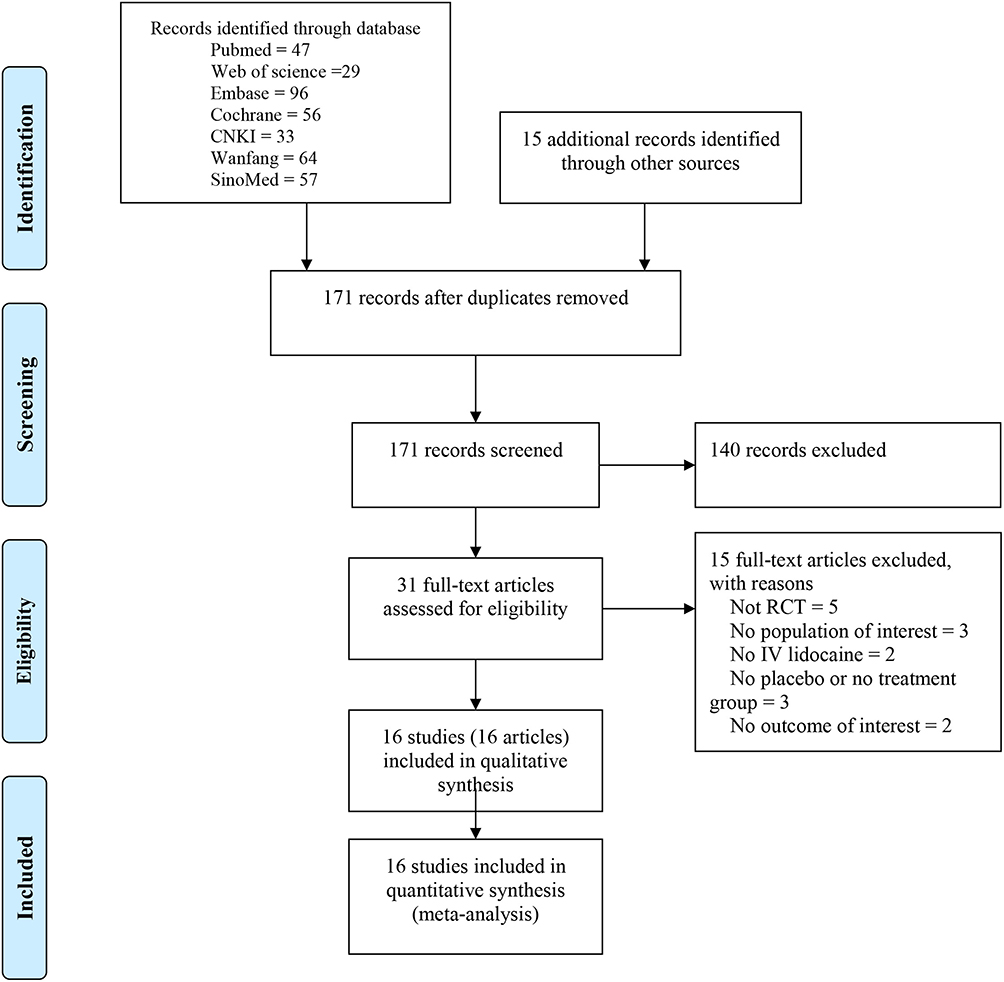 |
Figure 1 PRISMA flow diagram of the study selection process. |
Characteristics and Risk of Bias of Included Studies
Table 1 presents the characteristics of the 16 included studies involving 1045 patients (lidocaine group: 530; saline group: 515). Patients generally had ASA I–III status. Sample sizes per study ranged from 3625 to 9032,38 participants. The lidocaine intervention consistently involved an initial bolus (1.0–1.5 mg/kg) administered around induction/incision, followed by a continuous infusion (1.0–3.0 mg/kg/h). Infusion duration varied, with the majority of studies continuing until surgery end23–25,27–31,34,37,38 and only a few extending up to 24 hours postoperatively.26,33,35,36 Key outcomes measured across studies were postoperative pain scores23–26,28,30–38 and opioid consumption.23–25,30,33,35,36 Other outcomes frequently reported included adverse events (especially PONV26–32,34–38), QoR,29,30,32,33,37,38 length of hospital stay,27,32–35,37 time to first defecation29,33,35/flatus,29,32–34 and PPCs.32,33,38
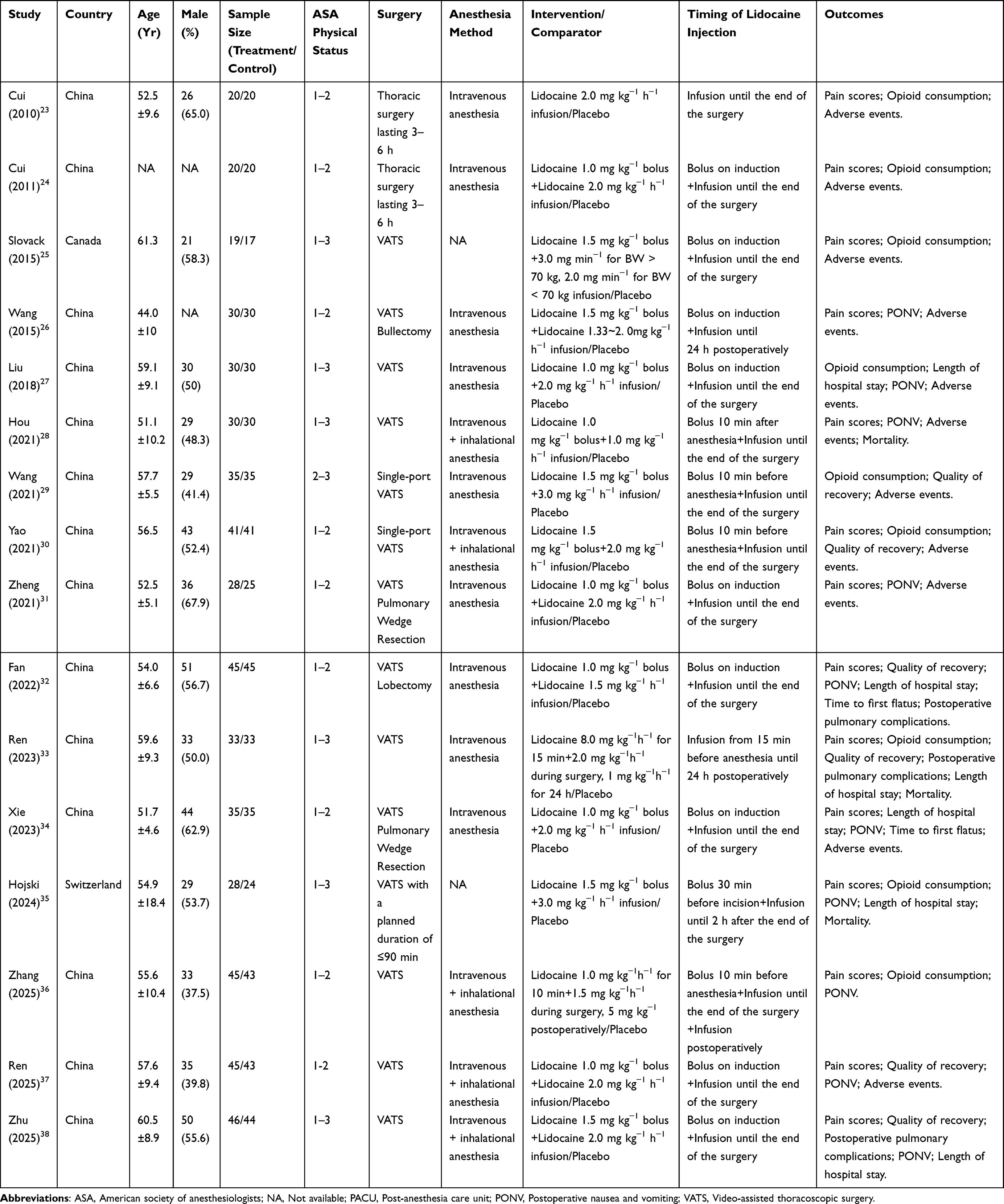 |
Table 1 Baseline Characteristics of Included Studies |
Of the included studies assessed for risk of bias (Supplemental Figure 1), 18.8% were judged to be at high risk, 25.0% raised some concerns, and 56.2% were at low risk. The predominant sources of high-risk bias were absence of details on the randomization process, inadequate blinding (participants, personnel, and outcome assessors) and selective reporting.
Primary Outcomes
Postoperative Pain Scores at Rest
Postoperative static pain were assessed in 12 trials across multiple time points.24,26,28,30–38 Meta-analysis revealed that patients receiving intravenous lidocaine exhibited significantly lower postoperative pain scores at rest compared with the control group at 6–8 h24,26,30,31,34,36–38 (8 RCTs; MD = −0.61 cm; 95% CI [−0.99, −0.24]; prediction interval [−1.86, 0.63]; P = 0.0014; GRADE: low), 24 h24,26,28,30–33,35–37 (10 RCTs; MD = −0.48 cm; 95% CI [−0.79, −0.17]; prediction interval [−1.51, 0.55]; P = 0.0027; GRADE: low), and 48 h24,26,28,30–33,35–37 (10 RCTs; MD = −0.31 cm; 95% CI [−0.48, −0.14]; prediction interval [−0.78, 0.17]; P = 0.0004; GRADE: moderate). Considerable heterogeneity was observed among the studies (I2 = 95.6% for 6–8 h; I2 = 87.9% for 24 h; I2 = 63.1% for 48 h). Notably, the prediction intervals crossed the line of no effect at all evaluated time points, indicating substantial between-study variability despite statistically significant pooled estimates (Figure 2 and Supplemental Table 2).
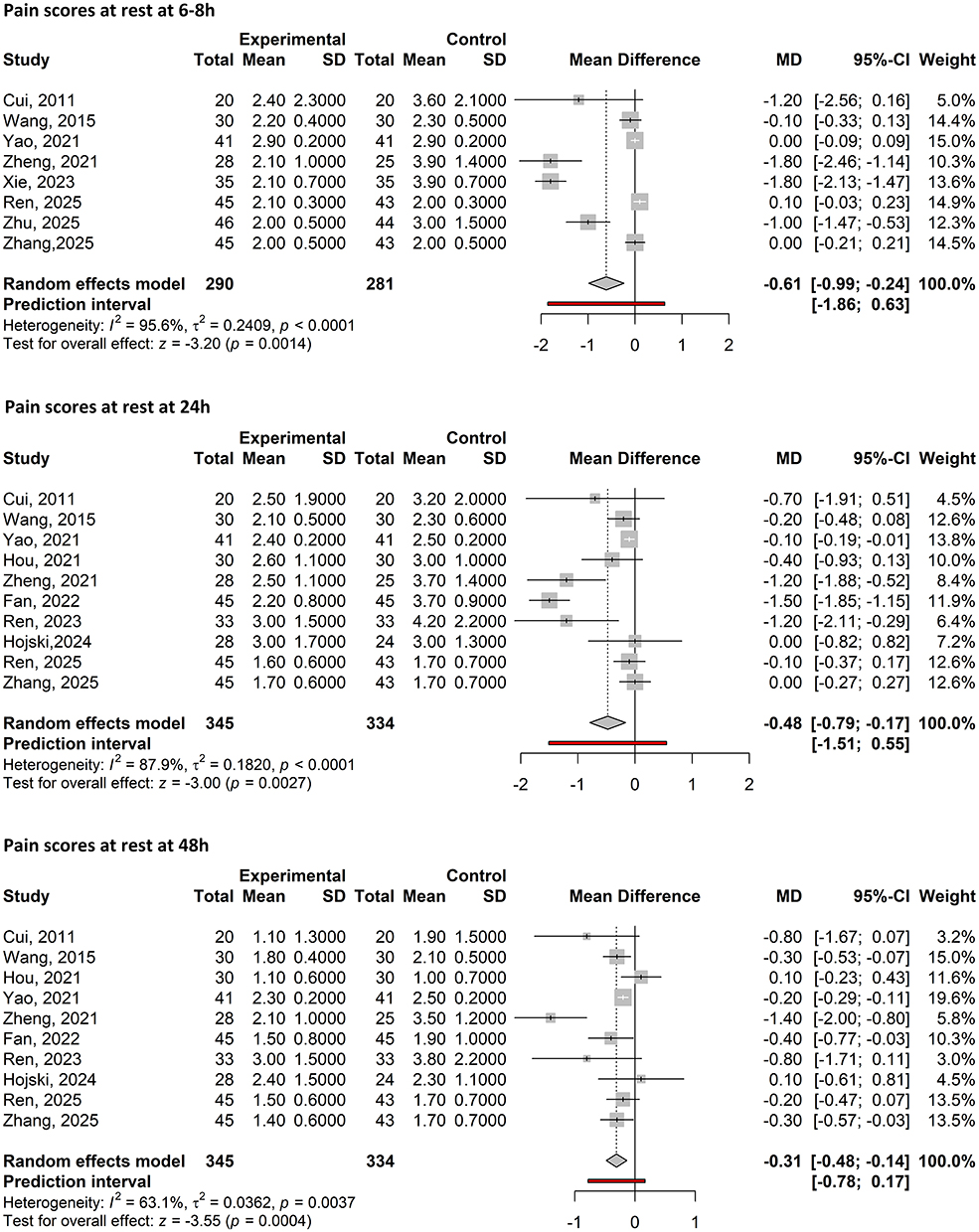 |
Figure 2 Forest plot of the effect of perioperative intravenous lidocaine on postoperative pain scores at rest at 6–8 h, 24 h, and 48 h after video-assisted thoracic surgery. |
Postoperative Pain Scores During Activity
Nine trials provided data on postoperative pain scores during activity at various intervals.23,24,26,30,33,35–38 The meta-analysis indicated that intravenous lidocaine was associated with significantly reduced pain scores relative to the control group at 6–8 h23,24,26,30,35–38 (8 RCTs; MD = −0.81 cm; 95% CI [−1.46, −0.17]; prediction interval [−2.97, 1.35]; P = 0.0131; GRADE: very low), 24 h24,26,30,33,35–37 (7 RCTs; MD = −0.78 cm; 95% CI [−1.20, −0.35]; prediction interval [−2.10, 0.55]; P = 0.0004; GRADE: very low), and 48 h24,26,30,33,35–37 (7 RCTs; MD = −0.33 cm; 95% CI [−0.54, −0.12]; prediction interval [−0.88, 0.22]; P = 0.0023; GRADE: low). Considerable heterogeneity was also noted across these analyses (I2 = 96.1% for 6–8 h; I2 = 91.8% for 24 h; I2 = 63.2% for 48 h). Notably, the prediction intervals crossed the line of no effect at all evaluated time points (Figure 3 and Supplemental Table 2).
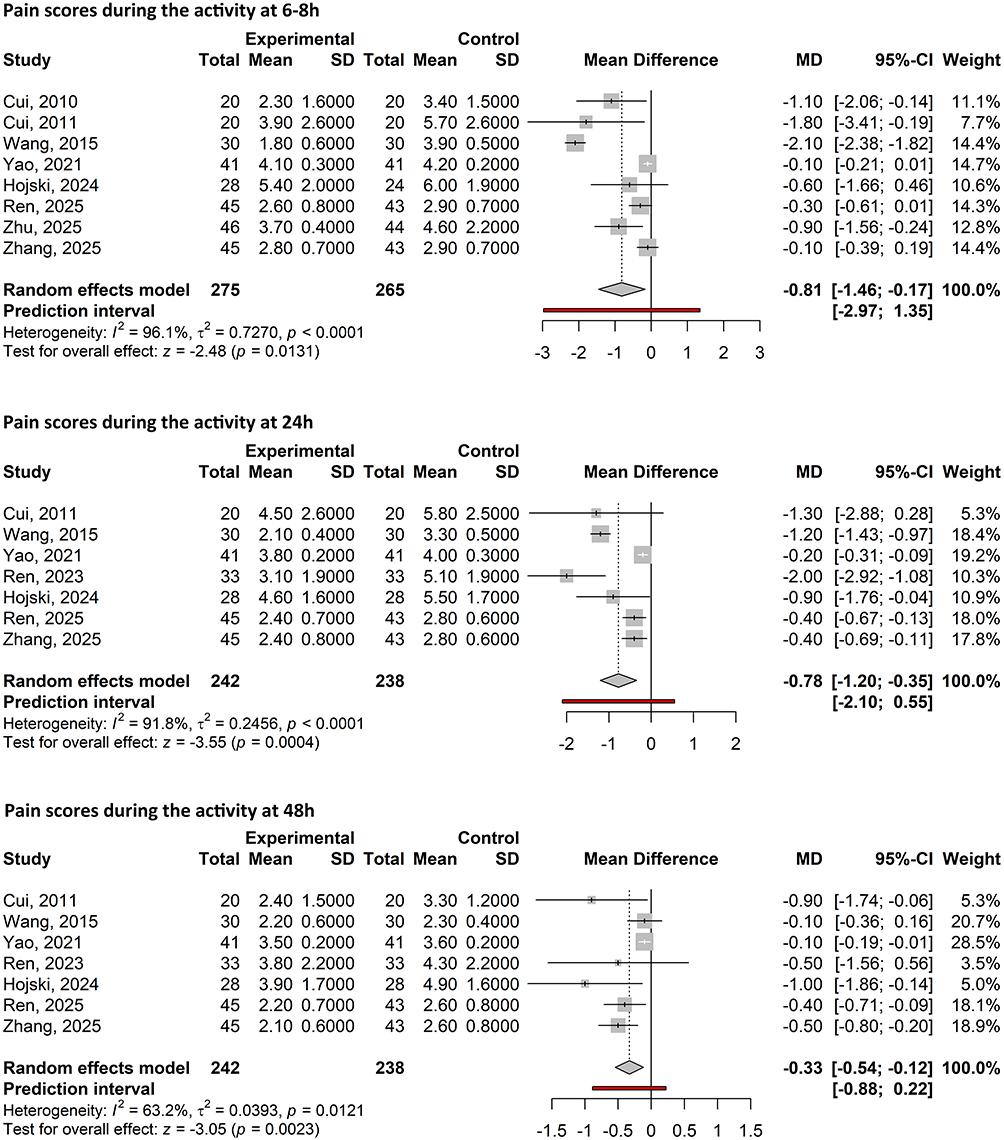 |
Figure 3 Forest plot of the effect of perioperative intravenous lidocaine on postoperative pain scores during activity at 6–8 h, 24 h, and 48 h after video-assisted thoracic surgery. |
Secondary Outcomes
Opioid Consumption
Seven studies reported postoperative opioid consumption at various time intervals.23–25,29,30,35,36 The meta-analysis indicated that, compared with the control group, intravenous lidocaine was associated with significantly reduced morphine consumption at 6–8 h24,25,35 (3 RCTs; MD = −1.90 mg; 95% CI [−3.22, −0.58]; prediction interval [−4.79, 1.00]; P = 0.0048) and 48 h23–25,30,35 (5 RCTs; MD = −6.76 mg; 95% CI [−10.21, −3.32]; prediction interval [−11.64, −1.88]; P = 0.0001). In addition, a non-significant reduction in 24 h morphine consumption was observed in the intravenous lidocaine group24,25,29,35,36 (5 RCTs; MD = −1.76 mg; 95% CI [−4.18, 0.66]; prediction interval [−7.27, 3.75]; P = 0.1536; GRADE: moderate) (Figure 4).
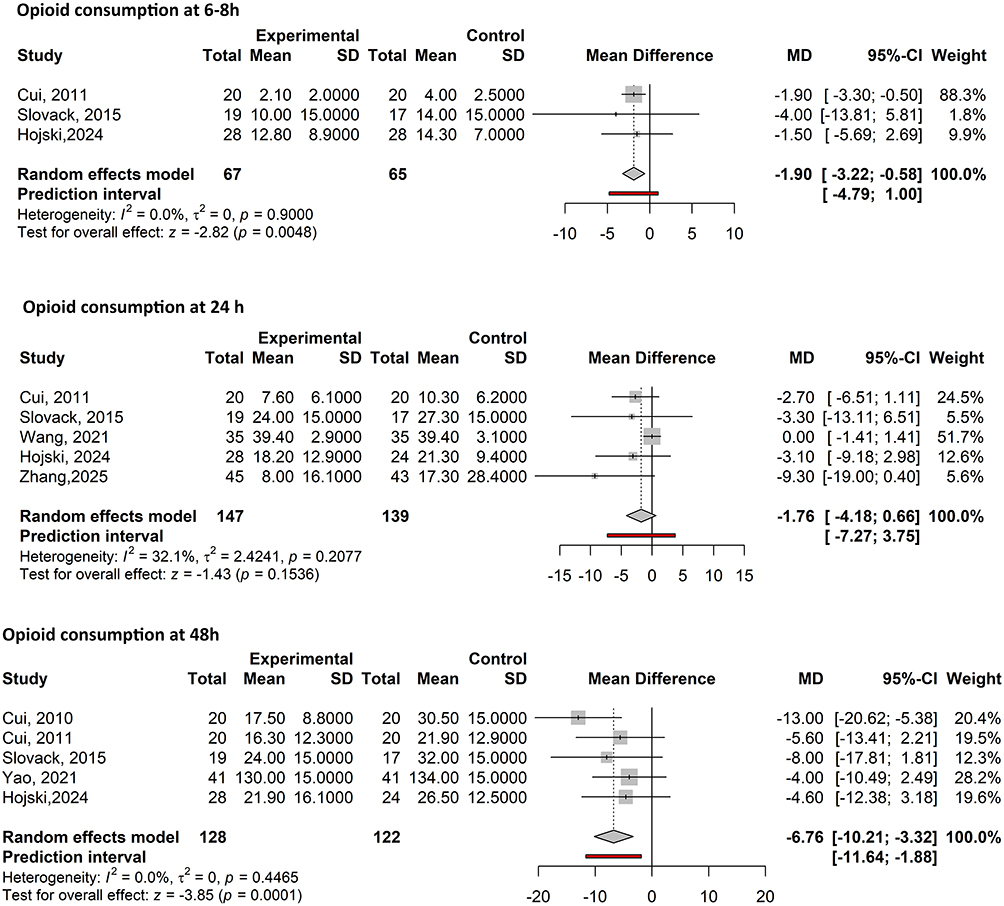 |
Figure 4 Forest plot of the effect of perioperative intravenous lidocaine on postoperative opioid consumption at 6–8 h, 24 h, and 48 h after video-assisted thoracic surgery. |
QoR
A total of 6 trials evaluated QoR.29,30,32,33,37,38 Among these, 4 trials used the QoR-40 scale29,32,33,38 and 2 trials used the QoR-15 scale.30,37 Using the MCID-unit approach, intravenous lidocaine was associated with improved QoR at 24 h29,30,32,33,37,38 (6 RCTs; 0.93 MCID units; 95% CI [0.65, 1.21]; P < 0.0001; GRADE: very low) and 48 h30,33,37,38 (4 RCTs; 0.94 MCID units; 95% CI [0.24, 1.64]; P = 0.0086) (Table 2 and Supplemental Figure 2).
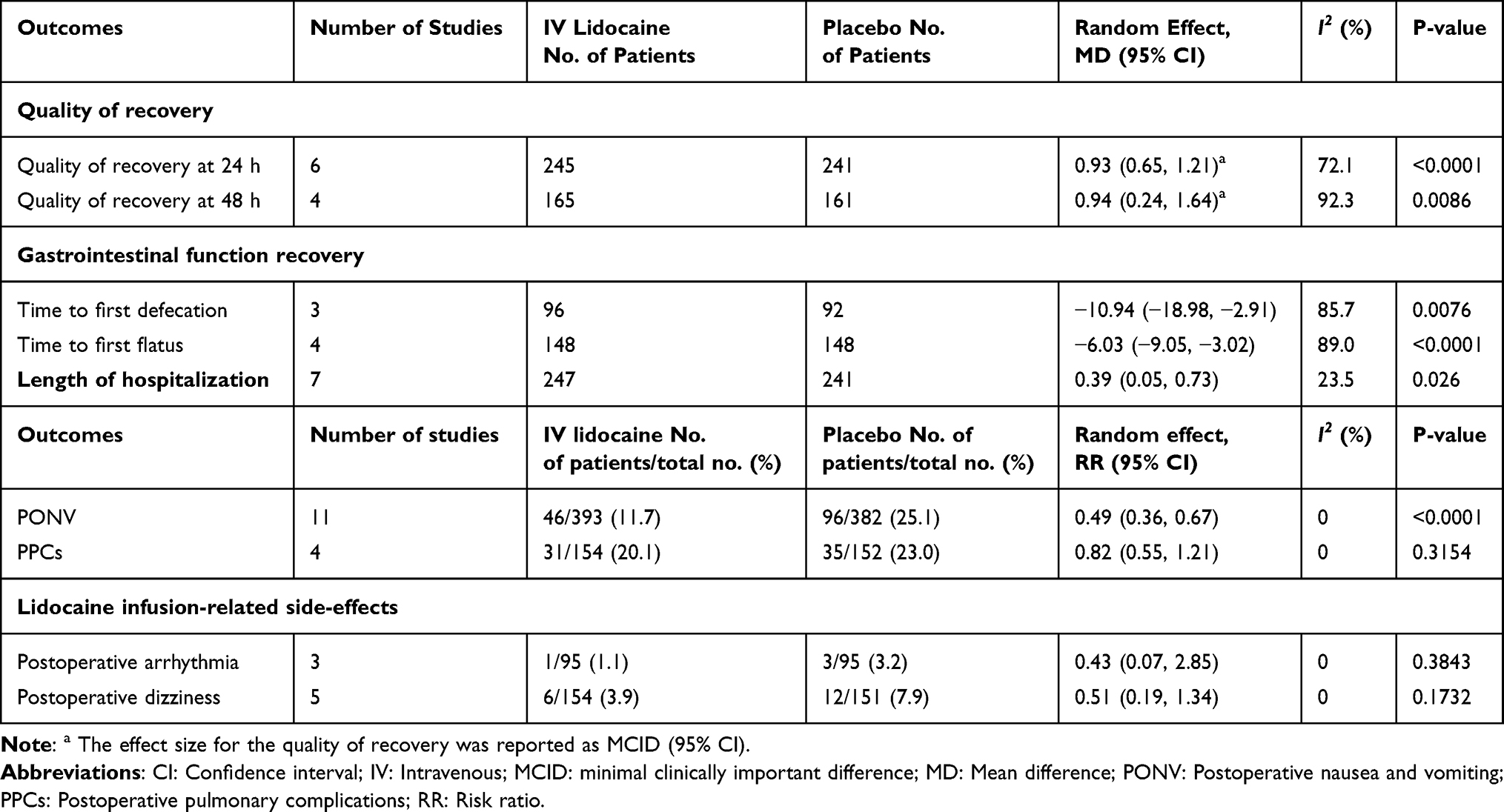 |
Table 2 Results from Secondary Outcome Analysis |
Gastrointestinal Function Recovery
Data from 5 trials were available for gastrointestinal function recovery outcomes.29,32–35 Among these, 3 trials reported the time to first defecation29,33,35 and 4 reported the time to first flatus.29,32–34 The meta-analysis demonstrated that intravenous lidocaine significantly shortened the time to first defecation (3 RCTs; MD = −10.94 h; 95% CI [−18.98, −2.91]; P = 0.0076) and the time to first flatus (4 RCTs; MD = −6.03 h; 95% CI [−9.05, −3.02]; P < 0.0001; GRADE: low) compared to the control group (Table 2 and Supplemental Figure 4).
PONV
Eleven trials evaluated the incidence of PONV.26–32,34–36,38 Compared with control group, intravenous lidocaine significantly reduced incidence of PONV (11 RCTs; RR = 0.49; 95% CI [0.36, 0.67]; P < 0.0001; GRADE: moderate) (Table 2 and Supplemental Figure 3).
PPCs
Pooled results from 4 trials27,32,33,38 indicated no significant difference in the incidence of PPCs between the intravenous lidocaine and control groups (RR = 0.82; 95% CI [0.55, 1.21]; P = 0.3154) (Table 2 and Supplemental Figure 5).
Lidocaine Infusion-Related Side Effects
Three trials evaluated the incidence of postoperative arrhythmia.27,28,34 Overall, the incidence of postoperative arrhythmia is low, and no significant difference was observed between two groups (RR = 0.43; 95% CI [0.07, 2.85]; P = 0.3843) (Table 2 and Supplemental Figure 6). Furthermore, pooled results from 5 trials24,28,30,31,34 indicated no significant difference in the incidence of postoperative dizziness between two groups (RR = 0.51; 95% CI [0.19, 1.34]; P = 0.1732) (Table 2 and Supplemental Figure 7).
Length of Hospital Stay
Pooled analysis of 7 trials27,28,32–35,38 indicated a modest increase in the length of hospital stay associated with intravenous lidocaine compared to the control group (MD = 0.39 days; 95% CI [0.05, 0.73]; P = 0.026) (Table 2 and Supplemental Figure 8).
Sensitivity and Subgroup Analyses
Sensitivity analysis using the leave-one-out method was performed for the primary outcomes, and the pooled results remained stable (Supplemental Table 1). Prespecified subgroup analyses according to anesthesia method demonstrated significant subgroup differences for pain scores at rest and during activity at 24 h, with larger treatment effects observed in studies using total intravenous anesthesia than in those using combined intravenous–inhalational anesthesia (Supplemental Figures 9 and 10). Exploratory subgroup analyses according to lidocaine infusion duration showed inconsistent findings. No significant subgroup difference was observed for pain at rest at 24 h, although the treatment effect appeared larger in studies using intraoperative-only infusion (Supplemental Figure 11). In contrast, a significant subgroup difference was identified for pain during activity at 24 h, with greater pain reduction observed in studies that continued lidocaine infusion into the postoperative period (Supplemental Figure 12).
Publication Bias
A funnel plot for the primary outcomes is shown in Supplemental Figure 13. Visual inspection of the funnel plots did not suggest substantial asymmetry. Consistent with this observation, Egger’s test showed no evidence of significant small-study effects for pain scores at rest at 24 h (P = 0.118) or 48 h (P = 0.195), indicating no statistically detectable publication bias for these outcomes.
Discussion
This systematic review and meta-analysis of 16 RCTs found that perioperative intravenous lidocaine was associated with statistically significant reductions in postoperative pain scores and improvements in several recovery-related outcomes following VATS. However, the magnitude of pain reduction did not reach the predefined MCID,22 prediction intervals crossed the line of no effect at all assessed time points, and the certainty of evidence was generally low. Therefore, the clinical relevance of these findings remains uncertain.
These findings are consistent with previous evidence suggesting that the analgesic benefits of intravenous lidocaine are often statistically significant but of uncertain clinical importance. For example, Tang et al, reported that intravenous lidocaine provided modest analgesia 24 h after hysterectomy (MD = −0.18 cm) but fell short of the MCID.39 As the authors noted, the clinical benefit of lidocaine in clinical practice may not be as substantial as the statistical improvement suggests.22,40 Likewise, Xu et al reported that lidocaine reduced the incidence of moderate-to-severe movement-evoked pain within 48 h after hepatectomy, but the magnitude of pain reduction and opioid-sparing effect remained below the MCID.9 In contrast, the large-scale ALLEGRO trial found no benefit of intravenous lidocaine on postoperative pain in patients undergoing minimally invasive colorectal surgery.12 It should be noted that variations in surgical procedures and lidocaine dosing regimens across these studies may contribute to the divergent findings. For instance, Song et al found that intraoperative lidocaine infusion reduced pain scores at 2 and 6 h after cholecystectomy (MCID > 1), although no significant difference was observed between groups at the 24-h mark.10 This suggests that the analgesic effect of lidocaine may be time-sensitive and potentially procedure-dependent.
Our results indicated that intravenous lidocaine also led to a reduction in postoperative opioid consumption within the first 48 hours. However, the extent of this reduction did not reach the established MCID of 10 mg intravenous morphine equivalents for surgical patients.41 This observation is consistent with the findings of a meta-analysis by Hussain et al, which reported that in patients undergoing breast cancer surgery, lidocaine infusion reduced oral morphine consumption by only 7.06 mg during the first 24 hours – a difference that was also deemed not clinically significant.42 In multimodal analgesia, opioid-sparing effects are often expected to translate into improvements in overall postoperative recovery. Consistent with this expectation, intravenous lidocaine was associated with statistically significant improvements in QoR at both 24 h (0.93 MCID units) and 48 h (0.94 MCID units). However, similar to the findings for postoperative opioid consumption, the magnitude of these improvements remained below the established threshold for clinical importance (>1.0 MCID unit). Taken together, these findings suggest that statistically significant improvements in pain- and recovery-related outcomes do not necessarily translate into clinically meaningful benefits, highlighting the importance of considering both statistical significance and clinical relevance when interpreting treatment effects.
Opioid-induced side effects, such as PONV, can significantly impede postoperative recovery by leading to delays. Our study demonstrated that intravenous lidocaine significantly reduced the incidence of PONV (RR = 0.49). This effect may be partly attributable to a lidocaine-induced reduction in total perioperative opioid consumption. These findings are consistent with those reported by Tang et al39 and Ahn et al43 collectively highlighting a key clinical implication by demonstrating that an opioid-sparing anesthetic regimen utilizing intravenous lidocaine should be considered for high-risk populations to mitigate PONV.
Current evidence regarding the effect of perioperative lidocaine infusion on gastrointestinal recovery remains conflicting and is primarily derived from studies on abdominal surgery. While two European single-center RCTs demonstrated that lidocaine accelerated gastrointestinal recovery and reduced length of hospitalization after colon resection,44,45 the recent large-scale ALLEGRO trial found that perioperative intravenous lidocaine did not improve gut function recovery at 72 h.12 Furthermore, our meta-analysis found that lidocaine shortens the time to first flatus or defecation in the context of VATS; however, these findings warrant cautious interpretation due to the small sample sizes and high heterogeneity among the included studies. Interestingly, intravenous lidocaine was associated with a statistically significant increase in length of hospital stay. However, the absolute difference was small (MD 0.39 days) and unlikely to be clinically meaningful. Given the concurrent improvements in several recovery-related outcomes, this finding may reflect variations in discharge practices rather than a true adverse effect of intravenous lidocaine.
Future research should focus on defining the role of intravenous lidocaine within contemporary multimodal analgesic pathways for VATS. In particular, regional analgesic techniques such as thoracic paravertebral block, erector spinae plane block, serratus anterior plane block, and intercostal nerve block have become major areas of investigation and are increasingly incorporated into enhanced recovery protocols.46 Future adequately powered multicenter randomized trials should evaluate whether intravenous lidocaine provides additional benefit when combined with these regional techniques, identify optimal dosing and infusion durations, and determine which patient subgroups are most likely to derive clinically meaningful benefit.
This meta-analysis has several limitations. First, considerable variation existed in lidocaine dosing regimens and infusion durations across the included studies, which may have contributed to clinical heterogeneity. Although most trials discontinued the infusion at the end of surgery, prolonged administration may produce different analgesic effects.47 Second, substantial statistical heterogeneity was observed for several outcomes, particularly postoperative pain scores. Moreover, prediction intervals crossed the line of no effect for all pain outcomes, suggesting that the magnitude and direction of treatment effects may vary across different clinical settings. Consequently, the pooled estimates should be interpreted with caution. Third, the overall certainty of evidence was generally low because several included studies were judged to have a high risk of bias or raised some concerns regarding methodological quality. This limits confidence in the observed treatment effects. Finally, important perioperative factors, including the use of regional analgesic techniques, multimodal analgesic regimens, and other perioperative management strategies, were inconsistently reported and could not be adequately explored. In addition, only studies published in English or Chinese were included, which may have introduced language-related publication bias.
Conclusion
Although perioperative intravenous lidocaine infusion was associated with statistically significant improvements in postoperative pain and several recovery-related outcomes following VATS, the magnitude of benefit in pain, opioid consumption, and QoR did not consistently reach established thresholds for clinical importance. The certainty of evidence was generally low, and substantial heterogeneity was observed across studies. The overall clinical benefit of perioperative intravenous lidocaine remains uncertain and should be interpreted with caution.
Provenance and Peer Review
Not commissioned, externally peer-reviewed.
Research Registration Unique Identifying Number (UIN)
This study protocol was registered in PROSPERO (CRD420251041026).
Data Sharing Statement
All data generated or analyzed during this study are included in this article. Further enquiries can be directed to the corresponding author (Meida Fan).
Author Contributions
All authors made a significant contribution to the work reported, whether that is in the conception, study design, execution, acquisition of data, analysis and interpretation, or in all these areas; took part in drafting, revising or critically reviewing the article; gave final approval of the version to be published; have agreed on the journal to which the article has been submitted; and agree to be accountable for all aspects of the work.
Funding
This study was supported by the Clinical Research Fund of Nanfang Hospital, Southern Medical University (2024CR007).
Disclosure
The authors declare that they have no conflicts of interest.
References
1. Servais EL, Towe CW, Brown LM, et al. The society of thoracic surgeons general thoracic surgery database: 2020 update on outcomes and research. Ann Thorac Surg. 2020;110(3):768–15. doi:10.1016/j.athoracsur.2020.06.006
2. Gan TJ. Poorly controlled postoperative pain: prevalence, consequences, and prevention. J Pain Res. 2017;10:2287–2298. doi:10.2147/JPR.S144066
3. Bendixen M, Jørgensen OD, Kronborg C, Andersen C, Licht PB. Postoperative pain and quality of life after lobectomy via video-assisted thoracoscopic surgery or anterolateral thoracotomy for early stage lung cancer: a randomised controlled trial. Lancet Oncol. 2016;17(6):836–844. doi:10.1016/S1470-2045(16)00173-X
4. Umari M, Carpanese V, Moro V, et al. Postoperative analgesia after pulmonary resection with a focus on video-assisted thoracoscopic surgery. Eur J Cardiothorac Surg. 2018;53(5):932–938. doi:10.1093/ejcts/ezx413
5. Hu J, Zhou W, Zheng X, et al. Analgesic efficacy of continuous erector spinae plane block vs. opioid-based regimen for postoperative pain management following video-assisted thoracoscopic lung resection: a prospective, randomised, open-label, non-inferiority trial. Anaesthesia. 2025;80(10):1226–1236. doi:10.1111/anae.16651
6. Dunn LK, Durieux ME. Perioperative use of intravenous lidocaine. Anesthesiology. 2017;126(4):729–737. doi:10.1097/ALN.0000000000001527
7. Chu R, Umukoro N, Greer T, et al. Intravenous lidocaine infusion for the management of early postoperative pain: a comprehensive review of controlled trials. Psychopharmacol bullet. 2020;50(4 Suppl 1):216–259. doi:10.64719/pb.4391
8. Hermanns H, Hollmann MW, Stevens MF, et al. Molecular mechanisms of action of systemic lidocaine in acute and chronic pain: a narrative review. Br J Anaesth. 2019;123(3):335–349. doi:10.1016/j.bja.2019.06.014
9. Xu Y, Ye M, Liu F, et al. Efficacy of prolonged intravenous lidocaine infusion for postoperative movement-evoked pain following hepatectomy: a double-blinded, randomised, placebo-controlled trial. Br J Anaesth. 2023;131(1):113–121. doi:10.1016/j.bja.2023.03.026
10. Song X, Sun Y, Zhang X, Li T, Yang B. Effect of perioperative intravenous lidocaine infusion on postoperative recovery following laparoscopic Cholecystectomy-A randomized controlled trial. Int J Surg. 2017;45:8–13. doi:10.1016/j.ijsu.2017.07.042
11. Farag E, Ghobrial M, Sessler DI, et al. Effect of perioperative intravenous lidocaine administration on pain, opioid consumption, and quality of life after complex spine surgery. Anesthesiology. 2013;119(4):932–940. doi:10.1097/ALN.0b013e318297d4a5
12. Paterson H, Vadiveloo T, Innes K, et al. Intravenous lidocaine for gut function recovery in colonic surgery: a randomized clinical trial. JAMA. 2025;333(1):39–48. doi:10.1001/jama.2024.23898
13. Marshall K, McLaughlin K. Pain Management in Thoracic Surgery. Thorac Surg Clin. 2020;30(3):339–346. doi:10.1016/j.thorsurg.2020.03.001
14. Sterne JAC, Savović J, Page MJ, et al. RoB 2: a revised tool for assessing risk of bias in randomised trials. BMJ. 2019;366:l4898. doi:10.1136/bmj.l4898
15. Guyatt GH, Oxman AD, Kunz R, et al. Going from evidence to recommendations. BMJ. 2008;336(7652):1049–1051. doi:10.1136/bmj.39493.646875.AE
16. Guyatt G, Oxman AD, Akl EA, et al. GRADE guidelines: 1. Introduction-GRADE evidence profiles and summary of findings tables. J Clin Epidemiol. 2011;64(4):383–394. doi:10.1016/j.jclinepi.2010.04.026
17. Wan X, Wang W, Liu J, Tong T. Estimating the sample mean and standard deviation from the sample size, median, range and/or interquartile range. BMC Med Res Method. 2014;14:135. doi:10.1186/1471-2288-14-135
18. Johnston BC, Thorlund K, Schünemann HJ, et al. Improving the interpretation of quality of life evidence in meta-analyses: the application of minimal important difference units. Health Qual Life Outcomes. 2010;8:116. doi:10.1186/1477-7525-8-116
19. Myles PS, Myles DB, Galagher W, Chew C, MacDonald N, Dennis A. Minimal clinically important difference for three quality of recovery scales. Anesthesiology. 2016;125(1):39–45. doi:10.1097/ALN.0000000000001158
20. Myles PS, Myles DB. An updated minimal clinically important difference for the QoR-15 scale. Anesthesiology. 2021;135(5):934–935. doi:10.1097/ALN.0000000000003977
21. Higgins JP, Thompson SG, Deeks JJ, Altman DG. Measuring inconsistency in meta-analyses. BMJ. 2003;327(7414):557–560. doi:10.1136/bmj.327.7414.557
22. Myles PS, Myles DB, Galagher W, et al. Measuring acute postoperative pain using the visual analog scale: the minimal clinically important difference and patient acceptable symptom state. Br J Anaesth. 2017;118(3):424–429. doi:10.1093/bja/aew466
23. Cui W, Li Y, Li S, Wang R, Li J. Systemic administration of lidocaine reduces morphine requirements and postoperative pain of patients undergoing thoracic surgery after propofol-remifentanil-based anaesthesia. Eur J Anaesthesiol. 2010;27(1):41–46. doi:10.1097/EJA.0b013e32832d5426
24. Cui WH, Tan H, Han RQ, Li YP, Li SR. Systemic administration of lidocaine reduced postoperative pain after remifentanil-based anesthesia. J Clin Anesthesiol. 2011;27(10):956–958.
25. Slovack M, Taylor B, Bryce R, Ong D. Does intravenous lidocaine infusion during video-assisted thoracoscopic surgery reduce postoperative analgesia? A randomized controlled study. Can J Anaesthesia. 2015;62(6):676–677. doi:10.1007/s12630-015-0333-z
26. Wang P, Ding DF, Zhang JZ, Dai ZL, Jiang YX, Zhao L. The effect of lidocaine on postoperative pain in patients undergoing thoracoscopic resection of pulmonary bulla. Chin J Lab Diagn. 2015;19(07):1134–1137.
27. Liu ZJ, Zhang LY, Zheng XG, et al. Effects of continuous intravenous intraoperative lidocaine infusion on opioids consumption and postoperative recovery in patients undergoing video-assisted thoracoscopic lobectomy. Acta Academiae Medicinae Sinicae. 2018;40(02):163–169. doi:10.3881/j.issn.1000-503X.2018.02.005
28. Hou YH, Shi WC, Cai S, et al. Effect of intravenous lidocaine on serum interleukin-17 after video-assisted thoracic surgery for non-small-cell lung cancer: a randomized, double-blind, placebo-controlled trial. Drug Des Devel Ther. 2021;15:3379–3390. doi:10.2147/DDDT.S316804
29. Wang L, Sun J, Zhang X, Wang G. The effect of lidocaine on postoperative quality of recovery and lung protection of patients undergoing thoracoscopic radical resection of lung cancer. Drug Des Devel Ther. 2021;15:1485–1493. doi:10.2147/DDDT.S297642
30. Yao Y, Jiang J, Lin W, Yu Y, Guo Y, Zheng X. Efficacy of systemic lidocaine on postoperative quality of recovery and analgesia after video-assisted thoracic surgery: a randomized controlled trial. J Clin Anesth. 2021;71:110223. doi:10.1016/j.jclinane.2021.110223
31. Zheng XG, Liu YJ, Jin T, Gen HY, Liu WP, Liu H. The effect of lidocaine on perioperative opioid use in patients undergoing video-assisted thoracoscopic surgery wedge resection for lung cancer. Chin J Lung Dis. 2021;14(06):782–784.
32. Fan Z, Wang HB, Liu ZK. Effect of continuous intraoperative intravenous injection of lidocaine on intraoperative anesthetic dose and postoperative pain in patients undergoing thoracoscopic lobectomy. Int J Anesthesiol Resuscitat. 2022;43(03):258–263.
33. Ren B, Cheng M, Liu C, et al. Perioperative lidocaine and dexmedetomidine intravenous infusion reduce the serum levels of NETs and biomarkers of tumor metastasis in lung cancer patients: a prospective, single-center, double-blinded, randomized clinical trial. Front Oncol. 2023;13:1101449. doi:10.3389/fonc.2023.1101449
34. Xie Q, Luo W, Chen L. Perioperative continuous intravenous lidocaine infusion in patients undergoing video-assisted thoracoscopic surgery wedge resection. J Xiangnan Univ. 2023;25(03):32–34+38.
35. Hojski A, Bolliger D, Mallaev M, et al. Perioperative intravenous lidocaine in thoracoscopic surgery for improved postoperative pain control: a randomized, placebo-controlled, double-blind, superiority trial. J Thoracic Dis. 2024;16(3):1923–1932. doi:10.21037/jtd-23-1438
36. Zhang L, Wei P, Wang H, et al. Effect of perioperative lidocaine application on inflammatory factors, immune function, and quality of early postoperative recovery in patients undergoing video-assisted thoracoscopic surgery: a randomized controlled trial. Eur J Med Res. 2025;30(1):1072. doi:10.1186/s40001-025-03119-9
37. Ren W, Zheng K, Wei PH, et al. Effect of intravenous lidocaine combined with thoracic paravertebral nerve block on early postoperative recovery in patients undergoing thoracoscopic surgery. ClinMed J. 2025;23(05):61–66.
38. Zhu MD, Zhang CL, Shi Z, Shen FM. Effect of lidocaine intravenous infusion on the quality of postoperative recovery in patients undergoing video-assisted thoracoscopic surgery. J Clin Anesthesiol. 2025;41(04):358–363.
39. Tang P, Sun Q, Li Z, Tong X, Chen F. Perioperative intravenous lidocaine infusion improves postoperative analgesia after hysterectomy: a systematic review and meta-analysis of randomized controlled trials. Int J Surg. 2025;111(1):1265–1274. doi:10.1097/JS9.0000000000001942
40. Cai Q, Liu GQ, Huang LS, et al. Effects of erector spinae plane block on postoperative pain and side-effects in adult patients underwent surgery: a systematic review and meta-analysis of randomized controlled trials. Int J Surg. 2020;80:107–116. doi:10.1016/j.ijsu.2020.05.038
41. Laigaard J, Pedersen C, Rønsbo TN, Mathiesen O, Karlsen APH. Minimal clinically important differences in randomised clinical trials on pain management after total hip and knee arthroplasty: a systematic review. Br J Anaesth. 2021;126(5):1029–1037. doi:10.1016/j.bja.2021.01.021
42. Hussain N, Brull R, Weber L, et al. The analgesic effectiveness of perioperative lidocaine infusions for acute and chronic persistent postsurgical pain in patients undergoing breast cancer surgery: a systematic review and meta-analysis. Br J Anaesth. 2024;132(3):575–587. doi:10.1016/j.bja.2023.12.005
43. Ahn E, Kang H, Choi GJ, et al. Intravenous lidocaine for effective pain relief after a laparoscopic colectomy: a prospective, randomized, double-blind, placebo-controlled study. Int Surg. 2015;100(3):394–401. doi:10.9738/INTSURG-D-14-00225.1
44. Kaba A, Laurent SR, Detroz BJ, et al. Intravenous lidocaine infusion facilitates acute rehabilitation after laparoscopic colectomy. Anesthesiology. 2007;106(1):11–18; discussion15–16. doi:10.1097/00000542-200701000-00007
45. Tikuišis R, Miliauskas P, Samalavičius NE, Žurauskas A, Samalavičius R, Zabulis V. Intravenous lidocaine for post-operative pain relief after hand-assisted laparoscopic colon surgery: a randomized, placebo-controlled clinical trial. Techn Coloproctol. 2014;18(4):373–380. doi:10.1007/s10151-013-1065-0
46. Dost B, Kaya C, Turunc E, et al. Thoracic wall fascial plane blocks: a narrative review for breast, thoracic, and cardiac surgery. J Anesth Analg Crit Care. 2025;6(1):9. doi:10.1186/s44158-025-00328-w
47. Foo I, Macfarlane AJR, Srivastava D, et al. The use of intravenous lidocaine for postoperative pain and recovery: international consensus statement on efficacy and safety. Anaesthesia. 2021;76(2):238–250. doi:10.1111/anae.15270
 © 2026 The Author(s). This work is published and licensed by Dove Medical Press Limited. The
full terms of this license are available at https://www.dovepress.com/terms
and incorporate the Creative Commons Attribution
- Non Commercial (unported, 4.0) License.
By accessing the work you hereby accept the Terms. Non-commercial uses of the work are permitted
without any further permission from Dove Medical Press Limited, provided the work is properly
attributed. For permission for commercial use of this work, please see paragraphs 4.2 and 5 of our Terms.
© 2026 The Author(s). This work is published and licensed by Dove Medical Press Limited. The
full terms of this license are available at https://www.dovepress.com/terms
and incorporate the Creative Commons Attribution
- Non Commercial (unported, 4.0) License.
By accessing the work you hereby accept the Terms. Non-commercial uses of the work are permitted
without any further permission from Dove Medical Press Limited, provided the work is properly
attributed. For permission for commercial use of this work, please see paragraphs 4.2 and 5 of our Terms.
Recommended articles

The Efficacy and Safety of Acupuncture for Tinnitus-Associated Insomnia: A Protocol for a Systematic Review and Meta-Analysis
Fan L, Gao Y, Zhou J, Hu H, Gao H
Journal of Pain Research 2022, 15:2957-2965
Published Date: 21 September 2022
A Systematic Review and Meta-Analysis Protocol on How Best to Use Non-Pharmacologic Therapies to Manage Chronic Low Back Pain and Associated Depression
Guo Y, Ma Q, Zhou X, Yang J, He K, Shen L, Zhao C, Chen Z, Tan CIC, Chen J
Journal of Pain Research 2022, 15:3509-3521
Published Date: 4 November 2022
Tezepelumab for Patients with Severe Uncontrolled Asthma: A Systematic Review and Meta-Analysis
Zoumot Z, Al Busaidi N, Tashkandi W, Aljohaney AA, Isse S, Vidyasagar K, Ukwaja KN
Journal of Asthma and Allergy 2022, 15:1665-1679
Published Date: 18 November 2022
Esketamine for Postoperative Multimodal Analgesia in Laparoscopic Surgery: A Systematic Review and Meta-Analysis
Li J, Wang X
Journal of Pain Research 2026, 19:597557
Published Date: 27 April 2026
Effect of Stellate Ganglion Block in Relieving Postoperative Pain After Surgery: A Systematic Review and Meta-Analysis
Xu S, Zhang Z, Wu T, Shen Q
Journal of Pain Research 2026, 19:602525
Published Date: 19 May 2026