
Back to Journals » Journal of Pain Research » Volume 19
Severity-Based Latent Profiles of Pain Catastrophizing and Their Cross-Sectional Associations with Fear of Pain, Sleep Quality, and Psychological Resilience in Patients Following Cardiac Surgery
Authors Jiang SJ, Pang Y, Wei HW, Yan MJ, Dong XT 
Received 19 March 2026
Accepted for publication 7 July 2026
Published 21 July 2026 Volume 2026:19 610392
DOI https://doi.org/10.2147/JPR.S610392
Checked for plagiarism Yes
Review by Single anonymous peer review
Peer reviewer comments 2
Editor who approved publication: Dr Rocío de la Vega
Shen-Jie Jiang,1,* Yi Pang,2,* Han-Wei Wei,3 Mei-Juan Yan,3 Xin-Tong Dong4
1Department of Anesthesiology, Sir Run Run Shaw Hospital, School of Medicine, Zhejiang University, Hangzhou, Zhejiang, People’s Republic of China; 2Department of Anesthesiology, Shanghai Geriatric Medical Center, Shanghai, 201104, People’s Republic of China; 3Center for Rehabilitation Medicine, Department of Anesthesiology, Zhejiang Provincial People’s Hospital (Affiliated People’s Hospital, Hangzhou Medical College), Research Institute of Anesthesiology and Perioperative Medicine, Hangzhou Medical College, Hangzhou, Zhejiang, People’s Republic of China; 4Department of Anesthesiology, Shenzhen People’s Hospital (The First Affiliated Hospital, Southern University of Science and Technology; The Second Clinical Medical College, Jinan University), Shenzhen, 518020, People’s Republic of China
*These authors contributed equally to this work
Correspondence: Xin-Tong Dong, Email [email protected]
Objective: This cross-sectional study aimed to identify latent profiles of pain catastrophizing among patients following cardiac surgery and to examine their concurrent associations with fear of pain, sleep quality, and psychological resilience. We further tested whether sleep quality and psychological resilience showed statistical indirect associations between pain catastrophizing profiles and fear of pain in a pre-specified cross-sectional model.
Methods: This cross-sectional study included 468 patients who were assessed on postoperative days 3– 5 after cardiac surgery at three tertiary Grade-A general hospitals in Zhejiang and Guangdong Provinces, China, between July 2024 and August 2025. Core variables were assessed using the Chinese Pain Catastrophizing Scale, the Simplified Chinese Fear of Pain Questionnaire-9, the Sleep Quality Questionnaire, and the Connor-Davidson Resilience Scale, respectively.
Results: Latent profile analysis supported a three-profile solution with good classification accuracy (Entropy = 0.875), including low, moderate, and high severity pain catastrophizing profiles, accounting for 22.44%, 56.20%, and 21.36% of participants. The three profiles differed significantly in sleep quality (F = 24.624, P < 0.001), psychological resilience (F = 43.727, P < 0.001), and fear of pain (F = 798.921, P < 0.001). Relative to the low profile, both the moderate and high profiles positively predicted fear of pain (B = 0.962 and B = 1.944, respectively; both P < 0.001). In the cross-sectional indirect-effect model, sleep quality showed small but statistically significant indirect associations for both contrasts (moderate vs low: indirect effect = 0.026, 95% CI [0.004, 0.054]; high vs low: 0.035, 95% CI [0.005, 0.076]). Psychological resilience showed a statistically significant suppression-type indirect association only for the high- versus low-severity contrast (indirect effect = − 0.058, 95% CI [− 0.102, − 0.020]).
Conclusion: These findings underscore the clinical importance of early identification and severity-stratified management of pain catastrophizing in postoperative patients, with particular attention directed toward moderate- and high-severity subgroups.
Keywords: cardiac surgery, fear of pain, pain catastrophizing, sleep quality, psychological resilience
Introduction
Cardiac surgery represents a cornerstone therapeutic modality for coronary artery disease, valvular heart disease, aortic pathologies, and congenital cardiac malformations;1–3 nevertheless, postoperative pain remains one of the central challenges impeding early recovery and long-term quality of life.4 This pain arises not only from incisional and deep tissue trauma,5 but is frequently compounded by multiple converging nociceptive sources, including sternal retraction, pain triggered by respiration and coughing, drainage tube irritation, and referred pain to the shoulder and back.6,7 Critically, the experience of pain is not entirely determined by the extent of tissue injury; under equivalent surgical conditions, patients demonstrate substantial interindividual variability in pain intensity, distress, and functional limitation,8,9 suggesting that pain-related cognitive and emotional processing plays a pivotal role in the maintenance and amplification of postoperative pain. A thorough understanding of the psychological mechanisms underlying postoperative pain in cardiac surgery patients therefore carries both considerable clinical value and theoretical significance for the optimization of pain management strategies and the facilitation of postoperative rehabilitation.
Fear of pain refers to a multidimensional fearful response to actual or anticipated nociceptive stimuli, encompassing fear of severe pain, fear of medical procedures, and fear of physical harm.10,11 Elevated fear of pain has been closely linked to restricted functional activity, reduced rehabilitation participation, and heightened anxiety and depressive symptoms among patients with chronic pain.12,13 In the context of cardiac surgery, the inherently traumatic nature of the procedure, the intensive care unit environment, the experience of mechanical ventilation, and acute pain arising from multiple sites collectively constitute a high-risk scenario for the provocation and reinforcement of fear of pain. Nevertheless, systematic investigations specifically addressing fear of pain following cardiac surgery remain scarce. More fundamentally, few studies have examined how patient-level heterogeneity in pain catastrophizing is concurrently associated with fear of pain and with potentially relevant psychological correlates such as sleep quality and psychological resilience in this population.
Whereas fear of pain emphasizes behavioral tendencies and context-specific fearful reactions,14 pain catastrophizing centers on cognitive appraisal and the subjective experience of loss of control.15 Pain catastrophizing has been independently associated with acute postoperative pain intensity, analgesic consumption, psychological distress, and the risk of pain chronification.16,17 Patients undergoing cardiac surgery already face considerable preoperative psychological burden attributable to disease severity, surgical risk, and prognostic uncertainty—factors that may substantially facilitate the activation and entrenchment of catastrophic cognitions.18,19 The Fear-Avoidance Model offers a coherent account of how these two constructs are linked: rather than responding to nociceptive stimuli directly, individuals first assign meaning to the pain experience; when pain is catastrophically appraised as a threatening signal of tissue damage, excessive fear of pain and movement ensues, which in turn drives avoidance behaviors and hypervigilance and ultimately culminates in functional impairment and pain chronification.20
Importantly, the construct of pain catastrophizing is itself multidimensional, comprising rumination, magnification, and helplessness. Most prior studies have examined pain catastrophizing using variable-centered strategies, which capture only aggregate associative trends and obscure the marked heterogeneity in patients’ psychological pain responses.21 Clinical experience and the Fear-Avoidance Model suggest that patients may differ substantially in their postoperative catastrophic appraisals of pain. Such heterogeneity may manifest either as differences in the overall severity of catastrophizing or as differences in the configuration of its components, including rumination, magnification, and helplessness. Conventional variable-centered analyses mainly estimate average associations and therefore cannot determine whether clinically meaningful subgroups exist at the patient level. When such qualitatively distinct subpopulations coexist, an averaged parameter describes no real subgroup and obscures precisely the heterogeneity that is most relevant for treatment matching.
Person-centered approaches were developed to address this limitation by reclassifying individuals into qualitatively distinct latent subgroups on the basis of their joint response patterns across multiple indicators. Among these, latent profile analysis (LPA) is particularly well suited to the present aims. Unlike traditional distance-based clustering techniques, which partition cases according to ad hoc distance metrics and provide no formal criterion for selecting the number of clusters, LPA is a model-based (finite-mixture) procedure that estimates the probability of class membership from the underlying density of continuous indicators. This confers three decisive advantages for the current study. First, LPA provides formal, replicable statistical criteria—information criteria (AIC, BIC, aBIC), the Lo–Mendell–Rubin and bootstrap likelihood-ratio tests, and entropy—that transform the determination of the number of subgroups from a subjective judgment into a testable statistical decision. Second, by assigning each patient a posterior probability of belonging to each profile, LPA explicitly accommodates classification uncertainty and thereby yields more robust subgroup estimates than the hard, all-or-none assignment imposed by conventional clustering. Third, the recovered profiles can be directly linked to external correlates and outcomes, enabling a seamless transition from subgroup identification to risk stratification. LPA has accordingly been adopted with increasing frequency in pain and surgical psychology to delineate clinically meaningful patient subgroups.
Beyond examining the concurrent association between pain catastrophizing profiles and fear of pain, the present study evaluated sleep quality and psychological resilience as statistically modeled intermediate variables in a cross-sectional indirect-effect framework. First, sleep quality may be a key process variable: following cardiac surgery, multifocal nociceptive stimuli, restricted positioning, and perioperative anxiety commonly deteriorate sleep,22 and pain catastrophizing may further heighten sleep-onset difficulties and reduce sleep efficiency by sustaining cognitive-emotional arousal and pre-sleep rumination.23 As sleep disturbance is positively associated with pain-related fear and avoidance24 and sleep improvement attenuates fear of pain,25 We hypothesized that higher-severity catastrophizing profiles would be associated with poorer sleep quality, and that poorer sleep quality would be statistically linked to higher fear of pain within the cross-sectional indirect-effect model. Second, psychological resilience, the capacity for positive adaptation in the face of adversity,26,27 constitutes a critical intrinsic resource for coping with surgical trauma and pain-related stress.28,29 Pain catastrophizing may erode this resource by reinforcing perceptions of helplessness and low self-efficacy,30 and diminished resilience may in turn deprive patients of the regulatory capacity needed to manage fear of pain.
Therefore, three gaps converge in the existing literature. First, fear of pain in post-cardiac surgery patients has rarely been examined as a distinct outcome, despite the procedure constituting a high-risk context for its provocation. Second, pain catastrophizing has been studied almost exclusively through variable-centered approaches, leaving its latent subgroup structure—and the differentiated clinical needs such subgroups imply—unaddressed. Third, although sleep quality and psychological resilience have each been individually associated with pain-related fear, no study has simultaneously modeled them as parallel mediators of the catastrophizing–fear relationship. To our knowledge, the present study is the first to integrate these three strands within a single framework: it applies latent profile analysis to identify patient-level pain catastrophizing profiles among post-cardiac surgery patients and to determine whether these profiles are best characterized by severity gradients or configuration-specific differences. Using the retained profiles as the predictor, the study further tests sleep quality and psychological resilience as parallel mediators of fear of pain. This person-centered, mechanism-oriented approach moves beyond aggregate associations toward risk-stratified, pathway-specific evidence that can inform precision-based postoperative psychological care.
Based on the foregoing analysis, the present study proposes the following hypotheses:
H1: Pain catastrophizing exhibits significant heterogeneity among patients following cardiac surgery. H2: Demographic characteristics, clinical features, and core psychological variables differ significantly across the identified pain catastrophizing profiles. H3: In a cross-sectional indirect effect model, sleep quality shows a statistically significant indirect association between pain catastrophizing profile membership and fear of pain. H4: In across-sectional indirect effect model, psychological resilience shows a statistically significant indirect association between pain catastrophizing profile membership and fear of pain.
Methods
Study Design
This study employed a cross-sectional design. Participants were recruited from the cardiac surgery departments of three tertiary Grade-A general hospitals in Zhejiang and Guangdong Provinces, China, between July 2024 and August 2025. The three hospitals were selected on the basis of accessibility; within this multi-site sampling frame, consecutive sampling was applied, whereby all patients meeting the eligibility criteria during the study period were approached and invited to participate.
The study protocol was reviewed and approved by the Medical Ethics Committee of Zhejiang Provincial People’s Hospital prior to implementation (No.: 2021KY047). All participants provided written informed consent voluntarily.
Eligible patients were initially identified through screening of inpatient electronic medical records. Following confirmation with the attending physicians, every potential participants were approached consecutively during postoperative days 3–5, at a time when vital signs were stable and the patient’s condition permitted participation. Research personnel provided each patient with a detailed explanation of the study’s purpose, content, mode of participation, potential risks and benefits, and data confidentiality measures. Written informed consent was obtained from patients who expressed full understanding and willingness to participate. Questionnaires were completed independently by patients in the presence of a research team member. Upon completion, all questionnaires were immediately reviewed for completeness, and patients were asked to supply any missing responses on the spot.
To enhance the methodological rigor of the study, inclusion criteria were as follows: (1) age ≥ 18 years; (2) having undergone cardiac surgery for cardiovascular disease, including coronary artery bypass grafting, valve replacement or repair, aortic surgery, congenital heart defect correction, or combined procedures; (3) currently on postoperative days 3–5 and transferred to a general ward; (4) fully conscious with intact verbal communication and comprehension ability; and (5) willing to provide written informed consent.
Exclusion criteria were: (1) a confirmed prior psychiatric diagnosis established by a qualified psychiatrist; (2) severe cognitive impairment or neurological disease precluding adequate understanding of questionnaire content; (3) development of serious postoperative complications necessitating readmission to the intensive care unit or emergency reoperation; and (4) a preoperative history of chronic pain (defined as persistent pain lasting more than three months prior to surgery) with long-term opioid use, in order to preclude confounding of postoperative pain-related psychological assessments by prior pain experience and opioid tolerance.
Because the present study employed latent profile analysis (LPA) as its primary analytic strategy, sample size requirements were determined according to the statistical properties of mixture models. In mixture modeling, the adequacy of the sample depends on the number and separation of latent classes, the relative size of the smallest class, the number and reliability of indicators, and the missing-data mechanism.31 Simulation studies indicate that, under conditions of moderate-to-good class separation and a modest number of well-measured continuous indicators, a total sample of more than 300 is generally sufficient to recover the correct number of classes and to yield stable, unbiased parameter estimates with adequate classification accuracy (entropy ≥ 0.80).32,33 The smallest latent class should contain a sufficient absolute number of cases (commonly ≥ 50, and at minimum no fewer than 25) to ensure stable within-class parameter estimation and to avoid spurious or collapsing classes.34 With a planned analytic sample of 468 participants and pain catastrophizing indicators of established reliability, the present study was expected to satisfy these requirements.
This expectation was confirmed post hoc. In the final retained 3-class solution, the smallest class comprised 100 participants (21.36% of the sample), well above the recommended absolute minimum; the model yielded an entropy of 0.875, indicating clear class separation and accurate classification; and the average posterior probabilities of correct class assignment ranged from 0.935 to 0.950. These indices confirm that the sample size was adequate to support a robust and well-separated latent profile solution.
During the data collection period, research personnel approached a total of 495 candidates. Of these, 27 were subsequently excluded: 7 had not undergone cardiac surgery, 6 were assessed beyond postoperative days 3–5, 2 were excluded because of regular responses, and 12 had a preoperative history of chronic pain. The final analytic sample comprised 468 participants, yielding a valid response rate of 94.55%.
At the POD 3–5 assessment, the following data were collected: the four standardized self-report instruments described in measures tools, together with demographic characteristics, clinical and surgical features, pain location, and the analgesic regimen in use. A standardized continuous measure of postoperative pain intensity was not administered at this time point.
Measures Tools
Fear of Pain Scale
Fear of pain was assessed using items adapted from the simplified Chinese version of the Fear of Pain Questionnaire (SC-FOP-9),35 a 9-item instrument encompassing three subscales: fear of severe pain, fear of medical pain, and fear of minor pain. A representative item reads: “Are you afraid of a cardiovascular physician using a sharp instrument to cut open your chest?” The SC-FOP-9 has previously been employed to assess postoperative pain levels in patients undergoing thoracoscopic surgery36 and to examine fear of pain following thoracic surgery.28 In the present study, the scale was used to evaluate fear of pain in patients following cardiac surgery. All items are rated on a 5-point Likert scale ranging from 1 (not at all afraid) to 5 (extremely afraid). Total scores range from 9 to 45, with higher scores indicating greater fear of pain. In the present sample, the Cronbach’s alpha coefficient was 0.870, reflecting satisfactory internal consistency. In this study, AMOS 31.0 software was used to construct a univariate model of fear of pain for confirmatory factor analysis, and the results showed that the scale had good model fit, as shown in Table 1.
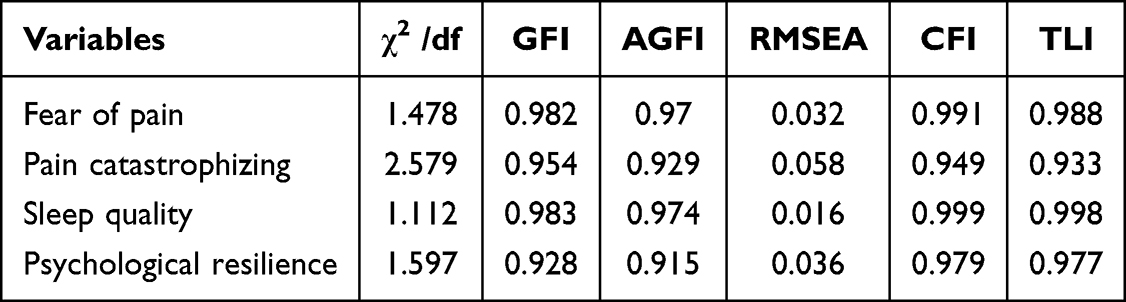 |
Table 1 Confirmatory Factor Analysis of Core Study Variables |
Pain Catastrophizing Scale
Pain catastrophizing was measured using the Chinese version of the Pain Catastrophizing Scale (HK-PCS) translated and validated by Yap, Lau.37 This 13-item scale encompasses three subscales: rumination, magnification, and helplessness. The instrument has been applied in prior studies to assess pain catastrophizing in patients following cardiovascular surgery38 and cardiac bypass surgery,39 supporting its reliability in cardiac surgery populations. In the present study, the scale was used to measure pain catastrophizing in patients following cardiac surgery. Items are rated on a 5-point Likert scale ranging from 1 (not at all) to 5 (always). Total scores range from 13 to 65, with higher scores indicating more severe pain catastrophizing. In the present sample, the Cronbach’s alpha coefficient was 0.892, reflecting satisfactory internal consistency. In this study, AMOS 31.0 software was used to construct a univariate model of pain catastrophizing for confirmatory factor analysis, and the results showed that the scale had good model fit, as shown in Table 1.
Sleep Quality Questionnaire
Sleep quality was assessed using the Sleep Quality Questionnaire (SQQ) developed by Kato,40 a 10-item instrument comprising two subscales: daytime sleepiness and sleep difficulty. The scale was translated into Chinese and culturally adapted for use in Chinese patient populations by Meng, Kato,41 with its cross-cultural validity and reliability subsequently verified. In the present study, the SQQ was used to evaluate sleep quality in patients following cardiac surgery. Items are rated on a 5-point Likert scale ranging from 1 (strongly disagree) to 5 (strongly agree). Total scores range from 10 to 50, with higher scores indicating better sleep quality. In the present sample, the Cronbach’s alpha coefficient was 0.929, reflecting excellent internal consistency. In this study, AMOS 31.0 software was used to construct a univariate model of sleep quality for confirmatory factor analysis, and the results showed that the scale had good model fit, as shown in Table 1.
Psychological Resilience Scale
Psychological resilience was assessed using the Connor-Davidson Resilience Scale (CD-RISC), originally developed by Connor and Davidson.42 The original instrument comprises 25 items across five dimensions. The Chinese version was produced by Yu and Zhang43 through a translation–back-translation procedure for cross-cultural adaptation and was subsequently validated for reliability and validity in Chinese populations. The Chinese version retains 25 items organized into three dimensions: tenacity, strength, and optimism. In the present study, the scale was used to measure psychological resilience in patients following cardiac surgery. Items are rated on a 5-point Likert scale ranging from 1 (not true at all) to 5 (true nearly all of the time). Total scores range from 25 to 125, with higher scores reflecting greater psychological resilience. In the present sample, the Cronbach’s alpha coefficient was 0.968, reflecting excellent internal consistency. In this study, AMOS 31.0 software was used to construct a univariate model of psychological resilience for confirmatory factor analysis, and the results showed that the scale had good model fit, as shown in Table 1.
Statistical Analysis
All data analyses were conducted using SPSS 27.0 and Mplus 8.3, with the significance threshold set at α = 0.05. First, preliminary analyses were performed, including reliability testing, common method bias assessment, descriptive statistics, and bivariate correlation analysis. Second, the latent profile analysis was conducted using the 13 individual item-level scores of the Chinese Pain Catastrophizing Scale (HK-PCS) as the observed indicators. First, item-level indicators retain the maximum amount of information and avoid the loss incurred when items are aggregated into subscale totals, thereby permitting detection of fine-grained differences in response patterns that would otherwise be masked. Second, the study’s theoretical aim was to characterize the full configuration of catastrophic cognition which item-level modeling captures more faithfully than subscale composites. Third, with only 13 reliable indicators, the indicator set was of moderate size and high measurement quality, satisfying the conditions under which a modest number of well-measured continuous indicators supports stable mixture estimation without the over-parameterization that an excessively large indicator set can produce.
Model estimation employed the robust maximum likelihood estimator, with 5,000 random sets of starting values specified to guard against convergence at local optima. Models were estimated sequentially from one to five latent classes, and the optimal number of classes was determined through systematic comparison of model fit indices across solutions. Third, following identification of the optimal latent profile solution, the conditional item means were inspected to determine whether the retained profiles were best interpreted as severity-based, configuration-specific, or mixed profiles. Class membership was then used as a grouping variable for between-class comparisons of demographic characteristics, clinical features, and psychological variables. Chi-square tests were applied to categorical variables, and one-way analysis of variance was used for continuous variables. Post-hoc pairwise comparisons among the three latent profiles were conducted using the Bonferroni correction to control the family-wise error rate inflated by multiple testing. Fourth, a cross-sectional parallel indirect effect analysis was conducted using Model 4 of the PROCESS macro, with pain catastrophizing profile as the independent variable, sleep quality and psychological resilience as parallel statistically modeled intermediate variables, and fear of pain as the dependent variable. To minimize potential confounding, six covariates—sex, educational level, employment status, place of residence, surgical approach, and analgesic regimen—were entered into the model and controlled simultaneously for both mediators and the outcome. Accordingly, the parallel mediation model yielded four specific indirect effects (each of the two mediators within each of the two dummy-coded contrasts), together with the corresponding total indirect effect for each contrast. Bias-corrected 95% confidence intervals based on 5,000 bootstrap resamples were used to test the significance of the indirect effects; an effect was considered statistically significant if the confidence interval did not include zero. To assess whether multicollinearity among predictors distorted the regression coefficients, variance inflation factors (VIF) and tolerance values were inspected for all predictors in the fear-of-pain model.
It should be noted that the analgesic regimen variable (patient-controlled intravenous analgesia, oral analgesics, or epidural analgesia) reflects the mode of analgesic delivery prescribed by the treating teams rather than a standardized opioid dose. Consistent with routine clinical practice, analgesia was titrated to effect on an individualized, as-needed basis; opioid doses were not standardized across regimens, and quantitative opioid consumption (eg, morphine-milligram equivalents) was not recorded. This variable therefore adjusts for strategy-level differences in analgesic delivery but not for interindividual variation in cumulative opioid exposure.
Results
Common Method Bias
Given that all scale items in the present study were derived from patient self-reports, responses may be susceptible to social desirability bias, and the consistent rating format across instruments raises the possibility of common method bias. To mitigate this concern, procedural remedies were implemented, including anonymization, confidentiality assurance, and the inclusion of reverse-scored items.
In addition, Harman’s single-factor test was employed to statistically evaluate common method bias. All measurement items were submitted to an unrotated exploratory factor analysis. Results indicated that the first unrotated factor accounted for 26.824% of the total variance, falling below the conventional threshold of 40%. This finding suggests that common method bias does not constitute a serious threat to the validity of the present study.
Participant Characteristics
The final analytic sample comprised 468 patients. Of these, 294 (62.8%) were male and 174 (37.2%) were female, with a mean age of 57.56 ± 10.141 years. The majority were married (75.2%), and educational attainment was broadly distributed across primary school or below (28.2%), junior-to-high school (39.5%), and bachelor’s degree or above (32.3%). With respect to clinical characteristics, coronary artery bypass grafting (29.7%) and valve replacement/repair (28.0%) were the most common procedures, and median sternotomy was the predominant surgical approach (62.2%). Patient-controlled intravenous analgesia was the most frequently used analgesic regimen (51.1%). Full demographic and clinical characteristics are presented in Table 2.
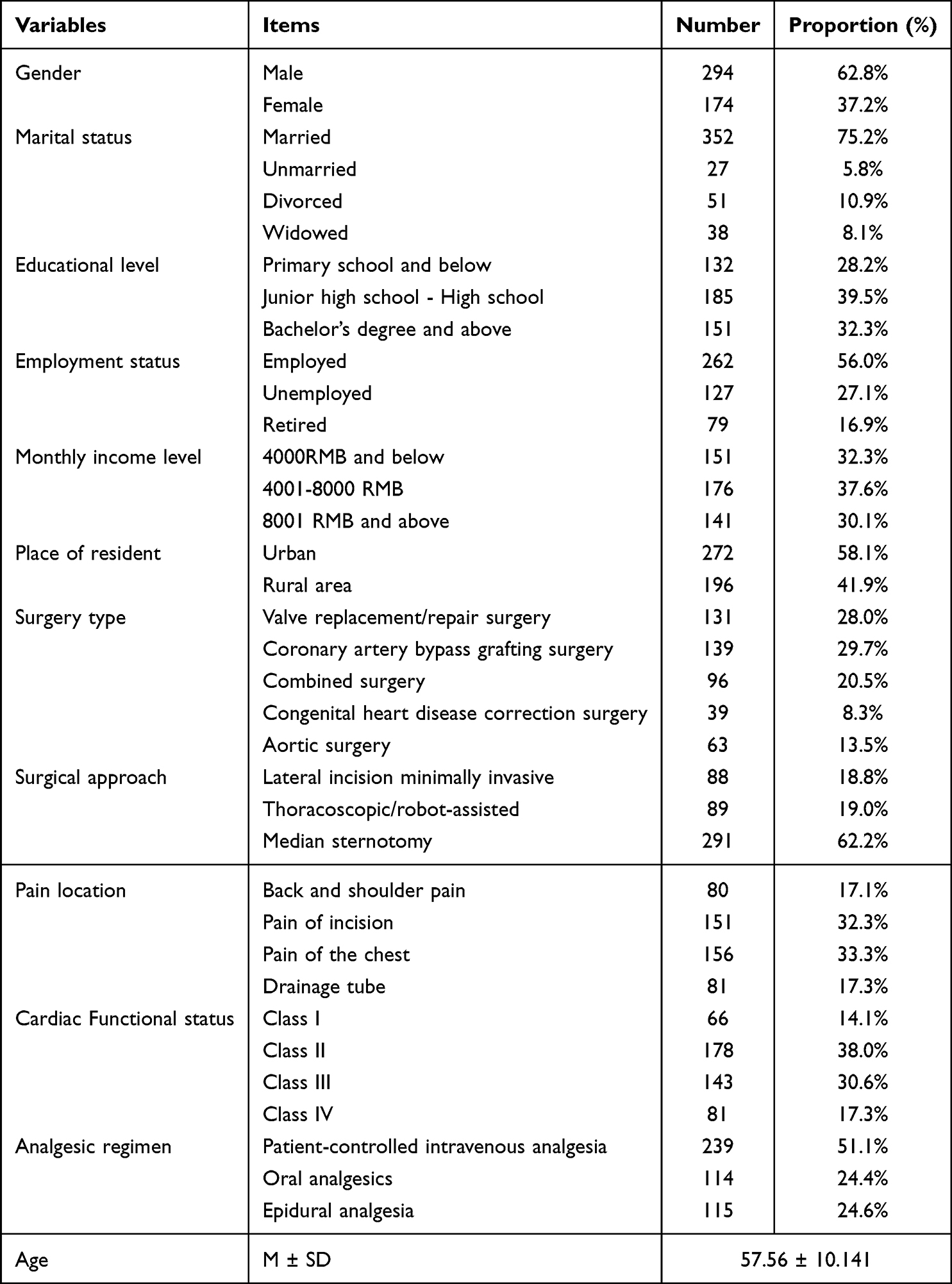 |
Table 2 Summary of Participant Demographic Characteristics |
Descriptive Statistics and Correlation Analysis
Descriptive statistics and bivariate correlations for the core study variables are presented in Table 3. The mean score for pain catastrophizing was 2.907 ± 0.594, for fear of pain 3.128 ± 0.730, for sleep quality 3.106 ± 0.695, and for psychological resilience 3.312 ± 0.694. The absolute values of skewness across the four variables ranged from 0.022 to 1.239, and absolute kurtosis values ranged from 0.056 to 2.648. In accordance with the criteria proposed by Kline44 (skewness < |3| and kurtosis < |8|) all core variables approximated a normal distribution.
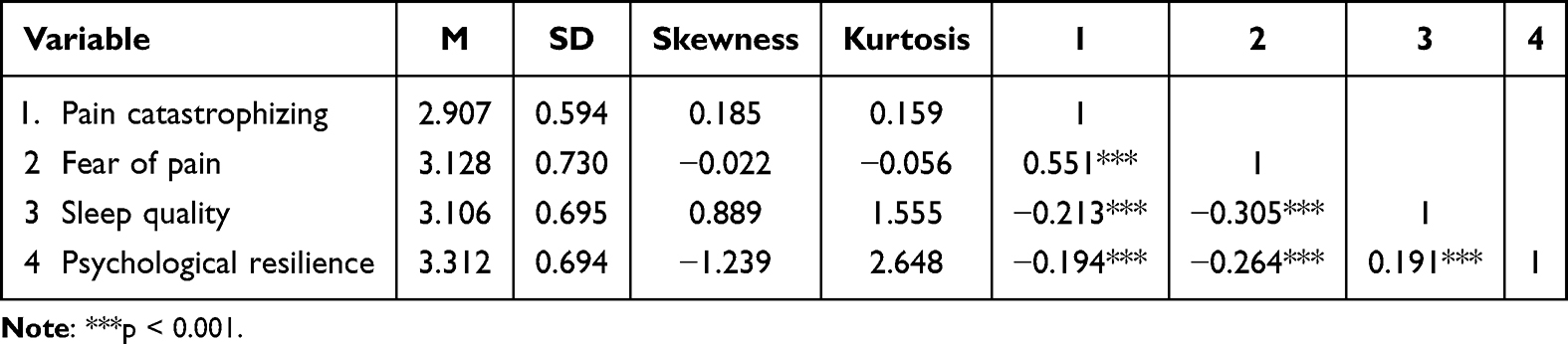 |
Table 3 Descriptive Statistics and Correlation Analysis of the Core Research Variables |
Correlation analysis revealed that pain catastrophizing was significantly and moderately positively correlated with fear of pain (r = 0.551, P < 0.001), indicating that patients with higher levels of pain catastrophizing also reported greater fear of pain. Pain catastrophizing was significantly negatively correlated with both sleep quality (r = −0.213, P < 0.001) and psychological resilience (r = −0.194, P < 0.001). Fear of pain was significantly negatively correlated with sleep quality (r = −0.305, P < 0.001) and psychological resilience (r = −0.264, P < 0.001). Sleep quality and psychological resilience were significantly positively correlated with each other (r = 0.191, P < 0.001).
Latent Profile Analysis of Pain Catastrophizing
The 13 item-level scores of the Pain Catastrophizing Scale were entered as continuous observed indicators into the latent profile analysis. Using robust maximum likelihood estimation with 5,000 sets of random starting values, latent profile models with one through five classes were estimated sequentially. The corresponding fit indices are presented in Table 4.
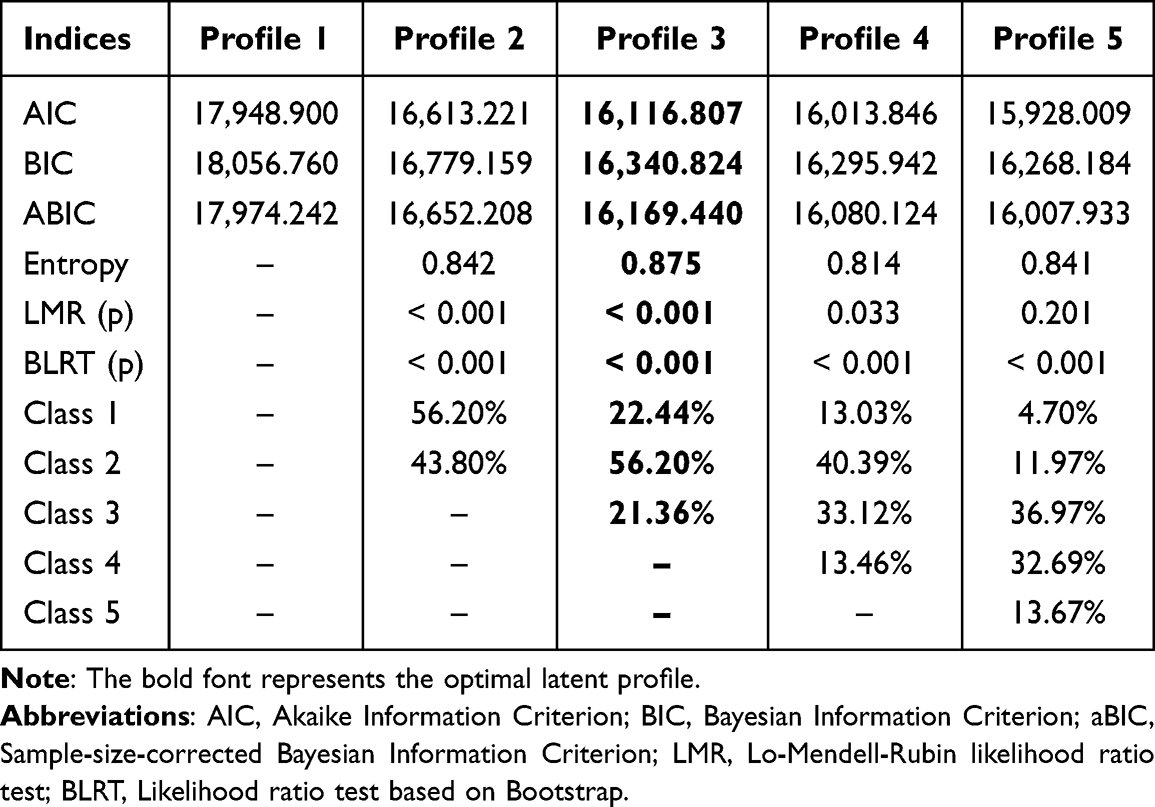 |
Table 4 Comparison of Fitting Indicators for Potential Profile Models of Categories 1 to 5 |
As shown in Table 4, AIC, BIC, and aBIC values decreased monotonically as the number of classes increased from one to five, indicating progressive improvement in model fit. Regarding key model selection criteria, both the LMR-LRT and BLRT for the two-class solution reached statistical significance (P < 0.001), demonstrating that the two-class model provided a significantly better fit than the one-class model. The LMR-LRT and BLRT for the three-class solution were likewise significant (P < 0.001), indicating that the three-class model offered a significantly superior fit compared to the two-class solution. The three-class model also yielded the highest Entropy value (0.875), reflecting optimal classification accuracy. Although the LMR-LRT for the four-class model reached statistical significance (P = 0.033), its Entropy value declined to 0.814, representing a notable reduction relative to the three-class solution and suggesting some degradation in classification precision. Furthermore, the smallest class in the four-class solution comprised only 13.03% of the total sample (approximately 61 cases), and this limited class size may compromise the stability of parameter estimation. The LMR-LRT for the five-class model was non-significant (P = 0.201), indicating that the five-class solution did not yield a meaningfully better fit than the four-class model. Accordingly, the three-class model was identified as the optimal latent profile solution for the present study.
The classification quality of the three-class solution was further evaluated using the average posterior probabilities for most likely class membership. The average posterior probabilities on the diagonal were 0.935 for Class 1, 0.950 for Class 2, and 0.939 for Class 3, all exceeding the recommended threshold of 0.70 (and indeed 0.80), indicating high classification accuracy and clear separation among the latent classes. The corresponding off-diagonal values were uniformly low (≤ 0.065), reflecting minimal classification ambiguity. The full matrix is presented in Table 5.
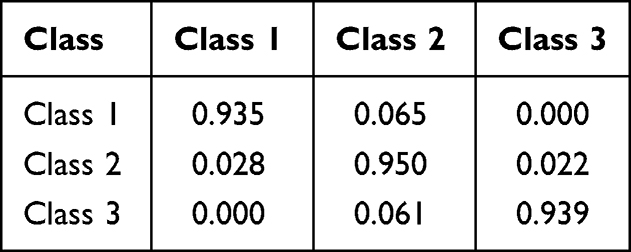 |
Table 5 Average Latent Class Posterior Probabilities for Most Likely Latent Class Membership (Row) by Latent Class (Column) |
Classification quality was high. Entropy was 0.875, and the average posterior probabilities for most likely class membership were 0.935 (Class 1), 0.950 (Class 2), and 0.939 (Class 3), all exceeding the 0.70 threshold, with low off-diagonal (misclassification) probabilities (≤ 0.065). Notably, the class counts based on the estimated model (105.5, 262.8, 99.7) were virtually identical to those based on most likely class membership (105, 263, 100), indicating that the assignment of individuals to classes was highly consistent. As entropy was high but not perfect, a small degree of uncertainty remained for a minority of individuals, as is typical in latent profile analysis; all participants were assigned to their most likely class for subsequent analyses.
The conditional mean profiles of the three-class solution across the 13 observed indicators are displayed in Figure 1. The three profiles were broadly parallel across the PCS items and differed primarily in their overall elevation rather than in qualitatively different item-level configurations. Accordingly, the profiles were interpreted as severity-based pain catastrophizing profiles and labeled as follows.
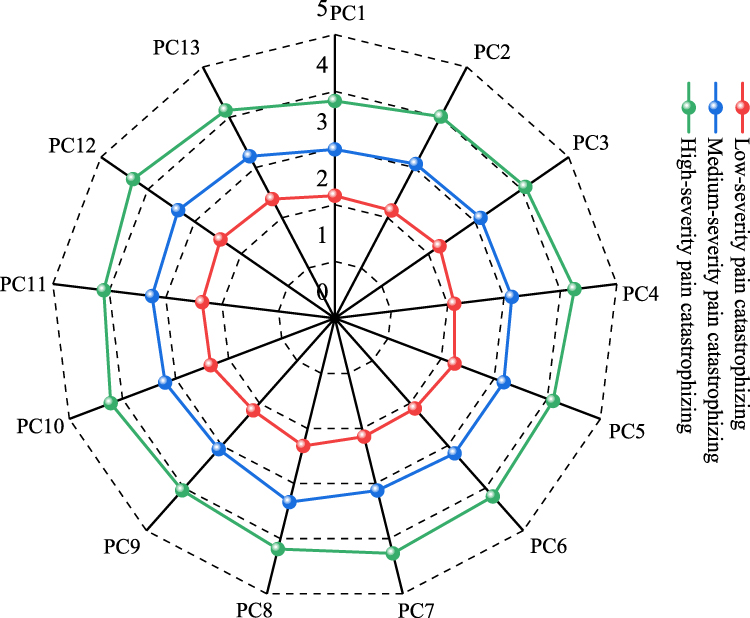 |
Figure 1 Mean profile of the three severity-based latent profiles of pain catastrophizing across the 13 measurement items. Note: 0–5 in the figure represents the average score of the measurement questions. The dashed line represents the scale line and represents the numerical magnitude. |
Class 1 was designated the Low-severity Pain Catastrophizing group (n = 105, 22.44%), characterized by the lowest mean scores across all pain catastrophizing items, indicating that patients in this class experienced relatively mild catastrophic cognition following surgery. Class 2 was designated the Moderate-severity Pain Catastrophizing group (n = 263, 56.20%), with item scores at an intermediate level, reflecting moderate catastrophic thinking and representing the predominant psychological response pattern among cardiac surgery patients. Class 3 was designated the High-severity Pain Catastrophizing group (n = 100, 21.36%), characterized by the highest scores across all pain catastrophizing items, indicating that patients in this class underwent pronounced catastrophic cognitive processing postoperatively and constituted the subgroup at greatest psychological pain risk.
Univariate Comparisons Across Severity-Based Pain Catastrophizing Profiles
To further examine differences among the three optimal latent profiles on demographic characteristics, clinical features, and psychological variables, chi-square tests and one-way analyses of variance were conducted. Results are presented in Table 6.
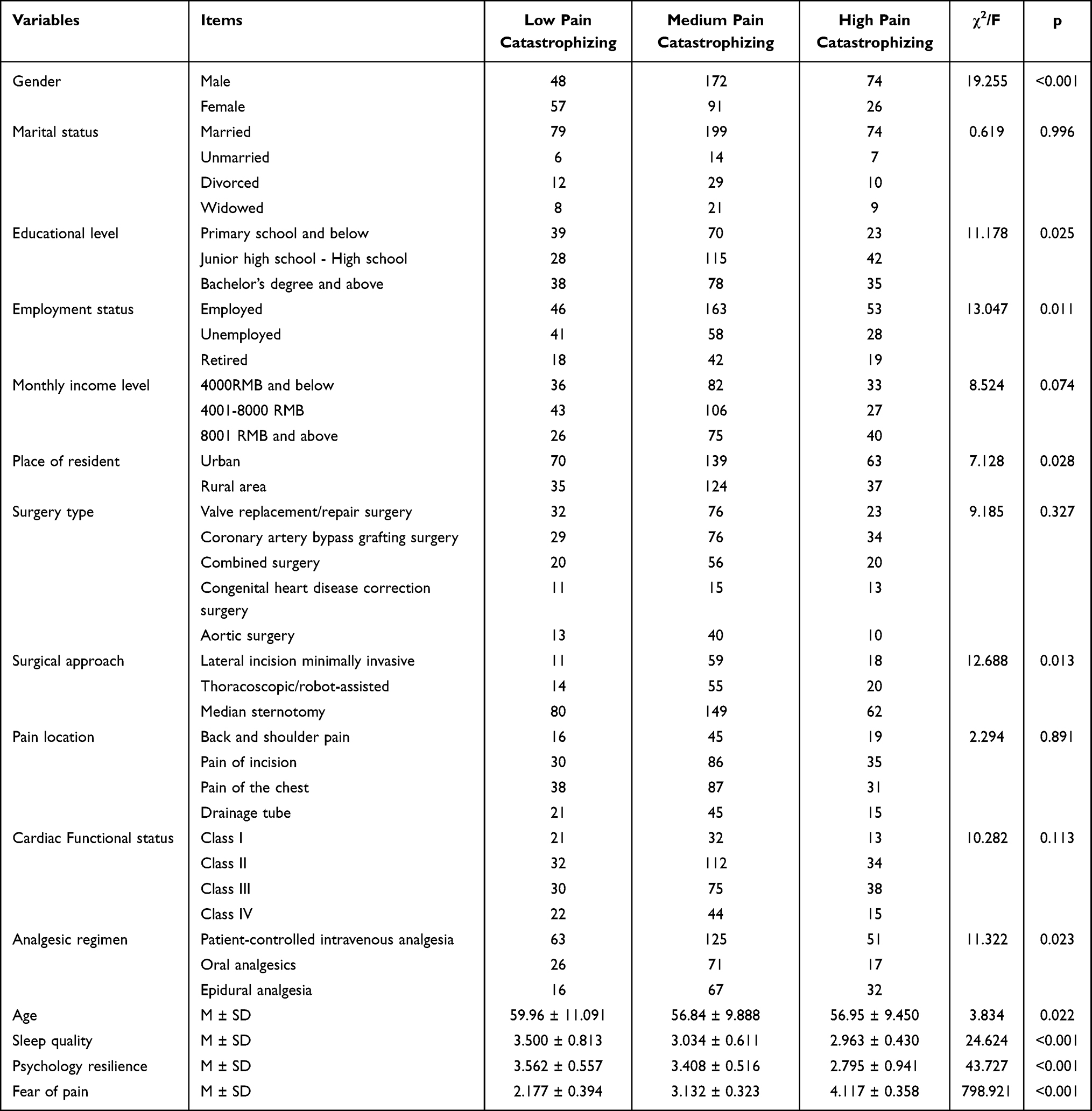 |
Table 6 Comparisons of Demographic Characteristics, Clinical Features, and Psychological Variables Across the Three Latent Classes |
With respect to demographic characteristics, statistically significant between-class differences were observed for gender (χ2 = 19.255, P < 0.001), age (F = 3.834, P = 0.022), educational level (χ2 = 11.178, P = 0.025), employment status (χ2 = 13.047, P = 0.011), and place of residence (χ2 = 7.128, P = 0.028). Marital status (χ2 = 0.619, P = 0.996) and income level (χ2 = 8.524, P = 0.074) did not differ significantly across the three latent classes.
With respect to psychological variables, the omnibus tests indicated significant between-profile differences in sleep quality (F = 24.624, P < 0.001), psychological resilience (F = 43.727, P < 0.001), and fear of pain (F = 798.921, P < 0.001). Bonferroni-corrected post-hoc comparisons further localized these differences, as shown in Table 7. For fear of pain, all three pairwise contrasts were significant (all P < 0.001), with scores increasing monotonically from the Low to the Moderate to the High profile. For sleep quality, the Low profile reported significantly better sleep than both the Moderate (mean difference [MD] = 0.466, P < 0.001) and the High profile (MD = 0.620, P < 0.001), whereas the Moderate and High profiles did not differ significantly from each other (MD = 0.154, P = 0.144); thus the deterioration in sleep quality was concentrated in the transition from low to elevated catastrophizing rather than progressing uniformly across all three levels. For psychological resilience, the High profile scored significantly lower than both the Low (MD = 0.766, P < 0.001) and the Moderate profile (MD = 0.613, P < 0.001), whereas the Low and Moderate profiles did not differ significantly (MD = 0.153, P = 0.114), indicating that the erosion of resilience emerged specifically at the highest level of catastrophizing.
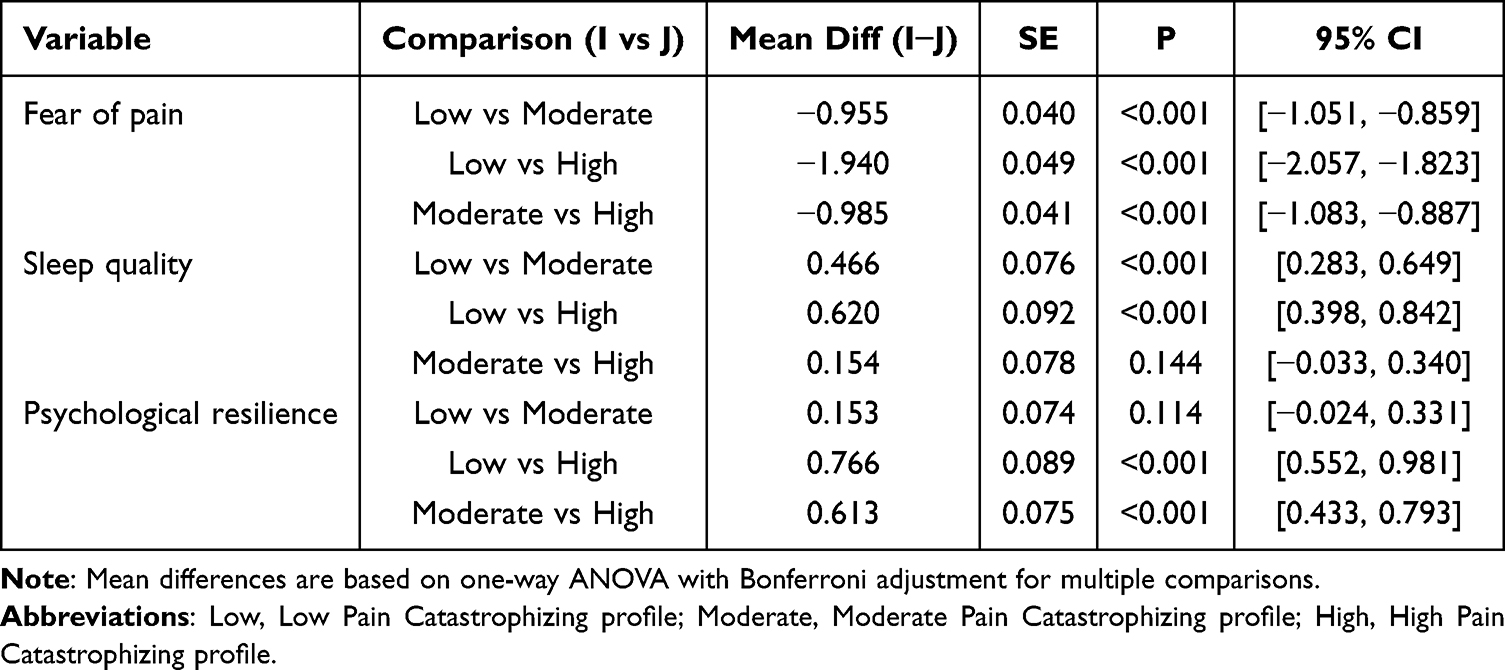 |
Table 7 Bonferroni-Corrected Post-Hoc Pairwise Comparisons of Psychological Variables Across the Three Latent Profiles |
Cross-Sectional Parallel Indirect Associations Through Sleep Quality and Psychological Resilience
To describe the cross-sectional direct and indirect associations between severity-based pain catastrophizing profiles and fear of pain, a parallel indirect-effect model was specified using PROCESS Model 4. Latent pain catastrophizing profile membership served as the independent variable (X, a three-category variable with the Low-severity Pain Catastrophizing group as the reference category), sleep quality and psychological resilience as mediators, and fear of pain as the outcome variable. Sex, educational level, employment status, place of residence, surgical approach, and analgesic regimen were included as covariates. Because the independent variable was trichotomous, the model automatically generated two dummy-coded variables: X1, representing the comparison between the Moderate-severity Pain Catastrophizing group and the Low-severity Pain Catastrophizing group, and X2, representing the comparison between the High-severity Pain Catastrophizing group and the Low-severity Pain Catastrophizing group.
With sleep quality as the outcome variable, the overall model was statistically significant (R2 = 0.118, P < 0.001), as shown in Table 8. Latent pain catastrophizing profile membership was significantly associated with sleep quality: the regression coefficient for X1 was −0.439 (P < 0.001, 95% CI = [−0.595, −0.284]), and for X2 was −0.604 (P < 0.001, 95% CI = [−0.788, −0.419]), indicating that both the Moderate and High-severity Pain Catastrophizing groups reported significantly lower sleep quality compared with the Low-severity Pain Catastrophizing group.
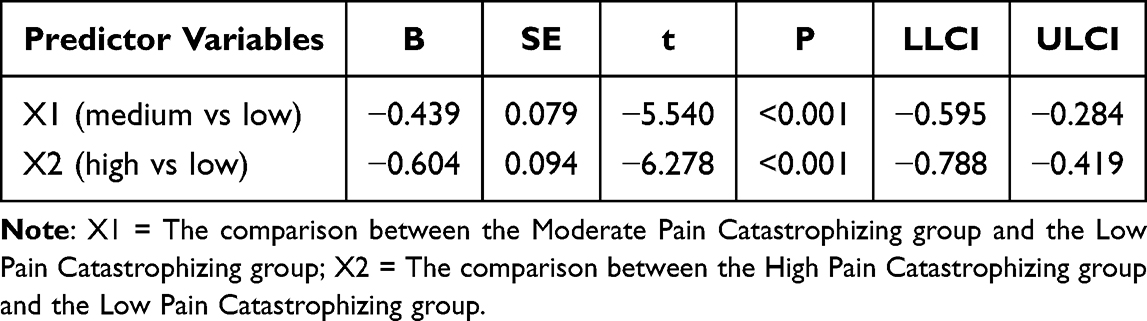 |
Table 8 Regression Model for Sleep Quality |
With psychological resilience as the outcome variable and both latent pain catastrophizing profile membership and sleep quality included as predictors, the overall model was statistically significant (R2 = 0.185, P < 0.001), as shown in Table 9. The association between X1 and psychological resilience did not reach statistical significance (B = −0.105, P = 0.169), whereas X2 significantly predicted psychological resilience (B = −0.731, P < 0.001, 95% CI = [−0.908, −0.554]).
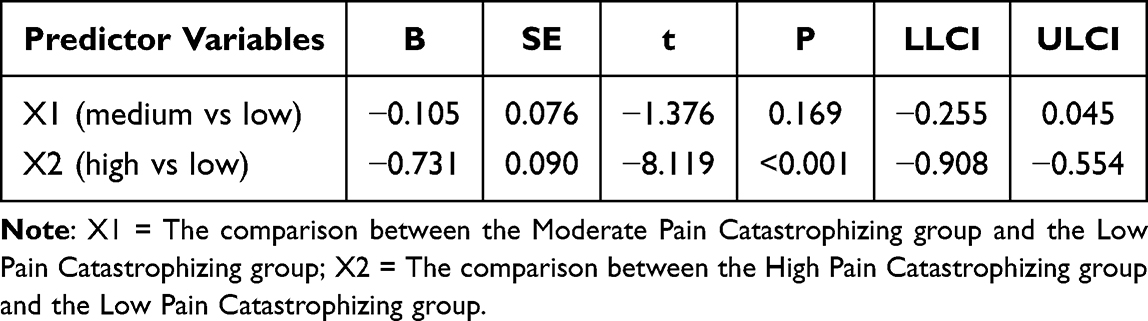 |
Table 9 Regression Model for Psychological Resilience |
With fear of pain as the outcome variable and latent pain catastrophizing profile membership, sleep quality, and psychological resilience all included as predictors, the overall model was statistically significant and demonstrated high explanatory power (R2 = 0.782, P < 0.001), as shown in Table 10. Both X1 (B = 0.945, P < 0.001) and X2 (B = 1.967, P < 0.001) were significantly and positively associated with fear of pain, indicating that fear of pain was substantially higher in both the Moderate and High-severity Pain Catastrophizing groups relative to the Low-severity Pain Catastrophizing group. Sleep quality was a significant negative predictor of fear of pain (B = −0.058, P = 0.018, 95% CI = [−0.106, −0.010]), and psychological resilience was a significant positive predictor of fear of pain (B = 0.080, P = 0.002, 95% CI = [0.030, 0.130]).
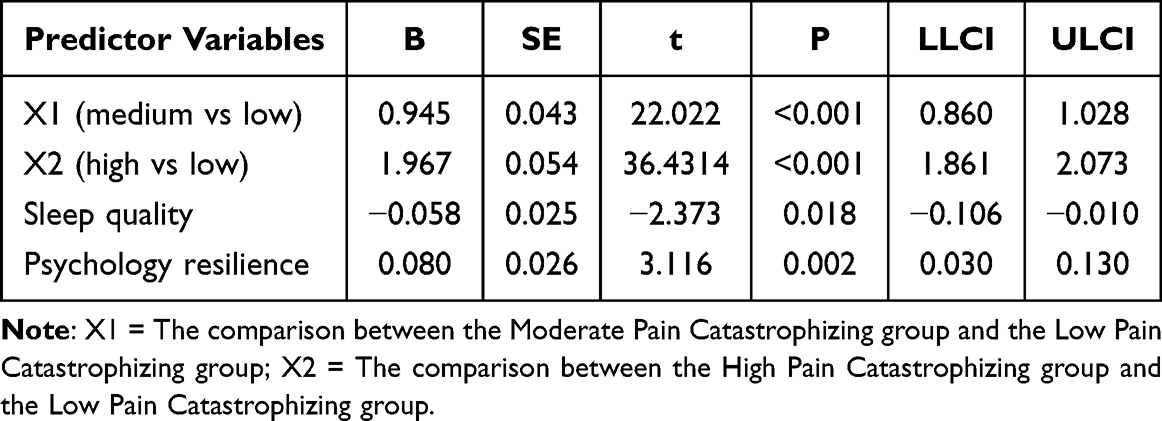 |
Table 10 Regression Model for Fear of Pain |
Notably, the sign of the psychological-resilience coefficient reversed between the bivariate and multivariable analyses: although resilience was negatively correlated with fear of pain at the zero-order level (r = −0.264, P < 0.001), it emerged as a positive predictor in the regression (B = 0.080, P = 0.002). Collinearity diagnostics indicated that this reversal did not arise from pathological multicollinearity (all VIF = [1.111, 1.660] < 3), but rather reflects a suppression effect: because the catastrophizing profiles accounted for the large majority of variance in fear of pain (R2 = 0.782) and were themselves strongly related to resilience, the zero-order protective association between resilience and fear was substantially a function of their shared dependence on catastrophizing severity. After partialing out the catastrophizing profile, the residual partial association reversed in sign, producing a small negative indirect effect (X2→resilience→fear=−0.058) in which the direct effect (1.966) marginally exceeded the total effect (1.944). The mediating role of resilience should therefore be interpreted in light of this suppression dynamic rather than as straightforward protective mediation.
Regarding the decomposition of cross-sectional associations, the relative total associations between pain catastrophizing profile membership and fear of pain were significant for both contrasts (X1: B = 0.962, P < 0.001; X2: B = 1.944, P < 0.001), with the omnibus test of total effects indicating significant incremental variance explained (ΔR2 = 0.749, P < 0.001). After accounting for sleep quality and psychological resilience, the relative direct associations remained statistically significant (X1: B = 0.945, P < 0.001; X2: b = 1.966, P < 0.001), with the omnibus test of direct effects also significant (ΔR2 = 0.632, P < 0.001), demonstrating that the direct pathway was the dominant contributor to the total effect. Detailed results are presented in Table 11.
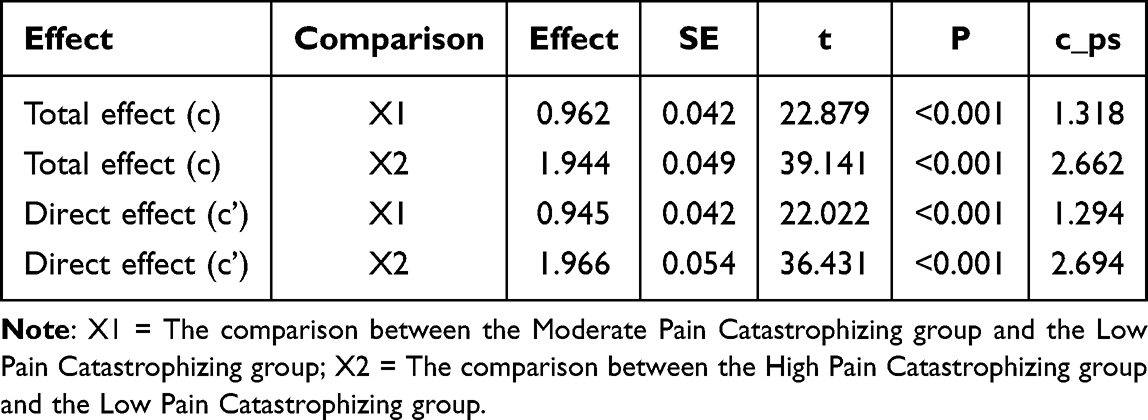 |
Table 11 Total and Direct Effects of Latent Pain Catastrophizing Profiles on Fear of Pain |
Regarding indirect effects, Model 4 yielded four indirect effect pathways, with Bootstrap test results presented in Table 12 and Figure 2. For Pathway 1 (Profile → Sleep Quality → Fear of Pain), the indirect effect estimate for X1 was 0.026 (Boot SE = 0.014, 95% CI = [0.004, 0.054]), and for X2 was 0.035 (Boot SE = 0.019, 95% CI = [0.005, 0.076]). For Pathway 2 (Profile → Psychological Resilience → Fear of Pain), the indirect effect for X1 was −0.008 (Boot SE = 0.006, 95% CI = [−0.022, 0.002]); since the confidence interval included zero, no significant indirect effect through psychological resilience was observed for the Moderate versus Low Pain Catastrophizing comparison. For X2, the indirect effect was −0.058 (Boot SE = 0.021, 95% CI = [−0.102, −0.020]); the confidence interval excluded zero, indicating that psychological resilience served as a significant mediator of differences in fear of pain between the High and Low-severity Pain Catastrophizing groups.
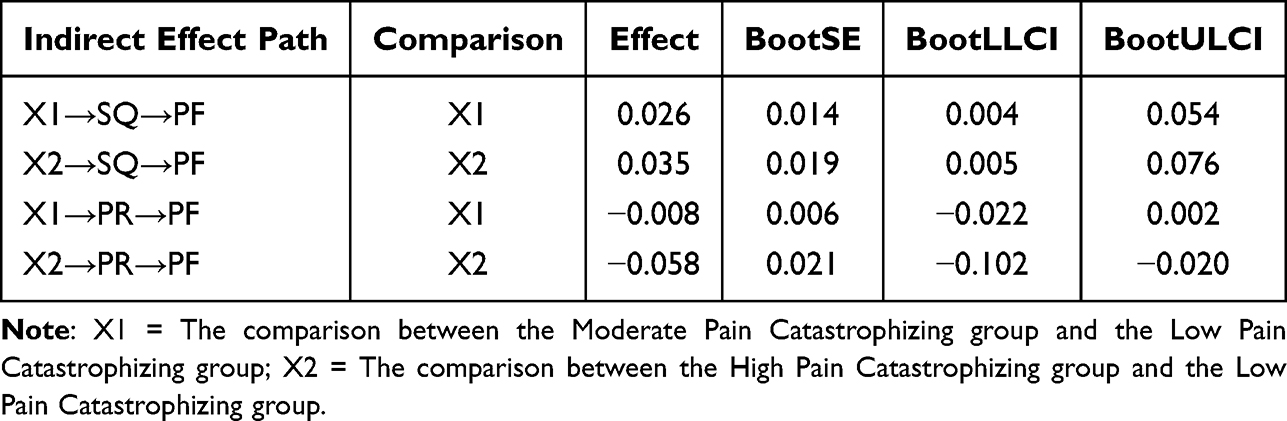 |
Table 12 Bootstrap Test Results for Indirect Effects of Latent Pain Catastrophizing Profiles on Fear of Pain |
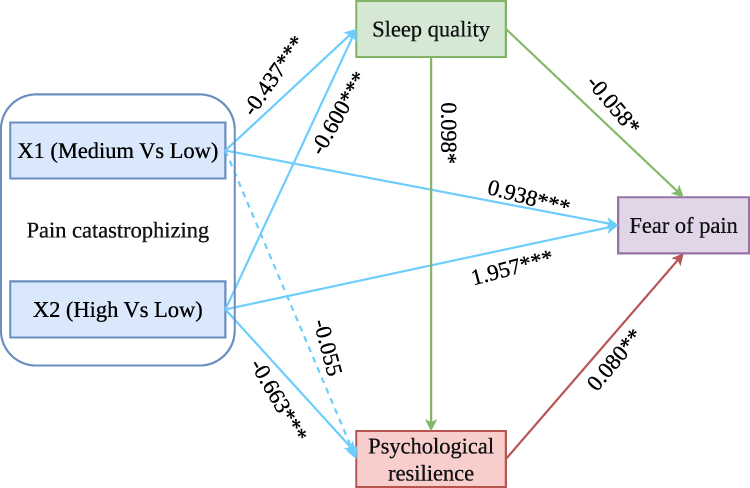 |
Figure 2 The path coefficient of the parallel mediator. Note: ***p < 0.001; **p < 0.01; *p < 0.05. |
Discussion
Latent Profile Analysis of Pain Catastrophizing
The present study first confirmed that pain catastrophizing among cardiac surgery patients exhibits significant latent heterogeneity, thereby supporting Hypothesis 1. Importantly, the retained three-profile solution was best interpreted as severity-based. The findings further demonstrated that even within a homogeneous surgical context and at a comparable stage of postoperative recovery, patients differed markedly in the intensity and pattern of catastrophic cognitive activation. Patients differ substantially in how they cognitively process postoperative pain, and these differences may ultimately determine their subsequent emotional responses, behavioral choices, and recovery trajectories. In terms of class distribution, the Moderate-severity Pain Catastrophizing group accounted for 56.20% of the sample, while the Low and High-severity Pain Catastrophizing groups comprised 22.44% and 21.36%, respectively. This indicates that the majority of patients did not exhibit extreme negative cognition, yet were already experiencing a certain degree of catastrophic activation. This finding suggests that psychological pain management following cardiac surgery should not focus exclusively on the highest-risk extreme group, but should also attend to the substantially larger moderate-risk population. Although these patients have not yet reached the most severe symptomatic level, the absence of timely identification and intervention may allow continued postoperative pain, activity avoidance, deteriorating sleep, and accumulating negative affect to propel them toward higher-risk states.
The study further found that the severity-based pain catastrophizing profiles differed significantly in sex, age, educational level, employment status, and place of residence, thereby supporting Hypothesis 2. With respect to sex, males were proportionally overrepresented in the High-severity Pain Catastrophizing group within the present cardiac surgery sample. This observation warrants cautious interpretation, as it diverges from the broader pain literature, in which women more frequently report higher levels of pain catastrophizing and greater experimental and clinical pain sensitivity, with negative emotional processing identified as an important contributor to these sex-related differences.45 Rather than indicating a general tendency for men to catastrophize more, the present pattern is more plausibly understood as a context-specific phenomenon shaped by the particular characteristics of the post-cardiac surgery setting and our sample. Several non-mutually-exclusive explanations may apply. First, traditional male gender-role socialization, which discourages the open expression of pain and emotional vulnerability, may leave some men with a narrower repertoire of adaptive pain-coping strategies, such that when confronted with the intense and unfamiliar nociceptive experience following cardiac surgery, maladaptive cognitive responses become more readily activated. Second, for men, cardiac disease and major thoracic surgery may pose a salient threat to perceived physical competence, occupational capacity, and family-provider role identity, which could amplify catastrophic appraisals of postoperative pain as a signal of irreversible decline. Third, because the sample was predominantly male (62.8%) and drawn from cardiac surgery wards, the observed sex distribution across profiles may partly reflect sample-specific composition and surgical context rather than a generalizable sex effect. Given this divergence from prevailing evidence, the present sex finding should be regarded as preliminary and hypothesis-generating, and requires replication in larger, sex-balanced, and prospectively designed cohorts before any firm mechanistic conclusion can be drawn.
Age differences suggest that pain catastrophizing may be jointly shaped by prior illness experience, established cognitive frameworks, expectations regarding recovery, and pressure associated with social role obligations.46,47 Patients with lower educational attainment were more likely to fall within higher catastrophizing classes, possibly reflecting insufficient health literacy, limited disease-related cognitive resources, and reduced capacity for information processing, all of which may impede a realistic and integrative interpretation of postoperative pain, thereby increasing the likelihood that such patients interpret pain as a signal of serious injury or failed recovery. Differences in employment status and place of residence further suggest that socioeconomic status, resource accessibility, and the social support environment may indirectly shape levels of pain catastrophizing by influencing patients’ cognitive appraisal of illness and their available coping resources.
The present study found significant between-class differences in surgical approach and analgesic regimen, whereas surgery type, pain location, and cardiac functional status did not differ significantly across the three profiles. This pattern suggests that pain catastrophizing is not determined solely by disease severity or surgical category per se, but is more likely influenced by patients’ subjective pain experience, perceptions of invasiveness, and their perioperative treatment encounters. Compared with surgery type alone as a basis for estimating postoperative psychological risk, surgical approach and analgesic regimen may more closely approximate the actual pain burden and sense of treatment control experienced by the patient. For example, a surgical approach perceived as highly traumatic may strengthen patients’ mental representations of bodily injury, leading them to interpret normal postoperative pain as a danger signal; differences in analgesic regimens may likewise affect patients’ perceived controllability of pain, and patients who feel that pain control is inadequate are more likely to develop catastrophic cognitions such as helplessness, rumination, and magnification.
It is particularly noteworthy that the three severity-based profiles differed markedly in sleep quality, psychological resilience, and fear of pain, with a relatively clear gradient pattern across classes. The High-severity Pain Catastrophizing group exhibited the poorest sleep quality, the lowest psychological resilience, and the highest fear of pain. Catastrophic cognition leads patients to encode the pain experience as a highly threatening, difficult-to-control, and potentially worsening negative signal, thereby elevating vigilance, impairing restorative sleep, depleting adaptive coping resources, and ultimately intensifying fear of pain.
The acute postoperative timing of assessment may have influenced the interpretation of all core variables. Because pain catastrophizing, sleep quality, psychological resilience, and fear of pain were measured on postoperative days 3–5, participants were likely experiencing acute surgical pain, sleep disruption, analgesic effects, restricted mobility, and uncertainty about recovery. As a result, elevated pain catastrophizing and fear of pain may reflect transient postoperative distress and perceived vulnerability rather than stable psychological tendencies. Likewise, poor sleep quality during this period may be shaped by wound pain, hospital routines, nighttime monitoring, medication effects, and circadian disruption, rather than by psychological factors alone. Psychological resilience may also be context-dependent in the immediate postoperative phase, as patients’ coping capacity is tested under conditions of physical dependence and acute stress. Therefore, the present findings should be interpreted as cross-sectional associations within a specific early recovery window, and longitudinal studies are needed to clarify whether these associations persist beyond the acute postoperative period.
Cross-Sectional Indirect Associations Through Sleep Quality and Psychological Resilience
The present study examined the pathways through which latent pain catastrophizing profiles influence fear of pain. Specifically, the latent pain catastrophizing profile exerted a significant and relatively large direct effect on fear of pain, and this direct effect remained significant even after sleep quality and psychological resilience were introduced into the model, indicating that pain catastrophizing is a core antecedent variable shaping postoperative fear of pain. According to the Fear-Avoidance Model, individuals do not respond with fear to nociceptive stimuli directly;48 rather, they first assign meaning to the pain experience. When pain is interpreted as “dangerous,” “uncontrollable,” or “a harbinger of functional impairment,” fear of pain is more readily activated.49 Accordingly, among cardiac surgery patients, pain catastrophizing should not be regarded as a peripheral cognitive bias but rather as a key psychological mechanism through which postoperative pain-related fear responses are shaped.
The three pain catastrophizing subgroups differed significantly in sleep quality, and sleep quality was a statistically significant negative predictor of fear of pain. Bootstrap analyses confirmed that the indirect effects through sleep quality were significant for both contrasts; however, their magnitude was modest, accounting for only approximately 1.8% to 2.7% of the corresponding total effects. Sleep quality therefore appears to constitute a secondary and partial process variable linking pain catastrophizing to fear of pain, rather than a dominant mechanistic pathway. While catastrophic cognition may heighten sustained attentional monitoring of pain cues and pre-sleep rumination, inducing elevated cognitive-emotional arousal that impairs sleep continuity and restorative function,50 and although compromised sleep may in turn reduce emotional-regulatory capacity, lower pain thresholds, and amplify negative information processing, the present data indicate that these processes explain only a small fraction of the catastrophizing–fear association. The bulk of this association was carried by the direct pathway, underscoring that pain catastrophizing influences fear of pain predominantly through mechanisms not captured by sleep quality in the current model.
Although resilience was protectively (negatively) correlated with fear of pain at the bivariate level, its partial association reversed sign once the catastrophizing profiles were controlled, and the resulting indirect effect was negative—a pattern characteristic of statistical suppression rather than of simple protective mediation. Substantively, this indicates that the apparent protective relationship between resilience and reduced fear is, to a considerable degree, embedded within—and shared with—the broader severity of catastrophic cognition, rather than constituting a fully independent buffering channel. In other words, at high levels of catastrophizing, resilience, catastrophizing, and fear of pain are so tightly interwoven that resilience does not transmit the catastrophizing→fear effect in a simple mediating fashion; instead, its unique residual contribution, once catastrophizing is accounted for, is small and operates in a suppressive direction. We therefore refrain from claiming that diminished resilience directly amplifies fear of pain. What can be concluded more conservatively is that low resilience co-occurs specifically with the highest-risk catastrophizing subgroup and may serve as a clinically useful marker of, rather than an independent mechanistic driver of, elevated fear of pain. This nuanced reading also underscores the value of longitudinal designs capable of disentangling the temporal and causal ordering of resilience, catastrophizing, and fear.
Practical and Clinical Implications
Our findings have potential clinical relevance, though they should be interpreted as hypothesis-generating rather than as a direct basis for intervention. The association between catastrophizing severity and fear of pain identifies pain catastrophizing as a candidate target for future investigation; should this association prove causal in prospective or experimental work, psychologically oriented strategies addressing catastrophic cognition might warrant evaluation for their effect on postoperative fear of pain. Similarly, the patterns consistent with mediation by sleep quality and resilience suggest these may be worth examining as intervention components in future trials. We emphasize, however, that the present observational design cannot establish whether modifying any of these factors would in fact reduce fear of pain; such conclusions await confirmation in studies capable of supporting causal inference.
The findings of the present study, although derived from cross-sectional, observational data and therefore requiring confirmation in future interventional research, point toward several concrete and operationally specific directions for postoperative pain care. We organize these around the study’s core empirical contributions: the identification of three severity-based catastrophizing profiles, their differentiation by readily accessible patient characteristics, the dominance of the direct catastrophizing–fear pathway, and the profile-specific mediating role of psychological resilience.
A concrete, two-step stratified screening procedure. Because the present analysis distinguished three catastrophizing profiles using the 13 PCS items administered on postoperative days 3–5, a practical first step would be the routine, brief administration of the Pain Catastrophizing Scale by ward nursing staff during this early postoperative window, when patients have transferred to the general ward and vital signs are stable The total PCS score could serve as an initial triage indicator, with patients flagged for closer attention as scores rise. Importantly, our finding that the High-severity Pain Catastrophizing group was differentiated by several variables already documented in the medical record—male sex, lower educational attainment, unemployment, urban residence, median sternotomy, and epidural analgesia—suggests that a simple, no-cost pre-screening checklist built from these routinely available fields could help clinicians prioritize which patients to assess first, before any formal psychological scale is administered.
Profile-specific, action-level recommendations. Rather than a uniform protocol, the three profiles imply graded actions that future trials could evaluate. For the Low-severity Pain Catastrophizing group, standard postoperative education and rehabilitation guidance may be sufficient. The Moderate-severity Pain Catastrophizing group merits particular emphasis because it constituted the majority of the sample yet has typically been overlooked by interventions targeting only the highest-risk extreme; for these patients, brief, nurse-deliverable measures—such as a single structured pain-education session reframing normal postoperative pain as an expected, non-dangerous signal, combined with early guided mobilization—could be tested as a low-intensity, scalable means of preventing escalation toward the high-risk profile. For the High-severity Pain Catastrophizing group, a more intensive, referral-based pathway might be evaluated, in which a positive ward screen triggers consultation with a clinical psychologist or psychiatric liaison service for targeted catastrophizing-focused cognitive intervention.
Prioritizing the dominant pathway. Because the direct effect of catastrophizing on fear of pain accounted for more than 97% of the total effect, interventions that directly target catastrophic appraisals should be the principal focus. Sleep-promotion measures (eg, standardizing analgesic timing, clustering nighttime nursing tasks to reduce interruptions, and brief sleep-hygiene guidance) remain worthwhile as low-cost, readily implementable adjuncts, but, given the small magnitude of the sleep-mediated effect, should not be expected to substantially reduce fear of pain on their own.
Targeting resilience where it matters. Because psychological resilience mediated the catastrophizing–fear relationship only in the High versus Low contrast, resilience-building efforts may yield the greatest return if concentrated specifically within the high-catastrophizing subgroup rather than applied indiscriminately. For these patients in particular, structured strategies to strengthen self-efficacy could be tested as a means of attenuating helplessness and, potentially, fear of pain. Embedding such profile-targeted psychological components within existing enhanced recovery after surgery (ERAS) and cardiac rehabilitation pathways may offer a feasible route to implementation, a possibility that warrants direct evaluation in controlled trials.
Limitations and Future Research Directions
Notwithstanding the findings reported above, several limitations of the present study should be acknowledged.
First, a cross-sectional survey design was employed, with all variables measured at the same postoperative time point. Consequently, the associations identified among variables are correlational in nature and do not permit strict causal inference. Future research should adopt prospective longitudinal designs incorporating multiple measurement occasions, including the preoperative period, the acute postoperative phase, and follow-up assessments during rehabilitation, to elucidate the dynamic developmental trajectories and temporal causal chains linking pain catastrophizing, sleep quality, psychological resilience, and fear of pain.
Second, all core variables were assessed via patient self-report scales. Although each instrument has been validated in Chinese populations and demonstrated sound psychometric properties, self-report methodology remains susceptible to social desirability bias, subjective appraisal biases, and the influence of postoperative cognitive load. Future research may consider incorporating objective measures, such as actigraphy or polysomnography for the objective assessment of sleep quality, and physiological indicators such as skin conductance or heart rate variability for the evaluation of fear responses, thereby enabling triangulation between subjective and objective data sources.
Third, participant recruitment relied on a two-stage sampling strategy, in which three tertiary general hospitals were selected by accessibility (a convenience approach at the institutional level) and eligible patients were then enrolled consecutively within each site. This design was adopted because probability sampling of post-cardiac surgery patients across multiple centers is rarely feasible, given the constraints of departmental collaboration and the narrow postoperative day 3–5 assessment window. The consecutive enrollment of all eligible patients—reflected in the high valid response rate of 94.54%—substantially reduced selection bias within each center, and the cross-provincial, multi-site frame (spanning the eastern coastal and southern economic regions of China) enhanced sample heterogeneity. Nevertheless, because hospital selection was non-probabilistic and the sample was drawn from tertiary Grade-A institutions, caution remains warranted in generalizing the findings to other regions, healthcare settings (eg, secondary or community hospitals), and cultural contexts. Future research should incorporate larger, probability-based, and more geographically diverse multi-center samples, together with cross-cultural comparisons, to validate the generalizability of the present findings.
Fourth, data collection was conducted within a fixed time window of postoperative days three through five. While this time point is operationally feasible in clinical practice, it captures only the acute-phase psychological response and cannot speak to the longitudinal stability of pain catastrophizing subgroups or their predictive validity for medium- and long-term recovery outcomes. Future research should extend the follow-up period to explore the temporal stability of pain catastrophizing latent profiles and the patterns by which individuals may transition between classes over time, and to further examine differences in long-term outcome trajectories — including chronic pain development, functional recovery, and quality of life — across patients in distinct profiles. Such work would provide a more complete evidence base for the construction of comprehensive, individualized postoperative psychological pain management strategies.
Fifth, the present study was designed primarily around patient-reported psychological constructs and therefore incorporated only a limited set of demographic and treatment covariates, including sex, educational level, employment status, place of residence, surgical approach, and analgesic regimen. Several clinically important variables, including cardiopulmonary bypass duration, surgical complexity, durations of ICU stay, mechanical ventilation, and chest-tube placement, postoperative complications, and, most critically, preoperative anxiety and depression, were not collected and could not be entered into the analytic model. Residual confounding consequently cannot be excluded. The absence of a preoperative anxiety/depression baseline is the most consequential omission, because a shared dispositional tendency toward negative affectivity could plausibly underlie both elevated pain catastrophizing and heightened fear of pain. To the extent that such a common cause operates, the independent contribution of catastrophizing to fear of pain reported here may be overestimated, and our mediational estimates should be interpreted with corresponding caution. Postoperative pain intensity, opioid consumption, and the actual delivery of regional or rescue analgesia are more plausibly located downstream of pain catastrophizing within the causal chain—patients with higher catastrophizing tend to report greater pain and to consume more analgesia. Treating such mediating or consequent variables as covariates would introduce overadjustment and collider bias rather than reduce confounding, and would distort the very pathway under investigation. Future prospective studies should integrate a comprehensive panel of objectively documented perioperative clinical variables together with validated preoperative psychological baselines. Such designs would permit rigorous adjustment for antecedent confounders, appropriate modeling of downstream mediators, and substantially stronger causal inference regarding the determinants of postoperative fear of pain.
Sixth, the limitation concerns the absence of a standardized postoperative pain-intensity rating at the POD 3–5 assessment. Because no numeric rating scale or visual analogue scale score was recorded, we cannot fully exclude the possibility that a portion of the observed between-profile differences in fear of pain reflects differences in underlying nociceptive intensity rather than differences in cognitive–emotional processing alone; our profile-based estimates should therefore be interpreted with this boundary in mind. First, within the Fear-Avoidance Model that frames this study, pain intensity, opioid consumption, and the actual delivery of regional or rescue analgesia are most plausibly located downstream of pain catastrophizing in the causal chain. Treating such mediating or consequent variables as covariates would introduce overadjustment and collider bias rather than reduce confounding, and would distort the very pathway under investigation. Second, although a continuous intensity score was not available, the three profiles differed significantly in analgesic regimen and were distributed across distinct pain locations, providing indirect evidence of meaningful heterogeneity in the underlying pain experience. Future prospective studies should nonetheless incorporate repeated, standardized assessments of pain intensity so that pain intensity can be modeled appropriately as a time-varying mediator within the catastrophizing→fear pathway, rather than as a static covariate.
The analgesic regimen recorded in this study denotes the mode of delivery rather than a standardized dose. Opioid doses were not standardized across regimens—reflecting the titrated, individualized nature of postoperative analgesia in real-world cardiac surgical care—and cumulative opioid consumption was not quantified. As a result, our covariate adjustment captures systematic differences in analgesic strategy but cannot account for finer interindividual variation in opioid exposure, and a degree of residual confounding from this source cannot be excluded. We emphasize, however, that opioid consumption is most plausibly a downstream consequence of pain catastrophizing within the Fear-Avoidance framework; treating a quantified dose variable as a covariate would therefore have risked overadjustment and collider bias rather than improved control of confounding. Future prospective studies should record standardized opioid exposure (eg, morphine-milligram equivalents) alongside serial psychological assessments, enabling pain intensity and opioid consumption to be modeled appropriately as time-varying mediators within the catastrophizing→fear pathway.
Most importantly, postoperative pain intensity was not measured, and this omission warrants particular emphasis. Pain intensity is plausibly related both to pain catastrophizing and to fear of pain, and within the Fear-Avoidance framework it may operate either as a downstream consequence of catastrophizing or as a partially exogenous physiological input that independently elevates both constructs. To the extent that the latter holds, the absence of pain intensity from our models means that a degree of residual confounding of the catastrophizing–fear associations cannot be excluded, and the observed relationships may be partly attributable to shared dependence on the actual magnitude of experienced pain. Our findings should therefore be interpreted as associational rather than causal, and future prospective studies should incorporate repeated pain-intensity assessments and model this variable as a time-varying mediator (and/or confounder) within a longitudinal mediation framework.
Conclusions
In a multi-site sample of post-cardiac surgery patients assessed on postoperative days 3–5, this study adopted a person-centered framework to characterize the heterogeneity of pain catastrophizing and to examine the psychological pathways linking it to fear of pain. Latent profile analysis supported a three-profile solution with high classification accuracy. The profiles were best interpreted as severity-based subgroups, with patients classified into low-, moderate-, and high-severity pain catastrophizing profiles. Within a parallel mediation framework, the catastrophizing profiles exerted a strong and dominant direct association with fear of pain that remained robust after accounting for both candidate mediators, with the direct pathway carrying the overwhelming majority of the total effect. Sleep quality operated as a statistically significant but quantitatively small partial mediator, whereas the indirect effect through psychological resilience emerged only in the High-versus-Low contrast and exhibited a suppression-type rather than a straightforward protective pattern. Resilience is therefore more defensibly interpreted as a clinically informative marker that co-occurs with the highest-risk subgroup than as an independent mechanistic driver of fear of pain.
These findings underscore the value of early, risk-stratified identification of pain catastrophizing in postoperative cardiac care, with explicit attention directed not only to the high-risk extreme but also to the substantial moderate-risk majority that has typically been overlooked. Because the present evidence derives from a cross-sectional, observational design and lacks a standardized postoperative pain-intensity measure and a preoperative affective baseline, the reported relationships should be regarded as associational and hypothesis-generating. Prospective, longitudinal, and ideally interventional studies are needed to establish the temporal ordering and causal status of these pathways and to determine whether profile-targeted psychological strategies can meaningfully reduce postoperative fear of pain.
Data Sharing Statement
The datasets used and/or analysed during the current study are available from the corresponding author on reasonable request.
Ethical Considerations
This study involved human participants, and we obtained review and approval from the Academic Ethics Committee of Zhejiang Provincial People’s Hospital (No.: 2021KY047). I confirm that all methods were performed in accordance with the relevant guidelines. All procedures were performed in accordance with the ethical standards laid down in the 1964 Declaration of Helsinki and its later amendments.
Consent to Participate
The study obtained informed consent from the participants.
Funding
Zhejiang Province Medical and Health Science and Technology Planning Project (No.: 2021KY047; 2024KY733).
Disclosure
Shen-Jie Jiang, Yi Pang are co-first The authors declared no potential conflicts of interest with respect to the research, authorship, and/or publication of this article.
References
1. Amponsah DK, Fearon WF. Medical therapy alone, percutaneous coronary intervention, or coronary artery bypass grafting for treatment of coronary artery disease. Annu Rev Med. 2025;76(1):267–22. doi:10.1146/annurev-med-050423-085207
2. Sengupta PP, Kluin J, Lee SP, Oh JK, Smits A. The future of valvular heart disease assessment and therapy. Lancet. 2024;403(10436):1590–1602. doi:10.1016/S0140-6736(23)02754-X
3. Czerny M, Rylski B, Della Corte A, Krüger T. Decision-making to perform elective surgery for patients with proximal thoracic aortic pathology: a European perspective. J Thorac Cardiovasc Surg. 2022;163(6):2025–2030. doi:10.1016/j.jtcvs.2021.01.141
4. Xiao MZX, Khan JS, Dana E, et al. Prevalence and risk factors for chronic postsurgical pain after cardiac surgery: a single-center prospective cohort study. Anesthesiology. 2023;139(3):309–320. doi:10.1097/ALN.0000000000004621
5. Dost B, Turunc E, Aydin ME, et al. Pain management in minimally invasive cardiac surgery: a review of current clinical evidence. Pain Ther. 2025;14(3):913–930. doi:10.1007/s40122-025-00739-1
6. Korsik E, Meineri M, Zakhary WZA, et al. Persistent and acute postoperative pain after cardiac surgery with anterolateral thoracotomy or median sternotomy: a prospective observational study. J Clin Anesth. 2022;77:110577. doi:10.1016/j.jclinane.2021.110577
7. Wang L, Jiang L, Jiang B, et al. Effects of pecto-intercostal fascial block combined with rectus sheath block for postoperative pain management after cardiac surgery: a randomized controlled trial. BMC Anesthesiol. 2023;23(1):90. doi:10.1186/s12871-023-02044-w
8. Kelly I, Fields K, Sarin P, et al. Identifying patients vulnerable to inadequate pain resolution after cardiac surgery. Semin Thorac Cardiovasc Surg. 2024;36(2):182–194. doi:10.1053/j.semtcvs.2022.08.010
9. Schreiber KL, Wilson JM, Chen YK. Recognizing pain phenotypes: biopsychosocial sources of variability in the transition to chronic postsurgical pain. Reg Anesth Pain Med. 2025;50(2):86–92. doi:10.1136/rapm-2024-105602
10. Hirsh AT, George SZ, Bialosky JE, Robinson ME. Fear of pain, pain catastrophizing, and acute pain perception: relative prediction and timing of assessment. J Pain. 2008;9(9):806–812. doi:10.1016/j.jpain.2008.03.012
11. Muñoz Sastre MT, Albaret MC, R MRE, Mullet E. Fear of pain associated with medical procedures and illnesses. Eur J Pain. 2006;10(1):57–66. doi:10.1016/j.ejpain.2005.01.009
12. Rogers AH, Farris SG. A meta-analysis of the associations of elements of the fear-avoidance model of chronic pain with negative affect, depression, anxiety, pain-related disability and pain intensity. Eur J Pain. 2022;26(8):1611–1635. doi:10.1002/ejp.1994
13. Ranger TA, Cicuttini FM, Jensen TS, Manniche C, Heritier S, Urquhart DM. Catastrophization, fear of movement, anxiety, and depression are associated with persistent, severe low back pain and disability. Spine J. 2020;20(6):857–865. doi:10.1016/j.spinee.2020.02.002
14. Meulders A, Bennett MP. The concept of contexts in pain: generalization of contextual pain-related fear within a de novo category of unique contexts. J Pain. 2018;19(1):76–87. doi:10.1016/j.jpain.2017.09.003
15. Jones DA, Rollman GB, White KP, Hill ML, Brooke RI. The relationship between cognitive appraisal, affect, and catastrophizing in patients with chronic pain. J Pain. 2003;4(5):267–277. doi:10.1016/S1526-5900(03)00630-8
16. Tapar H, Özsoy Z, Balta MG, Daşıran F, Tapar GG, Karaman T. Associations between postoperative analgesic consumption and distress tolerance, anxiety, depression, and pain catastrophizing: a prospective observational study. Braz J Anesthesiol. 2022;72(5):567–573. doi:10.1016/j.bjane.2021.07.007
17. Khalil H, Shajrawi A, Ahmed FR, et al. Postoperative recovery in orthopedic surgery: exploring the roles of pain intensity, opioid consumption, pain catastrophizing, and emotional distress. Int J Orthop Trauma Nurs. 2025;57:101185. doi:10.1016/j.ijotn.2025.101185
18. Salzmann S, Salzmann-Djufri M, Wilhelm M, Euteneuer F. Psychological Preparation for Cardiac Surgery. Curr Cardiol Rep. 2020;22(12):172. doi:10.1007/s11886-020-01424-9
19. McCann WD, Hou XY, Stolic S, Ireland MJ. Predictors of psychological distress among post-operative cardiac patients: a narrative review. Healthcare. 2023;11(20):2721. doi:10.3390/healthcare11202721
20. Haythornthwaite JA, Campbell CM, Edwards RR. When thinking about pain contributes to suffering: the example of pain catastrophizing. Pain. 2024;165(11s):S68–s75. doi:10.1097/j.pain.0000000000003372
21. Mori M, Brooks C, Dhruva SS. Trajectories of pain after cardiac surgery: implications for measurement, reporting, and individualized treatment. Circ Cardiovasc Qual Outcomes. 2021;14(8):e007781. doi:10.1161/CIRCOUTCOMES.120.007781
22. Hu XM, Wei WT, Huang DY, et al. Sleep patterns and potential risk factors for disturbed sleep quality in patients after surgery for infective endocarditis. J Cardiothorac Surg. 2022;17(1):121. doi:10.1186/s13019-022-01828-4
23. Campbell CM, Buenaver LF, Finan P, et al. Sleep, pain catastrophizing, and central sensitization in knee osteoarthritis patients with and without insomnia. Arthritis Care Res. 2015;67(10):1387–1396. doi:10.1002/acr.22609
24. Miettinen T, Sverloff J, Lappalainen OP, Linton SJ, Sipilä K, Kalso E. Sleep problems in pain patients entering tertiary pain care: the role of pain-related anxiety, medication use, self-reported diseases, and sleep disorders. Pain. 2022;163(7):e812–e20. doi:10.1097/j.pain.0000000000002497
25. Choy EH. The role of sleep in pain and fibromyalgia. Nat Rev Rheumatol. 2015;11(9):513–520. doi:10.1038/nrrheum.2015.56
26. Yang D, Hu C, Zhou Z, et al. The impact of perceived stigma on appearance anxiety in postoperative rhinoplasty patients: a variable-centered and person-centered perspective. Acta Psychol. 2025;260:105660. doi:10.1016/j.actpsy.2025.105660
27. Vella S-LC, Pai NB. A theoretical review of psychological resilience: defining resilience and resilience research over the decades. Arch Med Health Sci. 2019;7(2):233–239. doi:10.4103/amhs.amhs_119_19
28. Luo Y, Li S, Feng L, Zheng J, Peng C, Bao L. Impact of psychological resilience on the fear of pain and activity recovery in postsurgical patients: observational cohort study. JMIR Form Res. 2025;9:e63556. doi:10.2196/63556
29. Goubert L, Trompetter H. Towards a science and practice of resilience in the face of pain. Eur J Pain. 2017;21(8):1301–1315. doi:10.1002/ejp.1062
30. Leccese A, Severo M, Ventriglio A, Petrocchi S, Limone P, Petito A. Psychological interventions in patients with physical pain: a focus on catastrophizing and resilience-a systematic review. Healthcare. 2025;13(6). doi:10.3390/healthcare13060581
31. Nylund KL, Asparouhov T, Muthén BO. Deciding on the number of classes in latent class analysis and growth mixture modeling: a Monte Carlo simulation study. Struct Equ Modeling. 2007;14(4):535–569. doi:10.1080/10705510701575396
32. Tein J-Y, Coxe S, Cham H. Statistical power to detect the correct number of classes in latent profile analysis. Struct Equ Modeling. 2013;20(4):640–657. doi:10.1080/10705511.2013.824781
33. Wurpts IC, Geiser C. Is adding more indicators to a latent class analysis beneficial or detrimental? Results of a Monte-Carlo study. front psychol. 2014;5:920. doi:10.3389/fpsyg.2014.00920
34. Nylund-Gibson K, Choi AY. Ten frequently asked questions about latent class analysis. Transl. Issues Psychol. Sci. 2018;4(4):440. doi:10.1037/tps0000176
35. Luo Y, Li S, He J, et al. Translation and Validation Of Fear Of Pain-9 Items Into Simplified Chinese Version For Mainland China. J Pain Res. 2021;14:35–40. doi:10.2147/JPR.S275227
36. Luo Y, He J, Bao L, Meng H, Hu C, Chen Q. Fear of pain as a predictor for postoperative pain intensity among the patients undergoing thoracoscopic surgery. Pain Res Manag. 2022;2022:2201501. doi:10.1155/2022/2201501
37. Yap JC, Lau J, Chen PP, et al. Validation of the Chinese Pain Catastrophizing Scale (HK-PCS) in patients with chronic pain. Pain Med. 2008;9(2):186–195. doi:10.1111/j.1526-4637.2007.00307.x
38. Wang J, Chen Y. Pain catastrophizing, kinesiophobia, and exercise adherence in postoperative cardiovascular surgery patients: the mediating role of exercise self-efficacy. J Rehabil Med. 2025;57:jrm43853. doi:10.2340/jrm.v57.43853
39. You M, Mou Q, Cao X, et al. Kinesiophobia and associated factors among patients after cardiac surgery under cardiopulmonary bypass: a cross-sectional study. Front Psychiatry. 2025;16:1584789. doi:10.3389/fpsyt.2025.1584789
40. Kato T. Development of the Sleep Quality Questionnaire in healthy adults. J Health Psychol. 2014;19(8):977–986. doi:10.1177/1359105313482168
41. Meng R, Kato T, Mastrotheodoros S, et al. Adaptation and validation of the Chinese version of the Sleep Quality Questionnaire. Qual Life Res. 2023;32(2):569–582. doi:10.1007/s11136-022-03241-9
42. Connor KM, Davidson JR. Development of a new resilience scale: the Connor-Davidson Resilience Scale (CD-RISC). Depress Anxiety. 2003;18(2):76–82. doi:10.1002/da.10113
43. Yu X, Zhang J. Factor analysis and psychometric evaluation of the Connor-Davidson Resilience Scale (CD-RISC) with Chinese people. Social Behav and Personality. 2007;35(1):19–30. doi:10.2224/sbp.2007.35.1.19
44. Kline RB. Principles and Practice of Structural Equation Modeling. Guilford Publications; 2023.
45. Zhang H, Bi Y, Hou X, Lu X, Tu Y, Hu L. The role of negative emotions in sex differences in pain sensitivity. Neuroimage. 2021;245:118685. doi:10.1016/j.neuroimage.2021.118685
46. Smith K, Herman M, Smith C. The role of catastrophizing beliefs in effective chronic pain treatment. J. Ration. - Emot. Cogn. - Behav. Ther. 2015;33(3):308–324. doi:10.1007/s10942-015-0220-0
47. Sullivan MJ, Thorn B, Haythornthwaite JA, et al. Theoretical perspectives on the relation between catastrophizing and pain. Clin J Pain. 2001;17(1):52–64. doi:10.1097/00002508-200103000-00008
48. Bradley MM, Silakowski T, Lang PJ. Fear of pain and defensive activation. Pain®. 2008;137(1):156–163. doi:10.1016/j.pain.2007.08.027
49. Singstock M, Hay MC, Hyland K. Chronic pain and the arcs of suffering and well-being: a systems model of/for living with psoriatic arthritis. Ethos. 2022;50(1):3–29. doi:10.1111/etho.12329
50. Byers HD, Lichstein KL, Thorn BE. Cognitive processes in comorbid poor sleep and chronic pain. J Behav Med. 2016;39(2):233–240. doi:10.1007/s10865-015-9687-5
 © 2026 The Author(s). This work is published and licensed by Dove Medical Press Limited. The
full terms of this license are available at https://www.dovepress.com/terms
and incorporate the Creative Commons Attribution
- Non Commercial (unported, 4.0) License.
By accessing the work you hereby accept the Terms. Non-commercial uses of the work are permitted
without any further permission from Dove Medical Press Limited, provided the work is properly
attributed. For permission for commercial use of this work, please see paragraphs 4.2 and 5 of our Terms.
© 2026 The Author(s). This work is published and licensed by Dove Medical Press Limited. The
full terms of this license are available at https://www.dovepress.com/terms
and incorporate the Creative Commons Attribution
- Non Commercial (unported, 4.0) License.
By accessing the work you hereby accept the Terms. Non-commercial uses of the work are permitted
without any further permission from Dove Medical Press Limited, provided the work is properly
attributed. For permission for commercial use of this work, please see paragraphs 4.2 and 5 of our Terms.
Recommended articles
The Relationship Between Fear Avoidance Belief and Threat Learning in Postoperative Patients After Lung Surgery: An Observational Study
Bao L, Peng C, He J, Sun C, Feng L, Luo Y
Psychology Research and Behavior Management 2023, 16:3259-3267
Published Date: 16 August 2023
Psychological Resilience and Sleep Quality Among the Elderly: The Mediating Role of Social Support
Li J, Zhang J, Hou Y, Cui Y, Wang Q, Ouyang A, Cai M, Hua Y
Nature and Science of Sleep 2025, 17:2469-2483
Published Date: 3 October 2025