
Back to Journals » Journal of Hepatocellular Carcinoma » Volume 13
Metabolic Reprogramming-Targeted Therapeutic Strategies in Primary Liver Cancer: A Bibliometric and Visualized Analysis
Authors Yang Q, Yu L, Peng Y, Yuan Q, Fan N, Wang G
Received 27 May 2026
Accepted for publication 8 July 2026
Published 22 July 2026 Volume 2026:13 627971
DOI https://doi.org/10.2147/JHC.S627971
Checked for plagiarism Yes
Review by Single anonymous peer review
Peer reviewer comments 3
Editor who approved publication: Prof. Dr. Imam Waked
Qiwei Yang,1,* Lin Yu,1,* Yishan Peng,1,* Qing Yuan,1 Ning Fan,1,2 Genshu Wang1,2
1The Second Clinical College of Guangzhou University of Chinese Medicine, Guangzhou, Guangdong, People’s Republic of China; 2State Key Laboratory of Traditional Chinese Medicine Syndrome; Department of Liver Transplant and Surgery of Guangdong Provincial Hospital of Chinese Medicine, Guangdong Provincial Engineering Research Center of Precision Intelligent Surgical Equipment, Guangzhou, People’s Republic of China
*These authors contributed equally to this work
Correspondence: Ning Fan, State Key Laboratory of Traditional Chinese Medicine Syndrome; Department of Liver Transplant and Surgery of Guangdong Provincial Hospital of Chinese Medicine; Guangdong Provincial Engineering Research Center of Precision Intelligent Surgical Equipment, Guangzhou, People’s Republic of China, Email [email protected] Genshu Wang, State Key Laboratory of Traditional Chinese Medicine Syndrome; Department of Liver Transplant and Surgery of Guangdong Provincial Hospital of Chinese Medicine; Guangdong Provincial Engineering Research Center of Precision Intelligent Surgical Equipment, Guangzhou, People’s Republic of China, Email [email protected]
Background: Metabolic reprogramming has emerged as a critical hallmark and promising therapeutic target in primary liver cancer (PLC), including hepatocellular carcinoma (HCC) and intrahepatic cholangiocarcinoma (iCCA). However, the global research landscape, collaboration patterns, and evolving hotspots of metabolism-targeted therapeutic strategies in PLC remain unclear.
Methods: Publications related to metabolic reprogramming and therapeutic strategies in PLC published between 2005 and 2025 were retrieved from the Web of Science Core Collection (WoSCC). Bibliometric and visualization analyses were performed using VOSviewer, CiteSpace, and RStudio to evaluate publication trends, collaborative networks, co-cited references, and keyword evolution.
Results: A total of 1,316 publications involving 9,216 authors from 1,805 institutions across 62 countries/regions were included. China contributed the largest number of publications, whereas the United States demonstrated the strongest citation influence. Current research mainly focuses on metabolic reprogramming involving glucose, lipid, and amino acid metabolism, as well as tumor microenvironment-associated metabolic alterations in PLC. Keyword burst and clustering analyses indicated increasing attention toward immunotherapy resistance, tumor microenvironment remodeling, and metabolism-based combination therapies. Collaborative network analysis revealed active international cooperation, particularly between China and the United States.
Conclusion: Research on metabolism-targeted therapeutic strategies for PLC has expanded rapidly over the past two decades. Current hotspots mainly involve metabolic reprogramming and tumor microenvironment-associated therapeutic approaches. These findings provide a comprehensive overview of the evolving research landscape and may facilitate future mechanistic investigations and translational therapeutic development in PLC.
Keywords: primary liver cancer, metabolic reprogramming, tumor microenvironment, metabolic inhibitors, bibliometric analysis hotspots
Introduction
PLC remains a major contributor to cancer-related mortality worldwide, while therapeutic resistance and limited responses to systemic therapies continue to challenge clinical management. Metabolic reprogramming has emerged as a hallmark of tumor progression, supporting cancer cell proliferation while reshaping the tumor microenvironment (TME).1,2 The discovery of the Warburg effect revolutionized the understanding of cancer metabolism and stimulated extensive investigations into metabolic pathways and regulatory networks involved in tumor progression.3–5 Subsequently, diverse metabolic alterations have been identified in tumors, including aerobic glycolysis, glutamine metabolism, lipid metabolism, and amino acid metabolism such as serine and glycine metabolism.6 Importantly, these metabolic alterations directly influence the TME and modulate the infiltration and function of immune cells, including CD8+ T cells, natural killer (NK) cells, and regulatory T cells (Tregs),7,8 thereby providing new opportunities for overcoming therapeutic resistance in cancer treatment.9
Advances in the understanding of tumor metabolism have promoted the development of metabolism-targeted therapeutic strategies and combination treatments.10 For example, combining anti-PD-1 antibodies with lactate transporter inhibitors, such as monocarboxylate transporter 1 (MCT1) inhibitors, has demonstrated promising therapeutic potential.11,12 However, substantial metabolic heterogeneity exists both between and within tumors, which may lead to divergent or even opposite responses to identical metabolic-targeted therapies.13,14 This metabolic plasticity considerably complicates therapeutic efficacy and highlights the necessity for continued exploration of metabolism-based therapeutic strategies.
As the central organ responsible for metabolic homeostasis, liver carcinogenesis is closely associated with metabolic dysregulation.13 Multiple carcinogenic risk factors, including hepatitis virus infection, obesity, and alcohol consumption, contribute to hepatocarcinogenesis through metabolic reprogramming.15–17 Key metabolic alterations in PLC include aerobic glycolysis, lipid metabolism, and amino acid metabolism.15 The interaction between oncogenic signaling and metabolic pathways is highly complex. Oncogenic alterations, including Myc overexpression, β-catenin activation, and TP53 mutations, can drive metabolic reprogramming,18–21 whereas metabolic alterations may further activate carcinogenic signaling pathways.22 These findings have promoted the development of metabolism-targeted therapeutic approaches, including glucose-6-phosphate dehydrogenase (G6PD) inhibition and arginine deprivation strategies, for PLC treatment.23–25 In addition, metabolic profiling has gradually emerged as a promising tool for prognostic prediction and personalized therapeutic guidance in PLC. Recent molecular and bioinformatics studies have also identified novel prognostic biomarkers and potential therapeutic targets in hepatocellular carcinoma, further supporting the development of precision medicine strategies for liver cancer.26,27
Beyond tumor cell-intrinsic metabolism, metabolic reprogramming also plays a crucial role in shaping the immunosuppressive TME in PLC.28 Tumor-derived metabolites, including lactate,29 kynurenine,30,31 and adenosine,30 can suppress anti-tumor immune responses and promote immune evasion through modulation of TME components.32 In recent years, immunotherapy-based treatment strategies have substantially improved the management of liver cancer and demonstrated superior clinical benefits compared with sorafenib therapy.33 However, the objective response rate (ORR) of immune checkpoint inhibitor (ICI)-based combination therapies remains approximately 30% in prospective Phase II and III clinical trials.34 Furthermore, nearly 30% of HCC cases exhibit intrinsic resistance to immunotherapy, emphasizing the urgent need for more effective therapeutic strategies.35 Increasing evidence suggests that metabolic-targeted therapeutic strategies may provide novel opportunities to enhance immunotherapy efficacy and overcome therapeutic resistance in PLC.
Given the rapidly expanding interest in metabolism-targeted therapeutic strategies for PLC, a comprehensive understanding of the global research landscape and evolving hotspots in this field is urgently needed. Although several review articles have summarized the biological mechanisms and therapeutic potential of metabolic reprogramming in liver cancer, these studies primarily focus on mechanistic insights rather than the overall research landscape. In addition, bibliometric studies investigating metabolism-targeted therapeutic strategies in primary liver cancer remain scarce. However, despite substantial progress, no bibliometric study has systematically evaluated the development trends, collaborative patterns, and emerging translational directions of metabolic-targeted therapies in PLC. Considering that hepatocellular carcinoma and intrahepatic cholangiocarcinoma together constitute the major subtypes of primary liver cancer, the present study analyzed the literature at the level of primary liver cancer to provide a comprehensive overview of the research landscape across the entire disease spectrum. Therefore, this study conducted a comprehensive bibliometric and visualized analysis of the literature published over the past two decades to identify research hotspots, explore evolving trends, and predict potential future frontiers in metabolic reprogramming-targeted therapeutic strategies for PLC.
Methods
Literature Search and Screening
This study utilized the Web of Science Core Collection (WoSCC) as the primary database for literature retrieval and followed the preliminary guideline for reporting bibliometric reviews of the biomedical literature (BIBLIO).36 The WoSCC was selected because it provides comprehensive citation data, standardized indexing, and broad compatibility with commonly used bibliometric software, making it one of the most widely used databases for bibliometric analyses. On February 10, 2025, a systematic literature search was conducted in the Science Citation Index Expanded (SCIE) database of WoSCC to retrieve publications related to metabolic reprogramming and therapeutic strategies in PLC published between January 2005 and February 2025. The search strategy was designed to comprehensively identify studies related to metabolism-targeted therapeutic strategies for PLC using the following query: (TI = (liver cancer) OR (hepatic cancer) OR (liver tumor) OR (hepatic tumor) OR (hepatocellular cancer) OR (hepatocellular carcinoma) OR (HCC) OR (cholangiocarcinoma) OR (intrahepatic cholangiocarcinoma) OR (intrahepatic bile duct cancer) OR (intrahepatic bile duct tumor) OR (ICC)) AND (TS = (metabolic inhibitor*) OR (metabolic target*) OR (metabolic therap*)).
To ensure the relevance and quality of the retrieved publications, the inclusion criteria were as follows: (1) publications written in English; and (2) peer-reviewed articles and reviews. Conference abstracts, editorial materials, letters, and non-English publications were excluded. A total of 1,803 records were initially retrieved in plain text format with the option “Full Record and Cited References” selected for data export.
Two researchers independently screened the titles and abstracts of all retrieved publications to evaluate their relevance to metabolism-targeted therapeutic strategies in PLC. Disagreements during the screening process were resolved through discussion with a third investigator. Following manual screening and duplicate removal, 1,316 publications were finally included in the bibliometric analysis. The overall workflow of literature retrieval, screening, and analysis is illustrated in Figure 1.
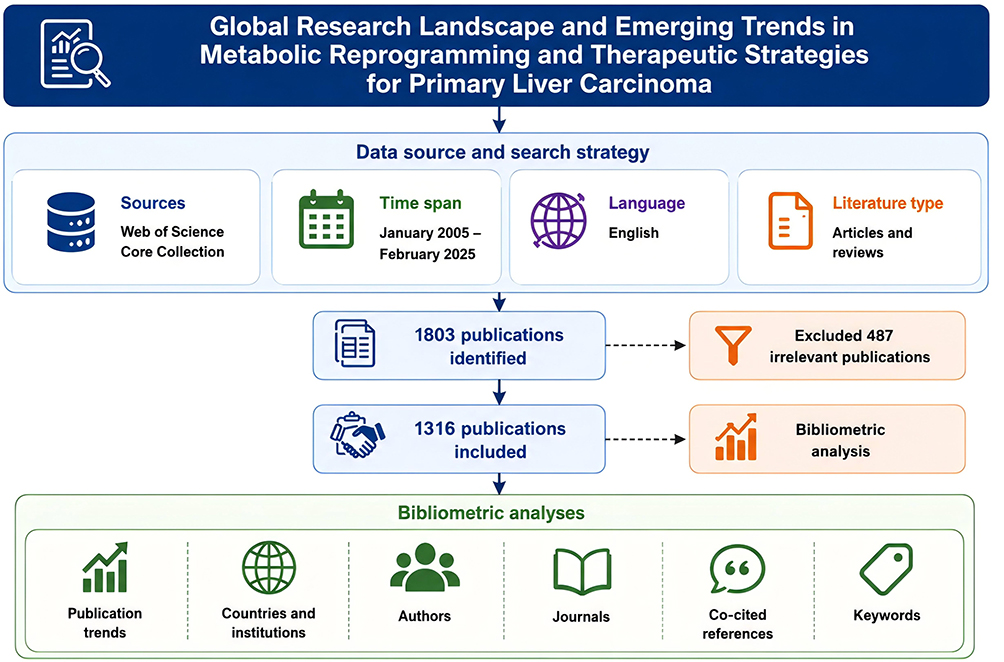 |
Figure 1 Workflow of literature retrieval, screening, and bibliometric analyses in studies of metabolic reprogramming and therapeutic strategies for PLC. Publications were retrieved from the Web of Science Core Collection (WoSCC) database and screened according to predefined inclusion criteria. The included studies were subsequently analyzed using bibliometric approaches, including publication trends, collaborative networks, co-citation analysis, and keyword analysis. |
Data Processing and Bibliometric Analysis
Prior to bibliometric analysis, data preprocessing and normalization were performed to improve analytical accuracy. Different expressions referring to the same institution were standardized, and synonymous keywords were manually merged. For example, “hepatocellular carcinoma” and “HCC” were unified as “hepatocellular carcinoma”, while “tumor microenvironment” and “TME” were standardized as “tumor microenvironment”. Similarly, “metabolic inhibitor”, “metabolic therapy”, and “metabolism-targeted therapy” were manually harmonized according to semantic relevance.
Microsoft Excel 2021 was used to summarize annual publication trends. RStudio (version 4.4.0) with the ggplot2 package was applied for statistical visualization and trend prediction analyses. VOSviewer (version 1.6.20) was used to analyze collaborative relationships among countries, institutions, and authors, as well as co-cited authors, journals, and keyword co-occurrence networks. VOSviewer was used with the default parameter settings unless otherwise specified. Pajek software was subsequently employed to optimize the layout and readability of the network visualization.
CiteSpace (version 6.4.R1 Advanced), developed by Chen et al, was applied to identify research hotspots, citation bursts, co-cited references, and evolving research trends. The parameters in CiteSpace were set as follows: time slicing from 2005 to 2025, years per slice = 1, and g-index factor k = 25. Cluster analyses and timeline visualizations were subsequently generated to identify major research themes and emerging frontiers in metabolism-targeted therapeutic strategies for PLC.
Results
Annual and Cumulative Publications
A total of 1,316 publications related to metabolic reprogramming and therapeutic strategies in PLC published between January 2005 and February 2025 were included in this study. The annual and cumulative publication trends are shown in Figure 2. Because the literature search was completed in February 2025, the publication data for 2025 represent only a partial year and should therefore be interpreted with caution. Overall, the annual number of publications increased steadily over the past two decades, with a marked acceleration after 2016. Notably, the annual publication output exceeded 100 for the first time in 2020 and reached a peak in 2022 (n = 212), indicating growing research interest in metabolism-targeted therapeutic strategies for PLC.
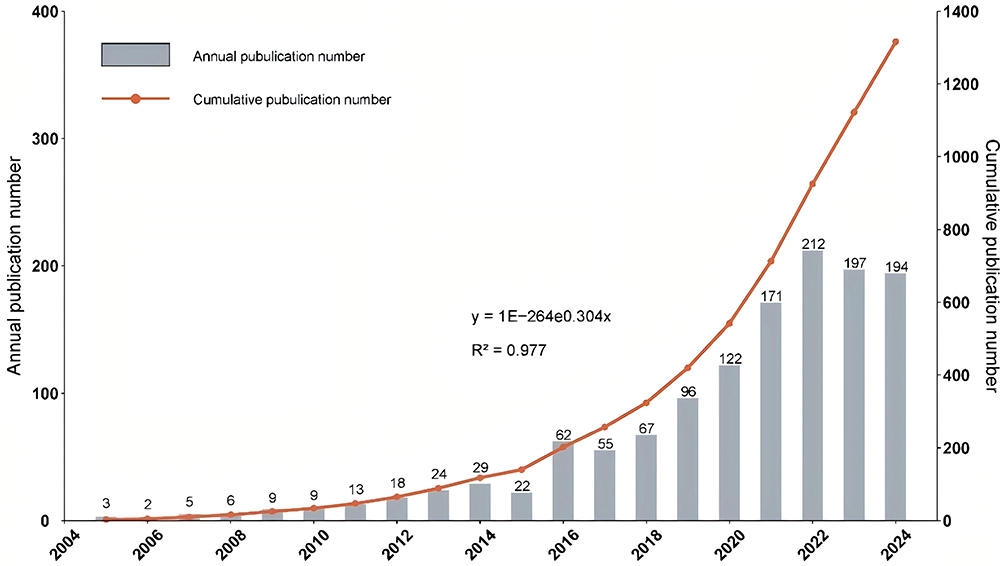 |
Figure 2 Annual and cumulative publication trends related to metabolic inhibitor-based therapies in PLC. |
The cumulative publication trend demonstrated an exponential growth pattern. Predictive analysis revealed a strong fitting relationship between cumulative publication count (Y) and publication year (X), with the equation y = 1E−264e0.304x and an R2 value of 0.977, suggesting sustained expansion of research in this field.
Analysis of Countries and Institutions
To evaluate the contributions of different countries and regions, publication and citation metrics were analyzed. A total of 62 countries/regions published studies related to metabolic therapy for PLC. China ranked first in publication output with 755 publications, accounting for 57.4% of the total, followed by the USA (n = 243, 18.5%), Italy (n = 102, 7.8%), Germany (n = 76, 5.8%), and Japan (n = 65, 4.9%) (Figure 3A). Although the USA ranked second in publication count, it showed the highest average citation rate, highlighting its strong academic influence in this field. Among the top 10 contributing countries/regions, five were located in Europe, four in Asia, and one in North America. As shown in Figures 3B and C, the USA maintained extensive international collaborations, particularly with China.
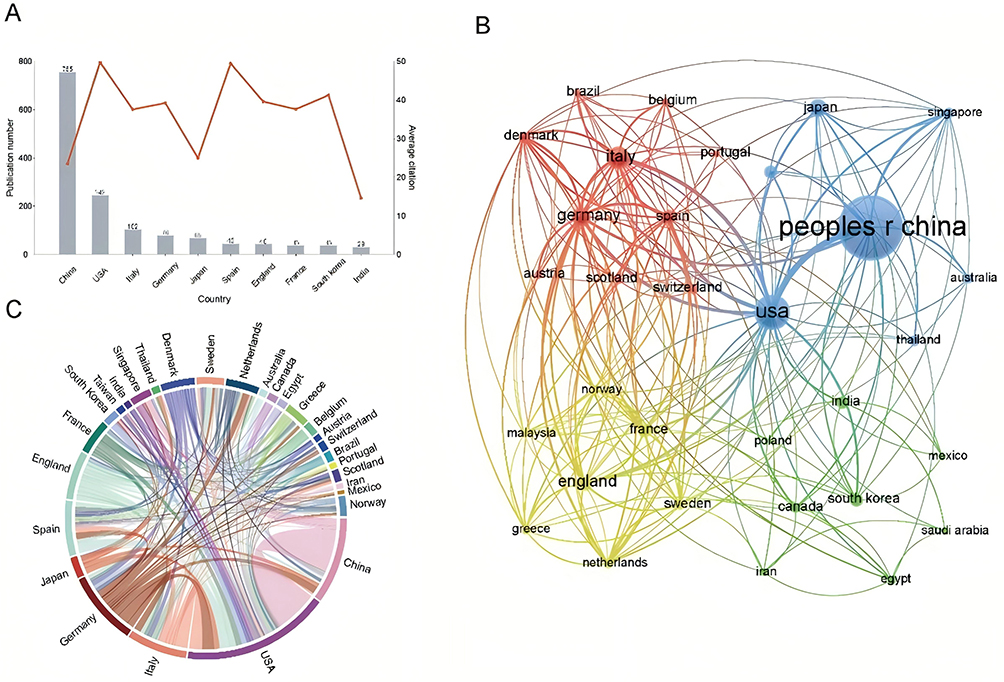 |
Figure 3 Global distribution and collaborative landscape of contributing countries in metabolic inhibitor research for PLC. (A) Publication output and average citation metrics of the top 10 contributing countries/regions. (B) International collaboration network visualized using VOSviewer. (C) Chord diagram showing collaboration patterns among different countries/regions. |
Institutional analysis revealed that 1,805 organizations worldwide contributed to research on metabolic therapy for PLC. Table 1 presents the 10 most productive institutions, all of which were based in China. Fudan University ranked first with 71 publications (5.4% of the total), followed by Shanghai Jiao Tong University (n = 52, 4.0%) and Sun Yat-Sen University (n = 51, 3.9%). Notably, the Chinese Academy of Sciences had the highest average citation count (53 citations per publication), reflecting the high impact of its research. Figure 4A illustrates the collaboration network among institutions, highlighting both domestic and international partnerships.
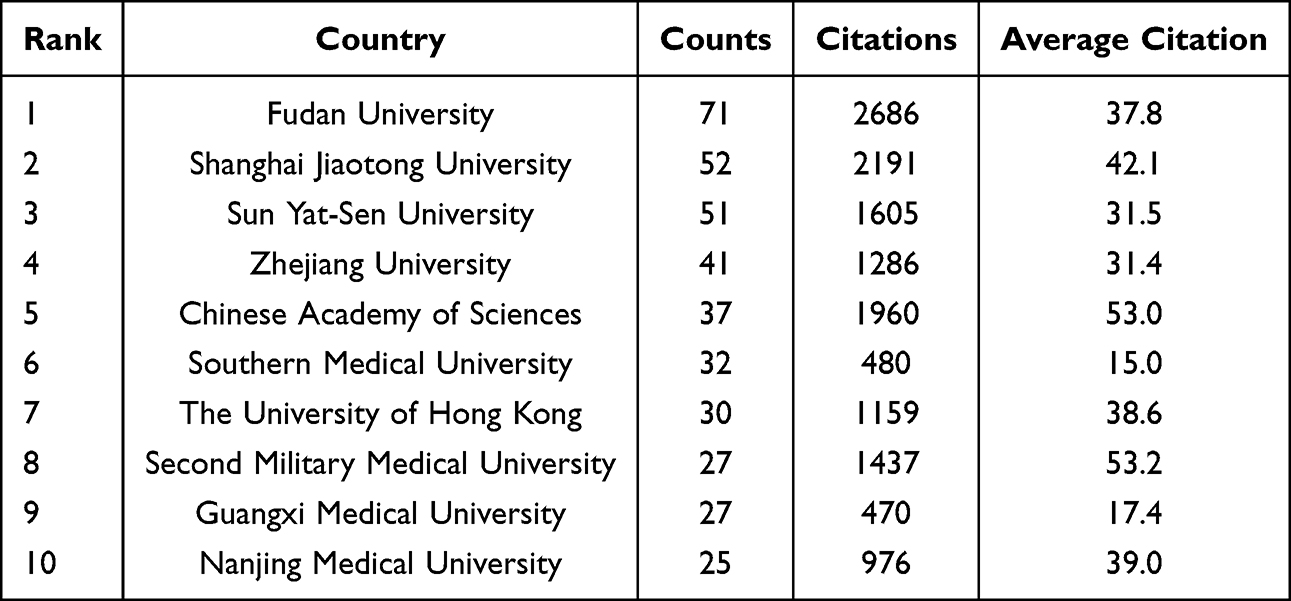 |
Table 1 The Top 10 Institutions Contributed to Publications |
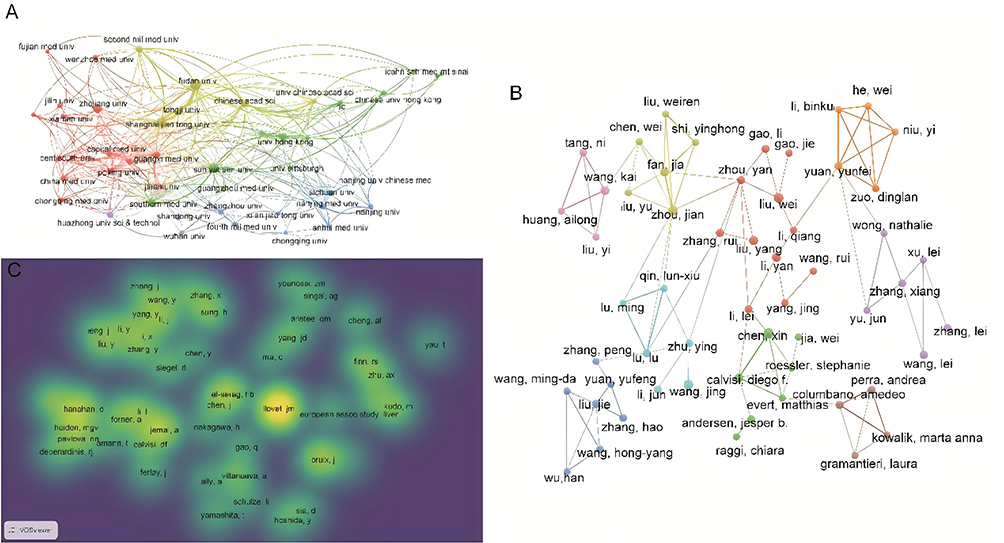 |
Figure 4 Multidimensional scholarly collaboration networks in metabolic inhibitor research for PLC. (A) Inter-institutional collaboration network. (B) Co-authorship network among researchers. (C) Density visualization of co-cited authors. |
Authors and Co-Cited Authors
More than 9,000 authors contributed to research on metabolic therapy for PLC. Table 2 lists the 10 most productive authors, among whom seven were from China. Chen Xin (USA) ranked first with 14 publications, followed by Zhou Jian (n = 11), Ng Irene Oi-Lin (n = 9), Liu Wei (n = 9), and Wang Jing (n = 9). Figure 4B presents the author collaboration network, in which node size represents publication count and connecting lines indicate the strength of collaboration among authors.
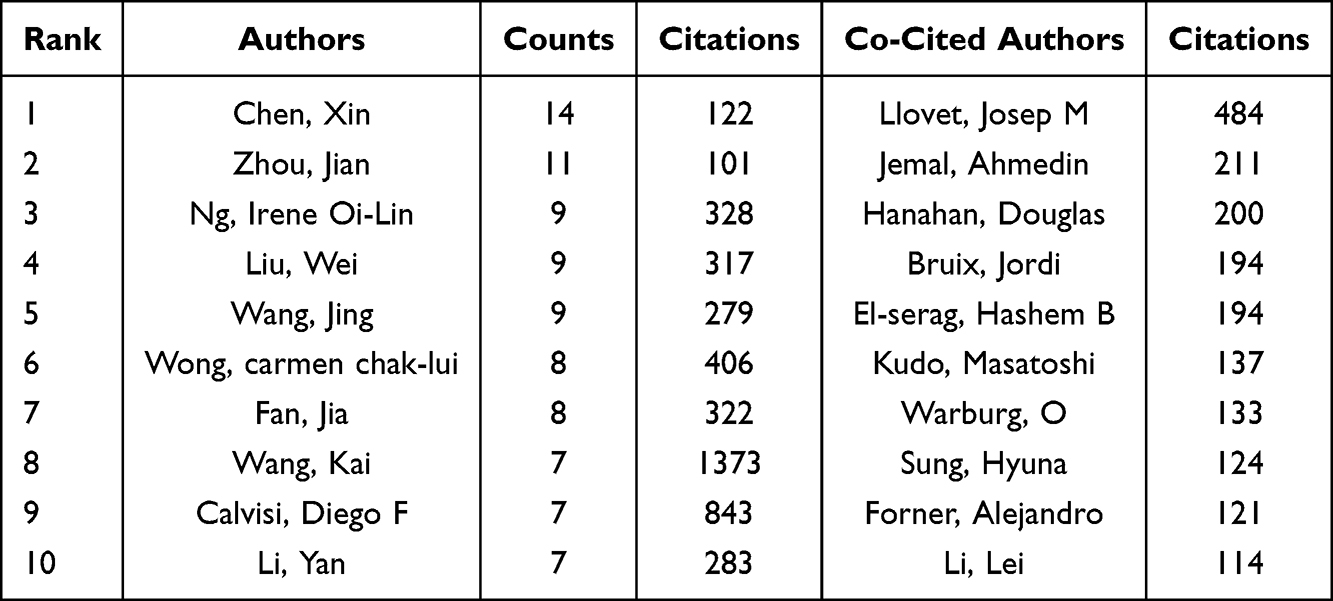 |
Table 2 The Top 10 Productive Authors and Co-Cited Authors |
In terms of co-cited authors, 39,333 researchers were cited at least once. Among the 10 most co-cited authors, four were from Europe, four from North America, and two from Asia, highlighting the strong influence of Western researchers in this field (Table 2). Llovet JM (USA) was the most frequently co-cited author with 484 citations, followed by Jemal A (USA, n = 211) and Hanahan D (Switzerland, n = 200). Figure 4C presents a density visualization map of co-cited authors in the field of metabolic therapy for PLC.
Journals and Co-Cited Journals
From 2005 to 2025, 425 peer-reviewed journals published studies related to metabolic therapy for PLC. As shown in Table 3, the top 10 most productive journals accounted for approximately 20% of the total publications despite representing only 2% of all journals included in the analysis. Cancers ranked first in publication output (n = 47), whereas Hepatology had the highest total citation count (2,502 citations). The Journal of Hepatology showed the highest average citation count, indicating its substantial academic influence in this field. Notably, 80% of the top 10 journals belonged to the JCR Q1 category, reflecting their high academic quality and impact.
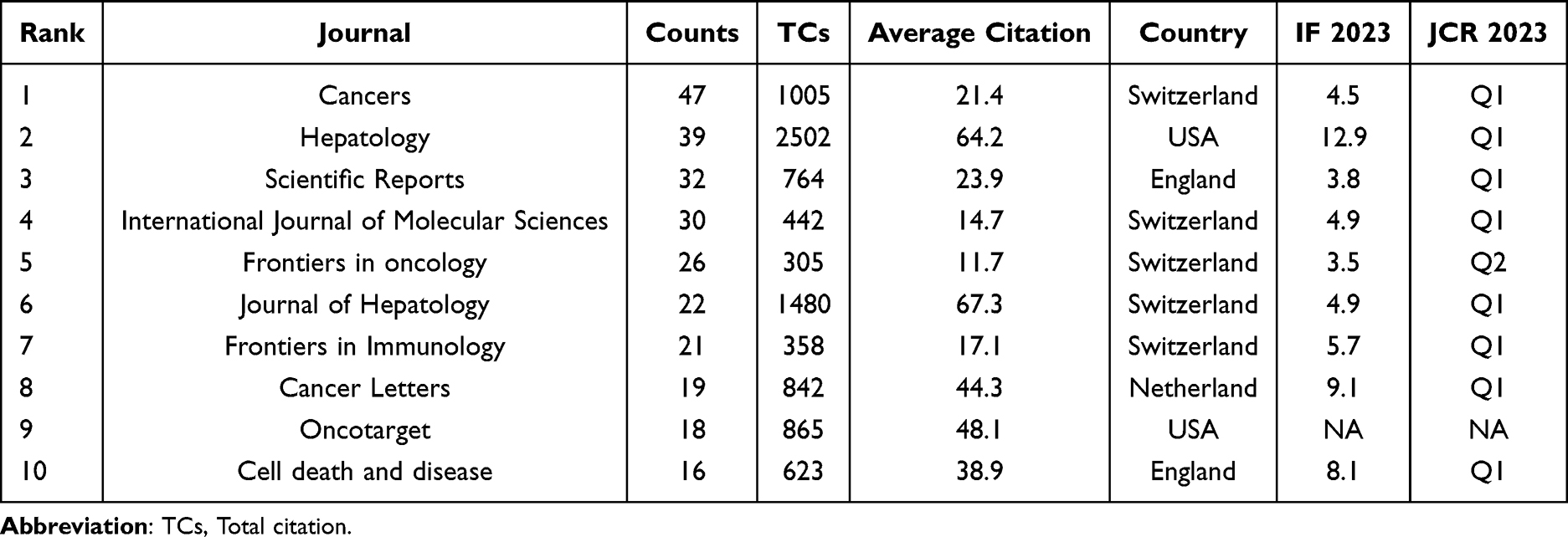 |
Table 3 The Top 10 Journals Contributed to Publications |
Among 4,461 co-cited journals, 11 journals were cited more than 1,000 times (Supplementary Table 1). Hepatology was the most frequently co-cited journal (TCs = 3,435), followed by the Journal of Hepatology (TCs = 2,180). Both journals also ranked among the top 10 most productive journals, reinforcing their authoritative role in research on metabolic therapy for PLC.
The dual-map overlay visualization provides insight into citation networks by displaying citing journals on the left and cited journals on the right, thereby illustrating disciplinary distribution and knowledge flow. As shown in Figure 5, the cited literature mainly originated from the Molecular/Biology/Genetics field and primarily influenced journals in the Molecular/Biology/Immunology and Medicine/Medical/Clinical fields, highlighting the interdisciplinary characteristics of metabolic therapy research in PLC.
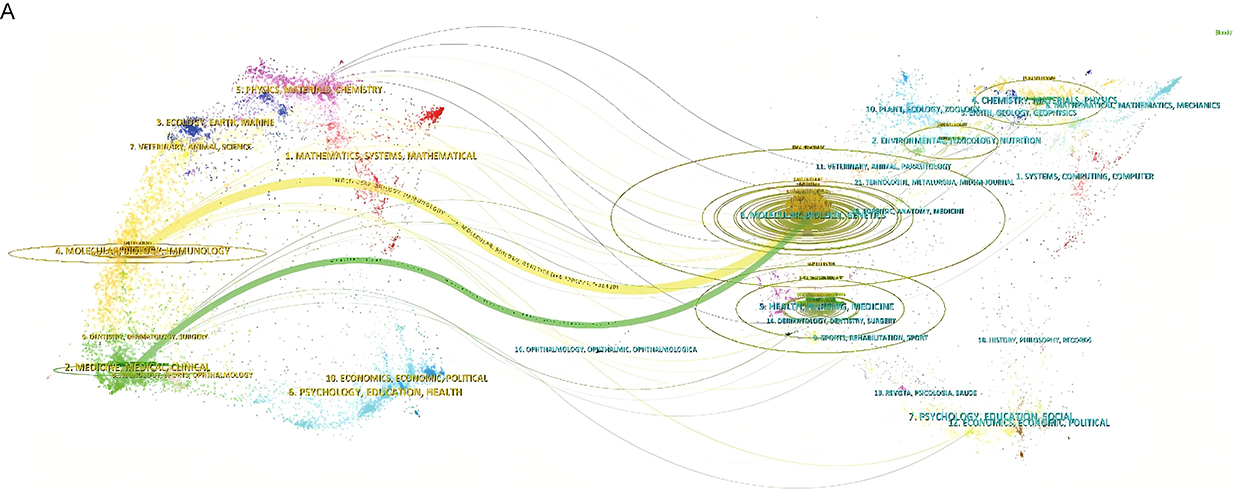 |
Figure 5 Dual-map overlay visualization of journal citation networks in metabolic inhibitor research for PLC. The left side represents citing journals, whereas the right side represents cited journals. |
Documents and References
To identify key research directions in this field, the 10 most-cited publications were summarized in Supplementary Table 2, including seven original articles and three reviews. The most-cited publication was “Frequent Mutation of Isocitrate Dehydrogenase (IDH) 1 and IDH2 in Cholangiocarcinoma Identified Through Broad-Based Tumor Genotyping” by Border DR, published in Oncologist in 2012, with 589 citations. The second and third most-cited publications, authored by Gao Qing and Calvisi DF, received 549 and 448 citations, respectively.
Among 59,364 references cited in research on metabolic therapy for PLC, the most frequently co-cited reference was “Global Cancer Statistics”, published in CA: A Cancer Journal for Clinicians in 2011, with 177 citations, followed by “Hallmarks of Cancer: The Next Generation” (162 citations) and “Sorafenib in Advanced Hepatocellular Carcinoma” (137 citations) (Supplementary Table 3). Using CiteSpace, highly co-cited references published between 2012 and 2025 were visualized in a time-zone format, whereas publications before 2012 were excluded because of limited publication volume during the early stage of this research field (Figure 6A).
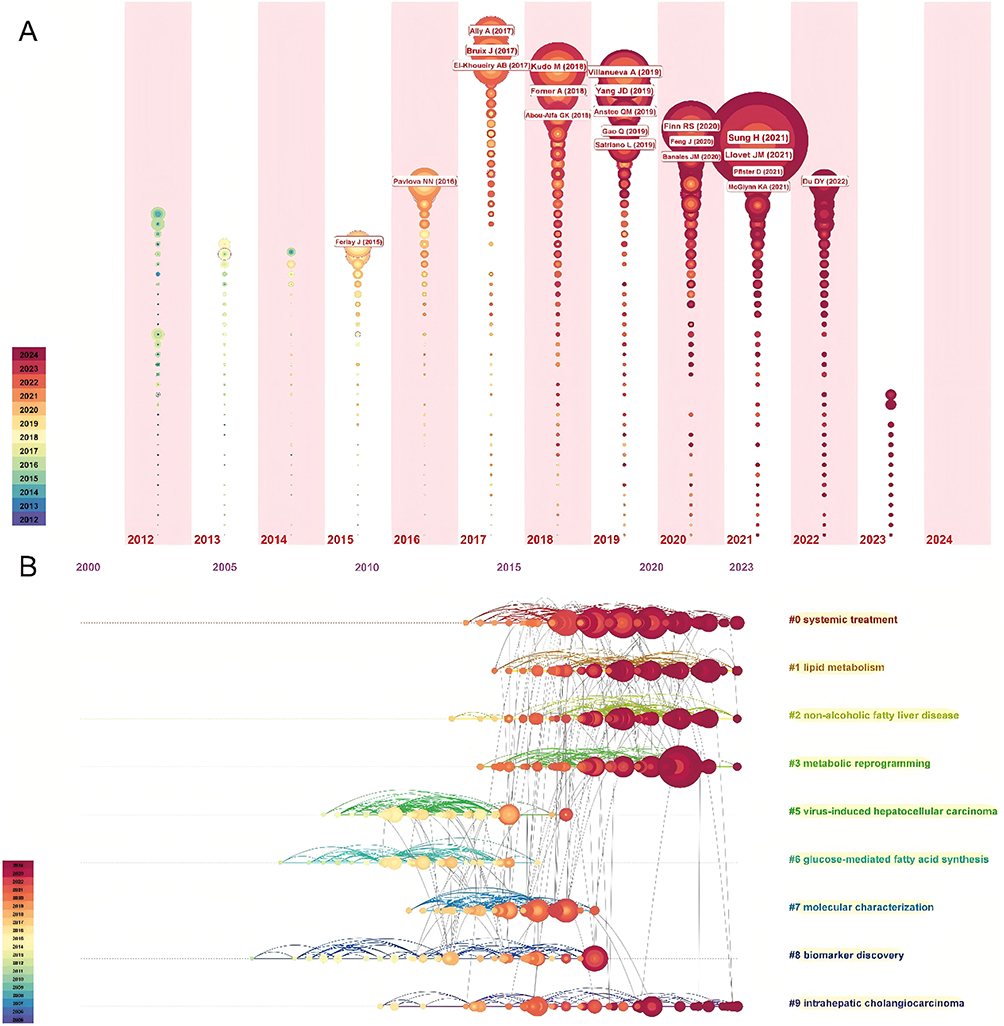 |
Figure 6 Co-cited reference analysis in metabolic inhibitor research for PLC. (A) Temporal distribution of highly co-cited references. (B) Timeline visualization of thematic reference clusters ranked by cluster size. |
Furthermore, CiteSpace clustering analysis was performed to categorize co-cited references. Figure 6B presents the 10 largest clusters in a timeline format, with clusters ranked according to size and nodes arranged chronologically from left to right. The top 10 clusters were labeled as follows: systemic treatment (cluster #0), lipid metabolism (cluster #1), non-alcoholic fatty liver disease (cluster #2), metabolic reprogramming (cluster #3), virus-induced hepatocellular carcinoma (cluster #5), glucose-mediated fatty acid synthesis (cluster #6), molecular characterization (cluster #7), biomarker discovery (cluster #8), and intrahepatic cholangiocarcinoma (cluster #9). Among these, systemic treatment (#0) represented the largest cluster, whereas lipid metabolism (#1) emerged as a recent research hotspot. These findings suggest increasing interest in the systemic therapeutic potential of metabolism-targeted strategies in PLC, with lipid metabolism receiving particular attention.37 Representative studies included CD36 inhibition combined with anti-PD-1 immunotherapy,38 TVB3664 combined with cabozantinib,39 and T0901317 combined with sorafenib40 in HCC treatment. Accumulating evidence suggests that metabolic reprogramming contributes to sorafenib resistance in hepatocellular carcinoma, highlighting lipid metabolism as a potential therapeutic target.41
Keywords Analysis
Keywords summarize the major themes of research articles and facilitate the identification of emerging trends and research hotspots in metabolic therapy for PLC. After merging synonymous terms, a total of 5,312 keywords were identified from 1,316 publications, among which 20 keywords appeared at least 70 times (Supplementary Table 4). The top 100 keywords were selected for co-occurrence analysis and categorized into five clusters represented by different colors (Figure 7A).
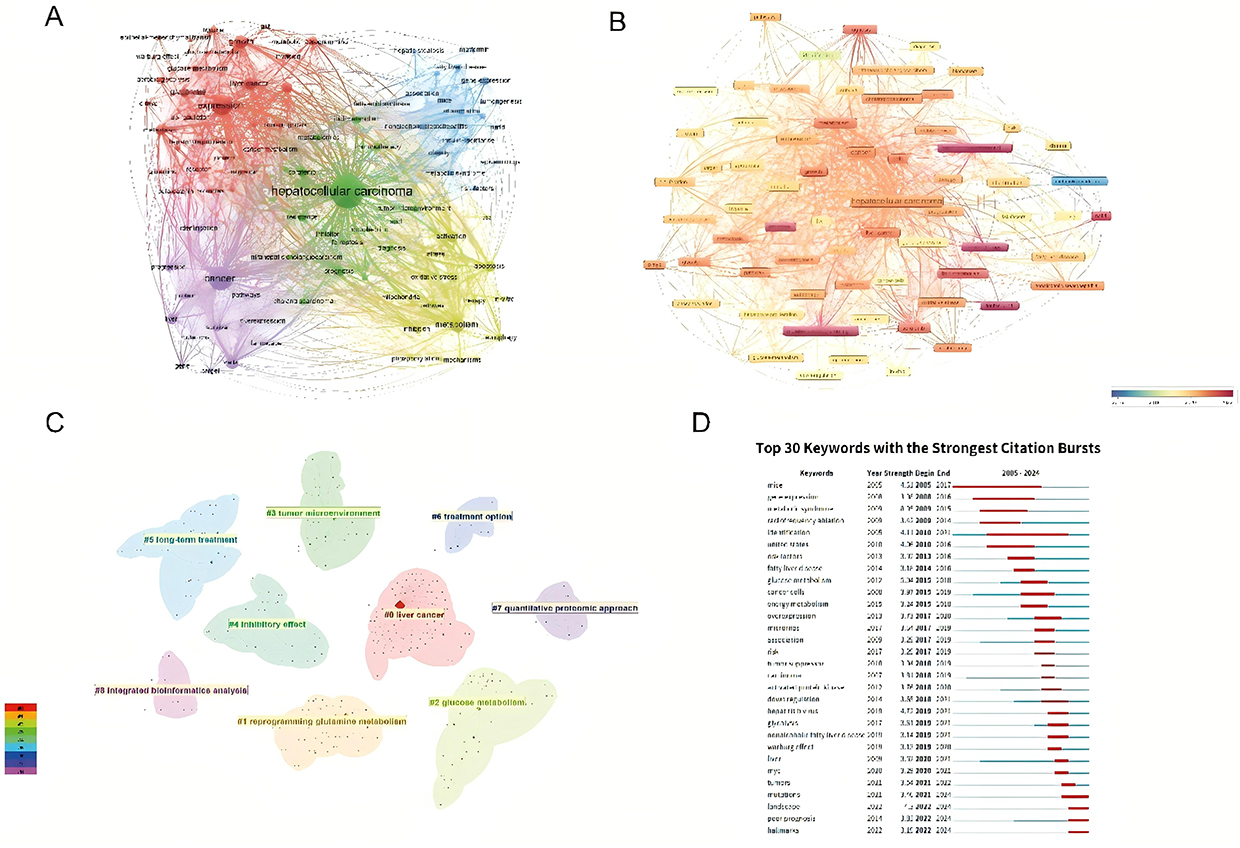 |
Figure 7 Keyword analysis of research hotspots and emerging trends in metabolic inhibitor research for PLC. (A) Keyword co-occurrence network. (B) Temporal overlay visualization of keyword co-occurrence. (C) Keyword clustering analysis identifying major research directions. (D) Top 30 keywords with the strongest citation bursts. |
Cluster 1 (green) mainly reflected the clinical application of metabolic therapy in PLC, including keywords such as “hepatocellular carcinoma”, “intrahepatic cholangiocarcinoma”, “sorafenib”, “immunotherapy”, and “resistance”. Cluster 2 (red) represented the metabolic characteristics of PLC, including “glucose metabolism”, “Warburg effect”, “aerobic glycolysis”, and “metabolic reprogramming”. Clusters 3 (yellow) and 4 (purple) mainly focused on the molecular mechanisms associated with metabolic alterations in PLC. Cluster 5 (blue) emphasized non-alcoholic fatty liver disease (NAFLD), lipid metabolism abnormalities, and NAFLD-related hepatocarcinogenesis.
From a temporal perspective, recent research hotspots mainly included “metabolic reprogramming”, “tumor microenvironment”, “sorafenib resistance”, “immunotherapy”, and “double-blind” studies (Figure 7B). These trends highlight the growing focus on metabolism-associated tumor microenvironment remodeling and strategies for overcoming resistance to immunotherapy and sorafenib, as demonstrated by emerging therapeutic approaches involving SSI-4,42 TVB-2640,43 and maprotiline.44 These emerging hotspots indicate an increasing emphasis on translating metabolic research into clinically relevant therapeutic strategies, particularly through improving immunotherapy efficacy and developing metabolism-based combination treatments for primary liver cancer.
To further identify major research directions in metabolic therapy for PLC, CiteSpace clustering analysis was performed. Figure 7C presents nine major keyword clusters, including liver cancer (cluster #0), reprogramming glutamine metabolism (cluster #1), glucose metabolism (cluster #2), tumor microenvironment (cluster #3), inhibitory effect (cluster #4), long-term treatment (cluster #5), treatment option (cluster #6), quantitative proteomic approach (cluster #7), and integrated bioinformatics analysis (cluster #8).
Keyword burst analysis identified 30 keywords with strong citation bursts between 2005 and 2025, with their duration, intensity, and active periods presented in Figure 7D. Keywords related to glucose metabolism, including “glucose metabolism”, “energy metabolism”, “glycolysis”, and “Warburg effect”, repeatedly exhibited strong citation bursts, reinforcing the central role of glucose metabolism in PLC. More recently, keywords such as “mutations”, “landscape”, “poor prognosis”, and “hallmarks” gained increasing attention, indicating growing clinical relevance and potential future research directions in metabolic therapy for PLC.
Discussion
Bibliometric Characteristics and Therapeutic Landscape of PLC
With the increasing emphasis on collaborative research and the expanding accessibility of open-access resources, researchers are now able to share and discuss findings related to metabolic inhibitors for PLC more efficiently, thereby accelerating research progress in this field. Through a systematic review of publications over the past two decades, we analyzed 1,316 articles published in 425 journals across 62 countries/regions. This comprehensive bibliometric analysis not only outlines the developmental trajectory of this research field, but also identifies major research hotspots, emerging frontiers, and potential therapeutic directions involving metabolic inhibitors in PLC.
PLC, including both HCC and intrahepatic cholangiocarcinoma (iCCA), remains a highly aggressive malignancy with poor clinical outcomes.45 Curative therapeutic strategies for early-stage PLC mainly include surgical resection and liver transplantation; however, due to the asymptomatic nature and rapid progression of PLC, only a limited proportion of patients are eligible for these treatments.46,47 In addition, outcomes following liver transplantation for iCCA remain unsatisfactory.48 For advanced PLC, recent progress in immunotherapy and targeted therapy has substantially expanded therapeutic options. Immune checkpoint inhibitors targeting the PD-1/PD-L1 axis, together with molecular-targeted agents such as sorafenib and lenvatinib, have demonstrated significant clinical benefits in HCC management.47,48 For unresectable iCCA, gemcitabine combined with cisplatin remains the standard first-line chemotherapy regimen, while additional therapeutic approaches continue to be explored.49 Moreover, locoregional therapies, including embolization and radiotherapy, are increasingly being integrated with systemic therapies for unresectable PLC to improve treatment efficacy.50,51 Despite these advances, therapeutic resistance and limited treatment efficacy remain major clinical challenges, emphasizing the urgent need to identify novel and more effective therapeutic targets.
For many years, research on tumor metabolism was relatively overlooked compared with studies focusing on oncogenes and tumor suppressor genes, which largely drove the development of targeted therapies. However, accumulating evidence has demonstrated complex interactions between oncogenic signaling pathways and metabolic networks, leading to renewed interest in cancer metabolism.52 This trend is reflected in our bibliometric findings, which demonstrated a sustained and exponential increase in publications related to metabolic therapies for PLC. As the primary metabolic organ of the human body, the liver undergoes profound metabolic alterations during hepatocarcinogenesis.53 These metabolic changes not only support tumor proliferation and survival but also influence immune cell infiltration and function, thereby contributing to the establishment of an immunosuppressive tumor microenvironment (TME) that may affect immunotherapy efficacy and patient prognosis.54 Consequently, targeting metabolic vulnerabilities using metabolic inhibitors has emerged as a promising therapeutic strategy, particularly in combination with immunotherapy and other systemic treatments to overcome drug resistance. These observations are consistent with our bibliometric findings, in which metabolism-targeted combination therapy, immunotherapy resistance, and tumor microenvironment remodeling emerged as major research hotspots.
Research Hot Spots and Frontiers
Glucose Metabolism
As shown in Figure 7D, keywords such as “glucose metabolism”, “glycolysis”, and “Warburg effect” ranked among the strongest citation bursts throughout the study period. In addition, glucose metabolism constituted one of the major keyword clusters identified in the co-occurrence analysis (Figure 7C), highlighting its long-standing importance in PLC research. Increasing evidence suggests that PLC is characterized by aberrant aerobic glycolysis, which represents a hallmark of metabolic reprogramming. Hexokinase-2 (HK2), a key rate-limiting glycolytic enzyme with high glucose affinity, initiates glycolytic flux and exhibits tumor-grade-dependent overexpression in PLC, correlating with poor prognosis, enhanced proliferative capacity, and metastatic potential.55 Current HK2-targeting strategies include HuaChanSu, a direct inhibitor currently undergoing Phase III clinical evaluation (NCT03236736), and 2-Deoxy-D-glucose (2-DG), a non-competitive HK2 inhibitor that demonstrates therapeutic efficacy in sorafenib-resistant HCC and is currently being investigated in solid tumors (NCT00096707, NCT00633087).56
At the second regulatory step of glycolysis, phosphofructokinase-1 (PFK1) catalyzes the conversion of fructose-6-phosphate (F-6-P) to fructose-1,6-bisphosphate (F-1,6-BP). PFK1 activity is enhanced by fructose-2,6-bisphosphate (F-2,6-BP), which is generated by PFKFB3. Co-overexpression of PFK1 and PFKFB3 in HCC has been associated with tumor invasion, angiogenesis, and therapeutic resistance.57,58 Consequently, aspirin has been investigated as a potential PFKFB3 inhibitor for preventing postoperative HCC recurrence (NCT02748304). Another important glycolytic regulator, pyruvate kinase M2 (PKM2), exists in dynamic oligomeric forms, with the tetrameric configuration exhibiting the highest catalytic activity. PKM2 overexpression is associated with metastatic progression and poor prognosis in PLC.59 Small-molecule PKM2 inhibitors, including Shikonin and PKM2-IN-1, have shown synergistic anti-tumor effects when combined with systemic therapies through metabolic modulation, although further clinical validation remains necessary.60,61
The aerobic glycolytic cascade in PLC is regulated by multiple signaling pathways, including HIF1α, c-MYC, and PI3K-AKT signaling.55 Among these regulators, HIF1α functions as a central transcriptional activator of glycolytic genes such as GLUT1, HK2, PFKFB3, and PKM2. Pharmacological inhibition of HIF1α using metformin, a widely used antidiabetic drug, has demonstrated promising anti-tumor potential in PLC.62–64 This has led to several clinical investigations evaluating metformin in combination with chloroquine (NCT02496741), sorafenib (NCT02672488), celecoxib (NCT03184493), high-dose vitamin C (NCT04033107), and anti-PD-1 therapy (NCT04114136). Genistein, another HIF1α inhibitor, has also demonstrated preclinical efficacy in suppressing glycolysis and reversing sorafenib resistance, although clinical evidence remains limited.65
Isocitrate dehydrogenase (IDH), a rate-limiting enzyme in the tricarboxylic acid (TCA) cycle, catalyzes the conversion of isocitrate to α-ketoglutarate (α-KG) and exhibits pathogenic mutations in multiple malignancies, including glioma, leukemia, and iCCA.66 IDH1/2 mutations induce the accumulation of the oncometabolite 2-hydroxyglutarate (2-HG), leading to epigenetic dysregulation through DNA and histone hypermethylation, thereby impairing cellular differentiation and promoting immunosuppressive microenvironments.67 Clinically, IDH1/2 mutations serve as important diagnostic and prognostic biomarkers in PLC. Therapeutic targeting of mutant IDH has advanced substantially in recent years. Phase I/II clinical trials evaluating the IDH2 inhibitor enasidenib for IDH2-mutant iCCA have been completed (NCT02273739). In addition, ongoing clinical studies are investigating ivosidenib (AG-120), either as monotherapy or in combination regimens, for advanced or metastatic IDH1-mutant cholangiocarcinoma (completed: NCT02073994, NCT02989857, NCT05921760; recruiting: NCT06607302; active: NCT06501625, NCT06081829). Phase I/II studies evaluating olutasidenib (FT-2102) in IDH1-mutant hepatobiliary tumors have also been completed (NCT03684811).
Lipid Metabolism
Co-cited reference clustering analysis highlighted lipid metabolism as a pivotal pathway in PLC pathogenesis (Figure 6B). Lipids play fundamental roles in maintaining cellular homeostasis through structural, signaling, and bioenergetic functions.68 HCC primarily depends on enhanced de novo lipogenesis, whereas iCCA demonstrates distinct metabolic characteristics, including downregulation of Fatty acid synthase (FASN) and persistent tumorigenesis despite FASN inhibition in vivo.69 These findings suggest that iCCA may preferentially rely on exogenous fatty acid uptake rather than endogenous lipid synthesis. Interestingly, FASN depletion suppresses cholangiocarcinoma proliferation under fatty acid-deprived conditions in vitro,70 indicating that simultaneous targeting of fatty acid transport and lipogenesis pathways may exert stronger anti-tumor effects.
Fatty acid uptake is mainly mediated by lipoprotein lipase (LPL) and membrane transporters, including CD36, fatty acid-binding proteins (FABPs), and fatty acid transport proteins (FATPs). Inhibition of these molecules using P-407 (LPL inhibitor) and sulfo-N-succinimidyl oleate (SSO; CD36 inhibitor) has shown promising anti-tumor potential in PLC models, although additional clinical validation is still required.71,72 During de novo lipogenesis, ATP citrate lyase (ACLY) catalyzes the conversion of citrate to acetyl-CoA, thereby linking carbohydrate metabolism with lipid biosynthesis. ACLY inhibition effectively suppresses lipid synthesis in tumor cells. For example, BMS-303141 induces endoplasmic reticulum stress-mediated apoptosis in HCC cells, whereas Morusin promotes mitochondrial apoptosis and autophagy through reactive oxygen species (ROS) accumulation, collectively suggesting anti-PLC potential.73,74
Acetyl-CoA carboxylase (ACC), particularly the ACC1 isoform, controls the rate-limiting step of lipogenesis. The liver-targeted ACC inhibitor ND-654 exhibits synergistic anti-tumor effects when combined with sorafenib, improving survival in tumor-bearing models and reducing HCC incidence in cirrhotic rats.75 Although most current ACC inhibitor trials mainly focus on metabolic disorders, further oncological evaluations are warranted. FASN, another key enzyme involved in long-chain fatty acid synthesis, has also emerged as an important therapeutic target. The first-generation FASN inhibitor orlistat exhibits sorafenib-sensitizing effects in cancer therapy,76 while the next-generation inhibitor TVB-3640 demonstrates improved specificity by avoiding compensatory β-oxidation activation and has completed Phase I trials in solid tumors (NCT02223247).
The lipogenic pathway is transcriptionally regulated by sterol-regulatory element binding protein 1 (SREBP-1), which coordinately activates ACLY, ACC1, and FASN.77 Overexpression of SREBP-1 contributes to hepatocarcinogenesis, whereas its suppression inhibits tumor progression. Several preclinical studies have identified cinobufotalin, Fatostatin, and SI-1 as potential SREBP-1 inhibitors through modulation of lipid metabolism, supporting their future clinical translation.77
Cholesterol metabolism also plays a critical role in PLC progression. The rate-limiting enzyme 3-hydroxy-3-methylglutaryl-CoA reductase (HMGCR) exhibits increased expression in PLC tissues.78,79 Statins, originally developed as cholesterol-lowering agents targeting HMGCR, have demonstrated chemopreventive and anti-tumor effects in PLC.79,80 Clinical investigations include Phase IV trials evaluating atorvastatin (NCT03024684) and phase II trials evaluating simvastatin (NCT02968810) for preventing HCC recurrence. Several completed studies have also investigated pravastatin combined with sorafenib in patients with advanced HCC (NCT01418729, NCT01357486, NCT01903694, NCT01075555).
Glutamine Metabolism
Glutamine metabolism was identified as an important research topic in the keyword clustering analysis and represents another hallmark of metabolic reprogramming in PLC progression. This process is largely driven by upregulated expression of solute carrier family 1 member 5 (SLC1A5), a glutamine transporter overexpressed in HCC tissues. Clinically, SLC1A5 overexpression is associated with immune microenvironment remodeling, poor prognosis, and resistance to transarterial chemoembolization (TACE), making it a promising therapeutic target.81,82 A phase II clinical trial evaluating the selective SLC1A5 inhibitor JPH203 in advanced cholangiocarcinoma has been completed, while a phase I study assessing QBS10072S in CCA/HCC is currently underway (NCT04430842).
Glutaminase isoforms (GLS1/GLS2) are critical regulators of glutamine flux, and GLS1 overexpression is associated with aggressive PLC phenotypes.83,84 The GLS1 inhibitor CB-839 has demonstrated potent anti-tumor activity in preclinical HCC models, particularly when combined with ASCT2 inhibition (V-9302) or GOT2 inhibition, supporting the effectiveness of dual-targeting metabolic strategies.85,86 Clinical translation is further supported by completed trials evaluating CB-839-based combination regimens in solid tumors (NCT02071862, NCT03965845, NCT02861300).
Tumor Microenvironment
Metabolic remodeling of the tumor microenvironment (TME), as illustrated in Figure 7C, represents a critical mechanism contributing to immune evasion and therapeutic resistance in PLC. Tumor cells consume excessive nutrients and generate hypoxic, acidic, and nutrient-deficient microenvironments that impair immune cell function.87 In addition, tumor-derived metabolites directly modulate stromal and immune cells through receptor-mediated signaling and epigenetic regulation.
Lactate, a major glycolytic metabolite, acts as an important immunomodulator in PLC. Lactate accumulation promotes CD8+ T cell exhaustion and M2 macrophage polarization,88,89 while lysine 72 lactylation of MOESIN further enhances the immunosuppressive activity of Treg cells.90 The MCT4 inhibitor VB124 has been shown to reverse these effects and synergize with anti-PD-1 therapy to restore CD8+ T cell cytotoxicity in HCC models.89 Another important immunometabolite, prostaglandin E2 (PGE2), promotes polarization of CX3CR1+ macrophages, which subsequently secrete IL-27 and induce CD8+ T cell exhaustion following anti-PD1 therapy.91 Consequently, inhibition of the PGE2 pathway may improve immune checkpoint blockade efficacy. Clinical investigations involving COX-2 inhibitors have included celecoxib combined with epirubicin (NCT00057980) and toxicity reduction protocols combined with sorafenib (NCT02961998).
Moreover, immune cell-intrinsic metabolic reprogramming also contributes to tumor progression. Neutrophil extracellular traps (NETs) stimulate mitochondrial oxidative phosphorylation in CD4+ T cells, thereby promoting Treg differentiation and accelerating MASH-HCC progression.92 Collectively, these findings suggest that combined targeting of metabolic pathways within the TME together with immune checkpoint blockade may represent a promising therapeutic strategy for PLC.
Limitations of the Study
Several limitations of this study should be considered. Only publications indexed in the WoSCC database and written in English were included, which may have resulted in database selection bias and language bias, potentially limiting the comprehensiveness of the retrieved literature. In addition, incomplete database indexing and delayed updates of publication records may have resulted in the omission of some recently published studies. Newly emerging topics often require time to accumulate citations and may therefore be underrepresented in bibliometric analyses. Furthermore, citation-based indicators may be influenced by self-citation and other citation practices, which should be taken into consideration when interpreting bibliometric findings. Nevertheless, the present study provides a systematic overview of the research status, hotspots, and emerging trends in metabolic reprogramming-targeted therapeutic strategies for PLC. Moreover, keyword clustering reflects the frequency and co-occurrence of research terms rather than their intrinsic biological or clinical importance. Therefore, the identified research hotspots should be interpreted with appropriate caution.
Conclusion
In conclusion, this study systematically analyzed the global research landscape of metabolic reprogramming and therapeutic strategies in PLC through bibliometric and visualization approaches. Over the past two decades, research interest in metabolic therapy for PLC has increased substantially, particularly in areas involving glucose metabolism, lipid metabolism, glutamine metabolism, and tumor microenvironment-associated metabolic remodeling. Bibliometric analyses further demonstrated that metabolism-targeted therapeutic strategies are gradually shifting toward combination treatment paradigms integrating immunotherapy, targeted therapy, and metabolic intervention.
Among current research hotspots, glucose metabolism remains the most extensively investigated field, whereas lipid metabolism and tumor microenvironment remodeling have emerged as rapidly expanding research frontiers. In addition, targeting metabolic vulnerabilities has attracted considerable research attention as a potential strategy to improve therapeutic efficacy and overcome resistance to systemic therapies in PLC.
Overall, our findings provide a comprehensive overview of the developmental trajectory, research hotspots, and emerging trends in metabolic therapy for PLC. These findings provide a comprehensive bibliometric overview of the evolving research landscape and may facilitate future mechanistic investigations while helping researchers identify emerging directions for metabolism-targeted therapeutic strategies in primary liver cancer.
Abbreviations
PLC, primary liver cancer; HCC, hepatocellular carcinoma; iCCA, intrahepatic cholangiocarcinoma; CCA, cholangiocarcinoma; TME, tumor microenvironment; WoSCC, Web of Science Core Collection; SCIE, Science Citation Index Expanded; ICIs, immune checkpoint inhibitors; ICB, immune checkpoint blockade; TCs, total citations; G6PD, glucose-6-phosphate dehydrogenase; GLUT, glucose transporter; SGLT2, sodium-dependent glucose cotransporter 2; HK2, hexokinase-2; PFK1, phosphofructokinase-1; PFKFB3, 6-phosphofructo-2-kinase/fructose-2,6-bisphosphatase 3; PKM2, pyruvate kinase M2; IDH, isocitrate dehydrogenase; TCA, tricarboxylic acid; PPP, pentose phosphate pathway; TACE, transarterial chemoembolization; FASN, fatty acid synthase; FA, fatty acid; LPL, lipoprotein lipase; ACLY, ATP citrate lyase; ACC, acetyl-CoA carboxylase; SREBP-1, sterol regulatory element-binding protein 1; HMGCR, 3-hydroxy-3-methylglutaryl-CoA reductase; S1P, sphingosine-1-phosphate; SLC1A5, solute carrier family 1 member 5; GLS, glutaminase; PGE2, prostaglandin E2.
Data Sharing Statement
The data analyzed in this study are available from the corresponding authors, Ning Fan or Gen-shu Wang, upon reasonable request.
Funding
This work was supported by: National Natural Science Foundation of China (82370663); Project of National Key Laboratory of Traditional Chinese Medicine Syndrome (QZ2023ZZ03).
Disclosure
The authors declare that they have no known competing financial interests or personal relationships that could have appeared to influence the work reported in this study.
References
1. Martinez-Reyes I, Chandel NS. Cancer metabolism: looking forward. Nat Rev Cancer. 2021;21(10):669–18. doi:10.1038/s41568-021-00378-6
2. Hanahan D. Hallmarks of cancer: new dimensions. Cancer Discov. 2022;12(1):31–46. doi:10.1158/2159-8290.CD-21-1059
3. Warburg O. On the origin of cancer cells. Science. 1956;123(3191):309–314. doi:10.1126/science.123.3191.309
4. You M, Xie Z, Zhang N, et al. Signaling pathways in cancer metabolism: mechanisms and therapeutic targets. Signal Transduct Target Ther. 2023;8(1):196 doi: 10.1038/s41392-023-01442-3.
5. Xiao Y, Yu TJ, Xu Y, et al. Emerging therapies in cancer metabolism. Cell Metab. 2023;35(8):1283–1303. doi:10.1016/j.cmet.2023.07.006
6. Finley LWS. What is cancer metabolism? Cell. 2023;186(8):1670–1688. doi:10.1016/j.cell.2023.01.038
7. De Martino M, Rathmell JC, Galluzzi L, Vanpouille-Box C. Cancer cell metabolism and antitumour immunity. Nat Rev Immunol. 2024;24(9):654–669. doi:10.1038/s41577-024-01026-4
8. Xia L, Oyang L, Lin J, et al. The cancer metabolic reprogramming and immune response. Mol Cancer. 2021;20(1):28. doi:10.1186/s12943-021-01316-8
9. Liao M, Yao D, Wu L, et al. Targeting the Warburg effect: a revisited perspective from molecular mechanisms to traditional and innovative therapeutic strategies in cancer. Acta Pharm Sin B. 2024;14(3):953–1008. doi:10.1016/j.apsb.2023.12.003
10. Agarwala Y, Brauns TA, Sluder AE, Poznansky MC, Gemechu Y. Targeting metabolic pathways to counter cancer immunotherapy resistance. Trends Immunol. 2024;45(7):486–494. doi:10.1016/j.it.2024.05.006
11. Hsu FT, Chen YT, Chin YC, et al. Harnessing the power of sugar-based nanoparticles: a drug-free approach to enhance immune checkpoint inhibition against glioblastoma and pancreatic cancer. ACS Nano. 2024;18(42):28764–28781. doi:10.1021/acsnano.4c07903
12. Kumagai S, Koyama S, Itahashi K, et al. Lactic acid promotes PD-1 expression in regulatory T cells in highly glycolytic tumor microenvironments. Cancer Cell. 2022;40(2):201–18e9. doi:10.1016/j.ccell.2022.01.001
13. Satriano L, Lewinska M, Rodrigues PM, Banales JM, Andersen JB. Metabolic rearrangements in primary liver cancers: cause and consequences. Nat Rev Gastroenterol Hepatol. 2019;16(12):748–766. doi:10.1038/s41575-019-0217-8
14. Gingold JA, Zhu D, Lee DF, Kaseb A, Chen J. Genomic profiling and metabolic homeostasis in primary liver cancers. Trends Mol Med. 2018;24(4):395–411. doi:10.1016/j.molmed.2018.02.006
15. Yang F, Hilakivi-Clarke L, Shaha A, et al. Metabolic reprogramming and its clinical implication for liver cancer. Hepatology. 2023;78(5):1602–1624. doi:10.1097/HEP.0000000000000005
16. Dopazo C, Soreide K, Rangelova E, et al. Hepatocellular carcinoma. Eur J Surg Oncol. 2024;50(1):107313. doi:10.1016/j.ejso.2023.107313
17. Mak LY, Liu K, Chirapongsathorn S, et al. Liver diseases and hepatocellular carcinoma in the Asia-Pacific region: burden, trends, challenges and future directions. Nat Rev Gastroenterol Hepatol. 2024;21(12):834–851. doi:10.1038/s41575-024-00967-4
18. Chen J, Ding C, Chen Y, et al. ACSL4 reprograms fatty acid metabolism in hepatocellular carcinoma via c-Myc/SREBP1 pathway. Cancer Lett. 2021;502:154–165. doi:10.1016/j.canlet.2020.12.019
19. Kim J, Yu L, Chen W, et al. Wild-Type p53 Promotes Cancer Metabolic Switch by Inducing PUMA-Dependent Suppression of Oxidative Phosphorylation. Cancer Cell. 2019;35(2):191–203.e8. doi:10.1016/j.ccell.2018.12.012
20. Adebayo Michael AO, Ko S, Tao J, et al. Inhibiting Glutamine-Dependent mTORC1 Activation Ameliorates Liver Cancers Driven by β-Catenin Mutations. Cell Metab. 2019;29(5):1135–50.e6. doi:10.1016/j.cmet.2019.01.002
21. Senni N, Savall M, Cabrerizo Granados D, et al. β-catenin-activated hepatocellular carcinomas are addicted to fatty acids. Gut. 2019;68(2):322–334. doi:10.1136/gutjnl-2017-315448
22. Broadfield LA, Duarte JAG, Schmieder R, et al. Fat induces glucose metabolism in nontransformed liver cells and promotes liver tumorigenesis. Cancer Res. 2021;81(8):1988–2001. doi:10.1158/0008-5472.CAN-20-1954
23. Song J, Sun H, Zhang S, Shan C. The multiple roles of glucose-6-phosphate dehydrogenase in tumorigenesis and cancer chemoresistance. Life. 2022;12(2):271. doi:10.3390/life12020271
24. Du T, Han J. Arginine metabolism and its potential in treatment of colorectal cancer. Front Cell Dev Biol. 2021;9:658861. doi:10.3389/fcell.2021.658861
25. Missiaen R, Anderson NM, Kim LC, et al. GCN2 inhibition sensitizes arginine-deprived hepatocellular carcinoma cells to senolytic treatment. Cell Metab. 2022;34(8):1151–67e7. doi:10.1016/j.cmet.2022.06.010
26. Ye W, Wang J, Zheng J, Jiang M, Zhou Y, Wu Z. Association between higher expression of vav1 in hepatocellular carcinoma and unfavourable clinicopathological features and prognosis. Protein Pept Lett. 2024;31(9):706–713. doi:10.2174/0109298665330781240830042601
27. Gudivada IP, Amajala KC. Integrative bioinformatics analysis for targeting hub genes in hepatocellular carcinoma treatment. Curr Genomics. 2025;26(1):48–80. doi:10.2174/0113892029308243240709073945
28. Sun R, Zhang Z, Bao R, et al. Loss of SIRT5 promotes bile acid-induced immunosuppressive microenvironment and hepatocarcinogenesis. J Hepatol. 2022;77(2):453–466. doi:10.1016/j.jhep.2022.02.030
29. Dodard G, Tata A, Erick TK, et al. Inflammation-induced lactate leads to rapid loss of hepatic tissue-resident nk cells. Cell Rep. 2020;32(1):107855. doi:10.1016/j.celrep.2020.107855
30. Holmgaard RB, Zamarin D, Li Y, et al. Tumor-expressed ido recruits and activates mdscs in a treg-dependent manner. Cell Rep. 2015;13(2):412–424. doi:10.1016/j.celrep.2015.08.077
31. Mezrich JD, Fechner JH, Zhang X, Johnson BP, Burlingham WJ, Bradfield CA. An interaction between kynurenine and the aryl hydrocarbon receptor can generate regulatory T cells. J Immunol. 2010;185(6):3190–3198. doi:10.4049/jimmunol.0903670
32. Zhang H, Li S, Wang D, et al. Metabolic reprogramming and immune evasion: the interplay in the tumor microenvironment. Biomark Res. 2024;12(1):96. doi:10.1186/s40364-024-00646-1
33. Finn RS, Qin S, Ikeda M, et al. Atezolizumab plus bevacizumab in unresectable hepatocellular carcinoma. N Engl J Med. 2020;382(20):1894–1905. doi:10.1056/NEJMoa1915745
34. Llovet JM, Castet F, Heikenwalder M, et al. Immunotherapies for hepatocellular carcinoma. Nat Rev Clin Oncol. 2022;19(3):151–172. doi:10.1038/s41571-021-00573-2
35. Rimassa L, Finn RS, Sangro B. Combination immunotherapy for hepatocellular carcinoma. J Hepatol. 2023;79(2):506–515. doi:10.1016/j.jhep.2023.03.003
36. Montazeri A, Mohammadi S, M Hesari P, Ghaemi M, Riazi H, Sheikhi-Mobarakeh Z. Preliminary guideline for reporting bibliometric reviews of the biomedical literature (BIBLIO): a minimum requirements. Syst Rev. 2023;12(1):239. doi:10.1186/s13643-023-02410-2
37. Huang J, Tsang WY, Fang XN, et al. FASN Inhibition Decreases MHC-I Degradation and Synergizes with PD-L1 Checkpoint Blockade in Hepatocellular Carcinoma. Cancer Res. 2024;84(6):855–871. doi:10.1158/0008-5472.CAN-23-0966
38. Zhu GQ, Tang Z, Huang R, et al. CD36(+) cancer-associated fibroblasts provide immunosuppressive microenvironment for hepatocellular carcinoma via secretion of macrophage migration inhibitory factor. Cell Discov. 2023;9(1):25. doi:10.1038/s41421-023-00529-z
39. Wang H, Zhou Y, Xu H, et al. Therapeutic efficacy of FASN inhibition in preclinical models of HCC. Hepatology. 2022;76(4):951–966. doi:10.1002/hep.32359
40. Rudalska R, Harbig J, Snaebjornsson MT, et al. LXRα activation and Raf inhibition trigger lethal lipotoxicity in liver cancer. Nat Cancer. 2021;2(2):201–217. doi:10.1038/s43018-020-00168-3
41. Xia S, Pan Y, Liang Y, Xu J, Cai X. The microenvironmental and metabolic aspects of sorafenib resistance in hepatocellular carcinoma. EBioMedicine. 2020;51:102610. doi:10.1016/j.ebiom.2019.102610
42. Jones SF, Infante JR. Molecular pathways: fatty acid synthase. Clin Cancer Res. 2015;21(24):5434–5438. doi:10.1158/1078-0432.CCR-15-0126
43. Ma MK, Lau EYT, Leung DHW, et al. Stearoyl-CoA desaturase regulates sorafenib resistance via modulation of ER stress-induced differentiation. J Hepatol. 2017;67(5):979–990. doi:10.1016/j.jhep.2017.06.015
44. Zheng C, Zhu Y, Liu Q, Luo T, Xu W. Maprotiline suppresses cholesterol biosynthesis and hepatocellular carcinoma progression through direct targeting of CRABP1. Front Pharmacol. 2021;12:689767. doi:10.3389/fphar.2021.689767
45. Li H, Wang S, Dai F, et al. m6A-dependent translation of circPICALM encodes a novel metastasis-promoting oncoprotein in intrahepatic cholangiocarcinoma. Mol Cancer. 2026;25(1):96. doi:10.1186/s12943-026-02625-6
46. Lerut J. Liver transplantation and liver resection as alternative treatments for primary hepatobiliary and secondary liver tumors: competitors or allies? Hepatobiliary Pancreat Dis Int. 2024;23(2):111–116. doi:10.1016/j.hbpd.2023.12.001
47. Cappuyns S, Corbett V, Yarchoan M, Finn RS, Llovet JM. Critical appraisal of guideline recommendations on systemic therapies for advanced hepatocellular carcinoma: a review. JAMA Oncol. 2024;10(3):395–404. doi:10.1001/jamaoncol.2023.2677
48. Li H, Lan T, Liu H, et al. IL-6-induced cGGNBP2 encodes a protein to promote cell growth and metastasis in intrahepatic cholangiocarcinoma. Hepatology. 2022;75(6):1402–1419. doi:10.1002/hep.32232
49. Esmail A, Badheeb M, Alnahar BW, et al. The recent trends of systemic treatments and locoregional therapies for cholangiocarcinoma. Pharmaceuticals. 2024;17(7). doi:10.3390/ph17070910.
50. Xue J, Yang S, Zhang SS, et al. Deciphering the multifaceted immune landscape of unresectable primary liver cancer to predict immunotherapy response. Adv Sci. 2024;11(47):e2309631. doi:10.1002/advs.202309631
51. Nakabori T, Higashi S, Abe Y, et al. Safety and feasibility of combining on-demand selective locoregional treatment with first-line atezolizumab plus bevacizumab for patients with unresectable hepatocellular carcinoma. Curr Oncol. 2024;31(3):1543–1555. doi:10.3390/curroncol31030117
52. Ahmed EA, El-Derany MO, Anwar AM, Saied EM, Magdeldin S. Metabolomics and lipidomics screening reveal reprogrammed signaling pathways toward cancer development in non-alcoholic steatohepatitis. Int J Mol Sci. 2022;24(1):210. doi:10.3390/ijms24010210
53. Ishteyaque S, Singh G, Yadav KS, et al. Cooperative STAT3-NFkB signaling modulates mitochondrial dysfunction and metabolic profiling in hepatocellular carcinoma. Metabolism. 2024;152:155771. doi:10.1016/j.metabol.2023.155771
54. Foglia B, Beltrà M, Sutti S, Cannito S. Metabolic Reprogramming of HCC: a New Microenvironment for Immune Responses. Int J Mol Sci. 2023;24(8):7463. doi:10.3390/ijms24087463
55. Feng J, Li J, Wu L, et al. Emerging roles and the regulation of aerobic glycolysis in hepatocellular carcinoma. J Exp Clin Cancer Res. 2020;39(1):126. doi:10.1186/s13046-020-01629-4
56. Wang L, Yang Q, Peng S, Liu X. The combination of the glycolysis inhibitor 2-DG and sorafenib can be effective against sorafenib-tolerant persister cancer cells. Onco Targets Ther. 2019;12:5359–5373. doi:10.2147/OTT.S212465
57. Matsumoto K, Noda T, Kobayashi S, et al. Inhibition of glycolytic activator PFKFB3 suppresses tumor growth and induces tumor vessel normalization in hepatocellular carcinoma. Cancer Lett. 2021;500:29–40. doi:10.1016/j.canlet.2020.12.011
58. Li S, Dai W, Mo W, et al. By inhibiting PFKFB3, aspirin overcomes sorafenib resistance in hepatocellular carcinoma. Int, J, Cancer. 2017;141(12):2571–2584. doi:10.1002/ijc.31022
59. Qian Z, Hu W, Lv Z, et al. PKM2 upregulation promotes malignancy and indicates poor prognosis for intrahepatic cholangiocarcinoma. Clin Res Hepatol Gastroenterol. 2020;44(2):162–173. doi:10.1016/j.clinre.2019.06.008
60. Yu W, Zeng F, Xiao Y, et al. Targeting PKM2 improves the gemcitabine sensitivity of intrahepatic cholangiocarcinoma cells via inhibiting beta-catenin signaling pathway. Chem Biol Interact. 2024;387:110816. doi:10.1016/j.cbi.2023.110816
61. Liu T, Li S, Wu L, et al. Experimental Study of Hepatocellular Carcinoma Treatment by Shikonin Through Regulating PKM2. J Hepatocell Carcinoma. 2020;7:19–31. doi:10.2147/JHC.S237614
62. Zhou X, Chen J, Yi G, et al. Metformin suppresses hypoxia-induced stabilization of HIF-1alpha through reprogramming of oxygen metabolism in hepatocellular carcinoma. Oncotarget. 2016;7(1):873–884. doi:10.18632/oncotarget.6418
63. Hu L, Zeng Z, Xia Q, et al. Metformin attenuates hepatoma cell proliferation by decreasing glycolytic flux through the HIF-1alpha/PFKFB3/PFK1 pathway. Life Sci. 2019;239:116966. doi:10.1016/j.lfs.2019.116966
64. Masoud GN, Li W. HIF-1alpha pathway: role, regulation and intervention for cancer therapy. Acta Pharm Sin B. 2015;5(5):378–389. doi:10.1016/j.apsb.2015.05.007
65. Li S, Li J, Dai W, et al. Genistein suppresses aerobic glycolysis and induces hepatocellular carcinoma cell death. Br J Cancer. 2017;117(10):1518–1528. doi:10.1038/bjc.2017.323
66. Pirozzi CJ, Yan H. The implications of IDH mutations for cancer development and therapy. Nat Rev Clin Oncol. 2021;18(10):645–661. doi:10.1038/s41571-021-00521-0
67. Wu MJ, Shi L, Merritt J, Zhu AX, Bardeesy N. Biology of IDH mutant cholangiocarcinoma. Hepatology. 2022;75(5):1322–1337. doi:10.1002/hep.32424
68. Bian X, Liu R, Meng Y, Xing D, Xu D, Lu Z. Lipid metabolism and cancer. J Exp Med. 2021;218(1). doi:10.1084/jem.20201606
69. Li L, Che L, Tharp KM, et al. Differential requirement for de novo lipogenesis in cholangiocarcinoma and hepatocellular carcinoma of mice and humans. Hepatology. 2016;63(6):1900–1913. doi:10.1002/hep.28508
70. Tomacha J, Dokduang H, Padthaisong S, et al. Targeting fatty acid synthase modulates metabolic pathways and inhibits cholangiocarcinoma cell progression. Front Pharmacol. 2021;12:696961. doi:10.3389/fphar.2021.696961
71. Wang Y, Tang Z. A novel long-sustaining system of apatinib for long-term inhibition of the proliferation of hepatocellular carcinoma cells. Onco Targets Ther. 2018;11:8529–8541. doi:10.2147/OTT.S188209
72. Wang H, Liu F, Wu X, et al. Cancer-associated fibroblasts contributed to hepatocellular carcinoma recurrence and metastasis via CD36-mediated fatty-acid metabolic reprogramming. Exp Cell Res. 2024;435(2):113947. doi:10.1016/j.yexcr.2024.113947
73. Zheng Y, Zhou Q, Zhao C, Li J, Yu Z, Zhu Q. ATP citrate lyase inhibitor triggers endoplasmic reticulum stress to induce hepatocellular carcinoma cell apoptosis via p-eIF2alpha/ATF4/CHOP axis. J Cell Mol Med. 2021;25(3):1468–1479. doi:10.1111/jcmm.16235
74. Li D, Yuan X, Ma J, et al. Morusin, a novel inhibitor of ACLY, induces mitochondrial apoptosis in hepatocellular carcinoma cells through ROS-mediated mitophagy. Biomed Pharmacother. 2024;180:117510. doi:10.1016/j.biopha.2024.117510
75. Lally JSV, Ghoshal S, DePeralta DK, et al. Inhibition of Acetyl-CoA Carboxylase by Phosphorylation or the Inhibitor ND-654 Suppresses Lipogenesis and Hepatocellular Carcinoma. Cell Metab. 2019;29(1):174–82e5. doi:10.1016/j.cmet.2018.08.020
76. Shueng PW, Chan HW, Lin WC, Kuo DY, Chuang HY. Orlistat resensitizes sorafenib-resistance in hepatocellular carcinoma cells through modulating metabolism. Int J Mol Sci. 2022;23(12):6501. doi:10.3390/ijms23126501
77. Su F, Koeberle A. Regulation and targeting of SREBP-1 in hepatocellular carcinoma. Cancer Metastasis Rev. 2024;43(2):673–708. doi:10.1007/s10555-023-10156-5
78. Zhang Z, Yang J, Liu R, et al. Inhibiting HMGCR represses stemness and metastasis of hepatocellular carcinoma via Hedgehog signaling. Genes Dis. 2024;11(5):101285. doi:10.1016/j.gendis.2024.101285
79. Buranrat B, Senggunprai L, Prawan A, Kukongviriyapan V. Simvastatin and atorvastatin as inhibitors of proliferation and inducers of apoptosis in human cholangiocarcinoma cells. Life Sci. 2016;153:41–49. doi:10.1016/j.lfs.2016.04.018
80. Singh S, Singh PP, Singh AG, Murad MH, Sanchez W. Statins are associated with a reduced risk of hepatocellular cancer: a systematic review and meta-analysis. Gastroenterology. 2013;144(2):323–332. doi:10.1053/j.gastro.2012.10.005
81. Zhang G, Xiao Y, Tan J, Liu H, Fan W, Li J. Elevated SLC1A5 associated with poor prognosis and therapeutic resistance to transarterial chemoembolization in hepatocellular carcinoma. J Transl Med. 2024;22(1):543. doi:10.1186/s12967-024-05298-1
82. Tambay V, Raymond VA, Voisin L, Meloche S, Bilodeau M. Reprogramming of glutamine amino acid transporters expression and prognostic significance in hepatocellular carcinoma. Int J Mol Sci. 2024;25(14):7558. doi:10.3390/ijms25147558
83. Li B, Cao Y, Meng G, et al. Targeting glutaminase 1 attenuates stemness properties in hepatocellular carcinoma by increasing reactive oxygen species and suppressing Wnt/beta-catenin pathway. EBioMedicine. 2019;39:239–254. doi:10.1016/j.ebiom.2018.11.063
84. Cao J, Zhang C, Jiang GQ, et al. Expression of GLS1 in intrahepatic cholangiocarcinoma and its clinical significance. Mol Med Rep. 2019;20(2):1915–1924. doi:10.3892/mmr.2019.10399
85. Jin H, Wang S, Zaal EA, et al. A powerful drug combination strategy targeting glutamine addiction for the treatment of human liver cancer. eLife. 2020;9. doi:10.7554/eLife.56749
86. Li Y, Li B, Xu Y, et al. GOT2 silencing promotes reprogramming of glutamine metabolism and sensitizes hepatocellular carcinoma to glutaminase inhibitors. Cancer Res. 2022;82(18):3223–3235. doi:10.1158/0008-5472.CAN-22-0042
87. Lin J, Rao D, Zhang M, Gao Q. Metabolic reprogramming in the tumor microenvironment of liver cancer. J Hematol Oncol. 2024;17(1):6. doi:10.1186/s13045-024-01527-8
88. Certo M, Tsai CH, Pucino V, Ho PC, Mauro C. Lactate modulation of immune responses in inflammatory versus tumour microenvironments. Nat Rev Immunol. 2021;21(3):151–161. doi:10.1038/s41577-020-0406-2
89. Fang Y, Liu W, Tang Z, et al. Monocarboxylate transporter 4 inhibition potentiates hepatocellular carcinoma immunotherapy through enhancing T cell infiltration and immune attack. Hepatology. 2023;77(1):109–123. doi:10.1002/hep.32348
90. Gu J, Zhou J, Chen Q, et al. Tumor metabolite lactate promotes tumorigenesis by modulating MOESIN lactylation and enhancing TGF-beta signaling in regulatory T cells. Cell Rep. 2022;39(12):110986. doi:10.1016/j.celrep.2022.110986
91. Xiang X, Wang K, Zhang H, et al. Blocking CX3CR1+ Tumor-Associated Macrophages Enhances the Efficacy of Anti-PD1 Therapy in Hepatocellular Carcinoma. Cancer Immunol Res. 2024;12(11):1603–1620. doi:10.1158/2326-6066.CIR-23-0627
92. Wang H, Zhang H, Wang Y, et al. Regulatory T-cell and neutrophil extracellular trap interaction contributes to carcinogenesis in non-alcoholic steatohepatitis. J Hepatol. 2021;75(6):1271–1283. doi:10.1016/j.jhep.2021.07.032
 © 2026 The Author(s). This work is published and licensed by Dove Medical Press Limited. The
full terms of this license are available at https://www.dovepress.com/terms
and incorporate the Creative Commons Attribution
- Non Commercial (unported, 4.0) License.
By accessing the work you hereby accept the Terms. Non-commercial uses of the work are permitted
without any further permission from Dove Medical Press Limited, provided the work is properly
attributed. For permission for commercial use of this work, please see paragraphs 4.2 and 5 of our Terms.
© 2026 The Author(s). This work is published and licensed by Dove Medical Press Limited. The
full terms of this license are available at https://www.dovepress.com/terms
and incorporate the Creative Commons Attribution
- Non Commercial (unported, 4.0) License.
By accessing the work you hereby accept the Terms. Non-commercial uses of the work are permitted
without any further permission from Dove Medical Press Limited, provided the work is properly
attributed. For permission for commercial use of this work, please see paragraphs 4.2 and 5 of our Terms.
Recommended articles
IDO1, IL4I1: Novel Immune Checkpoints in Breast Cancer Tumor-Associated Macrophages
Shi A, An Y, Yun F, Liu X, Jia Y
Breast Cancer: Targets and Therapy 2025, 17:1279-1292
Published Date: 21 December 2025
Advancing Hepatocellular Carcinoma Therapy with Next-Generation Molecular and Immunotherapeutics
Hassan M, Hussain I, Ahmad K, Zafar S, Khalid A, Haseeb M, Hussain N, Ghafar MA
Journal of Hepatocellular Carcinoma 2025, 12:2907-2918
Published Date: 24 December 2025

Nanomedicines Reshape the Tumor Microenvironment: Multidimensional Strategies from Modulating “Barriers” to Metabolic Intervention
Zhao X, Liu D, Li G, Xu W, Wu G
International Journal of Nanomedicine 2026, 21:570411
Published Date: 14 January 2026