
Back to Journals » Journal of Inflammation Research » Volume 18

IL-4 and IL-13 in Cardiovascular Disease: From Immune Modulation to Therapeutic Possibilities – A Narrative Review
Authors Kılıç AT  , Bora R , Toprak B
Received 30 March 2025
Accepted for publication 22 July 2025
Published 8 August 2025 Volume 2025:18 Pages 10669—10679
DOI https://doi.org/10.2147/JIR.S531346
Checked for plagiarism Yes
Review by Single anonymous peer review
Peer reviewer comments 2
Editor who approved publication: Dr Qing Lin
Ahmet Turhan Kılıç,1 Rıdvan Bora,2 Burak Toprak1
1Department of Cardiovascular Surgery, Mersin City Education and Research Hospital, Mersin, Turkey; 2Department of Cardiology, Tarsus State Hospital, Mersin, Turkey
Correspondence: Burak Toprak, Department of Cardiovascular Surgery, Mersin City Education and Research Hospital, Kuzeykent District, 31131 Street No: 1, Floor: 6, Flat No: 11, Yenişehir, Mersin, 33120, Turkey, Email [email protected]
Background: Interleukin-4 (IL-4) and Interleukin-13 (IL-13) are central regulators of the Th2 immune response and play pivotal roles in vascular inflammation, endothelial dysfunction, and cardiovascular remodeling. While their contributions to immune modulation are well known, their precise effects on the cardiovascular system remain an evolving field of study.
Aim: This review aims to explore the mechanistic roles of IL-4 and IL-13 in endothelial dysfunction and the development of cardiovascular diseases, and to evaluate the therapeutic potential and risks associated with IL-4/IL-13 inhibitors.
Methods: A narrative review approach was used. Articles published between 2015 and 2025 were identified through PubMed, Scopus, and Google Scholar using relevant keywords. Mechanistic, experimental, and clinical studies examining IL-4/IL-13 signaling and inhibitor outcomes were selected.
Results: IL-4 and IL-13 contribute to vascular inflammation by upregulating adhesion molecules, disrupting nitric oxide synthesis via arginase I, and increasing oxidative stress. These cytokines promote vascular remodeling and are linked to hypertension, atherosclerosis, and cardiac fibrosis. Inhibitors like dupilumab show promise in controlling inflammation, but their long-term cardiovascular effects remain unclear. Some studies suggest potential risks such as increased infections, metabolic dysregulation, and vascular stiffening.
Conclusion: IL-4 and IL-13 are active mediators in cardiovascular pathology, offering both therapeutic potential and clinical challenges. While inhibitors targeting these cytokines may reduce inflammation, their broader impacts on vascular health warrant cautious and personalized application until long-term cardiovascular outcomes are clarified through further research.
Keywords: IL-4, IL-13, endothelial dysfunction, cardiovascular disease, cytokine inhibition
Key Points
a. What is known about the topic?
IL-4 and IL-13 are critical cytokines involved in vascular inflammation, endothelial dysfunction, and the development of atherosclerosis. These cytokines are known to regulate inflammatory responses via the JAK-STAT6 signaling pathway and to increase arginase I expression in vascular smooth muscle cells, thereby reducing nitric oxide (NO) bioavailability. Overactivation of IL-4 and IL-13 has been associated with hypertension, atherosclerotic plaque instability, and metabolic disturbances. Clinically, IL-4 and IL-13 inhibitors—particularly monoclonal antibodies such as dupilumab—have been effective in treating Th2-mediated inflammatory diseases including asthma, atopic dermatitis, and chronic rhinosinusitis. However, the long-term cardiovascular and metabolic effects of these inhibitors remain unclear.
b. What does this study add?
This review provides a comprehensive evaluation of the roles of IL-4 and IL-13 in vascular and immune systems, focusing on the potential cardiovascular implications of their inhibition. While IL-4 and IL-13 inhibitors may offer benefits in reducing vascular inflammation and improving endothelial function, this study highlights the uncertainties regarding their effects on atherosclerosis progression, metabolic imbalance, and infection risk. By emphasizing the importance of IL-4 and IL-13 in immune homeostasis, the study underlines the need for further research on the long-term safety of therapeutic strategies targeting these cytokines. Ultimately, this review demonstrates that inhibition of the IL-4/IL-13 axis may yield both beneficial and adverse outcomes, raising critical questions for future clinical investigations.
Introduction
Cardiovascular diseases (CVD) remain one of the leading causes of mortality worldwide, with a highly complex pathogenesis. In recent years, growing attention has been directed toward the role of the immune system—particularly inflammatory cytokines—in the development and progression of CVD. Among these, interleukin-4 (IL-4) and interleukin-13 (IL-13) are well-known as key regulators of Th2 immune responses and have been implicated in various pathophysiological processes such as endothelial dysfunction, atherosclerosis, hypertension, and cardiac fibrosis.1,2 IL-4 and IL-13 are pleiotropic cytokines that share common signaling pathways and exert significant effects on vascular endothelial cells, smooth muscle cells, and immune cells.3,4 In this context, the therapeutic potential of IL-4 and IL-13 inhibitors is increasingly being investigated.
IL-4 and IL-13 primarily function as cytokines involved in the regulation of T helper 2 (Th2) immune responses. These cytokines signal mainly through the interleukin-4 receptor alpha (IL-4Rα) and interleukin-13 receptor alpha-1 (IL-13Rα1), activating the shared Janus kinase (JAK)/STAT6 signaling pathway.5 The molecular mechanisms by which IL-4 and IL-13 exert their effects on endothelial and vascular smooth muscle cells are summarized in Figure 1.
 |
Figure 1 IL-4 and IL-13 Signaling Pathways in Endothelial and Vascular Smooth Muscle Cells. Notes: This figure illustrates the upstream triggers and downstream cellular and molecular pathways activated by IL-4 and IL-13. Upon stimulation by allergens, epithelial cells release cytokines such as IL-25, IL-33, and thymic stromal lymphopoietin (TSLP), which activate group 2 innate lymphoid cells (ILC2). These cells, along with T helper 2 (Th2) cells, produce IL-4 and IL-13. IL-13 promotes goblet cell hyperplasia, fibroblast proliferation, airway smooth muscle cell proliferation, and alternatively activated macrophage formation. IL-4, on the other hand, stimulates B cells to produce immunoglobulin E (IgE) and enhances eosinophil recruitment and activation. IgE binds to mast cells and basophils, leading to the release of inflammatory mediators including histamine, prostaglandin D2 (PGD2), platelet-activating factor (PAF), cytokines, and chemokines. The figure also depicts key receptor interactions: IL-4 signals through IL-4Rα paired with the common γ chain (γc), while IL-13 utilizes IL-13Rα1 and IL-13Rα2 receptors, some of which share IL-4Rα. Collectively, these pathways contribute to inflammatory responses and tissue remodeling, which may also affect cardiovascular structure and function through systemic immune activation and vascular involvement. Adapted from Bagnasco D, Ferrando M, Varricchi G, Passalacqua G, Canonica GW. A critical evaluation of anti-IL-13 and anti-IL-4 strategies in severe asthma. Int Arch Allergy Immunol. 2016;170(2):122–131. Copyright © 2016 Karger Publishers, Basel, Switzerland.6 |
IL-4 and IL-13 exert direct effects not only on immune cells but also on endothelial cells (ECs), vascular smooth muscle cells (VSMCs), and fibroblasts.7 Their activity in these cells contributes to CVD pathogenesis by triggering processes such as arterial stiffening, vascular wall inflammation, fibrotic changes, and vascular remodeling.8
IL-4 has been shown to upregulate the expression of vascular cell adhesion molecule-1 (VCAM-1) and intercellular adhesion molecule-1 (ICAM-1) in endothelial cells. These adhesion molecules facilitate the migration of inflammatory cells into the vessel wall, thereby contributing to the formation of atherosclerotic plaques.9 Similarly, IL-13 has been associated with smooth muscle cell proliferation and the activation of matrix metalloproteinases (MMPs), which exacerbate vascular tissue damage and remodeling, leading to the development of vascular complications.9
Recent studies have demonstrated a strong association between IL-4 and IL-13 and conditions such as hypertension, atherosclerosis, and cardiac fibrosis.10 In particular, elevated IL-4 levels have been linked to an increased risk of developing cardiac fibrosis and hypertension.11 This has been attributed to IL-4-induced reactive oxygen species (ROS) production and consequent oxidative stress.9 Moreover, IL-13 has been shown to promote the proliferation of vascular smooth muscle cells, thereby contributing to arterial stiffness.11
IL-4 and IL-13 inhibitors—especially monoclonal antibodies and small molecules—may offer novel therapeutic strategies by inhibiting the excessive activation of these cytokines in cardiovascular settings. For instance, IL-4Rα-targeting inhibitors such as dupilumab have shown promising results in clinical trials for the treatment of inflammatory diseases.12 However, the long-term cardiovascular effects of therapies targeting the IL-4/IL-13 axis remain unclear and warrant further investigation.13
In this review, we aim to explore the roles of IL-4 and IL-13 in endothelial dysfunction and the development of cardiovascular diseases. Additionally, we will evaluate the potential therapeutic benefits and safety profiles of inhibitors targeting these cytokines. By analyzing the existing literature, this review seeks to underscore the significance of the IL-4/IL-13 axis in cardiovascular health. Given the increasing incidence of cardiovascular diseases worldwide and the expanding use of cytokine-targeted therapies, understanding the dual roles of IL-4 and IL-13 is not only timely but clinically imperative.
Review
Materials and Methods
Overview
This article is a narrative review that synthesizes recent evidence on the biological and clinical roles of interleukin-4 (IL-4) and interleukin-13 (IL-13), with a particular focus on their involvement in endothelial dysfunction and cardiovascular diseases. Given the pleiotropic nature of these cytokines, the review also draws upon findings from other medical disciplines, including respiratory, dermatological, immunological, and metabolic systems, to provide a broader and integrative biomedical context. The aim is to critically evaluate emerging data from the past five years, identify common mechanisms, and discuss the potential therapeutic implications and safety considerations of IL-4 and IL-13 inhibition. Rather than offering a quantitative synthesis, this review emphasizes conceptual understanding and clinical relevance, highlighting areas that require further exploration in future research.
Eligibility Criteria
To ensure scientific relevance and accuracy, this review focused on recent literature that reflects the current understanding of IL-4 and IL-13 in both experimental and clinical contexts. Included publications comprised peer-reviewed original research articles, clinical trials, experimental studies, and high-quality narrative or systematic reviews that explored the biological functions of IL-4 and/or IL-13, their roles in vascular and immune-related tissues, and the clinical applications of their inhibitors. Studies were selected irrespective of the primary organ system, as long as they offered meaningful insight into IL-4/IL-13 signaling pathways or their therapeutic modulation. Publications that were non-peer-reviewed, lacked mechanistic depth, or were unrelated to the immunological or vascular effects of these cytokines were excluded from the analysis.
Information Sources
A comprehensive search was conducted using three major databases: PubMed, Scopus, and Google Scholar. Search terms included various combinations of keywords such as “IL-4”, “IL-13”, “cytokine inhibition”, “JAK-STAT6 signaling”, “endothelial dysfunction”, “vascular inflammation”, “atherosclerosis”, “cardiac fibrosis”, “hypertension”, “smooth muscle cell proliferation”, “immune regulation”, “Th2 polarization”, “dupilumab”, “monoclonal antibodies”, “autoimmune disease”, “insulin resistance”, and “metabolic disorders”. The search was limited to articles published between 2015 and 2025, and both English and Turkish-language publications were accepted. Articles identified from reference lists of key papers were also reviewed to ensure inclusion of all relevant recent findings.
Selection Process
The selection process began with an initial screening of article titles and abstracts to assess thematic relevance. Publications that discussed the roles of IL-4 and IL-13 in either basic science or clinical contexts were selected for full-text review. Particular attention was paid to studies that explored endothelial function, vascular remodeling, cytokine signaling, oxidative stress, immune polarization, and therapeutic interventions targeting the IL-4/IL-13 axis. Contradictory or controversial results were deliberately included to provide a balanced and critical synthesis. Articles were excluded if they lacked sufficient mechanistic detail, focused solely on pediatric populations, or addressed unrelated cytokine systems.
Data Extraction
The data extracted from the selected studies included mechanistic pathways of IL-4 and IL-13 signaling (especially involving the JAK-STAT6 axis), their effects on endothelial cells, vascular smooth muscle cells, fibroblasts, and immune cell populations, and the downstream consequences of their activation or inhibition. Clinical studies were reviewed for outcomes related to the use of IL-4/IL-13 inhibitors—particularly monoclonal antibodies such as dupilumab—with a focus on both efficacy and reported adverse events. The review also included recent evidence concerning cardiovascular and metabolic effects, risk of infection, immune homeostasis, and the impact of cytokine inhibition on autoimmune disease progression or resolution.
Results
In this section, the effects of IL-4 and IL-13 on endothelial dysfunction and cardiovascular diseases will be detailed, analyzing their roles in pathophysiological processes and the underlying mechanisms. In light of current clinical and preclinical studies, the impact of the IL-4/IL-13 axis on endothelial cell activation, inflammation, vascular remodeling, and hypertension will be evaluated. Additionally, the potential therapeutic effects and safety profiles of IL-4 and IL-13 inhibitors will be discussed.
Effects of IL-4 and IL-13 on Endothelial Cell Functions
Endothelial dysfunction is a fundamental component of cardiovascular diseases and is characterized by the disruption of vascular homeostasis. Endothelial cells (ECs) play key roles in regulating vascular permeability, nitric oxide (NO) synthesis, inflammatory responses, and the expression of cellular adhesion molecules. IL-4 and IL-13 can induce various biochemical changes in vascular endothelial cells, potentially triggering atherosclerotic processes.7
IL-4 and IL-13 enhance the expression of adhesion molecules such as vascular cell adhesion molecule-1 (VCAM-1) and intercellular adhesion molecule-1 (ICAM-1), facilitating the adhesion of monocytes and lymphocytes to the vascular wall.14 A study by Scott et al demonstrated that IL-4 and IL-13 exert similar effects on human endothelial cells, increasing their adhesion capacity and promoting inflammatory cell migration.1
Moreover, IL-4 and IL-13 regulate endothelial cell proliferation and activation via STAT6 signaling. May et al reported that activation of the IL-4/IL-13 axis leads to increased proinflammatory gene expression, thereby triggering vascular inflammation and impairing endothelium-dependent relaxation.4
IL-4 and IL-13 disrupt endothelial barrier integrity by increasing vascular permeability. In a study by Kassem et al, IL-4 was shown to increase vascular permeability through mechanisms involving oxidative stress.2 The study revealed that IL-4 enhances reactive oxygen species (ROS) levels in endothelial cells, reducing nitric oxide (NO) bioavailability and leading to vascular dysfunction.2
Additionally, IL-4 and IL-13 have been shown to suppress NO production by increasing the expression of arginase I. Shankar et al reported that these cytokines stimulate arginase I expression in vascular smooth muscle cells (VSMCs), which depletes NO via the L-arginine metabolism pathway.15 This process contributes to impaired endothelium-dependent relaxation and increased vascular tone. Collectively, these findings suggest that IL-4 and IL-13 are not merely bystanders in endothelial biology but are active mediators of vascular injury, positioning them as potential therapeutic targets in early-stage cardiovascular disease. The effects of IL-4 and IL-13 on endothelial cell functions are summarized in Table 1.
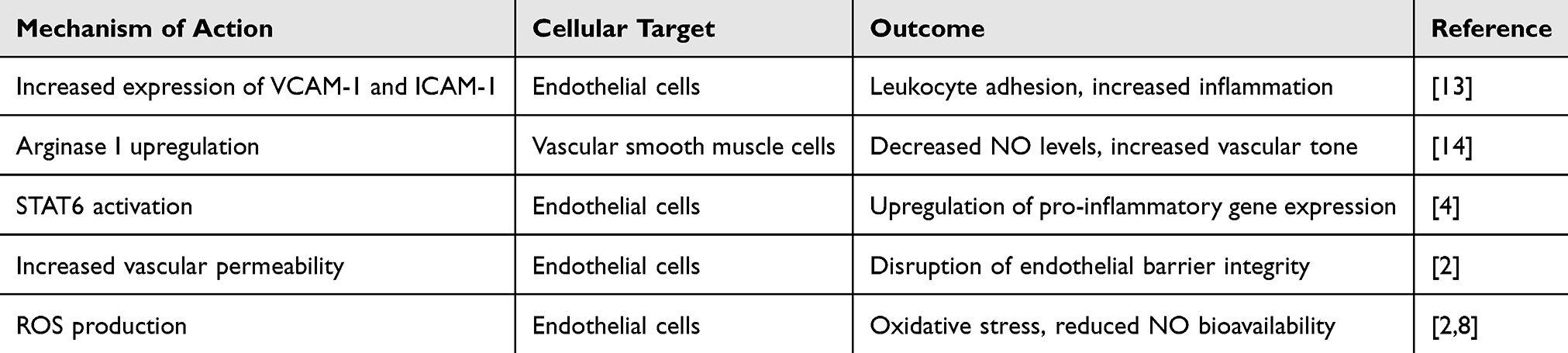 |
Table 1 Effects of IL-4 and IL-13 on Endothelial Cell Functions |
The Relationship Between IL-4 and IL-13 and Cardiovascular Diseases
IL-4 and IL-13 are directly associated with cardiovascular diseases such as hypertension, atherosclerosis, and cardiac fibrosis. These cytokines are believed to accelerate the development of these conditions by amplifying inflammatory responses in the vessel wall and promoting vascular remodeling.2
IL-4 and IL-13 contribute to the development of hypertension by inducing arterial stiffening. Studies by Braddock et al demonstrated that IL-4 and IL-13 promote vascular smooth muscle cell proliferation and vascular wall thickening.7
Clinical observations suggest that elevated IL-4 levels are associated with an increased risk of cardiovascular mortality.2 Particularly, individuals with overexpression of IL-4 and IL-13 have been reported to be at greater risk for developing hypertension and myocardial fibrosis.16
IL-4 and IL-13 also destabilize atherosclerotic plaques, increasing the risk of vascular events. Preclinical studies have shown that IL-4 and IL-13 shift macrophage polarization toward the M2 phenotype, contributing to plaque vulnerability.10
The increased activity of matrix metalloproteinases (MMPs) via macrophage activation suggests that IL-4 and IL-13 may accelerate tissue degradation and fibrotic processes.16 These mechanisms raise the risk of heart failure and arterial stiffness, contributing to cardiovascular complications. IL-4 and IL-13 may contribute to cardiovascular complications through multiple vascular mechanisms, particularly in chronic inflammatory diseases. Preclinical studies have shown that IL-4 increases oxidative stress and reduces nitric oxide bioavailability, leading to endothelial dysfunction and increased vascular tone.1,7 IL-13 has been associated with profibrotic activity and vascular remodeling in hypertension and atherosclerosis models.9 These cytokines may also impair microvascular repair and promote arterial stiffness, especially in the presence of metabolic syndrome.2,4 Understanding these mechanisms is critical for evaluating the long-term cardiovascular safety of therapeutic inhibitors targeting IL-4 and IL-13.
Therapeutic Effects and Safety Profiles of IL-4 and IL-13 Inhibitors
IL-4 and IL-13 inhibitors have been developed to suppress the overactivation of these cytokines and are now being used in the treatment of inflammatory diseases.17 Among monoclonal antibodies targeting IL-4 receptor alpha (IL-4Rα), dupilumab is the most widely used. The molecular mechanism of IL-4 and IL-13 inhibition via IL-4Rα-targeting agents such as dupilumab is illustrated in Figure 2.
 |
Figure 2 Mechanism of Action of IL-4 and IL-13 Inhibitors Targeting IL-4Rα. Notes: Antagonists targeting IL-4, IL-13, and their respective receptors. Antagonists against IL-4 (left to right: compound-52, DARPin 44C12V5, altrakincept, and pascolizumab) block signaling through the type I receptor complex, attenuating Type 2 inflammation. Antagonists against the IL-4Rα receptor subunit (left to right: Dupilumab and elarikibep) block signaling through the IL-4 type I receptor complex as well as the IL-4 and IL-13 type II receptor complexes, also attenuating Type 2 inflammation. Antagonists against IL-13 (left to right: tralokinumab, DARPin 6G9, anrukinzumab and lebrikizumab) block signaling through the IL-13 type II receptor complex, inhibiting Type 2 inflammation. Reproduced from Bernstein ZJ, Shenoy A, Chen A, et al. Engineering the IL‐4/IL‐13 axis for targeted immune modulation. Immunol Rev. 2023;320(1):29–57.18 |
It blocks IL-4 and IL-13 signaling, suppressing Th2-mediated inflammation, and is used in the treatment of asthma, atopic dermatitis, and eosinophilic esophagitis.12
The immunological effects of dupilumab and similar inhibitors are primarily associated with suppression of Th2-driven inflammation.12 Given the key roles of IL-4 and IL-13 in immune regulation, the long-term effects of these inhibitors must be carefully assessed.19 Some studies report both beneficial and potentially adverse effects associated with IL-4/IL-13 inhibition.18,20,21 This duality emphasizes the need for context-dependent therapeutic strategies and highlights the importance of patient-specific risk-benefit assessments before initiating treatment. The potential cardiovascular effects of IL-4 and IL-13 inhibitors are presented in Table 2.
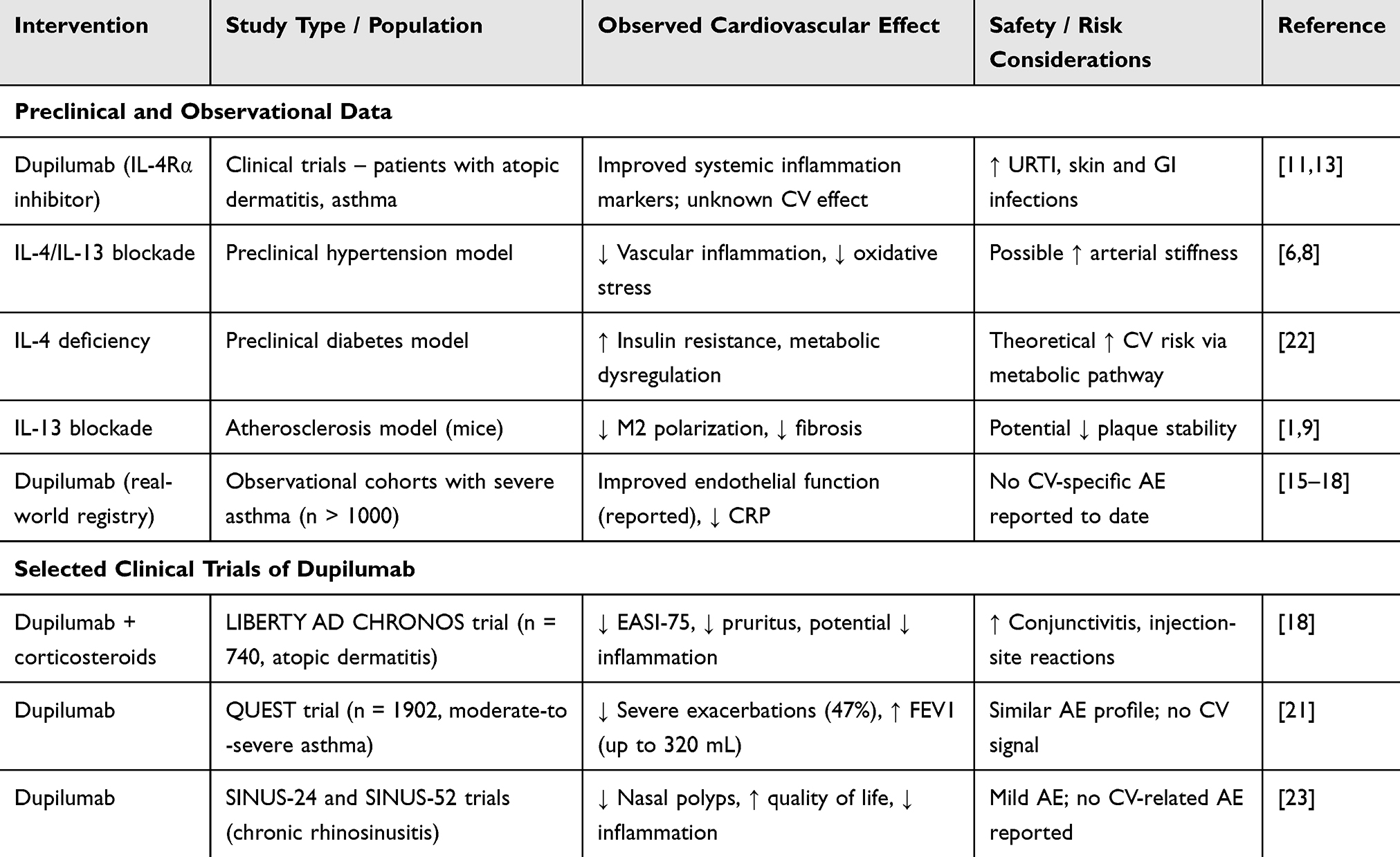 |
Table 2 Cardiovascular Effects of IL-4 and IL-13 Inhibitors in Clinical and Preclinical Settings |
Although clinical trials of IL-4/IL-13 inhibitors such as dupilumab have not demonstrated significant cardiovascular adverse events, their long-term effects on vascular function remain insufficiently characterized.14,16,17 Theoretical concerns persist regarding immune modulation interfering with vascular repair, particularly in individuals with pre-existing metabolic syndrome or atherosclerosis.5,19,20 While real-world data suggest improved inflammatory markers and endothelial function, prospective cardiovascular outcome trials are still warranted.11,18
IL-4Rα inhibitors like dupilumab have shown promising results in clinical trials for inflammatory conditions.16 Dupilumab has been approved for the treatment of moderate-to-severe atopic dermatitis, eosinophilic or oral corticosteroid-dependent asthma, and chronic rhinosinusitis with nasal polyposis. Multiple large-scale randomized controlled trials have evaluated the safety and efficacy of dupilumab in Th2-mediated diseases. In the LIBERTY AD CHRONOS trial, which included 740 patients with moderate-to-severe atopic dermatitis, dupilumab plus topical corticosteroids significantly improved EASI-75 and pruritus scores at 16 and 52 weeks compared to placebo.23 In the QUEST trial, a Phase 3 study enrolling 1902 patients with moderate-to-severe asthma, dupilumab reduced severe exacerbation rates by 47% and improved FEV1 by up to 320 mL.24 Similarly, the SINUS-24 and SINUS-52 trials demonstrated that dupilumab significantly reduced nasal polyp burden and improved quality of life in patients with chronic rhinosinusitis with nasal polyposis.22 Across these trials, dupilumab showed a favorable safety profile, although increased rates of conjunctivitis and injection-site reactions were observed.22–24 Its efficacy lies in blocking both IL-4 and IL-13 signaling, which makes it uniquely effective in type 2–mediated inflammation. In real-world studies, dupilumab has demonstrated long-term control of symptoms, improved quality of life, and reduced corticosteroid dependence in chronic inflammatory diseases.16–20 Mechanistically, dupilumab binds to the IL-4Rα subunit, preventing both IL-4 and IL-13 from activating downstream JAK-STAT6 signaling. This results in reduced expression of pro-inflammatory cytokines, decreased recruitment of eosinophils, and suppression of IgE class switching in B cells. The inhibition of this shared receptor component disrupts Th2 polarization and limits the perpetuation of allergic inflammation.16–21 In clinical trials with atopic dermatitis patients, dupilumab significantly reduced skin lesions and improved quality of life.1 In studies involving asthmatic patients, IL-4Rα inhibitors were found to reduce bronchial inflammation and improve lung function.20
However, the effects of IL-4 and IL-13 inhibitors must also be evaluated in terms of metabolic and cardiovascular outcomes. A systematic review by Braddock et al emphasized the need for long-term safety evaluations and noted that the cardiovascular effects of these inhibitors remain unclear.7
Considering the broad roles of IL-4 and IL-13 in the immune system and physiological processes, the potential adverse effects of their inhibition should be comprehensively investigated. Clinical trials have reported some adverse effects in patients treated with IL-4/IL-13 inhibitors.14
IL-4 and IL-13 play critical roles in various components of the immune system, and their inhibition may increase susceptibility to infections.18 These cytokines are particularly important in eosinophil activation and maintenance of mucosal barrier functions.21 Patients treated with IL-4 and IL-13 inhibitors have been reported to experience higher rates of respiratory tract infections, skin infections, and gastrointestinal disorders.14 Additionally, cases of conjunctivitis, eosinophilia, and rare reports of hypereosinophilic syndrome have been observed. A summary of the adverse effects reported in clinical studies is presented in Table 3.
 |
Table 3 Adverse Effects of IL-4 and IL-13 Inhibitors Reported in Clinical Studies |
The exact mechanisms behind some of these effects remain unclear but may involve downstream dysregulation of barrier immunity or compensatory cytokine shifts.14,21
IL-4 and IL-13 deficiency may also impair macrophage function, which is essential for host defense.1 Studies have shown that these cytokines promote macrophage polarization to the M2 phenotype, which plays a role in tissue repair.1 Inhibiting these cytokines may disrupt tissue healing mechanisms.3
IL-4 and IL-13 are known to affect endothelial function and vascular homeostasis.5 Their inhibition could alter vascular reactivity, arterial stiffness, and hypertension risk.2,9 Although the effects of IL-4 and IL-13 deficiency on atherosclerotic plaque formation are not fully understood, some studies suggest that these cytokines may have protective roles against atherosclerosis.2,8
From a metabolic perspective, IL-4 and IL-13 have been shown to influence insulin sensitivity.23 Some preclinical studies report that IL-4 deficiency may impair glucose metabolism and that inhibition of the IL-4/IL-13 axis could increase the risk of diabetes.26
The roles of IL-4 and IL-13 in autoimmune diseases vary depending on disease pathophysiology.27 In diseases such as multiple sclerosis, IL-4 and IL-13 exhibit anti-inflammatory effects by suppressing Th1 responses.28 Therefore, the effects of IL-4 and IL-13 inhibitors in autoimmune conditions must be thoroughly assessed.27
In diseases like rheumatoid arthritis, IL-4 and IL-13 are known to modulate inflammatory responses and immune regulation.19 The effects of IL-4/IL-13 axis inhibition in rheumatoid arthritis remain to be fully elucidated.19
Discussion
Cardiovascular diseases (CVD) are among the leading causes of mortality globally, characterized by a multifactorial, dynamic, and still not fully elucidated pathogenesis.29 The effects of IL-4 and IL-13 on the cardiovascular system have become increasingly understood through recent studies. These cytokines exert diverse effects on endothelial cells, vascular smooth muscle cells, and immune cells.30 Research shows that IL-4 and IL-13 play critical roles in vascular inflammation and remodeling processes.5 However, the positive and negative consequences of their inhibition remain controversial. The heterogeneity of outcomes across different studies underscores the necessity for high-quality, large-scale randomized clinical trials specifically addressing cardiovascular endpoints. Both preclinical and clinical studies suggest that IL-4 and IL-13 may exhibit pro-inflammatory as well as anti-inflammatory properties.14,31
When examining the effects of IL-4 and IL-13 on endothelial cell activation, it is evident that these cytokines contribute to vascular inflammation. Kassem et al demonstrated that IL-4 and IL-13 increase the expression of VCAM-1 and ICAM-1 in endothelial cells, facilitating the migration of inflammatory cells to the vascular wall.2 Similarly, May et al reported that IL-4 and IL-13 enhance vascular inflammation by activating the JAK-STAT6 signaling pathway.4 These findings support the notion that IL-4 and IL-13 play key roles in vascular inflammation. However, a systematic review by Braddock et al emphasized that while IL-4 and IL-13 inhibition reduces vascular inflammation, the long-term implications of this effect remain uncertain.7
The effects of IL-4 and IL-13 on vascular smooth muscle cells are also significant. Both Zhang et al and Wang et al showed that IL-4 and IL-13 increase arginase I expression in vascular smooth muscle cells, reducing nitric oxide (NO) production and thereby contributing to increased vascular tone and hypertension.5,11 However, these findings are supported by some contradictory data. For instance, Ruparelia et al noted that IL-4 and IL-13 may, in certain contexts, exert anti-inflammatory effects and prevent atherosclerotic plaque formation.25 These conflicting results suggest that the effects of IL-4 and IL-13 may vary depending on tissue and cell type.
The effects of IL-4 and IL-13 on atherosclerosis are similarly debated. Some studies suggest that these cytokines accelerate atherosclerotic processes, while others report potential anti-atherogenic effects. Braddock et al indicated that inhibition of IL-4 and IL-13 may prevent atherosclerotic lesion development.7 However, Scott et al demonstrated that IL-4 and IL-13 support M2 macrophage polarization, which suppresses inflammation and may slow atherosclerosis progression.1 These conflicting findings suggest that the divergent effects of IL-4 and IL-13 on immune cells are critical factors determining their role in atherosclerosis pathogenesis.32
In terms of the clinical effects of IL-4 and IL-13 inhibitors, several studies report beneficial outcomes, particularly in Th2-mediated inflammatory diseases. IL-4Rα inhibitors like dupilumab have proven effective in treating conditions such as asthma, atopic dermatitis, and chronic rhinosinusitis.12 However, the long-term cardiovascular and metabolic impacts of these inhibitors remain unclear. While IL-4/IL-13 inhibitors reduce systemic inflammation, their cardiovascular outcomes are not yet fully established.7,14 Some hypothesize that dampening vascular inflammation may reduce plaque progression or arterial stiffness,7,9 while others caution that interference with immune repair mechanisms could theoretically impair endothelial recovery.3,28 Longitudinal cardiovascular safety studies are needed, especially in patients with existing atherosclerotic disease or metabolic syndrome.7,33 Frostegård et al suggested that IL-4 deficiency could negatively affect insulin sensitivity and increase the risk of diabetes.33 This underscores the essential role of the IL-4/IL-13 axis in metabolic regulation.
The effects of IL-4 and IL-13 inhibitors on autoimmune diseases must also be considered. These cytokines are known to play dual roles—protective in some cases, pathogenic in others. Bridgewood et al reported that IL-4 and IL-13 may act as modulators in autoimmune conditions.29 In diseases such as multiple sclerosis, deficiency of IL-4 and IL-13 may enhance inflammatory responses and accelerate disease progression.28 However, in conditions like rheumatoid arthritis, inhibition of IL-4 and IL-13 has shown potential therapeutic benefits.19
Current data on the safety profiles of IL-4 and IL-13 inhibitors remain limited, and more studies are required to evaluate their long-term effects. Bernstein et al reported an increased risk of infections in patients treated with these inhibitors.18 Notably, susceptibility to helminth infections, respiratory tract infections, and gastrointestinal disorders was found to be higher.34 Therefore, close monitoring for infections is recommended during IL-4 and IL-13 inhibitor therapy.
In conclusion, the effects of IL-4 and IL-13 on the cardiovascular system are complex, and their inhibition may lead to both beneficial and adverse outcomes. Preclinical and clinical studies demonstrate that IL-4 and IL-13 influence vascular inflammation, atherosclerosis, hypertension, and metabolic processes. However, current evidence indicates that their roles vary depending on the cell and tissue context and may exert both pro-inflammatory and anti-inflammatory effects. Further clinical trials are needed to fully assess the long-term safety profiles of IL-4 and IL-13 inhibitors.
Limitations
This study has several limitations. First, the effects of IL-4 and IL-13 on the cardiovascular system may vary depending on tissue and cell type, and certain aspects of the underlying mechanisms remain unclear in the current literature. In addition, large-scale clinical trials evaluating the long-term effects of IL-4 and IL-13 inhibitors are still lacking. Existing data are mostly derived from preclinical models and studies conducted in specific patient populations, which limits the generalizability of the findings. Finally, the roles of IL-4 and IL-13 in immune homeostasis and metabolic processes are not yet fully understood, highlighting the need for more comprehensive and long-term data regarding the use of these inhibitors.
Conclusions
The involvement of IL-4 and IL-13 in vascular inflammation, endothelial dysfunction, and cardiovascular diseases represents a promising but complex area of research. These cytokines exhibit dual roles—both pro-inflammatory and anti-inflammatory—depending on cellular context, disease stage, and tissue specificity. Although they are not the sole contributors to cardiovascular pathogenesis, accumulating evidence suggests they participate in key pathways influencing vascular remodeling and immune-mediated injury.
Therapeutic inhibition of IL-4 and IL-13, particularly with agents like dupilumab, has shown clinical efficacy in inflammatory diseases. However, the cardiovascular effects of these therapies remain poorly characterized. While inhibition may reduce systemic inflammation and potentially improve vascular outcomes, concerns persist regarding metabolic imbalance, atherosclerotic plaque stability, and increased susceptibility to infections.
Given the expanding clinical use of IL-4/IL-13 inhibitors in patients who may also have cardiovascular risk factors, it is imperative that future research specifically addresses long-term cardiovascular outcomes. Personalized treatment strategies, incorporating immunological and vascular risk profiling, will be essential in optimizing therapeutic safety and efficacy.
In conclusion, the IL-4/IL-13 axis represents a biologically relevant and clinically significant target with therapeutic promise. Yet, its complexity necessitates cautious implementation until supported by robust, large-scale cardiovascular data.
Abbreviations
IL-4, Interleukin-4; IL-13, Interleukin-13; EC, Endothelial Cell; VSMC, Vascular Smooth Muscle Cell; NO, Nitric Oxide; ROS, Reactive Oxygen Species; VCAM-1, Vascular Cell Adhesion Molecule-1; ICAM-1, Intercellular Adhesion Molecule-1; JAK, Janus Kinase; STAT6, Signal Transducer and Activator of Transcription 6; Th2, T helper type 2; MMP, Matrix Metalloproteinase; CVD, Cardiovascular Disease; URTI, Upper Respiratory Tract Infection.
Declaration of Helsinki
The study and the writing of the article were prepared in accordance with the Declaration of Helsinki.
Statement on the Use of Artificial Intelligence
No artificial intelligence application was used.
Funding
No financing available.
Disclosure
The authors report no conflict of interest.
References
1. Scott TE, Lewis CV, Zhu M, et al. IL-4 and IL-13 induce equivalent expression of traditional M2 markers and modulation of reactive oxygen species in human macrophages. Sci Rep. 2023;13(1):19589. doi:10.1038/s41598-023-46237-2
2. Kassem KM, Ali M, Rhaleb N-E. Interleukin 4: its role in hypertension, atherosclerosis, valvular, and nonvalvular cardiovascular diseases. J Cardiovasc Pharmacol Ther. 2020;25(1):7–14. doi:10.1177/1074248419868699
3. Allen JE. IL-4 and IL-13: regulators and effectors of wound repair. Ann Rev Immunol. 2023;41(1):229–254. doi:10.1146/annurev-immunol-101921-041206
4. May RD, Fung M. Strategies targeting the IL-4/IL-13 axes in disease. Cytokine. 2015;75(1):89–116. doi:10.1016/j.cyto.2015.05.018
5. Wang X-P, Chen Y-G, Qin W-D, et al. Arginase I attenuates inflammatory cytokine secretion induced by lipopolysaccharide in vascular smooth muscle cells. Arteriosclerosis Thrombosis Vasc Biol. 2011;31(8):1853–1860. doi:10.1161/ATVBAHA.111.229302
6. Bagnasco D, Ferrando M, Varricchi G, Passalacqua G, Canonica GW. A critical evaluation of anti-IL-13 and anti-IL-4 strategies in severe asthma. Int Arch Allergy Immunol. 2016;170(2):122–131. doi:10.1159/000447692
7. Braddock M, Hanania NA, Sharafkhaneh A, et al. Potential risks related to modulating interleukin-13 and interleukin-4 signalling: a systematic review. Drug Safety. 2018;41:489–509. doi:10.1007/s40264-017-0636-9
8. Chistiakov DA, Orekhov AN, Bobryshev YV. Immune-inflammatory responses in atherosclerosis: role of an adaptive immunity mainly driven by T and B cells. Immunobiology. 2016;221(9):1014–1033. doi:10.1016/j.imbio.2016.05.010
9. Camargo LL, Rios FJ, Montezano AC, et al. Reactive oxygen species in hypertension. Nat Rev Cardiol. 2025;22(1):20–37. doi:10.1038/s41569-024-01062-6
10. Liu F, Wang Y, Yu J. Role of inflammation and immune response in atherosclerosis: mechanisms, modulations, and therapeutic targets. Hum Immunol. 2023;84(9):439–449. doi:10.1016/j.humimm.2023.06.002
11. Zhang Z, Zhao L, Zhou X, et al. Role of inflammation, immunity, and oxidative stress in hypertension: new insights and potential therapeutic targets. Front Immunol. 2023;13:1098725. doi:10.3389/fimmu.2022.1098725
12. Mümmler C, Munker D, Barnikel M, et al. Dupilumab improves asthma control and lung function in patients with insufficient outcome during previous antibody therapy. J Allergy Clin Immunol. 2021;9(3):1177–1185. doi:10.1016/j.jaip.2020.09.014
13. Sun H, Liu W, Yu Z, He B. Type 2 innate lymphoid cell in cardiovascular diseases: complexities and potentials. Intensive Care Res. 2025;4:1–13.
14. Olaguibel JM, Sastre J, Rodríguez JM, et al. Eosinophilia induced by blocking the IL-4/IL-13 pathway: potential mechanisms and clinical outcomes. J Invest Allergol Clin Immunol. 2022;32(3):165–180. doi:10.18176/jiaci.0823
15. Shankar A, McAlees JW, Lewkowich IP. Modulation of IL-4/IL-13 cytokine signaling in the context of allergic disease. J Allergy Clin Immunol. 2022;150(2):266–276. doi:10.1016/j.jaci.2022.06.012
16. Chen W, Schilperoort M, Cao Y, et al. Macrophage-targeted nanomedicine for the diagnosis and treatment of atherosclerosis. Nat Rev Cardiol. 2022;19(4):228–249. doi:10.1038/s41569-021-00629-x
17. Bakhshian Nik A, Alvarez-Argote S, O’Meara CC. Interleukin 4/13 signaling in cardiac regeneration and repair. Am J Physiol Heart Circ Physiol. 2022;323(5):H833–H844. doi:10.1152/ajpheart.00310.2022
18. Bernstein ZJ, Shenoy A, Chen A, et al. Engineering the IL‐4/IL‐13 axis for targeted immune modulation. Immunol Rev. 2023;320(1):29–57. doi:10.1111/imr.13230
19. Iwaszko M, Biały S, Bogunia-Kubik K. Significance of interleukin (IL)-4 and IL-13 in inflammatory arthritis. Cells. 2021;10(11):3000. doi:10.3390/cells10113000
20. Husna SMN, Md Shukri N, Mohd Ashari NS, et al. IL-4/IL-13 axis as therapeutic targets in allergic rhinitis and asthma. PeerJ. 2022;10:e13444. doi:10.7717/peerj.13444
21. Pitlick MM, Pongdee T. Combining biologics targeting eosinophils (IL-5/IL-5R), IgE, and IL-4/IL-13 in allergic and inflammatory diseases. World Allergy Organ J. 2022;15(11):100707. doi:10.1016/j.waojou.2022.100707
22. Bachert C, Han JK, Desrosiers M, et al. Efficacy and safety of dupilumab in patients with severe chronic rhinosinusitis with nasal polyps (LIBERTY NP SINUS-24 and LIBERTY NP SINUS-52): results from two multicentre, randomised, double-blind, placebo-controlled, parallel-group phase 3 trials. Lancet. 2019;394(10209):1638–1650. doi:10.1016/S0140-6736(19)31881-1
23. Blauvelt A, de Bruin-Weller M, Gooderham M, et al. Long-term management of moderate-to-severe atopic dermatitis with dupilumab and concomitant topical corticosteroids (LIBERTY AD CHRONOS): a 1-year, randomised, double-blinded, placebo-controlled, phase 3 trial. Lancet. 2017;389(10086):2287–2303. doi:10.1016/S0140-6736(17)31191-1
24. Castro M, Corren J, Pavord ID, et al. Dupilumab efficacy and safety in moderate-to-severe uncontrolled asthma. N Engl J Med. 2018;378(26):2486–2496. doi:10.1056/NEJMoa1804092
25. Ruparelia N, Choudhury R. Inflammation and atherosclerosis: what is on the horizon? Heart. 2020;106(1):80–85. doi:10.1136/heartjnl-2018-314230
26. Wu D, Liu R, Cen X, et al. Preclinical study of engineering MSCs promoting diabetic wound healing and other inflammatory diseases through M2 polarization. Stem Cell Res Ther. 2025;16(1):113. doi:10.1186/s13287-025-04248-y
27. Bridgewood C, Wittmann M, Macleod T, et al. T helper 2 IL-4/IL-13 dual blockade with dupilumab is linked to some emergent T helper 17‒type diseases, including seronegative arthritis and enthesitis/enthesopathy, but not to humoral autoimmune diseases. J Invest Dermatol. 2022;142(10):2660–2667. doi:10.1016/j.jid.2022.03.013
28. Grunwald C, Krętowska-Grunwald A, Adamska-Patruno E, et al. The role of selected interleukins in the development and progression of multiple sclerosis—A systematic review. Int J Mol Sci. 2024;25(5):2589. doi:10.3390/ijms25052589
29. Bilgiç A, Toprak B, Kaya H. Delta neutrophil index in coronary artery bypass surgery: an innovation in postoperative mortality assessment. J Inflamm Res. 2025;Volume 18:1497–1508. doi:10.2147/JIR.S500508
30. Wei LH, Jacobs AT, Morris SM, et al. IL-4 and IL-13 upregulate arginase I expression by cAMP and JAK/STAT6 pathways in vascular smooth muscle cells. Am J Physiol Cell Physiol. 2000;279(1):C248–C256. doi:10.1152/ajpcell.2000.279.1.C248
31. Jhuma KA, Giasuddin AS, Hossain MS. Status of serum pro-inflammatory cytokines (IL-1, IL-6, TNF-α) and anti-inflammatory cytokines (IL-4, IL-10, IL-13) in newly diagnosed bangladeshi patients with type 2 diabetes mellitus. Mymensingh Med J. 2023;32(4):1149–1155.
32. Moore KJ, Tabas I. Macrophages in the pathogenesis of atherosclerosis. Cell. 2011;145(3):341–355. doi:10.1016/j.cell.2011.04.005
33. Frostegård J. Immunity, atherosclerosis and cardiovascular disease. BMC Med. 2013;11:1–13. doi:10.1186/1741-7015-11-117
34. Varela F, Symowski C, Pollock J, et al. IL‐4/IL‐13‐producing ILC2s are required for timely control of intestinal helminth infection in mice. Eur J Immunol. 2022;52(12):1925–1933. doi:10.1002/eji.202249892
 © 2025 The Author(s). This work is published and licensed by Dove Medical Press Limited. The
full terms of this license are available at https://www.dovepress.com/terms
and incorporate the Creative Commons Attribution
- Non Commercial (unported, 4.0) License.
By accessing the work you hereby accept the Terms. Non-commercial uses of the work are permitted
without any further permission from Dove Medical Press Limited, provided the work is properly
attributed. For permission for commercial use of this work, please see paragraphs 4.2 and 5 of our Terms.
© 2025 The Author(s). This work is published and licensed by Dove Medical Press Limited. The
full terms of this license are available at https://www.dovepress.com/terms
and incorporate the Creative Commons Attribution
- Non Commercial (unported, 4.0) License.
By accessing the work you hereby accept the Terms. Non-commercial uses of the work are permitted
without any further permission from Dove Medical Press Limited, provided the work is properly
attributed. For permission for commercial use of this work, please see paragraphs 4.2 and 5 of our Terms.
Recommended articles
Interrelationship and Sequencing of Interleukins4, 13, 31, and 33 – An Integrated Systematic Review: Dermatological and Multidisciplinary Perspectives
Tatu AL, Nadasdy T, Arbune A, Chioncel V, Bobeica C, Niculet E, Iancu AV, Dumitru C, Popa VT, Kluger N, Clatici VG, Vasile CI, Onisor C, Nechifor A
Journal of Inflammation Research 2022, 15:5163-5184
Published Date: 8 September 2022
Managing Cardiovascular Risk in Systemic Lupus Erythematosus: Considerations for the Clinician
Semalulu T, Tago A, Zhao K, Tselios K
ImmunoTargets and Therapy 2023, 12:175-186
Published Date: 8 December 2023