
Back to Journals » Journal of Inflammation Research » Volume 19
Global Research Trends and Knowledge Structure in Autoimmune Gastritis and Helicobacter pylori: A Comprehensive Bibliometric Analysis (1991–2025)
Authors Wu Y, Zhou J, Fang Y, Sang J, Zhang F
Received 14 January 2026
Accepted for publication 26 April 2026
Published 22 May 2026 Volume 2026:19 596275
DOI https://doi.org/10.2147/JIR.S596275
Checked for plagiarism Yes
Review by Single anonymous peer review
Peer reviewer comments 2
Editor who approved publication: Prof. Dr. Peng Wang
Yangqing Wu, Jianbo Zhou, Ying Fang, Jianzhong Sang, Fangfang Zhang
Department of Gastroenterology, Yangming Hospital Affiliated to Ningbo University, Ningbo, People’s Republic of China
Correspondence: Fangfang Zhang, Email [email protected]
Background/Objective: Autoimmune gastritis and Helicobacter pylori (H. pylori) infection are two clinically significant gastroenterological conditions with intricate pathophysiological interactions. This study aims to systematically map the global scientific output and evolving research trends on autoimmune gastritis and H. pylori through a comprehensive bibliometric analysis.
Methods: Publications (1991– 2025) were extracted from the Web of Science Core Collection and analyzed using VOSviewer, CiteSpace, and the R package “bibliometrix” to explore research trends and collaboration patterns.
Results: A total of 387 publications were identified. Italy led in publication output (n = 75). The World Journal of Gastroenterology was the most prolific journal in this field. Keyword co-occurrence analysis revealed five major thematic clusters: (1) molecular immunological mechanisms and gastric carcinogenesis, (2) immunological markers and disease pathogenesis, (3) clinical manifestations and patient profiles, (4) epidemiology and disease progression, and (5) diagnostic strategies and classification systems. Burst detection analysis highlighted recent (2018– 2025) research foci on “gastric cancer”, “risk”, “intestinal metaplasia”, and “classification”.
Conclusion: This bibliometric analysis provides a comprehensive overview of the global research dynamics concerning autoimmune gastritis and H. pylori. The findings reveal a shift toward precision medicine, with increasing attention to early detection, risk assessment, and the development of standardized diagnostic frameworks. These findings may assist clinicians in risk stratification and guide researchers in identifying future directions in autoimmune gastritis and H. pylori research.
Keywords: autoimmune gastritis, Helicobacter pylori, bibliometric analysis, research trends, gastric carcinogenesis
Introduction
Autoimmune gastritis (AIG) is a chronic, immune-mediated inflammatory condition characterized by the progressive destruction of gastric parietal cells, leading to oxyntic mucosal atrophy, hypochlorhydria, and intrinsic factor deficiency.1,2 Clinically, AIG is often associated with micronutrient deficiencies, particularly iron and vitamin B12, resulting in iron-deficiency anemia and pernicious anemia, respectively.3 Although relatively uncommon, with an estimated prevalence of 1–2% in the general population, AIG carries a significant risk for complications, including gastric neuroendocrine tumors and adenocarcinoma.4
The pathogenesis of AIG involves autoimmune responses directed against the gastric H+/K+-ATPase proton pump, with genetic susceptibility and environmental factors contributing to disease onset and progression.5 Among the environmental triggers, Helicobacter pylori (H. pylori) infection has been extensively studied for its potential role in modulating gastric autoimmunity. H. pylori is a Gram-negative, spiral-shaped bacterium that colonizes the gastric mucosa and is a well-established etiological agent in chronic gastritis, peptic ulcer disease, and gastric malignancies such as adenocarcinoma and mucosa-associated lymphoid tissue lymphoma.6,7 H. pylori infection remains highly prevalent worldwide, affecting approximately 44–50% of the global population, whereas autoimmune gastritis is relatively less common, with an estimated prevalence of around 2–4%.8 Emerging evidence suggests a complex and potentially bidirectional relationship between H. pylori infection and AIG. One proposed mechanism is molecular mimicry, wherein antigenic similarities between H. pylori components and gastric H+/K+-ATPase may trigger autoimmune responses in genetically predisposed individuals.9,10 Histopathological differences observed between H. pylori-naïve and infected AIG patients—such as the presence of oxyntic-restricted inflammation, pseudopyloric metaplasia, and enterochromaffin-like cell hyperplasia—support this hypothesis.10 Notably, corpus-restricted atrophy in the absence of H. pylori does not appear to significantly increase gastric cancer risk, suggesting that H. pylori co-infection may be a key modulator of malignant transformation in AIG patients.
The clinical impact of H. pylori eradication on the course of AIG remains controversial. Some case reports have documented rapid progression of autoimmune changes post-eradication,11 whereas others have demonstrated mucosal recovery and normalization of serum gastrin levels.12 Furthermore, prospective studies have highlighted differential clinical and laboratory profiles among AIG patients with and without prior H. pylori exposure.13 These inconsistencies underscore the heterogeneity of AIG phenotypes and emphasize the need for personalized treatment strategies. Given the growing body of literature exploring the intersection between AIG and H. pylori, a comprehensive mapping of research developments in this area is warranted.
Bibliometric analysis provides a systematic and quantitative method for evaluating the structure, evolution, and impact of scientific research. By examining publication outputs, co-authorship networks, and keyword co-occurrence patterns, this approach can effectively identify research hotspots and inform future directions.14 While recent bibliometric studies have explored research related to AIG,15 none have specifically addressed the interplay between AIG and H. pylori. Bibliometric analysis is particularly suitable for this research topic because it enables the systematic evaluation of large-scale scientific outputs, identification of collaboration networks, and detection of emerging research trends. Given the complex and evolving relationship between autoimmune gastritis and H. pylori, such an approach provides a comprehensive framework to synthesize fragmented evidence and uncover knowledge structures that are not easily captured through traditional narrative reviews. Therefore, this study aims to perform a comprehensive bibliometric analysis of the literature on AIG in the context of H. pylori infection. The objective is to identify key contributors, influential publications, thematic clusters, and emerging trends, ultimately offering valuable insights to guide future research and clinical practice in this evolving field.
Materials and Methods
Search Strategies and Data Collection
The literature search was conducted using the Web of Science Core Collection (WoSCC). This database is renowned for its rigorous selection criteria and high-quality indexing, ensuring the inclusion of only the most impactful and peer-reviewed journals, thereby providing a reliable foundation for bibliometric analysis.16 The search formula was as follows:15,17 TS = ((Autoimmune gastritis OR Autoimmune atrophic gastritis) AND (“Helicobacter pylori” OR “H. pylori”)). In this study, the publication language was restricted to English, and only articles were included among various document types. To ensure consistency and avoid discrepancies related to database updates, the literature search was conducted on January 31, 2025. All retrieved records were independently screened by two authors, and discrepancies were resolved through discussion. All relevant information was extracted in text format, including the number of publications and citations, article titles, author details, affiliations, countries/regions, keywords, and journal names, for subsequent bibliometric analysis.
Statistical Analysis
For bibliometric analysis and visualization, we employed three complementary tools: VOSviewer (version 1.6.20),18 CiteSpace (version 6.3.R1),19 and the R package “bibliometric” (version 4.3.3).20 VOSviewer was primarily used for constructing and visualizing bibliometric networks, including countries, institutions, journal and author analysis, co-occurrence analysis of keywords.18 CiteSpace was utilized for Keyword burst analysis.19 The software was configured with the following parameters: time slicing from 1991 to 2025 in one-year intervals, node type defined as keywords, top N=5 per slice, and pathfinder network scaling used for pruning. The pathfinder and pruning sliced networks options were enabled to enhance visualization clarity. The R package “bibliometric” was employed for calculating various bibliometric indicators and generating statistical summaries.20 Several bibliometric indicators were used to evaluate research impact and productivity. The h-index was used to measure both productivity and citation impact,21 while the g-index gave more weight to highly cited articles, providing a complementary perspective on research impact.22 The m-index, calculated as the h-index divided by the number of years since the researcher’s first publication, was used to account for career length differences among researchers.23 Journal impact was assessed using Impact Factor (IF) and Journal Citation Reports (JCR) Quartile rankings.24 The IF, calculated annually by Clarivate Analytics, measures the average number of citations received by articles published in a journal during the two preceding years, providing a quantitative metric of journal influence within its field. Complementing this, the JCR Quartile rankings classify journals into four percentile groups (Q1-Q4) based on their IF relative to other journals in the same subject category.
Results
Overview of the Main Information
The bibliometric analysis workflow is illustrated in Figure 1A. The initial search in the WoSCC identified 640 publications. After applying exclusion criteria, including the removal of reviews (n = 128), editorial materials (n = 10), letters (n = 19), meeting abstracts (n = 44), non-English publications (n = 21), and others (n = 31), a total of 387 studies were included in the final analysis. The overall research metrics revealed a comprehensive landscape of scholarly activity in this field.
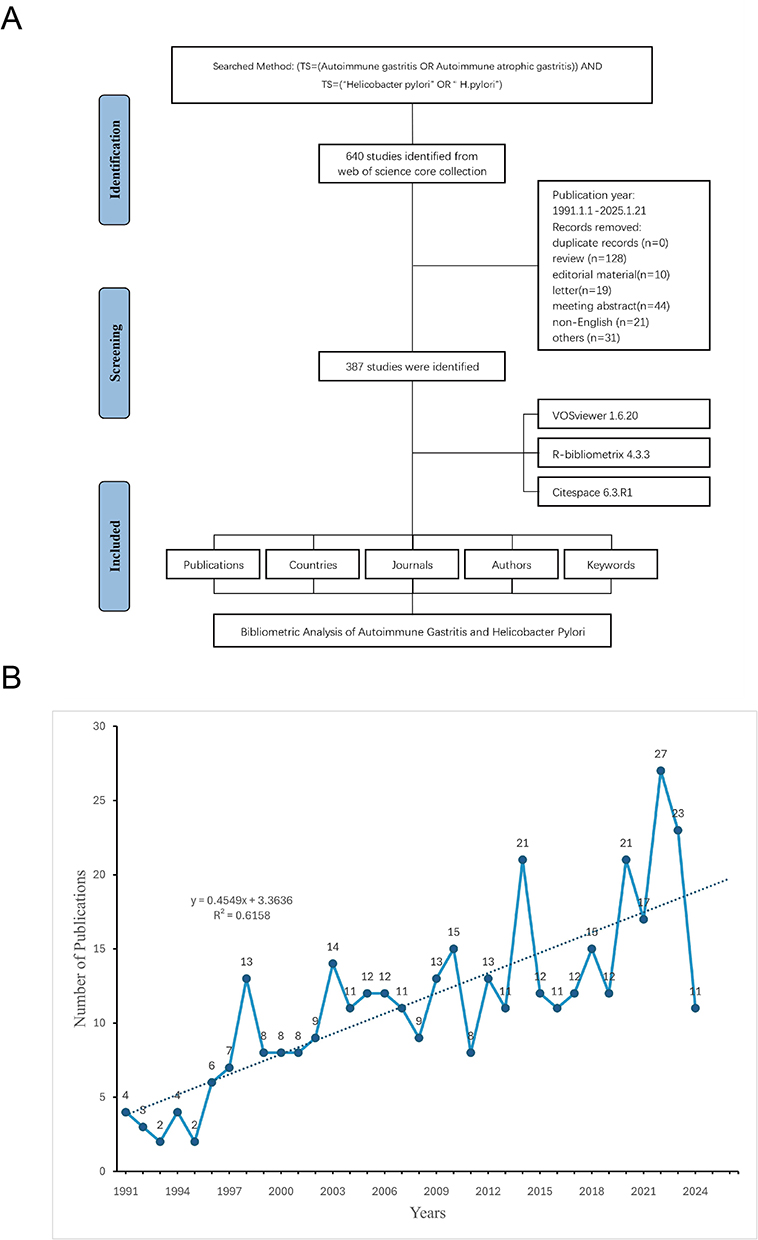 |
Figure 1 (A) Literature selection and screening flowchart. (B) Trends in annual publication output. |
Over the study period (1991–2024), publications came from 172 different sources and involved 2229 authors. Although this search included literature up to January 2025, we focused our trend analysis on the complete years from 1991 to 2024, as data for 2025 represents only a partial year and inclusion might skew the temporal analysis, particularly for annual growth rate calculations and publication trend assessments. The temporal distribution of publications from 1991 to 2024 shows an overall upward trend (Figure 1B), with notable fluctuations.
Analysis of Countries
Among the 43 countries contributing to this field, Italy emerged as the leading contributor with 75 articles (19.4% of total publications) and 2632 citations, maintaining the highest rank in both publication output and citation impact. The United States followed as the second most productive country with 56 articles (14.5%) and 1951 citations, while Japan ranked third with 43 publications (11.1%) and 702 citations (Figure 2A).
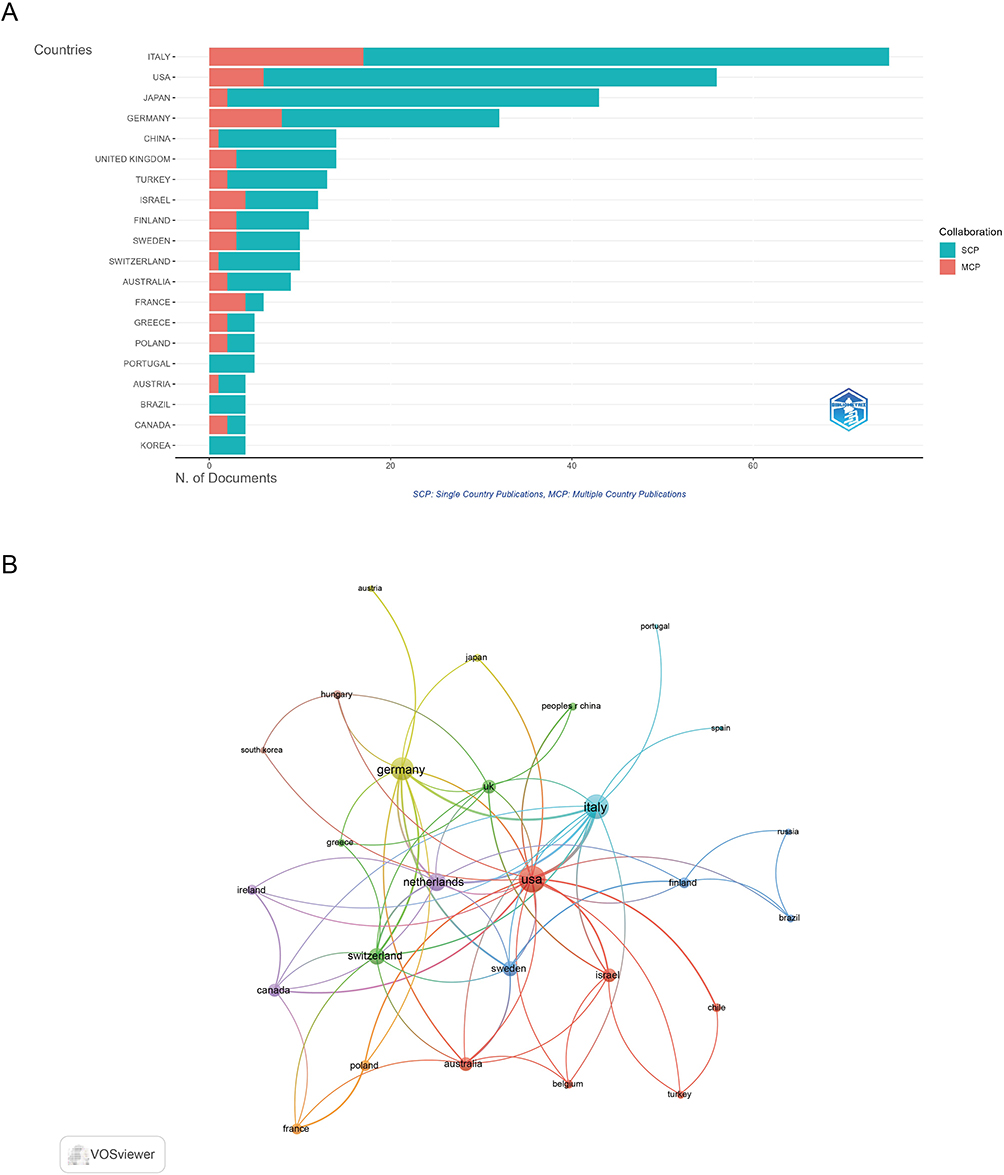 |
Figure 2 Analysis of country contributions and collaborations. (A) Distribution of corresponding author publications by country. (B) Collaboration network map among countries. |
Among the top 20 countries contributing to this field, France showed the highest proportion of international collaboration (MCP Ratio = 0.667), followed by Canada (0.500) and Greece (0.400). In contrast, some countries demonstrated stronger tendencies toward domestic research, such as Japan with an MCP Ratio of 0.047, indicating limited international collaboration despite high publication output (Table S1).
International collaboration networks (Figure 2B) were visualized using a minimum threshold of 3 collaborative papers between countries. The analysis revealed the strongest connections between Italy (38 total link strength), the United States (33 total link strength), and Germany (29 total link strength), with these countries forming the core of global research collaboration in this field.
Analysis of Institutions
The bibliometric analysis identified 1387 institutions contributing to AIG and H. pylori research. Sapienza University Rome emerged as the most productive institution with 46 publications. The University of Padua followed with 29 publications, and IRCCS Aviano (CRO) ranked third with 27 publications (Figure 3A).
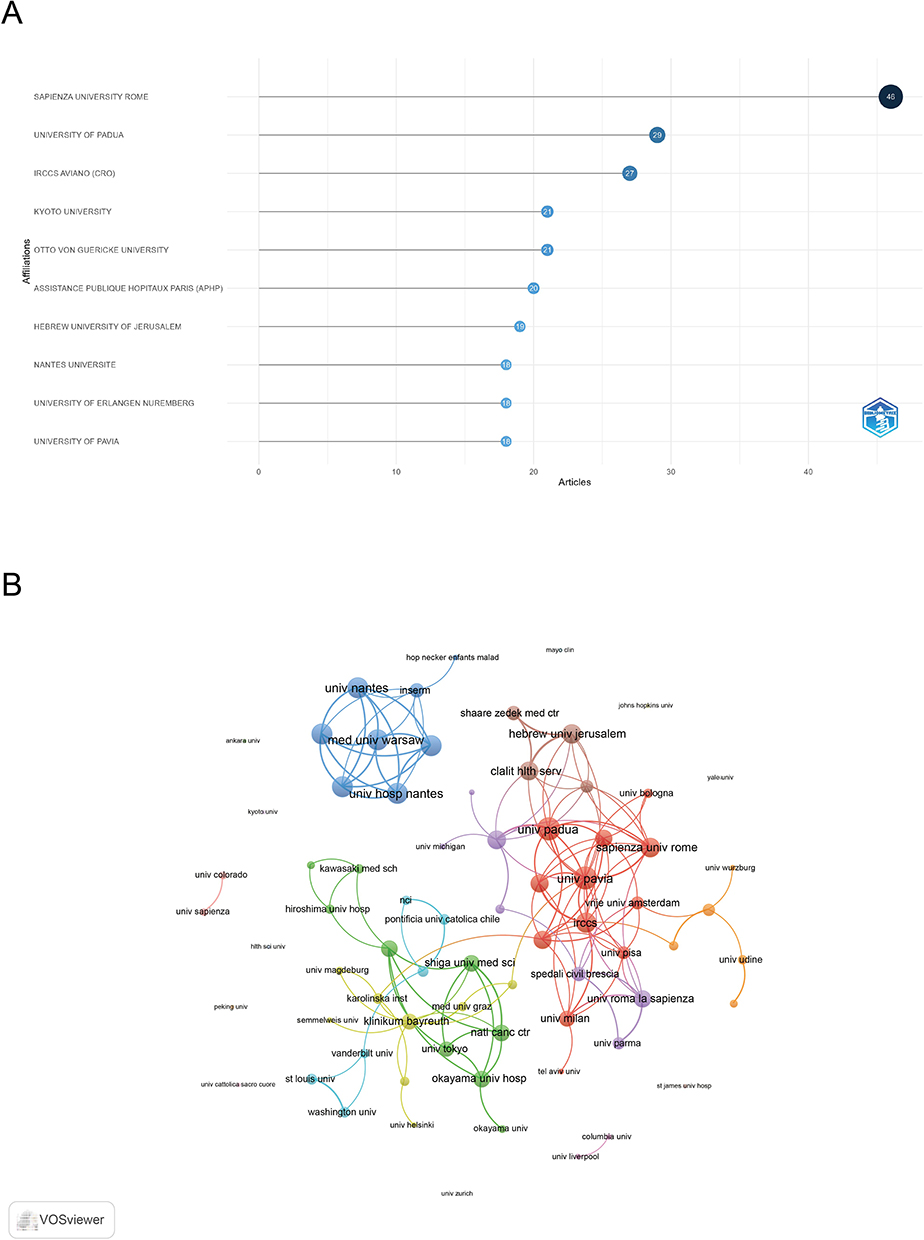 |
Figure 3 Institution Ranking and Collaboration Network. (A) Ranking of the top ten institutions by article count. (B) Network visualization of institutional collaborations. |
Among the 73 institutions participating in international collaborations with at least three publications, Università di Pavia demonstrated the highest number of institutional collaborations (n = 19), followed by Università di Padova (n = 19) and Nantes Université (n = 16) (Figure 3B).
Analysis of Journals
The bibliometric analysis identified 172 journals publishing research on AIG and H. pylori. The World Journal of Gastroenterology demonstrated the highest productivity and strong impact, with an h-index of 11, publishing 14 articles that accumulated 284 citations (TC). This journal maintained a solid IF of 4.3 and ranked in Q1 of gastroenterology journals. The American Journal of Surgical Pathology and Scandinavian Journal of Gastroenterology both achieved h-indices of 10, with 10 and 13 publications, respectively. The American Journal of Surgical Pathology (IF = 4.5, Q1) garnered 331 citations, while the Scandinavian Journal of Gastroenterology (IF = 1.6, Q3) accumulated 498 citations. Gastroenterology, despite having fewer publications in this field (h-index=7, TP = 9), achieved the highest impact with 900 citations and maintains the highest IF (25.7, Q1) among all contributing journals in this analysis. The American Journal of Gastroenterology (h-index=6, TP = 8, TC = 361, IF = 8.0, Q1) showed particularly high citation impact despite a moderate publication count (Table S2).
A total of 47 journals met the threshold of at least three occurrences in both co-occurrence (Figure 4A) and coupling network (Figure 4B) analyses. In the co-occurrence network, the top three journals by total link strength were World Journal of Gastroenterology (95 total link strength), Gastroenterology (63 total link strength), and Helicobacter (54 total link strength). In the coupling network, World Journal of Gastroenterology again ranked highest (2345 total link strength), followed by Digestive and Liver Disease (1861 total link strength) and Helicobacter (1411 total link strength).
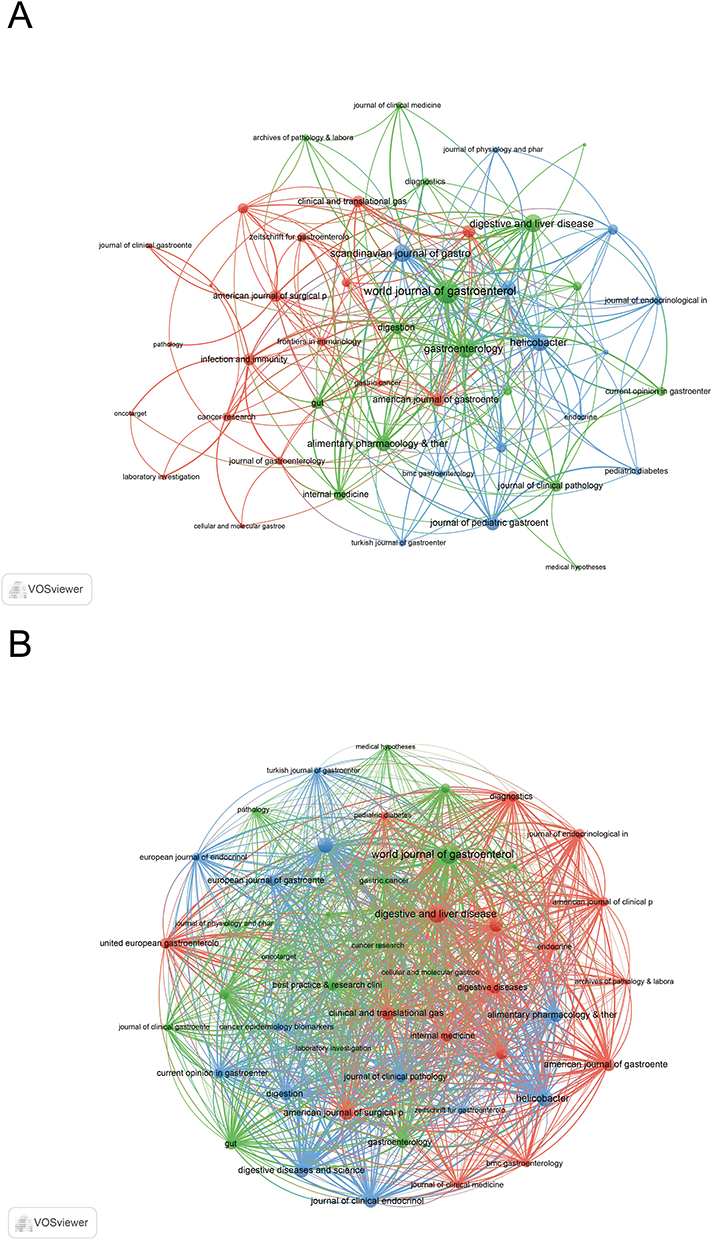 |
Figure 4 Journal Co-occurrence and Coupling Networks. (A) Co-occurrence Network of Journals. (B) Coupling Network of Journals. |
Analysis of Authors
The bibliometric analysis identified 2229 authors contributing to the field of AIG and H. pylori research. Annibale Bruno and Lahner Edith emerged as leading researchers with the highest h-indices (h-index = 10) among all authors, indicating substantial research impact. Both maintained impressive g-indices of 15 and demonstrated consistent influence over time (m-index = 0.48 since 2005). These researchers contributed 15 publications each (TP = 15) and accumulated 507 and 675 total citations (TC), respectively, establishing them as the most prolific and influential authors in the field. Stolte M also achieved a significant impact with an h-index of 10 and g-index of 10, contributing 10 publications (TP = 10) that garnered 477 citations (TC) (Table S3).
Author collaboration network analysis (Figure 5) revealed complex patterns of research cooperation. Among the 111 authors involved in international collaborations with a minimum of 3 articles, Okazaki K emerged as the most connected researcher with 60 collaborative links, matched by Hiai H and Chiba T with the same number of connections (60). The author collaboration network analysis revealed several well-defined clusters of researchers working on AIG and H. pylori research. The largest and most interconnected cluster is centered around Japanese researchers, with Okazaki K, Hiai H, and Chiba T forming a tightly linked core group with 60 collaborative connections each. A second prominent cluster is formed by Italian researchers, led by Annibale Bruno and Lahner Edith from Sapienza University Rome. A third distinct cluster consists of German and Swiss researchers, including Stolte M, Faller G, and Kirchner T, who have concentrated on histopathological aspects and classification systems for autoimmune gastritis.
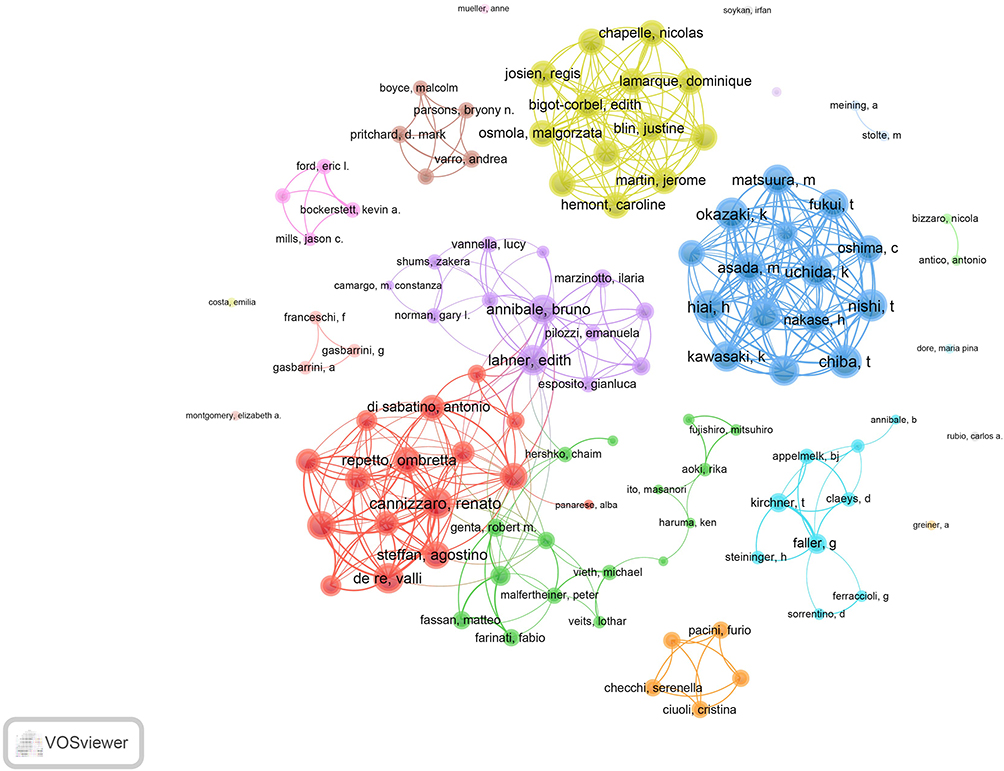 |
Figure 5 Visualization of Author Collaboration Network. Nodes represent keywords, with node size indicating frequency of occurrence. Links represent co-occurrence relationships, and colors indicate different thematic clusters. |
Analysis of Most Cited Articles
The most cited article (366 citations, published in Infection and Immunity, 1996) provided groundbreaking insights into the molecular mechanisms linking H. pylori infection with autoimmune responses.25 This study was particularly significant in establishing the concept of molecular mimicry between H. pylori lipopolysaccharide and host Lewis blood group antigens, providing a fundamental mechanism for understanding how bacterial infection might trigger autoimmune responses in susceptible individuals. The second most cited paper (245 citations, Journal of Clinical Investigation, 2012) made substantial contributions to understanding the immunological aspects of H. pylori infection and its broader systemic effects.26 This research elucidated the role of dendritic cell-derived IL-18 in regulatory T-cell differentiation and demonstrated how H. pylori-specific immune tolerance might influence other immune responses, including protection against asthma. These findings opened new perspectives on the complex interactions between infection, autoimmunity, and systemic immune regulation. The third most cited article (240 citations, American Journal of Surgical Pathology, 2007) provided crucial insights into the clinicopathologic aspects of gastrointestinal manifestations in patients with common variable immunodeficiency.27 This comprehensive study established important connections between immunodeficiency, AIG, and associated pathological changes, contributing significantly to understanding the spectrum of immune-mediated gastric disorders (Table S4).
Analysis of Keywords
Keyword analysis revealed distinct research themes and evolving trends in AIG and H. pylori research. Among the 650 author keywords identified, our analysis focused on terms appearing at least 5 times, resulting in 107 keywords grouped into five main clusters: Molecular immunological mechanisms and cancer (38 items): Including terms like “immune-response,” “adenocarcinoma,” “apoptosis,” “autoimmune gastritis,” “cancer,” “carcinogenesis,” “regulatory T-cells,” “colonization,” “inflammation,” “expression,” “gastric-cancer,” and “helicobacter-pylori”; Immunological markers and pathogenesis (23 items): Featuring “antibodies,” “antigastric autoantibodies,” “H+/K+-ATPase,” “autoantigen,” “beta-subunit,” “blood-group antigens,” “sydney system,” “H+/K+-adenosine triphosphatase,” “pathogenesis,” and “pernicious-anemia”; Clinical manifestations and patient characteristics (18 items): Including “children,” “celiac-disease,” “iron-deficiency,” “adolescents,” “atrophic gastritis,” “parietal-cell antibodies,” “progression,” and “serum ferritin”; Epidemiology and disease progression (16 items): Containing “acid-secretion,” “age,” “association,” “cobalamin deficiency,” “deficiency,” “diseases,” “dyspepsia,” “follow-up,” “helicobacter-pylori infection,” “intestinal metaplasia,” and “prevalence”; Diagnostic approaches and classification (12 items): Including “carcinoma,” “classification,” “diagnosis,” “dysplasia,” “features,” “hypergastrinemia,” “lesions,” “management,” and “pathology” (Figure 6A and Table S5).
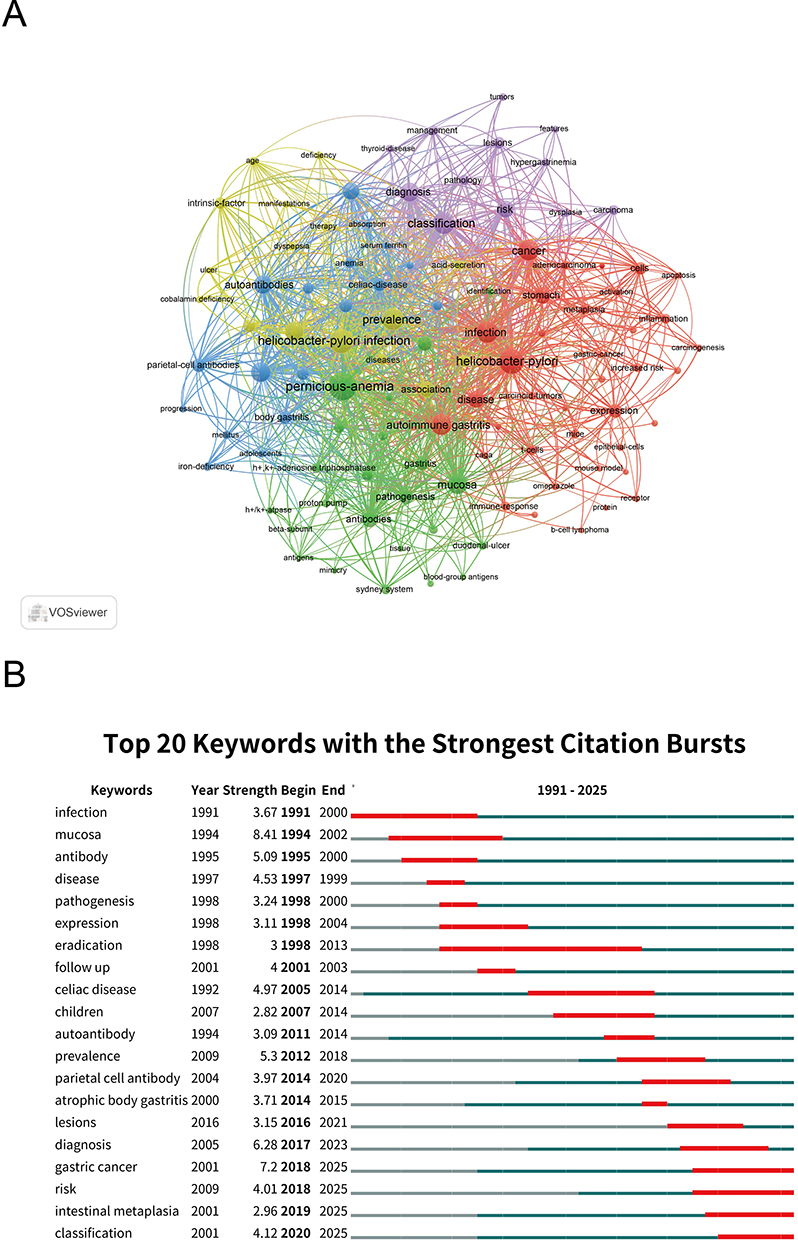 |
Figure 6 Analysis of research themes and trends. (A) Network visualization of keyword co-occurrence analysis. Nodes represent keywords, with node size indicating frequency of occurrence. Links represent co-occurrence relationships, and colors indicate different thematic clusters. (B) Top 20 keywords with the most significant citation bursts. Red bars indicate the period of burst activity, while the blue line represents the overall timeline. The length of the red bar reflects the duration of the burst. |
The keyword co-occurrence network analysis identified “pernicious-anemia” as the most frequent keyword (82 occurrences, total link strength 441), followed by “prevalence” (52 occurrences, link strength 271), and “classification” (52 occurrences, link strength 268). These high-frequency keywords reflect the core focus of research in this field and the strong association between AIG and pernicious anemia.
The citation bursts analysis of keywords revealed significant evolutionary patterns (Figure 6B). Early research (1991–2000) focused predominantly on “infection,” “mucosa,” and “antibody,” with link strengths of 3.67, 8.41, and 5.09, respectively. The middle period (2001–2014) saw increased attention to “celiac disease” (citation burst 4.97) and “children” (citation burst 2.82), indicating growing interest in comorbid conditions and special populations. Recent research trends (2018–2025) show increased emphasis on “gastric cancer” (citation burst 7.2), “risk” (citation burst 4.01), “intestinal metaplasia” (citation burst 2.96), and “classification” (citation burst 4.12).
Discussion
This bibliometric analysis provides a comprehensive overview of global research trends on AIG and H. pylori research from 1991 to 2025. The results demonstrate a steady increase in publication output and reveal five major research themes, including molecular mechanisms, immunological markers, clinical characteristics, epidemiology, and diagnostic strategies. Overall, the field has evolved from early mechanistic exploration toward clinically oriented research, particularly focusing on risk assessment, early detection, and standardized classification systems.
The journal analysis revealed that gastroenterology-focused journals, particularly the World Journal of Gastroenterology and Gastroenterology, have been pivotal in disseminating research in this field.28 This pattern reflects the specialization of the field and its close alignment with gastrointestinal and microbial pathogenesis research.29 Geographical and institutional analysis highlighted the dominance of Italian and American institutions, particularly Sapienza University Rome and major US research centers. This leadership may be associated with regional disease burden, strong research infrastructure, and sustained investment in gastroenterology and autoimmune disease research.30,31 The strong contribution from Japanese institutions further underscores their long-standing role in H. pylori and gastric cancer research.32 Author analysis showed that key researchers, such as Annibale Bruno and Lahner Edith, have contributed substantially to the understanding of the relationship between AIG and H. pylori, particularly in diagnostic and clinical frameworks.33 The collaborative networks also suggest a trend toward increased international and multi-center research.
Research Hotspots and Frontier Trends
Cluster 1 (Molecular Immunological Mechanisms and Cancer) represents the largest research focus, emphasizing immunological mechanisms and carcinogenesis. The prominence of terms like “immune-response” and “adenocarcinoma” reflects increasing attention to the role of chronic inflammation and immune dysregulation in gastric tumorigenesis. Mechanistically, H. pylori–related molecular mimicry and immune activation remain central explanatory frameworks.9,34 The strong co-occurrence of “carcinogenesis” and “inflammation” keywords suggests an emerging focus on identifying early molecular markers of malignant transformation in AIG patients. A notable breakthrough study by Iwamuro et al has identified novel signaling pathways linking chronic inflammation to epithelial–mesenchymal transition in gastric mucosa, providing potential therapeutic targets for intervention before carcinogenesis.35 This mechanistic understanding is critical for developing targeted therapies that might prevent disease progression rather than simply managing symptoms.
Cluster 2 (Immunological Markers and Pathogenesis) highlights the central role of autoantibody profiling and immune-related biomarkers in AIG research. Advances in detection technologies have enabled more precise diagnostic approaches and the identification of novel autoantibody signatures associated with disease progression and treatment response.36 The frequent occurrence of H+/K+-ATPase-related terms reflects continued focus on key autoimmune targets, with potential implications for targeted therapeutic strategies.37 In addition, the prominence of “pernicious anemia” underscores its close clinical association with AIG. The co-occurrence of immune-related keywords also suggests that molecular mimicry between H. pylori antigens and host structures remains a key explanatory mechanism in disease pathogenesis.38
Cluster 3 (Clinical Manifestations and Patient Characteristics) reflects increasing attention to disease heterogeneity and population-specific features. The presence of keywords such as “children” and “adolescents” indicates growing recognition of early-onset AIG and its distinct clinical patterns.39 The co-occurrence of “celiac-disease” highlights the role of polyautoimmunity, suggesting shared immunological susceptibility across conditions.40 In addition, the prominence of “iron deficiency” emphasizes its importance as an early clinical manifestation, often preceding vitamin B12 deficiency and providing a potential window for early diagnosis12.13 These findings collectively suggest a shift toward earlier detection and improved clinical characterization of AIG across different patient populations.
Cluster 4 (Epidemiology and Disease Progression) reflects evolving understanding of the natural history of AIG. Keywords such as “follow-up” and “acid secretion” indicate increasing emphasis on longitudinal disease monitoring, while the prominence of “intestinal metaplasia” highlights its role as a key precancerous condition. These findings align with growing research interest in identifying patients at high risk of progression to gastric cancer.41 In addition, the emergence of analytical approaches, including artificial intelligence, suggests a trend toward more precise prediction models for disease progression and risk stratification.42 The co-occurrence of terms such as “therapy” and “cobalamin deficiency” further indicates increasing attention to both disease management and systemic consequences of AIG.
Cluster 5 (Diagnostic Approaches and Classification) represents a key emerging frontier in AIG research. The prominence of keywords such as “classification,” “hypergastrinemia,” and “diagnosis” reflects ongoing efforts to standardize disease evaluation and improve clinical decision-making. Established frameworks, such as the Kyoto classification, have contributed to more consistent endoscopic assessment and improved risk stratification.43,44 At the same time, the integration of molecular pathology and advanced imaging technologies, including artificial intelligence-assisted endoscopy, is enhancing diagnostic precision and enabling earlier detection of disease-related changes.45,46 These developments highlight a broader transition toward standardized and technology-driven diagnostic strategies in AIG management.
The burst detection analysis revealed distinct chronological shifts in research focus from 1991 to 2025, highlighting the evolution of AIG and H. pylori research from mechanistic exploration to clinically oriented applications.
During the early period (1991–2000), research primarily focused on fundamental disease mechanisms, with keywords such as “infection,” “mucosa,” and “antibody” showing strong citation bursts. This stage laid the foundation for understanding the interaction between H. pylori infection, immune responses, and gastric mucosal damage.47,48
In the middle period (2001–2014), research expanded toward more complex clinical contexts, as reflected by burst terms such as “celiac disease” and “children,” indicating growing recognition of autoimmune comorbidities and population-specific characteristics.49
Notably, the recent period (2015–2025) demonstrates a clear evolution toward precision medicine, risk stratification, and advanced diagnostic approaches. This represents the maturation of the field, where accumulated knowledge is being translated into sophisticated clinical tools and individualized patient management strategies. Strong bursts in “diagnosis” (strength = 6.28, 2017–2023) and “gastric cancer” (strength = 7.20, 2018–2025) reflect increasing sophistication in diagnostic approaches and recognition of long-term complications. The exceptionally high burst strength for “gastric cancer” indicates the field’s marked shift toward cancer prevention and early detection strategies, representing perhaps the most clinically significant development in recent years. Zhang et al conducted a groundbreaking systematic review and meta-analysis on the endoscopic Kyoto classification, quantifying its utility in gastric cancer risk assessment and providing evidence-based parameters that clinicians can apply in their evaluation of patients with potential precancerous conditions.44 The emergence of “intestinal metaplasia” (2019–2025) and “classification” (2020–2025) as burst terms suggests intensifying focus on premalignant changes and the standardization of diagnostic criteria. Toyoshima and Nishizawa published influential work on the Kyoto classification of gastritis, providing a comprehensive framework for standardized endoscopic evaluation that has been widely adopted in clinical practice.43
Practical Implications
The findings of this study provide several practical insights. For clinicians, the increasing focus on gastric cancer risk, intestinal metaplasia, and classification systems highlights the importance of early detection and long-term surveillance in patients with autoimmune gastritis, particularly those with H. pylori exposure. For researchers, the identified research hotspots and emerging trends suggest that future studies should prioritize risk stratification models, integration of molecular biomarkers, and standardized diagnostic frameworks. Additionally, the growing application of artificial intelligence and advanced endoscopic techniques may further improve diagnostic accuracy and disease monitoring.
Strengths and Limitations
This bibliometric analysis offers several notable strengths in its approach and execution. The comprehensive coverage spanning three decades provides a robust temporal perspective of research evolution in the field of AIG and H. pylori studies. The integration of multiple bibliometric tools, including VOSviewer, CiteSpace, and the R package “bibliometric”, enables a multi-faceted examination of research patterns and trends, enhancing the reliability of our findings. However, several limitations should be considered when interpreting our findings. The exclusive use of the WoSCC database, while providing high-quality indexed publications, may have excluded relevant research published in other databases such as Scopus or PubMed. Our restriction to English-language publications may have omitted significant contributions from non-English speaking regions, particularly considering the global nature of AIG and H. pylori research.
Conclusion
This bibliometric analysis highlights the evolving focus of AIG and H. pylori research over the past three decades, with increasing attention to clinical relevance. Current hotspots include carcinogenic mechanisms, immunological markers, population-specific features, disease progression, and diagnostic innovations. Collaborative efforts, especially from Italy, the US, and Japan, continue to advance the field. Future research should focus on integrating molecular biomarkers and advanced diagnostic technologies to improve early detection and risk stratification, ultimately supporting more personalized clinical management strategies.
Data Sharing Statement
The data that support the findings of this study are available from the corresponding author upon reasonable request.
Author Contributions
Yangqing Wu: Conceptualization; Methodology; Data curation; Formal analysis; Investigation; Validation; Visualization; Writing – original draft; Writing – review and editing;
Jianbo Zhou: Methodology; Data curation; Formal analysis; Project administration; Writing – original draft; Writing – review and editing;
Ying Fang: Data curation; Formal analysis; Visualization; Writing – original draft; Writing – review and editing;
Jianzhong Sang: Investigation; Resources; Software; Writing – original draft; Writing – review and editing;
Fangfang Zhang: Conceptualization; Supervision; Funding acquisition; Writing – original draft; Writing – review and editing.
All authors gave final approval of the version to be published; have agreed on the journal to which the article has been submitted; and agree to be accountable for all aspects of the work.
Funding
This work was supported by the Zhejiang Province Medical and Health Science and Technology Project (No.2023KY1152).
Disclosure
The authors declare that they have no competing interests.
References
1. Abid E, Abid A, Abid H, Hussain SI, Jalal AA. Strengthening predictive models and risk assessment in autoimmune gastritis: a critical appraisal. J Gastroenterol Hepatol. 2025;40(6):1631–15. doi:10.1111/jgh.16967
2. Chen Y, Ji X, Zhao W, et al. A real-world study on the characteristics of autoimmune gastritis: a single-center retrospective cohort in China. Clin Res Hepatol Gastroenterol. 2025;49(4):102556. doi:10.1016/j.clinre.2025.102556
3. Annibale B, Dilaghi E, Lahner E. Chapter 34 - Autoimmune gastritis and pernicious anemia. In: Gershwin ME, Tsokos GC, Diamond B, editors. The Rose and Mackay Textbook of Autoimmune Diseases.
4. Massironi S, Gallo C, Lahner E, et al. Occurrence and characteristics of endoscopic gastric polyps in patients with autoimmune gastritis (AGAPE study): a multicentric cross-sectional study. Digestive Liver Dis. 2025;57(1):198–205. doi:10.1016/j.dld.2024.07.024
5. Tonegato M, Panozzo MP, Antico A, Bizzaro N. Improving the diagnosis of autoimmune gastritis: from parietal cell antibodies to H+/K+ ATPase antibodies. Diagnostics. 2024;14(16):1721. doi:10.3390/diagnostics14161721
6. FitzGerald R, Smith SM. An overview of Helicobacter pylori infection. In: Helicobacter pylori. Springer; 2021:1–14.
7. Ali A, AlHussaini KI. Helicobacter pylori: a contemporary perspective on pathogenesis, diagnosis and treatment strategies. Microorganisms. 2024;12(1):222. doi:10.3390/microorganisms12010222
8. IARC Working Group Reports. Population-Based Helicobacter Pylori Screen-and-Treat Strategies for Gastric Cancer Prevention: Guidance on Implementation. In: Park JY, editor. Lyon (FR): International Agency for Research on Cancer © International Agency for Research on Cancer, 2025.; 2025.
9. Falah F, Aamery R, Mohammed Jaafer N. Pylori and autoimmune disorders: unraveling the links between chronic infection and immune dysfunction: review paper. Int J Pharm Bio-Med Sci H. 2024;3:662–670.
10. Rugge M, Bricca L, Guzzinati S, et al. Autoimmune gastritis: long-term natural history in naïve Helicobacter pylori-negative patients. Gut. 2023;72(1):30–38. doi:10.1136/gutjnl-2022-327827
11. Ihara T, Ihara N, Kushima R, Haruma K. Rapid progression of autoimmune gastritis after Helicobacter pylori eradication therapy. Internal Medicine. 2023;62(11):1603–1609. doi:10.2169/internalmedicine.0533-22
12. Kotera T, Nishimi Y, Kushima R, Haruma K. Regression of autoimmune gastritis after eradication of Helicobacter pylori. Case Rep Gastroenterol. 2023;17(1):34–40. doi:10.1159/000528388
13. Osmola M, Chapelle N, Vibet MA, et al. Iron and vitamin B12 deficiency in patients with autoimmune gastritis and helicobacter pylori gastritis: results from a prospective multicenter study. Dig Dis. 2024;42(2):145–153. doi:10.1159/000535206
14. Ninkov A, Frank JR, Maggio LA. Bibliometrics: methods for studying academic publishing. Perspect Med Educ. 2022;11(3):173–176. doi:10.1007/S40037-021-00695-4
15. Yu Y-F, Tong K-K, Shangguan X-L, et al. Research status and hotspots of autoimmune gastritis: a bibliometric analysis. World J Gastroenterol. 2023;29(42):5781. doi:10.3748/wjg.v29.i42.5781
16. Chen D, Zhang G, Wang J, et al. Mapping trends in moyamoya angiopathy research: a 10-year bibliometric and visualization-based analyses of the web of science core collection (WoSCC). Front Neurol. 2021;12:637310. doi:10.3389/fneur.2021.637310
17. Yang S, Hao S, Ye H, Zhang X. Cross-talk between Helicobacter pylori and gastric cancer: a scientometric analysis. Front Cell Infect Microbiol. 2024;14:1353094. doi:10.3389/fcimb.2024.1353094
18. Van Eck N, Waltman L. Software survey: vOSviewer, a computer program for bibliometric mapping. Scientometrics. 2010;84(2):523–538. doi:10.1007/s11192-009-0146-3
19. Chen C. CiteSpace II: detecting and visualizing emerging trends and transient patterns in scientific literature. J Am Soc Inf Sci Technol. 2006;57(3):359–377. doi:10.1002/asi.20317
20. Aria M, Cuccurullo C. bibliometrix: an R-tool for comprehensive science mapping analysis. J Informetrics. 2017;11(4):959–975. doi:10.1016/j.joi.2017.08.007
21. Bornmann L, Daniel H-D. Does the h-index for ranking of scientists really work? Scientometrics. 2005;65(3):391–392. doi:10.1007/s11192-005-0281-4
22. Egghe L. editor. An Improvement of the h-Index: The g-Index. ISSI; 2006.
23. Nocera AP, Boudreau H, Boyd CJ, Tamhane A, Martin KD, Rais-Bahrami S. Correlation between H-index, M-index, and academic rank in urology. Urology. 2024;189:150–155. doi:10.1016/j.urology.2024.04.041
24. Gould KA. Journal Citation Reports 2023: Understanding Bibliometric Data. LWW; 2023:245–247.
25. Appelmelk BJ, Simoons-Smit I, Negrini R, et al. Potential role of molecular mimicry between Helicobacter pylori lipopolysaccharide and host Lewis blood group antigens in autoimmunity. Infect Immun. 1996;64(6):2031–2040. doi:10.1128/iai.64.6.2031-2040.1996
26. Oertli M, Sundquist M, Hitzler I, et al. DC-derived IL-18 drives Treg differentiation, murine Helicobacter pylori–specific immune tolerance, and asthma protection. J Clin Invest. 2012;122(3):1082–1096. doi:10.1172/JCI61029
27. Daniels JA, Lederman HM, Maitra A, Montgomery EA. Gastrointestinal tract pathology in patients with common variable immunodeficiency (CVID): a clinicopathologic study and review. Am J Surg Pathol. 2007;31(12):1800–1812. doi:10.1097/PAS.0b013e3180cab60c
28. Hawley JA, Forster SC, Giles EM. Exercise, gut microbiome, and gastrointestinal diseases: therapeutic impact and molecular mechanisms. Gastroenterology. 2025;169(1):48–62. doi:10.1053/j.gastro.2025.01.224
29. Zhang Y, Peng Y, Xia X. Autoimmune diseases and gut microbiota: a bibliometric and visual analysis from 2004 to 2022. Clin Exp Med. 2023;23(6):2813–2827. doi:10.1007/s10238-023-01028-x
30. Zamani M, Ebrahimtabar F, Zamani V, et al. Systematic review with meta‐analysis: the worldwide prevalence of Helicobacter pylori infection. Aliment Pharmacol Ther. 2018;47(7):868–876. doi:10.1111/apt.14561
31. Bignotto M, Dei Cas M, Paroni R, et al. An epidemiological study on the prevalence of cardiovascular, metabolic, liver and autoimmune diseases in Northern Italy. Nutr Metab Cardiovasc Dis. 2021;31(5):1416–1426. doi:10.1016/j.numecd.2021.02.001
32. Inoue M. Changing epidemiology of Helicobacter pylori in Japan. Gastric Cancer. 2017;20(Suppl 1):3–7. doi:10.1007/s10120-016-0658-5
33. Lahner E, Carabotti M, Annibale B. Treatment of Helicobacter pylori infection in atrophic gastritis. World J Gastroenterol. 2018;24(22):2373–2380. doi:10.3748/wjg.v24.i22.2373
34. Sumida TS, Cheru NT, Hafler DA. The regulation and differentiation of regulatory T cells and their dysfunction in autoimmune diseases. Nat Rev Immunol. 2024;24(7):503–517. doi:10.1038/s41577-024-00994-x
35. Iwamuro M, Tanaka T, Otsuka M. Update in molecular aspects and diagnosis of autoimmune gastritis. Curr Issues Mol Biol. 2023;45(7):5263–5275. doi:10.3390/cimb45070334
36. Tan Q, Wang D, Yang J, et al. Autoantibody profiling identifies predictive biomarkers of response to anti-PD1 therapy in cancer patients. Theranostics. 2020;10(14):6399–6410. doi:10.7150/thno.45816
37. Juarranz Y. Molecular and cellular basis of autoimmune diseases. Cells. 2021;10(2):474. doi:10.3390/cells10020474
38. Hassan FF, Al Aamery RA, Hammodi NMJ. H. pylori and autoimmune disorders: unraveling the links between chronic infection and immune dysfunction: review paper. Int J Pharm Bio-Med Sci. 2023;03(11). doi:10.47191/ijpbms/v3-i11-13
39. Saglietti C, Sciarra A, Abdelrahman K, et al. Autoimmune gastritis in the pediatric age: an underestimated condition report of two cases and review. Front Pediatr. 2018;6. doi:10.3389/fped.2018.00123
40. Ceccarelli F, Natalucci F, Di Filippo A, et al. Membrane and soluble CD137 in systemic lupus erythematosus: role as biomarkers for disease activity. J Immunol Res. 2023;2023:2344239. doi:10.1155/2023/2344239
41. Eskandarion MR, Eskandarieh S, Shakoori Farahani A, et al. Prediction of novel biomarkers for gastric intestinal metaplasia and gastric adenocarcinoma using bioinformatics analysis. Heliyon. 2024;10(9):e30253. doi:10.1016/j.heliyon.2024.e30253
42. Chen S, Xu L, Yan L, et al. A novel endoscopic artificial intelligence system to assist in the diagnosis of autoimmune gastritis: a multicenter study. Endoscopy. 2025;57(4):299–309. doi:10.1055/a-2451-3071
43. Toyoshima O, Nishizawa T. Kyoto classification of gastritis: advances and future perspectives in endoscopic diagnosis of gastritis. World J Gastroenterol. 2022;28(43):6078. doi:10.3748/wjg.v28.i43.6078
44. Zhang H, Yang X, Zhang X, Huang X. The significance of endoscopic Kyoto classification of gastritis in the gastric cancer risk assessment: a systematic review and meta‑analysis. Medicine. 2023;102(22):e33942. doi:10.1097/MD.0000000000033942
45. Ali H, Muzammil MA, Dahiya DS, et al. Artificial intelligence in gastrointestinal endoscopy: a comprehensive review. Ann Gastroenterol. 2024;37(2):133. doi:10.20524/aog.2024.0861
46. Huang J, Fan X, Liu W. Applications and prospects of artificial intelligence-assisted endoscopic ultrasound in digestive system diseases. Diagnostics. 2023;13(17):2815. doi:10.3390/diagnostics13172815
47. Peek Jr RM, Blasser MJ. Pathophysiology of Helicobacter pylori-induced gastritis and peptic ulcer disease. Am J Med. 1997;102(2):200–207. doi:10.1016/S0002-9343(96)00273-2
48. Crabtree J. Gastric mucosal inflammatory responses to Helicobacter pylori. Aliment Pharmacol Ther. 1996;10(Sup1):29–37. doi:10.1046/j.1365-2036.1996.22164003.x
49. Oksanen AM, Haimila KE, Rautelin HIK, Partanen JA. Immunogenetic characteristics of patients with autoimmune gastritis. World J Gastroenterol. 2010;16(3):354. doi:10.3748/wjg.v16.i3.354
 © 2026 The Author(s). This work is published and licensed by Dove Medical Press Limited. The
full terms of this license are available at https://www.dovepress.com/terms
and incorporate the Creative Commons Attribution
- Non Commercial (unported, 4.0) License.
By accessing the work you hereby accept the Terms. Non-commercial uses of the work are permitted
without any further permission from Dove Medical Press Limited, provided the work is properly
attributed. For permission for commercial use of this work, please see paragraphs 4.2 and 5 of our Terms.
© 2026 The Author(s). This work is published and licensed by Dove Medical Press Limited. The
full terms of this license are available at https://www.dovepress.com/terms
and incorporate the Creative Commons Attribution
- Non Commercial (unported, 4.0) License.
By accessing the work you hereby accept the Terms. Non-commercial uses of the work are permitted
without any further permission from Dove Medical Press Limited, provided the work is properly
attributed. For permission for commercial use of this work, please see paragraphs 4.2 and 5 of our Terms.
Recommended articles

A Worldwide Bibliometric Analysis of Published Literature on Osteoporosis Vertebral Compression Fracture
Li Y, Tian J, Ge M, Ji L, Kang Y, Xia C, Zhang J, Huang Y, Feng F, Zhao T, Shao H
Journal of Pain Research 2022, 15:2373-2392
Published Date: 18 August 2022
Scientific Knowledge of Rheumatoid Arthritis: A Bibliometric Analysis from 2011 to 2020
Xu J, Yu J, Jiao W, Chen G, Liu L, Zhang M, Wu D
Journal of Pain Research 2022, 15:2761-2772
Published Date: 8 September 2022
A Bibliometric Analysis of Acupuncture Treatment of Tension-Type Headache from 2003 to 2022
Zhu D, Xu W, Mao Q, Zhong G, Chen R, Jiao L
Journal of Pain Research 2023, 16:1647-1662
Published Date: 18 May 2023
Bibliometric and Visual Analysis in the Field of Dry Needling for Myofascial Pain Syndrome from 2000 to 2022
Luo N, Li R, Fu B, Zeng Y, Fang J
Journal of Pain Research 2023, 16:2461-2475
Published Date: 18 July 2023
Bibliometric Analysis of Global Trends in Remimazolam-Related Research Over the Past 15 Years: Compared with Propofol
Hu X, Wang B, Hu L, Han D, Wu J
Drug Design, Development and Therapy 2023, 17:2119-2135
Published Date: 20 July 2023