
Back to Journals » Journal of Hepatocellular Carcinoma » Volume 13
Current Status and Emerging Trends in Global Research on Liposome Therapy for Hepatocellular Carcinoma: A Bibliometric Analysis
Authors Hong X, Wu Y, Wu X, Huang C, Li C 
Received 12 March 2026
Accepted for publication 30 May 2026
Published 19 June 2026 Volume 2026:13 608648
DOI https://doi.org/10.2147/JHC.S608648
Checked for plagiarism Yes
Review by Single anonymous peer review
Peer reviewer comments 2
Editor who approved publication: Dr David Gerber
Xiaotao Hong,1 Yibo Wu,1 Xiaocong Wu,1 Chengwei Huang,2 Chunsheng Li3
1Department of Chemotherapy, Jieyang People’s Hospital, Jieyang, Guangdong, People’s Republic of China; 2General Surgery, Dandong First Hospital, Dandong, Liaoning, People’s Republic of China; 3Department of Cardiology, Erasmus University Rotterdam, Rotterdam, Netherlands
Correspondence: Chengwei Huang, General Surgery, Dandong First Hospital, Dandong, Liaoning, People’s Republic of China, Email [email protected] Chunsheng Li, Department of Cardiology, Erasmus University Rotterdam, Rotterdam, Netherlands, Email [email protected]
Background: Liposomes are widely used as nanocarriers for targeted drug delivery in cancer therapy, including hepatocellular carcinoma (HCC). However, no comprehensive bibliometric study has systematically evaluated global research trends, major research hotspots, and clinical translation progress in liposome-based therapy for HCC.
Methods: On September 29, 2025, we queried the Web of Science Core Collection for liposome and HCC publications. Using CiteSpace and VOSviewer, we analyzed trends and emerging hotspots. Additionally, we retrieved clinical trial literature on liposome therapy for HCC from the PubMed database and analyzed it to assess clinical progress in this field.
Results: A total of 1116 publications related to liposome-based therapy for liver cancer were identified over the past 35 years. China ranked first in publication output, while the Chinese Academy of Sciences was the most productive institution. The International Journal of Nanomedicine published the highest number of articles, and Zhang Bo was the most prolific author. Keyword co-occurrence and citation analyses identified doxorubicin-loaded liposomes, apoptosis, pharmacokinetics, tumor microenvironment, metastasis, and glycyrrhetinic acid-mediated targeting as major research hotspots. Recent studies increasingly focused on targeted nanocarrier design, combination therapy strategies, and tumor-specific delivery systems. Clinical studies mainly investigated liposomal drugs combined with radiofrequency ablation or ultrasound hyperthermia; however, advanced clinical translation remains limited.
Conclusion: This bibliometric analysis provides a comprehensive overview of global research activity in liposome-based therapy for HCC. Although substantial progress has been achieved in preclinical nanomedicine research, the limited number of clinical studies highlights a significant translational gap. Future research should prioritize improving targeting efficiency, biosafety, immune modulation, and large-scale clinical applicability of liposomal delivery systems.
Keywords: liposome, hepatocellular carcinoma, bibliometric, hotspots, web of science core collection, therapeutic targets, PubMed
Introduction
Hepatocellular carcinoma (HCC) ranks as the fifth most common malignancy worldwide and the second leading cause of cancer-related mortality.1 In 2022, approximately 866,136 new cases and 758,725 deaths from HCC were reported globally, yielding a mortality-to-incidence ratio of 0.86.2 The incidence of HCC continues to rise, posing a substantial economic and health burden worldwide.3 Current treatment strategies, including surgery, ablation, chemotherapy, and immunotherapy, remain suboptimal for many patients due to the pronounced molecular and cellular heterogeneity of HCC.4,5 Consequently, the progress of novel therapeutic approaches for HCC is urgently needed.
Liposomes are nanoparticle-based drug delivery systems with favorable physicochemical properties and biocompatibility, several of which have been approved by the US Food and Drug Administration for clinical application.6 They can enhance drug loading capacity, improve targeting, and increase overall therapeutic efficacy. Previous studies have demonstrated the therapeutic potential of liposomes in knee osteoarthritis.7 Moreover, liposomes have been widely applied in the treatment of various cancers.8–10 Numerous researches have demonstrated the potential of liposomes in the diagnosis and treatment of HCC.11,12 For example, an RGD-modified liposomal platform was shown to enhance radiotherapy sensitivity by remodeling extracellular matrix stiffness, alleviating hypoxia and immunosuppression within the tumor microenvironment, and promoting immunogenic cell death, thereby offering a novel strategy for HCC therapy.13 In addition, a pH-responsive liposome modified with HepG2 cell membranes for systemic administration significantly enhanced the in vivo antitumor efficacy of the encapsulated drug, further highlighting the promise of liposome-based approaches in HCC treatment.14
Bibliometric analysis is a quantitative research approach that systematically evaluates publication patterns, collaboration networks, citation relationships, and thematic evolution within a scientific field.15–17 Unlike traditional narrative or systematic reviews, bibliometric methods enable large-scale visualization of knowledge structures and research dynamics through citation-based analyses and network mapping tools such as CiteSpace18 and VOSviewer.19 Previous bibliometric studies have investigated emerging directions in HCC treatment, including exosomes,20 nanomedicine,21 and photodynamic therapy.22 However, bibliometric analyses focusing on liposomes in HCC remain scarce. Therefore, the present study aimed to systematically analyze global publication trends, influential countries, institutions, authors, and journals, as well as keyword evolution, research hotspots, and clinical translation patterns in liposome-based HCC research. By quantitatively mapping the knowledge structure and developmental trajectory of this field, this study seeks to identify emerging research directions and translational challenges that may inform future therapeutic development.
Methods
Sources of Data and Search Protocol
The literature search was conducted in the Web of Science Core Collection (WoSCC) database on September 29, 2025, using the following indexes: Science Citation Index Expanded (SCI-EXPANDED), Emerging Sources Citation Index (ESCI), and Social Sciences Citation Index (SSCI). In addition, PubMed was searched to identify relevant clinical trial studies on liposome therapy for HCC. Detailed search strategies and keywords are provided in Supplementary File 1. The Web of Science search was performed primarily using Topic Search (TS), including title, abstract, author keywords, and Keywords Plus. Only English-language articles and reviews were included. Publications such as conference abstracts, editorials, letters, non-English papers, duplicate records, and studies unrelated to liposomes or HCC were excluded. Duplicate records were initially removed automatically using the WoSCC platform and reference management software, followed by manual verification. Subsequently, two reviewers independently screened the titles, abstracts, and full texts according to predefined inclusion and exclusion criteria. Any discrepancies were resolved through discussion and consensus, with a third investigator consulted when necessary. A total of 1150 records were initially retrieved. After screening according to the inclusion and exclusion criteria, 1116 publications were included for bibliometric analysis, consisting of 954 original articles and 162 reviews. All records were downloaded in plain text format with full records and cited references for subsequent analysis. In addition, five clinical trial studies related to liposome therapy for HCC were retrieved from PubMed during the same time period and exported in PubMed format.
Overview of Software Tools and Their Respective Functions
Bibliometric analyses were performed using VOSviewer (version 1.6.20), CiteSpace (version 6.3.R1), Scimago Graphica (version 1.0.45),23 Microsoft Excel 2021, and Microsoft PowerPoint 2021.24 VOSviewer25 was used to construct and visualize collaboration networks among countries/regions, institutions, authors, journals, and keywords. The association strength normalization method was applied, and network maps were generated based on co-authorship, co-occurrence, co-citation, and bibliographic coupling analyses. Minimum occurrence thresholds for keywords, authors, and institutions were set according to the characteristics of each analysis. CiteSpace26 was used for reference co-citation analysis, keyword burst detection, cluster analysis, and timeline visualization. The parameters were set as follows: time slicing from 2000 to 2025, years per slice = 1, selection criteria based on the g-index (k = 25), and pruning methods including Pathfinder and Pruning sliced networks. Cluster quality was evaluated using modularity Q and mean silhouette scores, where Q > 0.3 and silhouette > 0.7 were considered indicative of significant and convincing clustering structures. Scimago Graphica was employed to generate geographic distribution maps of publications across countries/regions. Microsoft Excel 2021 was used to analyze and visualize annual publication trends. Microsoft PowerPoint 2021 was used to create the study workflow diagram (Figure 1A). Descriptive statistical analysis was primarily applied in this study, including publication counts, citation frequencies, H-index values, centrality measures, and keyword occurrence frequencies. Through these analyses, emerging research hotspots and developmental trends in liposome-based therapies for HCC were systematically identified.
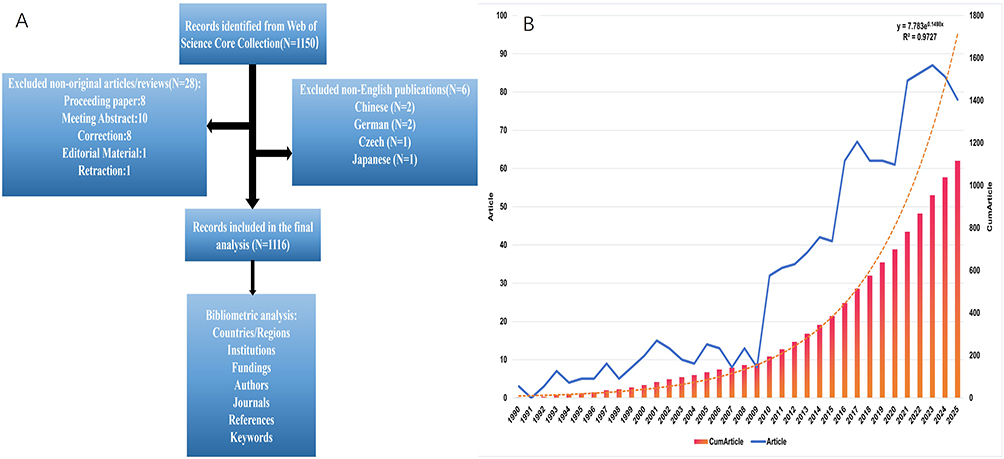 |
Figure 1 (A) Workflow of the Literature Retrieval and Analysis. (B) Trends in Annual and Cumulative Publication Counts. |
Results
Analysis of Yearly Scholarly Publications
The first article on liposomes and HCC was published in 1990. From 1990 to September 29, 2025, a total of 1116 publications were retrieved, spanning 35 years. These included 954 research articles (85.48%) and 162 reviews (14.52%). As illustrated in Figure 1B, the annual number of publications showed a fluctuating but gradual increase from 1990 to 2009, followed by exponential growth thereafter. Notably, three periods of rapid expansion were observed in 2009–2010, 2015–2016, and 2020–2021, suggesting the emergence of new research hotspots. Publication output peaked in 2023 with 87 articles, and nearly half of all retrieved studies were published in the past five years.
Examination of Institutional and Geographic Spread
A total of 1116 articles on liposomes and HCC were published by authors from 60 countries/regions, indicating a broad but uneven global research distribution. China was the dominant contributor, with 582 publications, accounting for more than half of the total output, and 15,390 citations. The United States ranked second, with 165 publications and 10,335 citations, followed by Japan with 85 publications and 2941 citations. Notably, among the top 10 most productive countries, only China and the United States published more than 100 articles, suggesting that research productivity in this field is highly concentrated in a few leading countries (Table 1).
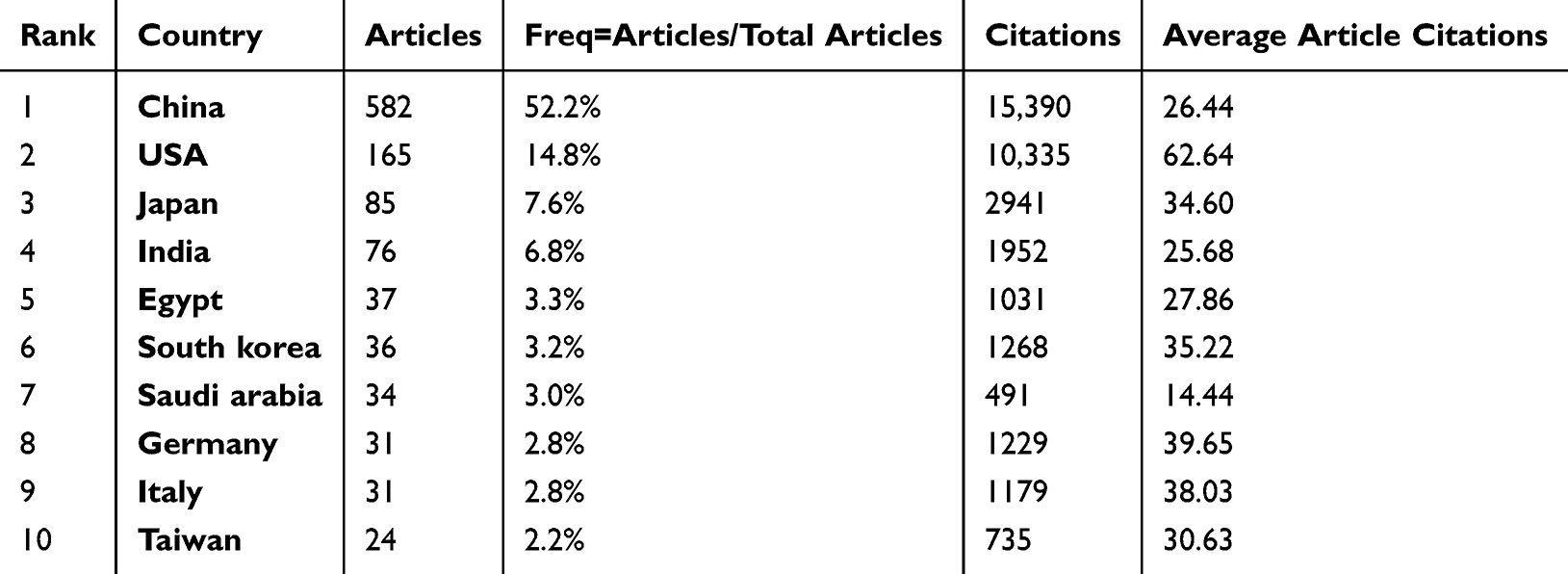 |
Table 1 Top 10 Most Publication Countries/Regions Related to Liposomes and Hepatocellular Carcinoma |
The international collaboration network further showed that China, the United States, Japan, India, and Germany occupied central positions, reflecting their active roles in global cooperation (Figure 2A). However, despite the broad participation of 60 countries/regions, the overall collaboration structure remained relatively concentrated, with major research links mainly formed among a limited number of scientifically productive countries (Figure 2B). The timeline analysis suggested an evolution in geographical participation, with early contributions mainly from Japan, Germany, and Spain, followed by increasing involvement of emerging contributors such as Ghana, Thailand, and the United Arab Emirates in recent years (Figure 2C). This pattern indicates that the field has gradually expanded from traditional research centers to a more geographically diverse landscape, although high-impact output remains concentrated in established research-intensive countries.
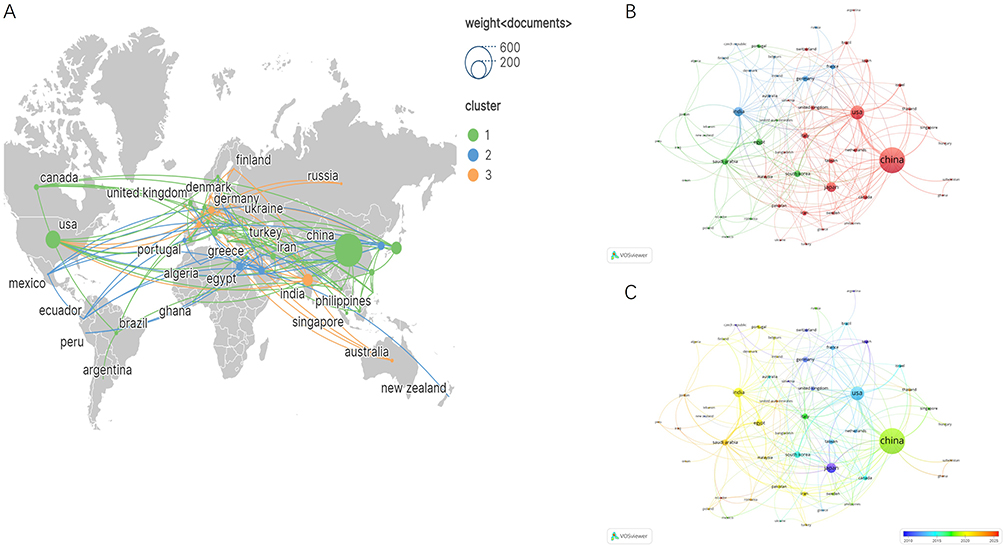 |
Figure 2 (A) Global Collaboration Network. (B) The clustering analysis of the Countries/regions. (C) The time-overlapping visualization of countries/regions collaboration. |
At the institutional level, 1358 institutions contributed to this field over the past 35 years. The Chinese Academy of Sciences ranked first, with 32 publications, 1671 citations, and the highest total link strength, followed by Zhejiang University with 26 publications and 744 citations. All of the top 10 most productive institutions were from China, further supporting China’s leading role in liposome-related HCC research (Table 2). The institutional collaboration network showed several major clusters, including both Chinese and international institutions such as Harvard University, Sichuan University, China Medical University, and the University of Tokyo. Nevertheless, the collaboration pattern remained relatively fragmented, suggesting that many institutions conducted research within regional or institution-centered networks rather than through extensive international partnerships (Figure 3A). The timeline map also revealed a shift from early contributors such as the University of Tokyo and Harvard University to more recent participants such as Shandong First Medical University and Tashkent State University, indicating the continuous entry of new institutions into this field (Figure 3B).
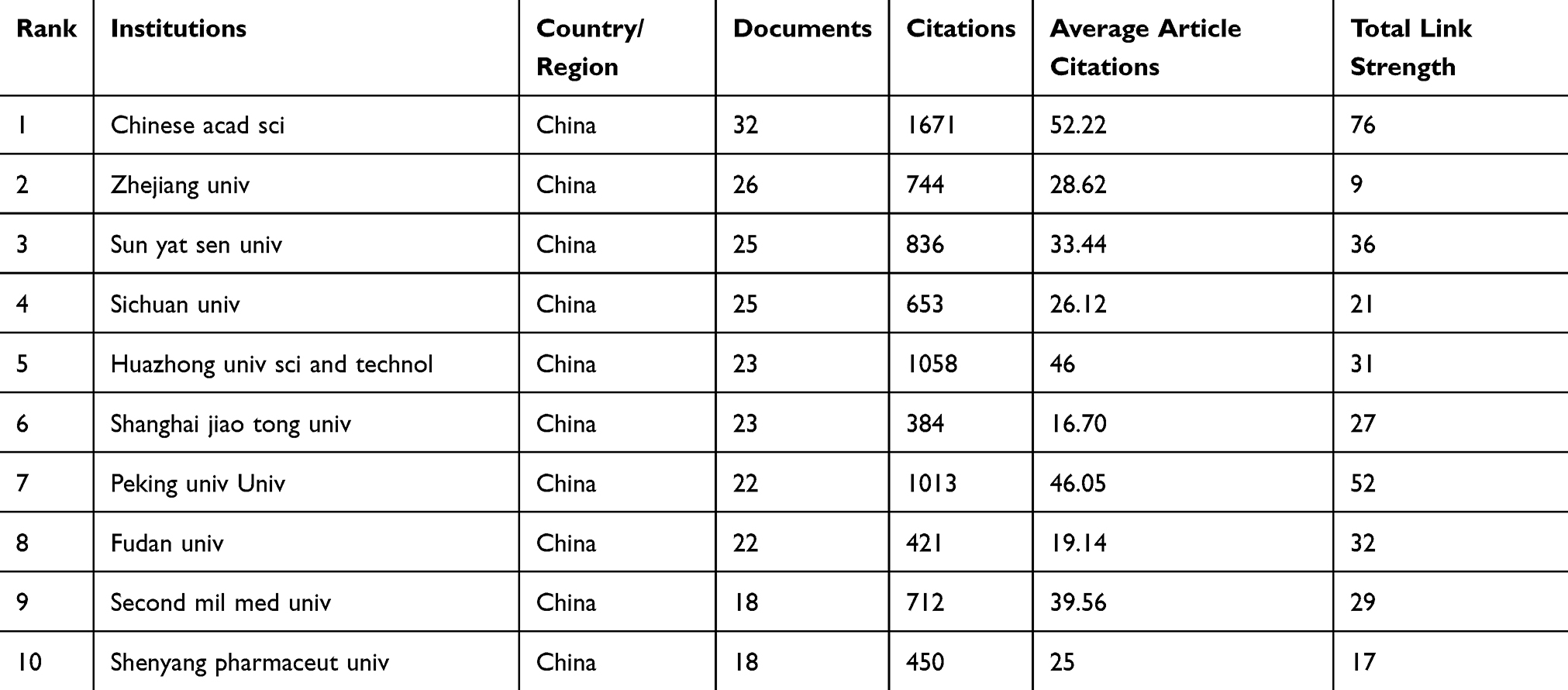 |
Table 2 Top 10 Most Publication Institutions Related to Liposomes and Hepatocellular Carcinoma |
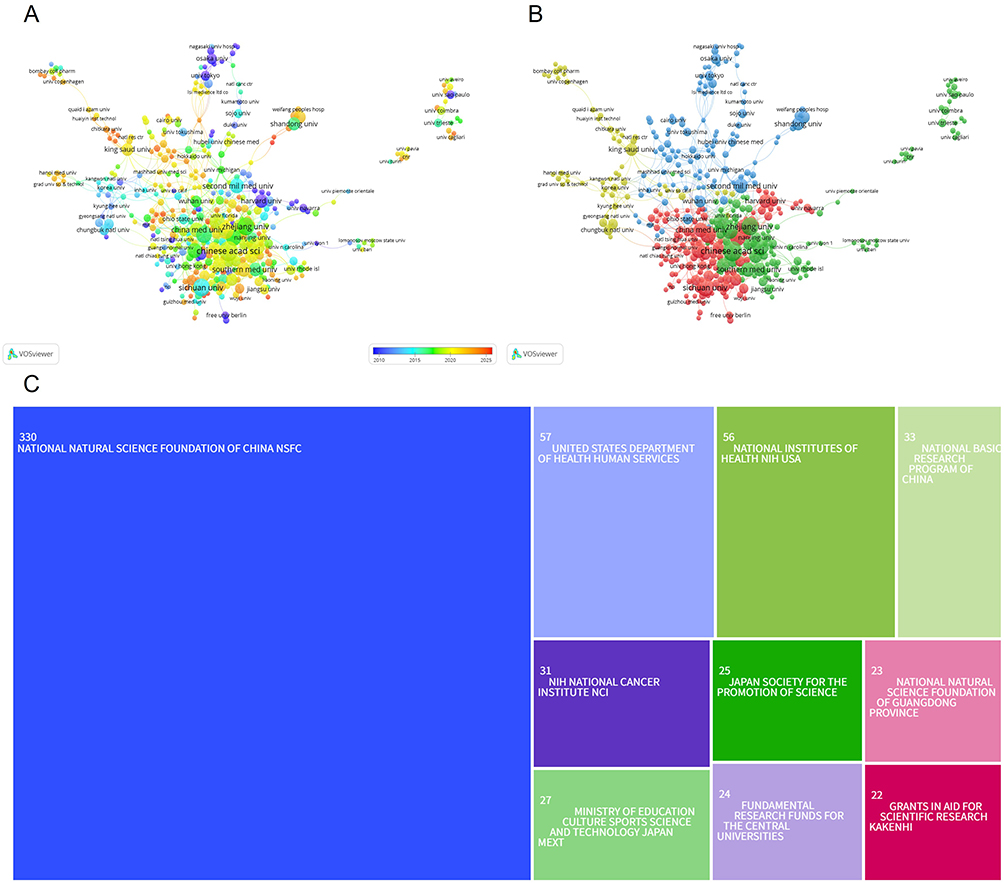 |
Figure 3 Institution Collaboration Clusters (A), and Temporal Overlay (B). (C) Top 10 funding agencies. |
Overall, these findings suggest that research on liposomes and HCC is characterized by strong geographical concentration, China-centered institutional productivity, and gradually expanding but still fragmented collaboration networks. Strengthening cross-national and inter-institutional collaboration may help improve methodological standardization, resource sharing, and clinical translation in future studies.
Financial Support
Figure 3C illustrates the major funding sources supporting research on liposomes and HCC. The National Natural Science Foundation of China ranked first, supporting 330 projects in this field. The US Department of Health and Human Services ranked second with 57 projects, followed closely by the US National Institutes of Health with 56 projects. Together, these three agencies accounted for approximately 70.5% of total funding, underscoring their pivotal role in advancing liposome-related HCC research.
Analysis of Scholarly Journals
A total of 1116 publications on liposomes and HCC were published across 427 journals. As displayed in Table 3, the International Journal of Nanomedicine ranked first in publication volume, with 51 papers and 1722 citations. Of the top 10 most productive journals, eight belonged to the JCR Q1 category and two to the JCR Q2 category. In terms of academic impact, the Journal of Controlled Release ranked first with 2044 citations, highlighting its leading influence in the field of liposomes and HCC.
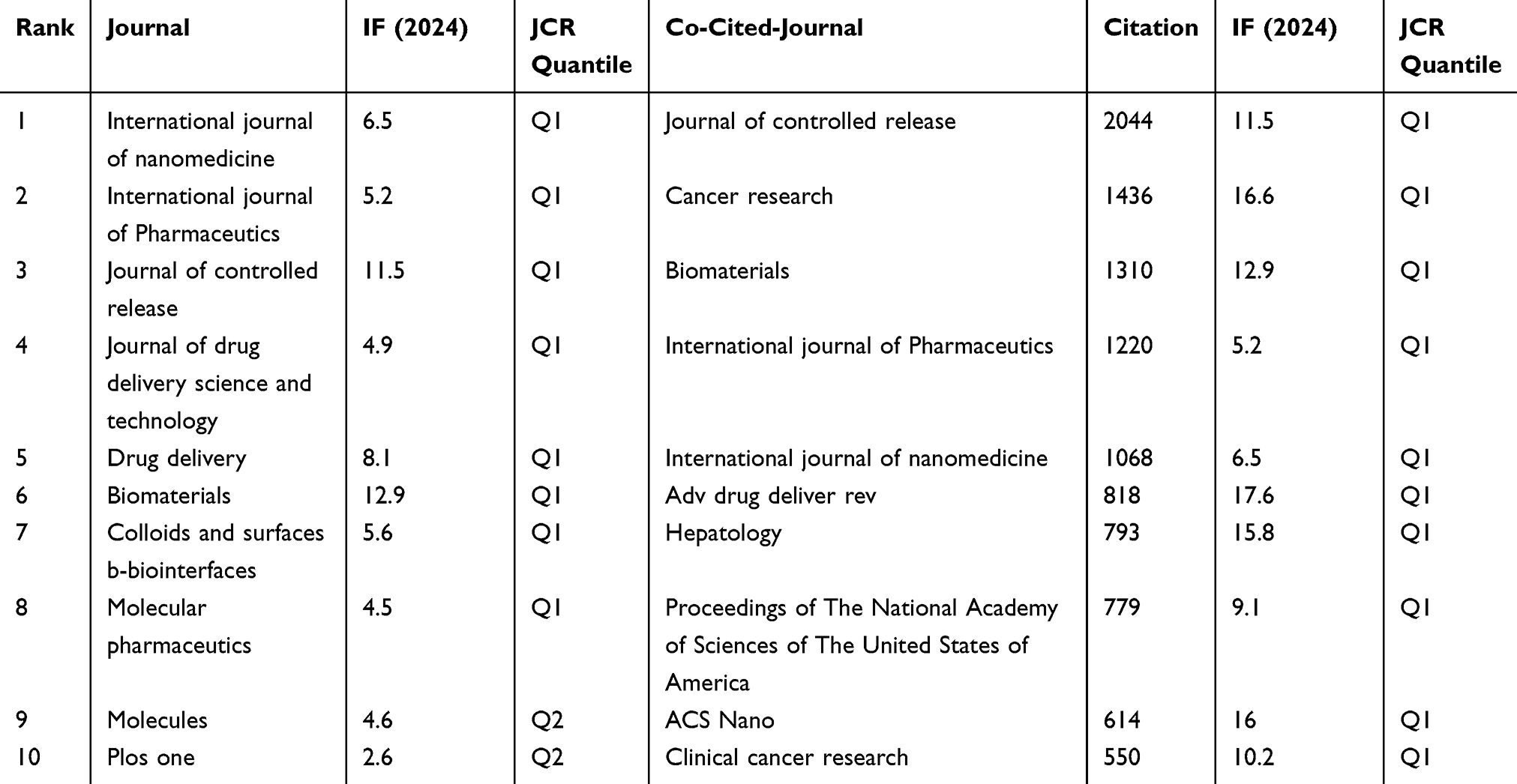 |
Table 3 Top 10 Journals and Co-Cited Journals Related to Liposomes and Hepatocellular Carcinoma |
Figure 4A shows the clustering of journal publications on liposomes and HCC, generated using VOSviewer. A total of 427 journals were divided into three major clusters, with the largest cluster (red) containing 101 journals, including the International Journal of Nanomedicine. Figure 4B presents the timeline distribution of journal publications, highlighting contributions from early journals such as Gene Therapy and World Journal of Gastroenterology to more recent high-impact outlets such as Advanced Science.
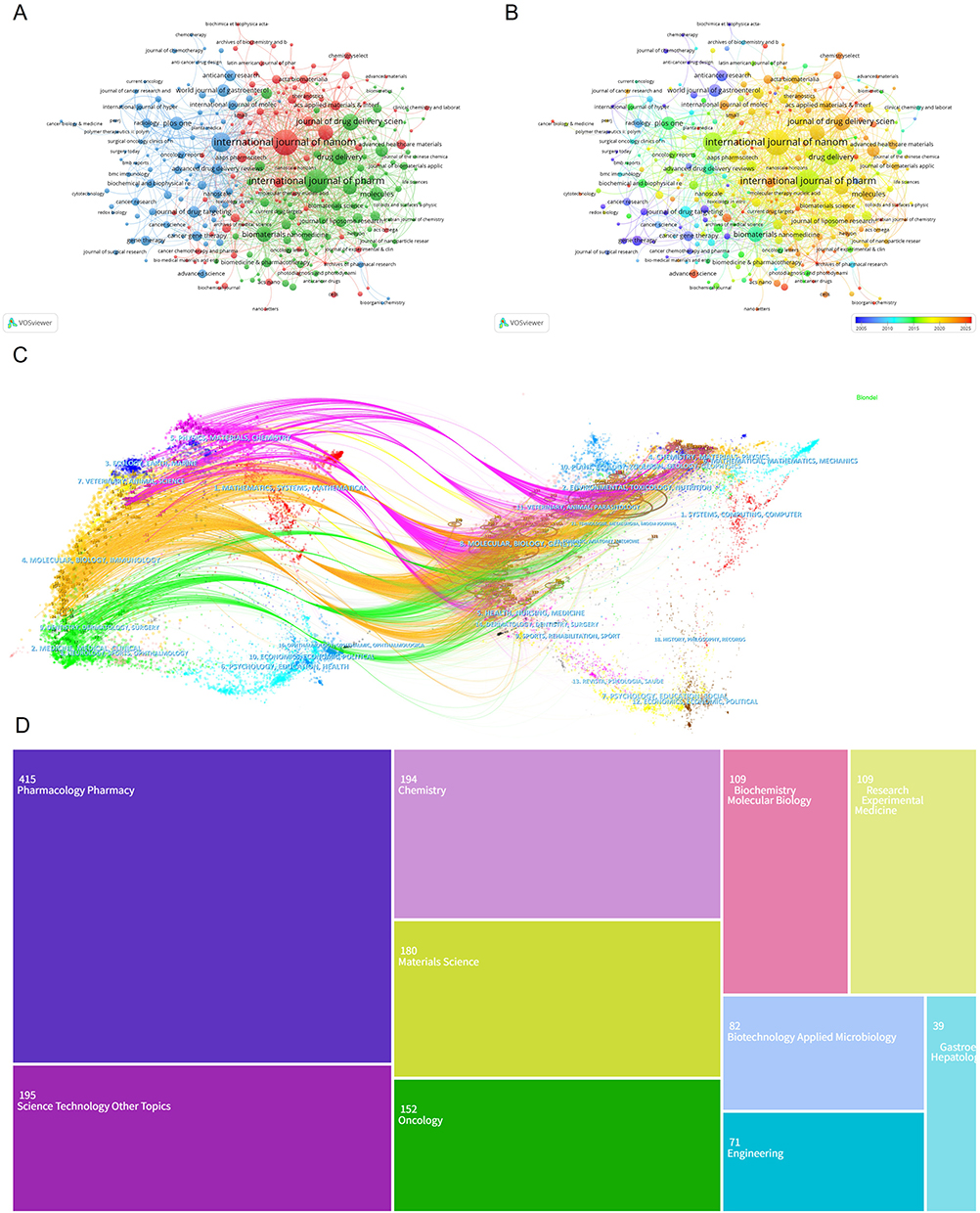 |
Figure 4 Clustering (A) and Temporal Overlay (B) of Co-Cited Journals. (C) Related fields of liposomes and liver cancer, the left is the literature included in this study, and the right is the reference of this literature. (D) Discipline distribution. |
As shown in Figure 4C, research on liposomes and HCC spans multiple disciplines. Medicine and health sciences primarily emphasize clinical diagnosis, treatment, and health applications, with a focus on therapeutic efficacy, applicable populations, and clinical practice. Molecular biology and immunology investigate the underlying mechanisms of biological processes and immune responses, such as molecular interactions, signaling pathways, and their roles in disease progression. Mathematics and systems science contribute through modeling and data analysis of complex biological systems, while chemistry and materials science play essential roles in the development of novel materials and delivery platforms. This interdisciplinary integration provides a comprehensive foundation for advancing research in the field and supports continuous scientific innovation. Figure 4D further shows the distribution of disciplinary categories for publications. Pharmacology & Pharmacy ranked first, with 415 papers, followed by Science & Technology—Other Topics (195 papers) and Chemistry (194 papers).
Evaluation of Authorial Collaboration Structures
Over the past 35 years, 6621 researchers have contributed to studies on liposomes and HCC, indicating broad academic participation in this field. Zhang Bo was the most productive author, with 13 publications and an h-index of 10, followed by Wu Jingliang and Gao Jie, each with 12 publications. Gao Jie had the highest citation count among the leading authors, with 644 citations and an h-index of 12, suggesting relatively strong academic influence (Table 4). The author collaboration network showed several major clusters, indicating that research activity was organized around multiple collaborative groups rather than a single dominant network. However, the overall structure remained relatively dispersed, suggesting that collaborations were mainly concentrated within specific research teams (Figure 5A). Timeline analysis showed a transition from early contributors such as Deng Li and Yang Li to more recent contributors including Dai Wenbin and Shi Feng, reflecting the continuous emergence of new investigators. Overall, these findings suggest that liposome-related HCC research is characterized by broad participation, several influential contributors, and clustered but fragmented collaboration patterns, highlighting the need for stronger cross-team and interdisciplinary cooperation (Figure 5B).
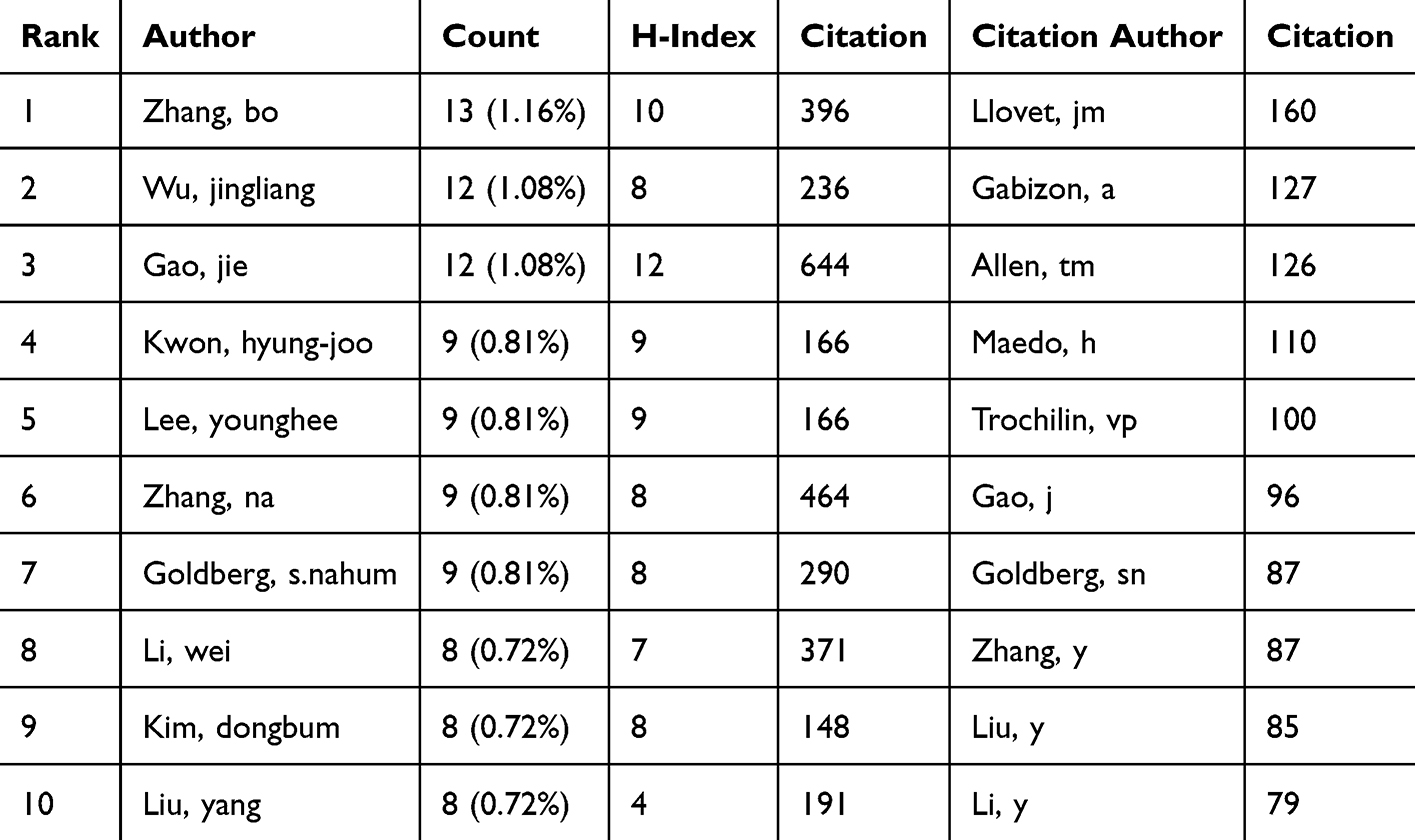 |
Table 4 Top 10 Authors and Citation Authors Related to Liposomes and Hepatocellular Carcinoma |
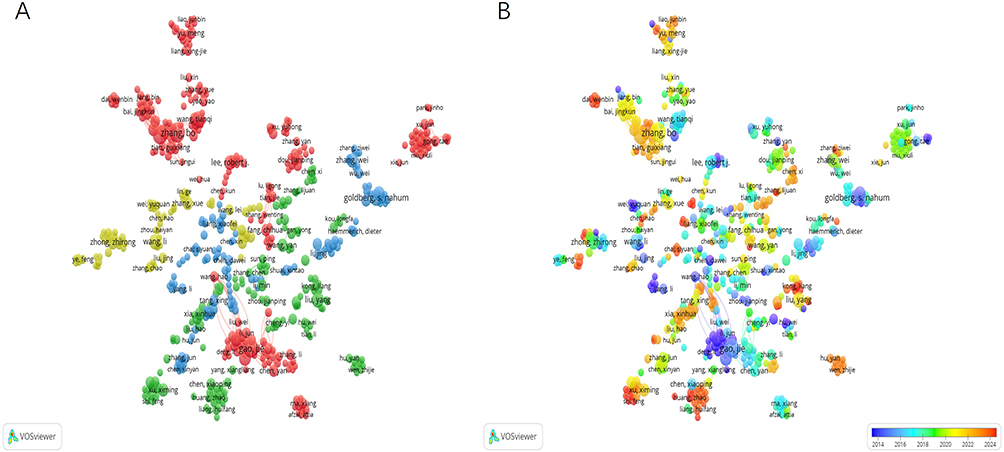 |
Figure 5 Clustering (A), and Temporal Overlay (B) of Co-Authors. |
Evaluation of Co-Citation Relationships and Citation Bursts
Supplementary File 2 lists the ten most cited papers among the 1116 publications on liposomes and HCC. The most cited paper was by Hui Ling et al (2013)27 in Nature Reviews Drug Discovery, which discussed the development of microRNAs and other non-coding RNAs as anticancer drugs, with 1235 citations. The second most cited publication was by Carlee E. Ashley et al (2011)28 in Nature Materials, reporting on targeted delivery of multicomponent cargo to cancer cells using nanoporous particle-supported lipid bilayers, with 894 citations. Also ranking second, with 894 citations, was the review by Rolf F. Barth et al (2005)29 in Clinical Cancer Research, which focused on boron neutron capture therapy for cancer.
Figure 6A presents the citation clustering network for liposome and HCC research generated using VOSviewer, in which 1116 citations were grouped into five clusters. The largest cluster (red) included 91 relevant articles. Figure 6B shows the citation timeline produced by VOSviewer. Figure 6C and D depict citation clustering and timelines generated by CiteSpace, which further organized citations into 12 major thematic areas. Key themes included biological mechanisms and molecular targets, such as the asialoglycoprotein receptor (#1), which plays a role in liver-specific biological processes and targeted therapies. Within the broader domain of cancer therapy, “cancer treatment” (#4) and “treatment” (#15) represented central clusters, encompassing diverse therapeutic approaches. Diagnostic and therapeutic techniques were also evident, exemplified by research on blood pool contrast media for liver imaging. Advances in drug delivery were reflected in clusters such as “sensitive liposome”, “doxorubicin-loaded glycyrrhetinic acid–modified alginate nanoparticle”, and “delivery vector”. Emerging themes such as “smart biotechnology” highlighted the integration of novel technologies into biomedical research, while “mouse models” underscored the importance of preclinical studies for therapeutic development. Overall, these clusters illustrate the interdisciplinary nature of the field, bridging oncology, molecular biology, pharmacology, and biotechnology. Over time, research has shifted from fundamental exploration of biological mechanisms to the development of targeted diagnostic tools, therapeutic strategies, and advanced drug delivery systems, thereby deepening understanding and improving management of HCC.
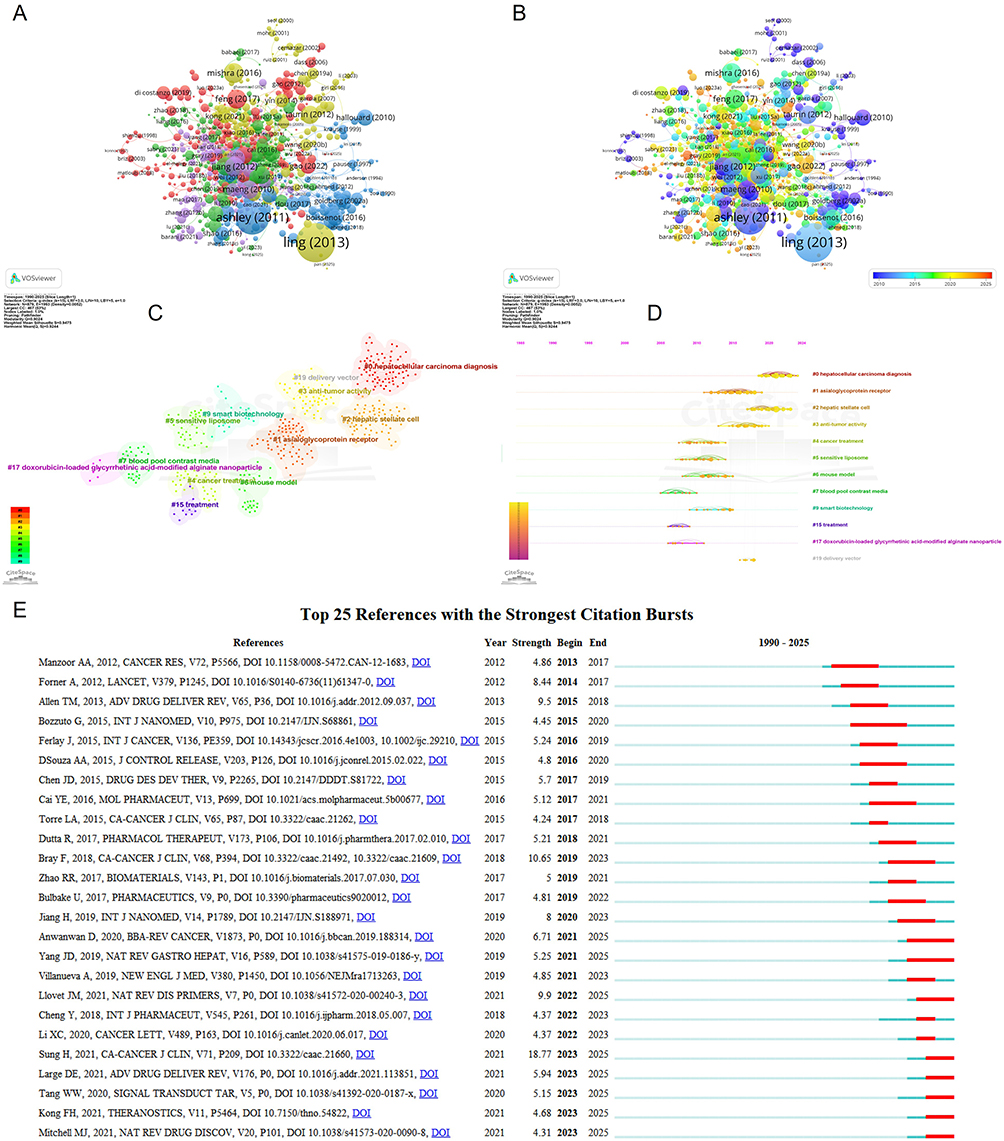 |
Figure 6 (A) VOSviewer Reference Clustering. (B) The time-overlapping visualization of references by Vosviewer. (C) CiteSpace Reference Clustering. (D) Timeline of references by Citespace. (E) The top 25 references with the highest outbreak intensity. |
Figure 6E presents the top 25 publications with the strongest citation bursts in the field of liposomes and HCC, as identified by CiteSpace. The study with the highest burst intensity was published by Hyuna Sung in CA: A Cancer Journal for Clinicians (2021),30 which estimated the incidence and mortality of 36 cancer types across 185 countries in 2020, with a burst strength of 18.77. Notably, eight publications continued to exhibit strong citation bursts through 2025, underscoring their sustained influence and driving role in shaping research on liposomes and HCC. Specifically, the eight studies include: (1) David Anwanwan et al’s review on the challenges and potential therapeutic strategies for liver cancer, published in Biochimica et Biophysica Acta Reviews on Cancer in 2020;31 (2) Ju Dong Yang et al’s review on global trends, risk factors, prevention, and management of hepatocellular carcinoma, published in Nature Reviews Gastroenterology & Hepatology in 2019;32 (3) Josep M. Llovet et al’s comprehensive review of liver cancer, published in Nature Reviews Disease Primers (2021);33 (4) Hyuna Sung et al’s global study estimating the incidence and mortality of 36 cancer types across 185 countries in 2020, published in CA: A Cancer Journal for Clinicians (2021).30 (5) Danielle E. Large et al’s review on liposome composition in drug delivery design, synthesis, characterization, and clinical applications, published in Advanced Drug Delivery Reviews (2021).34 (6) Weiwei Tang et al’s review on the mechanisms of sorafenib resistance in HCC, published in Signal Transduction and Targeted Therapy (2020).35 (7) Fan-Hua Kong et al’s review on sorafenib nanoparticle delivery systems for HCC treatment (Theranostics, 2021)36 and (8) Michael J. Mitchell et al’s review on precision nanoparticle engineering for drug delivery (Nature Reviews Drug Discovery, 2021).37
Examination of Keyword Co-Occurrence Patterns
A total of 4805 keywords were extracted from the 1116 publications. As shown in Table 5, “hepatocellular carcinoma” was the most frequent keyword, appearing 568 times and cited 4283 times, followed by “liposomes” (458 occurrences, 3469 citations) and “nanoparticles” (241 occurrences, 1998 citations). Other high-frequency keywords included “drug delivery”, “cancer”, “in vitro”, “delivery”, “apoptosis”, “cells”, “therapy”, “expression”, and “doxorubicin” each occurring more than 100 times.
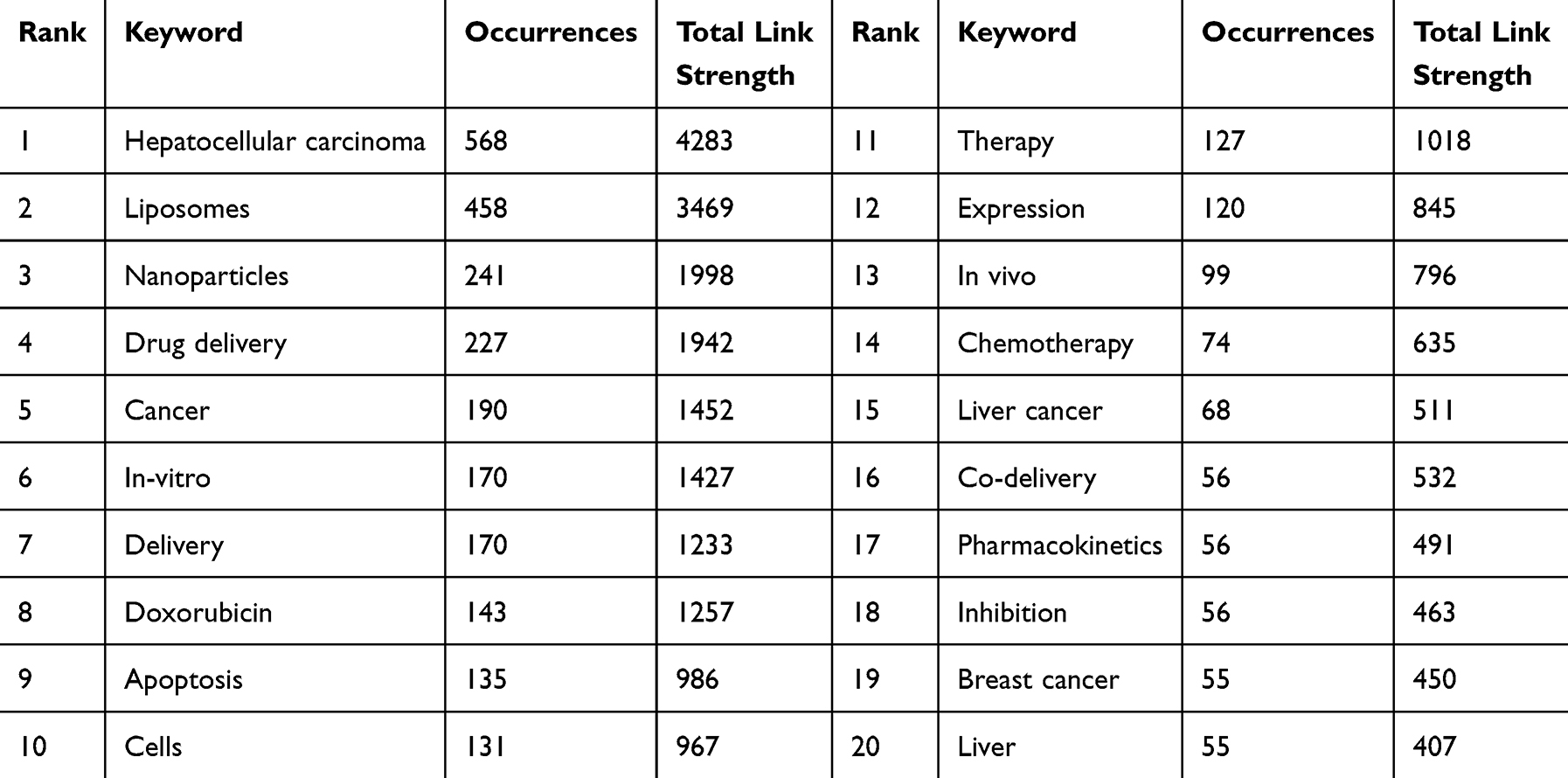 |
Table 5 Top 20 Keywords Related to Liposomes and Hepatocellular Carcinoma |
Figure 7A presents the keyword clustering network for liposome and HCC research, generated by VOSviewer. A total of 4805 keywords were grouped into four major clusters, with the largest (red) cluster comprising 174 keywords, including “hepatocellular carcinoma” and “drug delivery”. Figure 7B shows the keyword timeline, illustrating a transition from early research topics such as “gene therapy” and “plasmid DNA” to more recent hotspots including “ferroptosis”, “polymeric nanoparticles”, “sorafenib”, “glycyrrhetinic acid”, “curcumin”, and “metastasis”. Figure 7C displays the keyword clustering analysis generated by CiteSpace, which identified 10 major clusters. Figure 7D provides the corresponding timeline, showing that early studies focused primarily on cellular-level research (eg, “HepG2 cells” and “hepatoma cells”), which established the biological basis for later studies. In recent years, emerging themes such as “natural medicine monomers” and “gene delivery” have gained prominence, reflecting a growing interest in natural therapeutic compounds and gene therapy strategies. Citation burst analysis further revealed the top 25 keywords with the strongest burst intensities (Figure 7E). “Expression” exhibited the highest burst strength (11.05), while “gene therapy” had the longest burst duration, spanning 1996–2014. Keywords that remain active to the present include “targeted delivery”, “co-delivery”, “targeted therapy”, “glycyrrhetinic acid”, “formulation”, “release”, “metastasis”, “mechanism”, “hepatocellular carcinoma”, and “tumor microenvironment”, highlighting the current research frontiers in liposome-based HCC studies.
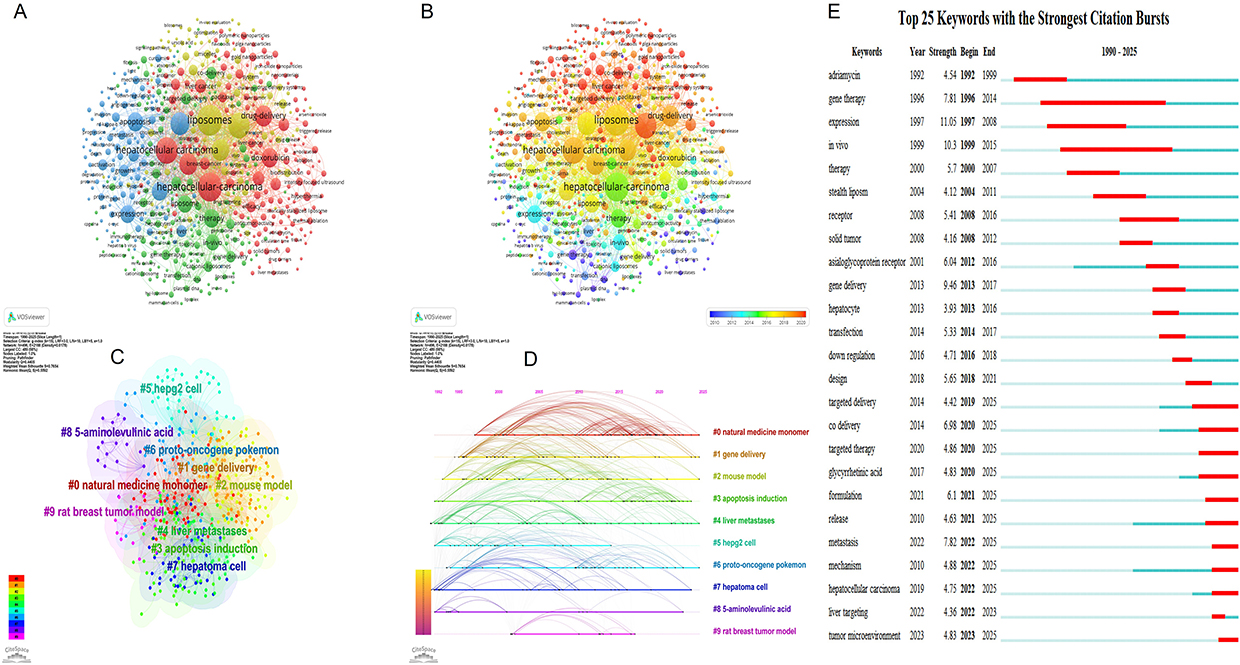 |
Figure 7 (A) VOSviewer Keyword Clustering. (B) VOSviewer Time-Overlay of Keywords. (C) CiteSpace Keyword Clustering. (D) CiteSpace Keyword Timeline. (E) Top 25 High-Intensity Burst Keywords. |
Clinical Trial Analysis
This study retrieved five clinical trials from the PubMed database (Supplementary File 3), which can be broadly categorized into three main themes: (1) basic clinical application of liposomal drugs; (2) efficacy of liposomal drugs combined with radiofrequency ablation for liver cancer treatment; and (3) clinical exploration of thermosensitive liposome-based targeted drug delivery.
Discussion
The Structure of Knowledge in a Global Context
From 1990 to 2025, publications on liposomes and HCC have shown explosive growth. China accounted for more than half of all publications, producing 3.53 times as many as the United States. Collectively, China and the United States contributed 67% of all papers in this field. Notably, all of the top 10 most productive institutions were based in China. The majority of studies were published in high-quality journals, and the most influential authors were primarily affiliated with institutions in China and the United States. Funding support also largely originated from these two countries. Together, these results underscore the prominent role of China and the United States in driving advances in liposome-related HCC research.
Examination of Worldwide Research Priorities and Trends
Co-citation analysis disclosured that the 10 most frequently cited articles in the field of liposomes and HCC were published primarily between 2005 and 2017, spanning 12 years, and could be categorized into three developmental phases. The early exploration phase focused on foundational therapeutic approaches, such as boron neutron capture therapy, and preliminary studies on drug carriers, including solid lipid nanoparticles, thereby establishing the theoretical basis for subsequent applications. The rapid development phase emphasized multifunctional carriers (eg, superparamagnetic iron oxide nanoparticles (SPIONs)), advanced targeted delivery systems (eg, nanoporous particle–supported lipid bilayers), and regulatory targets such as non-coding RNAs, which collectively enhanced translational potential. The advanced application phase centered on anticancer strategies employing PEGylation and curcumin-loaded liposomes, reflecting the deeper exploration of “carrier–drug” synergy. Collectively, these highly cited articles highlight three overarching research themes: foundational carrier development, multifunctional and targeted delivery systems, and advanced applications integrating nanocarriers with therapeutic agents.
Keyword analysis indicated that research on liposomes and HCC can be categorized into four major thematic clusters. The first cluster centers on disease type and carrier technology, with “hepatocellular carcinoma” and “liver cancer” as core terms, reflecting the primary research target, alongside “liposomes” and “nanoparticles”, underscoring the foundational role of nanoscale carriers in this field. The second cluster focuses on drug delivery and therapeutic applications. Keywords such as “drug delivery” and “delivery” occupy leading positions, confirming carrier-mediated delivery as a core research direction. Therapeutic terms such as “therapy” and “chemotherapy” highlight the emphasis on applying liposomal systems in HCC treatment, particularly chemotherapy. The keyword “co-delivery” further refines this theme, pointing to an emerging trend toward multidrug combination delivery. The third cluster emphasizes experimental models and mechanisms of action. “In vitro” and “in vivo” highlight the dual reliance on cellular and animal models. “Pharmacokinetics” reflects interest in drug absorption and distribution, while “cells”, “apoptosis”, “inhibition”, and “expression” denote mechanistic explorations, including apoptosis induction, tumor growth inhibition, and regulation of gene or protein expression through liposomal carriers. The fourth cluster relates to drugs and associated organs or cancer types. “Doxorubicin”, a widely used chemotherapeutic agent, was the most frequently studied model drug for liposomal delivery in HCC. “Liver” reflects the primary target organ, while “breast cancer” suggests technical overlap with HCC research, indicating that liposome-based delivery strategies may have broader oncological applications, though the association is weaker.
Identification of Research Hotspots and Frontier Trends
Development and Application of New Nanocarriers
Recent advances have positioned lipid nanoparticles (LNPs) as a cutting-edge technology for targeted drug delivery. For instance, recent studies reported that a dual mRNA–LNP formulation targeting CRHBP and CFHR3 significantly enhanced therapeutic efficacy against HCC.38 Another study demonstrated the co-delivery of camptothecin and miR-145 using lipid nanoparticles, enabling MRI-visible targeted therapy for HCC.39 The development of biomimetic nanocarriers has introduced new therapeutic strategies for HCC. For instance, macrophage membrane–based biomimetic systems have been employed to enhance immune activation and support combination therapies for liver cancer.40 Moreover, a novel dual-targeting biomimetic nanodelivery platform, AR-NADR, has demonstrated potential in overcoming cisplatin resistance, thereby improving therapeutic efficacy in HCC.41
Combining the Tumor Microenvironment with Immunotherapy
Liposomes can enhance antitumor efficacy by modulating the tumor immune microenvironment. For example, targeted nanosensitizers have been used to potentiate sonoimmunotherapy, while liposomal delivery of STING agonists has been shown to reshape the immune microenvironment of HCC, thereby improving therapeutic outcomes.42 In addition, Kanglaite injection has demonstrated efficacy against HCC by regulating paracrine leukemia inhibitory factor signaling and modulating macrophage–NK cell interactions.43 The combination of liposomes with immune checkpoint inhibitors has been shown to enhance therapeutic efficacy in hepatocellular carcinoma.44 For instance, PD-1 antagonist peptide–coupled nanoliposomes were reported to augment cancer immunotherapy by targeting PD-1 on T cells within tumor-draining lymph nodes, thereby strengthening antitumor immune responses.45
Optimizing Precision Targeted Therapy
A major research focus in the field of liposomes and HCC lies in the identification and application of targeting molecules. For instance, magnetic bioluminescent nanoliposomes integrated with a portable ATP photometer system have been successfully utilized for the detection of protein biomarkers in blood, demonstrating significant potential for clinical diagnostics.46 Owing to their nanoscale size, excellent biocompatibility, and structural modifiability, nanocarriers can be surface-engineered with specific targeting ligands to achieve active targeting of HCC cells. This approach enhances drug accumulation within tumor tissues while minimizing systemic toxicity to normal cells. A folic acid–modified Act.X2-loaded liposomal system has been shown to improve the delivery efficiency of Act.X2 and enhance its antitumor efficacy against HCCLM3 HCC both in vivo and in vitro.47
Application of Lipidomics in HCC Research
Aberrant lipid metabolism has been recognized as a key driver of tumor development, progression, invasion, and metastasis. In recent years, lipidomics—through the comprehensive analysis of lipid structures and functions—has become a research hotspot in HCC, contributing to advances in diagnosis, prognosis evaluation, mechanistic studies, and targeted therapy.48 For instance, recent studies have demonstrated that CRSP8-driven fatty acid metabolic reprogramming promotes HCC progression by suppressing RAN-mediated nuclear–cytoplasmic shuttling of PPARα.49
Clinical Progress
We analyzed five clinical trials of liposomal therapy for HCC from the PubMed database, focusing on the following themes: 1) The application of liposomal drugs (including liposomal doxorubicin50 and cyclopentylliposome CKD-60251) in the treatment of HCC and advanced malignancies. 2) The efficacy of combination therapies, particularly the combination of liposomal drugs and radiofrequency ablation, in enhancing tumor destruction and improving prognosis in patients with medium to large, unresectable HCC.52 3) Exploring targeted drug delivery technologies, such as thermosensitive liposome delivery mediated by focused ultrasound, and validating the safety and feasibility of these protocols for clinical translation through Phase I,53 Phase III,54 and randomized controlled trials. We analyzed five clinical trials on liposomal therapy for HCC retrieved from PubMed.
Overall, the current clinical evidence for liposome-based therapy in HCC remains limited, heterogeneous, and insufficient to support broad clinical translation. Existing studies have evaluated formulations such as liposomal doxorubicin, pegylated liposomal CKD-602, and thermosensitive liposome-based delivery mediated by focused ultrasound hyperthermia, with trial designs ranging from Phase I studies focused on safety and pharmacokinetics to randomized and Phase III studies assessing efficacy and clinical feasibility. The enrolled populations have mainly included patients with unresectable, advanced, recurrent, or medium-to-large HCC, leading to variability in liver function, tumor burden, and prior treatment history. Although some studies have reported preliminary antitumor activity, acceptable tolerability, and improved local tumor control, particularly in combination with radiofrequency ablation or focused ultrasound hyperthermia, robust survival benefits and durable long-term efficacy have not been established. Current evidence is limited by small sample sizes, early-phase or non-randomized designs, inconsistent treatment regimens, inadequate biomarker-based stratification, and insufficient long-term follow-up. The scarcity of advanced clinical trials may be further attributed to several biological, technical, and regulatory barriers, including heterogeneous tumor vasculature and microenvironment, unstable intratumoral nanoparticle accumulation, rapid clearance by the reticuloendothelial system, complement activation, immune-related reactions, difficulties in reproducible large-scale manufacturing, stringent regulatory requirements, and poor reproducibility caused by variations in particle size, surface modification, preparation protocols, and experimental models. Collectively, these factors help explain why promising preclinical findings have not yet translated into widespread clinical application of liposome-based therapies for HCC.
Limitations
This study systematically reviewed the research landscape and recent advances in the field of liposomes and HCC through a comprehensive bibliometric analysis, identifying major research trends and emerging hotspots. Nevertheless, several limitations should be acknowledged. First, only publications indexed in the WoSCC database were included, potentially resulting in the omission of relevant studies not covered by this source. Second, recently published articles may not yet have been indexed at the time of data retrieval, which could introduce temporal bias and affect the comprehensiveness of the findings.
Conclusions
Over the past 35 years, publications on liposomes and HCC have demonstrated a sustained upward trend. China, the United States, and Japan have made major contributions to the development of this field. The Chinese Academy of Sciences was identified as the most influential institution, while the International Journal of Nanomedicine published the largest number of related studies. Zhang Bo, Wu Jingliang, and Gao Jie emerged as the leading contributors in this research area. Keyword co-occurrence and thematic evolution analyses revealed that recent research has increasingly focused on novel lipid nanocarriers, tumor microenvironment-responsive delivery systems, immunotherapy-associated strategies, and lipidomics-based diagnostic applications. Among the small number of clinical trials identified, several studies evaluated liposomal therapies combined with radiofrequency ablation or ultrasound hyperthermia, highlighting the exploratory and early-stage nature of clinical translation in this field. The bibliometric findings suggest that future research is gradually shifting from conventional drug delivery toward clinically translatable nanoplatforms with enhanced targeting efficiency, improved pharmacokinetic stability, and integrated immune modulation capabilities. Addressing challenges related to reproducibility, large-scale production, and translational efficacy may be critical for the successful clinical application of liposomal therapies in HCC.
Abbreviations
HCC, Hepatocellular carcinoma; WoSCC, Web of Science Core Collection; SPIONs, Superparamagnetic iron oxide nanoparticles; SLNs, Solid lipid nanoparticles; miRNAs, MicroRNAs; BNCT, Boron neutron capture therapy; LNPs, Lipid nanoparticles.
Data Sharing Statement
All the data can be obtained from the open-source website we provide, and the conclusion can be drawn through the analysis of the relevant software.
Ethics Approval and Consent to Participation
This manuscript is not a clinical trial, hence the ethics approval and consent to participation are not applicable.
Author Contributions
All authors made a significant contribution to the work reported, whether that is in the conception, study design, execution, acquisition of data, analysis and interpretation, or in all these areas; took part in drafting, revising or critically reviewing the article; gave final approval of the version to be published; have agreed on the journal to which the article has been submitted; and agree to be accountable for all aspects of the work.
Disclosure
The authors declare that they have no known competing financial interests or personal relationships that could have appeared to influence the work reported in this paper.
References
1. Wen N, Cai Y, Li F, et al. The clinical management of hepatocellular carcinoma worldwide: a concise review and comparison of current guidelines: 2022 update. Biosci Trends. 2022;16(1):20–18. doi:10.5582/bst.2022.01061
2. Li Q, Ding C, Cao M, et al. Global epidemiology of liver cancer 2022: an emphasis on geographic disparities. Chin Med J. 2024;137(19):2334–2342. doi:10.1097/cm9.0000000000003264
3. Chan YT, Zhang C, Wu J, et al. Biomarkers for diagnosis and therapeutic options in hepatocellular carcinoma. Mol Cancer. 2024;23(1):189. doi:10.1186/s12943-024-02101-z
4. Hussain SA, Ferry DR, El-Gazzaz G, et al. Hepatocellular carcinoma. Ann Oncol. 2001;12(2):161–172. doi:10.1023/a:1008370324827
5. Bloom M, Podder S, Dang H, Lin D. Advances in immunotherapy in hepatocellular carcinoma. Int J Mol Sci. 2025;26(5):1936. doi:10.3390/ijms26051936
6. Almeida B, Nag OK, Rogers KE, Delehanty JB. Recent progress in bioconjugation strategies for liposome-mediated drug delivery. Molecules. 2020;25(23):5672. doi:10.3390/molecules25235672
7. Mitsou E, Klein J. Liposome-based interventions in knee osteoarthritis. Small. 2025;21(17):e2410060. doi:10.1002/smll.202410060
8. Pawar A, Pardhi E, Mehra NK. Lipid-extruded PEGylated liposomes of repurposed sorafenib for triple-negative breast cancer: a mechanistically enhanced nanoplatform with improved in vivo pharmacokinetics and targeted biodistribution. ACS Appl Bio Mater. 2025;8(10):8959–8979. doi:10.1021/acsabm.5c01119
9. Li X, Yu C, Zheng G, Li Y, Cao W, Wang F. Development and evaluation of liposomal celastrol-PROTACs for treating triple-negative breast cancer. Pharmaceuticals. 2025;18(9):1381. doi:10.3390/ph18091381
10. Dadpour S, Mashreghi M, Shahraki N, Mehrabian A, Moosavian SA, Jaafari MR. Development and evaluation of gluconic acid-targeted liposomal doxorubicin for enhanced anti-tumor activity in colon cancer. J Pharm Sci. 2025;114(12):104006. doi:10.1016/j.xphs.2025.104006
11. Wang X, Lu X, Liu C, Cheng H, Tan X. A study on the efficacy and pharmacological mechanism of liposome complexes containing STING agonist and Anti-PD-L1 nanobody in inhibiting HCC. Int J Mol Sci. 2025;26(17):8649. doi:10.3390/ijms26178649
12. Wang Q, Wang X, Hua Q, et al. Isolation, purification, and preparation of taxinine-loaded liposomes for improved anti-hepatocarcinogenic activity. Drug Dev Res. 2025;86(6):e70143. doi:10.1002/ddr.70143
13. Shen Y, Zheng Z, Hu X, et al. Nanodelivery of Y-27632 by RGD-modified liposome enhances radioimmunotherapy of hepatocellular carcinoma via tumor microenvironment matrix stiffness reprogramming. Theranostics. 2025;15(16):8569–8586. doi:10.7150/thno.114892
14. Zhang YF, Chen K, Zhu YQ, et al. Preparation of cancer cell membrane-coated Gambogic acid-loaded pH-sensitive liposomes to enhance targeted anti-hepatocellular carcinoma effect. Drug Deliv Transl Res. 2025. doi:10.1007/s13346-025-01949-y
15. Yi L, Wang W, Chen Y, et al. A bibliometric analysis of global research trends in autophagy and glioblastomas. Naunyn Schmiedebergs Arch Pharmacol. 2025;399(2):2887–2902. doi:10.1007/s00210-025-04578-x
16. Wang W, Chen Y, Xiong Z, et al. Network toxicology and multidimensional bioinformatics analysis reveal the shared mechanism of action of bisphenol A and phthalates in glioblastoma. Ecotoxicol Environ Saf. 2026;309:119650. doi:10.1016/j.ecoenv.2025.119650
17. Wang H, Wu F, Li Y, et al. Mechanism study of phthalate exposure promoting endometriosis: based on the ferroptosis perspective. J Hazard Mater. 2026;507:141670. doi:10.1016/j.jhazmat.2026.141670
18. Wang W, Wei X, Sun Z, et al. Uncovering the toxicological impact of benzo[a]pyrene on Alzheimer’s disease via network toxicology, machine learning, and single-cell transcriptomics. J Alzheimers Dis. 2026;109(3):1220–1231. doi:10.1177/13872877251405468
19. Wang W, Liu M, Wang Z, et al. Global research trends of peripheral nerve surgery: a bibliometric and visualized analysis. Neurosurg Rev. 2025;48(1):429. doi:10.1007/s10143-025-03583-1
20. Wu K, Lu G, Guo R, Li C, Ou M. Bibliometrics and scientometrics analysis of exosomes relevance in hepatocellular carcinoma (2014-2024). Front Oncol. 2025;15:1614484. doi:10.3389/fonc.2025.1614484
21. Yang L, Yu L, Zhou Q, et al. Mapping research hotspots and trends in hepatocellular carcinoma nanomedicine: a bibliometric analysis. Discov Oncol. 2025;16(1):1794. doi:10.1007/s12672-025-03603-y
22. Yu F, Yin S, Zhu J, Sun K. Research landscape of photodynamic therapy for hepatocellular carcinoma: hotspots and prospects from 2012 to 2025. Hereditas. 2025;162(1):174. doi:10.1186/s41065-025-00509-1
23. Yi L, Wang W, Chen Y, Xiong Z, Ma L, Wang Z, Ye W, Li X. A bibliometric analysis of global research trends in autophagy and glioblastomas. Naunyn Schmiedebergs Arch Pharmacol. 2026;399(2):2887–2902. PMID: 40960516. doi:10.1007/s00210-025-04578-x
24. Zhu L, Cui C, TJing, Tan S, XLiu, MenglinY, Strong and broadband microwave absorption under thin thickness induced by multiple dielectric relaxation and multiple magnetic resonance through the dual nanocrystalline phases in amorphous FeSiBCr flakes, Acta Physico-Chimica Sinica. 2026;42:100331. doi:10.1016/j.actphy.2026.100331
25. Wang W, Chen Y, Xiong Z, Wang Z, Ye W, Li X. Donepezil research in cognitive impairment: a bibliometric and scientometric analysis of global trends and pharmacological perspectives. Brain Behav. 2026;16(2):e71251. doi:10.1002/brb3.71251
26. Wang W, Liu M, Wang Z, et al. A bibliometric analysis of inflammation in hydrocephalus. World Neurosurg. 2024;192:e435–e46. doi:10.1016/j.wneu.2024.09.120
27. Ling H, Fabbri M, Calin GA. MicroRNAs and other non-coding RNAs as targets for anticancer drug development. Nat Rev Drug Discov. 2013;12(11):847–865. doi:10.1038/nrd4140
28. Ashley CE, Carnes EC, Phillips GK, et al. The targeted delivery of multicomponent cargos to cancer cells by nanoporous particle-supported lipid bilayers. Nat Mater. 2011;10(5):389–397. doi:10.1038/nmat2992
29. Barth RF, Coderre JA, Vicente MG, Blue TE. Boron neutron capture therapy of cancer: current status and future prospects. Clin Cancer Res. 2005;11(11):3987–4002. doi:10.1158/1078-0432.Ccr-05-0035
30. Sung H, Ferlay J, Siegel RL, et al. Global cancer statistics 2020: GLOBOCAN estimates of incidence and mortality worldwide for 36 cancers in 185 countries. CA Cancer J Clin. 2021;71(3):209–249. doi:10.3322/caac.21660
31. Anwanwan D, Singh SK, Singh S, Saikam V, Singh R. Challenges in liver cancer and possible treatment approaches. Biochim Biophys Acta Rev Cancer. 2020;1873(1):188314. doi:10.1016/j.bbcan.2019.188314
32. Yang JD, Hainaut P, Gores GJ, Amadou A, Plymoth A, Roberts LR. A global view of hepatocellular carcinoma: trends, risk, prevention and management. Nat Rev Gastroenterol Hepatol. 2019;16(10):589–604. doi:10.1038/s41575-019-0186-y
33. Llovet JM, Kelley RK, Villanueva A, et al. Hepatocellular carcinoma. Nat Rev Dis Primers. 2021;7(1):6. doi:10.1038/s41572-020-00240-3
34. Large DE, Abdelmessih RG, Fink EA, Auguste DT. Liposome composition in drug delivery design, synthesis, characterization, and clinical application. Adv Drug Deliv Rev. 2021;176:113851. doi:10.1016/j.addr.2021.113851
35. Tang W, Chen Z, Zhang W, et al. The mechanisms of sorafenib resistance in hepatocellular carcinoma: theoretical basis and therapeutic aspects. Signal Transduct Target Ther. 2020;5(1):87. doi:10.1038/s41392-020-0187-x
36. Kong FH, Ye QF, Miao XY, et al. Current status of sorafenib nanoparticle delivery systems in the treatment of hepatocellular carcinoma. Theranostics. 2021;11(11):5464–5490. doi:10.7150/thno.54822
37. Mitchell MJ, Billingsley MM, Haley RM, Wechsler ME, Peppas NA, Langer R. Engineering precision nanoparticles for drug delivery. Nat Rev Drug Discov. 2021;20(2):101–124. doi:10.1038/s41573-020-0090-8
38. Fu T, Zhou B, Li Y, et al. Innovative dual mRNA-lipid nanoparticle therapy targeting CRHBP and CFHR3 for enhanced treatment of hepatocellular carcinoma. Int J Nanomed. 2024;19:13183–13199. doi:10.2147/ijn.S498065
39. Rong J, Liu T, Yin X, et al. Co-delivery of camptothecin and MiR-145 by lipid nanoparticles for MRI-visible targeted therapy of hepatocellular carcinoma. J Exp Clin Cancer Res. 2024;43(1):247. doi:10.1186/s13046-024-03167-9
40. Ni W, Zhang M, Mo Y, et al. Macrophage membrane-based biomimetic nanocarrier system for enhanced immune activation and combination therapy in liver cancer. Drug Deliv Transl Res. 2025;15(5):1540–1553. doi:10.1007/s13346-024-01690-y
41. Huang Y, Kou Q, Su Y, et al. Combination therapy based on dual-target biomimetic nano-delivery system for overcoming cisplatin resistance in hepatocellular carcinoma. J Nanobiotechnol. 2023;21(1):89. doi:10.1186/s12951-023-01840-3
42. Yang H, Li R, Jin S, et al. Targeted nanosensitizer-augmented sono-immunotherapy with STING agonist to remodel the immune microenvironment in hepatocellular carcinoma. Acta Biomater. 2025;199:387–397. doi:10.1016/j.actbio.2025.05.029
43. Shao Y, Pu W, Su R, et al. Autocrine and paracrine LIF signals to collaborate sorafenib-resistance in hepatocellular carcinoma and effects of Kanglaite Injection. Phytomedicine. 2025;136:156262. doi:10.1016/j.phymed.2024.156262
44. Ma L, Wang W, Zhao Y, Liu M, Ye W, Li X. Application of LRG mechanism in normal pressure hydrocephalus. Heliyon. ;10(1). PMID: 38223707; PMCID: PMC10784321. doi: 10.1016/j.heliyon.2023.e23940
45. Cao W, Yang K, Jin G, et al. Nanoliposomal PD-1 antagonist target tumor-draining lymph nodes to revitalize T cells and improve anti-tumor effect in hepatocellular carcinoma. J Nanobiotechnol. 2025;23(1):549. doi:10.1186/s12951-025-03537-1
46. Liu P, Fang X, Cao H, Gu M, Kong J, Deng A. Magnetic-bioluminescent-nanoliposomes for ultrasensitive and portable detection of protein biomarkers in blood. Anal Chim Acta. 2018;1039:98–107. doi:10.1016/j.aca.2018.07.039
47. Wu Y, Wang M, Wang Y, et al. Folate receptor-targeted liposomes loaded with actinomycin X2 enhance antitumor potency for HCCLM3 hepatocellular carcinoma both in vitro and in vivo. Mol Pharm. 2025;22(7):3922–3934. doi:10.1021/acs.molpharmaceut.5c00186
48. Wang W, Ma L, Zhao Y, Liu M, Ye W, Li X. Research progress on the role of the Wnt signaling pathway in pituitary adenoma. Front Endocrinol (Lausanne). ;14:1216817. PMID: 37780610; PMCID: PMC10538627. doi: 10.3389/fendo.2023.1216817
49. Lin Y, Liang Z, Weng Z, Liu X, Zhang F, Chong Y. CRSP8-driven fatty acid metabolism reprogramming enhances hepatocellular carcinoma progression by inhibiting RAN-mediated PPARα nucleus-cytoplasm shuttling. J Exp Clin Cancer Res. 2025;44(1):93. doi:10.1186/s13046-025-03329-3
50. Goldberg SN, Kamel IR, Kruskal JB, et al. Radiofrequency ablation of hepatic tumors: increased tumor destruction with adjuvant liposomal doxorubicin therapy. AJR Am J Roentgenol. 2002;179(1):93–101. doi:10.2214/ajr.179.1.1790093
51. Wu H, Ramanathan RK, Zamboni BA, et al. Population pharmacokinetics of pegylated liposomal CKD-602 (S-CKD602) in patients with advanced malignancies. J Clin Pharmacol. 2012;52(2):180–194. doi:10.1177/0091270010394851
52. Yang W, Lee JC, Chen MH, et al. Thermosensitive liposomal doxorubicin plus radiofrequency ablation increased tumor destruction and improved survival in patients with medium and large hepatocellular carcinoma: a randomized, double-blinded, dummy-controlled clinical trial in a single center. J Cancer Res Ther. 2019;15(4):773–783. doi:10.4103/jcrt.JCRT_801_18
53. Gray MD, Lyon PC, Mannaris C, et al. Focused ultrasound hyperthermia for targeted drug release from thermosensitive liposomes: results from a Phase I trial. Radiology. 2019;291(1):232–238. doi:10.1148/radiol.2018181445
54. Tak WY, Lin SM, Wang Y, et al. Phase III HEAT study adding lyso-thermosensitive liposomal doxorubicin to radiofrequency ablation in patients with unresectable hepatocellular carcinoma lesions. Clin Cancer Res. 2018;24(1):73–83. doi:10.1158/1078-0432.Ccr-16-2433
 © 2026 The Author(s). This work is published and licensed by Dove Medical Press Limited. The
full terms of this license are available at https://www.dovepress.com/terms
and incorporate the Creative Commons Attribution
- Non Commercial (unported, 4.0) License.
By accessing the work you hereby accept the Terms. Non-commercial uses of the work are permitted
without any further permission from Dove Medical Press Limited, provided the work is properly
attributed. For permission for commercial use of this work, please see paragraphs 4.2 and 5 of our Terms.
© 2026 The Author(s). This work is published and licensed by Dove Medical Press Limited. The
full terms of this license are available at https://www.dovepress.com/terms
and incorporate the Creative Commons Attribution
- Non Commercial (unported, 4.0) License.
By accessing the work you hereby accept the Terms. Non-commercial uses of the work are permitted
without any further permission from Dove Medical Press Limited, provided the work is properly
attributed. For permission for commercial use of this work, please see paragraphs 4.2 and 5 of our Terms.
Recommended articles

Global Trends on β-Thalassemia Research Over 10 Years: A Bibliometric Analysis
Lv A, Li J, Chen M, Wang W, Xu L, Huang H
International Journal of General Medicine 2024, 17:3989-4001
Published Date: 11 September 2024
Global Trends and Research Hotspots in Social Isolation Among Cancer Patients: A Bibliometric Analysis (2005–2024)
Lu GL, Zheng CR, Hu YF, Li QF, Huang T, Mai YC, Zhang PY, Luo WX
Journal of Multidisciplinary Healthcare 2025, 18:7269-7284
Published Date: 5 November 2025