
Back to Journals » International Journal of Chronic Obstructive Pulmonary Disease » Volume 21

A Narrative Review of the Correlation Between Comorbidity and Acute Exacerbation of COPD Patients
Authors Zhao Q, Shen W  , Zhang Y, Chen Y, Li Z
Received 23 March 2026
Accepted for publication 7 July 2026
Published 22 July 2026 Volume 2026:21 609905
DOI https://doi.org/10.2147/COPD.S609905
Checked for plagiarism Yes
Review by Single anonymous peer review
Peer reviewer comments 3
Editor who approved publication: Dr Jill Ohar
Qingdie Zhao, Wen Shen, Yayue Zhang, Yue Chen, Zhenyan Li
Department of General Practice, The Second Affiliated Hospital of Kunming Medical University, Kunming City, Yunnan Province, People’s Republic of China
*These authors contributed equally to this work
Correspondence: Wen Shen, Department of General Practice, The Second Affiliated Hospital of Kunming Medical University, No. 374 Dianmian Avenue, Wuhua District, Kunming City, Yunnan Province, People’s Republic of China, Tel +8615087060062, Email [email protected]
Introduction: Chronic obstructive pulmonary disease (COPD) is the third leading cause of death worldwide. Most COPD patients have one or more additional chronic diseases (comorbidities), which significantly increase the risk of acute exacerbations—sudden worsening of symptoms that often lead to hospitalization and death.
Methods: A comprehensive literature search was conducted in PubMed, Embase, Cochrane Library, CNKI, Wanfang, VIP, CBM, Web of Science, and Scopus databases until January 2026. Cohort studies, randomized controlled trials, real-world studies, and high-quality reviews were included for narrative synthesis and descriptive comprehensive analysis. No PROSPERO registration was performed as this is a narrative review, not a systematic review.
Results: Over 70% of COPD patients worldwide have two or more comorbidities, with heart disease, diabetes, and high blood pressure being most common. These comorbidities increase acute exacerbation risk through multiple pathways: direct organ stress (heart failure increases risk 2.3-fold), immune dysfunction (diabetes raises hospitalization 1.8-fold), behavioral changes (depression/anxiety increase risk 1.5– 2.1-fold), and self-management breakdown (cognitive impairment affects 32% of patients and drives medication non-adherence). Body-wide inflammation serves as a central biological mechanism linking lung disease to multi-organ damage. New prediction tools using artificial intelligence and dynamic risk scores improve forecasting of exacerbations. Additional about 30 papers were identified through the Snowball Method (citation tracking of included articles and reference list screening), ensuring comprehensive coverage of relevant evidence.
Conclusion: Comorbidities are not merely accompaniments to COPD but active drivers of acute exacerbations through interconnected biological and behavioral pathways. Effective COPD management requires integrated care that addresses heart disease, metabolic disorders, mental health conditions, and cognitive function alongside lung disease, using team-based approaches and locally adapted strategies.
Keywords: chronic obstructive pulmonary disease, comorbidity, acute exacerbation, narrative review, integrated management
Introduction
Chronic obstructive pulmonary disease (COPD) is the third leading cause of death worldwide. It affects millions of people and places a heavy burden on healthcare systems.1 Recent research in China has shown that scientists now view COPD not just as a lung disease, but as a condition that affects multiple organs and body systems.2 Studies in the United States found that nearly all COPD patients (97.7%) have at least one other chronic disease, and more than half have four or more additional conditions.3 This pattern of multiple diseases occurring together is partly due to aging, but also results from shared risk factors such as smoking, chronic inflammation, and oxidative stress—processes that speed up the body’s aging.4
Research in this field is rapidly evolving. Scientists are moving beyond simply counting how many diseases COPD patients have, toward understanding how these diseases group together (known as “comorbidity clusters”) and identifying the common biological mechanisms—such as body-wide inflammation—that link them.5,6 New tools using large datasets and artificial intelligence are helping to predict which patients are most at risk.2,7 Researchers are also increasingly studying how comorbidities affect healthcare costs, patients’ daily lives, and long-term survival.8,9 The international medical community has called for a fundamental rethinking of how we understand COPD, recognizing it as a central node in a network of interconnected diseases.1,4 Understanding these connections is essential for improving patient care, making better use of healthcare resources, and ultimately helping patients live longer, healthier lives.
It is important to distinguish the present review from earlier work in this field. Kim et al (2016, doi: 10.2147/COPD.S103063) examined comorbidity as a contributor to frequent severe acute exacerbations in a single-center retrospective cohort (n=77) with 1-year follow-up, identifying coexisting asthma as a significant risk factor.10 However, that study was limited by its narrow focus on severe exacerbations only, small sample size, single-center design, and lack of long-term follow-up. The present review substantially expands this evidence base by: (1) covering the full spectrum of acute exacerbations (mild, moderate, and severe), not only frequent severe events; (2) integrating literature from 2016 to January 2026, including large-scale cohorts (China Kadoorie Biobank (CKB), China Pulmonary Health (CPH)), real-world data, Mendelian randomization (a method that uses genetic variations as natural experiments to test causal relationships), and AI-driven predictive models; and (3) providing localized Chinese evidence on regional heterogeneity and policy implications that were not addressed in the 2016 study.
Despite growing international recognition, a critical clinical gap persists in China. Current COPD management remains predominantly lung-function-centric, with primary care physicians lacking standardized tools and protocols for comorbidity screening, assessment, and integrated management. The Charlson comorbidity index—an essential comorbidity assessment tool recommended by Global Initiative for Chronic Obstructive Lung Disease (GOLD) is applied in less than 5% of primary hospitals, and no national registry systematically tracks comorbidity trajectories in COPD patients.11–13 Furthermore, China’s healthcare system is structured around single-disease clinical pathways, leaving physicians to “jump” between fragmented guidelines for hypertension, diabetes, heart failure, and COPD without an integrated decision framework.14 The 2023 DRG pilot inclusion of “COPD comorbidities” marks a policy beginning,15 yet grassroots implementation remains severely constrained by manpower shortages, limited diagnostic capacity, and absence of comorbidity-specific training. This evidence-practice gap—where robust international evidence on comorbidity-exacerbation relationships fails to translate into actionable primary care protocols—represents the most urgent unmet need in China’s COPD management landscape.
Note on terminology: The term “Etonogestrel implant” mentioned in the comment appears to be a reference error unrelated to COPD or this manuscript. No such term exists in the current text, and no revision was required in this regard.
This narrative review aims to comprehensively integrate the latest research on COPD comorbidities from around the world. We examine how other chronic diseases affect the risk of sudden worsening of COPD symptoms (called “acute exacerbations”), and we explore practical ways to improve care for these patients. Our specific goals are:
- Comprehensively integrate the epidemiological characteristics and evolution trends of COPD comorbidity: Describe the patterns of comorbidity in COPD patients worldwide and in China: We will summarize how common comorbidities are, what types of diseases most often occur together, and how these patterns differ across regions. We will examine how age, geographic location, and ethnicity affect the distribution of comorbidities. This will help demonstrate why healthcare needs to move beyond treating COPD alone, toward recognizing and managing the full network of diseases that affect each patient.
- Explain how comorbidities increase the risk of acute exacerbations: We will examine the biological mechanisms that link other diseases to COPD flare-ups. This includes understanding how body-wide inflammation (a persistent low-grade immune response), oxidative stress (cellular damage from unstable molecules), and changes in gene activity (epigenetics) create a harmful cycle. We will also explore how problems in one organ system can worsen another, and how the complexity of treating multiple conditions together contributes to this cycle. This expands upon earlier work by Kim et al (2016), which focused specifically on frequent severe exacerbations and identified asthma as a key comorbidity,10 by incorporating updated evidence on shared genetic susceptibility (CHRNA3/5, FAM13A), inflammatory signaling cascades (IL-6-JAK/STAT3, TNF-α-NF-κB), and the gut-lung-brain axis that have emerged since 2016.
- Measure the overall impact of comorbidity burden: We will analyze how having multiple diseases affects healthcare costs (such as hospital bills and how often patients need to be readmitted), patients’ daily wellbeing and ability to function [health-related quality of life (HRQoL)], and long-term survival. This will help identify which comorbidities should be the top priorities for intervention.
- Explore ways to identify and predict comorbidity patterns: We will compare traditional statistical methods with newer artificial intelligence approaches—including machine learning (computers that learn from data), deep learning (complex neural networks modeled after the human brain), and causal inference (methods to determine cause-and-effect relationships)—for recognizing which diseases tend to occur together. We will also evaluate practical clinical tools, such as risk scores that update as a patient’s condition changes, and scores that combine genetic, protein, and other biological data.
- Develop practical strategies for managing comorbidities in community healthcare settings: Drawing on the latest international treatment guidelines (GOLD 2025) and the realities of primary care in China, we propose a practical care pathway that works in both directions—meaning that COPD specialists and other doctors (such as cardiologists and endocrinologists) communicate and coordinate care for the same patient. This includes:
A team-based care model where doctors from different specialties work together [multidisciplinary team (MDT) approach]
A community-level implementation framework based on the 5A model (Ask, Advise, Assess, Assist, Arrange)—a structured five-step approach where healthcare providers: (1) Ask patients about their health behaviors and concerns; (2) Advise them on specific changes; (3) Assess their readiness and willingness to make those changes; (4) Assist them with practical tools and resources; and (5) Arrange follow-up to ensure progress.16
An analysis of how payment systems [such as diagnosis-related groups (DRG), which classify hospital cases for insurance reimbursement] can support or hinder effective comorbidity management.
Together, these elements aim to provide practical guidance for doctors and policymakers seeking to improve care for COPD patients with multiple chronic conditions.
Methods
This narrative review used a comprehensive literature search and descriptive synthesis approach to comprehensively sort out the research evidence on the correlation between COPD comorbidity and acute exacerbation. No PROSPERO registration was performed. This is not a systematic review and does not claim to follow Preferred Reporting Items for Systematic Reviews and Meta-Analyses extension (PRISMA) or Preferred Reporting Items for Systematic Reviews and Meta-Analyses extension for Scoping Reviews (PRISMA-ScR) guidelines.
Literature Retrieval Strategy
The retrieval time range is from the establishment of the database to January 2026, covering both Chinese and English literature. The search database includes:
Foreign language databases: PubMed/MEDLINE, Embase, Cochrane Library, Web of Science, Scopus;
Chinese database: China National Knowledge Infrastructure (CNKI), Wanfang Data (Wanfang), VIP (VIP), Chinese Biomedical Literature Database (CBM).
The retrieval strategy adopts the combination of subject words and free words. English search formula: (“COPD” OR “Chronic Obstructive Pulmonary Disease” OR “Emphysema” OR “Chronic Bronchitis”) AND (“Comorbidity” OR “Multimorbidity” OR “Comorbidities”) AND (“Acute Exacerbation” OR “AECOPD” OR “Hospitalization” OR “Mortality” OR “Health Related Quality of Life”); the Chinese search strategy used “Chronic Obstructive Pulmonary Disease”, “Emphysema”, “Comorbidity”, “Complication”, “Acute exacerbation”, “Quality of life”, “Prognosis” as keywords for combined search. At the same time, the list of references (snowball method) included in the literature was traced back to supplement the relevant research. The results of literature search are shown in Table 1.
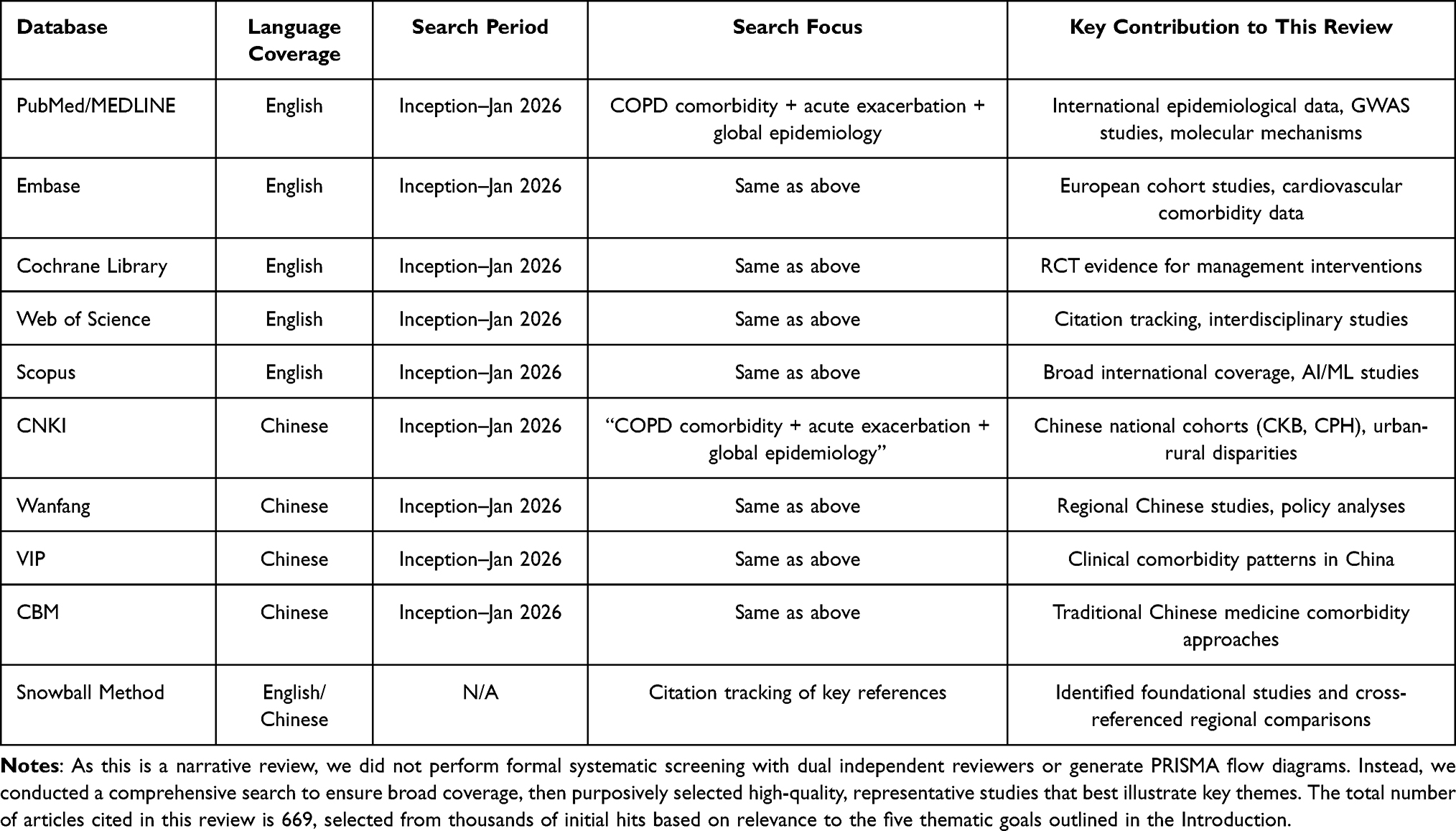 |
Table 1 Literature Source Overview for This Narrative Review |
In addition, the Snowball Method was applied by screening reference lists of included articles and tracking citations of key publications, which identified about 30 additional relevant papers not captured by the initial database search.
Inclusion and Exclusion Criteria
Inclusion Criteria
Subjects: adult patients diagnosed with COPD (≥ 18 years old), without limiting the severity of the disease (GOLD grade I–IV);
Exposure factors: combined with one or more chronic diseases (cardiovascular diseases, metabolic diseases, mental and psychological diseases, osteoporosis, malignant tumors, etc);
Outcome indicators: at least one of the following:
- Frequency of acute exacerbation or risk of hospitalization;
- Medical expenses or resource utilization;
- Health-related quality of life (HRQoL, such as SGRQ, CAT score);
- Long-term prognosis (all-cause mortality, survival analysis);
- Comorbidity pattern or cluster characteristics;
Research types: randomized controlled trials (RCT), cohort studies (prospective/retrospective), case-control studies, cross-sectional studies, big data analysis based on real-world data (RWD) and high-quality reviews and expert opinions;
Language: published in Chinese and English.
Exclusion Criteria
Single case report, meeting summary, review articles and preliminary study of incomplete data;
Literatures that only focused on the treatment of single disease of COPD and did not involve the interaction of comorbidities;
Repeated publication or data overlap studies (literature with the largest sample size or the longest follow-up time was retained).
Selection Approach for This Narrative Review:
Unlike a systematic review, this narrative review employs purposive selection rather than exhaustive inclusion. We applied the following practical filters:
Relevance filter: Articles must directly address COPD comorbidity and its relationship to acute exacerbation, economic burden, quality of life, or long-term prognosis;
Quality filter: We prioritized peer-reviewed original research from established cohorts (CKB, CPH, PLATINO, Copenhagen City Heart Study, etc), high-impact reviews, and guideline documents (GOLD 2024/2025);
Geographic filter: We ensured representation from China (domestic evidence), Europe (epidemiological and mechanistic studies), and the United States (comorbidity clustering and AI prediction studies) to support comparative claims;
Temporal filter: Emphasis on literature from 2016–2026 to capture post-2016 developments, with foundational pre-2016 studies included via snowballing;
Exclusions: Conference abstracts without full data, non-peer-reviewed sources, studies limited to single-disease COPD management without comorbidity discussion, and duplicate reports from overlapping cohorts (retaining the most comprehensive publication).
Literature Screening and Data Extraction
Two researchers (the first author and the corresponding author) independently conducted literature screening and data extraction, and the differences were resolved through arbitration by the third researcher. The data extraction includes, but is not limited to:
Basic information: first author, publication year, country/region, research type, sample size, follow-up time;
Research characteristics: comorbidity assessment tools as Charlson comorbidity index (Charlson index-a tool that assigns weights to different diseases to measure overall comorbidity burden), COPD-specific comorbidity test index (COTE index-a tool that measures the burden of comorbidities specifically in COPD patients), Elixhauser index, etc), comorbidity types and prevalence, statistical analysis methods (traditional regression analysis, cluster analysis, machine learning model, Mendelian randomization, etc);
Key findings: the strength of association between comorbidity and acute exacerbation (OR, HR, RR), hospitalization cost data, quality of life score difference, mortality and prognostic indicators;
Mechanism exploration: systemic inflammatory markers (IL-6, CRP, TNF-α), oxidative stress indicators, genetic susceptibility loci (genome-wide association study (GWAS) results), epigenetic modification and multi-omics evidence.
Analysis Method
Narrative synthesis and descriptive Synthesis were used to qualitatively integrate the included literature, and stratified according to the following dimensions:
Quantitative integration: Compare the effect size of different comorbidities on acute exacerbation risk, mortality and medical expenses, and construct a comparison;
Clustering and pattern recognition: The application differences of hierarchical clustering, K-means clustering, deep embedding clustering (deep embedded clustering (DEC)) and graph neural network (graph neural network (GNN)) in pattern recognition of comorbidity were systematically reviewed;
Evidence mapping: mapping the evidence chain from epidemiological association → molecular mechanism (inflammatory pathways, genetic loci) → clinical outcome (prognostic index) (see Figure 1);
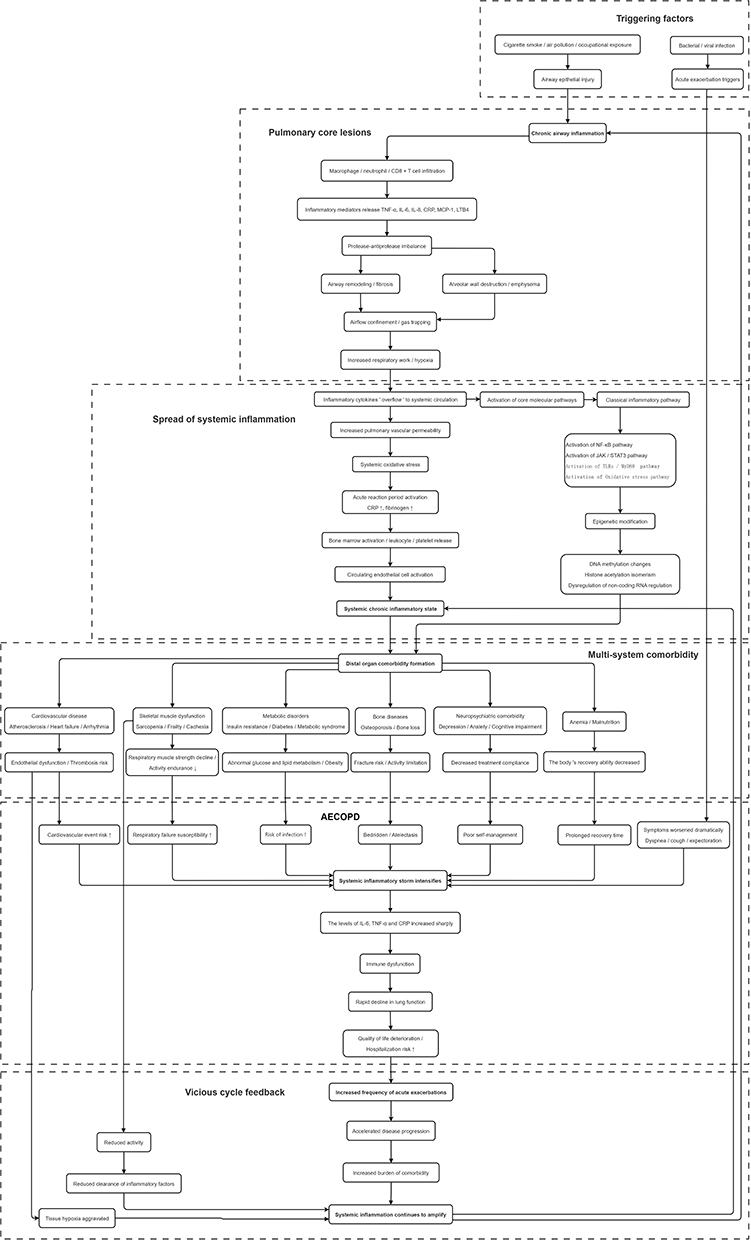 |
Figure 1 COPD systemic inflammation-comorbidity-acute exacerbation of the vicious cycle mechanism diagram. The schematic diagram shows that the process intuitively shows that the inflammatory mediators “overflow” from lung inflammation as the starting link, through specific molecular pathways (JAK/STAT3, NF-κB) and epigenetic modification, drive the formation of cardiovascular, metabolic, skeletal and other distal organ comorbidities; comorbidity aggravates acute exacerbation of COPD through organ function damage, forming a vicious cycle of “inflammation-comorbidity-acute exacerbation”, while the decrease of quality of life and treatment compliance accelerate the closed loop as intermediary variables. This systematic perspective provides a theoretical basis for multi-target interventions (such as IL-6 receptor antagonists). Notes: upward arrows (↑) indicating increased risk/association; downward arrows (↓) indicating decreased risk/protective effects. |
Applicability evaluation: The applicability of the international guideline (GOLD 2024/2025) recommendation strategy in China ‘s primary care scenarios was evaluated by comparing Chinese CKB and CPH cohort data with European and American studies. For the part of artificial intelligence prediction model, the performance indicators (area under the curve (AUC), sensitivity, specificity) and clinical interpretability (SHapley Additive exPlanations (SHAP) value analysis) of different algorithms (XGBoost, random forest, deep learning) are analyzed. For the Mendelian randomization (MR) study, the selection criteria of instrumental variable (IV) (F statistic > 10) and the robustness of causal inference were evaluated.
No formal quality assessment tool (such as ROBIS, Newcastle-Ottawa Scale, or GRADE) was applied, as this is a narrative review intended to provide a broad overview and conceptual framework rather than to generate effect-size estimates for clinical decision-making.
Results
The national sources and geographical distribution of the references are shown in Table 2.
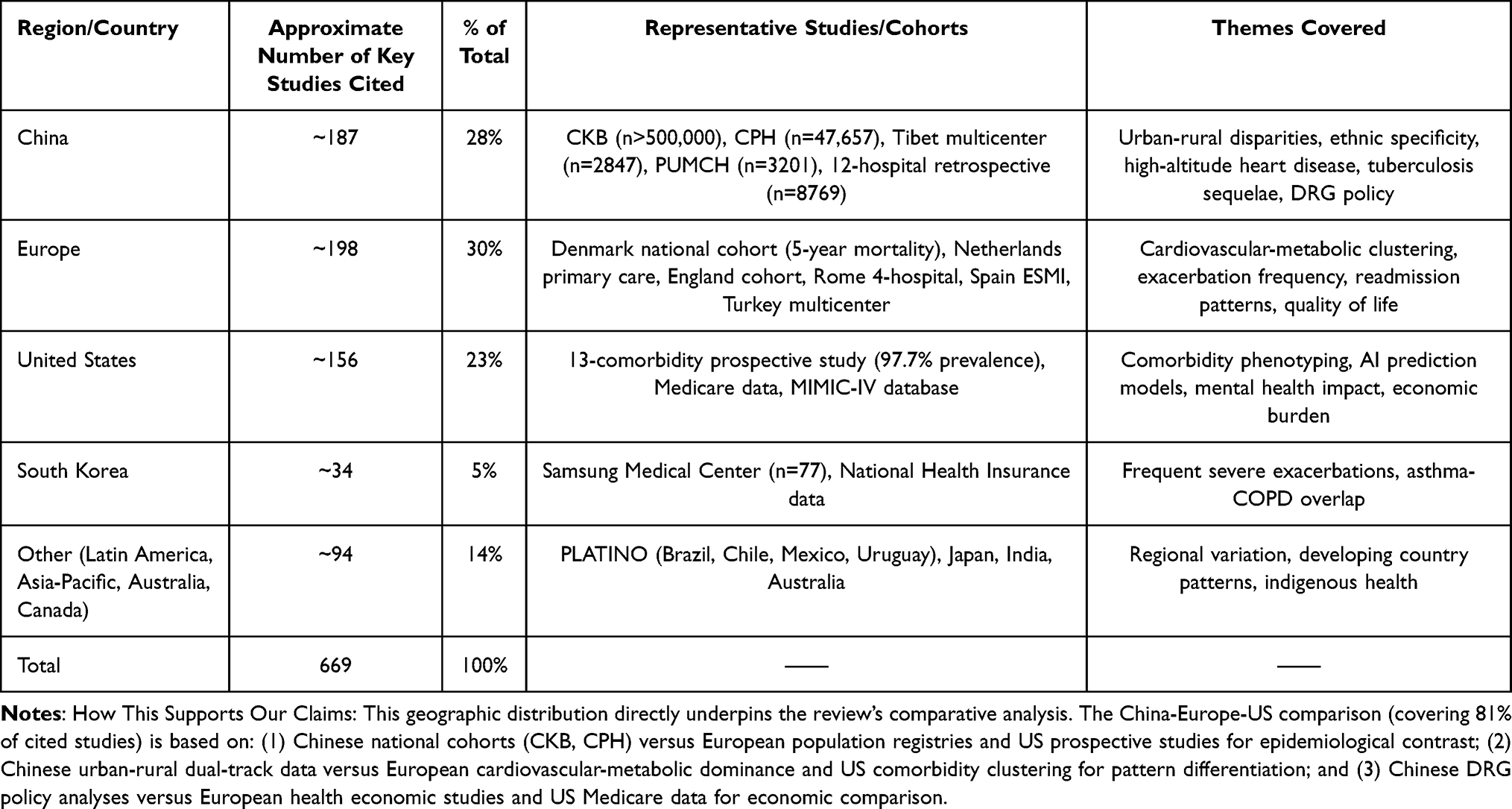 |
Table 2 Geographic Distribution of Key Cited Studies Supporting Regional Comparisons (n = 669 Total Citations) |
Research Status at Home and Abroad
International Research Status: The Universality and Heterogeneity of COPD Comorbidity
Global Epidemiological Characteristics of COPD Comorbidity
Global epidemiological landscape. Evidence from European, American, and Asian cohorts consistently shows that comorbidity is the rule, not the exception, in COPD. Over 70% of patients worldwide have two or more additional diseases, with high blood pressure (~56%), diabetes (~23%), and coronary heart disease (~21%) forming the most common triad.17–19 However, the types of comorbidities differ markedly by region, reflecting variations in environment, healthcare access, and population demographics. In Europe and the United States, heart and metabolic problems (obesity, metabolic syndrome) dominate, affecting 42% of patients.20,21 In contrast, Asian populations more often face chronic infection after-effects (such as tuberculosis lung damage) and nutrition-related conditions,22–24 particularly in rural areas with limited healthcare infrastructure. Age intensifies this burden: patients over 65 accumulate an average of 4.2 comorbidities, and more than half have a Charlson comorbidity score of 3 or higher, indicating substantial overall disease burden.25
Key takeaway: Comorbidity is universal in COPD, but its composition is geographically patterned. This means management strategies must be adapted to local disease profiles rather than applying identical approaches worldwide.
Independent Effect of Comorbidity on Acute Exacerbation
Comparative note on study scope: Early evidence, such as the 2016 study by Kim et al,10 focused specifically on frequent severe acute exacerbations (≥2 severe events/year requiring hospitalization) in a tertiary hospital setting and found that coexisting asthma was a significant independent risk factor (OR = 4.02, 95% CI 1.30–12.46). However, this study was limited by its retrospective single-center design (n=77), short follow-up (1 year), and exclusive focus on severe exacerbations. Subsequent research has substantially expanded this evidence base, as summarized below:
How different comorbidities worsen COPD: a synthesis by disease system. Research across multiple countries and healthcare settings reveals that comorbidities increase acute exacerbation risk through distinct but overlapping mechanisms.
Heart and blood vessel diseases exert the strongest quantitative impact. Heart failure stands out as the single most powerful predictor, increasing exacerbation risk by 2.3-fold (OR = 2.31).26–28 Atrial fibrillation (irregular heartbeat) independently links to more frequent flare-ups.27 These cardiovascular conditions likely worsen COPD through direct mechanisms—heart failure causes fluid buildup in the lungs, making breathing harder—and through shared inflammatory pathways.
Diabetes and metabolic problems raise hospitalization rates by 1.8-fold and extend hospital stays by an average of 3.5 days.28 High blood sugar during exacerbations may impair immune defenses and promote inflammation, creating a harmful feedback loop.
Mental health conditions increase exacerbation risk by 1.5–2.1-fold.29,30 Depression and anxiety reduce patients’ ability to follow treatment plans, recognize early warning signs, and seek timely care.31 This behavioral pathway is distinct from the direct biological mechanisms of heart or metabolic diseases.
Lung cancer: carries the most severe prognosis, with mortality during acute exacerbation surging 3.7-fold.32 This likely reflects the combined burden of cancer-related inflammation and weakened overall health status.33–37
Brain function decline: an underrecognized driver. Cognitive impairment is one of the most important yet underappreciated comorbidities of COPD. A comprehensive review by Yohannes et al found that 32% of COPD patients showed signs of cognitive dysfunction, with at least 25% exhibiting mild cognitive impairment (MCI).38 The prevalence ranges from 16% to 57%, depending on assessment methods and disease severity.39 Meta-analysis confirms that COPD patients face significantly increased risks of dementia (RR = 1.24, 95% CI 1.03–1.50) and cognitive impairment (RR = 1.30, 95% CI 1.13–1.49) compared to people without COPD.40 Notably, this risk is most pronounced in patients younger than 65 years. The mechanisms include chronic low oxygen (hypoxemia), body-wide inflammation (elevated IL-6 and CRP), oxidative cell damage, and shared genetic susceptibility (CHRNA3/5 variants).38 Crucially, cognitive impairment directly increases exacerbation risk by reducing patients’ ability to manage their disease and take medications correctly, creating a self-reinforcing cycle: cognitive decline leads to poor self-management, which causes exacerbation, which further worsens brain function.41
Key takeaway: Different comorbidity categories affect COPD through different pathways—cardiovascular diseases through direct organ stress and inflammation, metabolic diseases through immune dysfunction, mental health through behavior change, cancer through combined physiological weakening, and cognitive impairment through self-management breakdown. Prevention strategies must therefore target the specific mechanisms at play in each patient, with particular attention to cognitive function as a modifiable risk factor for exacerbation.
Co-Morbidity Model and Cluster Analysis
Comorbidity clusters: moving beyond counting diseases. Rather than simply tallying how many diseases a patient has, recent research identifies patterns of diseases that frequently occur together. These clusters reveal shared underlying causes and help predict which patients face the highest risks.
Three dominant clusters emerge across international studies: (i) the heart-metabolic cluster (high blood pressure + diabetes + coronary heart disease), found in 42% of European and American patients;2,3,42,43 (ii) the infection-inflammation cluster (bronchiectasis + tuberculosis after-effects + chronic infection), characteristic of Asian populations (28%);19,44 and (iii) the multi-organ failure cluster (heart failure + kidney disease + depression), associated with the highest healthcare costs (hospital bills 74% higher).3,45
These clusters share biological foundations: body-wide inflammation (elevated IL-6 and CRP),3,46,47 oxidative cell damage (reduced SOD activity),3,48 and gene regulation changes (abnormal DNA methylation).19,49,50 As updated in this review, brain function decline also links to these clusters through shared inflammatory and oxygen-deprivation pathways.51,52
Key takeaway: Recognizing disease clusters rather than individual conditions allows doctors to anticipate which complications a patient may develop and to intervene earlier with targeted prevention.
Domestic Research Status: Data Deepening from Regional Characteristics to Precise Stratification
What Chinese data reveal: patterns unique to China. Large Chinese studies expose comorbidity patterns that differ from Western populations and vary within China itself.
The China Kadoorie Biobank (CKB), tracking over 500,000 people, found that 89.3% of COPD patients have at least one comorbidity—far higher than the 58.2% seen in people without COPD.53 The heart-metabolic cluster accounts for 38.7% of Chinese patients, substantial but still lower than the ~42% in Europe and the US.53 This gap suggests that Chinese COPD patients have a different overall disease mix, with relatively more infection-related and fewer purely metabolic conditions.
The China Pulmonary Health (CPH) study, covering 47,657 people across 10 provinces, reveals a sharp divide between city and countryside.13 Rural patients more often carry chronic infectious disease after-effects (27.4% vs 12.8% in cities), while city patients more often have metabolic syndrome (31.2% vs 18.5% in rural areas).13 This urban-rural dual track reflects differences in healthcare access, environmental exposures, and lifestyle patterns.
Geographic and ethnic variations add further complexity. Northern Chinese patients have more osteoporosis (22.1% vs 9.8% in the south), likely due to less sunlight exposure, lower vitamin D levels, and dietary differences.13,54 In Tibet, high-altitude heart disease affects 31.5% of COPD patients and independently speeds up right heart dysfunction (HR = 2.14).13 A particularly important pattern is the “infection-obstructive lung disease syndrome”: old tuberculosis damage affects 15.3% of patients at Peking Union Medical College Hospital55 and causes faster lung function decline (58 mL/year vs 36 mL/year FEV1 loss) with 1.9-fold higher exacerbation hospitalization risk.56 This pattern has major implications for early screening and prevention in China, where tuberculosis history is common.
Key takeaway: Chinese COPD care must account for an urban-rural divide (infectious vs metabolic predominance), north-south geographic gradients, and high-burden tuberculosis after-effects that are far less common in Western populations.
Localized Evidence and Multi-Dimensional Model Construction of Acute Exacerbation Risk Factors
Risk factors in Chinese populations: evolving understanding. A large multi-hospital study in China, covering 8769 acute exacerbation hospitalizations across 12 hospitals, confirms that age over 70 (OR = 1.92) and three or more exacerbations per year (OR = 3.45) are independent risk factors.13,57 This finding extends earlier work by Kim et al,10 which examined frequent severe exacerbations (defined as two or more severe events within one year) in a smaller single-center setting and found no significant link between cardiovascular comorbidities as a group and frequent severe events. The discrepancy likely reflects Kim et al’s limited sample size and lack of granular comorbidity classification. In contrast, the Chinese multi-center data (n=8769) with more detailed disease categorization clearly show that heart failure (OR = 2.31), diabetes (hospitalization rate increased 1.8-fold), and depression or anxiety (risk increased 1.5–2.1-fold) are each independent drivers of acute exacerbation.
Importantly, the role of age itself changes in very elderly patients. In this group, chronological age becomes less predictive, while the interaction between frailty and comorbidity burden becomes the dominant risk factor.57 This shift suggests that risk assessment should move beyond simply asking “how old is the patient?” toward evaluating overall physical function, mobility, nutrition, and disease combinations—a multi-dimensional functional status approach rather than a single-dimensional age cutoff.
Specific comorbidity mechanisms reveal actionable intervention points. Low blood protein levels (hypoalbuminemia) increase in-hospital death risk by 2.6-fold.57,58 Recent research explains why: during acute inflammation, the body consumes albumin as a protective response, while simultaneously suffering increased oxidative cell damage and reduced effectiveness of steroid medications.59 A history of stroke raises the need for mechanical ventilation by 1.9-fold.55,60 Cluster analysis of nerve-breathing patterns shows that within the first 48 hours after an ischemic stroke, over half of patients (51.7%) develop weakness of the diaphragm muscle on the side opposite the brain injury.61 This finding points to an urgent need for early breathing muscle rehabilitation after stroke. Kidney disease also complicates care: reduced kidney function (eGFR <60 mL/min/1.73m2) correlates with lower steroid dosing (r = −0.33) and carries a 2–3-fold higher infection risk after steroid treatment,13,57,62 pushing clinicians toward individualized, reduced-dose steroid protocols to avoid dangerous side effects.
Key takeaway: Chinese risk stratification is shifting from simple age-based models to multidimensional assessments of frailty and comorbidity interactions. Specific comorbidities offer precise targets for prevention: correcting low blood protein, starting breathing exercises early after stroke, and tailoring steroid doses for patients with kidney disease.
Research Gaps and Frontier Breakthrough Directions
Where Chinese research needs to go next. Despite major cohorts like CKB and CPH, six critical gaps remain:
Data infrastructure. Real-time electronic health record monitoring of comorbidity burden is lacking, and fewer than 5% of primary hospitals use the Charlson comorbidity score. Natural language processing technology—using computers to extract comorbidity information automatically from medical records—offers a promising solution.11–13
Methodological depth. Most studies still use simple regression models rather than exploring complex networks of how diseases interact with each other and with COPD features. Bayesian network approaches have begun revealing causal chains, such as “depression → poor treatment adherence → exacerbation → delirium”, opening new multi-target intervention possibilities.63,64
Long-term follow-up. Only two Chinese studies track patients for more than three years with comorbidity scoring.12 A new National Respiratory Medical Center cohort, planned for 20,000 patients over 10 years, will fill this gap.65,66
Artificial intelligence localization. Chinese teams have built machine learning models (XGBoost, AUC 0.87) to predict comorbidity patterns, but these need testing on larger national cohorts.67 Future models should incorporate Chinese-specific genetic variants (such as CHRNA3/5) and environmental exposures (air pollution PM2.5, biofuel use) to move from statistical prediction to biologically explainable forecasting.68,69
Two-way management implementation. The National Respiratory Medical Center proposed coordinating COPD and comorbidity care in 2021, but practical pathways remain underdeveloped.70,71 Primary doctors face three barriers: fragmented single-disease guidelines requiring them to “jump between” multiple recommendations; drug interaction risks (for example, some COPD inhalers may worsen heart failure; long-term steroid inhalers may worsen bone thinning);14 and inadequate assessment tools—lung function alone cannot capture overall disease burden, requiring combined evaluation of symptom scores (CAT), breathlessness scales (MRC), body mass index, and exacerbation history.72
Policy-economics alignment. COPD patients with heart failure face average annual hospital costs of ¥32,000 versus ¥11,000 for those without comorbidities.73 China’s DRG payment pilot for COPD comorbidities began only in 2023,15 leaving a lag between economic reality and payment policy.
Key takeaway: Closing these gaps requires modernizing data systems, adopting advanced analytics, validating AI tools on Chinese populations, building practical care coordination pathways, and aligning payment policies with true disease burden.
The Association Mechanism Between Comorbidity and Acute Exacerbation Risk in COPD Patients
Acute exacerbation of COPD is a key event leading to deterioration, hospitalization and death. A large amount of evidence shows that multiple comorbidities are independent risk factors for inducing or aggravating acute exacerbations, and the association mechanism has been deepened from epidemiological association to molecular network and system biology.
2.1 Consistent global evidence: more diseases, more flare-ups. Studies from the Netherlands, Italy, and international databases uniformly confirm that having more comorbidities means more frequent COPD exacerbations. Dutch primary care data show that 88% of COPD patients have at least one other disease, with heart failure, lung cancer, depression, and asthma most strongly linked to frequent flare-ups (two or more per year).74 Italian hospital data demonstrate a clear dose-response: as the number of comorbidities rises from one to four, average annual exacerbations increase from about 1.5 to 2.3.75 These patterns hold across healthcare systems, with prior exacerbation history, breathlessness severity, anxiety, and heart failure consistently emerging as core predictors.76,77
Key takeaway: The relationship between comorbidity burden and exacerbation frequency is robust, consistent across countries, and graded. This supports making comorbidity assessment a standard part of exacerbation prevention everywhere.
Potential Association Mechanisms: From Organ Interactions to Molecular Networks
(1) Body-wide inflammation: the common thread. COPD involves chronic low-grade inflammation throughout the body. During acute exacerbation, inflammatory markers such as IL-6 surge dramatically.78 This inflammation spreads via the bloodstream, worsening atherosclerosis (hardening of arteries) and increasing heart attack and stroke risk 2.27-fold within one to five days after a flare-up.79 The same inflammatory state also drives metabolic syndrome, bone thinning, and other comorbidities.3
Key takeaway: Body-wide inflammation acts as a central hub connecting COPD to multiple organ diseases and explaining why exacerbations trigger heart and vascular events.
(2) Organ crosstalk: direct physical effects. Comorbidities worsen COPD through direct organ interactions. Heart failure causes fluid accumulation in the lungs, directly triggering or worsening breathing problems.74,78 Acid reflux from the stomach can micro-aspirate into airways, causing inflammation and airway constriction.74 Anxiety and depression reduce treatment adherence and alter how patients perceive breathlessness, sometimes leading to delayed care.76,80
Key takeaway: Organs do not function in isolation; heart, lung, gut, and brain interact directly, creating bidirectional pathways that require integrated management.
(3) The treatment paradox: helping one problem may worsen another. Treating multiple diseases simultaneously creates difficult trade-offs. Beta-blockers, essential for heart failure and high blood pressure, are often underused in COPD due to fears of airway constriction. Repeated steroid use for exacerbations worsens diabetes and bone thinning.4 These interactions mean that optimal care for one condition may inadvertently harm another.
Key takeaway: Medication choices in COPD comorbidity require careful balancing of benefits and risks across all of a patient’s conditions, not just the lungs.
(4) The shared molecular mechanism from the perspective of systems biology:
Molecular convergence: shared genes, shared inflammation, shared cell damage. Genome studies reveal that COPD and its major comorbidities share genetic risk factors: CHRNA3/5 variants affect smoking behavior, lung cell growth, and cancer risk;81–83 FAM13A variants influence both lung structure and fat distribution;84,85 and HHIP variants link airway development to bone health.86,87
Inflammatory signals actively travel between organs: IL-6 triggers liver CRP production (15–20 fold increase) and artery inflammation;88 TNF-α causes insulin resistance in muscle and fat while promoting bone breakdown;89,90 and IL-1β from lung cells reprograms bone marrow stem cells toward inflammatory states, creating lasting “immune memory”.91
Epigenetic changes—stable modifications to gene activity without DNA sequence alteration—allow inflammation to leave lasting marks. For example, IL-6 gene demethylation in blood cells keeps inflammation active even after smoking stops,92 while heart cell gene methylation changes may contribute to heart failure development.93
Protein and metabolite markers now enable precise prediction: CCL15 and GFAP predict cardiovascular risk;94 leptin and adiponectin signal metabolic problems;95 and TMAO, a gut bacteria metabolite, links to both exacerbation risk and heart rhythm disorders.96
Key takeaway: COPD and comorbidities share genetic foundations, inflammatory signaling, epigenetic traces, and molecular fingerprints—offering multiple points for targeted intervention.
5) Brain-lung connection: how COPD affects the mind. COPD-related cognitive impairment represents a distinct comorbidity pathway that connects lung disease to brain function decline through multiple mechanisms.52 Chronic low oxygen and high carbon dioxide levels damage brain regions critical for memory, attention, and decision-making. COPD patients with sustained hypoxemia score significantly lower on standard cognitive tests compared to those with normal oxygen levels.97 Body-wide inflammation becomes brain inflammation: IL-6 and TNF-α cross the blood-brain barrier, activate immune cells in the brain (microglia), and promote neuronal cell death in memory and thinking centers.88 The same IL-6 signaling pathway that drives heart disease also harms brain cells. Blood vessel damage in the brain: COPD-associated artery hardening and endothelial dysfunction reduce blood flow to the brain, particularly affecting white matter connections. This “small vessel disease” pattern explains why many COPD patients develop executive dysfunction and slowed thinking rather than pure memory loss.98 Treatment complexity compounds the problem: cognitive impairment severely reduces patients’ ability to manage complex inhaler schedules, recognize early warning signs of flare-ups, and stick with rehabilitation programs.99 Nearly half of COPD patients stop using their inhalers within the first year, and cognitive impairment is a major independent driver of this non-adherence.100
Key takeaway: COPD and its comorbidities connect through five interlocking mechanisms: body-wide inflammation acts as a central hub; direct organ crosstalk creates bidirectional harm; treatment trade-offs force difficult choices; shared genetic and molecular foundations enable precise prediction; and the brain-lung axis represents an underrecognized pathway where lung disease directly impairs cognition, which in turn worsens self-management and exacerbation risk. Effective prevention must address all five levels simultaneously.
Therefore, it is particularly important to understand the mechanism of systemic inflammation-comorbidity-acute exacerbation of COPD (Figure 1).
Effects of Comorbidity Burden on Hospitalization Expenses and Medical Resource Utilization
COPD and its comorbidities have brought a heavy economic burden to the medical system, and the burden of comorbidities is one of the most important factors driving the growth of medical expenses.
The economic burden: stacking up costs. Comorbidities increase COPD costs in a graded, multiplicative fashion. When patients have more than six additional diseases, hospital costs rise most steeply.101,102 Turkish multicenter data show that comorbid patients face 4.3-fold higher direct medical costs during acute exacerbations compared to those with COPD alone.103
Heart and blood vessel diseases dominate as the most common and expensive category,8,104 but anemia (low blood count) exerts the largest single-disease cost impact, adding approximately $10,762 annually.8,103 Other major cost drivers include kidney disease, diabetes, pneumonia, and intensive care needs.103
Brain function decline: a hidden but costly comorbidity. Cognitive impairment and dementia represent a particularly insidious driver of economic burden in COPD. Patients with both COPD and dementia face significantly longer hospital stays and higher hospital bills compared to those without cognitive problems.105 The financial impact extends far beyond direct medical costs to three major indirect burdens: Caregiver costs—family members often cut work hours or quit jobs to provide care, with informal caregiving expenses frequently exceeding formal healthcare spending in dementia care; Lost work productivity—cognitive decline in working-age COPD patients (particularly those under 65) drives early retirement and disability, with indirect costs accounting for 61–83% of total COPD costs in European studies;106 and Medication non-adherence costs—poor adherence to inhaled therapies due to cognitive impairment triggers more frequent exacerbations and hospitalizations, creating a self-reinforcing cycle: non-adherence leads to flare-up, which leads to hospitalization, which further worsens brain function.99,100 Medicare data confirm that dementia in COPD patients strongly predicts discharge to nursing facilities rather than home, and increases return hospitalization rates, further amplifying resource use.107
The financial impact extends beyond single hospital stays: comorbidities increase how often patients flare up, how often they return to hospital, and how likely they need intensive care or breathing machines.2,103
Key takeaway: Comorbidity costs are not simply additive—they multiply through repeated admissions, intensive care needs, and hidden indirect burdens. Cognitive impairment deserves particular attention as it generates unique economic penalties through caregiver burden, lost productivity, and medication non-adherence cycles that standard cost analyses often miss.
The relevant studies on the risk, mortality and cost of acute exacerbation of different comorbidities in the database found that all kinds of comorbidities will affect the risk, mortality and cost of acute exacerbation of COPD patients, and all comorbidities interact through the three major pathways of systemic inflammation, oxidative stress and chronic hypoxia (Table 3). Therefore, treatment needs to be targeted at its common pathway intervention.
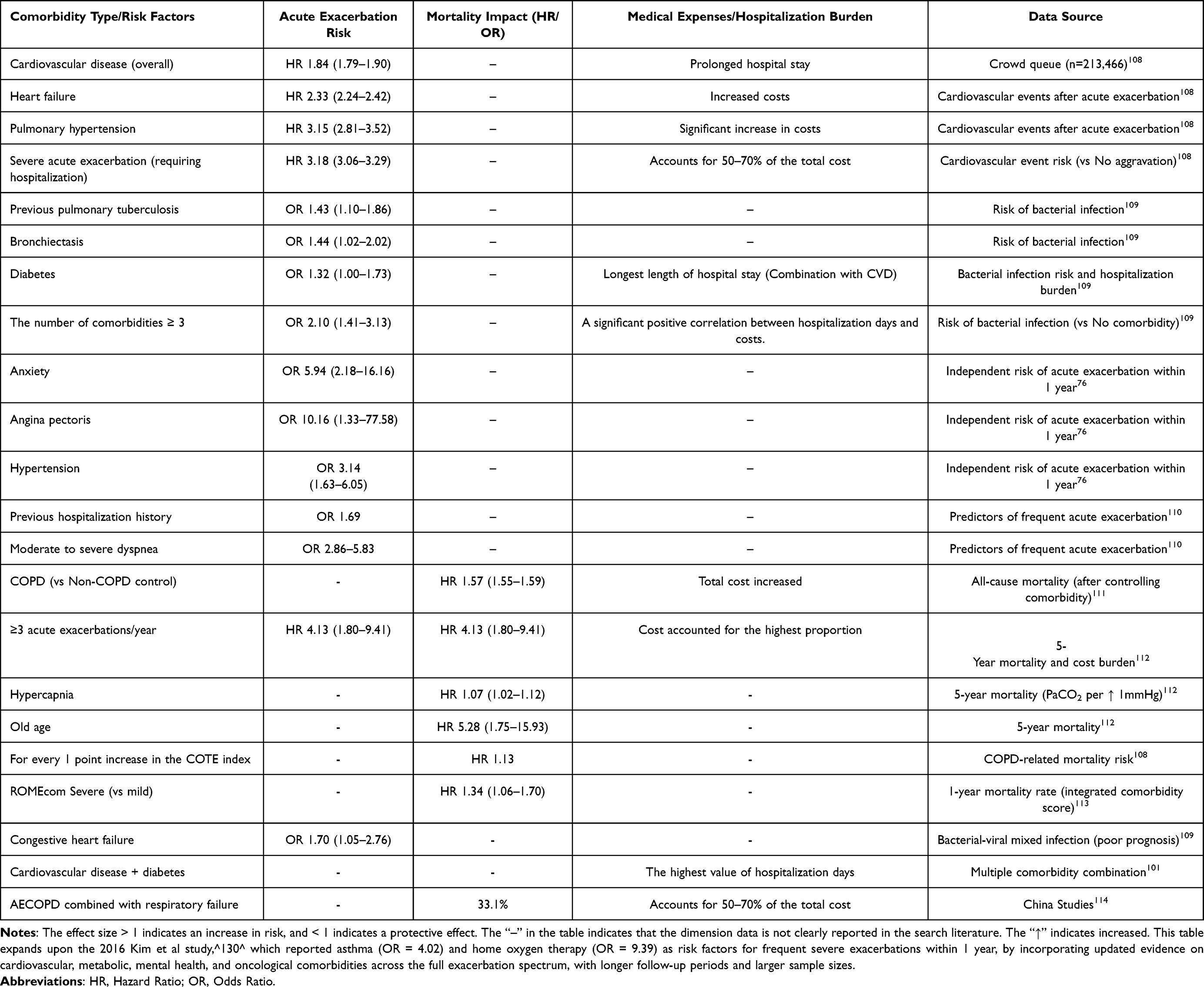 |
Table 3 Comparison Table of Quantitative Effects of Different Comorbidities on Acute Exacerbation Risk, Mortality and Cost |
COPD Comorbidity Pattern Recognition Method: The Evolution from Statistical Clustering to Causal Artificial Intelligence
Identifying specific co-morbidity patterns (clusters) in COPD patients, rather than treating a single disease in isolation, helps to understand the common pathophysiological basis of the disease and guide individualized management. The current technology has moved from the traditional cross-sectional clustering to the era of integration of dynamic prediction and causal inference.
Advanced Clustering Analysis Methods: From Statistical Driven to Deep Representation Learning
Finding disease patterns: from simple grouping to machine learning. Traditional statistical methods (hierarchical and K-means clustering) identify reproducible patient groups: heart-metabolic, infection-inflammation, and psychological-frailty clusters, each with distinct inflammatory marker profiles and outcomes independent of lung function severity.4,115 Notably, the 2016 Kim et al study10 did not employ clustering analysis, instead using the Charlson comorbidity index as a single compound variable—a methodological limitation that subsequent studies have addressed. The Charlson index’s inability to capture individual comorbidity contributions and its exclusion of asthma (a key finding in Kim et al’s work) motivated the development of COPD-specific indices such as COTE and, more recently, dynamic comorbidity indices (DCI) that account for time-evolving interactions. Deep learning methods (Deep Embedded Clustering) overcome the challenge of analyzing dozens of diseases simultaneously, improving pattern detection by 23% and revealing hidden “early aging” clusters (depression + osteoporosis + muscle loss) that respond poorly to steroids.116 Graph Neural Networks capture disease networks over time, identifying indirect pathways such as acid reflux → nighttime micro-aspiration → airway inflammation → exacerbation, improving prediction accuracy.117–119
Key takeaway: Pattern recognition has evolved from simple disease counting to sophisticated machine learning that reveals hidden connections and weak signals.
Comparison of Artificial Intelligence Prediction Models
Advantages and disadvantages of XGBoost, random forest and deep learning: different algorithms have significant differences in the prediction of COPD comorbidity (Table 4), and the optimal model should be selected according to data characteristics, interpretable requirements and clinical scenarios.
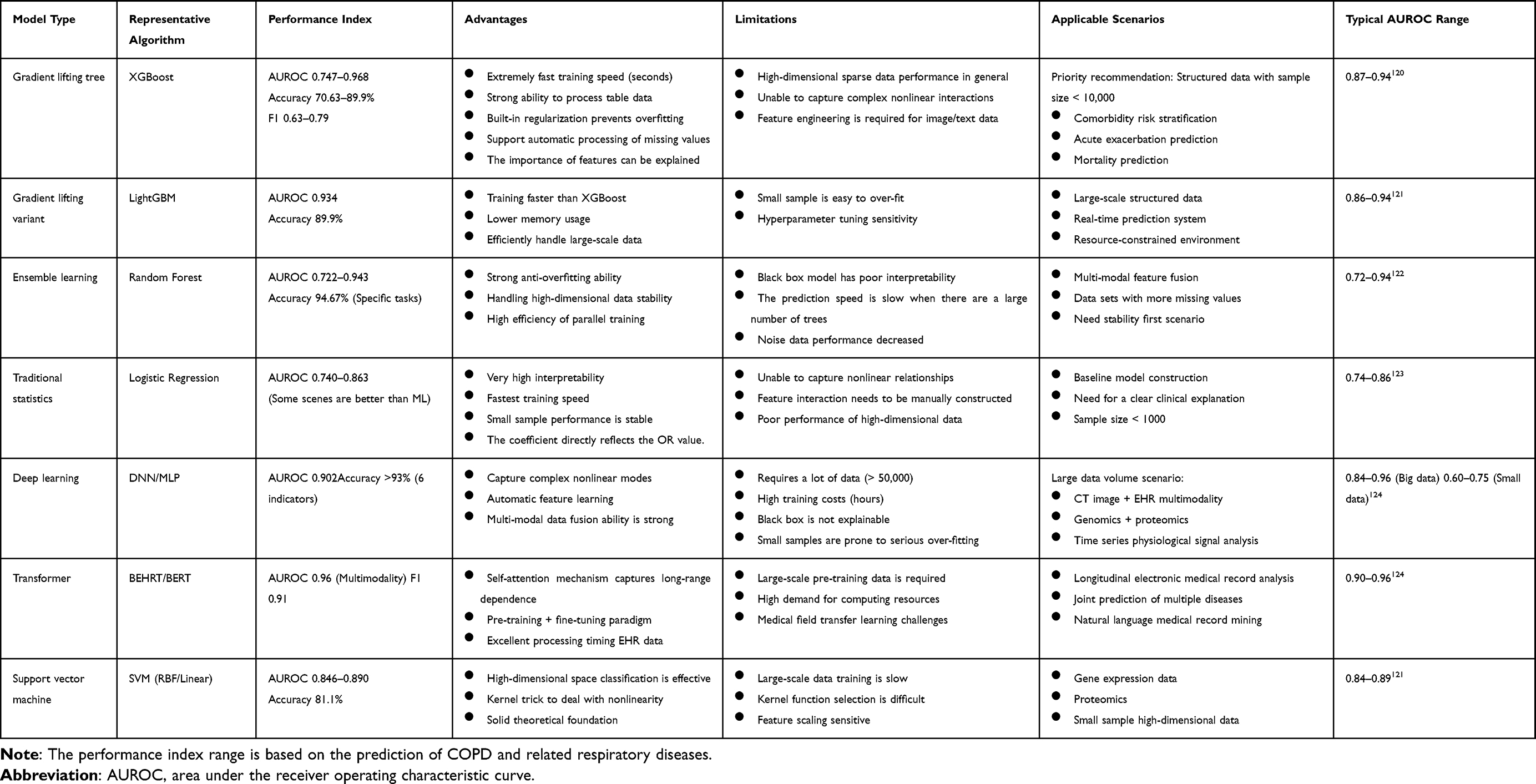 |
Table 4 Performance Comparison of Mainstream AI Models in the Prediction of COPD Comorbidity |
Thus, choosing the right prediction tool. Different computer algorithms suit different situations. XGBoost, a gradient-boosting method, works best for structured data with moderate sample sizes (<10,000), achieving 87% prediction accuracy (AUC 0.87) with fast training and clear interpretability.125 Deep learning excels with very large, complex multimodal data (>50,000 patients, combining CT scans, protein data, and genetic information).126 Chinese regulatory guidelines (NMPA 2024) require clinical interpretability, making XGBoost with SHAP explanation tools the safest choice for medical devices.127
Key takeaway: No single algorithm is universally best; the choice depends on data size, complexity, and regulatory requirements for explainability.
Causal Network and Mendelian Randomization (MR): From “Correlated Clustering” to “Causal Inference”
From association to causation: does comorbidity cause worse COPD, or merely accompany it? Traditional studies show that diseases cluster together, but cannot prove which causes which. Mendelian Randomization uses genetic variations as “natural experiments” to infer causality: lung function-related genes confirm that worse COPD causes osteoporosis (10% function loss → 23% risk increase);128 albumin gene variants prove low blood protein directly causes exacerbations (not just marks malnutrition);129 and nicotine receptor genes show smoking causes lung cancer and heart disease through pathways independent of lung damage.130
Bidirectional testing clarifies direction: COPD causes heart failure (supported), but heart failure does not appear to cause COPD (not supported).128 Causal discovery algorithms from electronic health records automatically map disease chains, such as “depression → poor adherence → exacerbation → delirium”, suggesting that treating depression early could prevent downstream complications.67,131
Key takeaway: New causal methods are moving beyond “what goes with what” to “what causes what”, enabling more targeted prevention and drug repurposing.
Predicting Outcomes
From fixed scores to living models. Traditional indices like Charlson (general disease burden) and COTE (COPD-specific) provide useful snapshots but do not evolve with patients. Their combined use (BODE + COTE) predicts death with 80% accuracy.117 However, they miss important interactions: having both heart failure and diabetes is worse than simply adding their individual risks (HR = 3.2 vs expected 2.5).45
The Dynamic Comorbidity Index (DCI) uses artificial intelligence on longitudinal electronic records, updating every three months as conditions change. It predicts one-year death risk with 91% accuracy, outperforming static scores (78%).132 DCI automatically adjusts for new diagnoses, age-specific risks (heart failure counts more in patients over 75), and causal chains (depression → adherence problems). Multi-omics integration (genetic risk + blood proteins + CT scan features) further improves five-year death prediction from 82% to 89% accuracy,133 though cost limits widespread use.
Comparing the characteristics of Charlson index, COTE index and BODE index in the prognosis evaluation of COPD patients (Table 5), the following conclusions and reflections are drawn:
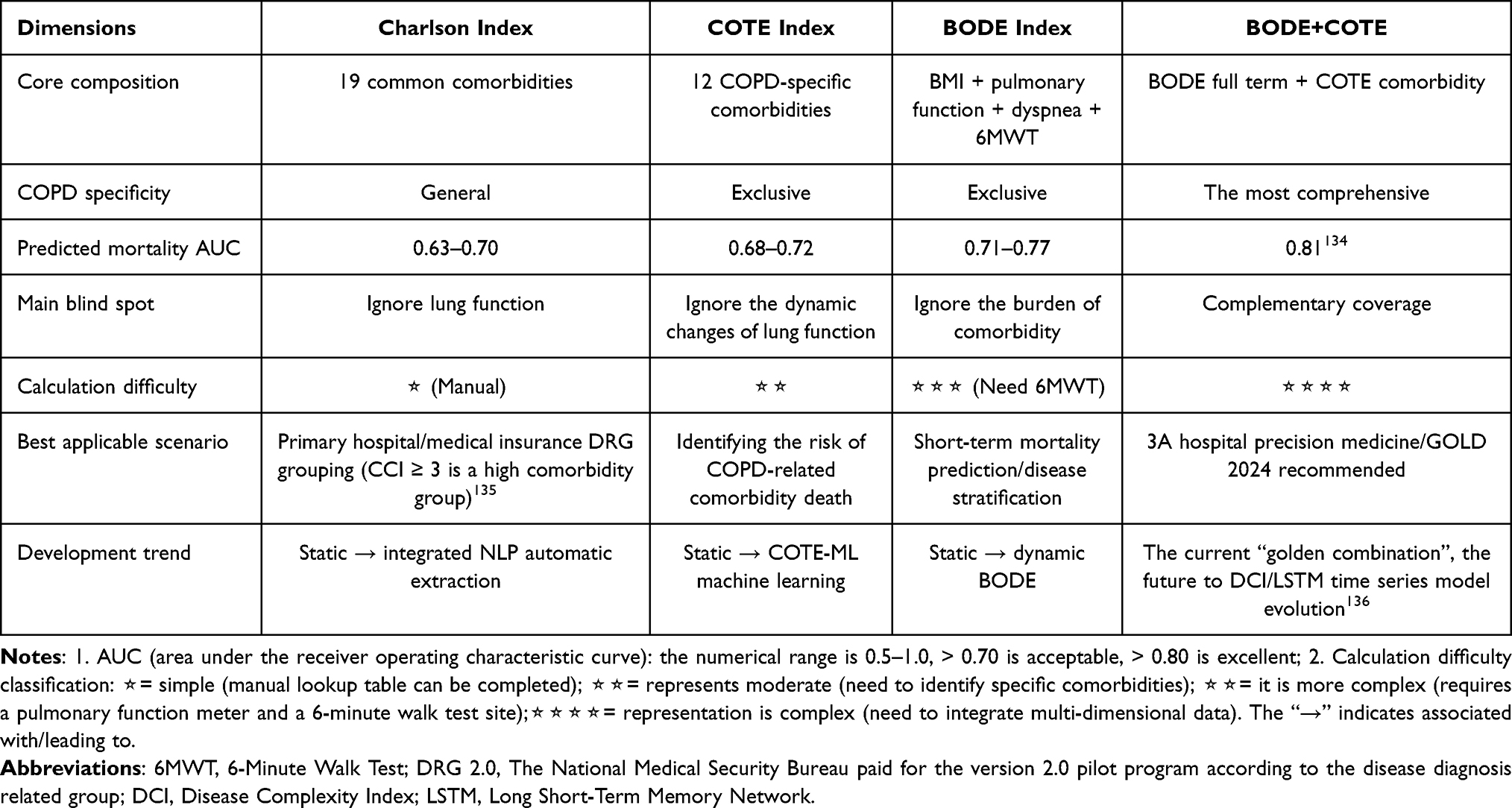 |
Table 5 Comparison of Charlson Index, COTE Index and BODE Index in the Prossgnosis Evaluation of COPD Patients |
Practical selection: Primary clinics can use Charlson plus symptom questionnaires; tertiary hospitals can use multimodal BODE-C indices; research studies should use dynamic or machine-learning indices.137 Payment systems are beginning to use comorbidity scores to adjust hospital payments, with future versions likely incorporating dynamic indices.138
Key takeaway: Prognostic tools are evolving from static paper-based scores to dynamic, AI-driven, multi-biological-layer models that adapt to individual patient trajectories.
Effect of Comorbidity on Quality of Life in Patients with COPD
Health-related quality of life (HRQoL) is a core indicator for evaluating the overall health status of patients with COPD, and the negative impact of comorbidity on HRQoL often exceeds the decline in lung function itself.
Comorbidities, not lung function, determine daily quality of life. Reviews from the United States, England, and Switzerland agree: having additional diseases is the dominant factor reducing quality of life in COPD, even when lung function is only mildly impaired.139
Mental health conditions (depression and anxiety) cause the most severe quality-of-life damage. They intensify the feeling of breathlessness, reduce social participation, lower treatment adherence, and increase exacerbation risk.76,80,139,140 Heart and blood vessel diseases (angina, heart failure) directly limit physical activity and compound breathing difficulties.80,141 Bone and joint problems (arthritis, osteoporosis) restrict movement and independence.3,142 Alcohol abuse also shows significant negative effects.139
Brain function decline: a disabling but overlooked burden. Cognitive impairment is among the most debilitating comorbidities affecting daily life in COPD patients. It erodes personal independence, worsens anxiety and depression, and severely limits social participation.52 The combination of breathlessness and cognitive problems creates a “double disability”—patients struggle to describe their symptoms accurately, understand treatment instructions, or follow self-care routines.99 Those with mild cognitive impairment have particular difficulty grasping complex medication schedules and weighing the risks and benefits of treatment options, reducing their ability to share in medical decisions.99 This cognitive burden also fuels higher anxiety and depression levels, which in turn link to poorer quality of life, reduced rehabilitation participation, and worsening self-management.99
Breathlessness as the critical mediator: Multiple comorbidities converge on worsening breathlessness through different pathways—heart disease through fluid overload, anemia through reduced oxygen delivery, obesity through mechanical restriction—making breathlessness the direct driver of quality-of-life decline.140
Key takeaway: Improving daily life for COPD patients requires addressing comorbidities across four interconnected domains: mental health (the largest single impact), cardiovascular disease (physical limitation), musculoskeletal conditions (mobility), and cognitive function (self-management capacity). Cognitive impairment deserves particular attention as it creates a “double disability” with breathlessness and silently undermines treatment engagement and shared decision-making.
Effect of Comorbidity on Long-Term Prognosis of COPD Patients
Comorbidities dictate long-term survival. Danish national data show that COPD patients face 43% five-year all-cause mortality versus 17.7% in the general population—a gap driven primarily by comorbidities rather than lung disease progression alone.9
Smoking-related cancers (especially lung cancer) cause the largest excess death risk compared to the general population.9 Heart failure, coronary artery disease, diabetes, and high blood pressure in the lungs (pulmonary hypertension) are also established predictors of poor outcomes.103,143,144
Brain function decline: an emerging prognostic threat. Cognitive impairment and dementia are increasingly recognized as critical factors shaping long-term outcomes in COPD. Meta-analysis confirms that COPD patients carry a 24% higher risk of dementia and 30% higher risk of cognitive impairment compared to people without COPD.98 Mild cognitive impairment is itself a known mortality risk factor in COPD, and dementia presence significantly worsens survival trajectories.97 This prognostic damage operates through four interconnected pathways: reduced treatment adherence leading to more frequent and severe flare-ups; impaired early warning recognition—patients cannot notice or report symptom worsening in time; delirium risk—acute exacerbations trigger confusion and disorientation in cognitively vulnerable patients; and institutionalization—patients with both COPD and dementia more often require nursing home placement, with associated infection risks and loss of functional independence.99
Beyond death risk, comorbidities increase rehospitalization rates2,144 and may themselves be worsened by COPD (high blood pressure, heart failure, stomach ulcers), creating self-reinforcing cycles.145 Depression shows sustained negative effects over three-year follow-up.146
Key takeaway: Most long-term harm in COPD comes from comorbidities, particularly cancer and cardiovascular disease. However, cognitive impairment represents an underrecognized prognostic factor that amplifies mortality risk through treatment non-adherence, missed warning signs, delirium during exacerbations, and institutionalization. Protecting long-term survival requires safeguarding not just the heart and lungs, but also the brain.
Discussion
This narrative synthesis reveals that COPD comorbidity is not a random occurrence but an integral part of the disease itself. The condensed evidence above demonstrates that comorbidities connect to COPD through multiple pathways—shared inflammation, genetic susceptibility, direct organ interactions, and treatment complications—to worsen acute exacerbations, increase costs, reduce quality of life, and shorten survival. Regional patterns differ: heart-metabolic dominance in Europe and the United States, infection-malnutrition in rural Asia, and unique urban-rural and geographic gradients within China. While international evidence robustly supports these relationships,1–9,17–37,42,43 Early evidence, such as Kim et al (2016),10 established that comorbidity contributes to frequent severe acute exacerbations in tertiary care settings, identifying asthma as a particularly significant factor. However, this study was limited by its narrow focus on severe exacerbations, single-center retrospective design, and lack of long-term follow-up. The current review substantially expands upon this foundation by integrating evidence from 2016 to 2026, encompassing the full spectrum of exacerbation severity, incorporating large-scale cohort studies, AI-driven predictive models, and multi-omics approaches, and providing localized Chinese evidence that was previously unavailable. Chinese research remains comparatively limited in large-sample cohorts, standardized assessment tools, and long-term follow-up.19,44–50,147 The urgent need for practical comorbidity management in Chinese primary care demands locally generated evidence.13,54,55,57,58,60,147
For general practitioners, in the front line of chronic disease management, they should establish a “patient-centered” holistic view, and actively screen and manage common comorbidities of COPD patients (especially cardiovascular and metabolic diseases and mental health disorders).148 Fully understand the transformation of co-morbidity mechanisms such as inflammatory pathways, and fully transform them into effective cross-disease treatment strategies, combined with the MDT intervention model of comprehensive management of COPD co-morbidity, so as to truly improve the health outcomes of this vulnerable population and reduce the burden of social diseases.
Discussion 1: Fine implementation of management strategy: from the concept of “two-way management” to the implementation of clinical pathway.
The specific implementation process of COPD-comorbidity two-way management strategy.
In the management of chronic obstructive pulmonary disease (COPD), “two-way management” is not only a tool to identify cardiovascular disease (CVD) or metabolic diseases (such as diabetes), but also a dynamic multidisciplinary collaboration (MDT) strategy.149 The “COPD-comorbidity two-way management” strategy proposed by National Respiratory Medical Center in 2021 needs to be transformed into an operable MDT clinical pathway, rather than staying.
Cognitive function assessment in two-way management: Given that cognitive impairment affects up to 32% of COPD patients and significantly impacts self-management capacity, medication adherence, and economic burden, routine cognitive screening should be integrated into the COPD-comorbidity two-way management pathway. The recommended screening tools include the Montreal Cognitive Assessment (MoCA) or Mini-Mental State Examination (MMSE), which can be administered during routine COPD follow-up visits.52,100 For patients identified with MCI or dementia, management strategies should include: (1) Simplification of medication regimens—using single-inhaler triple therapy instead of multiple inhalers, and involving caregivers in medication administration; (2) Enhanced patient education—using visual aids, simplified instructions, and repeated demonstrations to accommodate cognitive limitations; (3) Caregiver support and training—recognizing that informal caregivers are essential for medication adherence and exacerbation recognition in cognitively impaired COPD patients; (4) Interdisciplinary collaboration—involving neurology or geriatric medicine in the MDT for patients with moderate-to-severe cognitive impairment.99
Discussion 2: International consensus update: GOLD 2025/2026 and China‘s applicability analysis.
(1) Key points of GOLD 2025 core update
For the first time, GOLD 2025 made “Comorbidity Assessment and Management” an independent chapter, and its core recommendations include the following (Table 6).41
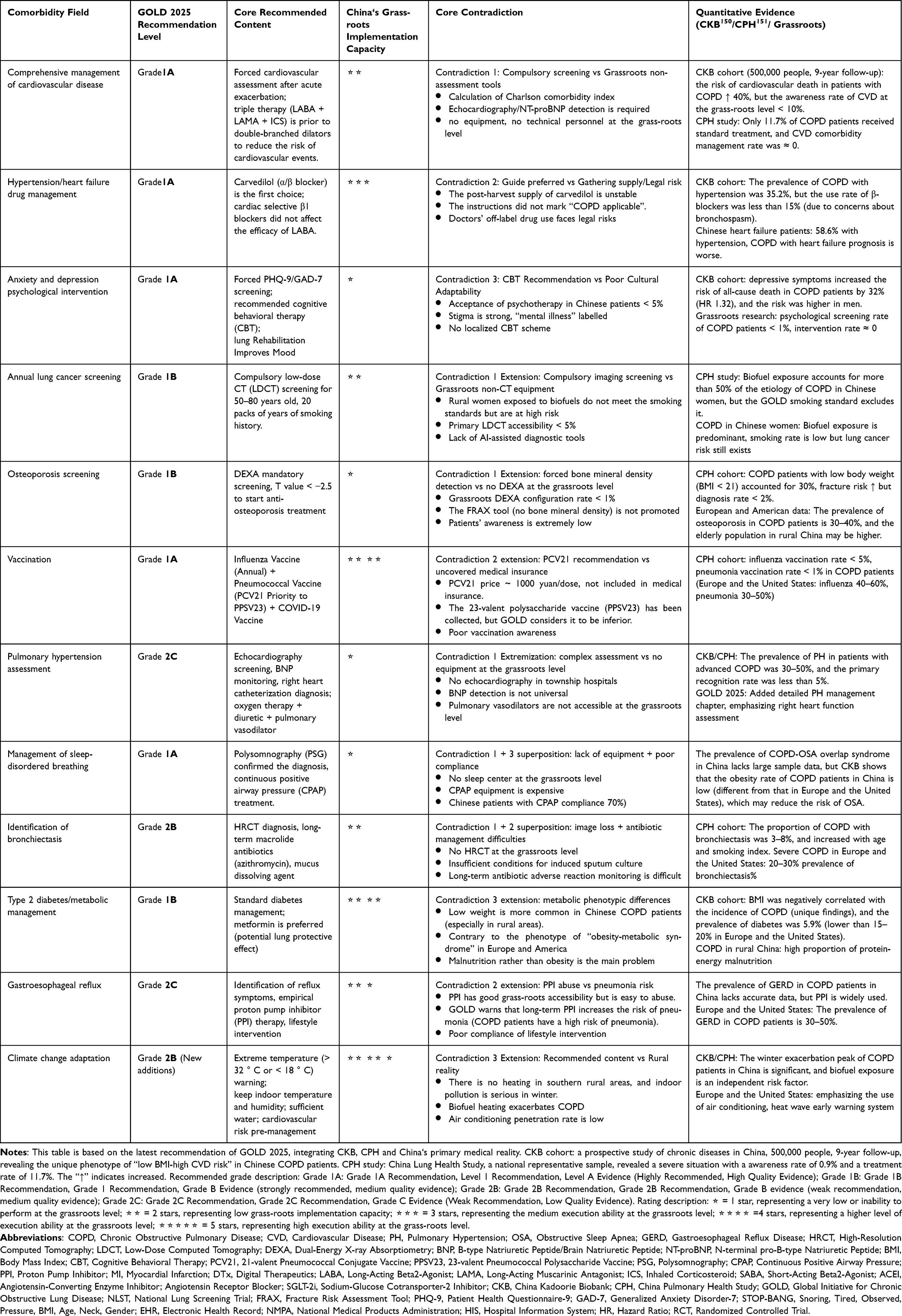 |
Table 6 Recommended Grading of GOLD 2025 Comorbidity Management and Chinese Applicability Assessment Table |
(2) The core contradictions and solutions of China‘s applicability
Contradiction 1: The mismatch between the strength of guideline recommendation and the ability of grass-roots implementation GOLD 2025’s 1A recommendation (mandatory screening) faces a triple gap of manpower, tools, and incentives at the grassroots level. Core factors: Comorbidity management requires complex computing and psychological assessment tools.
Solutions: ① Technology Sinking: Develop the COPD comorbidity management cloud platform of the National Respiratory Medical Center, and open Charlson automatic calculation, Patient Health Questionnaire-9 (PHQ-9) self-assessment, AI guidance report functions to the grassroots free of charge. ② Performance appraisal: “COPD comorbidity screening completion rate” was included in the national basic public health service project assessment, and was linked to the allocation of funds (refer to hypertension and diabetes management).
Contradiction 2: Conflict between drug recommendation and medical insurance/collection policy
Carvedilol (GOLD‘s first choice) is unstable after collection in China, and the instructions do not indicate “COPD is applicable”, so doctors face the legal risk of off-label drug use.152
Suggestions: ① Drug administration department: start the COPD off-label drug use record system, and establish a clinical pathway exemption list for GOLD strongly recommended drugs. ② Medical insurance negotiation: special drugs for COPD comorbidity management (such as selective β1 blockers and atomized inhaled corticosteroid (ICS)/long-acting beta-agonist (LABA)) were included in the “Special Drugs for Chronic Disease Outpatient” catalogue to reduce the proportion of self-payment.
Contradiction 3: Psychological intervention recommendation and cultural adaptability
Cognitive behavioral therapy (CBT) is effective in Europe and the United States, but Chinese patients have low acceptance of “psychotherapy” and lack of localization programs. It is suggested that: ① Cultural adaptation: CBT should be integrated into the “emotional conditioning of traditional Chinese medicine” model, emphasizing “empathy” and “family participation”, rather than individualism orientation. ② Digital therapy: The first COPD digital therapy (DTx) product approved by National Medical Products Administration (NMPA) (such as “Shukang” APP) was used to gamify and socialize the CBT module to improve patient compliance.
Contradiction 4: Cognitive impairment screening recommendation and implementation barriers
GOLD 2025 emphasizes comprehensive comorbidity assessment but does not specifically mandate cognitive screening, despite cognitive impairment being present in 25–32% of COPD patients.52 Core factors: Primary care settings lack standardized cognitive screening protocols, and physicians may attribute cognitive symptoms to normal aging rather than COPD-related comorbidity. Solutions: ① Integrate MoCA or MMSE screening into the national COPD follow-up protocol, with results automatically feeding into the comorbidity management cloud platform. ② Develop culturally adapted cognitive screening tools for Chinese elderly populations, considering education level and regional variations. ③ Train grassroots physicians to recognize “red flag” signs of cognitive decline in COPD patients (eg, repeated medication errors, missed appointments, unexplained exacerbations) as indicators for referral.
Discussion 3: Future research directions and China’s strategic priorities
(1) Research priority ranking (based on the three-dimensional evaluation of “clinical needs + technical feasibility + policy matching”):
Highest priority: A multi-center randomized controlled trial was conducted to verify the impact of the “two-way management path” on the 30-day readmission rate (target: reduced by 25%), providing evidence for DRG payment reform.
High priority: Establish a China COPD Comorbidity Consortium (C4), integrate CKB and CPH data, and develop a multi-omics risk score (PRS + protein group + exposure group).
Priority: Develop a multi-hospital comorbidity prediction model under the framework of Federated Learning, and realize model sharing under the premise of protecting data privacy.
Exploratory research: To carry out MR studies to verify the causality of intervention targets (such as IL-6, TNF-α), and to provide evidence for repurposing (new use of old drugs).
Methodological advancement beyond 2016 baseline: Kim et al (2016)10 used multiple logistic regression with stepwise selection in a retrospective single-center design—a methodology that has since been superseded by more robust approaches. Future research should prioritize: (1) Prospective multi-center designs replacing retrospective single-center studies; (2) Machine learning and causal inference methods (Bayesian networks, Mendelian randomization) replacing simple regression models; (3) Dynamic longitudinal monitoring replacing static 1-year follow-up; and (4) Comprehensive comorbidity assessment (individual disease profiling + clustering analysis) replacing single compound indices like Charlson.
(2) Key points of policy promotion
From 2025 to 2027: COPD comorbidity management rate will be included in the mid-term evaluation index of “Healthy China 2030”, with a target of covering more than 50% of tertiary hospitals and 30% of county medical communities.
From 2028 to 2030, the National COPD Comorbidity Registry (NCCR) was established to dynamically monitor the quality and cost of management and guide the optimization of medical insurance policies.
Conclusion
This narrative review shows that research on COPD and its accompanying diseases has moved through three important stages. First, scientists simply described how common these other diseases were. Then, they began to understand the biological mechanisms connecting them. Now, they are moving toward precision medicine—tailoring prevention and treatment to each individual patient.
By bringing together the latest international research and data specific to China, this review reveals that COPD is no longer best understood as a disease of the lungs alone. Instead, it is a condition in which multiple organs and body systems interact, with body-wide inflammation serving as a central connecting force, genetic factors creating vulnerability, environmental exposures triggering damage, and brain function decline emerging as a critical but frequently neglected factor that affects patients’ ability to manage their own care, follow treatment plans, and avoid costly complications.52 In this interconnected system, each accompanying disease is both a result of COPD’s progression and a cause that drives sudden worsening of symptoms, increases healthcare costs, and reduces quality of life. These relationships create self-reinforcing cycles at the level of molecules, organs, and patient outcomes.3,53
Current challenges in China. Managing COPD with accompanying diseases in China faces three pressing problems that run in opposite directions. First, the disease burden is enormous—over 100 million patients—yet research evidence from large Chinese studies remains limited. Second, international guidelines now strongly recommend screening for accompanying diseases, but primary care clinics lack the tools and training to implement this, with fewer than 5% using standard comorbidity assessment methods.11–13 Third, new technologies are developing rapidly, but their translation into everyday clinical practice remains slow, with few locally adapted care pathways available. Addressing these mismatched challenges requires building an integrated system that combines four elements: research evidence, practical care strategies, useful clinical tools, and supportive health policies.10
Care strategies. The concept of coordinating COPD care with management of accompanying diseases—called two-way management—needs to be transformed from an abstract idea into practical clinical pathways that teams of specialists can follow. This includes implementing the 5A framework (Ask, Advise, Assess, Assist, Arrange) in community clinics to ensure systematic screening and support.
Clinical tools. Technology platforms that automatically assess comorbidity burden, provide intelligent early warnings of deterioration, and explain the reasons behind predictions can help doctors make better decisions faster. These tools must be designed for the Chinese healthcare context and tested in real-world settings.67,127
Policy alignment. Payment systems such as Diagnosis-Related Groups—where hospitals receive fixed payments for specific types of cases—should reward high-quality comorbidity management rather than penalizing hospitals for caring for complex patients. This creates positive incentives to provide excellent care, document accurately, and pay for value rather than volume.15,138
Looking ahead: a vision for precision medicine. Future COPD care should aim for three goals. Prediction: identifying high-risk individuals before they become sick, by combining genetic information, protein markers, environmental exposure data, and artificial intelligence tools that learn from large patient datasets.69,133 Prevention: using evidence from Mendelian randomization studies to find biological processes that can be modified through treatment—such as blocking specific inflammatory signals (for example, the IL-6/JAK/STAT3 pathway that connects lung inflammation to heart and brain damage)88,128—and intervening early to stop disease progression. Personalization: creating a unique biological profile for each patient that combines their genetic makeup, current diseases, and environmental exposures, then matching them with the most effective and safest combination of medications. For example, patients with both COPD and heart failure may benefit from carefully selected beta-blocker medications that protect the heart without worsening breathing.51
Achieving this vision will require collaboration across medical specialties—lung doctors, heart specialists, diabetes experts, mental health professionals, and primary care physicians must work together as teams.148,149 It will also require support from health policymakers, medical insurance systems, and technology developers. Only by making management of COPD and its accompanying diseases a central part of China’s national health strategy—shifting from reacting to problems after they occur to actively preventing them, and from treating single diseases to caring for the whole person—can we truly change the current situation where patients steadily decline despite treatment. The ultimate goal is not merely helping patients live longer, but enabling them to live better, with preserved independence, dignity, and quality of life.148,149,153–155
Use of Artificial Intelligence
Statement on the use of artificial intelligence tools in this review article In this statement, I used artificial intelligence tools to assist in writing this review article.
The specific use is as follows:
1. Use tools: Kimi K2.5 (large language model developed by Moonshot AI), Mystery.
We confirm that this manuscript was written entirely by the authors. While we used reference management tools and grammar-checking software during the preparation process, all content, analysis, and conclusions were developed by the authors. The text has been thoroughly reviewed and revised to ensure clear, natural academic writing that accurately reflects the authors’ own research and perspectives.
2. Scope and manner of use Literature retrieval assistance: use AI tools to assist in sorting out and summarizing keyword combinations in related research fields and optimizing search strategies. Suggestions on the content framework: provide reference suggestions on the structural arrangement and logical context of the review articles Language polishing: auxiliary modification of academic expression and grammatical norms of manuscripts Format standardization: assist in checking the reference format, chart annotation and other normative content.
3. Responsibility statement The core academic viewpoints, research conclusions and academic judgments of this review article are independently completed by the author. The content generated by AI tools has been strictly reviewed, verified and modified by the author. All the cited literature and data were manually checked for the original source. The author bears full responsibility for the academic accuracy, originality and completeness of the article.
4. Principles of use Follow the principle of transparency: truthfully disclose the use of AI tools. Adhering to the principle of dominance: AI is only an auxiliary tool, not a substitute for academic thinking. Adhering to academic integrity: ensuring that the content conforms to academic norms and eliminating plagiarism and improper citations.
Data Sharing Statement
This review is based on published literature data and the original data of all included studies can be obtained from the corresponding author or database. This review did not produce new raw data.
Ethical Statement
This study is a secondary literature analysis, which does not involve human trials, animal experiments or patient privacy data, so it does not require the approval of the ethics committee.
Acknowledgments
The completion of this review benefits from the support and help of many aspects. We would like to express our sincere thanks: Academic guidance and suggestions. Thanks to our mentor Professor Shen Wen in the topic conception, framework construction and academic norms to give careful guidance; thanks to the National Respiratory Medical Center and colleagues in the Department of Respiratory and Critical Care Medicine for their valuable suggestions in literature interpretation and viewpoint discussion.
Thank you for the valuable data resources published by the China Kadoorie Biobank (CKB) project team and the China Pulmonary Health (CPH) research team, which provided an important basis for the localization analysis of this review. Thanks to the high-quality research results published by researchers in related fields at home and abroad, this review can systematically integrate global evidence.
Methodological consultation Thanks to the statistical and methodological experts who provided advice on Scoping Review methodology, artificial intelligence prediction model and Mendelian Randomization research design. Thank hospital libraries and document delivery services for their convenient support in document acquisition. The individuals and institutions mentioned in this acknowledgement only provide indirect support for the academic value of this article, and are not responsible for the views, conclusions and possible omissions of this article.
Author Contributions
All authors made a significant contribution to the work reported, whether that is in the conception, study design, execution, acquisition of data, analysis and interpretation, or in all these areas; took part in drafting, revising or critically reviewing the article; gave final approval of the version to be published; have agreed on the journal to which the article has been submitted; and agree to be accountable for all aspects of the work.
Funding
This study did not receive any funding from pharmaceutical companies, medical device companies or commercial institutions.
Disclosure
The authors have no economic relationship with the manufacturers of COPD-related drugs (such as bronchodilators, inhaled corticosteroids, β-blockers, etc), such as employment, consulting, shareholding or patent licensing. The authors report no conflicts of interest in this work.
References
1. Soriano JB, Bafadhel M, Jenkins CR. Rebranding COPD care and research in the 21st century. Respirology. 2025;30(11):1025–29. doi:10.1111/resp.70118
2. Lian H, Kou L, Han X, et al. Comprehensive comorbidity assessment for the ECOPD: a long-term multi-centre retrospective study. BMC Pulm Med. 2024;24(1):487. doi:10.1186/s12890-024-03257-6
3. Vanfleteren LE, Spruit MA, Groenen M, et al. Clusters of comorbidities based on validated objective measurements and systemic inflammation in patients with chronic obstructive pulmonary disease. Am J Resp Crit Care. 2013;187(7):728–735. doi:10.1164/rccm.201209-1665OC
4. Vanfleteren LE. Does COPD stand for “Comorbidity with Pulmonary Disease”? Eur Respir J. 2015;45(1):14–17. doi:10.1183/09031936.0014801
5. Gomez-Cabrero D, Menche J, Vargas C, et al. From comorbidities of chronic obstructive pulmonary disease to identification of shared molecular mechanisms by data integration. BMC Bioinf. 2016;17(Suppl 15):441. doi:10.1186/s12859-016-1291-3
6. Orlowski A, Ettinger J, Bottle A, et al. Modifiable risk factors that may be addressed in routine care to prevent progression to and extension of multimorbidity in people with COPD: a systematic literature review. BMJ Open Respir Res. 2024;11(1). doi:10.1136/bmjresp-2023-002272
7. Bian H, Zhu S, Xing W, et al. Research status and direction of chronic obstructive pulmonary disease complicated with coronary heart disease: a bibliometric analysis from 2005 to 2024. Int J Chron Obstruct Pulmon Dis. 2025;20:23–41. doi:10.2147/COPD.S495326
8. Mannino DM, Higuchi K, Yu TC, et al. Economic burden of COPD in the presence of comorbidities. Chest. 2015;148(1):138–150. doi:10.1378/chest.14-2434
9. Skajaa N, Laugesen K, Horváth-Puhó E, et al. Comorbidities and mortality among patients with chronic obstructive pulmonary disease. BMJ Open Respir Res. 2023;10(1). doi:10.1136/bmjresp-2023-001798
10. Park HY, Jeong H, Lee H, et al. Comorbidity as a contributor to frequent severe acute exacerbation in COPD patients. Int J Chron Obstruct Pulmon Dis. 2016;11:1857–1865. doi:10.2147/COPD.S103063
11. Yujie Z. Research progress and application prospect of comorbidity and comorbidity index. Public Health China. 2015;31(11):1513–1516. in Chinese. doi:10.11847/zgggws2015-31-11-44
12. Zhou S, Zhang XH, Zhang Y, et al. The age-adjusted charlson comorbidity index predicts prognosis in elderly cancer patients. Cancer Manag Res. 2022;14:1683–1691. doi:10.2147/CMAR.S361495
13. Zhou Z, Wang L, Zhou M, et al. Chronic obstructive pulmonary disease-associated mortality - China, 2014-2021. China CDC Wkly. 2024;6(43):1105–1110. doi:10.46234/ccdcw2024.226
14. Hillas G, Perlikos F, Tsiligianni I, et al. Managing comorbidities in COPD. Int J Chron Obstruct Pulmon Dis. 2015;10:95–109. doi:10.2147/COPD.S54473
15. Xinhua News Agency. The National Health Insurance Bureau officially launched a 3-year action plan for DRGDIP payment reform Yongkang Daily.2021. Available from: https://kns.cnki.net/kcms2/article/abstract?v=jpN_MAf5WI710z0q0Z5o5FxBxh29pcu_4IEp3MkYT1BuQbpFsOOXa5b8VziEjmnD2DqBEmUhtNClBNo_lILyR5S6gke7O5_WS24eSLCUZX5ysuYiZMj_s0YOVD5o1ekwiJ7k6kLG_LxeP5GCThzRkaOx3nzceiY9a38_TCAHA6M=&uniplatform=NZKPT.
16. Glasgow RE, Emont S, Miller DC. Assessing delivery of the five ‘As’ for patient-centered counseling. Health Promot Int. 2006;21(3):245–255. doi:10.1093/heapro/dal017
17. Sin DD, Anthonisen NR, Soriano JB, et al. Mortality in COPD: role of comorbidities. Eur Respir J. 2006;28(6):1245–1257. doi:10.1183/09031936.00133805
18. Saqib M, Mahmud T, Khan A, et al. Frequency of co-morbidities in patients with chronic obstructive pulmonary disease. Pak Postgrad Med J. 2021;31(04):186–189. doi:10.51642/ppmj.v31i04.408
19. Zhuozhuo C, Rui Z, Xu Haofeng, et al. system cluster analysis of comorbidity patterns in patients with chronic obstructive pulmonary disease and its impact on hospitalization costs. Gen Med China. 2025;28(17):2127–2133. in Chinese. doi:10.12114/j.issn.1007-9572.2024.0409
20. Saklayen MG. The global epidemic of the metabolic syndrome. Curr Hypertens Rep. 2018;20(2):12. doi:10.1007/s11906-018-0812-z
21. Scuteri A, Laurent S, Cucca F, et al. Metabolic syndrome across Europe: different clusters of risk factors. Eur J Prev Cardiol. 2014;22(4):486–491. doi:10.1177/2047487314525529
22. Venkatesh U, Sharma A, Ananthan VA, et al. Micronutrient’s deficiency in India: a systematic review and meta-analysis. J Nutr Sci. 2021;10:e110. doi:10.1017/jns.2021.102
23. Lönnroth K, Castro KG, Chakaya JM, et al. Tuberculosis control and elimination 2010-50: cure, care, and social development. Lancet. 2010;375(9728):1814–1829. doi:10.1016/S0140-6736(10)60483-7
24. Cavaillès A, Brinchault-Rabin G, Dixmier A, et al. Comorbidities of COPD. Eur Respir Rev. 2013;22(130):454–475. doi:10.1183/09059180.00008612
25. Divo MJ, Martinez CH, Mannino DM. Ageing and the epidemiology of multimorbidity. Eur Respir J. 2014;44(4):1055–1068. doi:10.1183/09031936.00059814
26. Mannino DM, Thorn D, Swensen A, et al. Prevalence and outcomes of diabetes, hypertension and cardiovascular disease in COPD. Eur Respir J. 2008;32(4):962–969. doi:10.1183/09031936.00012408
27. Manemann SM, Chamberlain AM, Boyd CM, et al. Multimorbidity in heart failure: effect on outcomes. J Am Geriatr Soc. 2016;64(7):1469–1474. doi:10.1111/jgs.14206
28. Yu Y, Gupta A, Wu C, et al. Characteristics, management, and outcomes of patients hospitalized for heart failure in China: the China PEACE retrospective heart failure study. J Am Heart Assoc. 2019;8(17):e012884. doi:10.1161/JAHA.119.012884
29. Lecheler L, Richter M, Franzen DP, et al. The frequent and underrecognised co-occurrence of acute exacerbated COPD and depression warrants screening: a systematic review. Eur Respir Rev. 2017;26(144). doi:10.1183/16000617.0026-2017
30. Laurin C, Moullec G, Bacon SL, et al. Impact of anxiety and depression on chronic obstructive pulmonary disease exacerbation risk. Am J Resp Crit Care. 2012;185(9):918–923. doi:10.1164/rccm.201105-0939PP
31. Xiaojie Y. Construction of risk prediction model for non-compliance of inhaled preparations in COPD patients. Chin J Pharm. 2024;35(11):1391–1395. in Chinese. doi:10.6039/j.issn.1001-0408.2024.11.19
32. Peipei Z. New progress of frailty in patients with heart failure in Chinese. Chin J Cardiovasc Dis. 2022;50(01):95–100. doi:10.3760/cma.j.cn112148-20210124-00084
33. Landi DMW, Xingfang L. Research overview of the correlation between chronic obstructive pulmonary disease and lung cancer. West Chin Med. 2022;35(07):140–143. in Chinese.
34. Zhou A, Zhou Z, Zhao Y, et al. The recent advances of phenotypes in acute exacerbations of COPD. Int J Chron Obstruct Pulmon Dis. 2017;12:1009–1018. doi:10.2147/COPD.S128604
35. Agustí AG, Noguera A, Sauleda J, et al. Systemic effects of chronic obstructive pulmonary disease. Eur Respir J. 2003;21(2):347–360. doi:10.1183/09031936.03.00405703
36. Vagulienė N, Žemaitis M, Lavinskienė S, et al. Local and systemic neutrophilic inflammation in patients with lung cancer and chronic obstructive pulmonary disease. BMC Immun. 14;2013. doi:10.1186/1471-2172-14-36
37. Xinlin L, Zhu S, et al. Research status of risk factors of chronic obstructive pulmonary disease complicated with lung cancer. J Internal Med Crit Care. 2023;29(05):358–362. in Chinese.
38. Agusti A. Filling the gaps in COPD: the TRIBUTE study. Lancet. 2018;391(10125):1004–1006. doi:10.1016/S0140-6736(18)30252-6
39. Zijing Z. The application of clinical COPD questionnaire (CCQ) in patients with COPD. Chin J Phys. 2017;19(11):1623–1626. in Chinese. doi:10.3760/cma.j.issn.1008-1372.2017.11.006
40. Chinese Society of Clinical Oncology (CSCO). Committee of experts on cancer supportive and rehabilitation therapy. Chinese expert consensus on the prevention and treatment of cancer comorbidity (2025 Edition). Res Tumor Prevention Treatment. 2025;52(11):879–912. doi:10.3971/j.issn.1000-8578.2025.25.0771.
41. Quanying HE. Interpretation of 2025 GOLD. Chin Med J. 2025;27(01):58–63. in Chinese. doi:10.3969/j.issn.1009-0959.2025.01.010
42. Adeloye D, Song P, Zhu Y, et al. Global, regional, and national prevalence of, and risk factors for, chronic obstructive pulmonary disease (COPD) in 2019: a systematic review and modelling analysis. Lancet Respir Med. 2022;10(5):447–458. doi:10.1016/S2213-2600(21)00511-7
43. Kivimäki M, Strandberg T, Pentti J, et al. Body-mass index and risk of obesity-related complex multimorbidity: an observational multicohort study. Lancet Diab Endocrinol. 2022;10(4):253–263. doi:10.1016/S2213-8587(22)00033-X
44. James BD, Greening NJ, Tracey N, et al. Prognostication of co-morbidity clusters on hospitalisation and mortality in advanced COPD. Resp Med. 2024;222:107525. doi:10.1016/j.rmed.2023.107525
45. Balbirsingh V, Mohammed AS, Turner AM, et al. Cardiovascular disease in chronic obstructive pulmonary disease: a narrative review. Thorax. 2022. doi:10.1136/thoraxjnl-2021-218333
46. De Santa F, Totaro MG, Prosperini E, et al. The histone H3 lysine-27 demethylase Jmjd3 links inflammation to inhibition of polycomb-mediated gene silencing. Cell. 2007;130(6):1083–1094. doi:10.1016/j.cell.2007.08.019
47. Jie G, Cheng S, Xinhe H. Epigenetic regulation mechanism of aging. Chin J Biochem Mol Biol. 2017;33(11):1098–1104. in Chinese. doi:10.13865/j.cnki.cjbmb.2017.11.03
48. Jundi B, Ahmed H, Reece J, et al. The relationship of cholesterol responses to mitochondrial dysfunction and lung inflammation in chronic obstructive pulmonary disease. Medicina-Lithuania. 2023;59(2). doi:10.3390/medicina59020253
49. Chen YC, Chang YP, Huang KT, et al. Unraveling the pathogenesis of asthma and chronic obstructive pulmonary disease overlap: focusing on epigenetic mechanisms. Cells. 2022;11(11). doi:10.3390/cells11111728
50. Niu Y, DesMarais TL, Tong Z, et al. Oxidative stress alters global histone modification and DNA methylation. Free Radical Bio Med. 2015;82:22–28. doi:10.1016/j.freeradbiomed.2015.01.028
51. Higbee DH, Dodd JW. Cognitive impairment in COPD: an often overlooked co-morbidity. Expert Rev Respir Med. 2021;15(1):9–11. doi:10.1080/17476348.2020.1811090
52. Dal negro RW, Bonadiman L, Tognella S, et al. Extent and prevalence of cognitive dysfunction in chronic obstructive pulmonary disease, chronic non-obstructive bronchitis, and in asymptomatic smokers, compared to normal reference values. Int J Chron Obstruct Pulmon Dis. 2014;9:675–683. doi:10.2147/COPD.S6348
53. Fan J, Sun Z, Yu C, et al. Multimorbidity patterns and association with mortality in 0.5 million Chinese adults. Chin Med J. 2022;135(6):648–657. doi:10.1097/CM9.0000000000001985
54. Jiamin W. Research progress on prevalence and related risk factors of chronic obstructive pulmonary disease. Chin J Epidemiol. 2022;43(08):1343–1348. in Chinese. doi:10.3760/cma.j.cn112338-20211228-01022
55. Lin Z. Research progress of complications of chronic obstructive pulmonary disease (inChinese). Med Rev. 2013;19(21):3899–3901. doi:10.3969/j.issn.1006-2084.2013.21.021
56. Wang J, Yuan B, Fang Y, et al. Post-tuberculosis morbidities and their associated mortality: moving from challenges to solutions. Eur Respir Rev. 2025;34(178). doi:10.1183/16000617.0148-2025
57. Ramadan Ali N, Omar Mohamed A, Anwer Abd El Aziz M. Risk factors of acute exacerbation of chronic obstructive pulmonary disease. Assiut Scient Nurs J. 2024. doi:10.21608/asnj.2024.309139.1879
58. Hairong L. The prevalence of anemia and hypoproteinemia in COPD patients and their correlation with age and gender were analyzed. Chin J Pulm Dis. 2019;12(03):311–314. in Chinese. doi:10.3877/cma.j.issn.1674-6902.2019.03.009
59. Miura T, Okizaki A, Hasuo H, et al. Dexamethasone 8 mg for cancer-related fatigue in inpatients with advanced cancer undergoing palliative care: a multicenter Phase II trial. Palliat Med Rep. 2021;2(1):316–323. doi:10.1089/pmr.2021.0053
60. Meiqi L. Research progress on influencing factors of mechanical ventilation weaning in stroke patients. Innov Chin Med. 2025;22(06):179–184. in Chinese. doi:10.3969/j.issn.1674-4985.2025.06.041
61. Xian J. Research progress of diaphragmatic dysfunction. ACM. 2024;14(04):271–277. doi:10.12677/acm.2024.1441017
62. Go AS, Bansal N, Chandra M, et al. Chronic kidney disease and risk for presenting with acute myocardial infarction versus stable exertional angina in adults with coronary heart disease. J Am Coll Cardiol. 2011;58(15):1600–1607. doi:10.1016/j.jacc.2011.07.010
63. Anand A. Bayesian Models for Screening and Diagnosis of Pulmonary Disease[D]. Massachusetts Institute of Technology; 2018. http://dspace.mit.edu/handle/1721.1/7582.
64. Bo SHI. Risk factors of depression in patients with acute exacerbation of COPD. Int J Psychiat. 2025;52(1):186–188. in Chinese. doi:10.3969/j.issn.1673-2952.2025.1.gwyx-jsbx202501047
65. Dian CHEN. Interpretation of key points of global strategy update for diagnosis, treatment, management and prevention of GOLD chronic obstructive pulmonary disease in 2024. Chin J Gen Pract. 2024;27(13):1533–1543. in Chinese. doi:10.12114/j.issn.1007-9572.2023.0867
66. Charlson ME, Pompei P, Ales KL, et al. A new method of classifying prognostic comorbidity in longitudinal studies: development and validation. J Chronic Dis. 1987;40(5):373–383. doi:10.1016/0021-9681(87)90171-8
67. Wu ZB, Jiang YL, Li SS, et al. Enhanced machine learning predictive modeling for delirium in elderly ICU patients with COPD and respiratory failure: a retrospective study based on MIMIC-IV. PLoS One. 2025;20(3):e0319297. doi:10.1371/journal.pone.0319297
68. Yanmei W. Research progress of CHRNA3 gene polymorphism and susceptibility to chronic obstructive pulmonary disease. Int J Resp Med. 2019;39(16):1269–1272. in Chinese. doi:10.3760/cma.j.issn.1673-436X.2019.16.015
69. Wang C, Xu J, Yang L, et al. Prevalence and risk factors of chronic obstructive pulmonary disease in China (the China Pulmonary Health [CPH] study): a national cross-sectional study. Lancet. 2018;391(10131):1706–1717. doi:10.1016/S0140-6736(18)30841-9
70. Jia HU. Experience and enlightenment of medical and preventive integration of chronic obstructive pulmonary disease in different health system countries and regions. Public Health China. 2023;39(6):811–816. in Chinese. doi:10.11847/zgggws1141102
71. Dennett EJ, Janjua S, Stovold E, et al. Tailored or adapted interventions for adults with chronic obstructive pulmonary disease and at least one other long-term condition: a mixed methods review. Cochrane Database Syst Rev. 2021;7:CD013384. doi:10.1002/14651858.CD013384.pub2
72. Mycroft K, Górska K. Diagnosis and management of COPD in primary care. J EBM. 2021;14(4):350–355. doi:10.24292/01.mf.0421.3
73. Ying Y. Interpretation of Chinese expert consensus on early screening and primary prevention of heart failure (2024). Prevent Treatment Cardiovasc Cerebrovasc Dis. 2025;25(7):1–4. in Chinese.
74. Westerik JA, Metting EI, van Boven JF, et al. Associations between chronic comorbidity and exacerbation risk in primary care patients with COPD. Respir Res. 2017;18(1):31. doi:10.1186/s12931-017-0512-2
75. Fumagalli G, Fabiani F, Forte S, et al. INDACO project: a pilot study on incidence of comorbidities in COPD patients referred to pneumology units. Multidiscip Resp Med. 2013;8. doi:10.4081/mrm.2013.504
76. Ge H, Liu X, Gu W, et al. Distribution of COPD comorbidities and creation of acute exacerbation risk score: results from SCICP. J Inflamm Res. 2021;14:3335–3348. doi:10.2147/JIR.S315600
77. Müllerová H, Shukla A, Hawkins A, et al. Risk factors for acute exacerbations of COPD in a primary care population: a retrospective observational cohort study. BMJ Open. 2014;4(12):e006171. doi:10.1136/bmjopen-2014-006171
78. Chhabra S, Dash D. Acute exacerbations of chronic obstructive pulmonary disease: causes and impacts. J Chest Dis Allied Sci. 2022;56(2):93–104. doi:10.5005/ijcdas-56-2-93
79. Basrai Z. Increased risk of myocardial infarction and stroke following exacerbation of COPD. J Emerg Med. 2010;39(5):709–710. doi:10.1016/j.jemermed.2010.07.010
80. Huber MB, Wacker ME, Vogelmeier CF, et al. Comorbid influences on generic health-related quality of life in COPD: a systematic review. PLoS One. 2015;10(7):e0132670. doi:10.1371/journal.pone.0132670
81. Cui K, Ge X, Ma H. Four SNPs in the CHRNA3/5 alpha-neuronal nicotinic acetylcholine receptor subunit locus are associated with COPD risk based on meta-analyses. PLoS One. 2014;9(7):e102324. doi:10.1371/journal.pone.0102324
82. Kim DK, Hersh CP, Washko GR, et al. Epidemiology, radiology, and genetics of nicotine dependence in COPD. Respir Res. 2011;12:9. doi:10.1186/1465-9921-12-9
83. Zhabin S, Lazarenko V, Azarova I, et al. The joint link of the rs1051730 and rs1902341 polymorphisms and cigarette smoking to peripheral artery disease and atherosclerotic lesions of different arterial beds. Life. 2023;13(2). doi:10.3390/life13020496
84. Guoqing Q. Research progress on genome-wide association of chronic obstructive pulmonary disease. Hereditas. 2020;42(9):832–846. in Chinese.
85. Yang L, Qiu F, Lu X, et al. Functional polymorphisms of CHRNA3 predict risks of chronic obstructive pulmonary disease and lung cancer in Chinese. PLoS One. 2012;7(10):e46071. doi:10.1371/journal.pone.0046071
86. Yao Z. Research progress on the pathogenesis of chronic obstructive pulmonary disease complicated with lung cancer. Chin J Geriatric Multiple Organ Dis. 2022;21(1):76–80. in Chinese. doi:10.11915/j.issn.1671-5403.2022.01.017
87. Hwang J, Kim CW, Son KN, et al. Angiogenic activity of human CC chemokine CCL15 in vitro and in vivo. FEBS Lett. 2004;570(1–3):47–51. doi:10.1016/j.febslet.2004.06.023
88. Khan J, A SZ, Hassan A, et al. Association of serum IL-6 and CRP levels with disease severity in acute exacerbation of COPD. Int J Pharm Res Technol. 2025;15(2):513–519. doi:10.55529/ijprt.737
89. Hotamisligil GS, Murray DL, Choy LN, et al. Tumor necrosis factor alpha inhibits signaling from the insulin receptor. Proc Natl Acad Sci U S A. 1994;91(11):4854–4858. doi:10.1073/pnas.91.11.4854
90. Hotamisligil GS, Shargill NS, Spiegelman BM. Adipose expression of tumor necrosis factor-alpha: direct role in obesity-linked insulin resistance. Science. 1993;259(5091):87–91. doi:10.1126/science.7678183
91. Linye Z, Ting Y. Research progress on the role of NLRP3 inflammasome and its activated products in chronic obstructive pulmonary disease. Int J Resp. 2013;33(15):1182–1187. in Chinese.
92. Bird A. DNA methylation patterns and epigenetic memory. Gene Dev. 2002;16(1):6–21. doi:10.1101/gad.947102
93. Sun L, Lin P, Chen Y, et al. miR-182-3p/Myadm contribute to pulmonary artery hypertension vascular remodeling via a KLF4/p21-dependent mechanism. Theranostics. 2020;10(12):5581–5599. doi:10.7150/thno.44687
94. Abdelhak A, Foschi M, Abu-Rumeileh S, et al. Blood GFAP as an emerging biomarker in brain and spinal cord disorders. Nat Rev Neurol. 2022;18(3):158–172. doi:10.1038/s41582-021-00616-3
95. Ortega FL, Camberos AM, Arredondo MI, et al. LEP (G2548A-G19A) and ADIPOQ (T45G-G276T) gene polymorphisms are associated with markers for metabolic syndrome. Diabetol Metab Syndr. 2023;15(1):237. doi:10.1186/s13098-023-01215-6
96. Liu Y, Qu J, Xu J, et al. Trimethylamine-N-oxide: a potential biomarker and therapeutic target in ischemic stroke. Front Neurol. 2023;14:1156879. doi:10.3389/fneur.2023.1156879
97. Zhao LY, Zhou XL. Association of chronic obstructive pulmonary disease with mild cognitive impairment and dementia risk: a systematic review and meta-analysis. World J Clin Cases. 2022;10(11):3449–3460. doi:10.12998/wjcc.v10.i11.3449
98. Zhang Z, Yang P, Xiao G, et al. Prevalence and risk factors of cognitive impairment in COPD: a systematic review and meta-analysis. Public Health Nurs. 2025;42(3):1389–1407. doi:10.1111/phn.13524
99. Ranzini L, Schiavi M, Pierobon A, et al. From mild cognitive impairment (MCI) to dementia in chronic obstructive pulmonary disease. implications for clinical practice and disease management: a mini-review. Front Psychol. 2020;11:337. doi:10.3389/fpsyg.2020.00337
100. Case MA, Eakin MN. Up-to-date guidance towards improving medication adherence in patients with chronic obstructive pulmonary disease. Expert Rev Resp Med. 2023;17(7):539–546. doi:10.1080/17476348.2023.2239708
101. Terzano C, Colamesta V, Unim B, et al. Chronic obstructive pulmonary disease (COPD) exacerbation: impact of comorbidities on length and costs during hospitalization. Eur Rev Med Pharmaco. 2017;21(16):3680–3689. PMID: 28925473.
102. Yu C, Xia Q, Li Q, et al. Hospitalization costs of COPD cases and its associated factors: an observational study at two large public tertiary hospitals in Henan Province, China. BMC Geriatr. 2023;23(1):457. doi:10.1186/s12877-023-04087-7
103. Deniz S, Şengül A, Aydemir Y, et al. Clinical factors and comorbidities affecting the cost of hospital-treated COPD. Int J Chron Obstruct Pulmon Dis. 2016;11:3023–3030. doi:10.2147/COPD.S120637
104. Chen W, FitzGerald JM, Sin DD, et al. Excess economic burden of comorbidities in COPD: a 15-year population-based study. Eur Respir J. 2017;50(1). doi:10.1183/13993003.00393-2017
105. Chang SS, Chen S, McAvay GJ, et al. Effect of coexisting chronic obstructive pulmonary disease and cognitive impairment on health outcomes in older adults. J Am Geriatr Soc. 2012;60(10):1839–1846. doi:10.1111/j.1532-5415.2012.04171.x
106. European Federation of Allergy and Airways Diseases Patients’ Associations (EFA). Cost of COPD—EFA COPD Web Report. 2024. Available from: https://copd.efanet.org/cost-of-copd/.
107. Pickens S, D NA, Catic A, et al. Dementia and hospital readmission rates: a systematic review. Dementia Geriatric Cogn Disorders Extra. 2018;7(3):346–353.
108. Graul EL, Nordon C, Rhodes K, et al. Temporal risk of nonfatal cardiovascular events after chronic obstructive pulmonary disease exacerbation: a population-based study. Am J Resp Crit Care. 2024;209(8):960–972. doi:10.1164/rccm.202307-1122OC
109. Seo H, Sim YS, Min KH, et al. The relationship between comorbidities and microbiologic findings in patients with acute exacerbation of chronic obstructive pulmonary disease. Int J Chron Obstruct Pulmon Dis. 2022;17:855–867. doi:10.2147/COPD.S360222
110. Jain S, Sarkar I, Stey P, et al. Using demographic factors and comorbidities to develop a predictive model for ICU mortality in patients with acute exacerbation COPD.
111. Vogelmeier CF, Friedrich FW, Timpel P, et al. Impact of COPD on mortality: An 8-year observational retrospective healthcare claims database cohort study. Resp Med. 2023;222:107506. doi:10.1016/j.rmed.2023.107506
112. Soler-Cataluña JJ, Martínez-García MA, Román Sánchez P, et al. Severe acute exacerbations and mortality in patients with chronic obstructive pulmonary disease. Thorax. 2005;60(11):925–931. doi:10.1136/thx.2005.040527
113. Reginato M, Lombardo LP, Bigoni T, et al. Association of comorbidities with severity and outcomes of COPD exacerbations using the ROMEcom integrated score. Arch Bronconeumol. 2026. doi:10.1016/j.arbres.2026.01.019
114. Jia L. Meta-analysis of the efficacy and safety of herbal enema combined with noninvasive ventilation in the treatment of AECOPD combined with respiratory failure TCM. Trad Chin Med. 2024;13(04):880–893. doi:10.12677/tcm.2024.134135
115. Burgel PR, Paillasseur JL, Roche N. Identification of clinical phenotypes using cluster analyses in COPD patients with multiple comorbidities. Biomed Res Int. 2014;2014:420134. doi:10.1155/2014/420134
116. Triest FJJ, Franssen FME, Reynaert N, et al. Disease-specific comorbidity clusters in COPD and accelerated aging. J Clin Med. 2019;8(4). doi:10.3390/jcm8040511
117. Divo M, Cote C, de Torres JP, et al. Comorbidities and risk of mortality in patients with chronic obstructive pulmonary disease. Am J Resp Crit Care. 2012;186(2):155–161. doi:10.1164/rccm.201201-0034OC
118. Faner R, Agustí A. Network analysis: a way forward for understanding COPD multimorbidity. Eur Respir J. 2015;46(3):591–592. doi:10.1183/09031936.00054815
119. Pavić I, Topalušić I, Močić Pavić A, et al. Linking gastroesophageal reflux characteristics to airway inflammation: insights from bronchoalveolar lavage cytology in severe preschool wheeze. Life. 2025;15(10):1561. doi:10.3390/life15101561
120. Sher A, Omair F, Elise N, et al. Prediction of chronic obstructive pulmonary disease using machine learning models. Res Square. 2026;2026:1. doi:10.21203/rs.3.rs-8246175/v1
121. Zhao X, Wang Y, Li J, et al. A machine-learning-derived online prediction model for depression risk in COPD patients: a retrospective cohort study from CHARLS. J Affect Disord. 2025:377284–377293. doi:10.1016/j.jad.2025.02.063.
122. Xu M, Yu B, Wang F. Predictive modeling of the hospital readmission risk from patients’ claims data using machine learning: a case study on COPD. Sci Rep. 2019;9(1):2362. doi:10.1038/s41598-019-39071-y
123. Song C, Xiao K, Zhang N, et al. Prognostic value of the neutrophil percentage-to-albumin ratio for all-cause mortality in critically ill patients with acute myocardial infarction: a retrospective cohort study based on the MIMIC-IV database. medRxiv. 2025. doi:10.1101/2025.10.13.25337933
124. Anusha J, Priyanka D, Sonal Modh B. Multimodal deep learning system for early detection of chronic diseases using medical images + EHR data. VER. 2025;8(18s):128–136. doi:10.64149/J.Ver.8.18s.128-136
125. Huang AA, Huang SY. Increasing transparency in machine learning through bootstrap simulation and shapely additive explanations. PLoS One. 2023;18(2):e0281922. doi:10.1371/journal.pone.0281922
126. Manzoor F, Gupta V, Pinky L, et al. A systematic review of multimodal deep learning and machine learning fusion techniques for prostate cancer classification. medRxiv. 2025. doi:10.1101/2025.08.07.2533323
127. CIRS. Notice of the national medical products administration of the people‘s republic of china on issuing the guiding principles for the registration and examination of artificial intelligence medical devices (No.8,2022). CMDE. 2022. in Chinese.
128. Wang Z, Sun Y. Unraveling the causality between chronic obstructive pulmonary disease and its common comorbidities using bidirectional Mendelian randomization. Eur J Med Res. 2024;29(1):143. doi:10.1186/s40001-024-01686-x
129. Qin J, Qin Y, Wu Y, et al. Application of albumin/globulin ratio in elderly patients with acute exacerbation of chronic obstructive pulmonary disease. J Thorac Dis. 2018;10(8):4923–4930. doi:10.21037/jtd.2018.07.47
130. You F, Xu K, Chen G, et al. Role of OAF and smoking initiation in COPD risk: insights from Mendelian randomization. Tob Induc Dis. 2025;23. doi:10.18332/tid/210379
131. Halim IS, Martalia AM, Hibatullah MH, et al. Causal discovery of ICU stay length: PC algorithm approach with ICD-lab data. JTERA. 2025;10(1). doi:10.31544/jtera.v10.i1.2025.173-182
132. Cifci MA, Öney B, Yildirim F, et al. Interpretable adaptive graph fusion network for mortality and complication prediction in ICUs. Diagnostics. 2025;15(22). doi:10.3390/diagnostics15222825
133. Luan J, Zhang D, Liu B, et al. Exploring the prognostic value and biological pathways of transcriptomics and radiomics patterns in glioblastoma multiforme. Heliyon. 2024;10(13):e33760. doi:10.1016/j.heliyon.2024.e33760
134. Sharma K, Jain A, Takhar R, et al. Prognostic assessment in COPD patients: BODE index and the health-related quality of life. J Assoc Chest Phys. 2020;8(1):6. doi:10.4103/jacp.jacp_31_19
135. Soriano JB, Lamprecht B, Ramírez AS, et al. Mortality prediction in chronic obstructive pulmonary disease comparing the GOLD 2007 and 2011 staging systems: a pooled analysis of individual patient data. Lancet Resp Med. 2015;3(6):443–450. doi:10.1016/S2213-2600(15)00157-5
136. Estépar RSJ. Artificial intelligence in COPD: new venues to study a complex disease. Barc Respir Netw Rev. 2020;6(2):144–160. doi:10.23866/BRNRev:2019-0014
137. de Torres JP, Casanova C, Marín JM, et al. Prognostic evaluation of COPD patients: GOLD 2011 versus BODE and the COPD comorbidity index COTE. Thorax. 2014;69(9):799–804. doi:10.1136/thoraxjnl-2014-205770
138. Modi S, Hong Y, Sicke M, et al. 67: concomitant use of VA-ECMO and Impella Support for Cardiogenic Shock. ASAIO J. 2023;69(Supple 3):9. doi:10.1097/01.mat.0000990600.94893.37
139. Koskela J, Kilpeläinen M, Kupiainen H, et al. Co-morbidities are the key nominators of the health related quality of life in mild and moderate COPD. BMC Pulm Med. 2014;14:102. doi:10.1186/1471-2466-14-102
140. Alfano P, Cuttitta G, Audino P, et al. Relationship between multimorbidity and quality of life in a primary care setting: the mediating role of dyspnea. J Clin Med. 2022;11(3). doi:10.3390/jcm11030656
141. R.v S, M.r A, G D, et al. A study on proportion of comorbidities and quality of life in patients with chronic obstructive pulmonary disease in a tertiary care hospital. IRJPS. 2016;3(4):842–848. doi:10.21276/irjps.2016.3.4.5
142. García-Olmos L, Alberquilla A, Ayala V, et al. Comorbidity in patients with chronic obstructive pulmonary disease in family practice: a cross sectional study. BMC Fam Pract. 2013;14:11. doi:10.1186/1471-2296-14-11
143. Antonelli Incalzi R, Fuso L, De Rosa M, et al. Co-morbidity contributes to predict mortality of patients with chronic obstructive pulmonary disease. Eur Respir J. 1997;10(12):2794–2800. doi:10.1183/09031936.97.10122794
144. Almagro P, Cabrera FJ, Diez J, et al. Comorbidities and short-term prognosis in patients hospitalized for acute exacerbation of COPD: the EPOC en Servicios de medicina interna (ESMI) study. Chest. 2012;142(5):1126–1133. doi:10.1378/chest.11-2413
145. Ho TW, Tsai YJ, Huang CT, et al. Impact of tobacco-related chronic obstructive pulmonary disease on developmental trajectories of comorbidities in the Taiwan population. Sci Rep. 2020;10(1):21025. doi:10.1038/s41598-020-78325-y
146. Yohannes AM, Müllerová H, Hanania NA, et al. Long-term course of depression trajectories in patients with COPD: a 3-year follow-up analysis of the evaluation of COPD longitudinally to identify predictive surrogate endpoints cohort. Chest. 2016;149(4):916–926. doi:10.1016/j.chest.2015.10.081
147. Yue S, Weigang F, Xuejun Z, et al. Study on complications of chronic obstructive pulmonary disease. Int J Resp. 2013;33(13):986–989. in Chinese. doi:10.3760/cma.j.issn.1673-436X.2013.013.006
148. de Miguel-Díez J, Gonçalves JMF, Ji Z, et al. Abordaje integral de las comorbilidades en la EPOC: recomendaciones de expertos. Open Resp Arch. 2026;8(1):100511. doi:10.1016/j.opresp.2025.100511
149. Fengzhi C. Application of refined nursing model based on clinical pathway management in patients with chronic obstructive pulmonary disease. Int J Nurs. 2023;42(12):2242–2245. in Chinese. doi:10.3760/cma.j.cn221370-20210525-00550
150. Kurmi OP, Li L, Davis KJ, et al. Excess risk of major vascular diseases associated with airflow obstruction: a 9-year prospective study of 0.5 million Chinese adults. Int J Chron Obstruct Pulmon Dis. 2018;13:855–865. doi:10.2147/COPD.S153641
151. Zhao X, Kang H, An Y, et al. Whole-course management of chronic obstructive pulmonary disease in primary healthcare: an internet of things-enabled prospective cohort study in China. BMJ Open Respir Res. 2024;11(1). doi:10.1136/bmjresp-2023-001954
152. Junfang H. Interpretation of global initiative for chronic obstructive pulmonary disease guidelines for chronic obstructive pulmonary disease (2013 update). Chin J Med Front. 2013; (03):58–60. in Chinese. doi:10.3969/j.issn.1674-7372.2013.03.016
153. Barnett K, Mercer SW, Norbury M, et al. Epidemiology of multimorbidity and implications for health care, research, and medical education: a cross-sectional study. Lancet. 2012;380(9836):37–43. doi:10.1016/S0140-6736(12)60240-2
154. World Health Organization. Integrated management of cardiovascular risk: report of a WHO meeting. WHO. 2002. Available from: https://apps.who.int/iris/handle/10665/66859.
155. Global Initiative for Chronic Obstructive Lung Disease (GOLD). Global strategy for the diagnosis, management, and prevention of chronic obstructive lung disease: 2025 report. GOLD. 2025. Available from: https://goldcopd.org/2025-gold-report/.
 © 2026 The Author(s). This work is published and licensed by Dove Medical Press Limited. The
full terms of this license are available at https://www.dovepress.com/terms
and incorporate the Creative Commons Attribution
- Non Commercial (unported, 4.0) License.
By accessing the work you hereby accept the Terms. Non-commercial uses of the work are permitted
without any further permission from Dove Medical Press Limited, provided the work is properly
attributed. For permission for commercial use of this work, please see paragraphs 4.2 and 5 of our Terms.
© 2026 The Author(s). This work is published and licensed by Dove Medical Press Limited. The
full terms of this license are available at https://www.dovepress.com/terms
and incorporate the Creative Commons Attribution
- Non Commercial (unported, 4.0) License.
By accessing the work you hereby accept the Terms. Non-commercial uses of the work are permitted
without any further permission from Dove Medical Press Limited, provided the work is properly
attributed. For permission for commercial use of this work, please see paragraphs 4.2 and 5 of our Terms.
Recommended articles

The Influence of Influenza Virus Infections in Patients with Chronic Obstructive Pulmonary Disease
Liao KM, Chen YJ, Shen CW, Ou SK, Chen CY
International Journal of Chronic Obstructive Pulmonary Disease 2022, 17:2253-2261
Published Date: 14 September 2022
Re-Defining High Risk COPD with Parameter Response Mapping Based on Machine Learning Models
Pu Y, Zhou X, Zhang D, Guan Y, Xia Y, Tu W, Lu Y, Zhang W, Fu CC, Fang Q, de Bock GH, Liu S, Fan L
International Journal of Chronic Obstructive Pulmonary Disease 2022, 17:2471-2483
Published Date: 4 October 2022
Awareness and Predictors of the Use of Bioinformatics in Genome Research in Saudi Arabia
Alomair L, Abolfotouh MA
International Journal of General Medicine 2023, 16:3413-3425
Published Date: 11 August 2023
Analyses of Factors Associated with Acute Exacerbations of Chronic Obstructive Pulmonary Disease: A Review
Qian Y, Cai C, Sun M, Lv D, Zhao Y
International Journal of Chronic Obstructive Pulmonary Disease 2023, 18:2707-2723
Published Date: 24 November 2023
Extrapulmonary Comorbidities Associated with Chronic Obstructive Pulmonary Disease: A Review
Xiang Y, Luo X
International Journal of Chronic Obstructive Pulmonary Disease 2024, 19:567-578
Published Date: 29 February 2024