
Back to Journals » Patient Preference and Adherence » Volume 19
A Mediation Model of Medication Literacy and Adherence in Type 2 Diabetes During Hospital-Home Transition
Authors Jiang S  , Zeng K , Xie S, Huang Y , Li B, Zhang Y
Received 23 August 2025
Accepted for publication 6 December 2025
Published 27 December 2025 Volume 2025:19 Pages 4283—4297
DOI https://doi.org/10.2147/PPA.S556814
Checked for plagiarism Yes
Review by Single anonymous peer review
Peer reviewer comments 5
Editor who approved publication: Dr Ramón Morillo-Verdugo
Sifen Jiang,1,* Kun Zeng,2,* Sumei Xie,3,* Yanling Huang,4 Bing Li,4 Yihui Zhang1
1Stroke Rehabilitation Department, Guangdong Work Injury Rehabilitation Hospital, Guangzhou, People’s Republic of China; 2Science and Education Section, Dongguan Eighth People’s Hospital, Dongguan, People’s Republic of China; 3Nursing Department, Guangdong Work Injury Rehabilitation Hospital, Guangzhou, People’s Republic of China; 4School of Nursing, Guangdong Pharmaceutical University, Guangzhou, People’s Republic of China
*These authors contributed equally to this work
Correspondence: Yihui Zhang, Stroke Rehabilitation Department, Guangdong Work Injury Rehabilitation Hospital, No. 68 Qide Road, Baiyun District, Guangzhou City, Guangdong Province, 510440, People’s Republic of China, Tel +86 13802433815, Email [email protected]
Purpose: The hospital-home transition is a high-risk period for medication management in patients with type 2 diabetes mellitus (T2DM). While bivariate relationships among medication literacy, beliefs, self-efficacy, and adherence have been explored, the integrated mediating mechanisms during this phase remain unclear. This study examined these interrelationships, focusing on the serial mediation beliefs and self-efficacy between literacy and adherence.
Patients and Methods: A cross-sectional study enrolled 315 T2DM patients at discharge from a tertiary hospital in Dongguan, China, between August 2022 and October 2023. Data were collected using validated scales, including the Chinese version of the Medication Literacy Questionnaire, the Beliefs about Medicines Questionnaire-Specific, the Self-efficacy for Appropriate Medication Use Scale, and the Morisky Medication Adherence Scale-8. Data analysis was performed using SPSS 26.0 and the PROCESS macro. The study received ethical approval, and all participants provided informed consent.
Results: Patients demonstrated moderate medication literacy (4.05± 1.49) and medication adherence (6.35± 1.27), held stronger necessity beliefs, and reported high self-efficacy (31.19± 4.29). Significant correlations were observed between medication literacy, concern beliefs, self-efficacy, and medication adherence (all P < 0.01). Concern beliefs partially mediated the medication literacy - adherence relationship (indirect effect: 0.085, 28.43%), self-efficacy also served as a partial mediator (indirect effect: 0.128, 42.81%). Furthermore, concern beliefs and self-efficacy acted as serial mediators (total indirect effect: 0.168, 56.19%), revealing a clinical pathway where poor literacy increases concerns, which in turn reduces self-efficacy and medication adherence.
Conclusion: In conclusion, this study reveals that medication literacy influences adherence in T2DM patients through a sequential psychological pathway: by alleviating concern beliefs, which in turn strengthens self-efficacy. This serial mediation mechanism underscores that effective interventional strategies must extend beyond knowledge dissemination to concurrently address patients’ specific concerns and bolster their management confidence, thereby offering a multi-faceted approach to improve adherence during the vulnerable hospital-home transition.
Keywords: medication adherence, medication literacy, T2DM, mediation model, hospital-home transition
Introduction
Diabetes mellitus (DM) is a highly prevalent and severe chronic condition that continues to compromise global health and quality of life.1 The International Diabetes Federation (IDF) has reported that a staggering 589 million adults across the globe are grappling with diabetes in 2024, with type 2 diabetes mellitus (T2DM) making up a massive 90% of those affected. This number is on the rise, with predictions suggesting it will increase to 853 million by 2050.2 China leads the global diabetes prevalence, with a total of more than 118 million cases, accounting for nearly 22% of the global figure.3 Despite numerous treatment options for T2DM, approximately half of the patients do not achieve adequate glycemic control,4–6 with poor medication adherence being a key contributing factor.7 In addition to pharmacological therapy, integrated non-pharmacological strategies demonstrate significant potential. Research indicates that aerobic exercise is associated with significant improvements in both metabolic profiles and psychological well-being among patients with comorbid T2DM and mental disorders.8 As a functional food, Konjac Glucomannan contributes to glycemic control by delaying gastric emptying, promoting satiety, and regulating metabolic pathways.9 Additionally, emerging microbiome-targeting therapies present novel methods for modulating host metabolism.10 Nevertheless, pharmacological treatment remains the cornerstone of T2DM management, and its effectiveness is highly dependent on patient medication adherence. Research has shown that more than 50% of T2DM patients in China fail to persist with their prescribed antidiabetic drugs,11 thereby increasing the risk of complications and hospitalization rates and contributing to a heavier healthcare burden. In 2021, worldwide healthcare expenses tied to diabetes reached $966 billion, with forecasts indicating they will exceed $1,045 billion by 2045.12 As a result, bolstering medication adherence is key to better patient outcomes and mitigating the associated economic burden on healthcare systems.
The hospital-home transition refers to the eight-week period post-discharge during which patients reintegrate into home.13 During this critical phase, patients undergo multiple changes, including shifts in their treatment environment and care model, making it a high-risk period for medication management challenges. Relevant data indicate that up to 46.7% of T2DM patients exhibit low medication adherence during this transition.14 Drawing on the Knowledge-Attitude-Practice (KAP) model,15 this phenomenon can be understood as a disconnect among knowledge, beliefs, and behavior: insufficient medication knowledge may hinder the formation of positive medication beliefs, ultimately leading to suboptimal medication adherence. Furthermore, the Health Belief Model (HBM) posits that patients’ health behavior choices are directly influenced by their assessment of perceived benefits versus perceived barriers, along with their level of self-efficacy.16–18
Medication literacy encompasses an individual’s capacity to access, understand, interpret, and utilize medication-related information, facilitating informed pharmacological decisions and promoting the safe and effective administration of medications.19 Inadequate medication literacy may lead to excessive concerns about side effects and behaviors such as missed doses, self-reduced dosing, and premature discontinuation.20,21 Patients possessing higher levels of medication literacy are more inclined to recognize the importance of adherence to prescribed treatment regimens, proactively seek medication-related information, and demonstrate improved medication management in daily life, thereby promoting optimal adherence outcomes.22 According to Horne, medication beliefs are key predictors of medication adherence. These beliefs primarily involve an individual’s attitudes and perceptions toward pharmacotherapy, including their understanding of the benefits of adherence and concerns about potential risks.23 Stronger beliefs in the necessity of medication enhance the perceived benefits of treatment and promote adherence, whereas concerns about medication risks heighten apprehension about adverse effects, ultimately reducing adherence.23 Recent research has further demonstrated that health beliefs substantially influence healthcare professionals’ attitudes toward the adoption of glucagonlike peptide-1 (GLP-1) receptor agonists, highlighting the critical role of belief systems in shaping medication-related behaviors and treatment acceptance.24
Self-efficacy refers to an individual’s belief in their ability to effectively coordinate and implement the behaviors necessary to accomplish designated objectives.25 According to self-efficacy theory,26,27 one’s confidence in performing specific behaviors significantly influences their behavioral choices and persistence. Wang and her team found that among 86 individuals diagnosed with coronary heart disease, those with greater self-efficacy demonstrated superior self-management abilities.22 These patients proactively identified and modified suboptimal medication habits while implementing strategies to improve medication adherence. Given that self-efficacy has significant effects on both medication adherence and glycemic control,28 understanding its mediating mechanisms in influencing T2DM patients’ adherence during the hospital-home transition is of considerable translational value to enhance treatment efficacy and life quality.
In summary, while existing research has separately explored some bivariate relationships among medication literacy, beliefs, self-efficacy, and adherence, a comprehensive theoretical model and empirical examination are still lacking regarding the underlying mechanisms through which these four factors collectively influence the medication-taking behavior of T2DM patients during the critical hospital-home transition. Grounded jointly in the KAP model and the HBM, this study systematically investigates the mechanisms linking medication literacy, beliefs, self-efficacy, and adherence in T2DM patients during this transitional phase. The KAP model provides a progressive logic chain from “knowledge” to “attitude/belief” and finally to “practice,” suitable for explaining how medication literacy influences adherence through its impact on beliefs. The HBM further specifies the composition of these beliefs (the perceived necessity versus concerns) and introduces self-efficacy as a crucial cognitive factor, collectively explaining patients’ behavioral decisions. Based on this integrated framework, this study not only assessed the levels and correlations of the four core variables but also specifically tested a serial mediation hypothesis: whether medication literacy influences adherence through the pathway of reducing concern beliefs and subsequently enhancing self-efficacy. By testing this hypothesized mechanism, this research aims to provide a precise theoretical foundation for developing evidence-based, multidimensional behavioral interventions specifically tailored for T2DM patients navigating the hospital-home transition. This study used data from the same cohort of patients with T2DM during the hospital-home transition as in our previous research.29 However, it examines a different research question using a novel methodology: whereas the prior study identified heterogeneous subgroups of medication beliefs through latent profile analysis (LPA), the current analysis applies bootstrapped mediation to examine the impact pathways of a hypothesis—specifically, how medication literacy indirectly affects adherence through medication beliefs and self-efficacy. This approach provides distinct mechanistic insights that were not accessible via LPA.
Materials and Methods
Study Design
This study employed a cross-sectional observational design with two-stage data collection to investigate the relationships among the variables.
Participants
A convenience sampling method was used to select 315 T2DM patients scheduled for discharge from a tertiary hospital in Dongguan, Guangdong Province, between August 2022 and October 2023. This study was approved by the Ethics Committee of Dongguan Eighth People’s Hospital (Approval No: LL2022053002), and written informed consent was obtained from all participants. The inclusion criteria were as follows: (1) patients aged 18 years or older; (2) a confirmed diagnosis of T2DM based on World Health Organization (WHO) criteria;30 (3) planned discharge to home within 8 weeks; (4) prescribed at least one oral hypoglycemic agent for long-term use after discharge; (5) willingness to participate after being fully informed of the study’s purpose and procedures. The exclusion criteria were: (1) referral to a different medical center for post-discharge care, including long-term care institutions; (2) severe psychiatric disorders, cognitive impairment, hearing loss, or communication barriers; (3) severe comorbidities; (4) complete dependence in activities of daily living.
Sample Size Calculation
Based on a reported prevalence of poor medication adherence (p) of 46.7% during the hospital-home transition among T2DM patients,14 the sample size was calculated using the formula for cross-sectional studies: n = Zα2p(1-p)/d2. With α set at 0.05 (two-sided) and a margin of error (d) of 0.06, the required sample size was 266. This margin of error was selected to balance statistical precision with research feasibility, providing a clinically acceptable ±6% confidence interval around the estimated prevalence, which aligns with the standards of analogous epidemiological studies. The study engaged 329 participants through questionnaire dissemination. During the follow-up process, 6 cases involved patients who could not be reached by phone, and 8 cases involved patients who refused to return the call. Ultimately, the study yielded 315 reliable responses, reflecting a high participation rate of 95.74%. The final sample of 315 participants surpassed the minimum (n = 266) derived from prevalence estimation. A sample of this size is generally adequate for detecting small-to-medium indirect effects in bootstrapping-based mediation analysis. The observation of significant mediation effects, accounting for 28.43% to 56.19% of the total effects, further confirms that the study was sufficiently powered.
Methods
Drawing on clinical experience and existing literature, the research team developed the General Information Questionnaire, which consists of two sections. The first section collects sociodemographic data, including gender, age, marital status, educational attainment, employment status, average monthly household earnings per capita, living arrangements, and residential location. The second section collects disease-related information, including the duration of diabetes, the duration of hypoglycemic treatment, the number of discharge medications, daily medication types and dosages, a tally of comorbid chronic diseases, and the presence of any adverse drug reactions. The number of comorbid chronic conditions was verified against clinical diagnoses in the admission records. Adverse reactions to hypoglycemic agents were collected via patient self-reports and cross-verified against descriptions in the discharge documentation.
The Medication Literacy Questionnaire (MLQ) was developed by Professor Maniaci’s team at the Mayo Clinic in the United States to comprehensively assess hospitalized patients’ knowledge across various aspects of medication information.31 In 2015, Zheng translated this questionnaire into Chinese and made several modifications to adapt it to the Chinese context.32 The Chinese version assesses an individual’s ability to understand, calculate, and manage medication-related information. It includes nine dichotomously scored items, each of which is scored as correct (1 point) or incorrect (0 points). The total score reflects the cumulative number of correct responses, with higher values indicating greater medication literacy. Notably, Item 7 is answered using a binary “Yes” or “No” response, whereas Item 9 necessitates providing a specific name; as these items do not have a definitive correct answer, they are excluded from the total score. The maximum score is 7, with scores of 6–7 indicating high medication literacy, 3–5 indicating moderate literacy, and 0–2 indicating low literacy. The Cronbach’s alpha coefficient for this questionnaire is 0.850.
The Beliefs about Medicines Questionnaire (BMQ) was developed by Horne and colleagues in 1999.33 The questionnaire features two separate subscales, the Beliefs about Medicines Questionnaire-Specific (BMQ-S) and Beliefs about Medicines Questionnaire-General (BMQ-G), both of which can be administered individually or concurrently. The questionnaire is intended to evaluate medication beliefs among patients with chronic illnesses. The BMQ-S was translated into Chinese and validated in a study by Tang and colleagues.34 Their validation, conducted with 118 T2DM patients, demonstrated good psychometric properties, with the subscales achieving Cronbach’s alpha coefficients of 0.749 and 0.796. This adaptation encompasses two dimensions: necessity beliefs and concern beliefs, each comprising five items, totaling ten. Responses are measured employing a 5-point Likert scale, with options from 1 (strongly disagree) to 5 (strongly agree). Each response was quantified, and subscale scores were derived by averaging the responses within each dimension. Elevated scores reflect stronger perceived necessity or heightened concern about medication use.
The Self-Efficacy for Appropriate Medication Use Scale (SEAMS) was developed by the Risser team in 2007 to assess patients’ self-efficacy in medication adherence.35 The scale features two dimensions: medication adherence in difficult situations and medication adherence in uncertain situations, with a total of 13 items. It measures the patient’s confidence in consistently taking medication in various circumstances, with responses scored on a 3-point scale: 1 = “no confidence,” 2 = “some confidence,” and 3 = “high confidence.” The scale was introduced and translated into Chinese by Dong and colleagues in 2015.36 Their validation study, conducted in a population of patients with chronic diseases, confirmed the instrument’s good reliability and validity, with a Cronbach’s alpha coefficient of 0.934. Although this cultural adaptation was not specifically targeted at T2DM patients, the resulting Chinese version has been widely used and indirectly validated in T2DM research in China. Wang and coworkers employed this Chinese version of the SEAMS in an investigation involving T2DM patients and reported acceptable reliability, with a Cronbach’s alpha coefficient of 0.717.37 A higher score on the scale indicates better self-efficacy for appropriate medication use.
The Morisky Medication Adherence Scale-8 (MMAS-8) was developed by Morisky and colleagues in 2008.38–40 Wang and her team translated, back-translated, and adapted the MMAS-8 into a Chinese version, which yielded a Cronbach’s alpha coefficient of 0.65.41 The scale includes 8 items, with items 1–7 answered “Yes” (0 points) or “No” (1 point). Item 5 is scored in reverse, whereas Item 8 employs a 5-point Likert scale ranging from “Never” to “Always,” with corresponding values of 1, 0.75, 0.5, 0.25, and 0 points. The scores range from 0 to 8: scores below 6 indicate poor adherence, those between 6 and 8 indicate moderate adherence, and a score of 8 reflects optimal adherence.
Data Collection
Between August 2022 and October 2023, patients with T2DM from the inpatient department were rigorously selected based on the study’s inclusion and exclusion criteria. After providing a detailed explanation of the study’s purpose and significance, and emphasizing anonymity and confidentiality, informed consent was obtained from all participants. To include patients with low literacy and ensure data quality, standardized instructions were used to explain the questionnaires, with necessary assistance provided throughout the process. This included reading items and response options aloud, explaining questions in plain language, and recording answers as requested by participants. The survey was conducted in two phases: Phase 1 was carried out on the day of discharge via face-to-face interviews, during which basic information and discharge records were collected using the General Information Questionnaire (approximately 5 minutes). Phase 2 was scheduled within an 8-week post-discharge window (days 1–56). Follow-ups were conducted according to patients’ scheduled reviews: face-to-face interviews for those returning to outpatient clinic and telephone interviews for others. All Phase 2 assessments were completed within this timeframe to capture patient status during the critical hospital-home transition. During this phase, the Chinese versions of the MLQ, BMQ-S, SEAMS, and MMAS-8 were administered. Identical assistance procedures were applied consistently across both follow-up methods. The researchers maintained a neutral stance, providing only clarifications without any suggestive guidance. All responses were verified against and recorded based on the discharge records. This phase of the assessment required approximately 15–25 minutes to complete.
Statistical Analysis
Statistical and mediation analyses were conducted with SPSS 26.0, supplemented by Hayes’ PROCESS macro (Version 3.5). Two-tailed analyses were conducted at P < 0.05 significance. (1) Categorical data are presented as frequencies (percentages), continuous variables with normal distributions are reported as mean ± standard deviation, and non-normally distributed data are presented as median and interquartile range [IQR, Q1-Q3]. (2) Correlation analysis using Pearson’s method was employed to investigate the interconnections between medication literacy, beliefs, self-efficacy, and medication adherence. (3) The PROCESS macro, offering straightforward capabilities for examining direct and indirect effects as well as bias-corrected bootstrap confidence intervals, was utilized in conducting mediation analyses.42,43 Therefore, mediation analysis in this study was performed using the PROCESS macro for SPSS 26.0. The analysis was grounded in the following theoretical framework: in simple mediation, an independent variable (X) influences a dependent variable (Y) through a single mediator (M); in serial mediation, X affects Y through multiple sequential mediators (M1, M2. Mn). The specific analytical procedure was as follows: (1) Model 4 was employed to examine the separate mediating effects of concern beliefs and self-efficacy in the relationship between medication literacy and adherence; (2) Model 6 was used to test the serial mediating effect of concern beliefs and self-efficacy between medication literacy and adherence. All mediation analyses utilized the bootstrap method with 5000 resamples, and a significant effect was determined if the 95% bias-corrected confidence interval (CI) did not include zero. No covariates, such as sociodemographic or clinical characteristics, were included in the mediation models.
Results
Patient Characteristics
The study included 315 patients, with a mean age of 63.52±13.20 years, and 61.0% of them were aged 60 or older. Among them, 136 were male (43.2%) and 179 were female (56.8%). A total of 253 patients (80.3%) had an educational level of junior high school or below. Regarding marital status, 80.0% of the patients were married. Retired and unemployed patients accounted for 64.4% of the total, and 82.2% reported a monthly household income of less than ¥5,000 per capita. Rural or township residency was reported by 88.5% of the participants, and 93.7% lived with family or friends.
The clinical characteristics revealed a median diabetes duration of 6.0 years (IQR, 3.0–13.0) and a duration of hypoglycemic treatment of 6.0 years (IQR, 2.0–12.0). Upon discharge, patients were prescribed a mean of 7.14±2.68 medications, with an average of 4.00±1.50 drug types taken 3.23±0.67 times per day. The average number of comorbid chronic diseases was 3.0 (IQR 2.0–4.0), and 33.3% of patients reported experiencing adverse drug reactions to hypoglycemic agents.
Descriptive Statistics of Main Variables
The average medication literacy score for the 315 T2DM patients was 4.05±1.49. The necessity beliefs scored 3.72±0.64, while the concern beliefs scored 3.03±0.78. Notably, 72.4% of patients had a score difference greater than 0 between the necessity beliefs and concern beliefs. The patients’ self-efficacy in rational medication use averaged 31.19±4.29, with a score of 17.92±2.54 for medication efficacy in difficult situations and 13.27±2.46 for medication efficacy in uncertain situations. The overall medication adherence score for the study group was 6.35±1.27, with 39.0% of patients having poor adherence, 48.6% showing moderate adherence, and 12.4% exhibiting good adherence, as detailed in Figure 1.
 |
Figure 1 Distribution of medication adherence levels among patients with T2DM (n = 315). |
Variable Correlations in T2DM
The Pearson correlation analysis revealed that medication literacy was not strongly linked to necessity beliefs (P > 0.05), but it did show a negative correlation with concern beliefs (r = −0.229, P < 0.01). On the other hand, it had a positive correlation with self-efficacy (r = 0.305, P < 0.01) and medication adherence (r = 0.299, P < 0.01). Necessity beliefs had a positive link with self-efficacy (r = 0.274, P < 0.01), but did not show any correlation with medication adherence (P > 0.05). Concern beliefs were negatively tied to self-efficacy (r = −0.323, P < 0.01) and medication adherence (r = −0.419, P < 0.01). Self-efficacy was also positively correlated with medication adherence (r = 0.471, P < 0.01). These results are detailed in Table 1.
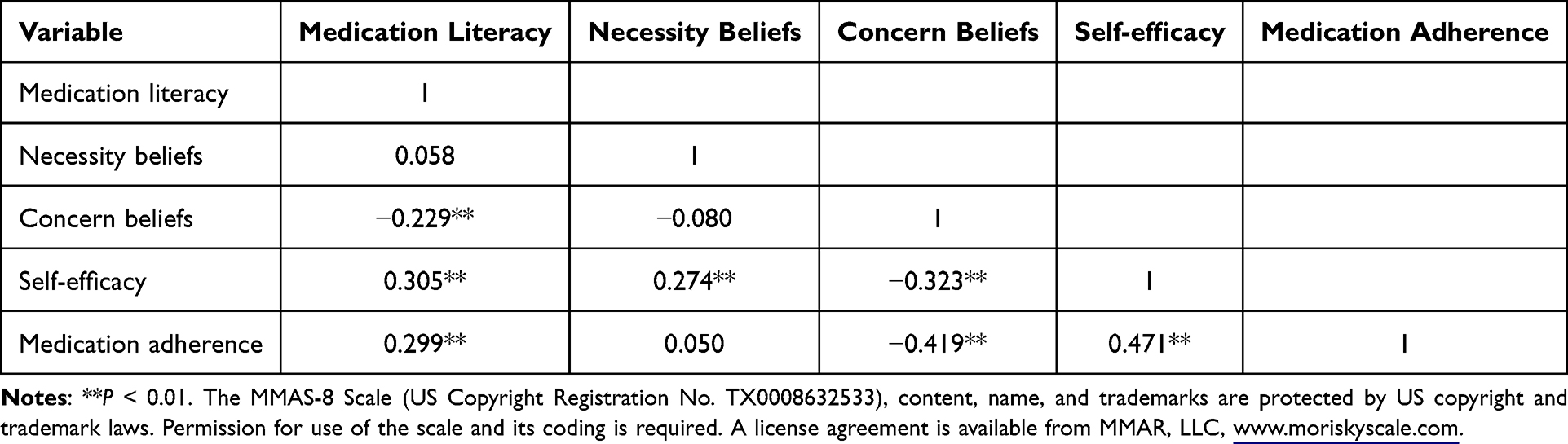 |
Table 1 Correlation Analysis of Medication Literacy, Medication Beliefs, Self-Efficacy and Medication Adherence in Patients with T2DM (n = 315) |
Concern Beliefs Mediating Medication Literacy - Adherence Relationship
The results show a significant total effect of medication literacy on medication adherence (regression coefficient c = 0.299, P < 0.001). After introducing concern beliefs, the regression coefficients for the effect of medication literacy on concern beliefs (a = −0.229, P < 0.001), the effect of concern beliefs on adherence (b = −0.370, P < 0.001), and the direct effect of medication literacy on adherence (c’ = 0.214, P < 0.001) remained significant, as shown in Figure 2. This indicates a partial mediation effect of concern beliefs between medication literacy and adherence. Further testing with the Bootstrap method showed a mediation effect value of 0.085, with a 95% CI excluding 0, confirming the mediation. The mediation effect accounted for 28.43% of the total effect. The comprehensive findings are presented in Table 2.
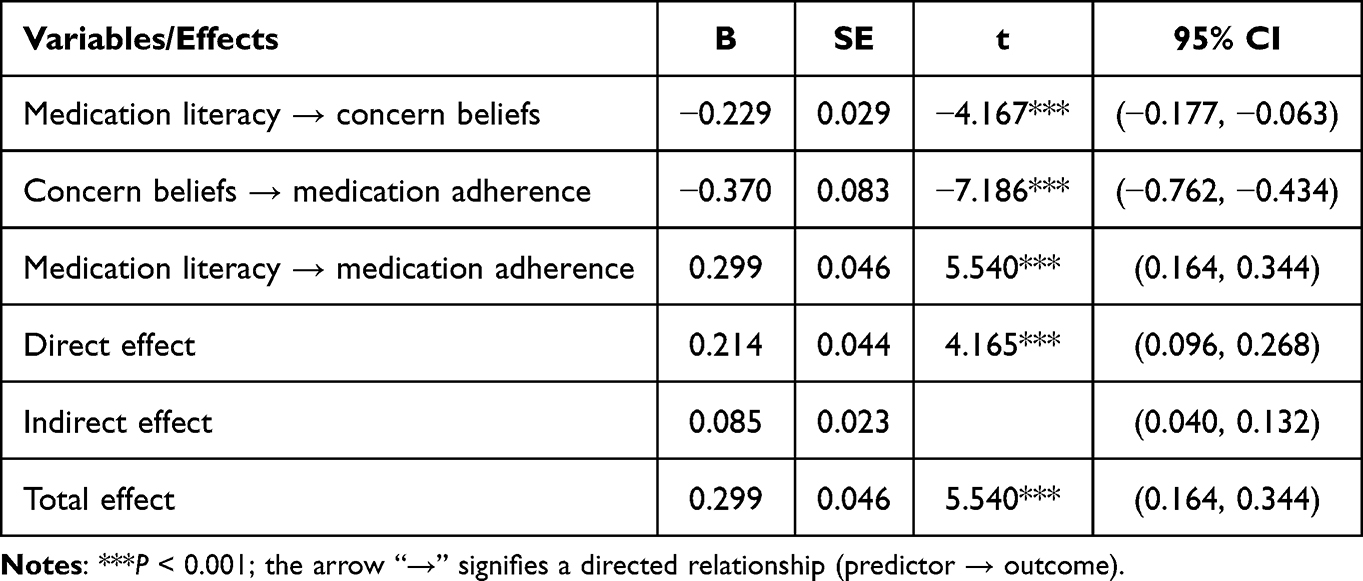 |
Table 2 Summary of the Mediating Effects of Concern Beliefs |
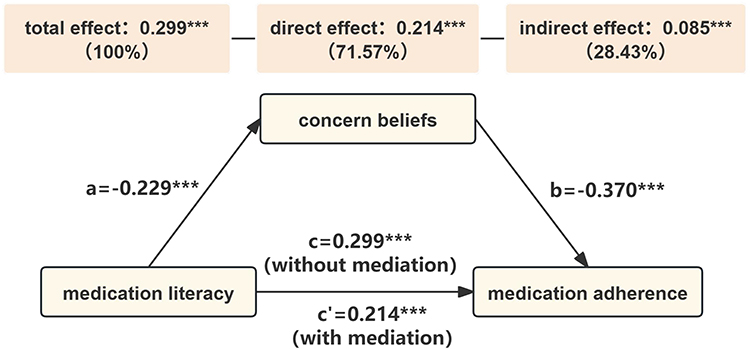 |
Figure 2 Concern beliefs mediating medication literacy - adherence relationship. Notes: ***P < 0.001. (a) Effect of medication literacy on concern beliefs; (b) Effect of concern beliefs on medication adherence; (c) Effect of medication literacy on medication adherence (Without mediation); (c’) Effect of medication literacy on medication adherence (With mediation). |
Self-Efficacy Mediating Medication Literacy - Adherence Relationship
The total effect of medication literacy on medication adherence was significant (regression coefficient c = 0.299, P < 0.001). After introducing self-efficacy, the effect of medication literacy on self-efficacy was significant (a = 0.305, P < 0.001), as was the effect of self-efficacy on adherence (b = 0.419, P < 0.001). The direct effect of medication literacy on adherence remained significant (c’ = 0.171, P < 0.01), as shown in Figure 3. These results suggest that self-efficacy partially mediates the relationship between medication literacy and adherence in T2DM patients. Further testing using the Bootstrap method showed a mediation effect value of 0.128, with a 95% CI that excluded 0, confirming the mediation. The mediation effect accounted for 42.81% of the total effect. The comprehensive findings are presented in Table 3.
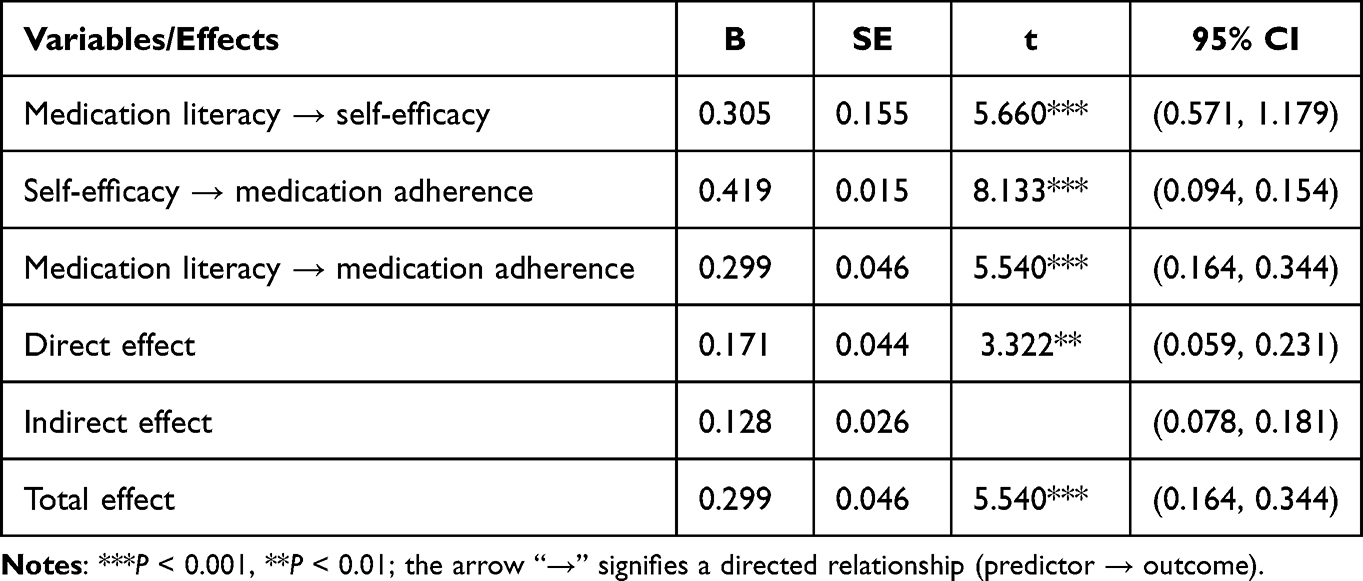 |
Table 3 Summary of the Mediating Effects of Self-Efficacy |
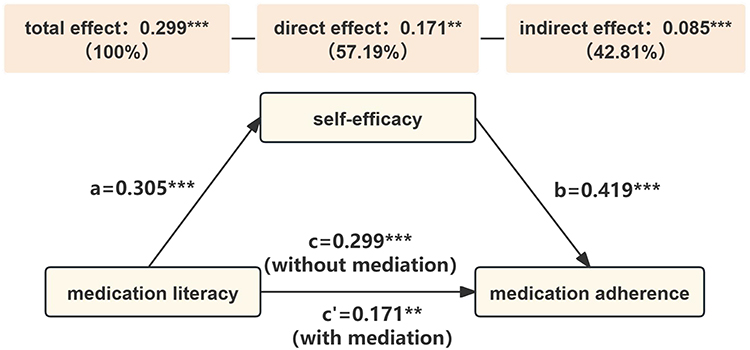 |
Figure 3 Self-efficacy mediating medication literacy - adherence relationship. Notes: ***P < 0.001, **P < 0.01. (a) Effect of medication literacy on self-efficacy; (b) Effect of self-efficacy on medication adherence; (c) Effect of medication literacy on medication adherence (Without mediation); (c’) Effect of medication literacy on medication adherence (With mediation). |
Concern Beliefs and Self-Efficacy Serially Mediating Medication Literacy - Adherence Relationship
The results show a significant total effect of medication literacy on medication adherence (regression coefficient c = 0.299, 95% CI: 0.164, 0.344). When concern beliefs and self-efficacy were introduced as mediators, the mediation paths “medication literacy → concern beliefs → medication adherence” (95% CI: 0.029, 0.105), “medication literacy → self-efficacy → medication adherence” (95% CI: 0.044, 0.128), and the serial path “medication literacy → concern beliefs → self-efficacy → medication adherence” (95% CI: 0.009, 0.036) were all significant. The direct effect of medication literacy on medication adherence (c’ = 0.131, 95% CI: 0.028, 0.194) also remained significant, as shown in Figure 4. Therefore, medication literacy directly affects adherence and also indirectly influences it through three pathways: the mediation effects of concern beliefs, self-efficacy, and their combined serial effect. The total indirect effect was 0.168, accounting for 56.19% of the total effect. The comprehensive findings are presented in Table 4.
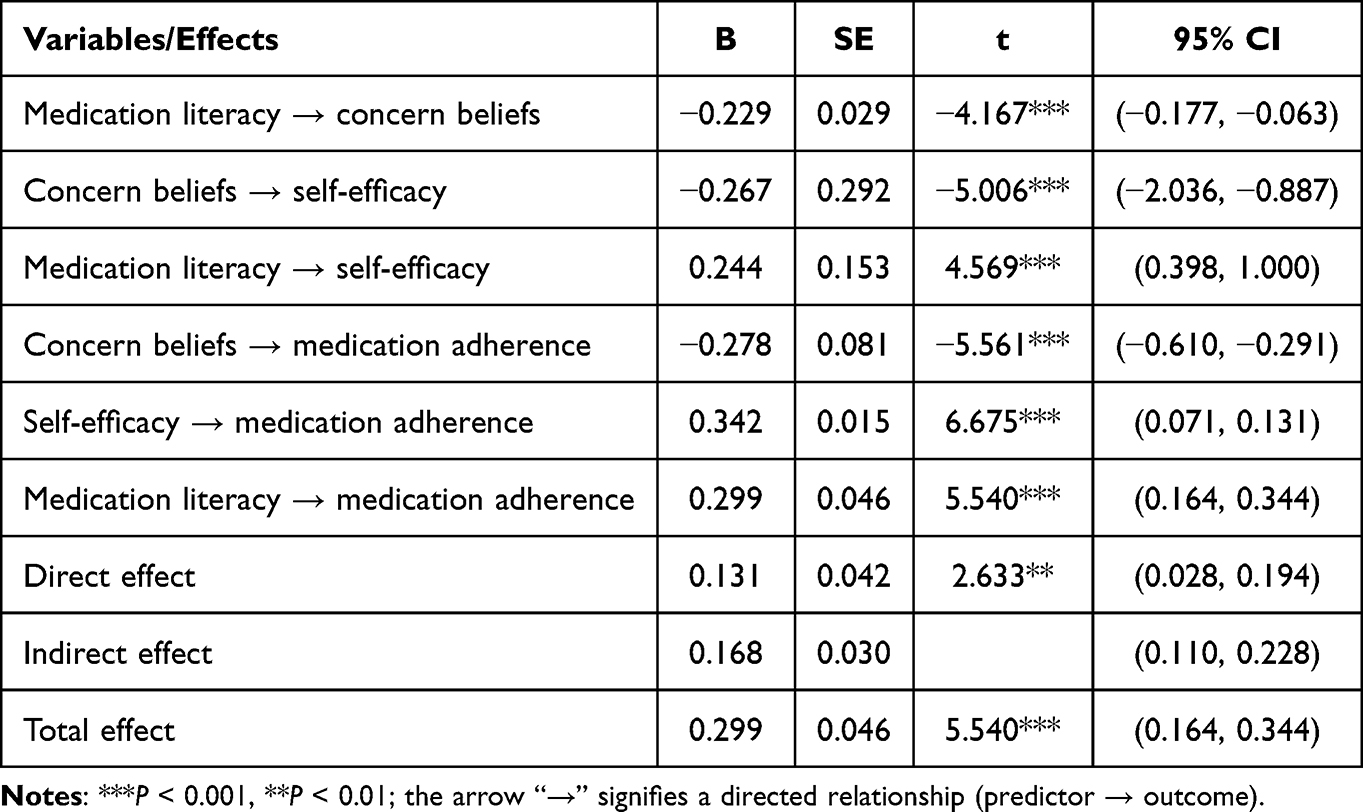 |
Table 4 Summary of the Serial Mediating Effects of Concern Beliefs and Self-Efficacy |
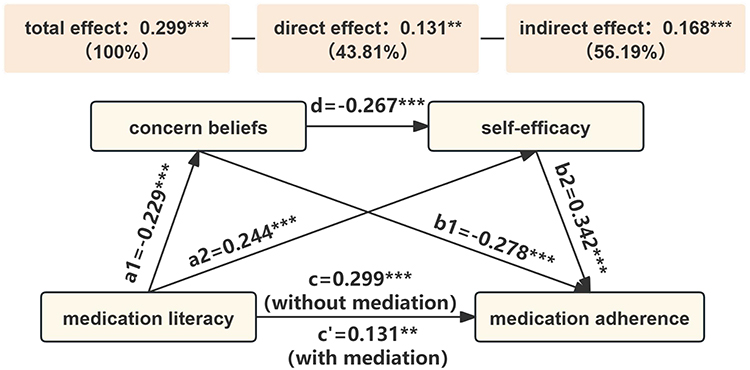 |
Figure 4 Concern beliefs and self-efficacy serially mediating medication literacy - adherence relationship. Notes: ***P < 0.001, **P < 0.01. (a1) Effect of medication literacy on concern beliefs; (b1) Effect of concern beliefs on medication adherence; (a2) Effect of medication literacy on self-efficacy; (b2) Effect of self-efficacy on medication adherence; (d) Effect of concern beliefs on self-efficacy; (c) Effect of medication literacy on medication adherence (Without mediation); (c’) Effect of medication literacy on medication adherence (With mediation). |
Discussion
This study utilizes the same T2DM patient cohort as our prior investigation but introduces significant methodological and conceptual advancements.29 Whereas the previous research employed LPA to identify heterogeneous medication belief patterns, the present analysis uses bootstrapped mediation modeling to systematically examine the mechanistic pathway through which medication literacy influences adherence, sequentially via reduced concern beliefs and enhanced self-efficacy. This approach provides impact-pathway insights that complement the previous typological approach, revealing a sequential mediation mechanism. Consequently, this study offers a deeper understanding of the psychological mechanisms driving medication behavior during the hospital-home transition and establishes a stronger theoretical foundation for developing targeted interventions.
This study found that the overall medication literacy of T2DM patients was at a moderate level. The proportion of patients with low medication literacy was 17.2%, which is lower than that reported by Qu in a study of older adults with coronary heart disease, a difference potentially attributable to the younger age of the present cohort.44 Qu focused on older adults, for whom medication literacy tends to be a greater concern.44 As people age and experience a decline in physical function, memory, and comprehension, their medication knowledge and skills may deteriorate. In this study, the item with the lowest correct response rate was “Do you know the side effects of the medication you are currently taking?” This suggests limited awareness of drug side effects among T2DM patients. Additionally, 70.8% of patients reported not receiving education on side effects, likely due to the complexity of treatment regimens and insufficient discharge education. Information asymmetry between healthcare providers and the public contributes to this issue, as patients often lack attention to and understanding of drug information, while healthcare workers fail to adequately communicate medication safety. Research indicates that insufficient medication knowledge can lead to unsafe practices, unplanned readmissions, emergency visits, and poor disease outcomes.44 Moreover, low medication literacy increases the risk of medication errors during the hospital-home transition.45 Therefore, addressing and improving patients’ medication literacy is critical. It is recommended that healthcare providers offer more accessible and comprehensible medication instructions, regularly provide tailored educational content, and collaborate with patients to develop individualized medication plans.
A total of 72.4% of patients demonstrated positive medication beliefs (the score for necessity beliefs exceeded that of concern beliefs by a margin greater than 0), which is notably lower than the 91.4% reported by Mortelmans,46 who studied elderly patients with comorbidities, a group more reliant on medication and more steadfast in their belief in its necessity. Similarly, Jiang found that older patients had stronger beliefs in necessity beliefs, likely due to their increased dependence on antidiabetic medications as they age.47 While patients in this study acknowledged the effects and benefits of antidiabetic medications, they also expressed concerns. The highest-scoring item in the necessity beliefs was “Antidiabetic medication prevents my blood glucose from rising too high,” indicating recognition of the medication’s effectiveness. In the concern beliefs, the highest-scoring items were “I don’t understand the antidiabetic medication I’m using” and “Sometimes, I worry about the long-term effects of antidiabetic medications on my body,” reflecting concerns due to insufficient knowledge about the medications. Furthermore, 33.3% of patients experienced adverse reactions to antidiabetic drugs, which likely heightened their concerns about potential long-term effects. Therefore, healthcare professionals should not only emphasize the effectiveness and necessity of medication but also educate patients about possible side effects and strategies to manage them, helping to alleviate concerns and promote better adherence to treatment plans.
Patients with T2DM in this study reported favorable self-efficacy for appropriate medication use, a finding consistent with that reported by Xue in older T2DM patients during the hospital-home transition.14 The self-efficacy scores in this study were higher than those reported by Niu,48 likely due to differences in the study populations. Niu’s study consisted of elderly patients with comorbid chronic diseases, who typically face complex medication regimens and more difficulties in medication management, which can lower their self-efficacy and confidence in adhering to prescribed treatments. In this study, patients had higher self-efficacy scores in difficult situations than in uncertain ones, suggesting they felt more confident in adhering to medications when facing difficulties, but their confidence diminished in the face of adverse drug reactions or uncertainties regarding their treatment regimen. Self-efficacy is pivotal in diabetes instruction and control. Research indicates that T2DM patients with higher self-efficacy exhibit improved diabetes self-care, demonstrating a strong link between self-efficacy and effective disease management.49 Therefore, healthcare teams should develop clear medication plans, maintain regular communication with patients, and monitor medication adherence to enhance patients’ confidence and improve their ability to manage blood glucose effectively.
Medication adherence among T2DM patients in this study was at a moderate level, which is consistent with a regional study reporting medication non-adherence in approximately one-quarter of patients with chronic diseases, thereby highlighting non-adherence as a prevalent challenge across different patient populations.50 The lowest score was recorded for item 7, “Do you struggle with adhering to your diabetes management regimen?”, followed by item 8, “Do you find it difficult to remember to take your antidiabetic medications on time and in the correct dosage?” These challenges may stem from the long-term, often lifelong nature of diabetes treatment, which involves complex regimens with multiple drugs and varying frequencies, creating significant daily inconveniences for patients. The regional study further identified key behavioral barriers, with forgetfulness emerging as a primary unintentional reason for non-adherence, thereby validating the difficulties patients experience in recalling and executing their medication regimens.50 Consequently, many patients struggle to follow the prescribed medication plan. Poor medication adherence in T2DM patients can hinder blood glucose control, increasing the risk of complications and contributing to unnecessary healthcare resource utilization. Medication adherence is the cornerstone of effective glycemic management in diabetic patients. Healthcare professionals should provide comprehensive education on diabetes and its pharmacotherapy, including disease complications, drug mechanisms, and proper administration methods. This approach helps reduce treatment burden while enabling personalized treatment and education plans tailored to individual needs, ultimately enhancing medication adherence.
Notably, this study found no significant correlation between perceived necessity beliefs and medication adherence, contrasting with some existing literature.51 This discrepancy may be explained by two context-specific factors. First, during the hospital-home transition, the key determinant of adherence may shift from a cognitive decision about medication to a behavioral challenge of adherence, making concerns (about side effects) and self-efficacy more immediate determinants. Second, patients immediately after discharge may lack internalized medication beliefs, with their adherence driven more by habitual compliance with hospital routines than by personal convictions. Consequently, transitional care interventions should focus not only on reinforcing necessity beliefs but, more critically, on alleviating concern beliefs and building self-management confidence.
This study demonstrated that medication literacy was not only directly associated with medication adherence but was also indirectly associated with it through the mediating role of concern beliefs. Xie’s study similarly suggested that medication literacy could directly impact adherence and might exert an indirect effect through medication beliefs.52 Before taking medication, patients often weigh the benefits against potential harms.23 The HBM posits that individuals are likely to engage in health-conscious activities when they view the illness as serious, believe adverse outcomes are likely, and consider the advantages of acting to outweigh the drawbacks. The results indicated a positive association between medication literacy and adherence, suggesting that greater literacy was associated with better adherence. Medication literacy appeared to directly influence adherence, as patients with greater literacy were more health-conscious and proactive in improving their medication habits, which could reduce the risk of disease recurrence and adverse events. Conversely, concern beliefs were negatively correlated with both medication literacy and adherence. Patients with lower medication literacy were more likely to express greater concerns regarding their medications, leading to lower adherence. These patients might doubt the effectiveness of medications or worry about side effects, undermining their trust in prescribed treatment plans. This lack of trust often drove them to alternative remedies and non-adherence behaviors, such as reducing or discontinuing their medications.53 Semahegn also found that intentional non-adherence was linked to insufficient medication beliefs and a poor understanding of both the disease and its treatment.54 Improving medication literacy may help address negative attitudes, reduce concern beliefs, and strengthen positive beliefs, ultimately enhancing medication adherence and overall health outcomes.
This study suggested that medication literacy may be directly related to medication adherence, and may also be indirectly related to it through self-efficacy as a mediator, consistent with the results of Liu.55 This finding deepens the clinical understanding of T2DM management by revealing that effective medication adherence during the vulnerable transition period depends on the synergistic integration of both medication literacy and self-efficacy. Successful self-management requires not only adequate knowledge but also sufficient confidence in medication use, with both elements collectively determining self-management outcomes. Sufficient medication literacy is crucial for patients to properly manage and utilize their prescriptions, while enhanced self-efficacy strengthens their confidence in maintaining adherence to prescribed regimens. The study showed a positive correlation between medication literacy, self-efficacy, and medication adherence in T2DM patients, aligning with research by domestic scholars.22 This suggests that higher medication literacy might enhance self-efficacy, which subsequently could contribute to improved medication adherence. The KAP model also suggests that knowledge acquisition can enhance self-efficacy, motivating individuals to engage in health-promoting activities.56 Medication literacy, as a composite capacity, establishes the foundation for self-efficacy through knowledge comprehension and skill application. Self-efficacy, in turn, ultimately determines the level of adherence by influencing the patient’s cognitive appraisal and behavioral persistence.
Based on the aforementioned mediation model, this study simultaneously included concern beliefs and self-efficacy as mediators in the analysis. The results demonstrated that medication literacy was directly associated with medication adherence and might also indirectly influence adherence through the sequential pathway of concern beliefs and self-efficacy. Correlation analysis further supported the underlying relationships among variables, with medication literacy and self-efficacy showing positive correlations with medication adherence, while concern beliefs demonstrated negative correlations with all three factors. These findings align with research by Visscher,57 indicating that lower health literacy tends to provoke greater concern beliefs. Patients with low medication literacy may lack a full understanding of drug therapy, leading to concerns about side effects, which affect their decision-making and adherence. The KAP model suggests that sufficient health knowledge is needed before changes in health beliefs and behaviors can occur. Medication literacy enables patients to understand their medications, which in turn shapes their views and choices regarding medication. The Hierarchical Model of Medication Adherence proposes a five-layer framework, with health literacy at the foundation, followed by disease beliefs, medication beliefs, self-efficacy, and medication adherence at the top.58 This model suggests that adequate health literacy might be crucial for influencing subsequent layers and for self-efficacy to positively impact adherence. In summary, by integrating the KAP model with the HBM, this study delineated a comprehensive pathway from knowledge to behavior. The KAP model’s knowledge‑belief‑practice sequence and the HBM’s threat‑efficacy appraisal process converged within a serial mediation framework. Medication literacy, concern beliefs, and self‑efficacy collectively constituted three pivotal factors influencing medication‑taking behavior in T2DM patients. These findings suggested that healthcare providers should conduct comprehensive assessments and deliver interventions addressing all three dimensions. Furthermore, patient health management should extend beyond pharmacotherapy toward more integrated strategies. Recent evidence indicates that lifestyle interventions,8 functional foods,9 and microbiome‑targeting therapies can act synergistically with conventional drug treatments.59 Such non‑pharmacological approaches complement objectives such as improving medication literacy, thereby constituting a multidimensional and integrative management framework for T2DM.
Limitations
This study has several limitations. The convenience sampling from a single Chinese center may limit the generalizability of the findings. Its cross-sectional design precludes causal inference and cannot track dynamic changes. MMAS-8 may be subject to recall and social desirability biases, and the self-developed General Information Questionnaire has not been formally validated. Furthermore, potential confounders, such as psychiatric comorbidities and lifestyle factors, were not controlled for, and the exclusion of patients using insulin or GLP-1 receptor agonists limits the applicability of the results to the broader T2DM population. Finally, the assessment of medication literacy and beliefs at a single time point may not capture fluctuations during the transition. Future studies should adopt multi-center longitudinal designs that incorporate objective measures, control for key confounders, and include patients across various treatment regimens to better understand the dynamic relationships among these variables.
Conclusion
This study identified a serial mediation pathway from medication literacy to adherence through reduced concerns and enhanced self-efficacy in T2DM patients during the hospital-home transition. Given the observed moderate levels of medication literacy and adherence, enhancing literacy represents a promising intervention target. For clinical practice, healthcare providers should assess patients’ medication literacy and beliefs prior to discharge and deliver tailored support. This may include integrating targeted education into discharge planning to manage adverse effects and alleviate concerns, designing counseling to strengthen self-efficacy, and collaboratively developing simple medication schedules. Future research should develop and evaluate integrated interventions based on this model, employing longitudinal designs to examine dynamic effects on long-term adherence and thereby strengthen the evidence base for T2DM transitional care.
Abbreviations
DM, Diabetes Mellitus; T2DM, Type 2 Diabetes Mellitus; IDF, International Diabetes Federation; KAP, Knowledge-Attitude-Practice; HBM, Health Belief Model; GLP-1, Glucagonlike Peptide-1; LPA, Latent Profile Analysis; WHO, World Health Organization; MLQ, Medication Literacy Questionnaire; BMQ, Beliefs about Medicines Questionnaire; BMQ-S, Beliefs about Medicines Questionnaire-Specific; C-BMQ-S, the Chinese Version of Beliefs about Medicines Questionnaire-Specific; SEAMS, Self-efficacy for Appropriate Medication Use Scale; MMAS-8, the Morisky Medication Adherence Scale-8; C-MMAS-8, the Chinese Version of Morisky Medication Adherence Scale-8; CI, Confidence Interval.
Ethics Approval
This study was conducted in strict accordance with the guidelines of the Declaration of Helsinki. The study protocol received approval from the Ethics Committee of Dongguan Eighth People’s Hospital (Approval No: LL2022053002). Participants were fully briefed on the study’s objectives, methods, potential risks, and benefits, and they provided their informed consent without any pressure. The study took great care to protect the privacy of patient information at all times.
Acknowledgments
We are sincerely thankful to the research staff and patient participants from Dongguan Eighth People’s Hospital for their important support in this work. The MMAS-8 Scale (U.S. Copyright Registration No. TX0008632533), content, name, and trademarks are protected by US copyright and trademark laws. Permission for use of the scale.
Disclosure
The authors confirm no competing interests in this work.
References
1. Heald AH, Stedman M, Davies M, et al. Estimating life years lost to diabetes: outcomes from analysis of National Diabetes Audit and Office of National Statistics data. Cardiovasc Endocrinol Metab. 2020;9(4):183–185. doi:10.1097/XCE.0000000000000210
2. International Diabetes Federation. Diabetes facts and figures. International Diabetes Federation. Available from: https://idf.org/about-diabetes/diabetes-facts-figures/.
3. GBD 2021 Diabetes Collaborators. Global, regional, and national burden of diabetes from 1990 to 2021, with projections of prevalence to 2050: a systematic analysis for the Global Burden of Disease Study 2021. Lancet. 2023;402(10397):203–234. doi:10.1016/S0140-6736(23)01301-6
4. Lind M, Garcia-rodriguez LA, Booth GL, et al. Mortality trends in patients with and without diabetes in Ontario, Canada and the UK from 1996 to 2009: a population-based study. Diabetologia. 2013;56(12):2601–2608. doi:10.1007/s00125-013-3063-1
5. Currie CJ, Peyrot M, Morgan CL, et al. The impact of treatment noncompliance on mortality in people with type 2 diabetes. Diabetes Care. 2012;35(6):1279–1284. doi:10.2337/dc11-1277
6. Ali MK, Mckeever Bullard K, Imperatore G, et al. Characteristics associated with poor glycemic control among adults with self-reported diagnosed diabetes--National Health and Nutrition Examination Survey, United States, 2007-2010. MMWR Suppl. 2012;61(2):32–37.
7. Egede LE, Gebregziabher M, Echols C, et al. Longitudinal effects of medication nonadherence on glycemic control. Ann Pharmacother. 2014;48(5):562–570. doi:10.1177/1060028014526362
8. He J, Liu F, Xu P, et al. Aerobic exercise improves the overall outcome of type 2 diabetes mellitus among people with mental disorders. Depress Anxiety. 2024;2024:6651804. doi:10.1155/da/6651804
9. Fang Y, Ma J, Lei P, et al. Konjac glucomannan: an emerging specialty medical food to aid in the treatment of type 2 diabetes mellitus. Foods. 2023;12(2):363. doi:10.3390/foods12020363
10. Vazquez-Uribe R, Hedin KA, Licht TR, et al. Advanced microbiome therapeutics as a novel modality for oral delivery of peptides to manage metabolic diseases. Trends Endocrinol Metab. 2025;36(1):29–41. doi:10.1016/j.tem.2024.04.021
11. Li H, Min H, Zhang L, et al. The relationships between social support, medication adherence, and glycemic control among inpatients with type 2 diabetes: a cross-sectional survey in Xi’an, China. Front Pharmacol. 2025;16:1634768. doi:10.3389/fphar.2025.1634768
12. Sun H, Saeedi P, Karuranga S, et al. IDF diabetes atlas: global, regional and country-level diabetes prevalence estimates for 2021 and projections for 2045. Diabet Res Clin Pract. 2022;183:109119. doi:10.1016/j.diabres.2021.109119
13. Naylor MD, Marcille J. Managing the transition from the hospital. Manag Care. 2014;23(6):27–30.
14. Xue WJ, Niu XD, Wang YH. Research on the condition of medication discrepancy in hospital-family transitional period in elderly patients with type 2 diabetes mellitus. Chin J Nurs. 2021;56(02):225–232. doi:10.3761/j.issn.0254-1769.2021.02.011
15. Cleland J. A critique of KAP studies and some suggestions for their improvement. Stud Fam Plann. 1973;4(2):42–47.
16. Hochbaum GM. Public participation in medical screening programs: a socio-psychological study. U.S. department of health, education, and welfare, public health service, bureau of state services, division of special health services. Tuberculosis Program. 1958.
17. Glanz K, Lewis FM, Rimer BK. Health Behavior and Health Education: Theory, Research, and Practice. Jossey-Bass; 1990.
18. Rosenstock IM, Strecher VJ, Becker MH. Social learning theory and the health belief model. Health Educ Q. 1988;15(2):175–183. doi:10.1177/109019818801500203
19. Pouliot A, Vaillancourt R, Stacey D, et al. Defining and identifying concepts of medication literacy: an international perspective. Res Social Adm Pharm. 2018;14(9):797–804. doi:10.1016/j.sapharm.2018.07.020
20. Ban JK, Liang BF, Fa TE. Correlation between medication literacy and medication adherence of discharged patients after emergency PCI. Chin J Social Med. 2021;38(01):97–100. doi:10.3969/j.issn.1673-5625.2021.01.025
21. Pourhabibi N, Mohebbi B, Sadeghi R, et al. Determinants of poor treatment adherence among patients with type 2 diabetes and limited health literacy: a scoping review. J Diabetes Res. 2022;2022:2980250. doi:10.1155/2022/2980250
22. Wang YP, Yu F, Zhan L, et al. Relationship of self-efficacy with drug literacy and medication compliance in elderly patients with coronary heart disease. Pract Geriatrics. 2022;36(03):310–313. doi:10.3969/j.issn.1003-9198.2022.03.026
23. Horne R, Weinman J. Patients’ beliefs about prescribed medicines and their role in adherence to treatment in chronic physical illness. J Psychosom Res. 1999;47(6):555–567. doi:10.1016/S0022-3999(99)00057-4
24. Al-Mahzoum K, Abdelaziz DH, Alenezi F, et al. Health beliefs and obesity bias as determinants of attitudes toward the rising tides of GLP-1 medications: mounjaro and ozempic. Diabetes Metab Syndr Obes. 2025;18:1389–1409. doi:10.2147/DMSO.S518994
25. Bandura A. Self-efficacy: toward a unifying theory of behavioral change. Psychol Rev. 1977;84(2):191–215. doi:10.1037//0033-295x.84.2.191
26. Bandura A, Adams NE. Analysis of self-efficacy theory of behavioral change. Cognitive Ther Res. 1977;1(4):287–310. doi:10.1007/BF01663995
27. Young MD, Plotnikoff RC, Collins CE, et al. Social cognitive theory and physical activity: a systematic review and meta-analysis. Obes Rev. 2015;15(12):983–995. doi:10.1111/obr.12225
28. Huang YM, Shiyanbola OO, Smith PD. Association of health literacy and medication self-efficacy with medication adherence and diabetes control. Patient Prefer Adherence. 2018;12:793–802. doi:10.2147/PPA.S153312
29. Jiang S, Luo T, Zhu Z, et al. Latent profile analysis of medication beliefs in patients with type 2 diabetes in the hospital-home transition and comparison with medication adherence. Patient Prefer Adherence. 2024;18:839–853. doi:10.2147/PPA.S450107
30. Alberti KG, Zimmet PZ. Definition, diagnosis and classification of diabetes mellitus and its complications. Part 1: diagnosis and classification of diabetes mellitus provisional report of a WHO consultation. Diabet Med. 1998;15(7):539–553. doi:10.1002/(sici)1096-9136(199807)15:7<539::AID-DIA668>3.0.CO;2-s
31. Maniaci MJ, Heckman MG, Dawson NL. Functional health literacy and understanding of medications at discharge. Mayo Clin Proc. 2008;83(5):554–558. doi:10.4065/83.5.554
32. Zheng F, Ding SQ, Zhong ZQ, et al. Investigation on status guo of discharged patients’ medication literacy after coronary artery stent implantation. Chin Nurs res. 2015;29(14):1732–1734. doi:10.3969/j.issn.1009-6493.2015.14.024
33. Horne R, Weinman J, Hankins M. The beliefs about medicines questionnaire: the development and evaluation of a new method for assessing the cognitive representation of medication. Psychol Health. 1999;14(1):1–24. doi:10.1080/08870449908407311
34. Tang J, Gao LL, Hu XL, et al. The reliability and validity of the Chinese version of beliefs about medicines questionnaire-specific among patients with type 2 diabetes mellitus. J Nurs Sci. 2019;34(21):25–28. doi:10.3870/j.issn.1001-4152.2019.21.025
35. Risser J, Jacobson TA, Kripalani S. Development and psychometric evaluation of the self-efficacy for appropriate medication Use Scale (SEAMS) in low-literacy patients with chronic disease. J Nurs Meas. 2007;15(3):203–219. doi:10.1891/106137407783095757
36. Dong XF, Liu YJ, Wang AX. Reliability and validity of the Chinese version self-efficacy for appropriate medication use scale. J Nurs Sci. 2015;30(11):47–49. doi:10.3870/hlxzz.2015.11.047
37. Wang YX, Li WL, Zhu WJ, et al. Chain mediating effect of rational medication self-efficacy and medication self-management between medication literacy and frailty in elderly patients with type 2 diabetes mellitus. J Nurs. 2025;32(11):13–19. doi:10.16460/j.issn2097-6569.2025.11.013
38. Morisky DE, Ang A, Krousel-wood M, et al. Predictive validity of a medication adherence measure in an outpatient setting. J Clin Hypertens. 2008;10(5):348–354. doi:10.1111/j.1751-7176.2008.07572.x
39. Bress AP, Bellows BK, King JB, et al. Cost-effectiveness of intensive versus standard blood-pressure control. N Engl J Med. 2017;377(8):745–755. doi:10.1056/NEJMsa1616035
40. Berlowitz DR, Foy CG, Kazis LE, et al. Impact of intensive blood pressure therapy on patient-reported outcomes: outcomes results from the SPRINT study. N Engl J Med. 2017;377:733–744. doi:10.1056/NEJMoa1611179
41. Wang J, Mo YZ, Bian RW. Evaluation of reliability and validity of application of the Chinese version of 8-item Morisky medication adherence scale in patients with type 2 diabetes. Chin J Diabetes. 2013;21(12):1101–1104. doi:10.3969/j.issn.1006-6187.2013.12.013
42. Hayes AF. Introduction to Mediation, Moderation, and Conditional Process Analysis: A Regression-Based Approach. Guilford Press; 2013.
43. Preacher KJ, Hayes AF. Asymptotic and resampling strategies for assessing and comparing indirect effects in multiple mediator models. Behav Res Methods. 2008;40(3):879–891. doi:10.3758/BRM.40.3.879
44. Qu J, Zhou T, Xue M, et al. Relationship between medication literacy and frailty in elderly inpatients with coronary heart disease: a cross-sectional study in China. Front Pharmacol. 2021;12:691983. doi:10.3389/fphar.2021.691983
45. Su ZW, Wang WY, Xu DM, et al. Influence of patient-related factors on medication discrepancy during hospital-home transition in patients with chronic heart failure. J Clin Med Pract. 2023;27(07):78–83. doi:10.7619/jcmp.20223602
46. Mortelmans L, Goossens E, Dilles T. Beliefs about medication after hospital dischargein geriatric patients with polypharmacy. Geriatr Nurs. 2022;43:280–287. doi:10.1016/j.gerinurse.2021.12.007
47. Jiang S, Zhu Z, Liao G, et al. Relationship between medication literacy and beliefs among persons with type 2 diabetes mellitus in Guangdong, China. Patient Prefer Adherence. 2023;17:2039–2050. doi:10.2147/PPA.S420383
48. Niu YX, Song FY, Zhang ZX, et al. Latent profile analysis of self-efficacy for appropriate medication use in elderly patients with chronic multimorbidity. J Nurs Sci. 2023;38(17):5–10. doi:10.3870/j.issn.1001-4152.2023.17.005
49. Yang N, Masingboon K, Samartkit N. Factors influencing diabetes self-management among adults with type 2 diabetes mellitus in China. Belitung Nurs J. 2022;8(5):389–395. doi:10.33546/bnj.2199
50. Prabahar K, Albalawi MA, Almani L, et al. Assessment of medication adherence in patients with chronic diseases in Tabuk, Kingdom of Saudi Arabia. J Res Pharm Pract. 2021;9(4):196–201. doi:10.4103/jrpp.JRPP_20_97
51. Jamous RM, Sweileh WM, El-Deen Abu Taha AS, et al. Beliefs about medicines and self-reported adherence among patients with chronic illness: a study in Palestine. J Family Med Prim Care. 2014;3(3):224–229. doi:10.4103/2249-4863.141615
52. Xie CT, Gu YH, Li YM, et al. Influencing factors of medication adherence among older patients with chronic heart failure: an analysis based on COM-B model. Chin Nurs res. 2024;38(02):246–251. doi:10.12102/j.issn.1009-6493.2024.02.009
53. Zhang ZX, He FP, Zhang CH, et al. Latent class analysis and influencing factors of medication adherence in multiple chronic conditions patients. Chin General Pract. 2022;25(31):3904–3913. doi:10.12114/j.issn.1007-9572.2022.0340
54. Semahegn A, Torpey K, Manu A, et al. Psychotropic medication non-adherence and its associated factors among patients with major psychiatric disorders: a systematic review and meta-analysis. Syst Rev. 2020;9(1):17. doi:10.1186/s13643-020-1274-3
55. Liu H, Yao Z, Shi S, et al. The mediating effect of self-efficacy on the relationship between medication literacy and medication adherence among patients with type 2 diabetes. Patient Prefer Adherence. 2023;17:1657–1670. doi:10.2147/PPA.S413385
56. Carter J, Park ER, Moadel A, et al. Cancer knowledge, attitudes, beliefs, and practices (KABP) of disadvantaged women in the South Bronx. J Cancer Educ. 2002;17(3):142–149. doi:10.1080/08858190209528822
57. Visscher BB, Steunenberg B, Zwikker H, et al. The impact of health literacy on beliefs about medication in a Dutch medication-using population. Eur J Clin Pharmacol. 2021;77(8):1219–1224. doi:10.1007/s00228-021-03105-0
58. Unni E, Bae S. Exploring a new theoretical model to explain the behavior of medication adherence. Pharmacy. 2022;10(2):43. doi:10.3390/pharmacy10020043
59. Lei P, Yu H, Jiang T, et al. Development of a sodium hyaluronate-enriched therapeutic formulation with stevia glycoside and mogroside V for the comprehensive management of diabetes and its complications. Int J Biol Macromol. 2025;293:139487. doi:10.1016/j.ijbiomac.2025.139487
 © 2025 The Author(s). This work is published and licensed by Dove Medical Press Limited. The
full terms of this license are available at https://www.dovepress.com/terms
and incorporate the Creative Commons Attribution
- Non Commercial (unported, 4.0) License.
By accessing the work you hereby accept the Terms. Non-commercial uses of the work are permitted
without any further permission from Dove Medical Press Limited, provided the work is properly
attributed. For permission for commercial use of this work, please see paragraphs 4.2 and 5 of our Terms.
© 2025 The Author(s). This work is published and licensed by Dove Medical Press Limited. The
full terms of this license are available at https://www.dovepress.com/terms
and incorporate the Creative Commons Attribution
- Non Commercial (unported, 4.0) License.
By accessing the work you hereby accept the Terms. Non-commercial uses of the work are permitted
without any further permission from Dove Medical Press Limited, provided the work is properly
attributed. For permission for commercial use of this work, please see paragraphs 4.2 and 5 of our Terms.
Recommended articles

Relationship Between Family Caregiver Burden and Medication Adherence in Patients with Mechanical Valve Replacement: A Structural Equation Model
Liu L, Huang W, Huang Z, Liu J, Zheng X, Tang J, Wu Y, Wang X, Liao Y, Cong L
Patient Preference and Adherence 2022, 16:3371-3382
Published Date: 20 December 2022
Relationship Between Medication Literacy and Beliefs Among Persons with Type 2 Diabetes Mellitus in Guangdong, China
Jiang S, Zhu Z, Liao G, Huang Y, Li L, Zeng K
Patient Preference and Adherence 2023, 17:2039-2050
Published Date: 18 August 2023

Latent Profile Analysis of Medication Beliefs in Patients with Type 2 Diabetes in the Hospital-Home Transition and Comparison with Medication Adherence
Jiang S, Luo T, Zhu Z, Huang Y, Liu H, Li B, Feng S, Zeng K
Patient Preference and Adherence 2024, 18:839-853
Published Date: 16 April 2024
Illness Perception, Health Literacy, and Medication Adherence in Hypertensive Patients and Their Spouses: An Actor-Partner Interdependence Mediation Model Approach
Han R, Wu C, Qu GS, Chen YC, Zeng XW, Xue QH
Patient Preference and Adherence 2025, 19:3647-3656
Published Date: 15 November 2025