
Back to Journals » Journal of Pain Research » Volume 18
The Short- and Long-Term Efficacy of Non-Invasive Brain Stimulation for Migraine: A Meta-Analysis
Authors Liu M  , Yong Y, Zou H , Yang L , Qian J
Received 15 April 2025
Accepted for publication 31 July 2025
Published 19 September 2025 Volume 2025:18 Pages 4883—4900
DOI https://doi.org/10.2147/JPR.S529622
Checked for plagiarism Yes
Review by Single anonymous peer review
Peer reviewer comments 3
Editor who approved publication: Dr Rune Häckert Christensen
Mengya Liu,1 Yongxia Yong,2 Hui Zou,1 Luping Yang,3 Jinghua Qian1
1School of Sports Medicine and Rehabilitation, Beijing Sport University, Beijing, People’s Republic of China; 2Department of rehabilitation medicine, General Hospital of Western Theater Command, Chengdu, People’s Republic of China; 3Department of Rehabilitation Technology, Sichuan Nursing Vocational College, Chengdu, People’s Republic of China
Correspondence: Jinghua Qian, School of Sports Medicine and Rehabilitation, Beijing Sport University, Beijing, People’s Republic of China, Email [email protected]
Purpose: Non-invasive brain stimulation (NIBS) has shown promising potential in the treatment of migraine; however, its short- and long-term efficacy remains uncertain. This meta-analysis evaluated the effects of NIBS on multiple migraine-related clinical outcomes in both short- and long-term follow-ups.
Methods: This PRISMA-compliant review (PROSPERO: CRD42024529488) included RCTs on NIBS for migraine. A comprehensive search was conducted in PubMed, Scopus, The Cochrane, EMBASE, Web of Science, CNKI, and VIP up to April 11, 2024. Outcomes consisted of headache frequency, pain intensity, duration, analgesic intake, and adverse effects. Analyses used RevMan 5.3 and STATA 17.0.
Results: Thirteen studies (596 participants) were included. In terms of short-term outcomes, NIBS significantly reduced headache frequency (SMD = − 1.47, 95% CI: − 2.13 to − 0.82) and pain intensity (SMD = − 2.09, 95% CI: − 3.36 to − 0.83). During long-term follow-up, significant effects were still observed at < 3 months (headache frequency: SMD = − 1.13, 95% CI: − 1.90 to − 0.35; pain intensity: − 0.66 95% CI: − 1.02 to − 0.30) and at 6– 12 months (headache frequency: SMD = − 3.95, 95% CI: − 7.44 to − 0.45; pain intensity: SMD = − 2.55 95% CI: − 4.73 to − 0.36, with no significant improvements at 3– 6 months. NIBS also provided short-term benefits in pain duration and analgesic use. Adverse event rates did not differ between groups. Meta-regression linked target and device to short-term efficacy.
Conclusion: NIBS is an effective, preventive, and safe treatment for migraine but its long-term efficacy is not evident.
Keywords: migraine disorders, non-invasive brain stimulation, NIBS, efficacy
Introduction
One of the most common neurological conditions in the world that lowers a patient’s quality of life is migraine. In accordance with the Global Burden of Disease study in 2016,1 over 1 billion individuals endure migraines. Migraine is characterized by varying degrees of periodic headache attacks that are connected to other symptoms including phonophobia, light sensitivity, and sickness based on the International Classification of Headache Disorders, 3rd edition (ICHD-3).2 Migraine is characterized by a complex pathophysiology involving both central and peripheral mechanisms. Key features include peripheral and central sensitization, impaired habituation to sensory stimuli, thalamo-cortical dysrhythmia, and hyperexcitability of the motor cortex.3 These alterations are present even during the interictal phase and have been linked to reduced pain thresholds, altered cortical excitability, and impaired cognitive function, reflecting a persistent dysfunction in sensory processing that contributes significantly to the overall burden of migraine.4 Triptans and therapies targeting the calcitonin gene-related peptide (CGRP) pathway are key pharmacological options for migraine treatment, but their effectiveness is either limited or very poorly tolerated.5 It is therefore imperative to provide new, alternative migraine treatment approaches.
Over the years, advancements in therapy choices have been made for the prevention and treatment of migraines. Non-invasive brain stimulation (NIBS) is one of the promising non-pharmacological options.6,7 The AHS guideline states that several NIBS (eg, TMS) have been approved by the US FDA for acute or preventive migraine treatment, especially in patients preferring non-drug options or unable to use medications.8 Researches have revealed that transcranial direct current stimulation (tDCS) over the primary motor cortex (M1)9–13 or other brain areas14,15 can regulate cortical excitability and reduce clinical symptoms associated with pain in migraineurs. Similarly, Repetitive Transcranial magnetic stimulation (rTMS) over different brain regions has shown a significant reduction of pain and other pain-related symptoms in migraine patients.16–20The delivery mechanism is the main distinction between the two approaches. While tDCS applies electrodes to the scalp to deliver electric currents to the brain tissues, rTMS typically uses repeated magnetic pulses transferred by electromagnetic conduction to stimulate brain tissues, consequently inducing electric currents. Significantly, high-frequency rTMS and anodal tDCS promote cortical excitability, whereas low-frequency rTMS and cathodal tDCS suppress it.21,22
Despite accumulating evidence supporting the effectiveness of non-invasive brain stimulation (NIBS) in the treatment of migraine, no consensus has been reached regarding the optimal stimulation protocols. In particular, substantial variability exists in the type of neuromodulation device used (eg, rTMS vs tDCS) and the targeted brain regions (eg, M1 vs DLPFC), which may be key contributors to the inconsistency of findings across studies. To address these issues, we conducted subgroup analyses (eg, based on device type), meta-regression analyses (with device type and stimulation target as covariates), and sensitivity analyses (eg, by sequentially excluding studies with lower methodological quality or substantial heterogeneity) to explore the potential influence of these parameters on treatment outcomes. Moreover, although previous meta-analyses have examined the short-term benefits of NIBS for migraine,23,24 the long-term efficacy remains unclear. To fill this gap, we stratified follow-up outcomes into different time intervals (<3 months, 3–6 months, and >6 months) for a more detailed evaluation of NIBS effects over time. Therefore, this meta-analysis aimed to evaluate the efficacy and safety of non-invasive brain stimulation (NIBS) for migraine management using a PICO framework. We included patients with migraine (P), assessed the effects of rTMS and tDCS (I) compared to sham stimulation (C), and examined migraine-related outcomes (O), across short- and long-term follow-up periods. Previous meta-analyses have demonstrated that NIBS, particularly when targeting the primary motor cortex (M1), can significantly reduce the frequency and intensity of migraine attacks in the short term. Although current evidence regarding its long-term efficacy remains limited, several randomized controlled trials have reported sustained therapeutic effects. In addition, adverse events reported in existing studies were mostly mild, with no serious complications observed. Based on this evidence, we hypothesized that NIBS is both effective and safe for the short- and long-term management of migraine.
Methods
Protocol and Registration
The Preferred Reporting Items for Systematic Reviews and Meta-Analysis (PRISMA) were followed in the conduct of this review.25 The complete PRISMA Checklist for this study is provided in Supplementary Material 1. The protocol was registered in the database of International Prospective Register of Systematic Reviews (PROSPERO:CRD42024529488).
Search Strategy
Two reviewers (LMY and ZH) independently performed the literature collection. A thorough electronic literature search was carried out in PubMed/MEDLINE, Scopus, Cochrane Library, WOS, EMBASE, CNKI, and VIP from the inception dates to April 11, 2024. The search strategy combined medical subject headings and free-text terms including “migraine” AND (“NIBS” OR “TMS” OR “TDCS”). Supplementary Material 2 provided details on the article selection procedure and findings. The reference lists of studies that may be eligible were manually examined for any missing research. Discrepancies among reviewers were resolved by a third reviewer (YYX).
Eligibility Criteria
Inclusion and exclusion criteria were determined based on the population, intervention, comparator, outcome measure, and study design strategy (PICOS).26 Inclusion criteria were: (1) Patients with chronic and episodic migraines who are older than eighteen. (2) Research that used NIBS as a preventative or remedial measure. (3) Patients in the control group received only the sham intervention (4) The outcome measures included: (i)Headache frequency. (ii) Pain intensity. (iii)Pain duration. (iV) ingestion of abortive drugs. (V) Adverse effects. (5) The included study was designed as a randomized controlled trial. (6) Posted in a peer-reviewed journal. Exclusion criteria were: (1) Study did not categorize migraine types using the ICHD criteria. (2) Those in whom a neurologist was not involved in the diagnosis. (3) Lack of Full text.
Outcome Measures
The outcome measures include headache frequency, pain intensity, pain duration, analgesic intake, and adverse reactions to NIBS. The International Headache Society Clinical Trials Subcommittee’s Task Force guidelines state that episodes frequency and pain intensity of migraine were regarded as the primary outcome in migraine-related studies.27 Pain intensity is usually derived from validated measures across studies and common measurement methods include: visual analogue scales (VAS), verbal rating scales (VRS), and numerical rating scales (NRS). In addition, Pain duration, Analgesic intake, and Adverse reactions were considered as secondary outcome measures. We collected outcomes from short-term (immediately after treatment) and long-term (including three time points: < 3 months, 3 to 6 months, >6 to 12 months28).
Data Extraction
Data selection and extraction were conducted independently by two reviewers (LMY and ZH). A third reviewer (YYX) was consulted regarding any differences. The primary components of the extracted data comprised General information (title, author, and country), patient characteristics (sample size, age, type of migraine, duration of migraine), characteristics of the experimental and control intervention (type of intervention, targets of brain stimulation, and sessions), outcomes and summary of conclusions. For studies with multiple measurements, we selected experimental group data with the same stimulation target as in other studies to ensure comparability and avoid unit-of-analysis errors. In addition, when further information was needed but could not be obtained immediately from the article, we initially got in touch with the associated writers.
Quality Evaluation and Bias Risk Assessment
The methodological quality was independently assessed by two reviewers (LMY and ZH) with the Physiotherapy Evidence Database (PEDro) scale.29 This instrument is composed of 11 items. If the response to an item was “Yes”, it obtained 1 point, and if it was “No” it obtained 0 points. The rating was categorized as “poor” (0–3), “fair” (4–5), “good” (6–8), or “excellent” (9–10)30 in the end.
The risk of bias was independently evaluated by two reviewers (LMY and ZH) with the Risk of Bias 2.0 tool, a validated instrument to assess the features of trial design, conduct, and reporting through five domains. Each domain was assessed by a series of questions with five potential responses: “yes”, “probably yes”, “probably no”, “no”, or “no information”. Depending on the answers, an algorithm judges the risk of bias for each domain and classifies the final judgment as “low risk”, “some concerns”, or “high risk”.31
Any disagreement on an item that arose during this process was resolved by a third reviewer (YYX).
Statistical Analysis
Statistical analyses were performed using Review Manager 5.3 (Cochrane Collaboration, 2014). Data were analyzed using standardized mean differences (SMDs) to calculate effect sizes using 95% confidence intervals (CIs). Calculations were made for dichotomous variables using odds ratios (OR). The Cochrane I2 value was utilized to evaluate the heterogeneity of studies. The heterogeneity of the trials recruited was considered acceptable if the I2 value was less than 50%. The fixed-effects model was then used to assess the differences between the groups. Otherwise, a random-effects model was used. In addition to using the I² statistic, we also considered clinical heterogeneity—such as differences in stimulation site, device type, follow-up duration, patient population, and stimulation parameters. A random-effects model was preferred when I² ≥ 50% or when notable clinical variability was present, to ensure more robust and generalizable results. To explore heterogeneity, subgroup analyses according to the NIBS stimulation site were carried out (M1 vs DLPFC). Studies not meeting the predefined subgroup criteria (eg, stimulation target) were included in the overall meta-analysis but excluded from subgroup analyses for consistency and clarity. Sensitivity analysis was conducted by removing the low-quality studies one by one, consequently to investigate the impact on the effect size. The statistical threshold was set at P <0.05 for all statistical analyses. Funnel plots were constructed to assess potential publication bias. Meta-regression analyses were conducted using STATA version 17.0 to explore potential moderators influencing the treatment effect.
Results
Literatures Screening and Selection of Studies
A total of 13 studies were included in our study. The selection process is shown as a flowchart in Figure 1. We retrieved 1,757 records from English databases and 84 from Chinese databases (CNKI and VIP). After duplicate removal, 1,379 records remained. Title and abstract screening yielded 33 potentially eligible articles (24 English, 9 Chinese). After full-text review, 13 English RCTs met inclusion criteria and were included. All Chinese studies were excluded due to ineligibility or unavailable full text.
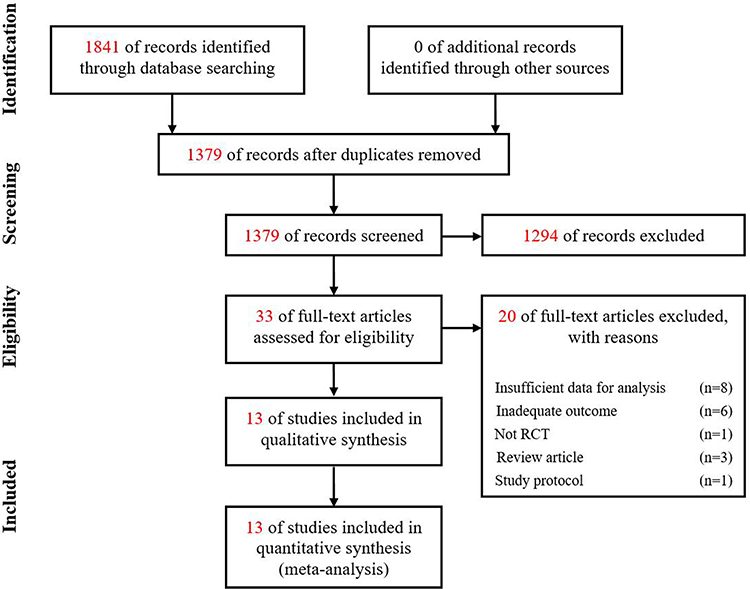 |
Figure 1 PRISMA flow diagram. |
Characteristics of Studies
The studies’ characteristics are represented in Table 1. 13 articles,9–20,32 a total of 596 participants were enrolled in our study. The number of people treated with TMS and tDCS was 262 and 334, respectively. All of the participants were diagnosed with episodic migraine and/or chronic migraine by using the ICHD. The stimulation targeted different brain areas, including the primary somatosensory cortex (S1), the primary motor cortex (M1), the dorsolateral prefrontal cortex(DLPFC), the visual cortex(VC) and the cold patch as identified by thermographic examination. The evaluation time points included multiple time points, ranging from immediately after treatment to up to 12 months.
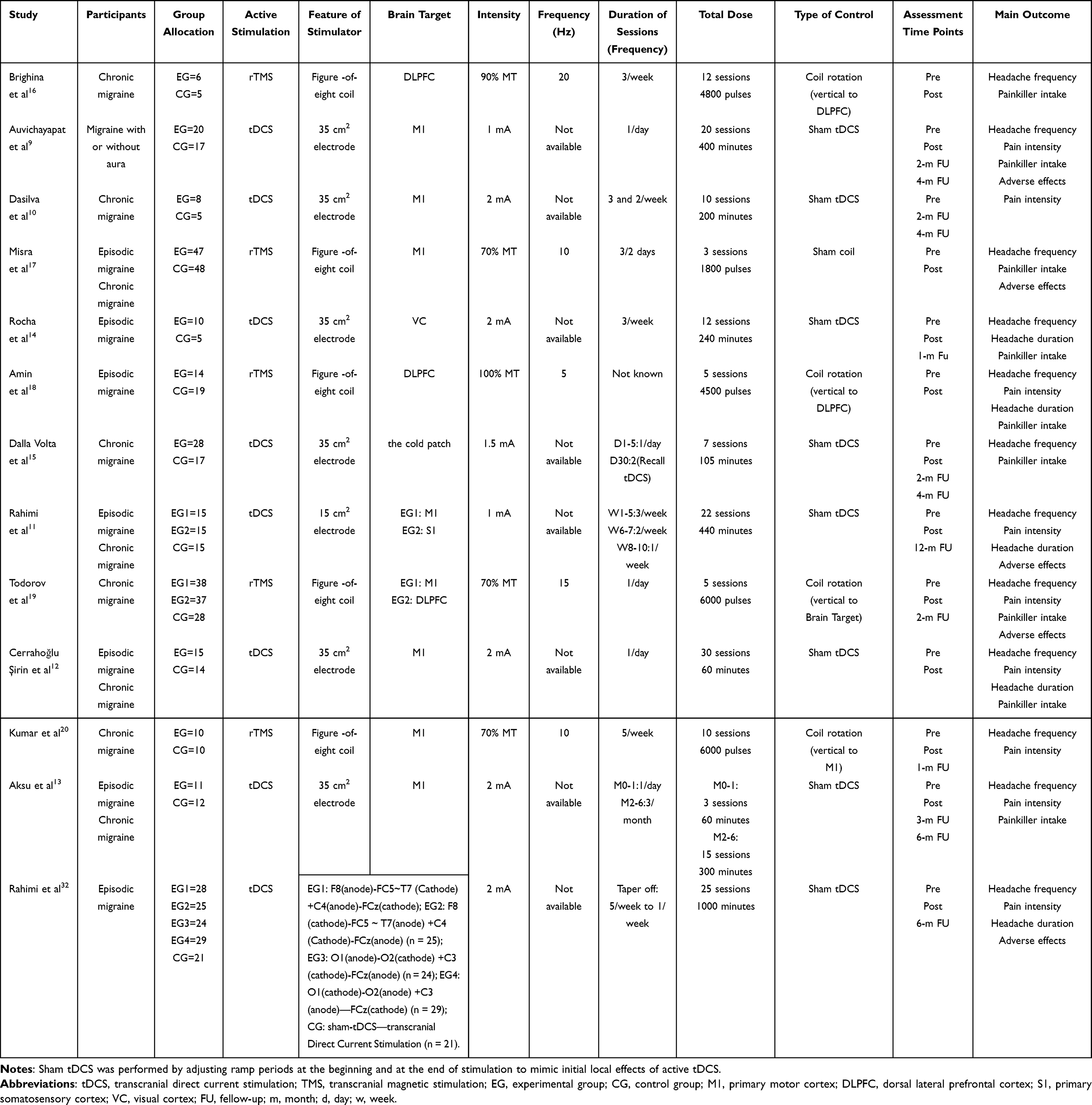 |
Table 1 Characteristics of Included Studies |
Methodological Quality and Risk of Bias
The included studies’ PEDro scale ratings varied from 6 to 9, with a mean of 7.31. Details of the quality assessment are shown in Table 2. Regarding the risk of bias evaluation (Figures 2 and 3), 2 studies obtained low risk of bias;16,20 7 studies achieved some concerns;9–12,15,17,18 and 4 studies were rated as high risk of bias.13,14,19,32
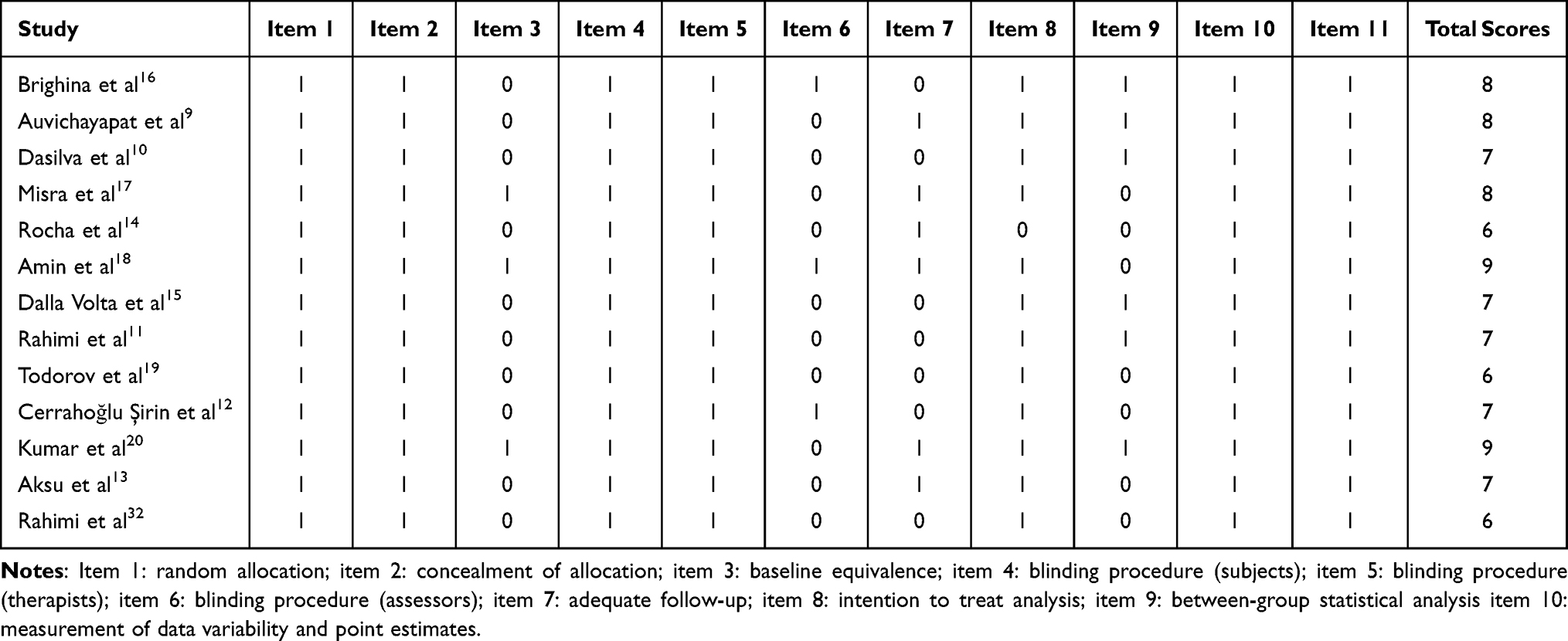 |
Table 2 Quality Assessment of Included Studies by PEDro Scale |
 |
Figure 2 Risk of Bias Summary Table. The circles in red, yellow, and green indicate high, unclear, and low risk, respectively. |
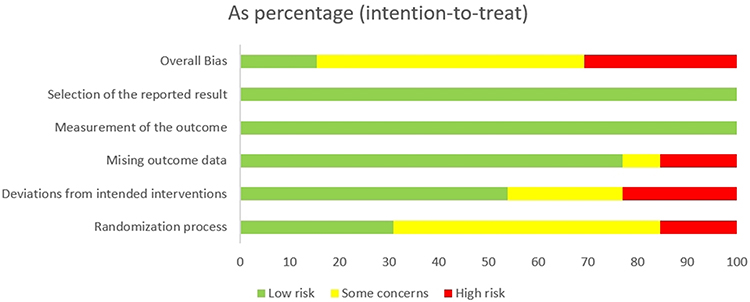 |
Figure 3 Risk of Bias Distribution. |
Headache Frequency
Immediate Effects After Intervention
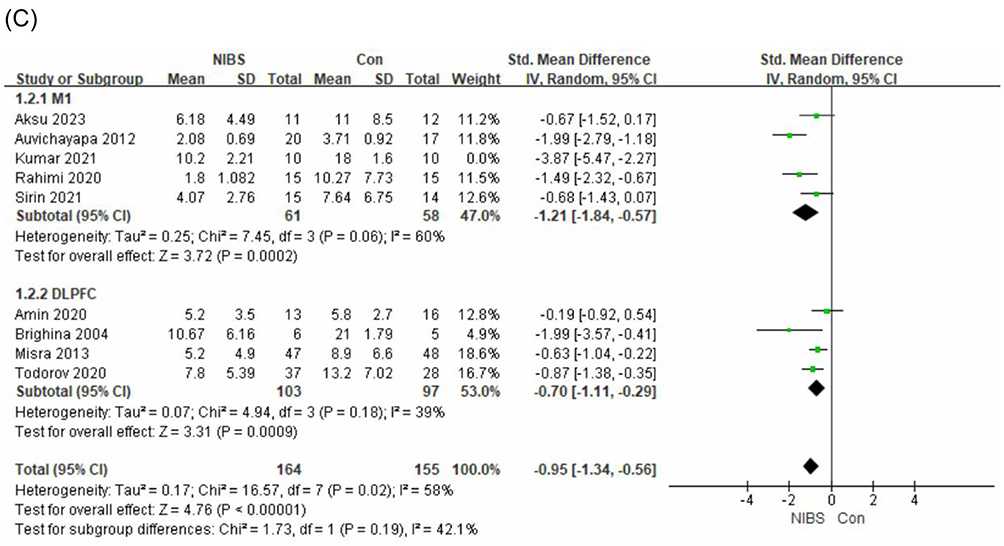
Headache frequency was assessed immediately after intervention in 12 trials.9,11–20,32 The results of these studies suggested that NIBS was associated with a statistical improvement in headache frequency (SMD = −1.47, 95% CI: −2.13 to −0.82, p<0.00001, I2=88%) (Figure 4A). In order to find reasons causing the heterogeneity, we conducted subgroup meta-analysis based on the target position of brain stimulation. The results indicated that NIBS significantly improved the headache frequency immediately post-intervention regardless of stimulating sites (M1: SMD = −1.57, 95% CI: −2.42 to −0.73, p=0.0003, I2=77%; DLPFC: SMD = −0.70, 95% CI: −1.11 to −0.29, p=0.0009, I2=39%) (Figure 4B). After sensitivity analyses were performed due to the heterogeneity of the M1 group, the outcomes demonstrated that none of the research had a noteworthy influence on the results (SMD = −1.21, 95% CI: −1.84 to −0.57, p=0.0002, I2=60%) (Figure 4C).
Figure 4 Contiuned. Figure 4 Forest plots analyzing Immediate outcomes of migraine frequency. Acceptance-based interventions versus control, including subgroup and sensitivity analyses. (A) Overall effect; (B) Subgroup analysis considering site of NIBS stimulation (M1 vs DLPFC); (C) Sensitivity analysis.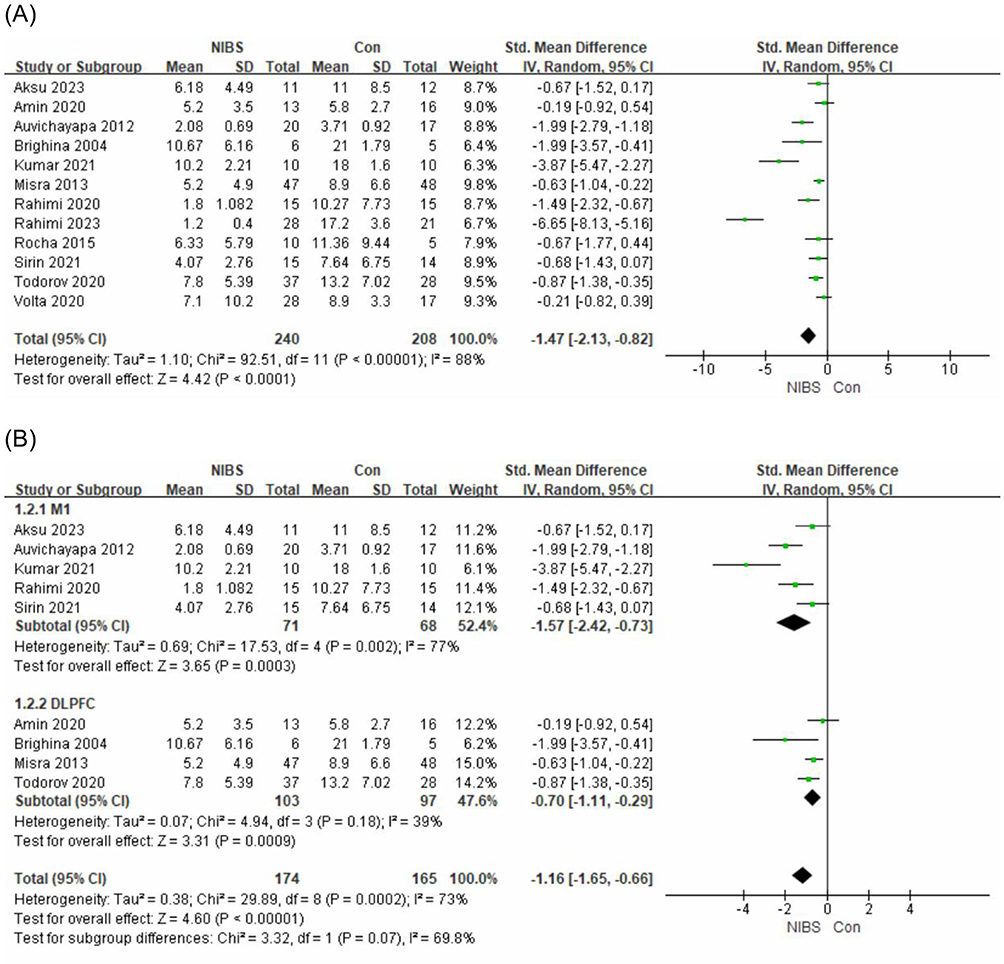
Long-Term Effects After Intervention
When the effects on migraine attacks of NIBS were measured in different long-term follow-up periods, NIBS achieved a significant reduction of headache frequency in two post-treatment periods (< 3 months: SMD = −1.13, 95% CI: −1.90 to −0.35, p=0.002, I2=79%; >6 to 12 months: SMD = −3.95, 95% CI: −7.44 to −0.45, p=0.03, I2=97%) (Figure 5A; Figure 5D), only the pooled analysis during 3 to 6 months follow-up showed no statistical difference in attack frequency between the experimental and intervention group (SMD = −0.32, 95% CI: −0.71 to 0.07, p= 0.11) (Figure 5C).
Figure 5 Contiuned. Figure 5 Forest plots analyzing long-term outcomes of migraine frequency. (A) < 3 months; (B) Sensitivity analysis for < 3 months; (C) 3 to 6 months; (D) 6 to 12 months; (E) Sensitivity analysis for 6 to 12 months.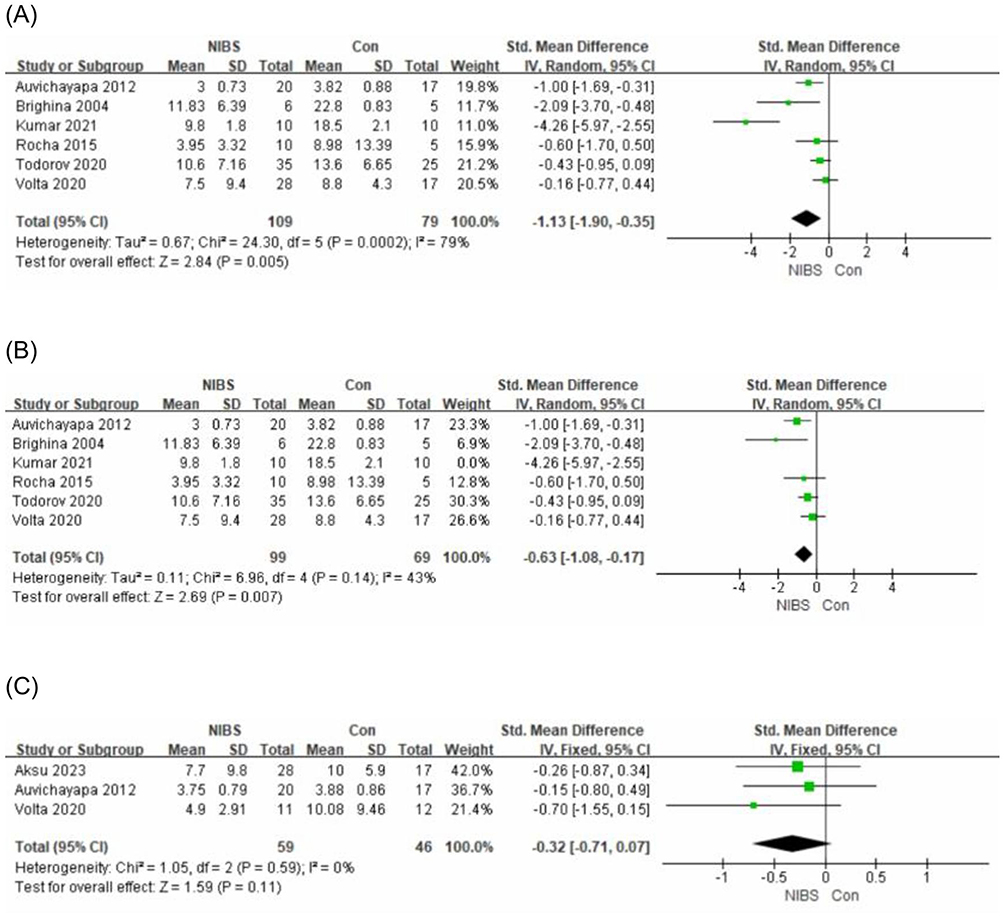
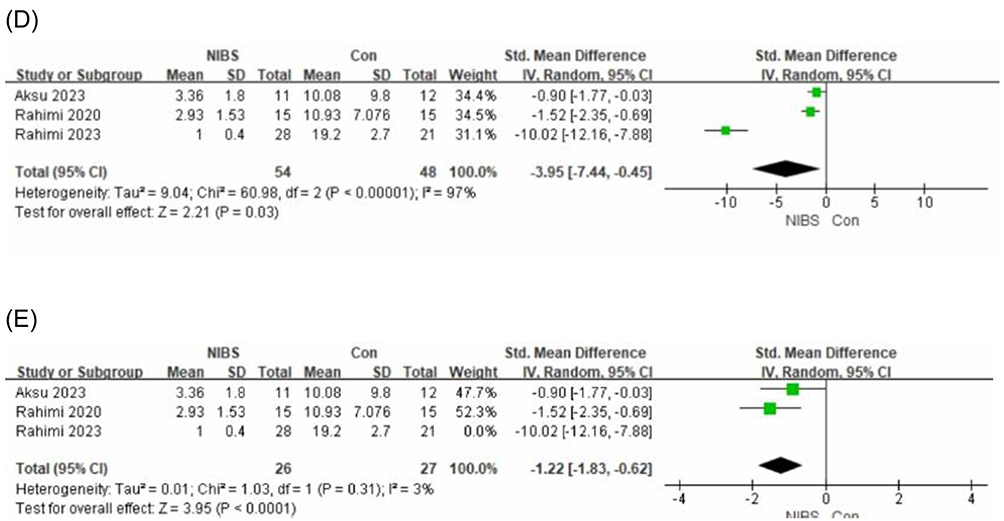
Sensitivity analyses were performed to point the causes of heterogeneity in each group, assessing each study’s influence by eliminating it from the analysis one at a time. Following the removal of one research from each of the two groups,20,32 heterogeneity ceased to be substantial, and the outcomes stayed statistically significant (< 3 months: SMD = −0.63, 95% CI: −1.08 to −0.17, p=0.007, I2=43%; >6 to 12 months: SMD = −1.22, 95% CI: −1.82 to −0.63, p<0.00001, I2=3%) (Figure 5B; Figure 5E).
Pain Intensity
Immediate Effects After Intervention
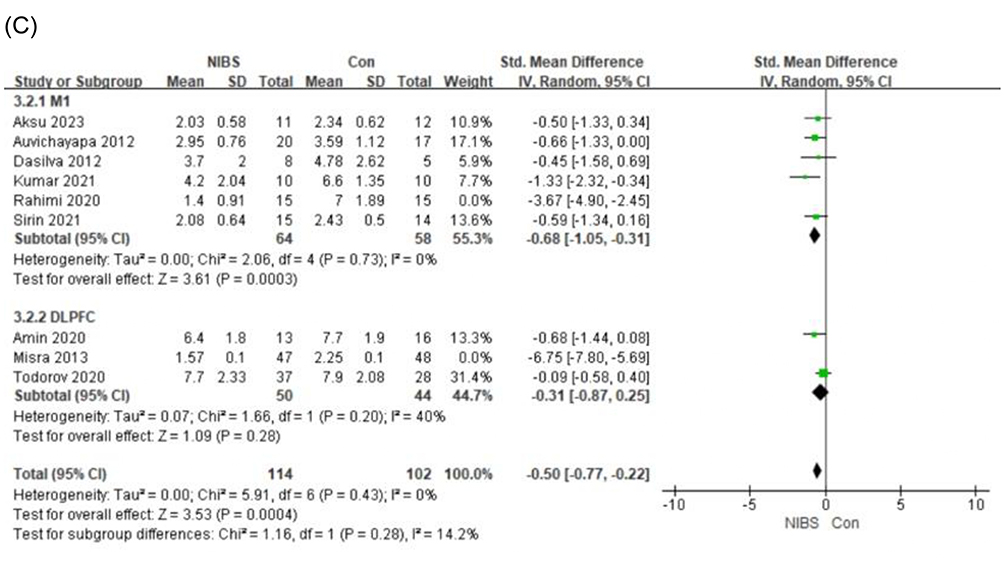
For timely post-intervention changes in pain intensity, the meta-analysis including 10 trials with high heterogenicity demonstrate noteworthy results for the effect of NIBS (SMD = −2.09, 95% CI: −3.36 to −0.83, p=0.001, I2=96%) (Figure 6A). In subgroup analyses that considered stimulated region of M1, the meta-analysis shows significant results (SMD = −1.12, 95% CI: −1.91 to −0.34, p=0.005, I2=78%) (Figure 6B). By excluding low-quality literature one by one,11 a sensitivity analysis revealed that the M1 group’s results were still statistically significant (SMD = −0.68, 95% CI: −1.05 to −0.31, p=0.0003, I2=0%) (Figure 6C). Conversely, when we considered again only DLPFC results, our meta-analysis’s findings did not yield any noteworthy findings (SMD: −2.47, 95% CI: −5.86 to 0.91, P=0.15, I2=40%) (Figure 6C).
Figure 6 Contiuned. Figure 6 Forest plots analyzing Immediate outcomes of Pain intensity. (A) Overall effect; (B) Subgroup analysis considering site of NIBS stimulation (M1 vs. DLPFC); (C) sensitivity analysis.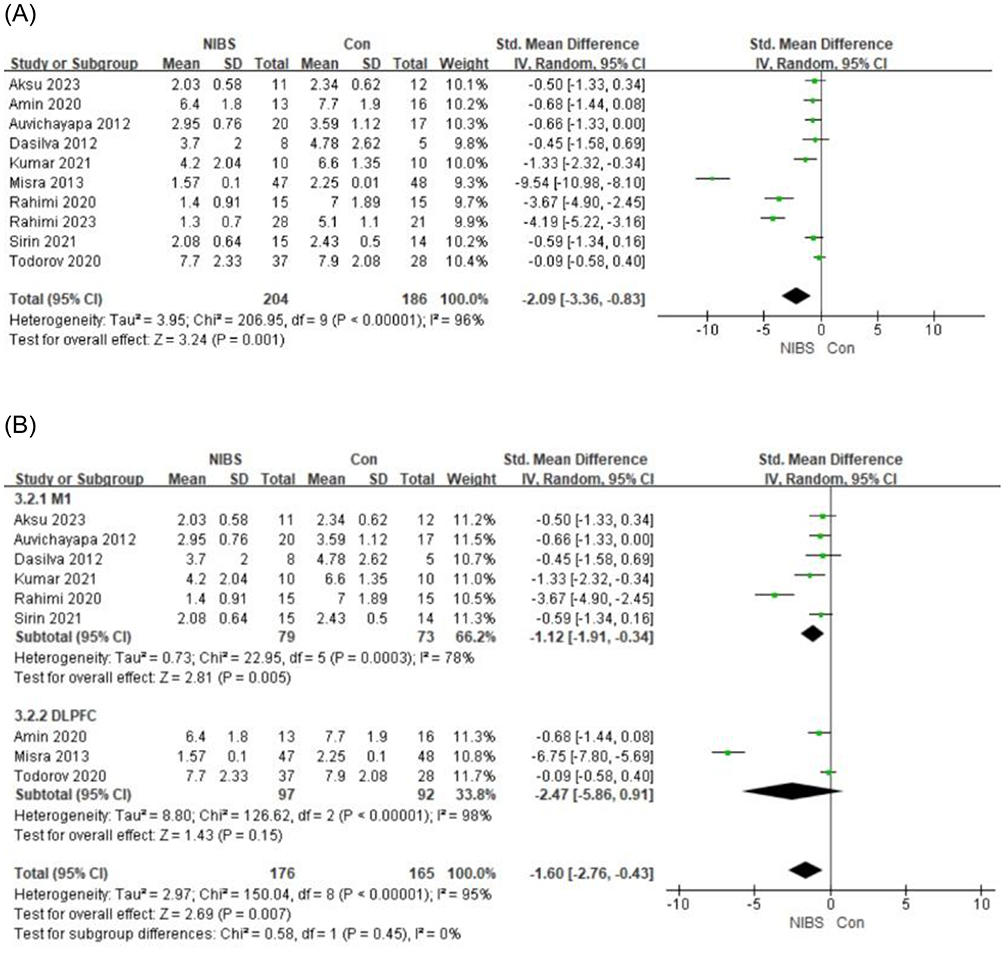
Long-Term Effects After Intervention
When effects on pain intensity of NIBS were compared by different long-term follow-up periods, real stimulation accomplished a substantial drop in the long-term follow-up period of < 3 months and>6 to 12 months (< 3 months: SMD = −0.66 95% CI: −1.02 to −0.30, p=0.0003, I2=0%; >6 to 12 months: SMD = −2.55 95% CI: −4.73 to −0.36, p=0.02, I2=93%) (Figure 7A; Figure 7C). The sensitivity analysis conducted for the 6–12 month subgroup showed that the pooled effect estimate remained stable, indicating the robustness of the results (Figure 7D). Conversely, the meta-analysis’s findings for the NIBS combined effect were not statistically significant from 3 to 6 months follow-up. (SMD = −0.43, 95% CI: −0.90 to 0.04, p= 0.08, I2=0%) (Figure 7B).
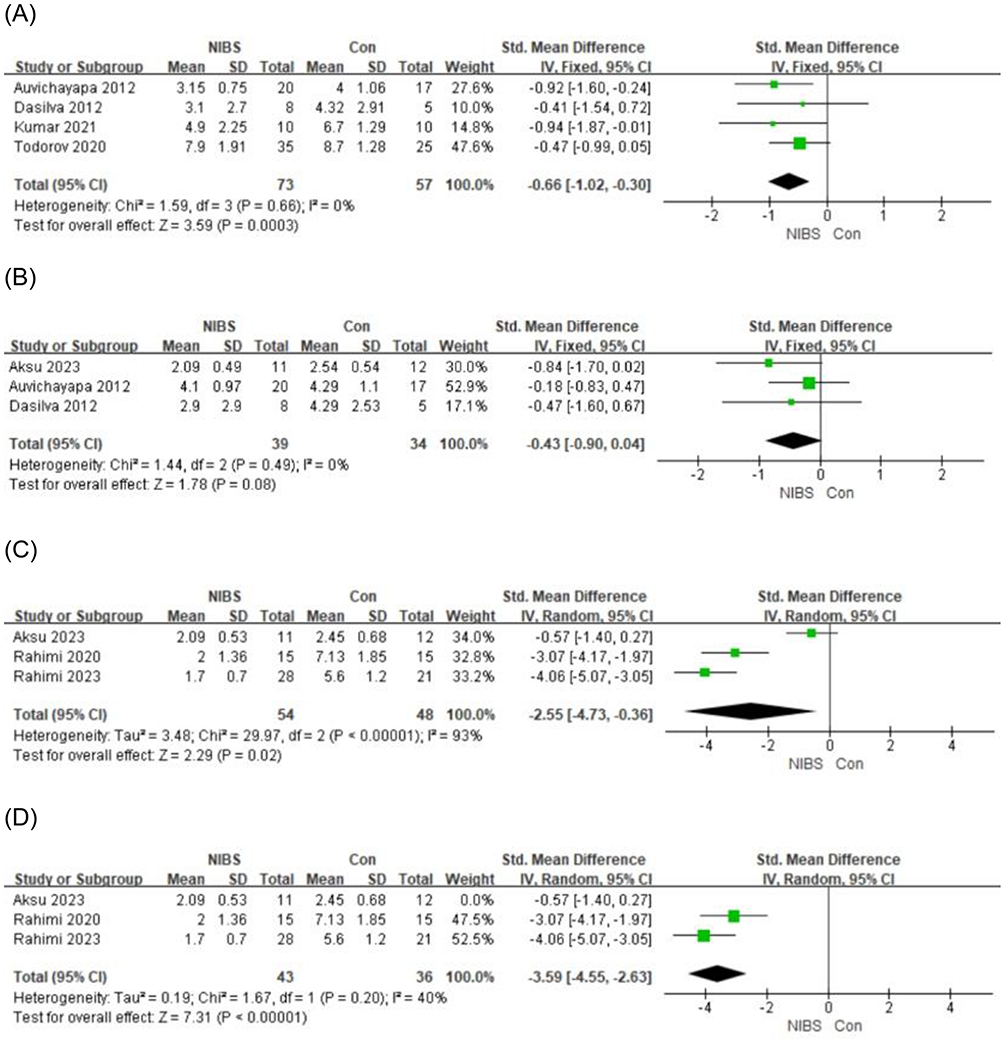 |
Figure 7 Forest plots analyzing long-term changes of pain intensity. (A) < 3 months; (B) 3 to 6 months; (C) 6 to 12 months; (D) Sensitivity analysis for 6 to 12 months. |
Pain Duration
5 trials explored the timely changes of pain duration.11,12,14,18,32 Our meta-analysis shows that real stimulation achieved a significant reduction in pain duration after treatment immediately after the intervention (SMD = −1.22, 95% CI: −2.20 to −0.24, p=0.02, I2=85%) (Figure 8A). To address the high heterogeneity in pain duration, a leave-one-out analysis was performed. Excluding Rahimi et al (2023)32 reduced heterogeneity to 59% with consistent effect size (Figure 8B).
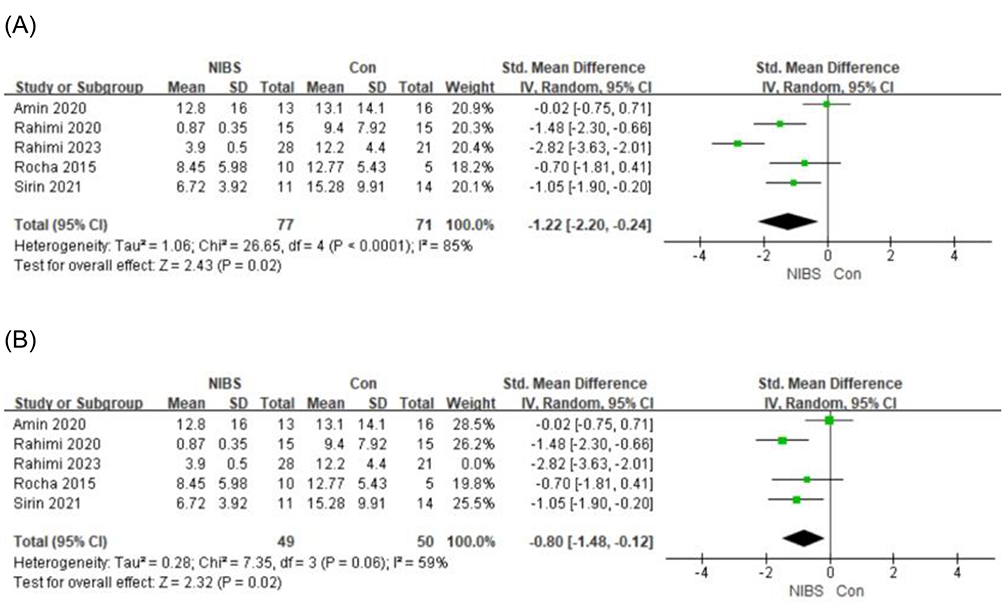 |
Figure 8 Forest plots analyzing changes of pain duration. (A) timely effect; (B) Sensitivity analysis for timely effect. |
Painkiller Intake
Considering the timely effect, we found a significant reduction in painkiller intake (SMD=−0.53, 95% CI: −0.74 to −0.31, P<0.00001, I2=29%) (Figure 9).
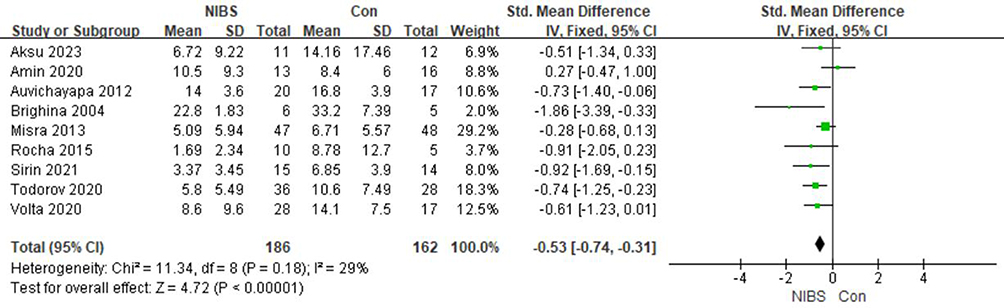 |
Figure 9 Forest plots analyzing changes in painkiller intake. |
NIBS Adverse Effects
There was no statistically significant variation between the groups in terms of the negative impact of NIBS on overall alterations (SMD=0.54, 95% CI: 0.28 to 1.04, P=0.07, I2=0%) (Figure 10).
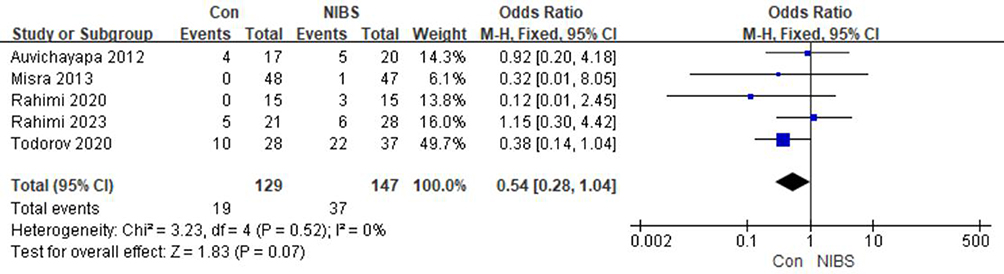 |
Figure 10 Forest plots analyzing outcomes of NIBS adverse effects. |
Meta-Regression Analyses
The random-effects meta-regression analysis revealed that both stimulation site and neuromodulation device type were significant predictors of the immediate reduction in migraine attack frequency following NIBS intervention. Stimulation over the DLPFC yielded a greater effect size compared to M1 (β = –3.29, P = 0.021); similarly, tDCS demonstrated superior efficacy over rTMS (β = –2.81, P = 0.039). In contrast, no significant associations were observed between stimulation parameters and other clinical outcomes of migraine, including short-term changes in pain intensity and medication use. The details are shown in the supplementary material 3.
Discussion
This study demonstrates that non-invasive brain stimulation (NIBS) has both immediate and long-term efficacy for migraine, with its effects influenced by the type and target of stimulation, and without increasing the incidence of adverse events. Compared with previous systematic reviews that primarily focused on short-term outcomes, our study incorporated longer follow-up data and was the first to systematically quantify the temporal trend of NIBS efficacy across different time points. We found that NIBS showed significant effects during the <3-month and 6–12-month follow-up periods, but not during the 3–6-month interval. This pattern suggests a potential fluctuation in treatment response over time, indicating that the long-term effects of NIBS may not follow a linear trajectory and could be influenced by neural adaptation mechanisms. The emergence and magnitude of this “second peak” of therapeutic benefit have not been clearly described in prior literature, and our findings provide not only supplementary evidence of long-term efficacy but also valuable insight for optimizing intervention timing in future clinical applications.
The sensitivity analysis showed that removing certain studies significantly reduced heterogeneity, while the meta-analysis results remained robust. Specifically, Kumar 2021’s 2-week, 5-day-per-week stimulation protocol resulted in a larger effect size in the immediate pain frequency and <3-month follow-up groups. Rahimi 2023’s combined stimulation protocol for a single treatment session led to a larger effect size in the 6–12 month pain frequency group. In the M1 subgroup for pain intensity improvement, Rahimi 2020’s tDCS protocol, starting with three sessions per week and tapering down to one session per week over 10 weeks, resulted in a larger effect size. Aksu 2023 showed a smaller effect size in the 6–12 month pain intensity improvement group due to lower stimulation intensity. These differences in stimulation protocols, frequency, and duration explain the heterogeneity observed in our analysis.
Our short-term effect results are consistent with other results. Peiwei Hong et al33 argues that activating M1 or activating/inhibiting VC using tDCS may alleviate the symptoms of migraines. Feng et al24 considers that excitatory NIBS of the M1 is likely to reduce headache intensity and the frequency of headache attacks in patients with migraine. However, two meta-analyses do not fully support the therapeutic efficacy of NIBS for migraine. Shirahige et al23 found no significant overall effect of NIBS, attributing this result mainly to methodological limitations such as small sample sizes, high risk of bias, and considerable heterogeneity. Nevertheless, their subgroup analysis indicated that tDCS might exert more promising effects. Similarly, Lihuan Lan et al34 reported that sTMS was effective for the acute treatment of migraine attacks with aura, but showed no significant benefit in patients with chronic migraine, which may be related to the more complex pathophysiological mechanisms, greater central sensitization, and more frequent medication overuse commonly observed in chronic migraine.
Meta-regression analysis in this study revealed that stimulation site and neuromodulation type significantly influenced the immediate reduction in migraine attack frequency following NIBS intervention, with DLPFC stimulation and tDCS showing superior short-term efficacy. However, in the long-term follow-up, no significant associations were observed between stimulation parameters and various clinical outcomes. These findings suggest that short-term effects may be influenced by methodological characteristics, whereas long-term efficacy might be determined by other factors. Further research is warranted to elucidate the underlying mechanisms.
In addition, we are the first to investigate the long-term effects after treatment until the 12th month of NIBS therapy. Interestingly, our analysis revealed that the 3–6 month follow-up period did not show statistically significant improvements in headache frequency and the intensity of pain, while significant effects were observed at both earlier (<3 months) and later (>6 to 12 months) time points. This response pattern may reflect a transient attenuation of therapeutic effects, possibly due to synaptic homeostatic mechanisms or adaptation following initial stimulation-induced plasticity. It is also possible that the stimulation protocol used in current trials lacked reinforcement or maintenance sessions during this middle period, leading to a temporary loss of efficacy. Future studies are needed to explore optimized stimulation schedules that sustain therapeutic benefits beyond the early phase.This response pattern may be related to the plasticity and metaplasticity of synapses after NIBS stimulation. Long-term potentiation (LTP) and long-term depression (LTD) are classical forms of synaptic plasticity and are widely regarded as the neural basis for learning, memory, and long-term neuromodulatory effects.35 tDCS modulates cortical excitability through weak direct currents, and when applied above certain thresholds, may induce LTP/LTD-like effects.20 Repeated tDCS within specific intervals can further lead to late-phase LTP-like plasticity, dependent on NMDA receptor activity and protein synthesis.36 Likewise, rTMS can induce activity-dependent plasticity through similar mechanisms, forming the neurobiological basis for sustained effects.35 While NIBS can cause lasting changes, the nervous system may adapt, leading to a gradual attenuation of effects, which explains why treatment benefits were maintained shortly after intervention but diminished by 3–6 months.
LTP and LTD are further regulated by metaplasticity under conditions of repeated stimulation.35 The term “metaplasticity” describes how a postsynaptic neuron or neural network’s prior activity can alter the plasticity that was previously induced.37 This mechanism helps maintain a dynamic balance between excitatory and inhibitory plasticity, preventing excessive or maladaptive synaptic changes. Cells or synapses undergo metaplasticity, which modifies their capacity to display LTP or LTD following a subsequent bout of activity.35 Following NIBS intervention, the nervous system may undergo a metaplasticity-induced adjustment period, during which its responsiveness to subsequent stimulation or spontaneous neural activity may be altered, which may be associated with the reemergence of NIBS effects at 6 to 12 months. In addition, Metaplasticity effects may be reversed after a while.37 At different time points after the intervention, spontaneous adjustments in synaptic strength may occur, causing fluctuations in NIBS efficacy. This dynamic process suggests that neuromodulation induced by NIBS depends not only on the initial stimulation effects but also on the combined influence of long-term network states and synaptic plasticity regulatory mechanisms. Therefore, future research is urgently needed to further elucidate the role of metaplasticity in the long-term therapeutic effects of NIBS, particularly its clinical significance in chronic neurological conditions such as migraine.
Furthermore, the relationship between stimulation targets and clinical outcomes remains complex and not yet fully understood. Although both M1 and DLPFC stimulation demonstrated beneficial effects on headache frequency and pain intensity, the substantial heterogeneity—especially among trials targeting M1—suggests that clinical efficacy may not depend solely on the stimulation site. Additional factors, such as stimulation intensity, frequency, individual variability in cortical excitability, and potential non-specific placebo effects, may contribute to the observed variability. These findings indicate that the stimulus–effect relationship is likely nonlinear and patient-dependent. Therefore, future research is warranted to clarify optimal stimulation parameters and develop individualized NIBS protocols for the treatment of migraine. From a clinical perspective, NIBS represents a promising adjunctive intervention for patients with migraine, particularly those who are intolerant of or unresponsive to pharmacological treatments. Clinicians may consider incorporating NIBS into a multimodal management approach, with careful attention to individualized patient selection, monitoring of treatment response, and follow-up planning to maximize long-term therapeutic benefits.
Strengths of the study include: Firstly, we registered in advance on the PROSPERO platform, which made the process more transparent and avoided post hoc decisions. Secondly, we are the first article to conduct a meta-analysis of the long-term effects of NIBS on treating migraine.
The limitations of this study were listed as follows: First, high heterogeneity was observed in some outcome measures. Although a random-effects model was applied to account for between-study variability, and subgroup as well as meta-regression analyses were conducted to explore potential sources of heterogeneity, residual confounding could not be entirely excluded. This high heterogeneity may compromise the precision of effect size estimates; thus, results should be interpreted with caution, taking into account the specific characteristics of the interventions. Second, the limited number of included studies and the small sample sizes in most trials not only restricted our ability to conduct subgroup analyses on stimulation intensity and frequency, but may also have resulted in an underpowered estimation of the effect size. Third, Funnel plot analysis indicated potential publication bias for pain intensity and attack frequency, while the plot for analgesic use appeared symmetric. Given the limited number of studies, these results should be interpreted cautiously. Figures are provided in the Supplementary Material 4. Hence, to assess the efficacy and security of NIBS, more research with a bigger sample size, and multicenter trails with long-term follow-up needs to be done.
Conclusion
NIBS may have potential benefits in improving migraine-related pain outcomes. However, considerable heterogeneity was observed across studies, and the long-term efficacy appeared to be variable. Overall, NIBS represents a promising non-pharmacological intervention for migraine, but its stability and durability require further confirmation through well-designed, large-scale studies with long-term follow-up.
From a physiopathological perspective, NIBS may alleviate migraine symptoms by modulating cortical excitability and neural plasticity mechanisms, such as LTP and LTD. The fluctuating efficacy observed at different follow-up periods may be related to adaptive neural regulation, namely metaplasticity.
Abbreviations
NIBS, Non-invasive brain stimulation; rTMS, Repetitive transcranial magnetic stimulation; tDCS, Transcranial direct current stimulation; SMD, Standardized mean difference; Cis, Confidence intervals; OR, Odds ratio; I², I-squared (statistical heterogeneity measure); M1, Primary motor cortex; DLPFC, Dorsolateral prefrontal cortex; VC, Visual cortex; S1, Primary somatosensory cortex; VAS, Visual analogue scale; VRS, Verbal rating scale; NRS, Numerical rating scale; EG, Experimental group; CG, Control group.
Data Sharing Statement
This published article and its supplemental information files contain all of the data created or analyzed during this investigation.
Acknowledgments
The authors are truly grateful to Dr. Jinghua Qian for her counsel and to their family and friends for their continuous support.
Funding
This work was funded by the Fundamental Research Funds for the Central Universities (Exercise Rehabilitation Science Laboratory, No. 2025KYPT12), and the Beijing High-Grade, Precision, and Advanced Disciplines Project.
Disclosure
The authors report no conflicts of interest in this work.
References
1. Feigin VL, Nichols E, Alam T. Global, regional, and national burden of neurological disorders, 1990-2016: a systematic analysis for the global burden of disease study 2016. Lancet Neurol. 2019;18(5):459–480. doi:10.1016/s1474-4422(18)30499-x
2. Headache Classification Committee of the International Headache Society (IHS). The international classification of headache disorders, 3rd edition. Cephalalgia. 2018;38(1):1–211. doi:10.1177/0333102417738202
3. Goadsby PJ, Holland PR, Martins-Oliveira M, Hoffmann J, Schankin C, Akerman S. Pathophysiology of migraine: a disorder of sensory processing. Physiol Rev. 2017;97(2):553–622. doi:10.1152/physrev.00034.2015
4. Deodato M, Granato A, Martini M, et al. Neurophysiological and clinical outcomes in episodic migraine without aura: a cross-sectional study. J Clin Neurophysiol. 2024;41(4):388–395. doi:10.1097/wnp.0000000000001055
5. Diener HC, Charles A, Goadsby PJ, Holle D. New therapeutic approaches for the prevention and treatment of migraine. Lancet Neurol. 2015;14(10):1010–1022. doi:10.1016/s1474-4422(15)00198-2
6. Schoenen J, Roberta B, Magis D, Coppola G. Noninvasive neurostimulation methods for migraine therapy: the available evidence. Cephalalgia. 2016;36(12):1170–1180. doi:10.1177/0333102416636022
7. Ailani J, Burch RC, Robbins MS. The American headache society consensus statement: update on integrating new migraine treatments into clinical practice. Headache. 2021;61(7):1021–1039. doi:10.1111/head.14153
8. American Headache Society. The American Headache Society Position Statement On Integrating New Migraine Treatments Into Clinical Practice. Headache. 2019;59(1):1–18. doi:10.1111/head.13456
9. Auvichayapat P, Janyacharoen T, Rotenberg A, et al. Migraine prophylaxis by anodal transcranial direct current stimulation, a randomized, placebo-controlled trial. J Article Chotmaihet Thangphaet. 2012;95(8):
10. Dasilva AF, Mendonca ME, Zaghi S, et al. tDCS-induced analgesia and electrical fields in pain-related neural networks in chronic migraine. J Article Headache. 2012;52(8):
11. Rahimi MD, Fadardi JS, Saeidi M, Bigdeli I, Kashiri R. Effectiveness of cathodal tDCS of the primary motor or sensory cortex in migraine: a randomized controlled trial. J Article Brain Stimul. 2020;13(3):
12. Şirin T C, Aksu S, Hasirci Bayir BR, et al. Is allodynia a determinant factor in the effectiveness of transcranial direct current stimulation in the prophylaxis of migraine? Neuromodulation. 2021;24(5):899–909. doi:10.1111/ner.13409
13. Aksu S, Şirin TC, Hasırcı Bayır BR, et al. Long-term prophylactic transcranial direct current stimulation ameliorates allodynia and improves clinical outcomes in individuals with migraine. Neuromodulation. 2023;26(4):778–787. doi:10.1016/j.neurom.2022.06.007
14. Rocha S, Melo L, Boudoux C, Á F, Araújo D, Monte-Silva K. Transcranial direct current stimulation in the prophylactic treatment of migraine based on interictal visual cortex excitability abnormalities: a pilot randomized controlled trial. J Neurol Sci. 2015;349(1–2):33–39. doi:10.1016/j.jns.2014.12.018
15. Dalla Volta G, Marceglia S, Zavarise P, Antonaci F. Cathodal tDCS guided by thermography as adjunctive therapy in chronic migraine patients: a sham-controlled pilot study. J Article Front Neurol. 2020;11. doi:10.3389/fneur.2020.00121
16. Brighina F, Piazza A, Vitello G, et al. rTMS of the prefrontal cortex in the treatment of chronic migraine: a pilot study. J Article Neurol Sci. 2004;227(1):
17. Misra UK, Kalita J, Bhoi SK. High-rate repetitive transcranial magnetic stimulation in migraine prophylaxis: a randomized, placebo-controlled study. J Article J Neurol. 2013;260(11):
18. Amin R, Emara T, Ashour S, et al. The role of left prefrontal transcranial magnetic stimulation in episodic migraine prophylaxis. J Article Egypt J Neurol Psych Neurosurg. 2020;56(1). doi:10.1186/s41983-019-0140-5
19. Todorov V, Bogdanova D, Tonchev P, Milanov I. Repetitive transcranial magnetic stimulation over two target areas, sham stimulation and topiramate in the treatment of chronic migraine. Article Comptes Rendus de L’Academie Bulgare des Sciences. 2020;73(9):1298–1305. doi:10.7546/CRABS.2020.09.15
20. Kumar A, Mattoo B, Bhatia R, Kumaran S, Bhatia R. Neuronavigation based 10 sessions of repetitive transcranial magnetic stimulation therapy in chronic migraine: an exploratory study. J Article Neurol Sci. 2021;42(1):
21. Hallett M. Transcranial magnetic stimulation: a primer. Neuron. 2007;55(2):187–199. doi:10.1016/j.neuron.2007.06.026
22. Nitsche MA, Paulus W. Excitability changes induced in the human motor cortex by weak transcranial direct current stimulation. J Physiol. 2000;527(Pt 3):633–639. doi:10.1111/j.1469-7793.2000.t01-1-00633.x
23. Shirahige L, Melo L, Nogueira F, Rocha S, Monte-Silva K. Efficacy of noninvasive brain stimulation on pain control in migraine patients: a systematic review and meta-analysis. Headache. 2016;56(10):1565–1596. doi:10.1111/head.12981
24. Feng Y, Zhang B, Zhang J, Yin Y. Effects of non-invasive brain stimulation on headache intensity and frequency of headache attacks in patients with migraine: a systematic review and meta-analysis. review. Headache. 2019;59(9):1436–1447. doi:10.1111/head.13645
25. Moher D, Liberati A, Tetzlaff J, Altman DG. Preferred reporting items for systematic reviews and meta-analyses: the PRISMA statement. PLoS Med. 2009;6(7):e1000097. doi:10.1371/journal.pmed.1000097
26. Stone PW. Popping the (PICO) question in research and evidence-based practice. Appl Nurs Res. 2002;15(3):197–198. doi:10.1053/apnr.2002.34181
27. Silberstein S, Tfelt-Hansen P, Dodick DW, et al. Guidelines for controlled trials of prophylactic treatment of chronic migraine in adults. Cephalalgia. 2008;28(5):484–495. doi:10.1111/j.1468-2982.2008.01555.x
28. Webster KE, Dor A, Galbraith K, et al. Non‐pharmacological interventions for prophylaxis of vestibular migraine. Cochrane Database Syst Rev. 2023;(4). doi:10.1002/14651858.CD015321.pub2
29. de Morton NA. The PEDro scale is a valid measure of the methodological quality of clinical trials: a demographic study. Aust J Physiother. 2009;55(2):129–133. doi:10.1016/s0004-9514(09)70043-1
30. Cashin AG, McAuley JH. Clinimetrics: physiotherapy evidence database (PEDro) scale. J Physiother. 2020;66(1):59. doi:10.1016/j.jphys.2019.08.005
31. Sterne JAC, Savović J, Page MJ, et al. RoB 2: a revised tool for assessing risk of bias in randomised trials. BMJ. 2019:
32. Dawood Rahimi M, Taghi Kheirkhah M, Salehi Fadardi J. Efficacy of tDCS in chronic migraine: a multiprotocol randomized controlled trial. J Article Clin Neurophysiol. 2023;150:
33. Hong P, Liu Y, Wan Y, Xiong H, Xu Y. Transcranial direct current stimulation for migraine: a systematic review and meta-analysis of randomized controlled trials. Article CNS Neurosci Therape. 2022;28(7):992–998. doi:10.1111/cns.13843
34. Lan L, Zhang X, Li X, Rong X, Peng Y. The efficacy of transcranial magnetic stimulation on migraine: a meta-analysis of randomized controlled trails. Review. J Headache Pain. 2017;18(1). doi:10.1186/s10194-017-0792-4
35. Abraham WC. Metaplasticity: tuning synapses and networks for plasticity. Nat Rev Neurosci. 2008;9(5):387. doi:10.1038/nrn2356
36. Monte-Silva K, Kuo MF, Hessenthaler S, et al. Induction of late LTP-like plasticity in the human motor cortex by repeated non-invasive brain stimulation. Brain Stimul. 2013;6(3):424–432. doi:10.1016/j.brs.2012.04.011
37. Müller-Dahlhaus F, Ziemann U. Metaplasticity in human cortex. Neuroscientist. 2015;21(2):185–202. doi:10.1177/1073858414526645
 © 2025 The Author(s). This work is published and licensed by Dove Medical Press Limited. The
full terms of this license are available at https://www.dovepress.com/terms
and incorporate the Creative Commons Attribution
- Non Commercial (unported, 4.0) License.
By accessing the work you hereby accept the Terms. Non-commercial uses of the work are permitted
without any further permission from Dove Medical Press Limited, provided the work is properly
attributed. For permission for commercial use of this work, please see paragraphs 4.2 and 5 of our Terms.
© 2025 The Author(s). This work is published and licensed by Dove Medical Press Limited. The
full terms of this license are available at https://www.dovepress.com/terms
and incorporate the Creative Commons Attribution
- Non Commercial (unported, 4.0) License.
By accessing the work you hereby accept the Terms. Non-commercial uses of the work are permitted
without any further permission from Dove Medical Press Limited, provided the work is properly
attributed. For permission for commercial use of this work, please see paragraphs 4.2 and 5 of our Terms.
Recommended articles


Efficacy and Safety of Rimegepant 75 mg Oral Tablet, a CGRP Receptor Antagonist, for the Acute Treatment of Migraine: A Randomized, Double-Blind, Placebo-Controlled Trial
Lipton RB, Thiry A, Morris BA, Croop R
Journal of Pain Research 2024, 17:2431-2441
Published Date: 22 July 2024
Post Hoc Subgroup Analyses of the Efficacy and Safety of Zavegepant for the Acute Treatment of Migraine According to Baseline Triptan Experience
Pavlovic JM, Lipton RB, Joshi S, Fountaine R, Mosher LO
Journal of Pain Research 2026, 19:582708
Published Date: 10 July 2026