
Back to Journals » International Journal of Chronic Obstructive Pulmonary Disease » Volume 21
Prevalence, Associate Factors, and Disease Awareness of Chronic Obstructive Pulmonary Disease: A Large-Scale Cross-Sectional Epidemiological Survey
Authors Wang H  , Hu J, Zhu X , Pei Z, Wang X, Li L
Received 17 March 2026
Accepted for publication 13 July 2026
Published 22 July 2026 Volume 2026:21 609264
DOI https://doi.org/10.2147/COPD.S609264
Checked for plagiarism Yes
Review by Single anonymous peer review
Peer reviewer comments 7
Editor who approved publication: Prof. Dr. Zijing Zhou
Herong Wang,1,2,* Jinmiao Hu,1,2,* Xiaochuan Zhu,3,* Zhengcun Pei,4 Xing Wang,1,2 Li Li1,2
1Department of Respiratory and Critical Care, Haihe Hospital, Tianjin University, Tianjin, People’s Republic of China; 2Tianjin Institute of Respiratory Diseases, Tianjin, People’s Republic of China; 3Department of Respiratory and Critical Care, Shanghai Eighth People’s Hospital, Shanghai, People’s Republic of China; 4Medical School, Tianjin University, Tianjin, People’s Republic of China
*These authors contributed equally to this work
Correspondence: Xing Wang, Department of Respiratory and Critical Care, Haihe Hospital, Tianjin University, No. 890, Jin Gu Road, Jin Nan District, Tianjin, People’s Republic of China, Email [email protected] Li Li, Department of Respiratory and Critical Care, Haihe Hospital, Tianjin University, No. 890, Jin Gu Road, Jin Nan District, Tianjin, People’s Republic of China, Email [email protected]
Background: Chronic obstructive pulmonary disease (COPD) represents a significant global health burden with substantial morbidity and mortality worldwide. While smoking remains the predominant associate factor, emerging evidence suggests biomass fuel exposure and other environmental factors contribute significantly to disease development. Large-scale epidemiological studies are essential to identify modifiable associate factors and inform evidence-based prevention strategies.
Methods: We conducted a cluster-sampling cross-sectional survey of 65,680 participants aged 35– 75 years during Jan 2023 to Dec 2024, to investigate COPD prevalence and associated associate factors in Tianjin, China. COPD diagnosis was established using post-bronchodilator spirometry with FEV1/FVC< 70% as the diagnostic criterion. Comprehensive associate factor assessment included demographic variables (age, gender), anthropometric measures (BMI), smoking status (never, current, former), biomass fuel use for cooking or heating, and chronic cough symptoms. Statistical analysis employed univariate comparisons and multivariate logistic regression modeling to identify independent associate factors, calculating odds ratios (OR) with 95% confidence intervals (CI).
Results: The overall COPD prevalence was 7.9% (5,160/65,680 participants) with significant demographic variations. Mean participant age was 54.5± 10.9 years, with 41.6% male representation. Multivariate logistic regression identified several independent associate factors: advancing age (OR=1.049, 95% CI: 1.046– 1.052, P< 0.001), male gender (OR=1.402, 95% CI: 1.312– 1.499, P< 0.001), current smoking (OR=1.560, 95% CI: 1.445– 1.684, P< 0.001), former smoking (OR=1.460, 95% CI: 1.306– 1.631, P< 0.001), and biomass fuel use (OR=1.470, 95% CI: 1.317– 1.641, P< 0.001). BMI and chronic cough showed no significant associations in the multivariate model.
Conclusion: This large-scale epidemiological study confirms a substantial COPD burden with multiple modifiable associate factors. Beyond traditional smoking risks, biomass fuel exposure emerges as a significant independent predictor, highlighting the importance of environmental interventions. These findings support comprehensive prevention strategies targeting smoking cessation and clean energy initiatives, particularly for high-risk populations including older males and those with environmental exposures.
Keywords: chronic obstructive pulmonary disease, COPD, cross-sectional study, associate factors
Introduction
Chronic obstructive pulmonary disease (COPD) represents one of the most pressing global health challenges of the 21st century, imposing substantial burdens on healthcare systems, economies, and individual quality of life worldwide. As a progressive respiratory disorder characterized by persistent airflow limitation and enhanced inflammatory responses, COPD has emerged as the third leading cause of death globally, affecting over 380 million individuals and responsible for approximately 3.2 million deaths annually.1 The global prevalence of COPD among adults aged 30 years and older is estimated at 11.7%, with significant regional variations ranging from 9.7% in Southeast Asia to 15.2% in the Americas.1
The economic implications of COPD are staggering, with direct healthcare costs varying dramatically across countries, from $52 in low-income settings like India to over $13,000 in high-resource nations such as Canada.2 This economic burden extends beyond direct medical expenses to encompass substantial indirect costs through lost productivity, caregiver burden, and premature mortality, highlighting the urgent need for comprehensive understanding and prevention strategies.
Established associate factors for COPD development have been extensively documented, with tobacco smoking representing the predominant modifiable associate factor in developed countries. Meta-analyses consistently demonstrate that smoking increases COPD risk by 2–3 fold, with current smokers exhibiting higher risk than former smokers.3 Age and male gender constitute additional well-established non-modifiable associate factors, with COPD prevalence increasing substantially after age 40 and men demonstrating approximately twice the prevalence compared to women globally.4
However, emerging evidence reveals that traditional associate factor models inadequately explain the COPD burden in many regions, particularly in low- and middle-income countries where alternative exposure patterns predominate. Indoor air pollution from biomass fuel combustion has gained recognition as a critical associate factor, particularly affecting women and rural populations in developing nations.5 Systematic reviews demonstrate that biomass fuel exposure significantly increases COPD risk, with odds ratios ranging from 1.5 to 2.5 across different populations.6 This exposure pattern is particularly relevant in Asia, where biomass fuels remain the primary cooking and heating source for over 2 billion people.
Additional emerging associate factors include occupational exposures, ambient air pollution, childhood respiratory infections, and genetic susceptibility markers. Recent umbrella reviews have identified 45 distinct environmental and lifestyle associate factors for COPD, emphasizing the multifactorial nature of disease development.3 Notably, the interaction between genetic predisposition and environmental exposures appears crucial, with certain populations demonstrating heightened susceptibility to specific associate factors.
Early diagnosis and disease awareness represent cornerstone elements in effective COPD management, yet they remain inadequately addressed in current healthcare frameworks.7 Disease awareness encompasses not only recognition of COPD as a clinical entity but also an understanding of its associate factors, symptoms, diagnostic procedures, and available treatment options. Enhanced patient awareness has been consistently associated with improved treatment adherence, reduced exacerbation rates, and better long-term outcomes.8 Furthermore, awareness of lung function testing as a diagnostic tool is crucial for early detection, as spirometry remains the gold standard for COPD diagnosis and disease monitoring.
Despite the recognized significance of COPD awareness, considerable knowledge gaps exist in its nationwide patterns across Chinese populations. Existing research focuses heavily on prevalence and clinical management, lacking systematic public and patient awareness assessment. Restricted by geographical and methodological limitations, current studies fail to illustrate the association between COPD burden and public cognition, which is further complicated by Chinese cultural and traditional health beliefs that affect disease perceptions and medical-seeking behaviors. Healthcare system flaws, including uneven specialist distribution, insufficient primary spirometry access and poor preventive care integration, also weaken the efficacy of COPD interventions.
This large-scale epidemiological study was designed to address these critical knowledge gaps by simultaneously assessing COPD prevalence and disease awareness in a representative Chinese population. Our primary objectives were to determine the current prevalence of COPD based on standardized spirometric criteria among adults aged 35–75 years, and to comprehensively evaluate levels of disease awareness, including knowledge of COPD as a disease entity and awareness of lung function testing as a diagnostic tool. Secondary objectives included examining demographic and clinical factors associated with both disease prevalence and awareness levels, and identifying potential targets for public health interventions. Through this dual approach, we aimed to provide evidence-based insights to inform policy development, healthcare resource allocation, and targeted educational initiatives for improving COPD prevention, early detection, and management in China.
Methods
Study Design and Participants
This research was implemented under the auspices of the Tianjin Municipal COPD Screening Project (2023–2024), a population-wide respiratory health survey launched to assess the prevalence of chronic obstructive pulmonary disease among inhabitants of Tianjin. The project adopted a systematic community cluster-sampling framework to recruit adult participants aged 35–75 years from 32 communities of 16 administrative districts across Tianjin, China. The study design followed established guidelines for cross-sectional surveys and adhered to the STROBE (Strengthening the Reporting of Observational Studies in Epidemiology) statement for observational studies.9
Participants were recruited through a systematic sampling strategy from multiple geographic regions to ensure population representativeness. The recruitment process utilized a multi-stage cluster sampling approach, with primary sampling units selected based on administrative divisions and secondary sampling based on healthcare facilities within the selected districts. Adults aged 35–75 years were eligible for inclusion. Exclusion criteria included inability to perform spirometry due to recent thoracic or abdominal surgery, acute respiratory illness within four weeks, pregnancy, and cognitive impairment preventing informed consent.
Sample Size and Data Completeness
The final study population comprised 65,680 participants with complete data for all analyzed variables, representing an exceptional completion rate of 99.9%. Sample size calculations were performed based on expected COPD prevalence estimates from previous regional studies, with 80% power to detect clinically meaningful differences in associate factor associations at an α=0.05 significance level.10 The large sample size provided adequate statistical power for multivariate analysis and subgroup comparisons.
Data Collection Procedures
Standardized data collection protocols were implemented across all study sites. Trained research personnel conducted structured interviews using validated questionnaires to collect demographic information, smoking history, biomass fuel exposure, and respiratory symptoms. Anthropometric measurements, including height and weight for BMI calculation, were obtained using calibrated equipment.
Quality Assurance Measures
Comprehensive quality control measures were implemented throughout the study period. These included standardized training for all research staff, regular calibration of equipment, duplicate data entry with validation checks, and systematic review of completed questionnaires for completeness and consistency. Site visits and data audits were conducted to ensure protocol adherence and data quality standards. The high completion rate and rigorous quality assurance procedures support the reliability and validity of the study findings.
COPD Diagnosis and Variable Definitions
Chronic obstructive pulmonary disease (COPD) was diagnosed according to the Global Initiative for Chronic Obstructive Lung Disease (GOLD) guidelines using the fixed ratio criterion of post-bronchodilator forced expiratory volume in one second to forced vital capacity (FEV1/FVC) < 70%.11 Pulmonary function measurements were acquired using a portable spirometer (Model BH-AX-MAPG, BreathHome, Guangzhou Hongxiang Medical Technology Co., Ltd., Guangzhou, China). This portable device adopts a high-precision differential pressure sensing module and complies with national pulmonary function testing specifications, supporting standardized and repeatable detection of routine ventilatory function indicators. All lung function examinations in this community-based population screening were performed strictly in accordance with the equipment operating guidelines to ensure consistent and reliable test results.
All spirometry measurements were obtained in the post-bronchodilator state, administered 15–20 minutes after 400 μg of salbutamol via a metered-dose inhaler with a spacer device. Participants were instructed to avoid short-acting bronchodilators for 12 hours, long-acting bronchodilators for 24 hours, and caffeine for 6 hours prior to testing. Technical quality control included verification of flow-volume loops and volume–time curves by certified technicians. For each participants, we mandated a minimum of three acceptable forced expiratory maneuvers by excluding incomplete or low-quality expiratory attempts. Afterwards we compared the two highest FEV1 and FVC readings from valid trials; the pair was considered repeatable if their volume difference was no more than 150 mL. After passing both acceptability and reproducibility checks, the maximum FEV1 and FVC values across all qualified maneuvers were used as official study outcomes.
Smoking status was categorized into three mutually exclusive groups: never smokers (individuals who had smoked fewer than 100 cigarettes in their lifetime), current smokers (individuals currently smoking cigarettes daily or occasionally), and former smokers (individuals who had quit smoking for at least 6 months prior to enrollment). Pack-years of smoking exposure were calculated as the number of cigarette packs smoked per day multiplied by the number of years of smoking.
Body mass index (BMI) was calculated as weight in kilograms divided by height in meters squared, with participants categorized as underweight (<18.5 kg/m2), normal weight (18.5–24.9 kg/m2), overweight (25.0–29.9 kg/m2), or obese (≥30.0 kg/m2).
Biomass fuel exposure was assessed through the standardized question “Do you mainly use biomass fuels for cooking or heating?” with responses coded as binary (yes/no). Participants reporting regular use of wood, crop residues, animal dung, or charcoal for cooking or heating purposes for more than one year were classified as exposed.
Chronic cough was evaluated using the question “Do you usually cough when you do not have a cold?” derived from validated respiratory questionnaires. Responses were dichotomized as present or absent, with chronic cough defined as a cough occurring on most days for at least three consecutive months per year for two consecutive years.
Age was recorded as a continuous variable in completed years at the time of enrollment. Gender was recorded as male or female based on self-report. All demographic and exposure variables were collected through standardized questionnaires administered by trained personnel using consistent protocols across all study sites.
Disease awareness was assessed using two validated questionnaires. The first questionnaire (E1) evaluated COPD disease name awareness with response categories simplified for analysis: “Know and understand”, “Know but not understand”, and “Unknown”. The second questionnaire (E2) assessed lung function test awareness using similar categories: “Know and tested”, “Know but never tested”, and “Unknown”.
Statistical Analysis
Statistical analysis was performed using Python 3.13 with specialized libraries including pandas for data manipulation, SciPy for statistical testing, and statsmodels for regression modeling.12 All analyses were conducted with a significance level set at P<0.05.
Descriptive statistics were calculated for all variables, with continuous variables presented as means ± standard deviations and categorical variables as frequencies and percentages. Univariate analysis was performed to examine associations between potential associate factors and COPD diagnosis. Shapiro–Wilk tests were used to test normality. For continuous variables, independent samples t-tests were used, and for categorical variables, chi-square tests of independence were employed.
Multivariate logistic regression analysis was conducted to identify independent associate factors for COPD while controlling for potential confounders. All variables showing P<0.20 in univariate analysis, along with clinically relevant variables, were included in the initial model. The final model included age (continuous), gender, BMI (continuous), smoking status (three categories with never smoking as reference), biomass fuel use (binary), and chronic cough (binary).
Results
Baseline Characteristics and COPD Prevalence
This large-scale cross-sectional study included 65,680 participants aged 35–75 years. The overall COPD prevalence in the study population was 7.9% (5,160 cases). The baseline characteristics revealed significant demographic differences between participants with and without COPD (Table 1). Individuals with COPD were significantly older (mean age 59.6 ± 10.0 years) compared to those without COPD (54.0 ± 10.9 years, P < 0.001). Gender distribution showed a marked difference, with males comprising 54.7% of COPD cases versus 40.5% of non-COPD participants (P < 0.001), indicating a substantially higher prevalence among men.
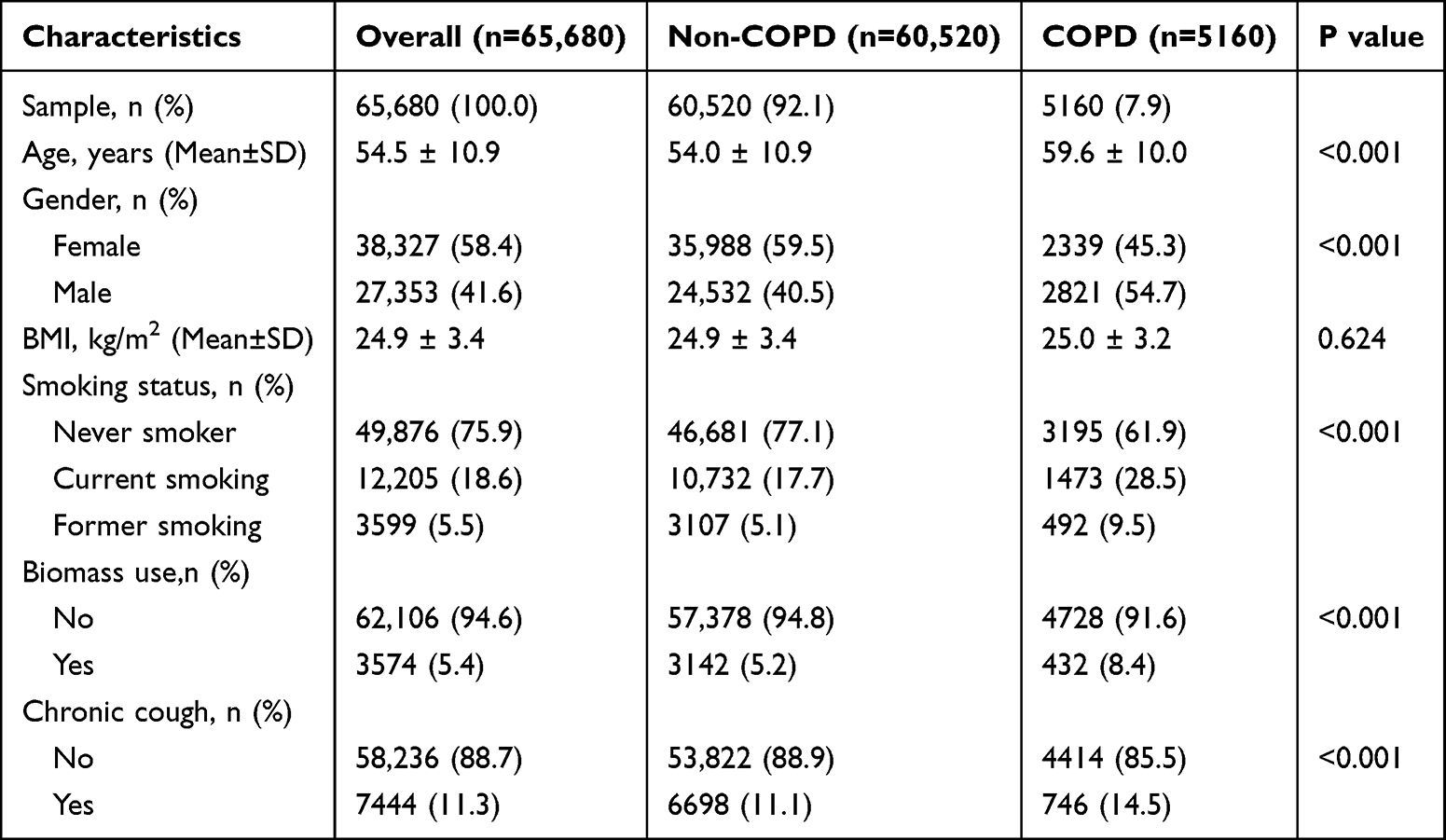 |
Table 1 Baseline Characteristics of Study Participants, Stratified by COPD Status |
Smoking status demonstrated a strong association with COPD. Current smokers represented 28.5% of COPD cases compared to 17.7% of non-COPD participants, while former smokers comprised 9.5% versus 5.1%, respectively (P < 0.001). Biomass fuel use was more prevalent among COPD patients (8.4%) than non-COPD participants (5.2%, P < 0.001). Similarly, chronic cough symptoms were reported by 14.5% of COPD patients versus 11.1% of those without COPD (P < 0.001). Body mass index showed no significant difference between groups (P = 0.624).
Stratified COPD Prevalence
The stratified analysis revealed significant demographic disparities in COPD prevalence. A pronounced gender difference was observed, with males demonstrating a substantially higher prevalence of 10.3% compared to 6.1% in females. Age-related patterns showed a clear progressive increase in COPD prevalence, rising from 3.5% in those under 40 to 15.5% in individuals aged 70 and above (Figures 1 and 2). The demographic distribution of COPD prevalence across different age groups and gender categories is illustrated in Figure 1, which reveals substantial variations in disease burden. Male participants consistently demonstrated higher prevalence rates across all age categories, with the most pronounced differences observed in middle-aged and elderly populations.
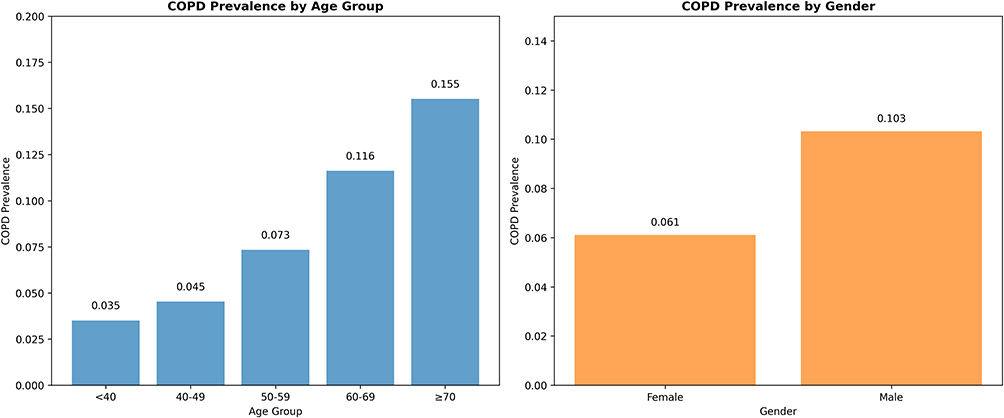 |
Figure 1 COPD prevalence by demographic characteristics, showing age group and gender distributions. |
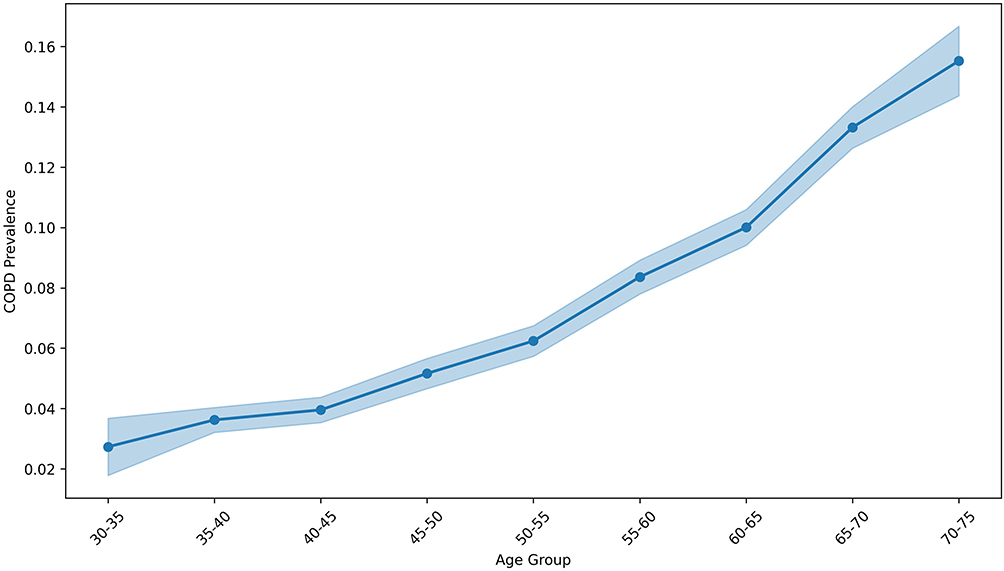 |
Figure 2 Age-specific COPD prevalence trends across the study population. |
Disease Awareness Analysis
The analysis of disease awareness revealed critically low levels of knowledge about COPD and lung function testing. A staggering 61.5% of all participants had never heard of COPD, and another 24.2% knew the name but did not understand the disease. Only 14.3% reported some or good understanding. Similarly, 62.5% of participants had never heard of lung function tests, and only 6.9% had ever been tested (Table 2).
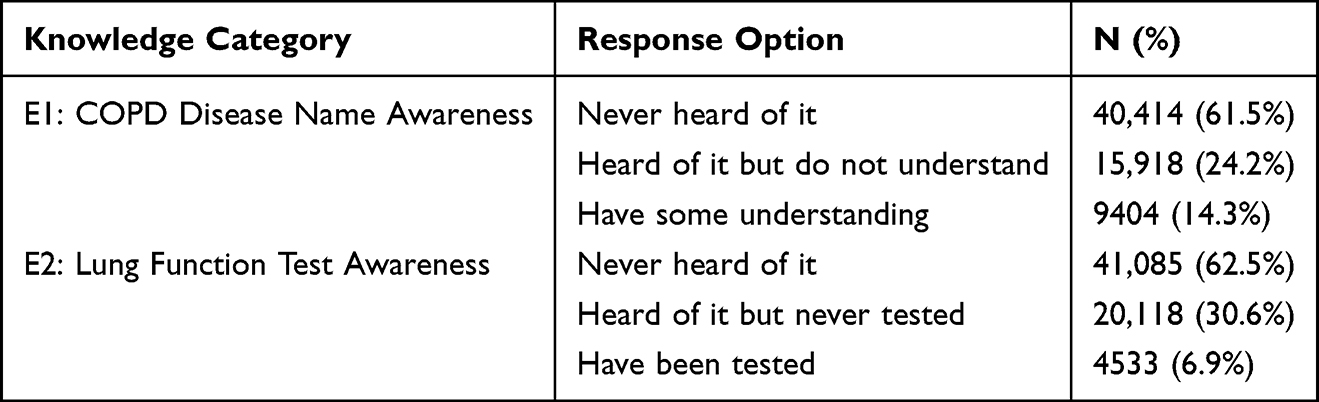 |
Table 2 Disease Awareness Categories and Response Distribution |
Most concerning was the analysis of awareness levels specifically among the 5160 participants diagnosed with COPD. Even within this group, awareness remained unacceptably low. A total of 3602 (69.8%) of diagnosed patients were unaware of their condition (categorized as “Unknown”). Furthermore, 3695 (71.5%) of these patients were unaware of lung function testing (Figure 3). These findings suggest that a vast majority of individuals with the condition may be undiagnosed or lack understanding of their disease, which has profound implications for management and outcomes.
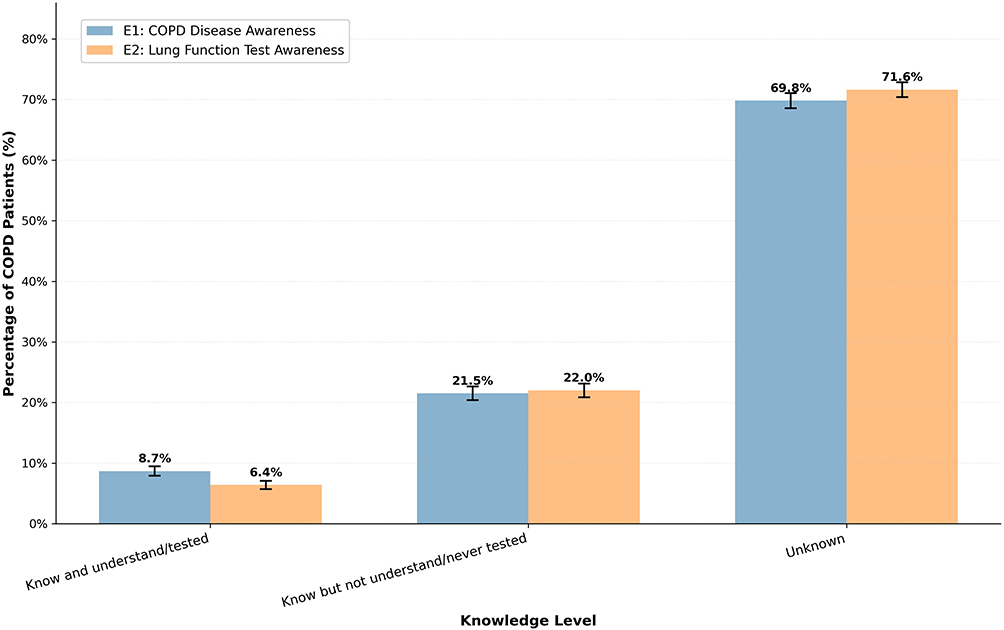 |
Figure 3 COPD disease awareness (E1) and lung function test awareness (E2) among participants with diagnosed COPD. Error bars represent 95% confidence intervals (Wald method). |
Multivariate Logistic Regression Analysis
The multivariate logistic regression analysis identified several independent associate factors for COPD after adjusting for potential confounders (Figure 4). Age emerged as a highly significant associate factor, with each additional year associated with a 4.9% increase in COPD odds (OR=1.049, 95% CI: 1.046–1.052, P<0.001). Male gender was an independent predictor, with men having 40.2% higher odds of developing COPD compared to women (OR=1.402, 95% CI: 1.312–1.499, P<0.001).
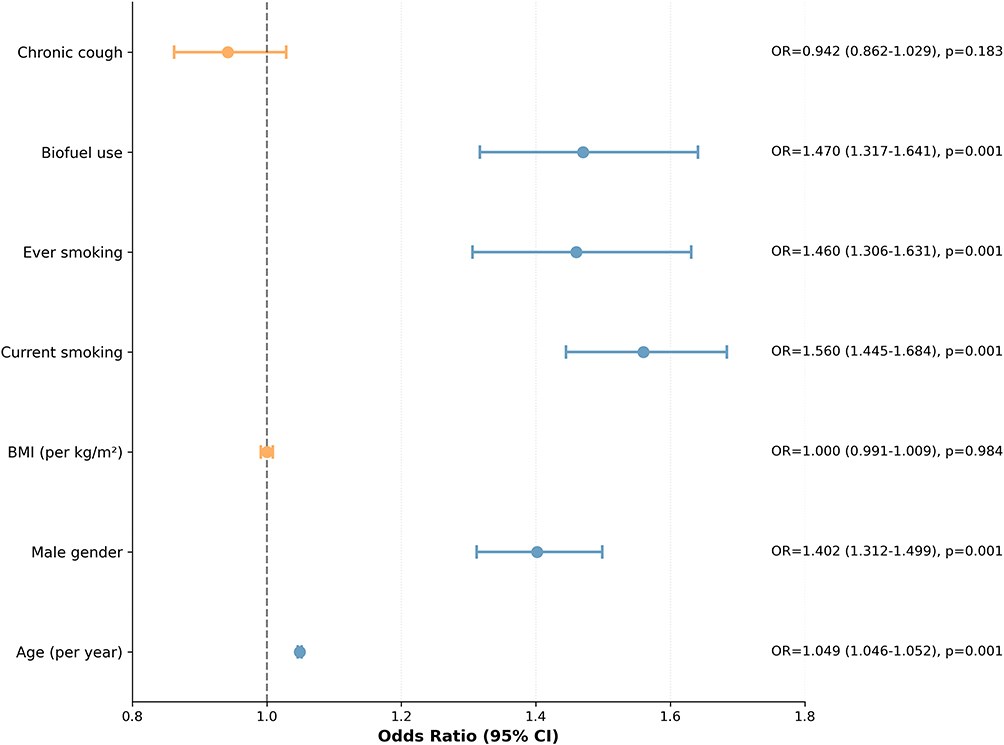 |
Figure 4 Forest plot showing odds ratios and 95% confidence intervals for COPD associate factors from multivariate logistic regression analysis. |
Smoking status showed the strongest associations. Current smokers demonstrated a 56.0% increased risk (OR=1.560, 95% CI: 1.445–1.684, P<0.001), while former smokers maintained a 46.0% elevated risk (OR=1.460, 95% CI: 1.306–1.631, P<0.001) compared to never smokers. Biomass fuel use represented a significant environmental associate factor, with exposed individuals showing 47.0% higher odds of COPD (OR=1.470, 95% CI: 1.317–1.641, P<0.001). Notably, BMI (P=0.984) and chronic cough (P=0.183) showed no significant association with COPD risk in the final multivariate model.
Discussion
Main Findings and Clinical Significance
This large-scale epidemiological study provides compelling evidence for the burden of COPD and identifies key modifiable associate factors with significant implications for public health policy. The observed overall prevalence of 7.9% aligns with global estimates, reinforcing the substantial disease burden that COPD represents.13 This prevalence is consistent with recent systematic analyses showing COPD affecting approximately 2512.9 per 100,000 individuals globally.13
The identification of age as a significant independent associate factor (OR=1.049) underscores the progressive nature of this disease and the importance of early intervention.14 The pronounced gender disparity, with males demonstrating 40.2% higher risk (OR=1.402), reflects historical smoking patterns and occupational exposures, though these gaps may be narrowing.15
The robust association between smoking status and COPD risk is a primary actionable finding. Current smokers had a 56% increased risk (OR=1.560), while former smokers retained a 46% elevated risk (OR=1.460), emphasizing both the benefits of cessation and the persistent long-term consequences of tobacco exposure. These findings align with meta-analyses demonstrating that smoking cessation is the most effective intervention for preventing COPD progression.16
The significant association between biomass fuel exposure and COPD risk (OR=1.470) highlights an often-underappreciated associate factor that disproportionately affects populations in developing countries. This finding is particularly relevant given that biomass fuel exposure affects approximately 3 billion people worldwide and is a major contributor to COPD, especially among non-smoking women.17,18 The 47% increased risk in our study aligns with research demonstrating that biomass exposure correlates with disease severity independent of smoking status.17
Perhaps most concerning is the critically low level of disease awareness. With 61.5% of participants unaware of COPD and only 6.9% ever having undergone lung function testing, our findings expose a fundamental gap in public health education. These awareness levels are substantially lower than those reported in developed healthcare systems18 and highlight an urgent need for comprehensive health education initiatives. This disconnect between disease burden and awareness likely contributes to delayed diagnosis, suboptimal management, and poor outcomes, as patient awareness is a fundamental determinant of treatment success.19 Early diagnosis and intervention can significantly improve quality of life and reduce healthcare costs,20 but low awareness prevents many from seeking care until advanced stages.
Comparison with Previous Studies and Limitations
Our study’s COPD prevalence of 7.9% aligns with the Global Burden of Disease Study 2019, which reported rates of 10.3% (95% CI 8.2–12.8).21 Kazakhstan recently published a nationwide population-based COPD study adopting consistent spirometry diagnostic criteria; it recorded an overall COPD prevalence of 7% and a rate of 10.7% among adults aged ≥40 years. Notably, the Kazakhstan team also evaluated disease awareness among confirmed COPD patients and found that only 30% of affected individuals knew they had COPD, reflecting widespread severe underdiagnosis across the region. Our work and this Kazakh survey identified highly overlapping independent associate factors, including smoking, dust and fumes exposure. In addition, the Kazakh survey also found that low education, occupational exposure to vapors, and prior tuberculosis history were independent associate factors, with tuberculosis posing the strongest disease risk.22 The identification of age, male gender, smoking, and biomass fuel use as associate factors is consistent with extensive research. A meta-analysis confirmed smoking as the predominant associate factor, with ORs from 1.5 to 3.0,23 and our findings fall within this range. The strong association with biomass fuel use (OR=1.470) provides robust epidemiological evidence supporting interventions to promote clean energy technologies.24
Differentiated from prior national surveys, this work features exclusive regional sampling, updated survey timing, and dedicated tools assessing COPD knowledge. Despite the strengths of our large sample size, several limitations must be acknowledged. The cross-sectional design limits our ability to establish causality. Longitudinal studies are needed to confirm the temporal sequence between associate factors and disease onset. Additionally, our study did not capture potential confounders such as occupational exposures, secondhand smoking, detailed air pollution levels, genetic factors, or socioeconomic indicators, which may result in residual confounding.25 A Central Asian pooled analysis26 found COPD odds of 1.69 for occupational dust/gas exposure. A global meta-analysis27 reported a pooled OR of 1.51 for workplace inhalants, and US national data28 showed crude ORs of 2.14–2.73 for prolonged dust exposure. Low education nearly doubles COPD risk, supported by the Kazakh national study (adjusted OR=1.80).22 Two more studies29,30 confirm disadvantaged socioeconomic status independently increases COPD susceptibility. Lacking full socioeconomic data leaves residual confounding from unequal exposure risks and healthcare access, restricting complete analysis of social COPD drivers. The fixed FEV1/FVC<70% threshold, although commonly applied in population epidemiological investigations, presents prominent diagnostic biases relative to the age-, sex- and height-adjusted lower limit of normal (LLN) standard.31 Reliance on this static cut-off generates non-negligible age-dependent misclassification that cannot be ignored: it substantially overestimates COPD cases among the elderly population, as physiological lung function naturally declines with age and lowers baseline FEV1/FVC ratios in older adults. Conversely, this fixed threshold systematically underestimates airflow obstruction and misses true COPD cases in younger participants, whose baseline FEV1/FVC values remain physiologically higher. In contrast, LLN criteria adopt individualized reference ranges adjusted for demographic characteristics to eliminate such age-related diagnostic distortion. This critical limitation of the fixed ratio approach highlights that our COPD prevalence results may contain age-stratified measurement error. Finally, the findings may have limited generalizability to populations with different demographic or environmental characteristics.
Future research should prioritize prospective cohort studies to strengthen causal inference.32 Incorporating genetic markers, detailed environmental assessments, and biomarkers could enhance risk prediction models and provide insights into disease mechanisms.33
Conclusions
This large-scale epidemiological study provides compelling evidence for the significant burden of COPD in the studied population, with a prevalence of 7.9%. We identified advancing age, male gender, both current and former smoking, and biomass fuel exposure as significant, independent associate factors for the disease. The findings confirm that smoking is the most potent modifiable associate factor, reinforcing the critical importance of comprehensive tobacco control strategies. Equally significant is the confirmation of biomass fuel use as a major environmental associate factor, highlighting the need for public health policies that promote clean energy alternatives.
Furthermore, this study revealed alarmingly low levels of public awareness regarding both COPD as a disease and the importance of lung function testing. This critical knowledge gap likely contributes to delayed diagnosis and suboptimal management. Our results provide robust evidence for developing multifaceted COPD prevention strategies that integrate smoking cessation initiatives, environmental health improvements, and risk-stratified screening approaches. Urgent, targeted public health campaigns are necessary to improve disease awareness and encourage early detection to mitigate the growing burden of this preventable disease.
Ethics Approval and Consent to Participate
This study was approved by the Haihe Hospital Ethics Committee (approval number2023HHKT-005). Informed consent was obtained from all subjects, and all methods were performed in accordance with the Declaration of Helsinki 2013 and relevant guidelines and regulations.
Funding
This work was supported by the Special Program for Key Disciplines under the Tianjin Health Science and Technology Project (Grant No. TJWJ2023XK025) and the Tianjin Science and Technology Program Project (Grant No. 24KPHDRC00050). The funders have no role in study design, data analysis, interpretation, and manuscript preparation.
Disclosure
The authors declare that they have no competing interests in this work.
References
1. Adeloye D, Chua S, Lee C, et al. Global and regional estimates of COPD prevalence: systematic review and meta-analysis. J Glob Health. 2015;5(2):020415. doi:10.7189/jogh.05.020415
2. Pham HQ, Pham KHT, Ha GH, et al. Economic burden of chronic obstructive pulmonary disease: a systematic review. Tuberc Respir Dis. 2024;87(3):234–11. doi:10.4046/trd.2023.0100
3. Holtjer JCS, Bloemsma LD, Beijers RJHC, et al. Identifying associate factors for COPD and adult-onset asthma: an umbrella review. Eur Respir Rev. 2023;32(169):230009. doi:10.1183/16000617.0009-2023
4. Varmaghani M, Dehghani M, Heidari E, et al. Global prevalence of chronic obstructive pulmonary disease: systematic review and meta-analysis. East Mediterr Health J. 2019;25(1):47–57. doi:10.26719/emhj.18.014
5. Puzzolo E, Fleeman N, Lorenzetti F, et al. Estimated health effects from domestic use of gaseous fuels for cooking and heating in high-income, middle-income, and low-income countries: a systematic review and meta-analyses. Lancet Respir Med. 2024;12(4):281–293. doi:10.1016/S2213-2600(23)00427-7
6. Gunasekera KD, Amarasiri W, Wickremasinghe AR, et al. Chronic obstructive Pulmonary Disease (COPD) in non-smoking Sri Lankan adults; a cross-sectional study. BMC Res Notes. 2025;18(1):84. doi:10.1186/s13104-025-07146-x
7. Rennard SI, Drummond MB. Early chronic obstructive pulmonary disease: definition, assessment, and prevention. Lancet. 2015;385(9980):1778–1788. doi:10.1016/S0140-6736(15)60647-X
8. Gourgoulianis KI, Hristou K, Molyvdas PA. Detection of COPD in high-risk populations. Chest. 2002;121(5):1721. doi:10.1378/chest.121.5.1721
9. von Elm E, Altman DG, Egger M, et al. The Strengthening the Reporting of Observational Studies in Epidemiology (STROBE) statement: guidelines for reporting observational studies. PLoS Med. 2007;4(10):e296. doi:10.1371/journal.pmed.0040296
10. Romieu I, Riojas-Rodríguez H, Marrón-Mares AT, et al. Improved biomass stove intervention in rural Mexico: impact on the respiratory health of women. Am J Respir Crit Care Med. 2009;180(7):649–656. doi:10.1164/rccm.200810-1556OC
11. Bellamy D, Bouchard J, Henrichsen S, et al. International Primary Care Respiratory Group (IPCRG) guidelines: management of chronic obstructive pulmonary disease (COPD). Prim Care Respir J. 2006;15(1):48–57. doi:10.1016/j.pcrj.2005.11.003
12. McKinney W; pandas development team. pandas-dev/pandas: pandas. Zenodo; 2020.
13. Cao Z, Tong X, He L, et al. Burden of chronic obstructive pulmonary disease and its attributable risk factors in 204 countries and territories, 1990–2021: results from the Global Burden of Disease Study 2021. BMJ Public Health. 2026;4(1):e002489. doi:10.1136/bmjph-2024-002489
14. Christenson SA, Smith BM, Bafadhel M, et al. Chronic obstructive pulmonary disease. Lancet. 2022;399(10342):2227–2242. doi:10.1016/S0140-6736(22)00470-6
15. Pleasants RA, Riley IL, Mannino DM. Defining and targeting health disparities in chronic obstructive pulmonary disease. Int J Chron Obstruct Pulmon Dis. 2016;11:2475–2496. doi:10.2147/COPD.S79077
16. Rabe KF, Watz H. Chronic obstructive pulmonary disease. Lancet. 2017;389(10082):1931–1940. doi:10.1016/S0140-6736(17)31222-9
17. Pandey AK, Verma AK, Singh A, et al. The severity of non-smoking chronic obstructive pulmonary disease is correlated with biomass fuel exposure and COPD assessment test score. Lung India. 2024;41(4):251–258. doi:10.4103/lungindia.lungindia_304_23
18. Liu YR, Zhang W, Huang Y, et al. Barriers and facilitators to inhaler adherence in elderly individuals with chronic obstructive pulmonary disease: a qualitative study. Int J Chron Obstruct Pulmon Dis. 2025;20:3827–3838. doi:10.2147/COPD.S553540
19. Cui S, Wang S, Deng J, et al. Facilitators and barriers of using an artificial intelligence agent in chronic disease management: a normalization process theory-guided qualitative study of older patients with COPD. Healthcare. 2026;14(2):268. doi:10.3390/healthcare14020268
20. Gong Y, Xu C, Mo C, et al. AI-driven smartphone screening for acute COPD exacerbations: enhancing health equity in developing regions. NPJ Digit Med. 2025;8(1):715. doi:10.1038/s41746-025-02086-z
21. Adeloye D, Song P, Zhu Y, et al. Global, regional, and national prevalence of, and associate factors for, chronic obstructive pulmonary disease (COPD) in 2019: a systematic review and modelling analysis. Lancet Respirat Med. 2022;10:447–458. doi:10.1016/S2213-2600(21)00511-7
22. Vinnikov D, Imanbayev A, Mukhamedzhanova G, et al. Prevalence and associate factors of chronic obstructive pulmonary disease in Kazakhstan in a nationwide population-based epidemiological study. Int J Chron Obstruct Pulmon Dis. 2026;21:574409. doi:10.2147/COPD.S574409
23. Forey BA, Thornton AJ, Lee PN. Systematic review with meta-analysis of the epidemiological evidence relating smoking to COPD, chronic bronchitis and emphysema. BMC Pulm Med. 2011;11:36. doi:10.1186/1471-2466-11-36
24. Hu G, Zhou Y, Tian J, et al. Risk of COPD from exposure to biomass smoke: a meta analysis. Chest. 2010;138(1):20–31. doi:10.1378/chest.08-2114
25. Eisner MD, Anthonisen N, Coultas D, et al. An official American Thoracic Society public policy statement: novel associate factors and the global burden of chronic obstructive pulmonary disease. Am J Respir Crit Care Med. 2010;182(5):693–718. doi:10.1164/rccm.200811-1757ST
26. Vinnikov D, Rybina T, Strizhakov L, et al. Occupational burden of chronic obstructive pulmonary disease in the commonwealth of independent states: systematic review and meta-analysis. Front Med. 2021;7:614827. doi:10.3389/fmed.2020.614827
27. Alif SM, Dharmage SC, Bowatte G, et al. Occupational exposure and risk of chronic obstructive pulmonary disease: a systematic review and meta-analysis. Expert Rev Respir Med. 2016;10(8):861–872. doi:10.1080/17476348.2016.1190274
28. Ryu JY, Sunwoo YE, Lee SY, et al. Chronic obstructive pulmonary disease (COPD) and vapors, gases, dusts, or fumes (VGDF): a meta-analysis. COPD. 2015;12(4):374–380. doi:10.3109/15412555.2014.949000
29. Zhang DD, Liu JN, Ye Q, et al. Association between socioeconomic status and chronic obstructive pulmonary disease in Jiangsu province, China: a population-based study. Chin Med J. 2021;134(13):1552–1560. doi:10.1097/CM9.0000000000001609
30. Kim CY, Kim BK, Kim YJ, et al. Longitudinal evaluation of the relationship between low socioeconomic status and incidence of chronic obstructive pulmonary disease: Korean Genome and Epidemiology Study (KoGES). Int J Chron Obstruct Pulmon Dis. 2021;15:3447–3454. doi:10.2147/COPD.S276639
31. Llordés M, Jaen A, Zurdo E, et al. Fixed ratio versus lower limit of normality for diagnosing COPD in primary care: long-term follow-up of EGARPOC study. Int J Chron Obstruct Pulmon Dis. 2020;15:1403–1413. doi:10.2147/COPD.S250720
32. Gershon AS, Warner L, Cascagnette P, et al. Lifetime risk of developing chronic obstructive pulmonary disease: a longitudinal population study. Lancet. 2011;378(9795):991–996. doi:10.1016/S0140-6736(11)60990-2
33. Celli BR, Locantore N, Yates J, et al. Inflammatory biomarkers improve clinical prediction of mortality in chronic obstructive pulmonary disease. Am J Respir Crit Care Med. 2012;185(10):1065–1072. doi:10.1164/rccm.201110-1792OC
 © 2026 The Author(s). This work is published and licensed by Dove Medical Press Limited. The
full terms of this license are available at https://www.dovepress.com/terms
and incorporate the Creative Commons Attribution
- Non Commercial (unported, 4.0) License.
By accessing the work you hereby accept the Terms. Non-commercial uses of the work are permitted
without any further permission from Dove Medical Press Limited, provided the work is properly
attributed. For permission for commercial use of this work, please see paragraphs 4.2 and 5 of our Terms.
© 2026 The Author(s). This work is published and licensed by Dove Medical Press Limited. The
full terms of this license are available at https://www.dovepress.com/terms
and incorporate the Creative Commons Attribution
- Non Commercial (unported, 4.0) License.
By accessing the work you hereby accept the Terms. Non-commercial uses of the work are permitted
without any further permission from Dove Medical Press Limited, provided the work is properly
attributed. For permission for commercial use of this work, please see paragraphs 4.2 and 5 of our Terms.
Recommended articles

Investigation and Analysis of Risk Factors and Psychological Status of Chronic Obstructive Pulmonary Disease in Permanent Residents Aged 40 or Older in Hongyuan County, Aba Prefecture, Sichuan Province
Xia JJ, Zou XX, Qiu Y, Li WJ, Huang L, Xie WY, Xue HH, Yang M
International Journal of Chronic Obstructive Pulmonary Disease 2023, 18:827-835
Published Date: 10 May 2023
Incidence and Risk Factors for Progression from Pre-COPD to COPD: A Systematic Review and Meta‑analysis
Qiao L, Wu X, Chen G, Tang H, Shen H
International Journal of Chronic Obstructive Pulmonary Disease 2026, 21:566518
Published Date: 13 February 2026