
Back to Journals » International Journal of Women's Health » Volume 17
Global Mapping and Visualization Analysis of Almost Five Decades of Egg Freezing Research: Trends, Hotspots and Prospects
Received 20 March 2025
Accepted for publication 20 September 2025
Published 25 September 2025 Volume 2025:17 Pages 3241—3257
DOI https://doi.org/10.2147/IJWH.S529541
Checked for plagiarism Yes
Review by Single anonymous peer review
Peer reviewer comments 3
Editor who approved publication: Dr Vinay Kumar
Xiandong Peng, Hongxia Sun, Jiazhou Chen
Obstetrics & Gynecology Hospital of Fudan University, Shanghai JIAI Genetics & IVF Institute, Shanghai, 200011, People’s Republic of China
Correspondence: Jiazhou Chen, Obstetrics & Gynecology Hospital of Fudan University, Shanghai JIAI Genetics & IVF Institute, Shanghai, 200011, People’s Republic of China, Tel +86-13636346092, Email [email protected]
Background: Egg freezing, also known as oocyte cryopreservation, has become an increasingly significant topic in reproductive medicine. A large number of articles have been published on egg freezing; however, there is still a lack of studies that use visualization methods for bibliometric analysis of relevant literature. This study aimed to explore the publication landscape and identify key trends, influential authors, institutions, and emerging topics in egg freezing research using bibliometric analysis.
Methods: Publications related to egg freezing from 1979 to 2024 were retrieved from the Web of Science Core Collection. A bibliometric analysis was conducted using Excel 365, VOSviewer (version 1.6.20), CiteSpace (version 6.3.R1), and R 4.3.3 to map co-authorship networks, institutional collaborations, and keyword co-occurrence patterns.
Results: A total of 1072 publications were identified, with an annual growth rate of 9.68%. The research was contributed by 4392 authors and originated from 1380 institutions in 59 countries. The United States leads with 337 publications accounting for 31.4%, followed by Italy and China. The Royal Women’s Hospital in Australia was prominent institutional contributors. Oktay Kutluk. ranks first with 18 articles published and a 18 H-index. The leading journals included Fertility and Sterility, Reproductive Biomedicine Online, and Human Reproduction. Keywords analysis identified three clusters, including egg freezing technology, fertility preservation for young women scheduled for chemotherapy, and social recognition on egg freezing. The most recent occurring keywords were “outcome”, “infertility”, and “knowledge”, indicating core areas of research focus in the future.
Conclusion: This bibliometric analysis provides valuable insights into the global trends and research hotspots in egg freezing. The research highlights a growing focus on the technological aspects of egg freezing. Moving forward, researchers should focus on the social aspects of egg freezing, such as public education and awareness regarding egg freezing options.
Keywords: egg freezing, bibliometrics, VOSviewer, citespace, trends
Introduction
In recent years, a notable trend has emerged among women delaying childbearing, with the average age of first childbirth now surpassing 30 in numerous countries.1 This postponement frequently results in a decline in fertility, as both the quantity and quality of oocytes diminish with advancing age.2 To address this concern, elective (social) egg freezing (EEF), also known as oocyte cryopreservation,3 has become a significant fertility preservation option for women opting to defer motherhood for personal reasons, including career advancement, educational pursuits, the absence of a partner, or financial considerations. While egg freezing has historically been utilized for medical purposes, such as preserving fertility in women undergoing cancer treatment, its application for social reasons is a relatively recent development.4,5 EEF enables women to extend their reproductive window by freezing their eggs at a younger age, thereby allowing them to conceive later without relying on third-party donors, thus avoiding associated costs and complexities.6,7 This method has become increasingly accepted as a fertility preservation option “planned before medical indications arise”.8
Despite the advantages associated with egg freezing, evidence concerning the outcomes for live-born children remains limited, and the risks linked to in vitro fertilization and later-life pregnancies are well-documented.9 The most significant medical risks related to egg freezing arise from ovarian stimulation, which can result in conditions such as ovarian hyperstimulation syndrome. Mild-to-moderate cases of this syndrome may manifest symptoms including fatigue, nausea, headaches, abdominal pain, breast tenderness, and irritability.10 In severe instances, ovarian hyperstimulation syndrome can lead to serious complications, such as blood clots, shortness of breath, abdominal pain, dehydration, and vomiting, potentially necessitating hospitalization.11 Furthermore, the American Society for Reproductive Medicine (ASRM) and the Society for Assisted Reproductive Technology (SART) have specifically cautioned against employing egg freezing as a safeguard against age-related fertility decline due to its limited benefits.12
The increasing interest in egg freezing has stimulated a growing body of research across various domains, including reproductive medicine, ethics, and social sciences.13–16 However, comprehensive analyses of global research trends in this field remain scarce. Bibliometric analysis serves as a valuable tool for evaluating research progress, identifying key contributors, and mapping collaboration networks.17,18 By employing bibliometric methods, this study can provide a roadmap for researchers seeking to contribute to this rapidly growing field. Recognizing high-impact journals helps target submissions, while mapping leading authors and institutions facilitates collaboration. The keyword analysis reveals trending research areas, guiding future studies on both clinical and technical aspects of egg freezing.
Materials and Methods
Search Strategies and Data Sources
A comprehensive literature search was conducted using the Web of Science Core Collection (WoSCC) database.19 The search was performed on August 13, 2024. The search query was formulated as TS=(“Egg Freezing” OR “Oocyte Cryopreservation” OR “Oocyte Freezing” OR “Oocyte Frozen”). The inclusion criteria were as follows: (1) original research articles published between January 1, 1979, and August 13, 2024 and written in English, and (2) studies focusing on egg freezing. Publications with document types other than “article” were excluded. These included meeting abstract, review article, editorial material, proceeding paper, early access, letter, book review, correction, news item, and book chapters. The bibliographic information for these studies was exported in “Full record and cited references” and “plain text” formats for detailed examination. Data extracted included publication years, countries/regions, institutions, journals, authorship details, keywords, and citation counts, all of which were used for the bibliometric analysis. A detailed flowchart illustrating the literature screening process is presented in Figure 1.
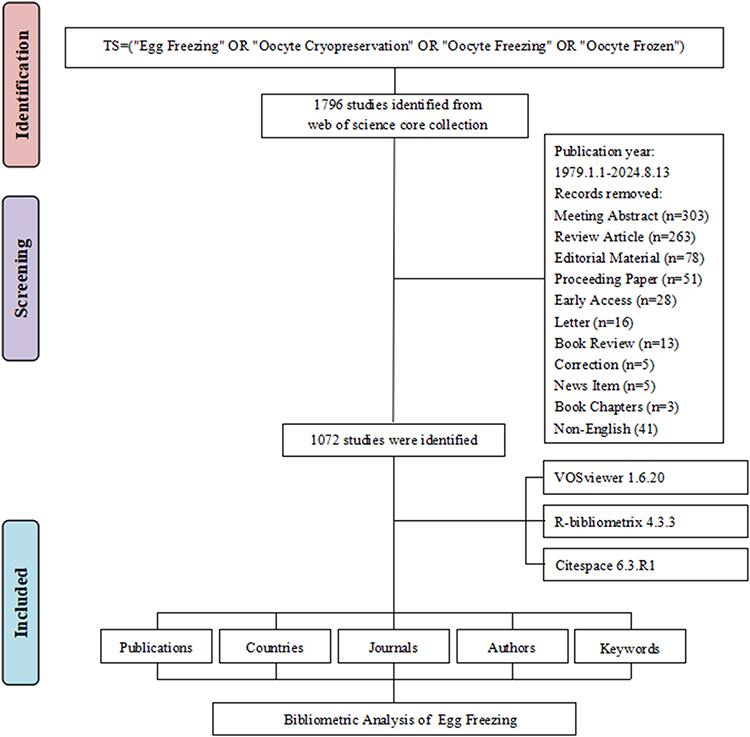 |
Figure 1 Literature search and screening flowchart. |
Data Analysis and Visualization
For the bibliometric analysis and data visualization, we utilized three tools: VOSviewer (version 1.6.20), CiteSpace (version 6.3.R1), and R 4.3.3. VOSviewer was used to map co-authorship networks, institutional collaborations, co-citation relationships, and keyword co-occurrence patterns, providing a comprehensive view of the collaborative and citation structures within the field of egg freezing research. To further understand emerging trends and research hotspots, we conducted keyword burst detection by CiteSpace, which was used to visualize and identify the keywords with the strongest citation bursts in this study. In the resulting visualizations, the size of each node represented the number of publications, the thickness of the connecting lines indicated the strength of the connections, and the colors corresponded to different time periods.
R 4.3.3 was employed to conduct a bibliometric analysis and trend mapping, which facilitated the ranking of countries, institutions, and authors, as well as the creation of trend charts detailing publication volume and citation metrics over time.
Impact factor (IF) is obtained from the latest version of Journal Citation Reports (JCR). H-index, a critical metric for evaluating the scientific contributions of researchers, was calculated for each author using data obtained from WoSCC, offering a predictive measure of their future scholarly achievements,20,21 which was employed to quantify the academic impact of individual authors and journals.
Results
Overview of Publication Status
A total 1796 studies identified using WOS database from 1979 to 2024 were screened. After exclusion of abstract, meeting, review, etc., 1,072 studies were ultimately selected for further analysis, contributed by 4392 authors, 297 journals, 1380 institutions and 59 countries/regions (Figures 1 and 2A).
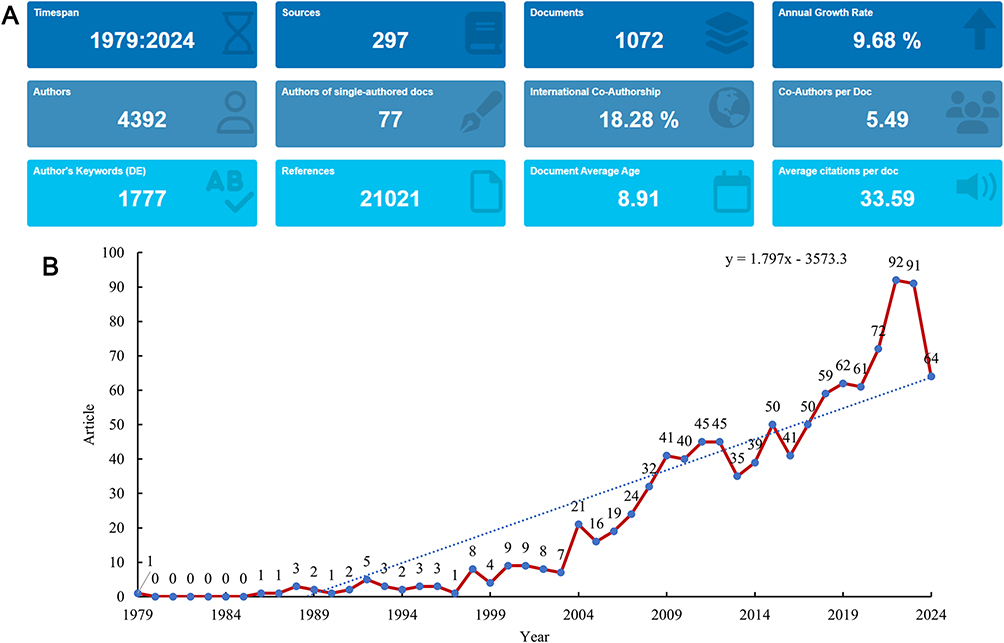 |
Figure 2 General information. (A) General trends in the publication of papers. (B) Annual output and growth rate on a year-on-year basis with regard to egg freezing from 1979 to 2024. |
Furthermore, the annual publication trend is shown in Figure 2B. After a relatively stagnant period from 1979 to 1990, the number of publications began to rise steadily in the 1990s, reaching 21 in 2003. A significant increase occurred in the mid-2000s, with the number of articles nearly doubling from 24 in 2006 to 45 in 2010. Another notable rise can be seen from 2019 to 2022, where the publications peaked at 92 in 2022, though a slight decrease is noted in 2023 with 64 publications. The overall annual growth rate of publications was 9.68%.
Analysis of the Contributions of Countries
The bibliometric analysis indicates that the publications originated from 59 different countries and regions. The United States leads with 337 publications accounting for 31.4%, followed by Italy (112, 10.4%), China (71, 6.6%), United Kingdom (64, 6%) and Australia (50, 4.7%). The remaining countries/regions have fewer than 50 publications (Figure 3A and Table 1). The analysis also highlights international collaborations. The United States has most multiple-country publications, indicating a substantial amount of international cooperation, followed by Italy (19) and China (12) (Figure 3A). Subsequently, we filtered and visualized 59 countries based on the number of international collaborations more than or equal to 1, and constructed a collaborative network based on the number and relationship of publications in each country (Figure 3B). There is a lot of active cooperation between different countries. Specifically, the USA has the highest number of collaborations with other countries (133), followed by Belgium (88) and the Italy (75). Besides, the United States has active cooperation with China, Israel and Belgium.
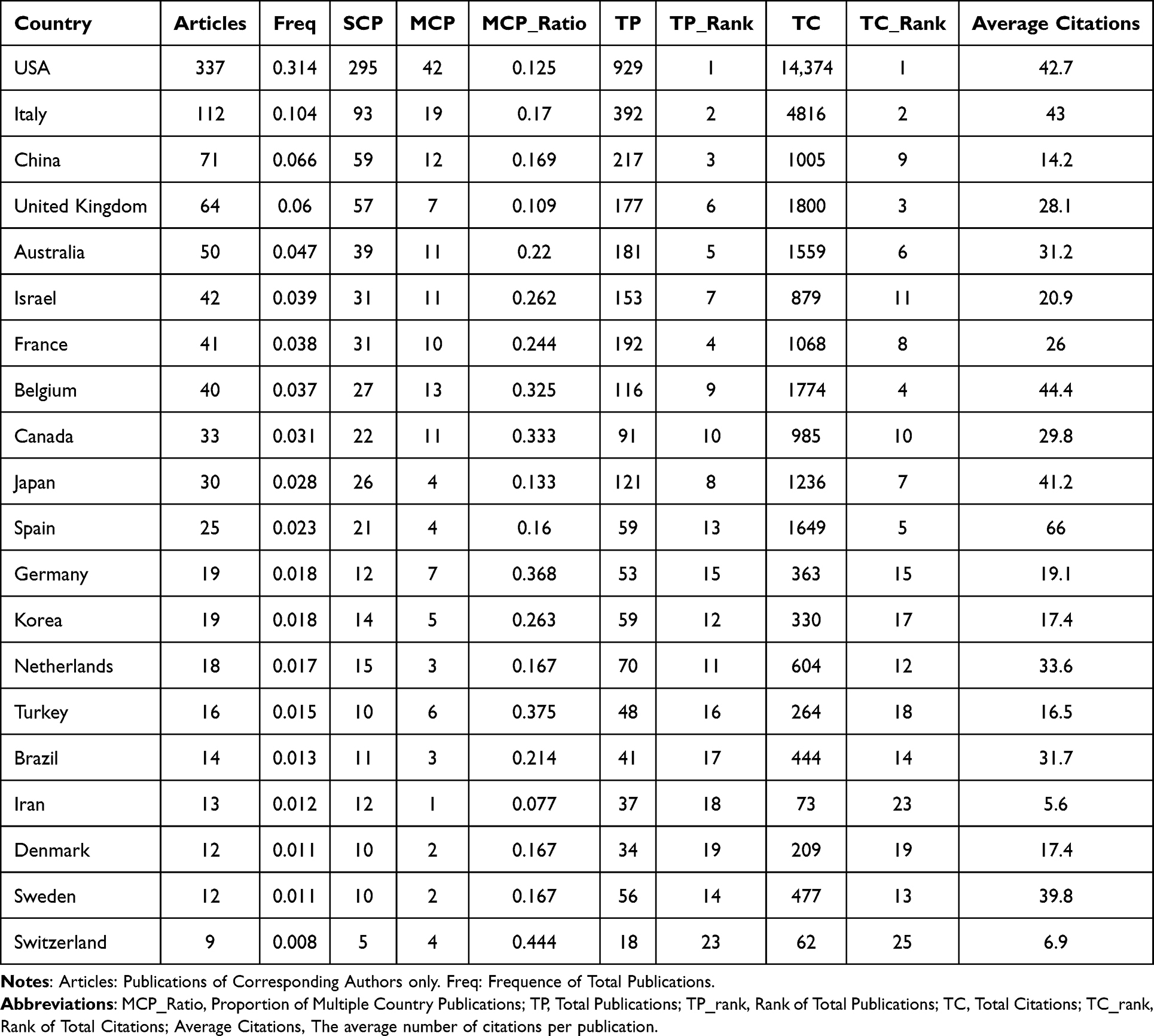 |
Table 1 Publication and Citation Profiles of Leading Countries |
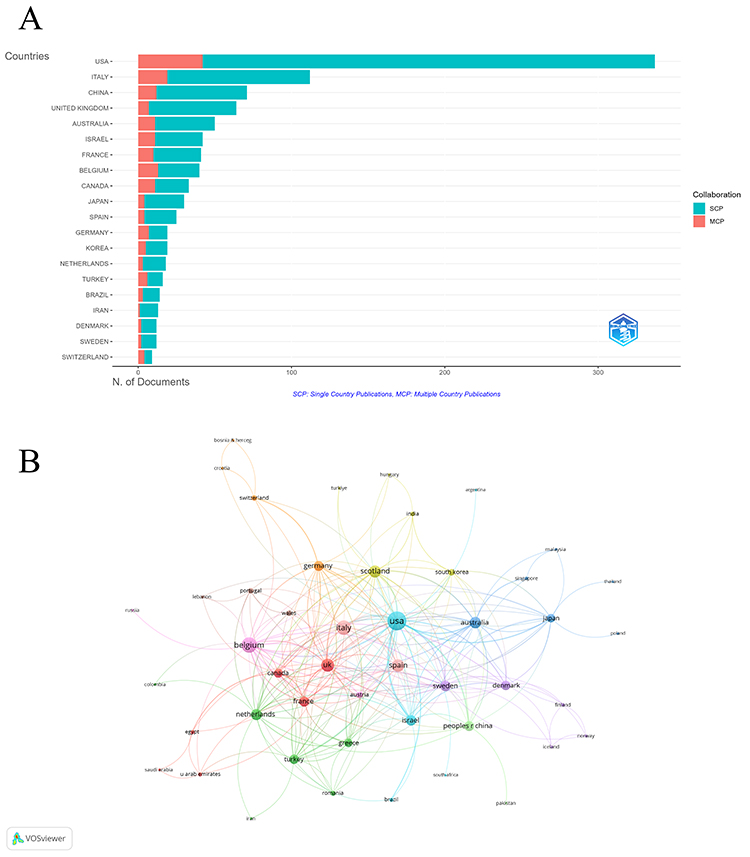 |
Figure 3 Analysis of countries. (A) Distribution of Publications by Country. (B) Visualization map of countries/regions. |
Analysis of the Contributions of Institutions
A total of 1,380 institutions were involved in research on egg freezing. To explore institutions’ contributions to egg freezing, the number of publications from various institutions was analyzed. The top 10 productive institutions were displayed in Figure 4A. 5 research institutions are from the US, 2 from France, one from Italy, Israel and Australian. Among them, the Assistance Publique Hopitaux Paris (APHP) leads in research output, contributing 69 articles to the field, followed by Northwestern University (68) and Harvard University (64).
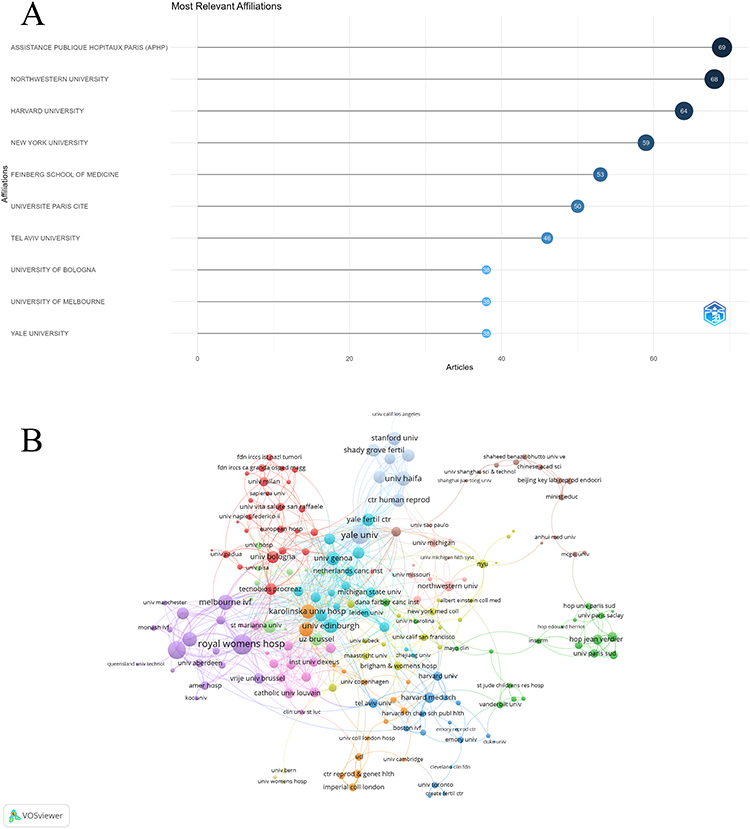 |
Figure 4 Analysis of institutions. (A) Top 10 institutions by article count and rank. (B) The co-authorship network visualization map of institutions for related research. |
To further investigate collaboration between institutions, a co-authorship analysis was conducted. Among the 208 institutions involved in international collaborations with a minimum of 3 articles, Royal Women’s Hospital has the highest number of collaborations with other countries (70), followed by Yale University (63) and University of Melbourne (57), reflecting a broad engagement across multiple countries and enhancing the exchange of knowledge and expertise. The collaboration network further highlights the central role of European and American institutions (Figure 4B).
Analysis of the Contributions by High-Impact Authors
A total of 4,392 authors participated in research on egg freezing. We ranked authors based on the H-index to identify high-impact researchers (Table 2), Oktay Kutluk. ranks first with 18 articles published and a 18 H-index, followed by Noyes Nicole (17 articles, H-index=13) and Chian Ri-Cheng (12 articles, H-index=12). Furthermore, Oktay Kutluk. emerges as the high-impact author, with their work being referenced 3,096 times, which further emphasizes their pivotal roles in advancing the field. Researchers’ collaborative relationships are illustrated with 296 authors with three or more articles in Figure 5. We observed close collaboration among multiple authors. Patrizio Pasquale has the highest number of collaborations with other authors (49), followed by Flamigni C (44) and Noyes Nicole (43). For highly cited papers, the article published on the Journal of Clinical Oncology by Loren AW. gained the highest total citations (TC), followed by articles published on Reproductive BioMedicine Online by Kuwayama M. and Lancet by Chen C. Moreover, the papers on Fertility and Sterility by Penzias A. and Human Reproduction Open by Anderson RA. had high normalized TC, attracting high attention recently.
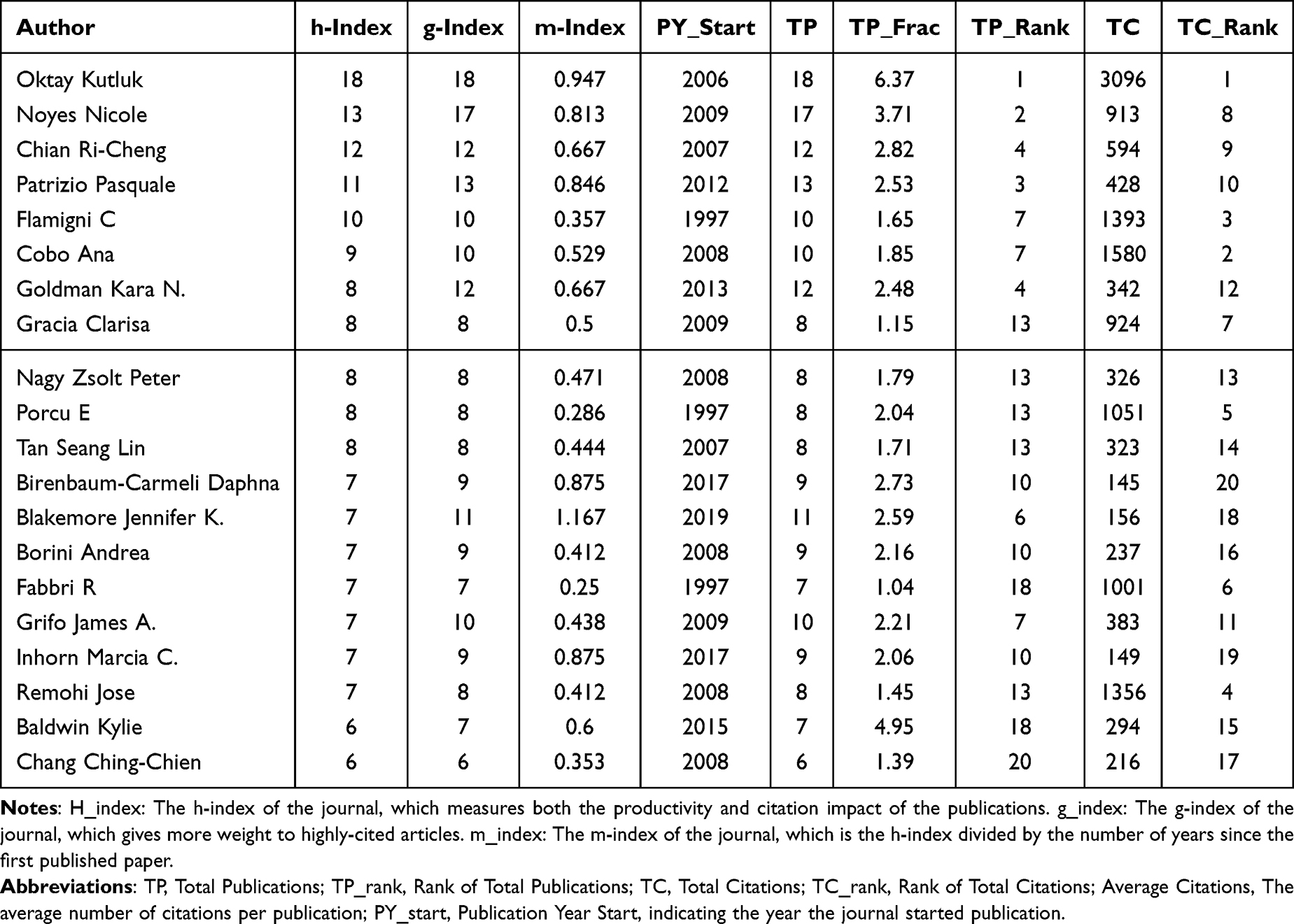 |
Table 2 Publication and Citation Profiles of High-Impact Authors |
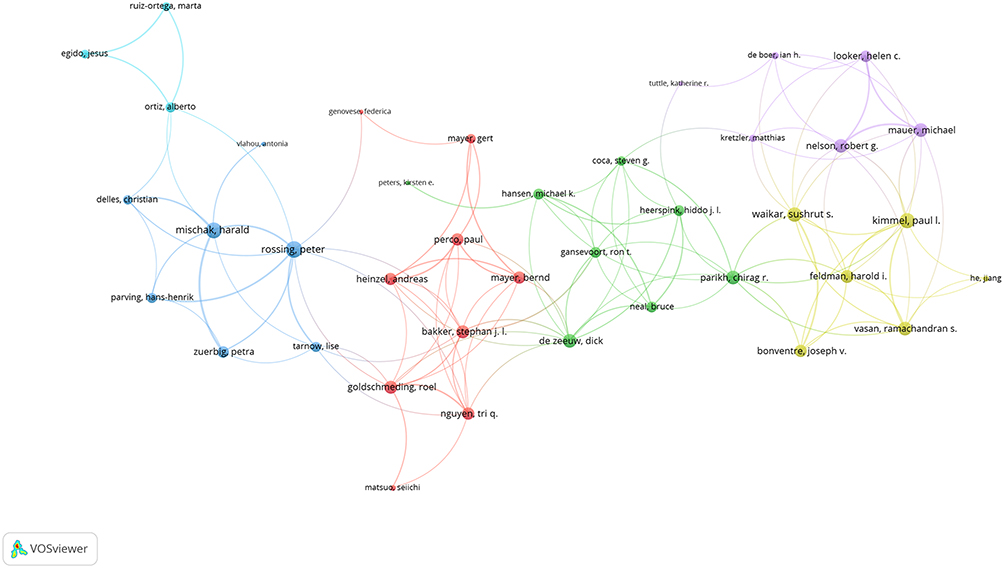 |
Figure 5 Visualization map depicting the collaboration among different authors. |
Analysis of Contributions of Influential Journals
Publications related to egg freezing were published in 297 journals. Among the most prominent journals, Fertility and Sterility leads with 100 articles published and 50 h-index (Q1, IF=6.6, 2023), followed by Human Reproduction with 98 articles published and 45 h-index (Q1, IF=6, 2023) and Reproductive Biomedicine Online with 78 articles published and 33 h-index (Q1, IF=3.7, 2023) (Table 3). Subsequently, we screened 117 journals based on the minimum number of relevant publications equal to 2 and mapped the co-occurrence networks (Figure 6A) and coupling networks (Figure 6B). The three key journals with the highest total link strength in Co-occurrence Networks were Fertility and Sterility (1999), Human Reproduction (1729), and Reproductive Biomedicine Online (1346), while the three key journals with the highest total link strength in Co-occurrence Networks were Fertility and Sterility (59433), Reproductive Biomedicine Online (51859), and Human Reproduction (47360).
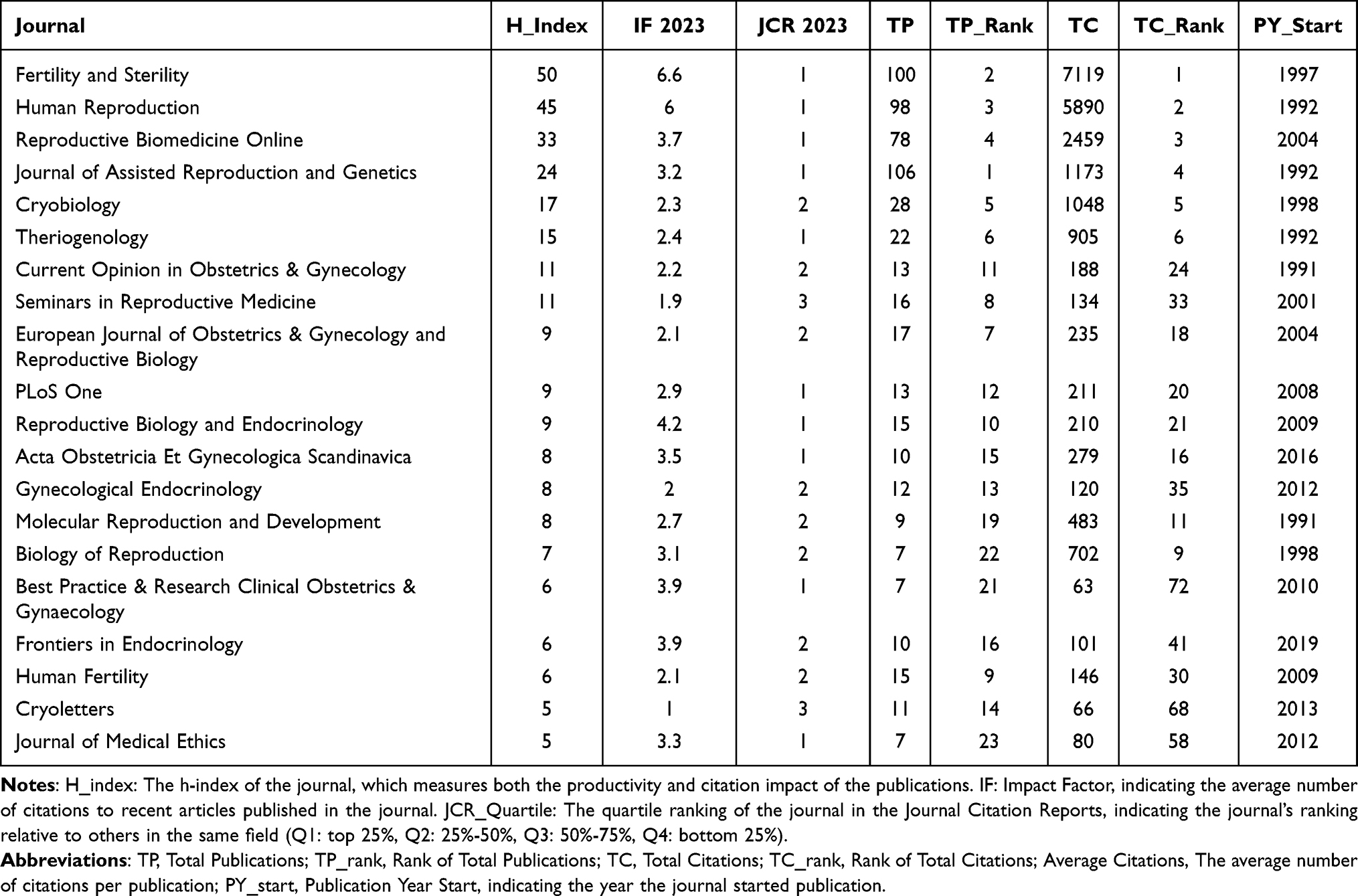 |
Table 3 Bibliometric Indicators of High-Impact Journals |
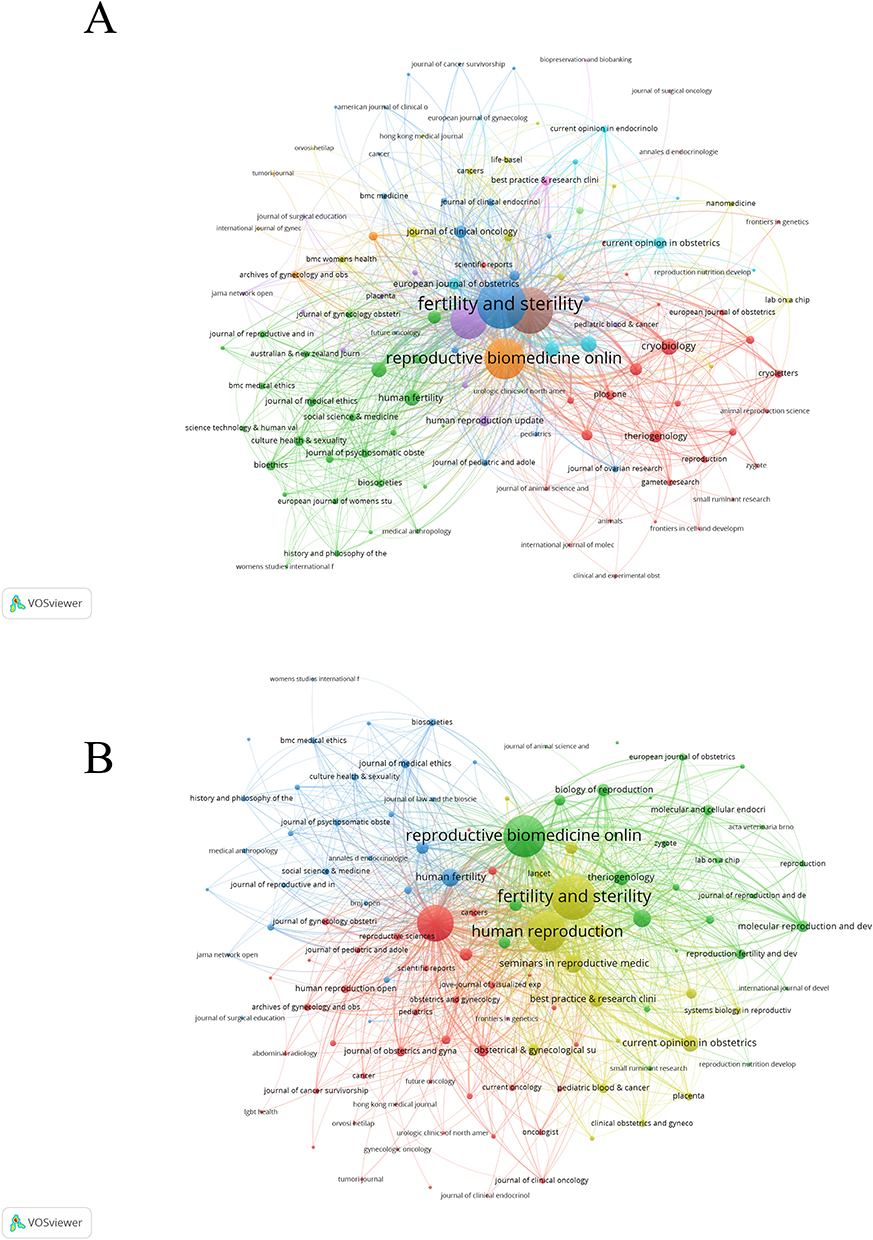 |
Figure 6 Visualization analysis of influential journals. (A) Co-occurrence Network of Journals. (B) Citation Coupling Network of Journals. |
Analysis of the Keywords
Keyword co-occurrence analysis offers a detailed representation of the thematic scope within the field. The keyword co-occurrence network was performed in Figure 7A, where node size represented keyword frequency and colors correspond to thematic clusters. These keywords can be grouped into three categories. The red cluster centered around the egg freezing technology, including “vitrification”, “frozen”, and “1,2-propanediol”. The green cluster emphasized the fertility preservation for young women scheduled for chemotherapy, with terms like “pregnancy”, and “chemotherapy”. The blue highlighted social recognition on egg freezing, featuring keywords such as “intentions”, “knowledge”, and “attitudes”.
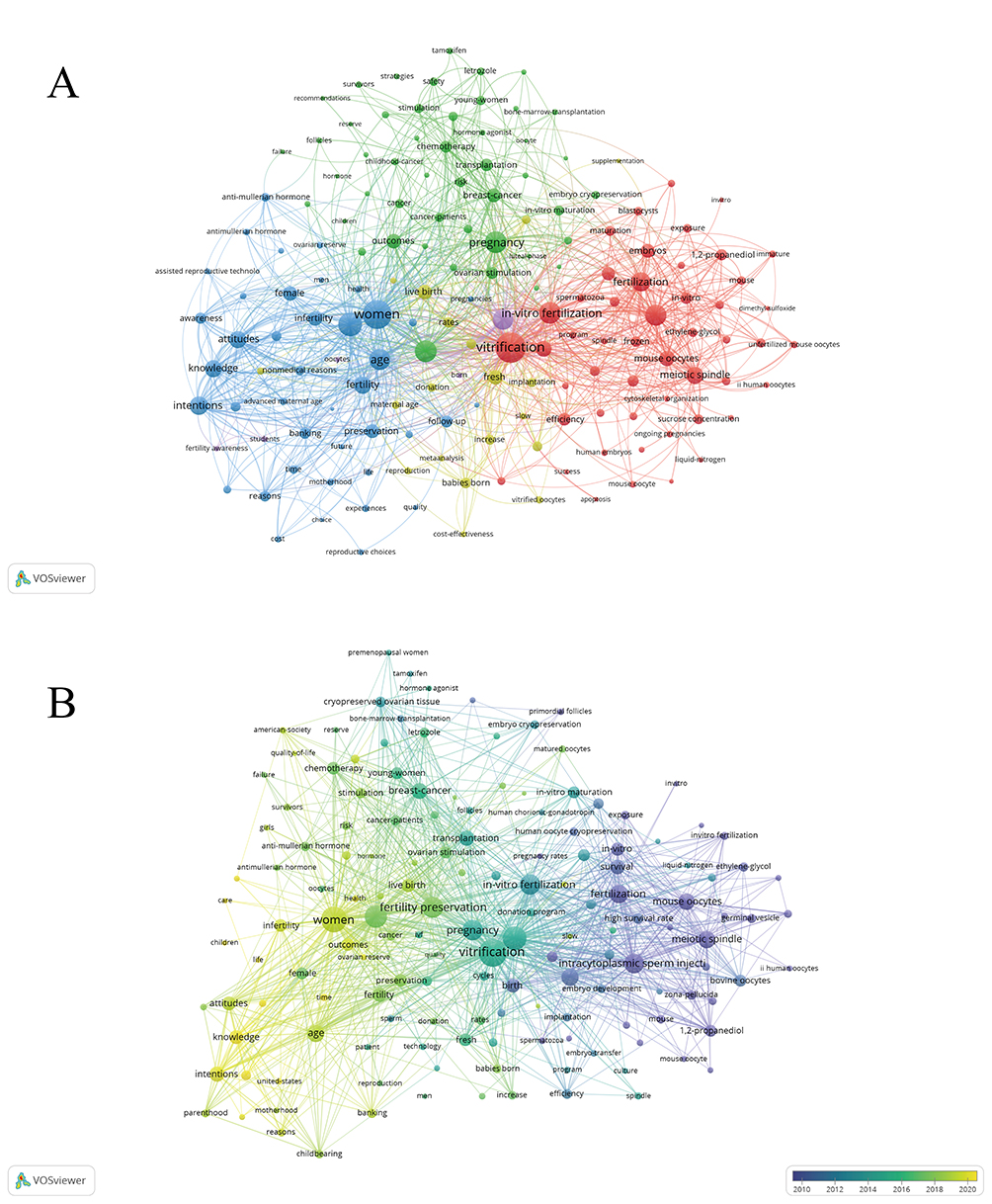 |
Figure 7 Analysis of keywords. (A) Co-occurrence keyword clustering. (B) Time-overlay visualization map of co-occurrence keywords. |
Keyword co-occurrence analysis offers a detailed representation of the thematic scope within the field. Using VOSviewer, 151 keywords appeared more than 10 times were used to generate the time-overlay visualization map in Figure 7B. The purple nodes indicate early hotspots and the yellow nodes indicate emerging hotspots. Early research mainly focused on “fertilization”, “mouse oocytes”, “meiotic spindle”, “intracytoplasmic sperm injection” and “birth”. Recent studies have concentrated on topics such as “women”, “age”, “knowledge”, “outcomes” and “intentions”.
In Figure 8, we present the top 20 keywords with the strongest citation bursts lasting at least one year. The keywords “meiotic spindle” (1991–2011) received the most sustained attention. However, keywords such as “outcome” (2017–2022), “infertility” (2018–2024), and “knowledge” (2019–2024) have recently been used. These terms highlight the emerging trends and promising developments in research, particularly in areas related to improving the outcomes and alleviating the infertility.
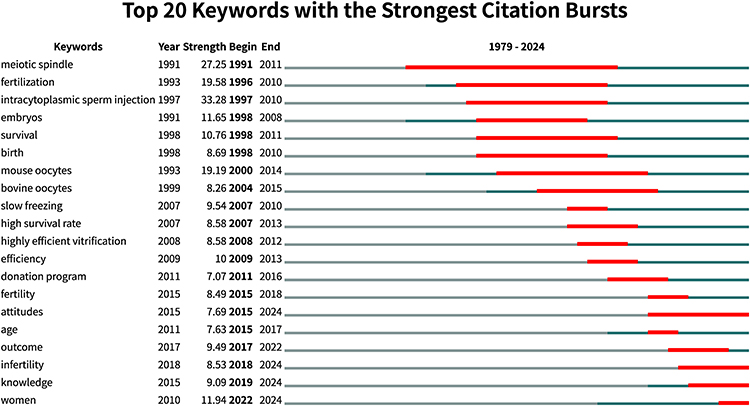 |
Figure 8 Top 20 keywords with the strongest citation bursts. |
Discussion
This bibliometric analysis aimed to explore global trends and hotspots in the field of egg freezing by analyzing publications from 1979 to 2024. The key findings reveal significant growth in the number of publications, with the USA, Italy, and China leading in contributions, and journals like Fertility and Sterility and Reproductive Biomedicine Online emerging as major sources for research dissemination.
General Information: Authors, Countries, Institutions, and Journals
A total of 4,392 authors contributed to this body of literature, underscoring significant collaboration across various disciplines. Notably, institutions from 59 countries and regions participated in this research, with the United States emerging as the leading contributor, accruing 14,374 citations. This reflects the nation’s prominent role in advancing research, likely attributable to its well-established fertility preservation programs and substantial funding. Key institutions, such as Assistance Publique Hôpitaux de Paris and Northwestern University, each made significant contributions through a considerable number of published articles. Analyzing the distribution of these publications and collaborations can assist researchers in identifying major research hubs and key institutions for future partnerships. Furthermore, Fertility and Sterility continues to be the leading journal in this field, rendering it an essential resource for researchers focused on egg freezing.
The analysis of authorship shows that certain individuals, such as Pasquale Patrizio and Nicole Noyes, have had substantial influence in this area, contributing both in terms of volume and citation impact. Identifying these leading contributors provides guidance for those looking to collaborate or understand seminal work in the field.
Keyword Analysis and Research Focus
Keywords provide a critical lens to uncover shifting research priorities and emerging themes. The co-occurrence network revealed three major clusters, each representing different dimensions of this field, including egg freezing technology, fertility preservation for young women scheduled for chemotherapy, and social recognition on egg freezing.
Egg Freezing Technology (Red Cluster)
This cluster, featuring keywords such as “vitrification”, “frozen”, and “1,2-propanediol”, reflected the rapid development of technology of egg freezing. Successful cryopreservation of living cells relies on pre-venting the formation of ice crystals that may cause cryodamage and minimising the toxic effects of exposure to cryoprotectant agents.22 Two main approaches for cryopreservation currently exist: slow freezing, followed by rapid thawing, and vitrification followed by warming with cryoprotectant, such as 1,2-propanediol.23 They differ on how complete sample dehydration is achieved, a condition necessary to prevent ice crystal formation and cryo-injuries.24 A recent meta-analysis comparing vitrification vs slow freezing in oocytes, cleavage-, and blastocyst-stage embryos revealed the superiority of the former over the latter for oocytes and cleavage-stage embryos, but not for blastocyst.25 Similarly, another in vivo study demonstrated that vitrification contributes to higher cryo-survival rate than slow freezing in biopsied bovine in vitro produced blastocysts.26 Taken together, vitrification may be a promising cryopreservation method in the future.
Fertility Preservation (Green Cluster)
The green cluster included keywords like “childhood-cancer”, “pregnancy”, and “chemotherapy”. As 5-year survival rates of childhood cancer patients have continued to improve over the last few decades, with >80% of patients surviving into adulthood.27 Thus, Ovarian reserve impairment by long-term side-effects of chemotherapy is common in childhood and in adolescent female tumor survivors.27,28 The three major mechanisms for ovarian damage are apoptosis induced by DNA damage and/or oxidative stress and/or autophagy, over-activation of primordial follicles and ovarian micro-vessel network damage.29 A recent trial showed that cryopreservation of oocytes is an emerging option for these patients.30 Achieving pregnancy is related to the number of mature oocytes retrieved, which is dependent on the age of the patient and her ovarian reserve at diagnosis.31 A live birth rate of >40% can be estimated in women younger than 35 years, and <30% in older patients, with a very low success after the age of 40 years.32 However, for children and adolescents, when deciding whether to carry out egg freezing, psychological and ethical issues should be considered rather than the age limit of oocyte preservation.27 Consistently, Azem et al reported the first successful oocyte cryopreservation in a prepubertal girl with Turner syndrome mosaicism, indicating that oocyte preservation is technically feasible in adolescent patients.33 These evidences may guide physician for fertility preservation in childhood cancer during the clinical practice.
Social Recognition (Blue Cluster)
This cluster highlighted social recognition on egg freezing, featuring keywords such as “intentions”, “knowledge”, and “attitudes”. With the advancement of the social economy and the popularization of education in developed countries, women’s ages at marriage and childbirth have been continuously delayed,34 causing many women to face the risk of age-related infertility and decrease of birth rate.34,35 While egg freezing offers women of reproductive age an opportunity to delay childbearing and potentially mitigate declining birth rates,36 controversies persist concerning its safety, efficacy, commercialization, and ethical implications. Given the low usage rates of 3.1–9.3%,37 a key debate centers on whether this technology primarily serves as a countermeasure to demographic challenges or simply as a means to expand women’s reproductive choices.34 Financial constraints significantly limit access to EEF, markedly reducing completed treatment cycles. Unlike medically-indicated cryopreservation, EEF remains excluded from most public healthcare systems, creating substantial economic barriers.38 That led to a suggestion that cryopreservation expenses be covered by either healthcare insurance or the state.39 However, in order for the procedure to be cost-effective, the current usage rates of frozen eggs is significantly less than theoretical value of 49–61%,38 which may lead to significant resource misallocation if universal health coverage.
The reproductive window is narrower in women than in men due to significant decrease of women’s fertility after the mid-thirties,40 leading to women’s weak position in career compared to men. Thus, the potential inclusion of EEF in employer-sponsored benefits has also sparked ethical discussions, as subsidizing this procedure effectively supports reproductive autonomy by enabling individuals to postpone childbearing—often to prioritize career advancement. For instance, Facebook announced in 2014 that it would cover SEF for its female employees, and other companies soon followed.38 This perspective suggests that by offering EEF coverage, employers may implicitly create expectations for employees to both participate in fertility preservation and subsequently maintain longer employment tenure,41 which enables women to work towards their professional and educational objectives and may promote the gender equality.
Social survey found low knowledge level of egg freezing and overly optimistic views among some members of the general public regarding age-related fertility decline,42 which offers a partial explanation as to why women are freezing eggs at an advanced age, when success rates are significantly reduced.43 Thus, educating women about their fertility is crucial to allow them to plan their parenthood goals rather than approaching egg freezing as a last resort, at a sub-optimal age for its success.42 Comprehensive patient education necessitates a multidisciplinary team to provide detailed information concerning the procedure’s benefits, limitations, and potential risks. Counseling should address critical factors including cryopreservation duration, financial implications, expected outcomes, and failure probability. Realistic expectations should be strongly emphasized, particularly regarding potential therapeutic failure.44 Additionally, an additional strategy for patient education may include integrating age-related fertility awareness into school curricula, educating students about reproductive potential decline with aging38 and egg freezing with a minimum of 8–10 oocytes prior to 35 years of age as the most cost-effective time.45
Taken together, improving technical safety and reducing the cost of egg freezing will be the focus of future technological development. Various forms of education for popular science knowledge on egg freezing is discussed to improve people’s awareness such that people can make informed fertility decisions.
The keyword burst analysis highlights emerging trends and future directions in egg freezing research, as following:
Meiotic Spindle
The keyword “meiotic spindle” experienced a significant citation burst from 1991 to 2011, reflecting a period when preserving spindle integrity during oocyte freezing and thawing was a primary focus of research.46 The meiotic spindle plays a critical role in ensuring proper chromosome alignment and segregation during cell division, making it essential for the successful development of cryopreserved oocytes.47 During cryopreservation, particularly in slow-freezing methods, the meiotic spindle is highly susceptible to damage from ice crystal formation at sub-zero temperatures, which can lead to degeneration and compromise oocyte viability post-thaw. To address this issue, vitrification, a rapid freezing technique that prevents ice crystal formation, has become the preferred method for oocyte preservation.25 Vitrification offers superior protection to the meiotic spindle, resulting in higher oocyte survival rates and improved pregnancy outcomes in assisted reproductive technologies (ART).24 This advancement underscores the importance of spindle integrity in the broader success of egg freezing and fertility preservation.
Fertilization
From 1996 to 2010, research efforts largely concentrated on enhancing fertilization rates following the thawing of cryopreserved oocytes, as successful fertilization has been a key focus in assisted reproductive technologies.48 Egg freezing, or oocyte cryopreservation, allows women to preserve their fertility by storing eggs for future use, often as a means to circumvent age-related fertility decline.24 The process involves retrieving mature oocytes, freezing them via vitrification to prevent ice crystal formation, and later fertilizing them through in vitro fertilization (IVF) when the woman decides to pursue pregnancy. Fertilization success with frozen eggs (40–55%) is generally comparable to that of fresh eggs (50–60%);49 however, outcomes are influenced by factors such as the woman’s age at the time of retrieval and the number of oocytes preserved. While this technique offers women greater reproductive autonomy, it is accompanied by medical risks related to hormonal stimulation and IVF, as well as significant financial costs, which may limit accessibility for some individuals.38,50
Intracytoplasmic Sperm Injection (ICSI)
ICSI is often paired with egg freezing, a combination that gained significant attention from 1997 to 2010 due to its role in improving fertilization outcomes, particularly in cases of male infertility.51 ICSI is commonly used when severe sperm morphology abnormalities, such as teratozoospermia, make natural conception or conventional IVF difficult. In the context of egg freezing, ICSI is also preferred to male infertility because ICSI bypasses issues related to potential change of zona pellucid during the thawing process by directly injecting a single sperm into the oocyte.52 However, both egg freezing and ICSI carry certain medical risks, such as the potential impact of freezing on oocyte viability and the need for careful sperm selection to avoid fertilizing with abnormal sperm.53
Knowledge
Since 2015, research has increasingly focused on public awareness and understanding of fertility preservation options, with particular attention to egg freezing. This growing interest highlights how women perceive and make decisions about egg freezing, motivated by both medical needs and social factors.40 Egg freezing has become a valuable reproductive option for women who wish to delay childbearing, often due to educational or professional goals. As more women pursue higher education and career advancement, they may choose to freeze their eggs as a way to preserve fertility and mitigate age-related fertility decline.9 However, thorough counseling is crucial, as the procedure involves financial, ethical, and medical considerations, and success rates decrease with age. Informed decision-making is essential to align expectations with the realities of fertility preservation.54 These keywords not only reflect the technological advances in egg freezing but also underscore the evolving priorities in fertility preservation, both for medical purposes and elective fertility preservation.
Limitations
Despite its strengths, the analysis does have limitations. The inclusion of only one database limits the breadth of literature reviewed, potentially omitting important contributions found in other sources such as books or editorials. Additionally, while this analysis covers a wide range of publications, there may be emerging research topics that were not captured due to the evolving nature of keyword usage. Some emerging keywords may have been overlooked, as new terms might not yet have enough citations to appear prominently in the dataset.
Conclusion
This bibliometric study provides a comprehensive overview of the global trends and hotspots in egg freezing research from 1979 to 2024. The research highlights a growing focus on the technological aspects of egg freezing. Moving forward, researchers should focus on the social aspects of egg freezing, such as public education and awareness regarding egg freezing options.
Abbreviations
EEF, elective egg freezing; ASRM, American Society for Reproductive Medicine; SART, Society for Assisted Reproductive Technology; WoSCC, Web of Science Core Collection; IF, Impact factor; TC, total citations; ART, assisted reproductive technologies; ICSI, Intracytoplasmic sperm injection.
Data Sharing Statement
All data generated or analysed during this study are included in this published article.
Author Contributions
All authors made a significant contribution to the work reported, whether that is in the conception, study design, execution, acquisition of data, analysis and interpretation, or in all these areas; took part in drafting, revising or critically reviewing the article; gave final approval of the version to be published; have agreed on the journal to which the article has been submitted; and agree to be accountable for all aspects of the work.
Funding
The authors declare that no funds, grants, or other support were received during the preparation of this manuscript.
Disclosure
The authors have no relevant financial or non-financial interests to disclose for this work.
References
1. Sandhu S, Hickey M, Lew R, et al. The development and phase 1 evaluation of a decision aid for elective egg freezing. BMC Med Inform Decis Mak. 2023;23(1):83. doi:10.1186/s12911-023-02178-4
2. ACOG. Committee opinion no. 584: oocyte cryopreservation. Obstet Gynecol. 2014;123(1):221–222. doi:10.1097/01.AOG.0000441355.66434.6d
3. Inhorn MC, Birenbaum-Carmeli D, Patrizio P. Medical and elective (Social) egg freezing: key insights from women’s perspectives. In: Schenker JG, Genazzani AR, Sciarra JJ, Mettler L, Birkhaeuser MH, editors. Clinical Management of Infertility: Problems and Solutions. Cham: Springer International Publishing; 2021:247–255.
4. Bénard J, Calvo J, Comtet M, Benoit A, Sifer C, Grynberg M. Fertility preservation in women of the childbearing age: indications and strategies. J Gynecol Obstet Biol Reprod. 2016;45(5):424–444. doi:10.1016/j.jgyn.2016.02.005
5. Chaput L, Grémeau AS, Vorilhon S, et al. Fertility preservation in oncology. Bull Cancer. 2018;105(1):99–110.
6. Harada M, Osuga Y. Fertility preservation for female cancer patients. Int J Clin Oncol. 2019;24(1):28–33. doi:10.1007/s10147-018-1252-0
7. Rousset-Jablonski C, Chevillon F, Dhedin N, Poirot C. Fertility preservation in adolescents and young adults with cancer. Bull Cancer. 2016;103(12):1019–1034. doi:10.1016/j.bulcan.2016.10.008
8. Ethics Committee of the American Society for Reproductive Medicine. Planned oocyte cryopreservation to preserve future reproductive potential: an ethics committee opinion. Fertil Steril. 2024;121(4):604–612. doi:10.1016/j.fertnstert.2023.12.030
9. Petropanagos A, Cattapan A, Baylis F, Leader A. Social egg freezing: risk, benefits and other considerations. CMAJ. 2015;187(9):666–669. doi:10.1503/cmaj.141605
10. Suthersan D, Kennedy S, Chapman M. Physical symptoms throughout IVF cycles. Human Fertility. 2011;14(2):122–128. doi:10.3109/14647273.2011.571748
11. Shmorgun D, Claman P. The diagnosis and management of ovarian hyperstimulation syndrome. J Obstetrics Gynaecol CANADA. 2011;33(11):1156–1162.
12. OOCYTE M. Mature oocyte cryopreservation: a guideline. Fertil Sterility. 2013;99(1):37–43. doi:10.1016/j.fertnstert.2012.09.028
13. Alteri A, Pisaturo V, Nogueira D, D’Angelo A. Elective egg freezing without medical indications. Acta Obstet Gynecol Scand. 2019;98(5):647–652. doi:10.1111/aogs.13573
14. Lahoti U, Pajai S, Shegekar T, Juganavar A. Exploring the landscape of social egg freezing: navigating medical advancements, ethical dilemmas, and societal impacts. Cureus. 2023;15(10):e47956. doi:10.7759/cureus.47956
15. Pomeroy KO, Comizzoli P, Rushing JS, Lersten IL, Nel-Themaat L. The ART of cryopreservation and its changing landscape. Fertil Steril. 2022;117(3):469–476. doi:10.1016/j.fertnstert.2022.01.018
16. Szamatowicz M. Assisted reproductive technology in reproductive medicine - possibilities and limitations. Ginekol Pol. 2016;87(12):820–823. doi:10.5603/GP.2016.0095
17. Xiong X, Gao X, Zhong J, et al. Bibliometric analysis of research on temporomandibular joint and occlusion from 2000 to 2022. J Pain Res. 2023;16:2847–2860. doi:10.2147/JPR.S418362
18. Wu F, Gao J, Kang J, et al. Knowledge mapping of exosomes in autoimmune diseases: a bibliometric analysis (2002-2021). Front Immunol. 2022;13:939433.
19. Wu H, Cheng K, Guo Q, et al. Mapping knowledge structure and themes trends of osteoporosis in rheumatoid arthritis: a bibliometric analysis. Front Med. 2021;8:787228. doi:10.3389/fmed.2021.787228
20. Bertoli-Barsotti L, Lando T. A theoretical model of the relationship between the h-index and other simple citation indicators. Scientometrics. 2017;111(3):1415–1448.
21. Hirsch JE. An index to quantify an individual’s scientific research output. Proc Natl Acad Sci USA. 2005;102(46):16569–16572. doi:10.1073/pnas.0507655102
22. Bolton VN, Hayden C, Robinson M, Abdo D, Pericleous-Smith A. Human oocyte cryopreservation: revised evidence for practice. Human Fertility. 2023;26(1):2–16. doi:10.1080/14647273.2023.2190987
23. Whaley D, Damyar K, Witek RP, Mendoza A, Alexander M, Lakey JR. Cryopreservation: an overview of principles and cell-specific considerations. Cell Transpl. 2021;30:963689721999617. doi:10.1177/0963689721999617
24. Casciani V, Monseur B, Cimadomo D, Alvero R, Rienzi L. Oocyte and embryo cryopreservation in assisted reproductive technology: past achievements and current challenges. Fertil Sterility. 2023;120(3):506–520.
25. Rienzi L, Gracia C, Maggiulli R, et al. Oocyte, embryo and blastocyst cryopreservation in ART: systematic review and meta-analysis comparing slow-freezing versus vitrification to produce evidence for the development of global guidance. Human Reproduction Update. 2017;23(2):139–155. doi:10.1093/humupd/dmw038
26. Najafzadeh V, Bojsen-Møller Secher J, Pihl M, et al. Vitrification yields higher cryo-survival rate than slow freezing in biopsied bovine in vitro produced blastocysts. Theriogenology. 2021;171:44–54. doi:10.1016/j.theriogenology.2021.04.020
27. Li H, Xiang W, Feng HL. Oocyte cryopreservation in women after childhood and adolescent cancer. Fertil Sterility. 2021;116(4):1096–1097.
28. Rives N, Courbière B, Almont T, et al. What should be done in terms of fertility preservation for patients with cancer? The French 2021 guidelines. Eur J Cancer. 2022;173:146–166.
29. Zhao P, Guo C, Du H, et al. Chemotherapy-induced ovarian damage and protective strategies. Human Fertility. 2023;26(4):887–900. doi:10.1080/14647273.2023.2275764
30. Filippi F, Meazza C, Somigliana E, et al. Fertility preservation in childhood and adolescent female tumor survivors. Fertil Sterility. 2021;116(4):1087–1095. doi:10.1016/j.fertnstert.2021.06.012
31. Anderson RA, Amant F, Braat D, et al. ESHRE guideline: female fertility preservation. Hum Reprod Open. 2020;2020(4):hoaa052.
32. Cobo A, García-Velasco J, Domingo J, Pellicer A, Remohí J. Elective and Onco-fertility preservation: factors related to IVF outcomes. Human Reproduc. 2018;33(12):2222–2231. doi:10.1093/humrep/dey321
33. Azem F, Brener A, Malinger G, et al. Bypassing physiological puberty, a novel procedure of oocyte cryopreservation at age 7: a case report and review of the literature. Fertil Sterility. 2020;114(2):374–378. doi:10.1016/j.fertnstert.2020.03.009
34. Zhou Y, Li X, Ou S, et al. Perceptions and attitudes towards elective egg freezing of Chinese college students: a survey from eastern China. J Assisted Reproduct Genetics. 2022;39(6):1383–1392. doi:10.1007/s10815-022-02502-3
35. Stoop D. Social oocyte freezing. Facts Views Vision ObGyn. 2010;2(1):31–34.
36. Nasab S, Ulin L, Nkele C, Shah J, Abdallah ME, Sibai BM. Elective egg freezing: what is the vision of women around the globe? Future Science OA. 2020;6(5):Fso468. doi:10.2144/fsoa-2019-0068
37. Ben-Rafael Z. The dilemma of social oocyte freezing: usage rate is too low to make it cost-effective. Reprod Biomed Online. 2018;37(4):443–448. doi:10.1016/j.rbmo.2018.06.024
38. Katsani D, Paraschou N, Panagouli E, et al. Social egg freezing-a trend or modern reality? J Clin Med. 2024;13(2):390. doi:10.3390/jcm13020390
39. Akhondi MM, Ardakani ZB, Warmelink JC, Haghani S, Ranjbar F. Knowledge and beliefs about oocyte cryopreservation for medical and social reasons in female students: a cross-sectional survey. BMC Womens Health. 2023;23(1):336. doi:10.1186/s12905-023-02481-2
40. Varlas VN, Bors RG, Albu D, et al. Social freezing: pressing pause on fertility. Int J Environ Res Public Health. 2021;18(15):8088. doi:10.3390/ijerph18158088
41. Chronopoulou E, Raperport C, Sfakianakis A, Srivastava G, Homburg R. Elective oocyte cryopreservation for age-related fertility decline. J Assisted Reproduct Genetics. 2021;38(5):1177–1186. doi:10.1007/s10815-021-02072-w
42. Platts S, Trigg B, Bracewell-Milnes T, et al. Exploring women’s attitudes, knowledge, and intentions to use oocyte freezing for non-medical reasons: a systematic review. Acta obstetricia et gynecologica Scandinavica. 2021;100(3):383–393. doi:10.1111/aogs.14030
43. Cil AP, Bang H, Oktay K. Age-specific probability of live birth with oocyte cryopreservation: an individual patient data meta-analysis. Fertil Sterility. 2013;100(2):492–499.e493. doi:10.1016/j.fertnstert.2013.04.023
44. Jones BP, Kasaven L, L’Heveder A, et al. Perceptions, outcomes, and regret following social egg freezing in the UK; a cross-sectional survey. Acta obstetricia et gynecologica Scandinavica. 2020;99(3):324–332. doi:10.1111/aogs.13763
45. Teo UL, Kakkar P, El-Toukhy T. Current perspectives on social oocyte freezing. Jobstetrics Gynaecol. 2022;42(3):370–378. doi:10.1080/01443615.2021.1904220
46. Porcu E, Bazzocchi A, Notarangelo L, Paradisi R, Landolfo C, Venturoli S. Human oocyte cryopreservation in infertility and oncology. Curr Opinion Endocrinol Diabetes Obesity. 2008;15(6):529–535. doi:10.1097/MED.0b013e3283199129
47. Mogessie B, Scheffler K, Schuh M. Assembly and positioning of the oocyte meiotic spindle. Annu Rev Cell Dev Biol. 2018;34(1):381–403. doi:10.1146/annurev-cellbio-100616-060553
48. Paramanantham J, Talmor AJ, Osianlis T, Weston GC. Cryopreserved oocytes: update on clinical applications and success rates. Obstetrical Gynecol Surv. 2015;70(2):97–114. doi:10.1097/OGX.0000000000000152
49. Chhagani N. What is better – fresh eggs or frozen eggs? A comprehensive guide for intended parents. 2024; Available from: https://www.ivfconceptions.com/what-is-better-fresh-eggs-or-frozen-eggs/.
50. Song BB, Quinn MM. Planned oocyte cryopreservation: a review of current evidence on outcomes, safety and risks. Obstet Gynecol Clin North Am. 2023;50(4):707–719.
51. O’Neill CL, Chow S, Rosenwaks Z, Palermo GD. Development of ICSI. Reproduction. 2018;156(1):F51–f58. doi:10.1530/REP-18-0011
52. Potdar N, Gelbaya TA, Nardo LG. Oocyte vitrification in the 21st century and post-warming fertility outcomes: a systematic review and meta-analysis. Reprod Biomed Online. 2014;29(2):159–176. doi:10.1016/j.rbmo.2014.03.024
53. Agarwal A, Sharma R, Gupta S, et al. Sperm morphology assessment in the era of intracytoplasmic sperm injection: reliable results require focus on standardization, quality control, and training. World J Mens Health. 2022;40(3):347–360. doi:10.5534/wjmh.210054
54. De Vos M, Grynberg M, Ho TM, Yuan Y, Albertini DF, Gilchrist RB. Perspectives on the development and future of oocyte IVM in clinical practice. J Assisted Reproduct Genetics. 2021;38(6):1265–1280. doi:10.1007/s10815-021-02263-5
 © 2025 The Author(s). This work is published and licensed by Dove Medical Press Limited. The
full terms of this license are available at https://www.dovepress.com/terms
and incorporate the Creative Commons Attribution
- Non Commercial (unported, 4.0) License.
By accessing the work you hereby accept the Terms. Non-commercial uses of the work are permitted
without any further permission from Dove Medical Press Limited, provided the work is properly
attributed. For permission for commercial use of this work, please see paragraphs 4.2 and 5 of our Terms.
© 2025 The Author(s). This work is published and licensed by Dove Medical Press Limited. The
full terms of this license are available at https://www.dovepress.com/terms
and incorporate the Creative Commons Attribution
- Non Commercial (unported, 4.0) License.
By accessing the work you hereby accept the Terms. Non-commercial uses of the work are permitted
without any further permission from Dove Medical Press Limited, provided the work is properly
attributed. For permission for commercial use of this work, please see paragraphs 4.2 and 5 of our Terms.
Recommended articles

Knowledge Atlas of the Co-Occurrence of Epilepsy and Autism: A Bibliometric Analysis and Visualization Using VOSviewer and CiteSpace
Wang Y, Huo X, Li W, Xiao L, Li M, Wang C, Sun Y, Sun T
Neuropsychiatric Disease and Treatment 2022, 18:2107-2119
Published Date: 19 September 2022
Bibliometric Analysis of Research Themes and Trends of the Co-Occurrence of Autism and ADHD
Liu A, Lu Y, Gong C, Sun J, Wang B, Jiang Z
Neuropsychiatric Disease and Treatment 2023, 19:985-1002
Published Date: 24 April 2023
Bibliometric Analysis on GABA-A Receptors Research Based on CiteSpace and VOSviewer
Yu X, Gao Z, Gao M, Qiao M
Journal of Pain Research 2023, 16:2101-2114
Published Date: 19 June 2023
Hotspots and Trends in Research on Treating Pain with Electroacupuncture: A Bibliometric and Visualization Analysis from 1994 to 2022
Hu L, Yang J, Liu T, Zhang J, Huang X, Yu H
Journal of Pain Research 2023, 16:3673-3691
Published Date: 3 November 2023
Global Research Status of Maca (Lepidium Meyenii Walp.): A Bibliometric Analysis of Hotspots, Bursts, and Trends
Li K, Zhao C, Dang M, Ren R, Fu M, Bai Y, Wang J, Zhang Q, Luan F
Drug Design, Development and Therapy 2025, 19:2329-2349
Published Date: 27 March 2025