
Back to Journals » International Journal of Chronic Obstructive Pulmonary Disease » Volume 21

From Weight Loss to Standardized Sarcopenia Assessment: A Multi-Database Bibliometric Study of COPD with Sarcopenia (2005–2025)
Authors Fang H  , Zhao Y, Wang J, Wu H
Received 26 February 2026
Accepted for publication 5 May 2026
Published 14 May 2026 Volume 2026:21 605351
DOI https://doi.org/10.2147/COPD.S605351
Checked for plagiarism Yes
Review by Single anonymous peer review
Peer reviewer comments 2
Editor who approved publication: Prof. Dr. Zijing Zhou
Hanyu Fang,1,* Yiyuanzi Zhao,2,* Jiaqi Wang,3 Haiqiao Wu1
1Pulmonary Disease Department, Chongqing Traditional Chinese Medicine Hospital, Chongqing, People’s Republic of China; 2Emergency Department, Dongzhimen Hospital of Beijing University of Chinese Medicine, Beijing, People’s Republic of China; 3Gastroenterology, Dongzhimen Hospital of Beijing University of Chinese Medicine, Beijing, People’s Republic of China
*These authors contributed equally to this work
Correspondence: Haiqiao Wu, Email [email protected]
Background: Chronic obstructive pulmonary disease (COPD) often coexists with sarcopenia, contributing to poorer exercise tolerance, quality of life, and prognosis. Although interest in this topic has increased, a comprehensive bibliometric overview is still lacking.
Methods: English-language articles and reviews on COPD complicated with sarcopenia published between 2005 and 2025 were retrieved from the Web of Science Core Collection and Scopus. After screening and deduplication, bibliometric and visualisation analyses were conducted using bibliometrix/biblioshiny, VOSviewer, and CiteSpace to evaluate publication trends, major contributors, collaboration networks, co-citation patterns, and keyword evolution.
Results: A total of 922 publications from 421 journals were included. Output increased markedly over time, especially after 2018, peaking in 2025. The United States and China were the main contributors and major collaboration hubs, while several European countries showed strong international collaboration and high citation impact. Core journals included International Journal of Chronic Obstructive Pulmonary Disease, Journal of Cachexia, Sarcopenia and Muscle, and Clinical Nutrition. Co-citation analysis showed that the knowledge base was mainly supported by studies on COPD systemic effects and body composition, together with consensus documents on sarcopenia definition and grading. Research hotspots evolved from early work on weight loss, malnutrition, and muscle wasting to functional assessment and clinical outcomes, and more recently to interventions such as nutrition support, resistance training, and pulmonary rehabilitation, alongside emerging mechanistic themes including inflammation, oxidative stress, and metabolic abnormalities.
Conclusion: Research on COPD complicated with sarcopenia has shifted from descriptive phenotypes to standardised assessment, functional outcomes, and clinical management. Future studies should strengthen multicentre longitudinal designs and multidisciplinary collaboration to better integrate mechanisms with clinical assessment and intervention.
Keywords: chronic obstructive pulmonary disease, COPD, sarcopenia, comorbidity, bibliometric analysis, co-citation, research trends
Introduction
Chronic obstructive pulmonary disease (chronic obstructive pulmonary disease, COPD) is a common chronic respiratory disease characterized by persistent airflow limitation and chronic inflammatory responses. It has become an important public health problem worldwide that leads to increased morbidity and mortality.1 With the worsening of population aging, disease management in patients with COPD has gradually shifted from only focusing on lung function impairment to evaluating systemic complications and overall health status.2,3
Sarcopenia is a geriatric syndrome characterized by a progressive decline in skeletal muscle mass, strength, and/or function. It has been confirmed to be closely associated with falls, functional impairment, increased risk of hospitalization, and increased mortality.4 In recent years, more and more studies have pointed out that the prevalence of sarcopenia in patients with COPD is significantly higher than that in the general population, and it has an important impact on patients’ exercise tolerance, quality of life, and prognosis.5–8 Therefore, sarcopenia has gradually been considered one of the important and non-negligible comorbidities of COPD.9
Although the clinical importance of COPD complicated with sarcopenia has received increasing attention, related research has shown clear stages and diverse features during its development. On the one hand, early studies mainly focused on descriptive analyses of phenotypic features such as weight loss and muscle wasting. On the other hand, with the proposal of consensus on the diagnosis of sarcopenia and the improvement of functional assessment methods, research has gradually expanded to standardized assessment, functional outcomes, and intervention strategies.10,11 At the same time, some studies have started to explore potential mechanisms of COPD complicated with sarcopenia from perspectives such as inflammatory responses, oxidative stress, and metabolic abnormalities, but the overall research path is still relatively scattered.12–15
In this context, it is necessary to systematically summarize the development trajectory, knowledge base, and research frontiers of the field of COPD complicated with sarcopenia from a macro perspective. Bibliometric methods can reveal the evolution trends of research topics, core research forces, and key literature structures through quantitative analysis of large-scale literature data, and they have been widely used in knowledge structure analyses in medical research.16 However, to date, there is still a lack of systematic bibliometric analysis targeting the research field of COPD complicated with sarcopenia. In particular, comprehensive evaluations in aspects such as multi-database integration, evolution of research paradigms, and shifts of hotspots remain limited.
Therefore, based on two major databases, the Web of Science Core Collection and Scopus, this study uses multiple bibliometric analysis tools to systematically analyze research on COPD complicated with sarcopenia from 2005 to 2025. It aims to reveal research development trends, the global research landscape, the knowledge base, and research frontiers in this field, and to provide a reference for further understanding the evolution features and future research directions of COPD complicated with sarcopenia.
Search Methods and Selection Criteria
In this study, we used bibliometric methods to systematically analyze the overall characteristics, data sources, and basic bibliometric indicators of research related to chronic obstructive pulmonary disease and sarcopenia. The literature search and screening process is shown in Figure 1A.
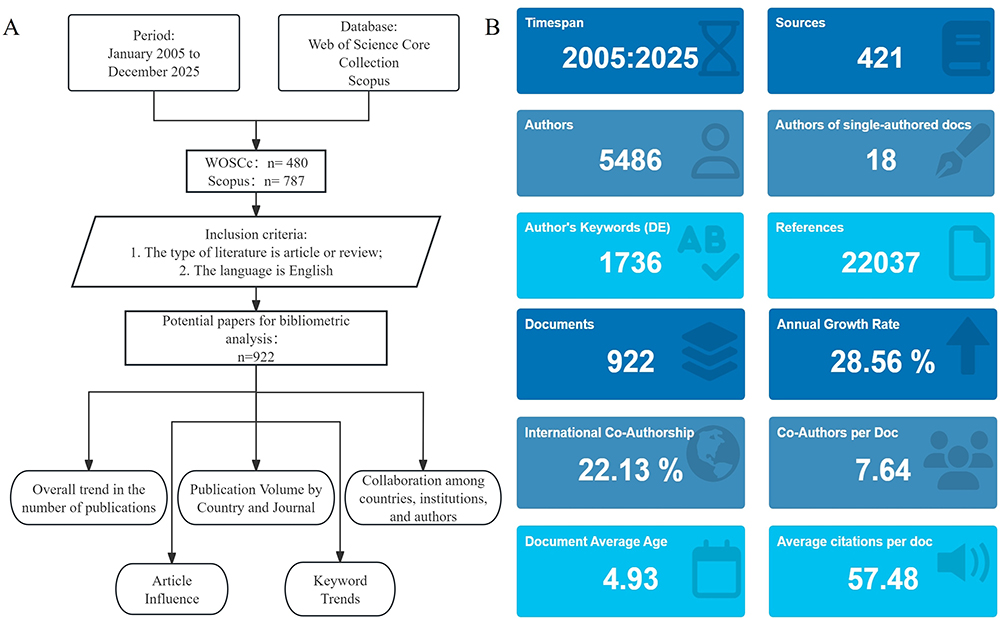 |
Figure 1 Literature retrieval and bibliometric analysis framework. (A) Flowchart of literature search, screening, and inclusion process. (B) Summary of bibliometric indicators of the included publications (2005–2025). |
Data Sources and Search Strategy
Literature data were obtained from two major international databases, the Web of Science Core Collection (WoSCC) and Scopus, to ensure the systematic nature and comprehensiveness of the retrieval results. The search period was limited to January 1, 2005, to December 31, 2025, and there were no restrictions on study regions.
In the Web of Science Core Collection, a topic search (Topic Search, TS) was used. The search query was as follows:
TS = (“chronic obstructive pulmonary disease*” OR COPD OR “chronic obstructive lung disease*” OR “chronic obstructive airway disease*” OR “chronic obstructive airways disease*” OR COAD OR emphysema OR “chronic bronchitis”) AND (sarcopeni* OR myopeni*)
In the Scopus database, a combined search of title, abstract, and keywords (TITLE-ABS-KEY) was used. The search query was as follows: TITLE-ABS-KEY (“chronic obstructive pulmonary disease*” OR COPD OR “chronic obstructive lung disease*” OR “chronic obstructive airway disease*” OR “chronic obstructive airways disease*” OR COAD OR (“chronic airflow” W/1 (limitation OR obstruction))) AND TITLE-ABS-KEY (sarcopeni* OR myopeni*)
Literature Screening and Final Included Studies
Using the above strategy, we initially retrieved 480 records from WoSCC and 787 records from Scopus. Then, we screened the records according to the following inclusion criteria: the document type was limited to original research articles (article) or reviews (review), and the language was limited to English. After removing duplicates and records that did not meet the inclusion criteria, a total of 922 publications were finally included in the bibliometric analysis.
Analysis Methods and Parameter Settings
We used multiple bibliometric tools to systematically analyze the structural features and evolutionary trends in the research field of COPD complicated with sarcopenia. Data cleaning and calculation of basic bibliometric indicators were mainly conducted in the R environment (version 4.3.3) using the bibliometrix package and its visualization interface, biblioshiny. This included annual publication trends, distributions of countries and institutions, journal analysis, and author productivity.
Network visualization and clustering analysis were mainly performed using VOSviewer (version 1.6.20). It was used to build the country collaboration network, journal co-citation network, author co-citation network, and keyword co-occurrence network. In VOSviewer, association strength was used as the normalization method. Node size represents the frequency of occurrence or citation strength, links between nodes indicate co-occurrence or co-citation relationships, and colors are used to distinguish different clusters or time-evolution characteristics.
CiteSpace (version 6.3.R1) was used for citation burst analysis, timeline analysis, and identification of knowledge clustering structures. The parameter settings included a time slicing period of 2005–2025, with a slice length of 1 year. The node type was set as references or keywords depending on the analysis purpose. The pruning methods included Pathfinder and Pruning sliced networks to improve the interpretability of the network structure. Citation burst strength and cluster labels were used to identify key literature, research hotspots, and knowledge evolution paths in this field.
Through cross-validation and visualization using multiple tools, this study systematically described the development characteristics of the research field of COPD complicated with sarcopenia at multiple levels, from overall trends and knowledge base to research frontiers.
Results
Literature Characteristics and Data Overview
A total of 922 publications included in the final analysis were published from 2005 to 2025, and they were distributed across 421 journals. These publications were authored by 5,486 authors. Only 18 publications were single-author papers, which indicates that this field is mainly based on multi-author collaborative research.
For author collaboration, the average number of authors per paper was 7.64, and the proportion of internationally co-authored papers was 22.13%. This suggests that research on COPD and sarcopenia shows cross-national collaboration to some extent.
For keywords and citation characteristics, 1,736 author keywords were extracted, and the total number of references was 22,037. The average citation frequency was 57.48 citations per paper, and the average publication age was 4.93 years. During the study period, the number of publications in this field showed a clear growth trend, and the average annual growth rate reached 28.56% (Figure 1B).
Overall, from 2005 to 2025, research related to COPD and sarcopenia has formed a relatively large research system with intensive collaboration and high academic impact. This provides a solid basis for further analyses of publication trends, country and institutional collaboration, core journals, the knowledge base, and research frontiers.
Annual Publication Trends and Distribution of Countries and Institutions
Trend of Annual Publication Output
As shown in Figure 2A, from 2005 to 2025, the annual number of publications on COPD and sarcopenia showed a continuous overall increase. From 2005 to 2010, the number of publications was small, and the annual output remained at a low level, which suggests that research was still at an early stage. Since 2011, the number of related studies has gradually increased, and annual publication output has shown steady growth.
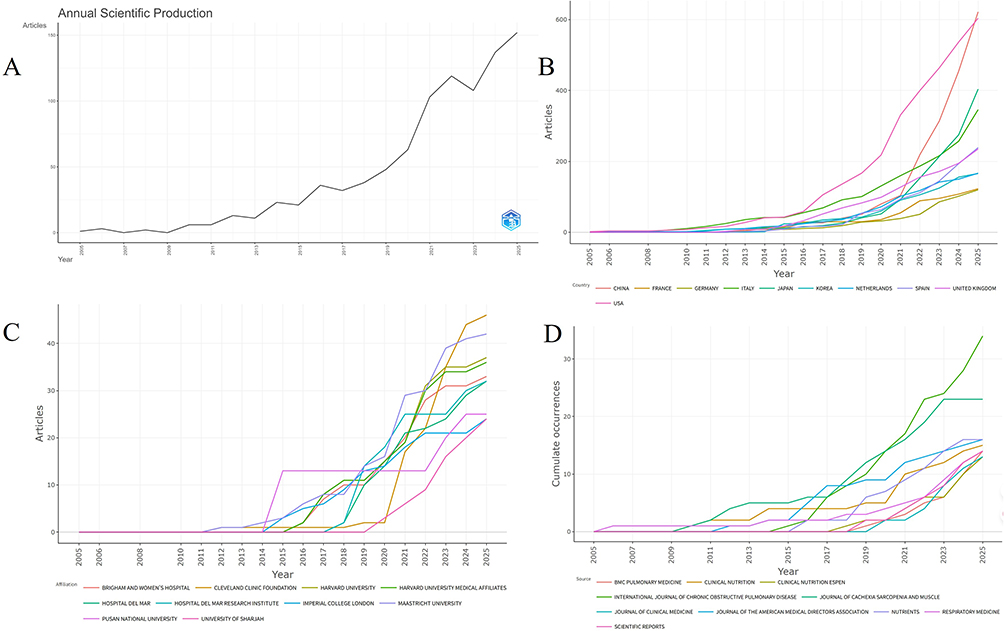 |
Figure 2 Annual publication trends (2005–2025). (A) Annual output. (B) Country trends. (C) Institution trends. (D) Journal trends. |
After 2018, the publication output increased more rapidly. This was especially clear after 2020, when annual output rose markedly and reached a peak in 2025. This trend suggests that, as population aging becomes more serious and prognosis in patients with COPD receives more attention, sarcopenia, as an important comorbidity factor, has gradually become a research hotspot in this field.
Changes in Annual Publication Trends in Major Countries
To further show changes in contributions from different countries, countries with the highest publication output were selected for annual trend analysis (Figure 2B). The results show that the United States remained dominant for a long time in the early stage of research. Before 2015, its publication output consistently ranked first, which reflects its leading role in studies on COPD and related geriatric syndromes.
Notably, since 2018, China has shown rapid growth in publication output. In recent years, it has clearly narrowed the gap with the United States and has become one of the fastest-growing countries in this field. In addition, the United Kingdom, Italy, Japan, Germany, and Spain maintained relatively stable research output at different stages, which indicates that research on COPD and sarcopenia involves multiple countries.
Overall, the research focus in this field has shown a trend of expanding from traditional European and American countries to Asian countries. This reflects increasing global attention to COPD complicated with sarcopenia.
Annual Publication Performance of Highly Productive Institutions
As shown in Figure 2C, analysis of publication trends for major productive institutions indicates that some well-known international medical centers and universities have played a continuous and stable leading role in this field. After 2018, institutions such as Harvard University and its affiliated medical institutions, Cleveland Clinic, and Imperial College London showed a clear increase in publication output, and they became key drivers of the rapid development of this field. In addition, some research institutions in Asia and the Middle East (such as universities in China and the United Arab Emirates) have shown a marked increase in publication output in the past five years. This suggests that emerging research forces are gradually entering this field and are forming a complementary pattern with traditional research centers. The most productive institutions in this field are summarized in Table 1.
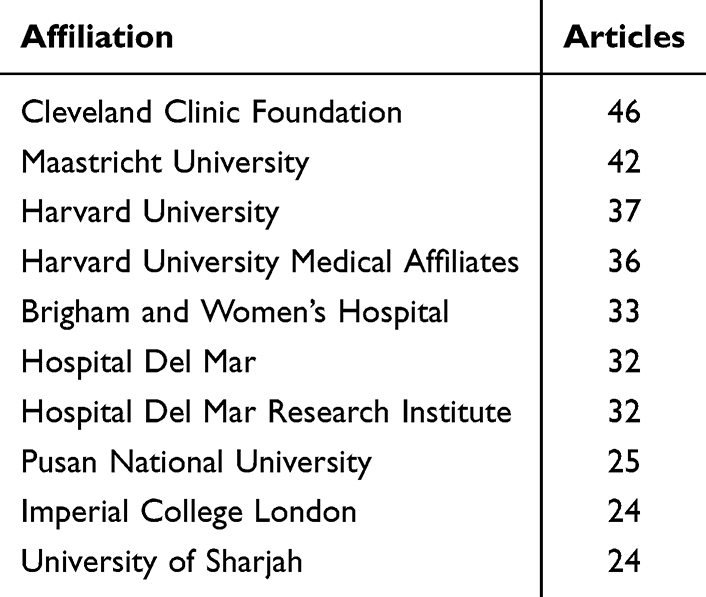 |
Table 1 Top Productive Institutions in COPD–Sarcopenia Research (2005–2025) |
Cumulative Publication Trends of Major Journals
To show the journal distribution of research outputs, we analyzed the cumulative publication trends of major journals (Figure 2D). The results show that the International Journal of Chronic Obstructive Pulmonary Disease, the Journal of Cachexia, Sarcopenia and Muscle, and Clinical Nutrition have maintained high publication output for a long time in research on COPD and sarcopenia, and they are core journal sources in this field.
In the past decade, the cumulative number of publications in these journals has continued to increase. This reflects that research on COPD complicated with sarcopenia has gradually expanded from a single-disease view to a multidisciplinary direction, covering respiratory medicine, nutrition, geriatrics, rehabilitation medicine, and other research areas.
National Research Output and International Collaboration Patterns
Based on country-level bibliometric analysis, we systematically evaluated the global distribution, international collaboration patterns, and academic impact of research on COPD complicated with sarcopenia (Figure 3).
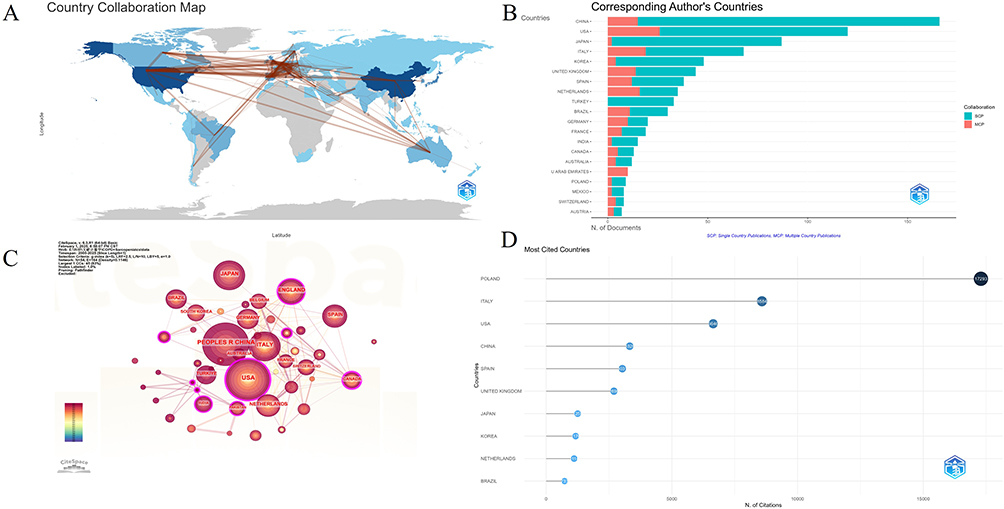 |
Figure 3 Country collaboration patterns. (A) Country output map. (B) Corresponding author countries. (C) International collaboration network. (D) Country citation impact. |
Geographic Distribution of Global Research Output
From the global publication distribution, research on COPD complicated with sarcopenia shows a clear trend of geographic concentration. North America, Western Europe, and East Asian countries dominate this field. Countries such as the United States, China, Japan, the United Kingdom, and Italy have high publication output and form the core regions of global research production (Figure 3A).
Overall, research activities are mainly concentrated in countries with strong economic strength and solid research infrastructure. This suggests that this research field has a certain regional dependence in terms of resources and research platforms.
Corresponding Author Countries and Types of Collaboration
Analysis of corresponding author countries further shows differences among countries in research leadership. The results indicate that China and the United States rank among the top countries in the number of corresponding authors. This reflects that they not only have high research output in this field but also have clear advantages in project leadership and academic organization (Figure 3B).
When combined with the quantitative results on types of national collaboration (Table 2), China ranks first in the number of publications, but its proportion of multiple-country publications (MCP) is relatively low. In contrast, European countries such as the Netherlands, the United Kingdom, and Spain show a clearly higher proportion of MCP. This indicates that international collaboration patterns differ markedly across countries.
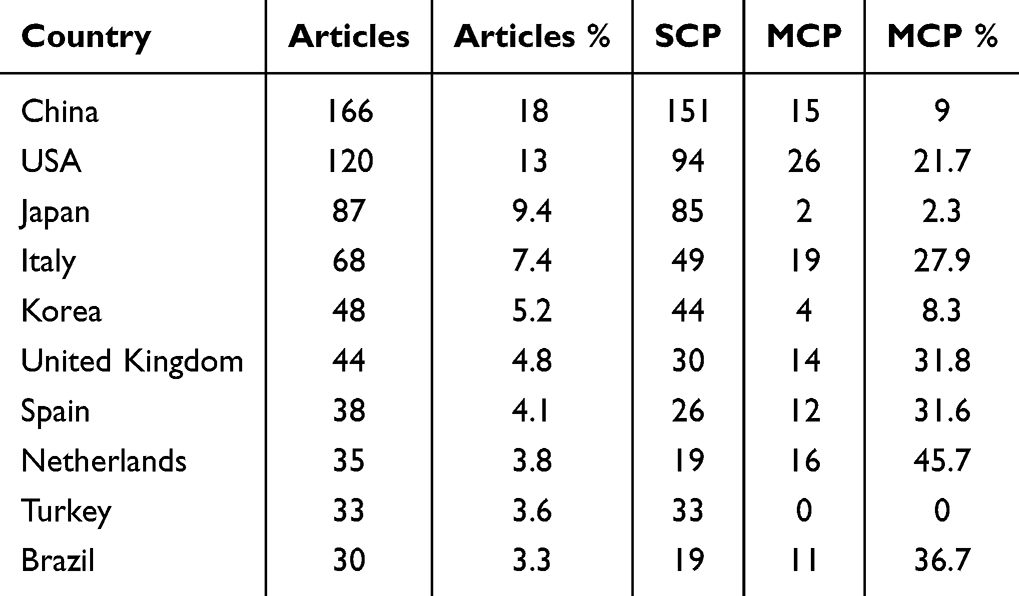 |
Table 2 Contribution and International Collaboration Patterns of the Most Productive Countries in COPD–Sarcopenia Research (2005–2025) |
Features of the International Collaboration Network
International collaboration network analysis shows that a relatively close cooperation structure has been formed among countries. The collaboration network centered on the United States is the most prominent. It maintains broad and stable academic links with many countries in Europe and Asia, which reflects strong international collaboration capacity. At the same time, China, Japan, and some European countries have gradually formed regional collaboration hubs and play important bridging roles in the global network (Figure 3A and C).
Overall, the collaboration network shows a multi-center structure. However, the core nodes are still highly concentrated in a small number of high-output countries. This suggests that, although international collaboration in this field is expanding in breadth, it still shows clear core leadership.
Country-Level Academic Impact
Based on the country impact evaluation using citation counts, the United States has a total citation count that is clearly higher than that of other countries, and it remains the top country worldwide. This reflects its central academic position in research on COPD complicated with sarcopenia. Some European countries have relatively limited publication output, but their average citation levels are high, which indicates strong research quality and academic influence (Figure 3D).
In contrast, emerging research countries are growing rapidly in publication output, but there is still room to improve in citation impact. This suggests that the field is still in a dynamic stage of global development.
Journal Distribution and Core Journal Analysis
Based on journal-level bibliometric analysis, we systematically evaluated the journal distribution characteristics and the composition of core journals in the research field of COPD complicated with sarcopenia (Figure 4).
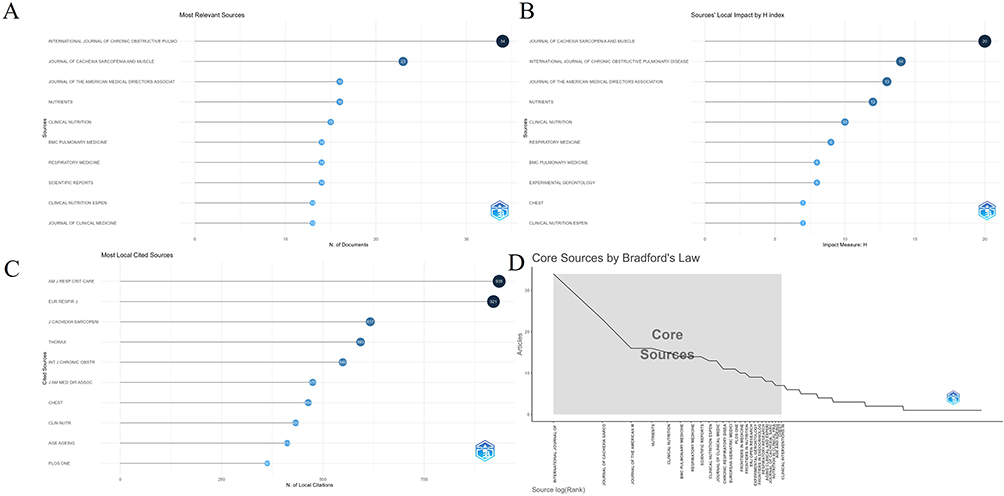 |
Figure 4 Journal distribution analysis. (A) Productive journals. (B) Journal impact indices. (C) Co-cited journals. (D) Bradford zones. |
Distribution of Main Publishing Journals
Analysis of publication output shows that research results are mainly published in a small number of specialized journals. The International Journal of Chronic Obstructive Pulmonary Disease ranks first in publication output, which indicates its important role as a major outlet in this field. The Journal of Cachexia, Sarcopenia and Muscle and the Journal of the American Medical Directors Association follow next. This suggests that journals related to sarcopenia, geriatrics, and chronic disease management play key roles in this field.
In addition to these core journals, Nutrients, Clinical Nutrition, and Respiratory Medicine also maintain relatively stable publication output. This suggests that research on COPD complicated with sarcopenia has clear interdisciplinary features and involves respiratory medicine, nutrition, geriatrics, and other research directions (Figure 4A).
Journal Academic Impact
Based on local impact evaluation using the journal H-index, the Journal of Cachexia, Sarcopenia and Muscle has the highest H-index in this field, which reflects its central role in knowledge dissemination and academic influence. At the same time, the International Journal of Chronic Obstructive Pulmonary Disease and the Journal of the American Medical Directors Association also show high impact, which further supports their authority in this field (Figure 4B).
These journals not only have advantages in publication output but also remain leading in academic impact indicators. This indicates that they play a dual role in promoting progress in research on COPD complicated with sarcopenia.
Highly Cited Journals and Sources of the Knowledge Base
From the perspective of local citations, authoritative respiratory medicine journals such as the American Journal of Respiratory and Critical Care Medicine and the European Respiratory Journal have high citation frequency in this field. This suggests that the topic relies strongly on classic research frameworks of respiratory diseases at both theoretical and methodological levels. In addition, journals such as Thorax and the International Journal of Chronic Obstructive Pulmonary Disease are also important knowledge sources (Figure 4C).
Bradford’s Law and Identification of the Core Journal Zone
Based on the analysis using Bradford’s law, the journal distribution in this research field shows a clear core–peripheral structure. A small number of core journals form the Bradford core zone and publish most research outputs, while many journals are distributed in peripheral areas and show a long-tail pattern (Figure 4D). This result further confirms the high concentration of journals in research on COPD complicated with sarcopenia. It also shows that this field has clear core dissemination platforms.
Knowledge Base and Co-Citation Structure Analysis
To systematically reveal the knowledge base and academic structure of research on COPD complicated with sarcopenia, we further performed co-citation analyses at the journal, author, and document levels (Figure 5).
 |
Figure 5 Co-citation structures. (A) Country co-citation network. (B) Journal co-citation network. (C) Author co-citation network. (D) Reference co-citation network. |
Country-Level Collaboration Network and Temporal Evolution
Country co-occurrence and collaboration network analysis shows that the global research network has a multi-center and strongly connected structure (Figure 5A). The United States and China are located at the core of the network, and they maintain close cooperation with many countries in Europe and Asia. This reflects strong academic influence and international impact.
From the overlay time view, early research was mainly concentrated in Europe and the United States. In recent years, Asian countries, especially China and some East Asian countries, have shown clear increases in node weight and link strength in the network. This suggests that the research focus in this field is gradually shifting toward multi-regional collaborative development.
Journal Co-Citation Network and Interdisciplinary Structure
The journal co-citation network further reveals the disciplinary basis of this research field (Figure 5B). The overall network can be divided into two main clusters. One cluster is centered on journals related to respiratory diseases and critical care medicine. The other cluster mainly includes journals related to geriatrics, nutrition, and muscle metabolism.
There are clear cross-links between the two clusters. This indicates that research on COPD complicated with sarcopenia is not limited to a single discipline. Instead, it is built on the intersection of respiratory medicine, geriatrics, and nutritional metabolism. This interdisciplinary feature reflects the complexity of research questions and the comprehensive clinical nature of this field.
Author Co-Citation Analysis: Core Researchers and Research Communities
The author co-citation network (Figure 5C) shows that this field has formed a clear and closely connected author community. Different clusters represent the main academic schools and knowledge sources in research on COPD complicated with sarcopenia.
Among them, Cruz-Jentoft AJ is located at the center of the network, with the largest node size and the densest connections, and is one of the most influential core authors in this field. As a main member of the European Working Group on Sarcopenia in Older People (EWGSOP), he led the development and continuous updates of the definition, diagnostic process, and grading criteria of sarcopenia. The related consensus documents are frequently cited in research on COPD complicated with sarcopenia and form an important methodological basis for this field.
In addition, authors such as Schols AMWJ, Jones SE, and Spruit MA also show high co-citation strength. This group mainly focuses on the systemic effects of COPD, skeletal muscle dysfunction, reduced exercise tolerance, and pulmonary rehabilitation strategies. It represents a research direction centered on respiratory medicine and clinical functional assessment.
On the other side of the network, authors such as Morley JE and Beaudart C form a relatively independent but closely connected cluster. Their research focuses on geriatric syndromes, nutritional status, body composition assessment, and sarcopenia screening tools, and they provide an interdisciplinary view for sarcopenia assessment in patients with COPD.
Overall, the author co-citation network suggests that research on COPD complicated with sarcopenia is mainly built on the intersection of three major author groups: the geriatric consensus framework, clinical research in respiratory medicine, and methodology of functional assessment.
Document Co-Citation Analysis: Key References and Knowledge Structure
The document co-citation network (Figure 5D) further reveals the knowledge base and classic literature structure of this field, and different clusters correspond to the evolution of research topics.
In the central area of the network, several highly co-cited references form the theoretical foundation of this field. Among them, the sarcopenia definition and consensus documents by Cruz-Jentoft AJ et al published in Age and Ageing (2010, 2019)17,18 are widely co-cited. They are the most important sources of methodological and diagnostic criteria in research on COPD complicated with sarcopenia. At the same time, studies by Schols AMWJ et al published in the American Journal of Respiratory and Critical Care Medicine (1995, 2005)19,20 systematically explained the relationship between abnormal body composition and prognosis in patients with COPD. They established the research basis that “muscle wasting is an important systemic manifestation of COPD”. In the cluster centered on clinical function and exercise tolerance, publications such as Jones SE (Thorax, 2015)21 and Spruit MA (AJRCCM, 2013)22 are frequently co-cited, and they emphasize the close relationship between reduced muscle function and exercise capacity, quality of life, and disease severity. In addition, some newer highly co-cited references focus on nutritional intervention, pulmonary rehabilitation, and comprehensive management strategies. This reflects that the research focus has gradually expanded from “descriptive association” to “intervention and management”.
Overall, the document co-citation network indicates that the knowledge structure in this field is mainly built on three types of core literature: sarcopenia consensus documents, studies on the systemic effects of COPD, and clinical studies related to function and rehabilitation.
Author Structure, Research Topics, and Their Temporal Evolution
Three-Field Links of Countries–Authors–Keywords
Based on the three-field Sankey diagram analysis (Figure 6A), we systematically showed the association structure among countries, authors, and research topics. The results show that China, the United States, the Netherlands, and Italy have close links with multiple core authors and high-frequency keywords in this field.
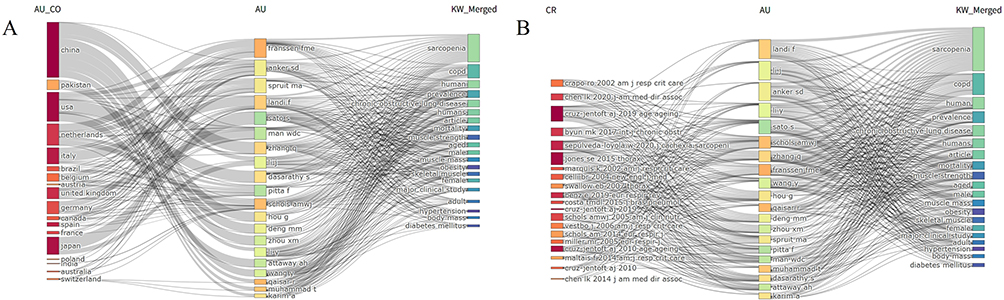 |
Figure 6 Author and topic structures. (A) Country–author–keyword relations. (B) Author–reference–keyword relations. |
At the author level, authors such as Franssen FME, Spruit MA, Landi F, Anker SD, and Schols AMWJ are connected with multiple research topics. This reflects that their research covers several directions in research on COPD complicated with sarcopenia. At the keyword level, keywords such as “sarcopenia”, “COPD”, “prevalence”, “mortality”, “muscle strength”, and “body composition” show stable connections with multiple authors, and they form the core research topic framework in this field.
Overall, the three-field relationship of countries–authors–keywords shows a concentrated distribution pattern, with a small number of countries and authors as centers, and research expanding around specific topics.
Knowledge Link Paths of Authors–Documents–Keywords
The results of the three-field analysis of authors–documents–keywords are shown in Figure 6B. Several highly cited references play key roles in connecting different authors and research topics in the network. Among them, references such as Cruz-Jentoft AJ (2010, 2019),17,18 Jones SE (2015),21 and Sepúlveda-Loyola W (2020)23 are connected with multiple authors and multiple keywords at the same time.
These references mainly involve the definition and diagnosis of sarcopenia, muscle function assessment in patients with COPD, and related clinical outcomes. They are highly consistent with high-frequency keywords such as “sarcopenia”, “COPD”, “human”, “mortality”, and “muscle mass”. The results indicate that core topics in this field have achieved continuous knowledge integration and extension through a small number of key references.
Distribution Features of High-Impact and High-Productivity Authors
The results of local author impact analysis are shown in Figure 7A. Authors such as Qaisar R, Schols AMWJ, Franssen FME, and Landi F show high local H-index values, which indicates that their research outputs are widely cited within this field.
 |
Figure 7 Author contribution and influence. (A) Author impact indices. (B) Author productivity. (C) Author timeline. |
Further analysis of author productivity (Figure 7B) shows that authors such as Qaisar R, Franssen FME, Schols AMWJ, Muhammad T, and Karma A are leading in the number of publications. These authors form the core research group in this field and have participated in different research topics to some extent.
Based on the results of both impact and publication output, it can be observed that research output in this field shows a distribution pattern dominated by a small number of core authors.
Temporal Evolution Features of Core Authors
The results of the temporal evolution analysis of author publications are shown in Figure 7C. Some authors (such as Schols AMWJ and Spruit MA) entered the field of COPD complicated with sarcopenia relatively early and maintained continuous publication output over a long period. At the same time, authors such as Qaisar R, Landi F, Zhang Q, and Karim A have research activities mainly concentrated in the past decade, and their publication frequency has increased in recent years. This result reflects a dynamic development feature of this field over time, with early researchers continuing to participate while new authors are continuously joining.
To further quantify the academic influence and productivity of core researchers in this field, author-level bibliometric indicators, including h-index, g-index, m-index, total citations, and publication counts, were summarized for the most influential authors (Table 3).
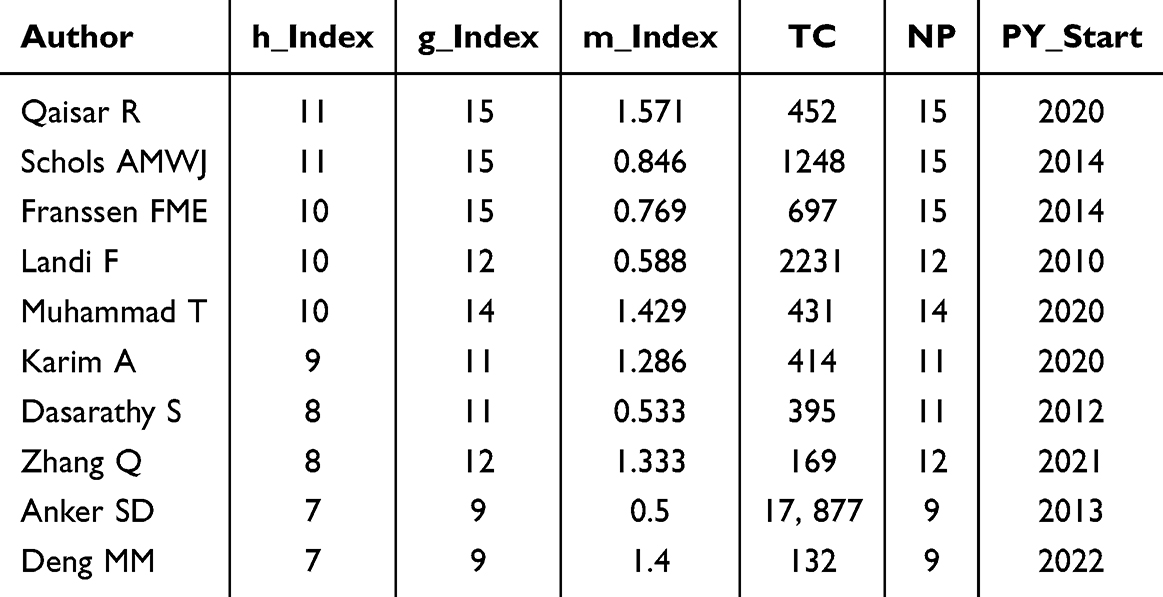 |
Table 3 Bibliometric Indicators of the Most Influential Authors in COPD–Sarcopenia Research (2005–2025) |
Highly Cited Documents, Citation Bursts, and Evolution of the Knowledge Structure
Global Citation Profile of Highly Cited Documents
The distribution of the most globally cited documents is shown in Figure 8A. Several publications exhibit substantial global influence in COPD-related sarcopenia research. Notably, Ponikowski et al (2016) in European Heart Journal24 and European Journal of Heart Failure25 ranked among the most cited, highlighting the foundational role of cardiopulmonary comorbidity and systemic frailty in this field. Other highly cited studies, including Ligouri et al (2018),26 Muñoz-Espín et al (2014),27 and Franceschi et al (2017),28 mainly addressed ageing mechanisms, inflammatory responses, and systemic metabolic regulation, providing key theoretical support for mechanistic research on COPD-related sarcopenia. To further characterize the global academic impact of foundational studies, the top globally cited documents were summarized with total citations, citations per year, and normalized citation impact (Table 4).
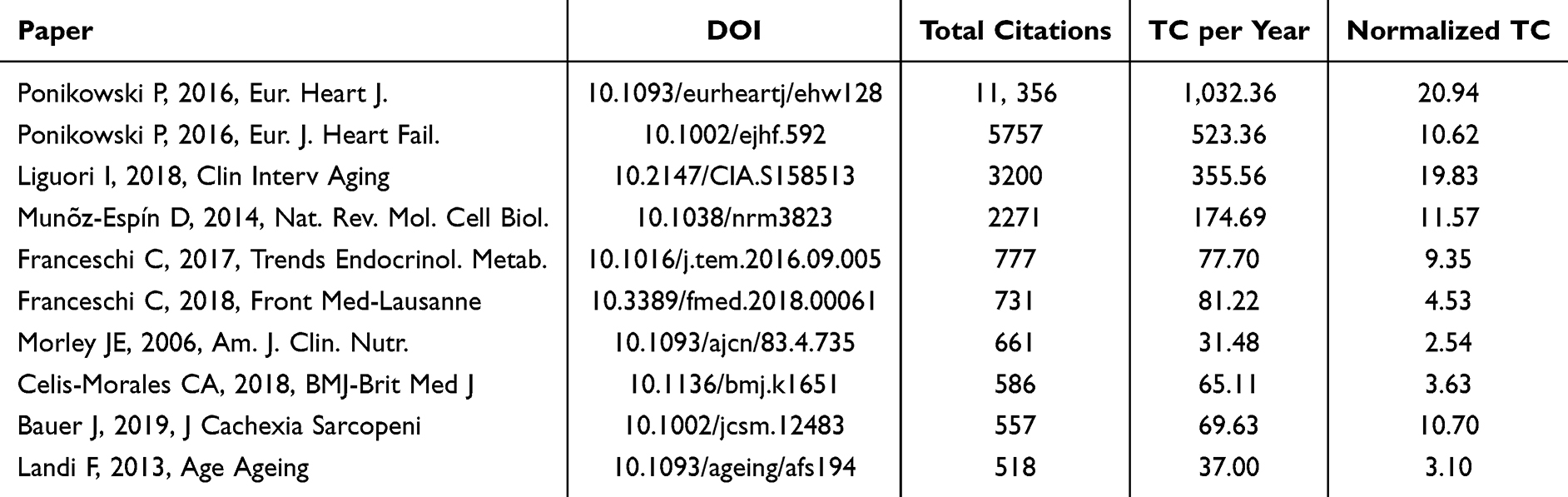 |
Table 4 Top Globally Cited Documents in the Field of COPD and Sarcopenia |
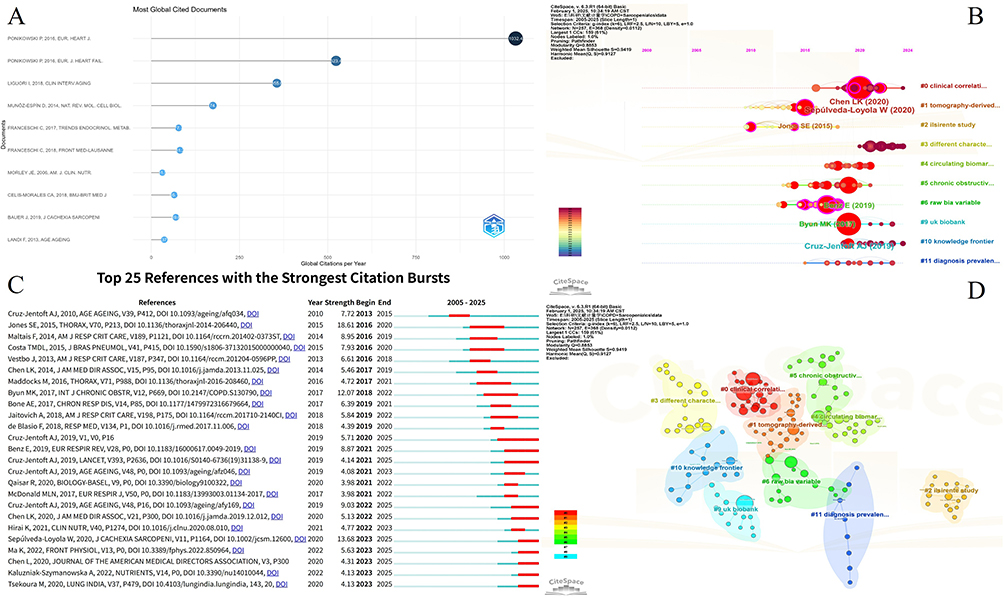 |
Figure 8 Highly cited references. (A) Global citation counts. (B) Citation timeline. (C) Citation bursts. (D) Reference clusters. |
Temporal Evolution and Knowledge Trajectory of Key References
The citation timeline is presented in Figure 8B. Early influential studies (around 2005) primarily focused on clinical relevance and basic phenotypic characteristics. Between 2010 and 2015, attention shifted toward imaging assessment, functional measurements, and structural phenotype profiling. After 2018, several references formed prominent nodes on the timeline (eg., Chen LK, 2020;29 Sepúlveda-Loyola W, 2020;23 Jones SE, 201521), indicating a transition toward diagnostic criteria, disease subtyping, and integrated assessment frameworks. Overall, the field has progressed from descriptive studies to more structured and standardized research.
Citation-Burst References and Their Academic Implications
Citation-burst analysis (Figure 8C) identified the top 25 references with the strongest bursts from 2005 to 2025. Cruz-Jentoft AJ (2010, Age and Ageing)18 showed a marked burst during 2013–2015, reflecting its lasting influence through a proposed definition and diagnostic framework for sarcopenia. Additionally, bursts observed during 2016–2020 (eg., Jones SE, 2015;21 Maltais F, 2014;30 Costa TMDL, 201531) largely centered on muscle function, exercise capacity, and clinical outcomes in COPD. In recent years, sustained bursts after 2021 (eg., Chen LK, 2020; Sepúlveda-Loyola W, 2020) suggest a shift toward geriatric assessment, systemic frailty, and multidimensional outcome measures.
Co-Citation Clusters and Thematic Evolution
The co-citation clustering map is shown in Figure 8D. Multiple stable clusters were identified, including “#0 clinical correlation,” “#1 tomography-derived,” “#5 chronic obstructive,” “#9 UK biobank,” and “#10 knowledge frontier.” The “clinical correlation” and “chronic obstructive” clusters were relatively large, covering clinical phenotypes, outcome evaluation, and risk factors. The “tomography-derived” cluster emphasized imaging-based indicators for sarcopenia assessment, whereas “UK biobank” and “knowledge frontier” reflected recent growth in large-scale databases and frontier methods. Collectively, the knowledge structure has evolved from clinical description to mechanistic inquiry, and further toward multidimensional assessment and data-driven research.
Research Hotspots and Emerging Trends
Keyword Burst Features
Keyword burst analysis is shown in Figure 9A. From 2005 to 2025, 25 burst keywords were identified. Early bursts mainly included “muscle atrophy,” “aging,” “insulin resistance,” “body composition,” and “skeletal muscle,” indicating an initial focus on ageing-related muscle changes and metabolic abnormalities. During 2012–2018, bursts such as “cachexia,” “muscle strength,” “fat free mass,” and “pathophysiology” emerged, suggesting an expansion from structural indicators to functional phenotypes and mechanisms. After 2019, newly burst terms (eg., “vitamin D,” “oxidative stress,” “fat mass,” “hemoglobin,” and “sarcopenic obesity”) indicate a shift toward nutritional status, oxidative stress, biochemical markers, and body-composition heterogeneity.
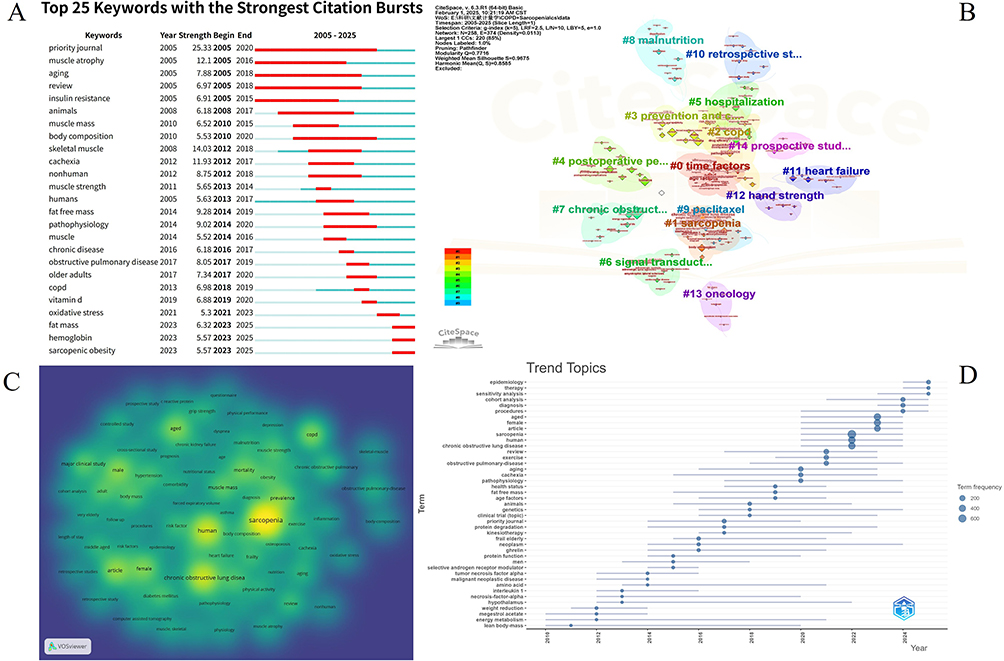 |
Figure 9 Research hotspots and trends. (A) Keyword bursts. (B) Keyword clusters. (C) Keyword density. (D) Topic evolution. |
Keyword Clusters and Thematic Distribution
Keyword co-occurrence clustering (Figure 9B) revealed several stable clusters, including “#1 sarcopenia,” “#5 hospitalization,” “#7 chronic obstructive,” “#11 heart failure,” “#12 hand strength,” and “#13 oncology.” The “sarcopenia” and “chronic obstructive” clusters were the largest and formed the core themes, covering diagnosis, epidemiology, and clinical outcomes of sarcopenia in COPD. The “hospitalization” and “heart failure” clusters underscore the relevance of comorbidity and adverse clinical events. Clusters such as “hand strength,” “signal transduction,” and “oncology” suggest increasing attention to functional metrics, molecular mechanisms, and interdisciplinary extensions.
Density Distribution of Keyword Co-Occurrence
The keyword density map is presented in Figure 9C. High-density areas were dominated by “sarcopenia,” “chronic obstructive pulmonary disease,” “human,” “prevalence,” and “muscle mass,” indicating high co-occurrence frequency and centrality. Additional aggregation of terms such as “muscle strength,” “body composition,” “mortality,” “exercise,” and “inflammation” reflects sustained interest in functional assessment, body-composition changes, and inflammatory processes. Overall, the keyword landscape centers on disease phenotype and extends toward function, metabolism, and outcomes.
Temporal Evolution of Research Themes
Thematic evolution is shown in Figure 9D. Early themes (around 2010) focused on “lean body mass,” “energy metabolism,” and “weight reduction.” From 2015 to 2019, themes including “cachexia,” “aging,” “fat free mass,” and “pathophysiology” became more prominent, indicating a shift toward mechanisms and integrated assessment. After 2020, themes such as “sarcopenia,” “obstructive pulmonary disease,” “clinical trial,” “protein intake,” “physical activity,” and “grip strength” increased markedly, suggesting growing emphasis on interventions, functional outcomes, and evidence-based research.
Discussion
Overall Development Trend and Stage Characteristics of Research on COPD Complicated with Sarcopenia
Although previous studies have described the research relationship between COPD and sarcopenia,16 further updates are still needed, and the knowledge chain should be more systematically organized. Based on the bibliometric analysis from 2005 to 2025, this study systematically shows the development path and stage characteristics of research on COPD complicated with sarcopenia over the past two decades. Overall, this field has followed a clear path from initial exploration, to rapid expansion, and then to multidimensional deepening.5,32
In the early stage (2005–2010), the number of publications was small. Research mainly focused on descriptive analyses of phenotypic features in patients with COPD, such as weight loss, malnutrition, and muscle wasting. Most studies in this stage were single-center studies with small samples. The main focus was to confirm the existence of muscle loss in COPD populations and its association with disease severity. For example, early studies identified clear declines in muscle mass and function in patients with COPD and tried to link these changes with lung function indicators (such as FEV1) and dyspnea scores (such as mMRC).33,34
Then, during 2011–2017, research entered a steady growth stage. With the worsening of population aging and changes in chronic disease management concepts, sarcopenia was gradually regarded as an important systemic complication of COPD. In this stage, both the number of studies and the range of topics expanded. Research not only covered epidemiological features and clinical outcomes but also began to focus on muscle function, body composition assessment, and their effects on exercise tolerance and quality of life. Study designs gradually shifted toward multicenter studies and cohort studies, and academic attention continued to increase. Study designs gradually shifted from single-center cross-sectional studies to multicenter cohort studies, and academic attention continued to increase. For example, multiple studies confirmed that sarcopenia is significantly associated with higher hospitalization rates, higher risk of readmission, and higher mortality in patients with COPD.1,6,33 Researchers also began to use standardized diagnostic tools such as those from the Asian Working Group for Sarcopenia (AWGS)35 or the European Working Group on Sarcopenia in Older People (EWGSOP2).36
Since 2018, especially after 2020, this field has entered a clearly accelerated stage of development. The number of publications has increased rapidly, and research topics have become more diverse. A research pattern centered on functional assessment, comprehensive outcomes, and intervention strategies has gradually formed. This change reflects a clear increase in clinical demand for early identification, risk stratification, and effective intervention for COPD complicated with sarcopenia. Current studies focus not only on prevalence, risk factors, and prognostic impact but also explore the effectiveness of interventions such as nutritional support, resistance training, and protein supplementation.3 They have also begun to integrate biomarkers, imaging, and molecular mechanisms for multidimensional interpretation, such as oxidative stress, the NF-κB pathway, and ferroptosis.4,12 In addition, the continued contributions of highly productive international institutions, such as Maastricht University, and scholars, such as Schols Annemie M. W. J., as well as the concentrated publications in specialized journals such as the International Journal of Chronic Obstructive Pulmonary Disease, have further promoted the systematic development of this field.
From the overall trend, the evolution of research on COPD complicated with sarcopenia reflects not only an increase in research scale but also a deepening of research perspectives. The research focus has shifted from simply describing disease-related features to systematic evaluation of disease burden, functional impact, comorbidity interactions, and potential intervention value. This indicates that this topic has developed from an early stage of “identifying a comorbidity phenomenon” into an independent research direction with clear clinical significance and research depth. This evolution provides a solid basis for further discussion on the global research landscape, knowledge base networks, and frontier hotspots.
Evolution of the Global Research Landscape and International Collaboration Patterns
Based on the country-level bibliometric results, research on COPD complicated with sarcopenia shows clear imbalance in global distribution, and international collaboration has gradually increased. Overall, this field has long been dominated by a small number of high-income countries, but in recent years, research forces have gradually expanded to more regions.
In the early stage, European and American countries, especially the United States, held a core position in this field. The United States remained leading in both publication output and citation impact. Its central position in the international collaboration network also shows a strong academic leading role. At the same time, European countries such as the United Kingdom, Italy, and Germany continuously contributed important results in studies on systemic effects of COPD and functional assessment, and they together formed the early knowledge base of this field.
In recent years, Asian countries, especially China, have shown a marked increase in participation in this field. Publication output has grown rapidly, and China has gradually become an important node in the international collaboration network. Although its overall citation impact still differs from that of traditional research powers, its rapidly expanding research scale has brought new momentum to the field.
In terms of international collaboration patterns, research on COPD complicated with sarcopenia has formed a multinational collaboration network with a small number of core countries as hubs. Highly productive countries often have a high proportion of multiple-country publications, which suggests that international collaboration plays an important role in expanding research scale and improving generalizability. However, the overall collaboration network still shows a certain degree of centralization. In the future, strengthening cross-regional and multicenter collaboration may help the field develop in a more balanced direction.
Role of Core Journals and Academic Dissemination Paths in Shaping Research Directions
The results of journal distribution and co-citation analysis show that research on COPD complicated with sarcopenia has clear concentration in academic dissemination. A small number of core journals play key roles in knowledge dissemination and in shaping research directions in this field. This concentrated pattern reflects publication preferences and also affects the disciplinary positioning of research topics to some extent.
From the perspective of disciplinary attributes, research in this field is mainly distributed in journals related to respiratory medicine, geriatrics, and nutrition and metabolism. Respiratory medicine journals provide the disease background and clinical research framework. Geriatrics and nutrition journals provide important methodological support for the definition, assessment, and management strategies of sarcopenia. The journal co-citation structure further shows close knowledge links among journals from different disciplines, which indicates clear interdisciplinary characteristics of this research topic.
In addition, the core journal zone identified based on Bradford’s law shows that a small number of journals have long undertaken the task of publishing major research outputs in this field. They also guide research topics and methodological orientations to some extent, and they provide a stable academic dissemination platform for the continuous development of research on COPD complicated with sarcopenia.
Influence of the Knowledge Base and Key Literature on the Evolution of Research Paradigms
Through co-citation structure, highly cited literature, and citation burst analysis, we can clearly observe the knowledge base relied on by research on COPD complicated with sarcopenia at different stages, as well as changes in research paradigms over time. Several key references played important turning-point roles in the development of this field and clearly influenced shifts in research perspectives and research paths.
In the early stage, this field was mainly built on studies on the systemic effects of COPD. Studies by Schols AMWJ et al published in the American Journal of Respiratory and Critical Care Medicine systematically explained the relationship between abnormal body composition and prognosis in patients with COPD. This provided a clinical basis for including skeletal muscle dysfunction in the overall disease framework of COPD.
Then, literature represented by the sarcopenia definition and consensus documents by Cruz-Jentoft AJ et al published in Age and Ageing provided unified standards for the diagnosis and grading of sarcopenia. After these standards were introduced into COPD research, they clearly improved methodological consistency and shifted the research focus from conceptual identification to standardized assessment and stratified analysis.
On this basis, studies by Jones SE et al published in Thorax emphasized the close relationship between muscle function indicators and quality of life and prognosis in patients with COPD. This promoted a shift from static body composition measurement to dynamic functional assessment. In recent years, highly cited studies show that research paradigms have further shifted toward more comprehensive and mechanism-oriented directions. They have gradually introduced biological perspectives such as inflammatory responses, oxidative stress, and metabolic abnormalities, and they have verified clinical associations through large-sample studies.
Overall, the knowledge base of this field has experienced an evolution from understanding systemic effects, to establishing diagnostic standards, and then to deepening functional assessment and mechanism exploration. Key references have continuously shaped how research questions are proposed and what research focuses on, and they have laid a foundation for the development of research toward comprehensive and translational directions.
Evolution of Research Hotspots and Shifts in Clinical Focus
Based on the results of keyword evolution and burst analysis, research hotspots in COPD complicated with sarcopenia have shown clear stage changes over time, and these changes are highly consistent with shifts in clinical focus. Early studies mainly focused on muscle loss, changes in body composition, and their relationships with aging and metabolic abnormalities. The research focus was mainly descriptive, and it aimed to clarify the occurrence features of sarcopenia in COPD populations and its disease burden.
As research developed, hotspots gradually expanded to functional status and clinical outcomes. Keywords such as “muscle strength”, “exercise capacity”, “fat-free mass”, and “mortality” appeared frequently. This suggests that the research focus shifted from static structural indicators to dynamic functional assessment and its clinical significance. This shift reflects the increasing attention in clinical practice to the functional impact and prognostic value of sarcopenia.
In recent years, hotspots have further moved toward intervention and comprehensive management. Topics related to hospitalization outcomes, physical activity, nutritional intervention, and rehabilitation strategies have increased. This indicates that the research focus has shifted from “identifying sarcopenia” to “how to manage and intervene in sarcopenia”. Overall, the evolution of hotspots clearly reflects the process in which research on COPD complicated with sarcopenia has shifted from descriptive understanding to function-oriented and clinical application-oriented research.
Deepening of Mechanism Exploration and the Trend of Multidisciplinary Integration
While clinical research has continued to deepen, exploration of mechanisms related to COPD complicated with sarcopenia has also gradually received more attention. Bibliometric results show that, in recent years, research topics related to inflammatory responses, oxidative stress, and abnormal energy metabolism have gradually increased. This suggests that research perspectives have extended from clinical phenotypes to potential biological mechanisms.
Early mechanistic studies mainly started from systemic inflammation and chronic wasting conditions and tried to explain the systemic background of muscle loss in patients with COPD. With the development of research methods, some studies have begun to introduce molecular biology and imaging assessment methods to analyze changes in muscle structure and function in more detail, which has promoted deeper development of mechanism research.
At the same time, multidisciplinary integration has become more obvious. In addition to respiratory medicine and geriatrics, nutrition, exercise science, and rehabilitation medicine have gradually participated in related research and provided new perspectives for mechanism exploration. However, current mechanistic studies are still mainly based on association analyses, and systematic integration with clinical outcomes remains limited. This suggests that mechanistic research in this field is still at an exploratory stage.
Integration of Clinical and Mechanistic Research: Current Challenges and Future Directions
Based on the bibliometric results of this study, research on COPD complicated with sarcopenia has gradually formed a dual-track development model, with clinical problem orientation and deepening mechanism exploration. With continued research, sarcopenia has changed from a concurrent manifestation of COPD to an important comorbidity with independent clinical significance. The research focus has expanded from early epidemiological description to exploration of functional assessment, clinical outcomes, and intervention strategies.
At the same time, mechanistic research has gradually introduced biological perspectives such as inflammatory responses, oxidative stress, abnormal energy metabolism, and regulation of muscle function. These perspectives provide an important theoretical basis for understanding the occurrence and progression of COPD complicated with sarcopenia. However, from the overall research landscape, there is still a certain separation between clinical research and mechanistic research, and the path from mechanistic findings to clinical assessment and intervention is still not clear. This suggests that future studies need to strengthen the integration of clinical and mechanistic research at the study design level. On the one hand, large-sample longitudinal studies should include muscle function, changes in body composition, and key mechanistic indicators at the same time, so that the disease evolution process can be systematically revealed. On the other hand, mechanistic research also needs to be more closely centered on clinical outcomes to improve its clinical relevance and translational value. In addition, multidisciplinary collaboration plays a key role in promoting this integration. Through coordinated participation of respiratory medicine, geriatrics, nutrition, exercise science, and basic research, this field is expected to gradually shift from descriptive association research to mechanism-driven and intervention-oriented research.
Overall, research on COPD complicated with sarcopenia is at a key stage. Clinical attention is rising rapidly, mechanism exploration is continuing to deepen, and integration of the two is developing. In the future, strengthening coordination between clinical and mechanistic research may further promote this field toward more precise and more translational directions.
Limitations
This study was based on two major databases, the Web of Science Core Collection and Scopus, and used multiple bibliometric analysis tools to systematically analyze development trends, research landscape, knowledge base, and research frontiers in the field of COPD complicated with sarcopenia. Multi-database data integration and cross-validation using multiple tools improved the comprehensiveness and robustness of the results to some extent.
This study also has some limitations. First, the literature search was limited by database coverage and language restrictions, and some relevant studies may not have been included. Second, bibliometric analysis mainly relied on publication information and citation data, and it did not evaluate specific study quality or levels of evidence. Therefore, the results mainly reflect research structure and development trends, rather than the direct strength of clinical evidence.
Conclusions
This study provides the first macro-level, multi-database bibliometric mapping of research on COPD complicated with sarcopenia using both the Web of Science Core Collection and Scopus. It clarifies the development trajectory, global research landscape, knowledge base, and evolving hotspots in this field. We found that research on COPD complicated with sarcopenia has shifted from a marginal topic to a core research direction over the past two decades, with rapid growth after 2018. We also found that the main research paradigm has moved from early descriptive attention to muscle loss to a framework centered on standardized sarcopenia assessment, functional outcomes, and clinical management. In addition, co-citation structures and hotspot evolution indicate that the knowledge base relies mainly on studies of the systemic effects of COPD and sarcopenia consensus documents. Although mechanism studies have introduced biological perspectives such as inflammation, oxidative stress, and metabolic abnormalities, systematic integration with clinical outcomes remains relatively insufficient. Overall, research in this field is now at a key stage, moving from rising clinical concern and parallel mechanism exploration toward deeper integration. In the future, strengthening clinical–mechanistic integration through longitudinal designs and multidisciplinary collaboration may be an important direction for further development.
Funding
This study is supported by Chongqing Natural Science Foundation: Study on the Regulation and Mechanism of Theaflavin Monomer PLGA Nanoparticles on Lipopolysaccharide-Induced Inflammatory Response in Lung Macrophages (2024NSCQ-MSX3002).
Disclosure
The authors report no conflicts of interest in this work.
References
1. Xu J, Ma Y, Zeng Q, et al. Impact of COPD and sarcopenia on all-cause and respiratory mortality in US adults: NHANES 1999-2018. BMC Pulm Med. 2025;25(1):223. doi:10.1186/s12890-025-03675-0
2. Ma K, Huang F, Qiao R, Miao L. Pathogenesis of sarcopenia in chronic obstructive pulmonary disease. Front Physiol. 2022;13:850964. doi:10.3389/fphys.2022.850964
3. Nan Y, Zhou Y, Dai Z, et al. Role of nutrition in patients with coexisting chronic obstructive pulmonary disease and sarcopenia. Front Nutr. 2023;10:1214684. doi:10.3389/fnut.2023.1214684
4. Attaway AH, Bellar A, Welch N, et al. Gene polymorphisms associated with heterogeneity and senescence characteristics of sarcopenia in chronic obstructive pulmonary disease. J Cachexia Sarcopenia Muscle. 2023;14(2):1083–20. doi:10.1002/jcsm.13198
5. He J, Li H, Yao J, Wang Y. Prevalence of sarcopenia in patients with COPD through different musculature measurements: an updated meta-analysis and meta-regression. Front Nutr. 2023;10:1137371.
6. Choi YJ, Kim T, Park HJ, Cho JH, Byun MK. Long-Term clinical outcomes of patients with chronic obstructive pulmonary disease with sarcopenia. Life. 2023;13(8):1628.
7. Yang X, Wei Y, Zhao J, Bai Y. Correlation of lung function and sarcopenia in elderly patients with chronic obstructive pulmonary disease and analysis of factors influencing sarcopenia. Am J Transl Res. 2025;17(1):358–376. doi:10.62347/OGUT1532
8. Li X, Xu S, Zeng C, Wang X, Wang R, Feng Y. Research progress of sarcopenia index in chronic obstructive pulmonary disease: a review. Cureus. 2025;17(11):e97556. doi:10.7759/cureus.97556
9. Espíndola de Araújo B, Teixeira PP, Valduga K, Da Silva Fink J, Silva FM. Prevalence, associated factors, and prognostic value of sarcopenia in patients with acute exacerbated chronic obstructive pulmonary disease: a cohort study. Clin Nutr ESPEN. 2021;42:188–194. doi:10.1016/j.clnesp.2021.01.042
10. Yu Z, He J, Chen Y, Zhou Z, Wang L. Chronic obstructive pulmonary disease as a risk factor for sarcopenia: a systematic review and meta-analysis. PLoS One. 2024;19(4):e0300730. doi:10.1371/journal.pone.0300730
11. Deng M, Yan L, Tong R, et al. Ultrasound assessment of the rectus femoris in patients with chronic obstructive pulmonary disease predicts sarcopenia. Int J Chron Obstruct Pulmon Dis. 2022;17:2801–2810. doi:10.2147/COPD.S386278
12. Wang W, Ren W, Zhu L, Hu Y, Ye C. Identification of genes and key pathways underlying the pathophysiological association between sarcopenia and chronic obstructive pulmonary disease. Exp Gerontol. 2024;187:112373.
13. Lin B, Bai L, Wang S, Lin H. The association of systemic interleukin 6 and interleukin 10 levels with sarcopenia in elderly patients with chronic obstructive pulmonary disease. Int J Gen Med. 2021;14:5893–5902. doi:10.2147/IJGM.S321229
14. Wang Z, Deng M, Xu W, et al. DKK3 as a diagnostic marker and potential therapeutic target for sarcopenia in chronic obstructive pulmonary disease. Redox Biol. 2024;78:103434. doi:10.1016/j.redox.2024.103434
15. Núñez-Robainas A, Guitart M, López-Postigo A, Sancho-Muñoz A, Barreiro E. Myostatin/Smad2/Smad3 pathway define a differential clinical phenotype in COPD-associated sarcopenia. ERJ Open Res. 2025;11(2):00772–2024. doi:10.1183/23120541.00772-2024
16. Zou J, Peng W. Unveiling the knowledge frontier: a scientometric analysis of COPD with sarcopenia. Int J Chron Obstruct Pulmon Dis. 2024;19:731–748. doi:10.2147/COPD.S448494
17. Cruz-Jentoft AJ, Bahat G, Bauer J, et al. Sarcopenia: revised European consensus on definition and diagnosis. Age Ageing. 2019;48(1):16–31.
18. Cruz-Jentoft AJ, Baeyens JP, Bauer JM, et al. Sarcopenia: european consensus on definition and diagnosis: report of the European working group on sarcopenia in older people. Age Ageing. 2010;39(4):412–423.
19. Schols AM, Slangen J, Volovics L, Wouters EF. Weight loss is a reversible factor in the prognosis of chronic obstructive pulmonary disease. Am J Respir Crit Care Med. 1998;157(6 Pt 1):1791–1797. doi:10.1164/ajrccm.157.6.9705017
20. Schols AM, Broekhuizen R, Weling-Scheepers CA, Wouters EF. Body composition and mortality in chronic obstructive pulmonary disease. Am J Clin Nutr. 2005;82(1):53–59. doi:10.1093/ajcn/82.1.53
21. Jones SE, Maddocks M, Kon SS, et al. Sarcopenia in COPD: prevalence, clinical correlates and response to pulmonary rehabilitation. Thorax. 2015;70(3):213–218. doi:10.1136/thoraxjnl-2014-206440
22. Spruit MA, Singh SJ, Garvey C, et al. An official American Thoracic Society/European Respiratory Society statement: key concepts and advances in pulmonary rehabilitation. Am J Respir Crit Care Med. 2013;188(8):e13–e64. doi:10.1164/rccm.201309-1634ST
23. Sepúlveda-Loyola W, Osadnik C, Phu S, Morita AA, Duque G, Probst VS. Diagnosis, prevalence, and clinical impact of sarcopenia in COPD: a systematic review and meta-analysis. J Cachexia Sarcopenia Muscle. 2020;11(5):1164–1176. doi:10.1002/jcsm.12600
24. Ponikowski P, Voors AA, Anker SD, et al. 2016 ESC guidelines for the diagnosis and treatment of acute and chronic heart failure: the task force for the diagnosis and treatment of acute and chronic heart failure of the European Society of Cardiology (ESC)Developed with the special contribution of the Heart Failure Association (HFA) of the ESC. Eur Heart J. 2016;37(27):2129–2200. doi:10.1093/eurheartj/ehw128
25. Ponikowski P, Voors AA, Anker SD, et al. 2016 ESC guidelines for the diagnosis and treatment of acute and chronic heart failure: the task force for the diagnosis and treatment of acute and chronic heart failure of the European Society of Cardiology (ESC). Developed with the special contribution of the Heart Failure Association (HFA) of the ESC. Eur J Heart Fail. 2016;18(8):891–975. doi:10.1002/ejhf.592
26. Liguori I, Russo G, Curcio F, et al. Oxidative stress, aging, and diseases. Clin Interv Aging. 2018;13:757–772. doi:10.2147/CIA.S158513
27. Muñoz-Espín D, Serrano M. Cellular senescence: from physiology to pathology. Nat Rev Mol Cell Biol. 2014;15(7):482–496. doi:10.1038/nrm3823
28. Franceschi C, Garagnani P, Vitale G, Capri M, Salvioli S. Inflammaging and ‘Garb-aging’. Trends Endocrinol Metab. 2017;28(3):199–212. doi:10.1016/j.tem.2016.09.005
29. Chen LK, Woo J, Assantachai P, et al. Asian working group for sarcopenia: 2019 consensus update on sarcopenia diagnosis and treatment. J Am Med Dir Assoc. 2020;21(3):300–307.e2. doi:10.1016/j.jamda.2019.12.012
30. Maltais F, Decramer M, Casaburi R, et al. An official American Thoracic Society/European Respiratory Society statement: update on limb muscle dysfunction in chronic obstructive pulmonary disease. Am J Respir Crit Care Med. 2014;189(9):e15–e62. doi:10.1164/rccm.201402-0373ST
31. Costa TM, Costa FM, Moreira CA, Rabelo LM, Boguszewski CL, Borba VZ. Sarcopenia in COPD: relationship with COPD severity and prognosis. J Bras Pneumol. 2015;41(5):415–421. doi:10.1590/S1806-37132015000000040
32. Kim SH, Hong CH, Shin MJ, et al. Prevalence and clinical characteristics of Sarcopenia in older adult patients with stable chronic obstructive pulmonary disease: a cross-sectional and follow-up study. BMC Pulm Med. 2024;24(1):219. doi:10.1186/s12890-024-03034-5
33. Wu JF, Jia J, Chen P, et al. Sarcopenia and its clinical correlation in elderly chronic obstructive pulmonary disease: a prospective cohort study. Eur Rev Med Pharmacol Sci. 2023;27(20):9762–9772. doi:10.26355/eurrev_202310_34150
34. Gundogdu S, Yakar HI, Koseoglu HI, Pazarli AC, Aykun G. Sarcopenia in chronic obstructive pulmonary disease. J Coll Physicians Surg Pak. 2025;35(11):1471–1475.
35. Chen LK, Hsiao FY, Akishita M, et al. A focus shift from sarcopenia to muscle health in the Asian Working Group for Sarcopenia 2025 consensus update. Nat Aging. 2025;5(11):2164–2175. doi:10.1038/s43587-025-01004-y
36. Chew J, Yeo A, Yew S, et al. Muscle strength definitions matter: prevalence of sarcopenia and predictive validity for adverse outcomes using the European Working Group on Sarcopenia in older people 2 (EWGSOP2) Criteria. J Nutr Health Aging. 2020;24(6):614–618. doi:10.1007/s12603-020-1371-y
 © 2026 The Author(s). This work is published and licensed by Dove Medical Press Limited. The
full terms of this license are available at https://www.dovepress.com/terms
and incorporate the Creative Commons Attribution
- Non Commercial (unported, 4.0) License.
By accessing the work you hereby accept the Terms. Non-commercial uses of the work are permitted
without any further permission from Dove Medical Press Limited, provided the work is properly
attributed. For permission for commercial use of this work, please see paragraphs 4.2 and 5 of our Terms.
© 2026 The Author(s). This work is published and licensed by Dove Medical Press Limited. The
full terms of this license are available at https://www.dovepress.com/terms
and incorporate the Creative Commons Attribution
- Non Commercial (unported, 4.0) License.
By accessing the work you hereby accept the Terms. Non-commercial uses of the work are permitted
without any further permission from Dove Medical Press Limited, provided the work is properly
attributed. For permission for commercial use of this work, please see paragraphs 4.2 and 5 of our Terms.
Recommended articles

Chronic Obstructive Pulmonary Disease Prevalence and Associated Risk Factors in Adults Aged 40 Years and Older in Southeast China: A Cross-Sectional Study During 2019–2020
Chen J, Yin Y, Zhang Y, Lin X, Chen T, Yang Z, Wang D, Zhong W
International Journal of Chronic Obstructive Pulmonary Disease 2022, 17:2317-2328
Published Date: 17 September 2022
Bibliometrics Analysis and Visualization of Sarcopenia Associated with Osteoporosis from 2000 to 2022
Yang J, Jiang T, Xu G, Liu W
Journal of Pain Research 2023, 16:821-837
Published Date: 13 March 2023
Prevalence of Chronic Obstructive Pulmonary Disease in England from 2000 to 2019
Stone PW, Osen M, Ellis A, Coaker R, Quint JK
International Journal of Chronic Obstructive Pulmonary Disease 2023, 18:1565-1574
Published Date: 21 July 2023

A Long-Term Study of Adverse Outcomes Associated With Oral Corticosteroid Use in COPD

Tse G, Emmanuel B, Ariti C, Bafadhel M, Papi A, Carter V, Zhou J, Skinner D, Xu X, Müllerová H, Price D
International Journal of Chronic Obstructive Pulmonary Disease 2023, 18:2565-2580
Published Date: 15 November 2023
Extrapulmonary Comorbidities Associated with Chronic Obstructive Pulmonary Disease: A Review
Xiang Y, Luo X
International Journal of Chronic Obstructive Pulmonary Disease 2024, 19:567-578
Published Date: 29 February 2024