
Back to Journals » Advances in Medical Education and Practice » Volume 17
Evaluation of Preclinical Class II Composite Restoration Performed by Dental Students Using Analytic Rubric Parameters
Authors Daghrery A  , Pereira GKR, Bin Hassan SA , Abogazalah NN, Alamoudi NA, Alqahtani SA , Alamri MA, Algarni SA, Al Moaleem MM
Received 10 February 2026
Accepted for publication 8 April 2026
Published 18 April 2026 Volume 2026:17 594133
DOI https://doi.org/10.2147/AMEP.S594133
Checked for plagiarism Yes
Review by Single anonymous peer review
Peer reviewer comments 2
Editor who approved publication: Dr Md Anwarul Azim Majumder
Arwa Daghrery,1 Gabriel Kalil Rocha Pereira,2 Saeed Awod Bin Hassan,3 Naif N Abogazalah,4 Nada Ahmad Alamoudi,3 Saleh Ali Alqahtani,3 Mohammad Abdullah Alamri,3 Salim A Algarni,5 Mohammed M Al Moaleem6
1Department of Restorative Dental Sciences, School of Dentistry, Jazan University, Jazan, Saudi Arabia; 2Faculty of Dentistry, Universidade Federal de Santa Maria (UFSM), Santa Maria, Rio Grande do Sul, Brazil; 3Department of Restorative Dental Sciences, College of Dentistry, King Khalid University, Abha, Saudi Arabia; 4Department of Restorative Dental Sciences, College of Dentistry, King Faisal University, Al-Ahsa, Saudi Arabia; 5Department of Restorative Dental Sciences, Faculty of Dentistry, Najran University, Najran, Saudi Arabia; 6Department of Prosthetic Dental Science, College of Dentistry, Jazan University, Jazan, 45142, Saudi Arabia
Correspondence: Salim A Algarni, Department of Restorative Dental Sciences, Faculty of Dentistry, Najran University, Najran, Saudi Arabia, Email [email protected]
Aim: There is currently a limited studies regarding the application of analytic rubrics for assessing student’s performance in preclinical tasks. This study aimed to examine the use of a validated rubric structure to measure the performance outcomes of preclinical dental students conducting Class II composite restorations.
Methods: Validated analytical rubric for evaluation of preclinical class II composite cavity preparation and restoration was used at preclinical phase by two male examiners, who were further calibrated before the assessments using the rubric. Scoring was based on a 4-point scale for assessment and evaluation of two parameters: cavity preparation (40 points) and restoration (20 points). Descriptive statistics were applied to calculate rubric parameters, while independent t-tests compared scores across examiners and between student genders and groups. The associations between Grade Point Average (GPA), evaluators, and the gender of participants, both Pearson’s correlation coefficient and the Kappa test were utilized.
Results: Overall mean scores were marginally elevated for female participants relative to their counterparts (54.71 vs 52.92) across cavity preparation (36.71 vs 34.87) and restoration parameters (18.00 vs 18.06). Among cavity preparation parameters, only the finishing of the cavity preparation rubric parameters demonstrated a significant difference (p< 0.05). For the class II composite restoration parameter steps, we found no overall differences (p ≥ 0.050), except a gender significant difference in matrix band application and anatomy steps (p=0.022 and 0.034, respectively). Significant difference between gender was recorded by the first evaluator (p=0.006), with a significantly higher overall average (p=0.047). A strong and significant correlation was documented between participant GPA and specific evaluated parameters (p=0.000).
Conclusion: Within this preclinical setting, gender-based variations were evident across all assessed procedural parameters. Additionally, variability was observed between the two examiners, with agreement levels ranging from fair to moderate, and in some instances, reaching perfect agreement.
Keywords: class II composite restoration, dental education, pre-clinical, rubrics, dental students
Introduction
Preclinical dental undergraduate students must develop essential knowledge and manual skills to become proficient practitioners, as they will eventually perform various invasive and irreversible procedures on patients.1 The provision of optimal dental care depends on the successful completion of preclinical courses and students’ success within these courses.2 Evaluation of these courses is essential to establish fundamental skills that are further developed during advanced clinical training and subsequent practice.3
Conventionally, assessments of student preclinical performance have relied on a visual grading system, with specific grades or quantitative division into small scores.4 To accurately reflect a student’s knowledge and skill execution, preclinical courses require evaluation by multiple faculty assessors.5 The evaluation steps should offer validity, reliability, effectiveness, and efficiency in order to continue consistency and standardization between assessors. Moreover, the aim of the evaluation process should be clear to the evaluator and the evaluated preclinical contributors.6 Also, the assessment should offer comprehensive and immediate feedback to enhance learning based on preclinical performance.7
Evaluator consistency plays a vital role in preclinical learning process, as it significantly influences student confidence and overall academic achievement.8 However, traditional assessment methods, such as glance and grade, non-objective checklists, and point systems, can lead to problems like evaluator subjectivity, lack of meaningful feedback, and confusing perceptions for students.9 To enhance the quality of assessment, the evaluation tool must incorporate distinct criteria for each grading component, providing evaluators with solid rules and learners with immediate, actionable feedback.10
Rubrics have emerged as a valuable assessment tool defined as “scaled tools with levels of achievement and clearly defined criteria placed in a grid”.11,12 Rubrics establish transparent evaluation standards and standardized grading protocols that facilitate learners’ understanding of their scores and help pinpoint areas for improvement. Adoption of rubrics associated with several advantages, including enhanced instructional quality, increased grading efficiency, and improved calibration among assessors.13 Furthermore, rubrics can elevate the competence of learner projects regarding expected criteria making assessment more objective.14
Recent studies indicate that complex class II restorations are more susceptible to complications and exhibit reduced longevity than other restoration classes.15 Consequently, class II cavity restorations are now primarily performed using composite materials, which have advanced to perform effectively in posterior teeth, addressing the failures of earlier composites.16 However, resin composites face challenges, such as technique sensitivity and inherent polymerization shrinkage, which can lead to postoperative sensitivity, microleakage, and excessive wear.17 Since the late 1990s, the use of resin composite materials for restoring posterior teeth has grown in prominence within dental schools, resulting in increased curriculum time dedicated to this material and its applications.18
In dentistry, data on the use of rubrics for evaluating students in preclinical tasks across various specialties is limited. While no studies have specifically employed rubrics for assessing preclinical Class II composite restorations, prior research has utilized them for evaluating root canal treatments,10,19,20 crown preparations in clinical or preclinical settings,21–23 oral presentations in orthodontics,24 periodontics,25 clinical Class II,26 and student self-assessment in preclinical conservative dentistry27 and endodontic courses.28
There is a lack of studies regarding analytic rubrics in the assessment of preclinical dental courses, particularly with Class II composite restorations, across different dental colleges in Saudi Arabia. Thus, this study aimed to examine an analytic rubric system for assessing Class II composite restoration in third-year dental students, with specific attention to gender differences and GPA associations. The null hypothesis stated that there would be no significant differences in composite Class II cavity preparation performance among genders, nor would GPA significantly affect the total analytic rubric scores achieved.
Participants and Materials
Study Design and Ethical Approval
This research was carried out at the Department of Restorative Dental Sciences within the College of Dentistry at Jazan University, focusing on preclinical dental students. All third-year registered student in this course at the 2022/2023 academic year were included in this study. Tow trained evaluators, assessed the Class II composite cavity preparation and restoration procedures at the end of their first pre-clinical restorative course. This study protocol was approved by the ethical committee of the College of Dentistry, Jazan University under # CODJU-2321F on August 21, 2023. Also, this ethical approval was approved by Standing Committee for Scientific Research - Jazan University (Approval No. REC-45/03/761) at September/ 22/ 2023. All students signed a consent form before the actual conduct of the study.
Study and Investigation Type
This study was a cross-sectional blind design where students’ identities were kept confidential from the examiners, and vice versa, to prevent bias, as some examiners taught the same students. Third-year preclinical students prepared a class II composite restoration on the mandibular left first molar for their final practical exam, a requirement for completing their preclinical phase. Students received clear instructions about the exercise and were informed of the analytic rubric criteria for assessment. They also practiced this exercise earlier in the academic year.
The Inclusion and Exclusion Criteria
The study’s inclusion criteria consisted of regular students who successfully completed their basic phase courses and were eligible to take the final clinical exam. Participants were specifically assessed on the mandibular left first molar typodont tooth. Conversely, students who modified the class II cavity preparation and restoration or were unable to complete the exam within the assigned time were excluded from the study. The total duration for this examination exercise was set at two hours. Upon completion, the analytic rubric evaluation sheets were collected, numbered, and subsequently scored by two evaluators.
Teeth Mounting and Preparation
The ivory teeth were attached to a Frasaco typodont model (specifically the Frasaco teaching and demonstration teeth AnA-4 ZE100, Verkaufs partner/agent, GMBH, Post fach 1244, 88061 Teltnag, Germany), where composite restorations were performed on ivory tooth #36 (Frasaco An-4 Puk, Pok).29 Throughout the entire process of cavity preparation and composite restoration, all models were securely placed on phantom heads. In line with the requirements of the pre-clinical course, students were mandated to complete preparations and restorations across various types of cavity classes, including amalgam and composite fillings, on both anterior and posterior teeth. Once prepared, all ivory teeth were mounted accordingly.
Rubric Scoring and Data Processing
The used analytic rubric for evaluation of preclinical class II composite cavity preparation and restoration was used by two trained male’s evaluators. The evaluators independently assessed the student’s cavity preparation and composite restorations immediately after every single step at the time of the preclinical examination performance. The time limit was adjusted into the session time for the completion of scoring. The analytic rubric employed in this preclinical study was based on a 4-point valuation scale for two main parameters of Class II composite restoration on mandibular first molars. The scoring of each parameter for cavity preparation comprised outline form (occlusal outline, contact clearance of all walls, and cavity and axial wall depth), resistance form (width of the cavity and flat pulpal floor, width of marginal ridge remaining, rounding of axio-pulpal line angle, and placing gingival cavo-surface margin bevel), retention form, and finishing of cavity (round, smoothness of walls, and internal line angle). Restoration parameters such as matrix band application, margins, anatomy, contact, and finishing and polishing of the restorations were also recorded.
Grades were excellent, good, average, and unsatisfactory and scored as 1, 2, 3, and 4, respectively. These scores were then summed to produce a total. The overall for cavity preparations was 40 points (12 points for outline form, 12 points for resistance form, 12 points for cavity finishing, and 4 points for retention form) for each student. For class II restoration, the total was 20 (4 points for each parameter as matrix band application, margins, anatomy, contact, and finishing and polishing of the restorations). The sum of every class II restoration was 60 points, as shown in Table 1.
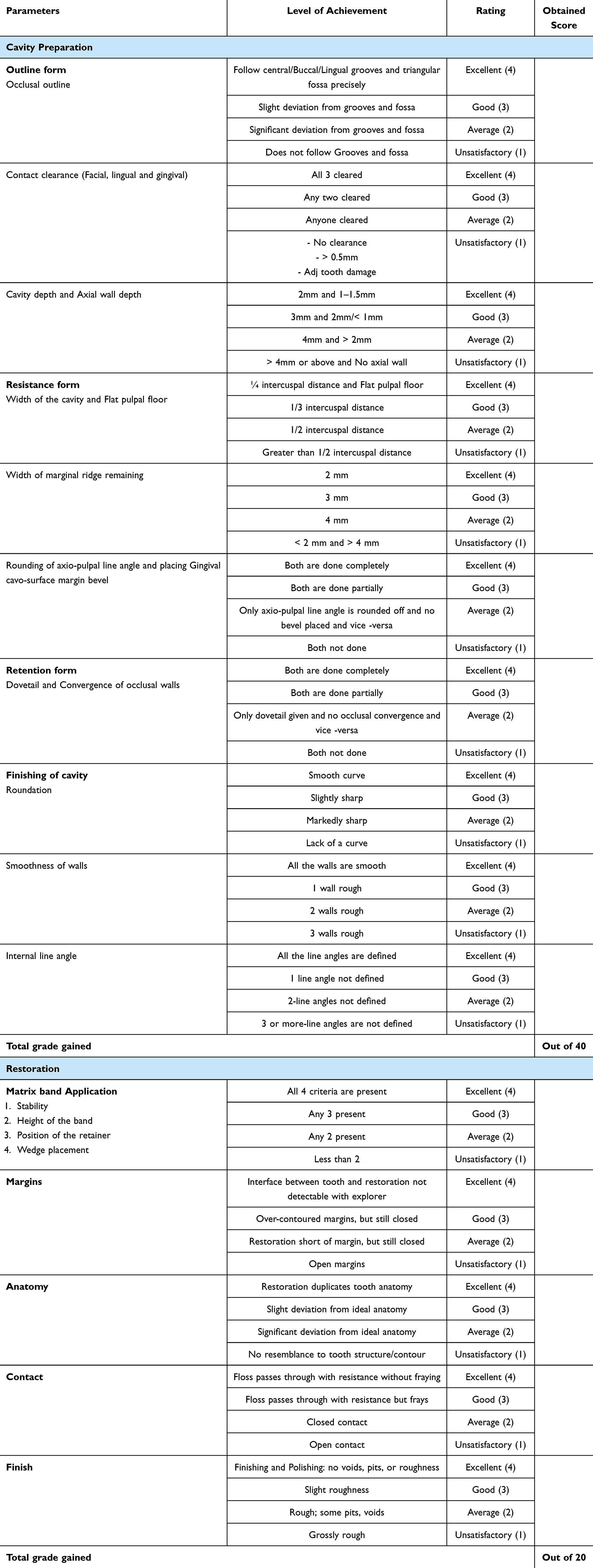 |
Table 1 Analytic Rubric Parameters Used in Preclinical Assessment of Class II Composite Restoration |
The analytic rubric was structured as a grid, with parameters listed in the left column and grading levels across the rows, using both descriptive tags and numbers. Each parameter was scored individually, with values assigned in the right column. Total student scores were calculated from the sum of all parameter scores (Table 1). Individual printed logbooks, numbered according to each student’s university ID, were used for evaluations of all participating students.
Grade Point Average for Participants
Duplicate records of the participants’ final GPA scores were obtained from the college’s Student Academic Affairs department. Table 2 displays the criterion-referenced grading scale used by Jazan University’s College of Dentistry.30 For analytical purposes, the data were subsequently stratified by gender.
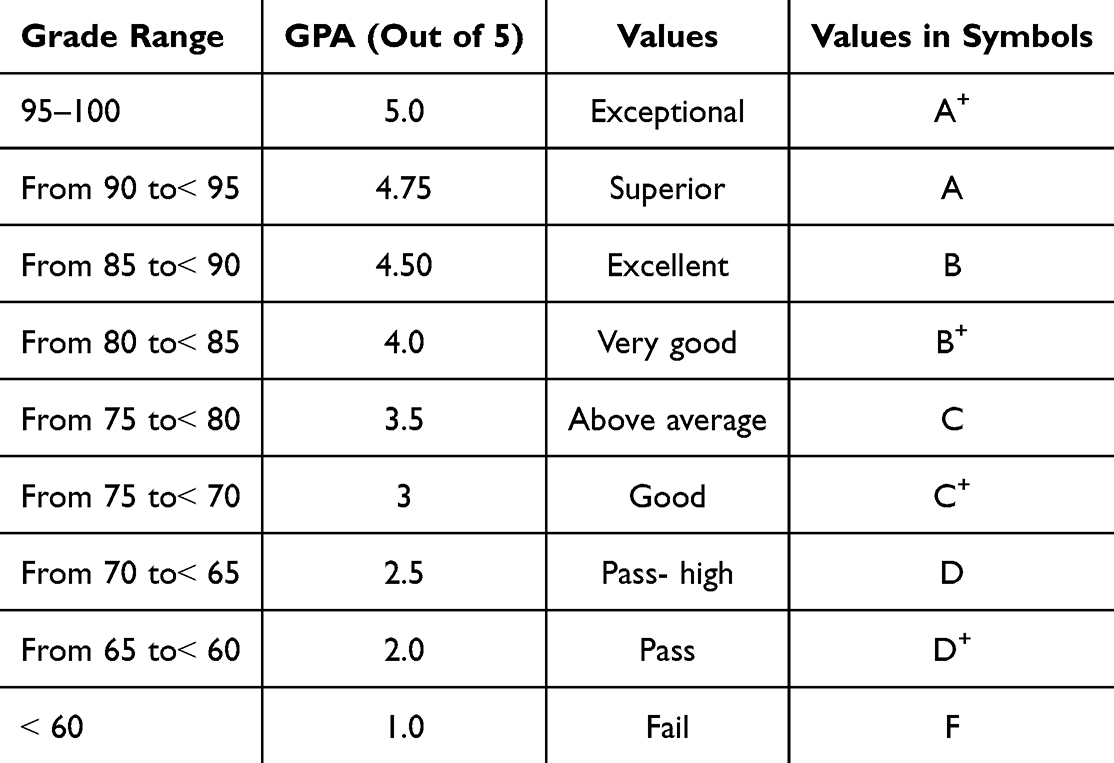 |
Table 2 Criteria Reference for General Point Average for Clinical Performance |
Reliability and Intraclass Correlation Coefficient Test
The authors assessed internal consistency reliability through Cronbach’s α coefficient, revealing that the overall scale demonstrated high content reliability. Specifically, the reliability coefficient of the analytic rubric used for data collection was between 85% and 87%, signifying strong internal consistency among the items, which included criteria, levels of achievement, and ratings. Furthermore, an intra-examiner reliability assessment was conducted for all measurements, with Intraclass Correlation Coefficient (ICC) values confirming result consistency.23
Statistical Analysis
Data entry and analysis were performed using SPSS version 26.0. Descriptive statistics (mean and standard deviation) were calculated for evaluators and rubric parameters related to Class II composite restorations. To determine differences between student groups concerning the evaluators and rubric parameters, independent t-tests were employed to compare scores both for individual parameters and collectively. For significant comparisons, effect sizes (Cohen’s d) were calculated to assess the meaningful differences. Inter-rater reliability was evaluated using the Kappa test and ICC for the parameters. Pearson’s correlation coefficient examined the relationship among GPA, evaluators, and participant gender concerning the rubric parameters. A p-value of less than 0.05 was considered statistically significant.
Results
The current study analyzed rubric parameters for Class II composite restoration preparations performed by third-year dental students in a preclinical operative dentistry course. Two evaluators assessed the analytic rubric parameters for a total of 49 students (23 females and 26 males). Table 3 presents the descriptive statistics for student scores awarded by the two evaluators. For the cavity preparation rubric parameters, independent t-test showed a significant difference in gender and both evaluators on the finishing of the cavity parameters with their different steps (p < 0.05). Effect sizes for these significant differences were large, with Cohen’s d ranging from 0.83 to 1.52. In contrast, no significant differences were identified in other parameters such as resistance, retention, and outline forms along with their respective steps. For Class II composite restoration rubric parameters, the independent t-test indicated no significant differences across all steps and parameters (p value ≥ 0.050; Table 3), with effect sizes generally small (d < 0.5).
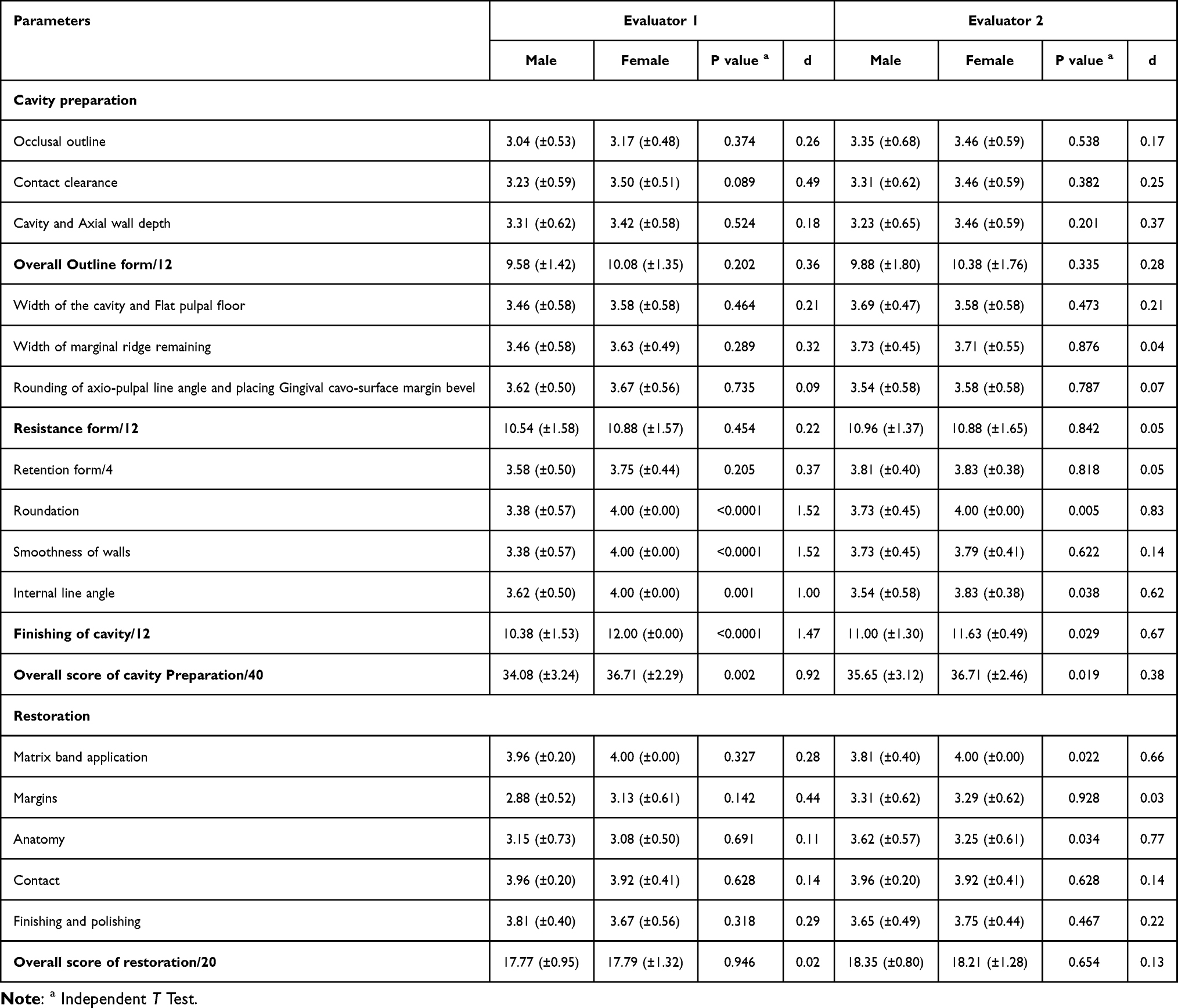 |
Table 3 Mean and SD for Each Rubric Parameter by Evaluator and Gender, with Effect Sizes (Cohen’s d) |
Regarding cavity preparation, scores from the two evaluators were marginally higher for females compared to males for outline forms (9.73±1.52/10.23±1.40), resistance forms (10.75±1.42/10.88±1.60), retention forms (3.69±0.40)/ 3.79±0.39), and finishing of the cavity (10.69±1.36)/11.81±0.25). The overall score for cavity preparation was 36.71±2.22 for females and 34.87±3.09 for males, without significant differences using independent t-test (p = 0.189; Table 4); the effect size was moderate (d = 0.68).
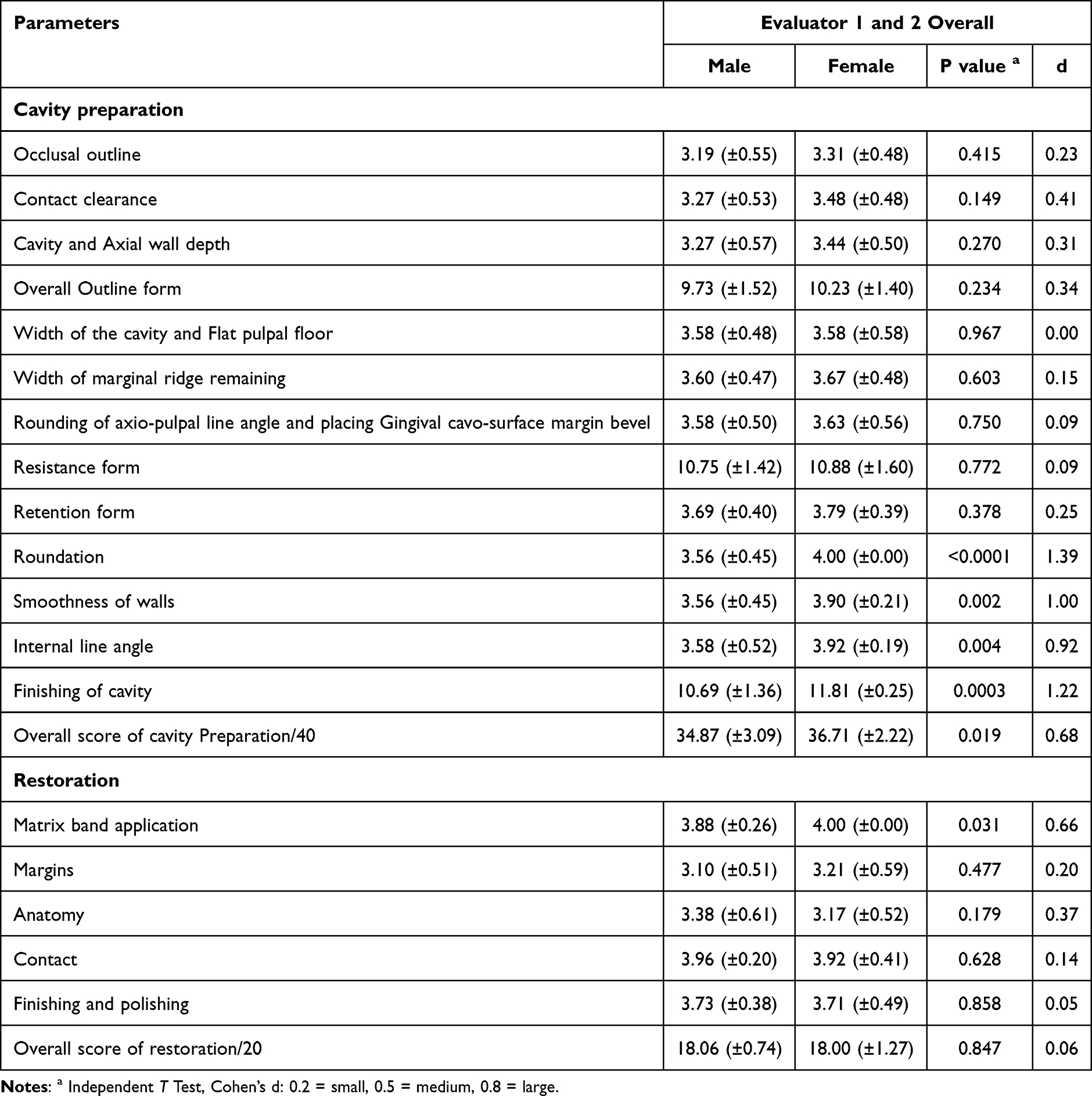 |
Table 4 Overall Mean and SD for Each Rubric Parameter for Both Evaluators by Gender, with Effect Sizes (Cohen’s d) |
For the class II composite restoration rubric parameters, we observed a significant difference between males and females in matrix band application and anatomy steps (p = 0.022 and 0.034, respectively). Effect sizes for these differences were medium to large (d = 0.66 and d = 0.77, respectively). The overall/total scores for class II restorations were almost equal for males (18.06±0.74) and females (18.00±1.27), without significant differences between them (p = 0.065) using independent t-test (Table 4); the effect size was negligible (d = 0.06).
The overall rubric scores for male and females with relation to the evaluators are shown in Table 5. Out of the total score (60), females recorded higher values in the first (54.50±2.95) and second (54.92±3.08) evaluators in comparison with males in the first (51.85±3.53) and second (54.00±3.37) evaluators for males. The differences were significant but only for the first evaluator (p = 0.006), with a large effect size (d = 0.80). The overall average among the two evaluators was higher among females (54.71±2.88) than among males, with a significant difference (p = 0.047) and a medium-to-large effect size (d = 0.74).
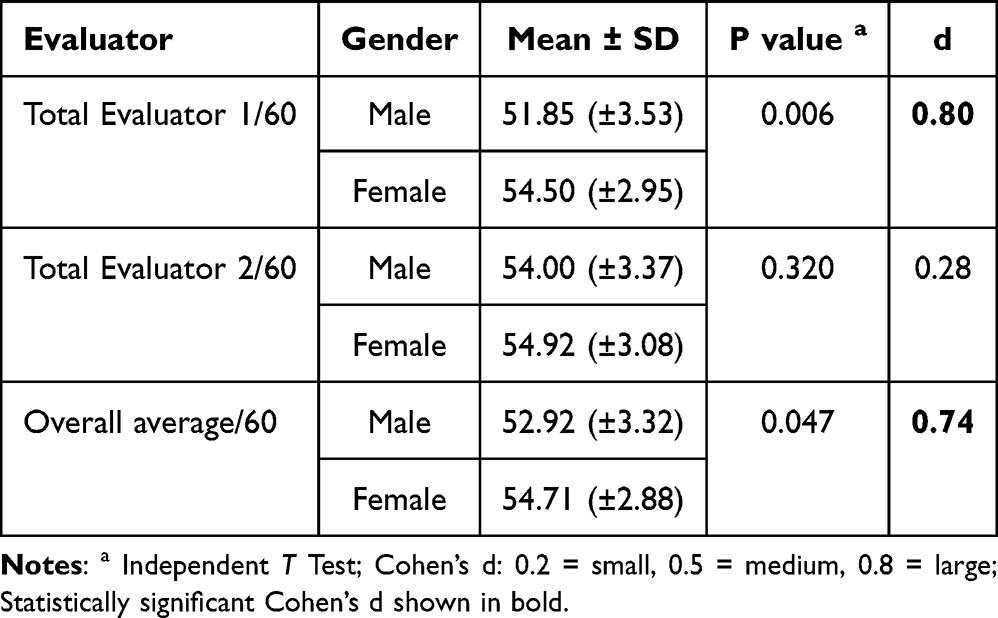 |
Table 5 Total Gender Differences in Student Groups by the Different Evaluators for the Rubric Parameters, with Effect Sizes (Cohen’s d) |
Table 6 shows the inter-rater agreement between the two evaluators. Regarding cavity preparation, the Kappa values demonstrated fair agreement for outline form (0.283) and finishing of cavity (0.282) but and moderate agreement for resistance form (0.561) and retention form (0.598). Moreover, the Kappa values exhibited fair agreement for matrix band application (0.310), moderate agreement for margins (0.464) and anatomy (0.465), perfect agreement for contact (1.0), and substantial agreement for finishing and polishing (0.602). Kappa values indicated that slight restoration was successful in some aspects.
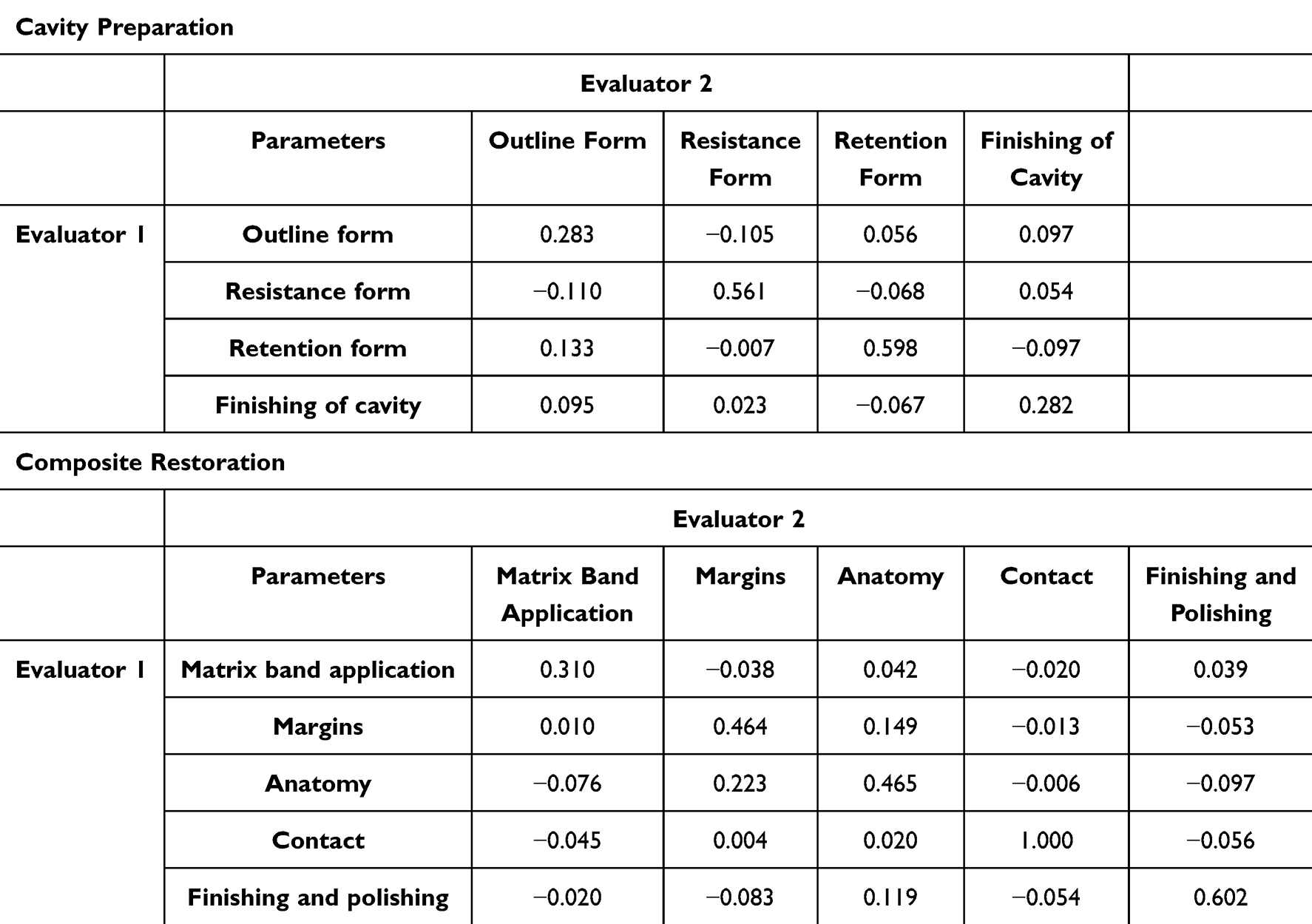 |
Table 6 Kappa Test for Analytic Rubric Parameters of Class II Composite |
Table 7 shows the ICC of the class II composite restoration for cavity preparation and composite restoration. For cavity preparation, we observed a moderate positive correlation between outline form and finishing of cavity (0.328). We found weak positive correlations between outline form and resistance form (0.141), between outline form and retention form ((0.162, and between resistance form and finishing cavity (0.147). However, negative correlations were found between resistance form and retention form (−0.120) and between retention form and finishing cavity (−0.057). For restoration, we noted weak negative correlations between matrix band application and margins (−0.252), contact (−0.061), and finishing and polishing (−0.022). There were also weak positive correlations between anatomy and both margins (0.140) and contact (0.209).
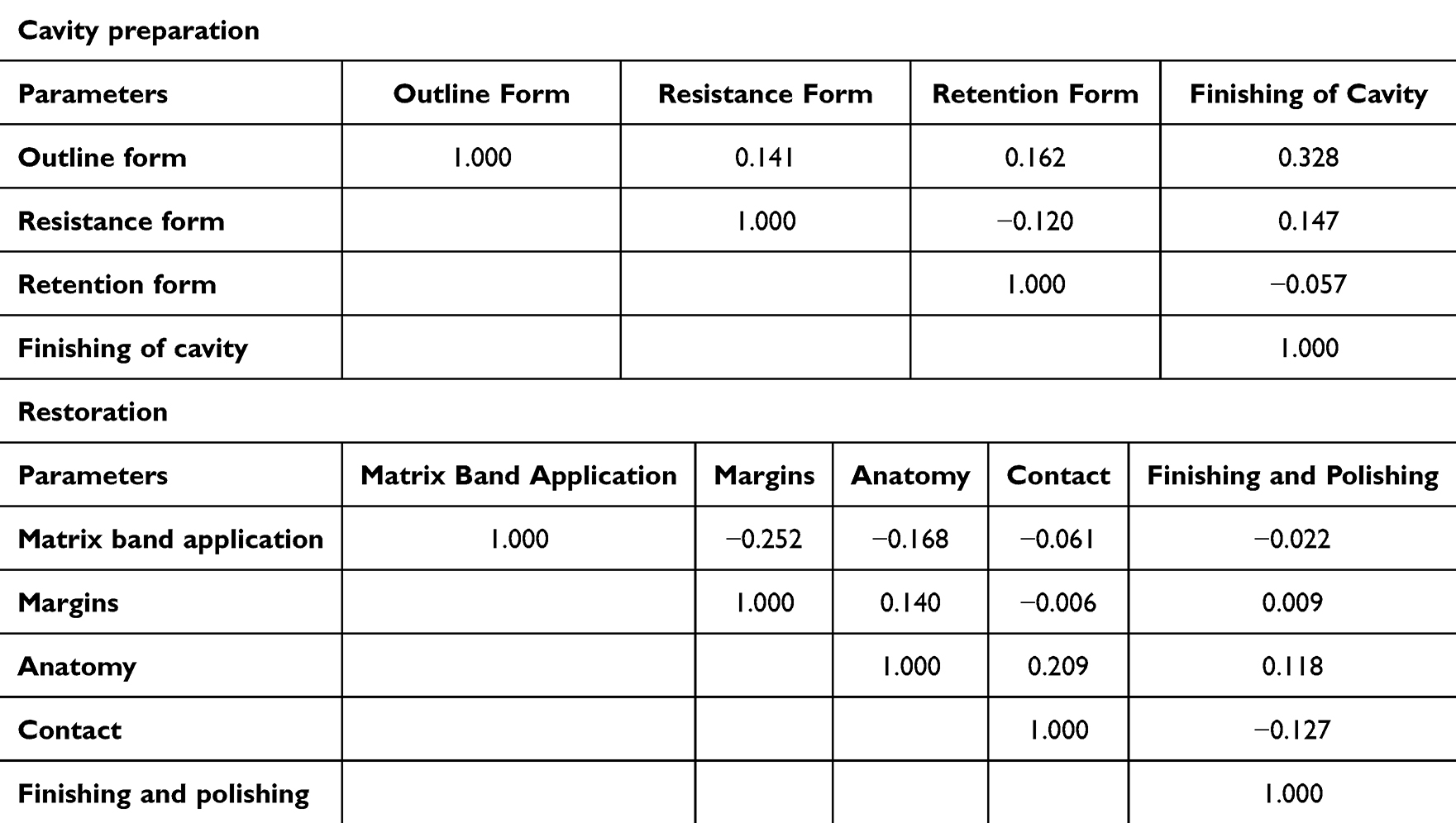 |
Table 7 Inter-Item Correlation Coefficient for Rubric Parameters |
As shown in Table 8, a strong and significant correlation was found between GPA and the total of the 2nd evaluator (0.758**) overall average (0.943**), and between total of the 2nd evaluator and overall average (0.931**), with p = 0.000. By contrast, we noted a weak and non-significant correlation between the GPA parameter and 1st evaluator, as shown in Table 8.
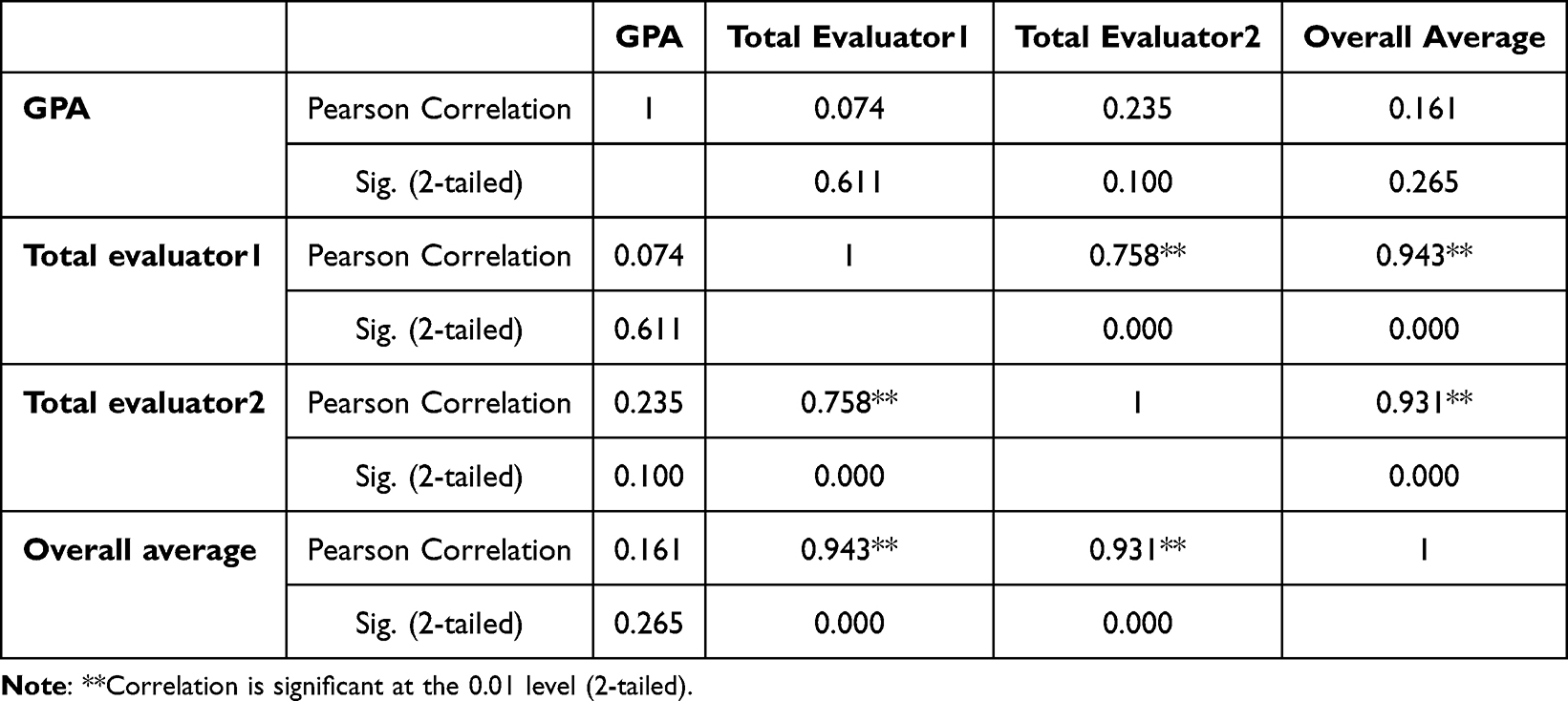 |
Table 8 Correlations Between GPA, Evaluators and Participants |
Discussion
Dental education programs place a strong emphasis on providing thorough pre-clinical training as part of the undergraduate curriculum.31 However, instructors struggle to optimally assess students’ readiness for the clinical phase, where they work directly with patients. The evaluation of students’ abilities during pre-clinical training is a critical component of the learning process that is often driven by feedback from instructors. Research indicates that students who are taught using rubrics tend to perform better, as these tools help shift their focus and clarify essential procedural steps.11,20 This ultimately enhances their performance in clinical settings.32 Consequently, this study aimed to demonstrate the use of an analytic rubric-based assessment system for evaluating third-year dental students’ performance in Class II composite restoration procedures.
The preclinical operative dentistry course at Jazan University’s College of Dentistry, offered in the third year, encompasses six credit hours, comprising one hour of theory and five hours of hands-on practical training across two weekly sessions. Students engage in 30 theoretical lectures and 60 phantom sessions focused on preclinical skills. During these sessions, students perform restorative procedures on ivory teeth following meticulously designed analytic rubrics. Their faculty administrators closely supervise these steps and exercises to ensure the optimal outcome at each stage of the cavity preparation and final composite restoration.29 All of these steps are done to prepare them for excellent and good clinical performances.
The result of the present study revealed that female students achieved slightly higher scores than males in parameters for cavity preparation (36.71 vs 34.87) and Class II composite restoration (18.00 vs 18.06), with a significant difference noted by the first evaluator. These results were in accordance with other studies.33,34 Therefore, the first part of the null hypothesis was rejected. However, the current results disagreed with the work of Panadero et al, on their meta-analysis that there is no such general effect of gender on student performance from using rubrics.32
The use of an analytical rubric system can be beneficial for providing students with detailed feedback, allowing them to gain valuable insights into their performance across different criteria.11,20 This system enables students to clearly identify their areas of strengths and weaknesses, without solely relying on specific comments from their instructors.7 In the current study, the researchers found that one of the criteria where male students scored lower compared with female students was the “finishing of cavity”, with mean scores of 10.69 for male students and 11.81 for female students. Thus, male students may benefit from additional focused practice and feedback on the proper finishing of the cavity, as this parameter is crucial for achieving a better seal between the tooth and the restoration.35
The assessment guided by an analytic rubric facilitated a greater consensus among evaluators compared to a numeric rating scale.11,20 The inter-rater reliability was acceptable for most parameters, indicating that the analytic rubric supports consistent assessment across evaluators. This finding aligns with previous studies that have reported improved rater agreement with rubric use.20,28,36 However, three parameters—outline form, finishing of cavity, and matrix band application—recorded fair agreement, with values of 0.283, 0.282, and 0.310, respectively. Inter-rater reliability can be influenced by the complexity of the rubric criteria, the wide range of scores utilized with numerous scoring criteria, and variability in subject responses, all of which can lead to reduced rater consistency and alignment.37
The purpose of matrix systems for resin composite materials is to facilitate the creation of curved proximal surfaces and tight contact areas.38 The results of the present study demonstrated that the placement of the matrix band can be a challenging aspect to evaluate consistently, even when using an analytical evaluation rubric. The inter-item correlations, which examined the relationship between the scores on one item and the scores on all other items in a scale, revealed weak negative correlations between matrix band application and margins (−0.252), contact (−0.061), and finishing and polishing (−0.056). Assessing the quality of matrix band placement may involve a degree of subjectivity, as raters may weigh certain aspects (eg, adaptation and contour) differently.39
Bindayel et al investigated the reliability of rubrics for assessing undergraduate students during orthodontic oral presentations and reported no significant correlation between the course grades and the instructors’ evaluations of the case presentations. This finding contrasts with the current study, which found significant correlations between students’ scores from the second evaluator and their overall average scores (p = 0.000), leading to the rejection of the second part of the null hypotheses. Implementing a rubric-based assessment system can yield several benefits as it enhances the quality of direct instruction by providing clear, structured guidelines for evaluating student performance, increases the efficiency and consistency of the grading process, improves calibration among assessors, and supports students’ academic achievement.32
We suggest further research to compare the efficacy of analytic rubric parameters against traditional evaluation methods, such as global rating scales, checklists, structured rating scales, and enhanced personal protective equipment in assessing student operators’ restorative procedures and experiences.40–43 We highly recommend studies involving different colleges of dentistry in Saudi Arabia, in which their rubric may be used or developed to evaluate their students or a universal single analytic rubric may be prepared for use in dental colleges in Saudi Arabia.
The study’s findings are based on a relatively small sample size, prompting the need for further investigation to assess the reliability of the proposed rubric across diverse academic contexts and larger populations. Focused on evaluating Class II composite restoration skills within a dental simulation lab, the rubric’s applicability may be confined to technical dental procedures, potentially limiting its use in other clinical skill assessments. Additional research is essential to compare the impacts of rubric interventions in various educational environments and to examine how the number of sessions students engage with these rubrics and their specific design features influence outcomes. Moreover, it is important to note that the rubric did not account for time management, which may represent a limitation of the study.
Conclusion
The analytic rubric proved to be a practical tool for assessing preclinical Class II composite restorations, supporting standardization and providing detailed feedback. Gender-based differences were observed in specific parameters, particularly cavity finishing, with large effect sizes. Inter-examiner agreement varied by parameter, highlighting areas where additional rater calibration may be beneficial. The strong correlation between GPA and scores from one evaluator suggests that future studies should explore consistency in evaluator calibration. These findings indicate potential gender-based differences in technical aspects of preclinical dental procedures and variable correlation between student GPA and evaluator scores, warranting further research.
Disclosure
The authors report no conflicts of interest in this work.
References
1. McGleenon EL, Morison S. Preparing dental students for independent practice: a scoping review of methods and trends in undergraduate clinical skills teaching in the UK and Ireland. Br Dent J. 2021;230(1):39–14. doi:10.1038/s41415-020-2505-7
2. Velayo BC, Stark PC, Eisen SE, Kugel G. Using dental students’ pre- clinical performance as an indicator of clinical success. J Dent Educ. 2014;78(6):823–828. doi:10.1002/j.0022-0337.2014.78.6.tb05735.x
3. Hallak JC, Ferreira FS, de Oliveira CA, Pazos JM, Neves TDC, Garcia PPNS. Transition between preclinical and clinical training: perception of dental students regarding the adoption of ergonomic principles. PLoS One. 2023;18(3):e0282718. doi:10.1371/journal.pone.0282718
4. Al Amri MD, Sherfudhin HR, Habib SR. Effects of evaluator’s fatigue and level of expertise on the global and analytical evaluation of preclinical tooth preparation. J Prosthodont. 2016. doi:10.1111/jopr.12558
5. Deeb JG, Koertge T, Laskin D, Carrico C. Are there differences in technical assessment grades between adjunct and full-time faculty? J Dent Educ. 2019;83(4):451–456. doi:10.21815/JDE.019.046
6. Manogue M, Kelly M, Masaryk SB, et al. 2.1 evolving methods of assessment. Eur J Dent Educ. 2002;6(Suppl 3):53–66. doi:10.1034/j.1600-0579.6.s3.8.x
7. Karaman P. Effects of using rubrics in self-assessment with instructor feedback on pre-service teachers’ academic performance, self-regulated learning and perceptions of self-assessment. Eur J Psychol Educ. 2024;39(3):2551–2574. doi:10.1007/s10212-024-00867-w
8. Sharaf AA, AbdelAziz AM, El Meligy OAS. Intra- and inter-examiner variability in evaluating preclinical pediatric dentistry operative procedures. J Dent Educ. 2007;71(4):540–544. doi:10.1002/j.0022.0337.2007.71.4.tb04307.x
9. Doğan CD, Uluman M. A comparison of rubrics and graded category rating scales with various methods regarding raters’ reliability. Educ Sci Theory Pract. 2017;17(2):631–651. doi:10.12738/estp.2017.2.0321
10. Abiad RS. Rubrics for practical endodontics. J Orthod Endod. 2017;03(1):1–4. doi:10.21767/2469-2980.100039
11. O’Donnell JA, Oakley M, Haney S, O’Neill PN, Taylor D. Rubrics 101: a primer for rubric development in dental education. J Dent Educ. 2011;75(9):1163–1175. doi:10.1002/j.0022.0337.2011.75.9.tb05160.x
12. Jonsson A, Svingby G. The use of scoring rubrics: reliability, validity and educational consequences. Educ Res Rev. 2007;2(2):130–144. doi:10.1016/j.edurev.2007.05.002
13. Krebs R, Rothstein B, Roelle J. Rubrics enhance accuracy and reduce cognitive load in self-assessment. Metacognition Learning. 2022;17(2):627–650. doi:10.1007/s11409-022-09302-1
14. Gadbury-Amyot CC, Godley LW, Nelson JW. Measuring the level of reflective ability of predoctoral dental students: early outcomes in an e-Portfolio reflection. J Dent Educ. 2019;83(3):275–280. doi:10.21815/JDE.019.025
15. AlOtaibi GL, Aldakheel R, Alhussein H, Alrowili S. Outcomes of Class II composite restorations placed by dental students: an observational study. Saudi J Oral Sci. 2020;7(1):52–55. doi:10.4103/sjos.SJOralSci_47_19
16. Pizzolotto L, Moraes RR. Resin composites in posterior teeth: clinical performance and direct restorative techniques. Dent J. 2022;10(12):222. doi:10.3390/dj10120222
17. Cho K, Rajan G, Farrar P, Prentice L, Prusty BG. Dental resin composites: a review on materials to product realizations. Composites Part B. 2022;230:109495. doi:10.1016/j.compositesb.2021.109495
18. Santos MJMC, Rêgo HMC, Siddique I, Jessani A. Five-year clinical performance of complex class II resin composite and amalgam restorations-a retrospective study. Dent J. 2023;11(4):88. doi:10.3390/dj11040088
19. Tenkumo T, Fuji T, Ikawa M, et al. Introduction of integrated dental training jaw models and rubric criteria. Eur J Dent Educ. 2018;23(1):e17–31. doi:10.1111/eje.12395
20. Escribano N, Belliard V, Baracco B, Da Silva D, Ceballos L, Fuentes MV. Rubric vs numeric rating scale: agreement among evaluators on endodontic treatments performed by dental students. BMC Med Educ. 2023;23(1):197. doi:10.1186/s12909-023-04187-3
21. Habib SR. Rubric system for evaluation of crown preparation performed by dental students. Eur J Dent Educ. 2018;22(3):e506–13. doi:10.1111/eje.12333
22. Alshehri AH, Moaleem MMA, Meshni AA, et al. A comparative study of student performance in all-ceramic crown preparation by clinical-phase students. BMC Med Educ. 2025;25(1):1057. doi:10.1186/s12909-025-07512-0
23. Al Moaleem MM, Adawi HA, Alahmari NM, et al. Using an analytic rubric system for the evaluation of anterior ceramic crown preparation performed by preclinical dental students. PLoS One. 2025;20(4):e0318752. doi:10.1371/journal.pone.0318752
24. Bindayel NA. Reliability of rubrics in the assessment of orthodontic oral presentation. Saudi Dent J. 2017;29(4):135–139. doi:10.1016/j.sdentj.2017.07.001
25. Satheesh KM, Brockmann LB, Liu Y, Gadbury-Amyot CC. Use of an analytical grading rubric for self- assessment: a pilot study for a periodontal oral competency examination in predoctoral dental education. J Dent Educ. 2015;79(12):1429–1436. doi:10.1002/j.0022-0337.2015.79.12.tb06042.x
26. Daghrery A, Alwadai GS, Alamoudi NA, et al. Students’ performance in clinical class II composite restorations: a case study using analytic rubrics. BMC Med Educ. 2024;24(1):1252. doi:10.1186/s12909-024-06261-w
27. Tsai ST, Ho YC, Tsai CL, Yang SF, Lai YL, Lee SY. Evaluation of students’ self-assessment performance in preclinical endodontic training by means of rubrics and a 3D printed model. J Formos Med Assoc. 2022;121(11):2203–2210. doi:10.1016/j.jfma.2022.03.021
28. Mittal P, Jadhav GR, Pawar M, et al. Impact of self-assessment on dental student’s performance in pre-clinical conservative dentistry course. BMC Oral Health. 2024;24(1):593. doi:10.1186/s12903-024-04140-w
29. AL Moaleem MM, Ahmad M, Porwal A, Elamin EI, Al Shawkani HA, Quadri MF. Evaluation of tooth preparation by dental students in Jazan university during pre-clinical training. OHDM. 2014;13(4):1166–1170. ID: 212533413.
30. Ramos RB. A comparative analysis of introvert and extrovert dental students toward clinical performance. J Cont Dent Prac. 2024;25:
31. Bin Rubaia’an MA. Dental education: a guide for novice tutors. Cureus. 2023;15(8):e43227. doi:10.7759/cureus.43227
32. Panadero E, Jönsson A, Pinedo L, Fernández-Castilla B. Effects of rubrics on academic performance, self-regulated learning, and self-efficacy: a meta-analytic review. Educ Psychol Rev. 2023;35(4). doi:10.1007/s10648-023-09823-4
33. Brookhart S, Chen F. The quality and effectiveness of descriptive rubrics. Educ Rev. 2014;67(1):1–26. doi:10.1080/00131911.2014.929565
34. Andrade HL, Wang X, Du Y, Akawi RL. Rubric-referenced self-assessment and selfefficacy for writing. J Educ Res. 2009;102(4):287–302. doi:10.3200/JOER.102.4.287-302
35. Karaarslan ES, Usumez A, Ozturk B, Cebe MA. Effect of cavity preparation techniques and different preheating procedures on microleakage of class V resin restorations. Eur J Dent. 2012;6(1):87–94. doi:10.1055/s-0039-1698935
36. Peters O, Scott R, Arias A, et al. Evaluation of dental students’ skills acquisition in endodontics using a 3D printed tooth model. Eur Endod J. 2021;6(3):290–294. doi:10.14744/eej.2021.07088
37. AlHumaid J, Tantawi ME, Al-Ansari AA, Al-Harbi FA. Agreement in scoring preclinical dental procedures: impact on grades and instructor-related determinants. J Dent Educ. 2016;80(5):553–562. doi:10.1002/j.0022-0337.2016.80.5.tb06115.x
38. Tolba ZO, Oraby E, Abd El Aziz PM. Impact of matrix systems on proximal contact tightness and surface geometry in class II direct composite restoration in-vitro. BMC Oral Health. 2023;23(1):535. doi:10.1186/s12903-023-03222-5
39. Alshardan R, Rozi A, AlSenan D, et al. Evaluation of matrix systems on the proximal contact of class II composite restorations: a systematic review. Cureus. 2023;15(12):e50835. doi:10.7759/cureus.50835
40. McKinley RK, Strand J, Ward L, Gray T, Alun-Jones T, Miller H. Checklists for assessment and certification of clinical procedural skills omit essential competencies: a systematic review. Med Educ. 2008;42(4):338–349. doi:10.1111/j.1365-2923.2007.02970.x
41. Henrico K, Makkink AW. Use of global rating scales and checklists in clinical simulation-based assessments: a protocol for a scoping review BMJ Open. BMJ open. 2023;13(5):e065981. doi:10.1136/bmjopen-2022-065981
42. Uoshima K, Akiba N, Nagasawa M. Technical skill training and assessment in dental education. Jpn Dent Sci Rev. 2021;57:160–163. doi:10.1016/j.jdsr.2021.08.004
43. Miletic V, Avuthu R, Zaprzala P, et al. Enhanced personal protective equipment and dental students’ experience and quality of a restorative procedure in a simulated clinical setting. J Dent Educ. 2024;88(11):1490–1502. doi:10.1002/jdd.13593
 © 2026 The Author(s). This work is published and licensed by Dove Medical Press Limited. The
full terms of this license are available at https://www.dovepress.com/terms
and incorporate the Creative Commons Attribution
- Non Commercial (unported, 4.0) License.
By accessing the work you hereby accept the Terms. Non-commercial uses of the work are permitted
without any further permission from Dove Medical Press Limited, provided the work is properly
attributed. For permission for commercial use of this work, please see paragraphs 4.2 and 5 of our Terms.
© 2026 The Author(s). This work is published and licensed by Dove Medical Press Limited. The
full terms of this license are available at https://www.dovepress.com/terms
and incorporate the Creative Commons Attribution
- Non Commercial (unported, 4.0) License.
By accessing the work you hereby accept the Terms. Non-commercial uses of the work are permitted
without any further permission from Dove Medical Press Limited, provided the work is properly
attributed. For permission for commercial use of this work, please see paragraphs 4.2 and 5 of our Terms.
Recommended articles

Skill Retention of Light-Curing Technique Using Only Verbal Instructions versus Using an Instructional Video: A 2-Year Follow-Up Study of Dental Students
Al-Zain AO, Alsolami AH, Jamalellail HM, Price RB
Advances in Medical Education and Practice 2023, 14:391-405
Published Date: 21 April 2023
From Theory to Clinic: Exploring Dental Student Perspectives on Preventive Dentistry in Baghdad – a Qualitative Study
Alhuwaizi HR, Alzubidi MI, Alhamdani FY
Advances in Medical Education and Practice 2025, 16:2063-2073
Published Date: 11 November 2025