
Back to Journals » Journal of Multidisciplinary Healthcare » Volume 18
Effectiveness of a Precede–Proceed Model-Based Health Promotion Intervention on Evaluating Changes In Mothers’ Knowledge of Stunting Prevention in Indonesian Communities
Authors Andriyani S, Sulastri A, Fitriana LA, Darmawan D, Perdani AL  , Safariah TD, Malisa N, Putri TH , Mediani HS
Received 19 May 2025
Accepted for publication 16 December 2025
Published 26 December 2025 Volume 2025:18 Pages 8249—8256
DOI https://doi.org/10.2147/JMDH.S541443
Checked for plagiarism Yes
Review by Single anonymous peer review
Peer reviewer comments 2
Editor who approved publication: Dr Jagdish Khubchandani
Septian Andriyani,1,2 Afianti Sulastri,2 Lisna Anisa Fitriana,2 Dadang Darmawan,3 Agni Laili Perdani,2 Triana Dewi Safariah,3 Novi Malisa,3 Triyana Harlia Putri,4 Henny Suzana Mediani5
1Doctoral Program in Medicine, Faculty of Medicine, Universitas Padjadjaran, Sumedang, West Java, Indonesia; 2Department of Nursing, Faculty of Sport and Health Education, Universitas Pendidikan Indonesia, Bandung, West Java, Indonesia; 3Stikes RS Dustira, Department of Nursing, Bandung, West Java, Indonesia; 4Department of Nursing, Universitas Tanjungpura, Pontianak, West Kalimantan, Indonesia; 5Department of Pediatric Nursing, Faculty of Nursing, Universitas Padjadjaran, Sumedang, West Java, Indonesia
Correspondence: Septian Andriyani, Doctoral Program in Medicine, Faculty of Medicine, Universitas Padjadjaran, Sumedang, West Java, Indonesia, Email [email protected]
Introduction: Stunting remains a persistent public health challenge in Indonesia, with significant implications for children’s long-term health and national development. The PRECEDE–PROCEED Model (PPM) offers a comprehensive framework for designing effective health education interventions, yet its application in community-based stunting prevention in Indonesia remains underexplored.
Purpose: The purpose of this study was to identify and launch an increase in maternal knowledge before and after providing a health promotion intervention on stunting prevention.
Patients and methods: The research method used was a pre-experimental study that used a one-group pre-test and post-test design involving 52 mothers of children under five years in Cimahi, West Java. A 20-item validated questionnaire was administered before and after a structured 90-minute health education session based on the PPM framework. Educational content focused on nutrition, hygiene, immunization, and child stimulation.
Results: Data were analyzed using the Wilcoxon Signed-Rank Test due to non-normal score distribution. Research results show participants’ mean knowledge score increased significantly from 18.67 (SD = 1.79) to 19.69 (SD = 0.96) post-intervention (p = 0.00006). Most participants (73%) achieved a perfect score after the session, indicating a positive effect of the intervention. Reduced score variability suggests enhanced and more uniform knowledge dissemination.
Conclusion: A health promotion intervention using the PRECEDE–PROCEED Model effectively improved maternal knowledge of stunting prevention. The participatory and contextualized approach demonstrated strong potential for replication in community health settings across Indonesia. Further studies should explore long-term behavioral outcomes and scalability.
Research limitations: Pre-experimental research design without a control group, so no comparison group that does not receive the intervention. The sample size is relatively small and limited to one location. Outcome measurement is only on short-term maternal knowledge. Focus only on maternal knowledge without measuring other aspects related to stunting prevention.
Keywords: health promotion, maternal knowledge, precede–proceed model, public health, stunting
Introduction
Stunting, a form of chronic malnutrition, remains one of the most pressing public health issues globally and is particularly prevalent in low- and middle-income countries. Characterized by impaired linear growth and cognitive development due to prolonged nutrient deficiencies and repeated infections, stunting not only limits the potential of individual children but also impedes national development by reducing future human capital. According to the World Health Organization, over 149 million children under five years of age are stunted worldwide. Indonesia, as one of the countries with a high burden of stunting, continues to struggle with prevalence rates exceeding 20% in several provinces, despite the implementation of various national intervention strategies.1
The 1000 first day of ife is the most critical period in a child’s growth and development. In Indonesia, the greatest growth disorders occur during this period. The total of 48.9% of pregnant women suffer from anemia, and some others experience Chronic Energy Deficiency (CED). This causes the prevalence of babies with Low Birth Weight (LBW), which is one of the main causes of stunting, to remain high, at around 6.2%. Inappropriate breastfeeding, food, and parenting patterns during the 0–23 month period disrupt child growth and development. The 2013 Basic Health Research (Riskesdas) noted that decreased child growth and development is a result of poor infant and child eating habits. This causes an increase in the prevalence of stunting from 29% (0–6 months), to 39% (6–11 months), and to 42% (ages 24–35 months). However, stunting is also influenced by maternal nutrition in the previous period, especially in the pre-conception period, namely women of childbearing age and adolescent girls.2
Based on the 2018 Basic Health Research (Riskesdas), two provinces had a stunting prevalence above 40%, which is considered very high; 18 provinces had a stunting prevalence between 30–40%, which is considered high. Only Jakarta Province had a stunting prevalence below 20%, which is considered moderate and low. In addition to stunting, the prevalence of wasting in several provinces is also very high, namely above 10%. This indicates a large number of cases of acute malnutrition, with a very high risk of death, which is 10 times greater than that of normal children.3
Efforts to reduce stunting in Indonesia have primarily focused on biomedical and service delivery approaches. However, growing evidence suggests that without addressing the behavioral and psychosocial determinants of child nutrition, particularly maternal knowledge, attitudes, and practices, interventions may have limited long-term impact.4 Mothers play a central role in early childhood care, yet their knowledge about proper feeding, hygiene, health service utilization, and child stimulation often remains inadequate. Considering the role of mothers as one of the key factors in efforts to overcome stunting, the involvement of health workers and family support is very necessary to empower mothers in strengthening aspects of knowledge and skills in self-care to prepare for pregnancy and child development.5
Health promotion strategies that target these behavioral determinants are urgently needed. One such approach is the PRECEDE–PROCEED Model (PPM), a planning framework that guides the systematic development, implementation, and evaluation of health promotion interventions by addressing predisposing, enabling, and reinforcing factors. While PPM has been successfully applied in various health contexts globally, including physical activity, chronic disease prevention, and reproductive health, its application in community-based stunting prevention remains limited in Indonesia.6
The PRECEDE-PROCEED model is a comprehensive framework used for planning, implementing, and evaluating health promotion and disease prevention programs. Developed by Lawrence Green and Marshall Kreuter, it is designed to address complex health issues by considering a wide range of factors, including epidemiological, environmental, behavioral, and social determinants. The model is divided into two main components: PRECEDE (Predisposing, Reinforcing, and Enabling Constructs in Educational Diagnosis and Evaluation) and PROCEED (Policy, Regulatory, and Organizational Constructs in Educational and Environmental Development). This model is particularly effective in creating structured and evidence-based interventions that are adaptable to various health contexts.
PRECEDE phase (predisposing, enabling, and reinforcing factors): This Phase also examines the predisposing factors (knowledge, attitudes, beliefs), enabling factors (resources, skills), and reinforcing factors (feedback, reward) that influence health behaviors. These factors are essential for understanding the root causes of health issues and designing effective interventions.7 PROCEED Phase: Implementation and evaluation: The PROCEED phase implementation of the health program and its evaluation. It involves setting policy and organizational objectives, developing strategies for intervention, and assessing the program’s impact on health outcomes.8 Policy and environmental development. This phase also includes the development of policies and environmental changes that support the health program’s goals. It ensures that the interventions are sustainable and can be integrated into existing health systems.
This study seeks to address this gap by implementing a structured health promotion intervention based on the PRECEDE–PROCEED Model to enhance maternal knowledge of stunting prevention. Unlike previous studies, this intervention was designed using a participatory approach and tailored to local cultural and contextual factors, thereby offering practical insights into the model’s adaptability and effectiveness in real-world community settings.9
The primary objective of this study was to evaluate the impact of the PPM-based intervention on maternal knowledge regarding stunting prevention. The novelty of this research lies in its integration of a widely accepted theoretical framework (PPM) into a culturally contextualized stunting education strategy, contributing new evidence to the growing literature on theory-driven maternal and child health promotion programs in Southeast Asia.7
Community-based contextual barriers include widespread socioeconomic disparities, with low-income groups experiencing significantly higher stunting rates than high-income groups. Furthermore, maternal knowledge about proper nutrition, hygiene, and utilization of health services is often inadequate, while support from families and health workers for maternal empowerment is crucial. The Indonesian government has implemented various programs such as free nutritious meals for pregnant women and toddlers, micronutrient supplementation, exclusive breastfeeding, and prenatal interventions. However, significant challenges remain in sociocultural integration, parenting styles, and behavioral approaches. Therefore, systematic and contextual health promotion models such as PRECEDE-PROCEED are urgently needed to increase the effectiveness of interventions in the community. The novelty of this study is the integration of the PRECEDE–PROCEED Model into a culturally contextualized intervention implemented with active community involvement, focusing on increasing maternal knowledge within a complex socioeconomic framework related to stunting prevention.
Materials and Methods
Study Design and Participants
This study employed a pre-experimental, one-group pre-test and post-test design. The study was conducted in a densely populated urban neighborhood in Cimahi, West Java, Indonesia, between July and September 2024. A total of 52 mothers with children under five years of age were recruited using purposive sampling. Eligibility criteria included: being the primary caregiver, having the ability to understand Indonesian, and providing informed consent to participate in the study. To determine the sample size, this study used G-Power Analysis t-test of Cohen’s medium effect size (α; 0.05, r: 0.9) and the result is 22. The estimation of margin of error is 10% thus the estimation sample size is 32. Based on sample of 52, power analysis is 0.99 indicates that the study has a 99% chance of detecting a true difference if it exists, given the specified parameters.
This study was reviewed and approved by the Institutional Review Board (IRB) of Faculty of Health Sciences and Technology (FITKES) at Jenderal Achmad Yani Cimahi University and all procedures were conducted in accordance with the ethical principles outlined in the Declaration of Helsinki.This research has obtained ethical approval from the IRB of Research Ethics Commission of the Faculty of Health Sciences and Technology (FITKES) at Jenderal Achmad Yani Cimahi University, with the reference number 035/KEPK/FITKes-Unjani/V/2024.
Instrument Development
A structured questionnaire was developed to assess maternal knowledge regarding stunting prevention. The instrument consisted of 20 items covering four domains: (1) definition and causes of stunting; (2) nutrition and exclusive breastfeeding; (3) hygiene, sanitation, and healthcare; and (4) early childhood stimulation. Each item was answered with either “Yes” or “No,” with correct answers scored as 1 and incorrect answers as 0. The total score ranged from 0 to 20. Content validity was ensured through expert review by public health and pediatric nursing lecturers. A pilot test involving 15 respondents showed good internal consistency (Cronbach’s alpha = 0.82).
Intervention Procedure
The health promotion intervention was developed using the PRECEDE–PROCEED framework. The educational content was based on national guidelines for stunting prevention and adapted to the local context through focus group discussions with community health workers and midwives. The 90-minute intervention included interactive lectures, visual materials, and group discussions. Key messages emphasized the importance of maternal nutrition, exclusive breastfeeding, hygiene practices, immunization, growth monitoring, and early stimulation.
The delivery was facilitated by trained health educators and nursing lecturers. During the session, participants received printed educational leaflets and were encouraged to ask questions and share experiences. Follow-up reinforcement was provided by local health cadres via home visits and WhatsApp messages.
Data Collection and Analysis
Data were collected at two time points: immediately before (pre-test) and after (post-test) the intervention. Data analysis is descriptive statistics used to summarize participant characteristics and knowledge scores. The Shapiro–Wilk test was used to assess normality. Due to the non-normal distribution of data, the Wilcoxon Signed-Rank Test was applied to assess the significance of changes in knowledge scores before and after the intervention. Statistical significance was determined at p < 0.05.
Results
A total of 52 mothers completed both the pre-test and post-test. The effect size from G-Power 3.1.9.7 on t-test is 0.8 indicate large effect. Participants’ ages ranged from 21 to 45 years, with most having a secondary education background and being housewives. Before the intervention, the mean knowledge score was 18.67 (SD = 1.79), indicating a moderate to high baseline understanding of stunting prevention. Following the intervention, the mean score increased significantly to 19.69 (SD = 0.96).
The Shapiro–Wilk test confirmed that the distribution of both pre-and post-test scores was not normal (p < 0.001). Therefore, the Wilcoxon Signed-Rank Test was conducted. Results showed a statistically significant increase in knowledge scores post-intervention (W = 19.5, p = 0.00*). The majority of participants (73%) achieved a perfect score of 20 on the post-test.
Analysis using a bar chart (Figure 1) illustrated a notable shift in the central tendency and distribution of scores, with post-test results showing both higher mean and median values, as well as reduced variability. These outcomes reflect a consistent improvement in participant knowledge across the sample, further supported by the descriptive statistics presented in Table 1. These findings suggest not only an improvement in knowledge but also a homogenization of understanding following the educational session. Descriptive statistics are summarized in Table 1 and clearly illustrate the improvement in central tendency and variability of scores following the intervention.
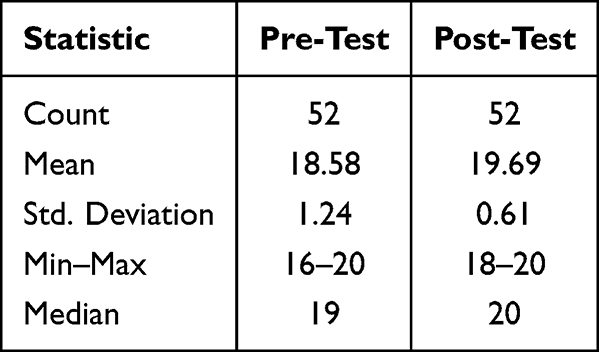 |
Table 1 Descriptive Statistics of Pre-Test and Post-Test Scores |
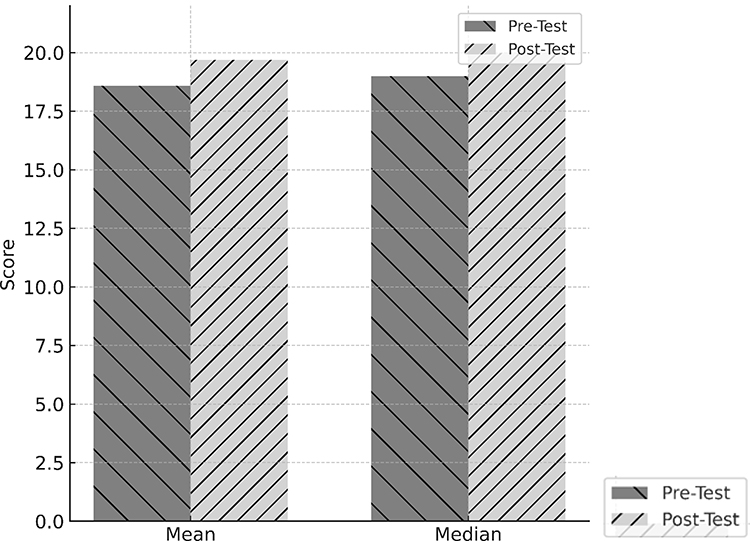 |
Figure 1 The comparison of pre-test and post-test of PRECEDE–PROCEED model-based. |
Discussion
The findings of this study demonstrate that a health promotion intervention based on the PRECEDE–PROCEED Model can significantly improve maternal knowledge regarding stunting prevention. The intervention’s structured and participatory nature and reinforcement through community health cadres contributed to its success. The PRECEDE–PROCEED framework provided a systematic approach to identify and address behavioral and environmental factors affecting child growth. The integration of enabling and reinforcing components, such as health service access and peer support, helped translate knowledge into practice. The high post-test scores and reduced score variability indicate not only knowledge acquisition but also equitable dissemination of information across different demographic backgrounds.
This aligns with previous studies that highlight the effectiveness of the PRECEDE–PROCEED model in diverse health promotion contexts. Demonstrated how a community-based participatory approach using PPM successfully promoted physical activity among older adults. Their adaptation of the model underscored the value of tailoring interventions to local needs through active community involvement.10 Similarly, a meta-analysis confirmed that programs grounded in PPM significantly outperformed non-theory-based interventions across multiple health domains, including maternal and child health. The PRECEDE-PROCEED model has been effectively used to guide health promotion strategies, particularly in improving knowledge about stunting prevention. Studies have shown that interventions using this model significantly enhance maternal knowledge, which is a critical factor in preventing stunting.7 Also emphasize that PPM’s strength lies in its flexibility and comprehensive nature, enabling it to be adapted across varying cultural and programmatic contexts.11
In the Indonesian context, a similar PPM-based intervention targeting stunting prevention and reported improvements in maternal behavior and community awareness reinforces the findings of the current study6 Emphasized that educational approaches rooted in behavioral theories, such as PPM, are more sustainable and impactful in addressing stunting.12 Other studies also demonstrated that the use of culture-based education packages, audiovisual media, and tailored health talks significantly enhanced community engagement and knowledge retention in stunting prevention programs9,13,14 Taken together, these findings provide robust support for the adoption of the PRECEDE–PROCEED Model in stunting-related interventions. They also highlight the importance of localizing content, involving community actors, and selecting delivery methods that resonate with target populations.
This study has several limitations. First, the absence of a control group limits the ability to attribute changes in knowledge solely to the intervention, as no comparison was made to a non-exposed population. Second, the follow-up was conducted immediately post-intervention, and thus, the sustainability of knowledge gains over time remains unknown. Third, although maternal knowledge improved, no behavioral or biological outcomes were assessed, such as actual feeding practices or child growth indicators. Fourth, the data relied on self-reported responses, which are susceptible to social desirability bias. Lastly, the study was conducted within a single urban community, limiting the generalizability of findings to rural or culturally diverse populations. Future research should address these limitations by incorporating randomized controlled designs, long-term follow-up, behavioral observations, and multi-site settings.
In addition to the primary findings, this study is supported by a growing body of literature applying the PRECEDE–PROCEED Model across diverse health domains. For example, the model demonstrated’s utility in promoting preventive behaviors among high-risk populations for diabetes and pre-diabetes.15,16 Similarly, significant lifestyle improvements among hypertensive patients following a PPM-based intervention.17 Illustrated its effectiveness in designing targeted health services in Australia,18 while validating its application in improving rural nutritional behaviors.19
The model’s adaptability to sociocultural contexts is further emphasized in studies that applied it to adolescent menstrual hygiene,20 and that explored determinants of preschool weight management using qualitative analysis.21 Also employed was PPM to structure chronic disease health management in urban communities. Within the Indonesian context, recent innovations include the use of digital health tools such as the Stunting Super App.22 Demonstrating the potential for mobile health integration. Complementarily, early childhood nutrition education programs,23 and audiovisual media interventions targeting pre-marriage couples [11].Have shown promise in raising awareness and knowledge. In this case, the role of the mother is very important in the process of growth and development of children starting from the preconception period, prenatal period, to the infant-toddler period. This role is important because failure to grow and develop can affect the life of the baby in adulthood. In addition, nutritional status is one of the factors of child growth and development that is influenced by eating habits.5 Healthy eating habits are a must for children to be able to grow and develop, and overcome acute nutritional problems in children.24
These studies collectively reinforce the flexibility, scalability, and cultural sensitivity of the PRECEDE–PROCEED Model, validating its broader application for behavior change interventions in stunting prevention and beyond. The integration of culturally relevant materials and community involvement can further enhance the effectiveness of health promotion interventions. Despite the positive outcomes, challenges such as resource limitations and varying levels of baseline knowledge among participants may affect the overall impact of these interventions. Therefore, continuous evaluation and adaptation of health promotion strategies are necessary to address these challenges and optimize outcomes.
In this study, the interventions carried out can strengthen the importance of using the PRECEDE–PROCEED Model as a basic framework that can be adapted to the local cultural and social context by involving health cadres and communities in a participatory manner and integrating the enabling and strengthening components of this model in community capacity building efforts that can increase the spread of knowledge evenly and increase public awareness. Therefore, the application of a systematic and adaptive theoretical approach to the local context can strengthen the effectiveness of public health programs, especially in complex issues such as stunting that require multisectoral and sustainable interventions. This study provides important initial evidence for the development of community-based strategies in Indonesia.
The practical implications for this community-based health program are that the systematic and participatory use of the PRECEDE–PROCEED Model can significantly improve mothers’ knowledge about stunting prevention. The structured and participatory approach of the PRECEDE–PROCEED Model facilitates the identification and management of behavioral factors. Furthermore, this approach involves health cadres as reinforcing factors, engaging local communities in strengthening information delivery, and encouraging the acceptance and implementation of healthy behaviors. The program is adapted to the cultural context and local needs, specifically through culture-based education. The PRECEDE–PROCEED Model supports the fair and equitable dissemination of knowledge within the community, as evidenced by the high post-test results and low score variability among participants. Overall, the PRECEDE–PROCEED Model has proven to be an effective and adaptive framework for developing community-based health promotion programs, particularly in stunting prevention, emphasizing the importance of community engagement and adapting content to local needs and culture to enhance success and sustainability.
Conclusions
This study provides empirical support for the effectiveness of the PRECEDE–PROCEED Model in designing impactful health education interventions to prevent stunting. A single-session, community-based intervention significantly enhanced maternal knowledge across key domains related to child growth and development. Integrating structured models like PPM into national and local health strategies holds promise for accelerating stunting reduction in Indonesia and similar contexts. Further research is warranted to explore the long-term effects of such interventions on behavioral and health outcomes. Policymakers and public health practitioners are encouraged to incorporate participatory, theory-driven approaches in maternal and child health programs to ensure sustainable impact. This model’s application in health promotion interventions has shown promising results in improving maternal knowledge, which is crucial for effective stunting prevention strategies. Future research should expand intervention beyond mother and compared the the effectiveness of an intervention that includes fathers and mothers rather an intervention targeting mothers alone. The limitation in this study based on a single theoretical framework, excluding other valuable interpretations or viewpoints that might be influence to the study result. Larger sample size also needed to give more rigorous design to strengthen inference in future studies.
Incorporating theory-based methods into national plans for sustained effectiveness of PPM is essential to expand wider impacts of stunting prevention. The PPM has proven to be an effective and adaptive framework for developing community-based health promotion programs, particularly in stunting prevention, emphasizing the importance of community engagement and adapting content to local needs and culture to enhance success and sustainability.
Acknowledgments
The authors would like to thank all the participants who have shared their experiences with the researchers.
Disclosure
The authors report no conflicts of interest in this work.
References
1. Soviyati E, Sulaeman ES, Sugihardjo I, Wiboworini B. Effect of applying the health promotion model in stunting prevention and behavior control in Indonesia. J. Educ. Health Promot. 2023:1–6. DOI:10.4103/jehp.jehp
2. Black RE, Allen LH, Bhutta ZA, et al. Maternal and child undernutrition: global and regional exposures and health consequences. Lancet. 2008;371(9608):243–260. doi:10.1016/S0140-6736(07)61690-0
3. Vaivada T, Gaffey MF, Das JK, Bhutta ZA. Evidence-based interventions for improvement of maternal and child nutrition in low-income settings: what’s new? Curr Opin Clin Nutr Metab Care. 2017;20(3):204–210. doi:10.1097/MCO.0000000000000365
4. Torkan P, Rahemi Z, Sadat Z, Ajorpaz NM. Effectiveness of a PRECEDE-PROCEED model-based educational program on health-related quality of life and preventive behaviors in patients with breast cancer undergoing chemotherapy. J Client-Centered Nurs Care. 2022;8(2):119–128. doi:10.32598/JCCNC.8.2.293.6
5. Simanjuntak BY, Haya M, Suryani D, Khomsan A, Ahmad CA. Maternal knowledge, attitude, and practices about traditional food feeding with stunting and wasting of toddlers in farmer families. Kesmas. 2019;14(2):58–64. doi:10.21109/kesmas.v14i2.2712
6. Andriyani S, Fitriana LA, Sulastri A. Health promotion about stunting management through the precede - proceed model approach. J Kreat Pengabdi Kpd Masy (PKM. 2023;7(2):595–603.
7. Kim J, Jang J, Kim B, Lee KH. Effect of the PRECEDE-PROCEED model on health programs: a systematic review and meta-analysis. Syst Rev. 2022;11(1):1–12. doi:10.1186/s13643-022-02092-2
8. Arshad A, Shaheen F, Safdar W, et al. A PRECEDE-PROCEED model-based educational intervention to promote healthy eating habits in middle school girls. Food Sci Nutr. 2023;11(3):1318–1327. doi:10.1002/fsn3.3167
9. Handayani DH, Kusuma E, Nastiti AD, Puspitasari RAH. Effectiveness of the culture-based anti-stunting education package on family behavioral changes in stunting prevention. J Kesehat Dr Soebandi. 2024;12(2):142–149. doi:10.36858/jkds.v12i2.651
10. Bammann K, Recke C, Albrecht BM, Stalling I, Doerwald F. Promoting physical activity among older adults using community-based participatory research with an adapted PRECEDE-PROCEED model approach: the AEQUIPA/OUTDOOR ACTIVE project. Am J Heal Promot. 2021;35(3):409–420. doi:10.1177/0890117120974876
11. Crosby R, Noar SM. What is a planning model? An introduction to PRECEDE-PROCEED. J Public Health Dent. 2011;71(SUPPL. 1). doi:10.1111/j.1752-7325.2011.00235.x
12. Fristiwi P, Nugraheni SA, Kartini A. Effectiveness of stunting prevention programs in indonesia: a systematic review. J Penelit Pendidik IPA. 2023;9(12):1262–1273. doi:10.29303/jppipa.v9i12.5850
13. Tyarini IA, Akib A, Ratnasari F, Agus Setyaningsih TS, Setyawati A. Health education lecture method to increase posyandu cadres’ knowledge about stunting prevention in children. J Ilm Kesehat Sandi Husada. 2024;13(1):62–68. doi:10.35816/jiskh.v13i1.1173
14. Nurhayati F, Azzahra D, Lestari MD. Health education through audio visual media effects on increasing stunting prevention knowledge in pre-marriage couples in cimahi. Devot J Res Community Serv. 2023;4(5):1179–1184. doi:10.59188/devotion.v4i5.477
15. Moshki M, Dehnoalian A, Alami A. Effect of precede- proceed model on preventive behaviors for type 2 diabetes mellitus in high-risk individuals. Clin Nurs Res. 2017;26(2):241–253. doi:10.1177/1054773815621026
16. Meripour M, Mohamadian H, Khafaie MA. Effect of Lifestyle Promotion in the PRECEDE-PROCEED model among pre-diabetic adults based on PERSIAN cohort study: a randomized controlled trial study. J Diabetes Metab Disord. 2023;22(2):1499–1509. doi:10.1007/s40200-023-01273-7
17. Ghannadi A, Mohammadkhah F, Harsini PA, Ghasemi A, Kamyab A, Jeihooni AK. Effect of educational intervention by application of PRECEDE-PROCEED model on lifestyle change in hypertensive patients. Sci World J. 2024;2024(1). doi:10.1155/2024/5523473
18. Phillips JL, Rolley JX, Davidson PM. Developing targeted health service interventions using the PRECEDE-PROCEED model: two australian case studies. Nurs Res Pract. 2012;2012:1–8. doi:10.1155/2012/279431
19. Saleh A, Syahrul S, Hadju V, Andriani I, Restika I. Role of maternal in preventing stunting: a systematic review. Gac Sanit. 2021;
20. Siabani S, Jamshidi HS, Rajati F, Almasi A. Evaluation of the effect of an intervention based on the PRECEDE-PROCEED model on the improvement of menstrual management in teenager girls, Kermanshah. Iran J Heal Educ Heal Promot. 2024;11(4):393–403. doi:10.22034/11.4.393
21. Zarghani NH, Ghofranipour F, Mohammadi E, Cardon G. Understanding the perceptions of parents and preschool principals on the determinants of weight management among Iranian preschoolers: a directed qualitative content analysis. PLoS One. 2022;17(6 Jun):1–15. doi:10.1371/journal.pone.0270244
22. Erika KA, Fadilah NFN, Latif AI, et al. Stunting superapp: a one-stop app as an effort toward stunting management in Indonesia: delphi and Pilot Study. JMIR Hum. Factors. 2024;11:1–11. doi:10.2196/54862
23. Sukmawati E, Marzuki K, Batubara A, Harahap NA, Efendi E, Weraman P. The effectiveness of early childhood nutrition health education on reducing the incidence of stunting. J Obs J Pendidik Anak Usia Dini. 2023;7(4):4002–4012. doi:10.31004/obsesi.v7i4.4846
24. Al-shukaily L, Al-Shukaily L, Hassan F, Al-Sheraji S, Al-Tobi S. Effect of mothers nutritional knowledge and attitudes on omani children’s dietary intake. Oman Med J. 2011;26(4):253–257. doi:10.5001/omj.2011.61
 © 2025 The Author(s). This work is published and licensed by Dove Medical Press Limited. The
full terms of this license are available at https://www.dovepress.com/terms
and incorporate the Creative Commons Attribution
- Non Commercial (unported, 4.0) License.
By accessing the work you hereby accept the Terms. Non-commercial uses of the work are permitted
without any further permission from Dove Medical Press Limited, provided the work is properly
attributed. For permission for commercial use of this work, please see paragraphs 4.2 and 5 of our Terms.
© 2025 The Author(s). This work is published and licensed by Dove Medical Press Limited. The
full terms of this license are available at https://www.dovepress.com/terms
and incorporate the Creative Commons Attribution
- Non Commercial (unported, 4.0) License.
By accessing the work you hereby accept the Terms. Non-commercial uses of the work are permitted
without any further permission from Dove Medical Press Limited, provided the work is properly
attributed. For permission for commercial use of this work, please see paragraphs 4.2 and 5 of our Terms.
Recommended articles

The Impact of the COVID-19 Lockdown on Physical Therapy Undergraduates and Their Families. A Qualitative Study from the United Arab Emirates
Alanazi FS, Mysore SB, Farghaly AA
International Journal of General Medicine 2022, 15:6373-6380
Published Date: 1 August 2022
A Cross-Sectional Analysis into the Willingness and Hesitancy to Test and Vaccinate Against COVID-19 Among the Elderly Population in the Kingdom of Saudi Arabia
AlOmar RS, AlShamlan NA, Shafey MM, AlAbdulKader AM, AlHarkan KS, Al-Johani WM, Motabgani S, Alkaltham NK, Alharbi AA
Patient Preference and Adherence 2023, 17:3173-3184
Published Date: 5 December 2023