
Back to Journals » Nursing: Research and Reviews » Volume 16
Conceptual Refinement and Empirical Mapping of Self-Management in Patients with Hypertension: A Concept Analysis

Received 7 April 2026
Accepted for publication 15 July 2026
Published 21 July 2026 Volume 2026:16 614979
DOI https://doi.org/10.2147/NRR.S614979
Checked for plagiarism Yes
Review by Single anonymous peer review
Peer reviewer comments 2
Editor who approved publication: Professor Ferry Efendi
Elwin Shawa, Hei-Fen Hwang
School of Nursing, National Taipei University of Nursing and Health Sciences, Taipei, Taiwan
Correspondence: Elwin Shawa, School of Nursing, National Taipei University of Nursing and Health Sciences, Taipei, Taiwan, Email [email protected]
Aim: To refine and operationalize the concept of self-management in patients with hypertension by distinguishing its defining attributes from antecedents, consequences, strategies, and related constructs such as self-care, self-regulation, and self-efficacy. The analysis specifically addresses persistent conceptual overlap in the hypertension literature and extends prior concept analyses by providing an attribute-to-indicator empirical mapping.
Design: A concept analysis was conducted using Walker and Avant’s eight-step framework, which provided a structured approach to defining and refining the meaning of self-management in the context of hypertension.
Data Sources: A comprehensive literature search was conducted in PubMed, CINAHL, the Cochrane Library, and Web of Science for studies published from 2011 to 2025. All references were organized and screened in Zotero. Thirteen empirical and theoretical studies that met the inclusion criteria were analyzed.
Review Methods: Thematic coding was used to extract candidate antecedents, defining attributes, consequences, and empirical referents. Walker and Avant’s framework guided concept selection, clarification of uses, case construction, identification of antecedents and consequences, and specification of empirical referents. Extracted items were compared across studies to determine whether each item was a precondition, a core attribute, an outcome, a supporting strategy, or a measurement indicator.
Results: Self-management of hypertension was refined as an ongoing, patient-led, and context-sensitive process with five defining attributes: self-monitoring and interpretation of blood pressure-related information; self-regulation and adaptive problem-solving; intentional implementation of treatment and lifestyle actions; collaborative engagement with health professionals and supportive others; and integration of hypertension management into daily life. Antecedents include health literacy, motivation, self-efficacy, functional capacity, social support, access to care, and availability of monitoring resources. Consequences include improved adherence, better blood pressure control, fewer complications, empowerment, reduced avoidable use of services, and improved quality of life.
Conclusion: The analysis clarifies that self-management is broader than adherence to self-care and more observable than self-efficacy alone. The proposed definition and empirical mapping support nursing assessment, patient education, intervention design, and measurement selection.
Impact: The analysis provides a practical conceptual framework that nurses can use to assess self-management capacity, identify barriers, select appropriate measurement indicators, and design culturally responsive interventions to support hypertension management.
Keywords: hypertension, self-management, concept analysis, nursing, empirical referents, Walker and Avant
Introduction
Concept analysis is used in nursing scholarship to clarify concepts that are widely used yet inconsistently defined, measured, or applied in practice.1
Self-management is one such concept. In the chronic disease literature, it is sometimes used interchangeably with self-care, adherence, self-efficacy, and self-regulation, even though these constructs do not represent the same phenomenon.2,3
In hypertension care, this lack of conceptual precision is clinically significant because patients are expected to monitor blood pressure, take medications consistently, modify diet and physical activity, respond to symptoms or abnormal readings, and communicate with healthcare providers over extended periods.4,5
Hypertension remains a leading contributor to cardiovascular morbidity and mortality worldwide, yet population-level control remains suboptimal despite the availability of effective pharmacological and lifestyle interventions.4,5
Because many hypertension-related tasks occur outside the clinic, self-management is central to sustained control. However, the concept must be defined with sufficient precision to guide nursing assessment, intervention design, and measurement.6,7
Previous concept analyses have substantially advanced the understanding of self-management in chronic conditions, including hypertension. Van De Velde et al,8 emphasized person-oriented and person-environment attributes, as well as the lifelong nature of self-management in chronic conditions Yang et al identified active participation, interaction with health professionals, use of health management tools, and maintenance of health status as key attributes of hypertension self-management.8 Iriantono et al further highlighted health education, behavioral adaptation, social-psychological support, and barrier identification.9
However, remaining gaps warrant further refinement. First, prior work often conflates defining attributes with antecedents, strategies, and consequences. Second, empirical referents are often presented as lists of instruments rather than as observable indicators tied to specific attributes. Third, recent hypertension management increasingly involves home blood pressure monitoring, digital support, and context-sensitive nursing interventions, requiring a definition that explicitly captures self-monitoring, adaptation, collaboration, and integration into daily life.8–10
This analysis refines the concept of self-management for patients with hypertension and provides an empirical mapping linking each defining attribute to observable indicators and measurement options. This contribution is intended to support consistent use of the concept across nursing practice, research, and patient education.
Aim
The aim was to clarify and operationalize the concept of self-management in patients with hypertension. The specific objectives were to:
1. Identify the defining attributes of hypertension self-management;
2. Differentiate antecedents, defining attributes, consequences, strategies, and related constructs;
3. Map empirical referents to the final defining attributes;
4. Compare the refined conceptualization with prior hypertension and chronic disease concept analyses; and
5. Propose an operational definition suitable for nursing practice, intervention development, and research measurement.
Design
A concept analysis design guided by Walker and Avant’s1 eight-step framework was used.1
The framework supported the systematic selection of the concept, determination of the aim, identification of uses, specification of defining attributes, construction of illustrative cases, identification of antecedents and consequences, and determination of empirical referents. Thematic synthesis was used to support the framework by grouping recurring conceptual elements and evaluating their placement within Walker and Avant’s logic.
Data Sources and Search Strategy
A comprehensive literature search was conducted across four electronic databases: PubMed, CINAHL, Web of Science, and the Cochrane Library. The search focused on English-language literature published from 2011 to 2025. Search terms included combinations of hypertension, high blood pressure, self-management, self-care, self-regulation, adherence, concept analysis, empirical referents, and measurement.
A total of 2258 records were identified from the databases: PubMed (n = 1329), CINAHL (n = 359), Web of Science (n = 521), and the Cochrane Library (n = 49). After removing 1862 duplicate records, 396 records remained for screening. After title and abstract screening, 346 records were excluded, leaving 50 reports for full-text retrieval. Of these, 7 reports could not be retrieved, and 43 full-text reports were assessed for eligibility.
Studies were eligible if they addressed self-management, self-care management, or closely related self-management processes in the context of hypertension or broader chronic disease. Included studies needed to provide relevant evidence on definitions, defining attributes, antecedents, consequences, empirical referents, measurement, or conceptual distinctions related to self-management. Studies with unclear or inconsistent use of the term self-management were not automatically excluded; instead, they were examined to clarify conceptual ambiguity and to distinguish self-management from related concepts such as self-care and adherence.
Studies were excluded if they were not in English, were not peer-reviewed, focused exclusively on pediatric populations, were unrelated to hypertension or chronic disease management, or lacked sufficient conceptual or empirical content to inform the analysis. Full-text reports were excluded for the following reasons: wrong population (n = 4), wrong concept (n = 3), wrong publication type (n = 3), insufficient conceptual content (n = 11), duplicate publication (n = 5), and no accessible full text (n = 4). After the eligibility assessment, 13 studies were included in the final review; see Figure 1 and Supplementary Table 1.
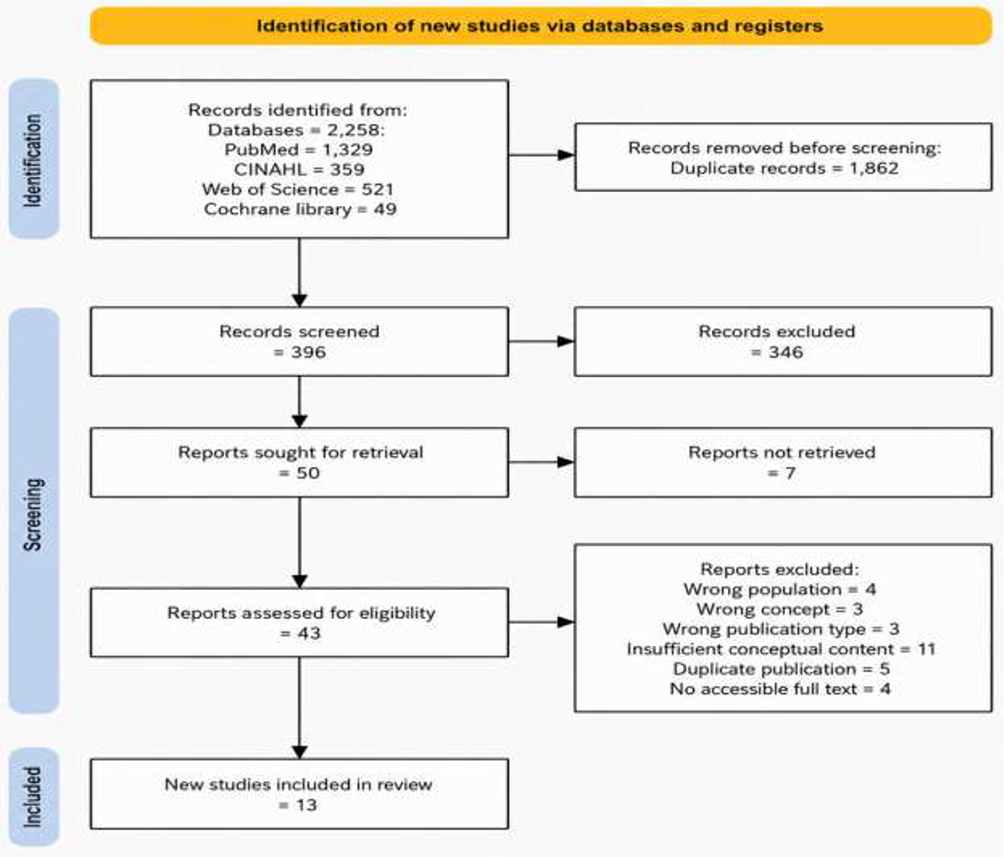 |
Figure 1 PRISMA flow diagram of study selection. |
Review Methods
Data extraction focused on how each source defined self-management; which behaviors or capacities were considered central; which factors were described as prerequisites; which outcomes were associated with self-management; and which observable indicators or instruments were used to measure it.
During synthesis, each extracted item was classified as an antecedent, defining attribute, consequence, strategy, empirical referent, or related construct. This classification was necessary because prior literature sometimes conflates motivation, self-efficacy, family support, adherence, and quality of life with “self-management”, even though these terms represent distinct conceptual positions. For example, motivation and self-efficacy are best understood as enabling conditions; adherence and blood pressure control are measurable outcomes; and self-monitoring, self-regulation, problem-solving, collaboration, and daily-life integration are core attributes of the concept.
Thematic analysis was then used to consolidate overlapping items into a parsimonious set of final defining attributes. Empirical referents were mapped to these attributes rather than presented solely as instrument descriptions, consistent with Walker and Avant’s (2019) requirement that empirical referents show how the concept can be observed in practice.
Results
Based on the synthesis of the included literature, self-management in patients with hypertension was conceptualized as an active, ongoing, and patient-led process in which individuals monitor their condition, interpret health information, regulate daily routines, implement recommended treatment and lifestyle actions, collaborate with healthcare professionals and others, and integrate hypertension care into everyday life. The final conceptual findings are summarized in Table 1.
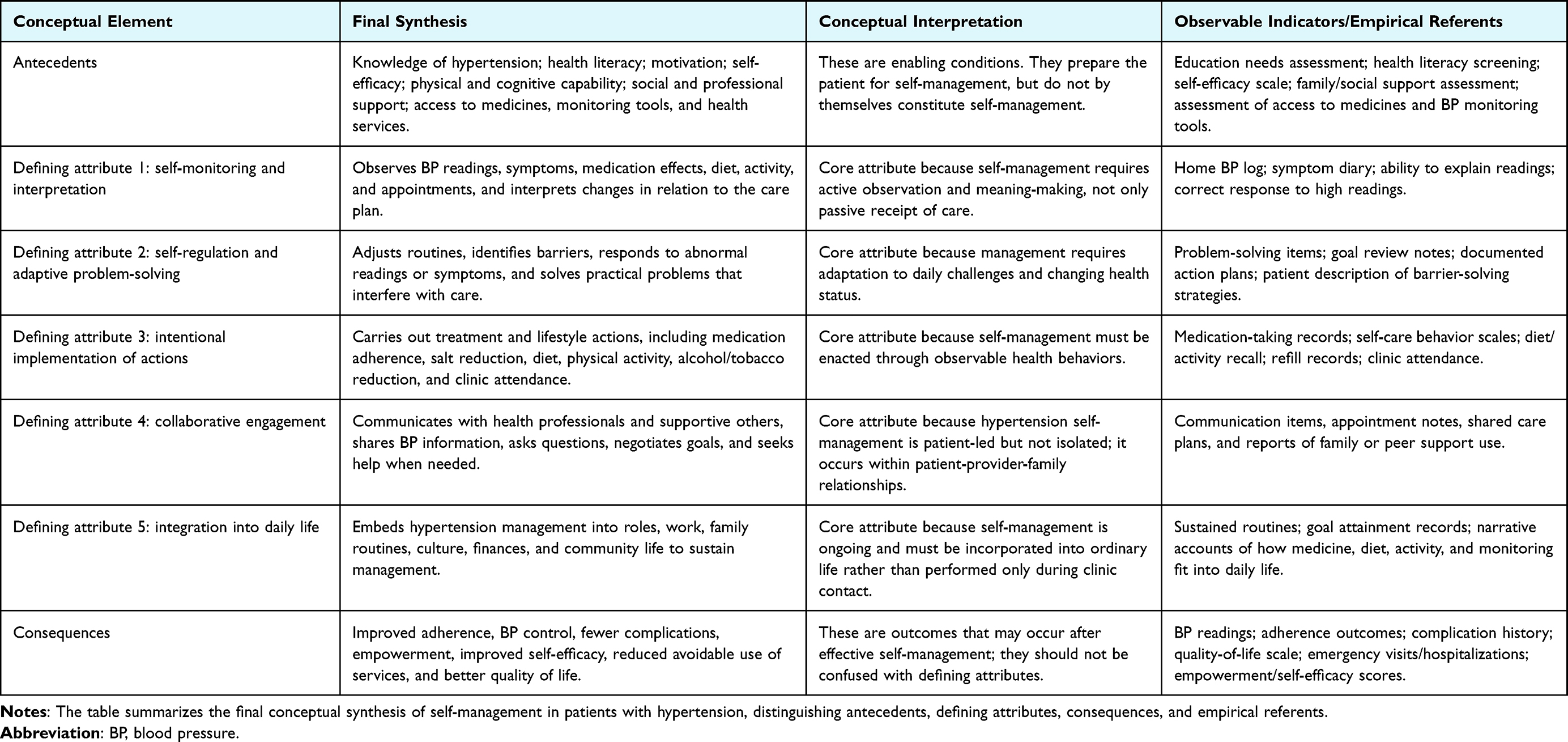 |
Table 1 Synthesized Final Conceptual Findings for Self-Management in Patients with Hypertension |
As shown in Table 1, the antecedents of hypertension self-management include knowledge of hypertension, health literacy, motivation, self-efficacy, physical and cognitive capabilities, social and professional support, and access to medications, blood pressure monitoring tools, and health services. These factors create the conditions that enable self-management but are not self-management itself. The defining attributes identified in the synthesis were self-monitoring and interpretation, self-regulation and adaptive problem-solving, intentional implementation of actions, collaborative engagement, and integration into daily life. The consequences of effective self-management include improved adherence, better blood pressure control, fewer complications, greater empowerment, improved self-efficacy, reduced avoidable use of health services, and better quality of life.
Refined Operational Definition
Self-management in patients with hypertension is an ongoing, intentional, and context-sensitive process in which individuals use knowledge, skills, support, and available resources to monitor blood pressure-related information, interpret changes, regulate behavior, solve problems, collaborate with healthcare providers and others, and integrate treatment and lifestyle actions into everyday life to maintain blood pressure control and prevent complications.
This definition deliberately distinguishes self-management from self-care, self-efficacy, and self-regulation. Self-care encompasses health-maintaining actions that may be routine or directed by others; self-efficacy is confidence in performing behaviors; and self-regulation involves monitoring and adjusting behavior. Self-management incorporates these elements but is broader, encompassing autonomous decision-making, problem-solving, collaboration, and the sustained integration of disease management into daily life.2,3,11
Definitions and Uses of the Concept
In the broader chronic disease literature, self-management is often defined as the work individuals do to manage symptoms, treatments, lifestyle changes, and the psychosocial consequences of illness.6,11
Hypertension-specific literature applies this general idea to everyday behaviors, including medication adherence, dietary modification, salt reduction, physical activity, avoidance of alcohol and tobacco, blood pressure monitoring, clinic attendance, and communication with professionals.12,13
The critical distinction is that self-management is not merely obeying advice. It requires active interpretation and adaptation. A patient who takes medication only because someone reminds them may be practicing adherence or self-care maintenance, but full self-management is present when the patient understands the purpose of treatment, monitors relevant changes, anticipates barriers, makes informed decisions, seeks support when needed, and sustains these actions in daily life.2,3,10
Defining Attributes
Five defining attributes were identified.
- Self-monitoring and interpretation: the patient observes relevant health information, including blood pressure readings, symptoms, medication effects, dietary patterns, activity, and appointment schedules, and interprets this information in relation to the care plan.8,13,14
- Self-regulation and adaptive problem-solving: the patient adjusts routines, identifies barriers, responds to abnormal readings or symptoms, and develops practical solutions when daily life interferes with treatment or lifestyle goals.3,10,15
- Intentional implementation of treatment and lifestyle actions: the patient carries out agreed-upon actions, including taking medications, reducing salt intake, following a healthy eating pattern, engaging in physical activity, limiting alcohol and tobacco exposure, and attending clinic reviews.13,16,17
- Collaborative engagement with health professionals and supportive others: the patient communicates with nurses, physicians, family members, and peers to seek guidance, negotiate goals, share monitoring information, and receive emotional or practical support.9,10,12
- Integration into daily life: the patient embeds hypertension management within ordinary routines, roles, cultural practices, family responsibilities, work, and community life, making management sustainable rather than episodic.10,11,15
Illustrative Cases
The following cases are illustrative only. They are hypothetical examples intended to clarify conceptual boundaries and do not describe real patients or identifiable individuals.
Model Case
Mr. L, a 55-year-old man with hypertension, measures his blood pressure every morning with a validated home monitor, records the readings, and knows when a reading warrants rest, a repeat measurement, or professional advice. He takes his medication at the same time each day, uses reminders, follows a low-salt diet, walks regularly, and attends scheduled appointments. When work stress disrupts his routine, he adjusts his walking schedule, prepares lower-salt meals in advance, and discusses persistent high readings with his nurse. He uses family support and reliable educational materials to revise goals. This case demonstrates all defining attributes: monitoring and interpretation, self-regulation and problem-solving, implementation of treatment and lifestyle actions, collaboration, and daily-life integration.
Borderline Case
Mrs. A, a 60-year-old woman with hypertension, sometimes checks her blood pressure and takes medication most days, but she skips doses when she feels well and does not know how to respond to elevated readings. She attends appointments but rarely asks questions. She wants to “live healthier” but has no clear plan. This case shows partial adherence and limited monitoring, but self-regulation, collaboration, and daily-life integration are incomplete.
Related Case
Mr. J takes prescribed medication and follows a meal plan prepared by his spouse, but he does not monitor his blood pressure, interpret symptoms, set goals, or actively participate in decisions. His behavior reflects maintenance of self-care and adherence but lacks the autonomy, problem-solving, and collaboration required for full self-management.
Contrary Case
Mr. D does not take medication consistently, does not monitor his blood pressure, avoids follow-up, and waits until symptoms become severe before seeking help. He does not use available information, support, or resources. This case demonstrates the absence of the defining attributes of self-management.
Antecedents
Antecedents are conditions that must be present or sufficiently supported for self-management to occur. The synthesis identified seven key antecedents: basic knowledge of hypertension and its treatment; health literacy; motivation and perceived need to act; self-efficacy; physical and cognitive capabilities; social and professional support; and access to medicines, monitoring tools, health services, and credible information.2,10,12,13
These antecedents are not defining attributes because their presence alone does not constitute self-management. For example, a person may have high self-efficacy or strong family support yet still fail to monitor blood pressure, solve problems, or integrate care into daily routines. Instead, antecedents create the capacity and context in which the defining attributes can be enacted.
Consequences
Consequences are outcomes that may arise from effective self-management. At the behavioral level, these include improved medication adherence, sustained changes in diet and physical activity, regular blood pressure monitoring, and improved clinic follow-up.13,16,18
At the clinical and psychosocial levels, consequences include improved blood pressure control, reduced risk of complications, greater empowerment, better functional ability, reduced avoidable healthcare use, and improved quality of life. Conversely, poor self-management may contribute to uncontrolled blood pressure, complications, avoidable use of health services, and diminished quality of life.16,18–20
The relationships among antecedents, defining attributes, empirical referents, and consequences are summarized in Figure 2. The figure shows that antecedents such as knowledge, motivation, self-efficacy, support, and access to resources enable self-management but do not constitute the concept itself. Defining attributes capture the core components of hypertension self-management, while empirical referents provide observable indicators for assessment and measurement. Consequences of effective self-management include improved adherence, blood pressure control, empowerment, fewer complications, and improved quality of life.
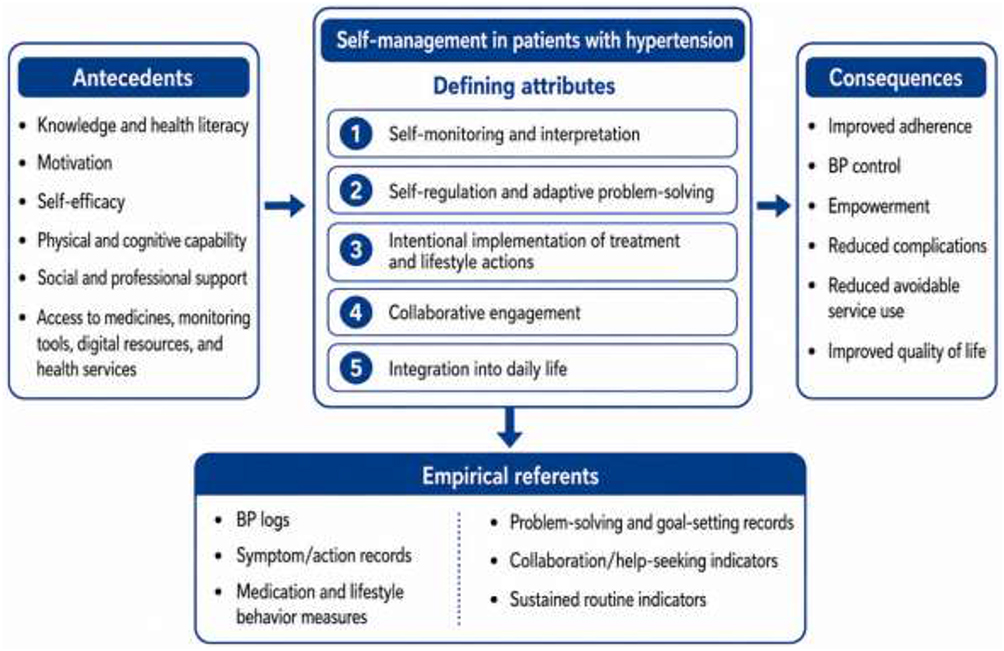 |
Figure 2 Integrated conceptual framework of self-management in patients with hypertension. |
Empirical Referents
Empirical referents are observable indicators that demonstrate the presence of the concept. In this analysis, empirical referents are organized by defining attribute rather than by instrument name alone. The relevant indicators include recorded blood pressure monitoring, correct interpretation of readings, medication-taking routines, low-salt and healthy dietary behaviors, physical activity, timely help-seeking, appointment attendance, problem-solving around barriers, collaborative communication, and sustained integration of routines into daily life.1,21
Hypertension-specific self-management instruments, self-care behavior scales, self-efficacy scales, clinic records, home blood pressure logs, refill data, and goal-attainment records may each provide partial evidence. However, not all instruments measure self-management directly. Self-efficacy scales assess confidence, an antecedent and related construct rather than the full concept. Adherence scales capture one consequence or component of implementation but do not fully encompass monitoring, interpretation, collaboration, and integration. A stronger empirical approach is therefore to select tools based on the attribute being measured.21–25
To strengthen the concept’s empirical applicability, the defining attributes were mapped to observable indicators, potential measurement tools, and related constructs. This mapping is presented in Table 2.
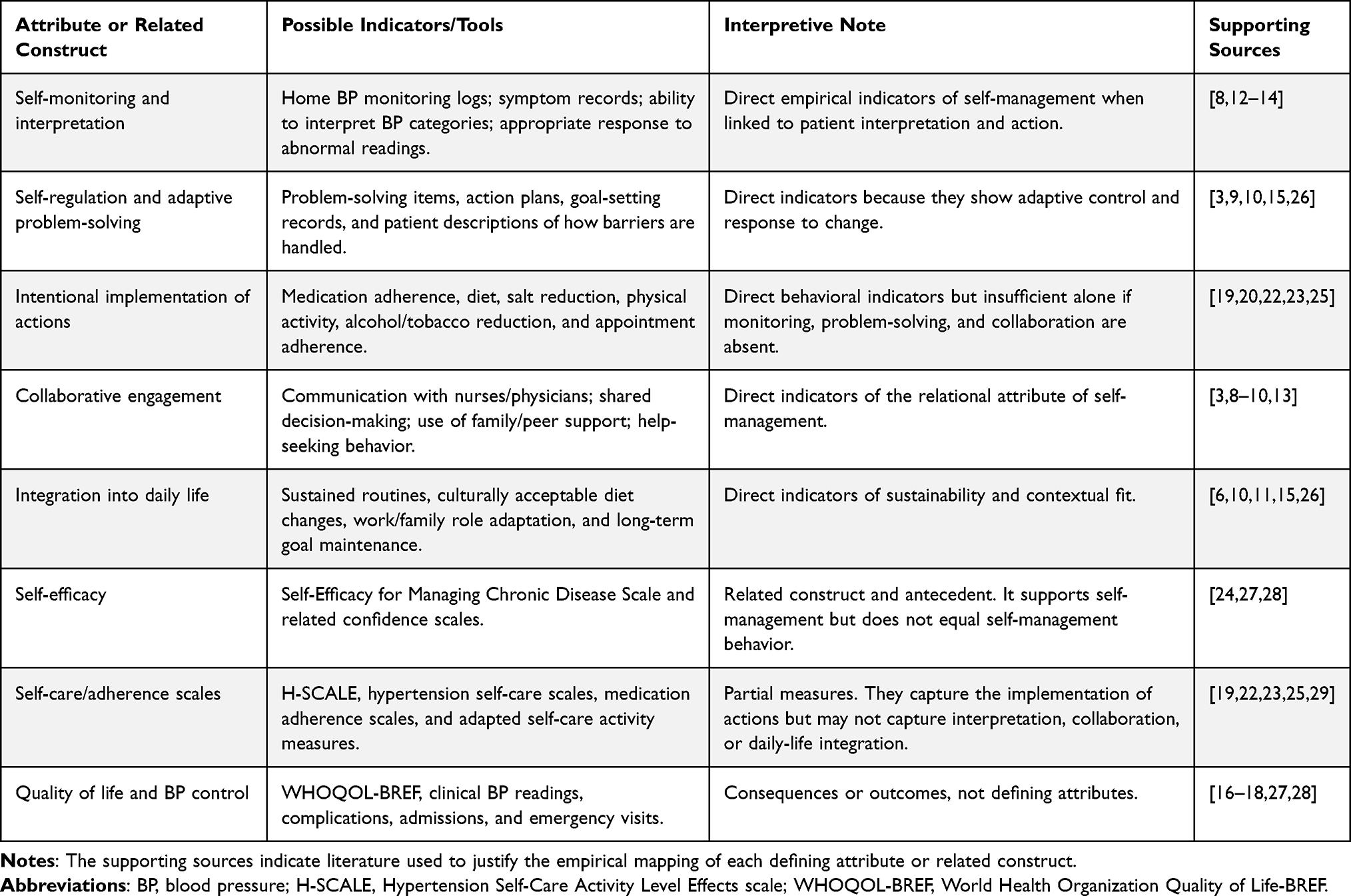 |
Table 2 Mapping Empirical Referents to Defining Attributes and Related Constructs |
As shown in Table 2, self-monitoring and interpretation may be assessed through home blood pressure logs, symptom records, and the patient’s ability to interpret blood pressure categories and respond appropriately to abnormal readings. Self-regulation and adaptive problem-solving may be reflected in goal-setting records, action plans, and patient descriptions of how they manage barriers to care. Intentional implementation of actions can be assessed using medication adherence measures, diet and physical activity recall, salt-reduction practices, alcohol and tobacco reduction, and appointment adherence. Collaborative engagement may be measured through communication with health professionals, shared decision-making, help-seeking behavior, and family or peer support. Integration into daily life may be assessed through sustained routines, culturally acceptable lifestyle adjustments, adaptation to work and family roles, and maintenance of long-term goals.
The mapping in Table 2 also clarifies the distinction between self-management and related constructs. For example, self-efficacy is best understood as an antecedent or enabling factor rather than as self-management itself. Similarly, self-care and adherence scales, including the H-SCALE, can measure important behavioral components of self-management, particularly the implementation of recommended actions, but they may not fully capture interpretation, adaptive problem-solving, collaboration, or integration into daily life. Quality of life and blood pressure control are better understood as consequences or outcomes of effective self-management rather than as defining attributes of the concept.
Discussion
This analysis clarifies that self-management for hypertension is a dynamic process that extends beyond adherence and lifestyle advice. The final attributes highlight how patients use knowledge, support, and resources: they monitor, interpret, regulate, solve problems, implement agreed-upon actions, collaborate, and integrate management into everyday life.
As shown in Figure 2, the framework distinguishes enabling conditions, core attributes, observable indicators, and outcomes. This distinction is important because it prevents related constructs, such as self-efficacy, adherence, blood pressure control, and quality of life, from being treated as defining attributes of self-management.
The analysis builds on Van De Velde et al8 by preserving the person-oriented, person-environment nature of self-management while placing greater emphasis on hypertension-related monitoring, responses to blood pressure changes, and empirical indicators10 It extends Yang et al by moving beyond broad attributes such as active participation and tool use toward a more analytic distinction among attributes, antecedents, consequences, strategies, and empirical referents.8 It also incorporates the emphasis on education, behavioral adaptation, social-psychological support, and barrier identification described by Iriantono et al10 treating these primarily as antecedents and support strategies unless they are enacted through the defining attributes.9
The operational definition is therefore not merely another broad definition. It is grounded in the five final attributes and can be translated into nursing assessment questions: Does the patient monitor and interpret blood pressure data? Can the patient solve problems when barriers arise? Are treatment and lifestyle actions implemented intentionally? Is the patient collaborating with providers and other support staff? Are management behaviors integrated into daily routines?
This distinction has measurement implications. A tool focused solely on adherence or knowledge should not be labeled a comprehensive self-management measure. Similarly, self-efficacy should be measured when confidence is of interest, but it should not be treated as equivalent to self-management behavior. A multidimensional assessment should include indicators for monitoring, implementation, problem-solving, collaboration, and integration.21–25
In nursing practice, the framework supports targeted assessment. A nurse may identify that one patient lacks knowledge, another lacks confidence, another lacks home monitoring resources, and another lacks problem-solving strategies. These barriers require distinct interventions. The framework can also support culturally responsive education by aligning self-management goals with the patient’s family roles, work patterns, food practices, financial resources, digital access, and preferred support systems.12–14
Limitations
This concept analysis has some limitations, including those inherent to the nature of concept analysis. Unlike a systematic review or meta-analysis, the purpose of this study was not to estimate intervention effects or determine the strength of evidence, but to clarify the meaning, defining attributes, antecedents, consequences, and empirical referents of self-management in patients with hypertension. Therefore, the findings should be interpreted as a conceptual synthesis rather than as evidence of intervention effectiveness.
A further limitation is that some included sources were drawn from the broader chronic disease literature rather than hypertension-specific literature. These sources were retained because they provided important clarification of cross-cutting self-management attributes, such as self-monitoring, self-regulation, problem-solving, collaboration, and integration into daily life. However, hypertension-specific evidence was prioritized in developing the final operational definition, illustrative cases, empirical mapping, and conceptual framework. Future research should further validate the proposed attributes and empirical referents in hypertension-specific populations and in diverse cultural and clinical settings.
Conclusion
Self-management for patients with hypertension is an ongoing, intentional, and context-sensitive process in which individuals monitor and interpret health information, regulate behavior, solve problems, implement treatment and lifestyle actions, collaborate with professionals and supportive others, and integrate hypertension care into everyday life. This concept is enabled by knowledge, health literacy, motivation, self-efficacy, capability, support, and access to resources, and it may lead to improved adherence, blood pressure control, empowerment, fewer complications, reduced avoidable use of services, and better quality of life.
Future research should validate attribute-based measurement approaches, test culturally responsive nursing interventions to address barriers across the five attributes, and examine how digital tools, family support, and access to health care affect sustainable self-management among diverse populations with hypertension.
Impact
The framework can help nurses distinguish among what enables self-management, what constitutes it, and what results from it. This distinction strengthens assessment, patient education, intervention development, and outcome measurement in hypertension care.
Patient or Public Contribution
No patient or public contribution was made, as this manuscript is a concept analysis based on the published literature. Future empirical work should involve patients and family caregivers in co-designing culturally appropriate self-management interventions and measurement tools.
Data Sharing Statement
All data used in this concept analysis are drawn from published literature cited in the manuscript. No new dataset was generated.
Ethics Approval and Consent to Participate
This manuscript did not involve human participants, human tissue, or identifiable personal data. Therefore, formal ethical approval was not required.
Author Contributions
All authors made a significant contribution to the work reported, whether in the conception, study design, execution, data acquisition, analysis and interpretation, or in all these areas; took part in drafting, revising, or critically reviewing the article; gave final approval of the version to be published; agreed on the journal to which the article has been submitted; and agreed to be accountable for all aspects of the work.
Funding
No funding was received for this manuscript.
Disclosure
The authors declare no competing interests.
References
1. Walker LO, Avant KC. Strategies for Theory Construction in Nursing.
2. Richard AA, Shea K. Delineation of self-care and associated concepts: self-care concept delineation. J Nurs Scholarsh. 2011. doi:10.1111/j.1547-5069.2011.01404.x
3. Schulman‐Green D, Jaser S, Martin F, et al. Processes of self‐management in chronic illness. J Nurs Scholarsh. 2012;44(2):136–12. doi:10.1111/j.1547-5069.2012.01444.x
4. Mills KT, Stefanescu A, He J. The global epidemiology of hypertension. Nat Rev Nephrol. 2020;16(4):223–237. doi:10.1038/s41581-019-0244-2
5. Zhou B, Carrillo-Larco RM, Danaei G, et al. Worldwide trends in hypertension prevalence and progress in treatment and control from 1990 to 2019: a pooled analysis of 1201 population-representative studies with 104 million participants. Lancet. 2021;398(10304):957–980. doi:10.1016/S0140-6736(21)01330-1
6. Barlow J, Wright C, Sheasby J, Turner A, Hainsworth J. Self-management approaches for people with chronic conditions: a review. Patient Educ Couns. 2002;48(2):177–187. doi:10.1016/S0738-3991(02)00032-0
7. Moore SM, Schiffman R, Waldrop‐Valverde D, et al. Recommendations of common data elements to advance the science of self‐management of chronic conditions. J Nurs Scholarsh. 2016;48(5):437–447. doi:10.1111/jnu.12233
8. Yang J, Zeng Y, Yang L, et al. Identifying personalized barriers for hypertension self-management from TASKS framework. BMC Res Notes. 2024;17(1):224. doi:10.1186/s13104-024-06893-7
9. Iriantono G, Purwandari R, Amelia S, Pranata S, Aisah S, Vranada A. Analysis of the concept of self-management in hypertensive patients. KESANS Int J Health Sci. 2025;4(12):1126–1137. doi:10.54543/kesans.v4i12.434
10. Van De Velde D, De Zutter F, Satink T, et al. Delineating the concept of self-management in chronic conditions: a concept analysis. BMJ Open. 2019;9(7):e027775. doi:10.1136/bmjopen-2018-027775
11. Lorig KR, Holman HR. Self-management education: history, definition, outcomes, and mechanisms. Ann Behav Med. 2003;26(1):1–7. doi:10.1207/S15324796ABM2601_01
12. He R, Wei F, Hu Z, Huang A, Wang Y. Self-management in young and middle-aged patients with hypertension: a systematic review and meta-synthesis of qualitative studies. Syst Rev. 2024;13(1):254. doi:10.1186/s13643-024-02665-3
13. Konlan KD, Shin J. Determinants of self-care and home-based management of hypertension: an integrative review. Glob Heart. 2023;18(1):16. doi:10.5334/gh.1190
14. Postel-Vinay N, Bobrie G, Asmar R, Stephan D, Amar L. Management of arterial hypertension: home blood pressure measurement is a cornerstone for telemonitoring and self-management. mHealth. 2023;9:18. doi:10.21037/mhealth-22-51
15. Miller WR, Lasiter S, Bartlett Ellis R, Buelow JM. Chronic disease self-management: a hybrid concept analysis. Nurs Outlook. 2015;63(2):154–161. doi:10.1016/j.outlook.2014.07.005
16. Van Truong P, Wulan Apriliyasari R, Lin M, Chiu H, Tsai P. Effects of self‐management programs on blood pressure, self‐efficacy, medication adherence and body mass index in older adults with hypertension: meta‐analysis of randomized controlled trials. Int J Nurs Pract. 2021;27(2):e12920. doi:10.1111/ijn.12920
17. World Health Organization. Guideline for the Pharmacological Treatment of Hypertension in Adults.
18. Liu X, Xiao L, Liu H, Wang J, Wang W, Zhang Z. Effectiveness of self-management for hypertension patients and behavior changes in China: a systematic review and meta-analysis. Adv Interv Cardiol. 2025;21(1):15–24. doi:10.5114/aic.2025.147975
19. Edmealem A, Ademe S, Gedamu S. Adherence to self-care among patients with hypertension in Ethiopia: a systematic review and meta-analysis. Int J Hypertens. 2022;2022:1–13. doi:10.1155/2022/5962571
20. Irwan AM, Potempa K, Abikusno N, Syahrul S. Self-care management for hypertension in Southeast Asia: a scoping review. J Multidiscip Healthc. 2022;15:2015–2032. doi:10.2147/JMDH.S367638
21. Li D, Jie JH, Li H, et al. The relationship between social support and depression among older adults with hypertension in urban communities: mediating effects of coping styles. Front Psychiatry. 2025;16:1508846. doi:10.3389/fpsyt.2025.1508846
22. Chen TY, Kao CW, Cheng SM, Liu CY. Translation, adaptation, and validation of a Chinese version of the Hypertension Self-Care Activity Level effects (H-SCALE) for patients with hypertension. BMC Nurs. 2024;23(1):334. doi:10.1186/s12912-024-01993-y
23. Han HR, Lee H, Commodore-Mensah Y, Kim M. Development and validation of the hypertension self-care profile: a practical tool to measure hypertension self-care. J Cardiovasc Nurs. 2014;29(3):E11–E20. doi:10.1097/JCN.0b013e3182a3fd46
24. Ritter PL, Lorig K. The English and Spanish self-efficacy to manage chronic disease scale measures were validated using multiple studies. J Clin Epidemiol. 2014;67(11):1265–1273. doi:10.1016/j.jclinepi.2014.06.009
25. Warren-Findlow J, Krinner LM, Vinoski Thomas E, Coffman MJ, Gordon B, Howden R. Relative and cumulative effects of hypertension self-care behaviors on blood pressure. West J Nurs Res. 2020;42(3):157–164. doi:10.1177/0193945919851111
26. Gobeil-Lavoie AP, Chouinard MC, Danish A, Hudon C. Characteristics of self-management among patients with complex health needs: a thematic analysis review. BMJ Open. 2019;9(5):e028344. doi:10.1136/bmjopen-2018-028344
27. Wang C, Lang J, Xuan L, Li X, Zhang L. The effect of health literacy and self-management efficacy on the health-related quality of life of hypertensive patients in a western rural area of China: a cross-sectional study. Int J Equity Health. 2017;16(1):58. doi:10.1186/s12939-017-0551-9
28. Lee MC, S Wu, Lu KC, Wang WH, Chen YY, Tai CY. Effect of patient-centered self-management program on blood pressure, renal function control, and the quality of life of patients with hypertensive nephropathy: a longitudinal randomized controlled trial. Biol Res Nurs. 2022;24(2):216–225. doi:10.1177/10998004211061877
29. Mengjiao L, Xujie Z, Ping J, et al. Self-management assessment tools for people with hypertension: a scoping review. BMC Nephrol. 2025;26(1):219. doi:10.1186/s12882-025-04134-y
 © 2026 The Author(s). This work is published and licensed by Dove Medical Press Limited. The
full terms of this license are available at https://www.dovepress.com/terms
and incorporate the Creative Commons Attribution
- Non Commercial (unported, 4.0) License.
By accessing the work you hereby accept the Terms. Non-commercial uses of the work are permitted
without any further permission from Dove Medical Press Limited, provided the work is properly
attributed. For permission for commercial use of this work, please see paragraphs 4.2 and 5 of our Terms.
© 2026 The Author(s). This work is published and licensed by Dove Medical Press Limited. The
full terms of this license are available at https://www.dovepress.com/terms
and incorporate the Creative Commons Attribution
- Non Commercial (unported, 4.0) License.
By accessing the work you hereby accept the Terms. Non-commercial uses of the work are permitted
without any further permission from Dove Medical Press Limited, provided the work is properly
attributed. For permission for commercial use of this work, please see paragraphs 4.2 and 5 of our Terms.
Recommended articles
The Existing Interventions to Promote Self-Care and Self-Monitoring Preventing Hypertension Among Thai Risk People: A Scoping Review
Banharak S, Potempa K, Limpawattana P, Pamungkas RA, Mahikul W, Jeamjitvibool T, Karaket A, Siriprathum S, Ransinyo K
Vascular Health and Risk Management 2025, 21:519-544
Published Date: 9 July 2025
Analysis of the Current Status of Self-Management Behaviors and Factors Affecting Self-Management in Elderly Empty Nesters with Comorbid Hypertension and Type 2 Diabetes Mellitus, a Cross-Sectional Study From the Community
Li F, Cao Y, Xie X, Li M, Cheng T
Risk Management and Healthcare Policy 2025, 18:2361-2375
Published Date: 10 July 2025
Validation of the Longitudinal Effect of an Integrated Nursing Intervention Based on the Integrated Theory of Health Behavior Change (ITHBC) on Multidimensional Health Indicators in Older Radiotherapy Patients
Jiang J, Qian L, Chen J, Lu J, Zhu H, Zhang B, Zhao Y, Tian J, Zhang Q, He X
Clinical Interventions in Aging 2025, 20:1293-1304
Published Date: 22 August 2025
Self-Measured Blood Pressure Monitoring in Primary Care: Retrospective Analysis from a Large US Healthcare System
Guzman I, Glowacki N, Chase J, Brill J, Biskis A, Khatib R
Clinical Epidemiology 2025, 17:1039-1047
Published Date: 9 December 2025