
Back to Journals » Journal of Multidisciplinary Healthcare » Volume 18
Bibliometric and Visualized Analysis of the Global Research Status and Trends of the Association Between Vitamin D and Osteoarthritis in the Last Two Decades
Authors Yang Z, Ong MT  , Mak RWF, Ng JP, Meng H, Wang Z
Received 14 July 2025
Accepted for publication 23 November 2025
Published 1 December 2025 Volume 2025:18 Pages 7779—7795
DOI https://doi.org/10.2147/JMDH.S553576
Checked for plagiarism Yes
Review by Single anonymous peer review
Peer reviewer comments 3
Editor who approved publication: Dr Pavani Rangachari
Zongyou Yang,1 Michael Tim‐Yun Ong,2,3 Rex Wang-Fung Mak,3 Jonathan Patrick Ng,3 Hongyu Meng,1 Zhihong Wang1
1Department of Orthopaedic Surgery, Hebei Medical University Third Hospital, Shijiazhuang, Hebei, 050051, People’s Republic of China; 2Department of Orthopaedics and Traumatology, Faculty of Medicine, The Chinese University of Hong Kong, Shatin, Hong Kong; 3Department of Orthopaedics and Traumatology, Prince of Wales Hospital, Shatin, Hong Kong
Correspondence: Zhihong Wang, Department of Orthopaedic Surgery, Hebei Medical University Third Hospital, Shijiazhuang, Hebei, People’s Republic of China, 050051, Tel +86 031166776721, Email [email protected] Michael Tim‐Yun Ong, Department of Orthopaedics and Traumatology, Faculty of Medicine, The Chinese University of Hong Kong, Shatin, Hong Kong, Email [email protected]
Background: Osteoarthritis (OA) is a common degenerative joint disease affecting many individuals worldwide. The relationship between vitamin D and OA has recently attracted attention from researchers, as the available data concerning the influence of vitamin D on OA progression are controversial. Here, we conducted a visualized analysis of the world research trends on vitamin D and OA from 2005 to 2024.
Methods: A search was conducted to identify papers published between 2005 and 2024 in the Web of Science Core Collection (WoSCC) database. A total of 400 publications on vitamin D and OA were included and analyzed using Microsoft Excel, VOSviewer, and CiteSpace. We reported the annual publication trends, leading countries, institutions, and authors. Co-authorship, co-citation, and keyword bursts were analyzed further to determine research foci and evolving trends.
Results: The volume of publications consistently increased, peaking in 2021. The United States was the leading country (70 publications), followed by China (49) and the United Kingdom (). The high centralities of Harvard University and Monash University highlight their strong role in international collaboration. Ding Changhai, Jones Graeme, and Wluka Anita were the most productive authors. “Vitamin D Deficiency” was found to be most influential. Five clusters were identified. Further analysis revealed the current interest in and future research directions related to the roles of vitamin D in OA.
Conclusion: Publication volume on vitamin D and OA increased steadily in the last two decades. Research focus evolved from basic bone metabolism to specific vitamin D metabolites and inflammation mechanisms. Investigations continue into vitamin D’s role in specific OA phenotypes and inflammatory pathways. The underrepresentation of low and middle-income countries represents a critical research gap. Recent research explores vitamin D’s potential for managing OA symptoms, with future work likely focusing on its biochemical and clinical effects in OA treatment.
Keywords: bibliometrics, CiteSpace, VOSviewer, visualization, vitamin D, osteoarthritis
Introduction
Osteoarthritis (OA) is one of the most common degenerative disorders and affects over 500 million people worldwide.1,2 OA is the second most costly disease in the United States (US). It is estimated to cost $18.4 billion in 2013.3 This cost will increase by 39% in 2030.4
Vitamin D, traditionally recognized for its essential role in calcium homeostasis and bone metabolism, has emerged as a hormone with diverse biological functions. Vitamin D receptors are expressed in numerous tissues including chondrocytes, and immune cells,5–8 suggesting potential roles in cartilage maintenance and inflammatory regulation. Epidemiologically, vitamin D deficiency affects approximately one billion people worldwide, with particularly high prevalence in elderly populations—the demographic most affected by OA.9 All these suggest that vitamin D may modulate processes relevant to OA.
Several epidemiological studies have reported associations between vitamin D and OA risk or progression. It has been reported that vitamin D may relieve pain and improve joint function and cartilage volume. Several studies have suggested a potential relationship between serum vitamin D deficiency and knee OA.10–12 Additionally, vitamin D demonstrates a favorable safety profile relative to commonly used analgesic options for osteoarthritis. Unlike oral non-steroidal anti-inflammatory drugs (NSAIDs), vitamin D does not increase gastrointestinal, renal, or cardiovascular risks.13 In contrast to intra-articular corticosteroid injections, it is not associated with post-injection complications with repeated use.14 Standard supplementation is inexpensive, widely available, and procedure-free (typically requiring only periodic serum monitoring), whereas injection-based therapies require clinical resources and incur higher direct costs.
However, some randomized controlled trials (RCTs) have shown no significant benefits for controlling OA via vitamin D supplementation. A 2-year RCT including 146 participants with symptomatic knee OA revealed that vitamin D supplementation (2000 IU/d) did not reduce knee pain or cartilage volume loss compared with that in the placebo group.15 In addition, a larger 3-year RCT with 474 participants reported no positive effect of vitamin D supplementation (800 IU daily) on knee OA symptoms or the joint space narrowing process, which was measured via plain X-ray.16 These inconsistencies highlight the need to synthesize how the field has evolved across contributors, themes, and methods, and to identify current hotspots and gaps.
Several bibliometric studies have examined vitamin D in relation to bone and rheumatic diseases, providing valuable insights into research trends in related fields. Malik et al conducted a comprehensive bibliometric analysis of global research on vitamin D and bone metabolism from 2001 to 2020, and identifying osteoporosis, bone mineral density, and calcium as the most frequent research keywords.17 Their analysis revealed that research focus evolved from skeletal to extra-skeletal aspects of vitamin D, with the United States, Japan, and China leading in publication output. More recently, a 2024 bibliometric study examined research trends in osteoporosis and nutrition over two decades, identifying vitamin D as a key research hotspot alongside bone density and hip fractures.18 Additionally, an assessment of osteoarthritis research from 1994 to 2023 revealed systematic growth in OA research predominantly from developed countries.19 However, despite these valuable contributions, no bibliometric analysis has specifically investigated the relationship between vitamin D and osteoarthritis, leaving a critical gap in understanding the evolution, research foci, and global collaboration patterns in this specific field.
Given these, we aimed to analyze the global research landscape of the relationship between vitamin D and OA. As a public health problem, vitamin D deficiency is very common worldwide, especially in the higher-risk age group affected the most by OA. A deep and clear understanding of the global research status and trends will elucidate the link between vitamin D and OA from another perspective and provide guidance for future research and public health policies. Despite the increasing number of studies in this area, the global state of research on the relationship between vitamin D and OA has not been reported. Bibliometric and visualized analysis was first proposed in 1969, and it has become a widely accepted method to evaluate and gain insight into certain research topics. The visualized analysis, using bibliometric methods, offers unique opportunities to contribute to both theory and practice within a given field.20,21
Here, we address this gap with a visualized bibliometric analysis of vitamin D and osteoarthritis to show where the evidence is concentrated, who drives the field, and where it is heading—information needed to set priorities, build collaborations, and design targeted clinical trials. Through this analysis, we provide quantitative and visual information to address the following questions: (1) How has scientific interest in vitamin D and OA evolved over time?—to situate current debates within historical trends; (2) How has international collaboration developed, particularly between high-income and low-/middle-income countries?—to reveal capacity gaps and opportunities for partnerships; (3) Which institutions are driving clinical versus basic science research?—to understand the key research points in this field; and (4) What emerging directions are indicated by citation bursts and keyword trends?—to detect research fronts and inform future clinical investigations. Our findings may provide valuable insights for understanding the global research status and guiding future research directions in this area.
Materials and Methods
Search Strategy and Data Collection
All the articles were retrieved from the Web of Science Core Collection (WoSCC) database, which includes a wide range of scientific literature. The literature selection criteria were as follows:1 Language: English;2 Date range: 1 January 2005 to 26 August 2024;3 Document type: Article (“paper”); and4 Search terms: subject headings and free-text terms related to “vitamin D” and “osteoarthritis” (Supplementary Table 1). The search strategies are listed in Supplementary Table 2. We downloaded the full information of all the identified publications in “plain text” format, including titles, keywords, abstracts, publication years, authors, journals, impact factors (IF), H-indexes, and countries/regions. All other publications lacking key information were excluded from the analysis. Duplicate and retracted publications were identified and excluded based on title and authors in WoSCC database. Manual screening was then performed by reading the titles, authors, and abstracts of each record. Studies that were meta-analyses, reviews, book chapters, meeting abstracts, or unrelated to the relationship between vitamin D and osteoarthritis were further excluded. Two researchers conducted all the searches and collections independently, and a third researcher verified the results. All the information collected in our study was available to the public with open access, and our study did not involve treatment or patient records; thus, ethics committee approval was not required.
Statistical Analysis and Visualization
The tools used in our study included Microsoft Excel 2021 (Microsoft Corp., Redmond, WA, USA), VOSviewer (version 1.6.20), and CiteSpace (version 6.2. R4). The functions “Analyze Results” and “Citation Report” of the WoSCC were employed to analyze the annual output, the times cited, the average number of citations per item (ACI), and the H-index. Microsoft Excel was used to record the data and construct graphs depicting the annual number of published articles, the linear trend of cumulative publications, the number of authors, the number of journals, the impact factor, the H-index of journals, the ACI of journals, and the world map for distribution. CiteSpace and VOSviewer were used to create visualizations. VOSviewer was used to facilitate the visual analysis of co-citations, co-authorship, and keyword co-occurrence. In VOSviewer, co-citation analysis was conducted with the minimum number of citations set to 13. The analysis used “No normalization” and was weighted by “Citations”. The visualization layout applied an attraction value of 3 and a repulsion value of 2. For the keyword co-occurrence analysis, the minimum number was set to 5 and was weighted by “Occurrences”. The clustering resolution was 1.00. A density visualization map was generated to illustrate the frequency and intensity of co-occurring keywords. In CiteSpace, the time slicing was set from 2005 to 2024 with a 1-year slice length. The selection criteria were defined as g-index (k = 25), LRF = 3.0, L/N = 10, LBY = 5, and e = 1.0. The nodes on the map represent various elements, such as countries/regions, journals, and keywords. The strength of the associations was represented by links between elements, with the total link strength (TLS) indicating connection strength. The top 20 keywords with the strongest citation bursts were chosen for detailed analysis. To ensure accuracy in the analyses, author and institutional names were manually checked by identifying repeated letters, initials, and standard international abbreviations, as well as by verifying correspondence addresses, emails, and research topics to merge duplicates.
Results
Publishing Trend Analysis
We screened and included 400 publications from 2005 to 2024 related to vitamin D and OA in the study (Figure 1). As shown in Figure 2, the number of published articles per year steadily increased from 2005 to 2021. The annual output reached a peak of 45 publications in 2021. Despite the slight decline after 2021, the number of annual publications remained relatively high. The cumulative number of publications steadily increased each year and reached a total of 400 by 2024. The linear trend of cumulative publications was drawn with the equation y = 22.1x−64.7. The R2 value was 0.9705, suggesting robust growth in the cumulative number of studies on vitamin D and OA from 2005 to 2024.
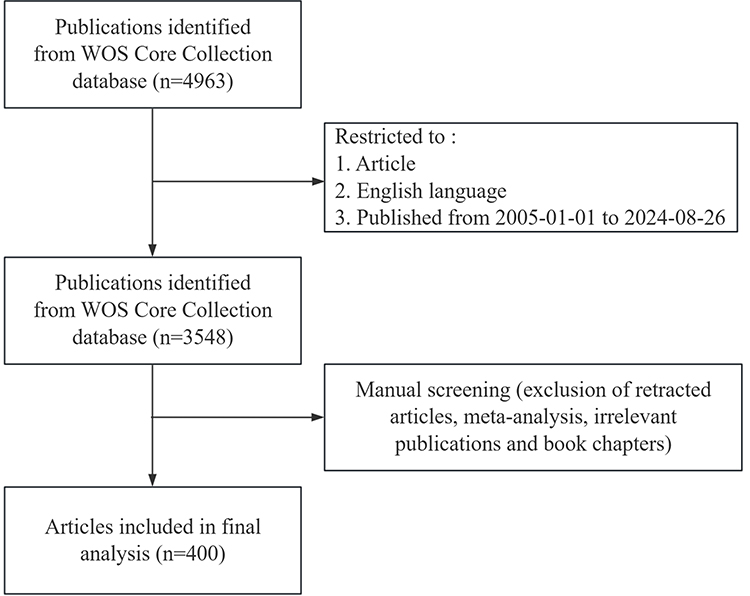 |
Figure 1 Flowchart of literature screening. |
 |
Figure 2 Trend Maps on the growth of publications from 2005 to 2024. |
Analysis of National Publications and Collaboration
Sixty-two countries/regions contributed to publications about vitamin D and OA from 2005 to 2024. The US leads the field with 70 publications, followed by China with 49 publications and the United Kingdom (UK) with 31 publications. These three notable countries account for a substantial portion of the global output. In contrast, research activity remains limited in many parts of the world. Many countries in Africa and Latin America, such as Ghana, Morocco, South Africa, Colombia, and Chile, have conducted minimal research on the topic, with fewer than 10 publications each (Figure 3).
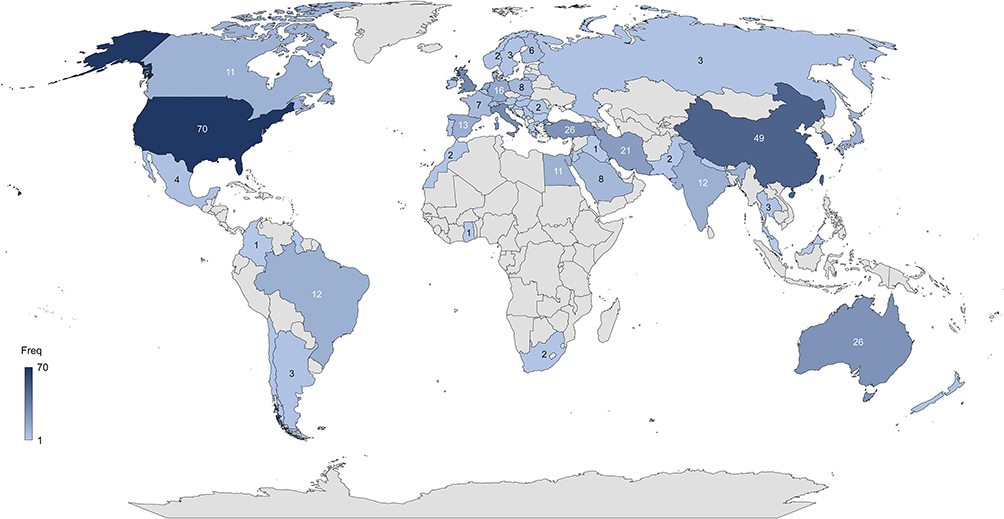 |
Figure 3 The global contributions to the association between vitamin D and osteoarthritis researches. |
Centrality is visually represented by pink rings around the nodes, reflecting a country’s influence in the network. The collaboration network map shows that the US, UK, Australia, and Canada have high centrality, indicating their crucial role in global research on vitamin D and OA (Figure 4).
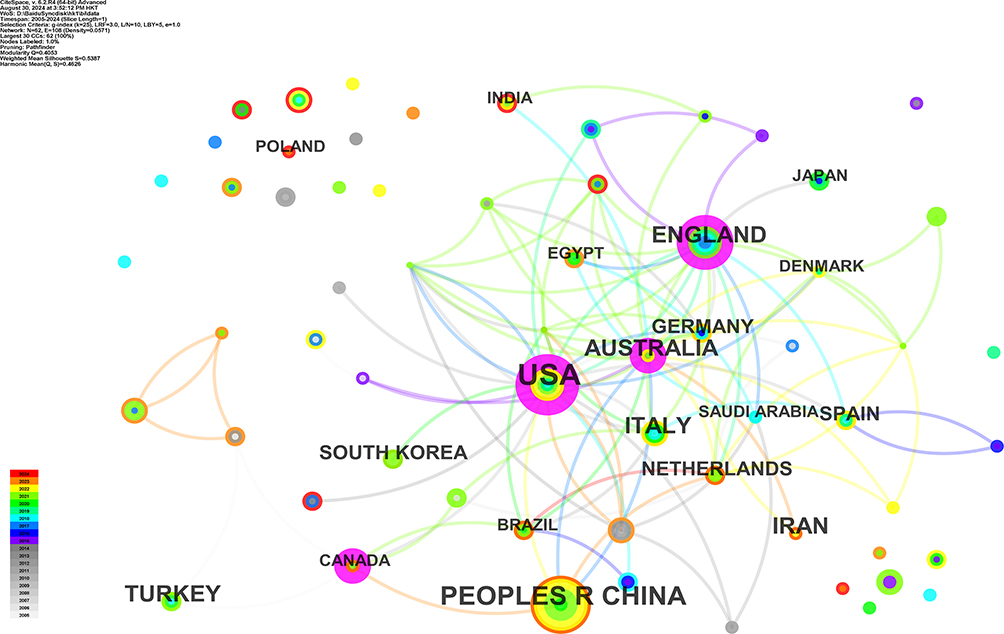 |
Figure 4 Collaborative network map of countries. |
The evolution of international collaboration networks shows a significant disparity between high-income countries (HICs) and low and middle-income countries (LMICs). While collaboration among HICs (US, UK, Australia, and Canada) has strengthened considerably since 2010, the collaboration among LMICs have remained lower level.
Analysis of Institutional Publications and Collaborations
As shown in Figure 5, Harvard University leads with 12 publications, followed by Monash University and the Egyptian Knowledge Bank (EKB), each contributing 11 publications. Institutions such as Brigham & Women’s Hospital and Anhui Medical University have also made notable contributions, with 7 and 6 publications, respectively.
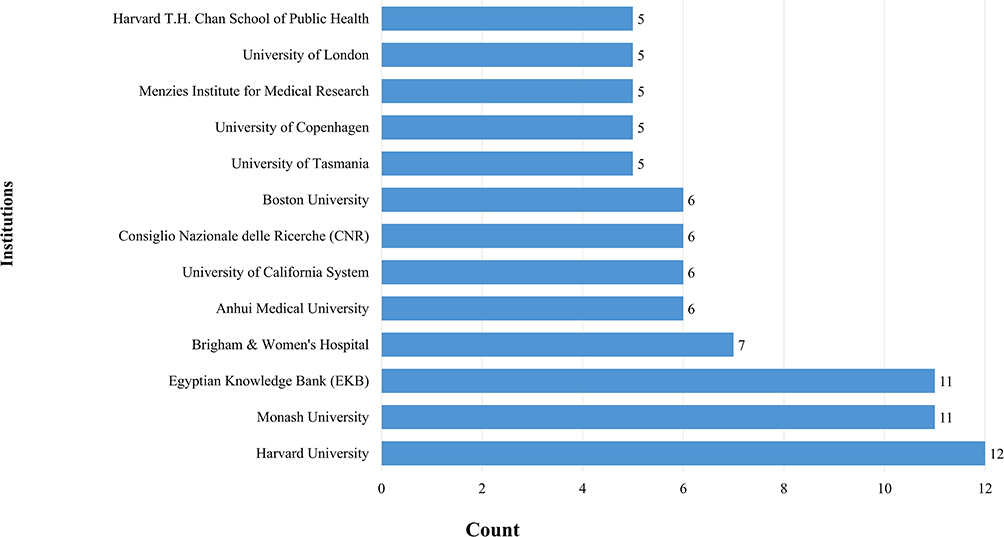 |
Figure 5 Count of institution contributed to vitamin D and osteoarthritis researches. |
Figures 6 and 7 show the centrality and collaborative relationships among research institutions contributing to vitamin D and OA research. Monash University and Harvard University stand out with the highest centrality values (0.1 and 0.09, respectively). Other institutions, such as Southern Medical University, China, Academic Medical Center Amsterdam, and Brigham & Women’s Hospital, also show considerable centrality (0.05). The collaboration network shows that Monash University and Harvard University exhibit a high level of collaboration. Institutions such as the University of Melbourne, Brigham & Women’s Hospital, and Southern Medical University, China also demonstrate significant collaborative activity.
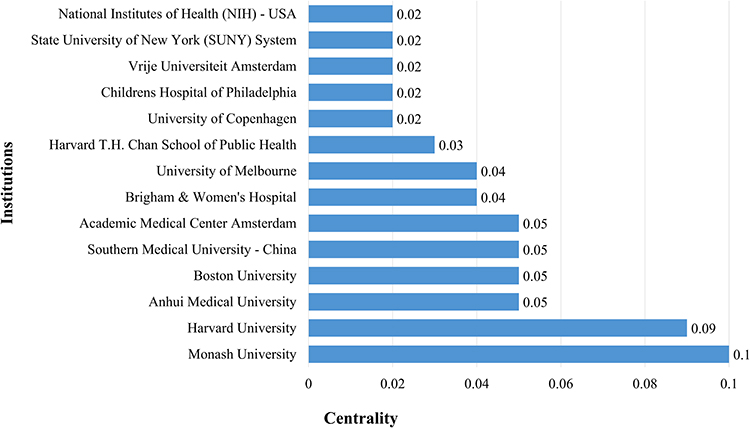 |
Figure 6 Centrality of institution contributed to vitamin D and osteoarthritis researches. |
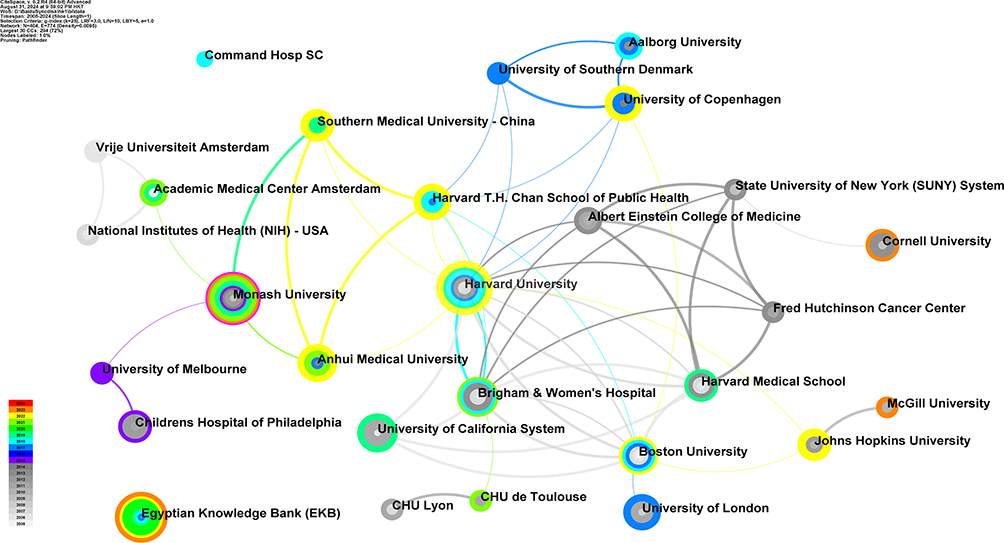 |
Figure 7 Collaborative network map of institutions. |
Further analysis reveals two different aspects of institutional research. Academic medical centers like Harvard University, Brigham & Women’s Hospital, and Monash University tend to lead clinical research initiatives, such as observational studies and clinical trials examining vitamin D supplementation efficacy. In contrast, institutions like Southern Medical University and Anhui Medical University have contributed more significantly to basic science research, particularly exploring molecular mechanisms connecting vitamin D receptors to cartilage metabolism and inflammatory pathways.
Analysis of Publications and Cooperation Among Authors
There are 2504 authors included in this study. 36 contributed more than three publications (Supplementary Table 3). The most productive author was Ding Changhai, who had seven publications and 343 citations. He was followed by Jones Graeme, with six articles and 284 citations. Wluka Anita ranked as the third most productive author, with five articles and 119 citations in the field. The TLS is an indicator of collaborative efforts among authors. Similarly, Ding Changhai leads in TLS with a value of 52, followed closely by Jones Graeme (47) and Wluka Anita (43).
The co-authorship analysis and clustering network visualization of the authors with more than three publications are shown in Figure 8. The 36 authors were classified into 12 clusters. The links between these authors suggest collaborative relationships. The network visualization shows that these clusters are scattered without connections, suggesting limited collaboration across different studies groups.
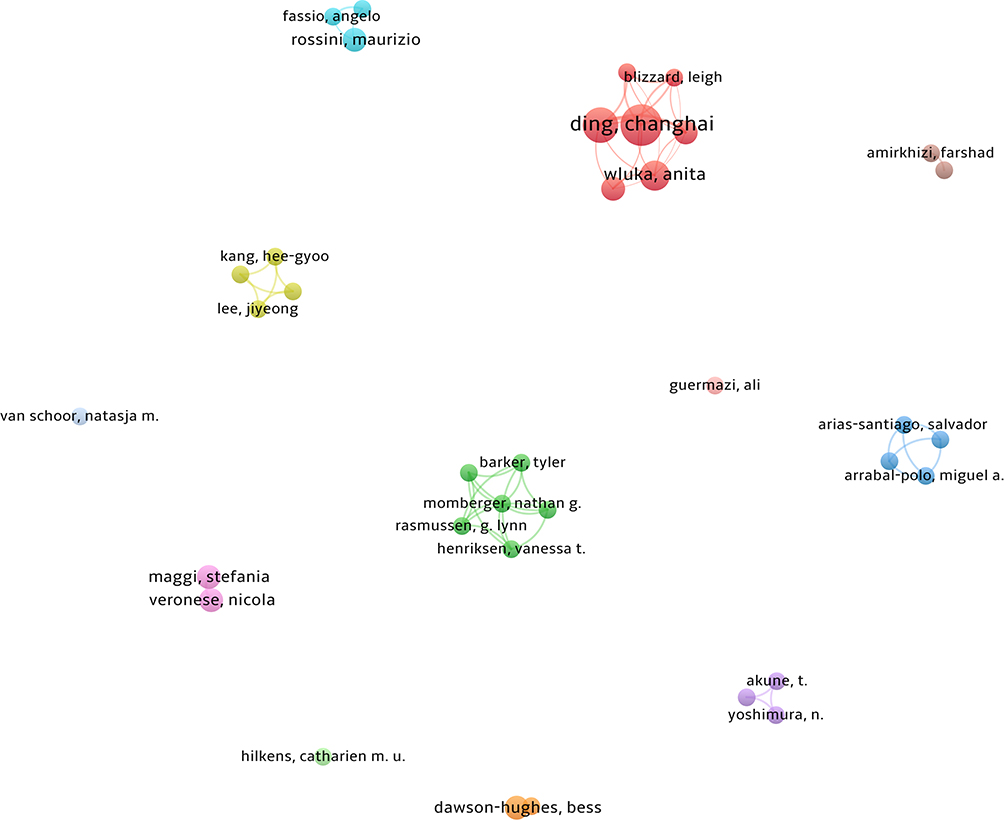 |
Figure 8 Clustering network visualization for co-authorship analysis. |
Analysis of Journal Publication Numbers and Impact
An analysis of journal publication counts (Figure 9A), IF (Figure 9B), average citation impact (ACI, Figure 9C), and H-index values (Figure 9D) was performed. Clinical Rheumatology, the most productive journal, has published 14 articles. Rheumatology International follows closely, with 13 publications. Arthritis Research Therapy (12 publications) and the Journal of Rheumatology (11 publications) were also notable regarding publication count. Despite fewer outputs, Arthritis and Rheumatism is notable for having the highest IF (11.4). Osteoarthritis and Cartilage (IF 7.2) and Osteoporosis International (IF 4.2) are also important journals that strongly influence research on vitamin D and OA. Regarding the H-index, Clinical Rheumatology and Arthritis Research Therapy are tied first, with an H-index of 10. The Journal of Rheumatology (H-index 9) and Clinical and Experimental Rheumatology (H-index 9) also strongly influenced the field. From the perspective of ACI, Arthritis and Rheumatism also stands out, with the highest ACI of 74.29, followed by the Journal of Clinical Rheumatology (ACI 43.43) and Arthritis Research Therapy (ACI 41.75).
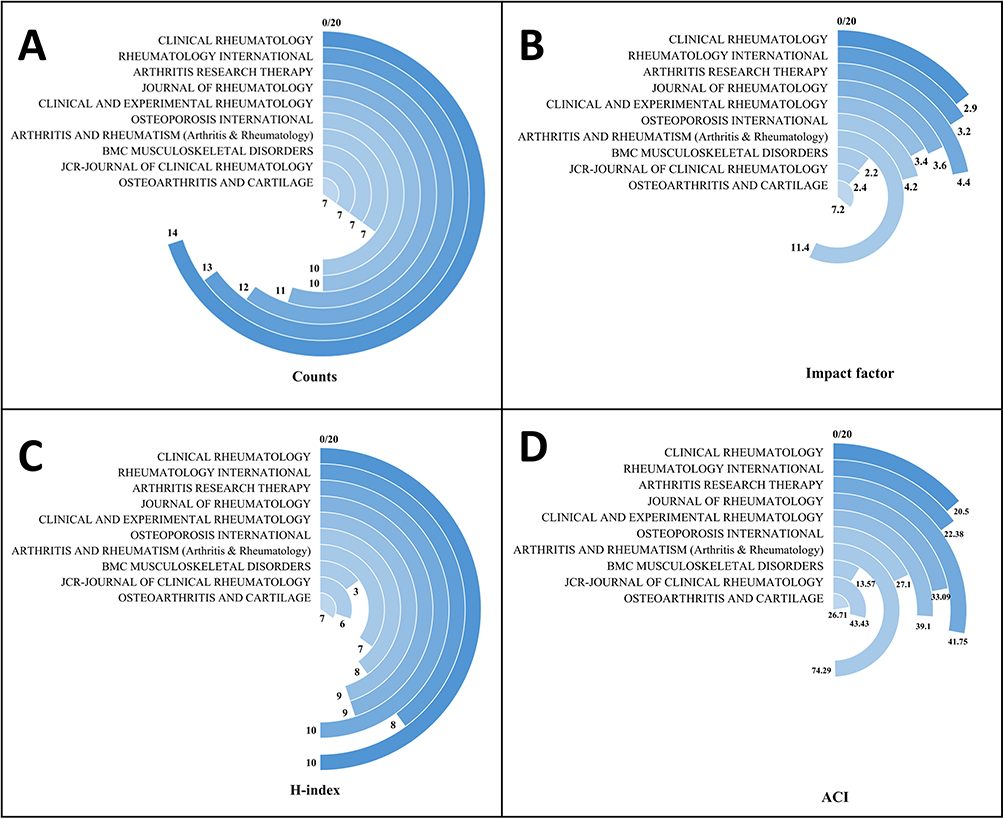 |
Figure 9 Analysis of top 10 journal publication numbers and impact. (A) The analysis of journal publication counts. (B) The analysis of the IF in 2023. (C) The analysis of ACI. (D) The analysis of H-index values. |
Analysis of Highly Co-Cited References
A total of 19 references were cited at least 20 times (Supplementary Table 4). One of the most frequently cited references is a 2007 paper in the New England Journal of Medicine by Holick MF—“Vitamin D Deficiency”.22 This paper has been cited 66 times, with a TLS of 136, revealing its key role in vitamin D and OA research. Rossini M’s 2010 report “Vitamin D deficiency in rheumatoid arthritis: prevalence, determinants and associations with disease activity and disability” in Arthritis Research Therapy has 39 citations and a TLS of 215.23 In addition, two other articles, the works of Arnett FC (1988) and Merlino LA (2004), both earned 38 citations.24,25 Regarding TLS, Patel S (2007) and Cutolo M (2006) obtained high values of 151 and 147, respectively, in Arthritis and Rheumatism and Clinical and Experimental Rheumatology. These publications had a considerable impact on related studies.25,26
The co-citation analysis and network visualization are presented in Figure 10. As shown in Supplementary Table 4, the most influential reference, Holick MF’s 2007 publication “Vitamin D Deficiency” in the New England Journal of Medicine, is commonly cited across many studies.22
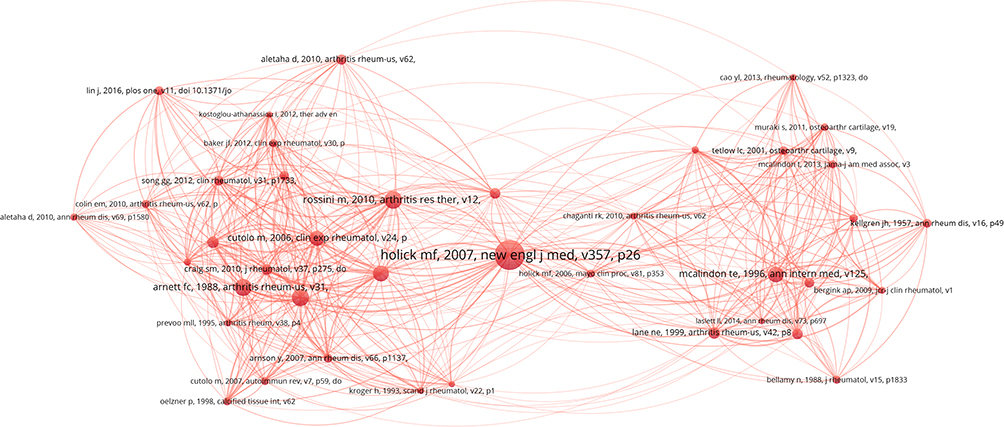 |
Figure 10 The co-citation analysis and network visualization of cited references. |
Analysis of Keyword Co-Occurrence and Keyword Bursts
A total of 1788 keywords were extracted from all articles in our study. When the minimum number of occurrences was set at 5, 152 keywords met the threshold. The density visualization map shows the frequency of co-occurring keywords (Figure 11). The bright yellow areas like vitamin D deficiency, risk and prevalence indicate the most highly studied topics. The network visualization of the co-occurring keywords is shown in Figure 12. The keywords in the green cluster focused on musculoskeletal health. These were related to the relationships among vitamin D, osteoporosis, and OA. The red cluster, such as rheumatoid arthritis, inflammation, cytokines, and disease activity, emphasized the role of vitamin D in inflammatory diseases. The cluster in yellow addresses the systemic impact of vitamin D in terms of metabolic syndrome, prevention, and body mass index. The fourth cluster is blue, and it emphasizes vitamin D deficiency and public health, with keywords such as prevalence, risk factors, and epidemiology. The last cluster is the purple cluster, which focuses on genetic and molecular mechanisms, with the keywords “vitamin D receptors”, “expression,” and “cartilage health”.
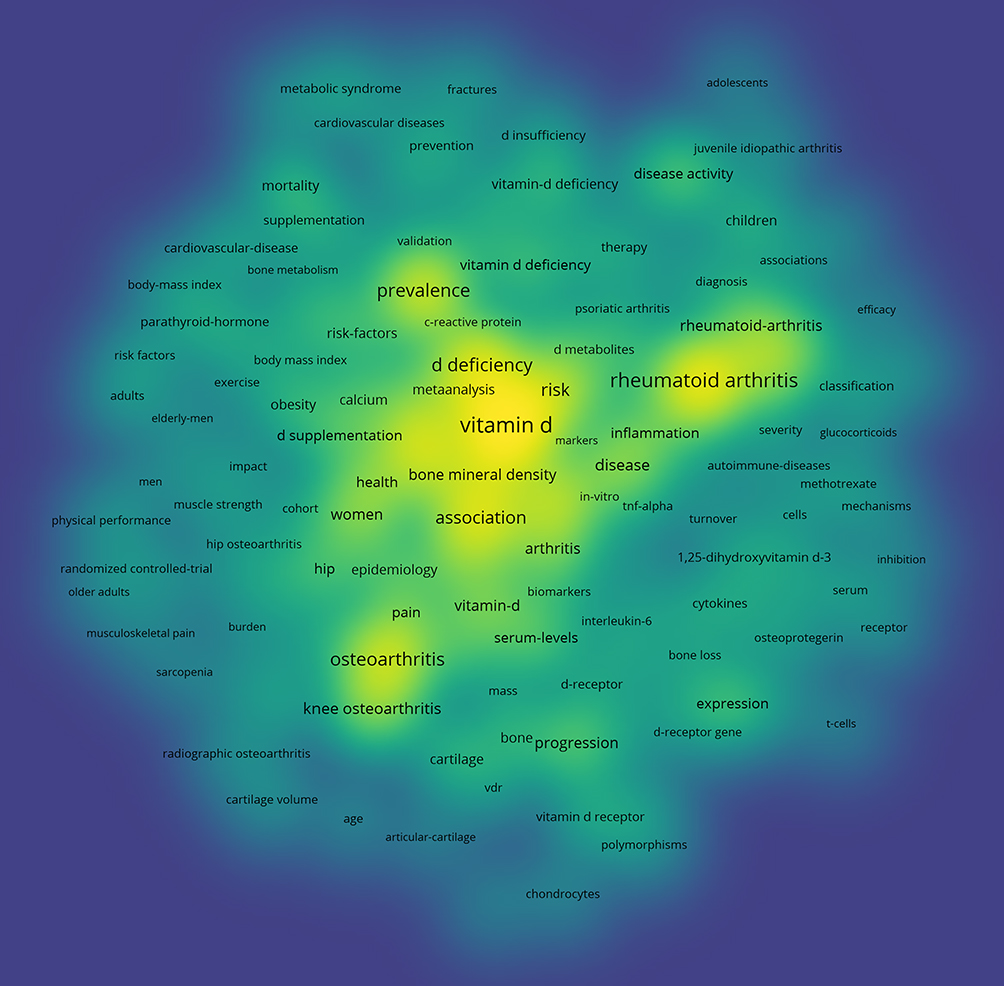 |
Figure 11 The density visualization map of keyword co-occurrence analysis. |
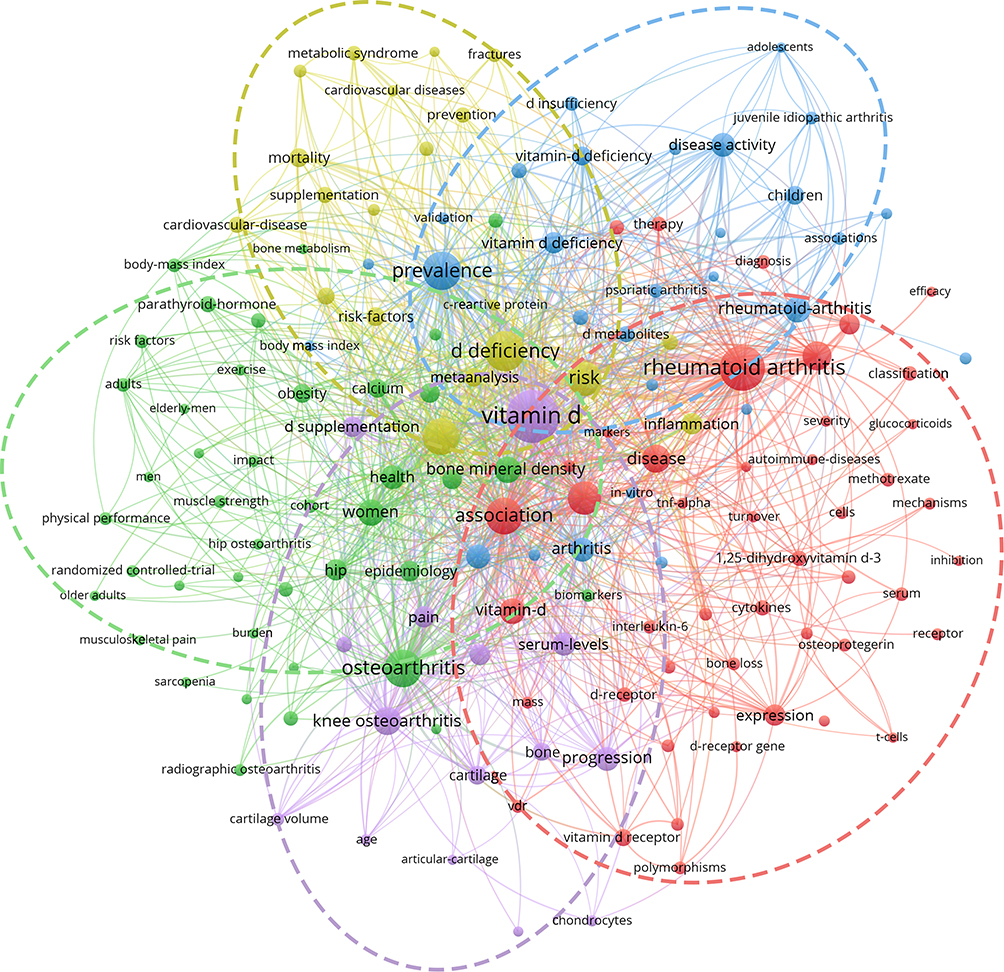 |
Figure 12 The network visualization map of co-occurring keywords. |
The keyword bursts were further analyzed, and the top 15 keywords with the strongest citation bursts from 2005 to 2024 are presented in Figure 13. Figure 13 shows the emergence and shifting of the research trends. “D metabolites” exhibited the highest burst strength (4.39), indicating that much attention was paid to vitamin D metabolites and their roles in OA from 2009 to 2014. “D supplementation” (2020–2022, strength 3.02) and “management” (2020–2021, strength 3.26) indicate continued interest in clinical applications, such as how supplementation can influence OA treatment and patient management. The most recent bursts, such as “progression” (2019–2024, strength 3.26), “pain” (2019–2022, strength 2.9), and “inflammation” (2020–2024, strength 4.12), reflect a growing focus on the role of vitamin D in managing symptoms and controlling inflammation in the progression of OA.
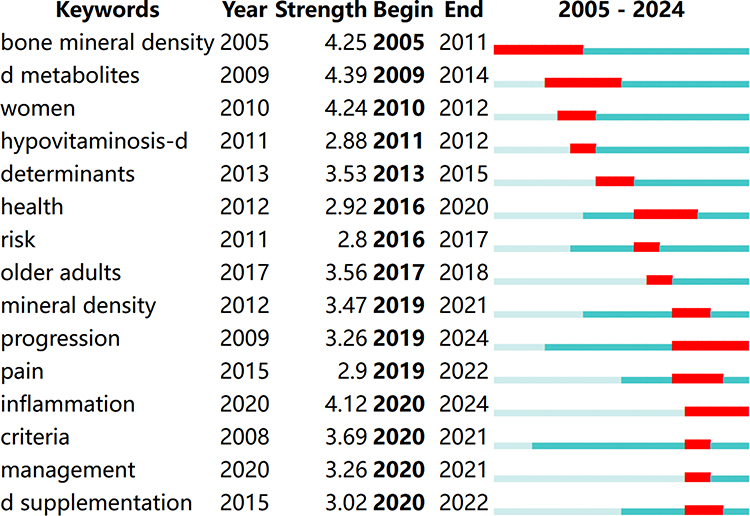 |
Figure 13 The top 15 keywords with the strongest citation bursts from 2005 to 2024. The blue line indicates the time interval, while the red line represents the duration of each keyword’s strongest citation burst. |
Discussion
To the best of our knowledge, this is the first bibliometric study that has investigated the worldwide research status and trends of the associations between vitamin D and OA. Our comprehensive analysis spanning two decades reveals critical insights into not only what has been studied, but also why certain research patterns have emerged, how these patterns relate to broader scientific and clinical developments, and what implications these trends hold for future research and clinical practice.
We observed an upward trend in publication volume, which indicates interest in the role of vitamin D in the OA progression. The global epidemiology of vitamin D deficiency—affecting approximately 1 billion people worldwide—has created an urgent public health imperative that naturally intersects with the rising prevalence of OA in aging populations. There is a study revealed that low serum vitamin D levels are associated with an increased risk of OA.27 Similarly, a longitudinal population-based cohort study revealed moderate vitamin D deficiency (serum 25-hydroxyvitamin D < 25 nmol/L) as an independent risk factor for knee and hip pain.28 Another study exploring the relationship between serum levels of vitamin D and the progression of OA, including 556 participants from the Framingham study cohort, demonstrated that the risk of OA progression is increased 3-fold in participants with low serum levels of vitamin D. Low levels of vitamin D were also a predictive factor for the loss of cartilage.29 Another study involving 418 individuals demonstrated that those with vitamin D deficiency had a greater 2-fold greater risk of knee OA than those with sufficient vitamin D.30
However, Felson reported that vitamin D status was not related to the risk of cartilage loss in knee OA.31 These conflicting results added fuel to the debate and prompted more studies related to this issue. Additionally, the increasing prevalence of OA and vitamin D inadequacy likely contributed to this increasing interest in vitamin D and its relationship with OA.32
The geographic concentration of research output in high-income countries (HICs) can be attributed to multiple factors. The country with the most publications in this filed is the US. It is followed by China and the UK. These contributions demonstrate their strong capacity for scientific research. First, advanced diagnostic methods—including high-resolution MRI for cartilage assessment—remains largely concentrated in HICs. Second, the substantial research funding system in countries like the United States, United Kingdom, and Australia enables sustained longitudinal studies that are essential for understanding OA progression. Institutions such as Harvard University and Brigham & Women’s Hospital have contributed to the leadership of the US, with high quantity and quality of publications. For example, a study on vitamin D deficiency performed at Harvard by Holick MF is currently the most cited, and it has greatly affected this field.22 In terms of the number of publications and the international collaboration of institutions, Harvard University, along with Monash University, plays an important role, with remarkable centrality.
The underrepresentation of LMICs is particularly concerning given the epidemiological paradox: many regions with the highest burden of vitamin D deficiency—including parts of the Middle East, South Asia, and Sub-Saharan Africa—contribute minimal research output. Our analysis revealed that most research output comes from developed countries, such as the US and the UK. Many countries in Africa and Latin America are underrepresented. This creates a critical knowledge gap, as vitamin D metabolism may interact differently with genetic backgrounds, dietary patterns, sun exposure behaviors, and OA phenotypes that are more prevalent in these regions. Several factors may contribute to this. First, inadequate research funding and infrastructure in many LMICs create barriers to conducting and publishing studies on vitamin D and OA. Second, competing health priorities in these regions may direct limited resources toward communicable diseases rather than non-communicable conditions like OA. Third, limited access to advanced diagnostic technologies (MRI, specialized assays for vitamin D metabolites) may also impede the research and publication. The consequences of this underrepresentation are concerning, particularly given that vitamin D deficiency prevalence is often highest in LMICs.
Our citation burst analysis reveals a transition from foundational studies such as bone mineral density (2005–2011) to more specific investigations into vitamin D metabolites (2009–2014). This temporal evolution reflects the field’s intellectual maturation from descriptive epidemiology to mechanistic investigation. It reflects the change from establishing basic associations to exploring biochemical mechanisms. The most recent period (2019–2024) shows a focus on clinical outcomes and inflammation, aligning with the inconclusive results of clinical trials during this period. The surge in vitamin D supplementation research (2020–2022) follows the RCTs that showed no significant benefits for OA symptoms.15,16 These negative findings appear to have stimulated more investigations with optimal dosing regimens. It suggests that the research community has responded to clinical trial results by refining research questions rather than abandoning the hypothesis linking vitamin D to OA.
The limited collaboration among research groups, as revealed by our co-authorship network analysis. The highly productive and influential collaborative researchers identified in this study are Ding Changhai, Jones Graeme, and Wluka Anita. The co-authorship analysis reflected very limited collaboration among different research groups. Rheumatologists, endocrinologists, and basic scientists studying vitamin D receptors often operate within distinct intellectual frameworks. More collaboration among the authors should be induced. Regarding the journals, Clinical Rheumatology and Rheumatology International are the most prolific. Arthritis and Rheumatism has the highest IF and ACI. However, these three journals have contributed greatly to shaping the research landscape.
Co-citation analysis revealed that a work by Holick MF et al titled “Vitamin D deficiency” represents the keystone within research concerning vitamin D and OA. This paper illustrates the role of vitamin D in the skeletal system and provides recommendations for preventing and treating vitamin D deficiency.22 This paper has the highest number of citations, and it acts as a key bridge among multiple studies. Holick’s seminal 2007 New England Journal of Medicine review established vitamin D deficiency as a major public health problem and provided the conceptual foundation that subsequent OA researchers built upon. The paper’s persistent citation dominance in our network analysis suggests that the field continues to reference this work as the definitional standard for vitamin D status classification, despite ongoing debates about optimal cutoff values. Another popular paper that has been extensively cited by other scholars and that has a strong impact is “Vitamin D deficiency in rheumatoid arthritis: prevalence, determinants and associations with disease activity and disability”. This paper also highlights the need for studies on the role of vitamin D in different inflammatory diseases.23
We classified 5 clusters and each of them represents a different research theme in the field. The cluster focused on musculoskeletal health addressed the impact of vitamin D on joint and bone health. The keywords “bone mineral density” were among the most common, with a significant citation burst from 2005 to 2011. This finding is consistent with those of previous studies, such as Makinen et al (2007), which discussed the coexistence of osteoporosis and OA and referred to vitamin D insufficiency and bone health.33 The musculoskeletal health cluster builds on classical endocrinology literature establishing vitamin D’s role in bone metabolism, but extends it by examining the vitamin D-bone-cartilage interface that is unique to OA pathophysiology. The inflammatory cluster, encompassing terms like cytokines, TNF-α, and disease activity, reflects the influence of immunology research demonstrating that 1,25-dihydroxyvitamin D can suppress pro-inflammatory cytokine production and modulate T-cell responses—mechanisms potentially relevant to synovial inflammation in OA. This cluster focuses on arthritis and inflammation, indicating an emerging interest in the effects of vitamin D in immunity. The blue cluster is related to vitamin D deficiency and public health. The yellow cluster addresses the systemic impact of vitamin D on metabolic diseases. Both clusters thus widen the implications of vitamin D deficiency for public health. The last cluster focuses on genetic and molecular mechanisms, reflecting a new research direction in the molecular pathways through which vitamin D affects OA at the genetic level.
The burst keyword was a strong signal of the research focus regarding vitamin D and OA during a certain period. Early research focused on bone mineral density and OA (2005–2011), reflecting foundational work on the effects of vitamin D on bone health. The focus shift to vitamin D metabolites (2009–2014) demonstrates increasing interest in the biochemical pathways of vitamin D in OA. According to the most recent burst keywords, such as “inflammation” (2020–2024), it suggests that research is increasingly focused on vitamin D’s immunomodulatory effects rather than its traditional role in calcium metabolism. The change is related to the broader understanding of OA as an inflammatory condition rather than purely degenerative disorders. The burst word of “progression” (2019–2024) indicates growing interest in vitamin D’s potential to modify disease progression rather than manage symptoms. The persistence of strong citation bursts for “inflammation” and “progression” through 2024 suggests these will remain active areas of investigation.
The translational implications of our findings extend across multiple domains of clinical practice, public health policy, and future research directions. Current evidence does not support routine high-dose vitamin D supplementation specifically for OA management in unselected patients. Given vitamin D’s broader health benefits, the high prevalence of deficiency, and the safety of repletion to physiological levels, screening for and correcting vitamin D deficiency remains reasonable in OA patients. This is particularly meaningful for individuals at risk of vitamin D insufficiency (eg, limited sun exposure, darker skin, obesity, or malabsorption syndromes). The citation analysis suggests several promising directions for the future research:1 The role of vitamin D receptor polymorphisms in determining individual susceptibility to OA progression;2 Synergistic effects of vitamin D with other nutrients or medications in OA management; and3 Novel vitamin D metabolites and analogs with enhanced anti-inflammatory properties. The geographic inequities in research productivity demand targeted interventions. The pattern of international collaboration reveals a troubling “core-periphery” structure, where high-income countries collaborate extensively with each other but minimally with LMICs. This structure limits knowledge transfer and capacity building in regions where the burden of both vitamin D deficiency and OA may be substantial. Funding agencies should establish dedicated mechanisms to support LMIC researchers through North-South collaborative grants, capacity-building programs, and reduced publication fees for authors from resource-limited settings. Addressing this disparity requires targeted funding mechanisms and collaborative initiatives specifically designed to strengthen research capacity in underrepresented regions.
Future clinical trials should address the limitations of prior null studies through more rigorous, well-powered designs. These include: using higher doses informed by pharmacokinetic studies of tissue penetration; extending treatment duration beyond 2–3 years to allow sufficient time for cartilage effects; employing sensitive imaging outcomes (MRI-based cartilage thickness and volume) rather than relying solely on radiographic joint space narrowing. The limited collaboration across groups suggests the field would benefit from large, pooled multicenter cohorts that harmonize methodologies, share resources, and enable adequately powered subgroup analyses. However, this study has several limitations. Our study was based only on the WoSCC database. This may result in selection bias. The publishing time span was set as the last two decades. Therefore, our study does not demonstrate the research status prior to 2005.
Conclusions
This study reported that the publication volume on vitamin D and OA increased steadily in the last two decades. Research focus evolved from basic bone metabolism to specific vitamin D metabolites and inflammation mechanisms. Investigations continue into vitamin D’s role in specific OA phenotypes and inflammatory pathways. The underrepresentation of low and middle-income countries represents a critical research gap. Recent research explores vitamin D’s potential for managing OA symptoms, with future work likely focusing on its biochemical and clinical effects in OA treatment.
Data Sharing Statement
The original data presented in the study can be directed to the corresponding author, Zhihong Wang.
Ethics Statement
This study did not include any patient information. Thus, the requirement for ethics approval was waived.
Author Contributions
All authors made a significant contribution to the work reported, whether that is in the conception, study design, execution, acquisition of data, analysis and interpretation, or in all these areas; took part in drafting, revising or critically reviewing the article; gave final approval of the version to be published; have agreed on the journal to which the article has been submitted; and agree to be accountable for all aspects of the work.
Funding
The Key Medical Research Projects of Hebei Province (Grant No. 20241495).
Disclosure
The authors declare that the research was conducted in the absence of any commercial or financial relationships that could be construed as a potential conflict of interest.
References
1. Wen C, Xiao G. Advances in osteoarthritis research in 2021 and beyond. J Orthop Translat. 2022;32:A1–A2. doi:10.1016/j.jot.2022.02.011
2. Neogi T. The epidemiology and impact of pain in osteoarthritis. Osteoarthritis Cartilage. 2013;21(9):1145–1153. doi:10.1016/j.joca.2013.03.018
3. Torio CM, Moore BJ. National inpatient hospital costs: the most expensive conditions by payer, 2013: agency for healthcare research and quality (US. Rockville. 2006;2006:1.
4. Ackerman IN, Pratt C, Gorelik A, Liew D. Projected burden of osteoarthritis and rheumatoid arthritis in australia: a population-level analysis. Arthritis Care Res. 2018;70(6):877–883. doi:10.1002/acr.23414
5. Czaja AJ, Montano-Loza AJ. Evolving role of vitamin D in immune-mediated disease and its implications in autoimmune hepatitis. Dig Dis Sci. 2019;64(2):324–344. doi:10.1007/s10620-018-5351-6
6. Ebadi M, Rider E, Tsai C, et al. Prognostic significance of severe vitamin D deficiency in patients with primary sclerosing cholangitis. Nutrients. 2023;15(3):576. doi:10.3390/nu15030576
7. Huang FC, Huang SC. The combined beneficial effects of postbiotic butyrate on active vitamin D3-orchestrated innate immunity to salmonella colitis. Biomedicines. 2021;9(10):1296. doi:10.3390/biomedicines9101296
8. Lyu H, Kang L, Gong Q, et al. The relationship between vitamin D levels and depression: a genetically informed study. Nutr J. 2025;24(1):158. doi:10.1186/s12937-025-01199-1
9. Holick MF, Chen TC. Vitamin D deficiency: a worldwide problem with health consequences. Am J Clin Nutr. 2008;87(4):1080s–6s. doi:10.1093/ajcn/87.4.1080S
10. Ramasamy B, Magne F, Tripathy SK, Venugopal G, Mukherjee D, Balamurugan R. Association of gut microbiome and vitamin D deficiency in knee osteoarthritis patients: a pilot study. Nutrients. 2021;13(4):1272. doi:10.3390/nu13041272
11. Tortajada-Soler M, Sanchez-Valdeon L, Blanco-Nistal M, Benitez-Andrades JA, Liebana-Presa C, Bayon-Darkistade E. Prevalence of comorbidities in individuals diagnosed and undiagnosed with alzheimer’s disease in leon, Spain and a proposal for contingency procedures to follow in the case of emergencies involving people with alzheimer’s disease. Int J Environ Res Public Health. 2020;17(10):3398. doi:10.3390/ijerph17103398
12. Heidari B, Heidari P, Hajian-Tilaki K. Association between serum vitamin D deficiency and knee osteoarthritis. Int Orthop. 2011;35(11):1627–1631. doi:10.1007/s00264-010-1186-2
13. Hanna D, Kamal DE, Fawzy HM, Abd Elkhalek R. Safety and efficacy of monthly high-dose vitamin D(3) supplementation in children and adolescents with sickle cell disease. Eur J Pediatr. 2024;183(8):3347–3357. doi:10.1007/s00431-024-05572-w
14. Parry D, Dhillon J, Kraeutler MJ. Risks of intra-articular hip corticosteroid injections include rapidly progressive osteoarthritis and femoral head collapse in patients with and without pre-existing osteoarthritis: a systematic review. Arthrosc Sports Med Rehabil. 2025;7(4):101169. doi:10.1016/j.asmr.2025.101169
15. McAlindon T, LaValley M, Schneider E, et al. Effect of vitamin D supplementation on progression of knee pain and cartilage volume loss in patients with symptomatic osteoarthritis: a randomized controlled trial. JAMA. 2013;309(2):155–162. doi:10.1001/jama.2012.164487
16. Arden NK, Cro S, Sheard S, et al. The effect of vitamin D supplementation on knee osteoarthritis, the VIDEO study: a randomised controlled trial. Osteoarthritis Cartilage. 2016;24(11):1858–1866. doi:10.1016/j.joca.2016.05.020
17. Malik AA, Baig M, Butt NS, Imran M, Alzahrani SH, Gazzaz ZJ. Bibliometric analysis of global research productivity on Vitamin D and bone metabolism (2001-2020): learn from the past to plan future. Nutrients. 2022;14(3):542. doi:10.3390/nu14030542
18. Li M, Yu B, Yang H, et al. Trends and hotspots in research on osteoporosis and nutrition from 2004 to 2024: a bibliometric analysis. J Health Popul Nutr. 2024;43(1):204. doi:10.1186/s41043-024-00690-5
19. Vaishya R, Gupta BM, Mamdapur GMN, Kappi MM, Vaish A. Global research on osteoarthritis during 1994-2023: a scientometric assessment of publications and citations. Indian J Orthop. 2024;58(6):650–660. doi:10.1007/s43465-024-01111-9
20. Mukherjee D, Lim WM, Kumar S, Donthu N. Guidelines for advancing theory and practice through bibliometric research. J Bus Res. 2022;148:101–115. doi:10.1016/j.jbusres.2022.04.042
21. Wu PN, Liu JL, Fang MJ, et al. Global trends in colorectal cancer and metabolic syndrome research: a bibliometric and visualization analysis. Int J Surg. 2024;110(6):3723–3733. doi:10.1097/JS9.0000000000001342
22. Holick MF. Vitamin D deficiency. N Engl J Med. 2007;357(3):266–281. doi:10.1056/NEJMra070553
23. Rossini M, Maddali Bongi S, La Montagna G, et al. Vitamin D deficiency in rheumatoid arthritis: prevalence, determinants and associations with disease activity and disability. Arthritis Res Ther. 2010;12(6):R216. doi:10.1186/ar3195
24. Arnett FC, Edworthy SM, Bloch DA, et al. The American Rheumatism Association 1987 revised criteria for the classification of rheumatoid arthritis. Arthritis Rheum. 1988;31(3):315–324. doi:10.1002/art.1780310302
25. Merlino LA, Curtis J, Mikuls TR, et al. Vitamin D intake is inversely associated with rheumatoid arthritis: results from the Iowa Women’s Health Study. Arthritis Rheum. 2004;50(1):72–77. doi:10.1002/art.11434
26. Patel S, Farragher T, Berry J, Bunn D, Silman A, Symmons D. Association between serum vitamin D metabolite levels and disease activity in patients with early inflammatory polyarthritis. Arthritis Rheum. 2007;56(7):2143–2149. doi:10.1002/art.22722
27. Ding C, Cicuttini F, Parameswaran V, Burgess J, Quinn S, Jones G. Serum levels of vitamin D, sunlight exposure, and knee cartilage loss in older adults: the Tasmanian older adult cohort study. Arthritis Rheum. 2009;60(5):1381–1389. doi:10.1002/art.24486
28. Laslett LL, Quinn S, Burgess JR, et al. Moderate vitamin D deficiency is associated with changes in knee and Hip pain in older adults: a 5-year longitudinal study. Ann Rheum Dis. 2014;73(4):697–703. doi:10.1136/annrheumdis-2012-202831
29. McAlindon TE, Felson DT, Zhang Y, et al. Relation of dietary intake and serum levels of vitamin D to progression of osteoarthritis of the knee among participants in the Framingham Study. Ann Intern Med. 1996;125(5):353–359. doi:10.7326/0003-4819-125-5-199609010-00001
30. Zhang FF, Driban JB, Lo GH, et al. Vitamin D deficiency is associated with progression of knee osteoarthritis. J Nutr. 2014;144(12):2002–2008. doi:10.3945/jn.114.193227
31. Felson DT, Niu J, Clancy M, et al. Low levels of vitamin D and worsening of knee osteoarthritis: results of two longitudinal studies. Arthritis Rheum. 2007;56(1):129–136. doi:10.1002/art.22292
32. Mithal A, Wahl DA, Bonjour JP, et al. Global vitamin D status and determinants of hypovitaminosis D. Osteoporos Int. 2009;20(11):1807–1820. doi:10.1007/s00198-009-0954-6
33. Makinen TJ, Alm JJ, Laine H, Svedstrom E, Aro HT. The incidence of osteopenia and osteoporosis in women with hip osteoarthritis scheduled for cementless total joint replacement. Bone. 2007;40(4):1041–1047. doi:10.1016/j.bone.2006.11.013
 © 2025 The Author(s). This work is published and licensed by Dove Medical Press Limited. The
full terms of this license are available at https://www.dovepress.com/terms
and incorporate the Creative Commons Attribution
- Non Commercial (unported, 4.0) License.
By accessing the work you hereby accept the Terms. Non-commercial uses of the work are permitted
without any further permission from Dove Medical Press Limited, provided the work is properly
attributed. For permission for commercial use of this work, please see paragraphs 4.2 and 5 of our Terms.
© 2025 The Author(s). This work is published and licensed by Dove Medical Press Limited. The
full terms of this license are available at https://www.dovepress.com/terms
and incorporate the Creative Commons Attribution
- Non Commercial (unported, 4.0) License.
By accessing the work you hereby accept the Terms. Non-commercial uses of the work are permitted
without any further permission from Dove Medical Press Limited, provided the work is properly
attributed. For permission for commercial use of this work, please see paragraphs 4.2 and 5 of our Terms.
Recommended articles
Network Analysis of Osteoarthritis Progression Using a Steiner Minimal Tree Algorithm
Xie Y, Shao F, Ji Y, Feng D, Wang L, Huang Z, Wu S, Sun F, Jiang H, Miyamoto A, Wang H, Zhang C
Journal of Inflammation Research 2024, 17:3201-3209
Published Date: 18 May 2024