
Back to Journals » Clinical, Cosmetic and Investigational Dermatology » Volume 19
Bibliometric Analysis of Traditional Chinese Medicine in Treating Eczema
Authors Chen W, Cai Y  , Feng S, Xu R, Zhang Y, Guan J , Xu X
Received 2 March 2026
Accepted for publication 22 May 2026
Published 28 May 2026 Volume 2026:19 606205
DOI https://doi.org/10.2147/CCID.S606205
Checked for plagiarism Yes
Review by Single anonymous peer review
Peer reviewer comments 2
Editor who approved publication: Dr Michela Starace
Wendong Chen,1,* Yixuan Cai,2,* Shuhang Feng,2 Rong Xu,2 Yu Zhang,1 Jiaqi Guan,2 Xinchang Xu1
1Department of Pharmacy, Third People’s Hospital of Hangzhou, Hangzhou, Zhengjiang, People’s Republic of China; 2School of Pharmaceutical Sciences, Zhejiang Chinese Medical University, Hangzhou, Zhejiang, People’s Republic of China
*These authors contributed equally to this work
Correspondence: Xinchang Xu, Email [email protected] Jiaqi Guan, Email [email protected]
Abstract: Eczema, particularly atopic dermatitis (AD), is a chronic relapsing inflammatory skin disease. While biologics and JAK inhibitors have advanced treatment, challenges remain in sustained remission and long-term safety. Traditional Chinese Medicine (TCM) may offer complementary or steroid-sparing benefits via anti-inflammatory, immunomodulatory, and barrier-repair mechanisms. This bibliometric analysis retrieved English publications from Web of Science (WOS), PubMed, and Scopus (2010– 2025). After deduplication using NoteExpress and manual screening, 158 publications were included, CiteSpace with VOSviewer were used for visualization. Publications rose markedly after 2019, with China leading output. Research foci shifted from clinical efficacy to mechanisms and network pharmacology. Limitations include weak international collaboration and limited study of non-AD eczema. Future priorities include multi-center trials, mechanistic research on TCM formulas, validated outcomes (EASI, DLQI, TEWL), and expanded subtype coverage.
Keywords: eczema, atopic dermatitis, Traditional Chinese Medicine, CiteSpace, VOSviewer, bibliometrics
Introduction
Eczema is a chronic relapsing inflammatory skin disease characterized by dry skin, severe itching, recurrent flare-ups, and a prolonged course, with exudative lesions occurring in severe cases,1 with atopic dermatitis (AD) representing the most common subtype, its pathogenesis involving complex genetic-environmental-immune interactions.2,3 Other forms, such as contact dermatitis, seborrheic dermatitis, differ in etiology and clinical presentation, requiring subtype-specific management strategies.4–6 In clinical practice, accurate classification of eczema subtypes is essential for guiding individualized treatment.
Current management of eczema, particularly AD, follows a stepwise, evidence-based approach centered on topical anti-inflammatory agents and systemic therapies when indicated.7 Although these interventions are effective in controlling acute symptoms, long-term disease control remains challenging. Relapse after treatment discontinuation, concerns regarding prolonged corticosteroid use, and variable patient responses highlight an ongoing need for safe and sustainable long-term management strategies.8–11
In this context, Traditional Chinese Medicine (TCM) has attracted increasing attention as a complementary therapeutic option. Rather than replacing established treatments, TCM is more appropriately considered as an adjunctive or steroid-sparing approach within integrative dermatological care. Emerging evidence suggests that TCM may exert multi-target effects, including modulation of inflammatory pathways, regulation of immune responses, and improvement of skin barrier function.12,13 These properties may be particularly relevant in chronic disease management, where reducing recurrence and minimizing treatment-related adverse effects are key clinical priorities.
However, despite growing interest, the overall research landscape of TCM in eczema remains fragmented, with varying study designs, heterogeneous outcome measures, and uneven focus across disease subtypes. To systematically evaluate the development trends, research hotspots, and knowledge structure of this field, bibliometric methods provide a valuable quantitative approach.
Therefore, this study integrates data from WOS, PubMed, and Scopus to perform a comprehensive bibliometric analysis of English-language publications on TCM for eczema from 2010 to 2025. By visualizing publication trends, collaboration networks, and thematic evolution, this study aims to provide a structured overview of current research and to identify directions for future clinically relevant investigations.
Materials and Methods
Data Sources
The data for this study were sourced from three authoritative databases: the WOS Core Collection, PubMed, and Scopus. The search strategy combined both subject terms and free terms. The English search query was constructed as follows:
Search Strategy
The search query for the WoS database was: TS=(“Traditional Chinese Medicine” OR “Chinese Medicine” OR “Herbal Medicine”) AND (“Eczema” OR “Eczematous Dermatitis” OR “Eczematous”). The search time frame was from January 1, 2010, to December 31, 2025, and the document types included articles and reviews published in English.
The search query for the PubMed database was: (“Traditional Chinese Medicine” OR “Chinese Medicine” OR “Herbal Medicine”[All Fields]) AND (“Eczema” OR “Eczematous Dermatitis” OR “Eczematous”[All Fields]).Filters applied: Article or Review, English, publication dates from January 1, 2010, to December 31, 2025.
The search query for the Scopus database was: (TITLE-ABS-KEY (“Traditional Chinese Medicine” OR “Chinese Medicine” OR “Herbal Medicine”) AND TITLE-ABS-KEY (“Eczema” OR “Eczematous Dermatitis” OR “Eczematous”)).The document types were limited to Article and Review, language set to English, and the time frame was from 2010 to 2025.
Data Screening
After limiting the search period, records retrieved from WOS, PubMed, and Scopus were imported into NoteExpress in BibTex, nbib, and RIS formats, yielding a total of 1186 documents. Duplicates were automatically identified and removed using the NoteExpress, resulting in 311 unique records. To further ensure data accuracy and relevance, manual screening was performed to exclude special journals, scientific and technological achievement reports, newspaper articles, conference papers, and studies with less relevance to traditional Chinese medicine (TCM) treatment for eczema. The screening process strictly followed predefined inclusion and exclusion criteria, combining automated deduplication with manual assessment. Two independent reviewers screened the titles and abstracts; non-English publications were also excluded. Disagreements were resolved through discussion or by involving a third reviewer. Subsequently, full-text screening was conducted to confirm final eligibility. The detailed screening process and results are presented in Figure 1. Through this process, 158 English articles were included and exported in refworks-Citespace format for subsequent analysis.
 |
Figure 1 Publication Screening Flowchart. |
Data Visualization
The final included literature data were imported into bibliometric software for analysis. CiteSpace (version 6.4.R1) was primarily used for analyzing the cooperation networks of countries/regions, institutions, and authors, as well as performing keyword co-occurrence, clustering, and time zone views to analyze the temporal evolution. In CiteSpace, the key parameters were set as follows: (1) Time slicing: January 1, 2010, to December 31, 2025; time slices were set to “1”. (2) Node types: “Co-authors,” “Institutions,” and “Keywords” were selected for analysis. (3) Selection criteria: g-index (K=25), Top N = 50, Top N% = 10.0%.(4) Pruning method: “Pathfinder” and “Pruning sliced network” were selected.In addition, VOSviewer (version 1.6.20) software was used to assist in clustering keyword density views and conducting co-citation network analysis of journals. Through these analyses, the aim was to reveal the publication trends, distribution of core research forces, characteristics of collaboration networks, research hotspot themes, and their evolutionary paths in this field.
Results
Publication Trends
A total of 158 publications were included, comprising 118 original articles and 40 reviews. As shown in Figure 2A and B, annual publication output remained relatively low from 2010 to 2018 and increased markedly after 2019, reaching a peak of 16 publications in 2020. This trend suggests growing academic interest in TCM-related eczema research.
 |
Figure 2 Literature on Traditional Chinese Medicine for Treating Eczema. (A) Proportion of Literature Types. (B) Annual Publication Trend. (C) Distribution of Subject Categories. (D) Percentage of Subject Categories. |
Regarding subject categories (Figure 2C and D), the included studies were mainly distributed in Pharmacology & Pharmacy, Integrative & Complementary Medicine, and Chemistry, Medicinal, whereas Dermatology accounted for a smaller proportion. This pattern indicates that current research is still largely driven by pharmacological and complementary medicine perspectives, with relatively limited integration into mainstream clinical dermatology.
Country and Region Analysis
Research on TCM for eczema was conducted in 18 countries and regions (Figure 3). China contributed the largest number of publications, followed by South Korea, the United States, Australia, and Japan. This distribution is consistent with the East Asian origin and clinical use of TCM. However, the collaboration map suggests that international cooperation remains limited, with research activity mainly concentrated in East Asia and only partial participation from Western countries. These findings indicate that broader international and interdisciplinary collaboration is still needed to improve the global relevance of this field.
 |
Figure 3 Global Contribution Map of Scientific Publications. (A) Overall situation of number of publications worldwide. (B) International Collaborative Publication Relationships among Countries. (C) Number of publications, sum of citations (×0.05), H-index (×5), and average citations in the top 10 countries or regions. |
Author, Institution, and Journal Analysis
Author Analysis
The author collaboration network included 373 researchers, with a low network density of 0.0099. The network structure is shown in Figure 4. Chen D., Hon K.L., and Li X.M. were the most productive authors. Overall, the network showed a small-group structure, with relatively close collaboration within individual teams but limited cross-team interaction. This suggests that research in this field remains fragmented and has not yet formed a stable large-scale collaborative network.
 |
Figure 4 Co-authorship Network Map. |
Institution Analysis
The institution collaboration network included 180 institutions (Figure 5). Guangzhou University of Chinese Medicine, Korea Institute of Oriental Medicine, and The Chinese University of Hong Kong were the leading contributors. The network density was 0.0176, indicating limited institutional connectivity. Collaboration was mainly concentrated within mainland China, Hong Kong, and South Korea, whereas broader international cooperation, particularly with Europe and North America, remained insufficient.
 |
Figure 5 Co-occurrence Map of Publishing Institutions. |
Journal Analysis
The journal distribution provides further evidence for the disciplinary orientation of this field. As shown in Table 1, the journals with the highest publication output were mainly concentrated in pharmacology, ethnopharmacology, and complementary medicine, including Journal of Ethnopharmacology, Evidence-Based Complementary and Alternative Medicine, and Frontiers in Pharmacology. To further examine the disciplinary connections among journals, journal citation and co-citation networks were visualized in Figure 6A and B. The network structure showed that pharmacology-oriented and complementary medicine journals formed the major citation clusters, whereas mainstream dermatology journals were relatively less central. This pattern suggests that current TCM eczema research remains more closely connected to mechanistic and complementary medicine fields than to clinical dermatology, highlighting a translational gap between experimental findings and dermatological practice.
 |
Table 1 Top Ten Journals by Publication Volume |
 |
Figure 6 Journal Network Diagram. (A) Journal Citation Co-occurrence Map. (B) Journal Co-citation Co-occurrence Map. |
Keyword Analysis
Keyword Co-Occurrence Network Analysis
The keyword co-occurrence network map analyzed by CiteSpace is shown in Figure 7A. The network consists of 312 nodes (keywords) and 830 connections, with a relatively complex structure. The size of each node is proportional to its frequency of occurrence, with the core keywords having the highest frequencies being “AD” (81 occurrences), “Traditional Chinese Medicine” (29 occurrences), and “Eczema” (28 occurrences) (see Table 2). To further analyze the composition of research topics, we used VOSviewer to generate a keyword clustering density view (Figure 7B). This view, based on the co-occurrence relationships of keywords, automatically divides them into several clusters, each represented by a different color, with each cluster representing a relatively independent research subfield with strong internal associations. The analysis shows that the research in this field has formed a multidimensional, systematic knowledge network, mainly covering the following five thematic clusters: (1) Core Diseases (Yellow Cluster): Centered around “AD” and includes related terms such as “Eczema” and “dermatitis,” establishing AD as the primary disease model for research. (2) Therapeutic Interventions (Blue Cluster): Core keywords include “Traditional Chinese Medicine,” “Chinese Herbal Medicine,” and “Acupuncture,” representing the studied TCM interventions. (3) Pharmacological Mechanisms (Green Cluster): This cluster encompasses keywords such as “Inflammation,” “Nf-kappa-b,” “Oxidative Stress,” and “Mechanism,” focusing on the molecular pathways and biological processes involved in disease development and drug action. (4) Active Ingredients (Red Cluster): Represented by specific components like “Alkaloids” and “Flavonoids,” pointing to the substance-based research of how TCM exerts its effects. (5) Clinical Research and Methods (Purple Cluster): Includes keywords like “Clinical Trial,” “Double Blind,” “Efficacy,” and “Quality of Life,” reflecting the complete chain of clinical efficacy validation, methodology, and outcome evaluation. These five thematic clusters are not isolated; they are interconnected by numerous links (co-occurrence relationships), collectively outlining the complete research framework in the field of TCM for treating eczema, from “Disease-Intervention-Substance-Mechanism-Evaluation.”
 |
Table 2 Keyword Frequency |
 |
Figure 7 Keyword Co-occurrence Network Analysis. (A) Co-occurrence network map generated by CiteSpace. (B) Keyword clustering density visualization generated by VOSviewer. |
Keyword Clustering Map Analysis
To further identify specific research topic clusters, we generated a clustering map based on the keyword co-occurrence network (Figure 8). A quantitative evaluation of this map yielded a modularity index (Q value) of 0.7023 (well above the effective threshold of 0.3) and an average silhouette value (S value) of 0.904 (higher than the excellent standard of 0.5). Statistically, this confirms the significance and high reliability of the clustering results, indicating that the internal connections within each cluster are tight, and the distinctions between different clusters are clear. As shown in Figure 8, CiteSpace automatically aggregated the keywords into 10 main clusters (numbered #0 to #9 and distinguished by different colors). By interpreting the label terms and core keywords of each cluster, these thematic communities can be summarized into three core research directions: (1) Therapeutic Interventions and Material Basis: This direction contains multiple clusters. Cluster #0 (deep blue, label: Chinese Herbal Medicine) and Cluster #2 (light green, label: Acupuncture) represent the macro-level therapies of Traditional Chinese Medicine and acupuncture. Meanwhile, Cluster #3 (orange, label: Aporphine Alkaloids), Cluster #4 (purple, label: Indigo Naturalis), and Cluster #8 (light blue, label: Leguminosae) point to specific active ingredients (eg, aporphine alkaloids), particular medicinal herbs (eg, indigo), and their plant sources, collectively forming a complete chain from therapeutic approaches to material basis. (2) Mechanism Exploration and Research Methodology: This direction is centered around Cluster #9 (yellow, label: Inflammation), focusing directly on the core pathological mechanisms of diseases. At the same time, Cluster #5 (pink, label: Randomized Controlled Trial) and Cluster #1 (red, label: Molecular Docking) represent the two major research methodological pillars supporting the development of this field: the former is the “gold standard” for verifying clinical efficacy, while the latter is a modern computational tool for analyzing the multi-target actions of Chinese medicine. (3) Specific Populations and Risk Factors: This mainly includes Cluster #7 (brown, label: Children) and Cluster #6 (cyan, label: Food Allergy). These two clusters shift the research focus toward children, a high-risk group, and highlight important environmental factors such as food allergies, indicating a trend toward precision prevention and personalized treatment in research.
 |
Figure 8 Keyword Clustering Map. |
To dynamically reveal the evolution of research hotspots, we further constructed a keyword time-zone view (Figure 9A) and detected burst terms (Figure 9B). Combining both analyses, the research focus in this field shows a clear, phased evolutionary trajectory. (1) Clinical Efficacy Validation Period (2010–2015): The time-zone view (Figure 9A) shows that the research activities during this phase mainly focused on foundational concepts such as “Chinese Herbal Medicine” and “Eczema.” The burst term detection (Figure 9B) results provide strong supporting evidence, with the highest intensity burst terms being “Double Blind” (intensity 2.37) and “Controlled Trial” (intensity 1.88). This indicates that the core research during this period centered on using rigorous randomized controlled trial (RCT) designs to preliminarily validate the clinical efficacy and safety of Traditional Chinese Medicine in treating eczema, laying the empirical foundation for the entire field. (2) Pharmacological Mechanism Exploration Period (2016–2020): As research deepened, the focus began to shift. In the time-zone view (Figure 9A), keywords such as “Nf kappa b activation” and “Constituent” began to appear. Simultaneously, in the burst term map (Figure 9B), terms like “Nf kappa b” (intensity 2.02), “Mechanisms” (intensity 1.88), and “Efficacy” (intensity 2.08) emerged. This marks the shift in research focus from “Is it effective?” to “Why is it effective?”—a deeper exploration into the molecular pathways of Chinese medicine’s anti-inflammatory, antioxidant, and other actions, while continuing to focus on clinical efficacy evaluation. (3) Systematic Integration and Prediction Period (2021–2025): Recently, the research frontier has exhibited distinct technology-driven characteristics. In the time-zone view, frontier areas have seen the emergence of keywords such as “Molecular Docking” and “Network Pharmacology.” Notably, these keywords appear as the strongest burst signals in the burst term map (“Network Pharmacology” intensity 2.71; “Molecular Docking” intensity 2.17). This marks a fundamental paradigm shift in research methodology. Researchers are actively utilizing computational biology methods such as network pharmacology and molecular docking to predict and analyze the complex action networks of Chinese medicine formulas from a systems science perspective, evolving the research from an “experience-driven” approach to a “data- and hypothesis-driven” precision model.
 |
Figure 9 Keyword Timeline (A) and Burst Maps (B). |
Discussion
This study provides a bibliometric overview of research on Traditional Chinese Medicine (TCM) for eczema from 2010 to 2025. While the results demonstrate a clear increase in publication volume and growing academic interest, particularly in East Asia, the findings should be interpreted with caution. The current evidence base is characterized not only by expansion but also by structural limitations, including uneven disease subtype representation, methodological heterogeneity, and limited integration with clinical dermatology research.
Although China dominates publication output, the collaboration network remains relatively fragmented, and large-scale international cooperation is still underdeveloped. Moreover, the concentration of research within pharmacology and complementary medicine journals, rather than mainstream dermatology journals, suggests that translation into clinical practice remains incomplete.
From a dermatological perspective, TCM has been increasingly explored as a complementary strategy for managing eczema, particularly in patients with chronic or recurrent disease. Its multi-component and multi-target characteristics suggest potential roles in modulating inflammation, restoring immune balance, and improving skin barrier function. This has made TCM for treating eczema a growing focus in the field of integrative medicine. The development of modern detection technologies and tools such as network pharmacology and molecular docking has provided strong support for analyzing the mechanisms of action of active components in TCM. Core ingredients, such as flavonoids and alkaloids, exert therapeutic effects through pathways like anti-inflammation, anti-bacteria, and immune regulation, which not only provide experimental evidence for the scientific application of TCM but also lay the foundation for subsequent targeted treatment optimization.
However, it is important to note that much of the current evidence remains preliminary. While some studies report improvements in clinical symptoms and recurrence rates, these findings are often derived from small-scale trials with heterogeneous methodologies and limited long-term follow-up. In addition, variability in formulation composition and treatment protocols further complicates interpretation and reproducibility. Therefore, the clinical value of TCM should be considered promising but not yet definitively established.
Based on the keyword co-occurrence analysis, we have systematically organized the research themes in the field of TCM for treating eczema into five core clusters—“Core Diseases,” “Therapeutic Interventions,” “Pharmacological Mechanisms,” “Active Ingredients,” and “Clinical Research and Methods.” These clusters progress in layers and are interconnected, covering all dimensions of the field, from disease recognition and therapeutic applications to mechanism exploration and clinical validation. Subsequently, through citation theme analysis, we identified the quantitative distribution of research focus (see Table 3). AD emerged as the absolute core citation theme with 108 articles, followed by research on active ingredients like flavonoids and alkaloids, as well as antioxidant activity. In contrast, topics such as contact dermatitis and gut microbiota had relatively fewer related publications. The distribution patterns of these citation themes not only confirm the core logic of the five clusters mentioned above but also reveal the key research areas and directions. The following sections will provide an in-depth discussion of these five clusters in combination with citation themes, systematically presenting the current state, hotspots, and trends in research on TCM for treating eczema.
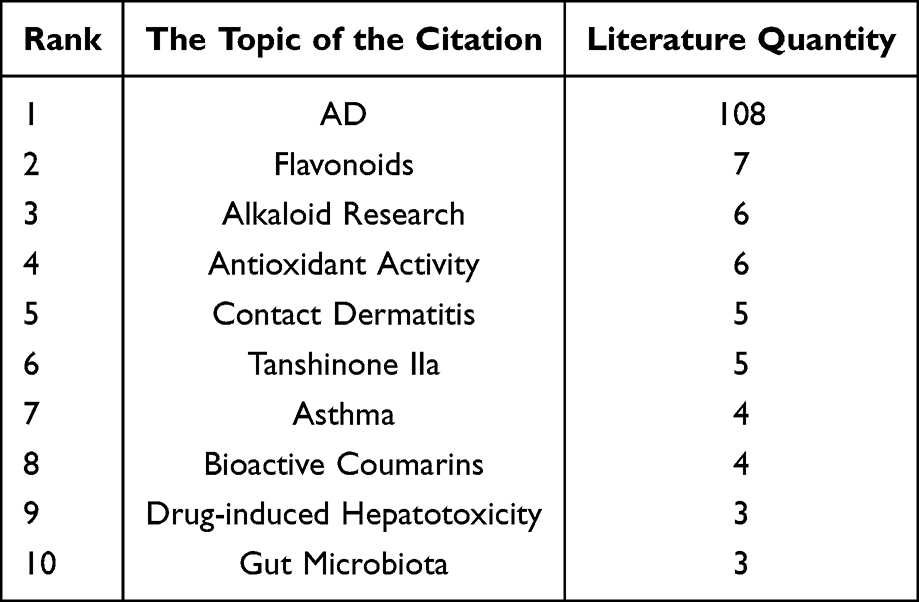 |
Table 3 Top Ten Citation Themes |
Core Disease: AD
From the bibliometric results, “AD” is the most frequently appearing and most central keyword in the field of TCM for treating eczema (appearing 81 times), holding an absolute core position in the entire knowledge network. This result suggests that current research in English-language literature on Chinese medicine for eczema primarily focuses on AD as the clinical subtype, with its research hotspots, technical paths, and development trends all related to this condition. Therefore, we have selected “AD” (AD) as the core subject of discussion to achieve a high degree of consistency between the research focus and the bibliometric findings. Current research generally considers AD as a systemic chronic inflammatory skin disease driven by genetic susceptibility,14 immune imbalance,15 and environmental factors.16 Its etiology presents a three-dimensional interactive feature of “genetics-immunity-environment”:
(1) Genetic Susceptibility: The high frequency of “Children” (17 occurrences) is highly correlated with AD’s strong genetic predisposition. Studies have shown that mutations in the filaggrin (FLG) gene17 and insufficient synthesis of ceramides in the stratum corneum18,19 are core genetic factors contributing to the high incidence of AD in children. FLG mutations result in a deficiency in filaggrin expression, directly disrupting the integrity of the skin barrier, exacerbating transepidermal water loss (TEWL), and making it easier for exogenous allergens, microorganisms, and irritants to penetrate the skin, thereby triggering or exacerbating the inflammatory response. The defect in the skin barrier is not solely the result of FLG gene mutations; insufficient ceramide synthesis in the stratum corneum is also one of the main causes of barrier dysfunction. Ceramides play a crucial role in maintaining the skin barrier and hydration. When their synthesis is insufficient, the skin’s barrier function cannot be effectively repaired, further aggravating the barrier defect and promoting allergic reactions. This also explains why the pediatric population has become a research focus in AD studies. It has also driven the research on TCM’s “barrier repair” function, such as how Cnidium monnieri has been shown to upregulate filaggrin expression,20 thereby promoting skin barrier repair and alleviating AD symptoms.
(2) Immune Dysfunction: The specific immune response triggered by allergens is considered the main factor in the immune imbalance of AD. Cluster #6 “Food Allergy” is directly related to the high-frequency term “Immune Response.” Studies have found that,21 after skin barrier damage, allergens are more easily recognized by antigen-presenting cells, which then activate adaptive immune responses, leading to an immune imbalance dominated by a Th2-type immune shift. In this process, Th2 cells secrete cytokines such as IL-4 and IL-13, which promote IgE synthesis. When IgE binds to allergens, it triggers mast cell degranulation, releasing histamine and other sensitizing substances, which in turn cause allergic symptoms such as skin redness, swelling, and itching. Furthermore, the imbalance of Th17/Treg cells is also an important part of immune dysfunction. Studies have shown that IL-17 and IL-22 secreted by Th17 cells amplify local inflammation in AD. Elevated levels of IL-17 and IL-22 not only intensify the local inflammatory response but also recruit more immune cells to the inflamed area, further aggravating the skin’s inflammation.22,23 These immune abnormalities synergistically drive the infiltration of inflammatory cells, resulting in typical clinical symptoms of AD such as skin redness, swelling, and itching. Correspondingly, research on TCM focuses on how to regulate this imbalance, such as how Sophora flavescens has been shown to regulate the Th1/Th2 balance, and Paeonia suffruticosa can inhibit mast cell activation.24 Such studies provide immunological support for the TCM effects of “dispelling wind and stopping itching” and “anti-allergy.”25
However, the role of IL-17 in AD should be interpreted cautiously. Unlike psoriasis, IL-17 does not appear to represent a uniformly dominant pathogenic axis in AD. Its involvement may be more relevant in specific phenotypes, including pediatric patients, Asian patients, and acute lesions.26 Moreover, the limited clinical efficacy of IL-17 inhibitors in AD and reports of paradoxical eczema in patients receiving IL-17 blockade for psoriasis suggest that IL-17 may also have context-dependent or counter-regulatory effects against Th2-skewed inflammation.27 Therefore, the Th17/IL-17 pathway should be regarded as a phenotype-specific and dynamically regulated mechanism rather than a universal therapeutic target in AD.
(3) Environmental Triggers: Air pollutants16 (eg, PM2.5, NO2), microbial infections28 (eg, Staphylococcus aureus), and allergens induce oxidative stress in the skin by causing excessive reactive oxygen species (ROS) production.29 This triggers local oxidative stress in the skin, activates the NF-κB inflammatory pathway, and induces the expression of pro-inflammatory factors such as TNF-αand IL-6. Oxidative stress not only directly damages the lipid structure of the stratum corneum but also exacerbates immune imbalance. The high frequency of terms such as “Oxidative Stress,” “Nf-kappa-b,” and “Antioxidant” in the keywords directly correspond to this pathological process. This explains why pharmacology and pharmacodynamics research account for the largest proportion (34.08%), as a significant amount of research is dedicated to elucidating how flavonoids and polyphenolic compounds in Chinese medicines like Scutellaria baicalensis and Sophora flavescens counteract skin damage caused by environmental pollutants and other exogenous stimuli by scavenging free radicals and inhibiting NF-κB and other inflammatory pathways.
The value of the “Core Diseases” cluster lies in identifying the core targets and pathological basis for Chinese medicine in treating eczema. As shown in Figure 10, The pathological loop of “Barrier Defect-Immune Imbalance-Oxidative Stress” in AD provides clear target guidance for subsequent TCM interventions, ensuring that research on therapeutic interventions and pharmacological mechanisms aligns precisely with clinical needs. The citation theme “AD” dominates with 108 publications, accounting for 68.4% of the total citations, further reinforcing its central role in research on TCM for treating eczema. In contrast, “Contact Dermatitis” only appears in 5 publications, aligning with the previous bibliometric analysis conclusion of “imbalanced research on eczema subtypes,” highlighting the insufficient attention currently given to non-atopic eczema subtypes and providing quantitative evidence for expanding future research directions. A notable limitation emerging from this distribution is the strong concentration of research on atopic dermatitis, which may restrict the generalizability of findings across the broader spectrum of eczema. While AD provides a well-established disease model, other clinically relevant subtypes, such as contact dermatitis and seborrheic dermatitis, remain underexplored. This imbalance suggests that current research priorities may not fully align with the diversity of clinical presentations encountered in dermatological practice. Expanding future studies to include non-AD subtypes will therefore be essential for achieving a more comprehensive and clinically applicable understanding of TCM interventions in eczema. Additionally, the appearance of “Asthma” (4 publications) in the citation themes suggests that research on the comorbid mechanisms between AD and allergic asthma has become an emerging interdisciplinary direction.
 |
Figure 10 Pathogenesis of AD. (The pathogenesis of AD involves epidermal barrier dysfunction, immune dysregulation, and environmental triggers, including FLG mutation, Th2/Th17 imbalance, and oxidative stress pathways). |
Pharmacological Effects and Mechanisms of Traditional Chinese Medicine in Treating AD
From the perspective of therapeutic interventions, this cluster is centered around core keywords such as “Traditional Chinese Medicine,” “Chinese Herbal Medicine,” and “Acupuncture,” along with related terms like “Integrated Medicine” and “Therapy,” forming a multi-dimensional intervention framework that integrates single herbs and compound. From the pharmacological mechanism research dimension, keyword co-occurrence analysis shows that “Inflammation,” “Nf-kappa-b,” “Alkaloids,” and “Flavonoids” form the core clusters of mechanism exploration in this field. Further analysis of the temporal evolution reveals that after 2021, network pharmacology (with burst strength of 2.71) and molecular docking (with burst strength of 2.17) have gained increasing adoption in recent years, potentially driving an evolution in mechanism research from the traditional “single-component, single-target” model to a “multi-component, multi-pathway” systematic analysis approach.
As illustrated in Figure 11, based on the breakthroughs in these research techniques, the core mechanisms of TCM in treating AD can be summarized into three aspects: (1)Anti-inflammatory and Immune Regulation: Studies have indicated that TCM may inhibit signal pathways such as NF-κB, MAPK, and JAK/STAT, downregulate pro-inflammatory factors like TNF-α, IL-6, IL-4, and IL-13, and restore the Th1/Th2 and Th17/Treg immune balance. Related experiments have confirmed that30 Berberine has been reported to exert anti-AD effects in the NC/Nga mouse model by downregulating inflammatory mediators, inhibiting immune responses, and reducing skin damage. (2) Skin Barrier Repair: TCM has been reported to promote the expression of key barrier-related proteins such as filaggrin and ceramides, improving skin hydration. For example, Huo Ma Ren in Chinese medicine can activate the AhR-Nrf2 signaling axis and improve mitochondrial dysfunction in keratinocytes, providing a novel pathway for barrier repair.31 (3) Antioxidant and Antibacterial Effects: For instance, Schizonepeta has antibacterial properties, inhibiting pathogenic bacteria like Staphylococcus aureus and reducing the risk of secondary infections,32 Salvia miltiorrhiza, on the other hand, can eliminate ROS and suppress oxidative stress.33
 |
Figure 11 Mechanisms of Traditional Chinese Medicine in Treating AD. (It is frequently reported that TCM exerts effects through anti-inflammatory, immune regulation, skin barrier repair, and antioxidant mechanisms via multiple signaling pathways such as NF-κB, MAPK, and JAK/STATArrows indicate upregulation (↑) or downregulation (↓).). |
These mechanisms are supported by specific active ingredients in TCM. From the component perspective, alkaloids (eg, berberine, sophoramine), flavonoids (eg, quercetin, flavonoid compounds), and phenolic compounds (eg, paeonol, oroxylin A) are the core active ingredients, accounting for 75% of component-based research. This conclusion is further supported by citation theme analysis: the citation theme “Flavonoids” appears in 7 articles, becoming the core theme in active ingredient-related research, followed closely by “Alkaloid Research,” visually confirming their central role in the field. Among these, flavonoid compounds are the most widely distributed, have low toxicity, and target multiple pathways, making them the key material basis for the synergistic effects of compound.34
Collectively, these findings highlight that TCM not only targets inflammatory pathways but also addresses key dermatological concerns such as skin barrier repair and immune homeostasis, which are central to the pathogenesis and long-term management of eczema.
Single Herb Intervention
These core active ingredients are widely found in various single Chinese herbs. Different categories of single herbs, through their targeted effects, form the basic intervention units for treating AD. Based on the research evidence from the included literature, the main active ingredients, pharmacological actions, route of administration and evidence type are summarized in Table 4. This table not only visually demonstrates the diversity and specificity of single herbs but also provides a mechanistic understanding for their application in compound (see Table 5 below). The results show that heat-clearing and damp-drying, wind-dispelling and damp-eliminating, and heat-clearing and blood-cooling herbs are the most prevalent categories, accounting for over 40% of the single herb studies. Heat-clearing and damp-drying herbs, such as Coptis chinensis and Scutellaria baicalensis, reduce inflammation and symptoms of AD by inhibiting the NF-κB pathway and modulating the immune system. Wind-dispelling and damp-eliminating herbs, like Cnidium monnieri and Tripterygium wilfordii, alleviate typical symptoms of AD, such as itching and erythema, by clearing heat, detoxifying, dispelling wind, and inhibiting inflammatory signaling pathways (eg, MAPK, JAK/STAT pathways), while regulating immune cell function. Heat-clearing and blood-cooling herbs, such as Paeonia suffruticosa and Lithospermum erythrorhizon, relieve localized redness and itching caused by AD by modulating blood circulation.
 |
Table 4 Traditional Chinese Medicine for Treating AD |
 |
Table 5 Traditional Chinese Medicine Compound |
These single herbs, with different therapeutic effects, work through multi-component and multi-target synergistic regulation, forming complementary effects in several dimensions—such as inflammation suppression, immune regulation, symptom alleviation, and barrier repair—thus providing solid pharmacological and mechanistic support for the comprehensive treatment of AD.
Compound Intervention
Compared to single herbs targeting specific pathways, Traditional Chinese Medicine compound follow the “Emperor, Minister, Assistant, and Courier” (Jun-Chen-Zuo-Shi) principle, reflecting a multi-component, multi-pathway, and multi-target synergistic system treatment strategy. This is a concentrated embodiment of the essence of TCM’s “syndrome differentiation and treatment”. This study reviews the classic formulas, empirical prescriptions, and TCM-Western medicine combined therapies reported in the literature, summarizing their composition, core pharmacological mechanisms, and corresponding indications, as shown in Table 5. For example, the PentaHerbs formula improves the quality of life of children with moderate to severe AD, reducing the use of topical steroids by more than 30%. Xiao Feng San regulates the Th1/Th2 balance, inhibits the NF-κB pathway, and suppresses the growth of pathogenic bacteria, resulting in a 40% reduction in AD recurrence compared to pure Western medical treatment, fully demonstrating the clinical advantages of compound formulas. In recent years, the application of network pharmacology and molecular docking technologies has provided new analytical tools for exploring the synergistic mechanisms of compound formulas, promoting a shift in compound research from traditional empirical descriptions to scientific mechanism analysis.
The appearance of the citation theme “Gut Microbiota” (3 articles) provides a new interpretive perspective on the mechanism of action of Traditional Chinese Medicine formulas. Combined with the research evidence from the “Qing Re Qu Shi”formula, which “regulates the gut microbiota and produces short-chain fatty acids”56 it suggests that the gut microbiota-skin inflammation axis has become an extended direction for the study of formula mechanisms. The current low number of related citations reflects that this field is still in the exploratory stage, providing new targets for future studies on the synergistic mechanisms of formulas. Additionally, “Tanshinone IIa,” as a core active ingredient in “Danshen” has been cited in research focused on anti-inflammatory effects and barrier repair, further validating the synergistic logic of single-ingredient active components in formulas.
The safety of TCM in eczema treatment also warrants careful consideration. Although TCM is often perceived as “natural”and therefore safe, certain herbal ingredients carry well-recognized toxicities. For instance, Tripterygium wilfordii has potent anti-inflammatory and immunosuppressive properties, but its clinical use is limited by adverse events involving the gastrointestinal, reproductive, hepatic, renal, hematologic, and cutaneous systems.35,68 Therefore, the long-term use of Tripterygium-containing preparations requires careful risk-benefit assessment and regular monitoring of liver and renal function.69 In addition, herb-drug interactions remain under-investigated in TCM eczema research. Although integrated Chinese and Western medicine approaches have been explored for atopic dermatitis, robust evidence regarding the safety of combined use with conventional drugs remains limited.70,71 Another important concern is the lack of standardization in many TCM formulas, which may affect reproducibility of clinical outcomes and reliability of safety assessment. Quality issues, including botanical misidentification, substitution, contamination with heavy metals or pesticides, and adulteration with undeclared pharmaceutical ingredients, have been reported in herbal medicine products.72–74 Future clinical studies should therefore incorporate rigorous safety monitoring, liver and renal function assessment, standardized adverse-event reporting, botanical authentication, and chemical standardization to ensure reproducible and safe clinical application of TCM for eczema.
Clinical Research and Methods
Clinical Efficacy Verification Stage
From 2010 to 2015, clinical research in this field was centered around randomized controlled trials (RCTs). Keywords such as “Double Blind” and “Randomized Controlled Trial” had strong burst intensities of 2.37 and 2.15, respectively, marking this period of research. Studies during this stage primarily focused on validating the clinical efficacy of Traditional Chinese Medicine single herbs and formulas for treating AD, comparing the efficacy of TCM with glucocorticoids and antihistamines. Despite promising findings, the overall level of evidence remains limited due to methodological heterogeneity. Although these studies suggested potential advantages of TCM in improving symptoms and reducing relapse, issues such as small sample sizes, short follow-up periods, and inconsistent efficacy evaluation standards resulted in low levels of evidence-based medicine for the findings.62
Precision Research Stage
After 2021, with the introduction of network pharmacology, molecular docking, and other technologies, clinical research gradually transitioned to a more precision-based approach. Research has begun to explore the integration of patient genotyping, immune markers, and other characteristics to potentially identify patient populations that may benefit most from TCM treatment, exploring the path of combining “syndrome differentiation and treatment” with precision medicine. For example, the team led by Wang75 used network pharmacology to analyze the core components and mechanisms of topical TCM. However, the quantitative results indicated that research in this stage was still primarily focused on mechanism prediction, with only a few mechanism studies proceeding to clinical validation. The efficiency of precision clinical research remained low.
This observation highlights a broader structural gap between mechanistic exploration and clinical translation. Although approaches such as network pharmacology and molecular docking provide valuable insights into multi-target interactions, they remain largely predictive and are seldom validated through rigorous in vivo studies or high-quality clinical trials. As a result, the translation of mechanistic findings into clinically actionable evidence remains limited. Bridging this gap will require integrated research frameworks that combine computational prediction, experimental validation, and standardized clinical evaluation.
Clinical Research Trend of Integrating Traditional Chinese and Western Medicine
Quantitative results show that Integrative & Complementary Medicine is the second most published discipline (32.29%), and in recent years, the co-occurrence frequency of the keyword “Integrated Medicine” has increased, indicating that the integration of Traditional Chinese Medicine and Western Medicine has become an important research trend in this field. For example, the research by the Sum team70 also supports this: Western medicine rapidly alleviates acute symptoms, while TCM reduces recurrence by regulating immunity and repairing barriers. The synergy between the two aligns with the clinical needs of individualized treatment. Therefore, the clinical validation and promotion of integrated treatment plans will become a significant research direction in this field in the future. This integrative approach aligns with the current trend in dermatology toward personalized and holistic treatment strategies, aiming not only to control symptoms but also to improve long-term disease outcomes and patient quality of life.
Challenges in Clinical Research and Future Development Directions
The findings of this study have several important implications for clinical practice. First, TCM may be considered as an adjunctive treatment option for patients with chronic or recurrent eczema, particularly those who are concerned about long-term use of corticosteroids. Second, the emphasis on skin barrier repair highlights a key therapeutic advantage of TCM, which aligns with modern dermatological treatment strategies.
Although clinical research on TCM for eczema has made some progress, it still faces multiple challenges. First, the issue of sample size persists in many small-scale clinical trials, directly affecting the generalizability and applicability of the research results.71 Second, the complexity of TCM formulas means that the specific mechanisms of action and the optimal treatment plans are not yet fully clarified. Current research mainly focuses on the active components of single herbs, with insufficient exploration of the synergistic effects and deeper mechanisms of multiple components in TCM formulas.64 In addition to the above issues, there is a significant bias in the focus on disease subtypes—many studies in English literature focus primarily on AD, while the clinical subtypes of contact dermatitis and seborrheic dermatitis receive inadequate attention. Moreover, modern technologies like network pharmacology remain at the mechanism prediction level76 and lack sufficient in vitro and in vivo experimental validation and clinical translation support, further restricting the practical application of research outcomes. Finally, the citation theme “Drug-induced Hepatotoxicity” highlights the existing limitations of clinical research: it suggests that the safety of TCM treatments (eg, hepatotoxicity and nephrotoxicity of Tripterygium wilfordii36) has received attention, but the volume of related literature is still low, reflecting a tendency in clinical research where efficacy evaluation outweighs safety monitoring.
To address the challenges mentioned above, future research should focus on the following areas: (1) Conduct multi-center clinical trials with larger sample sizes to further verify the universality and long-term efficacy of TCM for treating eczema. (2) Strengthen research on the synergistic mechanisms of TCM compound, combining network pharmacology and molecular docking techniques to explore the pathways of multiple components in TCM compound. (3) While consolidating research on AD, there is a need to gradually expand clinical and mechanism research on other common subtypes such as contact dermatitis and seborrheic dermatitis. Based on the unique pathological characteristics of these subtypes, optimize TCM intervention plans to better address the diverse clinical treatment needs.(4) Promote cross-disciplinary collaboration between pharmacology, dermatology, and other disciplines. Improve the standardized preparation processes and efficacy evaluation systems for TCM compound, while establishing international collaborative networks with core research entities in China, Korea, and the United States. This will help advance the standardization and international promotion of TCM treatment plans, fully realizing the value of TCM in the treatment of eczema.
Comparison with Contemporary Pharmacotherapies and Objective Outcome Metrics
The recent emergence of biologic therapies, particularly dupilumab, an IL-4 receptor alpha antagonist, has substantially changed the treatment landscape for moderate-to-severe atopic dermatitis. Large-scale randomized controlled trials have demonstrated that dupilumab can significantly improve validated objective and patient-reported outcomes, including EASI, SCORAD, DLQI, pruritus scores, and transepidermal water loss.77,78
In contrast, current clinical studies of TCM for eczema have used relatively heterogeneous outcome measures, including overall response rate, recurrence rate, symptom scores, SCORAD, EASI, DLQI, and investigator-assessed severity. Although several systematic reviews and meta-analyses suggest that Chinese herbal medicine or Chinese herbal baths may improve clinical symptoms and quality of life in patients with atopic dermatitis, the certainty of evidence remains limited by small sample sizes, methodological heterogeneity, short follow-up duration, and inconsistent reporting of adverse events.79,80
Therefore, direct comparison between TCM interventions and contemporary biologics should be interpreted cautiously. Unlike dupilumab, which has been evaluated using standardized endpoints in large multicenter trials, many TCM studies still lack unified outcome metrics, rigorous blinding, long-term follow-up, and standardized safety monitoring. Future clinical trials of TCM for eczema should adopt internationally recognized dermatological endpoints, such as EASI-50, EASI-75, SCORAD, DLQI/CDLQI, pruritus NRS, TEWL, recurrence rate, and corticosteroid-sparing effects, while also strengthening adverse-event reporting and herb-drug interaction assessment.
Interest is also growing in integrative strategies that combine TCM with conventional therapies. However, available evidence remains preliminary, and further multicenter randomized controlled trials are required to determine whether TCM can provide additive benefits in symptom control, barrier repair, relapse prevention, or reduction of corticosteroid exposure without increasing safety risks.70,71
Limitations
This study, through bibliometric visualization methods, systematically analyzes the current status, research hotspots, and development trends of TCM for treating eczema, providing comprehensive academic guidance for researchers and interested parties in this field. However, this study still has several limitations that need to be addressed: First, to meet the analysis requirements of the software, this study only selected literature from three databases—WOS, PubMed, and Scopus—excluding other search tools such as Google Scholar and Embase. Second, only English-language literature was included, leaving out relevant studies in other languages such as Chinese. This omission may lead to missing important findings from core research regions like China, resulting in an incomplete representation of the full research landscape. Lastly, some high-quality studies published recently were not included in the core analysis due to the short publication cycle and insufficient citation accumulation, which means their academic value and innovative significance were not fully reflected.
Conclusion
This study uses bibliometric methods to characterize the development trends and knowledge structure of English-language research on Traditional Chinese Medicine (TCM) for eczema from 2010 to 2025. The analysis demonstrates a continuous increase in publication output, a geographically concentrated research landscape dominated by East Asia, and a thematic framework covering disease focus, pharmacological mechanisms, and clinical research. A consistent finding is the central role of atopic dermatitis (AD), which dominates keyword frequency, citation themes, and research clustering. This suggests that the current evidence base is largely derived from AD, while other eczema subtypes remain underrepresented. The results also indicate growing interest in the role of TCM in integrative dermatology. However, this should be interpreted cautiously. Although mechanistic studies and small-scale clinical trials suggest potential benefits—such as anti-inflammatory effects, immune regulation, and barrier improvement—the evidence remains heterogeneous and lacks sufficient high-quality clinical validation. Therefore, TCM is more appropriately positioned as a complementary or adjunctive strategy, particularly for long-term management and steroid-sparing purposes, rather than as a broadly applicable alternative across all eczema types. Future research should prioritize multicenter trials, improved methodological standardization, broader subtype coverage, and stronger translation from mechanistic findings to clinically validated outcomes.
Publisher’s Note
All claims expressed in this article are solely those of the authors and do not necessarily represent those of their affiliated organizations, or those of the publisher, the editors and the reviewers. Any product that may be evaluated in this article, or claim that may be made by its manufacturer, is not guaranteed or endorsed by the publisher.
Abbreviations
AD, Atopic Dermatitis; AhR, Aryl Hydrocarbon Receptor; AP-1, Activator Protein 1; COX-2, Cyclooxygenase-2; DNCB, 2,4-Dinitrochlorobenzene; Der p 2, Dermatophagoides pteronyssinus Allergen 2; EASI, Eczema Area and Severity Index; EIF3F, Eukaryotic Translation Initiation Factor 3 Subunit F; ERK, Extracellular Signal-Regulated Kinase; FLG, Filaggrin; HaCaT, Human Adult Low Calcium High Temperature Keratinocyte; HO-1, Heme Oxygenase-1; IgE, Immunoglobulin E; IL, Interleukin; iNOS, Inducible Nitric Oxide Synthase; JAK, Janus Kinase; JAK/STAT, Janus Kinase/Signal Transducer and Activator of Transcription; Lyn, Lyn Tyrosine Kinase; MALT1, Mucosa-Associated Lymphoid Tissue Lymphoma Translocation Protein 1; MAPK, Mitogen-Activated Protein Kinase; M2, Macrophage M2 Subtype; MyD88, Myeloid Differentiation Primary Response 88; NF-κB, Nuclear Factor-kappa B; NLRP3, Nucleotide-Binding Oligomerization Domain-Like Receptor Pyrin Domain-Containing 3; Nrf2, Nuclear Factor Erythroid 2-Related Factor 2; PI3K-Akt, Phosphatidylinositol 3-Kinase/Protein Kinase B; RCT, Randomized Controlled Trial; ROS, Reactive Oxygen Species; SCFAs, Short-Chain Fatty Acids; STAT, Signal Transducer and Activator of Transcription; TCM, Traditional Chinese Medicine; TEWL, Transepidermal Water Loss; TLR4, Toll-Like Receptor 4; TNF-α, Tumor Necrosis Factor-α.
Data Sharing Statement
No new data were created or analyzed in this study.
Consent for Publication
All authors have read and approved the final version of the manuscript, consent to its publication in the target journal, and confirm that the content (including data, figures, tables, and conclusions) is true, accurate, and free of false information or plagiarism.
Acknowledgments
Wendong Chen and Yixuan Cai are co-first authors for this study. The figures were drawn using Citespace, VOSviewer, Origin, Biorender and Biogdp.
Author Contributions
All authors made a significant contribution to the work reported, whether that is in the conception, study design, execution, acquisition of data, analysis and interpretation, or in all these areas; took part in drafting, revising or critically reviewing the article; gave final approval of the version to be published; have agreed on the journal to which the article has been submitted; and agree to be accountable for all aspects of the work.
Funding
This work was funded by Hangzhou Biomedical and Health Industry Development Support Technology Special Project (Phase 9) (No.2023WJC127).
Disclosure
The authors declare that the research was conducted in the absence of any financial or commercial relationships that could be construed as potential conflict of interest.
References
1. Tian S, Bai M, Miao MS, Kang L. [Analysis of eczema animal model based on clinical characteristics]. Zhongguo Zhong Yao Za Zhi. 2018;43(4):853–28. Chinese. doi:10.19540/j.cnki.cjcmm.20171027.024
2. Eichenfield LF, Tom WL, Berger TG, et al. Guidelines of care for the management of atopic dermatitis: section 2. Management and treatment of atopic dermatitis with topical therapies. J Am Acad Dermatol. 2014;71(1):116–132. doi:10.1016/j.jaad.2014.03.023
3. Girolomoni G, de Bruin-Weller M, Aoki V, et al. Nomenclature and clinical phenotypes of atopic dermatitis. Therap Adv Chronic Dis. 2021;12:20406223211002979. doi:10.1177/20406223211002979
4. Novak-Bilić G, Vučić M, Japundžić I, Meštrović-štefekov J, Stanić-Duktaj S, Lugović-Mihić L. Irritant and allergic contact dermatitis - skin lesion characteristics. Acta Clin Croat. 2018;57(4):713–720. doi:10.20471/acc.2018.57.04.13
5. Lingfeng L, Yuanwen L. Chinese journal of integrated traditional and western medicine (2020). Chin J Integr Trad West Med. 2021;41(02):133–142.
6. Woolhiser E, Keime N, Patel A, Weber I, Adelman M, Dellavalle RP. Nutrition, obesity, and seborrheic dermatitis: systematic review. JMIR Dermatol. 2024;7:e50143. doi:10.2196/50143
7. Boguniewicz M. Atopic dermatitis: best of guidelines and yardstick. Allergy Asthma Proc. 2025;46(1):19–25. doi:10.2500/aap.2025.46.240087
8. Chu DK, Chu AWL, Rayner DG, et al. Topical treatments for atopic dermatitis (eczema): systematic review and network meta-analysis of randomized trials. J Allergy Clin Immunol. 2023;152(6):1493–1519. doi:10.1016/j.jaci.2023.08.030
9. Lax SJ, Van Vogt E, Candy B, et al. Topical anti-inflammatory treatments for eczema: network meta-analysis. Cochrane Database Syst Rev. 2024;8(8):Cd015064. doi:10.1002/14651858.CD015064.pub2
10. Hon KL, Leung TF, Yau HC, Chan T. Paradoxical use of oral and topical steroids in steroid-phobic patients resorting to traditional Chinese medicines. World J Pediatr. 2012;8(3):263–267. doi:10.1007/s12519-012-0369-x
11. Koo J, Arain S. Traditional Chinese medicine for the treatment of dermatologic disorders. Arch Dermatol. 1998;134(11):1388–1393. doi:10.1001/archderm.134.11.1388
12. Webster JD, Vucic D. The balance of TNF mediated pathways regulates inflammatory cell death signaling in healthy and diseased tissues. Front Cell Dev Biol. 2020;8:365. doi:10.3389/fcell.2020.00365
13. Hillmer EJ, Zhang H, Li HS, Watowich SS. STAT3 signaling in immunity. Cytokine Growth Factor Rev. 2016;31:1–15. doi:10.1016/j.cytogfr.2016.05.001
14. Palmer CN, Irvine AD, Terron-Kwiatkowski A, et al. Common loss-of-function variants of the epidermal barrier protein filaggrin are a major predisposing factor for atopic dermatitis. Nat Genet. 2006;38(4):441–446. doi:10.1038/ng1767
15. Elias PM, Steinhoff M. “Outside-to-inside” (and now back to “outside”) pathogenic mechanisms in atopic dermatitis. J Invest Dermatol. 2008;128(5):1067–1070. doi:10.1038/jid.2008.88
16. Park SK, Kim JS, Seo HM. Exposure to air pollution and incidence of atopic dermatitis in the general population: a national population-based retrospective cohort study. J Am Acad Dermatol. 2022;87(6):1321–1327. doi:10.1016/j.jaad.2021.05.061
17. Marenholz I, Rivera VA, Esparza-Gordillo J, et al. Association screening in the Epidermal Differentiation Complex (EDC) identifies an SPRR3 repeat number variant as a risk factor for eczema. J Invest Dermatol. 2011;131(8):1644–1649. doi:10.1038/jid.2011.90
18. Fujii M. The pathogenic and therapeutic implications of ceramide abnormalities in atopic dermatitis. Cells. 2021;10(9):2386. doi:10.3390/cells10092386
19. Shen CP, Zhao MT, Jia ZX, Zhang JL, Jiao L, Ma L. Skin ceramide profile in children with atopic dermatitis. Dermatitis. 2018;29(4):219–222. doi:10.1097/DER.0000000000000392
20. Zhijie Y. Study on the Pharmacodynamics and Mechanisms of Topical Use of Cnidium monnieri (L.) Cuss and its Ointment in the Treatment of Eczema. [硕士]; 2019.
21. Furue M, Chiba T, Tsuji G, et al. Atopic dermatitis: immune deviation, barrier dysfunction, IgE autoreactivity and new therapies. Allergol Int. 2017;66(3):398–403. doi:10.1016/j.alit.2016.12.002
22. Laska J, Tota M, Łacwik J, Sędek Ł, Gomułka K. IL-22 in atopic dermatitis. Cells. 2024;13(16):1398. doi:10.3390/cells13161398
23. Cho KA, Suh JW, Lee KH, Kang JL, Woo SY. IL-17 and IL-22 enhance skin inflammation by stimulating the secretion of IL-1β by keratinocytes via the ROS-NLRP3-caspase-1 pathway. Int Immunol. 2012;24(3):147–158. doi:10.1093/intimm/dxr110
24. Zhu TH, Cao SW, Yu YY. Synthesis, characterization and biological evaluation of paeonol thiosemicarbazone analogues as mushroom tyrosinase inhibitors. Int J Biol Macromol. 2013;62:589–595. doi:10.1016/j.ijbiomac.2013.09.056
25. He X, Fang J, Huang L, Wang J, Huang X. Sophora flavescens Ait.: traditional usage, phytochemistry and pharmacology of an important traditional Chinese medicine. J Ethnopharmacol. 2015;172:10–29. doi:10.1016/j.jep.2015.06.010
26. David E, Czarnowicki T. The pathogenetic role of Th17 immune response in atopic dermatitis. Curr Opin Allergy Clin Immunol. 2023;23(5):446–453. doi:10.1097/ACI.0000000000000926
27. Al-Janabi A, Alabas OA, Yiu ZZN, et al. Risk of paradoxical eczema in patients receiving biologics for psoriasis. JAMA Dermatol. 2024;160(1):71–79. doi:10.1001/jamadermatol.2023.4846
28. Edslev SM, Agner T, Andersen PS. Skin microbiome in atopic dermatitis. Acta Derm Venereol. 2020;100(12):adv00164. doi:10.2340/00015555-3514
29. He H, Zang LH, Feng YS, et al. Physalin A induces apoptosis via p53-Noxa-mediated ROS generation, and autophagy plays a protective role against apoptosis through p38-NF-κB survival pathway in A375-S2 cells. J Ethnopharmacol. 2013;148(2):544–555. doi:10.1016/j.jep.2013.04.051
30. Andoh T, Yoshihisa Y, Rehman MU, Tabuchi Y, Shimizu T. Berberine induces anti-atopic dermatitis effects through the downregulation of cutaneous EIF3F and MALT1 in NC/Nga mice with atopy-like dermatitis. Biochem Pharmacol. 2021;185:114439. doi:10.1016/j.bcp.2021.114439
31. Edamitsu T, Taguchi K, Okuyama R, Yamamoto M. AHR and NRF2 in skin homeostasis and atopic dermatitis. Antioxidants. 2022;11(2):227. doi:10.3390/antiox11020227
32. Ying-nan L, Feng-ju N, Yi-zhou X, Xin-huan W, Shi-min X, Ying-ying Y. Research progress on the chemical components, pharmacological effects and clinical applications of Schizonepeta tenuifolia. J China Pharm. 2020;31(11):1397–1402.
33. Ryu DH, Cho JY, Yu HS, et al. Salvia miltiorrhiza bunge extracts: a promising source for anti-atopic dermatitis activity. BMC Complement Med Ther. 2024;24(1):217. doi:10.1186/s12906-024-04524-z
34. Martínez G, Mijares MR, De Sanctis JB. Effects of flavonoids and its derivatives on immune cell responses. Recent Pat Inflamm Allergy Drug Discov. 2019;13(2):84–104. doi:10.2174/1872213X13666190426164124
35. Liu L, Luo Y, Zhou M, et al. Tripterygium agents for the treatment of atopic eczema: a Bayesian analysis of randomized controlled trials. Phytomedicine. 2019;59:152914. doi:10.1016/j.phymed.2019.152914
36. Li X-J, Jiang -Z-Z, Zhang L-Y. Triptolide: progress on research in pharmacodynamics and toxicology. J Ethnopharmacol. 2014;155(1):67–79. doi:10.1016/j.jep.2014.06.006
37. Wang L, Xian YF, Loo SKF, et al. Baicalin ameliorates 2,4-dinitrochlorobenzene-induced atopic dermatitis-like skin lesions in mice through modulating skin barrier function, gut microbiota and JAK/STAT pathway. Bioorg Chem. 2022;119:105538. doi:10.1016/j.bioorg.2021.105538
38. Lee J, Choi YY, Kim MH, et al. Topical application of Angelica sinensis improves pruritus and skin inflammation in mice with atopic dermatitis-like symptoms. J Med Food. 2016;19(1):98–105. doi:10.1089/jmf.2015.3489
39. Sun P, Zhao X, Zhao W, et al. Sophora flavescens-Angelica sinensis in the treatment of eczema by inhibiting TLR4/MyD88/NF-κB pathway. J Ethnopharmacol. 2024;322:117626. doi:10.1016/j.jep.2023.117626
40. Bai X, Rao X, Wang Y, Shen H, Jin X. A homogeneous Lonicera japonica polysaccharide alleviates atopic dermatitis by promoting Nrf2 activation and NLRP3 inflammasome degradation via p62. J Ethnopharmacol. 2023;309:116344. doi:10.1016/j.jep.2023.116344
41. Zhang T, Rao X, Song S, et al. WLJP-025p, a homogeneous Lonicera japonica polysaccharide, attenuates atopic dermatitis by regulating the MAPK/NFκB/AP-1 axis via Act1. Int J Biol Macromol. 2024;256(Pt 1):128435. doi:10.1016/j.ijbiomac.2023.128435
42. Lv WJ, Huang JY, Li SP, et al. Portulaca oleracea L. extracts alleviate 2,4-dinitrochlorobenzene-induced atopic dermatitis in mice. Front Nutr. 2022;9:986943. doi:10.3389/fnut.2022.986943
43. Meng Y, Liu Z, Zhai C, et al. Paeonol inhibits the development of 1‑chloro‑2,4‑dinitrobenzene‑induced atopic dermatitis via mast and T cells in BALB/c mice. Mol Med Rep. 2019;19(4):3217–3229. doi:10.3892/mmr.2019.9985
44. Yen C-Y, Chiang W-D, Liu S-Y, Yu S-J, Hsieh C-L, Andújar I. Shikonin inhibits der p 2-induced cytokine and chemokine expression in dendritic cells in patients with atopic dermatitis. Evid Based Complement Alternat Med. 2020;2020(1):9506363. doi:10.1155/2020/9506363
45. Kang KH, Lee KH, Yoon HM, Jang KJ, Song C, Kim CH. Rehmannia glutinosa pharmacopuncture solution regulates functional activation, fcεri expression, and signaling events in mast cells. J Pharmacopuncture. 2012;15(4):32–41. doi:10.3831/KPI.2012.15.015
46. Kim K, Lee D, Kim HY, et al. Anti-inflammatory effects of spirodela polyrhiza (L.) S(CHLEID). Extract on contact dermatitis in mice-its active compounds and molecular targets. Int J Mol Sci. 2023;24(17):13271.
47. Han SY, Im DS. Evodiamine alleviates 2,4-dinitro-1-chloro-benzene-induced atopic dermatitis-like symptoms in BALB/c mice. Life. 2024;14(4). doi:10.3390/life14040494
48. An EJ, Kim Y, Lee SH, Choi SH, Chung WS, Jang HJ. Ophiopogonin D ameliorates DNCB-induced atopic dermatitis-like lesions in BALB/c mice and TNF-α- inflamed HaCaT cell. Biochem Biophys Res Commun. 2020;522(1):40–46. doi:10.1016/j.bbrc.2019.10.190
49. Son Y, Yang W, Park S, et al. The anti-inflammatory and skin barrier function recovery effects of Schisandra chinensis in mice with atopic dermatitis. Medicina. 2023;59(7):1353. doi:10.3390/medicina59071353
50. Liu T, Jun-ru C, Ling-li Z, et al. Molecular mechanism of Cnidii Fructus in treatment of eczema based on networkpharmacology and molecular docking. Drugs Clinic. 2023;38(03):540–546.
51. Wang F, Liu Y, Ni F, et al. BNC1 deficiency-triggered ferroptosis through the NF2-YAP pathway induces primary ovarian insufficiency. Nat Commun. 2022;13(1):5871. doi:10.1038/s41467-022-33323-8
52. Ma T, Chai Y, Li S, et al. Efficacy and safety of Qinzhuliangxue decoction for treating atopic eczema: a randomized controlled trial. Ann Palliat Med. 2020;9(3):870–882. doi:10.21037/apm.2020.04.17
53. Chen Y, Xian Y, Lai Z, Loo S, Chan WY, Lin ZX. Anti-inflammatory and anti-allergic effects and underlying mechanisms of Huang-Lian-Jie-Du extract: implication for atopic dermatitis treatment. J Ethnopharmacol. 2016;185:41–52. doi:10.1016/j.jep.2016.03.028
54. Chan BC, Hon KL, Leung PC, et al. Traditional Chinese medicine for atopic eczema: pentaHerbs formula suppresses inflammatory mediators release from mast cells. J Ethnopharmacol. 2008;120(1):85–91. doi:10.1016/j.jep.2008.07.034
55. Hon KL, Ip M, Wong CK, Chan BCL, Leung PC, Leung TF. In vitro antimicrobial effects of a novel Pentaherbs concoction for atopic dermatitis. J DermatolTreat. 2018;29(3):235–237. doi:10.1080/09546634.2017.1395804
56. Shen F, Gao C, Wang M, et al. Therapeutic effects of the Qingre-Qushi recipe on atopic dermatitis through the regulation of gut microbiota and skin inflammation. Heliyon. 2024;10(4):e26063. doi:10.1016/j.heliyon.2024.e26063
57. Nie J, Jiang X, Wang G, et al. Yu-Ping-Feng-San alleviates inflammation in atopic dermatitis mice by TLR4/MyD88/NF-κB pathway. J Ethnopharmacol. 2024;329:118092. doi:10.1016/j.jep.2024.118092
58. Xuan M, Guo X, Li H, Xie T, Mo X, Wen Z. The Chinese herbal formula Huoxiang Zhengqi for atopic dermatitis with dampness pattern (CHARM): a study protocol for a double-blinded randomized controlled trial. Trials. 2021;22(1):67. doi:10.1186/s13063-020-05014-6
59. Lee JH, Lim JY, Jo EH, et al. Chijabyukpi-tang inhibits pro-inflammatory cytokines and chemokines via the Nrf2/HO-1 signaling pathway in TNF-α/IFN-γ-stimulated HaCaT cells and ameliorates 2,4-dinitrochlorobenzene-induced atopic dermatitis-like skin lesions in mice. Front Pharmacol. 2020;11:1018. doi:10.3389/fphar.2020.01018
60. Lin YK, Chang SH, Yang CY, See LC, Lee BH, Shih IH. Efficacy and safety of indigo naturalis ointment in Treating Atopic Dermatitis: a randomized clinical trial. J Ethnopharmacol. 2020;250:112477. doi:10.1016/j.jep.2019.112477
61. Zheng T, Fan M, Wei Y, et al. Huangbai liniment ameliorates skin inflammation in atopic dermatitis. Front Pharmacol. 2021;12:726035. doi:10.3389/fphar.2021.726035
62. Liu J, Mo X, Wu D, et al. Efficacy of a Chinese herbal medicine for the treatment of atopic dermatitis: a randomised controlled study. Complement Ther Med. 2015;23(5):644–651. doi:10.1016/j.ctim.2015.07.006
63. Wang Z, Wang -Z-Z, Geliebter J, Tiwari R, Li X-M. Traditional Chinese medicine for food allergy and eczema. Ann Allergy Asthma Immunol. 2021;126(6):639–654. doi:10.1016/j.anai.2020.12.002
64. Tan HY, Zhang AL, Xue CC, Chen D, Da Costa C, Lenon GB. Evaluation of the efficacy and safety of a Chinese herbal formula (RCM-106) for atopic dermatitis: study protocol for a randomised, double-blind, placebo-controlled trial in children. BMJ Open. 2013;3(12):e003906. doi:10.1136/bmjopen-2013-003906
65. Higaki S, Kitagawa T, Morohashi M, Yamagishi T. Efficacy of Shiunko for the treatment of atopic dermatitis. J Int Med Res. 1999;27(3):143–147. doi:10.1177/030006059902700305
66. Zeng H, Zhao B, Zhang D, et al. Viola yedoensis Makino formula alleviates DNCB-induced atopic dermatitis by activating JAK2/STAT3 signaling pathway and promoting M2 macrophages polarization. Phytomedicine. 2022;103:154228. doi:10.1016/j.phymed.2022.154228
67. Zeng B, Liu X, Zhou Y, Cui G, An L, Yang Z. Effect of a topical traditional Chinese herbal medicine on skin microbiota in mouse model of atopic dermatitis. Heliyon. 2024;10(13):e33240. doi:10.1016/j.heliyon.2024.e33240
68. Ru Y, Luo Y, Zhou Y, et al. Adverse events associated with treatment of Tripterygium wilfordii hook F: a quantitative evidence synthesis. Front Pharmacol. 2019;10:1250. doi:10.3389/fphar.2019.01250
69. Liu SH, Chuang WC, Lam W, Jiang Z, Cheng YC. Safety surveillance of traditional Chinese medicine: current and future. Drug Saf. 2015;38(2):117–128. doi:10.1007/s40264-014-0250-z
70. Sum CH, Ching J, Zhang H, et al. Integrated Chinese and western medicine interventions for atopic dermatitis: a systematic review and meta-analysis. Chin Med. 2021;16(1):101. doi:10.1186/s13020-021-00506-2
71. Cai X, Sun X, Liu L, et al. Efficacy and safety of Chinese herbal medicine for atopic dermatitis: evidence from eight high-quality randomized placebo-controlled trials. Front Pharmacol. 2022;13:927304. doi:10.3389/fphar.2022.927304
72. Ernst E. Toxic heavy metals and undeclared drugs in Asian herbal medicines. Trends Pharmacol Sci. 2002;23(3):136–139. doi:10.1016/S0165-6147(00)01972-6
73. Coghlan ML, Maker G, Crighton E, et al. Combined DNA, toxicological and heavy metal analyses provides an auditing toolkit to improve pharmacovigilance of traditional Chinese medicine (TCM). Sci Rep. 2015;5(1):17475. doi:10.1038/srep17475
74. Koh HL, Woo SO. Chinese proprietary medicine in Singapore: regulatory control of toxic heavy metals and undeclared drugs. Drug Saf. 2000;23(5):351–362. doi:10.2165/00002018-200023050-00001
75. Wang MC, Chou YT, Kao MC, Lin QY, Chang SY, Chen HY. Topical Chinese herbal medicine in treating atopic dermatitis (eczema): a systematic review and meta-analysis with core herbs exploration. J Ethnopharmacol. 2023;317:116790. doi:10.1016/j.jep.2023.116790
76. Zhang H, Li Z, Sun Y, et al. Mechanisms of action of Shizhenqing granules for eczema treatment: network pharmacology analysis and experimental validation. Heliyon. 2024;10(6):e27603. doi:10.1016/j.heliyon.2024.e27603
77. Simpson EL, Bieber T, Guttman-Yassky E, et al. Two Phase 3 trials of dupilumab versus placebo in atopic dermatitis. N Engl J Med. 2016;375(24):2335–2348. doi:10.1056/NEJMoa1610020
78. Blauvelt A, de Bruin-Weller M, Gooderham M, et al. Long-term management of moderate-to-severe atopic dermatitis with dupilumab and concomitant topical corticosteroids (LIBERTY AD CHRONOS): a 1-year, randomised, double-blinded, placebo-controlled, phase 3 trial. Lancet. 2017;389(10086):2287–2303. doi:10.1016/S0140-6736(17)31191-1
79. Gu S, Yang AW, Xue CC, et al. Chinese herbal medicine for atopic eczema. Cochrane Database Syst Rev. 2013;2013(9):Cd008642. doi:10.1002/14651858.CD008642.pub2
80. Guo Z, Li Y, Hou Y, et al. Chinese herbal bath therapy for the treatment of Atopic dermatitis in children: a meta-analysis and systematic review. Medicine. 2022;101(47):e31923. doi:10.1097/MD.0000000000031923
 © 2026 The Author(s). This work is published and licensed by Dove Medical Press Limited. The
full terms of this license are available at https://www.dovepress.com/terms
and incorporate the Creative Commons Attribution
- Non Commercial (unported, 4.0) License.
By accessing the work you hereby accept the Terms. Non-commercial uses of the work are permitted
without any further permission from Dove Medical Press Limited, provided the work is properly
attributed. For permission for commercial use of this work, please see paragraphs 4.2 and 5 of our Terms.
© 2026 The Author(s). This work is published and licensed by Dove Medical Press Limited. The
full terms of this license are available at https://www.dovepress.com/terms
and incorporate the Creative Commons Attribution
- Non Commercial (unported, 4.0) License.
By accessing the work you hereby accept the Terms. Non-commercial uses of the work are permitted
without any further permission from Dove Medical Press Limited, provided the work is properly
attributed. For permission for commercial use of this work, please see paragraphs 4.2 and 5 of our Terms.
Recommended articles

Knowledge Atlas of the Co-Occurrence of Epilepsy and Autism: A Bibliometric Analysis and Visualization Using VOSviewer and CiteSpace
Wang Y, Huo X, Li W, Xiao L, Li M, Wang C, Sun Y, Sun T
Neuropsychiatric Disease and Treatment 2022, 18:2107-2119
Published Date: 19 September 2022
Bibliometric Analysis of Research Themes and Trends of the Co-Occurrence of Autism and ADHD
Liu A, Lu Y, Gong C, Sun J, Wang B, Jiang Z
Neuropsychiatric Disease and Treatment 2023, 19:985-1002
Published Date: 24 April 2023
Hotspots and Trends in Research on Treating Pain with Electroacupuncture: A Bibliometric and Visualization Analysis from 1994 to 2022
Hu L, Yang J, Liu T, Zhang J, Huang X, Yu H
Journal of Pain Research 2023, 16:3673-3691
Published Date: 3 November 2023
Research Trend and Future Perspectives of Traditional Chinese Medicine for Atopic Dermatitis from 2004 to 2023: A Bibliometric Analysis
Feng H, Qin Y, Li Y, Li S, Zheng Y, Yan J, Xu R, Yu S, Liang R, Wang J, Zou H
Clinical, Cosmetic and Investigational Dermatology 2024, 17:2595-2613
Published Date: 21 November 2024
Global Research Status of Maca (Lepidium Meyenii Walp.): A Bibliometric Analysis of Hotspots, Bursts, and Trends
Li K, Zhao C, Dang M, Ren R, Fu M, Bai Y, Wang J, Zhang Q, Luan F
Drug Design, Development and Therapy 2025, 19:2329-2349
Published Date: 27 March 2025