
Back to Journals » International Journal of General Medicine » Volume 19
Analysis of Antimicrobial Use and Bacterial Susceptibility in Patients with Urinary Tract Infections at a Certain Hospital From 2021 to 2023: A Retrospective Cohort Study

Received 12 September 2025
Accepted for publication 25 December 2025
Published 24 February 2026 Volume 2026:19 562925
DOI https://doi.org/10.2147/IJGM.S562925
Checked for plagiarism Yes
Review by Single anonymous peer review
Peer reviewer comments 2
Editor who approved publication: Prof. Dr. Héctor Mora-Montes
Kaifei Li,1 Xiaoting Li,2 Jianhua Jiang3
1Department of Pharmacy, Sengong Hospital of Shaanxi Province, Xi’an, Shaanxi, 710300, People’s Republic of China; 2Department of Pharmacy, Xian Yang Central Hospital, Xianyang, Shaanxi, 712000, People’s Republic of China; 3Department of Neurology, Sengong Hospital of Shaanxi Province, Xi’an, Shaanxi, 710300, People’s Republic of China
Correspondence: Xiaoting Li, Department of Pharmacy, Xian Yang Central Hospital, Xianyang, Shaanxi, 712000, People’s Republic of China, Tel +86-18700061088, Email [email protected] Jianhua Jiang, Department of Neurology, Sengong Hospital of Shaanxi Province, Xi’an, Shaanxi, 710300, People’s Republic of China, Tel +86-13991875598, Email [email protected]
Objective: This study aimed to investigate the distribution of pathogens, the usage of antimicrobial agents, and the sensitivity analysis of antimicrobial agents in patients with urinary tract infections (UTIs) in a certain hospital from 2021 to 2023, so as to provide clinical evidence for the selection of antimicrobial agents in clinical patients with UTIs.
Methods: A retrospective review was conducted on medical records of patients diagnosed with UTI during 2021– 2023. Demographic characteristics (gender, age), urine sample data, pathogen distribution, and antimicrobial prescription patterns were collected. Midstream urine specimens submitted to the microbiology laboratory were processed for bacterial culture, identification, and antibiotic susceptibility testing. Differences in resistance rates to various antimicrobials were compared among pathogens from different clinical categories.
Results: From 2021 to 2023, 623 cases of positive urine culture samples were detected. Gram-negative organisms predominated (489 isolates), particularly Escherichia coli (E. coli, 61.80%, 385 isolates). Gram-positive isolates were mainly Enterococcus faecalis (6.10%, 38 isolates) and Enterococcus faecium (E. faecalis, 4.01%, 25 isolates). Gender distribution revealed that E. coli was more frequent in females (69.87%), while other principal pathogens were more common in males. Age analysis showed higher prevalence in females at young and middle age, whereas elderly males predominated (68.60%). Susceptibility testing indicated marked interspecies differences: E. coli showed 81.56% resistance to ampicillin; Proteus mirabilis exhibited 72.73% resistance to levofloxacin; E. faecalis demonstrated 94.74% resistance to tetracycline. Conversely, cefotaxime/clavulanic acid and vancomycin retained good activity against most isolates.
Conclusion: From 2021 to 2023, E. coli was the leading UTI pathogen. There were significant differences in the susceptibility of various pathogens to antimicrobial agents. It is necessary to regularly monitor the distribution of pathogens causing UTIs and their sensitivity to antimicrobial agents to provide a scientific reference for the rational use of antimicrobial agents during treatment.
Keywords: urinary tract infection, pathogen distribution, antibacterial agents, drug susceptibility
Introduction
Urinary tract infections (UTIs) are among the most common bacterial infections worldwide, displaying marked variability in etiology, clinical presentation, and severity. They range from mild conditions such as urethritis and cystitis to severe, potentially life-threatening complications including pyelonephritis, bacteremia, and septic shock. The causative pathogens differ across time periods and geographic regions.1 However, Gram-negative bacteria—particularly Escherichia coli (E. coli), Klebsiella pneumoniae (K. pneumoniae), and Proteus mirabilis (P. mirabilis)—remain dominant, alongside Gram-positive species such as Enterococcus faecalis (E. faecalis) and Staphylococcus saprophyticus (S. saprophyticus). E. coli is consistently identified as the leading etiological agent across all UTI categories.2 Common symptoms include urinary frequency, urgency, and dysuria, while severe infections may result in permanent renal damage.3 Epidemiologically, the global burden of UTIs has risen sharply. From 1990 to 2021, incident cases increased by 66.45%, reaching 4.49 billion, with an age-standardized incidence rate of 5,531.88 per 100,000. Women and elderly men are disproportionately affected, and substantial differences exist across geographic regions, age groups, and socioeconomic strata.4 This growing burden underscores the importance of effective clinical management and evidence-based public health strategies.
Antimicrobial agents have consistently served as the primary treatment for UTI. The therapeutic decisions regarding antibiotic selection, route of administration, and treatment duration are guided by several factors: the patient’s individual risk profile, the anatomical site of infection (whether lower or upper tract), and their hemodynamic stability. These decisions are then refined with the results of microbiological culture and susceptibility testing.5 International guidelines recommend nitrofurantoin, trimethoprim-sulfamethoxazole, fosfomycin, pivmecillinam, fluoroquinolones, and β-lactams.6 However, recurrent and chronic infections are common, often requiring repeated antibiotic courses.7 In many low- and middle-income settings, limited laboratory capacity for pathogen identification and susceptibility testing, coupled with inappropriate antimicrobial use, accelerates resistance development.8,9 Antimicrobial resistance (AMR) among uropathogens is an escalating global threat. Extended-spectrum β-lactamase (ESBL)-producing Enterobacteriaceae hydrolyze broad-spectrum β-lactams, conferring resistance to penicillins and cephalosporins, leaving carbapenems as the last viable option. The prevalence of these multidrug-resistant strains is rising worldwide.10,11 Resistance mechanisms—including β-lactamase production, efflux pumps, biofilm formation, horizontal gene transfer, and immune evasion—enable bacterial persistence despite treatment.12 As a result, therapeutic efficacy is diminished, and the widespread annual use of antibiotics further drives resistance selection.13
Despite the global recognition of AMR as a public health crisis, recent region-specific data on UTI pathogen distribution, antimicrobial use patterns, and resistance profiles—particularly at the hospital level in China—remain scarce. Existing studies are often constrained to single time points, specific pathogens, or limited antibiotic classes, leaving important gaps in understanding temporal trends and the relationship between prescribing practices and resistance development. Based on the aforementioned background, we hypothesize that significant changes have occurred in the resistance patterns of major pathogens among UTI cases in the hospital from 2021 to 2023, and that these changes are associated with the patterns of clinical antimicrobial use. To verify this hypothesis, this study aims to achieve the following specific objectives through a retrospective cohort analysis: (1) to clarify the distribution and evolutionary trends of major pathogens during this period; (2) to analyze the patterns of clinical antimicrobial use; (3) to evaluate the antimicrobial susceptibility profiles and resistance rates of major pathogens and compare their differences among key populations. We aim to provide empirical evidence for optimizing the clinical application and management strategies of antimicrobials in our hospital.
Materials and Methods
Ethics Statement
The research obtained the approval from the Ethic Committee of Xian Yang Central Hospital . All participants provided written informed consent prior to enrollment. This study was conducted in accordance with the ethical principles outlined in the Declaration of Helsinki.
Study Design and Study Subjects
This study adopted a retrospective cohort study design and retrospectively analyzed the clinical data of 623 patients with UTIs (who underwent urine culture and had positive results) hospitalized in the Pharmacy department of Xian Yang Central Hospital from January 1, 2021, to December 31, 2023.
Inclusion and Exclusion Criteria
Case selection criteria strictly followed the internationally recognized diagnostic guidelines14 Eligible patients were required to meet all of the following: (1) age ≥ 18 years; (2) a confirmed clinical diagnosis of UTI, characterized by classic bladder irritation symptoms such as frequency, urgency, and dysuria, with or without fever or flank pain; (3) urinalysis revealing > 10 white blood cells per high-power field; (4) midstream urine culture yielding ≥ 10^5 CFU/mL; and (5) availability of complete medical records. Exclusion criteria comprised: (1) pregnancy or lactation; (2) coexisting severe hepatic or renal dysfunction (Child-Pugh class C or eGFR < 30 mL/min/1.73 m2); (3) asymptomatic bacteriuria associated with an indwelling catheter; (4) concurrent active infection in another organ system; and (5) absence of more than 20% of essential clinical data in the medical record.
Urine Sample Collection
For all subjects, the first clean mid-stream urine sample in the morning was collected before the use of antimicrobial agents and placed in a sterile cup. Before collection, all patients were required to clean their external genitalia as instructed. Female patients should avoid the menstrual period to prevent contamination of the urine sample. The collected urine specimens should be immediately sent to the clinical laboratory for testing and inoculated onto the culture medium using a sterile inoculating loop (10 μL) within 2 hours.15
Pathogen Culture and Identification, and Antimicrobial Susceptibility Testing
Pathogen culture, isolation and identification were performed in strict accordance with the laboratory’s standard operating procedures and established guidelines for bacterial and fungal diagnostics.15 Urine samples were inoculated onto Columbia blood agar plates and MacConkey agar plates, respectively, and incubated at 35°C for 18–24 hours (if there was no bacterial growth after 18–24 hours, the incubation time was extended to 48 hours). Meanwhile, the size and shape of the colonies were observed. If only a single bacterial colony with a concentration reaching 105 CFU/mL was detected in the urine sample, it was considered as a pathogen, and further identification and drug susceptibility testing were carried out. Additionally, findings involving more than three pathogens were also disregarded. Bacterial identification of suspicious colonies was conducted using a German Siemens fully automatic identification instrument and its accompanying reagents (for fungal identification, instruments and reagents provided by bioMérieux, France, were utilized). Drug sensitivity response cards (VITEK 2 XL® BioMérieux) in conjunction with the Kirby-Bauer disk diffusion method were employed to evaluate the antimicrobial susceptibility of the organisms. These data were interpreted based on the CLSI 2020 criteria (Clinical and Laboratory Standards Institute). The quality control strains, including E. coli ATCC 25922, Pseudomonas aeruginosa (P. aeruginosa) ATCC 27853, Staphylococcus aureus ATCC 25923 and ATCC 29213, E. faecalis ATCC 29912, and K. pneumoniae ATCC 700324, were all procured from the Clinical Laboratory Center of the National Health Commission.
Data Collection
Patient data were retrieved from the hospital’s electronic medical records, laboratory information system, and antimicrobial resistance surveillance platform. Collected variables included demographic characteristics (age, gender, comorbidities), and microbiological findings (urine culture results, pathogen identification reports, and antimicrobial susceptibility profiles).
Statistical Analysis
Statistical analysis was performed using SPSS 25.0 software (Chicago, Illinois, USA). Categorical data such as patient characteristics (gender, age, comorbidities) were expressed as constituent ratios or rates (%). The drug resistance of different pathogens to antimicrobial agents was expressed as percentages. The susceptibility test findings were examined using WHONET 5.6 software (WHO, Geneva, Switzerland). GraphPad Prism 9 software (La Jolla, California, USA) was used for plotting, and the chi-square test was used for comparison between groups. The significance level of each statistical test was set as P < 0.05.
Results
Analysis of Baseline Data
Between 2021 and 2023, a total of 623 strains of pathogenic bacteria were isolated from 2021 to 2023 (the pathogens tested positive in microbial growth tests, with a significant pathogen count > 1.0×10⁵ CFU/mL). Baseline demographic and clinical characteristics of the corresponding patients were analyzed. Females accounted for 365 cases (58.59%), slightly exceeding the proportion of males (258 cases, 41.41%). The majority of infections occurred in middle-aged and older adults, with 176 cases (28.25%) aged 41–60 years, 314 cases (50.40%) aged > 60 years, and 125 cases (20.06%) aged 21–40 years; only 8 cases (1.28%) involved individuals aged 18–20 years. Regarding comorbidities, the largest subgroup had no significant underlying disease (n = 241, 38.68%), followed by diabetes mellitus (n = 176, 28.25%), urolithiasis (n = 149, 23.92%), and benign prostatic hyperplasia (n = 57, 9.15%) (Table 1).
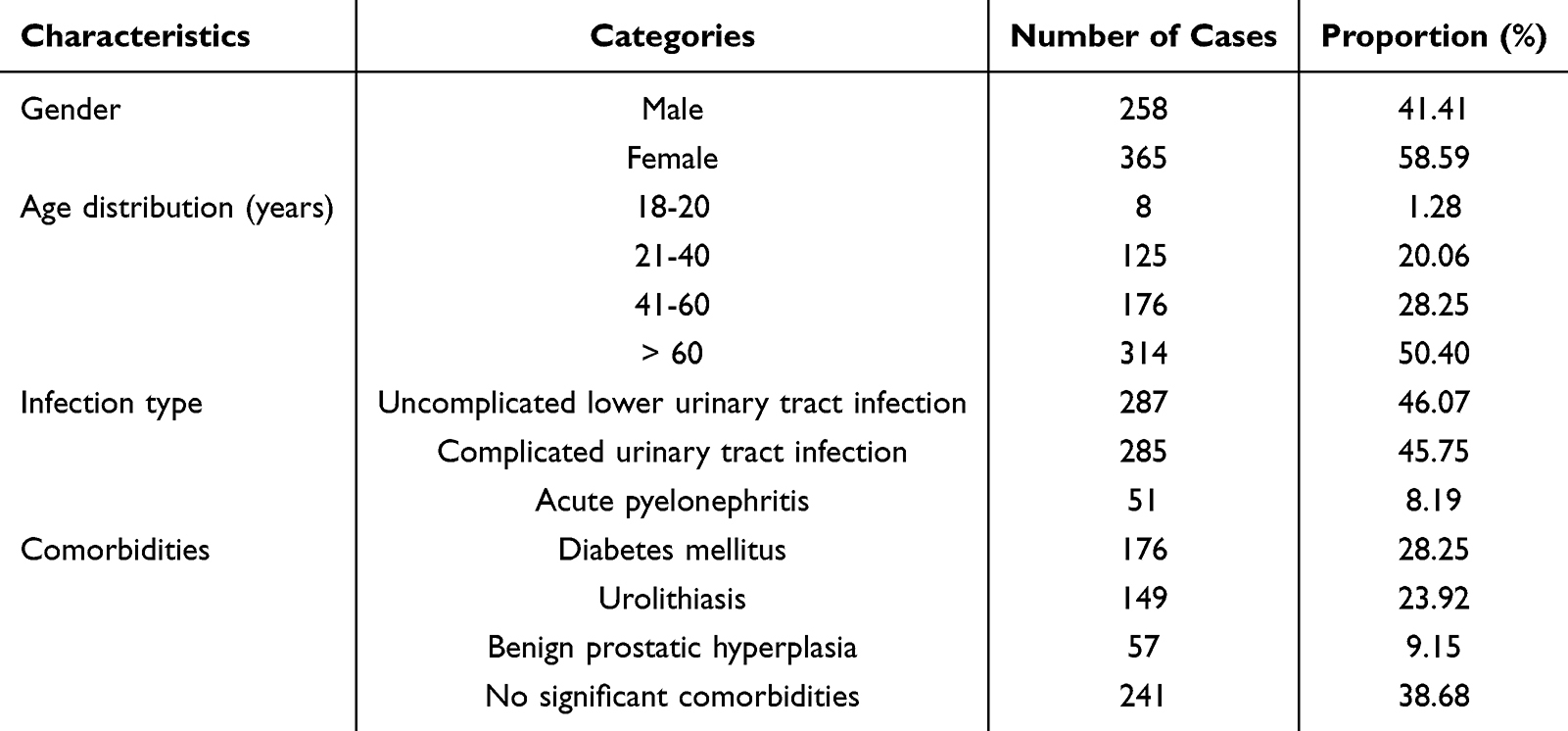 |
Table 1 Baseline Data of the Subjects |
Distribution of Major Bacteria
Among UTI cases, Gram-negative bacteria predominated, accounting for 491 isolates. E. coli was the leading pathogen (n = 385, 61.80%), followed by K. pneumoniae (n = 54, 8.67%), P. mirabilis (n = 22, 3.53%), and P. aeruginosa (n = 22, 3.53%); other Gram-negative species each represented <1% of isolates. Gram-positive bacteria comprised 79 isolates, mainly E. faecalis (n = 38, 6.10%) and Enterococcus faecium (E. faecalis) (n = 25, 4.01%). Fungal pathogens totaled 28 isolates, primarily Candida albicans (C. albicans) (n = 25, 4.01%). An additional 25 isolates (0.40%) were classified as other pathogens (Table 2 and Figure 1).
 |
Table 2 Distribution of Pathogens in Patients with UTI |
 |
Figure 1 Distribution of pathogens isolated from urine cultures of patients with urinary tract infections in our hospital from 2021 to 2023. |
Gender Distribution Characteristics of Pathogenic Bacteria Causing UTIs
There were differences in the distribution of major pathogens causing UTIs between different genders. A total of 385 strains of E. coli were isolated, including 116 strains (30.13%) from males and 269 strains (69.87%) from females. The number of female patients infected with E. coli was higher than that of males (P < 0.05). However, except for E. coli, the number of male patients with other major pathogens (such as K. pneumoniae, P. aeruginosa, E. faecalis, C. albicans, etc.) was higher than that of females (P < 0.05) (Table 3 and Figure 2).
 |
Table 3 Gender Distribution Characteristics of Pathogens Causing UTI |
 |
Figure 2 Gender distribution characteristics of pathogens in patients with urinary tract infections in our hospital from 2021 to 2023. |
Distribution Characteristics of the Incidence of UTIs Among Different Genders and Age Groups
The data from this study show that the incidence of UTIs increases with age. In the 18–20-year age group, incidence was similar between genders, with 2 male cases (0.76%) and 6 female cases (1.64%). There was no significant difference in the incidence of UTIs between different genders in this age group (P > 0.05). However, in the 21–40, 41–60, and > 60 age groups, the differences in the incidence of UTIs between different genders were statistically significant (P < 0.05). For ages 21–40 and 41–60, incidence was higher in females (26.03% and 34.79%, respectively) than in males (11.63% and 18.99%, respectively). In contrast, for patients >60 years, males exhibited a markedly higher incidence (68.60%) compared with females (37.53%) (Table 4 and Figure 3).
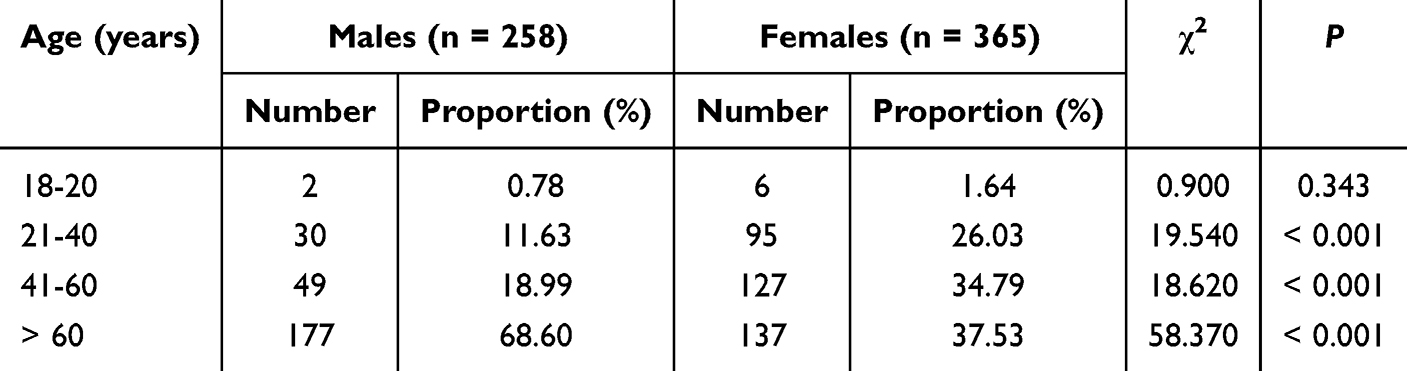 |
Table 4 Distribution Characteristics of UTI Incidence in Different Genders and Age Groups |
 |
Figure 3 Distribution characteristics of the incidence of urinary tract infections among different genders and age groups. |
Susceptibility Analysis of Common Pathogens in Patients with UTIs to Antimicrobial Agents
Among Gram-negative bacteria, E. coli exhibited very high resistance to ampicillin (81.56%), with notable resistance rates to ceftriaxone (48.83%) and cefuroxime (47.79%). Resistance to cefotaxime/clavulanate and meropenem was negligible, at 0.00% and 0.08%, respectively. K. pneumoniae showed the highest resistance to trimethoprim-sulfamethoxazole (44.44%) and moderate resistance to cefepime (31.48%) and ciprofloxacin (35.19%), while resistance to cefoxitin, ceftriaxone, and several other agents remained low (all ≤3.70%). P. mirabilis displayed high resistance to levofloxacin (72.73%) and ampicillin (50.00%), but no resistance (0.00%) to piperacillin/tazobactam or meropenem. P. aeruginosa maintained low resistance rates overall, with slightly higher resistance to ciprofloxacin (18.18%) and ceftazidime (18.18%), and complete susceptibility (0.00%) to cefuroxime and trimethoprim-sulfamethoxazole (Table 5).
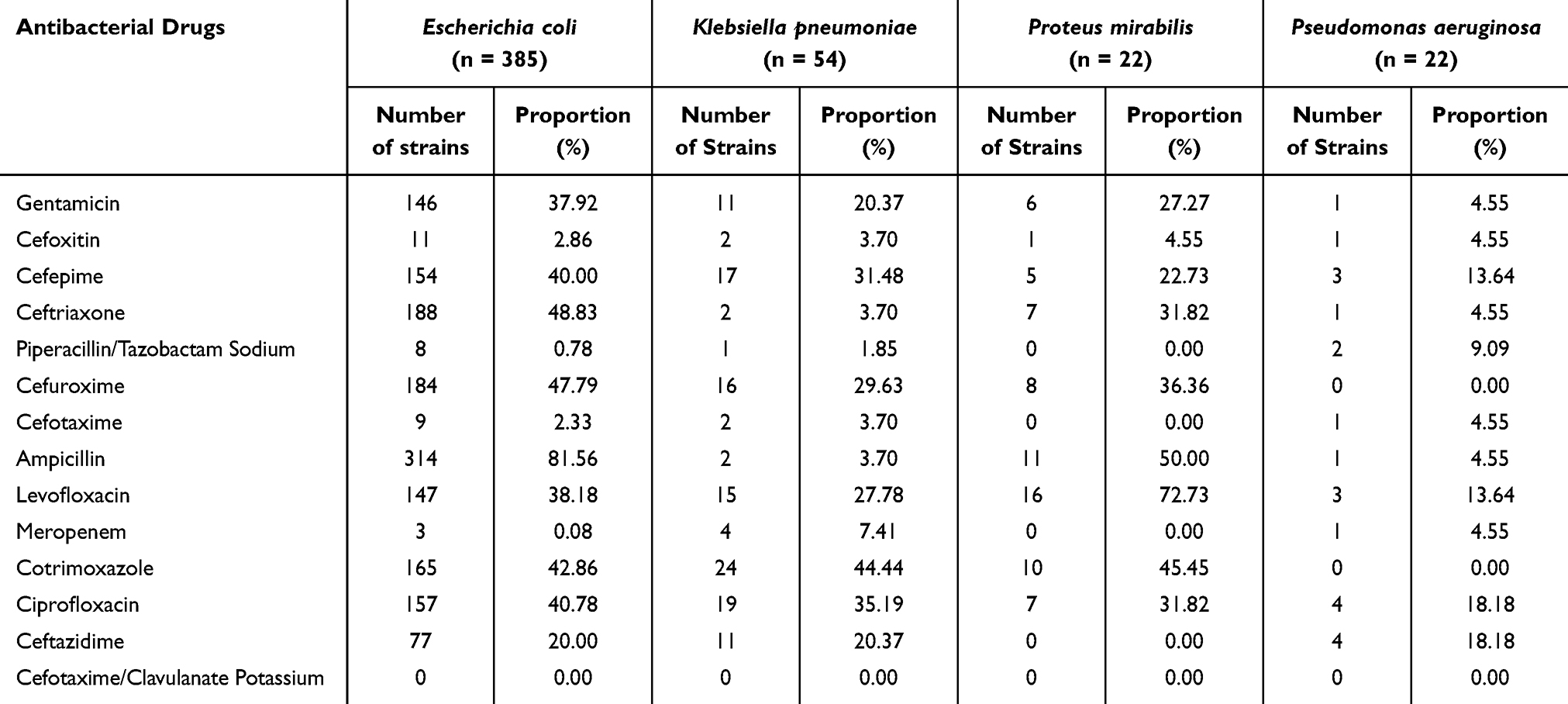 |
Table 5 Drug Resistance Rates of Major Gram-Negative Bacteria to Common Antibacterial Drugs (%) |
Among Gram-positive bacteria, E. faecalis demonstrated extremely high resistance to tetracycline (94.74%) and moderate resistance to levofloxacin (34.21%), rifampin (34.21%), and ciprofloxacin (39.47%), while showing complete susceptibility (0.00%) to vancomycin, ampicillin, and penicillin. E. faecalis exhibited markedly high resistance to ampicillin (68.00%), penicillin (60.00%), levofloxacin (72.00%), tetracycline (64.00%), and ciprofloxacin (64.00%), with lower resistance to nitrofurantoin (20.00%), minocycline (32.00%), and rifampin (24.00%), and full susceptibility (0.00%) to vancomycin, linezolid, and teicoplanin (Table 6).
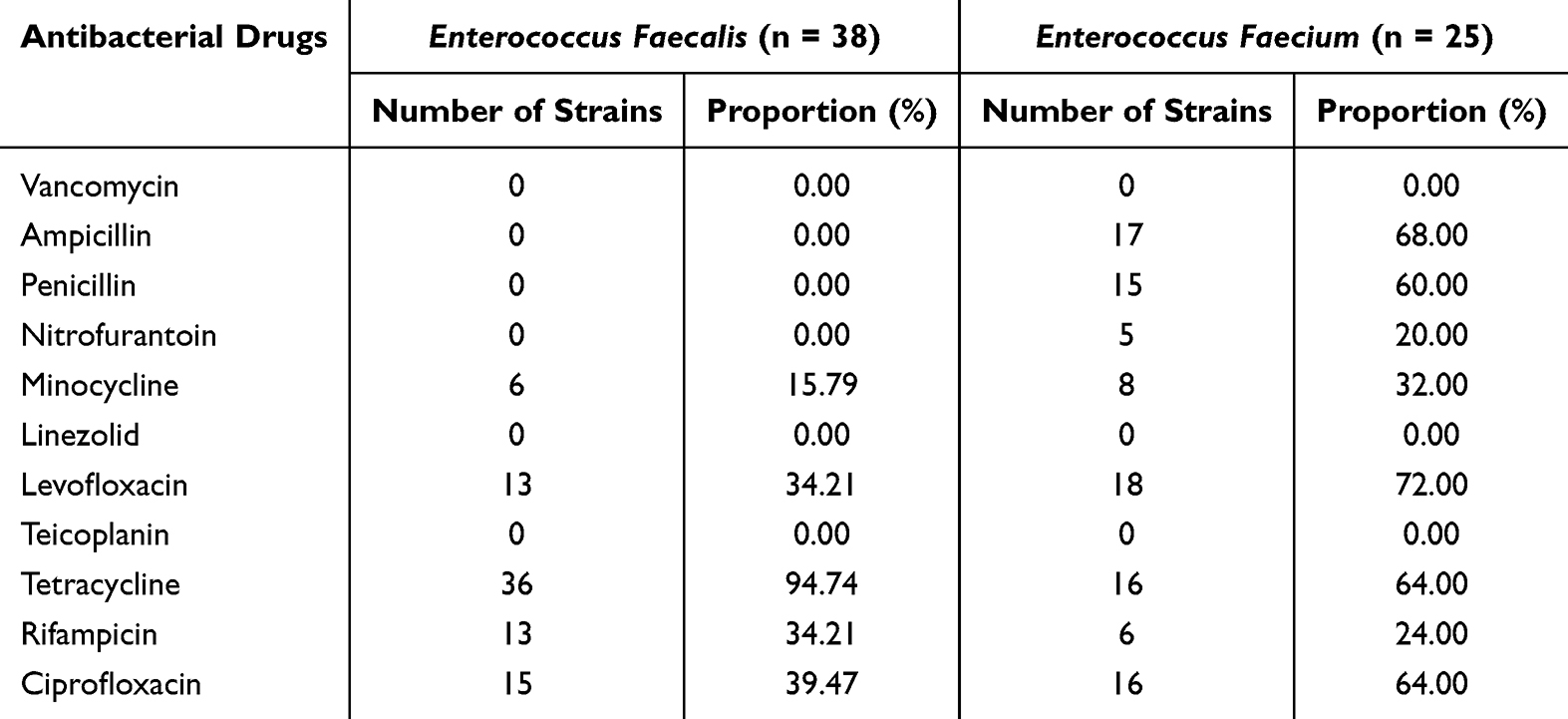 |
Table 6 Drug Resistance Rates of Major Gram-Positive Bacteria to Common Antibacterial Drugs (%) |
Discussion
This study retrospectively analyzed the etiological distribution, antimicrobial use, and antimicrobial susceptibility data of 623 patients with UTIs in our hospital from 2021 to 2023. The results showed that the predominant pathogens causing UTIs in our hospital during 2021–2023 were Gram-negative bacteria, primarily E. coli, with significant variations in antimicrobial susceptibility among different pathogens.
A total of 623 urine culture-positive samples were included in this study, revealing that Gram-negative bacteria were the predominant pathogens, consistent with the general understanding that Gram-negative bacilli are the main pathogens of UTIs,16–18 confirming the dominant role of Gram-negative bacteria in the etiology of UTIs. Among them, E. coli (accounting for 61.80%) was the most prevalent isolate. Benjamin et al reported that uropathogenic E. coli accounts for approximately 80% of community-acquired UTIs in healthy populations.19 Based on this, the importance of E. coli as a core pathogen of UTIs is highlighted.
In terms of population distribution, the distribution of major pathogens causing UTIs varied among different genders. This study found that, except for E. coli, other major pathogens (such as K. pneumoniae, E. faecalis, and E. faecalis) were more prevalent in male patients. This finding aligns with known epidemiological characteristics, indicating that the pathogen spectrum of UTIs in males, especially those with prostate diseases or indwelling urinary catheters, tends to be more diverse and more likely to include Gram-positive bacteria such as Enterococcus.20,21 As reported in studies, the pathogenic microorganisms causing UTIs in males are more diverse than those observed in females, with E. coli being clearly dominant. Their urinary pathogens exhibit greater diversity, including other Enterobacteriaceae (K. pneumoniae, P. mirabilis), E. faecalis, and P. aeruginosa.21,22
Regarding age distribution, the data showed that the incidence rate was higher among young and middle-aged women, while the proportion of male patients significantly increased to 68.60% in the elderly group (as suggested by the data in this study, >65 years old). This confirms that elderly males are a high-risk group for complicated UTIs.20,23 This shift in older men may be linked to benign prostatic hyperplasia, incomplete bladder emptying, recurrent catheterization, and higher rates of asymptomatic bacteriuria.1,24 Therefore, these findings emphasize the necessity of targeted prevention strategies, such as hygiene education for young women; prevention, etiological monitoring, and initial treatment plans for UTIs in elderly males should differ from those for other populations. Ferdous et al reported that UTIs are most common in women aged 16–35, with up to 10% of women experiencing an infection each year and 40–60% of women being infected at some point in their lives.23 Additionally, their data also revealed a sudden increase in infection rates among males aged 50–70, possibly because this is typically the age when the male prostate begins to grow. After the age of 70, the infection rate in males gradually decreases but remains higher than that in females.23
Antimicrobial susceptibility testing revealed high resistance rates of E. coli to ampicillin, ceftriaxone, and cefuroxime, and of K. pneumoniae to cotrimoxazole. Both species are known to harbor extended-spectrum β-lactamases (ESBLs), limiting the efficacy of β-lactam agents.25 Conversely, low resistance rates to cefotaxime/clavulanate potassium and meropenem in E. coli, and to piperacillin/tazobactam and meropenem in K. pneumoniae, suggest these agents remain viable options for empirical therapy in severe infections. Among Gram-positive isolates, E. faecalis exhibited high tetracycline resistance (94.74%) but remained fully susceptible to vancomycin and penicillin, supporting their continued use as first-line agents. E. faecium showed high resistance to multiple drugs but preserved susceptibility to vancomycin and linezolid. These resistance patterns highlight the importance of antimicrobial stewardship, particularly in limiting unnecessary use of ampicillin, tetracyclines, and fluoroquinolones. Furthermore, prophylactic systemic antibiotics for catheterized patients should be avoided unless clinically indicated, as this practice is a known driver of resistance.25 According to existing research data, E. coli exhibits high resistance rates to amoxicillin and ciprofloxacin but low resistance rates to nitrofurantoin; P. mirabilis shows high resistance rates to trimethoprim/sulfamethoxazole.21,26 In comparison, the resistance spectrum of pathogens causing UTIs in our hospital exhibits distinct localized characteristics. These differences may reflect specific antimicrobial prescribing habits in our region (such as the historical intensity of fluoroquinolone and tetracycline use). The data from this study clearly indicate that ampicillin, levofloxacin, and tetracycline should no longer be considered as empirical treatment options for related UTIs in our hospital. Secondly, this study also confirms that drugs such as cefotaxime/clavulanic acid and vancomycin maintain good activity against most pathogens, providing reliable last-line options for treating multidrug-resistant infections.
This study has several limitations. First, it was conducted in a single hospital, which may limit generalizability to other regions or healthcare settings with different patient populations and antimicrobial prescribing patterns. Second, as a retrospective analysis, it relied on the completeness and accuracy of electronic medical records; missing data, including detailed prior antibiotic exposure history, could have biased susceptibility interpretations. Third, the study did not assess clinical outcomes or treatment effectiveness, preventing correlation between in vitro susceptibility and patient recovery. Finally, molecular characterization of resistance mechanisms (eg, ESBL or carbapenemase genes) was not performed, which could provide deeper insights into resistance epidemiology. To address the aforementioned limitations, it is recommended to conduct multicenter prospective studies in the future to systematically collect complete clinical, microbiological, and pharmacological data to establish more precise localized treatment and resistance early warning models. Simultaneously, conducting molecular epidemiological studies to track the spread of highly resistant clones will provide scientific evidence for controlling the diffusion of resistant bacteria at the source.
Conclusion
In conclusion, this study systematically depicted the pathogen distribution landscape and resistance status of UTIs in our hospital from 2021 to 2023, revealing severe challenges represented by ampicillin resistance and localized resistance patterns. The study results emphasize that continuous local-based microbiological monitoring, formulation of individualized empirical treatment plans, and implementation of strict antimicrobial stewardship are key measures to address antimicrobial resistance in UTIs and improve patient outcomes. Based on the aforementioned results, we propose the following specific recommendations: Empirical treatment: It is recommended to update the diagnosis and treatment pathway for UTIs in our hospital and exclude ampicillin from the empirical medication regimen. For suspected complicated infections or elderly male patients, initial treatment should prioritize coverage of Enterococcus and exercise caution in the use of fluoroquinolones. Antimicrobial stewardship: The hospital’s antimicrobial stewardship team should focus on and restrict the unindicated use of ampicillin, levofloxacin, and tetracycline in UTIs. It is recommended to regularly publish the pathogen resistance spectrum based on our hospital’s data and embed it into the electronic medical record system to provide real-time decision support for clinicians.
Ethical Statement
The research obtained the approval from the Ethic Committee of Xian Yang Central Hospital . The subjects participating in the study signed the written informed consent form.
Consent to Participate
Informed consent was obtained from all individual participants included in the study.
Consent for Publication
Patients signed informed consent regarding publishing their data and photographs.
Funding
The work was not funded by any funding.
Disclosure
The authors declared that they have no conflicts of interest regarding this work.
References
1. Yang X, Chen H, Zheng Y, Qu S, Wang H, Yi F. Disease burden and long-term trends of urinary tract infections: a worldwide report. Front Public Health. 2022;10:888205. doi:10.3389/fpubh.2022.888205
2. Zhou Y, Zhou Z, Zheng L, et al. Urinary tract infections caused by uropathogenic Escherichia coli: mechanisms of infection and treatment options. Int J Mol Sci. 2023;24(13).
3. Han Z, Yi X, Li J, Liao D, Ai J. Nonantibiotic prophylaxis for urinary tract infections: a network meta-analysis of randomized controlled trials. Infection. 2025;53(2):535–11. doi:10.1007/s15010-024-02357-z
4. He Y, Zhao J, Wang L, et al. Epidemiological trends and predictions of urinary tract infections in the global burden of disease study 2021. Sci Rep. 2025;15(1):4702. doi:10.1038/s41598-025-89240-5
5. Ross J, Hickling D. Medical Treatment for urinary tract infections. Urol Clin North Am. 2022;49(2):283–297. doi:10.1016/j.ucl.2021.12.004
6. Jalil MB, Atbee MYNA. The prevalence of multiple drug resistance Escherichia coli and Klebsiella pneumoniae isolated from patients with urinary tract infections. J Clin Lab Anal. 2022;36(9):e24619. doi:10.1002/jcla.24619
7. Stracy M, Snitser O, Yelin I, et al. Minimizing treatment-induced emergence of antibiotic resistance in bacterial infections. Science. 2022;375(6583):889–894. doi:10.1126/science.abg9868
8. Kasew D, Desalegn B, Aynalem M, et al. Antimicrobial resistance trend of bacterial uropathogens at the university of Gondar comprehensive specialized hospital, northwest Ethiopia: a 10 years retrospective study. PLoS One. 2022;17(4):e0266878. doi:10.1371/journal.pone.0266878
9. Mekonnen S, Tesfa T, Shume T, Tebeje F, Urgesa K, Weldegebreal F. Bacterial profile, their antibiotic susceptibility pattern, and associated factors of urinary tract infections in children at Hiwot Fana Specialized University Hospital, Eastern Ethiopia. PLoS One. 2023;18(4):e0283637. doi:10.1371/journal.pone.0283637
10. Zhou YL, Long BL, Liu HL, Wu J, Xia H. Risk factors and drug resistance of adult community-onset urinary tract infections caused by Escherichia coli-producing extended-spectrum beta-lactamase in the Chongqing region, China: a retrospective case-control study. BMJ Open. 2024;14(10):e090665. doi:10.1136/bmjopen-2024-090665
11. Adamus-Bialek W, Baraniak A, Wawszczak M, et al. The genetic background of antibiotic resistance among clinical uropathogenic Escherichia coli strains. Mol Biol Rep. 2018;45(5):1055–1065. doi:10.1007/s11033-018-4254-0
12. Bhuiya S, Kaushik S, Logheeswaran J, et al. Emergence of recurrent urinary tract infection: dissecting the mechanism of antimicrobial resistance, host-pathogen interaction, and hormonal imbalance. Microb Pathog. 2025;206:107698. doi:10.1016/j.micpath.2025.107698
13. Timm MR, Russell SK, Hultgren SJ. Urinary tract infections: pathogenesis, host susceptibility and emerging therapeutics. Nat Rev Microbiol. 2025;23(2):72–86. doi:10.1038/s41579-024-01092-4
14. Wagenlehner FME, Johansen TEB, Cai T, et al. Epidemiology, definition and treatment of complicated urinary tract infections. Nat Rev Urol. 2020;17(10):586–600. doi:10.1038/s41585-020-0362-4
15. Niu X, Hou B, Yang L, et al. Patterns of Drug resistance and bacterial pathogen distribution in patients with urinary tract infections in the jiaxing region from 2020 to 2022. Infect Drug Resist. 2023;16:5911–5921. doi:10.2147/IDR.S424158
16. Maeda M, Sunaga T, Sato MT, Hasegawa T, Noma H, Ota E. Efficacy of carbapenems and alternative antimicrobials for treating complicated urinary tract infections caused by third-generation cephalosporin-resistant gram-negative bacteria: a systematic review and meta-analysis of randomised controlled trials. J Infect Chemother. 2024;30(11):1147–1155. doi:10.1016/j.jiac.2024.05.001
17. Giuliano G, Hankache G, Sambo M, et al. Urinary tract infections caused by Gram-negative bacteria in elderly hospitalized patients: epidemiology, clinical features and outcomes in the era of antimicrobial resistance. J Glob Antimicrob Resist. 2025;44:116–126. doi:10.1016/j.jgar.2025.06.006
18. Dudzik L, Krzyzek P, Dworniczek E. A review on the current and future state of urinary tract infection diagnostics. Int J Mol Sci. 2025;26(22):10847. doi:10.3390/ijms262210847
19. Murray BO, Flores C, Williams C, et al. Recurrent urinary tract infection: a mystery in search of better model systems. Front Cell Infect Microbiol. 2021;11:691210. doi:10.3389/fcimb.2021.691210
20. Yajun L, Xuan Z, Juan T, et al. Risk factors for catheter-associated urinary tract infection in an intensive care unit: a matched case-control study. BMC Infect Dis. 2025;25(1):617. doi:10.1186/s12879-025-10839-0
21. Reissier S, Penven M, Amara M, et al. Bacterial epidemiology and antibiotic resistance rates in male urinary tract infections in France, 2019-2023. Infect Dis Now. 2025;55(7):105123. doi:10.1016/j.idnow.2025.105123
22. Drekonja DM. Urinary tract infection in male patients: challenges in management. Infect Dis Clin North Am. 2024;38(2):311–323. doi:10.1016/j.idc.2024.03.009
23. Jahan F, Anwer M. Nature of antimicrobial resistance of pathogens causing urinary tract infection in Bangladesh: age and gender profiles. Microbiol Spectr. 2025;13(6):e0228724. doi:10.1128/spectrum.02287-24
24. Zeng G, Zhu W, Lam W, Bayramgil A. Treatment of urinary tract infections in the old and fragile. World J Urol. 2020;38(11):2709–2720. doi:10.1007/s00345-020-03159-2
25. Vachvanichsanong P, McNeil EB, Dissaneewate P. Extended-spectrum beta-lactamase Escherichia coli and Klebsiella pneumoniae urinary tract infections. Epidemiol Infect. 2020;149:e12. doi:10.1017/S0950268820003015
26. Ku JH, Tartof SY, Contreras R, et al. Antibiotic resistance of urinary tract infection recurrences in a large integrated us healthcare system. J Infect Dis. 2024;230(6):e1344–e1354. doi:10.1093/infdis/jiae233
 © 2026 The Author(s). This work is published and licensed by Dove Medical Press Limited. The
full terms of this license are available at https://www.dovepress.com/terms
and incorporate the Creative Commons Attribution
- Non Commercial (unported, 4.0) License.
By accessing the work you hereby accept the Terms. Non-commercial uses of the work are permitted
without any further permission from Dove Medical Press Limited, provided the work is properly
attributed. For permission for commercial use of this work, please see paragraphs 4.2 and 5 of our Terms.
© 2026 The Author(s). This work is published and licensed by Dove Medical Press Limited. The
full terms of this license are available at https://www.dovepress.com/terms
and incorporate the Creative Commons Attribution
- Non Commercial (unported, 4.0) License.
By accessing the work you hereby accept the Terms. Non-commercial uses of the work are permitted
without any further permission from Dove Medical Press Limited, provided the work is properly
attributed. For permission for commercial use of this work, please see paragraphs 4.2 and 5 of our Terms.
Recommended articles
Drug Resistance Patterns and Pathogen Distribution in Patients with Urinary Tract Infection in Suzhou, China: A Five-Year Retrospective Study (2020–2024)
Gao J, Wu F, Zhang Y, Wu J, Li W, Su N, Wang Y
Infection and Drug Resistance 2026, 19:554982
Published Date: 29 January 2026