
Back to Journals » Drug Design, Development and Therapy » Volume 20
Advances in Yupingfeng San Research: Multi-Target Mechanisms and Clinical Evidence
Authors Gao S, Wang Y, Li X, Zheng L, Zhan Z, Wang J
Received 15 February 2026
Accepted for publication 6 May 2026
Published 18 May 2026 Volume 2026:20 603491
DOI https://doi.org/10.2147/DDDT.S603491
Checked for plagiarism Yes
Review by Single anonymous peer review
Peer reviewer comments 2
Editor who approved publication: Prof. Dr. Tin Wui Wong
Shiyu Gao,1 Yanfang Wang,2 Xiaoya Li,1 Lin Zheng,1 Zhaoshuang Zhan,1 Jiafeng Wang1
1College of Chinese Medicine, Shandong University of Traditional Chinese Medicine, Ji’nan, 250355, People’s Republic of China; 2School of Medicine, Shandong University of Traditional Chinese Medicine, Jinan, 250355, People’s Republic of China
Correspondence: Jiafeng Wang, Email [email protected] Zhaoshuang Zhan, Email [email protected]
Abstract: This review systematically summarizes the chemical composition, mechanisms of action, and recent progress in research and clinical applications of Yupingfeng San (YPFS) in various diseases. Research indicates that YPFS contains abundant active constituents-such as flavonoids, coumarins, and terpenoids, and demonstrates diverse biological activities,including immune modulation, anti-inflammatory, antiviral, antibacterial, and antitumor activities. Recent pharmacological and network pharmacology studies have elucidated that YPFS regulates key signaling pathways - such as PI3K-Akt, NF-κB, TLR4/MyD88, and JAK-STAT - through multi-target and multi-pathway mechanisms. These effects contribute to its therapeutic role in allergic rhinitis (AR), asthma, atopic dermatitis (AD), liver cancer, lung cancer, and other conditions. Although limited clinical trials and meta-analyses suggest that YPFS, when combined with conventional therapies, can improve treatment efficacy, relieve symptoms, and demonstrate good safety and tolerability, current research is constrained by low evidence quality and the absence of standardized quality control measures. Future research should prioritize large-scale, multi-center clinical trials and integrate multi-omics approaches to identify the main active components and mechanisms of action. The infographic illustrates the composition and effects of Yupingfeng san. At the top, three plants are shown: Astragalus mongholicus Bunge, Atractylodes macrocephala Koidz and Saposhnikovia divaricata, which contribute to its composition. A central box labeled ’Yupingfeng san’ connects to ’Chemical component’ and ’Network pharmacology’. The chemical component is depicted with a molecular structure. Network pharmacology is linked to signaling pathways such as PI3K-Akt, NF-kappa B, TLR4/MyD88 and JAK-STAT. Below, a ’Multi-target mechanism’ is shown, highlighting antiviral, antibacterial, anti-allergic and anti-inflammatory properties, contributing to immune regulation. On the right, treatments for allergic rhinitis, allergic asthma, skin diseases, antitumor and antiviral and antibacterial effects are listed, with corresponding illustrations of affected individuals.Infographic on Yupingfeng san’s composition, mechanisms and treatments for various diseases.
Keywords: Yupingfeng San, component identification, mechanism of action, clinical application, immune regulation, multiple targets
Introduction
Yupingfeng San (YPFS) is a classical traditional Chinese herbal formula (TCM prescription),1 composed of Astragalus mongholicus Bunge (Huang Qi) (http://mpns.kew.org/January 22, 2026), Atractylodes macrocephala Koidz. (Baizhu) (http://mpns.kew.org/January 22, 2026), and Saposhnikovia divaricata (Turcz. ex Ledeb). Schischk (FangFeng) (http://mpns.kew.org/January 22, 2026).2 The earliest extant record of this formula is documented in Dan xi Xin Fa, a medical text attributed to Zhu Zhenheng of the Yuan Dynasty.3 Traditionally, YPFS has been used to treat asthenia of the superficies accompanied by spontaneous sweating.4 It is recognized for reinforce upright qi, strengthening the body’s foundation, replenishing qi, and tonifying the middle. Traditionally, YPFS is widely used to enhance the body’s resistance to external pathogens.5 In modern clinical practice, it has been extensively applied to prevent respiratory infections, reduce allergic conditions, and lower the recurrence of chronic diseases (eg.,allergic rhinitis, Atopic dermatitis).6–8 The 2025 edition of the Chinese Pharmacopoeia lists four YPFS formulations: granules, oral liquid, tea bags, and capsules. These provide versatile options for diverse populations in both foundational and interventional treatments.
To ensure the quality, consistency, and therapeutic reliability of these modern formulations, and to elucidate their pharmacologically active basis, advances in phytochemical analysis and quality control have facilitated the development of standardized YPFS preparations. These preparations are increasingly utilized in pharmacological and clinical studies, thereby enhancing reproducibility and scientific rigor. They have been widely used to treat respiratory diseases, including AR and recurrent respiratory infections, primarily by exerting effects through multi-target immunomodulation and by enhancing of airway barrier function.9–12 To ensure consistency, integrated approaches such as UPLC-Q-TOF/MS, network pharmacology, and chemometric analysis are employed to characterize key bioactive components (eg., astragaloside IV, atractylenolides, and prim-O-glucosylcimifugin) and to identify quality markers.10,13
In recent years, research on YPFS has shifted from empirical application toward mechanistic and evidence-based investigation. Recent studies have successfully isolated and identified key active constituents, such as flavonoids, saponins.14 Utilizing network pharmacology and omics approaches, researchers has been demonstrated that these compounds act “multi-component-multi-target-multi-pathway” characteristics. Foundational studies have revealed that YPFS possesses significant pharmacological activities, particularly in immune regulation, anti-inflammatory, anti-allergy, and anti-tumor effects, mediated through several key signaling pathways.15 Furthermore, both animal and cellular experiments support its therapeutic potential by enhancing epithelial barrier function and regulating cytokine expression. As the pharmacological effects of YPFS are elucidated and its mechanisms explored, research and clinical applications have expanded to include respiratory diseases, skin allergic disorders, and oncology.
However, despite the increasing number of studies, current evidence on YPFS remains fragmented and lacks systematic integration. Pharmacological mechanisms, molecular targets, and clinical outcomes are often reported independently, making it difficult to form a comprehensive understanding of their therapeutic value. Furthermore, variations in study design and methodological quality limit the comparability and translational applicability of existing findings. Therefore, a comprehensive and systematic review is urgently needed to integrate current knowledge and provide a clearer framework for future research.
This article aims to provide systematic review of YPFS, focusing on its pharmacological activities, underlying mechanisms, and clinical applications. By elucidating its modern scientific foundation, we seek to offer a theoretical framework and reference for the rational application in the treatment of allergic diseases, chronic inflammatory conditions, and as an adjunct in cancer therapy.
Composition and Characteristics of YPFS
YPFS is an ancient classical formula composed of three herbs—Astragalus mongholicus Bunge, Atractylodes macrocephala Koidz., and Saposhnikovia divaricata (Turcz. ex Ledeb). Schischk—in a weight ratio of 3:1:1.16 Astragalus mongholicus Bunge, a leguminous herb widely distributed across the temperate and arid regions of Asia, Europe, and North America. Its primary bioactive constituents include polysaccharides, saponins, flavonoids, amino acids, and trace elements, which confer pharmacological properties such as qi tonification, exterior consolidation, immune enhancement, and antioxidant effects.17 Historically, Astragalus mongholicus Bunge was first documented in the Compendium of Materia Medica during the Han Dynasty’s, where it was described as a key herb for tonifying spleen and lung qi, consolidating the exterior, and arresting perspiration.18 Atractylodes macrocephala Koidz., belonging to the Asteraceae family and mainly distributed in China and Southeast Asia, is rich in polysaccharides, sesquiterpenes, sterols, amino acids, and trace elements. These components contribute to its therapeutic effects, including invigorating the spleen and replenishing qi, promoting water metabolism and eliminating dampness, and enhancing disease resistance.19 Within YPFS, it works synergistically with Astragalus mongholicus Bunge to strengthen qi tonification and exterior consolidation, thereby reinforcing bodily defenses while preventing both perspiration leakage and external pathogenic invasion. Saposhnikovia divaricata (Turcz. ex Ledeb). Schischk, a member of the Apiaceae family extensively distributed across Northeast Asia. Its primary constituents include coumarins and various other compounds, which exhibit anti-inflammatory, analgesic, antioxidant, anti-proliferative, anti-tumor, and immunomodulatory properties.20 The medicinal characteristics of Saposhnikovia divaricata (Turcz. ex Ledeb). Schischk are described as pungent, sweet, and slightly warm, facilitating the expulsion of wind-evil from the exterior, alleviating spontaneous sweating due to exterior deficiency, and enhancing the effects of “solidifying the exterior and expelling pathogens” when used in conjunction with Astragalus mongholicus Bunge and Atractylodes macrocephala Koidz. As illustrated in Figure 1, YPFS represents the integration of these three traditional Chinese herbal components.
 |
Figure 1 Extraction and composition of the main components of Yupingfeng Powder. |
Pharmacological Basis and Component Research
Active Fraction Appraisal
The formulations of YPFS are relatively consistent, comprising a wide spectrum of chemical constituents. With the development of advanced analytical techniques characterized by high selectivity and sensitivity-such as Solid Phase Extraction-High Performance Liquid Chromatography -Mass Spectrometry (SPE-HPLC-MS), Random Amplified Polymorphic DNA (RAPD) analysis, and metabolomics-its chemical profile has been increasingly clarified. To date, a total of 112 compounds have been isolated and identified, including xanthones, coumarins, flavonoids, sesquiterpenes, and triterpenes.13,21–32 The major components identified in YPFS are summarized in eTable 1 and illustrated in Figurse 2–10.
 |
Figure 2 The Chemical Constituents of YPFS (1–15). The corresponding names of each compound are as follows: 1 Baicalein. 2 Wogonin. 3 Baicalin. 4 Quercetin dihydrate. 5 Isorhamnetin. 6 Rhamnocitrin. 7 Apigenin. 8 Thamnosmonin. 9 Quercetin. 10 Kaempferol. 11 Daidzein. 12 Genistein. 13 3-Hydroxy-9,10-dimethoxypterocarpan. 14 (6aR,11aR)-9,10-Dimethoxypterocarpan-3-O-β-D-glucoside. 15 Calycosin. |
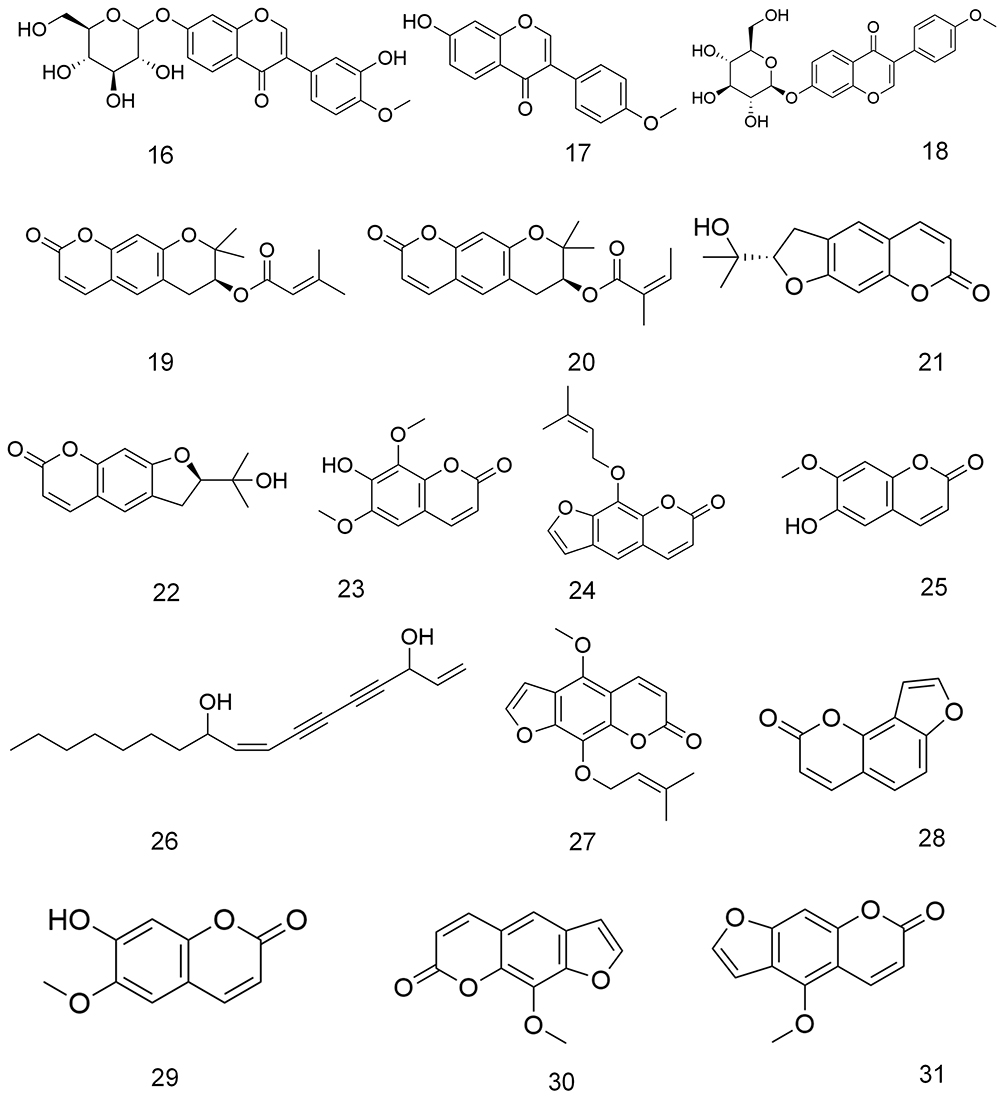 |
Figure 3 The Chemical Constituents of YPFS (16–31). The corresponding names of each compound are as follows: 16 Calycosin-7-glucoside. 17 Formononetin. 18 Ononin. 19 Decursin. 20 Decursinol angelate. 21 Marmesinin. 22 Nodakenitin. 23 Isofraxidin. 24 Imperatorin. 25 Isoscopoletin. 26 Seselidiol. 27 Phellopterin. 28 Isopsoralen. 29 Scopoletin. 30 8-Methoxypsoralen. 31 Bergapten. |
 |
Figure 4 The Chemical Constituents of YPFS (32–41). The corresponding names of each compound are as follows: 32 Deltoin. 33 Ledebouriellol. 34 Psoralen. 35 Sec-o-glucosylhamaudol. 36 Graveolone. 37 β-Sitosterol. 38 Astragaloside VII. 39 Isoastragaloside I. 40 Isoastragaloside II. 41 Isoastragaloside IV. |
 |
Figure 5 The Chemical Constituents of YPFS (42–47). The corresponding names of each compound are as follows: 42 Soyasaponin. 43 Acetylastragaloside I. 44 Soyasaponin Bd. 45 Cycloastragenol. 46 Astragaloside I. 47 Astragaloside II. |
 |
Figure 6 The Chemical Constituents of YPFS (48–59). The corresponding names of each compound are as follows: 48 Astragaloside III. 49 Astragaloside IV. 50β-Amyrin. 51 Lupeol. 52 Erythrodiol 3-acetate. 53 Norcimifugin. 54 Hamaudol. 55 3-O-Acetylhamaudol. 56 3′-O-Angeloylhamaudol. 57 Divaricataester B. 58 Cimicifugaside. 59 4-O-β-glucopyranosyl-5-O-methylvisamminol. |
 |
Figure 7 The Chemical Constituents of YPFS (60–75). The corresponding names of each compound are as follows: 60 4-O-β-D-Glucosyl-5-O-methylvisamminol. 61 5-O-Methylvisamminol. 62 Cimifugin. 63 prim-O-Glucosylcimifugin. 64 4′-O-Glucopyranosyl-5-O-methylvisamminol. 65 4-Isopropylbenzaldehyde. 66 Benzaldehyde. 67 Naphthalene. 68 Atractylodin. 69 Acetophenone. 70 Neochlorogenic acid. 71 Divaricatol. 72 cis-p-Coumaric acid. 73 alpha-Asarone. 74 3,5-Dimethoxystilbene. 75 Neocnidilide. |
 |
Figure 8 The Chemical Constituents of YPFS (76–90). The corresponding names of each compound are as follows: 76 (+)-beta-Sesquiphellandrene. 77 beta-Selinene. 78 Cuparene. 79 (-)-alpha-Curcumene. 80 Atractylon. 81 Atractylenolide. 82 Atractylenolide II. 83 Atractylenolide III. 84 Selina-4(14),7(11)-dien-8-one. 85 alpha-Cuparenol. 86 Vanillic acid. 87 Cryptochlorogenic acid. 88 Chlorogenic acid. 89 Cynarin. 90 Isochlorogenic acid A. |
 |
Figure 9 The Chemical Constituents of YPFS (91–101). The corresponding names of each compound are as follows: 91 Isochlorogenic acid B. 92 Isochlorogenic acid C. 93 Palmitic acid. 94 Pentadecanoic acid. 95 Myristic acid. 96 Linoleic acid. 97 13-Hydroxy-9,11-octadecadienoic acid. 98 Sucrose. 99 Dauricine. 100 Capsaicin. 101 Betaine. |
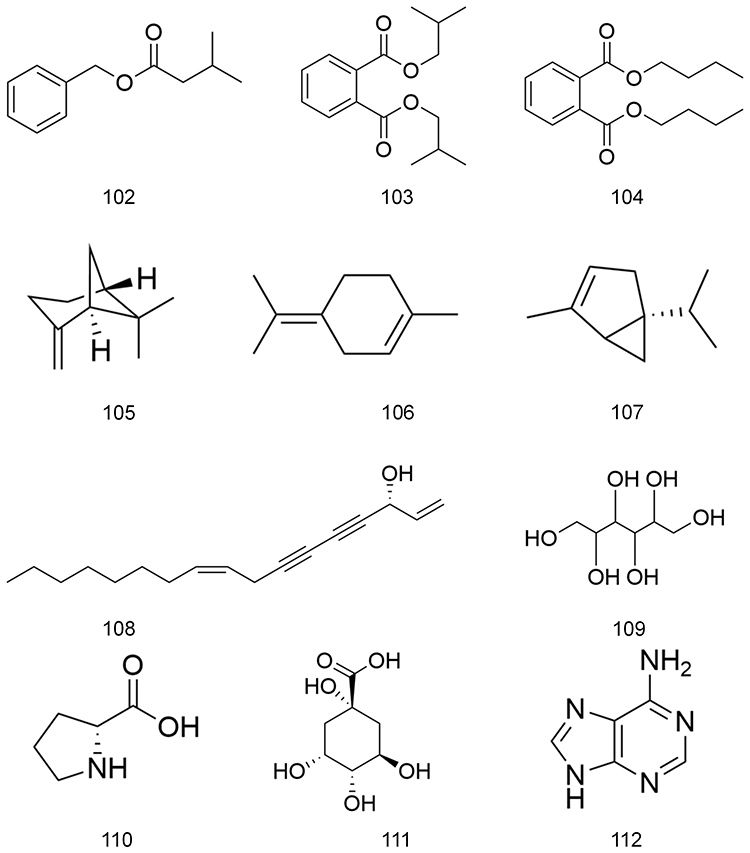 |
Figure 10 The Chemical Constituents of YPFS (102–112). The corresponding names of each compound are as follows: 102 Benzylisovalerate. 103 Diisobutyl phthalate. 104 Dibutylphthalate. 105 beta-Pinene. 106 Terpinolene. 107 (+)-alpha-Thujene. 108 Panaxynol. 109 D-Mannitol. 110 Proline. 111 Quinic acid. 112 Adenine. |
Network Pharmacology Prediction
Network pharmacology integrates systems biology and computational science to construct comprehensive “disease-drug-target-pathway” network. This approach facilitates the exploration of the mechanisms underlying multi-component, multi-target, and multi-pathway drugs from a holistic, dynamic perspective, consistent with the principles of syndrome differentiation and treatment in traditional Chinese medicine. It effectively predicts active components and key targets, elucidates the relationships between formulas and syndromes, and reveals intervention patterns, thereby providing guidance for precise formula design and clinical application. In a study by Yang,10 network pharmacology analysis demonstrates that the core targets of YPFS in treating AR are critical immune regulatory factors, such as MAPK1 and RELA, and to identify 20 significant pathways, notably immune-inflammatory networks such as AGE-RAGE, PI3K-Akt, and TNF-α. Wang33 further identified AKT1, JUN, and TNF as potential core targets, suggesting that YPFS may exert therapeutic effects by modulating Toll-like receptor, IL-17, and AGE–RAGE signaling pathways. Collectively, these findings indicate that YPFS alleviating AR by suppresses inflammatory infiltration in nasal mucosal cells and rebalances aberrant immune responses.
Network pharmacology has highlighted the multi-target interventions of YPFS in dermatological treatments. Zhong34 reported that YPFS exerts anti-inflammatory and immunomodulatory effects in chronic eczema through the AGE–RAGE, TNF, and IL-17 pathways. Zhang35 demonstrated that YPFS inhibits the TNF, IL-17, and PI3K-Akt pathways, thereby reducing inflammation and keratinocyte proliferation in AD. Shen36 and Chen37 also discovered that YPFS alleviates itching and wheal formation in chronic urticaria by inhibiting mast cell activation through the AGE-RAGE and PI3K-Akt pathways. Nie’s research combined network pharmacology with GEO database analysis, suggesting that YPFS may treat AD by inhibiting the TLR4/MyD88/NF-κB pathway, offering new insights for AD intervention.38
In oncology, Jin’s39 network prediction analysis revealed that the potential YPFS targets in hepatocellular carcinoma is linked to the positive regulation of nuclear transcription, RNA polymerase II promoter transcription, the MAPK cascade, and steroid hormone receptor activity. Further research by Hu40 and Zhao41 suggests that YPFS may influence biological processes, including tumor-associated angiogenesis and cell proliferation, by modulating multiple signaling pathways such as AGE-RAGE, IL-17, TNF, and MAPK. Moreover, drug-target molecule docking studies demonstrated favorable binding activity, providing a theoretical foundation for future experimental investigations. Recent studies have further shown that traditional Chinese medicine formula Shi wei Qing wen(SWQ), a derivative of Yupingfeng San, can inhibit early-stage lung cancer progression by suppressing the activation of the TLR4/NF-κB and NLRP3 inflammasomes.42
Network pharmacology has become a key approach for elucidating the complex mechanisms of YPFS. It enables the identification of potential targets and signaling pathways across a range of diseases, including respiratory disorders, dermatological conditions, and neoplasms. It also offers a theoretical foundation for precise formulation, targeted optimization, and clinical redevelopment. Nonetheless, most current studies remain limited to predictive analyses and molecular docking, with only minimal validation of core targets in vitro or in vivo. Additionally, the more systematic integration of the synergistic effects among multiple components still requires further experimental and detailed mechanistic elucidation.
Synergistic Mechanisms Underlying the Principal Components of YPFS
Key Components and Pharmacological Actions of Astragalus Mongholicus
As the “monarch” herb in YPFS, Astragalus mongholicus contains a range of bioactive constituents, including flavonoids (eg., calycosin and formononetin), triterpenoid saponins (eg., astragaloside IV), and polysaccharides, all of which play central roles in immunomodulation.43,44 At the cellular level, Astragalus polysaccharides markedly enhance macrophage phagocytic activity and promote dendritic cell maturation, thereby strengthening both innate and adaptive immune responses, particularly T cell–mediated antitumor immunity.45 Mechanistically, Astragalus has been shown, at least in part, to restore CD4⁺ T cell proliferation and immune function by interacting with TLR4 on regulatory T cells, while facilitating a shift from Th2- to Th1-dominant immune responses.46
At the molecular level, Astragalus exerts anti-inflammatory effects by inhibiting activation of the NF-κB signaling pathway and downregulating proinflammatory cytokines such as IL-6 and TNF-α.47,48 In parallel, it modulates the JAK/STAT pathway to regulate immune signal transduction.49 Furthermore, network pharmacology integrated with animal studies has suggested that Astragalus polysaccharides may target the PI3K/AKT pathway, contributing to therapeutic effects in allergic asthma.50 Its antioxidant properties also mitigate oxidative stress within inflammatory microenvironments.48 Collectively, Astragalus serves as the principal agent in YPFS, exerting foundational effects in “tonifying qi, consolidating the exterior,” and enhancing immune function, thereby acting as a core regulator of the immune microenvironment.
Key Components and Pharmacological Actions of Atractylodes Macrocephala
Atractylodes macrocephala, the “minister” herb in YPFS, is rich in sesquiterpenoids (eg., atractylenolides I, II, and III) and polysaccharides, which contribute substantially to its immunomodulatory and anti-inflammatory properties.51 Contemporary studies indicate that Atractylodes not only enhances gastrointestinal function and improves nutritional status,52–54 but also suppresses inflammatory responses via modulation of the TLR4/MyD88/NF-κB signaling axis, thereby reducing the release of proinflammatory cytokines such as IL-1β, IL-4, IL-6, and TNF-α.55,56
In addition, Atractylodes polysaccharides play a critical role in maintaining intestinal barrier integrity by upregulating tight junction proteins (eg., ZO-1 and occludin), limiting endotoxin translocation, and consequently attenuating systemic inflammation.57,58 Emerging evidence further demonstrates that novel water-soluble polysaccharides isolated from Atractylodes can modulate gut microbiota composition, thereby influencing immune homeostasis in murine models.59 Notably, purified inulin-type polysaccharides from Atractylodes have been shown to promote butyrate production via microbiota regulation, restoring both intestinal and blood–brain barrier function, suppressing peripheral and central inflammation, and inhibiting the hippocampal TLR4/MyD88/NF-κB pathway, ultimately ameliorating microgravity-induced cognitive impairment.60
Taken together, Atractylodes primarily functions to “strengthen the spleen and replenish qi” within YPFS, contributing to the maintenance of internal homeostasis and providing essential support for systemic immune stability.
Key Components and Pharmacological Actions of Saposhnikovia Divaricata
Saposhnikovia divaricata, the “assistant” herb in YPFS, contains major active constituents such as coumarins (eg., cimicifugin and prim-O-glucosylcimifugin) and chromones, which exhibit pronounced anti-inflammatory, anti-allergic, and immunomodulatory effects.61 Studies have shown that Saposhnikovia significantly suppresses Th2-associated cytokines, including TSLP, IL-4, IL-5, and IL-13, thereby playing a crucial role in allergic conditions such as asthma and allergic rhinitis.62–64
At the signaling level, its pharmacological actions are primarily mediated through modulation of TNF-, MAPK-, NF-κB-, and TSLP-related pathways, effectively attenuating inflammatory cascades.62,65,66 Moreover, Saposhnikovia inhibits mast cell degranulation via the MAPK and PI3K/AKT/NF-κB pathways, reducing histamine release and alleviating allergic responses.66,67 Certain components, such as cimicifugin, have also been shown to suppress epithelial-derived cytokines (eg., IL-33), further dampening allergic inflammation.62
Thus, within YPFS, Saposhnikovia primarily exerts functions of “dispelling wind, relieving the exterior, and restraining excessive inflammatory responses,” serving as a key modulator of aberrant immune activation.
Synergistic Mechanisms of the Three-Herb Combination
Within the YPFS formula, Astragalus mongholicus, Atractylodes macrocephala, and Saposhnikovia divaricata are combined according to the classical “monarch–minister–assistant” principle. These herbs form an integrated regulatory network through synergistic interactions.68 Instead of acting additively, they exert coordinated, multi-target, and multi-level effects. This enables comprehensive regulation of cytokine networks and key signaling pathways, resulting in superior efficacy compared with individual components (Table 1).
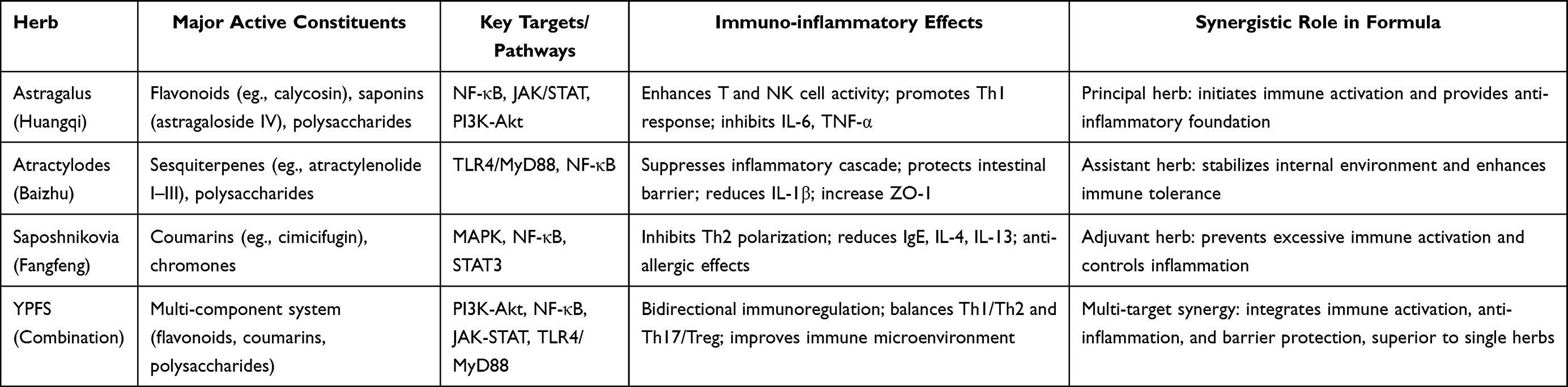 |
Table 1 Synergistic Mechanisms of Astragalus–Atractylodes Saposhnikovia in Yupingfeng San (YPFS) |
At the cytokine level, multiple active compounds within the formula (eg., quercetin and kaempferol) collectively target core inflammatory mediators such as IL-6, TNF, and IL-1β, achieving bidirectional modulation of pro- and anti-inflammatory networks. For instance, in chronic obstructive pulmonary disease (COPD) models, the combined use of the three herbs synergistically reduces IL-1β, IL-6, and TNF-α expression, while attenuating collagen deposition and inflammation via inhibition of the TGF-β1/Smad2 pathway.69
At the signaling level, YPFS adopts a “multi-node intervention” strategy, coordinately regulating key pathways including NF-κB, MAPK, and PI3K/Akt. Specifically, Astragalus primarily exerts anti-inflammatory effects through inhibition of p38 MAPK and NF-κB signaling;70 Atractylodes predominantly modulates immune and inflammatory responses via the PI3K/Akt/NF-κB axis;71 and Saposhnikovia simultaneously suppresses activation of NF-κB, MAPK, and PI3K/Akt pathways.66,67 Building on these complementary actions, the combined formula integrates upstream signals (eg., TLR4, TNF-α receptors, and TGF-β1), converging on NF-κB as a central signaling hub. This integration enables more comprehensive and stable regulation of MAPK signaling, along with refined modulation of the PI3K/Akt pathway—preserving basal immune function while effectively restraining excessive inflammation.10,66 Furthermore, YPFS is significantly enriched in multiple immune- and inflammation-related pathways, including TNF, IL-17, and HIF-1, underscoring that its therapeutic effects arise from complex network-based regulation rather than single-pathway modulation.10,66
From a modern pharmacological perspective, the combination of these three herbs exemplifies a canonical “multi-component–multi-target–multi-pathway” synergy model. Astragalus primarily enhances immune activation and host defense; Atractylodes stabilizes metabolic homeostasis and barrier function; and Saposhnikovia suppresses excessive inflammatory responses and limits immune-mediated damage. Through coordinated regulation across cellular, tissue, and systemic levels, the formula maintains immune homeostasis while augmenting overall disease resistance. Compared with individual herbs, YPFS demonstrates superior efficacy in modulating Th1/Th2 and Th17/Treg balance, improving tumor-associated immunosuppressive microenvironments (eg., PD-1/PD-L1 and STAT3 signaling axes), and enhancing anti-infective capacity. Collectively, YPFS represents a paradigmatic example of the systemic advantages of traditional herbal formulas in immune microenvironment regulation, offering valuable insights for modern pharmacological research and clinical translation.
Multi-Target Mechanism of Action
With advances in modern biotechnology, YPFS has gradually evolved from traditional empirical use into a multi-target therapeutic strategy with defined mechanisms of action. Numerous in vivo and in vitro studies have confirmed that YPFS exerts significant immunomodulatory effects and holds broad therapeutic potential in allergic, inflammatory, and tumor-related diseases.
Immune Regulation
Immunoregulatory in Allergic Diseases
AR is a chronic immunoglobulin E (IgE)-mediated inflammatory disorder characterized by nasal congestion, rhinorrhea, sneezing, and nasal pruritus.72 Previous studies have shown that YPFS exerts immunoregulatory effects on AR by modulating signaling pathways, including PI3K-AKT, MAPK, TNF, and Toll-like receptors,10 which are closely involved in the regulation of inflammatory responses, immune cell activation, and apoptosis. Specifically, the PI3K-AKT and NF-κB pathways play a central role in controlling immune responses and cytokine production, while the MAPK pathway is associated with inflammatory cell activation and the release of pro-inflammatory mediators.73–76 Through coordinated regulation of these pathways, YPFS can attenuate inflammatory responses, restore immune balance, and alleviate the pathological progression of AR. In animal experiments, Makino et al77 reported that YPFS treatment significantly increased serum concentrations of OVA-specific immunoglobulin when mice were sensitized by intraperitoneal injection of ovalbumin (OVA). However, in a nasal sensitization model, YPFS suppressed the production of specific antibodies, suggesting a bidirectional regulatory effect on antigen stimulation. In a clinical study, Zhang et al78 observed that combining YPFS with Montelukast Sodium (a leukotriene receptor antagonist) for rhinitis treatment increased peripheral blood IL-2 levels while reducing IL-4 and IgE levels. These findings suggest that the combination can effectively relieve clinical symptoms, rebalance Th1/Th2 responses, and restore immune homeostasis.
AD is an inflammatory skin disease characterized by chronic recurrence, impaired skin barrier function, and immune dysregulation.79 Animal studies on the treatment of AD using YPFS have been extensively conducted, while clinical studies remain limited. Zheng et al7 found in an AD recurrence mouse model that YPFS intervention significantly reduced ear tissue inflammation and lowered the expression levels of IL-4, IL-5, IL-13, and IgE, thereby exerting anti-allergic and immunomodulatory effects. Zhang Li et al35 used network pharmacology methods to discover that the key mechanism of YPFS treatment for AD may be closely related to the TNF signaling pathway, IL-17, and other signaling pathways. Liu et al80 found through a before-and-after comparative study that YPFS treatment significantly reduced CD4+ levels and the CD4+/CD8+ ratio in AD patients while increasing the CD8+ percentage, indicating its ability to regulate cellular immunity and restore immune balance.
Immunoenhancement in Antitumor Response
Multiple in vivo and in vitro studies have demonstrated that Yupingfeng San (YPFS), when combined with chemotherapeutic agents, can significantly enhance immunomodulation and strengthen antitumor efficacy in lung cancer. The mechanisms underlying these effects involve both the enhancement of chemotherapy sensitivity and immune microenvironment remodeling. At the cellular level, Lou et al81 reported that combining YPFS with cisplatin (a platinum-based chemotherapeutic agent that exerts anticancer effects primarily by inducing DNA crosslinking and apoptosis) produces synergistic effects by inducing cancer cell apoptosis, suppressing multidrug resistance-associated efflux transporters, and thereby increasing intracellular cisplatin accumulation while reducing resistance. Their study further showed that YPFS enhances cisplatin-induced reactive oxygen species (ROS) accumulation, decreases mitochondrial membrane potential (MMP), and inhibits the p62/TRAF6 signaling pathway in A549/DDP cells, thereby suppressing downstream NF-κB activation, reducing cell survival signaling, increasing chemosensitivity, and promoting apoptosis, significantly strengthening cisplatin’s anti-lung cancer activity. Similarly, Du et al82 found that YPFS increases cisplatin retention in lung cancer cells, reduces cell viability, downregulates ATP-binding cassette (ABC) transporters and glutathione S-transferases (GSTs), suppresses the NF-κB signaling pathway, elevates the Bax/Bcl-2 ratio, and promotes apoptosis. In addition, cimicifugin glucoside, a major active component of YPFS, regulates GST activity, further enhancing cisplatin-induced cytotoxicity. Ye et al83 also showed that YPFS alleviates T-cell inhibition by downregulating PD-1/PD-L1 expression in lung cancer cells, enhances CD4⁺ and CD8⁺ T-cell infiltration in the tumor microenvironment, and upregulates IFN-γ and TNF-α secretion, thereby markedly strengthening the antitumor immune response.
YPFS, a classical traditional Chinese medicine formula with immunomodulatory activity, has shown significant potential as an adjunct to chemotherapy in liver cancer. Yuan et al30 reported that YPFS treatment significantly reduced microvascular density (MVD) and vascular endothelial growth factor (VEGF) levels in liver cancer mice, suggesting its potential to inhibit tumor angiogenesis. Mechanistic studies further revealed that YPFS inhibits thymic stromal lymphopoietin (TSLP), blocks activation of the TSLP–STAT3 signaling pathway, and suppresses hepatic microvessel formation, thereby exerting anti-hepatocellular carcinoma effects. Yao et al84 also reported that YPFS promotes dendritic cell (DC) maturation, enhances IL-12 secretion, increases the ratio of CD8⁺ T cells to NK cells, and suppresses Treg cell expansion. These effects improve the immunosuppressive environment of hepatocellular carcinoma (HCC), enhance the immune system’s tumor-killing capacity, and provide experimental support for applying YPFS in tumor immunotherapy. Consistently, Yuan et al85 demonstrated that YPFS enhances NK cell cytolytic activity by inhibiting the STAT3/PD-L1 axis, thereby reducing the expression of immunosuppressive factors (eg., IDO and TGF-β) and promoting the release of cytotoxic mediators such as granzyme, perforin, and IFN-γ from NK cells, ultimately suppressing HCC progression.
Other Immunoregulatory Roles
A fundamental study reported that YPFS activates the NF-κB signaling pathway by promoting IκBα degradation, thereby inducing the mRNA and protein expression of pro-inflammatory cytokines. YPFS can also suppress the expression of certain pro-inflammatory cytokines while enhancing macrophage phagocytic activity, highlighting its bidirectional regulatory role in inflammation.29 The polysaccharide fraction (YPF-P) of YPFS is regarded as one of its major active constituents, with reported functions such as promoting animal growth and enhancing immune function.86 Chen et al87 reported that YPF-P isolated from YPFS markedly enhanced macrophage phagocytic capacity, promoted LPS-induced T-cell proliferation, and increased both the SRBC hemolysis reaction (QHS) and delayed-type hypersensitivity (DTH). In addition, YPF-P upregulates IL-2 and IFN-γ expression without elevating IL-4 production, suggesting that it enhances Th1-type immune responses and further clarifies its immune-enhancing mechanism. A study on severe acute respiratory syndrome (SARS) demonstrated that YPFS combined with Sangju Decoction exerts potential antiviral effects by modulating immune function, likely through changes in the CD4/CD8 ratio in patients.88 Studies indicate that YPFS active components can modulate viral infections and their complications via multiple pathways. Du’s team89 reported that YPFS dose-dependently activates the interferon-stimulated response element (ISRE), upregulating antiviral genes including RNaseL, Mx2, PKR, and ISG15 in macrophages. It also inhibits influenza virus neuraminidase activity on epithelial cell surfaces, blocking viral particle release and demonstrating potent innate immune antiviral effects. Another study90 showed that the polysaccharide component of YPFS (YPF-P) exerts significant protective effects in a CCl4-induced rat liver fibrosis model. Its mechanisms include inhibiting stellate cell activation and abnormal deposition of collagen (types I/III) and extracellular matrix proteins (HA, LN, type IV collagen, PCIII, Hyp), downregulating TGF-β1 and TIMP-1, moderately upregulating MMP-13, and optimizing the TIMP-1/MMP-13 ratio, resulting in synergistic regulation of anti-fibrotic activity and matrix remodeling. Its efficacy surpasses that of the control drug atorvastatin (AP), providing strong experimental evidence for YPFS use in chronic liver disease intervention.
Anti-Inflammatory and Anti-Allergic Effects
In recent years, studies have increasingly elucidated the anti-inflammatory and anti-allergic effects of YPFS in various conditions, including AD, allergic asthma, acute lung injury, COPD, and AR. These effects are mediated through multiple inflammatory pathways, indicating a notable capacity for multi-target intervention.
Nie et al38 employed network pharmacology and data mining analyses to predict that YPFS may contribute to the pathogenesis of AD via the NF-κB pathway. Further validation in a DNCB-induced mouse model confirmed that YPFS markedly improved AD symptoms, reduced SCORAD scores, alleviated inflammatory cell infiltration, and strongly downregulated TNF-α, sPLA2-IIA, and IL-6 expression. Mechanistic studies indicate that YPFS exerts anti-inflammatory effects by inhibiting the TLR4/MyD88/NF-κB signaling pathway, thereby facilitating AD recovery. Wang et al91 also reported that YPFS alleviates early allergic inflammatory responses in AD by modulating the NF-κB-TSLP/IL-33 pathway.
The application of YPFS in allergic asthma has garnered considerable attention. Xue et al92 reported that YPFS treatment not only reduces airway resistance, inflammatory cell infiltration, and excessive mucus secretion, but also suppresses Type 2 immune responses by decreasing ILC2 numbers and downregulating their key transcription factors GATA3 and IRF4, thereby mitigating the release of Type 2 cytokines, including IL-5 and IL-33. These findings suggest that YPFS mitigates allergic asthma by inhibiting ILC2-mediated airway inflammation. Liu et al93 proposed that the classical formula Xiao Ben Fang Xiao Tang, containing YPFS, downregulates M2 macrophage markers (MRC1, ARG1, Retnla, Chil3, and CHIA), thereby reducing airway inflammation associated with alternative M2 activation in asthma patients. Additionally, Gu et al94 reported that cimicifugin, a major active component of YPFS, inhibits type 2 airway inflammation by binding to the SPR protein and modulating its expression in a non-enzymatic manner, further supporting its anti-asthmatic effects.
Beyond allergic diseases, YPFS has shown significant efficacy in other inflammatory lung conditions. Zhang et al42 reported that YPFS reduces inflammation in an acute lung injury (ALI) model by suppressing the activation of TLR4/NF-κB and NLRP3 inflammasomes. Another study69 demonstrated that YPFS exerts anti-inflammatory effects by inhibiting Smad2 phosphorylation and modulating the TGF-β1/Smad2 signaling pathway, thereby alleviating inflammation associated with COPD. In an AR model, Zhang et al95 reported that YPFS markedly downregulates IL-8, upregulates IL-10, and increases IL-10 levels in nasal lavage fluid, suggesting that it achieves “bidirectional immune regulation” by concurrently suppressing pro-inflammatory cytokines and activating anti-inflammatory factors, thereby improving AR symptoms. Additionally, mechanistic studies indicate that YPFS modulates AR pathogenesis by regulating immune factor and neurotransmitter expression. Wang et al96 reported that YPFS markedly reduces substance P levels in nasal secretions and nasal mucosa, suggesting that it may exert therapeutic effects by inhibiting neurogenic inflammation.
Antiviral and Antibacterial Effects
In recent years, studies on the antiviral and antibacterial properties of YPFS have steadily increased. These studies demonstrate its broad efficacy against pathogens such as influenza viruses, human respiratory syncytial virus (HRSV), human metapneumovirus (hMPV), Pseudomonas aeruginosa, α-hemolytic streptococcus, Staphylococcus aureus, and streptococcus pneumoniae. Extensive in vitro and in vivo research indicates that YPFS not only inhibits viral replication and transmission but also strengthens host defenses by modulating immune function.
Effects on Influenza Virus and Respiratory Viruses
Early studies indicate that YPFS has significant inhibitory activity against influenza A virus and HRSV, suggesting its potential as a therapeutic candidate for respiratory viral infections.97 Further studies show that YPFS exerts antiviral effects via a dual mechanism. First, it inhibits the neuraminidase activity of influenza A virus, preventing viral release and spread from host cells. Second, it upregulates the mRNA expression of antiviral genes, including RNase L, Mx2, PKR, and ISG15, while activating the upstream transcription factor ISRE, thereby enhancing the innate immune response.89 YPFS also increases serum immunoglobulin levels (sIgA and IgG1) in mice, activates alveolar macrophages (AM) and CD4⁺/CD8⁺T cells, and exerts antiviral effects by synergistically activating both innate and adaptive immune responses.98
Furthermore, several chicken embryo experiments demonstrated that YPFS effectively suppressed the replication of influenza A virus strains FM1, H3N2, H9N2, and H5N1, significantly enhancing the host immune response.99–101 Mechanistic studies revealed that YPFS downregulated TLR4 and NF-κB expression in the lung tissues of influenza A virus-infected mice, showing superior antiviral efficacy compared with the ribavirin-treated group.102 Lu et al103 confirmed that YPFS, administered both prophylactically and therapeutically, improved survival rates in mice infected with influenza virus PR8. It inhibited the secretion of inflammatory cytokines, including IL-6, IL-1β, TNF-α, and IFN, while downregulating TLR6, TLR4, MyD88, and NF-κB mRNA expression, thereby significantly alleviating viral-induced lung injury. Further studies revealed that YPFS effectively alleviated PR8-induced acute lung injury by inhibiting inflammatory cytokine release and tissue apoptosis.104
In addition to influenza viruses, Li et al105 discovered that YPFS significantly suppressed the replication of hMPV in mouse lung tissue and mitigated pulmonary damage, further supporting its potential in the prevention and treatment of respiratory viral infections.
Effects on Bacterial Infections
In antimicrobial research, Shen et al11 demonstrated that YPFS effectively protects the tracheal mucosa in chronic bronchitis model mice, significantly reducing Pseudomonas aeruginosa adhesion. This mechanism may be associated with mitigating airway injury and regulating immune function. In an amputation stress mouse model, Chen et al106 observed that YPFS markedly improved immunosuppression, alleviated acute thymic atrophy, and restored T and B lymphocyte responsiveness to Con-A and LPS. Furthermore, in vitro experiments demonstrated that YPFS induces a dose-dependent expression of inducible Nitric Oxide Synthase (iNOS) in mouse peritoneal macrophages, thereby promoting nitric oxide (NO) production. This mechanism may constitute a crucial cellular basis for its ability to enhance macrophage function, boost systemic immunity, and exert antibacterial and antiviral effects.107
In addition to its effects on Gram-negative bacteria, YPFS has also been reported to exert regulatory effects on Gram-positive bacteria. YPFS exerts targeted modulatory effects on respiratory microecology and specific bacterial species. In Staphylococcus aureus infection models, YPFS effectively protects the nasal and bronchial mucosal epithelium and reduces inflammatory responses.108 Further studies have demonstrated that YPFS can modulate common respiratory bacteria, including α-hemolytic streptococcus and Streptococcus pneumoniae, thereby contributing to the maintenance of microbial balance.109,110
Summary of Mechanisms and Limitations
Evidence from multiple animal models and in vitro/in vivo studies suggests that YPFS exhibits broad therapeutic effects through a synergistic, multi-component, multi-target, and multi-pathway mechanism. YPFS enhances immune function by promoting the activity of T cells, NK cells, and dendritic cells, restoring the balance between Th1/Th2 and Th17/Treg, and suppressing immunosuppressive signaling pathways, including PD-1/PD-L1 and STAT3. It also alleviates inflammatory and allergic responses by modulating NF-κB-, TLR4/MyD88-, NLRP3-, and TSLP-related pathways, thereby reducing the production of pro-inflammatory cytokines. In addition, YPFS enhances antiviral and anti-infective defense through activation of interferon-stimulated genes, and exerts antitumor effects by promoting apoptosis, inhibiting angiogenesis and drug resistance, and enhancing treatment sensitivity. The key mechanisms and signaling pathways are summarized in Table 2 and Figure 11.
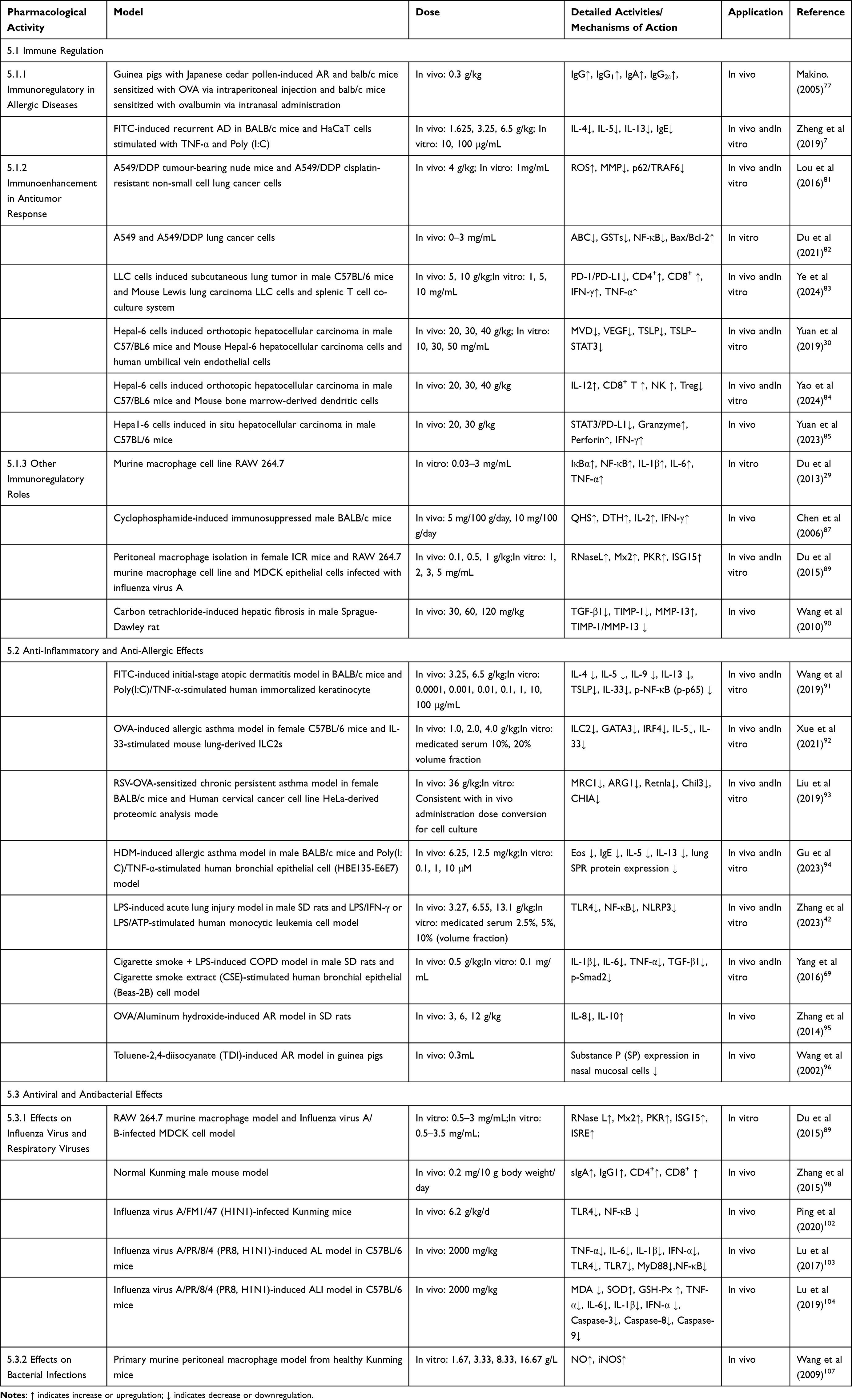 |
Table 2 Pharmacological Multi-Target Mechanism of YPFS |
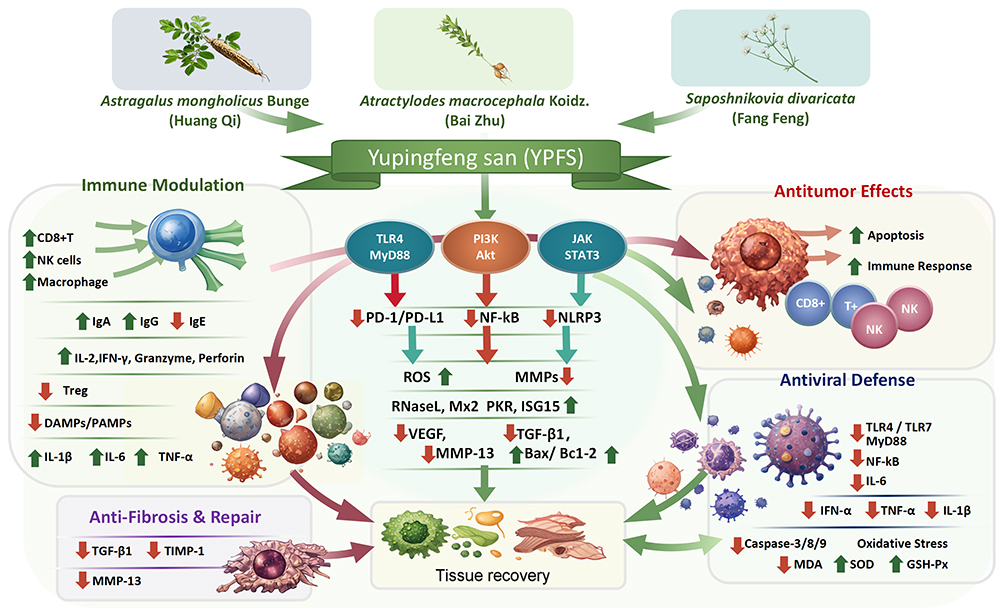 |
Figure 11 Integrated multi-target mechanisms of Yupingfeng San (YPFS). YPFS, composed of Astragalus mongholicus, Atractylodes macrocephala, and Saposhnikovia divaricata, exerts pleiotropic regulatory effects on immune homeostasis, inflammation, infection defense, tumor suppression, and tissue repair through multiple interconnected signaling pathways. Immune modulation: YPFS enhances the activity of CD4⁺ and CD8⁺ T cells, natural killer (NK) cells, and macrophages, while suppressing regulatory T (Treg) cells. It promotes humoral immunity (↑IgA, ↑IgG, ↓IgE) and cytotoxic responses (↑IL-2, IFN-γ, granzyme, perforin), thereby strengthening host immune surveillance. Inflammation regulation: YPFS inhibits key inflammatory pathways, including TLR4/MyD88, NF-κB, PI3K/Akt, and JAK/STAT3, as well as the NLRP3 inflammasome. This leads to reduced production of pro-inflammatory mediators (e.g., IL-1β, IL-6, TNF-α) and damage-associated molecular patterns (DAMPs/PAMPs). Oxidative stress and antiviral defense: YPFS enhances antiviral responses by upregulating interferon-stimulated genes (ISGs; e.g., RNase L, Mx2, PKR, ISG15) and modulating oxidative stress (↓MDA, ↑SOD, ↑GSH-Px). It also suppresses excessive activation of TLR7/NF-κB signaling and downstream cytokine release. Antitumor effects: YPFS inhibits PD-1/PD-L1 signaling and tumor-promoting pathways, enhances antitumor immunity, promotes apoptosis (↑Bax/Bcl-2 ratio), suppresses angiogenesis (↓VEGF), and reduces matrix degradation (↓MMPs), thereby contributing to tumor control. Anti-fibrosis and tissue repair: YPFS attenuates fibrosis by downregulating TGF-β1 and TIMP-1 while modulating MMP-13, ultimately promoting tissue remodeling and recovery. Color and arrow annotations: Green arrows, activation or upregulation. Red arrows, inhibition or downregulation. Curved arrows, functional interactions between biological modules. Color-coded regions: Green, immune regulation. Red, antitumor effects. Blue, antiviral defense. Purple, anti-fibrosis and tissue repair. |
However, current research remains constrained by several limitations. Substantial heterogeneity exists in experimental models and dosing regimens, and the direct causal relationships between key bioactive constituents and core molecular targets have yet to be clearly established. Most mechanistic studies focus on isolated pathways or phenotypic outcomes, with insufficient integration to capture the dynamic and systemic regulatory effects of YPFS. Moreover, translational evidence bridging animal experimental findings with clinical efficacy is still limited. Although existing studies have provided an important foundation for understanding the holistic regulatory network of Yupingfeng San, further elucidation of its core mechanisms and the strengthening of evidence-based standards will require integrated multi-omics approaches, standardized experimental models, and well-designed, high-quality clinical trial.
Clinical Efficacy and Applications
With ongoing research into the pharmacological mechanisms of YPFS, its clinical utility across a variety of diseases has become increasingly apparent. Evidence indicates that YPFS, when combined with conventional Western therapies, can enhance therapeutic efficacy, reduce recurrence rates, and improve patients’ quality of life, while exhibiting favorable safety and tolerability. In recent years, a growing body of literature—including efficacy evaluations, mechanistic studies, and multicenter clinical trials—has investigated the effects of YPFS in conditions such as AR, asthma, AD, lung cancer, and liver cancer, providing a solid basis for its standardized clinical use and broader adoption.
Allergic Rhinitis
AR is a prevalent condition characterized by chronic inflammation of the upper respiratory tract. Its global prevalence is steadily increasing, substantially affecting patients’ quality of life and imposing a considerable disease burden.10,111 A meta-analysis suggests that combining YPFS with conventional medications for AR significantly alleviates symptoms, including nasal itching, sneezing, and congestion, demonstrating efficacy and favorable tolerability.112 Lin et al113 conducted a clinical study demonstrating that after 8 weeks of YPFS intervention in AR patients, quality of life scores (RQLQ) were significantly higher than those in the placebo group, with effects persisting for 8 weeks post-treatment. In terms of total nasal symptom score (TNSS) and visual analogue scale (VAS), the YPFS group showed a trend of improvement, indicating its potential in alleviating core AR symptoms. Several studies by Guo114 and Yan et al115 confirmed that YPFS combined with Western medicine effectively alleviates AR clinical symptoms, improves therapeutic outcomes, and results in fewer adverse reactions, demonstrating good safety. Some studies reported that YPFS efficacy in treating AR may surpass that of the Western medicine levocetirizine. However, certain studies contend that current clinical evidence is insufficient to support the routine use of YPFS in treating pediatric AR.8
Asthma
In recent years, YPFS, a classic Chinese herbal formula for tonifying qi, enhancing the exterior, and modulating immunity, has been increasingly used in asthma treatment, gradually becoming a key component of integrated traditional and Western medicine therapy. Numerous clinical studies have confirmed that combining YPFS with Western medications for asthma not only improves treatment efficacy and alleviates symptoms, but also lowers disease recurrence rates without increasing adverse events. Evidence from China further supports the therapeutic potential of YPFS in alleviating asthma symptoms.116–119 Jiang Ping et al reported that YPFS was superior to ketotifen in reducing disease recurrence and enhancing overall clinical efficacy.118 Additionally, several studies have demonstrated that combining YPFS with conventional Western medications, such as montelukast and inhaled corticosteroids, further enhances treatment efficacy, yielding outcomes superior to the Western medication-only group.120–122 A randomized controlled trial (RCT) also confirmed that YPFS combined with montelukast is more effective in asthma treatment.123 The most recent systematic review and meta-analysis further support these findings. Gao Wei et al’s meta-analysis indicated that combining YPFS with Western medicine in asthma treatment improves efficacy, reduces recurrence, and maintains overall safety, demonstrating high clinical value and therapeutic potential.124,125
Skin Diseases
YPFS has shown significant benefits in managing dermatological conditions. Multiple studies report that combining YPFS with conventional therapy improves clinical symptoms in eczema patients, provides greater efficacy than conventional treatment alone, and reduces the incidence of adverse reactions.126,127 Further studies show that YPFS reduces EASI scores and skin lesions in eczema and significantly lowers recurrence rates.128 In combination therapy, co-administration with Xiaofeng Powder enhances clinical efficacy, lowers EASI scores, reduces relapses, and sustains therapeutic outcomes.129–131 Moreover, combining YPFS with Western pharmaceuticals in chronic eczema treatment shows clear synergistic effects, including improved immune markers and favorable safety profiles.132,133
In chronic urticaria, YPFS alone shows favorable efficacy, with a higher overall response rate than levocetirizine hydrochloride tablets. It significantly lowers serum TNF-α and IL-8 levels, reduces recurrence, and maintains good safety.134 Studies also show that combining YPFS with antihistamines outperforms monotherapy by improving response rates, accelerating wheal resolution, relieving pruritus, reducing cytokine and IgE levels, modulating Th1/Th2 balance, and improving quality of life.135–138 Moreover, co-administration with Guizhi Tang shows additional benefits by lowering serum IgE levels, supporting immunomodulation, and preventing relapse.139,140 This combination enhances cure rates and disease control, possibly through regulating Th17/Treg balance and modulating cytokine expression.141
It is noteworthy that randomized controlled trials (RCTs) and systematic reviews have confirmed that YPFS combined with antihistamines offers significant advantages in enhancing the efficacy of chronic urticaria treatment and reducing recurrence rates, with good safety profiles. This further strengthens its evidence-based value and clinical application prospects.142,143
Antitumor Effects
As a traditional Chinese herbal formula with immunoenhancing and anti-inflammatory properties, YPFS has gradually been applied as an adjuvant therapy for cancer, particularly in high-incidence malignancies such as lung and liver cancers, where it has shown potential antitumor effects. Recent studies have demonstrated that YPFS may enhance chemosensitivity, inhibit tumor cell proliferation, and improve the tumor immune microenvironment through multi-target mechanisms.
Lung Cancer
In lung cancer treatment, YPFS shows promising clinical potential. Clinical studies show that YPFS combined with conventional therapy modulates T-cell subsets in lung cancer patients, significantly increasing CD4⁺ levels and the CD4⁺/CD8⁺ ratio.144 This enhances immune function and improves quality of life during chemotherapy. Further studies suggest that combining YPFS with traditional Chinese patent medicines increases immunoglobulin levels, T-cell subset parameters, and Karnofsky performance scores. These findings suggest synergistic benefits in enhancing immune function and quality of life.145–147
Beyond immune enhancement, YPFS also offers benefits in symptomatic supportive care. Studies report that YPFS combined with gallnut herbal plasters applied to the Shenque acupoint significantly relieves hyperhidrosis and night sweats in lung cancer patients after surgery or with qi–yin deficiency. This approach reduces both the duration and volume of sweating and achieves a higher overall efficacy than conventional management.148,149 In mid- to late-stage lung cancer, combining YPFS with conventional therapy alleviates chemotherapy-related symptoms such as spontaneous sweating, night sweats, and fatigue, while significantly reducing Traditional Chinese Medicine (TCM) syndrome scores. It also improves physical, emotional, and cognitive function, enhances overall health, and further boosts immune regulation by increasing CD3⁺ and CD4⁺ T-cell levels and the CD4⁺/CD8⁺ ratio.150 Concurrent evidence shows that YPFS reduces sweating after chemotherapy or radiotherapy, mitigates treatment-related toxicities, and exerts broad regulatory effects.151 Furthermore, localized therapies combined with TCM show clinical value. For non-small cell lung cancer, studies show that argon-helium knife therapy combined with TCM enhances local control, improves quality of life, and causes fewer adverse reactions.152
Liver Cancer
Beyond its application in lung cancer, YPFS has also shown promising clinical value in hepatocellular carcinoma. A randomised double-blind trial demonstrated that YPFS combined with standard therapy significantly delayed tumour progression in advanced patients, improved quality of life (reflected in higher KPS scores and alleviated TCM syndromes), and markedly reduced serum thymic stromal lymphopoietin (TSLP) levels, suggesting a mechanism related to TSLP regulation and immune enhancement.153 In addition, the combination of YPFS with proprietary Chinese medicines effectively suppressed tumour growth, prolonged survival, and improved quality of life.154–156 Postoperative clinical studies further indicated that YPFS reverses Th2-type immune deviation, promotes Th1-dominant responses, and optimises T lymphocyte subset distribution, thereby strengthening anti-tumour immune surveillance and contributing to improved prognosis.157
Antiviral and Antibacterial Therapeutic Effects
With the increasing prevalence of infectious diseases caused by viruses and bacteria—including Severe Acute Respiratory Syndrome (SARS), recurrent respiratory infections, recurrent herpes simplex keratitis, and recurrent oral ulcers—effective prevention and treatment of these conditions has become a significant challenge. In recent years, the clinical application of Yupingfeng Powder (YPFS) for anti-infective prevention and treatment has received increasing attention.
Respiratory Tract Infections
Multiple clinical studies have demonstrated that YPFS is effective in the treatment of recurrent respiratory infections. One clinical study reported that adding YPFS to conventional therapy significantly improved clinical response rates and enhanced patients’serum IgG and IgM levels as well as T-cell subsets.158 These findings suggest that YPFS plays a key role in enhancing immune function and synergistically alleviating clinical symptoms. Qin159 further reported that YPFS significantly reduces the frequency of recurrent respiratory infections in children and concurrently increases IgG, IgA, and IgM levels, indicating its beneficial immunoregulatory effects in paediatric patients. Qian et al160 also demonstrated that combining YPFS with Western medicine rapidly improves clinical symptoms and lung function in paediatric patients. This effect is achieved by upregulating CD3⁺ and CD4⁺T cells and downregulating IL-6 and TNF-α, thereby enhancing immunomodulatory and anti-inflammatory responses. Furthermore, numerous domestic studies have confirmed that YPFS alleviates symptoms in paediatric patients, enhances immunity, modulates allergic predispositions, and significantly improves clinical outcomes.12,161–165
Hand-Foot-and-Mouth Disease and Respiratory Diseases in Children
Beyond influenza, YPFS has shown favorable efficacy in common pediatric viral infections. A study on hand-foot-and-mouth disease reported that combining YPFS with ribavirin significantly improved clinical outcomes, accelerated fever resolution, and promoted rash clearance. This effect may be mediated by elevated serum IgM levels, increased CD4⁺T-cell counts, and improved CD4⁺/CD8⁺ratios.166 Zhang et al167 further observed that combining YPFS with zinc effectively prevented recurrent respiratory infections in children with cerebral palsy. Zhang168 and Lin et al169 reported that combining YPFS with conventional Western medicine significantly improved outcomes in pediatric bronchiolitis by alleviating symptoms, enhancing immunity, and modulating inflammatory responses. Lai170 observed that administering YPFS to patients with stable chronic obstructive pulmonary disease effectively prevented new upper respiratory tract infections and their subsequent acute exacerbations.
Eye and Mouth Disorders
In viral ocular diseases, studies by Wang, Ye et al and lv et al171–173 demonstrated that YPFS is effective against recurrent herpes simplex viral keratitis by enhancing immune function and promoting antiviral and viral clearance activities. YPFS has also shown notable efficacy in treating recurrent oral ulcers. Lu et al174 observed that combining YPFS with conventional therapy for mixed deficiency-excess pattern recurrent oral ulcers rapidly reduced ulcer size and pain scores, while markedly lowering long-term recurrence rates. The underlying mechanism likely involves multiple actions, including antiviral activity, antioxidant effects, analgesic properties, and promotion of mucosal repair.
Summary of Clinical Applications and Limitations
Overall, current clinical evidence indicates that YPFS exerts beneficial effects across multiple disease domains, particularly as an adjunct to conventional therapies, with improvements observed in immune regulation, symptom relief, and quality of life. As summarized in eTable 2. Summary of clinical evidence for YPFS across different diseases, most available studies are based on randomized controlled trials; however, the majority are limited by relatively small sample sizes, and some evidence is still derived from observational or small-scale studies. These limitations may affect the robustness and generalizability of the conclusions. Therefore, future research should prioritize well-designed, large-scale, multi-center randomized controlled trials to further validate the efficacy and safety of YPFS and strengthen the overall evidence base.
Conclusions and Perspectives
This review summarizes recent advances in the chemical composition, mechanisms of action, and clinical applications of YPFS. As a classical traditional Chinese medicine formula, YPFS contains active components such as flavonoids and coumarins, exhibiting significant therapeutic effects in immune modulation, anti-inflammatory, anti-allergic, and anti-fibrotic therapies. It is widely used in the management of AR, AD, asthma, and tumors. Modern studies have increasingly revealed its multi-target, multi-pathway mechanisms via network pharmacology, animal experiments, and preliminary clinical trials, offering a model for the modernization of TCM formula research.
However, current studies have several limitations. Most clinical data come from randomized controlled trials with small sample sizes and non-standardized designs, making it difficult to draw high-quality evidence-based conclusions. The existing studies predominantly report positive outcomes, while negative or neutral findings are seldom discussed, potentially introducing publication bias. Furthermore, inconsistent herbal sources, lack of unified quality standards, and absence of systematic and stable HPLC fingerprint spectra pose challenges to formulation quality control and reproducibility. Moreover, limited evidence is available regarding the pharmacokinetics, bioavailability, and tissue distribution of its active components, which constrains the translation of experimental findings into clinical practice.
Therefore, future research should focus on two directions: first, large-scale, multi-center, randomized double-blind trials should be conducted to strengthen evidence-based evaluations of efficacy and safety; second, multi-omics approaches, such as proteomics and metabolomics, should be employed to identify key active components and biomarkers, establishing an individualized precision medicine system based on “component-target-phenotype” multi-dimensional characteristics to develop personalized treatment strategies. In addition, future studies should further elucidate the bioavailability and pharmacokinetic properties of the core active components of YPFS, as these factors are crucial for its clinical translation. Through the synergistic advancement of mechanistic studies and clinical application, YPFS is expected to transition from traditional empirical medicine to modern precision Chinese medicine, accelerating its internationalization.
Abbreviations
AGE-RAGE, Advanced Glycation End-product–Receptor for Advanced Glycation End-products; AR, Allergic rhinitis; AD, atopic dermatitis; ABC, ATP-binding cassette; ALI, acute lung injury; COPD, chronic obstructive pulmonary disease; DC, dendritic cell; DTH, delayed-type hypersensitivity; DNCB, 2,4-Dinitrochlorobenzene; EASI, Eczema Area and Severity Index; GST, glutathione S-transferase; HCC, hepatocellular carcinoma; HRSV, human respiratory syncytial virus; hMPV, human metapneumovirus; hematoxylin-eosin; ISRE, interferon-stimulated response element; IgE, immunoglobulin E; iNOS, inducible Nitric Oxide Synthase; MMP, mitochondrial membrane potential; MVD, microvascular density; NO, nitric oxide; OVA, ovalbumin; RCT, randomized controlled trial; RAPD, Random Amplified Polymorphic DNA; ROS, reactive oxygen species; SPE-HPLC-MS, Solid Phase Extraction-High Performance Liquid Chromatography -Mass Spectrometry; SWQ, Shi wei Qing wen; SARS, severe acute respiratory syndrome; TNF, Tumor Necrosis Factor; TSLP, thymic stromal lymphopoietin; TLR, Toll-like Receptor; TNSS, total nasal symptom score; TCM, Traditional Chinese Medicine; VEGF, vascular endothelial growth factor; VAS, visual analogue scale; YPFS, Yupingfeng San; YPF-P, polysaccharide fraction of YPFS.
Data Sharing Statement
The data that support the findings of this study are available from the corresponding author, Jiafeng Wang.
Author Contributions
All authors made a significant contribution to the work reported, whether that is in the conception, study design, execution, acquisition of data, analysis and interpretation, or in all these areas; took part in drafting, revising or critically reviewing the article; gave final approval of the version to be published; have agreed on the journal to which the article has been submitted; and agree to be accountable for all aspects of the work.
Funding
This work was supported by the following grants: 1. Shandong University of Traditional Chinese Medicine Clinical Research Special Project (No.LCKY202420) 2. Shandong University of Traditional Chinese Medicine NSFC (National Natural Science Foundation of China) Nurturing Project (No.XK2025G15) 3.Fifth Batch of National Training and Funding Program for Outstanding Clinical Talents in Traditional Chinese Medicine (Guozhongyi Renjiao Han [2022] No. 239) 4.Shandong Province Traditional Chinese Medicine Science and Technology Project (No.Z20241753-2).
Disclosure
The authors declare that they have no known competing financial interests or personal relationships that could have appeared to influence the work reported in this paper.
References
1. Chinese Pharmacopoeia Commission. Pharmacopoeia of the People’s Republic of China.
2. Liu YX, Zhou YH, Jiang CH, et al. Prevention, treatment and potential mechanism of herbal medicine for Corona viruses: a review. Bioengineered. 2022;13(3):5480–5508. doi:10.1080/21655979.2022.2036521
3. Wang DP, Li WH, Ding L, et al. Textual research on the name explanation, similar formulations, and origin of Yu Ping Feng San. J Anhui Univ Chin Med. 2015;34(03):6–8.
4. Cui HP, Lin YX, Meng X. Textual research and analysis of ancient records of Yu Ping Feng San. Guangming J Chin Med. 2024;9(16):3171–3175.
5. Zhan QZ, Huang YJ, Lin SH, Chu QM. Study on active compounds of Yu Ping Feng San for preventing COVID-19 based on network pharmacology and molecular docking. Chin Herb Med. 2020;51(07):1731–1740. doi:10.7501/j.issn.0253-2670.2020.07.007
6. Wang D, Li Q, Pan CS, et al. Yu-Ping-Feng formula ameliorates alveolar-capillary barrier injury induced by exhausted-exercise via regulation of cytoskeleton. Front Pharmacol. 2022;13:891802. eCollection 2022. doi:10.3389/fphar.2022.891802
7. Zheng J, Wang X, Tao Y, et al. Yu-Ping-Feng-San ameliorates recurrent allergic inflammation of atopic dermatitis by repairing tight junction defects of the epithelial barrier. Phytomedicine. 2019;54:214–223. doi:10.1016/j.phymed.2018.09.190
8. Liao Y, Zhong J, Liu S, et al. Yu ping feng san for pediatric allergic rhinitis: a systematic review and meta-analysis of randomized controlled trials. Medicine. 2021;100(13):e24534. doi:10.1097/MD.0000000000024534
9. Chan RY, Chien WT. The effects of two Chinese herbal medicinal formulae vs. placebo controls for treatment of allergic rhinitis: a randomised controlled trial. Trials. 2014;15:261. doi:10.1186/1745-6215-15-261
10. Yang S, Fu Q, Deng H, et al. Mechanisms and molecular targets of the Yu-Ping-Feng powder for allergic rhinitis, based on network pharmacology. Medicine. 2021;100(35):e26929. doi:10.1097/MD.0000000000026929
11. Shen Y. Experimental study of modified yu ping feng powder on antibacterial adhesion of tracheal mucosa in mice model of chronic bronchitis. China J Integr Tradit West Med. 1992;12(11):677–9,46.
12. Zhai GH. Clinical observation on the efficacy of Yupingfeng San as an adjuvant treatment for recurrent respiratory tract infections. Chin J Prescr Drug. 2017;15(11):109–110.
13. Nikles S, Monschein M, Zou H, et al. Metabolic profiling of the traditional Chinese medicine formulation Yu Ping Feng San for the identification of constituents relevant for effects on expression of TNF-α, IFN-γ, IL-1β and IL-4 in U937 cells. J Pharm Biomed Anal. 2017;145:219–229. doi:10.1016/j.jpba.2017.03.049
14. Wang L, Du Z, Guan Y, et al. Identifying absorbable bioactive constituents of Yupingfeng powder acting on COVID-19 through integration of UPLC-Q/TOF-MS and network pharmacology analysis. Chin Herb Med. 2022;14(2):283–293. doi:10.1016/j.chmed.2022.02.001
15. Shi JZ, Wang XF, Feng XR. Research progress on chemical constituents, pharmacological effects, clinical applications of Yu Ping Feng San and prediction analysis of its quality markers. J Liaoning Univ Tradit Chin Med. 2024;26(07):48–54. doi:10.13194/j.issn.1673-842x.2024.07.010
16. Li Y, Zheng B, Tian H, et al. Yupingfeng powder relieves the immune suppression induced by dexamethasone in mice. J Ethnopharmacol. 2017;200:117–123. doi:10.1016/j.jep.2017.01.054
17. Li Z, Qi J, Guo T, et al. Research progress of Astragalus membranaceus in treating peritoneal metastatic cancer. J Ethnopharmacol. 2023;305:116086. doi:10.1016/j.jep.2022.116086
18. Tao Y, Yuan J, Zhou H, et al. Antidepressant potential of total flavonoids from Astragalus in a chronic stress mouse model: implications for myelination and Wnt/β-catenin/Olig2/Sox10 signaling axis modulation. J Ethnopharmacol. 2024:325117846. doi:10.1016/j.jep.2024.117846
19. Lemons JMS, Narrowe AB, Liu L, et al. Impact of Baizhu, Daqingye, and Hehuanhua extracts on the human gut microbiome. Front Cell Infect Microbiol. 2023;13:1298392. doi:10.3389/fcimb.2023.1298392
20. Yang M, Wang CC, Wang WL, et al. Saposhnikovia divaricata–an ethnopharmacological, phytochemical and pharmacological review. Chin J Integr Med. 2020;26(11):873–880. doi:10.1007/s11655-020-3091-x
21. Huang FM, Song YJ, Zuo TW, et al. Identification of the components of Yu-Ping-Feng-San absorbed into plasma based on UPLC-Q-TOF-MS. J Nanjing Univ Tradit Chin Med. 2025;41(5):637. doi:10.14148/j.issn.1672-0482.2025.0637
22. Li PF, Qiu Q, Qin CP, et al. Research progress of Yupingfeng powder and predictive analysis on its quality markers (Q-Marker). Chin Arch Tradit Chin Med. 2024;42(4):101–107. doi:10.13193/j.issn.1673-7717.2024.04.022
23. Li M, Yue X, Gao Y, et al. Method for rapidly discovering active components in Yupingfeng granules by UPLC-ESI-Q-TOF-MS. J Mass Spectrom. 2020;55(10):e4627. doi:10.1002/jms.4627
24. Jia MQ, Xiong YJ, Xue Y, et al. Using UPLC-MS/MS for characterization of active components in extracts of Yupingfeng and application to a comparative pharmacokinetic study in rat plasma after oral administration. Molecules. 2017;22(5):810. doi:10.3390/molecules22050810
25. Li Y, Liu Y, Sun Y, et al. Study on the mechanism of Yupingfeng powder in the treatment of immunosuppression based on UPLC⁃ QTOF⁃ MS, network pharmacology and molecular biology verification. Life Sci. 2022;289:120211. doi:10.1016/j.lfs.2021.120211
26. Yue C, Xu P, Liu Z, Shi B, Zhang WT, Wang F. Simultaneous determination of twelve constituents in Yupingfeng oral liquid by HPLC and quality conformance evaluation. Chin Tradit Pat Med. 2022;44(11):3434–3439. doi:10.3969/j.issn.1001-1528.2022.11.005
27. Yao L, Wang S, Wei P, et al. Huangqi-Fangfeng protects against allergic airway remodeling through inhibiting epithelial-mesenchymal transition process in mice via regulating epithelial derived TGF-β1. Phytomedicine. 2019;64(153076). doi:10.1016/j.phymed.2019.153076
28. Shen D, Xie X, Zhu Z, et al. Screening active components from Yu-Ping-Feng-San for regulating initiative key factors in allergic sensitization. PLoS One. 2014;9(9):e107279. doi:10.1371/journal.pone.0107279
29. Du CY, Choi RC, Zheng KY, et al. Yu Ping Feng San, an ancient Chinese herbal decoction containing Astragali Radix, Atractylodis Macrocephalae Rhizoma and Saposhnikoviae Radix, regulates the release of cytokines in murine macrophages. PLoS One. 2013;8(11):e78622. doi:10.1371/journal.pone.0078622
30. Yuan Q, Yao F, Zhou L, et al. Yu Ping Feng San Exert anti-angiogenesis effects through the inhibition of TSLP-STAT3 signaling pathways in hepatocellular carcinoma. Evid Based Complement Alternat Med. 2019;2019:1947156. doi:10.1155/2019/1947156
31. Li T, Wang Y, Wang Y, et al. Development of an SPE-HPLC-MS method for simultaneous determination and pharmacokinetic study of bioactive constituents of Yu Ping Feng San in rat plasma after oral administration. J Ethnopharmacol. 2013;145(3):784–792. doi:10.1016/j.jep.2012.12.010
32. Hong M, Wang XZ, Wang L, et al. Screening of immunomodulatory components in Yu-ping-feng-san using splenocyte binding and HPLC. J Pharm Biomed Anal. 2011;54(1):87–93. doi:10.1016/j.jpba.2010.08.016
33. Wang L, Sun YL. Analysis on mechanism of Yupingfeng power in the treatment of pediatric allergic rhinitis based on network pharmacology and molecular docking techniques. Chin J Libr Inf Sci Tradit Chin Med. 2024;48(06):29–34. doi:10.3969/j.issn.2095-5707.202401012
34. Zhong XX, Wang JH, Zha XS. Mechanism of yupingfeng powder in treating chronic Eczema based on internet pharmacology. Chin J Dermatovenereol Integr Tradit West Med. 2022;21(04):304–310. doi:10.3969/j.issn.1672-0709.2022.04.004
35. Zhang L, Yang ZB. Study on mechanism of yupingfeng powder in treatment of atopic dermatitis based on network pharmacology. J Tradit Chin Med. 2020;48(09):36–41. doi:10.19664/j.cnki.1002-2392.200157
36. Shen Q, Li JC, Xiong WT, et al. Mechanism of Yupingfeng San in treatment of chronic urticaria based on network pharmacology and molecular docking technology. Chin J Dermatovenereol Integr Tradit West Med. 2022;21(05):390–397. doi:10.3969/j.issn.1672-0709.2022.05.002
37. Chen RX, Zhang YS, Li Y, et al. Mechanism of Yupingfeng powder for urticaria and allergic asthma with “treating different diseases with same method” based on network pharmacology and molecular docking. Acta Chin Med. 2023;38(02):375–382. doi:10.16368/j.issn.1674-8999.2023.02.064
38. Nie J, Jiang X, Wang G, et al. Yu-Ping-Feng-San alleviates inflammation in atopic dermatitis mice by TLR4/MyD88/NF-κB pathway. J Ethnopharmacol. 2024:329118092. doi:10.1016/j.jep.2024.118092
39. Jin H, Pang XY, Liu SJ. Mechanism of Yupingfeng powder treatment of hepatocellular carinoma based on network pharmacology. World Chin Med. 2022;17(17):2416–20+28. doi:10.3969/j.issn.1673-7202.2022.17.008
40. Hu SH, Liu TT, Zhou T, et al. Study on the mechanism of Yupingfeng powder in the treatment of non-small cell lungcancer based on network pharmacology and molecular docking method. J Hainan Med Univ. 2022;28(01):48–57. doi:10.13210/j.cnki.jhmu.20201011.003
41. Zhao YD, Liang MM, Wang FQ, et al. A study on the action mechanism of Yupingfeng San in treating non-small cell lung cancer based on network pharmacology. Clin J Chin Med. 2023;15(10):1–8. doi:10.3969/j.issn.1674-7860.2023.10.001
42. Zhang Q, Yang C, Ma S, et al. Shiwei Qingwen decoction regulates TLR4/NF-κB signaling pathway and NLRP3 inflammasome to reduce inflammatory response in lipopolysaccharide-induced acute lung injury. J Ethnopharmacol. 2023;313:116615. doi:10.1016/j.jep.2023.116615
43. Zhou JL, Mu ZJ, Zhong GY, et al. Research progress on chemical constituents and biological activities of Astragalus plants. Chin Tradit Patent Med. 2021;43(7):1845–1851. doi:10.3969/j.issn.1001-1528.2021.07.030
44. Zhang X, Lin B, Wang X, et al. Research progress on the treatment of related diseases with astragalus. Drug Des Devel Ther. 2025;19:2845–2862. doi:10.2147/DDDT.S494915
45. Bamodu OA, Kuo KT, Wang CH, et al. Astragalus polysaccharides (PG2) enhances the M1 polarization of macrophages, functional maturation of dendritic cells, and T cell-mediated anticancer immune responses in patients with lung cancer. Nutrients. 2019;11(10):2264. doi:10.3390/nu11102264
46. Liu QY, Yao YM, Yu Y, et al. Astragalus polysaccharides attenuate postburn sepsis via inhibiting negative immunoregulation of CD4+ CD25(high) T cells. PLoS One. 2011;6(6):e19811. doi:10.1371/journal.pone.0019811
47. Li W, Hu X, Wang S, et al. Characterization and anti-tumor bioactivity of astragalus polysaccharides by immunomodulation. Int J Biol Macromol. 2020;145:985–997. doi:10.1016/j.ijbiomac.2019.09.189
48. Chen Q, Jia N, Zhang X, et al. Calycosin ameliorates high-altitude pulmonary edema by regulating macrophage polarization through the PPAR-γ/NF-κB pathway: a comprehensive analysis of network pharmacology, molecular docking, and experimental validation. J Ethnopharmacol. 2026;360:121200. doi:10.1016/j.jep.2026.121200
49. Lei R, Li Q, Wang R, et al. Astragalus injection antagonizes the efficacy of anti-PD-1 against melanoma through down-regulating MHC-II expression. J Ethnopharmacol. 2025;349:119966. doi:10.1016/j.jep.2025.119966
50. Hu L, Zhang H, Zhang Y, et al. Exploring the efficacy and mechanism of astragalus polysaccharide in treating allergic asthma through network pharmacology, bioinformatics, and experimental verification. Comb Chem High Throughput Screen. 2025. doi:10.2174/0113862073368307250409055727
51. Du H, He WS, Hu HL, et al. Research progress on pharmacological effects of active components of Atractylodes macrocephala. Jiangsu J Tradit Chin Med. 2022;54(5):76–80. doi:10.19844/j.cnki.1672-397X.2022.05.023
52. Chang J, Zeng X, Zhang R, et al. Preparation and evaluation of microecological agents incorporating probiotic-fermented traditional Chinese medicine and biogenic selenium nanoparticles for intestinal protection. Biol Trace Elem Res. 2026;204(3):1356–1373. doi:10.1007/s12011-025-04753-4
53. Xu Y, Yang W, Yang Z, et al. Differential and complementary effects of Baizhu and Fuling on spleen deficiency syndrome by regulating microbiota-gut-metabolite axis. Phytomedicine. 2026;150:157690. doi:10.1016/j.phymed.2025.157690
54. Yang P, Qin LL, Yu M, et al. Rhizome of Atractylodes macrocephala alleviates spleen-deficiency constipation in rats by modulating gut microbiota and bile acid metabolism. J Ethnopharmacol. 2025;348:119884. doi:10.1016/j.jep.2025.119884
55. Chen J, Yang S, Luo H, et al. Polysaccharide of Atractylodes macrocephala Koidz alleviates NAFLD-induced hepatic inflammation in mice by modulating the TLR4/MyD88/NF-κB pathway. Int Immunopharmacol. 2024;141:113014. doi:10.1016/j.intimp.2024.113014
56. Li BX, Li WY, Tian YB, et al. Polysaccharide of Atractylodes macrocephala Koidz enhances cytokine secretion by stimulating the TLR4-MyD88-NF-κB signaling pathway in the mouse spleen. J Med Food. 2019;22(9):937–943. doi:10.1089/jmf.2018.4393
57. Cao Z, Liu R, Li K, et al. Mechanism of Shenzhu components in alleviating chemotherapy-induced diarrhea via mitochondria-associated endoplasmic reticulum membranes (MAMs) regulation. J Ethnopharmacol. 2026;358:120958. doi:10.1016/j.jep.2025.120958
58. Li Y, Li Q, Zhu Y, et al. Medicinal plant-derived carbon dots nanozymes ameliorate ulcerative colitis via anti-inflammatory, antioxidant, and gut barrier-protective effects. ACS Appl Mater Interfaces. 2025;17(30):42751–42766. doi:10.1021/acsami.5c08068
59. Ren H, Zhu T, Wang X, et al. The structurally defined polysaccharide of Atractylodes macrocephala Koidz demonstrates the ability to alleviate cyclophosphamide-induced immunosuppression and promote the restoration of intestinal homeostasis in mice. Food Res Int. 2026;230:118554. doi:10.1016/j.foodres.2026.118554
60. Yan Q, Yang F, Li Q, et al. Atractylodes macrocephala polysaccharide AMP1-1 ameliorates weightless-induced cognitive dysfunction via the microbiota-gut-brain axis. Int J Biol Macromol. 2026;358:151754. doi:10.1016/j.ijbiomac.2026.151754
61. Bai GS, Wang CG, Li JY, et al. Research progress on active ingredients and physiological effects of Saposhnikovia divaricata. China’s Naturopathy. 2020;28(12):116–117. doi:10.19621/j.cnki.11-3555/r.2020.1252
62. Wang X, Jiang X, Yu X, et al. Cimifugin suppresses allergic inflammation by reducing epithelial derived initiative key factors via regulating tight junctions. J Cell Mol Med. 2017;21(11):2926–2936. doi:10.1111/jcmm.13204
63. Zou C, Xie JL, Luo Q, et al. Saposhnikovia divaricata-Fructus mume herb pair alleviates airway inflammation in asthma by inhibiting IL-17 secretion from γδT17 cells via the Notch1 signaling pathway. J Ethnopharmacol. 2026;360:121107. doi:10.1016/j.jep.2025.121107
64. Chen Y, Chen Z, Wang G, et al. The effects of Saposhnikovia divaricata aqueous extracts on the inflammation and intestinal microflora in allergic rhinitis mice. Evid Based Complement Alternat Med. 2022;2022:1052359. doi:10.1155/2022/1052359
65. Zhang T, Zhong Y, Shi Y, et al. Multi-omics reveals that 5-O-methylvisammioside prevention acute liver injury in mice by regulating the TNF/MAPK/NF-κB/arachidonic acid pathway. Phytomedicine. 2024;128:155550. doi:10.1016/j.phymed.2024.155550
66. Li X, Li H, Wang T, et al. Network pharmacology-based analysis of the mechanism of Saposhnikovia divaricata for the treatment of type I allergy. Pharm Biol. 2022;60(1):1224–1236. doi:10.1080/13880209.2022.2086583
67. Liang X, Li X, Sun S, et al. Effects and potential mechanisms of Saposhnikovia divaricata (Turcz.) Schischk. On type I allergy and pseudoallergic reactions in vitro and in vivo. J Ethnopharmacol. 2024;318(Pt A):116942. doi:10.1016/j.jep.2023.116942
68. Li X, Wang B, Guan D, et al. A research method of compatibility mechanism of traditional Chinese medicine prescription-taking Yupingfeng San as an example. J Ethnopharmacol. 2025;348:119815. doi:10.1016/j.jep.2025.119815
69. Yang ZS, Yan JY, Han NP, et al. Anti-inflammatory effect of Yu-Ping-Feng-San via TGF-β1 signaling suppression in rat model of COPD. Iran J Basic Med Sci. 2016;19(9):993–1002. doi:10.22038/ijbms.2016.7600
70. Qin Q, Niu J, Wang Z, et al. Astragalus membranaceus inhibits inflammation via phospho-P38 mitogen-activated protein kinase (MAPK) and nuclear factor (NF)-κB pathways in advanced glycation end product-stimulated macrophages. Int J Mol Sci. 2012;13(7):8379–8387. doi:10.3390/ijms13078379
71. Yu W, Jie S, Su G, et al. The ultrafine powder of atractylodis macrocephalae rhizoma improves immune function in naturally aging rats by regulating the PI3K/Akt/NF-κB signaling pathway. Front Pharmacol. 2025;16:1550357. doi:10.3389/fphar.2025.1550357
72. Greiner AN, Hellings PW, Rotiroti G, et al. Allergic rhinitis. Lancet. 2011;378(9809):2112–2122. doi:10.1016/S0140-6736(11)60130-X
73. Ye J, Piao H, Jiang J, et al. Polydatin inhibits mast cell-mediated allergic inflammation by targeting PI3K/Akt, MAPK, NF-κB and Nrf2/HO-1 pathways. Sci Rep. 2017;7(1):11895. doi:10.1038/s41598-017-12252-3
74. Gao X, Li N, Zhang J. SB203580, a p38MAPK inhibitor, attenuates olfactory dysfunction by inhibiting OSN apoptosis in AR mice (activation and involvement of the p38 mitogen-activated protein kinase in olfactory sensory neuronal apoptosis of OVA-induced allergic rhinitis). Brain Behav. 2019;9(6):e01295. doi:10.1002/brb3.1295
75. Li L, Jin G, Jiang J, et al. Cornuside inhibits mast cell-mediated allergic response by down-regulating MAPK and NF-κB signaling pathways. Biochem Biophys Res Commun. 2016;473(2):408–414. doi:10.1016/j.bbrc.2016.03.007
76. Xie G, Chen N, Soromou LW, et al. p-Cymene protects mice against lipopolysaccharide-induced acute lung injury by inhibiting inflammatory cell activation. Molecules. 2012;17(7):8159–8173. doi:10.3390/molecules17078159
77. Makino T. Pharmacological properties of Gyokuheifusan, a traditional Kampo medicinal formula. Yakugaku Zasshi. 2005;125(4):349–354. doi:10.1248/yakushi.125.349
78. Zhang Q, Ouyang L. The rapeutic mechanism of Yupingfeng powder combined with montelukastin allergic rhinitisin children. Int Med Health Guid News. 2016;22(11):1584–1586. doi:10.3760/cma.j.issn.1007-1245.2016.11.026
79. Guttman-Yassky E, Renert-Yuval Y, Brunner PM. Atopic dermatitis. Lancet. 2025;405(10478):583–596. doi:10.1016/s0140-6736(24)02519-4
80. Liu WJ, Yao LH. Effects of modified Yupingfeng powder on T cell subsets and NK cells in atopic dermatitis. New Chin Med. 2011;43(7):2.
81. Lou JS, Yan L, Bi CW, et al. Yu Ping Feng San reverses cisplatin-induced multi-drug resistance in lung cancer cells via regulating drug transporters and p62/TRAF6 signalling. Sci Rep. 2016;6(31926). doi:10.1038/srep31926
82. Du Y, Zheng Y, Yu CX, et al. The mechanisms of Yu Ping Feng San in tracking the cisplatin-resistance by regulating ATP-binding cassette transporter and glutathione S-transferase in lung cancer cells. Front Pharmacol. 2021;12:678126. doi:10.3389/fphar.2021.678126
83. Ye ZZ, Li SJ, Niu CQ. Effects of Yupingfeng powder on PD-L1 expression and T cell function in lung cancer cells. Chin Tradit Pat Med. 2024;46(06):1850–1856.
84. Yao F, Yuan Q, Yan Y, et al. Yu-Ping-Feng-San improve the immunosuppression of microenvironment in hepatocellular carcinoma by promoting the maturation of DCs through the JAK2-STAT3 pathway. Sci Rep. 2024;14(1):31522. doi:10.1038/s41598-024-83197-7
85. Yuan Q, Yao F, Liu M, et al. Study of the mechanism of improving NK cell activity in the immunosuppressive microenvironment of hepatocellular carcinoma by Yupingfeng powder through STAT3. J Nantong Univ. 2023;43(03):211–215. doi:10.16424/j.cnki.cn32-1807/r.2023.03.003
86. Chu H, Zong Y, Yang H, et al. Effects of Yu-Ping-Feng polysaccharides on animal growth performance and immune function: a review. Front Vet Sci. 2023;10:1260208. doi:10.3389/fvets.2023.1260208
87. Chen XT, Li J, Wang HL, et al. Immunomodulating effects of fractioned polysaccharides isolated from Yu-Ping-Feng-powder in cyclophosphamide-treated mice. Am J Chin Med. 2006;34(4):631–641. doi:10.1142/s0192415x06004168
88. Poon PM, Wong CK, Fung KP, et al. Immunomodulatory effects of a traditional Chinese medicine with potential antiviral activity: a self-control study. Am J Chin Med. 2006;34(1):13–21. doi:10.1142/s0192415x0600359x
89. Du CY, Zheng KY, Bi CW, et al. Yu Ping Feng San, an Ancient Chinese herbal decoction, induces gene expression of anti-viral proteins and inhibits neuraminidase activity. Phytother Res. 2015;29(5):656–661. doi:10.1002/ptr.5290
90. Wang JJ, Li J, Shi L, et al. Preventive effects of a fractioned polysaccharide from a traditional Chinese herbal medical formula (Yu Ping Feng San) on carbon tetrachloride-induced hepatic fibrosis. J Pharm Pharmacol. 2010;62(7):935–942. doi:10.1211/jpp.62.07.0016
91. Wang XT, Liu HL, Yu X, et al. Chinese medicine Yu-Ping-Feng-San attenuates allergic inflammation by regulating epithelial derived pro-allergic cytokines. Chin J Nat Med. 2019;17(7):525–534. doi:10.1016/s1875-5364(19)30074-3
92. Xue L, Li C, Ge G, et al. Jia-Wei-Yu-Ping-Feng-San attenuates group 2 innate lymphoid cell-mediated airway inflammation in allergic asthma. Front Pharmacol. 2021;12(703724). doi:10.3389/fphar.2021.703724
93. Liu LW, Xing QQ, Zhao X, et al. Proteomic analysis provides insights into the therapeutic effect of GU-BEN-FANG-XIAO decoction on a persistent asthmatic mouse model. Front Pharmacol. 2019;10:441. doi:10.3389/fphar.2019.00441
94. Gu X, Chen Y, Qian P, et al. Cimifugin suppresses type 2 airway inflammation by binding to SPR and regulating its protein expression in a non-enzymatic manner. Phytomedicine. 2023:111154657. doi:10.1016/j.phymed.2023.154657
95. Zhang ZL, Zhong L, Ling BD, et al. Studies of Yupingfeng powder on the activity of interleukin-8 and interleukin-10 in allergic rhinitis. Pharmacol Clin Chin Mater Med. 2014;30(03):4–7. doi:10.13412/j.cnki.zyyl.2014.03.002
96. Wang Y, Liu WH, Chen WY, et al. Experimental and clinical investigation on the content of substance P in nasal mucosa with allergic rhinitis and its responsibility to SYP. Chin J Otorhinolaryngol Integr Med. 2002;05:214–216. doi:10.16542/j.cnki.issn.1007-4856.2002.05.004
97. Liu Q, Lu L, Hua M, et al. Jiawei-Yupingfeng-Tang, a Chinese herbal formula, inhibits respiratory viral infections in vitro and in vivo. J Ethnopharmacol. 2013;150(2):521–528. doi:10.1016/j.jep.2013.08.056
98. Zhang Q, Wang H, Cheng ML, et al. The Miaoyao Fanggan Sachets regulate humoral immunity and cellular immunity in mice. J Complement Integr Med. 2015;12(1):43–51. doi:10.1515/jcim-2013-0009
99. Hu NN, Wang XF, Wang Z, et al. Study on the blocking and inhibiting effect of streamlined formula of Yinqiao powder and Yupingfeng powder extract on influenza A FM1 strains in chicken embryo. Chin J Integr Tradit West Med Pediatr. 2013;5(6):4. doi:10.3969/j.issn.1674-3865.2013.06.013
100. Bi YX, Zhou DZ, Xu JQ. The effects of Yu Ping Feng San on the immune function of the Bod. Chin J Tradit Vet Sci. 2006;01:38–40.
101. Kallon S, Li X, Ji J, et al. Astragalus polysaccharide enhances immunity and inhibits H9N2 avian influenza virus in vitro and in vivo. J Anim Sci Biotechnol. 2013;4(1):22. doi:10.1186/2049-1891-4-22
102. Ping J, Wang SY, Dong D, et al. The regulatory effects of double exterior method on TLR4/NF-κBSignal path of lung tissue in influenza virus-infected mice. West J Tradit Chin Med. 2020;33(05):18–22.
103. Lu CH, Ma YM, Wang HX. Protective effects and mechanism of Astragalus Polysaccharides on influenza virus PR8–induced acute lung injury model. Mod Prev Med. 2017;44(11):7.
104. Lu CH, Ma YM, Wang HX, et al. Protective effect of therapeutic and prophylactic administration of Astragalus polysaccharides on influenza virus PR8-induced acute lung injury model. Chin J Immunol. 2019;35(14):1699–702+707.
105. Li RP, Yu CM, Chen X, et al. Prophylaxis of Chinese ancient prescription Yupingfeng Powder reduces histopathologic changes and viral replication in mouse lungs caused by human metapneumovirus. China J Tradit Chin Med Pharm. 2011;26(10):2288–2291.
106. Chen X, Yang L, Zeng G, et al. The regulatory action of the modified Yu Ping Feng Tang on cellular immunity in mice under amputation-induced stress. J Tradit Chin Med. 2000;20(4):302–306.
107. Wang L, Qiu PY, Chen ZY, et al. Effects and mechanism of Yupingfeng San on nitric oxide production in mouse peritoneal macrophages. J Chin Med Mater. 2009;32(02):262–264. doi:10.13863/j.issn1001-4454.2009.02.042
108. Fang SP, Chen YY, Lyu XX, et al. Preventive and therapeutic effect of Yupingfeng San on acute bacterial rhinitis model rats. Chin J Exp Tradit Med Form. 2007;12:42–44. doi:10.13422/j.cnki.syfjx.2007.12.018
109. Wang JW, Peng J, Yuan JL. Experimental study on the effect of Yupingfeng San on the growth of α-hemolytic streptococcus in upper respiratory tract. J Yunnan Univ Tradit Chin Med. 2008;2:20–22. doi:10.19288/j.cnki.issn.1000-2723.2008.02.007
110. Yao Z, Xu YQ, Guo JN, et al. Preliminary study on microecological mechanism of Yupingfeng San and α-hemolytic streptococcus in preventing upper respiratory tract infection. J Yunnan Univ Tradit Chin Med. 2011;34(5):26–29. doi:10.19288/j.cnki.issn.1000-2723.2011.05.009
111. Wang XD, Zheng M, Lou HF, et al. An increased prevalence of self-reported allergic rhinitis in major Chinese cities from 2005 to 2011. Allergy. 2016;71(8):1170–1180. doi:10.1111/all.12874
112. Luo Q, Zhang CS, Yang L, et al. Potential effectiveness of Chinese herbal medicine Yu ping feng san for adult allergic rhinitis: a systematic review and meta-analysis of randomized controlled trials. BMC Complement Altern Med. 2017;17(1):485. doi:10.1186/s12906-017-1988-5
113. Lin ZX, Ho TM, Xian YF, et al. Exploring the efficacy and safety of Yu-Ping-Feng powder with variation against allergic rhinitis: a randomized, double-blind, placebo-controlled trial. Chin Med. 2025;20(1):70. doi:10.1186/s13020-025-01120-2
114. Guo JL. Clinical observation of using modified Yupingfeng powder in the treatment of seasonal allergic rlfmifis. J Sichuan Tradit Chin. 2016;34(06):191–193.
115. Yan XL. Allergic rhinitis treated with modified Yu Ping Feng San in 115 cases. J Beijing Univ Tradit Chin Med. 2011;34(05):358–360. doi:10.1007/s10008-010-1224-4
116. Wang L, Deng JX. Clinical analysis of 90 cases of bronchial asthma treated with Sanfu moxibustion combined with modified Yupingfeng powder and acupoint catgut embedding. Int Med Health Guid News. 2007;13(3):2. doi:10.3760/cma.j.issn.1007-1245.2007.03.032
117. Han JQ, Zhu YX. Study on the efficacy of Yupingfeng powder in treating paediatric asthma and its regulation of humoral immunity. Chin J Contemp Pediatr. 2009;11(7):2.
118. Jiang P, Ou ZW, Xie J. Clinical observation of 32 cases of cough variant asthma with Lung Qi deficiency treated with Yupingfeng powder. Guid J Tradit Chin Med Pharm. 2010;16(05):43–45. doi:10.13862/j.cnki.cn43-1446/r.2010.05.074
119. Zhang LL. Effect of Yupingfeng powder combined with Shenmai decoction on peripheral blood Th17/Treg cytokines in patients with bronchial asthma. Mod J Integr Tradit Chin West Med. 2017;26(28):4. doi:10.3969/j.issn.1008-8849.2017.28.008
120. Song Y, Wei XJ. YuPingFeng powder and seretide in the treatment of 42 cases of bronchial asthma and allergic rhinitis. West J Tradit Chin Med. 2016;29(10):3. doi:10.3969/j.issn.1004-6852.2016.10.037
121. Xing X. Observation on the efficacy of Yupingfeng powder combined with Montelukast in the treatment of cough variant asthma in children. New Chin Med. 2015;47(11):2. doi:10.13457/j.cnki.jncm.2015.11.068
122. Li MJ, Qian YL, Wei J, et al. Clinical study on modified Yupingfeng powder combined with Montelukast Sodium in the remission stage of adult bronchial asthma. New Chin Med. 2020;52(18):3.
123. Chan PH, To CY, Chan EY, et al. A randomized placebo-controlled trial of traditional Chinese medicine as an add-on therapy to oral montelukast in the treatment of mild persistent asthma in children. Complement Ther Med. 2016;29:219–228. doi:10.1016/j.ctim.2016.10.010
124. Gao W, Ma LR, Chen MH, et al. A meta-analysis of Yupingfeng powder in conjunction of western medicine on cough variant asthma. Int J Tradit Chin Med. 2018;40(8):5. doi:10.3760/cma.j.issn.1673-4246.2018.08.010
125. Cheng SY, Zhang ZJ, Zhang SY, et al. Systematic review of Yupingfeng Powder in the treatment of bronchial asthma based on GRADE evidence quality rating. Chin J Basic Med Tradit Chin Med. 2025;31(4):678–684. doi:10.3969/j.issn.1006-3250.2025.4.zgzyjcyx202504025
126. Han L. Combined treatment of chronic Eczema with Yupingfeng San and Western Medicine in 60 cases. Shaanxi J Tradit Chin Med. 2015;36(03):322–324.
127. Xu HL. Clinical Efficacy of Yupingfeng San combined with modified Xiaofeng San in the treatment of 50 cases of chronic Eczema. Med Diet Health. 2020;18(13):
128. Fang J, Liu XY. Clinical observation on Yupingfeng powder combined with Xiaofeng powder in treating chronic Eczema. Guangming J Chin Med. 2018;33(24):3681–3683.
129. Zhao WX, Yang MM, Sun GH, et al. Yupingfeng San combined with modified Xiaofeng San in the treatment of 60 cases of chronic Eczema. Hunan J Tradit Chin Med. 2017;33(08):87–88. doi:10.16808/j.cnki.issn1003-7705.2017.08.038
130. Hu SS, Qin YJ, Huang Q. Effect of Chushi Zhiyang ointment combined with modified Yu Ping Feng San and Xiaofeng San on chronic Eczema. Henan Med Res. 2018;27(23):4355–4356.
131. Dong ZW. Analysis of the clinical efficacy of Yupingfeng San combined with modified Xiaofeng San in the treatment of 32 cases of chronic Eczema. Health Guide. 2019;000(022):267. doi:10.3969/j.issn.1006-6845.2019.22.256
132. Liu JJ. Clinical observation on the treatment of chronic Eczema with modified Yupingfeng San combined with fexofenadine hydrochloride tablets. J Pract Tradit Chin Med. 2020;36(01):38–39.
133. Xu MZ. Clinical observation on the efficacy of modified Yupingfeng San combined with Xiaofeng San and loratadine tablets in the treatment of chronic eczema. Chin Health Care. 2022;40(14):157–160. doi:10.3969/j.issn.1009-8011.2022.14.052
134. Chen WQ. Clinical observation on the efficacy of modified Yupingfeng San in the treatment of chronic urticaria. Shenzhen J Integr Tradit Chin West Med. 2018;28(05):79–80. doi:10.16458/j.cnki.1007-0893.2018.05.036
135. Yao XL, Sun H. Effect of modified Yupingfeng San on anti-allergy for chronic urticaria with weakness Exterior-qi syndrome. New Chin Med. 2017;49(03):92–94. doi:10.13457/j.cnki.jncm.2017.03.032
136. Wen WB, Zhang H, Lin M, et al. Effects of Yupingfeng powder combined with desloratadine on serum inflammatory factors and quality of life in children with chronic urticaria. Chin J Med Innov. 2022;19(17):78–81.
137. Fan HS. Observation of clinical efficiency of desloratadine combined with modified Yupingfeng powder in treatment of patients with chronic urticaria. Med J Chin People’s Health. 2015;27(06):
138. Li LL, Ma TT. Analysis of the efficacy of modified Yupingfeng powder combined with ebastine in treating chronic urticaria. Chin J Pract Med. 2021;16(25):178–180. doi:10.14163/j.cnki.11-5547/r.2021.25.068
139. Wang Y, Sun W. Clinical observation on the treatment of chronic wind-cold type urticaria with modified Yupingfeng San combined with Guizhi decoction. Chin Arch Tradit Chin Med. 2004;11:2140. doi:10.13193/j.archtcm.2004.11.174.wangy.089
140. Chu KY, Mo HF, Luo WF, et al. Clinical observation of guizhi decoction plus yupingfeng powder in treating chronic urticaria and its influence on serum total IgE. J Guangzhou Univ Tradit Chin Med. 2017;34(03):340–343. doi:10.13359/j.cnki.gzxbtcm.2017.03.010
141. Liu CB, Lu JT, Kong ZZ, et al. To observe the clinical efficacy of modified Guizhi decoction combined with Yupingfeng powder in the treatment of chronic spontaneous urticaria based on Th17/Treg balance axis. Tradit Chin Drug Res Clin Pharm. 2024;35(11):1781–1787. doi:10.19378/j.issn.1003-9783.2024.11.018
142. Tian MF, Li WL, Yang LL, et al. Meta-analysis of efficacy and safety of Yupingfeng powder combined with second-generation antihistamines versus second-generation antihistamines for chronic urticaria. China Pharm. 2018;29(09):1281–1287.
143. Lin ZP, Li JZ, Sun RS. Systematic review on Yupingfeng powder combined with antihistamines in the treatment of chronic Urticaria. Evaluation and analysis of drug-use in hospitals of China. Chin J Hosp Pharm Eval Anal. 2020;20(04):456–462. doi:10.14009/j.issn.1672-2124.2020.04.020
144. Xie CH, Zeng XJ, Chen HL, et al. Effect of Yupingfeng San on immune function and quality of life in lung cancer patients undergoing chemotherapy. Heilongjiang Med Pharm. 2017;40(03):106–107.
145. Chen QF, Qin SM, Zou XY, et al. Efficacy of immune regulation in Yupingfeng granules combined with bailing capsules on chemotherapy lung cancer patients. Chin Tradit Pat Med. 2013;35(02):249–251.
146. Wei XQ. Clinical observation on the immunomodulatory effects of Yupingfeng granules combined with Jinshuibao capsules in lung cancer patients undergoing chemotherapy. Chin J Mod Drug Appl. 2014;8(09):113–114. doi:10.14164/j.cnki.cn11-5581/r.2014.09.193
147. Tang L. Immunomodulatory effects of Yupingfeng granules combined with bailing capsules in lung cancer patients undergoing chemotherapy. Mod J Integr Tradit Chin West Med. 2015;24(12):1318–1319.
148. Dong YY, Ying LT, Xu XW. Study of the application of Yupingfeng oral liquid combined with application of Galla Chinensis for sweating after operation for lung cancer. New Chin Med. 2019;51(08):86–88. doi:10.13457/j.cnki.jncm.2019.08.025
149. Jin HL, Zhang JZ. Treatment of night sweats in 40 cases of advanced lung cancer with Yupingfeng granules combined with gallnut external application of Galla Chinensis. Zhejiang J Tradit Chin Med. 2015;50(04):273. doi:10.13633/j.cnki.zjtcm.2015.04.024
150. Zhao YD, Wang FQ, Gao YJ. Effects of modified Yupingfeng San on quality of life and immune function in patients with lung-spleen Qi deficiency after chemotherapy for advanced lung cancer. Mod J Integr Tradit Chin West Med. 2024;33(01):83–86.
151. Zhu JW. Clinical analysis of the therapeutic effects of traditional Chinese medicine on spontaneous and night sweating in patients with advanced lung cancer of Qi - Yin deficiency type. J Med Forum. 2022;43(10):91–94.
152. Song HZ, Ma JM, Sheng WF, Luo J. Clinical observation on the short-term efficacy of Argon-Helium cryosurgery combined with traditional Chinese medicine in the treatment of non–small cell lung cancer. Chin Community Dr. 2019;35(33):113–114.
153. Wang ZA, Zhang MH, Sun H, et al. Clinical study on the treatment of advanced liver cancer of Qi deficiency and toxic stasis type by Jiawei Yupingfeng San. J Nanjing Univ Tradit Chin Med. 2024;40(04):413–418. doi:10.14148/j.issn.1672-0482.2024.0413
154. Huang YZ. Clinical experience in the treatment of six cases of primary liver cancer. Mod J Integr Tradit Chin West Med. 2004;18:2450.
155. Yuan ZP, Zou CH, Du XB, et al. Integrated traditional Chinese and Western medicine treatment of spontaneous and night sweating in 96 patients after tumor chemotherapy. Chin J Integr Tradit West Med. 2005;10:950.
156. Ma JM. Treatment of 40 cases of advanced primary liver cancer with Xiaoyao powder combined with Yupingfeng San. Shaanxi J Tradit Chin Med. 2014;35(09):1116–1117.
157. Zhao SX, Liu HL, Fan Z, et al. Influence of Yupingfeng powder adjuvant therapy on treatment effect and anti-tumor immunity of patients with primary liver cancer. Oncol Pharm. 2017;7(06):713–717.
158. Fang SQ. Clinical efficacy of Yupingfeng San in the treatment of recurrent respiratory tract infections and its effects on immune function. Chin Arch Tradit Chin Med. 2010;28(10):2239–2240. doi:10.13193/j.archtcm.2010.10.225.fangsq.078
159. Qin HX. Analysis of combined treatment with zinc gluconate and Yupingfeng for recurrent respiratory infections in children. Chin Community Dr. 2013;15(06):233.
160. Qian JJ, Liu XY. Effects of Yupingfeng granule combined with alfacalcidol on immune function and levels of serum inflammatory cytokines in children with recurrent respiratory tract infection. Chin J Pract Med. 2023;50(1):5. doi:10.3760/cma.j.cn115689-20221006-04764
161. Chen YY, Han CM. Clinical research of tonify spleen and lung method to improve immunity in children with recurrent respiratory tract infections. J Liaoning Univ Tradit Chin Med. 2015;17(12):162–164. doi:10.13194/j.issn.1673-842x.2015.12.054
162. Zhang FQ. Clinical observation on the efficacy of modified Yupingfeng powder in preventing recurrent respiratory infections in 32 paediatric cases. J Pract Med Tech. 2003;10:1141–1142.
163. Yang FZ, Zhong RL, Li SZ. Shuanghuanglian combined with modified Yupingfeng powder for the prevention and treatment of recurrent respiratory tract infections in children. J Tradit Chin Med. 2002;03:26–27. doi:10.19664/j.cnki.1002-2392.2002.03.023
164. Zheng WL, Chen SP. Observational study on the efficacy of Yupingfeng powder combined with modified Sijunzi decoction in treating 38 cases of recurrent respiratory infections in children. Inn Mong J Tradit Chin Med. 2014;33(23):23–24. doi:10.16040/j.cnki.cn15-1101.2014.23.046
165. Yu WB. Curative effect observation of Yu Ping Feng granule in the treatment of children recurrent respiratory infection. Chin Community Dr. 2014;30(34):
166. He GP, Rao QT. Research on the mechanism of Yupinfeng increasing the antiviral effect of Ribavirin and its application in hand, foot and mouth disease. Clin Med Eng. 2012;19(12):2138–2139.
167. Zhang X. Clinical observation on the efficacy of Yupingfeng powder with zinc in treating cerebral palsy complicated with recurrent respiratory infections: a study of 135 cases. Chin Pediatr Integr Tradit West Med. 2011;3(04):322–323.
168. Zhang MF, Zhang SM, Song HH, et al. Prevention of bronchiolitis recurrence in 100 cases with Yupingfeng San combined with Seretide inhalation therapy. Chin J Tradit Med Trauma Traumatol. 2012;21(10):1655.
169. Lin JY, Jia XH. Auxiliary therapy effect and mechanism of Yupingfeng granules in the treatment of infant bronchiolitis. J Binzhou Med Univ. 2016;39(03):189–191.
170. Lai ZT, Zhang SB, Deng WD. Clinical observation of Yu Pingfeng granules in treating newly acquired upper respiratory infections in patients with stable chronic obstructive pulmonary disease. Strait Pharm J. 2017;29(02):167–168.
171. Wang Y, Yu GH, Zhu JX. Analyzing the clinical safety of Yupingfengsan in the treatment of recurrent herpes simplex virus keratitis. Systems Medicine Med. 2023;8(20):48–50+4. doi:10.19368/j.cnki.2096-1782.2023.20.048
172. Lv HW, Han XG, Wang P. Clinical observation on the prevention and treatment of recurrent herpes simplex Keratitis with Yupingfeng San in 36 cases. J Pract Med. 2008;02:308–309.
173. Ye WQ. Efficacy of modified Yupingfeng powder in treating herpes simplex keratitix and its impact on recurrence. Chin J Chin Ophthalmol. 2012;22(03):223–225. doi:10.13444/j.cnki.zgzyykzz.002968
174. Lu LY, Shen XH. Clinical observation of Yupingfeng powder combined with Banxia Xiexin decoction in treating recurrent oral ulcer. World J Integr Tradit West Med. 2021;16(03):540–544. doi:10.13935/j.cnki.sjzx.210328
 © 2026 The Author(s). This work is published and licensed by Dove Medical Press Limited. The
full terms of this license are available at https://www.dovepress.com/terms
and incorporate the Creative Commons Attribution
- Non Commercial (unported, 4.0) License.
By accessing the work you hereby accept the Terms. Non-commercial uses of the work are permitted
without any further permission from Dove Medical Press Limited, provided the work is properly
attributed. For permission for commercial use of this work, please see paragraphs 4.2 and 5 of our Terms.
© 2026 The Author(s). This work is published and licensed by Dove Medical Press Limited. The
full terms of this license are available at https://www.dovepress.com/terms
and incorporate the Creative Commons Attribution
- Non Commercial (unported, 4.0) License.
By accessing the work you hereby accept the Terms. Non-commercial uses of the work are permitted
without any further permission from Dove Medical Press Limited, provided the work is properly
attributed. For permission for commercial use of this work, please see paragraphs 4.2 and 5 of our Terms.
Recommended articles
Advances in Stem Cell Therapy for Diabetic Foot Ulcers
Wang B, Zhao G, Zhang J, Chen W, Yang S, Sun Y
Diabetes, Metabolic Syndrome and Obesity 2025, 18:4021-4034
Published Date: 29 October 2025