
Back to Journals » Advances in Medical Education and Practice » Volume 16
Why Saudi Respiratory Therapists Struggle with Research: An Evidence-Based Analysis
Authors Alqahtani MM, Aljohani H, Algarni SS  , Alqahtani MK, Ismaeil TT, Alotaibi MF , Al Enazi FH, Alanazi TM , Al Nufaiei ZF
Received 5 February 2025
Accepted for publication 3 July 2025
Published 22 July 2025 Volume 2025:16 Pages 1259—1267
DOI https://doi.org/10.2147/AMEP.S520760
Checked for plagiarism Yes
Review by Single anonymous peer review
Peer reviewer comments 3
Editor who approved publication: Dr Md Anwarul Azim Majumder
Mohammed M Alqahtani,1– 3 Hassan Aljohani,1– 3 Saleh S Algarni,1– 3 Mobarak K Alqahtani,1– 3 Taha T Ismaeil,1– 3 Mutab F Alotaibi,1,3 Fahad H Al Enazi,4,5 Turki M Alanazi,4,5 Ziyad F Al Nufaiei6– 8
1Department of Respiratory Therapy, College of Applied Medical Sciences, King Saud bin Abdulaziz University for Health Sciences, Riyadh, Saudi Arabia; 2King Abdullah International Medical Research Center, Riyadh, Saudi Arabia; 3Department of Respiratory Services, King Abdulaziz Medical City, Ministry of National Guard Health Affairs, Riyadh, Saudi Arabia; 4College of Applied Medical Sciences, King Saud bin Abdulaziz University for Health Sciences, Al Ahsa, Saudi Arabia; 5King Abdullah International Medical Research Center, Al Ahsa, Saudi Arabia; 6Department of Respiratory Therapy, College of Applied Medical Sciences, King Saud bin Abdulaziz University for Health Sciences, Jeddah, Saudi Arabia; 7King Abdullah International Medical Research Center, Jeddah, Saudi Arabia; 8Department of Respiratory Services, King Abdulaziz Medical City, Ministry of National Guard Health Affairs, Jeddah, Saudi Arabia
Correspondence: Ziyad F Al Nufaiei, Department of Respiratory Therapy, College of Applied Medical Sciences, King Saud Bin Abdulaziz University for Health Sciences, Jeddah City, Saudi Arabia, Email [email protected]
Background: Respiratory care is a relatively new field of study that emerged in the last century, focusing on the provision of diagnostic, management, and treatment services for patients with respiratory diseases. Given its significance, expanding research in this field is essential to better understand the impact of management and treatment strategies, as well as the role of education.
Objective: This study aims to explore perceived barriers that hinder Saudi respiratory therapists from conducting research within the respiratory care field in Saudi Arabia.
Methods: This study was employed a cross-sectional design to examines the obstacles to respiratory care research in Saudi Arabia. The questionnaires contained three parts: demographic profile, 18 statements measured via 5 points-Likert’s scale and three open-ended questions. A total of 124 respiratory therapist were participated in this study. SPSS was utilized for part one and two, while thematic analysis was utilized for open-ended questions.
Results: The findings reveal that insufficient institutional resources, time constraints, and the lack of incentives and recognition were the major barriers for conducting research. The participants proposed solutions to overcome these barriers such as financial support, reduced workload, continuous workshops to enhance research skills, and organizational recognition through incentives and rewards.
Conclusion: Our study offers a holistic view of the barriers encountered by individuals working in the field of respiratory care who wish to conduct research.
Keywords: barriers, respiratory care research, health resources, respiratory therapists, motivation
Background
Respiratory care plays a critical role in improving the quality of life for people suffering from various respiratory disorders.1 The field includes a broad range of therapies and treatments targeted at relieving symptoms and enhancing the general well-being of people suffering from respiratory illnesses.1 Nevertheless, the prevalence of respiratory diseases continues to rise globally, with the World Health Organization estimating that approximately 4 million deaths annually can be attributed to respiratory illnesses.2 In fact, chronic obstructive pulmonary disease and lower respiratory infections made up the top five leading causes of mortality among those over 70 in 2019.2,3 Given the continuously developing complexity of respiratory diseases and the rising burden of respiratory conditions worldwide, the increasing importance of robust and evidence-based research in respiratory care becomes increasingly evident since it directly advances knowledge, improves clinical procedures, and improves patient outcomes.4–9
Over the past decades, the concept of evidence-based practice has become a cornerstone of healthcare delivery, highlighting the use of the best available research data in conjunction with clinical judgment and patient values to guide decision-making and enhance patient outcomes.1,10 As a result, evidence-based practice research in respiratory care has developed as one of the primary core competencies required by respiratory therapists to deliver optimal patient care.1,7
Even though the value of evidence-based practice research in respiratory care is well acknowledged, there are several barriers that may prevent researchers and academics from conducting or using evidence-based practice research efficiently.7,11,12 For example, in the United States,12 several barriers that researchers may encounter when conducting research in respiratory care have been reported. These include a lack of time, resources, and opportunities. Additionally, many respiratory therapists (RTs) have not received formal research training. Furthermore, there is a scarcity of resources such as formal mentorship, funding, and protected time for research.12 Another study conducted in the United States also highlighted that the top three barriers for RTs in conducting research were a lack of secured time for research, a lack of opportunities to participate, and insufficient research training.12 Locally, the number of respiratory therapists in Saudi Arabia remains limited due to the relatively recent introduction of the profession in the country. According to a recent study by Al-Otaibi,13 there are currently 5,462 registered respiratory therapists in Saudi Arabia, 90% of whom hold a bachelor’s degree. This suggests a potential gap in research competency, as undergraduate programs may provide limited exposure to research methodology compared to postgraduate education.14
In fact, there is a lack of research assessing the barriers to research in Respiratory Care in Saudi Arabia. Given these international obstacles in respiratory care,12 it is crucial to further investigate and acknowledge the specific challenges faced by researchers and academics in this field in Saudi Arabia. Highlighting these difficulties may provide a comprehensive understanding of the barriers that could hinder the development of respiratory care research and, consequently, improve patient care. Failure to address these issues may cause research efforts to stagnate, resulting in inadequate evidence-based practice and potentially jeopardizing patient outcomes in the field of respiratory care. Therefore, this study aims to explore perceived barriers that hinder Saudi respiratory therapists from conducting research within the respiratory care field in Saudi Arabia.
Method
Study Design
A cross-sectional survey was conducted to identify barriers preventing respiratory therapists in Saudi Arabia from engaging in research.
Settings, and Target Population, Sampling Procedure
Data collection occurred from January 2023 to August 2024. A web-based survey was posted on various social media platforms to recruit participants who have a background in respiratory therapy and were actively engaged in the field, either clinically or academically. Participants were recruited using purposive convenience sampling through recruitment flyers shared on social media and word-of-mouth referrals.
Participants were selected based on the following inclusion criteria:1 Saudi nationality,2 valid respiratory therapy certification from the Saudi Commission for Health Specialties, and3 at least two years of professional experience.
Sample Size
The sample size for this study was determined using G*Power software, based on a pilot study of 30 participants to estimate effect size. With an effect size of 0.34 and power set at 0.8, the research team calculated a minimum required sample size of 111 participants.
Data Instruments
The questionnaire was specifically developed to address the study objectives, as no validated instrument was available in the existing literature. The research team created 18 Likert-scale items to assess participants’ attitudes and knowledge about research barriers. Additionally, three open-ended questions were included to gain deeper insights into perceived barriers and potential solutions. Each questionnaire item was carefully developed through a comprehensive literature review.1,5,8,9,12
The questionnaire was divided into three parts. The first part focused on gathering demographic information to identify participants who met the inclusion criteria, including age, gender, education, employment status, publication in peer-reviewed journals, and the total number of publications. The second part consisted of 18 statements aimed at assessing the participants’ attitudes and knowledge regarding research barriers. Participants were instructed to use a 5-point Likert scale for their evaluations, where 1 indicated “strongly agree”, 2 represented “agree”, 3 was “neutral”, 4 stood for “disagree”, and 5 meant “strongly disagree”. The Last part contained three open-ended questions: “1 describe in your own words the main barriers to conducting research?”, “2 Describe what is the right solution to overcome this problem?”, and “3 How’s organizational recognition help you to conduct research?” as shown in Table 1S.
A critical step in the questionnaire development process was pre-testing with a representative sample of 30 participants from the target population. This pretest phase served to identify potential issues related to wording, question order, and format, enabling necessary revisions prior to full implementation. Through this comprehensive approach—which emphasized clarity, respondent engagement, and ethical considerations—we ensured the instrument’s validity and reliability for data collection. These 30 participants were subsequently included in the main study as their feedback raised no concerns about the questionnaire components. Further, three experts in the field evaluated the content of the questionnaire to ensure its relevance and alignment with the study’s objectives. A high level of agreement was achieved on 18 statements and 3 open-ended questions, underscoring its content validity. Additionally, the internal consistency of the survey was assessed, with a Cronbach’s alpha of 0.73, indicating an acceptable level. To further enhance credibility, the feedback from the experts and pre-testing was carefully incorporated into the final version of the questionnaire, ensuring both methodological rigor and practical applicability.
Statistical Analysis
Data analysis was performed using SPSS version 28. Descriptive analyses, including frequency, percentage, and mean, were conducted to identify the main characteristics of participants as well as their attitudes and knowledge regarding barriers to research. P-values less than.05 were considered statistically significant for all analyses.
For the three open-ended questions were asked to have insightful feedback from the participants towards barriers to research. Two researchers worked independently by utilizing NVivo software to categorize participants’ responses. Each independent researcher generated codes from the raw data using qualitative analysis software. The researchers held two consecutive meetings to evaluate and review the generated codes, ensuring no additional codes emerged from the data. They aimed for high inter-coder agreement, defined as 80% or above, regarding their coding. After this process, the researchers developed themes based on their consensus on the codes. Once the themes were established, all transcripts, along with the coded data and generated themes, were emailed to a qualitative research expert for an independent review. In the final step, the principal investigator (PI) and the two independent researchers met to discuss the feedback received from the independent review. Together, they made the necessary adjustments and collaboratively finalized the findings through thematic analysis.15
Ethical Consideration
Ethical approval for the research was obtained from the King Abdullah International Medical Research Center’s Institutional Review Board (IRB# NRC23R/215/03). Participants provided informed consent before beginning the questionnaire. The consent form appeared on the first page, requiring participants to read it carefully and indicate their agreement to participate before proceeding. All responses were maintained anonymously and confidentially, in strict accordance with guidelines outlined in the declaration of Helsinki.
Result
Sociodemographic Characteristics of Participants
The majority of respondents (67 [54.0%]) were aged 25–34 years, while 106 (85.5%) were male. Educationally, most respondents (61 [49.2%]) held bachelor’s degrees. The overwhelming majority were employed (115 [92.7%]), with 77 (62.1%) working as respiratory therapists in clinical settings. Interestingly, participants were evenly divided regarding publication history in peer-reviewed journals, suggesting varying levels of research engagement. The average number of publications was relatively modest (mean = 2.76), with a wide range (0–30), as presented in Table 1.
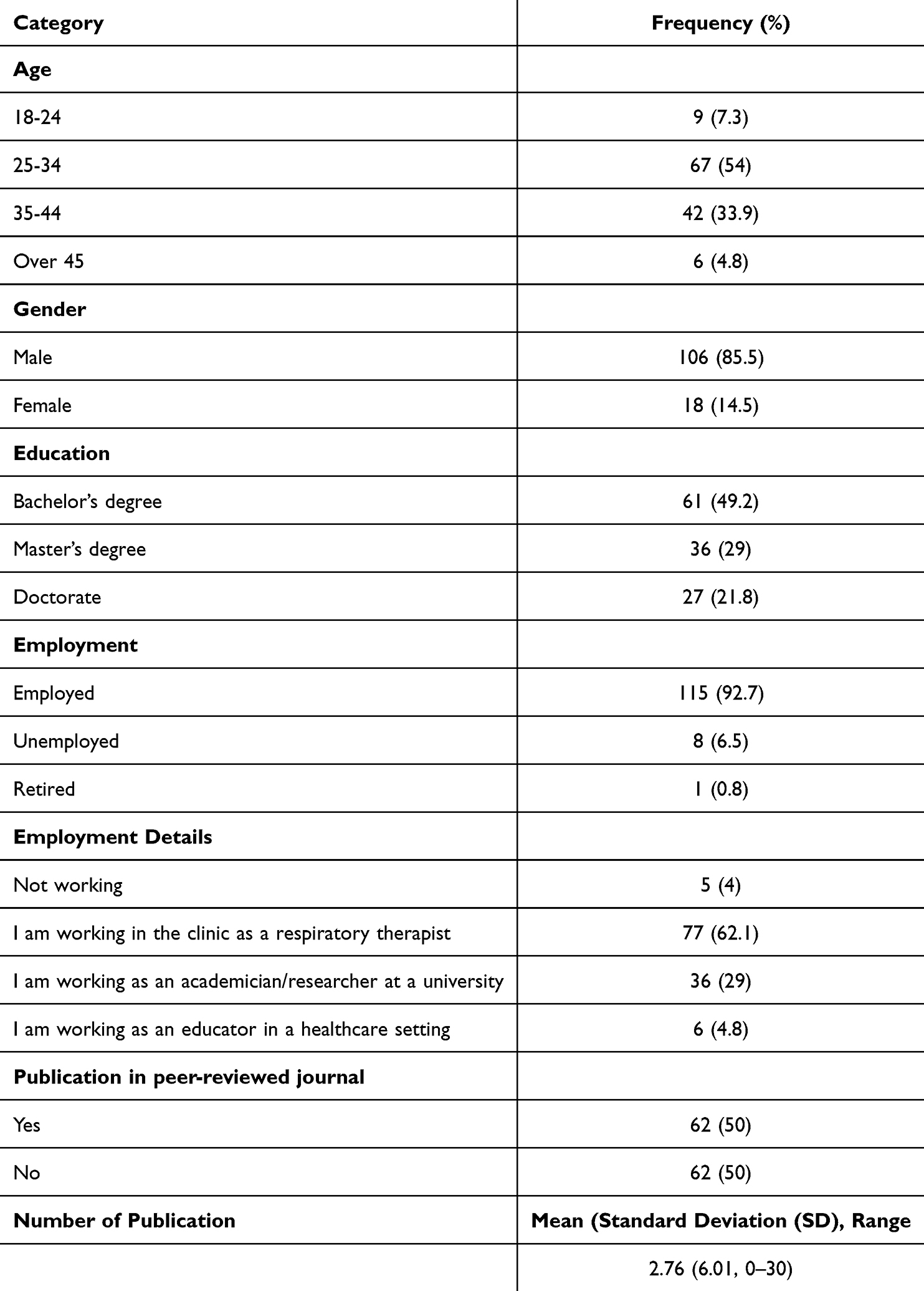 |
Table 1 Sociodemographic Characteristics of The Participants (n = 124) |
The Participants’ Attitudes and Knowledge About Research Barriers
The majority of respondents (52.8%) agreed that insufficient resources in their organizations obstruct their ability to conduct research. Participants reported inadequate access to institutional repositories of past research outcomes (44% agreement). Additionally, 55.1% of respondents agreed that their institutions face limitations due to either few students or lack of student interest, negatively impacting research activities. The most significant constraint was staffing limitations, with 65.4% reporting insufficient faculty and staff.
Resource access barriers were further compounded by limited database availability (52.7% agreement). While 56.7% of respondents felt they had adequate time for research, a substantial majority (61.6%) indicated that clinical duties take precedence over research activities. In terms of research competencies, 46.9% believed they had sufficient experience, while 57.2% felt they possessed the necessary skills, though 65.7% maintained strong motivation for research. Regarding workplace culture, 55.3% preferred pursuing only high-impact research, 51.6% perceived organizational support for research, and 49.4% reported insufficient research role models.
Nearly two-thirds (64.9%) noted lack of senior leadership enthusiasm for research, while 66.7% cited administrative overload as a limiting factor. Teaching and supervision responsibilities were reported to constrain research opportunities by 48.1% of respondents, and 65.3% identified inadequate protected research time as a barrier. Finally, 59.2% reported insufficient incentives and recognition for research as shown in Table 2.
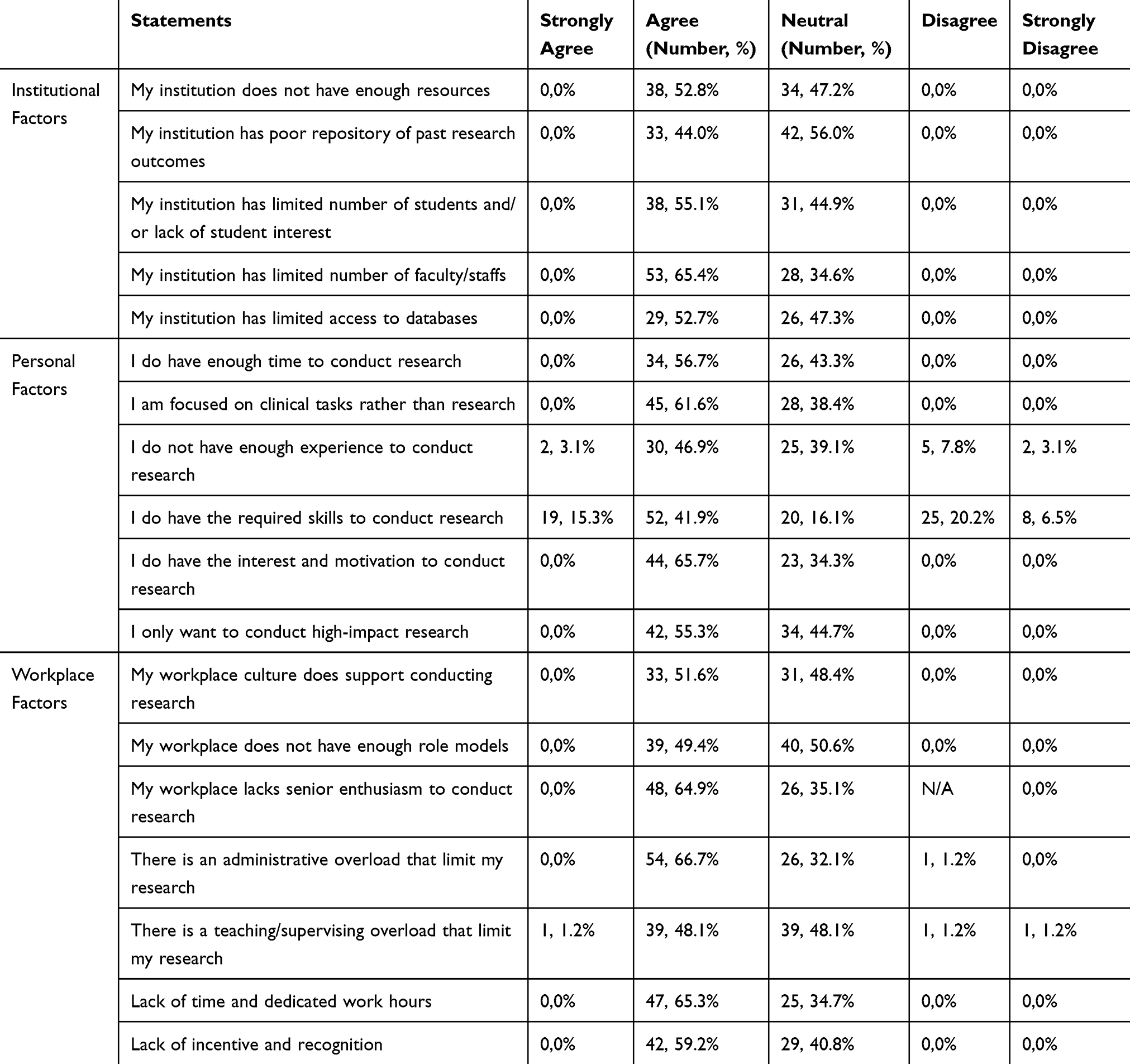 |
Table 2 Current Research Barriers: Participants’ Attitudes and Knowledge |
Thematic Analysis
The three open-ended questions were designed to evaluate the barriers faced by academician, researchers, those who are working in the clinical settings as respiratory therapists in Saudi Arabia. 109 participants answered all the questions. The first open ended question was, “describe in your own words the main barriers to conducting research?”. In the order of importance, most of the participants indicated that the lack of time and limited resources are the main barriers to conduct research. For the second open ended question which asked about “Describe what is the right solution to overcome this problem?”. 110 participants indicated that encourage respiratory therapists via financial support, decrease work hours, provide needed resources to conduct research, and provide continuously workshops to gain research skills are the main solutions to overcome barriers. Lastly, the third open ended questions which asked about “How’s organizational recognition help you to conduct research?” 87 answered this question, the participants indicated that provide incentives and rewards, and motivations as shown as shown in Table 3.
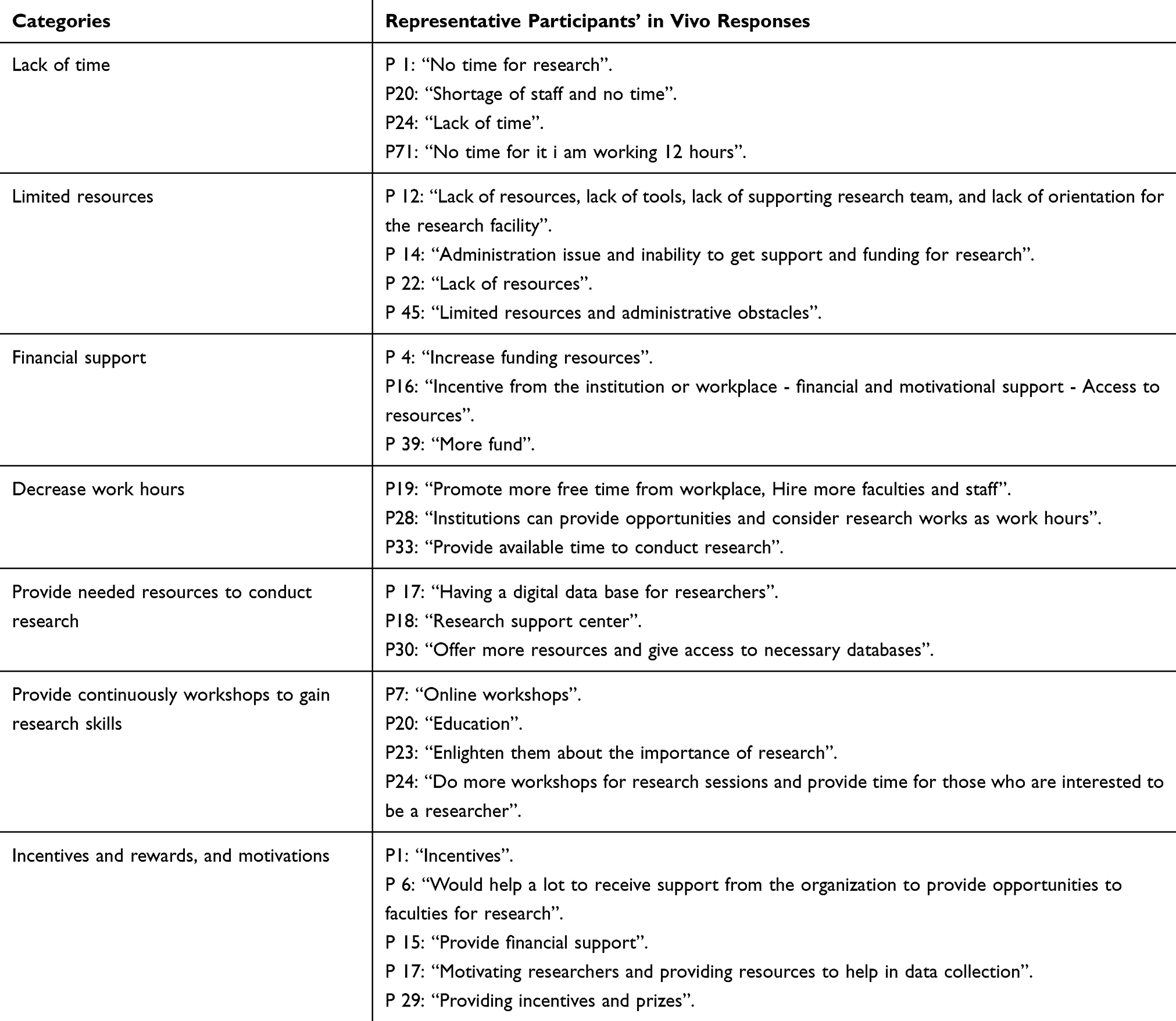 |
Table 3 Main Barriers and Solution to Conduct Research |
Discussion
Our study embarked on assessing the landscape of research and the barriers encountered by professionals in the respiratory care field within Saudi Arabia. By employing a questionnaire-based method, we quantitatively evaluated barrier prevalence while qualitatively exploring practitioners’ attitudes. This comprehensive analysis provides a comprehensive understanding of research challenges in respiratory care, revealing systemic complexities that hinder scholarly engagement. Our findings identify critical intervention points to enhance research capacity and reduce obstacles, ultimately contributing to the advancement of both knowledge and clinical practice in this field.
Institutional and Resource Barriers
Our study identified significant systemic barriers to research among respiratory therapists in Saudi Arabia. Participants reported multiple challenges:1 inadequate access to essential resources,2 poorly maintained research repositories,3 limited student pools with minimal research interest,4 critical faculty and staff shortages,5 restricted database access and funding limitations, and6 insufficient dedicated research time. These findings corroborate existing literature documenting similar obstacles, including deficits in protected research time, training opportunities, departmental support, mentorship availability, and research infrastructure.12,16 Additional studies have likewise emphasized how inadequate funding and institutional support substantially hinder respiratory care research.6,17
Research Competencies and Cultural Barriers
Notably, our findings align with Willis et al,12 demonstrating that a substantial proportion of respiratory therapists have contributed to peer-reviewed publications. This parallel underscores the urgent need to cultivate a robust research culture across all professional tiers—from undergraduate and postgraduate training (Master’s and Ph.D. levels) to practicing clinicians in academic, research, and clinical settings. A critical gap persists in current Respiratory Therapy (RT) education. For instance, most US programs award associate degrees with curricula that prioritize clinical skills development while systematically excluding research training.12 This educational shortfall represents a fundamental barrier to research engagement in the field. Consequently, integrating research methodology training must become a cornerstone of initiatives aimed at overcoming barriers for RT professionals in all practice settings. Our study identified six key obstacles: (1) clinical responsibilities overshadowing research activities, (2) insufficient research experience, (3) inadequate methodological skills, (4) limited research motivation, (5) excessive focus on high-impact studies, and (6) unsupportive institutional cultures with few research mentors. These results corroborate existing literature documenting deficient research environments, scarcity of qualified researchers, and skill gaps.9,17,18
Collaborative and Motivational Barriers
Our findings align with Bonfim et al’s19 study, which identified six key barriers to research: (1) planning challenges, (2) inadequate infrastructure, (3) limited healthcare professional engagement, (4) knowledge translation gaps, (5) weak university-health service partnerships, and (6) insufficient international collaboration. This convergence of evidence emphasizes the urgent need to address barriers confronting respiratory care professionals across clinical, research, and academic settings. Particularly crucial is strengthening collaboration between Saudi universities offering respiratory care programs and tertiary hospitals/research centers - a strategic partnership that could enhance research capacity through shared resources like datasets. Furthermore, our study revealed three additional systemic barriers: (1) lack of senior researcher engagement, (2) excessive administrative and teaching/supervision duties, and (3) inadequate recognition and incentives. These findings corroborate previous work documenting supervisor shortages and time constraints due to competing professional obligations.20,21
Study Implications
It is crucial to leverage the insights from our findings to significantly improve the research environment within the field of respiratory care. Recent data reveal that 23 institutions in Saudi Arabia offer respiratory care (RC) programs, employing approximately 35 Ph.D. holders in respiratory care across these universities.22 This situation underscores the critical importance of utilizing their doctoral and postdoctoral research training to foster a robust research culture within these institutions.
The presence of these highly trained professionals presents an invaluable opportunity to promote a culture of research and innovation. By capitalizing on their expertise and leadership, we can effectively address the barriers to research engagement identified in our study. It is essential to engage these Ph.D. holders in initiatives aimed at overcoming administrative hurdles, boosting enthusiasm for research, and facilitating collaborative research efforts. Promoting a culture of inquiry and innovation requires a concerted effort to integrate these professionals into the heart of the research process, enabling them to mentor emerging researchers, led by example, and drive forward the development of a dynamic and responsive research environment. Such an approach is vital for advancing the field of respiratory care, particularly in an era where rapid responses to respiratory health challenges are increasingly needed. Therefore, it is imperative that academic and healthcare institutions collaborate to implement strategies that leverage the capabilities of these Ph.D. holders. Doing so will not only overcome current barriers to research but also propel the field of respiratory care towards new heights of innovation and excellence.
Limitations
Our study presents with some limitations. The cross-sectional study design limits our ability to elucidate causal relationships. Response bias and recall bias may obscure the true correlations between variables. Social desirability bias may prevent us from obtaining accurate responses. The relatively small sample size may limit the generalizability of our findings to all respiratory therapists in Saudi Arabia, as it may not fully capture the diversity and variation within this professional group. This limitation underscores the need for caution when interpreting the results and highlights the importance of future studies with larger and more representative samples to validate and extend our findings. Convenience sampling may limit the generalizability of the findings to the wider respiratory care community in Saudi Arabia.
Recommendations and Future Research
Our findings underscore the critical importance of eliminating barriers that impede respiratory care researchers, thereby creating a more accessible research environment for both established and emerging scholars. As an initial step toward enhancing respiratory care research, this study identifies specific challenges faced by practitioners, including previously undocumented administrative hurdles and motivational barriers particular to Saudi Arabia’s context. These insights not only demonstrate respiratory therapists’ research potential despite existing constraints but also gain urgency given the growing demand for respiratory research amid emerging viral threats. The field requires innovative strategies prioritizing context-specific research agendas that address local healthcare challenges while removing systemic obstacles to participation. Such approaches would empower respiratory therapists while improving research quality and applicability. Future investigations should focus on developing targeted interventions to mitigate identified barriers, prioritize critical research topics, and understand motivational factors for research engagement. These coordinated efforts are essential for improving respiratory health outcomes, informing clinical practice, and optimizing resource allocation. By implementing evidence-based strategies, stakeholders can cultivate a supportive research ecosystem that directs efforts toward high-impact areas, ultimately advancing respiratory care for both practitioners and patients.
Conclusion
Our study provides a comprehensive examination of barriers facing respiratory care professionals engaged in research. The majority of respondents identified significant systemic obstacles, including inadequate resources, poor archival access to previous research, limited student and faculty numbers, and restricted database availability. Furthermore, despite possessing relevant skills, interest, and motivation to conduct high-impact research, practitioners face competing clinical priorities coupled with excessive administrative and teaching responsibilities. These challenges are exacerbated by an unsupportive institutional culture characterized by insufficient mentorship, lack of senior leadership engagement, and inadequate recognition for research efforts.
Disclosure
The authors report no conflicts of interest in this work.
References
1. Hess DR. Evidence-based respiratory care. Respir Care. 2021;66(7):1105–1119. doi:10.4187/respcare.08950
2. Organization, W. H. 2023. World health statistics 2023: monitoring health for the SDGs, sustainable development goals.
3. Briskin E. The global burden of disease and risk factors. In: Raviglione MCB, Tediosi F, Villa S, Casamitjana N, Plasència A, editors. Global Health Essentials. Sustainable Development Goals Series. Springer, Cham; 2023, p. 17–22. doi:10.1007/978-3-031-33851-9_3
4. Badea M, Gaman L, Delia C, et al. Trends of lipophilic, antioxidant and hematological parameters associated with conventional and electronic smoking habits in middle-age Romanians. J Clin Med. 2019;8(5):665. doi:10.3390/jcm8050665
5. Cruz JP, Colet PC, Alquwez N, et al. Evidence-based practice beliefs and implementation among the nursing bridge program students of a Saudi University. Int J Health Sci. 2016;10(3):405–414. doi:10.1155/2014/698604
6. Hakami MSA. Barriers to conducting and publishing scientific research among nursing faculty members in Saudi Arabia. J Multidiscip Healthc. 2023;16:2733–2743. doi:10.2147/jmdh.S429478
7. Hess DR. What is evidence-based medicine and why should I care? Respir Care. 2004;49(7):730–741.
8. Lafuente-Lafuente C, Leitao C, Kilani I, et al. Knowledge and use of evidence-based medicine in daily practice by health professionals: a cross-sectional survey. BMJ Open. 2019;9(3):e025224. doi:10.1136/bmjopen-2018-025224
9. Zaccagnini M, West A, Khor E, Quach S, Nonoyama ML. Exploring knowledge gaps and research needs in respiratory therapy: a qualitative description study. Can J Respir Ther. 2024;60:1–12. doi:10.29390/001c.91184
10. Institute of Medicine (US). Committee on Quality of Health Care in America. Crossing the Quality Chasm: A New Health System for the 21st Century. Washington (DC): National Academies Press (US); 2001.
11. Weng YH, Kuo KN, Chen C, Yang CY, Lo HL, Chiu YW. Profile of evidence-based practice among respiratory therapists in Taiwan. Respir Care. 2014;59(2):281–287. doi:10.4187/respcare.02611
12. Willis LD, Rintz J, Zaccagnini M, Miller AG, Li J. Barriers to respiratory care research in the United States. Respir Care. 2023;68(8):1112–1118. doi:10.4187/respcare.10899
13. Al-Otaibi HM. Characteristics and distribution of respiratory therapy practitioners in Saudi Arabia: national cross-sectional results. Hum Resour Health. 2024;22(80). doi:10.1186/s12960-024-00961-6
14. Kharraz R, Hamadah R, AlFawaz D, et al. Perceived barriers towards participation in undergraduate research activities among medical students at Alfaisal University-College of medicine: a Saudi Arabian perspective. Med Teach. 2016;38(Suppl 1):S12–S18. doi:10.3109/0142159X.2016.1142507
15. Creswell JW, Clark VLP. We are Designing and Conducting Mixed Methods Research.
16. Tomás CC, Oliveira E, Sousa D, et al. Proceedings of the 3rd IPLeiria’s international health congress: Leiria, Portugal. 6-7 May 2016. BMC Health Serv Res. 2016;16(Suppl 3):200. doi:10.1186/s12913-016-1423-5
17. Nonoyama ML, Mathur S, Herbert R, Jenkins H, Lobchuk M, McEvoy M. Past, present and future of respiratory research: a survey of Canadian health care professionals. Can Respir J. 2015;22(5):275–281. doi:10.1155/2015/968450
18. Kengia JT, Kalolo A, Barash D, et al. Research capacity, motivators and barriers to conducting research among healthcare providers in Tanzania’s public health system: a mixed methods study. Hum Resour Health. 2023;21(1):73. doi:10.1186/s12960-023-00858-w
19. Bonfim D, Belotti L, de Almeida LY, et al. Challenges and strategies for conducting research in primary health care practice: an integrative review. BMC Health Serv Res. 2023;23(1):1380. doi:10.1186/s12913-023-10382-1
20. Al-Subai RR, Kaleem MZ, Hassanien D, et al. Perceptions and experiences of pursuing research among medical students in problem-based learning curriculum: a cross-sectional study from Qatar. J Med Educ Curric Dev. 2024;11:23821205241227327. doi:10.1177/23821205241227327
21. Alotaibi K. Barriers to conducting and publishing research among nursing faculty members at Shaqra University, Saudi Arabia: a qualitative study. Nurs Open. 2023;10(10):7048–7057. doi:10.1002/nop2.1963
22. Almeshari MA, Alshehri Z, Alqahtani JS, et al. The status of respiratory care education in Saudi Arabia: a national survey of program directors. Adv Med Educ Pract. 2022;13:619–628. doi:10.2147/amep.S360658
 © 2025 The Author(s). This work is published and licensed by Dove Medical Press Limited. The
full terms of this license are available at https://www.dovepress.com/terms
and incorporate the Creative Commons Attribution
- Non Commercial (unported, 4.0) License.
By accessing the work you hereby accept the Terms. Non-commercial uses of the work are permitted
without any further permission from Dove Medical Press Limited, provided the work is properly
attributed. For permission for commercial use of this work, please see paragraphs 4.2 and 5 of our Terms.
© 2025 The Author(s). This work is published and licensed by Dove Medical Press Limited. The
full terms of this license are available at https://www.dovepress.com/terms
and incorporate the Creative Commons Attribution
- Non Commercial (unported, 4.0) License.
By accessing the work you hereby accept the Terms. Non-commercial uses of the work are permitted
without any further permission from Dove Medical Press Limited, provided the work is properly
attributed. For permission for commercial use of this work, please see paragraphs 4.2 and 5 of our Terms.
Recommended articles

A Systematic Scoping Review of Motivations and Barriers in COVID-19 Volunteering Among Health Students: The Potential for Future Pandemic Volunteers
Susanti RD, Yudianto K, Mulyana AM, Amalia IN
Journal of Multidisciplinary Healthcare 2023, 16:1671-1681
Published Date: 17 June 2023