
Back to Journals » Patient Preference and Adherence » Volume 19
Ukrainian Patients’ Perspectives on Advanced Pharmaceutical Services Provided by Polish Pharmacists: A Cross-Border Support Initiative
Authors Merks P, Religioni U  , Borowska M , Hechman R, Konstanty M, Kaźmierczak J, Chełstowska B, Vaillancourt R, Drab A, Wdowiak K
Received 13 August 2024
Accepted for publication 20 December 2024
Published 22 January 2025 Volume 2025:19 Pages 185—191
DOI https://doi.org/10.2147/PPA.S477925
Checked for plagiarism Yes
Review by Single anonymous peer review
Peer reviewer comments 2
Editor who approved publication: Dr Michael Ortiz
Piotr Merks,1– 4 Urszula Religioni,5 Mariola Borowska,6 Rafał Hechman,7 Mikołaj Konstanty,8 Justyna Kaźmierczak,9 Beata Chełstowska,10 Regis Vaillancourt,1 Agnieszka Drab,11 Krystian Wdowiak12
1Faculty of Medicine, Collegium Medicum. Cardinal Stefan Wyszyński University, Warsaw, Poland; 2The Polish Pharmacy Practice Research Network (PPPRN), Warsaw, Poland; 3Trade Union of Pharmacy Workers (ZZPF), Warsaw, Poland; 4European Association of Employed Community Pharmacists (Epheu), Vienna, Austria; 5School of Public Health, Centre of Postgraduate Medical Education of Warsaw, Warsaw, Poland; 6Cancer Epidemiology and Primary Prevention Department, Maria Skłodowska-Curie National Cancer Institute, Warsaw, Poland; 7Farmaceuci.org, Katowice, Poland; 8Polish Pharmaceutical Chamber, Warsaw, Poland; 9Silesian Pharmacy Chamber, Katowice, Poland; 10Department of Biochemistry and Laboratory Diagnostics, Faculty of Medicine, Collegium Medicum, Cardinal Stefan Wyszyński University, Warsaw, Poland; 11Department of Medical Informatics and Statistics with e-Health Lab, Medical University of Lublin, Lublin, Poland; 12Faculty of Medicine, Medical University of Lublin, Lublin, Poland
Correspondence: Mariola Borowska, Email [email protected]
Introduction: Pharmacists are essential healthcare professionals which play a pivotal role in public health protection by offering diverse pharmacy services. This includes not only serving individuals in Ukraine but also addressing the needs of Ukrainian citizens residing in Poland. An exemplary initiative is the creation of the website farmaceucidlaukrainy.pl, which provides organized and systematic support.
Aim: This study aims to evaluate the perceptions of Ukrainian immigrant patients from Ukraine regarding the advanced pharmaceutical consultation service provided by Polish pharmacists.
Material and Methods: This study included 250 respondents from Ukraine. The study was conducted in 2022 using an anonymous survey. The survey was distributed after pharmaceutical consultations in one of the cities near the Polish-Ukrainian border. As part of the project, Ukrainian patients who had run out of medicines due to war brought their medications to pharmacy counselling points organized by Polish pharmacists, and the pharmacists helped them find equivalents ias well as help treated minor ailments in Poland.
Results: Practically all respondents strongly agree with all the statements posed in the survey, the percentage of such responses was close to 95%, with the lowest percentage observed for the statement “If possible, I would like this kind of service to be offered in any Polish pharmacy”, which was 90.40%.
Conclusion: Ukrainian patients highly appreciated the pharmaceutical consultation services provided by Polish pharmacists. The information given by pharmacists was clear and practical, and the services were deemed highly supportive. Expanding such initiatives to other assistance points could enhance the support network for displaced individuals.
Keywords: pharmacy services, pharmacist, patient, war, refugee
Introduction
Pharmacists play a significant role in public health through disease prevention, health promotion, and education. Their pharmaceutical expertise and accessibility to both patients and healthcare providers position them as vital contributors to improving adherence, disease management, and quality of life.1 Numerous studies confirm the clinical effectiveness of pharmaceutical care, particularly in managing chronic conditions such as asthma and cardiovascular diseases. These services contribute to better health outcomes, leading to improved therapy results and an enhanced quality of life for chronically ill patients.2–4
The expanding role of pharmacists has brought attention to the concept of Pharmaceutical Public Health, which encompasses pharmacists’ broader societal contributions beyond individualized pharmaceutical care. This evolution aims to extend the benefits of pharmaceutical services to specific patient groups and society as a whole.5,6 The introduction of the Pharmaceutical Profession Act on April 16, 2021, marked a significant milestone, granting pharmacists in Poland the authority to provide pharmaceutical care, including consultations, medication reviews, individualized care plans, diagnostic testing, and issuing prescriptions.7,8
Pharmacists’ role further expanded during the COVID-19 pandemic. By mid-2021, pharmacies in Poland began offering vaccination services, starting with COVID-19 vaccines and later including flu vaccinations.8 These advancements highlight pharmacists’ potential to address emerging public health challenges effectively.
The war in Ukraine caused an unprecedented refugee influx into Europe, with Poland hosting over 3.4 million Ukrainians at its peak in May 2022. This migration significantly impacted the country’s healthcare system, with Ukrainians constituting 8% of Poland’s population by early 2023.9 In response, Polish pharmacists provided critical assistance to both individuals within Ukraine and refugees in Poland. Initiatives like farmaceucidlaukrainy.pl offered verified information on healthcare, medication availability, and other essential services for displaced individuals.10,11
This study aims to evaluate the quality of pharmaceutical care provided to Ukrainian citizens at refugee reception centers and pharmacies near the Polish-Ukrainian border, focusing on the perspectives of immigrant patients.
Materials and Methods
The patient opinion survey was conducted between February and June 2022, using a proprietary questionnaire designed to evaluate Ukrainian patients’ satisfaction with pharmaceutical consultation services provided in Poland. A total of 250 respondents participated in the survey, which was distributed by Polish pharmacists to Ukrainian patients at pharmacies and pharmaceutical consultation points in Siemianowice Śląskie, near the Polish-Ukrainian border. The surveys were completed in paper form.
To ensure clarity, relevance, and freedom from bias, the questionnaire was developed with input from experienced pharmacists and public health researchers. It underwent a pre-testing phase with six individuals (three pharmacists, two physicians, and one nurse) to assess comprehensibility, reliability, and content validity. Feedback from this pre-test phase led to minor adjustments to improve question phrasing and response options.
The questionnaire was available in both Ukrainian and Russian to accommodate language preferences. It consisted of five closed-ended, single-choice substantive questions and a demographic section that captured respondents’ gender, age, education level, marital status, place of origin, and the location where the service was provided. Respondents rated the substantive questions on a 5-point Likert scale, where 1 indicated “completely disagree” and 5 indicated “completely agree”. An additional open-ended question allowed patients to suggest improvements to the service.
Inclusion criteria required participants to meet the following conditions: they had to be Ukrainian citizens who arrived in Poland after February 24, 2022, due to the war in Ukraine; they had to be aged 18 or older; they must have used the pharmaceutical consultation services provided at designated points in Siemianowice Śląskie; and they needed to be able to complete the questionnaire in either Ukrainian or Russian. Participants who did not meet these criteria or who declined to provide informed consent were excluded from the survey.
Survey Questions
The five substantive questions focused on patient satisfaction and the perceived quality of pharmaceutical services:
1. When I obtained the medicines, the pharmacist explained their use.
2. I understand the information provided by the pharmacist.
3. The pharmacist’s medicine counseling service was very helpful.
4. If possible, I would like this kind of service to be offered in any Polish pharmacy.
5. I think this kind of pharmacy service should be provided in other regions worldwide.
Pharmaceutical Services Provided
The pharmaceutical consultation service aimed to address the immediate health needs of Ukrainian refugees, including the provision of over-the-counter (OTC) medications for minor ailments (eg, pain, fever, cough) and the substitution of Ukrainian medicines with their Polish or EU equivalents. This substitution was often challenging due to differences in market availability and regulatory approvals. Common ailments treated included colds, gastrointestinal issues, and allergies, for which pharmacists dispensed electrolytes, activated charcoal, probiotics, antipyretics, and antitussives.
The temporary pharmacy, operated by the Farmaceuci.org Foundation, was established to meet the urgent needs reported by volunteers, including a lack of essential medications. The facility provided pharmaceutical care, including generic substitution services, helping patients find Polish equivalents for medications typical of the Ukrainian market.
Statistical Analysis
Statistical analyses were conducted using the STATISTICA software suite, version 13.0 (StatSoft, Inc., 2017). Figures were created using Microsoft Excel 2010, version 14.0.7268.5000Quantitative variables were described using the arithmetic mean and standard deviation, or median with the interquartile range (1st – 3rd quartile), or minimum/maximum (range), along with the 95% confidence interval. Qualitative variables were presented as counts and percentages. To assess whether a quantitative variable followed a normal distribution, the Shapiro–Wilk test was applied. Pearson’s chi-square test, Cramer’s V, and the Mann–Whitney U-test were used to determine the dependence, strength, and direction of relationships between variables. A statistical significance level of p = 0.05 was applied in all calculations.
Results
Characteristics of the Study Group
250 respondents participated in the study, the majority of whom were men (70.80%) (Table 1). The median age of the respondents was 39 (30–46) years, with the youngest being 20 and the oldest 81 years old. Most of the respondents had higher education (38.8%) or secondary education (35.60%). The main group of respondents were individuals who were married/cohabited (48.80%). The vast majority of respondents lived in cities, mainly in towns with up to 200,000 inhabitants (31.60%) and cities with over 500,000 inhabitants (32.00%). In most cases, the service was offered at refugee border admittance centers.
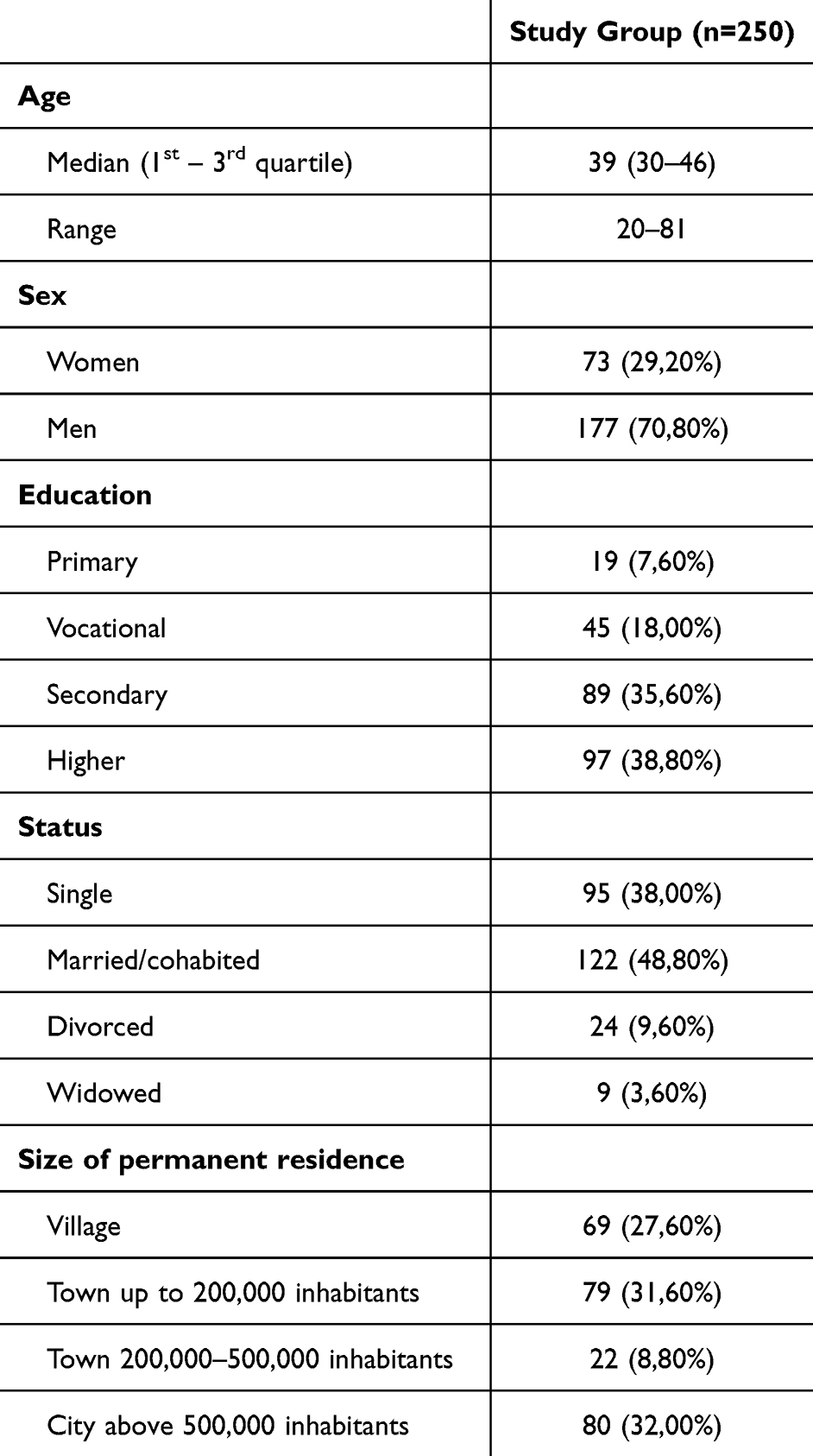 |
Table 1 Demographic Characteristics of the Study Group |
Results
Practically all respondents strongly agree with all the statements posed in the survey (Table 2) – the percentage of such responses was close to 95%, with the lowest percentage observed for the statement “If possible, I would like this kind of service to be offered in any Polish pharmacy”, which was 90.40%.
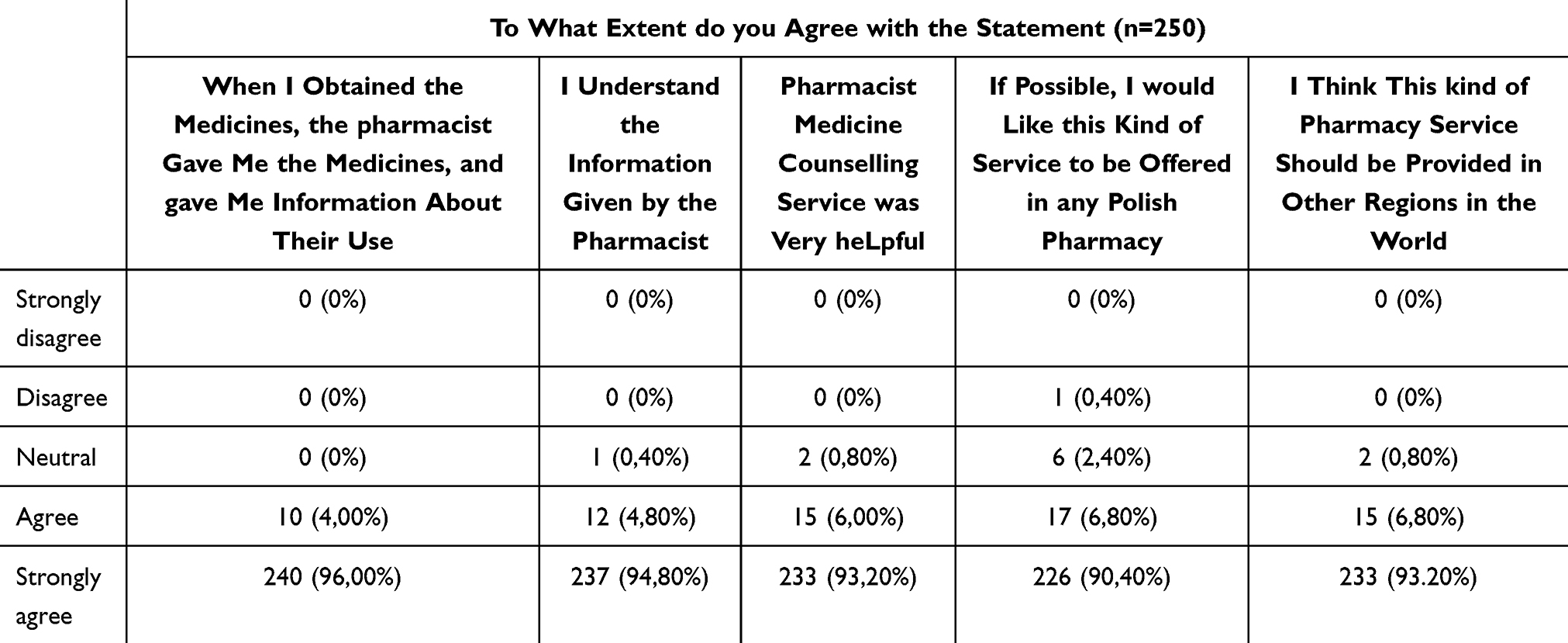 |
Table 2 Respondents’ Answers to the Survey Questions |
The survey results reveal overwhelmingly positive feedback from respondents regarding the pharmaceutical consultation services provided by Polish pharmacists. The majority of participants strongly agreed with the statements, indicating a high level of satisfaction across all evaluated aspects.
Specifically, 96.00% of respondents strongly agreed that pharmacists provided information about the use of medicines when dispensing them, while an additional 4.00% agreed. No respondents expressed disagreement or neutrality for this statement, reflecting a universal acknowledgment of the pharmacists’ efforts in communication and guidance.
Regarding the clarity of the information provided, 94.80% of respondents strongly agreed that they understood the pharmacists’ explanations, and 4.80% agreed, with only one participant (0.40%) indicating a neutral opinion. This suggests that the pharmacists’ communication was effective and well-received by almost all patients.
Similarly, 93.20% of respondents strongly agreed that the pharmaceutical counseling services were very helpful, with 6.00% agreeing and 0.80% expressing a neutral opinion. No respondents disagreed or strongly disagreed, further highlighting the perceived value of the services provided.
When asked about the potential expansion of such services, 90.40% of participants strongly agreed that this type of service should be offered in all Polish pharmacies, with 6.80% agreeing and 2.40% remaining neutral. Only one participant (0.40%) disagreed, indicating strong overall support for wider availability of these services.
Lastly, the idea of providing similar services in other regions globally also garnered significant support, with 93.20% strongly agreeing and 6.00% agreeing. A small proportion (0.80%) expressed neutrality, while no participants disagreed.
These results demonstrate that respondents not only valued the services but also strongly supported their broader implementation both in Poland and internationally. The high percentage of agreement and lack of negative responses highlight the effectiveness of the pharmacists’ approach and the critical role they played in addressing the healthcare needs of Ukrainian refugees. Residents of towns with 200,000–500,000 inhabitants less frequently agreed with the statement “When I obtained the medicines, the pharmacist gave me the medicines, and gave me information about their use” (p=0.03) – this relationship is weak. No other relationships between the data were identified.
Discussion
This study highlights the critical role that pharmacists play in providing care during crisis situations, such as the war in Ukraine. The findings align with existing literature that underscores the importance of pharmacists in supporting vulnerable populations by ensuring access to essential medications and providing patient-centered care. Historically, mobile pharmacies have proven invaluable during major wartime events, as evidenced in a descriptive review of their role in Europe and the USA. This review highlighted the significant contribution of mobile pharmacies in delivering medical aid and addressing the needs of displaced populations during emergencies.12 The current situation involving Ukrainian refugees reaffirms the necessity of flexible pharmaceutical services that can adapt to crisis contexts.
Similar findings are observed in other conflict-affected regions, where pharmacists have demonstrated their capacity to improve health outcomes under challenging circumstances. For instance, a study evaluating pharmaceutical care for women with PCOS in Syria, a war-affected country, and Jordan, a non-war zone, found that pharmacist-led interventions focusing on lifestyle modifications significantly enhanced quality of life scores for participants in both settings. This highlights the adaptability of pharmaceutical care, showcasing its effectiveness regardless of geographic or sociopolitical conditions.13
Pharmaceutical care, a concept introduced in the 20th century, has gradually shifted the pharmacist’s focus from traditional drug preparation to patient-centered services. This evolution has been driven by the goal of achieving better therapeutic outcomes, ensuring patient safety, and improving overall quality of life.14 Over time, the pharmacist’s role has expanded to include educational communication and individualized care, addressing patients’ specific needs.15,16 However, global crises such as the COVID-19 pandemic have profoundly disrupted pharmaceutical practices, leading to significant adaptations in service delivery. During the pandemic, pharmacists assumed broader responsibilities, including public education, patient counseling, and community care, as shown in global assessments and studies conducted across Europe. These studies underscored the vital contributions of pharmacists in maintaining public health, particularly in improving the quality of life for patients affected by COVID-19.17–19
Pharmacists are widely regarded as the most accessible professionals in healthcare, playing a supportive role in medical practice.20 They have taken on diverse roles, such as drug and medicine experts, healthcare educators, counselors, mentors, managers, and leaders, which are integral to their contributions to both community and hospital settings.21 Additionally, in Kosovo, pharmacists’ efforts during the pandemic to implement preventive measures and provide educational materials enhanced the perception of their value among patients and healthcare professionals. Pharmacists were actively involved in creating and distributing educational content and offering direct counseling, further solidifying their role as accessible and trusted healthcare providers.22
These findings align with the results of this study, which demonstrate high levels of satisfaction among Ukrainian refugees regarding pharmaceutical services provided by Polish pharmacists. Respondents appreciated the clarity of the information they received, the helpfulness of the consultations, and expressed a desire for such services to be expanded to all Polish pharmacies and beyond.
While the results of this study indicate overwhelmingly positive feedback, some limitations must be acknowledged. The lack of variability in responses and the absence of specific suggestions for improvement may reflect potential biases within the sample or limitations in the survey design. Gratitude expressed by respondents, given their reliance on these services during a time of crisis, might have influenced the feedback, potentially leading to less critical responses. Furthermore, the study was conducted in a single location, Siemianowice Śląskie, which limits the generalizability of the findings to the broader population of Ukrainian refugees in Poland.
Future research should address these limitations by including a more diverse and representative sample from multiple regions, as well as refining survey tools to capture a broader range of perspectives. Comparative studies examining pharmacist-led services in other crisis-affected regions could provide valuable insights into the common challenges and effective strategies for delivering pharmaceutical care. Additionally, exploring the long-term impacts of these services on patient health outcomes and their integration into healthcare systems would enhance our understanding of their overall effectiveness. Policymakers should consider developing standardized guidelines for pharmacist-led interventions in crisis situations to optimize their contribution to public health.
In conclusion, this study adds to the growing evidence of the indispensable role of pharmacists in crisis settings. By addressing urgent health needs, pharmacists not only support individual patients but also strengthen the resilience of healthcare systems. Expanding and standardizing pharmaceutical services in crisis-affected regions could further improve health outcomes and enhance the quality of life for vulnerable populations worldwide.12,17,20–22
Conclusion
This study demonstrates that Ukrainian patients held a highly favorable opinion of the pharmaceutical services provided by Polish pharmacists during a time of crisis. Respondents consistently rated the information offered by pharmacists as clear and understandable, and they found the advisory services to be exceptionally helpful. These findings highlight the critical role of pharmacists in addressing the immediate healthcare needs of displaced populations, particularly through the substitution of unavailable medications, the treatment of minor ailments, and the provision of professional health guidance. Importantly, patients expressed a desire for such services to be widely available in all Polish pharmacies and indicated that this model of care could benefit other regions worldwide, underscoring the universal relevance of pharmacist-led interventions in both crisis and non-crisis settings.
Given the overwhelmingly positive feedback, it would be worthwhile to expand these services to additional assistance points and to explore their integration into broader public health frameworks. Pharmacists’ accessibility and trustworthiness make them uniquely positioned to provide personalized care and alleviate gaps in healthcare access during emergencies. Future efforts should focus on replicating this model in other regions, particularly in areas facing similar challenges, and on developing standardized protocols to optimize pharmacists’ contributions in such settings. By institutionalizing these services, it is possible to enhance health outcomes, improve the quality of life for vulnerable populations, and strengthen the resilience of healthcare systems in response to crises.
Limitations of the Study
The study results indicate a high level of patient satisfaction; however, the lack of response variability and the predominantly positive feedback suggest potential limitations in the survey design and sample diversity. The homogeneity of the respondents, combined with the phrasing of the questions, may have constrained the ability to capture more nuanced or critical perspectives. Addressing these methodological aspects in future studies could provide a more comprehensive understanding of patient experiences and ensure more generalizable results.
What is more, efforts were made to minimize bias, including ensuring anonymity and emphasizing to respondents that their honest feedback, whether positive or negative, was invaluable. However, the possibility of social desirability bias remains, as patients may have felt inclined to provide favorable responses due to their gratitude toward the pharmacists.
We are also aware that the survey was conducted in a single location (Siemianowice Śląskie), which may limit the generalizability of the findings to all Ukrainian refugees in Poland. Future studies should include a broader geographical sample to capture more diverse experiences.
Ethics Statements
The study was approved by the Bioethics Commission operating at Poznan University of Medical Sciences (decision No. KB 222/24). All participants provided informed consent, in accordance with the Declaration of Helsinki.
Funding
There is no funding to report.
Disclosure
The authors report no conflicts of interest in this work.
References
1. Petite SE, Hess MW, Wachtel H. The role of the pharmacist in inhaler selection and education in chronic obstructive pulmonary disease. J Pharm Technol. 2021;37(2):95–106. doi:10.1177/8755122520937649
2. Swieczkowski D, Poniatowski P, Merks P, et al. The pharmaceutical care in asthma – polish and global perspective. Pneumonol Alergol Pol. 2016;84(4):225–231. doi:10.5603/PiAP.2016.0028
3. Swieczkowski D, Mogielnicki M, Merks P, et al. Pharmaceutical services as a tool to improve outcomes in patients with cardiovascular diseases. Int J Cardiol. 2016;222:238–241. doi:10.1016/j.ijcard.2016.07.189
4. Świeczkowski D, Merks P, Gruchala M, et al. The role of the pharmacist in the care of patients with cardiovascular diseases. Kardiol Pol. 2016;74(11):1319–1326. doi:10.5603/KP.a2016.0136
5. Pharmaceutical public health: the end of pharmaceutical care? Available from: http://www.pharmaceutical-journal.com/pharmaceutical-public-healththe-end-of-pharmaceutical-care/20000598.article.
6. Bogdan M, Świeczkowski D, Religioni U. The role of pharmacist in Polish healthcare system in the context of public health protection. Farmacja Wspolczesna. 2017;10:260–266.
7. Ustawa z dnia 10 grudnia 2020 r. o zawodzie farmaceuty. Dz.U [Act of 10 December 2020 on the profession of pharmacist. Journal of Laws 2021, item 97]. 2021.
8. Podsumowanie stopnia realizacji dokumentu strategicznego Polityka Lekowa Państwa 2018-2022[Summary of the degree of implementation of the strategic document State Drug Policy 2018-2022. Ministry of Health. Department of Drug Policy and Pharmacy]. Ministerstwo Zdrowia. Departament Polityki Lekowej I Farmacji.
9. Sytuacja życiowa i ekonomiczna migrantów z Ukrainy w Polsce – Wpływ pandemii i wojny na charakter migracji w Polsce. Raport z badania ankietowego[The life and economic situation of migrants from Ukraine in Poland – The impact of the pandemic and war on the nature of migration in Poland. Survey report. Warsaw 2023: National Bank of Poland. Department of Statistics]. Warszawa 2023r:Narodowy Bank Polski. Departament Statystyki.
10. Supreme Chamber of Pharmacists. SERVICE “PHARMACISTS FOR UKRAINE” IS NOW OPERATING! SUPREME CHAMBER OF PHARMACIES LAUNCHES SYSTEM SUPPORT. Available from: https://www.nia.org.pl/2022/03/02/serwis-farmaceuci-dla-ukrainy-juz-dziala-naczelna-izba-aptekarska-uruchamia-systemowe-wsparcie/.
11. Supreme Chamber of Pharmacists. Pharmacists for Ukraine. Availabe from: https://farmaceucidlaukrainy.pl/.
12. Sukalo A, Catic T, Skrbo A, Zunic L, Masic I. Mobile pharmacies throughout history. Mater Sociomed. 2021;33(2):148–159. doi:10.5455/msm.2021.33.148-159
13. Alkoudsi KT, Al-Qudah R, Basheti IA. Assessing the effectiveness of a pharmaceutical care service on the quality of life of women with polycystic ovarian syndrome living in war and non-war countries. J Eval Clin Pract. 2020;26(5):1467–1477. doi:10.1111/jep.13310
14. Hepler CD, Strand LM. Opportunities and responsibilities in pharmaceutical care. Am J Hosp Pharm. 1990;47:533–543.
15. van Mil JWF. Definitions of pharmaceutical care and related concepts. In: The Pharmacist Guide to Implementing Pharmaceutical Care. Berlin/Heidelberg, Germany: Springer; 2019:3–10.
16. Morgovan C, Cosma S, Burta C, Ghibu S, Polinicencu C, Vasilescu D. Measures to reduce the effects of the economic and financial crisis in pharmaceutical companies. Farmacia. 2010;58:400–407.
17. Turcu-Stiolica A, Bogdan M, Subtirelu M-S, et al. Influence of COVID-19 on health-related quality of life and the perception of being vaccinated to prevent COVID-19: an approach for community pharmacists from Romania and Bulgaria. J Clin Med. 2021;10:864. doi:10.3390/jcm10040864
18. Ghibu S, Juncan AM, Rus LL, et al. The particularities of pharmaceutical care in improving public health service during the COVID-19 pandemic. Int J Environ Res Public Health. 2021;18(18):9776. doi:10.3390/ijerph18189776
19. Paudyal V, Cadogan C, Fialová D, et al. Provision of clinical pharmacy services during the COVID-19 pandemic: experiences of pharmacists from 16 European countries. Res Social Adm Pharm. 2021;17(8):1507–1517. doi:10.1016/j.sapharm.2020.11.017
20. Ahmad A, Alkharfy KM, Alrabiah Z, Alhossan A. Saudi Arabia, pharmacists and COVID-19 pandemic. J Pharm Policy Pract. 2020;13:1–3. doi:10.1186/s40545-020-00243-1
21. Bragazzi N, Mansour M, Bonsignore A, Ciliberti R. The role of hospital and community pharmacists in the management of COVID-19: towards an expanded definition of the roles, responsibilities, and duties of the pharmacist. Pharmacy. 2020;8:140. doi:10.3390/pharmacy8030140
22. Hoti K, Jakupi A, Hetemi D, Raka D, Hughes J, Desselle S. Provision of community pharmacy services during COVID-19 pandemic: a cross sectional study of community pharmacists’ experiences with preventative measures and sources of information. Int J Clin Pharm. 2020;42:1197–1206. doi:10.1007/s11096-020-01078-1
 © 2025 The Author(s). This work is published and licensed by Dove Medical Press Limited. The
full terms of this license are available at https://www.dovepress.com/terms
and incorporate the Creative Commons Attribution
- Non Commercial (unported, 3.0) License.
By accessing the work you hereby accept the Terms. Non-commercial uses of the work are permitted
without any further permission from Dove Medical Press Limited, provided the work is properly
attributed. For permission for commercial use of this work, please see paragraphs 4.2 and 5 of our Terms.
© 2025 The Author(s). This work is published and licensed by Dove Medical Press Limited. The
full terms of this license are available at https://www.dovepress.com/terms
and incorporate the Creative Commons Attribution
- Non Commercial (unported, 3.0) License.
By accessing the work you hereby accept the Terms. Non-commercial uses of the work are permitted
without any further permission from Dove Medical Press Limited, provided the work is properly
attributed. For permission for commercial use of this work, please see paragraphs 4.2 and 5 of our Terms.
Recommended articles
People Living with Chronic Obstructive Pulmonary Disease (COPD) and Inhalers: Insights and Suggestions from a Human Factors Study on NEXThaler
Scichilone N, Whittamore A, White C, Nudo E, Savella M, Lombardini M
Patient Preference and Adherence 2024, 18:2415-2423
Published Date: 3 December 2024
Understanding Gaps in Pharmacist–Patient Role Perceptions: Implications for Collaborative Care
Jarab AS, Al-Qerem W, Alzoubi ANA, Al Meslamani AZ, Elsherif R, Al Mazrouei N, Alkhatatbeh M, Al Hamarneh YN, Eberhardt J, Aburuz S
Journal of Multidisciplinary Healthcare 2026, 19:605078
Published Date: 5 May 2026