
Back to Journals » Advances in Medical Education and Practice » Volume 16

The Relationship Between Preferred Learning Styles and Academic Achievement of Undergraduate Health Sciences Students Compared to Other Disciplines at a Middle Eastern University Utilizing the VARK Instrument
Authors Gangadharan S  , Al Mezeini K, Gnanamuthu SS, Al Marshoudi KA
Received 11 September 2024
Accepted for publication 22 November 2024
Published 16 January 2025 Volume 2025:16 Pages 13—28
DOI https://doi.org/10.2147/AMEP.S491487
Checked for plagiarism Yes
Review by Single anonymous peer review
Peer reviewer comments 3
Editor who approved publication: Prof. Dr. Balakrishnan Nair
Shobana Gangadharan, Khamis Al Mezeini, Sumathi Sasikala Gnanamuthu, Khadija A Al Marshoudi
College of Health Sciences, University of Buraimi, Buraimi Governorate, Oman
Correspondence: Shobana Gangadharan, College of Health Sciences, University of Buraimi, P.O Box 890, Al Buraimi, Postal Code 512, Oman, Tel +968 92474074, Email [email protected]
Introduction: Learning style denotes a learner’s approach to acquiring, processing, interpreting, organizing, and contemplating information. VARK, formulated by Fleming and Mills (1992), assesses learning styles: Visual (V), Aural (A), Reading/Writing (R), and Kinesthetic (K). Visual learners prefer observing; Aural learners favor listening to lectures; Reading/Writing learners engage through texts and notes; Kinesthetic learners benefit from tactile activities.
Purpose: To compare learning style preferences of undergraduate health sciences students with other disciplines and examine the relationship between VARK scores and academic performance.
Methods: A cross-sectional study of 347 undergraduate students recorded demographic data and responses to the Arabic version of the VARK questionnaire. Data were analyzed using SPSS version 27 which included descriptive and inferential statistics.
Results: Unimodal preferences were most common, ranging from 47.4% to 51.4% in the College of Health Sciences and 11.8% to 15.0% in the College of Law as the least. Quadmodal preferences were rare but more frequent in Health Sciences and Engineering. Auditory (A) was the most preferred unimodal style (Mean/SD - 3.72/2.181), while kinesthetic (Mean/SD - 0.54/.864) was the least preferred. Mann–Whitney U-test results indicated Health Sciences students scored higher in K (Z = − 4.558, p< 0.001) and total VARK scores (Z = − 3.633, p< 0.001). There was a statistically significant difference in CGPA between unimodal and multimodal learners (Z = − 2.150, p=0.032), with unimodal learners ranking lower.
Conclusion: The findings suggest that multimodal learners outperformed unimodal learners, even though unimodal learners constituted a larger group. The Health Sciences and Engineering students exhibited marginally higher Quadmodal learning preferences than other disciplines, indicating the need for comprehensive and engaging learning experiences. These results have practical implications for educators, who should consider learning styles to enhance teaching strategies, address unique student challenges, and create an inclusive educational environment.
Keywords: learning style, VARK, academic achievement, health sciences, university, undergraduate students
Introduction
Education is the process of facilitating learning, which encompasses the acquisition of knowledge, skills, values, and habits.1 Learning is a multifaceted process that is influenced by various factors, including the educational environment, the curriculum, the educator, and the student.2 Factors that affect academic achievements, such as learning styles, are important considerations in the educational process.3 Academic achievement is a critical predictor of future academic status, making it a crucial parameter for learners.4 Learning style is defined as a combination of cognitive, emotional, and physiological traits that illustrates how the learner perceives and responds to the learning environment.5 Understanding the learning style of learners can be effective in organizing and modifying the learning environment and teaching and learning process.6
Over the past few decades, medical education has rapidly shifted from a teacher-centered passive approach to a student-centered active approach. Thus, awareness about preferred learning styles can be useful for pupils and educators.7 Instructors can modify their teaching strategies to align with the learners’ preferences by incorporating various teaching styles. According to research, when instruction is tailored to a student’s learning style, their motivation and performance improve.8 Additionally, understanding one’s learning style can help minimize the amount of time spent learning, increase engagement, and enhance learning outcomes and efficiency.9 There are several methods to measure learning styles, and the VARK (an acronym for Visual, Aural, Read/write and Kinesthetic, learning styles) questionnaire developed by Fleming and Mills (1992) is the most widely used one.10 Fleming primarily developed VARK based on his observations as a school inspector and interactions with students and teachers at Lincoln University of New Zealand.11 VARK is a learning inventory grouped under the “instructional preference” model. VARK categorizes learning by sensory preferences.12 Visual learners (V) prefer to learn by watching videos, images, figures, and flowcharts. Aural learners (A) like to process information by listening to lectures, tutorials, and seminars; reading-writing learners (R) prefer to read texts/written words repeatedly and write/take notes, and kinesthetic learners (K) prefer to learn by connecting to reality through touch and manipulation of objects, kinesthetic learners acquire information by experience and practice.10,13 A learner’s style preference can be unimodal or multimodal. Singular or unimodal with one main preferred modality: a multimodal pattern incorporates students who can acquire or process information through more than one style of learning. Multimodal includes bimodal, trimodal or quadmodal, bimodal with two preferences, trimodal with three, or quadmodal with the preference including of all four types.14,15
Numerous attempts have been made to improve the academic performance of students. There are various ways to measure students’ academic performance, including their problem-solving skills, fieldwork clinical performance, Grade Point Average (GPA), and course completion.16 As such, one of the most crucial responsibilities and challenges of instructors is to present information using a range of teaching methods because teaching and learning styles can impact student success. To be effective teachers, faculty members must possess content expertise, pedagogical knowledge, and knowledge of the learner’s characteristics and learning preferences.17
Learning styles can differ from one student to another and can also change over time.18 The brain’s capacity to regenerate and develop over time can influence students’ attitudes toward learning based on the insights they gain from their educational environment.19
Little is known about the distribution of learning style preferences among higher-education students in Oman, where culture and education differ significantly from those in Western countries. To address this gap, our study aimed to examine the preferred learning styles of health sciences students compared to other discipline students in a University in Oman. Additionally, we investigated the relationship between these preferences and students’ academic performance.
Materials and Methods
Study Design
This descriptive cross-sectional study was conducted among undergraduate students at the University of Buraimi, Oman, during the fall semester between September and December 2023.
Sampling Technique
The convenience sampling technique, which is a non-probability sampling method in which the sample is easily approached, was implemented to collect data. This technique was employed because it saved time and effort, and it would have been difficult for the researcher to visit different colleges to access students. A total of 347 students from different colleges at the University of Buraimi in Oman completed the questionnaire survey.
Sample Size
The total number of undergraduate students registered in all four colleges, namely College of Health Sciences, College of Engineering, College of Law, and College of Business in the fall semester of 2023 are 2992.
The sample size is calculated using the OpenEpi software version 3 as follows:20
Sample size n = [DEFF*Np(1-p)]/[(d2 /Z2 1-α/2*(N-1)+p*(1-p)]
At the 95% confidence level and the 5% confidence limit, the estimated sample size was 341.
Ethical Considerations
Ethical Approval (approval No. AY21-22COHS-65) was received on 13/08/2022 from the Research and Ethics Committee, College of Health Sciences, University of Buraimi, Oman. This study was conducted following the Declaration of Helsinki. The ethical review application included a participant information sheet and a written informed consent form. The participant information sheet stated that student participation was purely voluntary and did not affect their assessment or performance. The informed consent form was provided to all the potential participants to read and fill out before completing the online questionnaire. The consent form included statements that their participation was completely voluntary, and they were free to withdraw at any stage of the study without being affected. The participants were also informed that their data would be treated with full confidentiality and were provided with written debriefing, which included a sheet that they could keep, which showed the explanations of the study. Written informed consent was obtained from all the students, and their confidentiality was ensured.
Data Collection Procedure
A survey was conducted using an anonymous online questionnaire to determine the preferred learning styles of undergraduate students. The initial introduction and objectives of the study were explained, followed by a statement of consent. All items were entered into Google Forms (Google LLC) and distributed to the students as a questionnaire link via Email through the student affairs department. Students were given the flexibility to respond to the survey at their leisure. Additionally, two Email reminders were sent at regular intervals. The data collection process was discontinued in December 2023 owing to the saturation point in sample size and time.
Instruments Used
The instruments were in two parts. Part 1: Students’ demographic characteristics include age, gender, marital status, college, educational major, year of study, and Cumulative Grade Point Average. Students’ names were not asked to maintain the anonymity of research and maintain participant confidentiality. Part 2: Learning Style Instrument, The VARK questionnaire for younger people: The VARK questionnaire is a standardized tool, whose both validity and reliability were assessed and confirmed in a 2018 study by Zhu.21 We used the Arabic version of the VARK questionnaire (8.01 version) as the student’s first language is Arabic.22 Twenty-five % of the studies that used the Arabic version of the VARK instrument verified its reliability and validity.23 The VARK questionnaire, as a learning preference assessment tool, consists of simple 16 multiple-choice questions, each having four choices. All choices correspond to the four sensory modalities that are measured by Visual, Aural/Auditory, Read/Write, and Kinesthetic (VARK). The respondents were permitted to choose one or more of the sensory modalities that they preferred. Each question was aimed at placing respondents in a “learning” situation. The distribution of VARK preferences was calculated according to the guidelines mentioned on the VARK website (https://vark-learn.com/).24 Accordingly, learning preferences were categorized as unimodal (V, A, R, or K), bimodal (VA, VR, AR, VK, AK, and RK), trimodal (VAR, ARK, VRK, and VAK), or quadmodal (VARK).
Data Analysis
Data was entered into Microsoft Excel and transferred to SPSS for analysis. All analyses were performed using the IBM SPSS statistical software version 27 (IBM Corporation, New York, USA) and Microsoft Excel 2013 (Microsoft Corporation, Redmond, Washington, USA). The variables such as age, sex composition, marital status, college affiliation, and year of study were entered into Excel spreadsheets using numerical coding. Descriptive statistics such as frequency, percentage, mean, range, and standard deviation (SD) were derived, and tables were prepared to show the distribution of data. The Kolmogorov–Smirnov and Shapiro–Wilk tests were applied to determine whether the variables followed a normal distribution. Further, the Mann–Whitney U-test, a non-parametric test, was used to assess differences between two independent groups, such as differences between binomial categorical variables (male vs female, unimodal vs multimodal learners). Finally, the correlations between variables were tested using the Spearman correlation test. All values were considered statistically significant at P<0.05. Outcome variables were VARK score, total V score, total A score, total R score, and total K score and CGPA.
The information provided was thoroughly scrutinized during the screening procedure for any miscalculations or discrepancies. Specifically, any form containing unclear or illogical responses to questions about the CGPA obtained in the most recent professional exam was excluded.
Results
The study involved 347 undergraduate students at the University of Buraimi in 2023. A comprehensive overview of the demographic variables of the study participants offered insights into age distribution, sex composition, marital status, college affiliation, and year of study. In terms of age, the majority fell within the 18–25 age range, with 42.9% aged 18–21 years and 44.1% aged 22–25 years. A smaller proportion represented individuals aged 26–33 years (2.3% to 6.9%), and 3.7% were 34 years and above. The gender distribution revealed a predominantly female population, constituting 90.5%, while males represented 9.5%. Marital status indicated that a significant portion of the respondents were single (87.9%), with a minority being married (11.0%) or divorced (1.2%). Academic affiliation is delineated by colleges, with the College of Health Sciences being the most represented at 55.3%, followed by the College of Engineering (27.1%), the College of Business (6.9%), and the College of Law (10.7%). Furthermore, the distribution by year of study indicates a fairly even spread, with 1st-year students comprising 21.3%, 2nd-year students at 24.2%, 3rd-year students making up 32.9%, and 4th-year students representing 21.6% of the surveyed population (Table 1).
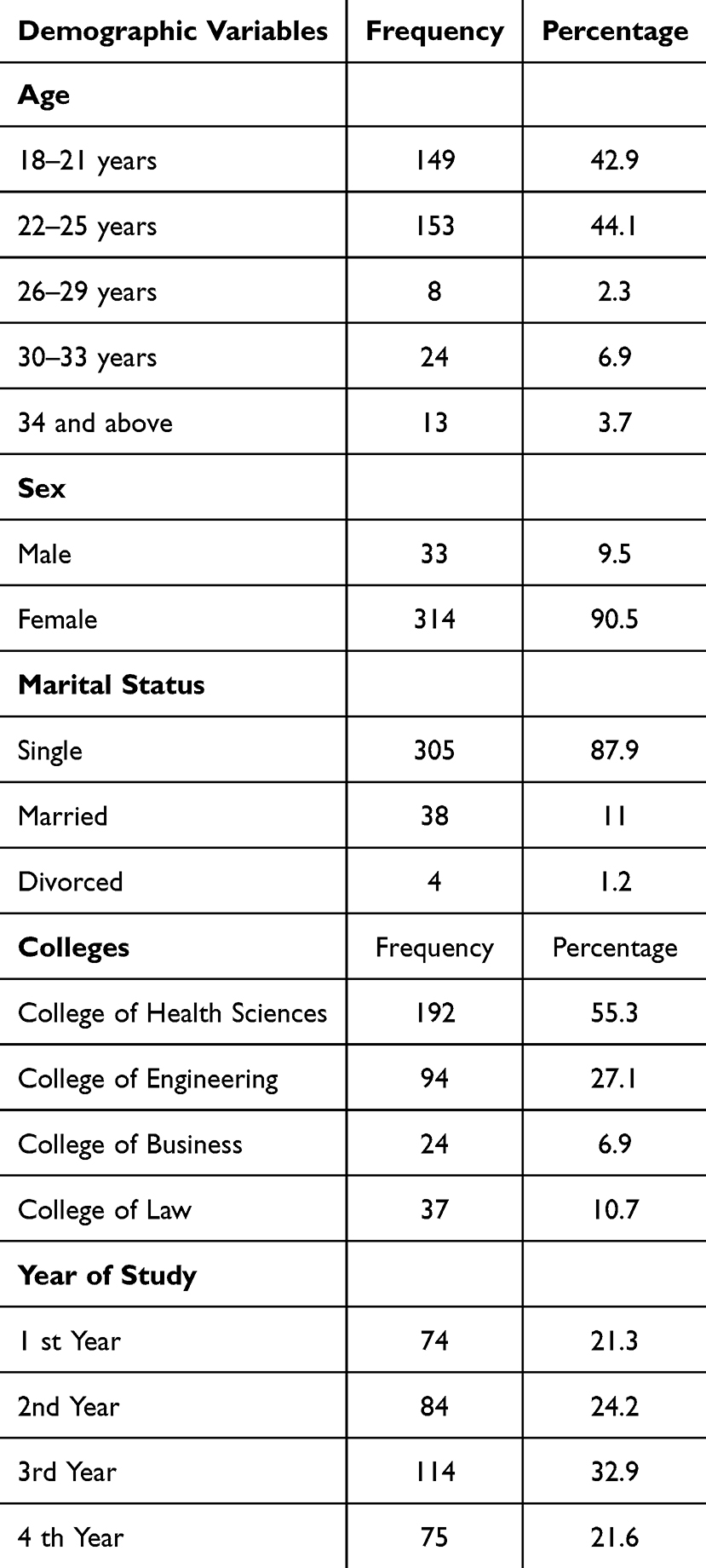 |
Table 1 Demographic Characteristics of the Respondents |
Key descriptive statistics for the four distinct learning style scores (V, A, R, and K) and their cumulative total VARK scores are presented in Table 2. The mean values provide a central tendency for each score, revealing that, on average, respondents scored 2.34 in Visual (V), 3.72 in Auditory (A), 2.95 in Reading/Writing (R), and 0.54 in Kinesthetic (K), resulting in a mean Total VARK Score of 9.55. The median values, representing the midpoint, differed slightly from the mean values, indicating potential skewness in the data. The standard error of the mean values, which measures the precision of the sample mean, was relatively low across all scores, suggesting a degree of confidence in the reported means. The standard deviation values ranged from 1.805 to 2.862, indicating the extent of variability within each score. Additionally, variance values shed light on the spread of data, with higher variances indicating greater dispersion.
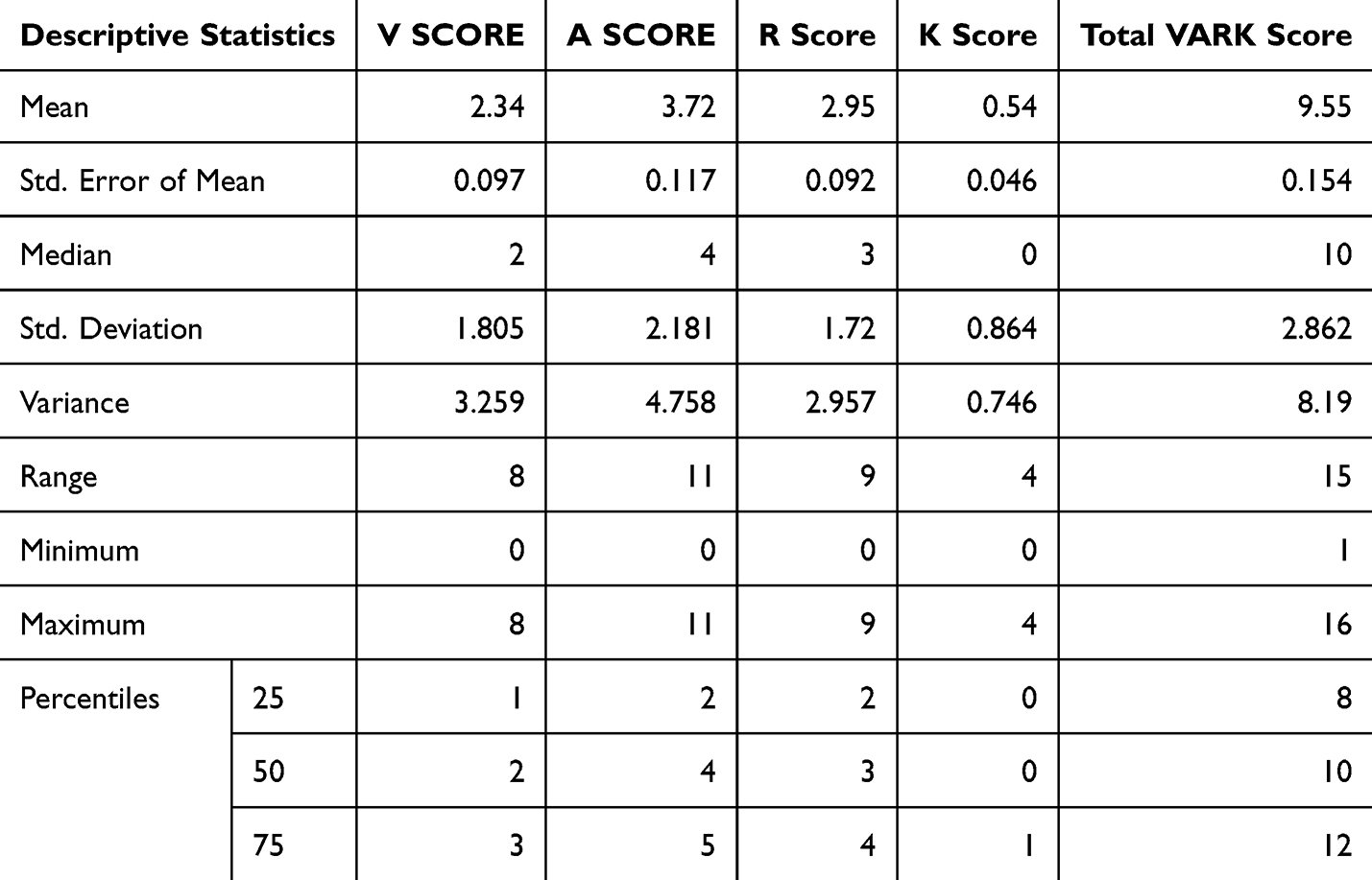 |
Table 2 Descriptive Characteristics for VARK Learning Style Scores |
Table 3 presents a detailed breakdown of individuals’ preferred learning styles across various scenarios, categorized into four modalities: unimodal, bimodal, trimodal, and quadmodal. In scenarios involving navigation to a recommended shop, viewing instructional videos on graph creation, researching a tour, and selecting a career or area of study, most respondents (ranging from 79.3% to 84.1%) express a preference for Unimodal learning – relying on a single mode such as text, visuals, or auditory information. For tasks related to decision-making, like saving money, choosing options, or learning a new board game, respondents exhibit a preference for Bimodal learning, combining two modes for a more comprehensive understanding. Bimodal learning percentages range from 19.6% to 21.3%, indicating a significant but not predominant preference. Trimodal learning, incorporating three modes, becomes more prominent in scenarios such as dealing with health issues, computer learning, or seeking information on the Internet. Responses for Trimodal learning preferences range from 4.6% to 7.8%, reflecting a moderate inclination towards utilizing a combination of modes. Quadmodal preferences, involving all four modes, emerge in various contexts, including learning about a project, improving photography skills, and assembling a wooden table While quadmodal preferences are less common, ranging from 1.2% to 3.7%, they highlight instances where respondents find a comprehensive approach involving all four modes beneficial. Overall, the data reveal a diverse set of learning preferences, with the majority favoring unimodal and bimodal learning approaches.
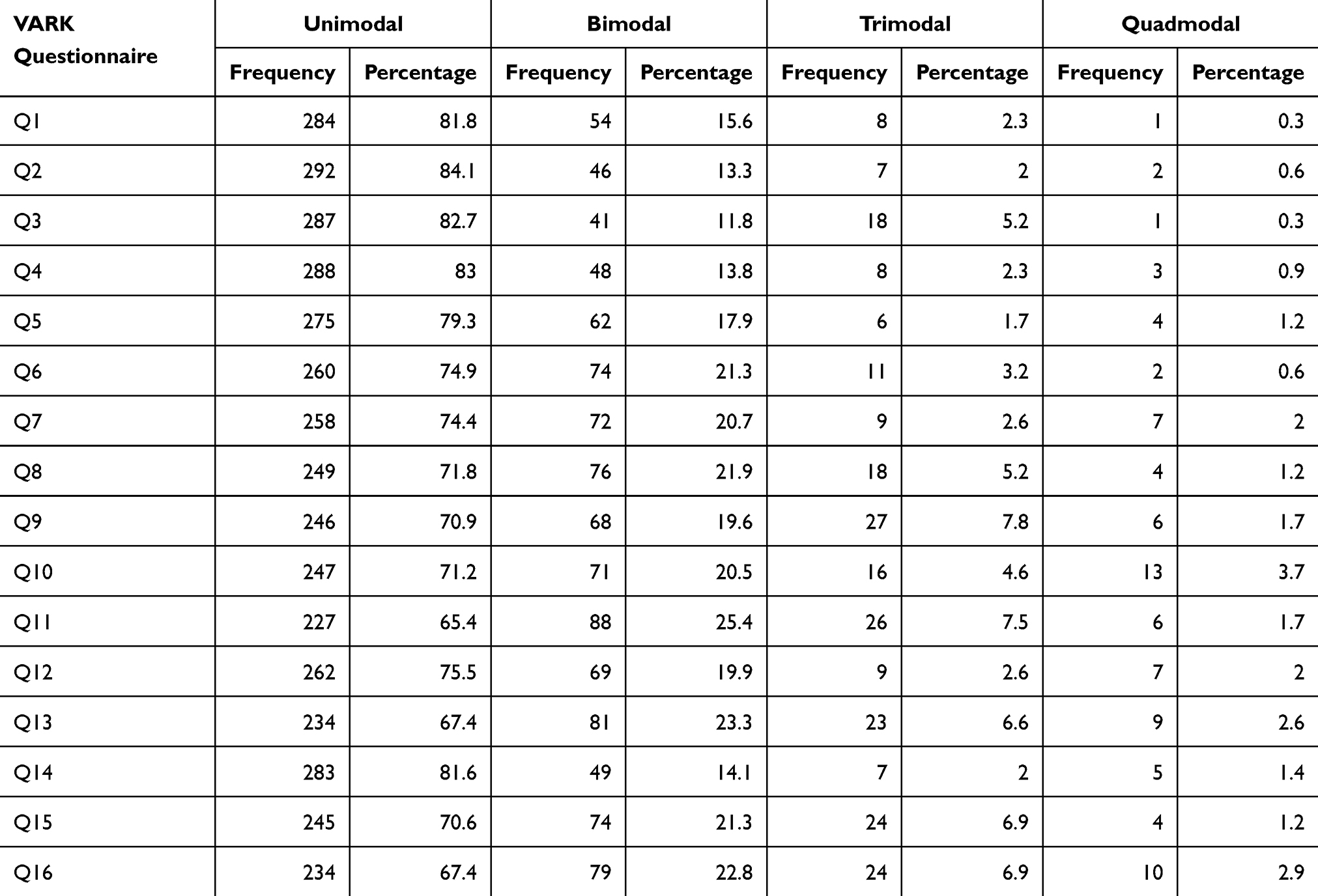 |
Table 3 Students’ Preferred Learning Styles in Four Modalities |
A detailed analysis of learning modality preferences among students from Health Sciences, Engineering, Business, and Law for each of the 16 scenarios (Q1–Q16) shows frequency and percentage distributions. Unimodal preferences dominate across all colleges and scenarios, with percentages ranging from 47.4% to 51.4% in Health Sciences, 28.2% to 30.5% in Engineering, 7.3% to 8.5% in Business, and 11.8% to 15.0% in Law, reflecting a strong inclination for single learning modes. Bimodal preferences vary by scenario and college, with Business showing lower preferences (0.0% to 4.3%) compared to Health Sciences and Engineering, which exhibit higher bimodal preferences in collaborative or diverse scenarios. Trimodal preferences are less common, with Law consistently showing lower preferences (0.0% to 1.9%) and other colleges displaying slightly higher preferences, especially in comprehensive scenarios. Quadmodal preferences are the least common but present in certain scenarios, with Health Sciences and Engineering showing slightly higher preferences than Business and Law, indicating a need for fully immersive experiences. Overall, unimodal preferences prevail, with percentages from 47.8% to 51.4% across colleges. Bimodal preferences are notable in specific scenarios, while trimodal and quadmodal preferences, though less common, suggest openness to diverse learning approaches (Table 4).
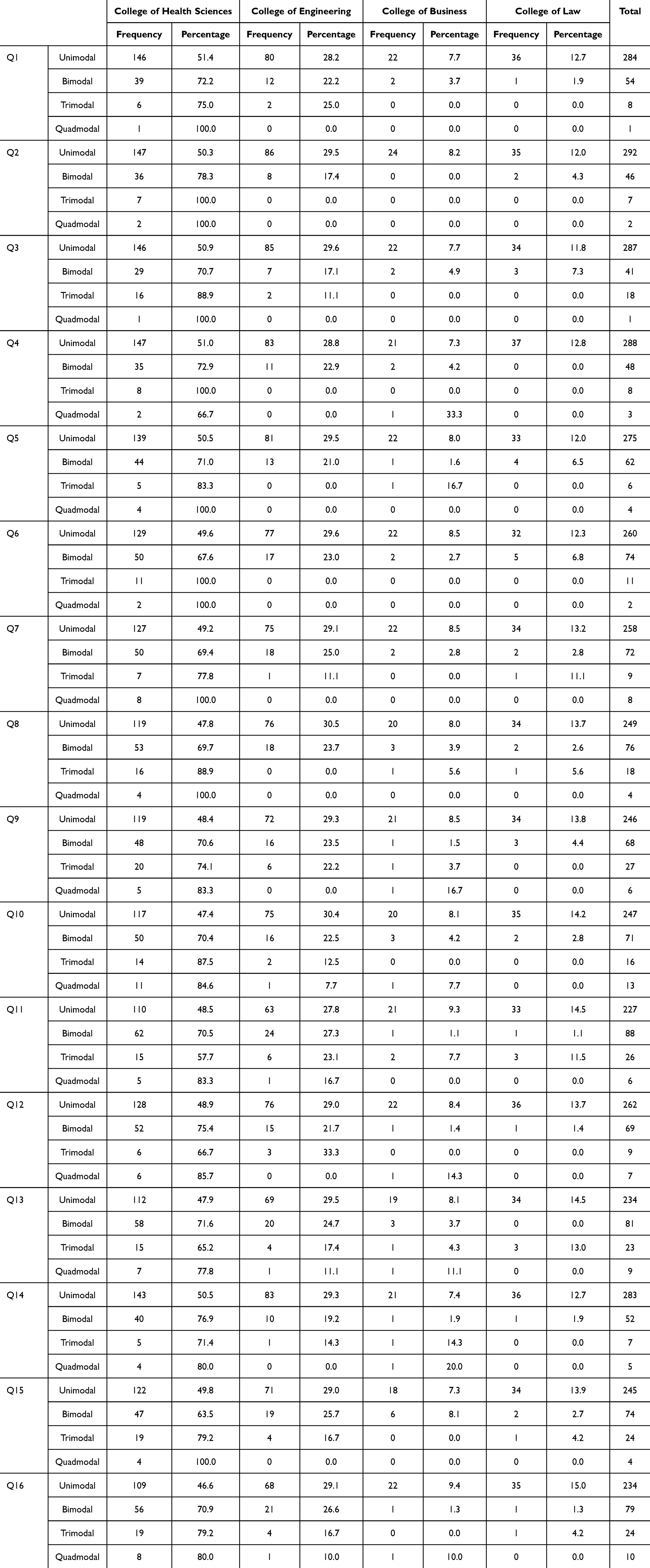 |
Table 4 Distribution of Learning Style Preferences Among Different Colleges |
Table 5 shows the Kolmogorov–Smirnov and Shapiro–Wilk normality test results for various variables, assessing if their distributions are normal. The Kolmogorov–Smirnov test statistics for CGPA, V SCORE, A SCORE, R Score, K Score, and Total VARK Score are 0.103, 0.185, 0.139, 0.128, 0.377, and 0.116, respectively, all with p-values of 0.000, indicating a rejection of normality. Similarly, the Shapiro–Wilk test statistics for these variables are 0.883, 0.916, 0.958, 0.949, 0.684, and 0.975, respectively, with p-values of 0.000, also rejecting normality. These tests are sensitive to sample size, and minor deviations can be significant in large samples. All variables show significant departures from normality, suggesting that parametric analyses assuming normality may not be appropriate. Researchers should consider non-parametric methods or data transformations for valid statistical inferences.
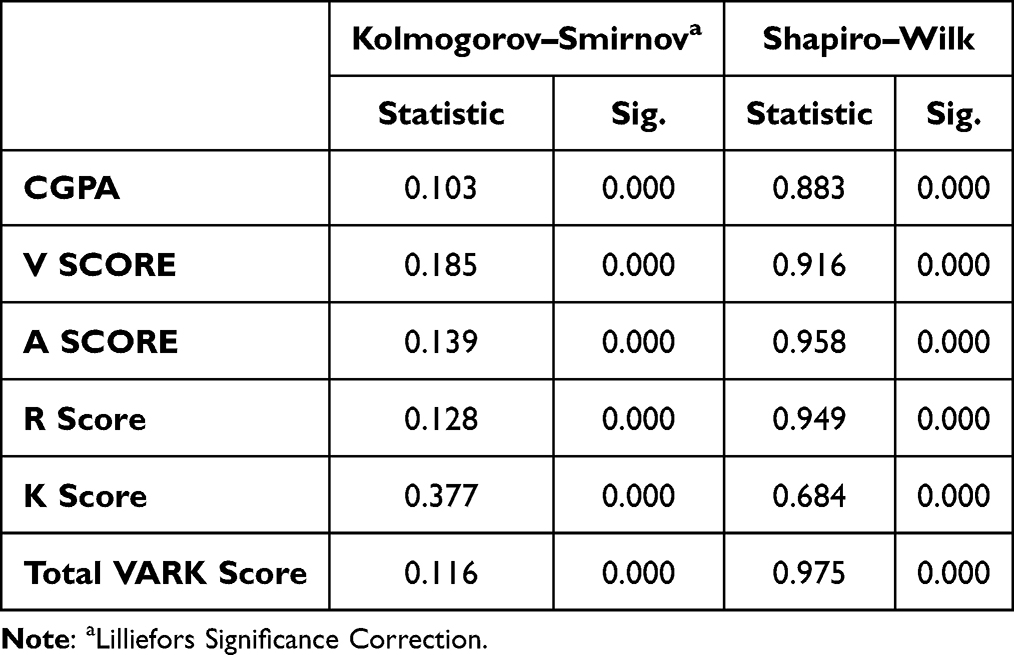 |
Table 5 Tests for Normality for Selected Variables (CGPA & VARK SCORES) |
Table 6 presents the Mann–Whitney U-test results comparing unimodal and multimodal groups for variables such as V SCORE, A SCORE, R Score, K Score, Total VARK Score, Year of Study, and CGPA. Statistics include Mean Rank, Sum of Ranks, Mann–Whitney U, Wilcoxon W, Z statistic, and p-value for a two-tailed test. Except for CGPA, no significant differences were found (p > 0.05) for V SCORE (U = 5981.500, Z = −0.184, p = 0.854), A SCORE (U = 5694.500, Z = −0.731, p = 0.465), R Score (U = 5790.000, Z = −0.552, p = 0.581), K Score (U = 5410.000, Z = −1.433, p = 0.152), Total VARK Score (U = 5940.500, Z = −0.260, p = 0.795), and Year of Study (U = 5491.000, Z = −1.148, p = 0.251). These results suggest similar distributions between groups, with differences likely due to chance. However, CGPA showed a significant difference (U = 3365.500, Z = −2.150, p = 0.032), indicating the unimodal group had generally lower CGPA ranks than the multimodal group. This suggests modality significantly impacts CGPA, which warrants attention from educators and researchers.
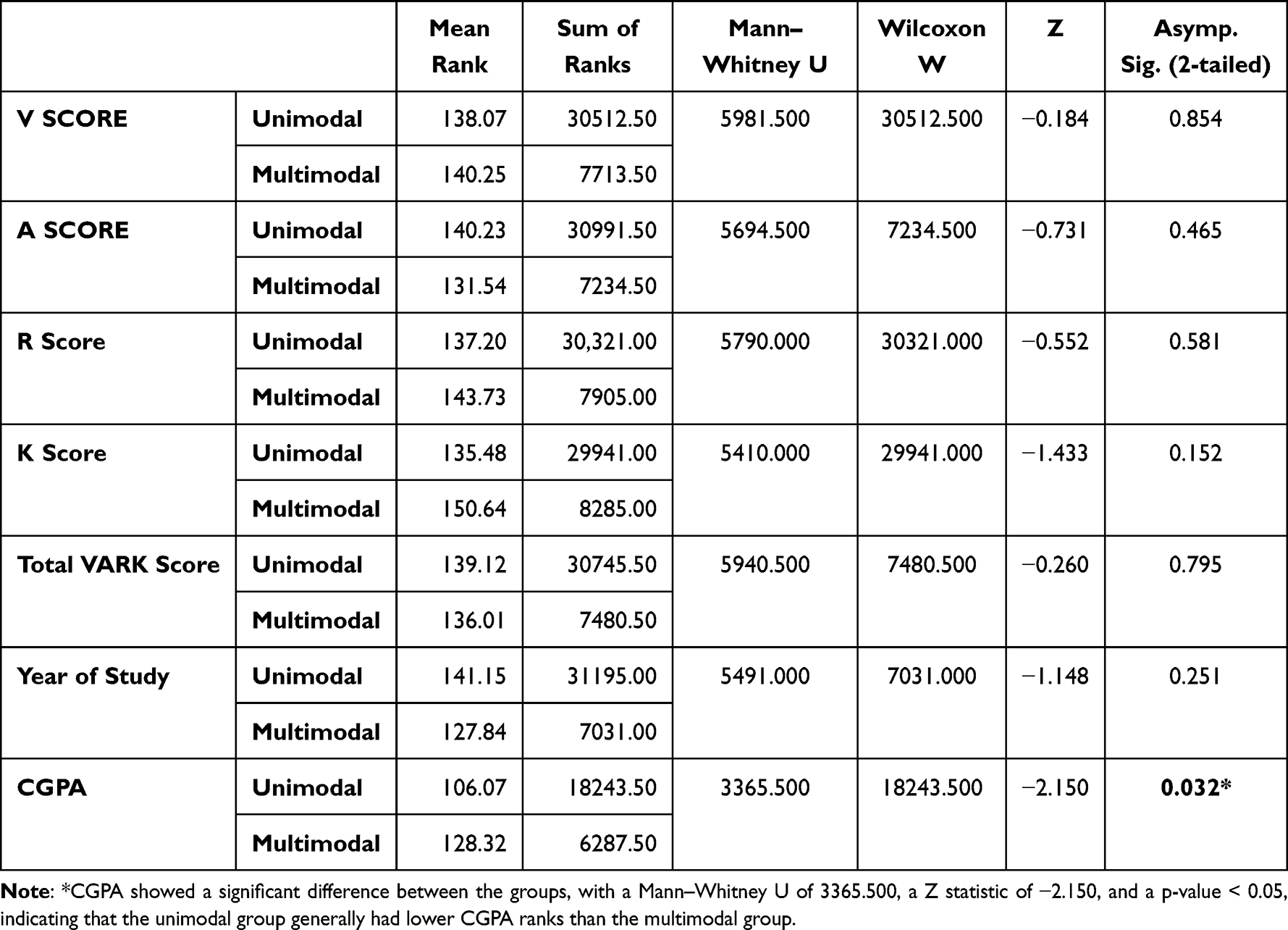 |
Table 6 Comparison of Quantitative Variables Based on Unimodal and Multimodal Learners |
Table 7 compares academic performance indicators between male and female students, examining variables such as V SCORE, A SCORE, R Score, K Score, Total VARK Score, Year of Study, and CGPA. The table includes various statistical measures for each variable. While V SCORE, A SCORE, Year of Study, and CGPA show no significant gender disparities (p > 0.05). Notably, the Mann–Whitney U-test indicates significant gender differences in the R Score (U = 4085.500, Z = −2.031, p = 0.042), K Score (U = 4187.000, Z = −2.150, p = 0.032), and Total VARK Score (U = 3911.500, Z = −2.329, p = 0.020) with males outperforming females. These findings suggest comparable performance between male and female students in these areas. The outcomes highlight specific domains, such as R Score, K Score, and Total VARK Score, where gender-related variations in academic performance warrant further exploration and consideration by educators and researchers.
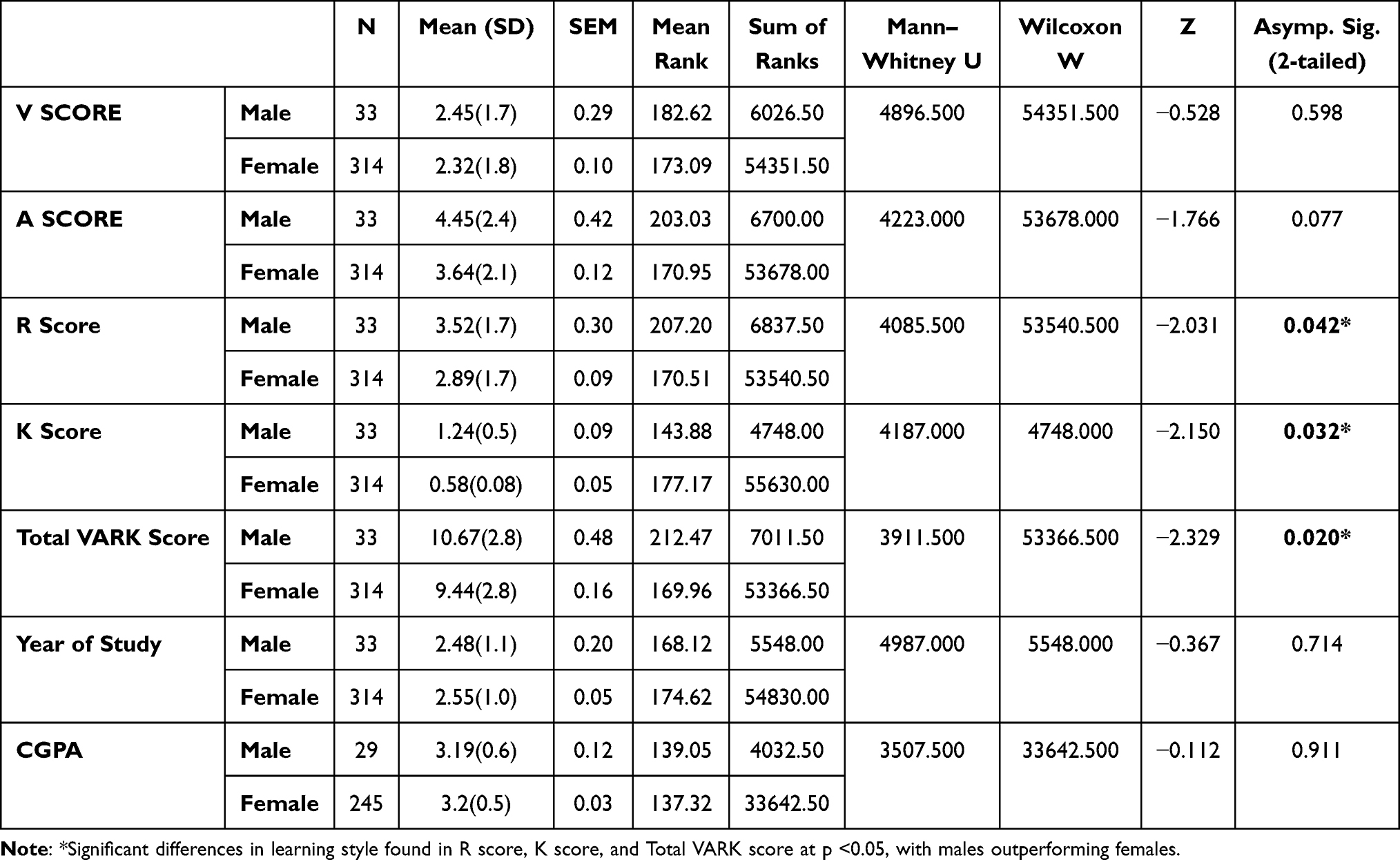 |
Table 7 Comparison of Quantitative Variables Based on Sex |
Table 8 presents a comparative analysis of academic performance metrics between the College of Health Sciences and other colleges, emphasizing V SCORE, A SCORE, R Score, K Score, Total VARK Score, Year of Study, and CGPA. Mann–Whitney U-tests reveal that students from the College of Health Sciences demonstrate lower scores in V SCORE (U = 12,399.500, Z = −2.716, p = 0.007), A SCORE (U = 11,687.000, Z = −3.474, p = 0.001), R Score (U = 13,347.000, Z = −1.677, p = 0.094), K Score (U = 11,308.500, Z = −4.558, p < 0.001), Total VARK Score (U = 11,523.500, Z = −3.633, p < 0.001), and CGPA (U = 6268.500, Z = −4.281, p < 0.001) compared to their counterparts in other colleges. However, Year of Study shows no significant difference between the two groups (U = 13,686.500, Z = −1.332, p = 0.183), suggesting comparable academic progression irrespective of college affiliation. These results highlight the necessity for targeted interventions to address the distinct academic needs of students within specific colleges and domains, promoting an environment that fosters academic success.
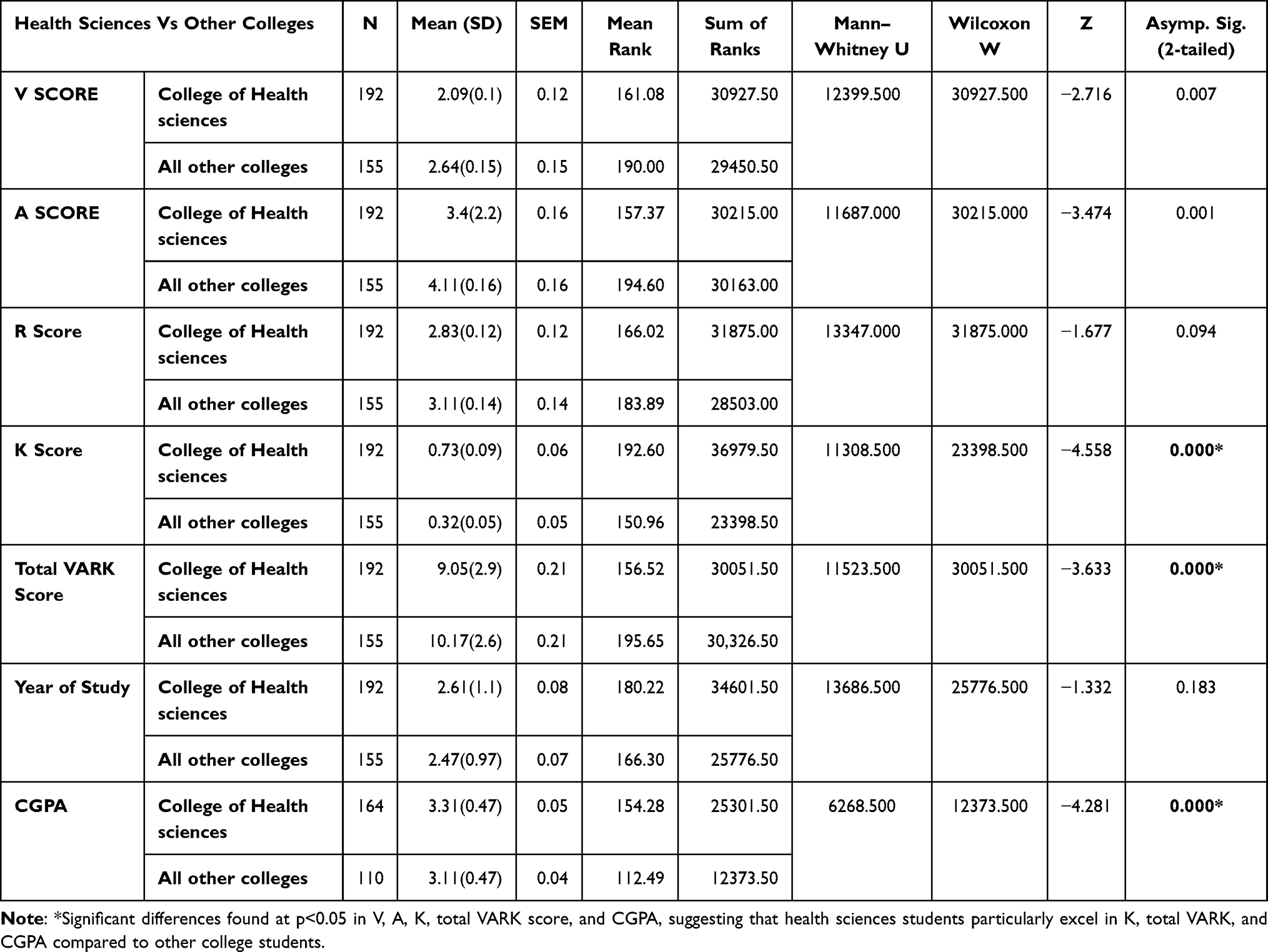 |
Table 8 Comparison of Quantitative Variables Based on Health Sciences Vs Other College Students |
Table 9 compares students under 25 and over 26 across various preferred learning styles and their academic performance measures. Mann–Whitney U-tests and p-values indicate no significant differences in V SCORE and A SCORE (p > 0.05), suggesting similar performance in visual and auditory learning for both age groups. However, significant differences were found in the R Score (Z = −2.992, p = 0.003), K Score (Z = −2.074, p = 0.038), Total VARK score (Z = −2.156, p = 0.031), Year of Study (Z = −2.657, p = 0.008), and CGPA (Z = −3.739, p < 0.001). Negative Z values show that students under 25 have higher mean ranks in these areas, indicating they outperform older students in reading, kinesthetic learning, academic progression, and GPA. These results highlight the significance of age in academic performance, suggesting the need for age-specific educational interventions and support strategies.
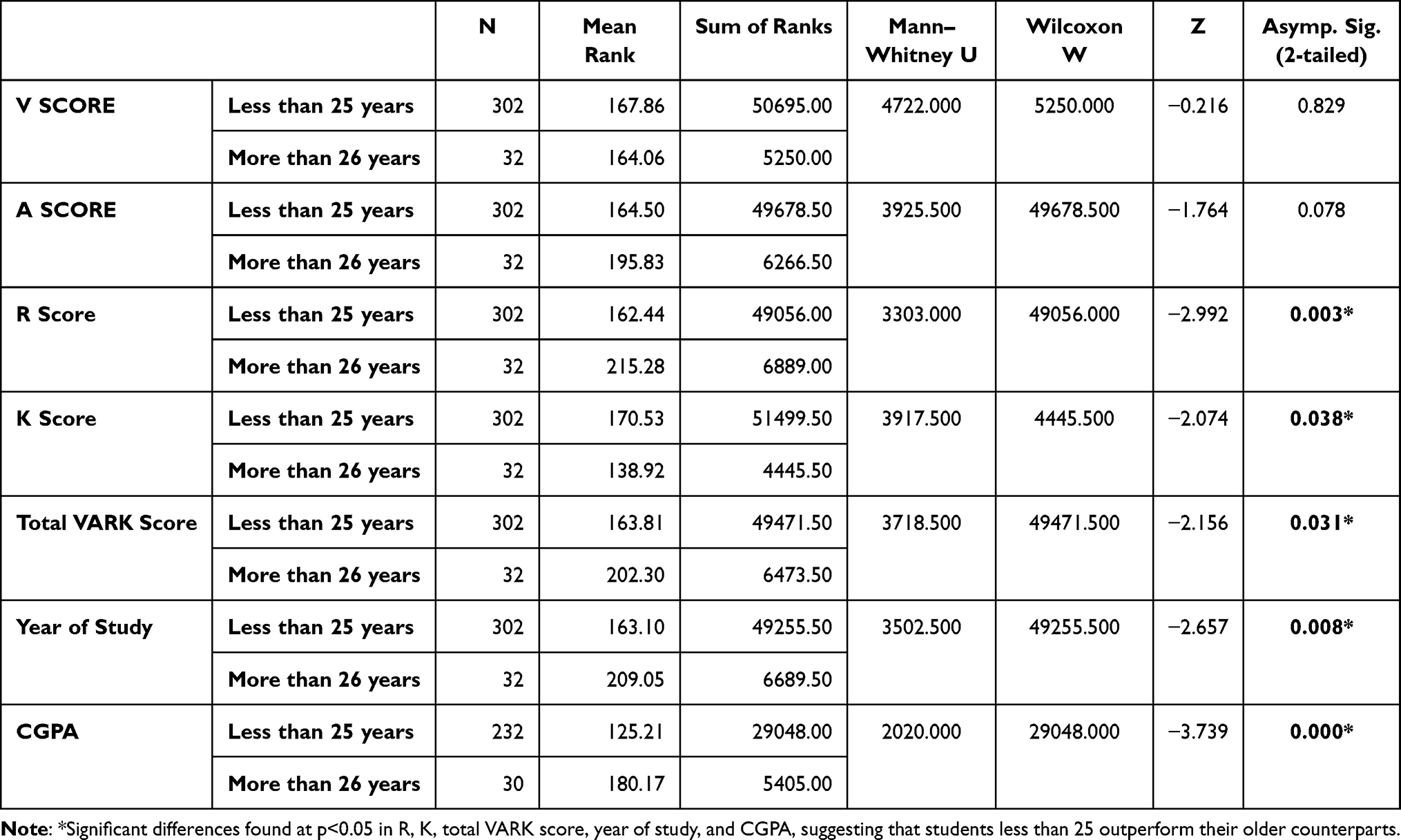 |
Table 9 Comparison of Quantitative Variables Based on Age Group |
Discussion
Learning is more easily embraced when it is presented in a manner that is appealing to students. The likelihood of achieving better exam results often increases when the learning experience is enjoyable. It is the responsibility of the teacher to understand their students’ preferred learning styles and adapt accordingly, rather than expecting students to conform to their own teaching style.25
Understanding students’ preferred learning styles and the factors that influence them is essential for teachers to improve their lesson plans and develop teaching methodologies that cater to their needs. This approach can also help break away from the traditional teacher-centered teaching model.26 The current study conducted a cross-sectional analysis of 347 undergraduate students who had recently enrolled in their respective courses.
Preferred Modalities and Preferred Learning Styles
The results of the present study demonstrated that a preference for unimodal learning was observed across all colleges, ranging from 47.4% to 51.4% of respondents in the College of Health Sciences, which had the highest prevalence, to 11.8% to 15.0% in the College of Law, which had the lowest prevalence. While quadmodal learning preferences were least prevalent, they were occasionally observed and showed lower preferences in the Business and Law colleges compared to those in the Health Sciences and Engineering colleges. Unimodal learning preferences were more commonly observed in studies conducted in Malaysia27 (86.8%), Iran28 (42%), and Saudi Arabia29 (53.8%). On the other hand, multimodal learning preferences were opted for in previous studies by 70% of the respondents in Saudi Arabia,30 and 53.52% of the respondents in Nepal.31
In the current study, the auditory learning style is the most frequently chosen of all unimodal learning styles, with a mean score of 3.72 and a standard deviation of 2.181. Prior research has also indicated a preference for the auditory learning style, as 35.1% of participants in Saudi Arabia,10 4.09 mean and 0.68 SD in Riyadh, Saudi Arabia,32 and 34% in India33 preferred this style. However, a study conducted in India found that the kinesthetic learning style was the most preferred (49.2%),25 and a study carried out in Iran found that the read/write learning style was the most favored (mean/SD 7.19/1.521).26
There are studies that show that, despite some effect, multimodal learning does not result in significantly higher grades than other learning styles.34 Previous studies have found that teaching in health sciences is best aided by visual stimulation: images, labeled diagrams, and cadaver teaching. In health sciences, researches have shown that students have benefitted from case-based learning (involving multimodal preferences) and this has been shown to improve understanding of concepts and academic performance.7,35
Learning Style Preferences and Age
The present study highlights the prevalence of Unimodal learning preferences across age groups. Bimodal learning preferences are significant, especially in the younger age group, and gradually decrease in the older age groups. Trimodal learning and quadmodal learning preferences, while less common, provide insights into the diversity of learning styles within each age group. The findings also suggest that students aged less than 25 years tend to have higher mean ranks and sum of ranks in R Score, K Score, Year of Study, and CGPA compared to their counterparts aged more than 26 years. The negative Z values (comparison of quantitative variables based on age) indicate that students aged less than 25 years generally outperform the older age group in these academic measures. In contrast to a study by Khanal et al,31 which found more multimodal learners in both age groups, above and below 20 years, our study revealed that among the unimodal learners, the most preferred style was kinesthetic, followed by aural in both groups. Liew et al36 also discovered that both age groups, above and below 20 years, were primarily kinesthetic learners. However, a higher proportion of those aged 20 years and above were multimodal learners (21%) compared to students aged <20 years (11.5%).
Learning Style Preferences and Gender
In the present study, female participants exhibit a slightly higher tendency towards bimodal and trimodal learning in certain scenarios than their male counterparts. Specifically, female participants are willing to engage with information using a combination of visual, auditory, read/write, and kinesthetic modalities. In contrast, both genders prefer singular learning modes, such as visual, auditory, read/write, or kinesthetic modalities. There is a limited preference for quadmodal learning that integrates diverse sensory modalities. However, previous studies by Pour et al26 and Sarabi-Asiabar37 have reported mixed results regarding the relationship between gender and learning styles, with one study observing a significant relationship between gender and single-modal learning styles in favor of male students.
Learning Style Preferences and Disciplines
The current study underscores the dominance of Unimodal learning preferences, with percentages ranging from 47.8% to 51.4% across disciplines. The College of Business exhibits lower Bimodal learning preferences compared to other colleges, with percentages ranging from 0.0% to 4.3%. In contrast, the College of Health Sciences and College of Engineering showed higher bimodal learning preferences, especially in scenarios where collaborative or diverse learning approaches may be beneficial. The College of Health Sciences and College of Engineering have slightly higher Quadmodal learning preferences than the College of Business and College of Law. Similar results were found in a study by Rezigalla and Ahmed (2019) where 118 students (86.8%) were unimodal in their learning preference, and 18 students (13.3%) were multimodal.15 These preferences highlight instances in which students perceive the need for a fully immersive learning experience.
Learning Style and Academic Year
The study reveals a persistent reliance on Unimodal learning preferences throughout academic progression. Bimodal learning preferences, though variable, are consistently present across all years, reflecting a sustained interest in combining different learning modes. Trimodal and Quadmodal learning preferences, while less frequent, indicate a limited but existent interest in more diverse learning experiences. The outcomes of our research were aligned with previous findings by Rezigalla and Ahmed (2019), which revealed a unimodal pattern of learning style across all academic levels.15 Among the unimodal style, the most prevalent learning style across academic levels was visual (4.8), followed by aural (3.8), R (2.8), and kinesthetic (2.3). The multimodal pattern was limited to level 1 generally (1.3). In another study, the unimodal learning style was favored by the majority of students in the 5th year (42.1%), while the quad-modal learning style was most preferred in the 2nd year (55.6%), with a declining trend in the advanced academic years.30
Learning Style Preferences and Academic Performances
In our research, we observed a minimal relationship between CGPA and other factors, except for a slight negative correlation with K Score (r = 0.038, p < 0.01). This suggests that kinesthetic learning preferences have a marginal effect on overall academic performance, highlighting the multifaceted nature of academic success. These results have practical implications for educators and administrators, stressing the need for tailored interventions and support mechanisms based on age. Recognizing the age-related variations in academic performance can help develop targeted strategies to address the unique challenges and needs of students in different age groups, thereby fostering an inclusive and effective learning environment. A study by Awang et al indicates that the highest domain of learning styles of students was kinesthetic, with the majority of students being kinesthetic learners across all CGPA categories.38 Additionally, students with an aural learning style had higher average GPAs than others in Rezigalla and Ahmed’s study.15
Study Strength
- This study is the first to examine learning styles at the University of Buraimi. It offers insights into the differences in learning styles between health sciences students and students in other disciplines at UoB. This research aims to bring possible changes in teaching style.
- A notable advantage of the VARK questionnaire is that it employs questions and options that are derived from genuine, everyday circumstances, allowing respondents to readily relate to the outcomes they obtain–this reinforces the instrument’s face validity. VARK is dedicated to assisting students by recommending study strategies that can potentially enhance their learning experience.39
- Teachers can effectively promote metacognition in their students by utilizing VARK. Encouraging students to learn about metacognition and the methods they can employ to monitor and manage their own learning, while also emphasizing the significance of reflection, goal-setting, and self-assessment, will enable students to take charge of their own learning and become proactive learners.40
Limitations
The study was limited by its cross-sectional design in one of the governorate’s University in Oman, which prevented the establishment of causal relationships between variables on a larger scale. Furthermore, this study did not investigate the role of learners’ motivation, learning environment, study skill, and learner’s environment at their younger age. It is possible that educational background could have an impact on the learning style.
Recommendations
Further research is necessary to explore the potential relationship between learning style preferences, teaching and learning methods, and teaching styles. Considering the outcomes of this study, it is recommended that teaching methods be modified as necessary. To achieve this, a prospective cohort study spanning approximately four years, beginning at the onset of university education, should be conducted to track any changes in learning style as students’ progress to higher levels. To improve student engagement and foster diverse learning approaches, we suggest introducing minor yet impactful modifications to existing teaching methods. For instance, incorporating interactive, real-time quizzes that students can access on their laptops or smartphones during lectures. Implementing these strategies at the conclusion of a lecture-based session has been demonstrated by Logan et al to improve students’ concentration and enhance their retention of information.41
Conclusion
We conclude that our undergraduate students are diverse in their learning styles, although most of them were unimodal, other multimodal preferences were also observed. Notably, aural learners were found in the majority across various disciplines followed by read/write learners. The Colleges of Health Sciences and Engineering students exhibit marginally higher Quadmodal learning preferences than the Colleges of Business and Law, indicating a student perception of the necessity for fully immersive learning experiences. The findings of this survey can have practical implications for educators as they can develop targeted interventions to meet the unique needs of the learners. Teachers have a crucial role to play in recognizing the VARK learning preferences of their students, which can promote a greater appreciation for learner diversity. By employing various teaching modalities, educators can create more interactive lessons. Nevertheless, it is essential to acknowledge that fully aligning teaching with individual VARK preferences can pose obstacles that may impede both instructors and students.
Acknowledgments
The researchers express gratitude to all the students who participated in this study for their valuable time and contribution. Furthermore, they extend special thanks and appreciation to the College Deans and the head of the Student Affairs Department of University of Buraimi (Buraimi, Oman) for their invaluable support in data collection.
Funding
This research was financially supported by an internal grant (IRG/UoB/CoHS-003/2022-2023) from the University of Buraimi, Oman. The authors are grateful to the University of Buraimi for their substantial funding of this study.
Disclosure
The authors report no conflicts of interest in this work.
References
1. Kravchenko AV, Payunena MV. Education: a value lost. Jgzyk Tekst W Ujgciu Strukt Funkcjonalnym Lang Text Struct Funct Terms Olszt Cent Badan Eur Wschod Uniwer-Sytetu Warm-Mazur W Olsztynie. 2017.
2. Hutchinson L. ABC of learning and teaching: educational environment. BMJ. 2003;326(7393):810–812. doi:10.1136/bmj.326.7393.810
3. Özyurt Ö, Özyurt H. Learning style based individualized adaptive e-learning environments: content analysis of the articles published from 2005 to 2014. Comput Hum Behav. 2015;52:349–358. doi:10.1016/j.chb.2015.06.020
4. Dryer R, Henning MA, Tyson GA, Shaw R. Academic achievement performance of university students with disability: exploring the influence of non-academic factors. Int J Disabil Dev Educ. 2016;63(4):419–430. doi:10.1080/1034912X.2015.1130217
5. Zamani N. Department of Psychology and Young Researchers and Talents Club, Hamadan Branch of Islamic Azad University, Hamadan, Iran, Kaboodi A, Department of Psychology, Hamadan Branch of Islamic Azad University, Najafabad, Iran. Evaluation of the VARK model learning styles selection in medical students. Health Res J. 2017;2(2):109–115.
6. Ahmadi M, Allami A. Comparison of health workers learning styles based on Vark and Kolbs’ questionnaires and their relationship with educational achievement. Res Med Educ. 2014;6(1):18–27.
7. Ojeh N, Sobers-Grannum N, Gaur U, Udupa A, Majumder MDAA. Learning style preferences: a study of pre-clinical medical students in Barbados. J Adv Med Educ Prof. 2017;5(4):185–194.
8. Samarakoon L, Fernando T, Rodrigo C, Rajapakse S. Learning styles and approaches to learning among medical undergraduates and postgraduates. BMC Med Educ. 2013;13(1):42. doi:10.1186/1472-6920-13-42
9. Li LX, Abdul Rahman SS. Students’ learning style detection using tree augmented naive Bayes. R Soc Open Sci. 2018;5(7):172108. doi:10.1098/rsos.172108
10. Asiry MA. Learning styles of dental students. Saudi J Dent Res. 2016;7(1):13–17. doi:10.1016/j.sjdr.2015.02.002
11. Fleming N. Learning styles again: VARKing up the right tree! Educ Dev. 2006;7(4):4.
12. Prithishkumar IJ, Michael SA. Understanding your student: using the VARK model. J Postgraduate Med. 2014;60:183. doi:10.4103/2F0022-3859.132337
13. Kharb P, Samanta PP, Jindal M, Singh V. The learning styles and the preferred teaching—learning strategies of first year medical students. J Clin Diagn Res. 2013;7(6):1089–1092. doi:10.7860/JCDR/2013/5809.3090
14. Aldosari MA, Aljabaa AH, Al-Sehaibany FS, Albarakati SF. Learning style preferences of dental students at a single institution in Riyadh, Saudi Arabia, evaluated using the VARK questionnaire. Adv Med Educ Pract. 2018;9:179–186. doi:10.2147/AMEP.S157686
15. Rezigalla AA, Ahmed OY. Learning style preferences among medical students in the College of Medicine,University of Bisha,Saudi Arabia (2018). Adv Med Educ Pract. 2019;10:795–801. doi:10.2147/AMEP.S219176
16. Brown T, Cosgriff T, French G. Learning style preferences of occupational therapy, physiotherapy and speech pathology students: a comparative study. Internet J Allied Health Sci Pract. 2008;6(3):7.
17. Gudmundsdottir S, Shulman L. Pedagogical content knowledge in social studies. Scand J Educ Res. 2024;31(2). doi:10.1080/0031383870310201
18. Zoghi M, Brown T, Williams B, et al. Learning style preferences of Australian Health Science Students. J Allied Health. 2010;39(2):95–103.
19. Parashar R, Hulke S, Pakhare A. Learning styles among first professional northern and central India medical students during digitization. Adv Med Educ Pract. 2018;10:1–5. doi:10.2147/AMEP.S182790
20. OpenEpi - Toolkit Shell for Developing New Applications [Internet]. [cited 2024 Jul 5,]. Available from: https://openepi.com/SampleSize/SSPropor.htm.
21. Zhu HR, Zeng H, Zhang H, et al. The preferred learning styles utilizing VARK among nursing students with bachelor degrees and associate degrees in China. Acta Paul Enferm. 2018;31:162–169. doi:10.1590/1982-0194201800024
22. The-VARK-Questionnaire-Arabic.pdf [Internet]. [cited 2024 July 5]. Available from: https://vark-learn.com/wp-content/uploads/2014/08/The-VARK-Questionnaire-Arabic.pdf.
23. Abouzeid E, Fouad S, Wasfy NF, Alkhadragy R, Hefny M, Kamal D. Influence of personality traits and learning styles on undergraduate medical students’ academic achievement. Adv Med Educ Pract. 2021;12:769–777. doi:10.2147/AMEP.S314644
24. The VARK® Questionnaire for Younger People - VARK [Internet]. 2014 [cited June 18, 2024]. Available from: https://vark-learn.com/the-vark-questionnaire/the-vark-questionnaire-for-younger-people/.
25. Shah K, Ahmed J, Shenoy N, S N. How different are students and their learning styles? Int J Res Med Sci. 2013;1(3):1. doi:10.5455/2320-6012.ijrms20130808
26. Pour M, Ghoreishinia G, Zare S, Arbabisarjou A. Identification of medical students’ learning styles in terms of gender. Glob J Health Sci. 2016;9(4):p76. doi:10.5539/gjhs.v9n4p76
27. Kamal I, Karim MKA, Awang Kechik MM, Ni X, Razak HRA. Evaluation of healthcare science student learning styles based VARK analysis technique. Int J Eval Res Educ. 2021;10(1):255–261.
28. Mozaffari HR, Janatolmakan M, Sharifi R, Ghandinejad F, Andayeshgar B, Khatony A. The relationship between the VARK learning styles and academic achievement in dental students. Adv Med Educ Pract. 2020;11:15–19. doi:10.2147/AMEP.S235002
29. Almigbal TH. Relationship between the learning style preferences of medical students and academic achievement. Saudi Med J. 2015;36(3):349–355. doi:10.15537/smj.2015.3.10320
30. Eid AB, Almizani M, Alzahrani A, et al. Examining learning styles with gender comparison among medical students of a Saudi University. Adv Med Educ Pract. 2021;12:309–318. doi:10.2147/AMEP.S295058
31. Khanal L, Giri J, Shah S, Koirala S, Rimal J. Influence of learning-style preferences in academic performance in the subject of human anatomy: an institution-based study among preclinical medical students. Adv Med Educ Pract. 2019;10:343–355. doi:10.2147/AMEP.S198878
32. AL-Roomy MA. The relationship among students’ learning styles, health sciences colleges, and grade point average (GPA). Adv Med Educ Pract. 2023;14:203–213. doi:10.2147/AMEP.S395720
33. Balasubramaniam G, Indhu K. A study of learning style preferences among first year undergraduate medical students using VARK model. Educ Med J. 2016;8(4). doi:10.5959/eimj.v8i4.440
34. Al-Khayat MS, Mohammad MAR, Hayat MY. Learning styles for medical students: is it as simple as it seems? Adv Med Educ Pract. 2019;10:139–140. doi:10.2147/AMEP.S202251
35. Nair SP, Shah T, Seth S, Pandit N, Shah GV. Case based learning: a method for better understanding of biochemistry in medical students. J Clin Diagn Res. 2013;7(8):1576–1578. doi:10.7860/JCDR/2013/5795.3212
36. Liew SC, Sidhu J, Barua A. The relationship between learning preferences (styles and approaches) and learning outcomes among pre-clinical undergraduate medical students. BMC Med Educ. 2015;15(1):44. doi:10.1186/s12909-015-0327-0
37. Sarabi-Asiabar A, Jafari M, Sadeghifar J, et al. The relationship between learning style preferences and gender, educational major and status in first year medical students: a survey study from Iran. Iran Red Crescent Med J. 2014;17(1):e18250. doi:10.5812/ircmj.18250
38. Awang H, Abd Samad N, Mohd Faiz NS, Roddin R, Kankia JD. Relationship between the learning styles preferences and academic achievement. IOP Conf Ser Mater Sci Eng. 2017;226:012193. doi:10.1088/1757-899X/226/1/012193
39. Guide for VARK Research - Tips for Effective VARK Research [Internet]. 2022 [cited June 18, 2024]. Available from: https://vark-learn.com/guide-for-researchers/.
40. Lander H. How to encourage student metacognition - 5 tips for teachers [Internet]. 2024 [cited June 18, 2024]. Available from: https://vark-learn.com/how-to-encourage-metacognition-in-students-5-tips-for-teachers/.
41. Logan JM, Thompson AJ, Marshak DW. Testing to enhance retention in human anatomy. Anat Sci Educ. 2011;4(5):243–248. doi:10.1002/ase.250
 © 2025 The Author(s). This work is published and licensed by Dove Medical Press Limited. The
full terms of this license are available at https://www.dovepress.com/terms
and incorporate the Creative Commons Attribution
- Non Commercial (unported, 3.0) License.
By accessing the work you hereby accept the Terms. Non-commercial uses of the work are permitted
without any further permission from Dove Medical Press Limited, provided the work is properly
attributed. For permission for commercial use of this work, please see paragraphs 4.2 and 5 of our Terms.
© 2025 The Author(s). This work is published and licensed by Dove Medical Press Limited. The
full terms of this license are available at https://www.dovepress.com/terms
and incorporate the Creative Commons Attribution
- Non Commercial (unported, 3.0) License.
By accessing the work you hereby accept the Terms. Non-commercial uses of the work are permitted
without any further permission from Dove Medical Press Limited, provided the work is properly
attributed. For permission for commercial use of this work, please see paragraphs 4.2 and 5 of our Terms.