
Back to Journals » Journal of Healthcare Leadership » Volume 18
The Influence of Competent Managers on Employee Retention, Job Satisfaction and Well-Being in the Healthcare Industry - A Scoping Review
Authors Kumar S  , Fong BYF, Liang Z
Received 30 July 2025
Accepted for publication 24 December 2025
Published 8 January 2026 Volume 2026:18 557143
DOI https://doi.org/10.2147/JHL.S557143
Checked for plagiarism Yes
Review by Single anonymous peer review
Peer reviewer comments 2
Editor who approved publication: Dr Pavani Rangachari
Sheril Kumar,1,2 Ben Yuk Fai Fong,3 Zhanming Liang1
1College of Business, Law and Governance, James Cook University, Townsville, Queensland, Australia; 2College of Medicine, Nursing and Health Science, Fiji National University, Suva, Fiji Islands; 3Faculty of Health and Social Sciences, The Hong Kong Polytechnic University, Hong Kong, People’s Republic of China
Correspondence: Sheril Kumar, College of Medicine, Nursing and Health Sciences, Fiji National University, Suva, Fiji Islands, Tel +679 3311700 ext 3844, Email [email protected]
Abstract: Despite the increasing interest and investment in conducting management competency studies in various countries over the past two decades, there is a lack of systematic understanding of the relationship between competent managers and employee retention, job satisfaction, and well-being in the healthcare industry. A scoping review was conducted to identify, synthesise, and evaluate studies that examine the relationship between competent managers and job satisfaction, staff retention, and the well-being of healthcare employees. Thirty-nine articles were included in the final analysis of this study. The results confirmed that competent managers are crucial in enhancing job satisfaction, retention, and the overall well-being of healthcare employees. This review underscores the importance of managers possessing a diverse set of leadership skills, demonstrating positive leadership behaviors, and adapting their leadership styles to achieve favorable outcomes for employees, patients, and organizations. Therefore, dedicating resources to developing a competent health management workforce is critical. Health managers need an empowering environment where their personal development is reinforced by efforts from and collaborations between health organisations, higher education institutions, and health systems.
Keywords: competency, health service manager, turnover, burnout, satisfaction, health
Introduction
One of the significant challenges facing healthcare systems worldwide is the shortage of healthcare workers. After the recent COVID-19 pandemic, employee turnover rates have accelerated.1 It is predicted that by 2030, there will be a shortage of 10 million healthcare workers worldwide.2 High employee turnover places a significant burden on healthcare organisations struggling to remain competitive while providing personalised, high-quality care to patients.3 Turnover is costly, not only increasing the budget for recruiting and training new employees but also generating indirect costs, such as lower profits and reduced organisational effectiveness.4,5 Moreover, high employee turnover negatively impacts patient satisfaction3,6 quality of care7 and leads to disruptions in the continuity of care.8 High turnover also results in reduced staff productivity because there are limited people available to complete the required tasks.3 This increased workload can lower the morale of existing workers, increase staff dissatisfaction and burnout, leading to additional turnover among the remaining employees.9
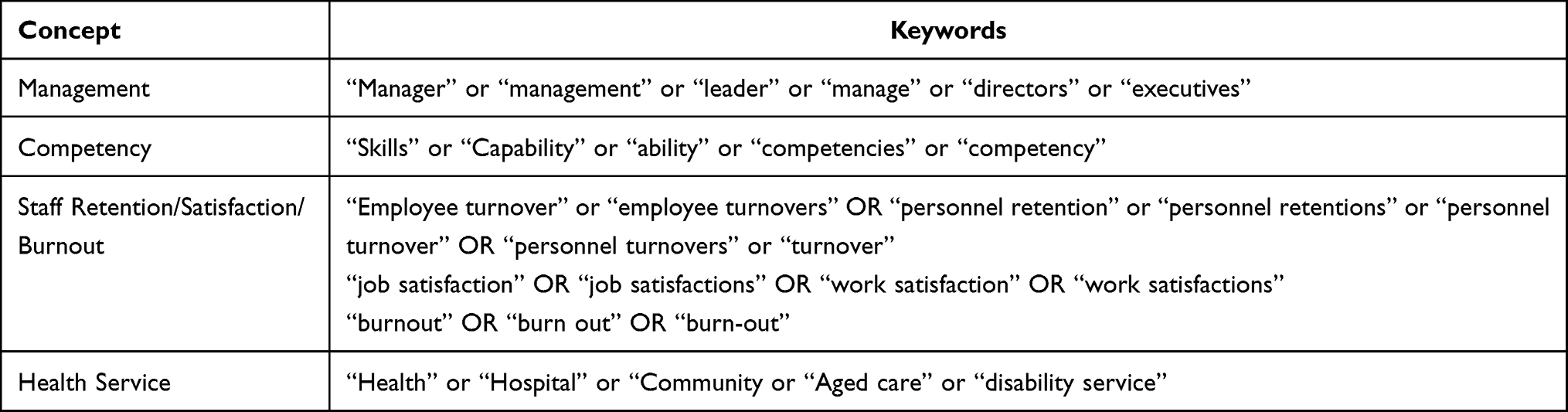 |
Table 1 Key Concepts and Keywords Used for Literature Search |
Considering the negative consequences associated with high employee turnover, urgent action is necessary to enhance healthcare workers’ retention, job satisfaction, and reduce burnout. As part of this effort, scholars have increasingly recognised the critical role that healthcare managers play in ensuring employee success and quality of care.10,11 Employees working in an environment where they are supported and valued are less likely to experience high levels of stress and burnout and therefore, will remain in their jobs.12,13 Previous literature has established that individuals in management positions must not only be good managers, who can set processes and structures, but also effective leaders, who can create a vision and inspire action.14 Over the years, different leadership styles have evolved, and numerous publications have recognised that leadership style is a key element for improving employee outcomes.15 In recent years, the transformational leadership style is highly recommended by previously published literature15,16 and is associated with higher job satisfaction,16,17 decreased intention to leave,17 and a lower burnout rate.18 It emphasizes creating and enacting change to boost followers’ motivation and morale, utilising idealised influence, personalised consideration, inspiring motivation, and intellectual stimulation to achieve superior results.19 Transformational leaders inspire their followers to look beyond their self-interest and work for the interest of their team and organisation.15 In addition to transactional leadership and laissez-faire leadership, which have been in the literature for many years, growing evidence on the benefits of authentic leadership and servant leadership has also emerged.20,21 Authentic leadership is characterised by leaders who have an honest, transparent, and ethical approach, striving for symmetrical, trusting, and close leader–follower relationships that promote the open sharing of information and consideration of employees’ viewpoints.15,20 Servant leaders are empathetic, share power, put the needs of others first, and help followers develop and optimise performance by concentrating on performance planning, day-to-day coaching, and are willing to learn from others, forsaking personal advancement and rewards.21,22
Effective health managers are required to possess competencies consisting of the skills, knowledge, and attitudes necessary to deliver superior performance as required by their roles.22–24 Internationally, competencies required for health managers to perform their managerial tasks have been well-researched25,26 A recent systematic review used the validated MCAP tool to confirm seven core leadership and management competencies, including communications, professionalism, leadership, knowledge, change, resources and evidence-informed decision-making.27 However, competencies are context-specific, and the demonstration varies according to management levels, positions, and geographical contexts in which these competencies must be demonstrated.28 Management competency development should include clear competency requirements in the context in which these competencies must be demonstrated, and specific consideration should be given to hospital types, management levels and positions29 Recently, professional management institutions have adopted a competency-based approach to guide the development and training of the health management workforce. These include the Healthcare Leadership Model by the NHS Leadership Academy (UK) (NHS Leadership Academy, 2013), the Australasian College of Health Service Managers Competency Framework (Australia),30 the Health Leadership Competency Model (US),31 and the IHF Leadership Model by the International Hospital Federation (Switzerland).32
Despite the increasing interest and investment in conducting management competency studies in different countries in the past two decades,28 a quick desktop review confirmed the lack of systematic understanding of the link between competent managers and employee retention, job satisfaction and well-being in the healthcare industry. The existing literature has primarily examined the impact of effective leadership or various leadership styles on select measures such as job satisfaction,15,33 well-being,13,34 work engagement35 performance36 and patient-related outcomes.37,38 A deeper understanding of how management competencies contribute to enhancing healthcare employees’ job satisfaction, staff retention, and psychological well-being.
The need to have a competent management and leadership workforce has been increasingly recognised. Literature has confirmed the importance of competence in supporting the high performance of employees39 and guiding health managers’ recruitment, training, performance appraisal and succession planning (Rasa, 2020). Competence can be defined as the combination of skills, knowledge, and capacity to perform tasks expected by organisations.22
Aims and Importance
This scoping review was conducted to identify, synthesise, and evaluate studies that examine the relationship between competent managers and leadership and job satisfaction, staff retention, and the well-being of employees in the healthcare setting in order to answer the following two research questions:
- Do competent health managers improve healthcare employees’ job satisfaction, staff retention, and psychological well-being?
- If so, how do health managers’ competency impact job satisfaction, staff retention, and psychological well-being?
Materials and Methods
Design
This review was conducted following the steps specified in chapter 11 of the JBI guidance for scoping reviews including: (1) defining a clear objective and research questions, (2) Applying PCC framework, (3) developing a protocol, (3) conducting a systematic search, (4) screening results according to eligibility criteria, (5) data extraction and (6) writing up evidence to answer research question.40 The search results are reported according to the PRISMA Extension for Scoping Reviews (PRISMA-ScR).41
Eligibility Criteria
Inclusion Criteria
- Papers included at least two of the key concepts.
- Papers presented empirical studies conducted in the health context.
- Papers are published from the year 2000 onwards and in English language.
Specific Exclusion Criteria
- Papers that have not gone through a peer review process.
- Papers published before the year 2000 and not in the English language.
Papers that presented the results of systematic/scoping/rapid reviews, commentaries, book reviews and opinion articles were included in the abstract screening but excluded from data extraction.
Data Source and Search Strategies
The current review searched the following databases where published health services management research is most indexed: Medline, Scopus, Emcare, Web of Science and Emerald Management. Database search was carried out in January 2024 using the combination of key concepts and keywords as detailed in Table 1. Key concepts were connected using the Boolean term “AND” while the Boolean term “OR” was used for the keywords.
Study Selection Process
Results of keywords/key concepts in the search were imported into the EndNote software, and duplicates were removed. First, SK performed an independent title and abstract screening to check for the potential inclusion of papers. The abstracts were then transferred to Covidence software, which allowed authors SK and ZL to screen the titles and abstracts of the articles independently. When there are conflicts in the decision made by SK and ZL, a review was then conducted by BF. Once the agreement was reached between SK and ZL, SK performed a full-text review of the articles according to the inclusion criteria. The final decision on papers to be included for data extraction was based on an agreement between SK and ZL. This procedure was completed for a total of 39 full texts. The results of the search and selection of studies are detailed in Figure 1.
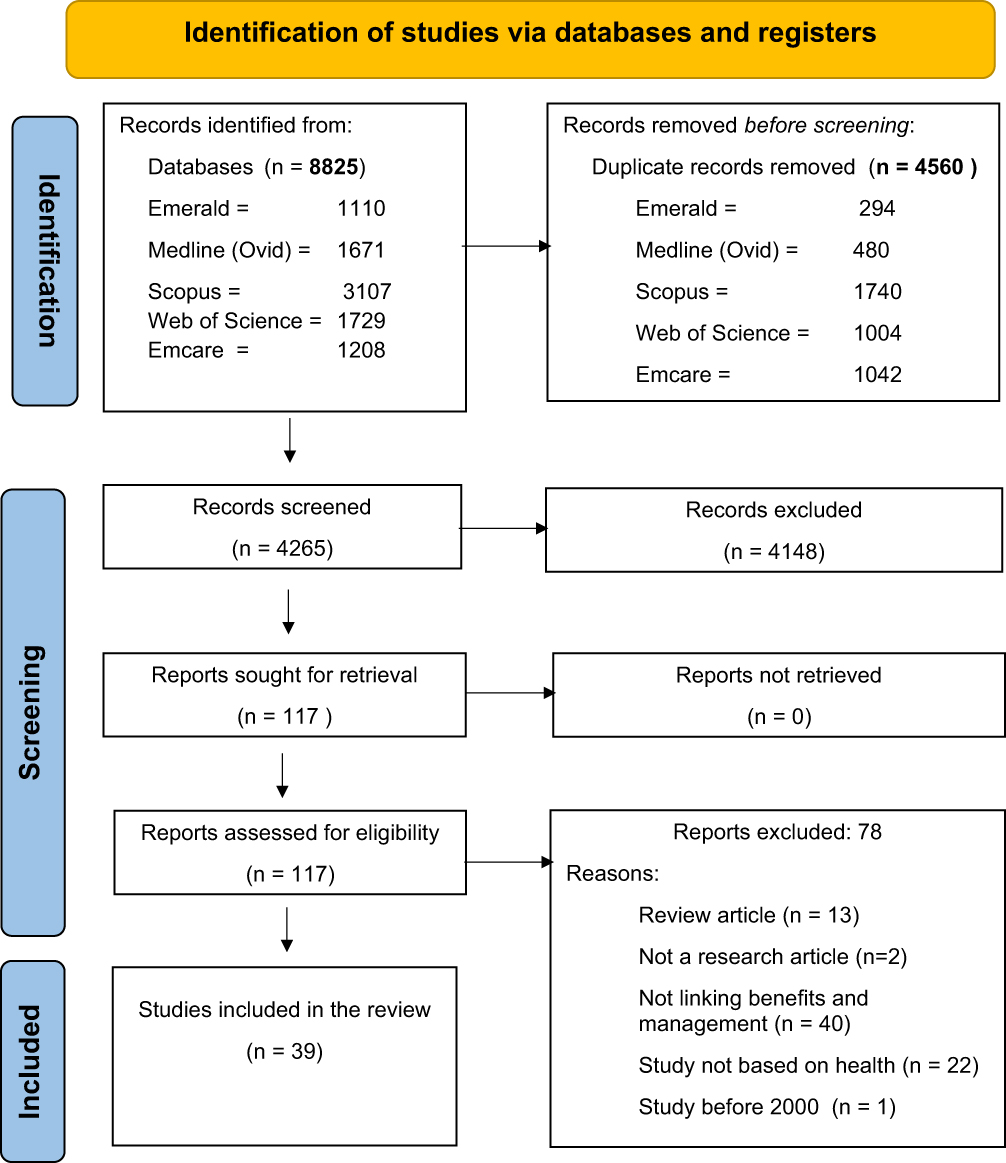 |
Figure 1 PRISMA flow diagram of the study selection process. |
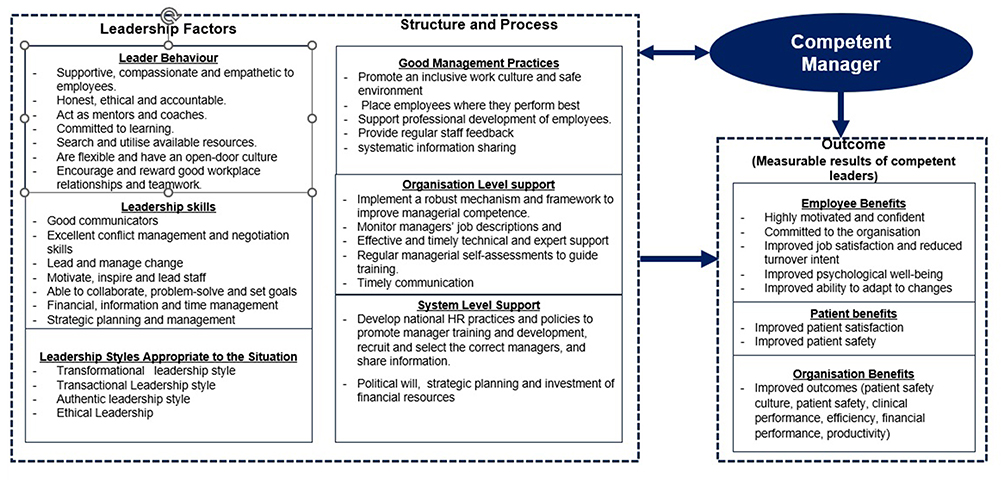 |
Figure 2 Benefits and positive impact of competent managers. |
Data Extraction
The authors developed a data extraction form to record and organise information and confirm the relevance of included papers. Data of five papers were extracted by SK into a Microsoft Excel sheet 2019 (Microsoft, Redmond, WA) For ZL to check for consistency and accuracy followed by discussions between ZL and SK before the completion of data extraction of all identified papers. The authors extracted general information on each study (eg, authors, year of publication, context, study type, aims, cadre of health professions, and management level) and specific information related to the research question (benefits of competent managers). All information on individual, team and organisation benefits reported in the publications, including those derived from results (empirical) and from the interpretation of results (opinion-based) was extracted. This allowed the authors to give a broad overview of the research question.
Critical Appraisal
In line with the scoping review framework, a critical appraisal of the paper was not conducted.42
Synthesis
The authors conducted a descriptive analysis of the characteristics of the included studies (Appendix 1) as well as an inductive thematic analysis of benefits that occur to competent managers. Inductive thematic analysis was carried out according to the steps outlined by previously published literature.43 Once data extraction was completed, keywords were identified from the data. The keywords were developed into codes and then organised into levels based on their shared characteristics. The results are presented in Tables 2 and 3.
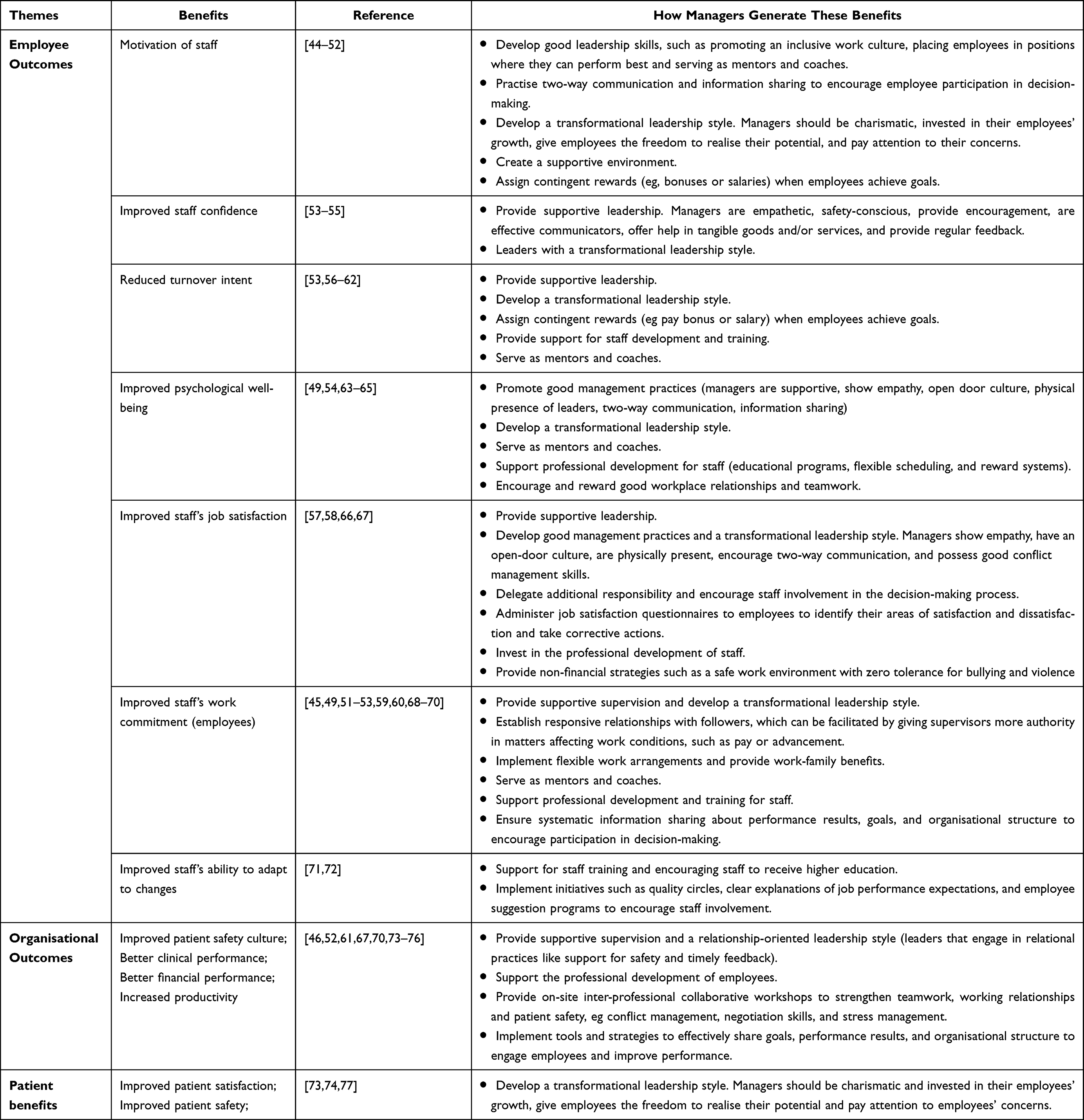 |
Table 2 Benefit Codes Generated During the Thematic Analysis Process |
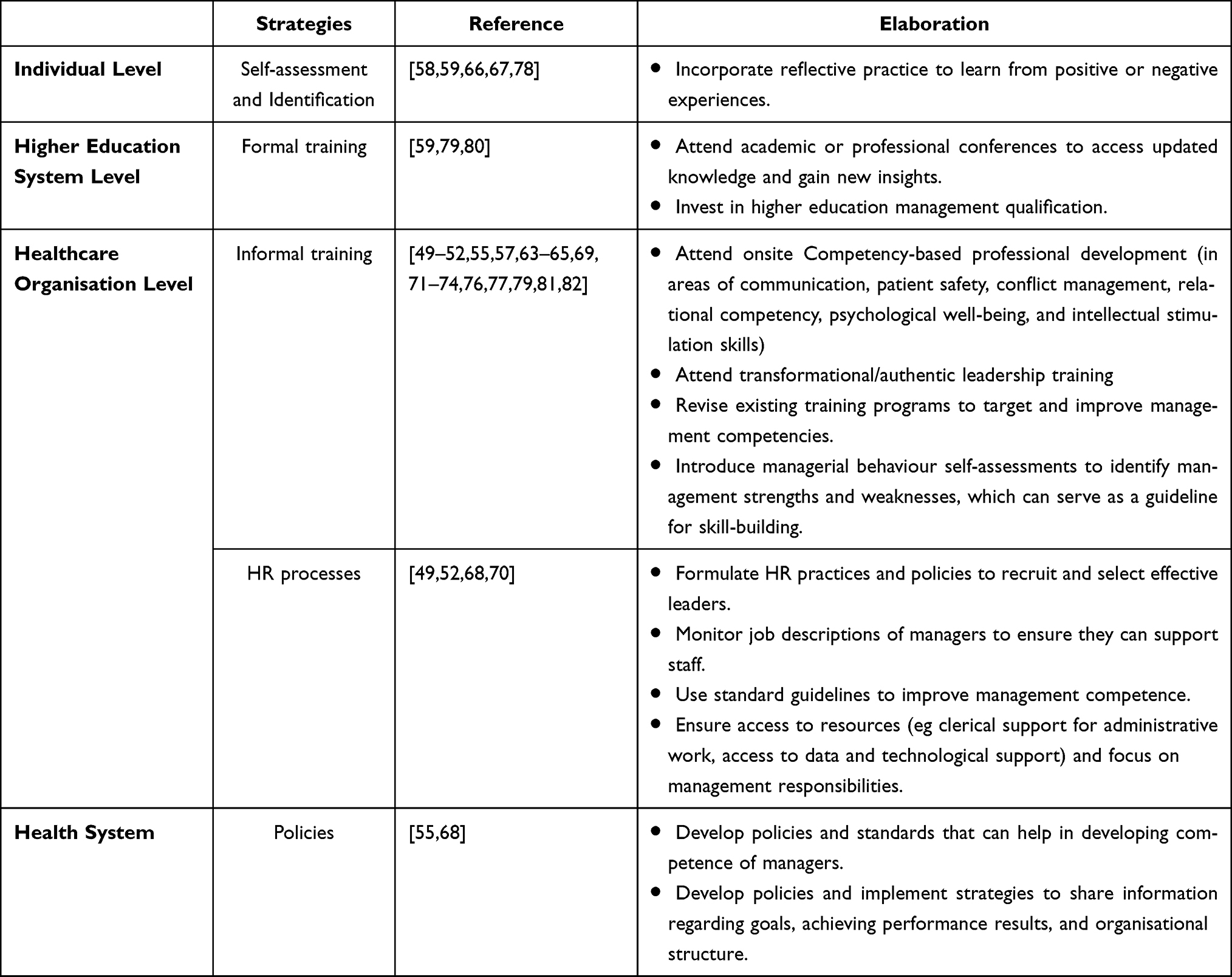 |
Table 3 Strategies for Developing Competent Managers |
Results
Literature Search
The PRISMA flowchart (Figure 1) details the review process and search results. An initial search conducted in 2023 generated 8825 publications, and after removing duplicates, 4560 publications were included for title screening. Abstract screening of 4265 publications resulted in 117 studies being included for full-text review. The full-text review confirmed the inclusion of 39 papers in data extraction and analysis.
Descriptive Synthesis
All papers were published between 2006 and 2023. Most of the papers (74%, n=29) were published after 2016. 13 (33%) studies were conducted in Asia (India, Indonesia, Iran, Japan Jordon, Saudi Arabia, and Turkey), 11 (28%) were completed in Europe and in the Americas (USA and Canada), followed by three (10%) in Africa (Nigeria, Uganda and a study conducted in Ethiopia, Kenya, Malawi and Mozambique). Only one (3%) study was conducted in Oceania (Australia).
All of the studies included health managers working in different health settings. Most papers included managers working in hospitals (n=36, 91%), and one (3%) paper included managers working in social service agencies. Two (6%) papers did not specify the organisation the managers were working in, but they were recruited because they were members of professional bodies such as the American Society of Radiologic Technologists (ASRT) or through national surveys. More than half of the papers (51%, n=20) included all levels of managers (frontline, middle and senior managers). 11 (28%) of the papers involved frontline managers and one (3%) paper each included middle managers and senior managers only. The other 6 (15%) papers did not specify the level of management.
Managers were from the following different medical professions:
- Twenty-three papers (59%) included managers from the nursing profession.
- Eight papers (21%) targeted all managers, regardless of their profession.
- Four (10%) papers involved managers from the allied health professions (10%, n=4), including radiology (2 papers), community health care workers (1 paper), and housekeeping and dietary service workers (1 paper).
- Two papers (5%) involved physicians and healthcare managers.
From a methodological standpoint, 31 (79%) of the studies used a quantitative method, 3 (5%) studies included qualitative methods, three (5%) utilised experimental methods, and 2 (5%) used mixed methods.
Impact of Competent Managers
All of the papers included in data extraction mentioned the benefits of “good management” and/or “competent managers”. Hence, such benefits were also included in data extraction.
Management and Job Satisfaction
Twenty papers confirmed that competent management improves employee job satisfaction.44–47,56–58,63,66–69,71,73,77–81,83 The results emphasise the importance of managerial competencies in increasing employees’ job satisfaction. The behaviour of managers towards their staff is also a crucial determinant of job satisfaction.57,58,66,67 The results further confirmed the positive impact of leadership on employees’ job satisfaction. Three leadership styles, authentic, transformational, and transactional, were specifically mentioned by these papers.45,46,48,56,59,72,73,78,79,83 With one exemption, laissez-faire leadership qualities were found to be associated with reduced levels of job satisfaction.78,83
Management and Employee Retention
This scoping review confirmed that competent managers are instrumental in retaining healthcare employees. Analysis of eight papers has shown that competent managers improved staff retention by increasing job satisfaction, affective commitment, and teamwork. Managers who are supportive and build effective workplace networks increase employees’ affective commitment, which in turn lowers employees’ turnover intention.53,56–62
Management and Well-Being
The findings of this review clearly demonstrate that competent managers are instrumental in managing stress at the workplace, reducing burnout and improving the psychological well-being of employees. Analysis of five papers highlighted that managers who are supportive and assist their followers in dealing with ethical issues protect them from the onset of emotional exhaustion.49,54,63–65 The review also highlighted that an authentic leadership style was vital in creating a positive working environment, increasing the coping self-efficacy and confidence of staff and lowering burnout.49,54,63–65
Strategies for Developing Competent Managers
Thirty studies discussed or recommended strategies for improving management and developing competent managers. Hence, data relevant to strategies were also extracted and analysed.46,50–52,55,61,67,70,73–76
Discussion
This scoping review confirms the positive influence of competent managers on job satisfaction, retention, and well-being of employees in the healthcare sector based on the results of empirical studies. The review also confirmed a range of benefits that competent managers can bring to employees, patients and the healthcare organisations. The review findings suggest that competent health managers are critical to employee and organisational success as illustrated in Figure 2.
Skills, Behaviours and Leadership Styles of Competent Managers
The results of this review highlighted the essential skills, behaviours, and leadership styles that competent managers should possess, enabling them to generate positive outcomes for employees, patients, and organisations. Competent managers should have the ability to effectively develop long-term plans, set goals and communicate goals and vision to their employees55 They should also be able to successfully manage teams, workload, resources, and solve workplace conflicts.65 Managers should be effective leaders who can collaborate well with their team, think critically, and foster a healthy working environment.55,57,65–68,70,77 Managers who are supportive of their subordinates and support the development of staff through mentoring are vital in improving employee outcomes.53,60–62,64 Managers with effective leadership skills and who demonstrate positive leadership behaviours can improve employee outcomes. Therefore, managers need to commit to continuous improvement in their managerial skills and address the skill gaps. In addition, healthcare organisations should be very clear about the managerial and leadership skills required of their health managers and dedicate resources to developing managers if gaps in skills and behaviours are recognised.
The role of three leadership styles - authentic, transformational, and transactional was highlighted in recent empirical evidence in improving employees’ job satisfaction, well-being and retention45,46,56,59,72,73,78,79,83 Leadership is context-sensitive and situational; hence, a single leadership style may not be suitable for all situations. Leadership styles can be applied differently in various situations to produce different benefits and outcomes. Managers and leaders should have the ability in adapt their leadership style to meet the abilities, willingness, and situational demands of team members82 Thus, regular training should be provided to assist health managers in recognising their leadership styles and to develop flexibility to adapt their leadership style to suit the situation.84
Developing Competent Managers
The papers included in this review discussed several strategies in four different levels for improving management and developing competent managers. The results of this review reinforce that developing a competent health management workforce requires a holistic approach, with system-level investment, support, recognition, and collective efforts to promote the development of management competencies. Health managers need an empowering environment where their personal development is reinforced by efforts from and collaborations between health organisations, higher education institutions, and health systems.85
From the health systems’ perspective, political will and support are required to improve and develop the capacity of managers.68,70 There is a need to develop national partnerships and policies to build health management capacity.70 These may include policies that recognise the importance of acquiring core management and leadership competencies and support the development of competency-based educational programs in healthcare management.86 Healthcare organisations are instrumental in creating a supportive environment conducive to good management practices in two ways: the first is by adopting sound human resource management (HRM),49,50,55,68 and the second is by committing resources to providing continuous onsite training and professional development interventions to support the development of managers.49–51,55,57,63–65,70–75,77,79,81 Good HRM policy and practices invest in activities to ensure organisations have an adequate number of employees with the right skills and motivation to achieve the organisation’s goals.87 The findings of this review support previous research advocating the need to embed competency frameworks to enhance management capacities and to link the core organisational competencies to the organisation’s internal capabilities, thereby supporting the competence of the workforce.88
HR practices of coaching, training and performance appraisal are also vital in developing competent managers.50 Training and continuous professional development have long been recognised as essential in expanding the capacity of individuals to be effective in their management or leadership roles.89,90 Health organisations need cost-effective mechanisms to develop the competency of their managers. The review supports informal or workplace-based training is necessary to develop competent managers.49–51,55,57,61,63–65,70–74,77,79,81 Literature51 highlights that workplace-based training programs should be tailored to the local context in terms of content and learning methods. Workplace-based training can be implemented using flexible, multiple training techniques such as interactive workshops, coaching, action learning, constructive feedback and mentoring.61 Training programs should also be regularly reviewed and revised to improve targeted management competencies 73. The current review also supports that effective leadership can be promoted through formal health management education.59,79,80 Since management competencies are context-specific and will continue to evolve, both tertiary institutions and professional bodies must commit to understanding the changing competency requirements and competency development needs of the health management workforce. Higher degree teaching curricula must be regularly reviewed to incorporate newly emerged competency requirements.
Previous studies have confirmed that formal education provides an array of positive outcomes, including improved knowledge of management and leadership roles and responsibilities, improved communication skills, increased participant confidence and job positivity and satisfaction.91 From the health manager’s perspective, the results indicate that managers should engage in regular reflective practice.59 This allows managers to reflect and identify their key managerial strengths and weaknesses, ultimately improving future practice.92 De-briefing sessions, self-report questionnaires and mentor feedback can encourage health managers to engage in reflective practice.92 Therefore, it is beneficial to integrate self-reflection into the everyday practice of health managers, with feedback from mentors and emphasis on self-evaluation as a means of ongoing monitoring.
Limitations and Further Research
The review only included articles published in English, and hence, relevant articles published in another language may be excluded. Most of the included studies were published in developed countries (North America and Europe), which may indicate that transferability to the context of developing countries requires further research.
Most papers were quantitative (79%) and adopted a survey strategy for data collection, indicating gaps in adopting different methodological approaches. Therefore, further research should be undertaken using mixed methods and qualitative paradigms to give a more comprehensive understanding of the topic. Since more than half of the included studies were conducted on nurses, there is a need to include other healthcare professions in future studies.
Research Implications on Policy and Practice
This review has confirmed various important elements for improving management and developing competent managers. Health managers can enhance their capacity and capability by developing self-confidence in leadership through a collaborative learning process reinforced by efforts from health organisations, higher education institutions, and policymakers. System and organisational level commitment is required to develop policies, structures, and processes that enable the development of competent health managers with the skills and behaviours necessary to perform their job effectively. Training and continuous professional development are essential for enhancing the management capabilities of health managers. There is a need to embed competency frameworks to guide the development and training of health managers.
Health organisations must commit to providing workplace-based training to enhance the capacity of their managers. Since management competencies are context-sensitive and will continue to evolve, it is imperative that professional and tertiary institutions commit to continuously understanding the changing competency requirements and development needs of the health management workforce and regularly review higher degree teaching curricula to incorporate newly emerging competency requirements.
Conclusion
This review has taken an important step in confirming the link between health managers and employee success. The results confirm that competent managers are crucial to enhancing job satisfaction, retention, and the overall well-being of healthcare employees. This review also confirmed a range of other benefits that competent managers can bring to patients and healthcare organisations. These findings suggest that competent health managers are critical to employee and organisational success. The review also highlights that managers must possess a range of leadership skills, display positive leadership behaviors and have the ability to adapt their leadership styles in order to generate positive outcomes for employees, patients, and organisations. Therefore, dedicating resources to develop a competent health management workforce is critical. This review confirms the importance of joint efforts and collaboration between governments, health organisations and higher education institutions to systematically enhance the capabilities of hospital managers. Health managers should be provided the opportunities in and encouraged to participate in both formal and informal management training. Equally important is the system and organisational level support in developing policy, structure and process that builds management capacity and supports managers. Since management competencies are context-specific and will continue to evolve, both tertiary institutions and professional bodies should continue their efforts in understanding the changing competency requirements and competency development needs of the health management workforce. Higher degree teaching curricula must be regularly reviewed to incorporate newly emerged competency requirements.
Acknowledgments
Zhanming Liang is the senior author of the paper.
Author Contributions
All authors made a significant contribution to the work reported, whether that is in the conception, study design, execution, acquisition of data, analysis and interpretation, or in all these areas; took part in drafting, revising or critically reviewing the article; gave final approval of the version to be published; have agreed on the journal to which the article has been submitted; and agree to be accountable for all aspects of the work.
Funding
No financial contribution was received.
Disclosure
The authors report no conflicts of interest in this work.
References
1. Poon YSR, Lin YP, Griffiths P, Yong KK, Seah B, Liaw SY. A global overview of healthcare workers’ turnover intention amid COVID-19 pandemic: a systematic review with future directions. Hum Resour Health. 2022;20(70). doi:10.1186/s12960-022-00764-7
2. Boniol M, Kunjumen T, Nair TS, Siyam A, Campbell J, Diallo K. The global health workforce stock and distribution in 2020 and 2030: a threat to equity and “universal” health coverage? BMJ Glob Health. 2022;7(6):e009316. doi:10.1136/bmjgh-2022-009316
3. Bae SH. Noneconomic and economic impacts of nurse turnover in hospitals: a systematic review. Int Nurs Rev. 2022;69(3):392–15. doi:10.1111/inr.12769
4. Halter M, Boiko O, Pelone F, et al. The determinants and consequences of adult nursing staff turnover: a systematic review of systematic reviews. BMC Health Serv Res. 2017;17(824). doi:10.1186/s12913-017-2707-0
5. Shanafelt T, Goh J, Sinsky C. The business case for investing in physician well-being. JAMA Intern Med. 2017;177(12):1826–1832. doi:10.1001/jamainternmed.2017.4340
6. Winter V, Schreyögg J, Thiel A. Hospital staff shortages: environmental and organizational determinants and implications for patient satisfaction. Health Policy. 2020;124(4):380–388. doi:10.1016/j.healthpol.2020.01.001
7. Peng X, Ye Y, Ding X, Chandrasekaran A. The impact of nurse staffing on turnover and quality: an empirical examination of nursing care within hospital units. J Oper Manag. 2023;69(7):1124–1152. doi:10.1002/joom.1245
8. Zhao Y, Russell DJ, Guthridge S, et al. Costs and effects of higher turnover of nurses and Aboriginal health practitioners and higher use of short-term nurses in remote Australian primary care services: an observational cohort study. BMJ Open. 2019;9(e023906). doi:10.1136/bmjopen-2018-023906
9. Zhang T, Feng J, Jiang H, Shen X, Pu B, Gan Y. Association of professional identity, job satisfaction and burnout with turnover intention among general practitioners in China: evidence from a national survey. BMC Health Serv Res. 2021;21(392). doi:10.1186/s12913-021-06322-6
10. Wieneke KC, Schaepe KS, Egginton JS, et al. The supervisor’s perceived role in employee well-being: results from Mayo Clinic. Am J Health Promot. 2019;33(2):300–311. doi:10.1177/0890117118784860
11. Asante BL, Zúñiga F, Favez L. Quality of care is what we make of it: a qualitative study of managers’ perspectives on quality of care in high-performing nursing homes. BMC Health Serv Res. 2021;21(1090). doi:10.1186/s12913-021-07113-9
12. Pearson A, Laschinger H, Porritt K, Jordan Z, Tucker D, Long L. Comprehensive systematic review of evidence on developing and sustaining nursing leadership that fosters a healthy work environment in healthcare. Int J Evid Based Healthc. 2007;5:208–253. doi:10.1111/j.1479-6988.2007.00065.x
13. Silva JAM, Mininel VA, Fernandes Agreli H, Peduzzi M, Harrison R, Xyrichis A. Collective leadership to improve professional practice, healthcare outcomes and staff well-being. Cochrane Database Sys Rev. 2022;2022(10):1–47. doi:10.1002/14651858.CD013850.pub2
14. Rotenstein LS, Huckman RS, Cassel CK. Making doctors effective managers and leaders: a matter of health and well-being. Acad Med. 2021;96(5):652–654. doi:10.1097/ACM.0000000000003887
15. Specchia ML, Cozzolino MR, Carini E, et al. Leadership styles and nurses’ job satisfaction. Results of a systematic review. Int J Environ Res Public Health. 2021;18:1–15. doi:10.3390/ijerph18041552
16. Hussain MK, Khayat RAM. The impact of transformational leadership on job satisfaction and organisational commitment among hospital staff: a systematic review. J Health Manag. 2021;23(4):614–630. doi:10.1177/09720634211050463
17. Labrague LJ, Nwafor CE, Tsaras K. Influence of toxic and transformational leadership practices on nurses’ job satisfaction, job stress, absenteeism and turnover intention: a cross-sectional study. J Nurs Manag. 2020;28(5):1104–1113. doi:10.1111/jonm.13053
18. Chen J, Ghardallou W, Comite U, et al. Managing hospital employees’ burnout through transformational leadership: the role of resilience, role clarity, and intrinsic motivation. Int J Environ Res Public Health. 2022;19(17). doi:10.3390/ijerph191710941
19. Poels J, Verschueren M, Milisen K, Vlaeyen E. Leadership styles and leadership outcomes in nursing homes: a cross-sectional analysis. BMC Health Serv Res. 2020;20(1009). doi:10.1186/s12913-020-05854-7
20. Malila N, Lunkka N, Suhonen M. Authentic leadership in healthcare: a scoping review. Leadersh Health Serv. 2018;31(1):129–146. doi:10.1108/LHS-02-2017-0007
21. Demeke GW, van Engen ML, Markos S. Servant leadership in the healthcare literature: a systematic review. J Healthc Leadersh. 2024;16:1–14. doi:10.2147/JHL.S440160
22. Nagarajan R, Prabhu R. Competence and capability − A new look. IJM. 2015;6(6):8–12.
23. Boyatzis RE. The Competent Manager: A Model for Effective Performance.
24. Howard PF, Liang Z, Leggat S, Karimi L. Validation of a management competency assessment tool for health service managers. J Health Organ Manag. 2018;32(1):113–134. doi:10.1108/JHOM-08-2017-0223
25. Liang Z, Howard PF, Leggat S, Bartram T. Development and validation of health service management competencies. J Health Organ Manag. 2018;32(2):157–175. doi:10.1108/jhom-06-2017-0120
26. Liang Z, Howard PF, Koh LC, Leggat S. Competency requirements for middle and senior managers in community health services. Aust J Prim Health. 2013;19(3):256–263. doi:10.1071/PY12041
27. Kakemam E, Liang Z, Janati A, Arab-Zozani M, Mohaghegh B, Gholizadeh M. Leadership and management competencies for hospital managers: a systematic review and best-fit framework synthesis. J Healthc Leadersh. 2020;12(1):59–68. doi:10.2147/JHL.S265825
28. Kakemam E, Liang Z. Guidance for management competency identification and development in the health context: a systematic scoping review. BMC Health Serv Res. 2023;23(421). doi:10.1186/s12913-023-09404-9
29. Liang Z, Howard P, Wang J, Xu M. A call for leadership and management competency development for directors of medical services—evidence from the Chinese public hospital system. Int J Environ Res Public Health. 2020;17(6913):1–19. doi:10.3390/ijerph17186913
30. Australasian College of Health Service Management. Master Health Service Management Competency Framework; 2016.
31. National Center for Healthcare Leadership. National Center for Healthcare Leadership Health Leadership Competency Model 3.0. 2018. Available from: ww.nchl.org.
32. Basterrechea S, Frich JC, Garman AN. Future-ready healthcare leadership: the revised International Hospital Federation competency model. BMJ Leader. 2024;80–82. doi:10.1136/leader-2023-000925
33. Alrobai T, Briggs J. The impact of nurse leaders/managers leadership style on job satisfaction and burnout among qualified nurses: a systematic review. IOSR-JNHS. 2022;9(1):17–41. doi:10.9790/1959-0901081741
34. Niinihuhta M, Häggman-Laitila A. A systematic review of the relationships between nurse leaders’ leadership styles and nurses’ work-related well-being. Int J Nurs Pract. 2022;28(5):1–22. doi:10.1111/ijn.13040
35. Alluhaybi A, Wilson A, Usher K, Durkin J. Impact of nurse manager leadership styles on work engagement: a systematic literature review. J Nurs Manag. 2023;2023:1–9. doi:10.1155/2023/5090276
36. German PB, Cummins GG. The influence of nursing leadership on nurse performance: a systematic literature review. J Nurs Manag. 2010;18:425–439. doi:10.1111/j.1365-2834.2010.01100.x
37. Hult M, Terkamo-Moisio A, Kaakinen P, et al. Relationships between nursing leadership and organizational, staff and patient outcomes: a systematic review of reviews. Nurs Open. 2023;10:5920–5936. doi:10.1002/nop2.1876
38. Ystaas LMK, Nikitara M, Ghobrial S, Latzourakis E, Polychronis G, Constantinou CS. The impact of transformational leadership in the nursing work environment and patients’ outcomes: a systematic review. Nurs Rep. 2023;13:1271–1290. doi:10.3390/nursrep13030108
39. Heerdegen ACS, Aikins M, Amon S, Agyemang SA, Wyss K. Managerial capacity among district health managers and its association with district performance: a comparative descriptive study of six districts in the Eastern Region of Ghana. PLoS One. 2020;15(1). doi:10.1371/journal.pone.0227974
40. Peters MDJ, Marnie C, Tricco AC, et al. Updated methodological guidance for the conduct of scoping reviews. JBI Evid Synth. 2020;18(10):2119–2126. doi:10.11124/JBIES-20-00167
41. Tricco AC, Lillie E, Zarin W, et al. PRISMA extension for scoping reviews (PRISMA-ScR): checklist and explanation. Ann Intern Med. 2018;169(7):467–473. doi:10.7326/M18-0850
42. Aromataris E, Lockwood C, Porritt K, Pilla B, Jordan Z. JBI Manual for Evidence Synthesis. 2024.
43. Naeem M, Ozuem W, Howell K, Ranfagni S. A Step-by-step process of thematic analysis to develop a conceptual model in qualitative research. Int J Qual Methods. 2023;22:1–18. doi:10.1177/16094069231205789
44. Lorber M, Savič BS. Job satisfaction of nurses and identifying factors of job satisfaction in Slovenian hospitals. Croat Med J. 2012;53:263–270. doi:10.3325/cmj.2012.53.263
45. Shah TA, Parray ZA, ul IS. The empirical relationship between transformational leadership and job attitudes: mediating role of psychological capital – a study of healthcare in India. IJPL. 2023;19(1):45–63. doi:10.1108/IJPL-07-2022-0042
46. Musinguzi C, Namale L, Rutebemberwa E, Dahal A, Nahirya-Ntege P, Kekitiinwa A. The relationship between leadership style and health worker motivation, job satisfaction and teamwork in Uganda. J Healthc Leadersh. 2018;10:21–32. doi:10.2147/JHL.S147885
47. Suprapto S, Lalla NN, Mulat TC, Arda D. Human resource development and job satisfaction among nurses. Int J Publ Health Sci. 2023;12(3):1056–1063. doi:10.11591/ijphs.v12i3.22982
48. Sahraei Beiranvand M, Beiranvand S, Beiranvand S, Mohammadipour F. Explaining the effect of authentic and ethical leadership on psychological empowerment of nurses. J Nurs Manag. 2021;29:1081–1090. doi:10.1111/jonm.13246
49. Rollins AL, Eliacin J, Russ-Jara AL, et al. Organizational conditions that influence work engagement and burnout: a qualitative study of mental health workers. Psychiatr Rehabil J. 2021;44(3):229–237. doi:10.1037/prj0000472
50. Aboramadan M, Alolayyan MN, Turkmenoglu MA, Cicek B, Farao C. Linking authentic leadership and management capability to public hospital performance: the role of work engagement. Int J Organ Anal. 2021;29(5):1350–1370. doi:10.1108/IJOA-10-2020-2436
51. Kristensen S, Christensen KB, Jaquet A, et al. Strengthening leadership as a catalyst for enhanced patient safety culture: a repeated cross-sectional experimental study. BMJ Open. 2016;6(6):1–10. doi:10.1136/bmjopen-2015
52. Nayeri ND, Nazari AA, Salsali M, Ahmadi F, Hajbaghery MA. Iranian staff nurses’ views of their productivity and management factors improving and impeding it: a qualitative study. Nurs Health Sci. 2006;8(1):51–56. doi:10.1111/j.1442-2018.2006.00254.x
53. Fleig-Palmer MM, Rathert C. Interpersonal mentoring and its influence on retention of valued health care workers. Health Care Manage Rev. 2015;40(1):56–64. doi:10.2307/48516196
54. Laschinger HKS, Borgogni L, Consiglio C, Read E. The effects of authentic leadership, six areas of worklife, and occupational coping self-efficacy on new graduate nurses’ burnout and mental health: a cross-sectional study. Int J Nurs Stud. 2015;52:1080–1089. doi:10.1016/j.ijnurstu.2015.03.002
55. Vainieri M, Ferrè F, Giacomelli G, Nuti S. Explaining performance in health care: how and when top management competencies make the difference. Health Care Manage Rev. 2019;44(4):306–317. doi:10.1097/HMR.0000000000000164
56. Abdelhafiz IM, Alloubani AMD, Almatari M. Impact of leadership styles adopted by head nurses on job satisfaction: a comparative study between governmental and private hospitals in Jordan. J Nurs Manag. 2016;24(3):384–392. doi:10.1111/jonm.12333
57. Sellgren SF, Ekvall G, Tomson G. Leadership behaviour of nurse managers in relation to job satisfaction and work climate. J Nurs Manag. 2008;16:578–587. doi:10.1111/j.1365-2934.2007.00837.x
58. Perkins RT, Bamgbade S, Bourdeanu L. Nursing leadership roles and its influence on the millennial psychiatric nurses’ job satisfaction and intent to leave. J Am Psychiatr Nurses Assoc. 2023;29(1):15–24. doi:10.1177/1078390320979615
59. Kodama Y, Fukahori H, Sato K, Nishida T. Is nurse managers’ leadership style related to Japanese staff nurses’ affective commitment to their hospital? J Nurs Manag. 2016;24:884–892. doi:10.1111/jonm.12392
60. Nichols HM, Swanberg JE, Bright CL. How does supervisor support influence turnover intent among frontline hospital workers: the mediating role of affective commitment. Health Care Manag (Frederick). 2016;35(3):266–279. doi:10.1097/HCM.0000000000000119
61. Zaheer S, Ginsburg L, Wong HJ, Thomson K, Bain L, Wulffhart Z. Turnover intention of hospital staff in Ontario, Canada: exploring the role of frontline supervisors, teamwork, and mindful organizing. Hum Resour Health. 2019;17(66):1–9. doi:10.1186/s12960-019-0404-2
62. Brunetto Y, Farr-Wharton R, Shacklock K. The impact of supervisor-subordinate relationships on nurses’ ability to solve workplace problems: implications for their commitment to the organization. Adv Health Care Manag. 2011;10(1):215–237. doi:10.1108/S1474-8231(2011)0000010019
63. Sillero A, Zabalegui A. Organizational factors and burnout of perioperative nurses. CP EMH. 2018;14(1):132–142. doi:10.2174/1745017901814010132
64. Maffoni M, Sommovigo V, Giardini A, Paolucci S, Setti I. Dealing with ethical issues in rehabilitation medicine: the relationship between managerial support and emotional exhaustion is mediated by moral distress and enhanced by positive affectivity and resilience. J Nurs Manag. 2020;28(5):1114–1125. doi:10.1111/jonm.13059
65. Lewis R, Yarker J, Donaldson-Feilder E, Flaxman P, Munir F. Using a competency-based approach to identify the management behaviours required to manage workplace stress in nursing: a critical incident study. Int J Nurs Stud. 2010;47:307–313. doi:10.1016/j.ijnurstu.2009.07.004
66. Hicks JM, Becky B. Management qualities and their effects on satisfaction: part 2. Radiol Manage. 2010;32(4):58–62.
67. Reshidi NA, Shanan N, Garcia M, Saleh A, Dali T, Musbet A. The influence of nursing leaders’ behavior on nurses’ job satisfaction: a quantitative study in Hail, Saudi Arabia. Int J Adv Appl Sci. 2023;10(9):101–109. doi:10.21833/ijaas.2023.09.012
68. Almutairi H, Bahari G. A multisite survey of managerial competence and organizational commitment among nurses working at public hospitals in Saudi Arabia. J Nurs Manag. 2022;30(1):179–186. doi:10.1111/jonm.13453
69. Babaeipour-Divshali M, Amrollahimishavan F, Vanaki Z, Abdollahimohammad A, Firouzkouhi M. Effect of head nurse empowerment program on staff nurses’ job satisfaction at two educational hospitals in Rasht, Iran. Iran J Nurs Midwifery Res. 2016;21(3):306–309. doi:10.4103/1735-9066.180379
70. Al-Hussami M, Hamad S, Darawad M, Maharmeh M. The effects of leadership competencies and quality of work on the perceived readiness for organizational change among nurse managers. Leadersh Health Serv. 2017;30(4):443–456. doi:10.1108/LHS-11-2016-0058
71. Melián-Alzola L, Domínguez-Falcón C, Martín-Santana JD. The role of the human dimension in organizational agility: an empirical study in intensive care units. Pers Rev. 2020;49(9):1945–1964. doi:10.1108/PR-08-2019-0456
72. Sarıköse S, Türkmen E. The relationship between demographic and occupational variables, transformational leadership perceptions and individual innovativeness in nurses. J Nurs Manag. 2020;28(1):1126–1133. doi:10.1111/jonm.13060
73. Akdere M, Egan T. Transformational leadership and human resource development: linking employee learning, job satisfaction, and organizational performance. Hum Resour Dev Q. 2020;31(1):393–421. doi:10.1002/hrdq.21404
74. Mortier AV, Vlerick P, Clays E. Authentic leadership and thriving among nurses: the mediating role of empathy. J Nurs Manag. 2016;24:357–365. doi:10.1111/jonm.12329
75. Zaheer S, Ginsburg L, Wong HJ, Thomson K, Bain L, Wulffhart Z. Acute care nurses’ perceptions of leadership, teamwork, turnover intention and patient safety – a mixed methods study. BMC Nurs. 2021;20(134):1–4. doi:10.1186/s12912-021-00652-w
76. Kok MC, Vallières F, Tulloch O, et al. Does supportive supervision enhance community health worker motivation? A mixed-methods study in four African countries. Health Policy Plan. 2018;33(9):988–998. doi:10.1093/heapol/czy082
77. Widyana R, Handiyani H, Kuntarti. Self-efficacy and organizing competency of head nurse dominant factors determining of nursing job satisfaction implemented in two hospitals in Riau Province. Enferm Clin. 2019;29(S2):625–628. doi:10.1016/j.enfcli.2019.04.095
78. Clark KR, Delay L. The relationship between leadership styles and job satisfaction: a survey of MR technologists’ perceptions. Radiol Technol. 2020;92(1):12–23.
79. Jankelová N, Joniaková Z. Communication skills and transformational leadership style of first-line nurse managers in relation to job satisfaction of nurses and moderators of this relationship. Healthcare. 2021;9(346):1–19. doi:10.3390/healthcare9030346
80. Furtado L, Batista M, Silva F. Leadership and job satisfaction among Azorean hospital nurses: an application of the situational leadership model. J Nurs Manag. 2011;19:1047–1057. doi:10.1111/j.1365-2834.2011.01281.x
81. Patrick A, Laschinger H. The effect of structural empowerment and perceived organizational support on middle level nurse managers’ role satisfaction. J Nurs Manag. 2006;14(1):13–22. doi:10.1111/j.1365-2934.2005.00600.x
82. Wang X, Liu Y, Peng Z, et al. Situational leadership theory in nursing management: a scoping review. BMC Nurs. 2024;23(1). doi:10.1186/s12912-024-02582-9
83. Durowade KA, Kadiri IB, Durowade SB, Sanni TA, Ojuolape MA, Omokanye LO. Leadership styles versus health workers’ job satisfaction: relationships, correlates and predictors in Tertiary Hospitals in Ekiti State, Southwest Nigeria. Niger J Clin Pract. 2020;23(12):1702–1710. doi:10.4103/njcp.njcp_525_18
84. van Diggele C, Roberts C, Lane S, Gopalan V. Leadership behaviours in interprofessional student teamwork. BMC Med Educ. 2022;22:22. doi:10.1186/s12909-022-03923-5
85. Brommeyer M, Whittaker M, Mackay M, Ng F, Liang Z. Building health service management workforce capacity in the era of health informatics and digital health – a scoping review. Int J Med Inform. 2023;169. doi:10.1016/j.ijmedinf.2022.104909
86. Al Salmi Q, Al Fannah J, de Roodenbeke E. The imperative of professionalising healthcare management: a global perspective. Future Healthc J. 2024;11(3):100170. doi:10.1016/j.fhj.2024.100170
87. Mathauer I, Imhoff I. Health worker motivation in Africa: the role of non-financial incentives and human resource management tools. Hum Resour Health. 2006;4(24). doi:10.1186/1478-4491-4-24
88. Liang Z, Blackstock FC, Howard PF, et al. An evidence-based approach to understanding the competency development needs of the health service management workforce in Australia. BMC Health Serv Res. 2018;18(976). doi:10.1186/s12913-018-3760-z
89. Ayeleke RO, North NH, Dunham A, Wallis KA. Impact of training and professional development on health management and leadership competence: a mixed methods systematic review. J Health Organ Manag. 2019;33(4):354–379. doi:10.1108/JHOM-11-2018-0338
90. Kasaai B, Thompson E, Glazier RH, McMahon M. Enrichment of core competencies to maximize health system impact: an analysis of an embedded research training program. Learn Health Syst. 2024;8(e:10399). doi:10.1002/lrh2.10399
91. Flaig J, Alam A, Huynh J, Reid-Hector J, Heuer A. Examining how formal leadership development programs positively influence hospital leaders’ individual competencies and organizational outcomes – an evidence-based literature. J Healthc Leadersh. 2020;12:69–83. doi:10.2147/JHL.S239676
92. Mantzourani E, Desselle S, Le J, Lonie JM, Lucas C. The role of reflective practice in healthcare professions: next steps for pharmacy education and practice. RSAP. 2019;15:1476–1479. doi:10.1016/j.sapharm.2019.03.011
 © 2026 The Author(s). This work is published and licensed by Dove Medical Press Limited. The
full terms of this license are available at https://www.dovepress.com/terms
and incorporate the Creative Commons Attribution
- Non Commercial (unported, 4.0) License.
By accessing the work you hereby accept the Terms. Non-commercial uses of the work are permitted
without any further permission from Dove Medical Press Limited, provided the work is properly
attributed. For permission for commercial use of this work, please see paragraphs 4.2 and 5 of our Terms.
© 2026 The Author(s). This work is published and licensed by Dove Medical Press Limited. The
full terms of this license are available at https://www.dovepress.com/terms
and incorporate the Creative Commons Attribution
- Non Commercial (unported, 4.0) License.
By accessing the work you hereby accept the Terms. Non-commercial uses of the work are permitted
without any further permission from Dove Medical Press Limited, provided the work is properly
attributed. For permission for commercial use of this work, please see paragraphs 4.2 and 5 of our Terms.
Recommended articles
Physician Leadership and Its Effect on Physician Burnout and Satisfaction During the COVID-19 Pandemic
Spilg EG, McNeill K, Dodd-Moher M, Dobransky JS, Sabri E, Maniate JM, Gartke KA
Journal of Healthcare Leadership 2025, 17:49-61
Published Date: 27 February 2025