
Back to Journals » Journal of Multidisciplinary Healthcare » Volume 19
The Hidden Burden After Critical Illnesses: A Systematic Review of Psychological Outcomes and Their Associated Factors Among ICU Survivors (2021–2025)
Authors Pongsuwun K  , Junphongsri P, Preeprem C, Nguantad S , Samart B , Puwarawuttipanit W, Ho MH, Ruksakulpiwat S
Received 28 February 2026
Accepted for publication 22 April 2026
Published 14 July 2026 Volume 2026:19 605895
DOI https://doi.org/10.2147/JMDH.S605895
Checked for plagiarism Yes
Review by Single anonymous peer review
Peer reviewer comments 2
Editor who approved publication: Professor Charles V Pollack
Kewalin Pongsuwun,1 Pruegsa Junphongsri,1 Change Preeprem,2 Sunisa Nguantad,3 Benjakarn Samart,4 Wimolrat Puwarawuttipanit,1 Mu-Hsing Ho,5 Suebsarn Ruksakulpiwat1
1Department of Medical Nursing, Faculty of Nursing, Mahidol University, Bangkok, Thailand; 2Department of Public Health Nursing, Faculty of Nursing, Mahidol University, Bangkok, Thailand; 3Department of Nursing, Siriraj Hospital, Faculty of Medicine Siriraj Hospital, Mahidol University, Bangkok, Thailand; 4Inpatient Department, Lerdsin Hospital, Bangkok, Thailand; 5School of Nursing, Li ka Shing Faculty of Medicine, The University of Hong Kong, Pokfulam, Hong Kong SAR, People’s Republic of China
Correspondence: Suebsarn Ruksakulpiwat, Department of Medical Nursing, Faculty of Nursing, Mahidol University, 2 Wanglang Road, Siriraj, Bangkok Noi, Bangkok, 10700, Thailand, Email [email protected]
Background: Survival following critical illness has improved substantially; however, many individuals experience persistent psychological sequelae after discharge from intensive care units. These outcomes may adversely affect long-term recovery, quality of life, and reintegration into daily roles, underscoring the need for a comprehensive synthesis of current evidence.
Objective: To synthesize evidence published between 2021 and 2025 on psychological outcomes among ICU survivors and identify associated factors.
Methods: This systematic review employed a convergent integrated approach for data synthesis. The review adhered to the Preferred Reporting Items for Systematic Reviews and Meta-Analyses guidelines. Six electronic databases (PubMed, MEDLINE via EBSCO, ScienceDirect, Scopus, Nursing & Allied Health Premium, and the Cochrane Library) were searched for studies published between 2021 and 2025. Studies were included if they reported psychological outcomes and associated factors among adult ICU survivors. Data were synthesized following the Joanna Briggs Institute methodology.
Results: Thirteen studies met the inclusion criteria. The most frequently reported psychological outcomes were depression, (9 studies; 69.2%), anxiety (8 studies; 61.5%), post-traumatic stress disorder (8 studies; 61.5%), and stress-related symptoms (1 study; 7.7%). Associated factors were grouped into seven domains: personal characteristics, length of stay, distress-related factors, pre-existing mental health or substance use, physical and cognitive function, and protective factors. Women were more frequently reported to experience higher psychological distress across several studies, while some evidence suggested higher symptom burden among patients with longer ICU stays and poorer physical or cognitive function. While consistent patterns were observed, the strength of evidence varied across domains.
Conclusion: Psychological outcomes are commonly reported among ICU survivors and appear to be influenced by multiple interrelated factors. However, given the limited number, heterogeneity, and predominantly observational nature of included studies, these findings should be interpreted with caution. Further research is warranted to strengthen the evidence base and inform targeted interventions.
Keywords: intensive care units, psychological outcomes, systematic review, ICU survivors
Introduction
The global burden of critical illness continues to increase due to aging populations and rising rates of chronic disease.1,2 Millions of individuals require intensive care each year for conditions such as sepsis, acute respiratory failure, and major trauma, often requiring mechanical ventilation and sedation.3–6 Improvements in critical care have enhanced survival,7 but a growing number of ICU survivors experience post-intensive care syndrome (PICS), affecting more than half of patients and involving physical, cognitive, and psychological impairments such as depression, anxiety, and post-traumatic stress disorder (PTSD).8,9
Psychological outcomes are among the most frequently reported components of PICS, including depression, anxiety, and PTSD.10–12 These symptoms are often linked to traumatic ICU experiences such as life-threatening events, invasive procedures, prolonged sedation, sleep disruption, and reduced communication or social interaction.13–15 They may persist after hospital discharge, negatively affecting quality of life, functional recovery, and healthcare utilization.10,12,16–20 Despite growing recognition, existing evidence remains fragmented and inconsistent. Many studies focus on single outcomes, while variation in study design, follow-up timing, and measurement tools limits comparability and generalizability.21–24 Moreover, the role of factors such as pre-existing mental health, ICU-related exposures, and length of stay remains unclear or inconsistently reported.25–27
Previous systematic reviews have typically focused on either broader post-intensive care syndrome (PICS) outcomes or single psychological conditions, without integrating multiple psychological outcomes and their associated factors within a unified analytical framework. To address these gaps, this review defines psychological outcomes as clinically relevant symptoms of depression, anxiety, post-traumatic stress disorder (PTSD), and related emotional distress, and associated factors as demographic, clinical, functional, and psychosocial variables influencing these outcomes. Recent evidence (2021–2025) reflects evolving ICU practices and post-pandemic care contexts that may influence psychological outcomes; however, a focused synthesis of this evidence remains limited. Therefore, this review aims to synthesize recent evidence on psychological outcomes among ICU survivors and to identify associated factors, with the goal of supporting early identification of at-risk individuals and informing targeted strategies to improve long-term recovery.
Objective
To synthesize current evidence on psychological outcomes, measured using validated instruments, among ICU survivors, and to identify associated factors, including ICU-related exposures.
Materials and Methods
Identify Relevant Studies
This review was conducted in accordance with the PRISMA 2020 statement.28 The literature search was performed independently by two reviewers, in consultation with an experienced university librarian, to ensure methodological rigor and comprehensiveness. A systematic search was conducted across six electronic databases: PubMed, MEDLINE via EBSCO, ScienceDirect, Scopus, Nursing & Allied Health Premium (ProQuest), and the Cochrane Library. All databases were searched from January 2021 to June 2025, and the final search was completed on 18 June 2025. This timeframe was selected to capture recent evidence reflecting contemporary ICU practices, including post–COVID-19 developments in critical care and survivorship. Eligible studies examined psychological outcomes among adult ICU survivors. Studies assessing outcomes during ICU stay were included only when findings were explicitly linked to post-ICU survivorship trajectories to ensure conceptual consistency (Table 1). The search strategy was developed using a combination of keywords and controlled vocabulary (eg., MeSH terms in PubMed), and was tailored to each database. Boolean operators (AND, OR) were applied to combine search terms. Truncation and field tags were used where appropriate to enhance sensitivity and specificity. An example of the full search strategy for PubMed is provided in Supplementary Table S1, including detailed search strings, field specifications, and filters. The core search structure included: (Critical Illness OR Intensive Care Units OR Critical Care OR ICU Survivors) AND (Risk Factors OR Predictors) AND (Depression OR Anxiety OR Stress Disorders OR Post-Traumatic Stress Disorder OR Mental Health OR Psychological Distress). Search limits included studies published in English and involving adult populations. The strategy was adapted for each database by modifying subject headings, field tags, and syntax according to indexing requirements. All records were imported into EndNote X7 for organization and duplicate removal. Full details are shown in Supplementary Table S1.
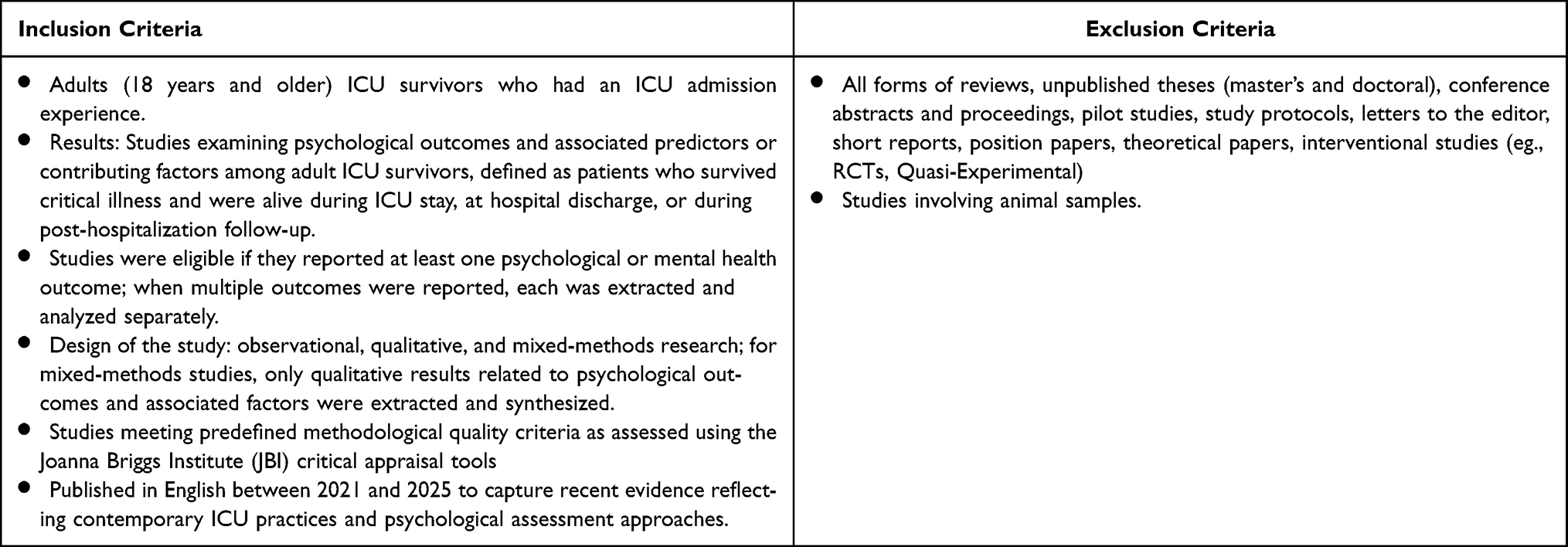 |
Table 1 Inclusion and Exclusion Criteria |
Study Selection
A two-stage screening process identified eligible studies. Titles and abstracts were first screened for relevance, followed by full-text assessment based on predefined PICOS criteria (Population, Exposure, Comparison, Outcomes, Study design). Two reviewers independently conducted screening, with disagreements resolved through discussion or consultation with a third reviewer. The study selection process is presented in a PRISMA flow diagram (Figure 1).
 |
Figure 1 PRISMA flow diagram of study selection. The diagram illustrates the process of study identification, screening, eligibility assessment, and inclusion. |
Quality Assessment
The methodological quality of the included studies was assessed using the Joanna Briggs Institute (JBI) critical appraisal tools,29 with checklists selected according to the study design. Two reviewers independently conducted the appraisal, and any disagreements were resolved through discussion. The purpose of the quality assessment was to evaluate the methodological rigor of each study and identify potential sources of bias related to study design, conduct, and analysis. Rather than relying solely on numerical scores, appraisal findings were used to inform the interpretation and synthesis of results, particularly when comparing studies with varying levels of methodological quality.
Data Extraction
A structured extraction form (Supplementary Table S2) ensured consistency and completeness across studies. Data extraction was performed independently by two reviewers, and the extracted data were cross-checked for accuracy, with discrepancies resolved through discussion. Key data included bibliographic details (citation, year, country, setting), population characteristics (sample size, age, sex, diagnosis), and study variables (aim, design, and outcomes). Extracted outcomes covered psychological measures, predictive factors, and mental health results. Authors’ conclusions, limitations, and recommendations were also documented.
Data Synthesis
Data were synthesized using a convergent integrated approach based on JBI methodology for mixed-method reviews.30 Quantitative findings were transformed into qualitative themes to enable integrated analysis. Specifically, extracted data were coded, grouped based on conceptual similarity, and iteratively refined through constant comparison across studies. This process resulted in the development of overarching themes that reflect patterns in factors associated with psychological outcomes among ICU survivors.
Results
Search results
Following PRISMA guidelines, records were identified from six electronic databases, yielding a total of 4,548 articles. After duplicate removal and title and abstract screening, a limited number of full-text articles were assessed for eligibility. Thirteen studies met the inclusion criteria and were included in the final synthesis.16,20,25,31–40 The detailed selection process is illustrated in Figure 1.
Assessment of Methodological Quality
The methodological quality of the included studies was evaluated using the JBI critical appraisal checklists.29 Overall, the included studies demonstrated moderate to high methodological quality. However, variations were noted in areas such as sample representativeness, control of confounding factors, and consistency of outcome measurement. These differences were taken into account when interpreting and comparing findings across studies. Quality scores ranged from 72.7% to 100% (mean = 87.4%); however, these scores are reported descriptively and should be interpreted with caution. Detailed appraisal results for each study are presented in Supplementary Table S2.
Description of Included Studies
Thirteen studies were included (Table 2; see Supplementary Table S2 for details). Most were published in 2025 (n = 5, 38.5%) and 2024 (n = 4, 30.8%), with the remainder spanning 2021–2023. Studies were conducted across 10 countries, most commonly Germany (n = 3), Brazil (n = 2), and Taiwan (n = 2). Research settings included university hospitals, databases, and general hospitals (each n = 3, 23.1%). Prospective cohort studies were most common (n = 6, 46.2%), followed by retrospective cohort (n = 4, 30.8%), cross-sectional (n = 2, 15.4%), and observational (secondary longitudinal cohort analysis) (n = 1, 7.7%).
 |
Table 2 The Characteristics of the Included Studies |
Populations included general ICU patients (n = 6, 46.1%), those with severe sepsis/septic shock (n = 3, 23.1%), and trauma, acute respiratory distress syndrome (ARDS), or liver-transplant recipients (each n = 1). Sample sizes ranged from 30 to >2,000, with most enrolling 101–500 participants (n = 5, 38.5%). Older adults (60–80 years) represented the majority (n = 9, 69.2%). Psychological outcomes were assessed using both validated psychiatric instruments (eg., HADS, PTSD Checklist) general indicators of psychological distress based on non-standardized or self-reported measures, which may partially explain variability across findings. The Hospital Anxiety and Depression Scale (HADS) was most frequently used (n = 5, 26.3%), followed by European Quality of Life-5 Dimensions-5 Levels (EQ-5D-5L) and the PTSD Checklist–Civilian Version (each n = 2, 10.5%). Other instruments (eg., Beck Inventories, Impact of Event Scale-Revised (IES-R), Post-traumatic Symptom Scale −10 (PTSS-10), Visual Analog Scale for Anxiety (VASA), International Statistical Classification of Diseases and Related Health Problems, 10th (ICD-10) criteria appeared in single studies, while two studies did not specify the tool. Timing of outcome measurement varied across studies, with assessments conducted during hospitalization (ICU stay) (n = 3, 23.07%), 3–12 months after ICU discharge (n = 7, 53.83%), and more than 12 months after discharge (n = 1, 7.69%), while two studies did not report the assessment timeframe (n = 2, 15.38%). This variation suggests that psychological outcomes may change over time, highlighting the importance of considering follow-up duration when interpreting findings.
Psychological and Mental Health Outcomes Among ICU Survivors
Psychological outcomes refer to emotional and cognitive responses experienced by ICU survivors, such as anxiety, depression, and PTSD. In contrast, mental health outcomes encompass these psychological manifestations as well as clinically diagnosed mental disorders. This distinction is important because not all psychological symptoms meet the diagnostic criteria for a mental disorder, yet they may still affect recovery and quality of life. Table 3 presents a summary of psychological and mental health outcomes reported in the 13 included studies. Depression was examined in nine studies (69.21%), making it the most frequently reported outcome. Anxiety and PTSD were each investigated in eight studies (61.52%). Mental health was reported in two studies (15.38%), and stress was addressed in one study (7.69%). Overall, psychological outcomes showed a consistent pattern across studies, with depression, anxiety, and PTSD being the most frequently reported conditions; however, substantial variability was observed across studies, which may be explained by differences in study design, timing of outcome assessment (eg., during ICU stay versus post-discharge follow-up), and the use of heterogeneous measurement tools (validated instruments versus non-standardized measures).
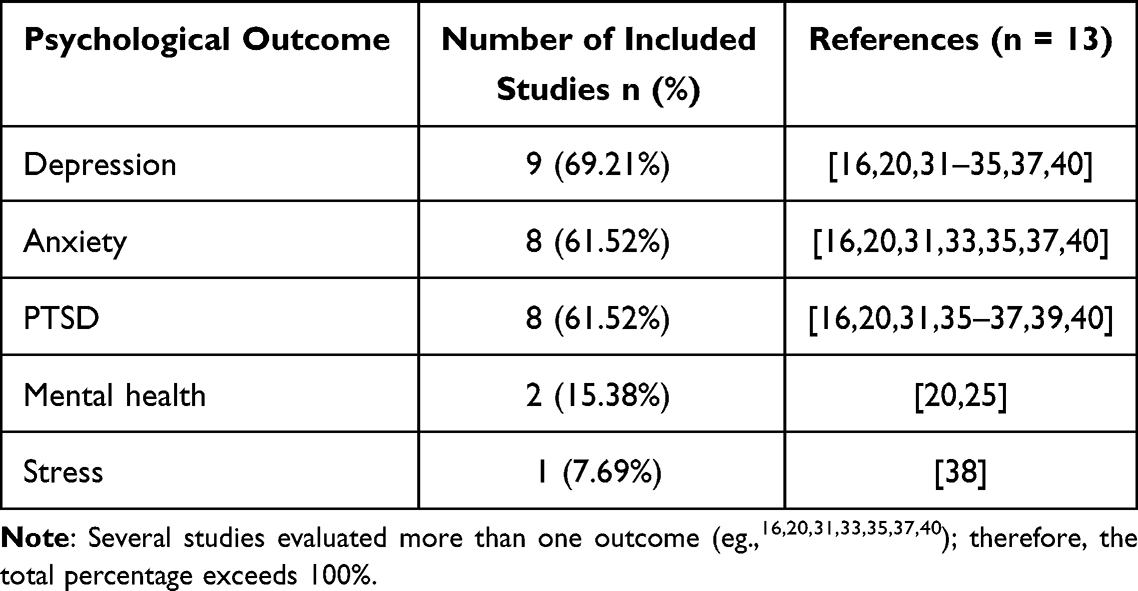 |
Table 3 Psychological Outcomes Among ICU Survivors |
Factors Related to Psychological Outcomes Among ICU Survivors
Figure 2 and Table 4 summarize factors influencing psychological outcomes among ICU survivors, with detailed results provided in Supplementary Table S2. Themes were developed using a convergent integrated approach, allowing findings from diverse study designs to be grouped into conceptually meaningful categories. From 13 included studies, seven major themes emerged: (1) personal characteristics (including demographic and clinical factors such as biomarker, age, gender, education, comorbidities, injury type, treatment, and illness severity [APACHE II score]); (2) length of stay; (3) distress-related factors (physical and emotional); (4) pre-existing mental health or substance use; (5) physical function; (6) cognitive function; and (7) protective factors.
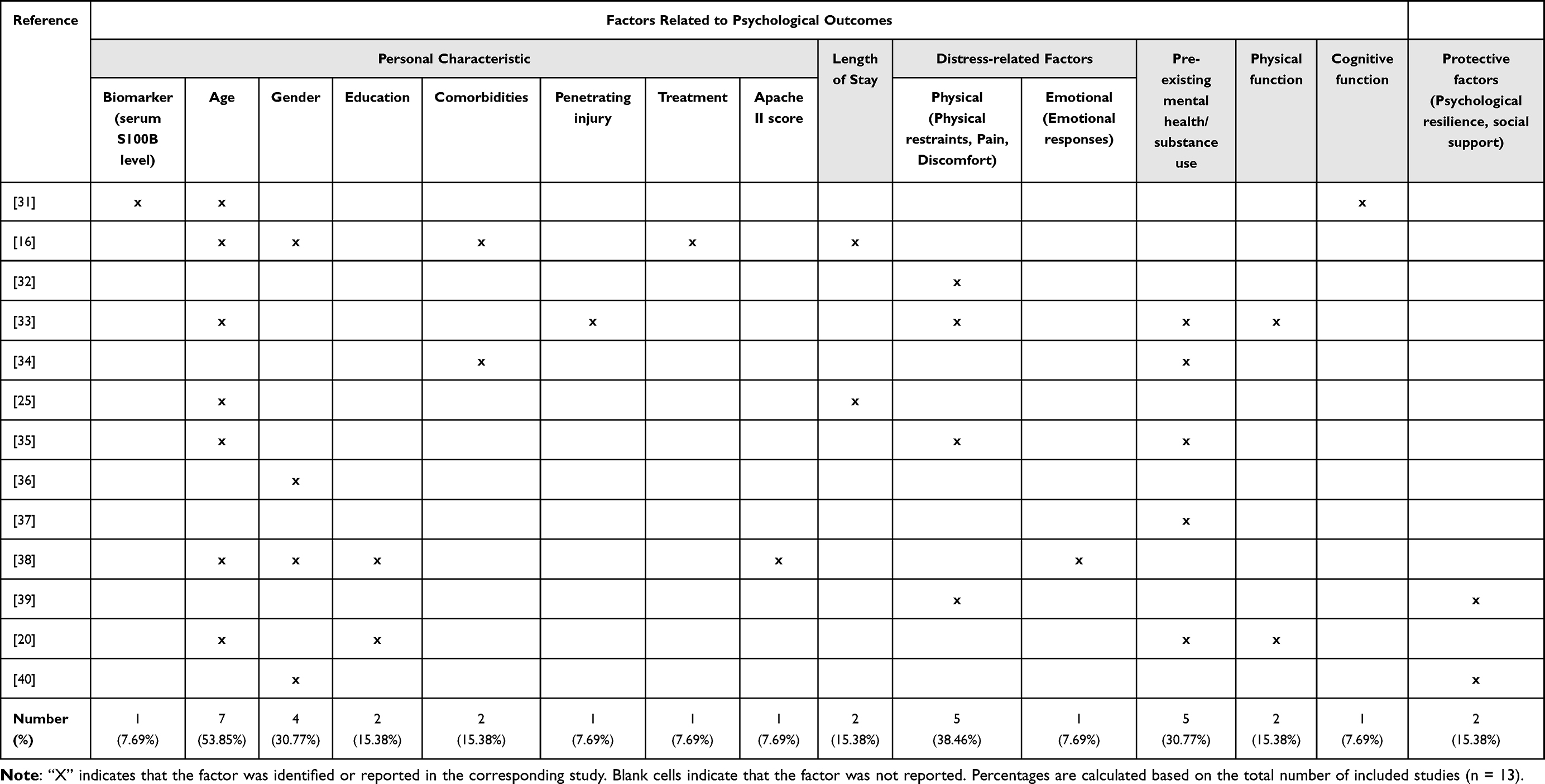 |
Table 4 Factors Related to Psychological Outcomes Among ICU Survivors |
 |
Figure 2 Factors related to psychological outcomes among ICU survivors. This figure summarizes key psychological outcomes, including depression, anxiety, stress, post-traumatic stress disorder (PTSD), and overall mental health, along with associated factors such as personal characteristics, length of stay, distress-related factors, pre-existing mental health or substance use, physical function, cognitive function, and protective factors. |
Personal Characteristic
Biomarker
One study31 found that elevated serum S100B levels were significantly associated with an increased risk of PTSD symptoms (p = 0.046), suggesting that S100B may serve as a potential biomarker for identifying individuals who are more vulnerable to developing PTSD after traumatic events.
Age
Seven studies16,20,25,31,33,35,38 examined the effect of age on psychological outcomes in ICU survivors. For instance, Calsavara et al (2021) found that age was significantly associated with PTSD (p =0.014) and depressive symptoms (p =0.021), with older age associated with lower odds of these outcomes.31 Nicholson et al (2025) reported a positive correlation between age and anxiety,33 while Teixeira et al (2021) observed higher anxiety among patients younger than 65 years (p =0.009).20
Gender
Four studies16,36,38,40 examined gender differences in psychological outcomes among ICU patients. Chang et al (2025) found that females had higher odds of depression, anxiety, and PTSD than males (aOR = 1.33; 95% CI: 1.27–1.40).16 Similarly, Schmidt et al (2024) reported that female sepsis survivors were more likely to experience worsening post-traumatic stress symptoms up to two years after discharge (OR = 2.45; 95% CI: 1.11–5.41).36 Overall, evidence indicates that women are more vulnerable to post-ICU psychological distress.
Education
Two studies20,38 examined the role of education in psychological outcomes among ICU survivors. Shih and Pai (2023) found that higher education predicted greater anxiety during ICU admission (β =0.24, p <0.05), possibly due to heightened awareness of illness severity.38 In contrast, Teixeira et al (2021) reported that higher education reduced the risk of post-discharge mental health outcomes (PR = 0.74; 95% CI: 0.55–0.99; p =0.04).20
Comorbidities
Two studies16,34 found that comorbidities were significantly associated with adverse psychological outcomes in ICU survivors. Chang et al (2025) reported higher risks of depression, anxiety, and PTSD among ICU survivors (aHR = 1.17), with specific conditions such as heart failure, stroke, and COPD linked to greater readmission and mortality.16 Similarly, Oh et al (2022) showed that a high comorbidity burden (Charlson Comorbidity Index; CCI ≥6) increased the risk of new-onset depression (OR = 1.67; 95% CI: 1.21–2.29), which was associated with higher two-year mortality (HR = 1.49; 95% CI: 1.18–1.88).34
Penetrating Injury
Nicholson et al (2025) identified penetrating injury as a significant predictor of psychological distress among ICU survivors. In a multicenter cohort of 290 trauma patients in the United Kingdom (median age 55; 26.2% female), 63% reported anxiety or depression one year post-discharge. Penetrating injury independently increased this risk (OR = 10.10; 95% CI: 1.90–44.4), along with younger age, prior psychological morbidity, pain, and functional limitations.33
Treatment
One study16,37 examined treatment-related predictors of psychological outcomes in ICU survivors. Chang et al (2025) found that patients receiving mechanical ventilation were more likely to develop depression, anxiety, or PTSD than those not ventilated.16
Apache II Score
Shih and Pai (2023) examined the predictive role of the APACHE II score in ICU survivors and found it to be a significant predictor of anxiety (β =0.22, p <0.05). Higher illness severity, reflected by elevated APACHE II scores, was associated with greater psychological distress among critically ill patients.38
Length of Stay
Two studies16,25 identified length of stay as a predictor of adverse psychological outcomes, including both hospital and ICU length of stay. Chang et al (2025) examined total hospital length of stay (including both ICU and ward stay) and found that patients hospitalized for 7–13 days (aOR = 1.30; 95% CI: 1.22–1.39) or ≥14 days (aOR = 1.67; 95% CI: 1.55–1.80) had higher odds of depression, anxiety, and PTSD.16 Similarly, Paul et al (2024) reported that extended ICU stays were associated with poorer mental health at 3- and 6-month follow-ups (p =0.038).25
Distress-Related Factors
Physical
Four studies32,33,35,39 linked pain, discomfort, injury severity, and physical restraints to adverse psychological outcomes. Sun et al (2024) found that greater postoperative pain (OR = 1.06, p =0.007) and distress (OR = 1.89, p <0.001) increased PTSD risk (OR = 2.21, p <0.001).39 Nicholson et al (2025) reported that persistent pain one year post-ICU was associated with anxiety, depression, and functional impairment (OR = 1.61; 95% CI: 1.10–2.30).33 Francken et al (2025) noted that physical restraints elevated depressive symptoms (p =0.001) and reduced quality of life.32
Emotional
One study38 found that a patient’s emotional responses to their illness were significantly associated with higher levels of stress (β=0.30, p <0.01) and anxiety (β=0.48, p <0.001), indicating that emotional responses could serve as a critical predictor of psychological outcomes among critically ill patients.
Pre-Existing Mental Health/Substance Use
Five studies20,33–35,37 examined the impact of pre-existing mental health and substance use conditions on ICU survivors’ outcomes. Oh et al (2022) found that pre-existing anxiety (OR = 2.35; 95% CI: 1.93–2.86), substance use disorder (OR = 2.18; 95% CI: 1.48–3.20), and PTSD (OR = 15.52; 95% CI: 2.57–93.51) were significantly linked to a higher prevalence of depression.34 Additionally, Sell et al (2025) reported that pre-existing sleep disorders were associated with increased risk of anxiety, depression, acute stress disorder, and PTSD.37 Although sleep disorders are not strictly classified as mental health, they may reflect underlying psychological vulnerability and are therefore considered within this category.
Physical Function
Two studies20,33 linked reduced physical function to adverse psychological outcomes in ICU survivors. Nicholson et al (2025) found that difficulty performing usual activities (EQ-5D-5L domain) was associated with anxiety and depression (OR = 1.40; 95% CI: 1.02–2.29; p =0.04).33 Likewise, Teixeira et al (2021) reported that decreased functional status at six months post-discharge was associated with anxiety, depression, and PTSD.20
Cognitive Function
One study by Calsavara et al (2021) examined cognitive function as a risk factor for psychological outcomes among ICU survivors.31 In a longitudinal cohort of 33 sepsis patients, higher Informant Questionnaire on Cognitive Decline in the Elderly (IQCODE) scores were significantly associated with increased PTSD risk, suggesting that cognitive impairment may heighten vulnerability to post-ICU psychological distress.
Protective Factors
Two studies identified protective factors against post-ICU psychological distress, including resilience and social support.39,40 Sun et al (2024) reported that higher resilience was associated with a reduced risk of PTSD one year after liver transplantation (OR = 2.21; p <0.001).39 Yoshino et al (2024) found that greater pre-ICU social support was associated with fewer depressive symptoms after discharge (β = –0.018; p =0.002).40
Across themes, psychological outcomes appear to be influenced by the interaction between pre-existing vulnerability, illness severity, ICU-related exposures, and post-discharge recovery factors, rather than by single isolated variables.
Discussion
This review synthesized current evidence on psychological outcomes among ICU survivors and identified associated factors. Depression, anxiety, PTSD, and other psychological symptoms were commonly reported and were influenced by a range of personal, clinical, psychosocial, and protective factors. Overall, the findings indicate that psychological outcomes among ICU survivors are driven by interconnected mechanisms rather than isolated determinants, reflecting the dynamic interaction between biological vulnerability, illness severity, ICU-related exposures, and psychosocial recovery environments. Pre-ICU vulnerability factors, including demographic and health-related characteristics, may shape baseline susceptibility to psychological distress. ICU-related exposures, such as illness severity, mechanical ventilation, and prolonged hospitalization, may further intensify this risk. In contrast, post-ICU recovery resources, including physical and cognitive functioning as well as psychosocial support, may help mitigate adverse psychological outcomes.
Serum S100B was associated with increased PTSD risk,31 likely reflecting inflammatory brain injury that disrupts neural functioning and contributes to psychiatric symptoms [41]. Similar findings in craniocerebral trauma suggest its potential role as a predictive biomarker [42], indicating that biological pathways may contribute to post-ICU psychological outcomes and may inform future risk stratification approaches.
Seven studies linked age with psychological outcomes.16,20,25,31,33,35,38 Younger individuals demonstrated higher PTSD, anxiety, and depression rates,20,31,33 whereas older adults adapted more effectively to illness-related limitations [43, 44]. Younger age has similarly predicted post-ICU distress [45] and PTSD in COVID-19 survivors [46]. This pattern may be linked to differences in coping strategies, life-stage expectations, or social roles. However, variation across studies indicates that age-related effects are not uniform and may depend on contextual factors such as recovery environment and follow-up duration.
Gender differences were consistent: females had higher odds of depression, anxiety, and PTSD,16 and greater worsening of PTSD over two years post-sepsis.36 This aligns with population data suggesting higher psychological vulnerability among women, especially those with lower socioeconomic or educational status [47, 48], and prior ICU research linking female sex to PTSD [48] and depression.27 These findings suggest the potential value of considering gender in post-ICU psychological assessment and support strategies.
Education showed mixed associations. Higher education predicted greater anxiety during ICU admission,38 possibly due to heightened awareness,38, 49 yet also appeared protective against later psychological disorders,20 consistent with reports linking health literacy and coping with lower risk [50–52]. This pattern suggests that education may influence both immediate emotional responses and longer-term coping capacity, highlighting the importance of tailored communication and support across different stages of recovery.
Comorbidities also influenced long-term psychological outcomes. Despite an unexpected inverse association between higher CCI and psychiatric diagnoses,16 heart failure, stroke, and COPD were linked to worse mental health and increased mortality,16 and CCI ≥6 predicted new depression and higher two-year mortality.34 The association between comorbid conditions and adverse psychological outcomes may reflect the cumulative effects of physical illness, functional limitations, and ongoing healthcare needs. These findings suggest that systematic screening and integrated physical–mental health follow-up may support early detection and management of depression, psychological distress, and other post-ICU mental health outcomes.16, 53
Among trauma patients, penetrating injury was associated with an increased risk of anxiety or depression one-year post-ICU,33 likely reflecting the combined effects of physical injury and traumatic experience [54]. Similarly, treatment-related exposures, particularly mechanical ventilation, were associated with psychological outcomes, including depression and PTSD.16,37 Longer ventilation duration was associated with greater depression [55], consistent with prior reports demonstrating higher PTSD, anxiety, and psychotropic use among ventilated patients [56, 57]. These findings suggest that clinical practices such as minimizing unnecessary sedation, optimizing communication, and structured post-ICU follow-up may help support psychological recovery.
Illness severity and ICU-related factors, including higher APACHE II scores and longer lengths of stay, were associated with increased psychological distress. Higher APACHE II scores predicted anxiety and distress,38 consistent with prior work associating severity with anxiety [58]. APACHE II may help identify high-risk survivors. Longer ICU stays were consistently associated with worse psychological outcomes,16,25 with symptoms peaking around four months post-discharge [55]. Prolonged hospitalization similarly contributed to post-ICU morbidity [56]. These factors may represent the intensity of physiological stress and exposure to invasive interventions, which together contribute to vulnerability during recovery. This suggests the potential value of early identification of high-risk patients and targeted follow-up care.
Pain, discomfort, injury severity, and physical restraints were linked to PTSD, anxiety, and depression across studies.32,33,35,39 Pain increased PTSD risk,39 persistent pain correlated with anxiety and depression,33 and restraints worsened depressive symptoms and reduced quality of life.32 Additional studies also linked pain and restraints with PTSD, anxiety, and agitation [45, 59], supporting the importance of optimized pain management and restraint minimization.
Negative emotional responses during critical illness increased stress and anxiety,38 while peritraumatic distress mediated later mental health problems [60]. Stress-management and psychological interventions may improve outcomes. Pre-existing psychiatric or substance use disorders increased risk of PTSD, anxiety, and depression,20,33–35,37 consistent with earlier findings in sepsis and ARDS survivors [61–63]. Early assessment and continued psychological support may be beneficial. Reduced physical function correlated with anxiety, depression, and PTSD,20,33 consistent with COVID-19 findings linking physical and mental impairment [64]. Rehabilitation may support both domains [65].
Cognitive impairment was both a predictor and consequence of psychological morbidity,31 and has been associated with poorer quality of life and persistent problems [66, 67]. Integrated cognitive–psychological rehabilitation may be beneficial in addressing these interrelated outcomes. In contrast, protective factors including resilience, self-acceptance, and social support, were associated with better psychological outcomes [39, 40, 69–71], highlighting the role of psychosocial resources in promoting recovery and adaptation.
These findings are broadly consistent with evidence from larger cohort studies and previous systematic reviews, which similarly identify depression, anxiety, and PTSD as common outcomes among ICU survivors. However, variations in reported prevalence and associated factors across studies may be attributed to differences in population characteristics, timing of assessment, and measurement approaches. Overall, the findings of this review suggest that psychological outcomes among ICU survivors are shaped by a complex interplay of biological, clinical, and psychosocial factors. This highlights the importance of comprehensive, individualized approaches to post-ICU care that address both physical recovery and psychological well-being. Future research should prioritize longitudinal designs and more standardized assessment methods to further clarify these relationships and support the development of targeted interventions.
Study Limitations
This review has several limitations. The included studies varied in design, sample size, measurement tools, and follow-up duration, limiting comparability. Many relied on self-reported psychological outcomes, introducing recall bias. Most were observational, preventing causal inference, and key confounders—such as pre-existing mental illness, treatment variation, and post-discharge care—were inconsistently controlled. Because most studies were conducted in high-income countries, generalizability to resource-limited settings is limited. Finally, the synthesis was constrained by variable study quality and possible publication bias. Future research should include more diverse populations, standardized assessments, longitudinal or interventional designs, and improved reporting.
Conclusion
Although survival after critical illness has improved, psychological morbidity among ICU survivors remains common. This review of 13 studies identified several factors associated with adverse psychological outcomes. These findings highlight the importance of translating risk factors into clinical practice to support early risk stratification and the development of targeted, multidisciplinary interventions aimed at improving long-term psychological recovery and quality of life. However, given the relatively small number and heterogeneity of included studies, these implications should be interpreted with caution. Further research is needed to strengthen the evidence base and to better inform targeted interventions in this population.
Data Sharing Statement
The data that support the findings of this study are available in the supplementary materials of this article.
Acknowledgments
This systematic review has been both a challenging and enriching journey. We sincerely thank all those who provided guidance, support, and encouragement, making the completion of this project possible.
Author Contributions
All authors made a significant contribution to the work reported, whether that is in the conception, study design, execution, acquisition of data, analysis and interpretation, or in all these areas; took part in drafting, revising or critically reviewing the article; gave final approval of the version to be published; have agreed on the journal to which the article has been submitted; and agree to be accountable for all aspects of the work.
Funding
No funding was received for this research.
Disclosure
The authors report no conflicts of interest in this work.
References
1. Watson KB, Wiltz JL, Nhim K, Kaufmann RB, Thomas CW, Greenlund KJ. Trends in multiple chronic conditions among us adults, by life stage, behavioral risk factor surveillance system, 2013–2023. Prev. Chronic Dis. 2025;22E15.
2. Xi JY, Liang BH, Zhang WJ, et al. Effects of population aging on quality of life and disease burden: a population-based study. Glob Health Res Policy. 2025;10(1):2. doi:10.1186/s41256-024-00393-8
3. Anesi GL, Liu C VX, Small M, et al. Association of ICU admission and outcomes in sepsis and acute respiratory failure. Am J Respir Crit Care Med. 2022;205(5):520–15. doi:10.1164/rccm.202106-1350OC
4. Doran J, Salih M, Bell A, et al. Major trauma patients and their outcomes – a retrospective observational study of critical care trauma admissions to a trauma unit with special services. Injury. 2024;55(8):111622. doi:10.1016/j.injury.2024.111622
5. Modra LJ, Higgins AM, Abeygunawardana VS, Vithanage RN, Bailey MJ, Bellomo R. Sex differences in treatment of adult intensive care patients: a systematic review and meta-analysis. Crit Care Med. 2022;50(6):913–923. doi:10.1097/CCM.0000000000005469
6. Siddika N, Anowar MN, Islam MS, Mallick DR. Characteristics of Adult Intensive Care Unit Patients at a University Hospital. Open Access Lib J. 2023;10(3):1–15.
7. Padte S, Samala Venkata V, Mehta P, Tawfeeq S, Kashyap R, Surani S. 21st century critical care medicine: an overview. World J Crit Care Med. 2024;13(1):90176. doi:10.5492/wjccm.v13.i1.90176
8. Ho M-H, Lee Y-W, Wang L. Estimated prevalence of post-intensive care cognitive impairment at short-term and long-term follow-ups: a proportional meta-analysis of observational studies. Ann Intens Care. 2025;15(1):3. doi:10.1186/s13613-025-01429-z
9. Ayenew T, Gete M, Gedfew M, et al. Prevalence of Post-intensive care syndrome among intensive care unit-survivors and its association with intensive care unit length of stay: systematic review and meta-analysis. PLoS One. 2025;20(5):e0323311. doi:10.1371/journal.pone.0323311
10. Dell’Oste V, Martelli M, Fantasia S, et al. Post-traumatic stress disorder in icu survivors: correlations with long-term psychiatric and physical outcomes. Int J Environ Res Public Health. 2025;22(3):405. doi:10.3390/ijerph22030405
11. Rasooli F, Alijanpour E, Moudi S, Bijani A. Depression, anxiety, and post-traumatic stress disorder in ICU survivors. J. Res. Med. Sci. 2022;24(2). doi:10.5812/zjrms-109435
12. Yoo KH, Lee J, Oh J, et al. Depression or anxiety and long-term mortality among adult survivors of intensive care unit: a population-based cohort study. Crit Care. 2025;29(1):179. doi:10.1186/s13054-025-05381-z
13. Castillejos DG, Rubio ML, Ferre C, de Los Ángeles de Gracia M, Bodí M, Sandiumenge A. Psychological symptoms in difficult-to-sedate critical care survivors. Nurs Crit Care. 2023;28(5):679–688. doi:10.1111/nicc.12714
14. Miranda-Ackerman RC, Lira-Trujillo M, Gollaz-Cervantez AC, et al. Associations between stressors and difficulty sleeping in critically ill patients admitted to the intensive care unit: a cohort study. BMC Health Serv Res. 2020;20(1):631. doi:10.1186/s12913-020-05497-8
15. Rousseau AF, Dams L, Massart Q, et al. Incidence of near-death experiences in patients surviving a prolonged critical illness and their long-term impact: a prospective observational study. Crit Care. 2023;27(1):76. doi:10.1186/s13054-023-04348-2
16. Chang CS, Tsai FJ, Liao CH. Associations Between Elevated Rates of Depression, Anxiety, and PTSD Among ICU Survivors and Increased Mortality and Readmissions. Brain Behav. 2025;15(2):e70319. doi:10.1002/brb3.70319
17. Gehlot M, Mohanty S, Venkateshan M, et al. Socioeconomic burden of critically ill patients: a descriptive study. Cureus. 2023;15(2):e35598. doi:10.7759/cureus.35598
18. Kang J, Jeong YJ, Hong J. The effect of postintensive care syndrome on the quality of life of intensive care unit survivors: a secondary analysis. Aust Crit Care. 2021;34(3):246–253. doi:10.1016/j.aucc.2020.08.006
19. Su H, Fuentes AL, Chen H, et al. The financial impact of post intensive care syndrome. Critic Care Clin. 2025;41(1):103–119. doi:10.1016/j.ccc.2024.08.003
20. Teixeira C, Rosa RG, Sganzerla D, et al. The burden of mental illness among survivors of critical care-risk factors and impact on quality of life: a multicenter prospective cohort study. Chest. 2021;160(1):157–164. doi:10.1016/j.chest.2021.02.034
21. Ageel M, Shbeer A, Tawhari M, et al. Prevalence of Depression, Anxiety, and Post-traumatic Stress Syndrome Among Intensive Care Unit Survivors in Jazan, Saudi Arabia. Cureus. 2024;16(5).
22. Bjørnøy I, Rustøen T, Mesina RJS, Hofsø K. Anxiety and depression in intensive care patients six months after admission to an intensive care unit: a cohort study. Intensive and Critical Care Nurs. 2023;78:103473. doi:10.1016/j.iccn.2023.103473
23. Chen Q, Huang Y, Chen X, Xu L. Trajectories of short-term post-traumatic stress disorder symptoms in patients with post-intensive care syndrome: a longitudinal observational study. Int J Gene Med. 2024;Volume 17:4835–4843. doi:10.2147/IJGM.S485305
24. Du Z, Liu X, Li Y, et al. Depressive symptoms over time among survivors after critical illness: a systematic review and meta-analysis. Gen Hosp Psychiatry. 2024;87:41–47. doi:10.1016/j.genhosppsych.2023.12.008
25. Paul N, Cittadino J, Krampe H, Denke C, Spies CD, Weiss B. Determinants of Subjective Mental and Functional Health of Critical Illness Survivors: comparing Pre-ICU and Post-ICU Status. Crit Care Med. 2024;52(5):
26. Friberg K, Hofsø K, Ræder J, Rustøen T, Småstuen MC, Olsen BF. Prevalence of and predictive factors associated with high levels of post-traumatic stress symptoms 3 months after intensive care unit admission: a prospective study. Aust Crit Care. 2024;37(2):222–229. doi:10.1016/j.aucc.2023.06.005
27. Wintermann GB, Weidner K, Strauss B, Rosendahl J. Rates and predictors of mental health care utilisation in patients following a prolonged stay on intensive care unit: a prospective cohort study. BMJ Open. 2023;13(1):e063468. doi:10.1136/bmjopen-2022-063468
28. Page MJ, McKenzie JE, Bossuyt PM, et al. The PRISMA 2020 statement: an updated guideline for reporting systematic reviews. BMJ. 2021;372:n71.
29. JBI. Critical appraisal tools: the Joanna Briggs Institute, Faculty of Health and Medical Sciences, The University of Adelaide; 2024 [Available from: https://jbi.global/critical-appraisal-tools.
30. Moola S, Munn Z, Tufanaru C, et al. Systematic reviews of etiology and risk. JBI Manual for Evidence Synthesis. 2020;1:217–269.
31. Calsavara AJ, Costa PA, Nobre V, Teixeira AL. Prevalence and risk factors for post-traumatic stress, anxiety, and depression in sepsis survivors after ICU discharge. Braz J Psychiatry. 2021;43(3):269–276. doi:10.1590/1516-4446-2020-0986
32. Francken L, Rood PJT, Peters MAA, Teerenstra S, Zegers M, van den Boogaard M. Exploring differences in reported mental health outcomes and quality of life between physically restrained and non-physically restrained ICU patients; a prospective cohort study. Intensive and Critical Care Nurs. 2025;88:103928. doi:10.1016/j.iccn.2024.103928
33. Nicholson V, Cole E, Christie R. Factors associated with anxiety and depression one year after trauma critical care admission: a multi-centre study. Injury. 2025;56(5):112080. doi:10.1016/j.injury.2024.112080
34. Oh TK, Park HY, Song IA. Depression and mortality among survivors of acute respiratory distress syndrome in South Korea: a nationwide cohort study conducted from 2010 to 2018. J Psychiatr Res. 2022;145:6–12. doi:10.1016/j.jpsychires.2021.11.035
35. Ronflé R, Hermitant J, Conti-Zolin C, et al. Impact of self-perceived discomfort in critically ill patients on the occurrence of psychiatric symptoms in post-intensive care syndrome (PICS): a prospective observational study. PLoS One. 2025;20(6):e0324099. doi:10.1371/journal.pone.0324099
36. Schmidt KFR, Gensichen JS, Schroevers M, et al. Trajectories of post-traumatic stress in sepsis survivors two years after ICU discharge: a secondary analysis of a randomized controlled trial. Critical Care. 2024;28(1):35. doi:10.1186/s13054-024-04815-4
37. Sell S, Fleischmann-Struzek C, Spoden M, Rosendahl J. Mental health in the first year after ICU-treated sepsis: analysis of administrative diagnoses in German health claims data. Gen Hosp Psychiatry. 2025;93:109–115. doi:10.1016/j.genhosppsych.2025.02.001
38. Shih CY, Pai HC. Factors affecting the relationship between stress and anxiety in critically ill patients: a partial least squares structural equation modeling approach. Clin Nurs Res. 2023;32(2):366–374. doi:10.1177/10547738211062346
39. Sun XQ, Xu Y, Wu XL, Zhi JJ, Gu YM. Factors influencing stress disorders in intensive care unit (icu) patients after liver transplantation: a cross-sectional study. Ann Transplant. 2024;29:e944320. doi:10.12659/AOT.944320
40. Yoshino Y, Unoki T, Hata K, Ito K. Association of social support before ICU admission with postdischarge mental health symptoms in ICU patients: a single-centre prospective cohort study in Japan. BMJ Open. 2024;14(6):e082810. doi:10.1136/bmjopen-2023-082810
 © 2026 The Author(s). This work is published and licensed by Dove Medical Press Limited. The
full terms of this license are available at https://www.dovepress.com/terms
and incorporate the Creative Commons Attribution
- Non Commercial (unported, 4.0) License.
By accessing the work you hereby accept the Terms. Non-commercial uses of the work are permitted
without any further permission from Dove Medical Press Limited, provided the work is properly
attributed. For permission for commercial use of this work, please see paragraphs 4.2 and 5 of our Terms.
© 2026 The Author(s). This work is published and licensed by Dove Medical Press Limited. The
full terms of this license are available at https://www.dovepress.com/terms
and incorporate the Creative Commons Attribution
- Non Commercial (unported, 4.0) License.
By accessing the work you hereby accept the Terms. Non-commercial uses of the work are permitted
without any further permission from Dove Medical Press Limited, provided the work is properly
attributed. For permission for commercial use of this work, please see paragraphs 4.2 and 5 of our Terms.