
Back to Journals » Advances in Medical Education and Practice » Volume 17
Scholarly Research Output and Trends in Medical Education from the Arab Region (2005-2024): A Bibliometric Analysis
Authors Imran M, Malik AA, Zubairi NA, Anwer F, Bashir MA
Received 19 November 2025
Accepted for publication 7 March 2026
Published 2 April 2026 Volume 2026:17 582931
DOI https://doi.org/10.2147/AMEP.S582931
Checked for plagiarism Yes
Review by Single anonymous peer review
Peer reviewer comments 2
Editor who approved publication: Dr Md Anwarul Azim Majumder
Muhammad Imran,1,2,* Ahmad Azam Malik,3,* Nadeem Alam Zubairi,4 Fahad Anwer,3 Muhammad Abid Bashir1
1Department of Surgery, Faculty of Medicine, King Abdulaziz University, Rabigh, Saudi Arabia; 2Medical Education Unit, Faculty of Medicine, King Abdulaziz University, Rabigh, Saudi Arabia; 3Department of Family and Community Medicine, Faculty of Medicine, King Abdulaziz University, Rabigh, Saudi Arabia; 4Department of Pediatrics, Faculty of Medicine, King Abdulaziz University, Rabigh, Saudi Arabia
*These authors contributed equally to this work
Correspondence: Muhammad Imran, Department of Surgery, Faculty of Medicine, King Abdulaziz University, Building 13, PO Box No. 80200, Rabigh, 21589, Saudi Arabia, Tel +966 26400000 Ext. 20078 ; +966507699546, Fax +966 26400000 Ext. 20466, Email [email protected]
Background: Medical education research (MER) is crucial for aligning educational strategies with healthcare demands. Despite growing interest in the Arab region, little is known about its regional research productivity, collaboration patterns, and thematic evolution. This study aimed to assess the performance and trends of research in the field of medical education from the Arab region.
Methods: A bibliometric analysis was conducted using the Web of Science (WoS) database, covering publications on medical education from 2005 to 2024 across 22 Arab countries. Bibliometric indicators, at the document, author, and country levels, along with collaboration network and thematic trends, were analyzed using the R-bibliometrix package.
Results: Out of 47,237 global articles, the Arab region contributed 1844 (3.9%), led by Saudi Arabia (n=902), the UAE, and Egypt. A notable increase in publication volume was observed from 2019 onward. The Egyptian Knowledge Bank and King Saud University emerged as leading affiliations and funders. BMC Medical Education and Medical Teacher were the most productive journals. The analysis identified variations in publication volume and citation impact across the Arab region, with highly cited publications largely focusing on the development of regional medical education frameworks and the expanding use of e-learning approaches. The thematic evolution of medical education research was observed across 3 distinct phases: a foundational phase (2005– 2010), a developmental phase (2011– 2019), and a consolidation and innovation phase (2022– 2024). Saudi Arabia showed the highest national productivity, while Qatar and the UAE demonstrated strong international collaboration.
Conclusion: Medical education research in the Arab world has grown in volume and complexity over the last two decades, with diverse contributions and Saudi Arabia leading the regional output. Future efforts should focus on sustaining this momentum by addressing the underrepresentation of certain countries and by strengthening both regional and international collaborations.
Keywords: medical education research, bibliometrics, research productivity, web of science, Arab countries
Introduction
Medical education is a dynamic field dedicated to training healthcare professionals through evolving pedagogical strategies and clinical experiences, bridging theory with practical to equip future providers with the knowledge, skills, and ethical foundations required for patient care.1 To develop adaptive curricula, the discipline has adopted innovations such as competency-based education, interprofessional education, technology-enhanced learning, and lifelong learning.2 More than two decades ago, Harden et al emphasized the value of evidence-based approaches in medical education while highlighting the unique challenges of research in this field.3 In the early 21st century, discussions broadened to clarify the purposes and core objectives of medical education research (MER).4 Despite ongoing reforms, medical education has struggled to keep pace with the evolving challenges of modern healthcare.5 Consequently, MER plays a critical role in advancing curricula, teaching methodologies, and healthcare outcomes, with global trends emphasizing competency-based education (CBE), digital learning tools and interprofessional education.5
Research productivity in medical education has steadily increased over time. A landmark study reported a significant rise in publications over 4 decades, with evaluative studies expanding notably after 2003.6 Collaborative research networks have been identified as key drivers of this growth.7 Globally, MER has expanded beyond clinical knowledge to include communication, teamwork, assessment frameworks, and collaborative learning environments aligned with healthcare demands.8–10 Emerging initiatives such as blended learning, immersive technologies, and data standardization are further transforming medical education practices, often supported by international partnerships and faculty development initiatives.11–14
The Arab region has witnessed growing efforts in medical education research; however, contributions remain limited relative to international benchmarks. Between 1996 to 2013, the Gulf Cooperation Council (GCC) Demonstrated minimal output in MER, with Saudi Arabia, contributing less than 1% of global publications despite leading the region.15 A recent study by Abdalla et al examined the role of Arab universities in advancing the United Nations’ Sustainable Development Goals (SDGs) through education and research highlighting the relevance of aligning medical education research with sustainability, health equity, and social responsibility.16 Saudi Arabia’s Vision 2030 similarly emphasizes education reform, research capacity building, and international collaboration.17 Nevertheless, bibliometric evidence indicates that the Arab region contributes less than 3% of global medical research output, reflecting a persistent productivity gap.18 Alameri et al (2021) further noted that while research output in the United Arab Emirates has increased over time, it remains comparatively low at the global level.19
Despite these observations, no recent comprehensive bibliometric study has systematically examined trends, productivity indicators, and thematic patterns in MER across the Arab region. This gap underscores the need for a detailed bibliometric analysis to assess research performance and identify opportunities for improvement. Medical education was therefore selected as the focus of the present study due to its central role in healthcare workforce development, curricular reform, accreditation, and quality assurance, particularly in regions experiencing rapid expansion of medical schools and training programs.
Bibliometric analysis Provides a quantitative approach to evaluating scientific output by assessing productivity, citation impact, collaboration patterns, and thematic structures within a research field.20 It enables mapping of intellectual relationships among authors, institutions, keywords, and publications, thereby identifying research trends, strengths, gaps, and emerging directions.20–22 Widely applied in health professions education, bibliometric methods support objective evaluation of scholarly ecosystems and evidence-based policy development.22
Accordingly, the primary aim of this bibliometric study is to assess research performance and trends in medical education across the Arab region from 2005 to 2024. Specifically, the study aims to evaluate publication trends, country and author contributions, national and international collaboration patterns, major research themes and emerging topics, and funding sources supporting MER. The findings are intended to inform policy, promote collaboration, and guide strategic investment to strengthen MER capacity in the Arab region.
Methods
This bibliometric study examined all documents on medical education research published from Arab countries in the last two decades (2005 to 2024). Accessing data through the King Abdulaziz University (KAU) electronic library portal, a search was performed in the Web of Science (WoS) database following prior study methods.23 The Web of Science (WoS) was selected for its reliability as a key bibliometric database, acknowledging both its strengths and inherent limitations.24 Article identification, screening, and selection were conducted using an approach adapted from the PRISMA (Preferred Reporting Items for Systematic Reviews and Meta-Analyses) guidelines (Figure 1).25 The search strategy was developed systematically to ensure comprehensive coverage of medical education research relevant to the study objectives. The choice of search terms was guided by the principle of aligning with the core concepts of medical education research. Key terms related to medical education were identified through relevant literature review and later the search strategy was also validated by two independent medical education experts from the region. The complete search string and inclusion criteria are now explicitly reported in the Methods section to enhance transparency and reproducibility.
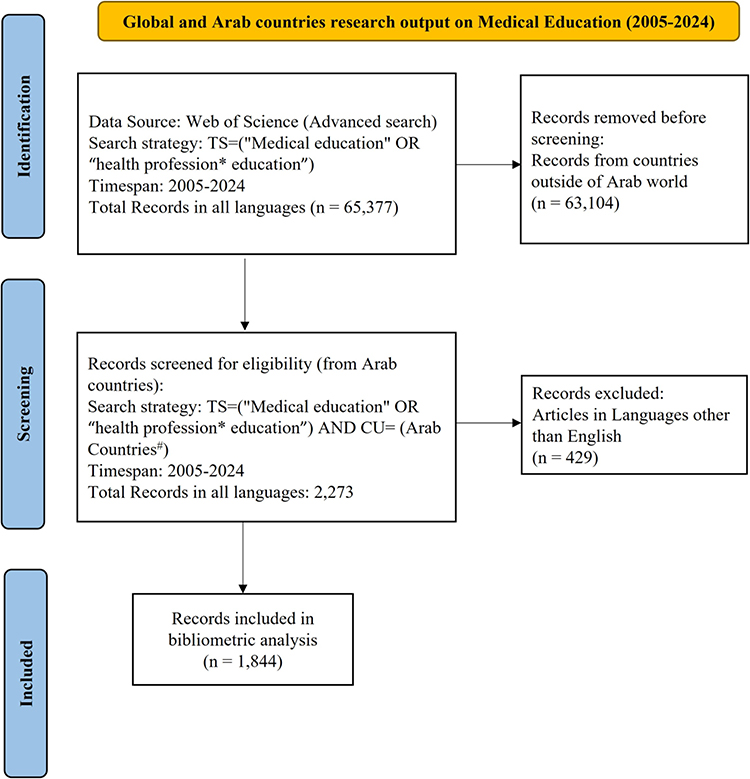 |
Figure 1 PRISMA flow diagram: Global and Arab countries research output on Medical Education (2005–2024). Source Page MJ et al BMJ 202125. * - acts as a wildcard, also known as a truncation symbol, to replace multiple characters in a word (eg, Profession* - professions, professional). # - Arab countries (all 22 names) are shared in the methods section. Abbreviations: CU, Countries/regions; TS, Topic. |
The search strategy involved using the following search string: TS=(“Medical education” OR “health profession education”) AND CU=(ALGERIA OR BAHRAIN OR COMOROS OR DJIBOUTI OR EGYPT OR IRAQ OR JORDAN OR KUWAIT OR LEBANON OR LIBYA OR MAURITANIA OR MOROCCO OR OMAN OR PALESTINE OR QATAR OR SAUDI ARABIA OR SOMALIA OR SUDAN OR SYRIA OR TUNISIA OR U ARAB EMIRATES OR YEMEN). The same set of Arab League countries was included in a previous relevant study, ensuring consistency in regional scope.26 Utilizing R-bibliometrix, an established analysis tool,27 two researchers (MI and AAM) independently verified data collection, enhancing accuracy. Descriptive statistics, including frequencies, percentages, and citation-based indicators, were used to summarize publication characteristics, authorship patterns, and citation impact. All known bibliometric indicators were extracted, including authors, countries, affiliations, and document-level data, along with an exploration of collaborative, cooccurrence, and thematic evolution trends.
Results
According to the selected search strategy related to medical education worldwide, the total number of articles, indexed in WoS and published in the English language, from 2005 to 2024 were 47,237 with >100,000 authors’ appearances from 4599 sources and >175 countries, with USA, Canada, England, Australia, and Germany contributing collectively around 76% and individually around 47.4%, 10.3%, 8.5%, 5.8% and 4% respectively, while top 10 countries collectively contributed around 90.6%. These articles were found to be related to 133 research areas and 199 WoS categories led by Education Scientific Disciplines (30%), Medicine General Internal (19.4%), and Health Care Sciences Services (18.9%). Around 25,969 (55%) articles were in the open access category, and 32.7% showed any funding source. When exploring the scope of this study, the Arab world’s contribution was 1844 articles in the English language, representing around 3.9% of the global productivity. Among them, Saudi Arabia (n=902) was leading, followed by the United Arab Emirates (n=279) and Egypt (n=219), from the region with global ranking and percentage at 10th (1.91%), 34th (0.59%), and 39th (0.46%), respectively. The findings are summarized in Figure 2. Among the 1844 publications retrieved from the Arab region in the field of medical education, the majority were indexed in the Science Citation Index Expanded (SCI-EXPANDED) (n=959, 52.0%) and the Emerging Sources Citation Index (ESCI) (n=791, 42.9%). A significant portion was also indexed in the Social Sciences Citation Index (SSCI) (n=470, 25.5%). Other indices were less prominent.
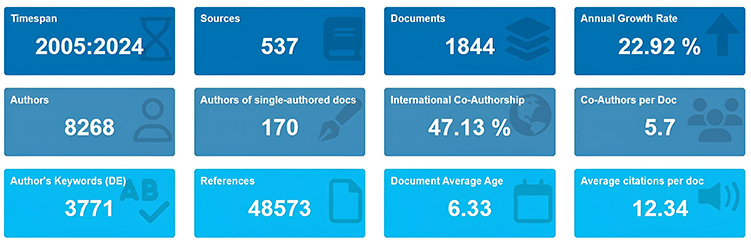 |
Figure 2 Arab region’s medical education research output: 2005–2024 summary. |
A gradual increase in the annual number of published documents was observed beginning in 2005, with a notable surge in publication volume from 2019 onward; the number of publications surpassed 100 in 2019 and exceeded 300 by 2024 (Figure 3).
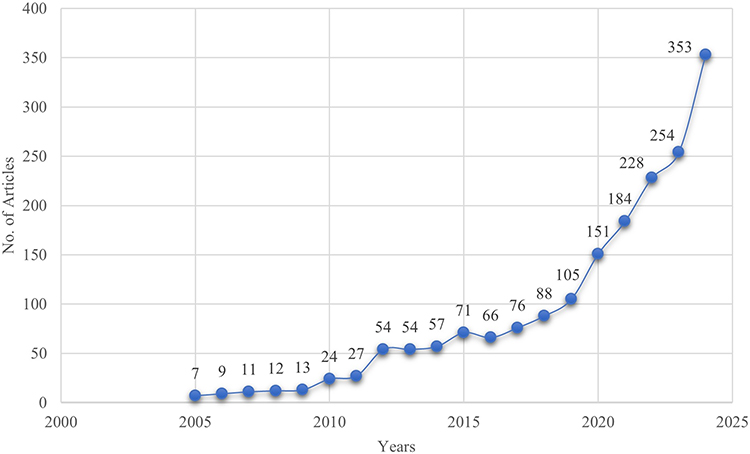 |
Figure 3 Year-wise growth of publications (2005–2024). |
Table 1 presents the top 10 most prolific authors in the field of medical education from the Arab region, based on the number of publications, h-index, total citations (TC), and year of initial publication. Ibrahim H emerged as the most prolific author with 31 publications. In terms of scholarly impact, Hamdy H led with over 750 total citations, reflecting the highest citation count among all authors. Notably, he was also the earliest contributor, having commenced his publications in 2005, demonstrating both longevity and influence in the field. Azer SA and Abdulghani HM followed closely in citation impact, each accumulating more than 600 total citations and an h_index of ≥ 10, indicating consistent contributions to high-impact research.
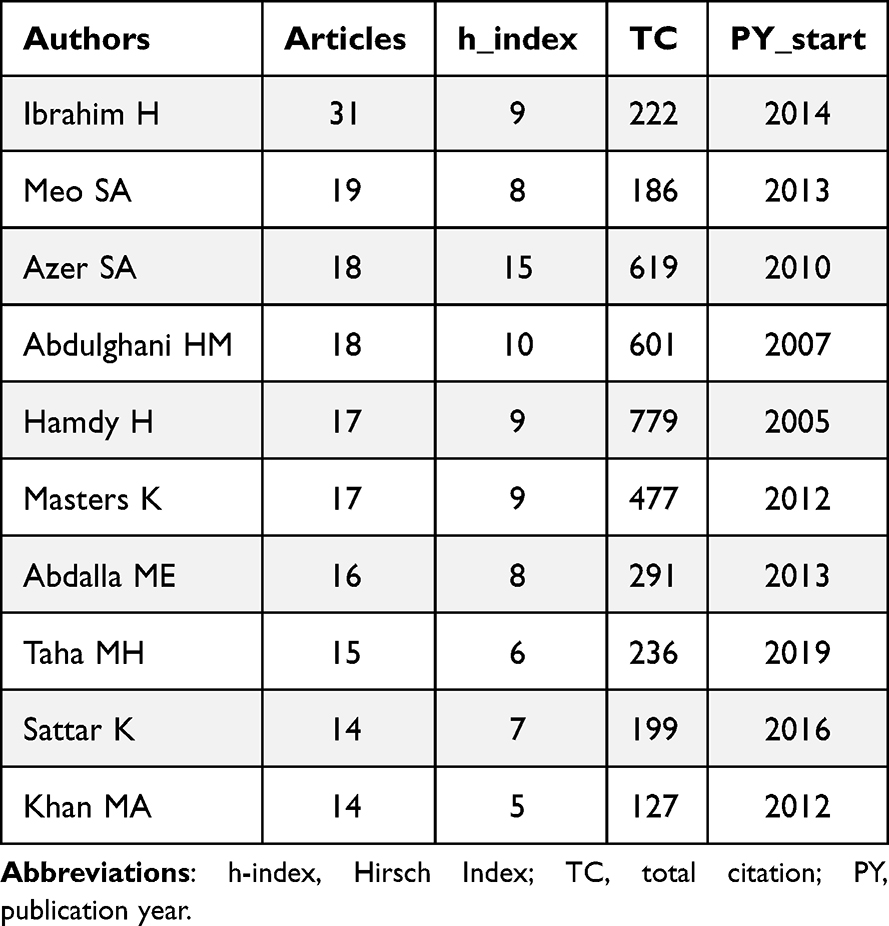 |
Table 1 Top 10 Most Productive Authors and Their Impact (2005–2024) |
Table 2 presents the top 5 most productive countries in the field of medical education within the Arab region, analyzed by the total number of publications as corresponding authors, single- or intra-country publications (SCP), and multiple- or inter-country publications (MCP). Saudi Arabia ranked first with over 700 publications. The United Arab Emirates (UAE), the United States (USA), and Egypt followed, each contributing ≥100 publications. Saudi Arabia recorded the highest number of SCPs. In contrast, the MCP ratio, which indicates the extent of international collaboration, was notably higher for Qatar, Egypt, Bahrain, and the UAE.
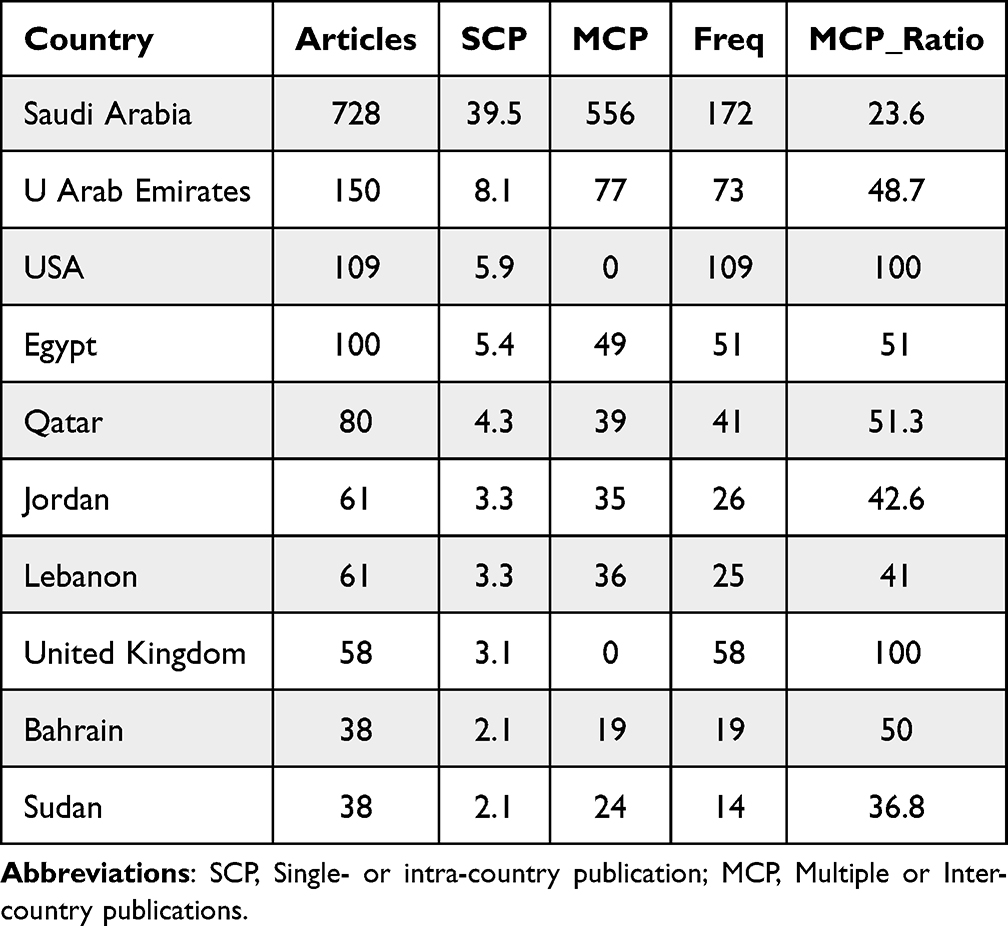 |
Table 2 Top 10 Countries with Articles as Corresponding Authors |
Table 3 shows the top 10 most frequent affiliations and funding sources. The analysis revealed a distinct regional concentration among the most active affiliations and funding bodies. Leading affiliations were from Egypt and Saudi Arabia. Egyptian knowledge bank (EKB) emerged as the most frequent affiliation (n=211), significantly surpassing others. King Saud University (KSU) was the second most frequent affiliation (n=198). King Saud Bin Abdulaziz University for Health Sciences (KSAU-HS) and King Abdulaziz University (KAU) followed in the lead as the affiliation organizations (n>100). Funding sources, similarly, reflected a strong regional focus, primarily within Saudi Arabia and Qatar. Key funders included KSU (n=50), Dr Hamza Alkholi Chair for Developing Medical Education in KSA (n=25), Qatar National Research funding (QNRF) (n=24), and Qatar University (n=12). Notable international funding was also present from the United States Department of Health Human Services and the National Institute of Health (NIH) USA, each funding 12 and 11 publications, respectively.
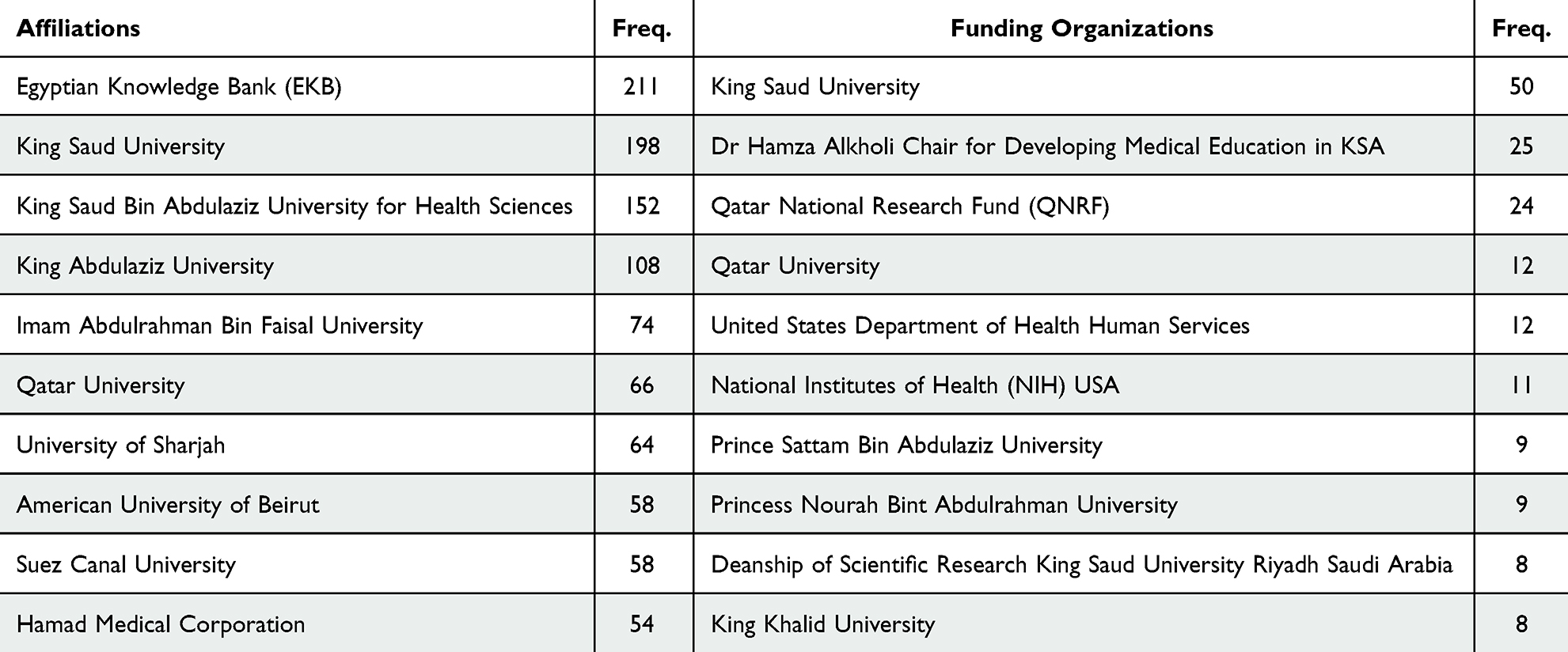 |
Table 3 Top 10 Most Frequent Affiliations and Funding Sources |
The analysis of country collaboration revealed that Saudi Arabia and the USA had the highest frequency of joint publications (n=90), followed by Saudi Arabia and Egypt (n=83), and the United Arab Emirates and the United Kingdom (n=53), highlighting strong bilateral research partnerships within and beyond the Arab region. The collaboration network analysis revealed two distinct, densely interconnected clusters dominating medical education research in the Arab region (Figure 4). The blue cluster presented a large and highly interconnected group, dominated by institutions from Saudi Arabia and Egypt. Central nodes in this cluster included KSAU-HS, KSU, KAU, and EKB. Other contributing institutions within this cluster were Qassim University, Imam Abdulrahman Bin Faisal University, and King Abdullah International Medical Research Center (KAIMRC). Two prominent collaboration links were identified in the network: one between KSAU-HS and KAIMRC, and the other between EKB and Suez Canal University. In contrast, the red cluster was smaller and less interconnected, consisting mainly of institutions in Qatar, including Qatar University, Hamad Medical Corporation, Weill Cornell Medical College Qatar, along with international collaborations such as the University of Toronto. The connections in this cluster were more globally oriented but less dense.
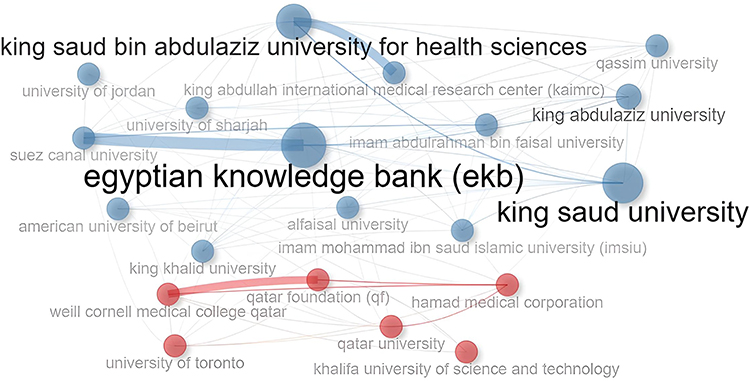 |
Figure 4 Top 20 collaboration networks in medical education research in the Arab region (2005–2024). |
Table 4 presents the top 10 highly cited articles in the field of medical education within the Arab region. Among these, seven articles received more than 20 local citations (LC), with the article by Zaini RG et al (2011) leading in regional influence (LC=26), highlighting their substantial impact within the Arab medical education community. In terms of global citations (GC), the article by Taylor DCM & Hamdy H (2013) ranked the highest with over 600 citations, followed by Khalil R et al (2020) (n=404), Alsoufi A et al (2020) (n=366), and Al-Balas M et al (2020) (n=345), reflecting their broad scholarly impact and relevance within the global academic community. Notably, the works by Ibrahim H et al (2015) and Bin Abdulrahman KA (2008) demonstrated the highest LC/GC ratios, both exceeding 40, emphasizing their strong influence within the local academic community. Additionally, Zaini RG et al (2011) and Fahal AH (2007) also showed high local impact with LC/ GC ratios above 30, reinforcing their pivotal role in shaping regional medical education discourse Most of the highly cited articles were descriptive in nature, encompassing an AMEE guideline, the development of competency frameworks, and studies related to online education during the COVID-19 pandemic. “BMC Medical Education” and “Medical Teacher” emerged as the two most prominent journals, publishing several highly cited articles, along with other notable sources.
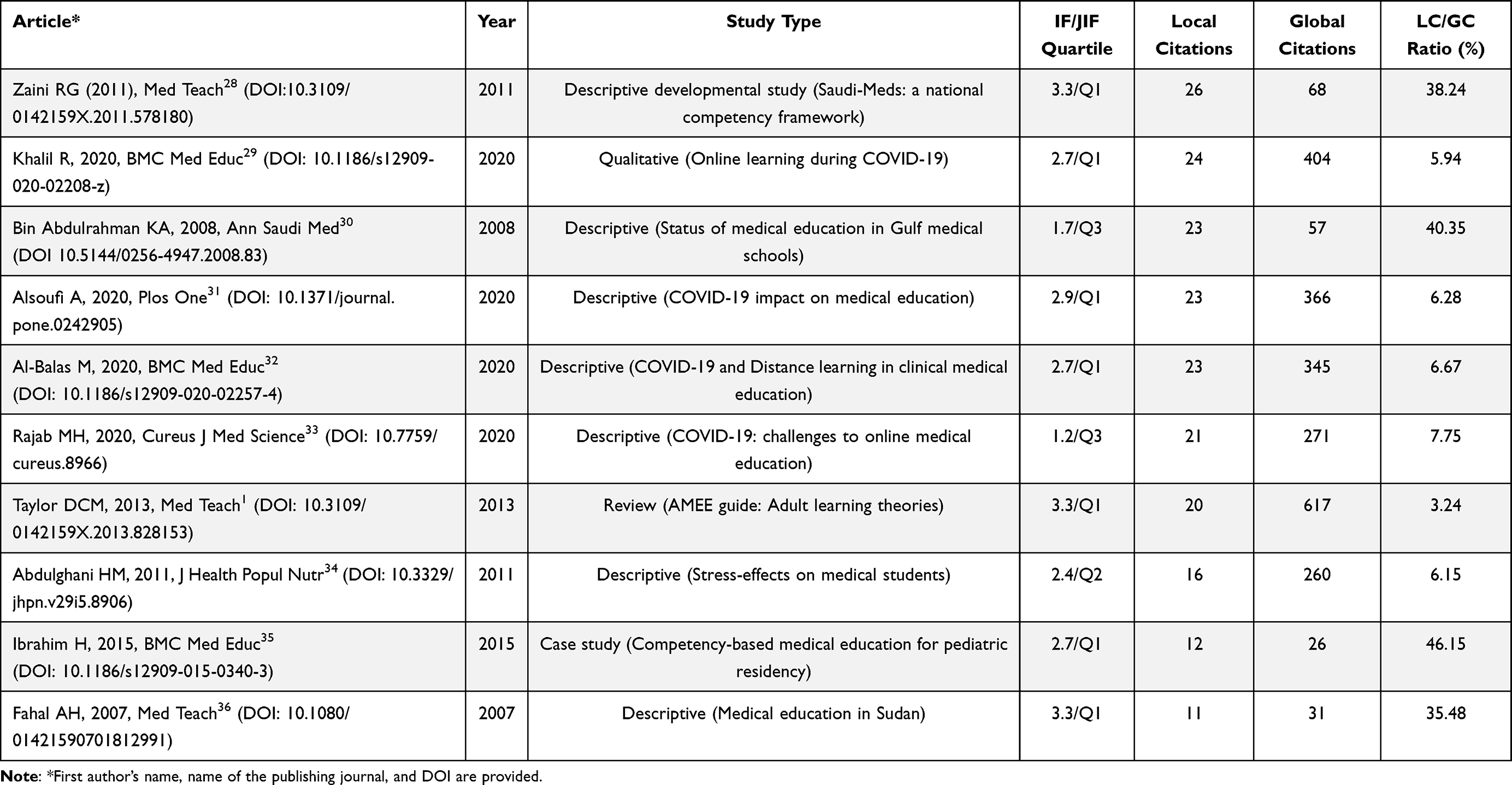 |
Table 4 Top 10 Highly Cited Articles in Medical Education Research from the Arab Region (2005–2024) |
Figure 5 illustrates the cumulative year-wise growth of the 10 most productive journals published in medical education research from the Arab region from 2005 to 2024. BMC Medical Education showed the most significant growth, particularly after 2020, reaching nearly 200 cumulative occurrences by 2024. Medical Teacher maintained steady output (n=108) and ranked second overall. Curious Journal of Medical Science (n=98) and Advances in Medical Education and Practice (n=93) exhibited accelerated growth post-2020. In contrast, World Family Medicine (n=27) showed limited improvement after an early rise, while Journal of Taiba University Medical Sciences (n=27) experienced a sharp increase only in the last three years. Notably, most of the journals in the top 10 list were published in Western and developed countries, except for the Journal of Taiba University Medical Sciences from Saudi Arabia and the Pakistan Journal of Medical Sciences from Pakistan.
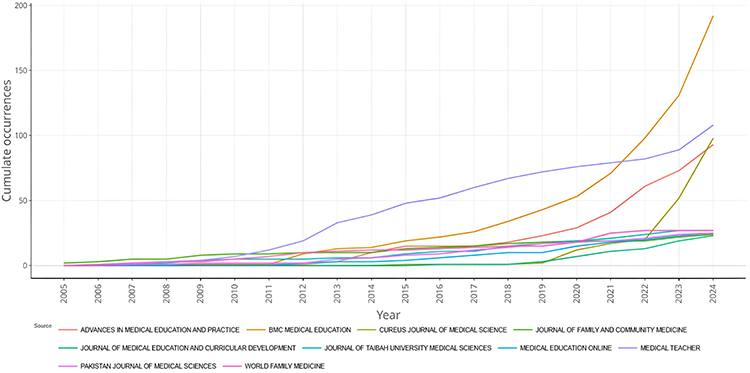 |
Figure 5 Year-wise growth of the 10 most productive sources in medical education research from the Arab region (2005–2024). |
The topic trend analysis revealed that the top three most frequently occurring keywords in medical education research from the Arab region, between 2012 and 2024, were “medical education”, “medical students”, and “practice”. These terms demonstrated a notable increase in usage, particularly from 2019 onward, with peak activity observed around 2021–2022. Emerging topics such as “ChatGPT” and “artificial intelligence” showed leading occurrences only in recent years (post-2022). Additional keyword trends and their temporal distribution are visualized in Figure 6A. The co-occurrence network (Figure 6B) further supported the keyword trend analysis, with “medical education” occupying the most central and influential position in the network. It was strongly connected to frequently co-occurring terms such as “medical students”, “curriculum”, “e-learning”, and “problem-based learning”, forming a large, densely linked red cluster. In contrast, a smaller blue cluster comprising the terms “knowledge”, “attitude”, and “physicians” pointed to research themes related to behavioral or KAP (knowledge-attitude-practice) studies among health care providers.
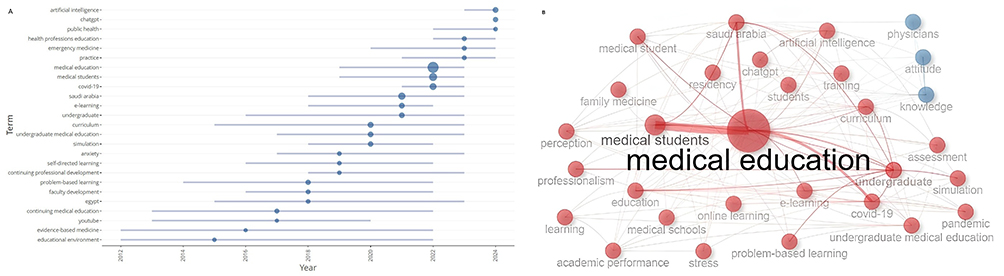 |
Figure 6 (A) Topic trends of the top 3 keywords in medical education research from the Arab region (2012–2024). (B) Co-occurrence network of the 30 most frequent keywords in medical education research (2005–2024). |
The Sankey diagram (Figure 7) visually maps the evolving landscape of medical education research themes in the Arab region across three distinct periods: the foundational phase (2005–2010), the developmental phase (2011–2019), and the consolidation and innovation phase (2022–2024). Across all phases, “medical education” remained a central and recurring theme, reflecting sustained interest in the domain. During the early phase, research focused on foundational topics such as curriculum, primary care, anatomy, and evidence-based medicine. In the subsequent period (2011–2019), the thematic scope expanded significantly to include simulation, telemedicine, pharmacy education, blended learning, e-learning, and faculty development. In the most recent period (2020–2024), there was a marked shift toward learner-centered and institutional themes, including student engagement, feedback, professionalism, and graduate medical education. Saudi Arabia prominently emerged as a thematic note during this period. Notably, thematic integration and continuity were observed across the three areas, underscoring a progressive, interconnected research ecosystem.
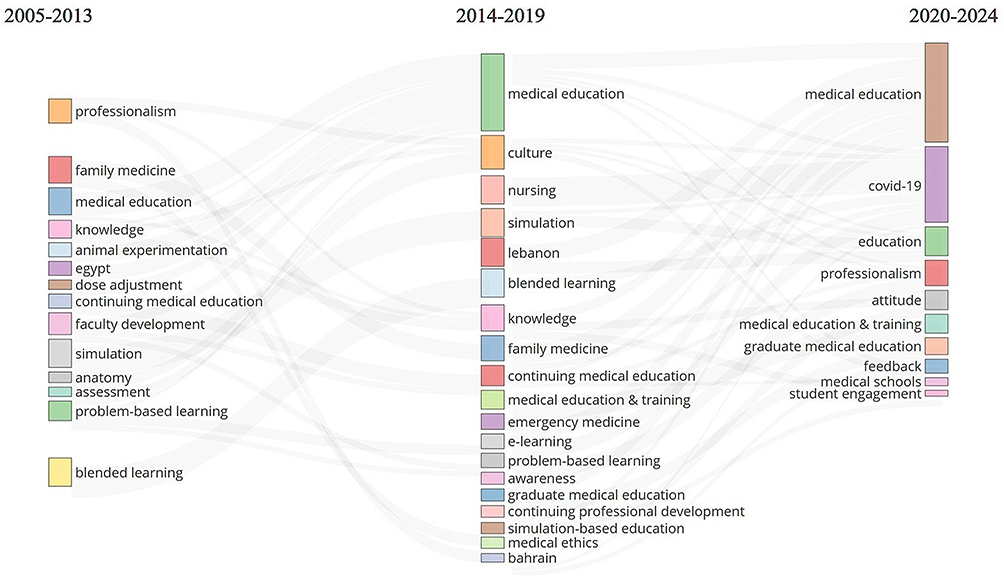 |
Figure 7 Thematic evolution of medical education research in the Arab region from 2005 to 2024. |
Discussion
The primary objective of this bibliometric study was to systematically analyze research productivity in medical education across the Arab region from 2005 to 2024, with a focus on identifying the most prolific countries, mapping collaboration networks among authors and institutions, and exploring publication trends, influential sources, and emerging thematic areas to inform future directions in the field.
Geographical Distribution and National Research Productivity
Globally, medical education research output was dominated by five Western countries, with the United States leading in overall productivity, while Canada demonstrated the highest relative productivity when adjusted for size and resources.6 Indexing patterns reveal a growing contribution from Arab countries (Table 2), supported by emerging journals and strong interdisciplinary representation, particularly within social sciences databases. Saudi Arabia emerged as the most productive country, reflecting substantial national investment in academic infrastructure, health education reforms and research innovation under Vision 2030.37 This trend aligns with prior evidence of a marked increase in Saudi medical education research over the past three decades.38 The United Arab Emirates ranked second, likely benefiting from new academic institutions and international collaborations,39 followed by Egypt, whose comparatively lower output contrasts with its long established academic tradition and may be influenced by systemic challenges such as limited research funding and faculty development constraints.40 Several Arab countries remain underrepresented, highlighting the need for targeted capacity building and stronger original collaboration to enhance research output and impact.
Trends in Publication Growth and Drivers of Increased Output
Medical education publications from the Arab region have increased steadily since 2005, with a marked surge after 2019 (Figure 3). Annual output exceeded 100 publications in 2019 and surpassed 300 by 2024, reflecting growing scholarly engagement in this field. These findings may be attributed to the impact of the COVID-19 pandemic, which catalyzed research on e-learning and positioned COVID-19 as a recurrent theme in medical education research.41 The pandemic also underscored the need for innovative instructional approaches, accelerating the adoption of online education and simulation-based learning to ensure educational continuity.42 Additionally, the expansion of master’s programs in health professions education (MHPE) has likely contributed to increased research output. By 2012, a total of 76 MHPE programs were established globally,43 with recent evidence demonstrating their positive impact on educational scholarship.44 The Middle East now accounts for approximately 11% of global MHPE programs, reflecting regional investment in academic development and educational research capacity.45
Author, Institutional Productivity, and Collaboration Networks
Author productivity and citation patterns indicate a maturing and increasingly influential medical education research community in the Arab region (Table 1), characterized by both sustained contributions from early pioneers and emerging scholarly leadership. These trends are consistent with prior reports of rising health sciences research output from the region, despite continued gap relative to global benchmarks.46,47 Institutional analysis shows Saudi Arabia as the dominant contributor in total publications and single-country publications, with the UAE and Egypt also demonstrating substantial output (Table 2 and Table 3). Higher multiple-country publication ratios in Qatar, Egypt, Bahrain, and the UAE reflect stronger international collaboration. Key institutions and funding bodies, particularly KSAU-HS, KSU, KAU and EKB, were concentrated in Saudi Arabia and Egypt and played central roles in productivity and research support. Collaborative network analysis revealed two main clusters (Figure 4): a dense intra-regional cluster centered on Saudi and Egyptian institutions, and a more internationally oriented cluster led by Qatar, including partnerships with institutions such as the University of Toronto. EKB emerged as a highly central node bring the importance of national digital platforms in enabling research collaboration and knowledge dissemination.48 Overall, these patterns reflect differing national strategies that balance regional integration and global engagement reinforcing the recognized importance of collaboration in advancing medical education research quality and impact.2,7,18,49
Highly Cited Articles and Evolving Journal Visibility
Citation analysis of the top 10 highly cited articles (Table 4) highlights the significant academic and policy impact of selected contributions from the Arab medical education community. Several works showed strong local influence, reflected by high LC/GC ratios, indicating relevance to regional reforms, most notably Zaini RG et al (2011), which introduced the Saudi Meds competency framework and became a national reference for medical education in Saudi Arabia and beyond.28 Other highly cited studies achieved broader international recognition, particularly those addressing curriculum frameworks and online education during the COVID-19 pandemic. The predominance of descriptive and policy-oriented studies among these articles suggests that foundational frameworks and practical innovations continue to shape both regional and global discourse. Leading journals such as BMC Medical Education and Medical Teacher served as key dissemination platforms for these influential works.
Journal-specific trends (Figure 5) further reflect increasing engagement with high-visibility, internationally indexed journals, particularly BMC Medical Education and Medical Teacher, consistent with global open access publishing strategies.50 Post-2020 surge in journals such as Advances in Medical Education and Practice and Cureus likely reflects their accessibility and rapid publication models. Concurrently, the rising output and internationally indexing of regional journals, such as The Journal of Taiba University Medical Sciences, signals growing institutional support and improved research quality, with expanding global authorship and visibility.51 Collectively, these patterns indicate strengthening regional scholarly capacity, while underscoring the need for more hypothesis-driven, outcome-based research to further enhance global impact.
Topic Trends and Keyword Co-Occurrence
Topic trend and co-occurrence analyses (Figure 6A& B) show a clear shift toward learner-centered and technology-enhanced medical education research in the Arab region. Core keywords such as medical education, medical students, and curriculum reflect sustained focus on training and curricular reform, while strong links with e-learning and problem-based learning indicate alignment with global pedagogical innovations, particularly during the COVID-19 pandemic.52 The larger thematic cluster highlights student-centered learning, digital education, and pandemic-driven adaptations, with emerging terms such as artificial intelligence and ChatGPT signaling growing interest in AI-enabled educational practices.53 The smaller cluster reflects continued use of knowledge–attitude–practice (KAP) studies to assess healthcare professionals’ preparedness and perspectives in evolving educational and clinical contexts.
Thematic Evolution Across Research Eras
Thematic evolution across three eras (Figure 7) reflects a maturing and increasingly complex medical education research landscape in the Arab region. Early emphasis on curriculum development and primary care gradually shifted toward simulation, e-learning, and faculty development, indicating growing pedagogical sophistication and digital integration. More recent themes, such as student engagement, feedback, professionalism, and competency-based education, suggest increasing attention to learner-centered approaches and institutional quality improvement. Although the post-2020 period coincided with the COVID-19 pandemic, the absence of a sharp thematic shift suggests that e-learning and blended strategies were already being explored in the preceding decade. The emergence of Saudi Arabia as a prominent thematic node further reflects sustained national investment in health professions education under Vision 2030,37 while the expanding thematic scope may also relate to the growth of dedicated medical education degree programs.43,44
Strengths and Limitations
A major strength of this study lies in its use of validated bibliometric indicators and visualization tools (eg, co-authorship networks, keyword co-occurrence, and Sankey diagrams), offering both quantitative depth and thematic insight. Additionally, the inclusion of local and global citation metrics (LC/GC) allows for a nuanced assessment of both regional relevance and international impact. However, the study is not without limitations. It relies primarily on publications indexed in the Web of Science Core Collection, which may underrepresent research disseminated in non-indexed local or regional journals. Moreover, citation counts, while useful indicators of impact, may be influenced by time since publication and do not necessarily reflect research quality or practical implementation. A further limitation was the paucity of comparable bibliometric studies, which constrained interpretation and comparison of salient findings. Finally, the thematic analysis - although robust - could benefit from qualitative validation through expert panel review or content analysis to further refine interpretations of evolving trends.
Conclusions
This bibliometric analysis demonstrates a sustained growth in the volume, thematic diversity, and collaborative scope of medical education research in the Arab world between 2005 and 2024. Saudi Arabia emerged as the most productive contributor, with the UAE, Egypt, and Qatar also showing notable research activity and higher levels of international collaboration. Thematic analyses revealed a transition from foundational educational topics toward learner-centered, technology-enhanced, and digitally oriented approaches, including the recent emergence of artificial intelligence–related themes. Highly cited publications and structured collaboration networks highlight the increasing visibility and academic engagement of the region in global medical education scholarship. Future research efforts should prioritize strengthening regional collaboration, addressing disparities in research output among Arab countries, and advancing more theory-driven and outcome-based medical education research.
Abbreviations
MER, Medical education research; WoS, Web of Science; CBE, competency-based education; GCC, Gulf Cooperation Council; SDGs, Sustainable Development Goals; SCI-EXPANDED, Science Citation Index Expanded; ESCI, Emerging Sources Citation Index; SSCI, Social Sciences Citation Index; TC, total citations; SCP, single- or intra-country publications; MCP, multiple- or inter-country publications; EKB, Egyptian knowledge bank; KSU, King Saud University; KSAU-HS, King Saud Bin Abdulaziz University for Health Sciences; KAU, King Abdulaziz University; QNRF, Qatar National Research Fund; NIH, National Institute of Health; KAIMRC, King Abdullah International Medical Research Center; LC, local citations; GC, global citations; KAP, knowledge-attitude-practice.
Data Sharing Statement
The datasets generated and/or analyzed during the current study are available from the corresponding author on reasonable request.
Ethics Approval and Consent to Participate
Not applicable due to study design.
Author Contributions
All authors made a significant contribution to the work reported, whether that is in the conception, study design, execution, acquisition of data, analysis and interpretation, or in all these areas; took part in drafting, revising or critically reviewing the article; gave final approval of the version to be published; have agreed on the journal to which the article has been submitted; and agree to be accountable for all aspects of the work.
Funding
The APC was funded by the Deanship of Scientific Research (DSR) at King Abdulaziz University. The authors, therefore, acknowledge with thanks the technical and financial support.
Disclosure
Muhammad Imran and Ahmad Azam Malik contributed equally as first authors. The authors declare that they have no competing interests.
References
1. Taylor DC, Hamdy H. Adult learning theories: implications for learning and teaching in medical education: AMEE Guide No. 83. Med Teach. 2013;35(11):e1561–14. doi:10.3109/0142159X.2013.828153
2. Harden RM. The future of health professions education. Med Teach. 2024;46(4):436–437. doi:10.1080/0142159X.2024.2320521
3. Harden RM, Grant J, Buckley G, et al. BEME guide no. 1: best evidence medical education. Med Teach. 1999;21(6):553–562. doi:10.1080/01421599978960
4. Cook DA, Bordage G, Schmidt HG. Description, justification and clarification: a framework for classifying the purposes of research in medical education. Med Educ. 2008;42(2):128–133. doi:10.1111/j.1365-2923.2007.02974.x
5. Majumder MAA, Haque M, Razzaque MS. Trends and challenges of medical education in the changing academic and public health environment of the 21st century. Front Commun. 2023;8:1153764. doi:10.3389/fcomm.2023.1153764
6. Doja A, Horsley T, Sampson M. Productivity in medical education research: an examination of countries of origin. BMC Med Educ. 2014;14:243. doi:10.1186/s12909-014-0243-8
7. Peterson WJ, Santen SA, House JB, et al. Increasing education research productivity: a network analysis. West J Emerg Med. 2019;21(1):163–168. doi:10.5811/westjem.2019.12.44512
8. Borowczyk M, Stalmach-Przygoda A, Doroszewska A, et al. Developing an effective and comprehensive communication curriculum for undergraduate medical education in Poland–the review and recommendations. BMC Med Educ. 2023;23(1):645. doi:10.1186/s12909-023-04533-5
9. Bowe CM, Armstrong E. Assessment for systems learning: a holistic assessment framework to support decision making across the medical education continuum. Acad Med. 2017;92(5):585–592. doi:10.1097/ACM.0000000000001321
10. Jamaludin TSS, Nurumal M, Ahmad N, et al. Soft skills elements in structured clinical skill assessment: a qualitative study. Bali Med J. 2022;11(3):1666–1674. doi:10.15562/bmj.v11i3.3721
11. Castro R. Blended learning in higher education: trends and capabilities. Educ Inf Technol. 2019;24(4):2523–2546. doi:10.1007/s10639-019-09886-3
12. Hassell LA, Absar SF, Chauhan C, et al. Pathology education powered by virtual and digital transformation: now and the future. Arch Pathol Lab Med. 2023;147(4):474–491. doi:10.5858/arpa.2021-0473-RA
13. Wijnen-Meijer M. Implications of internationalisation of medical education. BMC Med Educ. 2023;23(1):640. doi:10.1186/s12909-023-04630-5
14. Findyartini A, Nirula L, Mandache M-E, et al. From criteria to impact: the ASPIRE framework as a roadmap for faculty development excellence in health professions education. Med Teach. 2025;47:1–13.
15. Meo SA, Hassan A, Aqil M, et al. Medical education research in GCC countries. BMC Med Educ. 2015;15:8. doi:10.1186/s12909-015-0293-6
16. Abdalla S, Ramadan E, Al-Belushi MAK, et al. Unveiling the role of Arab universities in advancing sustainable development goals: a multi-dimensional analysis. Sustainability. 2024;16(14):5829. doi:10.3390/su16145829
17. Mohiuddin K, Nasr OA, Nadhmi Miladi M, et al. Potentialities and priorities for higher educational development in Saudi Arabia for the next decade: critical reflections of the vision 2030 framework. Heliyon. 2023;9(5):e16368. doi:10.1016/j.heliyon.2023.e16368
18. Almuhaidib S, Alqahtani R, Alotaibi HF, et al. Mapping the landscape of medical research in the Arab world countries: a comprehensive bibliometric analysis. Saudi Med J. 2024;45(4):387–396. doi:10.15537/smj.2024.45.4.20230968
19. Alameri H, Hamdy H, Sims D. Medical education in the United Arab Emirates: challenges and opportunities. Med Teach. 2021;43(6):625–632. doi:10.1080/0142159X.2021.1908978
20. Donthu N, Kumar S, Mukherjee D, et al. How to conduct a bibliometric analysis: an overview and guidelines. J Bus Res. 2021;133:285–296. doi:10.1016/j.jbusres.2021.04.070
21. Kumar M, George RJ, PS A. Bibliometric analysis for medical research. Indian J Psychol Med. 2023;45(3):277–282. doi:10.1177/02537176221103617
22. Ninkov A, Frank JR, Maggio LA. Bibliometrics: methods for studying academic publishing. Perspect Med Educ. 2022;11(3):173–176. doi:10.1007/S40037-021-00695-4
23. Malik AA, Baig M, Butt NS, et al. Bibliometric analysis of global research productivity on vitamin D and bone metabolism (2001–2020): learn from the past to plan future. Nutrients. 2022;14(3):542. doi:10.3390/nu14030542
24. Pranckutė R. Web of Science (WoS) and Scopus: the titans of bibliographic information in today’s academic world. Publications. 2021;9(1):12. doi:10.3390/publications9010012
25. Page MJ, McKenzie JE, Bossuyt PM, et al. The PRISMA 2020 statement: an updated guideline for reporting systematic reviews. BMJ. 2021;372:1.
26. Imran M, Malik AA, Shahzad R, Hussain B, Ahmed R. A scientometric analysis of research productivity in surgery from Arab countries (2001-2021): research productivity in surgery from Arab countries. Pak J Health Sci. 2023;17:21–28. doi:10.53350/pjmhs202317621
27. Aria M, Cuccurullo C. bibliometrix: an R-tool for comprehensive science mapping analysis. J Informetr. 2017;11(4):959–975. doi:10.1016/j.joi.2017.08.007
28. Zaini RG, Bin Abdulrahman KA, Al-Khotani AA, et al. Saudi Meds: a competence specification for Saudi medical graduates. Med Teach. 2011;33(7):582–584. doi:10.3109/0142159X.2011.578180
29. Khalil R, Mansour AE, Fadda WA, et al. The sudden transition to synchronized online learning during the COVID-19 pandemic in Saudi Arabia: a qualitative study exploring medical students’ perspectives. BMC Med Educ. 2020;20(1):285. doi:10.1186/s12909-020-02208-z
30. Bin Abdulrahman KA. The current status of medical education in the Gulf Cooperation Council countries. Ann Saudi Med. 2008;28(2):83–88. doi:10.5144/0256-4947.2008.83
31. Alsoufi A, Alsuyihili A, Msherghi A, et al. Impact of the COVID-19 pandemic on medical education: medical students’ knowledge, attitudes, and practices regarding electronic learning. PLoS One. 2020;15(11):e0242905. doi:10.1371/journal.pone.0242905
32. Al-Balas M, Al-Balas HI, Jaber HM, et al. Distance learning in clinical medical education amid COVID-19 pandemic in Jordan: current situation, challenges, and perspectives. BMC Med Edu. 2020;20(1):341. doi:10.1186/s12909-020-02257-4
33. Rajab MH, Gazal AM, Alkattan K. Challenges to online medical education during the COVID-19 pandemic. Cureus J Med Sci. 2020;12(7):1.
34. Abdulghani HM, AlKanhal AA, Mahmoud ES, et al. Stress and its effects on medical students: a cross-sectional study at a college of medicine in Saudi Arabia. J Health Popul Nutr. 2011;29(5):516. doi:10.3329/jhpn.v29i5.8906
35. Ibrahim H, Al Tatari H, Holmboe ES. The transition to competency-based pediatric training in the United Arab Emirates. BMC Med Educ. 2015;15(1):65. doi:10.1186/s12909-015-0340-3
36. Fahal AH. Medical education in the Sudan: its strengths and weaknesses. Med Teach. 2007;29(9–10):910–914. doi:10.1080/01421590701812991
37. Thalib HI, Zobairi A, Javed Z, et al. Enhancing healthcare research in Saudi Arabia according to vision 2030: an in-depth review. J Res Med Dent Sci. 2024;12:01–08.
38. Mohsen MA, Ho Y-S. Thirty years of educational research in Saudi Arabia: a bibliometric study. Interact Learn Environ. 2024;32(5):1763–1778.
39. Al Marzouqi AHH, Alameddine M, Sharif A, et al. Research productivity in the United Arab Emirates: a 20-year bibliometric analysis. Heliyon. 2019;5(12):1.
40. Sywelem MMG. Challenges of international ranking of Egyptian universities from the Academicians’ perspective. Am J Educ Res. 2020;8(7):465–474. doi:10.12691/education-8-7-3
41. Oluwadele D, Singh Y, Adeliyi TT. Trends and insights in e-learning in medical education: a bibliometric analysis. Rev Educ. 2023;11(3):e3431. doi:10.1002/rev3.3431
42. Gaur U, Majumder MAA, Sa B, et al. Challenges and opportunities of preclinical medical education: COVID-19 crisis and beyond. SN Compr Clin Med. 2020;2(11):1992–1997. doi:10.1007/s42399-020-00528-1
43. Tekian A, Harris I. Preparing health professions education leaders worldwide: a description of masters-level programs. Med Teach. 2012;34(1):52–58. doi:10.3109/0142159X.2011.599895
44. O’Callaghan C, Sandars J, Brown J, et al. The value of master’s degree programmes in health professions education: a scoping review. Clin Teach. 2024;21(4):e13758. doi:10.1111/tct.13758
45. Tekian A, Dekhtyar M, Park YS. The rapid growth and expansion of Master of health professions education (MHPE) programs: a mixed-methods study of international curricular trends and guidelines for programs. Med Teach. 2024;46(3):341–348. doi:10.1080/0142159X.2023.2284657
46. El Rassi R, Meho LI, Nahlawi A, et al. Medical research productivity in the Arab countries: 2007-2016 bibliometric analysis. J Glob Health. 2018;8(2):020411. doi:10.7189/jogh.08.020411
47. Ul Haq I, Ur Rehman S, Al-Kadri HM, et al. Research productivity in the health sciences in Saudi Arabia: 2008-2017. Ann Saudi Med. 2020;40(2):147–154. doi:10.5144/0256-4947.2020.147
48. AbdelKader AF, Sayed MH. Evaluation of the Egyptian knowledge bank using the information systems success model. J Acad Librariansh. 2022;48(2):102506. doi:10.1016/j.acalib.2022.102506
49. Babour A, Alzamzami O, Adedayo A, et al. International publication trends and collaboration impact on the scientific research of Saudi Arabia. J Sciento Res. 2021;10(3):328–336. doi:10.5530/jscires.10.3.49
50. Albert M, Rowland P, Friesen F, et al. Interdisciplinarity in medical education research: myth and reality. Adv Health Sci Educ Theory Pract. 2020;25(5):1243–1253. doi:10.1007/s10459-020-09977-8
51. Al-Zalabani A, Habib F. Journal of Taibah University Medical Sciences: 16 years of success, and the journey continues. J Taibah Univ Med Sci. 2022;17(2):163–164. doi:10.1016/j.jtumed.2022.01.001
52. Kim JW, Myung SJ, Yoon HB, et al. How medical education survives and evolves during COVID-19: our experience and future direction. PLoS One. 2020;15(12):e0243958. doi:10.1371/journal.pone.0243958
53. Li R, Wu T. Evolution of artificial intelligence in medical education from 2000 to 2024: bibliometric analysis. Interact J Med Res. 2025;14(1):e63775. doi:10.2196/63775
 © 2026 The Author(s). This work is published and licensed by Dove Medical Press Limited. The
full terms of this license are available at https://www.dovepress.com/terms
and incorporate the Creative Commons Attribution
- Non Commercial (unported, 4.0) License.
By accessing the work you hereby accept the Terms. Non-commercial uses of the work are permitted
without any further permission from Dove Medical Press Limited, provided the work is properly
attributed. For permission for commercial use of this work, please see paragraphs 4.2 and 5 of our Terms.
© 2026 The Author(s). This work is published and licensed by Dove Medical Press Limited. The
full terms of this license are available at https://www.dovepress.com/terms
and incorporate the Creative Commons Attribution
- Non Commercial (unported, 4.0) License.
By accessing the work you hereby accept the Terms. Non-commercial uses of the work are permitted
without any further permission from Dove Medical Press Limited, provided the work is properly
attributed. For permission for commercial use of this work, please see paragraphs 4.2 and 5 of our Terms.
Recommended articles
Research Hotspots and Frontiers of Patient Delay: A Bibliometric Analysis from 2000 to 2023
Song F, Yang Y, Xue J
Journal of Multidisciplinary Healthcare 2024, 17:5407-5423
Published Date: 20 November 2024