
Back to Journals » Psychology Research and Behavior Management » Volume 18
Psychometric Validation of the Arabic Version of the Irrational Procrastination Scale (IPS) Among Lebanese Young Adults
Authors Chahine A, Yakın E, Malaeb D, Hallit R, Obeid S, Hallit S  , Fekih-Romdhane F
Received 9 June 2025
Accepted for publication 4 October 2025
Published 16 October 2025 Volume 2025:18 Pages 2167—2177
DOI https://doi.org/10.2147/PRBM.S539413
Checked for plagiarism Yes
Review by Single anonymous peer review
Peer reviewer comments 2
Editor who approved publication: Professor Einar Thorsteinsson
Abdallah Chahine,1 Ecem Yakın,2 Diana Malaeb,3 Rabih Hallit,1,4,5 Sahar Obeid,6 Souheil Hallit,1,7,8 Feten Fekih-Romdhane9,10
1School of Medicine and Medical Sciences, Holy Spirit University of Kaslik, Jounieh, Lebanon; 2Center for Studies and Research in Psychopathology and Health Psychology, University of Toulouse-Jean Jaurès, UT2J, Toulouse, 31058, France; 3College of Pharmacy, Gulf Medical University, Ajman, United Arab Emirates; 4Department of Infectious Disease, Notre Dame Des Secours University Hospital Center, Byblos, Lebanon; 5Department of Infectious Disease, Bellevue Medical Center, Mansourieh, Lebanon; 6Social and Education Sciences Department, School of Arts and Sciences, Lebanese American University, Jbeil, Lebanon; 7Department of Psychology, College of Humanities, Effat University, Jeddah, 21478, Saudi Arabia; 8Applied Science Research Center, Applied Science Private University, Amman, Jordan; 9The Tunisian Center of Early Intervention in Psychosis, Department of Psychiatry “ibn Omrane”, Razi hospital, Manouba, 2010, Tunisia; 10Tunis El Manar University, Faculty of Medicine of Tunis, Tunis, Tunisia
Correspondence: Souheil Hallit; Sahar Obeid, Email [email protected]; [email protected]
Background: Procrastination can be defined as voluntarily delaying or postponing a task that is often regarded as important or necessary to do. It often has short-term benefits but high future burdens. The Irrational Procrastination Scale (IPS) is a 9-item self-reporting scale that focuses on the implemental aspect of procrastination and are clearly worded and easy to understand, making it easier for participants to express their opinion. A few efforts have been made to adapt procrastination scales for Arabic-speaking populations and provide procrastination scales to Arabic-speaking populations and countries. The objectives of our study were to evaluate the validity of the Arabic version of IPS, assess its internal reliability and explore concurrent validity of the IPS based on patterns of correlations between procrastination and time perspectives.
Methods: This cross-sectional study was conducted from February to March 2023 and involved 684 young adults, mostly female participants from various regions of Lebanon. The Exploratory-to-Confirmatory (EFA-CFA) strategy was used to confirm the IPS validity.
Results: The CFA results revealed that the fit indices of the one-factor model were not good: CFI= 0.923, TLI = 0.898 RMSEA = 0.124 [90% CI 0.111, 0.136] and SRMR = 0.114. Therefore, we randomly split the sample into two groups; an EFA was first conducted on the first subsample (n = 343). Items 2, 6 and 9 were removed since their loading factor was below 0.4. A CFA was then performed on the second subsample (n = 341). The hypothesized one-factor model was specified with six items loading on the latent construct (CFI = 0.990, TLI = 0.984, SRMR = 0.061, RMSEA = 0.087 [90% CI 0.071, 0.104]). The internal reliability of the scale was excellent (α = 0.89 and ω = 0.89). Model fit for configural, metric, scalar and strict invariance was shown. Higher time perspective dimensions’ scores, namely past negative, past positive, present fatalistic and present hedonistic, were significantly associated with higher irrational procrastination.
Conclusion: The validated Arabic IPS provides a reliable tool for screening procrastination, with potential applications in clinical assessment, interventions, and cross-cultural research on its psychological, social, and cultural determinants.
Keywords: irrational procrastination scale, Arabic, psychometric properties, validation
Introduction
Procrastination can be defined as voluntarily delaying or postponing a task that is often regarded as important or necessary to do. It often has short-term benefits but high future burdens.1 Procrastinators know the negative consequences of their actions but choose to reschedule anyway their chores that can range from simple non-time-consuming tasks like submitting an assignment, to deadline-related ones like preparing for a vital work meeting.2 Adjournment is regarded then as a negative personal trait due to its effect on health, productivity and relationships.3 Even though the general view of procrastination is negative, some good outcomes may be seen out of it, like waiting for new information to arrive or taking time to dissect risky outcome tasks.4 It should be noted that delaying by itself is not enough to be considered as procrastination, it needs the irrationality component to qualify.5 Alone, procrastination is not considered as a mental disorder. While everyone experienced procrastination at a certain point in their lives, it was found to be more associated with low self-esteem, guilt, ADHD, high levels of anxiety, depression, and poor study habits.6,7 About 20% of the general population suffers from procrastination. In particular, 50% of college students suffer chronically from procrastination, 75% of students state that they procrastinate, and 80% to 95% of them procrastinate in general.8
Mechanisms and Psychological Determinants of Procrastination
The exact mechanism of procrastination is not fully understood. Nevertheless, according to recent studies, it can be linked to several processes that can have an adverse additive effect, leaving room for a longer course of postponement.9 A key factor of procrastination is anxiety and fear. According to the Freudian principle of Pleasure, we tend to procrastinate because we are in a constant search for pleasure and avoidance of pain, therefore we distance ourselves from negative feelings and triggers. Stress by itself is a driving force of both early intervention and procrastination.10,11 Some people react to the stress of an approaching deadline by doing the work that needs to be done, others on the contrary, procrastinate more, leading to more stress on the long term. Another factor is the lack of self-esteem.12 A person that doubts their own capacities of performing a task will most likely delay it to avoid feeling incompetent or fearing the happening of the worse scenario possible.13 Regarding a task as boring or repulsive, like an academic subject that is personally hated, can also be the reason behind delaying it. Lacking structure, time management skills, and inability to self-motivate are other possible explanation of this behavior.14 Researchers also believe that procrastination has increased in recent years due to the rise of social media platforms and their consumption of daily time that should be dedicated to other important responsibilities.15 Even some studies suggest that perfectionists tend to procrastinate till they find the right time or the right idea to start a task. It is not well established if procrastination is related to a high intelligence quotient.16,17 A previous study suggested that there is not a strong link between procrastination and intelligence. Another study published in 2021 suggests that procrastinators have lower emotional intelligence.18,19 Due to contradicting results and limitation of studies, we cannot conclude a direct relationship between these two entities. Finally, an interesting concept that emerged not a long time ago is the temporal motivation theory. This concept tries to explain the importance of time as a mediator of motivation in people in a mathematical equation, and its effect on goal setting and procrastination. It is a formula linking self-efficacy, which is the probability of success and value, which is the reward of the outcome as nominators, and delay and impulsiveness, which is the person’s sensitivity to delay as denominators. This means that an increase in any component of the numerator (self-efficacy or value) will increase motivation, and a decrease in any component of the denominator (impulsiveness and delay) will decrease motivation. Hence, an activity or a task is perceived as more and more important, in an exponential way, in the eyes of the procrastinator as the deadline nears.20
The Assessment of Procrastination
Assessment of procrastination is indeed regarded important because of its impact on people’s life. Procrastinators tend to perform worse academically than non-procrastinators, also they tend to have worse financial status and lower employment productivity as well as worse overall mental health and wellbeing.21,22 That is why, seeing the burden this phenomenon has on a person, it is essential to work on early detection and effective solutions. From waiting until the last minute before deadlines to postpone things they do not want to do and wasting time repeatedly, procrastinators suffer a lot.8 Several factors are considered when assessing procrastination. For example, it is useful to know how often someone procrastinate, the duration of delay, in what domains they procrastinate, what are the tasks they usually procrastinate to, and how important are the tasks and the outcomes.23 From this point of view, recognizing such a prevalent phenomenon is surprisingly tricky. Usually, procrastinators tend to hide the signs and symptoms by denying that they are procrastinating, avoiding and distracting themselves from the subjects they are postponing and ignoring their past patterns of behaviors.24 Procrastinators also argue that they can achieve their goal despite delaying and justify their behavior as healthy as well as compare their problems to others. They pretend to be in full control of their actions and glorify or joke about their procrastination.25 Also, sometimes, procrastinators can isolate themselves and ruminate about their behavior by self-guilt and self-blame.26 All these maladaptive mechanisms yield the necessity of an intervention to minimize the weight of these negative behavioral patterns on someone’s life.27 Procrastination is correlated mainly with anxiety, stress and depression either directly or indirectly as it can be a symptom of an underlying condition such as Attention-Deficit/Hyperactivity Disorder, or appear by itself, thus it is not classified as a separate mental disorder and can manifest as transient behavior in otherwise healthy individuals.28 Correspondingly, it is worth to note that procrastination can lead to missed work opportunities, failing school or even relationship problems.10,29
Time Perspective and Procrastination
Furthermore, several studies have suggested that time perspective (ie, the way individuals perceive time, influencing their behavior, decision-making and attitudes) can influence various aspects of people’s life and their coping mechanisms, denoting the involvement of procrastination as a function of time orientation. Generally, present-oriented people tend to procrastinate more since they are focused on instant gratification and immediate rewards rather than long-term goals. On the other hand, future-oriented are less likely to procrastinate since they are focused on long-term goals and are involved in planning. The Zimbardo Time Perspective Inventory (ZTPI) offers a validated framework for assessing these orientations (past-negative, past-positive, present-hedonistic, present fatalistic, and future, providing a good understanding of how time perception shapes procrastinatory behavior.30
Measurement Instruments of Procrastination
Multiple scales can be used to assess procrastination. The five main scales according to Steel are the Decisional Procrastination Scale (DPS), General Procrastination Scale (GPS), the Pure Procrastination Scale (PPS), the Adult Inventory of Procrastination Scale (AIP), and the Irrational Procrastination Scale (IPS). Knowing that procrastination comprises three phases, ie, decisional, implemental and timeless, according to the last efforts in research, each scale focuses on one or more of the three sides of procrastination. For example, for assessing the decisional part of procrastination, using the DPS is more appropriate; nevertheless, for the assessment of the implementation side, the IPS is the wiser choice.23,31
The IPS is a 9-item self-reporting scale32 that focuses on the implemental aspect of procrastination and is formulated in a simple and direct to the point form, making it easier for participants to express their opinion, an example is item 4: “When I should be doing one thing, I do another.” Three items among the nine listed are reversely scored: item 2,6 and 9.32 The original version of the irrational procrastination scale, conceived by Steel et al in 2003 was validated using undergraduate students from various universities in Australia. Even though it was originally validated among this population, the scale has since been used in various cultural and age groups because of its reliability and validity. The novel version showed good internal consistency with a high Cronbach’s alpha coefficient of 0.85, showing high reliability of the scale and consistency between items within the scale. Also, the scale demonstrated evidence of validity through factor analysis, measuring effectively irrational procrastination behaviors. A unidimensional factor structure was seen in the scale, showing that the items converged to measure the same construct. Later, the IPS has been translated to multiple languages including Chinese,33 Spanish,34 Korean,35 Russian,36 Brazilian,37 German38 and Norwegian39 among others. However, no real effort was made to translate and provide procrastination scales to Arabic-speaking populations and countries.
We believe that making available an Arabic-language version of the IPS is an important contribution to national research for several reasons. First, because of the unavailability of an Arabic form of the IPS, translating it would provide a tool for mental health professionals to quantify and evaluate the severity of procrastination in the general population as no scientific tool is currently present on the national level. Also, even though procrastination is not categorized as a disease, it is well established that it has devastating effects on physical and mental health. Therefore, providing a scale that is regarded by Steel as one of the best among the five widely used for the assessment of true procrastination makes the best instrument possible in a single theoretical model of the subject available to be used.40 In addition, offering a commonly used procrastination measure would benefit researchers and allow more research in this area to be conducted in the Arab world in comparison with European and English-speaking countries. Among the very limited research conducted in the Arab countries is a study on Procrastination among health professions students in Saudi Arabia that explored the factors contributing to procrastination and its social and academic impact. This 2021 study found that rates of procrastination in Saudi Arabia can be close to what is considered worldwide (20% to 25%), and that procrastination positively correlated to psychological distress, but negatively correlated with emotional and sexual wellbeing. Several other studies were also conducted in Saudi Arabia showing similar results. A study performed in the Lebanese context using the original English-language of the Procrastination Assessment Scale for Students (PASS;41) found that procrastination was positively associated with dysfunctional personality traits and negatively associated with emotional intelligence.42 The special context of the country of Lebanon, a middle eastern country of the Arab world, makes the study interesting and challenging. Lebanon is a foster ground for triggers associated with procrastination namely stress, low self-esteem, anxiety and depression.43 To be more precise, Lebanese university students are the one that suffers the most from the economic, social and political burdens of the country that is on the verge of collapse.44 All of that, in addition to the academic stress they endure, makes the study of procrastination in this tranche of population an interesting take on studying procrastination concepts.
The present study proposes to translate and validate to the Arabic the IPS in a sample of Arabic-speaking university students from Lebanon. More particularly, the objectives of our study include the following: 1) to evaluate the construct validity of the translated scale to ensure that its items effectively capture irrational procrastination tendencies, 2) to assess the internal reliability of the Arabic version, 3) to explore concurrent validity of the IPS based on patterns of correlations between procrastination and time perspectives. We hypothesize that the Arabic IPS will: (H1): demonstrate good validity; (H2): show high internal reliability; (H3): exhibit measurement invariance across sex groups. We also hypothesized that (H4): present-oriented people will tend to procrastinate more than other groups, whereas future-oriented people will be less likely to procrastinate.
Methods
Ethics Approval and Consent to Participate
Ethics approval for this study was obtained from the ethics committee of the School of Pharmacy at the Lebanese International University (2023RC-017-LIUSOP). Written informed consent was obtained from all subjects; the online submission of the soft copy was considered equivalent to receiving a written informed consent. All procedures were carried out in conformity with the relevant guidelines and regulations, including the Declaration of Helsinki.
Study Design
This cross-sectional study was conducted from February to March 2023 and involved 341 participants from various regions of Lebanon. Recruitment was done using snowball sampling techniques, and participants were selected based on their nationality and age (all participants were required to be 18 years or older and Lebanese). The study was conducted online using a Google Forms questionnaire and sent through social media sites and messaging applications like WhatsApp, Facebook, Instagram and Email. Participants were provided with an overview of the aims and general instructions of the study before participating. There was no compensation offered for participation in the study. The average completion time was 16 minutes and the responses were completely anonymous as stated in the overview of the study.
The Irrational Procrastination Scale (IPS)
The forward and backward translation method was applied to the ZTPI scale. A common procedure of back-translation was followed in the present study, in which a text is translated from a source into a target language, and then independently back-translated into the source language by a second interpreter. Therefore, the English version of the IPS was translated to Arabic by a Lebanese translator who was completely unrelated to the study. Afterwards, a Lebanese psychologist with a full working proficiency in English, translated the Arabic version back to English. To evaluate the accuracy of the translation, the initial and back-translated English versions were compared;45 and any inconsistencies were detected and eliminated by a committee composed of the research team and the two translators. A pilot study was done on 30 participants to make sure that the questions are well understood; no changes were done afterwards.46 The scale is composed of 9 items, three items among the nine listed are reversely scored: item 2, 6 and 9.32 The items focus on the implemental aspect of procrastination and are formulated in a simple and direct to the point form, making it easier for participants to express their opinion, an example is item 4: “When I should be doing one thing, I do another.”
The Short Form of the Arabic Version of Zimbardo Time Perspective Inventory (ZTPI-15-Ar)
Validated in Arabic,47 this is a self-reporting questionnaire composed of 15 items.30 It evaluates time perspective and classifies respondents according to their scores into five distinct categories: Past negative, past positive, present fatalistic, present hedonistic and future focused. Each item is rated from 1 to 5, the first representing “very uncharacteristic” as a response to the statement and five representing “very characteristic”. Higher scores designate a stronger tendency to have certain time perspective Internal reliability coefficients were as follows: past negative (ω =0.91, α =0.91), past positive (ω =0.78, α =0.78), present fatalistic (ω =0.64, α =0.63), present hedonistic (ω =0.73, α =0.71) and future focused (ω =0.81, α =0.81). This scale, being brief, minimizes respondent burden while maintaining psychometric robustness, making it particularly suitable for concurrent validity testing with the Arabic IPS to explore theoretically meaningful associations between time perspective and procrastination.
Statistical Analysis
All statistical analysis were performed using RStudio using RStudio (Version 1.4.1103 for Macintosh),48 using the Lavaan49 and Semtool50 packages.
Exploratory Factor Analysis
First, an EFA was computed with the first split-half subsample (N=341), to explore the factor structure of the IPS. The Kaiser–Meyer–Olkin (KMO) measure of sampling adequacy and the Bartlett’s test of sphericity were assessed to ensure the adequacy of our sample.51 The number of retained factors was determined based on the screen test and a Parallel Analysis (PA).52 As recommended, all items with “fair” loadings and above (ie, >0.40) were retained.53
Confirmatory Factor Analysis
In the second step, using data from the second split-half (N=343), a CFA was conducted based on the factors from the EFA. We used Weighted Least Squares with Mean and Variance (WLSMV) estimation method, which is known to be more appropriate for ordinal data (Li et al, 2016). We reported and considered the CFA model to fit well if the Tucker–Lewis index (TLI) and the Comparative Fit Index (CFI) were >0.90, the Root Mean Square Error of Approximation (RMSEA) was <0.08, and the Standardized Root Mean Square Residual (SRMR) was <0.08.54
A multi-group CFA (Chen, 2007) was conducted on the total sample, to assess sex invariance of IPS scores. Measurement invariance was assessed at the configural, metric, and scalar levels.55 We accepted ΔCFI ≤.010 and ΔRMSEA ≤.015 or ΔSRMR ≤.010 as evidence of invariance.56
Composite reliability was evaluated using McDonald’s ω and Cronbach’s α, with values greater than.70 being indicative of adequate composite reliability. Normality of the IPS score was not verified as shown by Mardia’s skewness (= 172.16; p < 0.001) and kurtosis (= 9.46; p < 0.001) values. For concurrent validity assessment, Spearman test was employed to examine the correlation between IPS and the other scores. Gender-based comparison was conducted using the Mann–Whitney test only if scalar or partial scalar invariance P <0.05 was deemed statistically significant.
Results
The participants of the study were 684 young adults (65.6% females) with a mean age of 21.74 ± 4.30 years.
Factor Analysis
The CFA results revealed that the fit indices of the one-factor model were not good: CFI= 0.923, TLI = 0.898 RMSEA = 0.124 [90% CI 0.111, 0.136] and SRMR = 0.114. Therefore, we randomly split the sample into two groups; an EFA was first conducted on the first subsample (n = 343). Sample adequacy was confirmed by the KMO measure (= 0.83) and a significant Bartlett’s test of sphericity (p < 0.001), supporting the factorability of the correlation matrix. We used the maximum likelihood extraction with a one-factor solution, as theoretically expected. Items 2, 6 and 9 were removed since their loading factor was below 0.4. A CFA was then performed on the second subsample (n = 341). The hypothesized one-factor model was specified with six items loading on the latent construct (CFI = 0.990, TLI = 0.984, SRMR = 0.061, and robust RMSEA = 0.087 [90% CI 0.071, 0.104]. The internal reliability of the scale was good (α = 0.89 and ω = 0.89 in the second sample). The standardized estimates of factor loadings from both EFA and CFA can be found in Table 1.
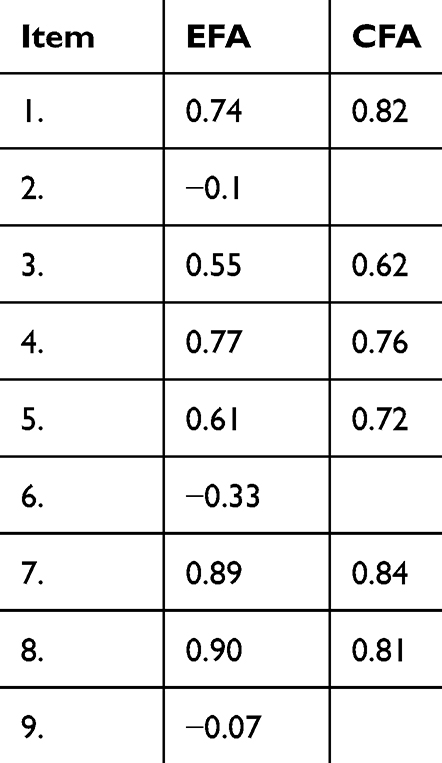 |
Table 1 Loading Factors of the Arabic Version of the Irrational Procrastination Scale Items Obtained From the Exploratory and Confirmatory Factor Analyses |
Measurement Invariance Across Sex
Sex invariance of the IPS was shown at all levels (Table 2). No significant difference was found between males (Median = 18; IQR = 9) and females (Median = 18; IQR = 9.50) in terms of IPS scores, p = 0.056, Cohen’s d = 0.18.
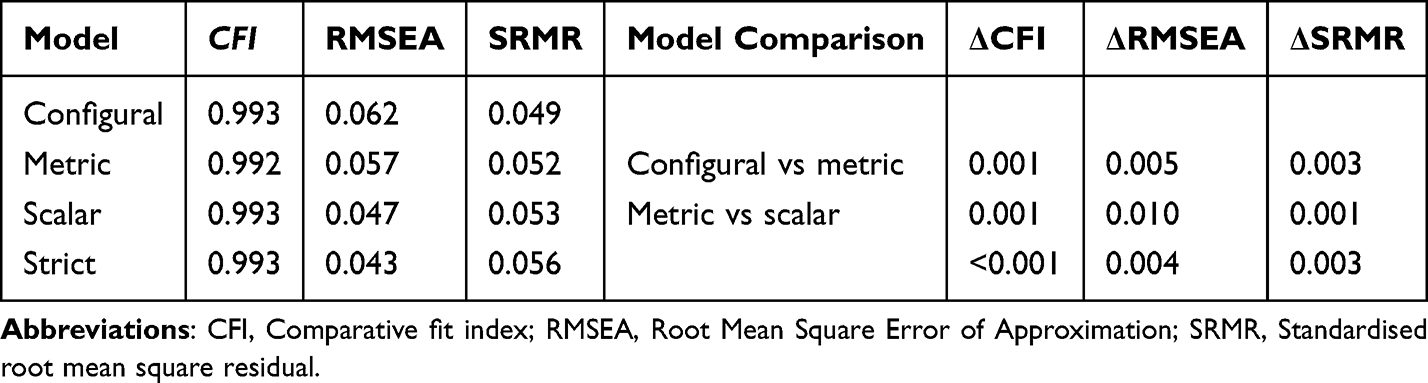 |
Table 2 Measurement Invariance Across Sex in the Total Sample |
Concurrent Validity
Higher time perspective dimensions’ scores, namely past negative (rho = 0.37; p <0.001), past positive (rho = 0.54; p <0.001), present fatalistic (rho = 0.53; p <0.001) and present hedonistic (rho = 0.52; p <0.001), were significantly associated with higher irrational procrastination. Furthermore, higher future focused scores were significantly associated with lower irrational procrastination (rho = −0.10; p = 0.010).
Discussion
The assessment of procrastination in the Arab world is nearly nonexistent, and there is a scarcity of data regarding the levels of this variable among this culture and across sex. Our study is the first to validate the IPS into the Arabic language. The results showed that the Arabic version suggested is valid, reliable, and can be applied to the adult population as a self-reporting tool and can be safely considered a reliable translation of the IPS scale.
Factor analysis revealed that the Arabic version of the scale has a one-dimensional structure composed of the six positively worded items only. Previous findings on factor structure of the IPS yielded mixed findings. According to Steel, the IPS appears to measure procrastination as a single attribute.32 The Swedish version concluded to a two-factor model but noted that a unidimensional model is more plausible and that the second factor is due to reverse items in the scale. Authors suggested that more research should be done to rephrase or reconstruct these items to become clearer.57 Our analysis yielded a modified CFA model, omitting items 2, 6 and 9. Notably, these three items are reverse-scored in the original scale, and their weak performance is consistent with findings from previous studies. While Shaw and Zhang58 retained them in Rasch analysis, they confirmed these items weaken the scale’s psychometric performance, supporting the decision to drop them to improve clarity, reliability and model fit. They concluded that this pattern reflected a statistical artifact of item wording rather than a substantive multidimensionality of procrastination. Similarly, Ilhan et al59 demonstrated that reverse-scored items frequently distort scale structure by producing an artificial factor, thereby threatening unidimensionality and reducing internal consistency. They further noted that reverse items constructed with negations (eg, “not”, “no”), are particularly prone to misinterpretation, increasing response error. All these findings support the decision to exclude the three problematic items, which resulted in a more parsimonious six-item solution that preserved the unidimensionality and improved the psychometric robustness of the IPS. While our results align with the Swedish and German validations of the IPS in terms of factor structure and reliability, it is important to acknowledge region-specific influences that may shape the procrastination behaviors. In particular, the current socioeconomic instability and the sense of fatalism, well documented in the Arab populations, may amplify procrastinatory tendencies by fostering perceptions of limited sense of control over life outcomes and reduced future orientation.
Our analysis showed a good internal reliability of the six-item scale (α and ω = 0.89). This indicates that the retained items measure a single, coherent construct with high reliability. These findings are consistent with the original validation of the 9-item IPS, where internal consistency estimates typically ranged from 0.85 to 0.91 across samples.10 Notably, the shortened 6-item version achieved comparable reliability to the full scale, suggesting that the removal of reverse-worded items did not weaken the psychometric properties of the instrument. In the Spanish adaptation of the IPS,34 internal consistency was excellent (α = 0.90). The fact that the shorter IPS achieves this degree of reliability with fewer items highlights its efficiency. This makes the 6-item IPS especially suitable for use in large-scale surveys or applied settings where brevity is crucial, without compromising measurement quality.
The IPS was found to be invariant across sex groups at the configural, metric, scalar and strict levels of the IPS. This means that the Arabic version can be used in assessing procrastination regardless of sex boundaries, which is consistent with other versions of the scale like the Spanish,34 Brazilian37 and Swedish57 versions. Research done in sex differences regarding procrastination lead to mixed results. Some studies suggested small differences between males and females in procrastination tendencies and others concluded no significant difference.40 This variation in results could be due to differences in culture.60 In western countries such as Spain, studies showed that males tend to procrastinate more than females.61 Similar conclusions were met in Saudi Arabia.62 On the other side, a study by Steel and Ferrari in 2013 conducted on a global sample concluded that females tended to procrastinate slightly more than males, but the difference was not that significant.40 That is why it is essential to treat procrastination as a multifaced behavior that depends on many factors from personality traits to social norms and individual beliefs.
Furthermore, and based on previous literature suggesting a close relationship between someone’s time perspective and the tendency to procrastinate,63 concurrent validity of the IPS was demonstrated through correlations in the expected direction with ZTPI scores. Past negative, past positive, present fatalistic and present hedonistic scores were significantly associated with higher irrational procrastination. According to Steel, procrastinators are hostile and rebellious which contrasts with the agreeable and happy energy of the past positive-oriented people.10 Also, Steel stated that procrastinators are more prone to anxiety and depression, which corresponds to the past negative narrative.64 In a 2007 study, it was found that past positive and past negative time perspectives were unrelated to procrastination tendencies, but a 2008 study suggested that past positive is the only one that is unrelated to procrastination and others concluded that more research should be done because our understanding of the relationship between past perspectives and procrastination was immature.65,66 Our results are consistent, however, with recent studies, like Gupta et al, stating that past orientations are shown to have significant procrastination scores.67 From their side, Dewitte and Schouwenburg stated that present hedonistic people, who believe in living the moment and tend to not do sacrifices in their present that show rewards in the future, are at a higher risk of procrastination, which is consistent with our results.68 Milgram and Tenne stated that present-fatalistic people tend to experience high procrastination due to their task evasiveness and emotional instability, which supports our findings.64 On another side, the future perspective, which implies careful planning and work organization was concluded to have lower procrastination scores according to Gupta et al and these results also align with ours.67
Study Limitations
Several limitations can be noted in this study. First, this study has a cross-sectional design, making it difficult to assess predictive validity of the IPS. Secondly, due to technical difficulties, data was collected by snowball sampling, which can predispose our research to a selection bias. Thirdly, participants answered the questions related to the study in a self-reported fashion and were not interviewed by a professional physician or specialist of the field, predisposing us to an information bias and requiring the interpretation of the data to be with caution even though the scale validated was internationally used. That is why exclusive reliance on self-report instruments may introduce response biases such as social desirability or recall bias. Further research could address this issue by adding behavioral measures, reports, or experimental paradigms to fully assess procrastination. Fourth, a clear difference in representation between females and males was noted, necessitating more studies to assess a more robust relationship between sex alterability and variables cited in our study. Fifthly, to build a stronger validity of the scale scores, future studies should include other means of measurement of procrastination and correlate self-reported scores to objective assessment of procrastination. Another limitation of this study is the exclusive reliance on self-report measures of procrastination. Although the IPS has shown strong psychometric properties, self-report data may be subject to biases such as social desirability. Future research should consider incorporating objective behavioral indicators of procrastination (eg, task initiation latency, assignment submission records) to complement self-reported tendencies and provide a more comprehensive assessment. Another limitation is that test–retest reliability was not assessed. Although internal consistency was excellent, future studies should evaluate the temporal stability of the Arabic IPS over time. While advanced approaches such as neural network analysis may provide interesting perspectives for pattern recognition and classification in future studies, they go beyond the current aims of validating the Arabic version of the IPS as a psychometric tool.
Clinical Implications
The current study offers clinicians and mental health professionals a simple and reliable tool that can help assess the construct of procrastination among Arabic-speaking populations. Pending further validation studies in other Arab countries and cultures, this accessible instrument might contribute to comparison between cultures and allow Middle East-based scientists to measure this often-underdiagnosed psychological phenomenon. Beyond assessment, the Arabic IPS can guide clinical interventions by identifying individuals at risk, informing psychoeducation, and supporting strategies to enhance self-regulation, time management, and goal-directed behavior. Also, early detection and good management of procrastination decreases maladaptive mechanisms and possibly reduces failure at the economic, social, academic and relational levels. Providing a tool for the assessment of procrastination is essential in the fight against its debilitating effects and can potentially help reduce rates of stress, anxiety and depression. Ultimately, its use can contribute to improving academic, occupational, and relational outcomes while serving as a foundation for future studies aimed at establishing a robust, culturally sensitive framework for clinical assessment of procrastination. This study does not shed light on the mechanisms underlying the observed differences. Future cross-cultural studies should therefore test cultural values, educational practices and socioeconomic conditions as potential moderators of the procrastination-outcome link.
Conclusion
The Arabic version of the IPS can be used as a screening tool to assess procrastination in adult populations. Given its psychometric soundness, it may serve as a valuable resource for researchers and mental health professionals working with Arabic-speaking populations, particularly in educational and clinical settings where procrastination is a common and often underassessed issue. Further research is needed to determine whether this unidimensionality is stable across different Arabic-speaking contexts and to clarify its implications in both theory and clinical applications. Longitudinal studies would be valuable to assess the predictive validity of the scale and examine how procrastination tendencies evolve over time. Also, incorporating objective and behavioral measures of procrastination, alongside self-reported instruments, could address potential biases and provide a more comprehensive assessment. Beyond its value as a screening instrument, the scale has potential applications in the clinical background, where it may facilitate early identification of maladaptive procrastination and help in the design of targeted psychological interventions. Furthermore, its use in research can contribute to a deeper understanding of the cultural, psychological and social determinants of procrastination, helping cross-cultural comparisons and supporting the development of evidence-based strategies to mitigate its impact.
Data Sharing Statement
All data generated or analyzed during this study are not publicly available due to restrictions from the ethics committee but are available upon a reasonable request from the corresponding author (Souheil Hallit; [email protected]).
Ethics Approval and Consent to Participate
Ethics approval for this study was obtained from the ethics committee of the School of Pharmacy at the Lebanese International University (2023RC-017-LIUSOP). Written informed consent was obtained from all subjects; the online submission of the soft copy was considered equivalent to receiving a written informed consent. All methods were performed in accordance with the relevant guidelines and regulations.
Acknowledgments
The authors would like to thank all participants and Dr Kamel Jebreen for his help in the statistical analysis and intellectual review of the paper. Sahar Obeid, Souheil Hallit and Feten Fekih-Romdhane are last coauthors. This paper has been uploaded to Research Square as a preprint: https://www.researchsquare.com/article/rs-4000702/v1.
Author Contributions
All authors made a significant contribution to the work reported, whether that is in the conception, study design, execution, acquisition of data, analysis and interpretation, or in all these areas; took part in drafting, revising or critically reviewing the article; gave final approval of the version to be published; have agreed on the journal to which the article has been submitted; and agree to be accountable for all aspects of the work.
Disclosure
The authors report no conflicts of interest in this work.
References
1. Duru E, Balkis M. Procrastination, self-esteem, academic performance, and well-being: a moderated mediation model. Int J Educ Psychol. 2017;6(2):97–119. doi:10.17583/ijep.2017.2584
2. Zhao J, Meng G, Sun Y, Geng J, Han L, Han L. The relationship between self-control and procrastination based on the self-regulation theory perspective: the moderated mediation model. Curr Psychol. 2021;40(10):5076–5086. doi:10.1007/s12144-019-00442-3
3. Klingsieck KB. Procrastination. Eur Psychol. 2013;18(1):24–34. doi:10.1027/1016-9040/a000138
4. Chauhan RS, MacDougall AE, Buckley MR, Howe DC, Crisostomo ME, Zeni T. Better late than early? Reviewing procrastination in organizations. Management Research Review. 2020;43(10):1289–1308. doi:10.1108/MRR-09-2019-0413
5. Sabini J, Silver M Moralities of Everyday Life. New York: Oxford University Press; 1982.
6. Johansson F, Rozental A, Edlund K, et al. Associations between procrastination and subsequent health outcomes among university students in Sweden. JAMA Network Open. 2023;6(1):e2249346–e2249346. doi:10.1001/jamanetworkopen.2022.49346
7. Bodalski EA, Flory K, Canu WH, Willcutt EG, Hartung CM. ADHD symptoms and procrastination in college students: the roles of emotion dysregulation and self-esteem. Journal of Psychopathology and Behavioral Assessment. 2023;45(1):48–57. doi:10.1007/s10862-022-09996-2
8. Ferrari JR, Díaz-Morales JF. Procrastination and mental health coping: a brief report related to students. Individual Differences Research. 2014;12(1):8–11. doi:10.65030/idr.12002
9. Rahimi S, Hall NC, Sticca F. Understanding academic procrastination: a longitudinal analysis of procrastination and emotions in undergraduate and graduate students. Motivation Emotion. 2023;2023:1–21.
10. Steel P. The nature of procrastination: a meta-analytic and theoretical review of quintessential self-regulatory failure. Psychol Bull. 2007;133(1):65. doi:10.1037/0033-2909.133.1.65
11. Rinaldi AR, Roper CL, Mehm J. Procrastination as evidence of executive functioning impairment in college students. Applied Neuropsychology: Adult. 2021;28(6):697–706. doi:10.1080/23279095.2019.1684293
12. Odaci H. Academic self-efficacy and academic procrastination as predictors of problematic internet use in university students. Comput Educ. 2011;57(1):1109–1113. doi:10.1016/j.compedu.2011.01.005
13. Beutel ME, Klein EM, Aufenanger S, et al. Procrastination Distress and Life Satisfaction across the Age Range - A German Representative Community Study. PLoS One. 2016;11(2):e0148054. doi:10.1371/journal.pone.0148054
14. Koppenborg M, Klingsieck KB. Group work and student procrastination. Learn Individual Differences. 2022;94:102117. doi:10.1016/j.lindif.2022.102117
15. Alblwi A, McAlaney J, Al Thani DAS, Phalp K, Ali R. Procrastination on social media: predictors of types, triggers and acceptance of countermeasures. Social Net Anal Mining. 2021;11(1):19. doi:10.1007/s13278-021-00727-1
16. Shadwell J, Matyas J, Escamilla G. IQ as an Indicator of Academic Stress, Study Habits, and Academic Success. Journal of Student Research. 2023;12(3). doi:10.47611/jsrhs.v12i3.4745
17. Derakhshan M, Maktabi GH, Alizadeh M, Abdi Shahivand S. Investigating the relationship between intelligence believe and academic procrastination with mediating role of social cognition. Education Strategies in Medical Sciences. 2022;15(2):100–110.
18. Deniz M, Tras Z, Aydogan D. An investigation of academic procrastination, locus of control, and emotional intelligence. Educational Sciences: Theory and Practice. 2009;9(2):623–632.
19. Kamran W, Fatima I. Emotional intelligence, anxiety and procrastination in intermediate science students. Pakistan Journal of Social and Clinical Psychology. 2013;11(2):3.
20. Steel P, Svartdal F, Thundiyil T, Brothen T. Examining procrastination across multiple goal stages: a longitudinal study of temporal motivation theory. Front Psycho. 2018;9:327. doi:10.3389/fpsyg.2018.00327
21. Kim KR, Seo EH. The relationship between procrastination and academic performance: a meta-analysis. Pers Individ Dif. 2015;82:26–33. doi:10.1016/j.paid.2015.02.038
22. Metin UB, Peeters MCW, Taris TW. Correlates of procrastination and performance at work: the role of having “good fit”. J Prev Interv Community. 2018;46(3):228–244. doi:10.1080/10852352.2018.1470187
23. Svartdal F, Steel P. Irrational Delay Revisited: examining Five Procrastination Scales in a Global Sample. Front Psychol. 2017;8:1927. doi:10.3389/fpsyg.2017.01927
24. Pychyl TA, Sirois FM. Procrastination, emotion regulation, and well-being. In: Procrastination, Health, and Well-Being. Elsevier; 2016:163–188.
25. Siah PC, Murugan L, Loo LQ, Tan MT, Tan SM. Sense of Coherence and Academic Procrastination: coping Strategies as Mediators. Journal of Institutional Research South East Asia. 2022;20(2):1.
26. Yang X, Liu R-D, Ding Y, Hong W, Jiang S. The relations between academic procrastination and self-esteem in adolescents: a longitudinal study. Curr Psychol. 2021;2021:1–15.
27. LaSalle-Castro R. The Development of Procrastination: Anxiety, Effortful Control, Avoidance Coping, and the Protective Influence of Executive Functioning. NORTHRIDGE: CALIFORNIA STATE UNIVERSITY; 2023.
28. Gutic M, Vukcevic B, Milidrag A, Bulatovic I, Safiye T. Procrastination and Mental Health Status Among Students in Serbia: a Cross-Sectional Study. J Educ Psychol Res. 2023;5(1):632–637.
29. Maria-Ioanna A, Patra V. The role of psychological distress as a potential route through which procrastination may confer risk for reduced life satisfaction. Curr Psychol. 2022;41(5):2860–2867. doi:10.1007/s12144-020-00739-8
30. Zhang JW, Howell RT, Bowerman T. Validating a brief measure of the Zimbardo Time Perspective Inventory. Time Soc. 2013;22(3):391–409. doi:10.1177/0961463X12441174
31. Steel P. Arousal, avoidant and decisional procrastinators: do they exist? Pers Individ Dif. 2010;48(8):926–934. doi:10.1016/j.paid.2010.02.025
32. Steel PDG. The Measurement and Nature of Procrastination. University of Minnesota; 2002.
33. Shaw A, Zhang JJ. Psychometric properties of the Chinese Irrational Procrastination Scale: factor structure and measurement invariance across gender. Frontiers in Psychology. 2021;12:768581. doi:10.3389/fpsyg.2021.768581
34. Guilera G, Barrios M, Penelo E, Morin C, Steel P, Gomez-Benito J. Validation of the Spanish version of the Irrational Procrastination Scale (IPS). PLoS One. 2018;13(1):e0190806. doi:10.1371/journal.pone.0190806
35. Kim H, Kim H, Lee W-K, Han S, Carlbring P, Rozental A. Assessing procrastination in Korean: a study of the translation and validation of the pure procrastination scale and a reexamination of the irrational procrastination scale in a student and community sample. Cogent Psychology. 2020;7(1):1809844. doi:10.1080/23311908.2020.1809844
36. Klepikova N, Kormacheva I. Adaptation of the procrastination scale and the irrational procrastination scale in P. Steel’s technique. СИСТЕМНАЯ ПСИХОЛОГИЯ И СОЦИОЛОГИЯ. 2019;3:31.
37. RZd R, Almeida CRS, Dias ACG. Pure Procrastination Scale e Irrational Procrastination Scale: validation of a brazilian version. Psico-USF. 2021;26(3):507–518. doi:10.1590/1413-82712021260309
38. Svartdal F, Pfuhl G, Nordby K, et al. On the measurement of procrastination: comparing two scales in six European countries. Front Psycho. 2016;7:1307. doi:10.3389/fpsyg.2016.01307
39. Svartdal F. Measuring procrastination: psychometric properties of the Norwegian versions of the Irrational Procrastination Scale (IPS) and the Pure Procrastination Scale (PPS). Scand J Educ Res. 2017;61(1):18–30. doi:10.1080/00313831.2015.1066439
40. Steel P, Ferrari J. Sex, education and procrastination: an epidemiological study of procrastinators’ characteristics from a global sample. European Journal of Personality. 2013;27(1):51–58. doi:10.1002/per.1851
41. Solomon LJ, Rothblum ED. Academic procrastination: frequency and cognitive-behavioral correlates. J Counseling Psychol. 1984;31(4):503. doi:10.1037/0022-0167.31.4.503
42. Awad E, El Othman R, Hallit S, Obeid S. Association Between Personality Traits and Procrastination and the Mediating Effect of Emotional Intelligence in Lebanese Medical Students. The Primary Care Companion for CNS Disorders. 2023;25(2):46422. doi:10.4088/PCC.22m03246
43. El Zouki C-J, Chahine A, Mhanna M, Obeid S, Hallit S. Rate and correlates of post-traumatic stress disorder (PTSD) following the Beirut blast and the economic crisis among Lebanese University students: a cross-sectional study. BMC Psychiatry. 2022;22(1):532. doi:10.1186/s12888-022-04180-y
44. Mhanna M, El Zouki C-J, Chahine A, Obeid S, Hallit S. Dissociative experiences among Lebanese university students: association with mental health issues, the economic crisis, the COVID-19 pandemic, and the Beirut port explosion. PLoS One. 2022;17(11):e0277883. doi:10.1371/journal.pone.0277883
45. Hambleton RK. The next generation of the ITC Test Translation and Adaptation Guidelines. European Journal of Psychological Assessment. 2001;17(3):164. doi:10.1027//1015-5759.17.3.164
46. Fekih-Romdhane F, Kanj G, Obeid S, Hallit S. Psychometric properties of an Arabic translation of the brief version of the difficulty in emotion regulation scale (DERS-16). BMC Psychology. 2023;11(1):72. doi:10.1186/s40359-023-01117-2
47. Fekih-Romdhane F, Chahine A, Mhanna M, El Zouki CJ, Obeid S, Hallit S. Psychometric properties of an Arabic translation of the briefest version of the Zimbardo time perspective inventory (ZTPI-15). BMC Psychiatry. 2023;23(1):338. doi:10.1186/s12888-023-04815-8
48. R Core Team. R: A Language and Environment for Statistical Computing. 2021.
49. Rosseel Y. lavaan: an R Package for Structural Equation Modeling. Journal of Statistical Software. 2012;48(2):1–36. doi:10.18637/jss.v048.i02
50. Jorgensen T, Pornprasertmanit S, Schoemann A, Rosseel Y. semTools: useful Tools for Structural Equation Modeling [R package semTools version 0.5-4]. CRAN. 2021;2021:1.
51. Hair JF Jr., Black WC, Babin BJ, Anderson RE Multivar Data Anal.
52. Timmerman ME, Lorenzo-Seva U. Dimensionality assessment of ordered polytomous items with parallel analysis. Psychological Methods. 2011;16(2):209. doi:10.1037/a0023353
53. Tabachnick BG, Fidell LS, Ullman JB. Using Multivariate Statistics. Boston, MA: Pearson. 2013;Vol. 6
54. Lt H, Bentler PM. Cutoff criteria for fit indexes in covariance structure analysis: conventional criteria versus new alternatives. Structural Equ Modeling. 1999;6(1):1–55. doi:10.1080/10705519909540118
55. Vandenberg RJ, Lance CE. A review and synthesis of the measurement invariance literature: suggestions, practices, and recommendations for organizational research. Organizational Res Methods. 2000;3(1):4–70. doi:10.1177/109442810031002
56. Chen FF. Sensitivity of goodness of fit indexes to lack of measurement invariance. Structural Equ Modeling. 2007;14(3):464–504. doi:10.1080/10705510701301834
57. Rozental A, Forsell E, Svensson A, Forsstrom D, Andersson G, Carlbring P. Psychometric evaluation of the Swedish version of the pure procrastination scale, the irrational procrastination scale, and the susceptibility to temptation scale in a clinical population. BMC Psychol. 2014;2(1):54. doi:10.1186/s40359-014-0054-z
58. Shaw A, Zhang JJ. A Rasch Analysis of the Irrational Procrastination Scale (IPS). Front Psychol. 2020;11:615341. doi:10.3389/fpsyg.2020.615341
59. Ilhan M, Güler N, Teker GT, Ergenekon Ö. The effects of reverse items on psychometric properties and respondents’ scale scores according to different item reversal strategies. Int Jf Assessment Tools Educ. 2024;11(1):20–38. doi:10.21449/ijate.1345549
60. Aznar-Diaz I, Romero-Rodriguez JM, Garcia-Gonzalez A, Ramirez-Montoya MS. Mexican and Spanish university students’ Internet addiction and academic procrastination: correlation and potential factors. PLoS One. 2020;15(5):e0233655. doi:10.1371/journal.pone.0233655
61. Valenzuela R, Codina N, Pestana JV. GENDER-DIFFERENCES IN UNIVERSITY STUDENTS’SELF-REGULATION AND PROCRASTINATION: THE ROLE OF PHYSICAL ACTIVITY AND ITS CHARACTERISTICS. In:
62. Dardara E, Al-Makhalid KA. Procrastination, negative emotional symptoms, and mental well-being among college students in Saudi Arabia. Annals of Psychology. 2022;2022:17–24.
63. Díaz-Morales JF, Ferrari JR. More time to procrastinators: the role of time perspective. In: Time Perspective Theory; Review, Research and Application: Essays in Honor of Philip G Zimbardo. edn: Springer; 2014:305–321.
64. Stolarski M, Fieulaine N, Van Beek W. Time Perspective Theory: Review, Research and Application. Springer; 2015.
65. Díaz-Morales JF, Ferrari JR, Cohen JR. Indecision and avoidant procrastination: the role of morningness—eveningness and time perspective in chronic delay lifestyles. The Journal of General Psychology. 2008;135(3):228–240. doi:10.3200/GENP.135.3.228-240
66. Drake L, Duncan E, Sutherland F, Abernethy C, Henry C. Time perspective and correlates of wellbeing. Time Soc. 2008;17(1):47–61. doi:10.1177/0961463X07086304
67. Gupta R, Hershey DA, Gaur J. Time perspective and procrastination in the workplace: an empirical investigation. Curr Psychol. 2012;31(2):195–211. doi:10.1007/s12144-012-9136-3
68. Dewitte S, Schouwenburg HC. Procrastination, temptations, and incentives: the struggle between the present and the future in procrastinators and the punctual. European Journal of Personality. 2002;16(6):469–489. doi:10.1002/per.461
 © 2025 The Author(s). This work is published and licensed by Dove Medical Press Limited. The
full terms of this license are available at https://www.dovepress.com/terms
and incorporate the Creative Commons Attribution
- Non Commercial (unported, 4.0) License.
By accessing the work you hereby accept the Terms. Non-commercial uses of the work are permitted
without any further permission from Dove Medical Press Limited, provided the work is properly
attributed. For permission for commercial use of this work, please see paragraphs 4.2 and 5 of our Terms.
© 2025 The Author(s). This work is published and licensed by Dove Medical Press Limited. The
full terms of this license are available at https://www.dovepress.com/terms
and incorporate the Creative Commons Attribution
- Non Commercial (unported, 4.0) License.
By accessing the work you hereby accept the Terms. Non-commercial uses of the work are permitted
without any further permission from Dove Medical Press Limited, provided the work is properly
attributed. For permission for commercial use of this work, please see paragraphs 4.2 and 5 of our Terms.
Recommended articles

Cultural Adaptation, Reliability and Validation of the Arabic Örebro Musculoskeletal Pain Questionnaire in Patients with Low Back Pain
Alanazi F, Alrwaily M
Journal of Pain Research 2023, 16:317-325
Published Date: 1 February 2023
Translation, Cross-Cultural Adaptation, and Psychometric Properties of the Revised Fibromyalgia Impact Questionnaire (FIQR) for Use in Arabic-Speaking Patients in Saudi Arabia
Alaujan SS, Almalag HM, Almazrou SH, Alkhudair NA, Alodaibi FA, Omair MA
Patient Preference and Adherence 2024, 18:1017-1025
Published Date: 27 May 2024
The Creation of the Arabic Version of the Hyperhidrosis Quality of Life Index (HidroQoL©) with Validation and Cross-Cultural Adaptation
Almuhaideb QA, AbuDujain NM, Alghamdi KM
Clinical, Cosmetic and Investigational Dermatology 2025, 18:251-263
Published Date: 25 January 2025
Validation of the Thai Version of the Chronic Pain Acceptance Questionnaire-8 (CPAQ-8T) in Chronic Pain Patients
Pasutharnchat K, Seangrung R, Lertmongkonaksorn P, Kamdeang S
Journal of Pain Research 2025, 18:947-957
Published Date: 26 February 2025
Validation of the Arabic Version of the Fibromyalgia Survey Questionnaire
Chahine A, El Zouki CJ, Jebreen K, Ali I, Obeid S, El Tannoury BJ, Haroun R, Lahoud JC, Fekih-Romdhane F, Hallit S
Journal of Pain Research 2025, 18:5127-5140
Published Date: 30 September 2025