
Back to Journals » Clinical Ophthalmology » Volume 19
Performance of Delefilcon A Daily Disposable Contact Lenses in a Group of Digital Device Users
Authors Wong S  , Woods J , Schulze MM , Fadel D , Stahl U , Jones L
Received 1 April 2025
Accepted for publication 2 July 2025
Published 25 July 2025 Volume 2025:19 Pages 2439—2452
DOI https://doi.org/10.2147/OPTH.S531226
Checked for plagiarism Yes
Review by Single anonymous peer review
Peer reviewer comments 5
Editor who approved publication: Dr Scott Fraser
Stephanie Wong, Jill Woods, Marc-Matthias Schulze, Daddi Fadel, Ulrike Stahl, Lyndon Jones
Centre for Ocular Research & Education (CORE), School of Optometry & Vision Science, University of Waterloo, Waterloo, Canada
Correspondence: Stephanie Wong, Centre for Ocular Research & Education (CORE), School of Optometry & Vision Science, University of Waterloo, Waterloo, Canada, Tel +1 519-888-4742, Fax +1-519-888-4303, Email [email protected]
Purpose: To assess the performance of delefilcon A daily disposable contact lenses (CL) in lens wearers who reported heavy digital device use.
Patients and Methods: This prospective study involved lens wearers who used digital devices ≥ 8 hours per day. Delefilcon A CL were dispensed for 2-weeks, to be worn ≥ 5 days/week, ≥ 13 hours/day, using digital devices as normal. At-home questionnaires rating comfort, dryness, and clarity of vision (0– 100 scale, 100=best) were completed on Days 1, 7, and 14± 1 upon insertion, after 8 hours of device use, and before removal. At the Day 14 visit, participants rated overall comfort, dryness, and vision (0– 100 scale) and completed a 5-point Likert-type scale questionnaire.
Results: Thirty-five participants were eligible, 32 completed (27 females; age: 25.3± 6.3 years). Median at-home ratings for comfort, dryness, and vision were ≥ 85, with no difference between days (all p≥ 0.09). Ratings decreased throughout the day (p≤ 0.005), except comfort (Day 7) and vision (Days 1 and 7), where ratings before removal were similar to 8 hours of device use (p≥ 0.014). After 2-weeks, median (range) overall ratings for comfort, dryness, and vision were 96 (70– 100), 93 (50– 100), and 95 (75– 100), respectively. Most agreed the CL performed well, providing good comfort (91%) and vision all-day-long (94%), and did not have dryness with device use (69%). When devices were used ≥ 8 hours, most felt the CL performed well (84%), were satisfied with comfort (88%) and vision (88%), did not experience eye strain (81%), eye fatigue (66%), or episodes of blurred vision (75%).
Conclusion: Delefilcon A lenses provided high satisfaction levels among lens wearers who spent a significant portion of their day using digital devices. Participants rated the CL highly for comfort and vision throughout the day, with most reporting no issues with dryness, eye strain, or blurred vision while wearing lenses and using digital devices.
Keywords: comfort, vision, digital device, delefilcon A, daily disposable, contact lens
Introduction
Eye care practitioners prescribed silicone hydrogel lenses in 81% of soft contact lens (CL) fits in 2024.1 Some disadvantages of silicone hydrogel lenses that have been reported in the literature include being hydrophobic and requiring a surface treatment, surface coating, or wetting agent,2 increased modulus2 leading to mechanical complications,3,4 increased lipid deposits,5,6 and increased rates of corneal infiltrative events.7,8 However, one important reason for the popularity of silicone hydrogel CLs compared to hydrogel CLs is a higher level of oxygen permeability,9 which causes fewer hypoxic changes to the anterior portion of the eye.10 Although there can be significant health benefits to prescribing silicone hydrogel CLs, CL discontinuation continues to be a significant problem impacting eye care practitioners and their patients.11–14
A 2020 review reported that an average of 21.7% of new and established CL wearers choose to stop wearing lenses,14 with the primary reason being discomfort in established lens wearers.11,15 Approximately 22.4% to 26.6% of new soft lens wearers decide to discontinue wearing CLs over the first year.13,16 For new CL wearers, the most common reasons for stopping lens wear are related to vision problems (41%), poor distance vision (26%), poor near vision (16%), handling problems (25%) and discomfort (14–36%).13,16 One study conducted in Canada found 40% of people had stopped lens wear and out of these, 23% had permanently discontinued lens wear.11 The primary reasons for either temporarily or permanently stopping lens wear were discomfort (24%) and dryness (20%).11 As the amount of time that people spend using a digital device continues to increase, the likelihood of people potentially discontinuing CL wear due to the problems related to use of a digital device, such as binocular vision disorders,17 also increases. CL wearers are more prone to suffering from computer vision syndrome than those who do not wear lenses, with those who use computers for >6 hours per day more likely to have symptoms.18 Symptoms related to digital device use are due to multiple factors, including a decreased blink rate, incomplete closure of the eyelids during a blink, increased angle of gaze and poor wetting of the lens.19–24
The importance of choosing a suitable CL for digital device users was demonstrated in a recent study which investigated the use of a daily disposable silicone hydrogel lens (verofilcon A; PRECISION1®, Alcon Laboratories, Inc., Fort Worth, TX, USA) in a group of CL wearers that used daily disposable lenses for an average of 9.7 hours per day.25 The CL performance was rated highly after two weeks of wear, with mean ± standard deviation (SD) ratings of 91 ± 11 for comfort, 88 ± 11 for dryness, and 92 ± 9 for clarity of vision on a 0–100 scale, where 100 indicated the best rating. Most participants felt the lens provided all-day good comfort (88%) and vision (91%), and the majority were satisfied with the comfort (84%), vision (91%), and overall performance (81%) of the lenses when using digital devices for at least 6 hours.
A newer study investigated refitting habitual lens wearers who spent at least 8 hours each day using digital devices, with a monthly, silicone hydrogel CL (lehfilcon A; TOTAL30® Astigmatism, Alcon Laboratories, Inc., Fort Worth, TX, USA).26 The lenses performed well after 1 month, with 88% agreeing that the lenses provided good performance when using a digital device for at least 8 hours, 77% were satisfied with the comfort and 83% were satisfied with the vision after using devices for the same amount of time.
Based on these recent findings, the purpose of this study was to evaluate the subjective and clinical performance of a different silicone hydrogel CL (delefilcon A; DAILIES TOTAL1®, Alcon Laboratories, Inc., Fort Worth, TX, USA), in habitual CL wearers who use digital devices for ≥8 hours per day. This daily disposable material was the first of its kind to incorporate a water gradient that increases the water content to almost 100% at the lens surface. The design is more complex than the typical surface treatments associated with older generation silicone hydrogel lenses.27 The decreased surface modulus is highly wettable and has a longer in vitro break-up time compared to other leading daily disposable contact lenses (including verofilcon A).28 These lens characteristics are expected to be particularly advantageous for people who spend long hours using digital devices.
Materials and Methods
Study Design
This was a prospective, non-masked, open-label dispensing study involving habitual soft CL wearers who used digital devices for at least eight hours on a typical day. This study was conducted in compliance with the ethical principles of the Declaration of Helsinki, the International Council for Harmonisation of Technical Requirements for Pharmaceuticals for Human Use guideline for Good Clinical Practice (ICH E6 R2), the Tri-Council Policy Statement: Ethical Conduct for Research Involving Humans (2022), and the University of Waterloo’s guidelines for research with human participants. Ethics clearance was obtained from the Office of Research Ethics at the University of Waterloo prior to starting the study (Research Ethics Board # 46091). The study was registered with ClinicalTrials.gov (NCT06308666).
All participants signed the written informed consent form before any study measurements were performed. Participants attended three in-office study visits: Visit 1 (V1, Screening), Visit 2 (V2, Baseline and Lens Dispense), and Visit 3 (V3, Day 14 Follow-up). V1 and V2 occurred on the same day, with participants proceeding directly to V2 after V1 was completed. At the end of V2, participants were dispensed with the study lenses and asked to wear them for a minimum of 13 hours per day for at least 5 days per week, while maintaining digital device use for ≥8 hours per day. Participants were provided at-home questionnaires to be completed on three specific days during their two weeks of lens wear regarding their experience with the lenses at three different time points:
- Directly after lens insertion;
- After eight hours of digital device use;
- Just before lens removal.
The daily disposable study lenses were worn bilaterally and replaced with a new pair each day. No lens care solution was required or provided. Participants were not encouraged to use rewetting drops; any participants who habitually used rewetting drops were allowed to continue their use during the study. Participants attended V3 between 14 to 16 days after V2, having worn the study CLs for a minimum of 8 hours prior to the visit. Participants exited the study upon completion of V3.
Eligibility Criteria
Participants were eligible for inclusion in this study if they were between 18 to 40 years of age (inclusive) and had the full legal capacity to volunteer. The age was restricted to minimize the potential impact of presbyopia and pre-presbyopia on vision that could impact the subjective ratings. Participants routinely used digital devices for ≥8 hours per day using any combination of devices (including a PC, laptop, smartphone, or tablet) and habitually wore soft, spherical CLs on a daily wear basis for at least 13 hours per day, 5 days per week during the month prior to enrollment. The number of participants in the study was limited to a maximum of seven for each habitual CL material to ensure that participants with a range of lens material experiences were exposed to the study lenses. Participants were required to have a vertex-corrected spherical equivalent distance refraction between −0.50 to −9.00 DS in each eye and a vertex-corrected refractive cylinder of ≤0.75 DC in each eye. The study lenses needed to exhibit an acceptable fit and participants were required to have a visual acuity of at least +0.10 logMAR in each eye with the CLs.
Participants were excluded if they were current wearers of the study CL, wore bifocal or multifocal CLs, wore CLs on an extended wearer basis, or used monovision correction. Participants were also excluded if they were presbyopic, habitually used a reading addition for close work or if they met the diagnosis of dry eye disease based on the following combination:
- CLDEQ-8 score ≥12;
- And showed one of the following two signs:
- Sodium fluorescein staining (cornea >5 dots or conjunctiva >9 dots or lid margin >2mm length AND ≥25% width);
- Non-invasive break-up time <10 seconds assessed without contact lenses.
Other exclusion criteria included active ocular disease or infection, systemic conditions or medications that may affect a study outcome variable or contraindicate CL wear, refractive error surgery, and known sensitivity to sodium fluorescein. Participation in concurrent clinical or research studies involving intervention or invasive ocular tests were also excluded, as well as members of the study team directly involved in the study.
Study Lenses
Study lenses were available in powers ranging from −0.50 to −6.00 DS in 0.25 steps and −6.50 to −9.00 DS in 0.50 steps. Delefilcon A is a daily disposable, silicone hydrogel CL with 8.5 mm base curve and 14.1 mm diameter. The core water content is 33% and increases to nearly 100% at the surface. The water gradient lens has an oxygen transmissibility of Dk/t of 156 Barrer/cm for a −3.00DS lens and a modulus of 0.7 MPa.
Objective and Outcomes
The primary aim of this study was to assess the overall comfort, dryness, and clarity of vision after 2-weeks of study CL wear in lens wearers who reported frequent digital device use. Other exploratory outcomes included subjective ratings of comfort, dryness, and vision at different times of the day during the 2 weeks; Likert assessments of lens satisfaction; lens wearing time; lens fit; and safety assessments.
Study Procedures
Subjective Ratings
At the lens dispense visit (V2), participants were provided with at-home paper questionnaires to be completed at three times of the day regarding the comfort, dryness, and clarity of vision with the CLs. The first questionnaire of the day was filled out after CLs were inserted, the second one was completed after 8 hours of digital device use, and the final one was completed just before CL removal. These at-home questionnaires were completed on Day 1 (the day after V2), Day 7, and Day 14±1 (the day before V3). Participants provided a numerical value to rate their comfort, dryness, and clarity of vision using a 0 to 100 scale where 0 represented the worst performance and 100 represented the best performance. The scales included descriptive anchors for comfort (0 = “painful”, 100 = “ can’t feel the lenses”), dryness (0 = “extremely dry”, 100 = “no dryness”), and clarity of vision (0 = “very blurred”, 100 = “very clear”).
At V3, participants reported their overall experience with the lenses for a typical day in the previous two weeks when digital devices were used for a minimum of 8 hours. They were asked to rate again their overall comfort, dryness, and clarity of vision using the same 0 to 100 scale as described above, with 0 indicating the worst score and 100 being the best.
Likert Ratings
At V3, participants were also asked to rate their agreement to nine statements evaluating the lens performance with a 5-point Likert scale (strongly agree, slightly agree, neither disagree nor agree, slightly disagree, strongly disagree):
- The study lenses provide good vision all day long.
- The study lenses provide good comfort all day long.
- I am satisfied with the comfort the study lenses provide when I use digital devices for ≥8 hours.
- I am satisfied with the vision the study lenses provide when I use digital devices for ≥8 hours.
- I do not experience eye strain when I wear the study lenses and use digital devices for ≥8 hours.
- I do not experience eye fatigue (tired eyes) when I wear the study lenses and use digital devices for ≥8 hours.
- I do not experience episodes of blurred vision when I wear the study lenses and use digital devices for ≥8 hours.
- I do not experience dryness with digital device use.
- Overall, these lenses provide good performance when using digital devices for ≥8 hours.
Clinical Performance
CL fit was assessed with a slit-lamp biomicroscope at V2 and V3. Assessments of lens fit included centration, movement, and tightness. Lens centration was graded using a 0 to 3 scale (0 = optimal; 1 = slight decentration; 2 = moderate decentration but not encroaching limbus; 3 = excessive and occasionally encroaching limbus). Movement in primary gaze was assessed using a −2 to +2 scale (−2 = unacceptably tight; −1 = slightly tight but acceptable; 0 = optimal; +1 = slightly loose but acceptable; +2 = unacceptably loose). Lens tightness was investigated using a push-up test and graded as a percentage on a 0 to 100 scale (0 = falls from cornea without lid support; 50 = optimal; 100 = no movement).
The front surface wettability of the CL and deposits were also examined at V2 and V3 using a slit-lamp biomicroscope with 32x magnification. Wettability was assessed while viewing the quality of the Purkinje image using very low illumination and diffuse light. Deposits were investigated using low illumination and a moderate beam while scanning the CL for deposits. Wettability25,29–31 and deposits25 were graded on a 0 to 4 scale in 0.25 steps, with 0 being excellent.
Safety Assessments
The safety assessment in this study included the collection of any adverse events and product quality complaints from V1 onwards.
Statistical Analysis
The sample size of 32 participants was determined to be required to detect a 5-point change in subjective rating on a 0–100 scale (α=0.05, power 0.90, effect size 0.60).25 Data analysis was conducted using IBM SPSS Statistics version 29 (IBM, Armonk, NY, USA).
Statistical analysis showed that the majority of variables were not normally distributed (Shapiro–Wilk test; p<0.05); therefore, all data were analyzed using non-parametric statistics to maintain consistency. Wilcoxon matched pairs testing was performed to investigate differences between eyes and between habitual lenses and the study lens, with a significance level of α=0.05. For any assessments that were conducted separately for each eye, the right eye was used for analysis if there was no difference between the two eyes. Wilcoxon matched pairs testing was used to analyze differences between different time points, with a Bonferroni correction used to control for multiple comparisons and a p-value of <0.0056 was considered statistically significant.
Descriptive statistics were used to present the subjective ratings, wearing time lens fit, and lens surface assessments. Binomial testing was performed to analyze the 5-point Likert-type responses (strongly agree, slightly agree, neither agree nor disagree, slightly agree, strongly disagree). “Strongly agree” and “slightly agree” were combined into a single “agreement” category, while “strongly disagree” and “slightly disagree” were combined into a single “disagreement” category. Neutral answers of “neither disagree nor agree” were split evenly between the “agreement” and “disagreement” categories. Frequency and count are used to present this data.
Results
Participants
Forty-one habitual CL wearers were enrolled in the study and six were screen failures due to being symptomatic lens wearers with signs of dry eye. The CL wearers that were not suitable for the study had CLDEQ-8 scores ranging from 15 to 26, five had a median break-up time of 2.44 to 8.12 seconds in their worst eye, and the remaining person had >5 dots of corneal staining in both eyes. Of the 35 that were eligible and exposed to delefilcon A, three were discontinued (one due to unacceptable comfort, two due to no longer meeting the digital device requirement). Thirty-two participants completed the study (27 females, 5 males) and had a mean ± SD age of 25.3 ± 6.3 years (range 19–40).
Daily disposable CLs were habitually worn by 13 participants (41%) and 19 (59%) wore reusable lenses. The habitual CL material worn by each participant appears in Table 1. There was no significant difference between the number of hours habitual lenses were worn per day compared to the study lens (p=0.495, Table 2). Digital device usage significantly decreased from a median of 11 hours with habitual lenses to 10 hours with the study CLs (p=0.003, Table 2).
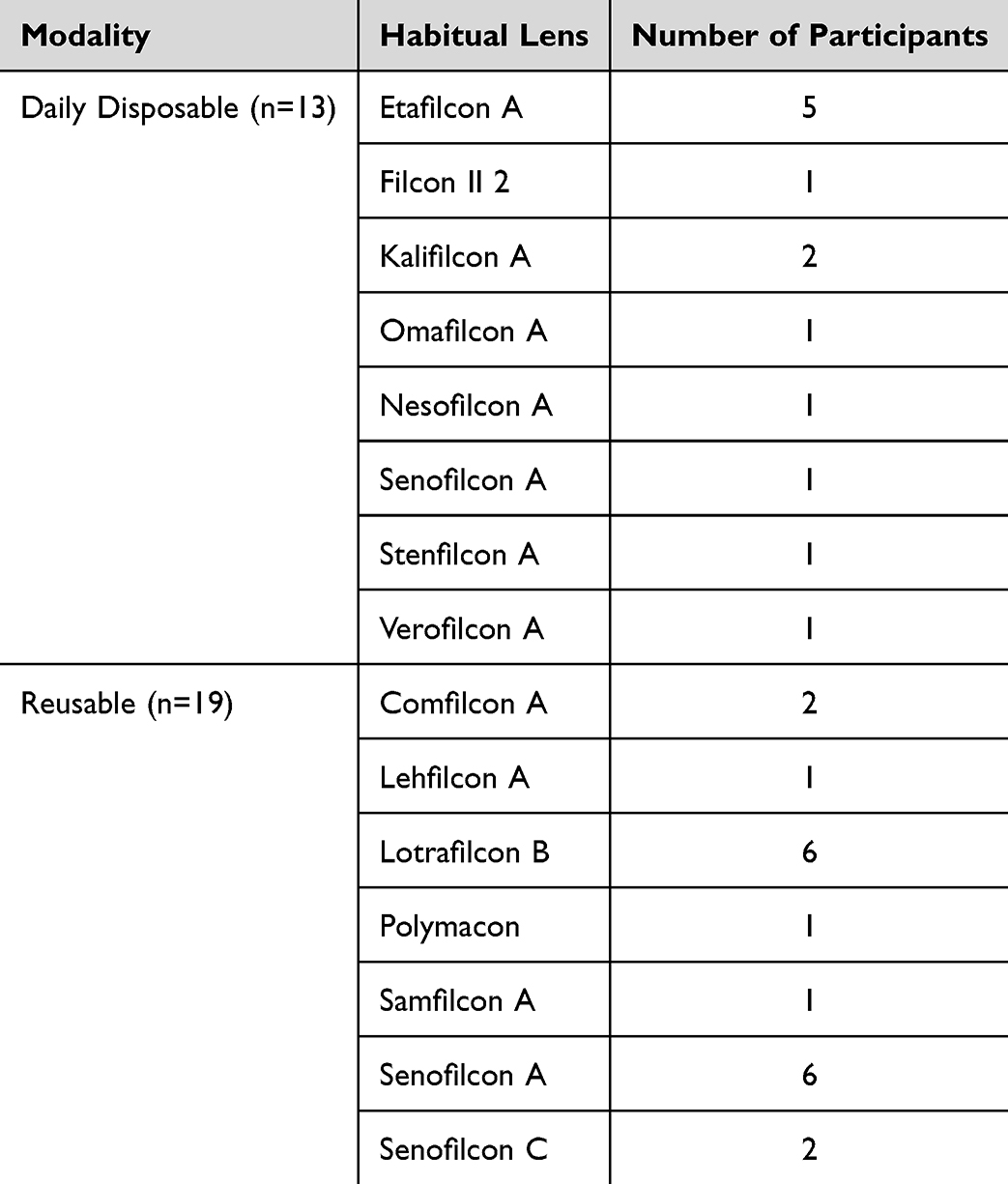 |
Table 1 Habitual Contact Lens Material |
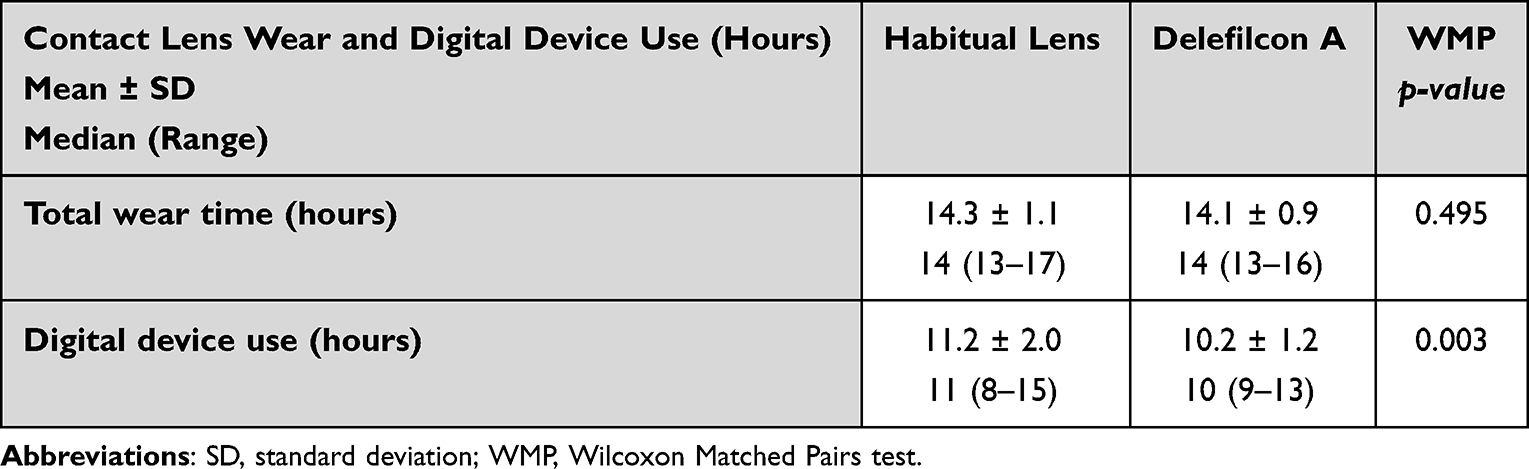 |
Table 2 Contact Lens Wear Time and Digital Device Use for a Typical Day with Habitual and Study Contact Lenses |
Eight participants habitually reported using rewetting drops at V1. Only six of these participants reported use of rewetting drops with the study lenses. For those who reported using drops with delefilcon A, 50% reduced their use of drops and the remaining 50% used the same amount as with their habitual lenses. No additional participants reported use of rewetting drops during the study.
Subjective Ratings
Overall
Figure 1 shows subjective ratings reported at the Day 14 visit for overall comfort, overall dryness, and overall clarity of vision during a typical lens wear day when digital devices were used for ≥8 hours. Delefilcon A was rated highly for all three categories with median (range) values of 96 (70–100) for comfort, 93 (50–100) for dryness, and 95 (75–100) for vision.
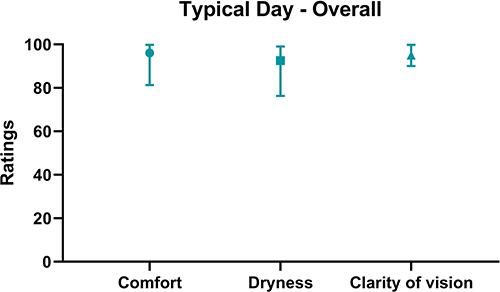 |
Figure 1 Median ratings (0–100, with 100 being best) for overall comfort, overall dryness, and overall clarity of vision during a typical day of lens wear. Symbols represent the median and error bars indicate the interquartile range. |
At-Home Ratings
Figure 2 show the median ratings of comfort, dryness and clarity of vision collected at three different times of the day on three separate days. All ratings were high, with median values of ≥85 at each time point (Table 3). There were no statistically significant differences between ratings obtained at each time of day on separate days (comfort: all p≥0.10; dryness: p≥0.11; vision: all p≥0.09). However, there was a significant reduction in comfort and dryness over the course of the day, with the highest ratings at insertion, followed by ≥8 hours of digital device use and the lowest ratings prior to CL removal (comfort: all p≤0.004, dryness: all p≤0.003), with the exception of Day 7 which had no significant difference between the comfort at ≥8 hours versus just prior to removal (p=0.014). Vision ratings also significantly decreased over the day (all p≤0.005), except for Days 1 and 7 where there was no significant difference between the vision at ≥8 hours of digital device use compared to just before removal (p≥0.017).
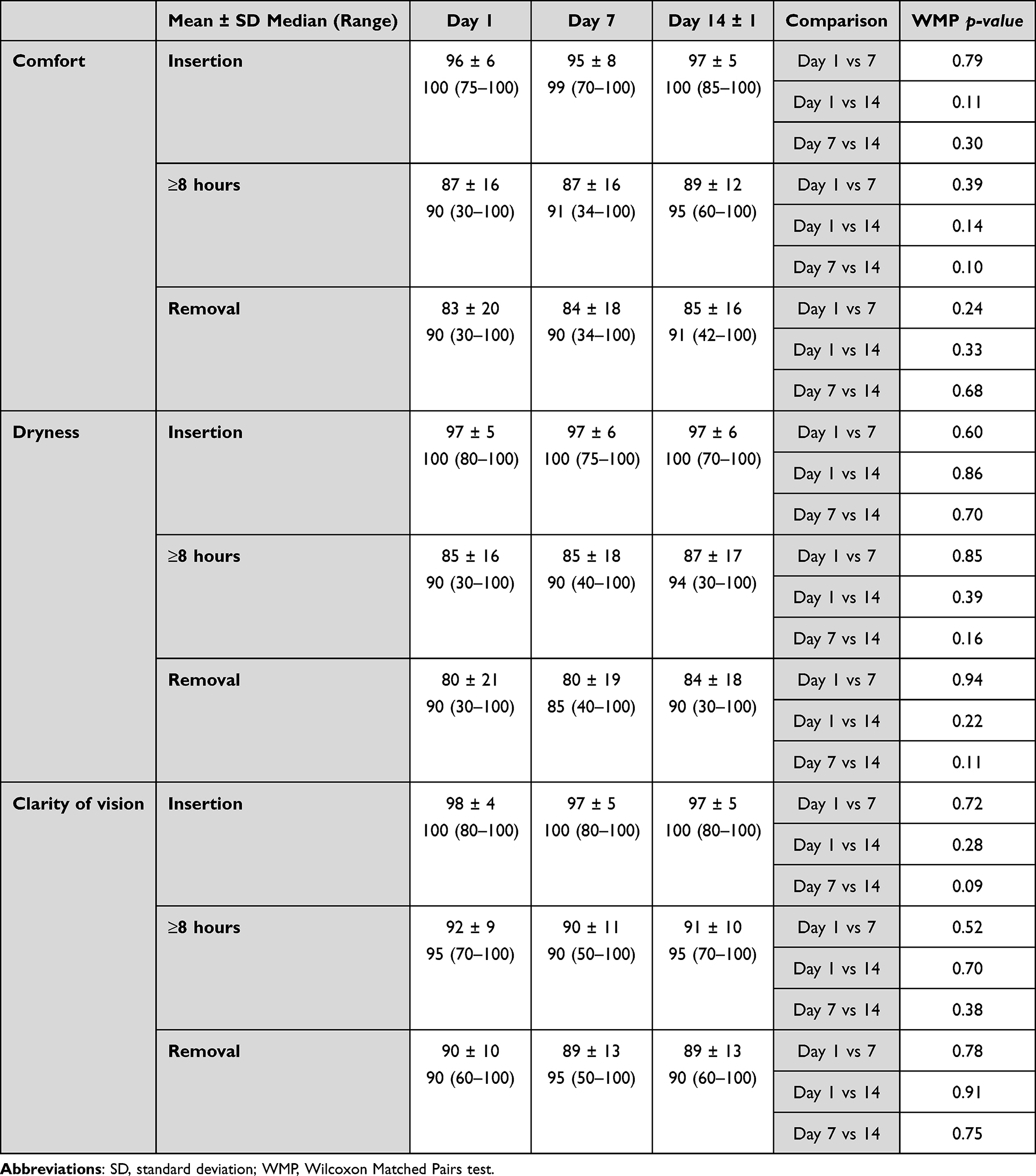 |
Table 3 At-Home Comfort, Dryness, and Clarity of Vision Ratings for Day 1, Day 7, and Day 14 ± 1 at Three Time Points (After Insertion, After At Least 8 Hours of Digital Device Use, and Just Before Lens Removal) |
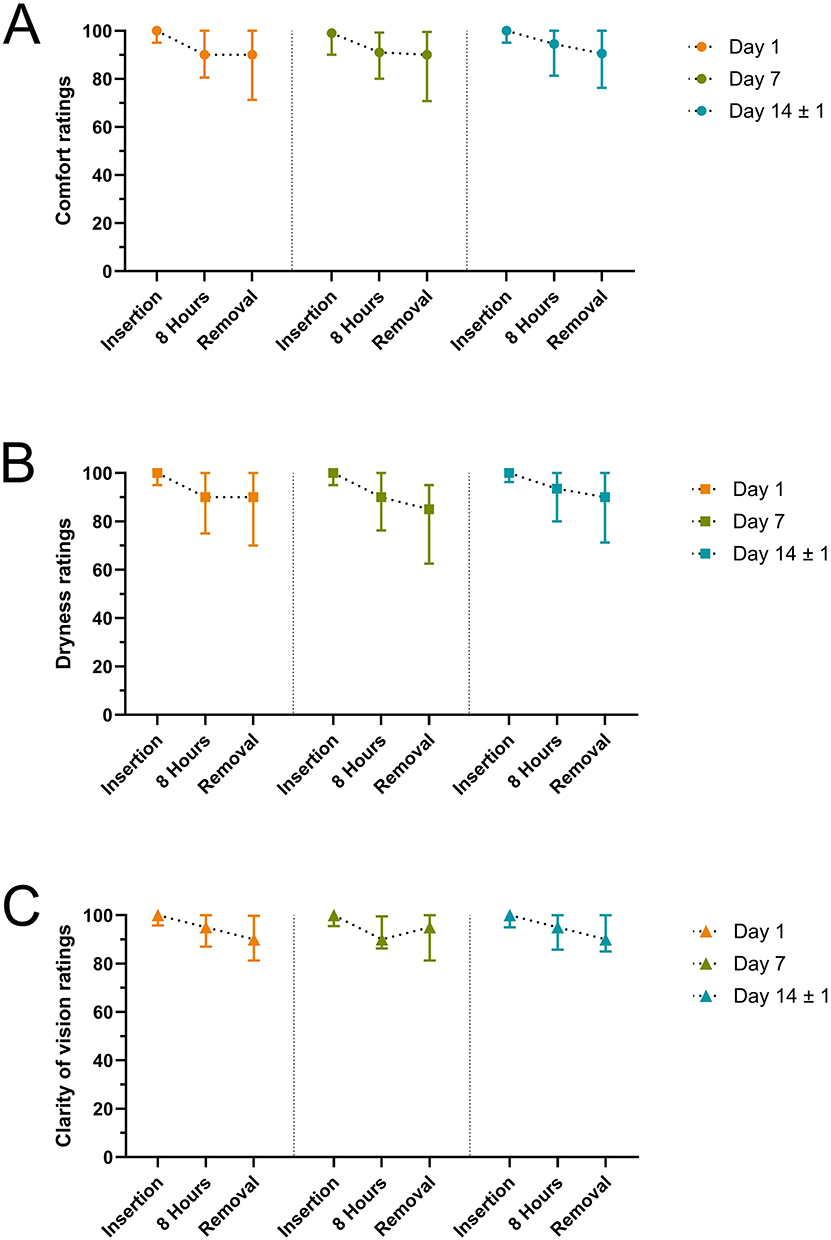 |
Figure 2 Median at-home ratings (0–100, with 100 being best) for comfort (A), dryness (B), and clarity of vision (C) for Day 1, Day 7, and Day 14 ± 1 at three time points (after insertion, after 8 hours of digital device use, and just before lens removal). Symbols represent the median and error bars indicate the interquartile range. |
Likert Ratings
At V3, participants reported satisfaction with the study CLs. Figure 3 shows the distribution of responses for each statement and the significance level obtained from binomial testing (all p≤0.0029). After 2-weeks of wear, most participants agreed that the study lenses provided good vision (30/32, 94%) and good comfort all day long (29/32, 91%). Most participants were also satisfied with the comfort (28/32, 88%) and vision (28/32, 88%) the CLs provided when digital devices were used for ≥8 hours. Most participants did not experience eye strain (26/32, 81%), eye fatigue (21/32, 66%), or episodes of blurred vision (24/32, 75%) while wearing lenses and using digital devices for ≥8 hours. The majority agreed they did not experience dryness while using digital devices (22/32, 69%) and felt the lenses performed well when using digital devices for ≥8 hours (27/32, 84%).
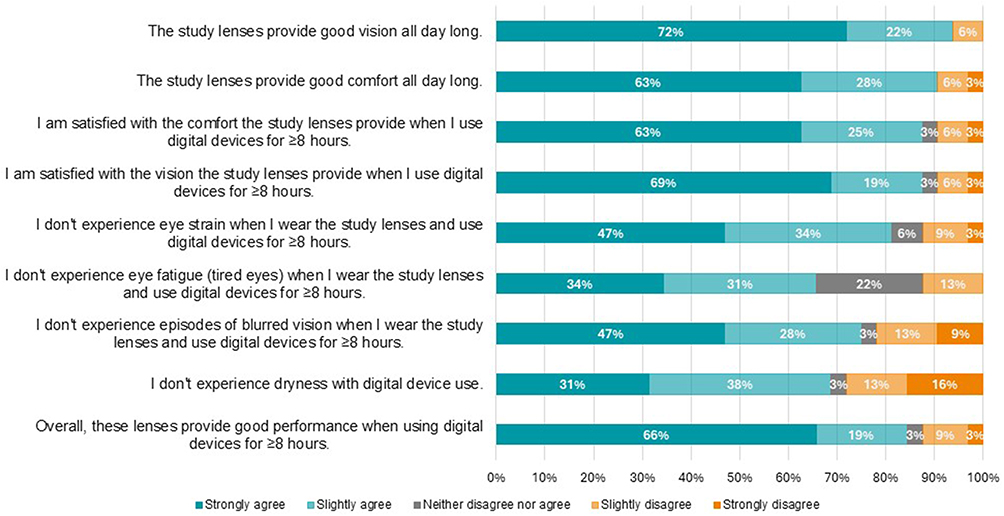 |
Figure 3 Participant responses to lens performance statements, based on the choice of one of five Likert scale-based options (strongly agree, slightly agree, neither disagree nor agree, slightly disagree, strongly disagree). Percentages are rounded to the nearest integer. All p≤0.0029. |
Clinical Performance
Lens Fit
Assessment of lens fit was investigated following insertion at the V2 dispensing visit and after ≥8 hours of CL wear at the Day 14 visit (V3). None of the CLs exhibited an unacceptable fit at V2 or V3. There was no significant difference in the lens centration after insertion compared to ≥8 of lens wear at V3 (p=0.37, Table 4). Lens centration was assessed as either optimal (13/32, 41%) or slightly decentered (19/32, 59%) at V2, and all lenses were either optimally centered (16/32, 50%) or had slight decentration (16/32, 50%) at V3 (p=0.37, Table 4). No significant difference was observed in primary gaze lens movement assessed at V2 versus V3 (p=0.83). At V2, a majority of lenses had optimal movement (17/32, 53%), with the remaining lenses demonstrating slightly tight (11/32, 34%) or slightly loose (4/32, 13%) movement. There was also no significant difference in the tightness assessed with a push-up test between V2 and V3 (p=0.25), with study CLs exhibiting a median value of 50 (optimal) at both visits.
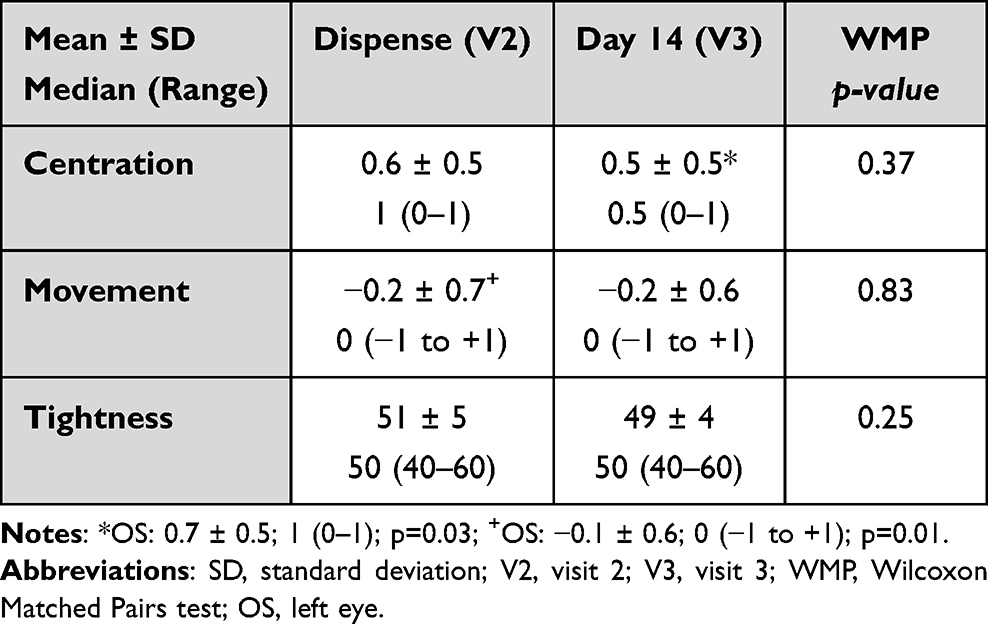 |
Table 4 Lens Fit at the Dispense and Day 14 Follow-Up Visit |
Surface Wettability and Deposits
Table 5 summarizes the lens surface characteristics at V2 and V3. The study CLs had near perfect wettability with no deposits at both visits, and no difference observed between the dispense and ≥8 hours of wear (wettability: p=0.19; deposits: p=0.55). At V2, most CLs had excellent wettability (Grade 0: 41%, 13/32) or nearly perfect wettability (Grade 0.25: 7/32, 22%; Grade 0.50: 7/32, 22%). The worst wettability at V2 was Grade 1.25 (1/32, 3%). At V3, most lenses had almost excellent wettability (Grade 0.25: 14/32, 44%; Grade 0.50: 6/32, 19%) or excellent wettability (Grade 0: 6/32, 19%). The worst wettability at V3 was Grade 1.75 (1/32, 3%). A majority of lenses did not have any deposits at V2 (28/32, 88%) or V3 (28/32, 88%), with no significant difference found between the visits (p=0.55).
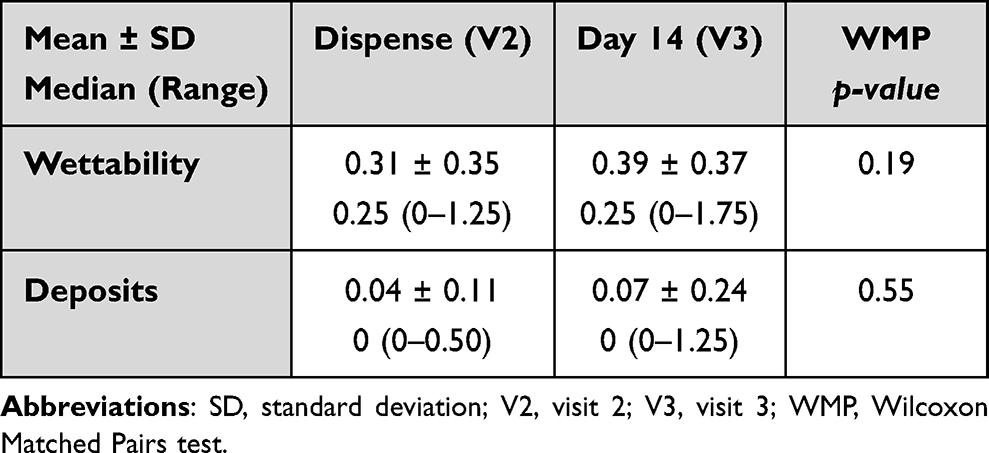 |
Table 5 Surface Wettability and Deposits at the Dispense and Day 14 Follow-Up Visit |
Safety Assessment
No adverse events or product quality issues occurred in this study.
Discussion
This study investigated the performance of delefilcon A daily disposable silicone hydrogel CL in a group of soft CL wearers who were heavy users of digital devices for 9 to 13 hours per day. Delefilcon A CLs performed well clinically and were highly rated for all the subjective ratings of comfort and vision. Participants in this study reported good comfort, even with long hours of up to 13 hours of digital device use. Following two weeks of wear, participants reported an overall median comfort score of 96 out of 100, and real-time end-of-day comfort was ≥90 on all three days. These values were higher than found in a recent study which reported a median end-of-day comfort score of 80 (range 40–100) in a group of symptomatic daily disposable CL wearers with dry eye.32
A small reduction in comfort, with a median reduction of 9 to 10 points, was observed over the course of the day. Comfort must change by at least 7.2 points, with a range of 5.4 to 8.8 points, on a 0 to 100 visual analog scale to be significant.33 While some studies have reported no significant change in comfort over the day in digital device users25 or in asymptomatic CL wearers,34,35 another study36 found that non-CL wearers and CL wearers both experience a decrease in comfort, with CL comfort reducing by 9.7 points out of 100 from the daytime to evening, which aligns with the results of this study. An additional study found that participants wearing a monthly toric silicone hydrogel CL had a significant decrease in lens comfort over the course of the day, ranging from 6.6 points on the first day of wear up to 15 points after 1 month of wear.26 Research on three types of daily disposable silicone hydrogel CLs observed an average decrease of 0.8 points on a scale of 1 to 10 in asymptomatic lens wearers,37 which is a similar scale of reduction to this study. A different study using the same three daily disposable silicone hydrogel lenses reported less reduction over the day with asymptomatic CL wearers than this study, whereas their symptomatic CL wearing group experienced a larger reduction, averaging 12 to 17 points on a 100-point scale.34 Other publications have also identified that symptomatic CL wearers report a larger drop in comfort throughout the day compared to asymptomatic wearers.16,19 This study did not differentiate between symptomatic and asymptomatic lens wearers, which may explain why these results vary from some of the literature.
Delefilcon A has been useful in helping lapsed CL wearers resume lens wear. A recent study examined the effect of refitting 60 people who previously discontinued CL wear due to discomfort or dryness with delefilcon A.38 After one month of lens wear, all subjects reported that the CLs were comfortable with a median (interquartile range) visual analog score of 44 (8)38 using a ±50 scale (−50 = worst comfort, 0 = neutral comfort, +50 = maximum comfort).39 After six months of lens wear, 98% of the participants reported they had worn CLs over the previous week. The study also examined comfort over the past week using a 5-point Likert scale. A majority of participants were satisfied or very satisfied with the lenses, with 91.5% satisfaction with the overall comfort of the lens and 78% with the comfort at the end of the day.
In addition, the comfort ratings in this study were similar to the mean score of 8.7 found in a group of neophytes on a 1 (poor) to 10 (excellent) scale two weeks after commencing CL wear.40 Previous assessments of comfort throughout the day showed delefilcon A provided better comfort than filcon II 3 and narafilcon A after 8 hours of wear, and superior comfort compared to filcon II 3 after 12 hours of wear.34
Vision is also an important factor associated with successful CL wear. Excellent objective high-contrast30,37,38 and good low-contrast visual acuity30,37 have been previously established with delefilcon A. The median overall clarity of vision score of 95 out of 100 in this study was similar to the mean overall quality of vision score of 8.8 out of 10 (1–10 scale where 10 = excellent) obtained from a group of neophyte CL wearers.40 Although the quality of vision has been shown to decrease over 16 hours of wear,37 98.3% and 93.2% of neophytes were very satisfied or satisfied with their overall vision over the past week after 1 month and 6 months, respectively.38 A mean change in vision of 7.1 points on a 100-point scale is considered clinically significant.33
Delefilcon A was successfully fit and dispensed to 35 participants in this study. A high level of satisfaction with the fit was previously reported, with investigators agreeing that lenses were easy to fit for 98% of participants.40 The daily replacement of deleficon A CLs may have contributed to the low levels of surface deposits and good wettability observed in this study. Decreased amounts of deposition and better wettability have been demonstrated with delefilcon A in comparison to somofilcon A and narafilcon A.30 The vision in this study was not impacted by digital device use, and lens wear and use of digital devices for ≥8 hours did not result in symptoms of blurred vision, eye strain, or eye fatigue. The excellent surface wettability characteristics of delefilcon A may be one reason why the CL exhibits a longer break-up time than other daily disposable silicone hydrogel lenses throughout the day,30,37 which prevents blurriness associated with poor tear coverage over the lens. Delefilcon A has been shown to have a prolonged tear break-up time compared to stenfilcon A and narafilcon A after three hours of computer use in CL wearers that were exposed to 20% relative humidity in order to replicate the conditions of a dry, air-conditioned office.41 In addition to the water gradient material, the exceptional surface characteristics of the lens may also be due to SmarTears® Technology which releases phosphatidylcholine from the CL.28 Phosphatidylcholine is a polar phospholipid that naturally occurs in the tears, which helps stabilize and prevent evaporation of the outermost layer of the tear film.42
Although the findings of this study were favorable to delefilcon A, there are several limitations. Neither investigators nor participants were masked to the type of CL used in the study and lenses were provided to participants in their original packaging. Participants may have felt they needed to provide good ratings for the sponsor, or the results may have been impacted by the “Hawthorne effect.”43 This was a short 2-week study that only investigated a single type of CL using a paper survey. Real-time data collection, such as via text message,26,39,44 is preferable to a paper survey to ensure compliance with completing each questionnaire at the correct time. Although a one hour decrease in median digital device use was reported with study lens wear, the minimum amount of digital device use increased to 9 hours per day which may reflect normal fluctuations in everyday life. All the participants were habitual CL wearers with long wearing times of at least 13 hours per day who spent a minimum of 9 hours per day using digital devices while wearing delefilcon A, making these findings applicable to a considerable amount of CL wearers.
Conclusion
This study demonstrated that delefilcon A provided excellent performance in terms of comfort and vision alongside low levels of dryness in CL wearers who use digital devices for 8 hours or more every day. These findings have clinical relevance for eye care practitioners when choosing a lens for patients whose busy lifestyles demand long wearing times and require significant hours of screen time.
Data Sharing Statement
Deidentified participant data will not be shared by the authors.
Funding
This investigator-initiated study was funded by a grant from Alcon Vision, LLC.
Disclosure
All authors are affiliated with CORE. Over the past three years, CORE has received research funding and/or honoraria from Alcon, Avizor, Azura Ophthalmics, Bausch + Lomb, CooperVision, Essilor, Euclid, Hoya, i-Med Pharma, Integral Biosystems, J&J Vision, Menicon, Myoptechs, Novartis, Ophtecs, Scope Ophthalmics, SightGlass, Topcon and Visioneering Tech Inc. In addition, Stephanie Wong is a consultant for Johnson & Johnson Vision. Daddi Fadel has received financial support or lectureship honoraria from the following companies: Bausch & Lomb, Boston Materials, BostonSight, Contamac, Eaglet Eye, EasyLac, EYEXY, Medlac, Mediworks, Medmont, Multilens, 3N Eyecare, Oculus, Topcon Healthcare, Wave Eyecare. Lyndon Jones is a consultant and/or serves on an advisory board for Alcon, CooperVision and Ophtecs. He also reports grants, personal fees and/or grants from Alcon, Avizor, Azura Ophthalmics, Bausch & Lomb, CooperVision, Essilor-Luxottica, Euclid, Hoya, iMedPharma, Integral Biosystems, Johnson & Johnson, Menicon, Myoptechs, Novartis, Ophtecs, Scope Ophthalmics, SightGlass, Topcon, and Visioneering, outside the submitted work. The authors report no other conflicts of interest in this work.
References
1. Morgan PB, Woods CA, Tranoudis IG, et al. International contact lens prescribing in 2024. Contact Lens Spectrum. 2025;40(January/February):22-24,26,28–30.
2. Tighe BJ. A decade of silicone hydrogel development: surface properties, mechanical properties, and ocular compatibility. Eye Contact Lens-Sci Clin Pract. 2013;39(1):4–12. doi:10.1097/ICL.0b013e318275452b
3. Dumbleton K. Noninflammatory silicone hydrogel contact lens complications. Eye Contact Lens. 2003;29(1 Suppl):S186–S189. doi:10.1097/00140068-200301001-00051
4. Dumbleton K. Adverse events with silicone hydrogel continuous wear. Cont Lens Anterior Eye. 2002;25(3):137–146. doi:10.1016/s1367-0484(02)00009-7
5. Maissa C, Guillon M, Cockshott N, Garofalo RJ, Lemp JM, Boclair JW. Contact lens lipid spoliation of hydrogel and silicone hydrogel lenses. Optometry Vision Sci. 2014;91(9):1071–1083. doi:10.1097/Opx.0000000000000341
6. Walther H, Subbaraman L, Jones LW. In vitro cholesterol deposition on daily disposable contact lens materials. Optometry Vision Sci. 2016;93(1):36–41. doi:10.1097/Opx.0000000000000749
7. Steele KR, Szczotka-flynn L. Epidemiology of contact lens-induced infiltrates: an updated review. Clin Exp Optomet. 2017;100(5):473–481. doi:10.1111/cxo.12598
8. Szczotka-Flynn L, Chalmers R. Incidence and epidemiologic associations of corneal infiltrates with silicone hydrogel contact lenses. Eye Contact Lens-Sci Clin Pract. 2013;39(1):48–52. doi:10.1097/ICL.0b013e318271d3dc
9. Young MD, Benjamin WJ. Oxygen permeability of the hypertransmissible contact lenses. Eye Contact Lens. 2003;29(1 Suppl):S17–S21. doi:10.1097/00140068-200301001-00006
10. Covey M, Sweeney DF, Terry R, Sankaridurg PR, Holden BA. Hypoxic effects on the anterior eye of high-dk soft contact lens wearers are negligible. Optom Vis Sci. 2001;78(2):95–99. doi:10.1097/00006324-200102000-00009
11. Dumbleton K, Woods CA, Jones LW, Fonn D. The impact of contemporary contact lenses on contact lens discontinuation. Eye Contact Lens. 2013;39(1):93–99. doi:10.1097/ICL.0b013e318271caf4
12. McMonnies CW. Why are soft contact lens wear discontinuation rates still too high? Expert Rev Ophthalmol. 2023;18(1):11–18. doi:10.1080/17469899.2022.2160321
13. Sulley A, Young G, Hunt C. Factors in the success of new contact lens wearers. Cont Lens Anterior Eye. 2017;40(1):15–24. doi:10.1016/j.clae.2016.10.002
14. Pucker AD, Tichenor AA. A review of contact lens dropout. Clin Optom. 2020;12:85–94. doi:10.2147/OPTO.S198637
15. Young G, Veys J, Pritchard N, Coleman S. A multi-centre study of lapsed contact lens wearers. Ophthalmic Physiol Opt. 2002;22(6):516–527. doi:10.1046/j.1475-1313.2002.00066.x
16. Sulley A, Young G, Hunt C, McCready S, Targett MT, Craven R. Retention rates in new contact lens wearers. Eye Contact Lens. 2018;44:S273–S282. doi:10.1097/Icl.0000000000000402
17. Tilia D, Bakaraju RC, Asper LJ, Papas EB. Associations between binocular vision disorders and contact lens dissatisfaction. Optometry Vision Sci. 2021;98(10):1160–1168. doi:10.1097/Opx.0000000000001780
18. Tauste A, Ronda E, Molina MJ, Segui M. Effect of contact lens use on computer vision syndrome. Ophthalmic Physiol Opt. 2016;36(2):112–119. doi:10.1111/opo.12275
19. Sheppard AL, Wolffsohn JS. Digital eye strain: prevalence, measurement and amelioration. BMJ Open Ophthalmol. 2018;3(1):e000146. doi:10.1136/bmjophth-2018-000146
20. Truong TN, Graham AD, Lin MC. Factors in contact lens symptoms: evidence from a multistudy database. Optom Vis Sci. 2014;91(2):133–141. doi:10.1097/OPX.0000000000000138
21. Guillon M, Dumbleton K, Theodoratos P, Patel K, Gupta R, Patel T. Pre-contact lens and pre-corneal tear film kinetics. Cont Lens Anterior Eye. 2019;42(3):246–252. doi:10.1016/j.clae.2019.02.001
22. Kharel Sitaula R, Khatri A. Knowledge, attitude and practice of computer vision syndrome among medical students and its impact on ocular morbidity. J Nepal Health Res Counc. 2018;3(3):291–296. doi:10.3126/jnhrc.v16i3.21426
23. Talens-Estarelles C, García-Marqués JV, Cervino A, García-Lázaro S. Use of digital displays and ocular surface alterations: a review. Ocular Surface. 2021;19:252–265. doi:10.1016/j.jtos.2020.10.001
24. Wolffsohn JS, Lingham G, Downie LE, et al. TFOS lifestyle: impact of the digital environment on the ocular surface. Ocul Surf. 2023;28:213–252. doi:10.1016/j.jtos.2023.04.004
25. Schulze MM, Fadel D, Luensmann D, et al. Evaluating the performance of verofilcon A daily disposable contact lenses in a group of heavy digital device users. Clin Ophthalmol. 2023;17:3165–3176. doi:10.2147/OPTH.S429250
26. Pucker AD, Franklin QX, Perkins AF, et al. Performance of a toric, monthly, soft contact lens in digital device users. Clin Optom. 2025;17:11–20. doi:10.2147/Opto.S505701
27. Jones L, Subbaraman L, Rogers R, Dumbleton K. Surface treatment, wetting and modulus of silicone hydrogels. Optician. 2006;232(6067):28–30,32–34.
28. Mathew J. DAILIES total1® contact lenses with water gradient and smartears® technology [white paper]; 2022. Available from: https://alcon.widen.net/s/ggdpjrh6cr/us_dt1-dt1fa_white-paper__p-med-us-dt1-240003.
29. Keir N, Jones L. Wettability and silicone hydrogel lenses: a review. Eye Contact Lens-Sci Clin Pract. 2013;39(1):100–108. doi:10.1097/ICL.0b013e31827d546e
30. Varikooty J, Schulze MM, Dumbleton K, et al. Clinical performance of three silicone hydrogel daily disposable lenses. Optom Vis Sci. 2015;92(3):301–311. doi:10.1097/OPX.0000000000000514
31. Woods CA, Keir N, Fonn D. The development of a video based grading scale for in vivo front surface contact lens wettability. Cont Lens Anterior Eye. 2011;34(Supp 1):S33. doi:10.1016/S1367-0484(11)60147-1
32. Guthrie SE, Luensmann D, Schulze MM, Woods J, Jones L. Investigation of delefilcon A contact lenses for symptomatic daily disposable contact lens wearers with dry eye disease: a prospective comparative study. Clin Ophthalmol. 2024;18:2999–3008. doi:10.2147/OPTH.S482568
33. Navascues-Cornago M, Guthrie S, Morgan PB, Woods J. Determination of the minimal clinically important difference (MCID) for ocular subjective responses. Transl Vis Sci Technol. 2024;13(8):28. doi:10.1167/tvst.13.8.28
34. Varikooty J, Keir N, Richter D, Jones LW, Woods C, Fonn D. Comfort response of three silicone hydrogel daily disposable contact lenses. Optom Vis Sci. 2013;90(9):945–953. doi:10.1097/OPX.0b013e31829d8dbf
35. Woods CA, Bentley SA, Fonn D. Temporal changes in contact lens comfort over a day of wear. Ophthalmic Physiol Opt. 2016;36(6):643–648. doi:10.1111/opo.12318
36. Dumbleton KA, Guillon M, Theodoratos P, Patel T. Diurnal variation in comfort in contact lens and non-contact lens wearers. Optom Vis Sci. 2016;93(8):820–827. doi:10.1097/OPX.0000000000000920
37. Wolffsohn JS, Mroczkowska S, Hunt OA, Bilkhu P, Drew T, Sheppard A. Crossover evaluation of silicone hydrogel daily disposable contact lenses. Optom Vis Sci. 2015;92(11):1063–1068. doi:10.1097/OPX.0000000000000706
38. Lievens C, Pucker AD, Rayborn E, et al. Refitting contact lens dropouts into a modern daily disposable contact lens. Ophthal Physl Opt. 2024;44(4):686–692. doi:10.1111/opo.13299
39. Call T, Pucker AD, McGwin Jr G, Franklin QX, Logan A. Real-time ocular comfort reporting in monthly replacement contact lens wearers. Clin Optom. 2023;15:97–103. doi:10.2147/OPTO.S403319
40. Marx S, Lauenborg B, Kern JR. Performance evaluation of delefilcon a water gradient daily disposable contact lenses in first-time contact lens wearers. Cont Lens Anterior Eye. 2018;41(4):335–341. doi:10.1016/j.clae.2017.12.019
41. Guillon M, Patel T, Patel K, Gupta R, Maissa CA. Quantification of contact lens wettability after prolonged visual device use under low humidity conditions. Cont Lens Anterior Eye. 2019;42(4):386–391. doi:10.1016/j.clae.2019.03.004
42. Pucker AD, Haworth KM. The presence and significance of polar meibum and tear lipids. Ocul Surf. 2015;13(1):26–42. doi:10.1016/j.jtos.2014.06.002
43. Wickström G, Bendix T. The “Hawthorne effect” - what did the original Hawthorne studies actually show? Scand J Work Environ Health. 2000;26(4):363–367. doi:10.5271/sjweh.555
44. Santodomingo-Rubido J, Barrado-Navascués E, Rubido-Crespo MJ. Ocular surface comfort during the day assessed by instant reporting in different types of contact and non-contact lens wearers. Eye Contact Lens-Sci Clin Pract. 2010;36(2):96–100. doi:10.1097/ICL.0b013e3181d1d5a5
 © 2025 The Author(s). This work is published and licensed by Dove Medical Press Limited. The
full terms of this license are available at https://www.dovepress.com/terms
and incorporate the Creative Commons Attribution
- Non Commercial (unported, 4.0) License.
By accessing the work you hereby accept the Terms. Non-commercial uses of the work are permitted
without any further permission from Dove Medical Press Limited, provided the work is properly
attributed. For permission for commercial use of this work, please see paragraphs 4.2 and 5 of our Terms.
© 2025 The Author(s). This work is published and licensed by Dove Medical Press Limited. The
full terms of this license are available at https://www.dovepress.com/terms
and incorporate the Creative Commons Attribution
- Non Commercial (unported, 4.0) License.
By accessing the work you hereby accept the Terms. Non-commercial uses of the work are permitted
without any further permission from Dove Medical Press Limited, provided the work is properly
attributed. For permission for commercial use of this work, please see paragraphs 4.2 and 5 of our Terms.
Recommended articles

Evaluation of Wear Experience with Soft Daily Disposable Lenses for Astigmatism over 16 Hours of Wear
Fogt JS, Patton K
Clinical Optometry 2022, 14:207-214
Published Date: 28 October 2022
Evaluating the Performance of Verofilcon A Daily Disposable Contact Lenses in a Group of Heavy Digital Device Users
Schulze MM, Fadel D, Luensmann D, Ng A, Guthrie S, Woods J, Jones L
Clinical Ophthalmology 2023, 17:3165-3175
Published Date: 24 October 2023

Comfort After Refitting Symptomatic Habitual Reusable Toric Lens Wearers with a New Daily Disposable Contact Lens for Astigmatism
Wan K, Mashouf J, Hall B
Clinical Ophthalmology 2023, 17:3235-3241
Published Date: 30 October 2023
Investigation of Delefilcon A Contact Lenses for Symptomatic Daily Disposable Contact Lens Wearers with Dry Eye Disease: A Prospective Comparative Study
Guthrie SE, Luensmann D, Schulze MM, Woods J, Jones L
Clinical Ophthalmology 2024, 18:2999-3008
Published Date: 22 October 2024
The Impact of Comfort Eluting Agents and Replacement Frequency on Enhancing Contact Lens Performance
Phan CM, Hui A, Shi XC, Zheng Y, Subbaraman LN, Wu J, Jones L
Clinical Ophthalmology 2025, 19:857-873
Published Date: 12 March 2025